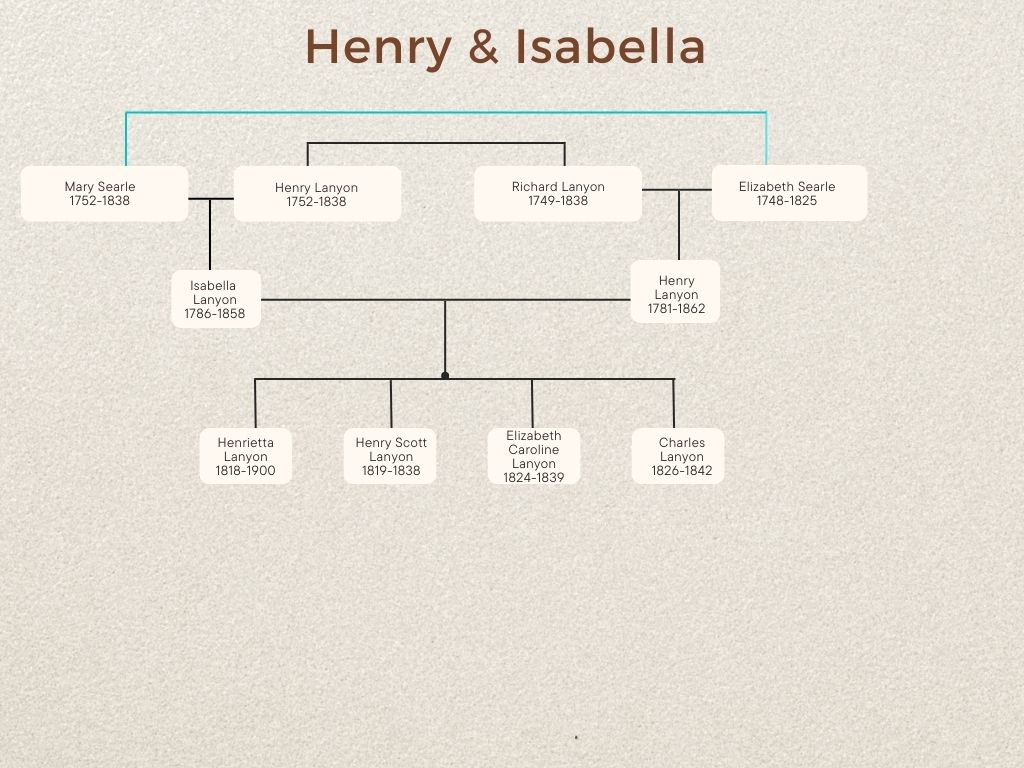
Henrietta was the eldest daughter of Henry and Isabella Lanyon (see the post Captain Cork!)
Henrietta was born in 1818, her brother Henry Scott a year later. He died aged 19 of a fever. Elizabeth Caroline was born in 1824 and died aged 14 of water on the brain. Charles was born in 1826 and died aged 16 of TB.
Henrietta, as the sole surviving child, set out to commemorate her parents by installing a beautiful stained glass window at St Allen church in their memory.
She also made a number of donations to Truro cathedral, including her father’s jewelled sword and gold snuff box. These items are now lost.
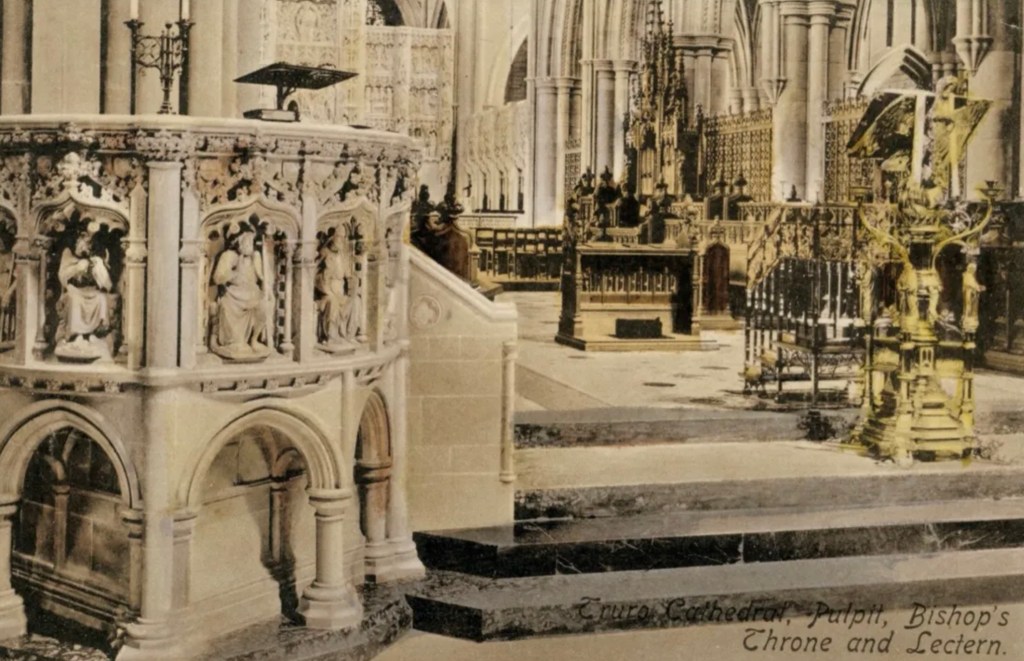
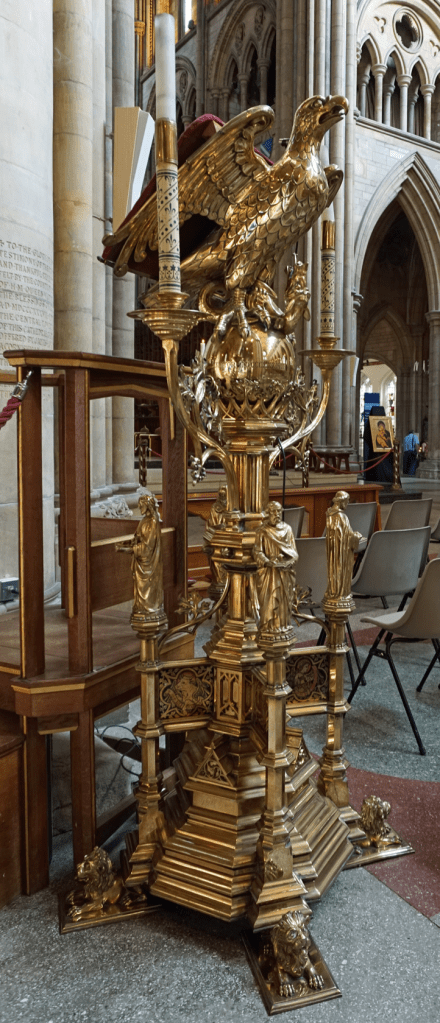
But her pièce de résistance was the lectern at Truro cathedral!
Postcard of Truro Cathedral showing the pulpit, Bishop’s throne and lectern.
The eagle was chosen to represent St John the Evangelist. Henrietta paid £550 for the lectern, a huge sum in those days and despite that they spelt her name incorrectly on the commemorative plaque! Harriett rather than Henrietta!
Whilst researching the family tree I discovered that there were several beautiful windows erected in memory of various Lanyons. Whilst the photos are included on the site along with the individuals concerned I thought it worth creating a page with all the windows together.
I’d like to thank Dr Mark Charter the webmaster of Cornish Stained Glass Windows https://www.cornishstainedglass.org.uk for permission to use the photos.
Camborne Church
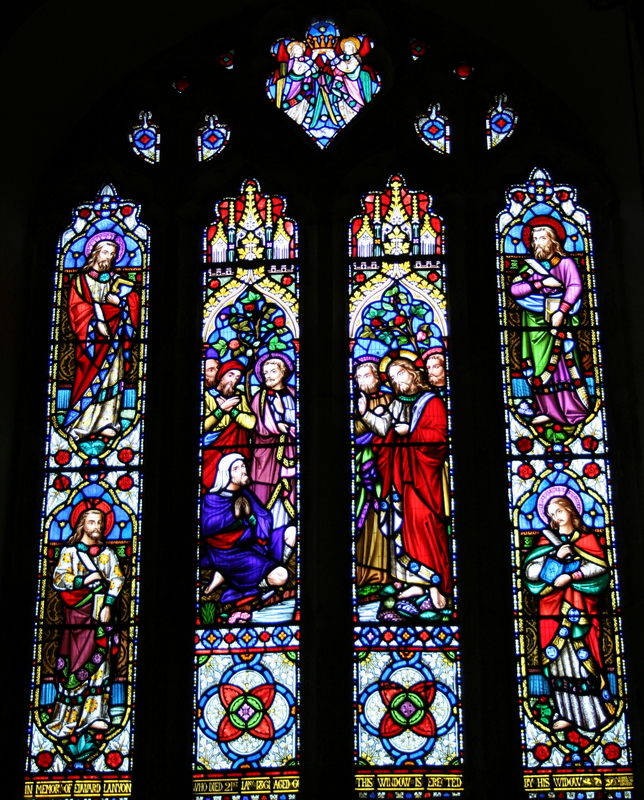
Christ healing the impotent man at the pool of Bethesda.
Made by Alexander Gibbs 1864. Erected by Charlotte Lanyon (Reynolds) in memory of her husband Edward who died in 1861. (Post about Edward in Gwinear Branch – Christ and the Impotent Man!).
St Allen Church
Chancel East
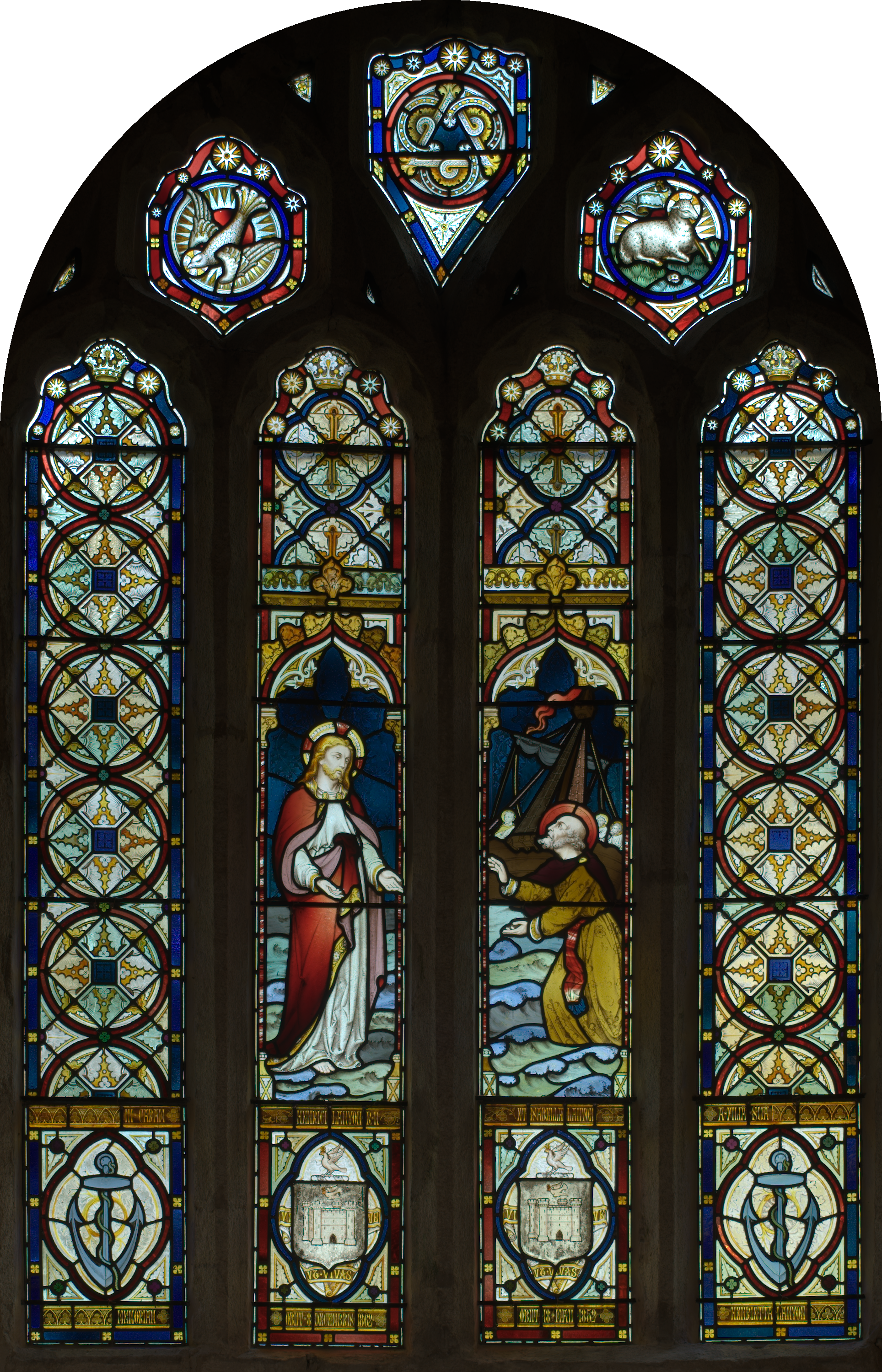
Christ saves Peter from drowning.
Made in 1874 possibly by Lavers and Barreau. Erected by Henrietta Lanyon in memory of her parents Henry Lanyon and Isabella Lanyon. (Post about Henry & Isabella in St Allen branch – ‘Captain Cork!’)
Detail of Christ saving Peter
Lanyon Arms and family motto ‘Vive ut Vivas’.
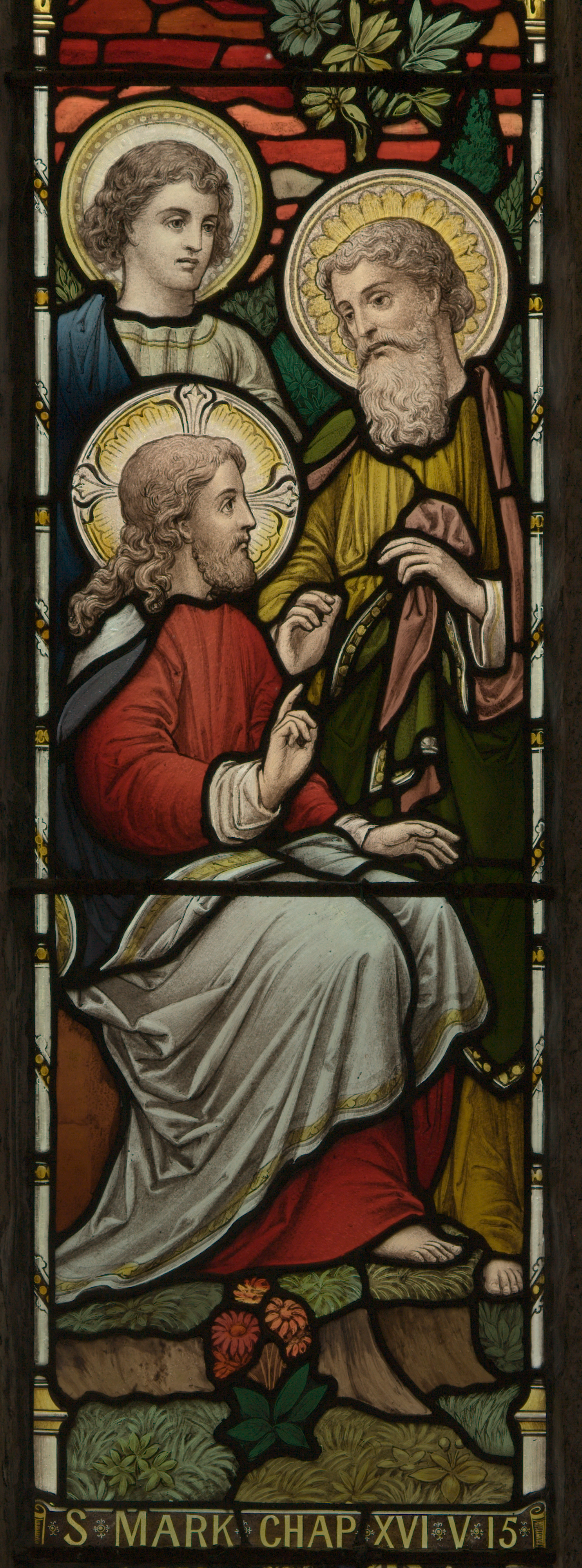
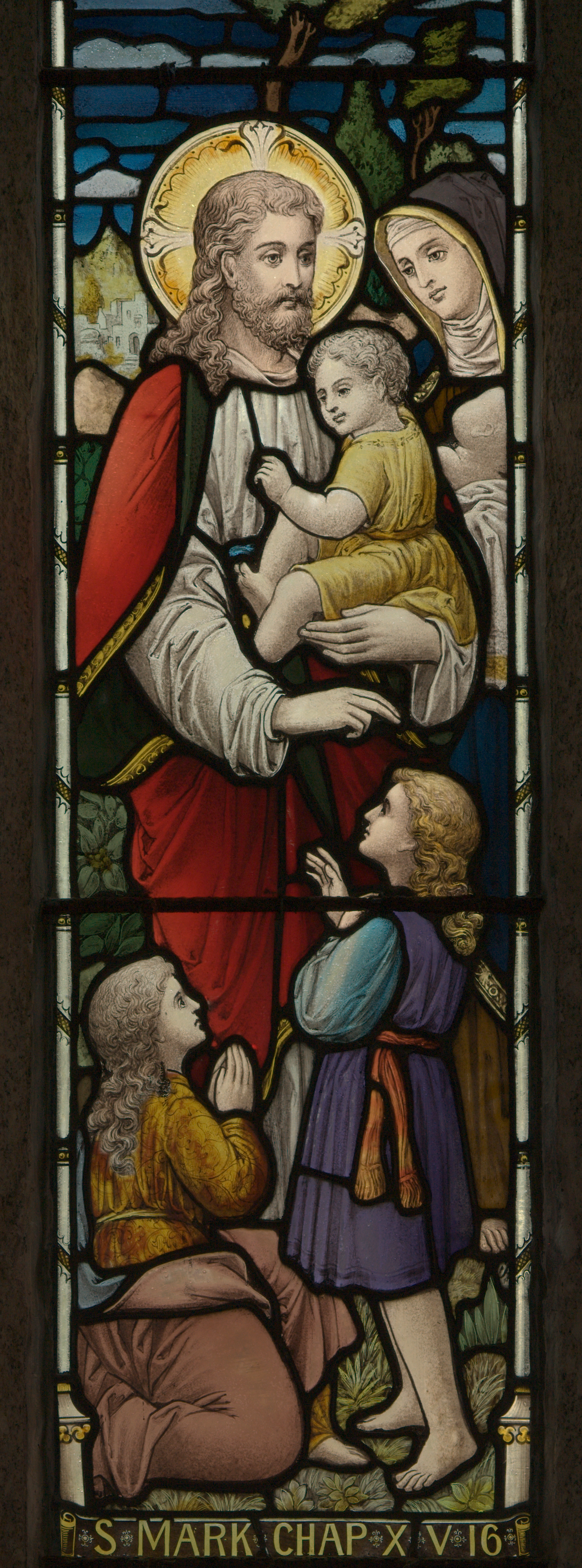
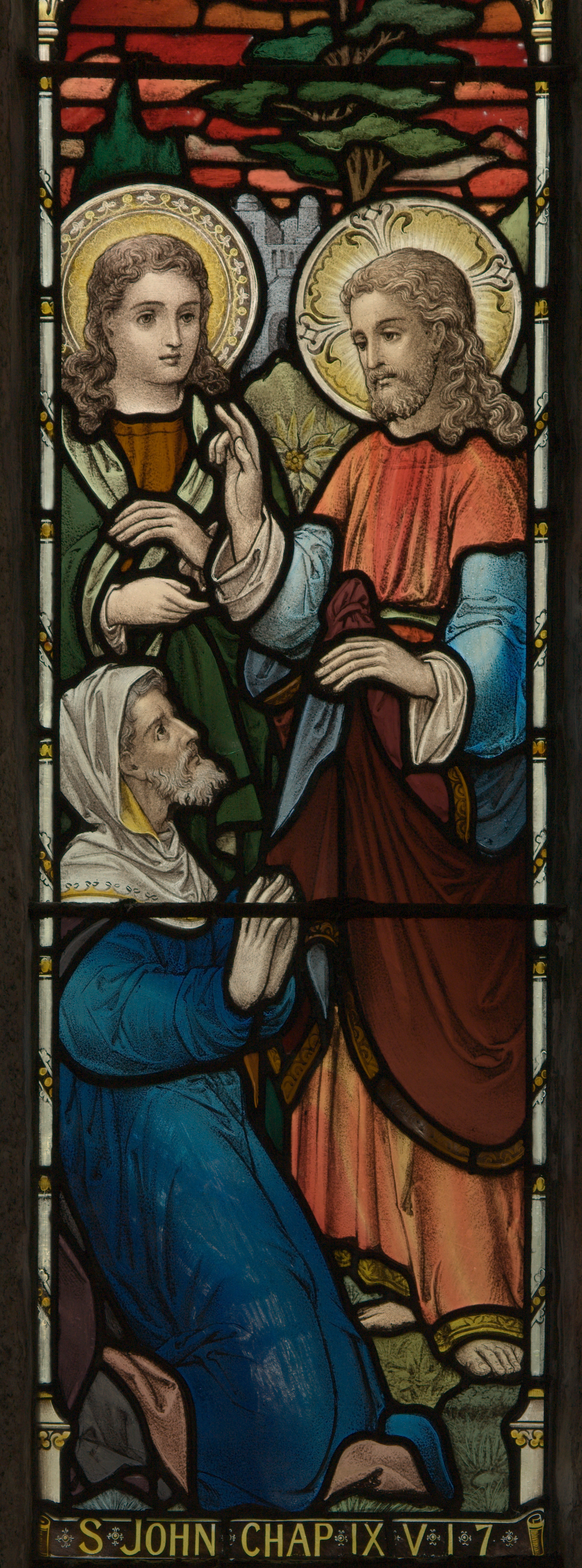
Nave North 3
Made in 1889 by Arthur Louis Moore
Christ’s commission to Peter: “Feed my sheep” – Panel 1 in memory of John and Peggy Lanyon of Henver. (Post about John and Peggy in St Allen branch – ‘Henry and Mary Lanyon’s Sons’.)
Suffer little children – Panel 2 in memory of Simon Lanyon John and Peggy’s fourth son who died at Mineral Point, Wisconsin. (Post about Simon Lanyon in St Allen branch – Henry Lanyon and Mary Searle’s Grandsons part. 1.)
Healing of a man born blind – erected by Simon Henry Lanyon son of Simon Lanyon on his visit to England in 1889. (Post about Simon Lanyon in St Allen branch – Henry Lanyon and Mary Searle’s Grandsons part. 1.)
Detail Panel 1Detail Panel 2Detail Panel 3
Nave North 4
Made in 1910, maker unknown.
In memory of Eliel Lanyon of Henver, son of John and Peggy Lanyon of Trevalsa, St Allen, died 10th October 1909 aged 86.
Detail Panel 1Detail Panel 2Detail Panel 3
St Stithians
North Aisle East
Window erected in memory of Richard Lanyon of Kennal Vale and of Acton Castle, died 8th December 1863 aged 66.
Made in 1864, maker not known.
Decorative panels with diagonal memorial inscription in centre light. Lanyon arms (Polsue).
We’ve followed John & Peggy’s large family in part 1 of this post now we’ll follow William & Henry.
William & Jane’s Son
William Lanyon and Jane Veale Rowe had just one son Charles Scott.
Charles Scott Lanyon 1844-1890
Charles was born at Newlyn East in 1844, he was a farmer at Higher Treluddra and married Elizabeth Jane Rowe in 1872. Charles was accidentally killed in 1890 by being thrown from his horse at Shepherd’s Gate, Newlyn East. (Source – Royal Cornwall Gazette).
They had four children:
William 1874-1956 he was a farmer who married Amy Elizabeth Bice at Colan, Cornwall in 1899 – no children
Frances 1875-1875 died in infancy
Jane Rowe 1877-1953 married Francis Rowe, a farmer in 1899 and her name became Jane Rowe Rowe! No children
Thomas Rowe 1879-1958 he was a farmer too, he emigrated to Canada. Then he returned home in 1914 and fought in the first World War, he was a sergeant in the Royal Army Medical Corp. After the war he returned to Canada. He never married.
This little branch of the tree has died out.
Internet Archive Book Images, No restrictions, via Wikimedia Commons
Henry & Elizabeth’s Sons(and daughter!)
Henry and Elizabeth were first cousins once removed. They had twelve children and of them, three sons to carry on the Lanyon name.
Albert Cornelius 1834-1887
Albert was born at St Allen in 1834 and was a farmer at Trevalsa. He married Mary Ellen Varcoe in 1883 at St Erme, he died in 1887. Albert and Mary had three sons:
Albert Cornelius 1884-1960 he was a farmer at St Allen. In 1914 he married Margaret Louise May – two children
John Henry 1886-1963 he too was a farmer at Trevalsa, in 1933 he married Charlotte Adeline Carveth – no children
Obed Howard 1887-1970 also a farmer at Trevalsa, bachelor, no children
Emily Lanyon 1838-1888
Emily was Albert Cornelius’ younger sister. She and her brother Simon Searle Lanyon emigrated to Australia in 1857. She went to help her aunt Bella Lanyon and Uncle Thomas Johns with their children and working in their shop on Eureka Street, Ballarat. Her brother Simon set up a mining business with Thomas William Bull. Simon was killed in an accident at their Ophir mine in 1859. Thomas went to break the news to his sister Emily and months later they were married. They had eleven children:
Emily & Thomas
Sarah Ann Bull 1860-1889 Sarah developed appendicitis and died at Whitton railway station whilst waiting for a train to take her to hospital.
Sarah Ann Bull
Eliza Jane Bull 1862-1882 died age 20, spinster
Eliza Jane Bull
Elizabeth Emily Bull 1863-1934 married William Davies
Henry James Bull 1865-1947 married Charlotte Tresilian
William Thomas Bull 1866-1956 married Agnes Kock
William Thomas Bull
Albert Edwin Bull 1869-1952 married Lucy Taylor Johnstone
Albert Edwin Bull
Mary Ellen Bull 1871-1954 married Alfred George driver
Mary Ellen, Adelaide Sibella and Caroline Louisa Bull
John Louis (Jack) Bull 1873-1951 married Matilda May Kock
Adelaide Sibella Bull 1875-1969 married George Cormack
Charles Wager Lanyon Bull 1877-1954 married Hanna Pearce
Caroline Louisa Bull 1879-1957 married Archibald Gates
Henry Scott Lanyon 1839-1903
Henry was born at St Allen and emigrated to Ballarat in Australia in the 1860s. He was a shepherd and leased a paddock so he could run his own sheep. He married Maria Wescott in 1874. They met when Henry went to visit his cousin Richard Lanyon who was working for Isaac Westcott, Maria’s father. Henry died in 1903 after suffering with cancer for 18 months.
Henry Scott Lanyon & Maria Westcott
Maria WestcottHenry Scott Lanyon
They had six children:
Henry Maynard 1876-1967 he was a teacher, he married Mabel Wilkinson in 1903 – six children. Henry was quite delicate and instead of farm work he became a teacher.
Henry & MabelHenry Maynard
Albert Vincent 1878-1953 he married Emily Margaret McRorie in 1905 – five children
Albert and Emily
Elizabeth Jane 1881-1933 spinster
Elizabeth Jane
Annie Violet 1882-1973 married Percy Garnet Weaver in 1908 – five children
Annie Violet & percy
Thomas Wescott 1885-1965 married Margaret Ethel Smith in 1909 – three children
Thomas Westcott and Margaret Ethel
Lewis Isaac 1887-1925 married Elsie Elizabeth Lewis in 1913 at Victoria. One son. He returned to Cornwall in 1925 and made lots of notes about Lanyon family history. He died of Cholera after drinking contaminated water in Cornwall and was buried at St Allen Church
Lewis and Elsie
Lewis Edwin Lanyon 1841-1886
He was born at St Allen in 1841 and worked as a farmer and engineer. In 1877 he married Sarah Osman – six children:
Elizabeth Maud 1977-1934 she married John Henry Trenerry and they had one son, they emigrated to Omaha Nebraska.
Eliza Helen 1880-1956 she married William Thomas Argall Searle, a farmer, seven children
Isabella 1881-1944 married Samuel Arthur Chenoweth in 1903 – four children
Louisa 1882-1958 married Henry Woolcock in 1904. Two sons
Mabel 1885-1968 married Thomas Roberts in 1910, one son
Louis Edwin 1886-1955 he was a bookkeeper who emigrated to Omaha Nebraska, married Lillian Mae Ashley – two daughters
Here we must leave Henry & Mary’s branch of the family.
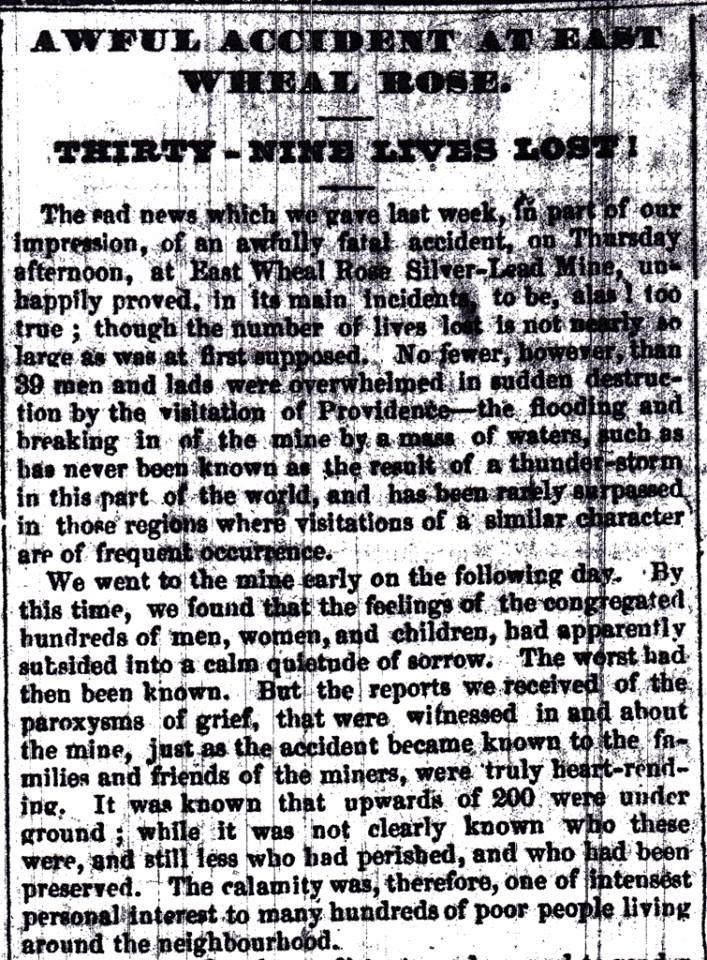
The East Wheal Rose mining disaster of 1846 was the worst mining disaster in Cornish history.
Malcolm Kewn / East Wheal Rose Mine
On 9 July 1846 a thunderstorm caused a flash flood. The mine was in a natural bowl, and the flood waters had nowhere to go, except into the mine. Captain Middleton, the manager of the mine, organised 300 men to pile up earth around the collars of the shafts but the volume of water pouring down was so great that soon torrents of water poured down the shafts. This caused a wind to blow that extinguished the candles that the miners used underground. So when the water hit them, they were in utter darkness.
Captain Champion somehow managed to climb the slippery ladders against the tremendous weight of down-rushing water. A timber-man, Samuel Bastion, went down into the mine to lie across a manhole, diverting the flow of water and saving eighteen lives.
The beam engines were put to work in raising men to the surface, clinging to the kibbles and chains ‘like strings of onions’. Forty-three men and boys were missing but four of them were brought up alive next morning. The lower levels of the mine were completely flooded. But, by November 1846 all the debris and water had been cleared and the mine was in full production again.
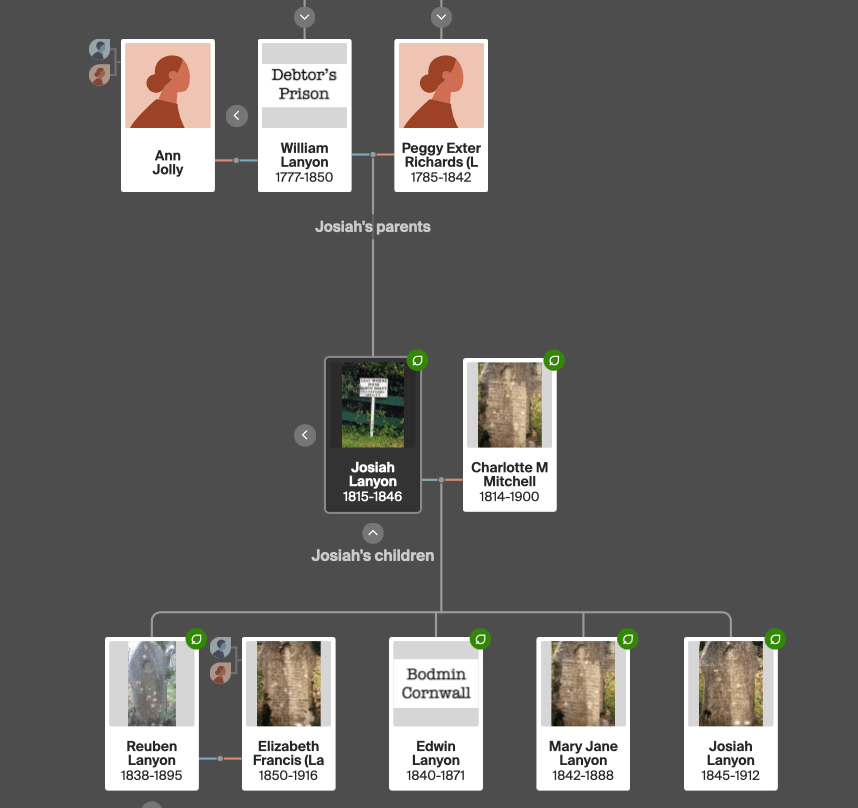
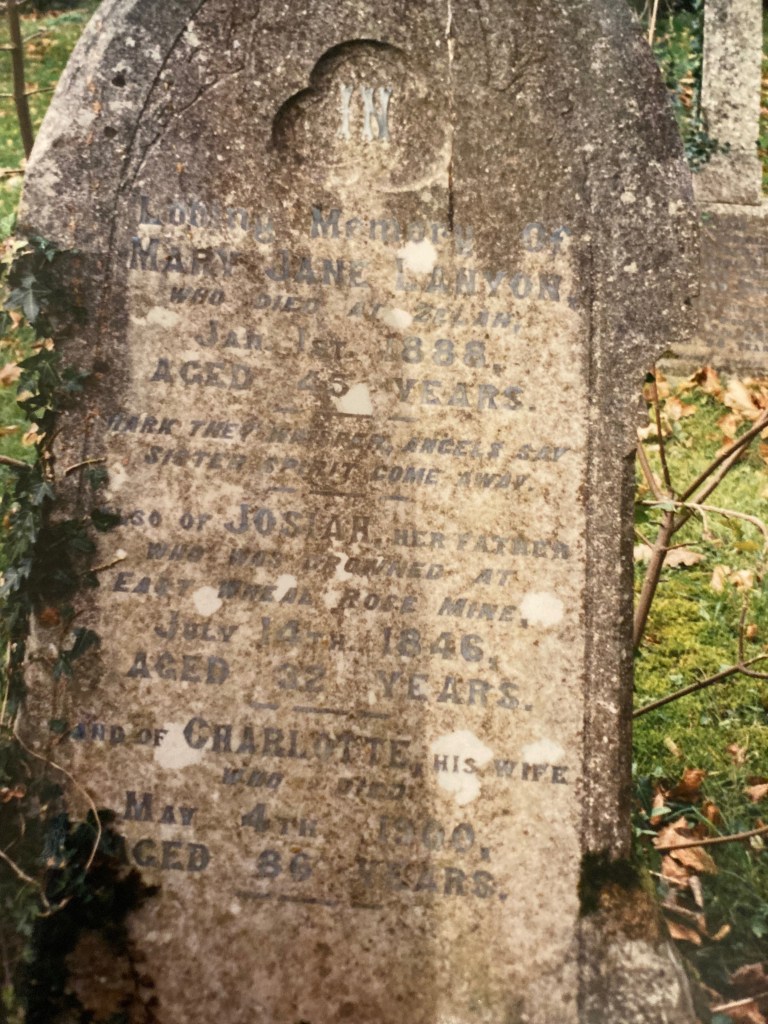
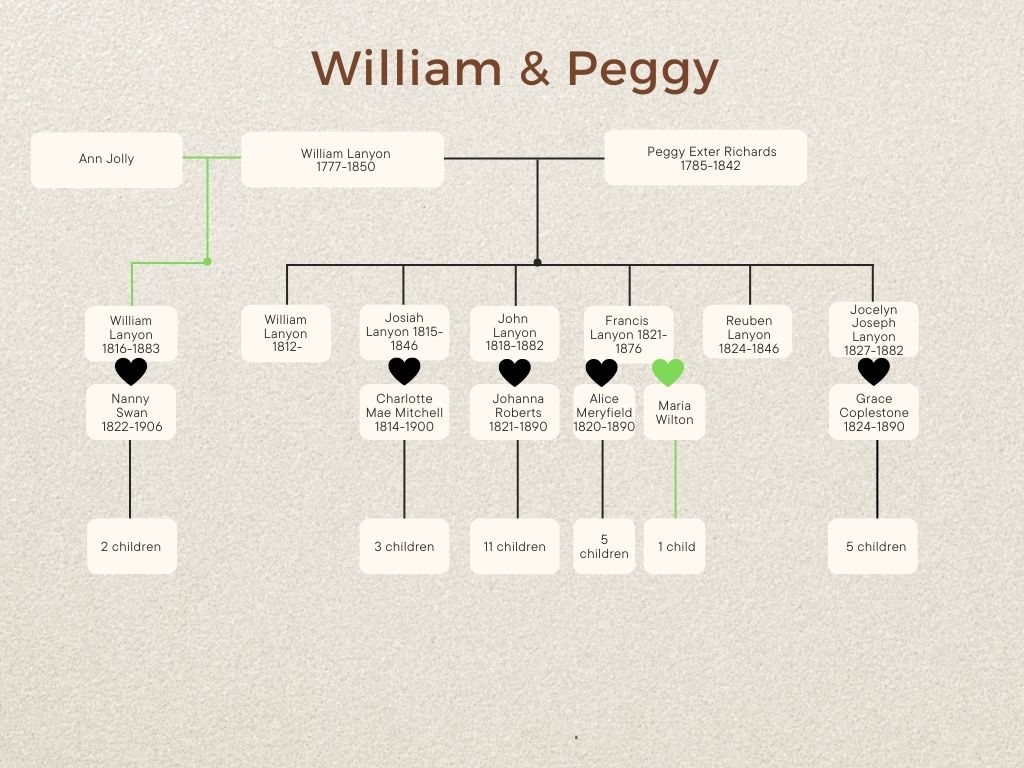
William Lanyon and Peggy Exter Richard’s sons, Josiah and Reuben were among the thirty nine miners drowned.
The Royal Cornwall Gazette Jul 1846
Josiah Lanyon 1815-1846
Josiah married Charlotte Mae Mitchell at St Allen in 1837. They had four children:
Reuben 1838-1895 married Elizabeth Francis – six children: two died in infancy, Reuben, a school teacher died unmarried, aged 28, Mary Ellen married her cousin also called Reuben Lanyon (the son of John Lanyon and Johanna Roberts) but they had no children. Two sons Francis and Edwin had children.
Edwin 1840-1871 he was a miner and emigrated to California where he died, he was unmarried
Mary Jane 1842-1888 was a milliner and a spinster
Josiah 1845-1912 was a grocer and a bachelor
Josiah’s widow Charlotte died in 1900 at the age of 86.
Josiah & Charlotte Lanyon’s headstone
Reuben Lanyon 1824-1846
Reuben was Josiah’s younger brother and drowned alongside him in the mine disaster aged just 22.
Josiah and Reuben’s family tree
Six Lanyon boys were subsequently named after him.
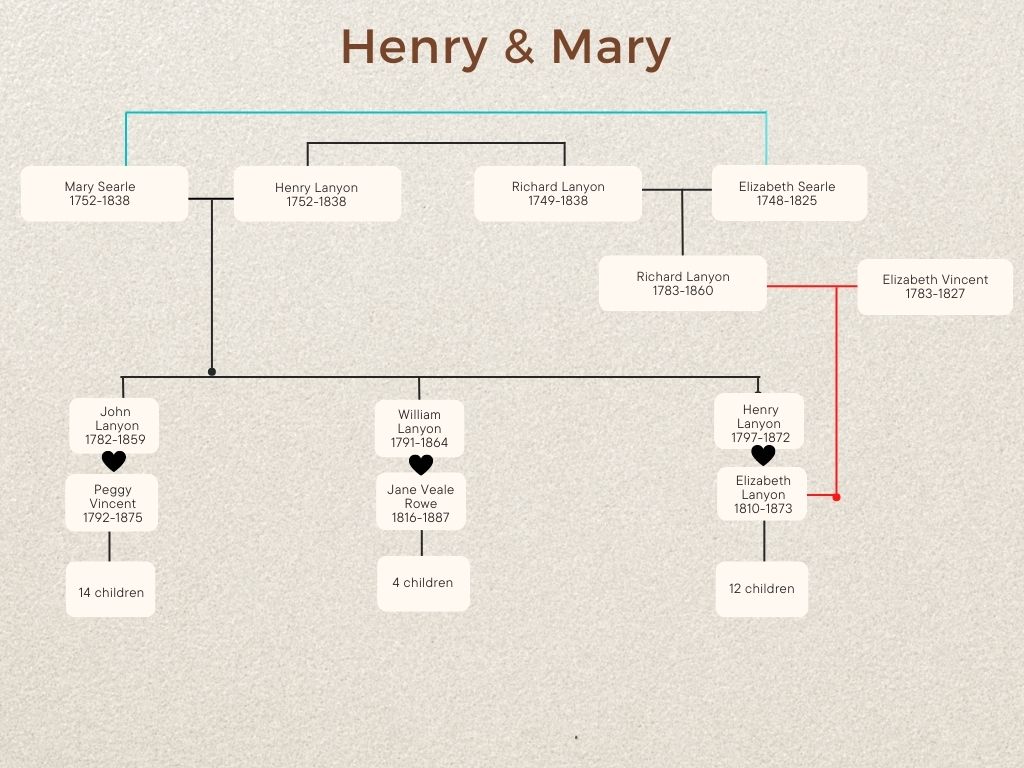
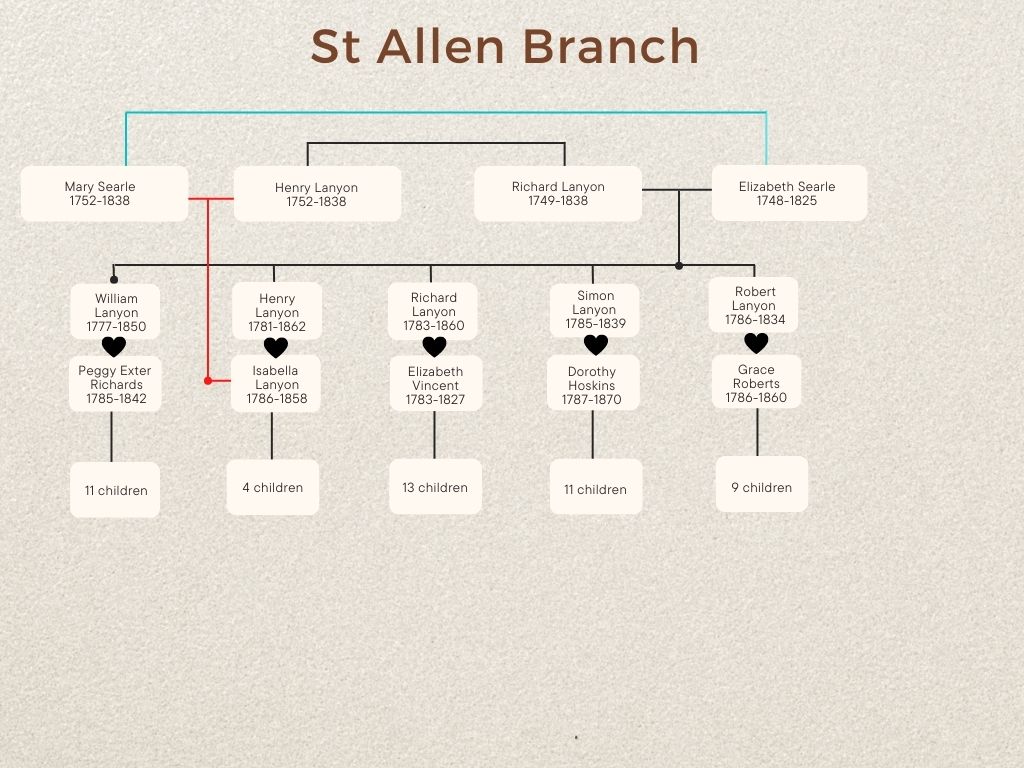
Two Lanyon brothers (Richard & Henry) married two Searle sisters (Elizabeth & Mary) and each couple had ten children. This post is about Richard and Elizabeth’s sons who had children.
Five of Richard’s and Elizabeth’s sons had children to carry on the Lanyon name.
William Lanyon 1777-1850
William was the eldest son and in 1803 he married Peggy Exter Richards at St Allen. They had eleven children:
Isabella 1806-1874 married Andrew Batten, a farm labourer at St Allen in 1809 – eight children (Isabella and Sarah may have been twins as they were both baptised on the same day in 1806)
Sarah 1806-1876 married Richard Benny, a farm labourer, at St Allen in 1835 – three children
Elizabeth -1809 died young
Elizabeth 1811-1873 no trace of a marriage and date of death is possibly not correct
William 1812- aft. 1846 married Elizabeth Gill Bishop at St Allen in 1835 – five children but can’t trace any of them after 1846, perhaps they emigrated?
Josiah 1815-1846 married Charlotte Mae Mitchell
John 1818-1882 married Johanna Roberts
Francis 1821-1876 married Alice Meryfield
Reuben 1824-1846
Jocelyn Joseph 1827-1882 married Grace Coplestone
Hubert 1829-1848 died young
William also had an illegitimate child with Ann Jolly a farm servant:
William 1816-1883 married Nanny Swan
Two sons called William just adds to the confusion!
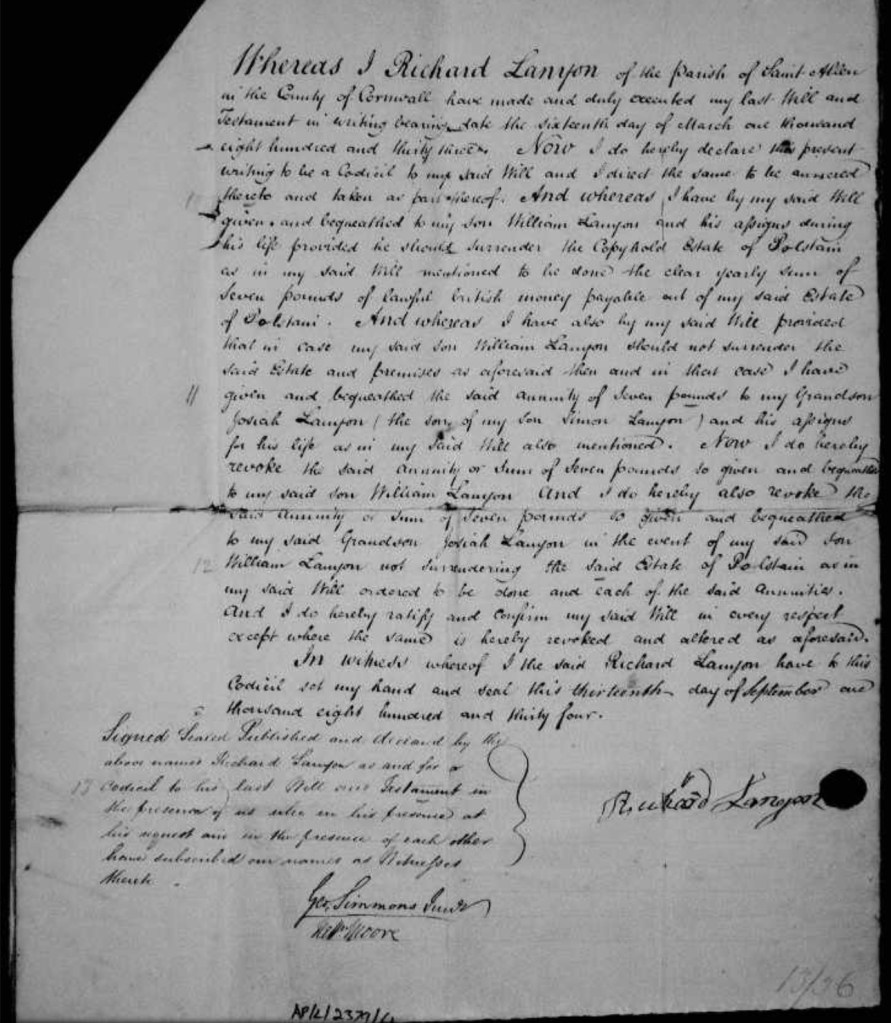
His father Richard died in February 1838 and he had changed his will and left his estate to his son Richard and a codicil removed an annuity of £7 for William. In Mar 1838 he was sent to Bodmin Debtor’s Prison as he had a debt of £93. 3/-1d owed to Thomas Nicholas.
Perhaps the will was changed to protect the estate from legal action from Thomas Nicholas to recover his debt?
He was released from jail in Oct 1847 almost ten years later! He was permitted to remain at the jail for one extra night as neither his family nor his friends had come to pick him up and he was too weak to proceed alone. His wife Peggy had died in 1842.
He died at Little Trevalsa, St Allen in 1850 aged 72.
Richard Lanyon 1783-1860
Richard was the fourth son of Richard and Elizabeth (second son John was a bachelor). He was a farmer and inherited his father’s estate, Polstain. He married Elizabeth Vincent at St Allen in 1803, so father and son were both Richard Lanyons married to women called Elizabeth! He and Elizabeth had thirteen children:
Paul Vincent 1804-1882 was a farmer and agricultural labourer at Lanner Mill. He married Jane Truran at St Allen in 1854 at the age of 50. There were no children.
Elizabeth 1805-1807 died in infancy
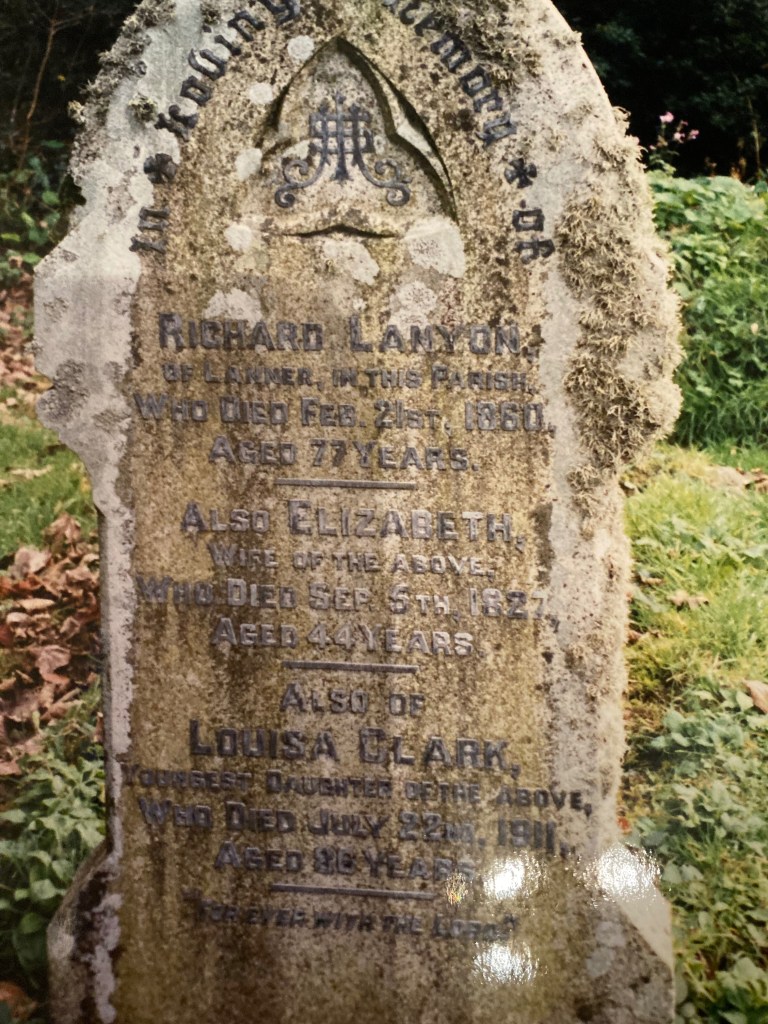
Mary 1807-1866 married Paul Clark a farmer and a widower in 1838, they had one daughter, Elizabeth Jane Vincent Lanyon Clark.
Richard 1809-1878 married Catherine Lanyon
Elizabeth 1810-1873 married Henry Lanyon
Catherine 1812-1895 spinster
Robert Vincent 1814-1894 married Elisabeth Bowden
Bella 1816-1894 married Thomas Johns – emigrated to Ballarat, Australia – seven children
Oliver Vincent 1818-1821 died in infancy
Samuel 1821-1875 farmer at Lanner, married Elizabeth Hosking Gill at Perranzabuloe in 1860 – no children
John 1824-1846 died young (Asthenic Fever – fatigue and lethargy, could be from TB) may be the twin of Eliza as they were baptised together
Eliza 1824-1897 married Thomas Northcott, a farmer of 50 acres – ten children
Louisa 1826-1911 married her widowed brother-in-law Paul Clark in 1872 at St Mary’s Wesleyan Chapel – no children
Grave of Richard, Elizabeth and younger sister Louisa Clark.
Simon Lanyon 1785-1839
Simon was baptised at St Allen in 1785 and married Dorothy Hoskins there in 1810. He died at St Neot, Cornwall on 26th Dec 1839 aged 52. His will described him as a yeoman of St Neot. They had eleven children:
Ann Buckland 1810-1896 married John Skewes – six children
Dorothy Hoskins 1813-1883 married John Clyma at St Neot in 1834 – seven children
Simon 1814-1837 died age 22, killed by a kick from a horse, no children
Josephus 1816-1817 (twin) died in infancy
Josiah 1816-1839 (twin) died age 22 of a seizure, no children
Josephus 1819-1844 died at Bodmin Asylum age 26 of a brain fever, no children
Elizabeth 1825-1883 spinster, lived with brother John and his family
Mary Ellen 1825-1898 married George Clyma – four children
Catherine 1825-1894 (3 sisters baptised on the same day so may be older than born in 1825) married Richard Lanyon (son of Richard Lanyon, her uncle) confused yet?
John 1826-1908 he was a saddler he married Louisa Smith Upward in Dorset in 1873 – no children
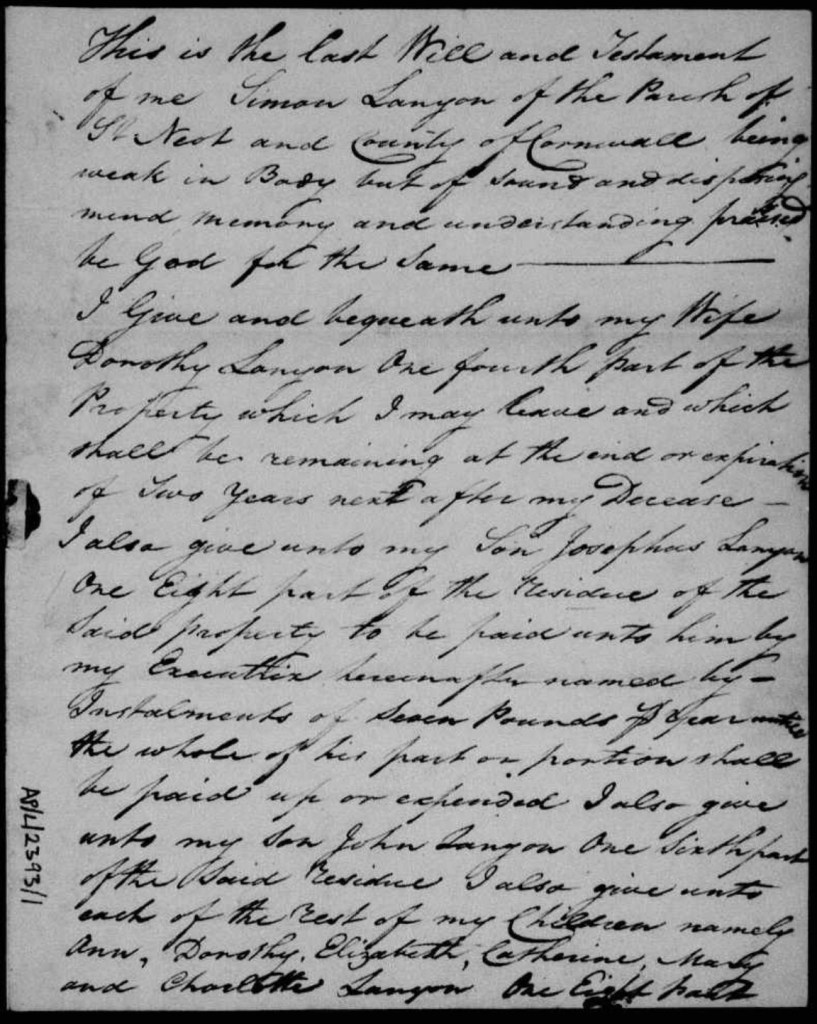
Charlotte 1827-1843 died age 16 of spasms. The death was mistakenly recorded as Caroline Lanyon by the undertaker. The entry was corrected in the parish register by G. Morris, Vicar in the presence of Dorothy Lanyon, her mother and Mary Pellow who were present at her burial. (Recorded as Caroline at GRO.)
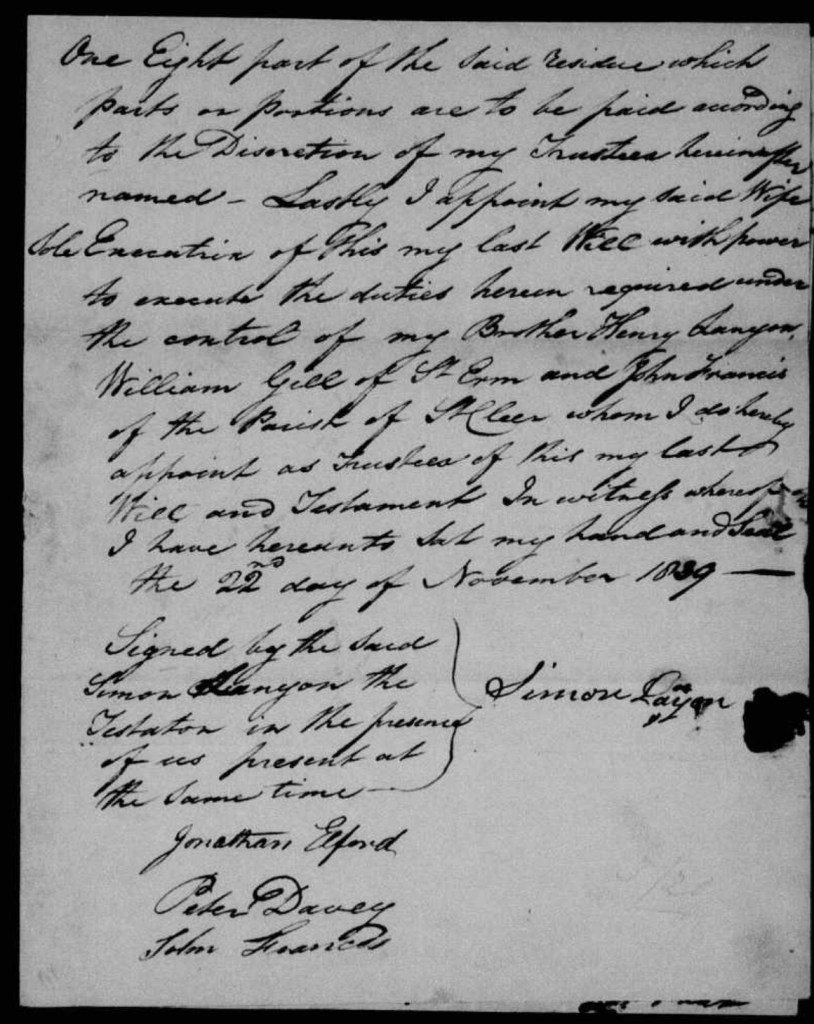
To my wife Dorothy one fourth part of residue of said property
To son Josephus one eighth part of residue of said property
To son John one sixth part of said residue
To each of the rest of my children namely: Ann, Dorothy, Elizabeth, Catherine, Mary and Charlotte one eighth residue
My wife sole executrix with power to execute the sureties herein required under the control of my brother Henry Lanyon, William Gill of Erme and John Francis of Par, St Cleer whom I appoint as trustees
Robert Lanyon 1786-1834
Robert was the youngest son of Richard and Elizabeth and a farmer at Trevascus in Gorran, he married Grace Roberts at Probus in 1817.
Henry was Richard and Elizabeth’s third son, he married his cousin Isabella. Henry was determined to join the navy and ran away three times so they bought his uniform and his training began.
In retirement he was renowned for his stirring tales of naval battles but it has proved difficult to find any records to substantiate these claims. There is an account of his naval career written by George Carter a grandson of Simon Lanyon of Mineral Point, Wisconsin who was a nephew of Henry Lanyon.
An account of the service of Captain Lanyon with the British Fleet in the War between Great Britain and the United States 1812-1814.
At Detroit, Michigan
The British Navy Lists record that Henry Lanyon was Navigation Master of His Majesty’s Ship ‘Horatio’, commanded by the Rt. Hon. Lord George Stuart which sailed from Spithead for America in 1812.
The Lanyon family records state that Captain Lanyon placed the British flotilla before Detroit when it fell to the arms of England.
James’ “History of the War Between Great Britain and the United States” states that armed British ships blockaded the lake at Detroit and aided in its capture on August 16, 1812 by British troops, which had been conveyed there by boats. The American Commander, Brigadier General Hull, in reporting his defeat to the American Secretary of War, under date of August 26, 1812, wrote:
“The body of the lake being commanded by the British armed ships, and the shores and rivers by gun boats, the army was totally deprived of all communication by water.”
The foregoing historical record confirms the Lanyon family record as to the activities of the British flotilla that Captain Lanyon placed before Detroit in 1812.
At Washington & Baltimore
The British Navy Lists record that Henry Lanyon was master of His Majesty’s ship ‘Tonnant’, carrying 80 guns, which sailed from England to North America in 1814.
James’ History of the War states that the ‘Tonnant’ was the flagship of Sir Alexander Cochrane, K.B., Vice Admiral and Commander in Chief of His Britannic Majesty’s ships and vessels upon the North American Station. Mahan’s History of the War states that Admiral Cochrane was in charge of both the Atlantic and Gulf Coast fleet of 20 war vessels and 4000 troops.
James’ History (Volume 2) contains the following statement in regard to the Tonnant, of which Captain Lanyon was the Sailing Master:-
“On the 24th of July (1814) the (British) squadron arrived at Bermuda, and there joined Vice Admiral Cochrane, having received on board the Tonnant Major General Ross and his staff , sailed for Chesapeake Bay; and on the 14th of August arrived, and joined the Albion, Rear Admiral Cockburn, off the mouth of the Potomac. On the next day, Major General Ross, accompanied by Rear Admiral Cockburn, went on shore to reconnoitre. It was during the excursion with General Ross, that rear Admiral Cockburn suggested the facility of an attack upon the city of Washington; and General Ross determined as soon as the troops should arrive from Bermuda, to make the attempt. On the 17th August, Rear Admiral Malcolm, with the troops, arrived and joined Vice Admiral Cochrane off the mouth of the Potomac; and the whole (including the ‘Tonnant’ with Captain Lanyon as Sailing Master) proceeded to the Patuxent, about 20 miles further up the bay.”
The Lanyon family records state that Captain Lanyon was under great disadvantage from the removal of navigation marks and also from the recent loss of a leg, which confined him to his quarters on the Tonnant, but nevertheless he successfully directed the steering by means of a relay of men from his quarters to the man at the helm. By this means as officer constantly sent him reports on the banks of the Chesapeake Bay. From that information Captain Lanyon directed the steering up the bay perfectly and without accident.
Being a Navigation Master and not a man-of-arms, Captain Lanyon took no part in the land operations around Washington and Baltimore, which in fact, he was physically unable to do, having only one leg. However his successful navigation of the British fleet up Chesapeake Bay made it possible for troops to land from the ships and speedily march to Washington, which was captured and partially burned on August 24 and 25 1814.
James’ History states that ‘the types and printing presses and materials of the Government paper at Washington were destroyed” and that a party of British troops under Captain Wainwright of the Tonnant destroyed a few stores and buildings in the Washington Navy Yard. The Government paper referred to was the National Intelligencer, published by Mr. Gales, a British subject, whose hostile statements had angered British commanders and they ordered his printing office to be burned. However on being told that the adjoining buildings would likely take fire, the printing office was spared, although as before stated, its types and printing materials were destroyed, which evidently greatly hampered Government printing in Washington for a time thereafter. Gales and Seaton afterwards did considerable Government printing, including the first American state papers.
After failure of the bombardment of Fort McHenry, Admiral Cochrane returned his flag to the ‘Tonnant’, as shown by his report written on board the ‘Tonnant’ in the Chesapeake under the date September 17, 1814. (James’ History page 514.) Admiral Cochrane’s report states that he hoisted his flag on the ‘Surprise’ so as to be able to pass further up the river for the attack on Fort McHenry, the ‘Tonnant’ being too large a vessel to navigate within range of the Fort. It is not known whether Captain Lanyon accompanied Admiral Cochrane and Francis Scott Key aboard the ‘Surprise’, but it seems quite certain that they must have met while Key was detained on the ‘Tonnant’ before the bombardment of Baltimore.
It was during the bombardment of Fort McHenry that the ‘Star Spangled Banner’ was written by Francis Scott Key.
The Star Spangled Banner
The Star Spangled Banner – The Lyrics
At New Orleans
After the failure of the British attack at Baltimore Sir Alexander Cochrane, with the ‘Tonnant’ and the Surprise, sailed for Halifax on September 19, 1814, to hasten the construction of flat bottomed boats intended to be employed in a great expedition on foot, according to James’ History, page 331.
James’ History next records that on December 8, 1814, Admiral Cochrane in the ‘Tonnant’, along with several other ships, arrived and anchored off Chandleur’s Island near New Orleans. In capturing several American gun vessels there, a boat from the ‘Tonnant’ was sunk and several of the crew killed or wounded (James’ History, pages 524-525.)
Admiral Cochrane in his report on the New Orleans campaign paid the following tribute to the officers and men of his squadron, which included the ‘Tonnant’, of which Captain Lanyon was the Navigation Master.
“In justice to the officers and men of the squadron under my command, who have been employed upon this expedition, I cannot omit to call the attention of my Lords Commissioners of the Admiralty to the laborious exertions and great privations which have been willingly and cheerfully borne, by every class, for a period of nearly six weeks.”
Maj Gen. Sir John Lambert, Commander of the British troops at the attack on New Orleans, reported their failure in a letter to earl Bathurst, written on board HMS ‘Tonnant’, off Chandleur’s Island, January 28, 1815 (James’ History page 505.)
Final action of the British fleet under Admiral Cochrane was its participation in the capture of Fort Bowyer on Mobile Point just as the war ended on February 11, 1815.
In action at Trafalgar, H.M.S. Tonnant accepting Monarca’s surrender – Nicholas Pocock, Public domain, via Wikimedia Commons
The Royal Cornwall Gazette (Dec 26th 1889) also featured an article about the Lanyons of Henver & St Allen.
They describe Henry Lanyon as “an officer in the Royal Navy…a man of considerable renown, being one of those skilful sailing masters in the service at the beginning of this century (19th) and constantly engaged in the memorable struggles of that period, and Admiral Lord Nelson frequently recognised his great aptitude for manoeuvring the fleet when in action, as in no small degree contributing to his brilliant success.”
The website Genealogy Trails mentions Simon Lanyon of Wisconsin:
“Mr. Lanyon’s uncle, Henry Lanyon, piloted the British fleet up the Potomac River to take Washington, in 1812; he was afterward Captain of a man-of-war, and was known as ‘Capt. Cork,’ on account of his cork leg.“
Sadly the only records I can locate are the Navy Lists which confirm that Henry Lanyon became a Master on 9 Nov 1809 and so far I haven’t found anything to link him to the ‘Tonnant’.
Jane Veale Mitchell (early 20th century Lanyon researcher) states that between 1809-1815 he served on HMS Truriculo, HMS Horatio and HMS Abercromby. By 1815 he was reserved on half pay. “Those who knew him at Truro remember his stirring tales.”
In 1817 he married his cousin Isabella Lanyon, the daughter of his uncle Henry Lanyon and Mary Searle. They had four children, sadly three of them died young.
Henrietta 1818-1900 spinster
Henry Scott 1819-1838 died young
Elizabeth Caroline 1824-1838 died young of ‘water on the brain’
Charles 1826-1842 was a draper, he died of Consumption (TB)
Henry died in Dec 1862, his wife Isabella died in 1858.
Henry & Isabella’s grave
Henrietta donated a lectern with her name on it and steps to Truro Cathedral and left her father’s gold jewelled sword and snuff box (a gift from the King of Sweden – Henry had piloted his ship) to the Cathedral but they have now disappeared.
There is a stained glass window in their memory at St Allen church.
In caram memoriam Henrici Lanyon RN obiit 8 Decembris 1862 et Isabella Lanyon obiit 18 Maii 1852 a filia sua Henrietta Lanyon (To the dear memory of Henry Lanyon RN who died 8th December 1862 and Isabella Lanyon who died 18th May 1858 from their daughter Henrietta Lanyon). Reproduced with permission of Michael Charter of Cornish Stained Glass Windows https://www.cornishstainedglass.org.uk
John was the youngest son of Thomas Lanyon and Margaret Paule and Thomas was the youngest son of the Golden Lanyon of Botrea, Sancreed.
Thomas Lanyon’s tree
John Lanyon 1711-1767
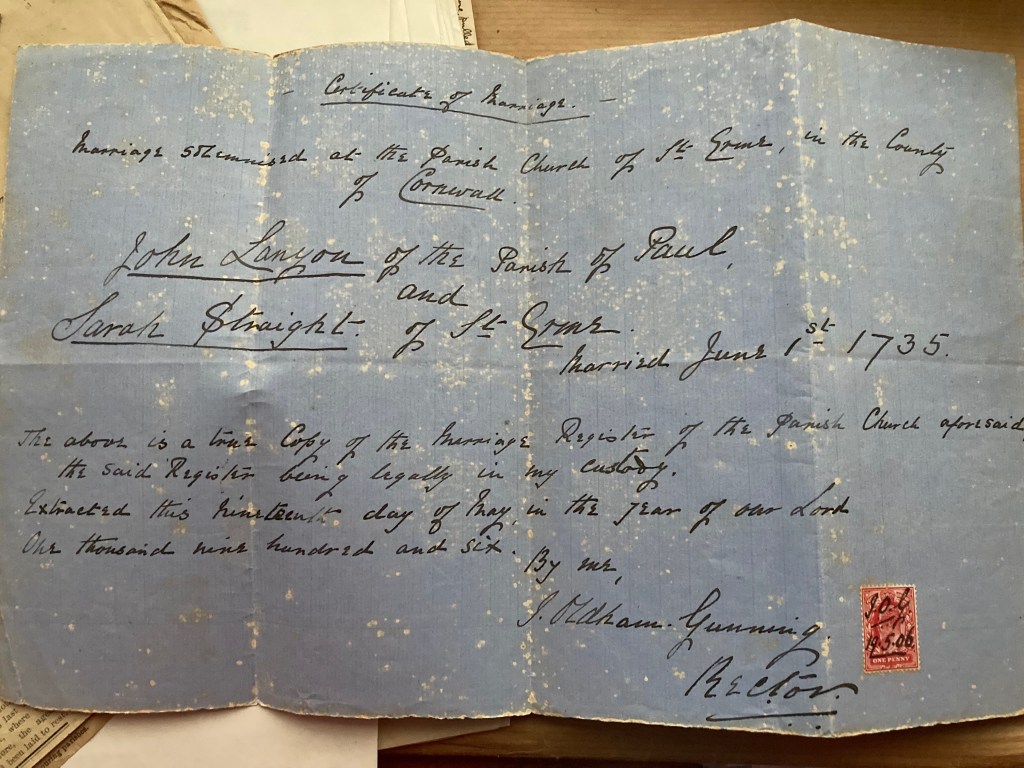
John was baptised at Paul in 1711 and married Sarah Straight of St Erme in 1735. John was a farmer.
Copy of the marriage record from St Erme issued by the rector in 1906
John and Sarah had six children:
Margaret 1736-1802 married John Searle, a labourer at Newlyn East in 1759 – six children
John 1740-1771 unmarried
William 1743-1763 unmarried
Richard 1746-1747 died in infancy
Richard 1749-1838 married Elizabeth Searle
Henry 1752-1838 married Mary Searle
Margaret, Richard and Henry married siblings. This post will follow Richard and Henry’s children.
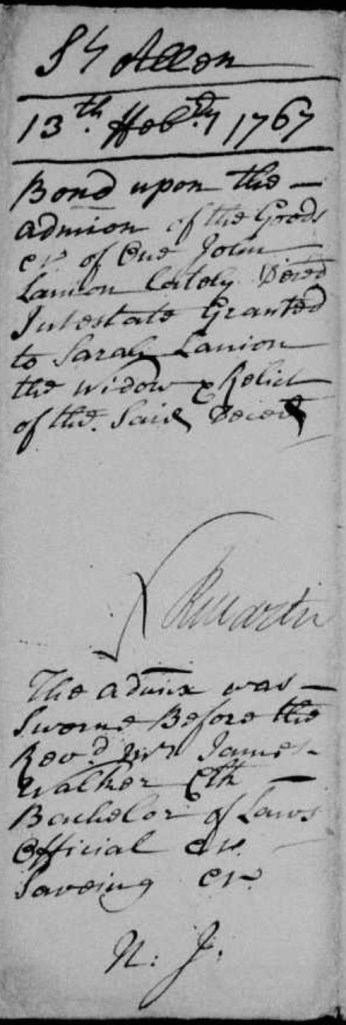
John died intestate in 1767 and administration of his estate was passed to Sarah his widow, Richard Straight, his brother-in-law and James Fox of Lostwithiel.
Source – CRO AP/L/1732
Sarah was mentioned in a legal document of 1787 about the farm Henver Wartha: Copyhold land on the Manor of Cargol, Newlyn East leased to Sarah Lanion (sic) widow, Henry Lanion son and John her grandson.
Sarah died in 1791 at the age of 82.
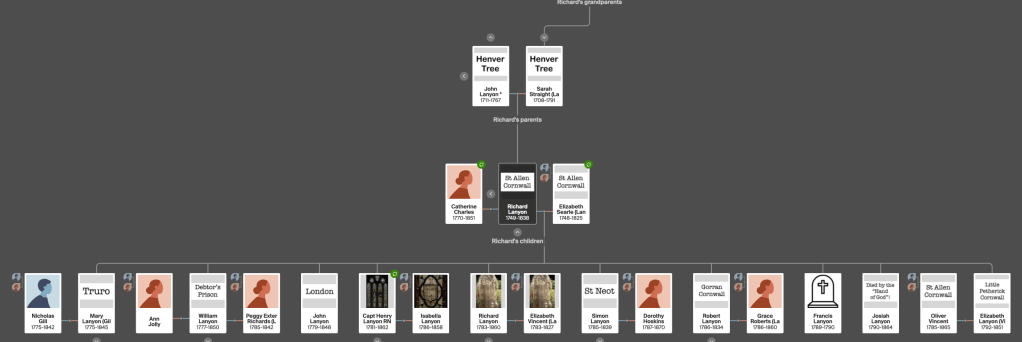
Richard Lanyon 1749-1838
Richard was baptised at St Allen on New Year’s Day 1749. In 1774 he married Elizabeth Searle. There is a mention of a Richard Lanyon in St Allen in Dec 1775 as a master cordwainer taking on an apprentice Stephen Harris. Although the time frame fits with this Richard I’m not sure it is him. Richard was a yeoman and farmed at Polstein in St Allen.
Richard Lanyon’s tree
Richard and Elizabeth had ten children:
Mary 1775-1845 married Nicholas Gill at St Allen in 1801 – eight children
William 1777-1850 married Peggy Exter Richards
John 1779-1848 no trace of a marriage a possible burial in London in 1848
Henry Lanyon 1781-1862 married Isabella Lanyon
Richard 1738-1860 married Elizabeth Vincent
Simon 1785-1839 married Dorothy Hoskins
Robert 1786-1834 married Grace Roberts
Francis 1789-1790 died in infancy
Josiah 1790-1864 was a shopkeeper, and later an agricultural labourer, he married Sally Messer at Gwennap in 1822. By 1851 he was no longer living with her and she was running the grocers shop. On the 1861 census she is listed as the head of house and a former school mistress and he is listed as a boarder at an alternative address. They had one daughter: Elizabeth Martha Lanyon born in 1822 she married Thomas Johns in 1843 and he was dead by 1846. They had two daughters. Josiah was found dead in a ditch after a fit in 1864 and died ‘by the hand of God’ Source – Royal Cornwall Gazette.
Elizabeth 1792-1831 married Oliver Vincent at St Allen in 1820 – seven children
Richard and Elizabeth lived at Polstein estate, St Allen. Elizabeth died there in 1825 at the age of 77. In 1827 at the age of 78 Richard married again! His second wife was Catherine Charles age 57, she was a widow.
Richard died at Lanner in 1838 at the age of 89, he left a will.
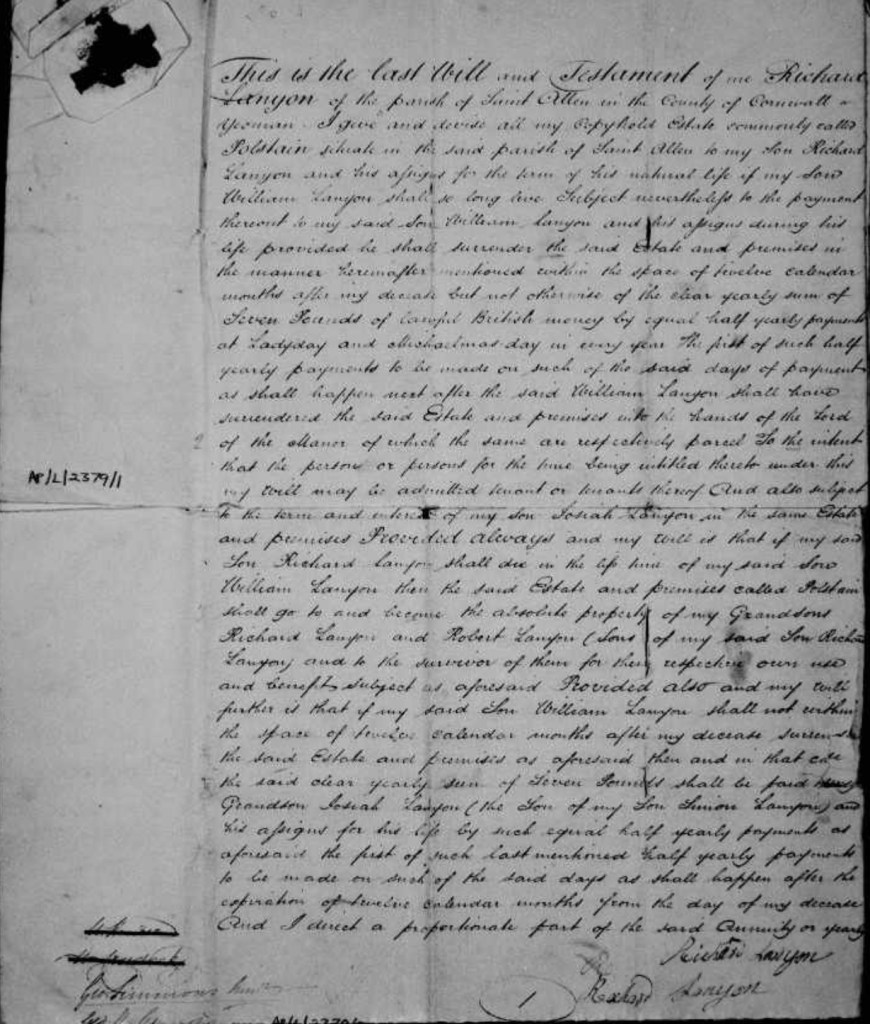
Richard’s will CRO AP/L/2379
Partial Transcript:
Date of will 1833 and codicil 1834
I give estate called Polstein in Par St Allen to my son Richard Lanyon and his assigns for his natural life if my son William Lanyon shall so long live subject nevertheless to payment thereout to my said son William Lanyon providing he shall surrender said estate and premises in manner hereinafter mentioned….after William shall have surrendered said estate into hands of the Lord of the Manor of which same are respectively parcel….subject to the term and interest of my son Josiah.
If son William die then estate to my grandsons Richard Lanyon and Robert Lanyon (sons of said son Richard) £7 to be paid yearly to my grandson Josiah Lanyon, son of my son Simon Lanyon
I bequeath £100 to my son Richard
Residue of estate to my grandson Richard Lanyon son of my son Richard
Codicil
Revoked £7 to William Lanyon his son also to Josiah Lanyon his grandson.
Proved 27th Sep 1839 effects under £300.
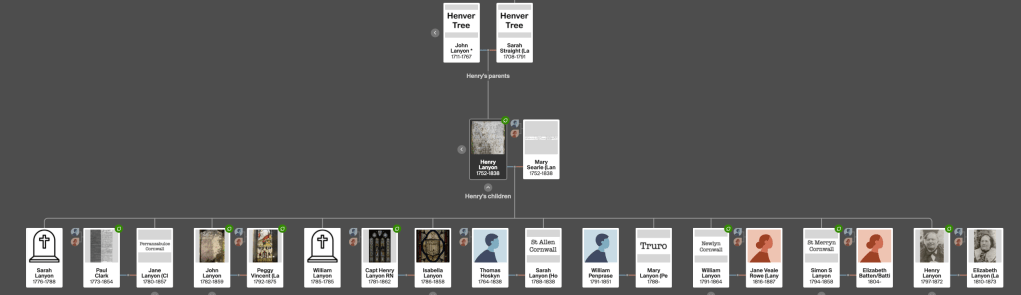
Henry Lanyon 1752-1838
Henry was baptised at St Allen in 1752 and married Mary Searle (sister of his brother’s wife Elizabeth) at Crantock in 1775. They had ten children as well.
Henry’s tree
Sarah 1776-bef. 1788 died young
Jane 1780-1857 married widower Paul Clark, a farmer at St Allen in 1814. They lived at Perranzabuloe and had two children
John 1782-1859 married Peggy Vincent
William 1785-1785 died in infancy
Isabella 1786-1858 married her cousin Henry Lanyon
Mary 1787- married William Penprase at St Allen in 1809 – ten children
Sarah 1788-1838 baptised in 1788 but may have been born earlier married Thomas Hoskyn at St Allen in 1803 – four children
William 1791-1864 married Jane Veale Rowe
Simon Searle 1794-1858
Henry 1797-1872 married his cousin Elizabeth Lanyon
Henry was a yeoman farmer and his estate was Trevalsa at St Allen. He was married to Mary for 63 years and he died just 3 weeks after her. His older brother Richard died three weeks after him.
Burial register for St Allen 1838
Henry died at Trefannick Farm where his daughter Sarah lived with her husband lived. (Sarah died in Nov 1838 of a paralytic seizure at Trefannick just a few months after her parents died.)
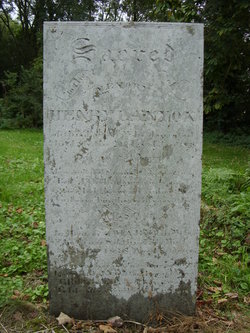
Henry’s grave stone
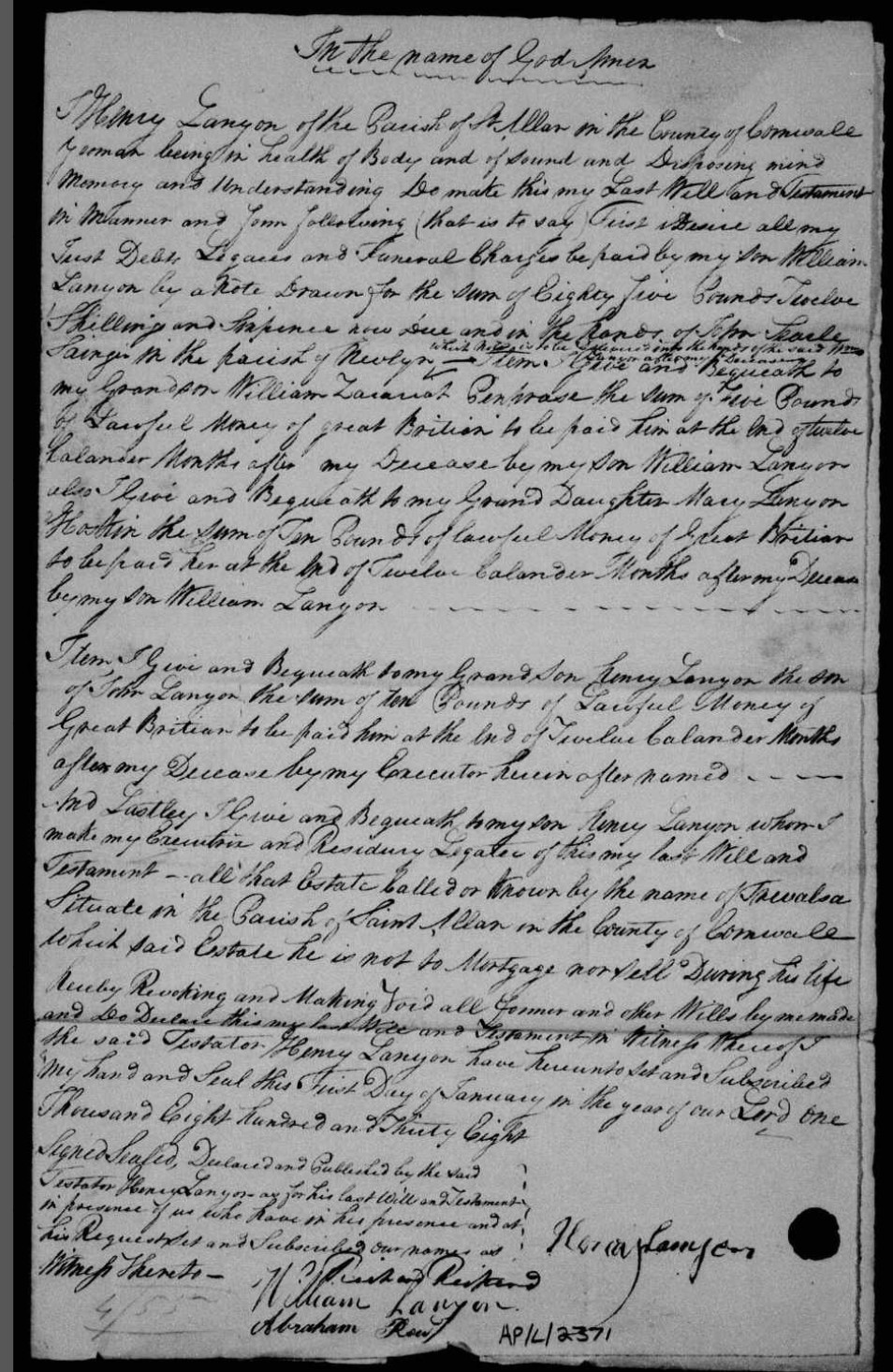
Henry left a will.
Source CRO AP/L/2371
Partial Transcript:
Debts to be paid by my son William Lanyon by a note drawn for £85 12/- 6d now due in the hands of John Searle in the parish of Newland
To my grandson William Zachariah Penprase £5
To my granddaughter Mary Lanyon Hosken £10
To my grandson Henry Lanyon son of John Lanyon £10
To my son Henry Lanyon, executor and residuary legatee of estate called Trevalsa in Par, St Allen
Proved 12 Apr 1838 Value under £450
Richard and Henry were the ancestors of hundreds of Lanyons who ended up all over the world and we’ll follow their sons in separate posts. Get ready for some complicated intermarrying!











 The Lanyons