Sometimes when researching family history you find a tiny story which really has to be retold.
This is the story of William Henry Lanyon’s ‘Difficult Journey.’
William Henry was the son of Richard Lanyon and Susan Tucker of Acton Castle. He was the eldest son born in 1825 and appears to have been quite an unusual man. Although he was married and had a large family he chose to live apart from them.
He was a gunpowder manufacturer and merchant and evidently needed to travel to London on business.
The Royal Cornwall Gazette reports that on 24 June 1869 William contacted Mrs Dobb from the Royal Hotel and ordered a bus to call at his residence at Strangways Terrace in Truro to take him to the train station. Unfortunately his booking was forgotten, the omnibus didn’t call and he missed his train.
William then did something that many modern rail travellers wish they could do….he ordered a special train to be got ready which took him to Bristol to catch the train up to London! The Victorian equivalent of an Uber!
The cost of this special run was £68 and William planned to claim that from the landlady of the Royal Hotel, Mrs Dobb, who had taken the original booking.
I was surprised to discover that there is a flourishing branch of the Lanyon family tree in Fiji!
After a little research I discovered this branch is descended from the Gwinear branch of the tree.
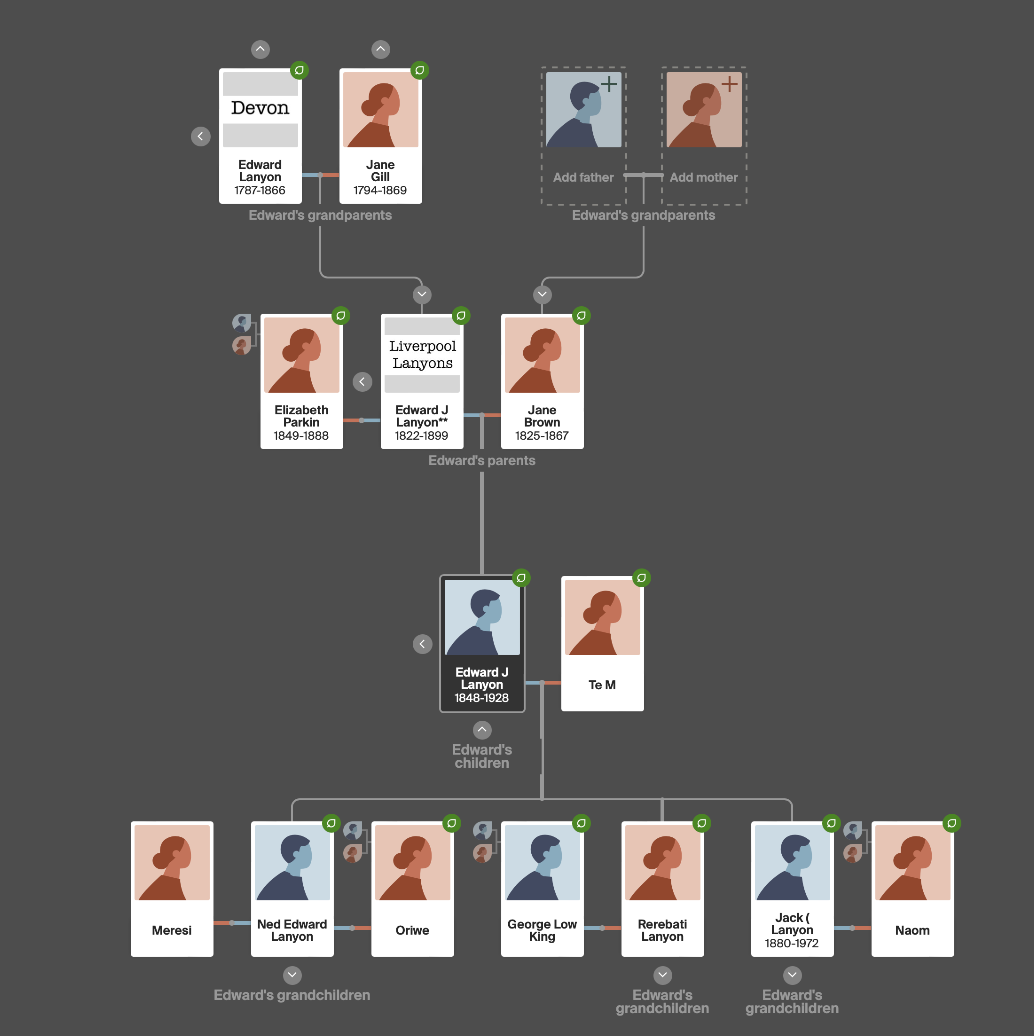
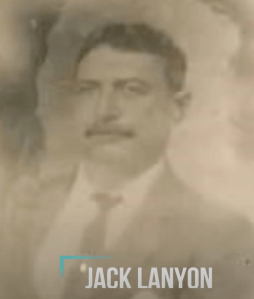
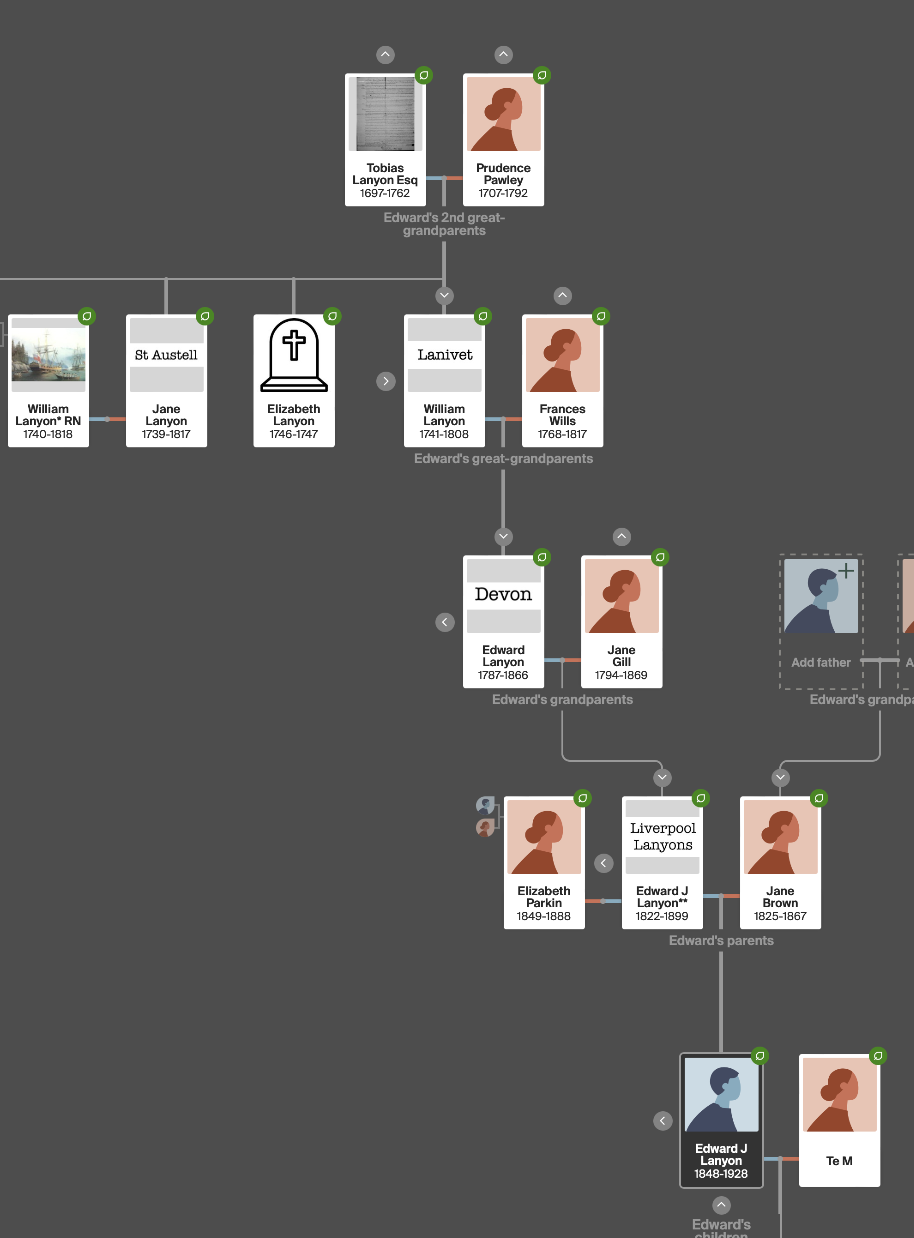
Edward James Lanyon 1848-1928 was the son of Edward James Lanyon and Jane Brown. He was born in Aylesbury, Buckinghamshire and for a long time there was no further trace of him. Then I came across the Fiji Lanyons on a Facebook post and a whole new avenue opened up!
Edward James Lanyon travelled out to the other side of the word to become a plantation owner. He was very successful, he married Te Maotarawa in Fiji and they had three children:-
Jack (John) Lanyon abt 1880-1972
Rerebati Lanyon
Ned (Edward) Lanyon
Jack married Naom and they had five children:-
Rerepati Elizabeth Lanyon 1910-
Wilson Lanyon 1910-1999
George Lanyon
Tapanou Lanyon
Mary Lanyon
Rerebati married George Low King and they had two daughters Mereka and Beri
Ned married Oriwe and they had five sons and his second wife was Meresi:-
Jack Lanyon 1940-1980
Edward Koaia Lanyon
David Lanyon
Frank Lanyon
John Lanyon
Curiously Edward James Lanyon was a great great nephew of William Lanyon RN who sailed with Captain Cook. Perhaps the desire to sail to the other side of the world is in the genes!
The Milliner – Richard Edward Miller, Public domain, via Wikimedia Commons
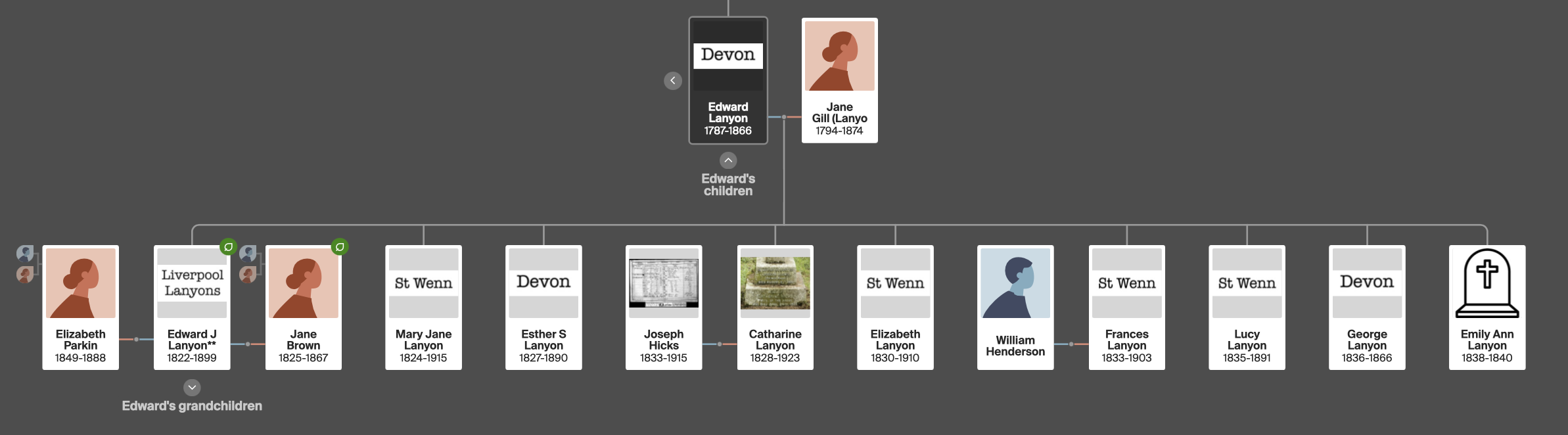
Edward Lanyon was the son of William Lanyon and Frances Wills. He was baptised on 20 Jul 1787 at St Ewe in Cornwall. He married Jane Gill in 1821 at High Bickington, Devon. They had nine children:-
Map of St Ewe near Mevagissey, High Bickington near Barnstaple and Ilfracombe.
Edward was an excise man. In 1851 the family were living at Ilfracombe and Edward was still working at the age of 63.
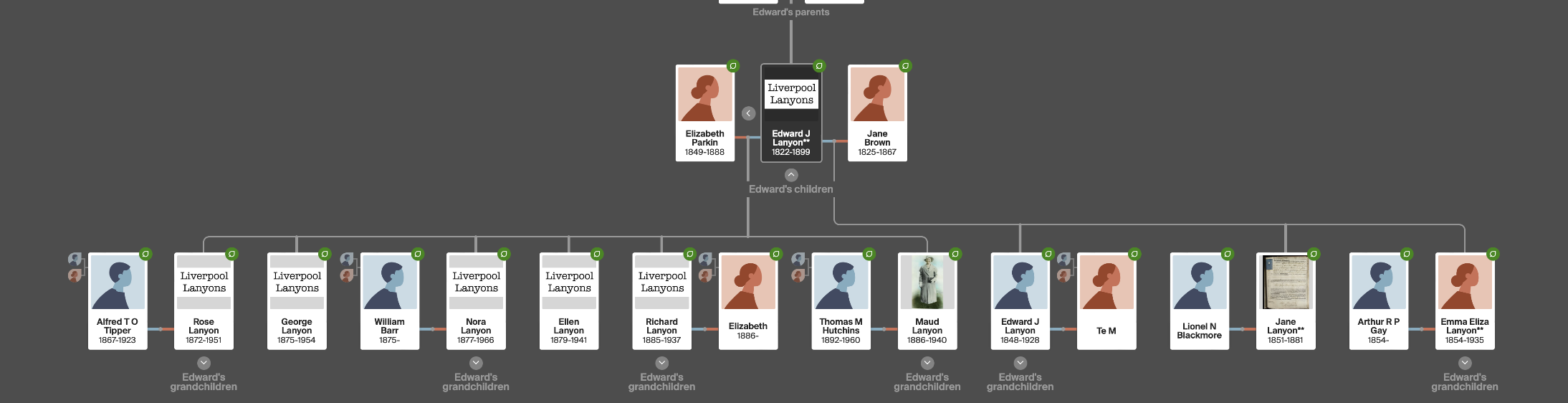
Edward’s eldest son Edward James Lanyon was an inland revenue officer, he married twice, first to Jane Brown who died before 1867 and second to Elizabeth Parkin. There were three children from the first marriage:-
Edward James Lanyon 1848-1928 he founded the Fiji branch of the Lanyon family
Jane Lanyon 1851-1881
Emma Eliza Lanyon 1854-1935
In 1867 Edward married Elizabeth Parkin in Barnstaple, Devon. They moved to Liverpool and they had six children:-
Rose Lanyon 1872-1951
George Lanyon 1875-1954
Nora Lanyon 1877-1966
Ellen Lanyon 1879-1941
Richard Lanyon 1885-1937
Maud Lanyon 1886-1940
Of Edward senior’s daughters only two married and they had no children. Catherine married Joseph Hicks and Frances Lanyon married William Henderson. All the daughters were at one time working as milliners or hat makers.
Over the decades the census shows them living together with Joseph and Catherine Hicks in London and Cornwall. Joseph was a warehouseman, a manufacturer of women’s clothing and a milliner. They must have been fairly successful as they were all able to live ‘on their own means’.
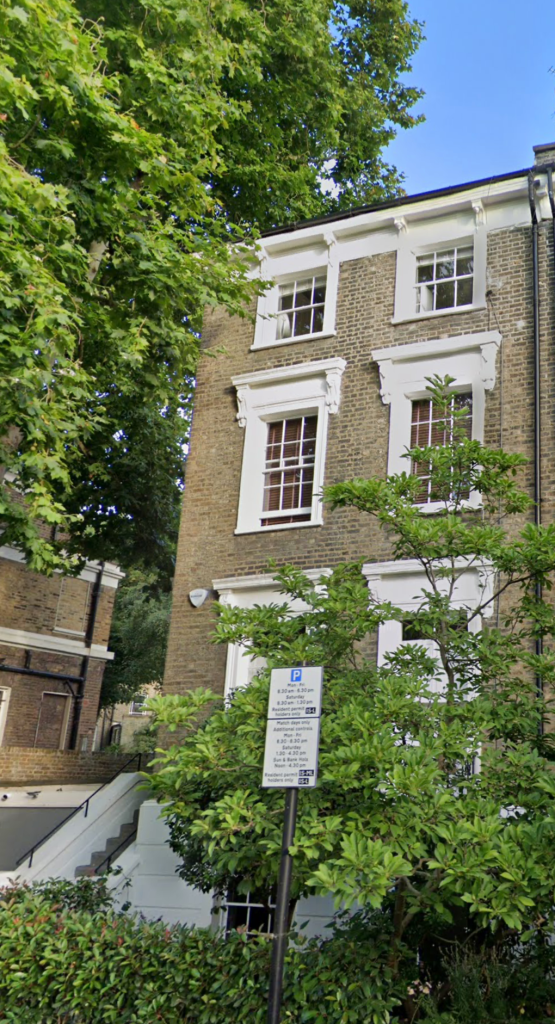
In 1881 they were living at 13 Alwyne Road, Islington, London and employed three servants.
13 Alwyne Road today.
Their younger brother George worked as a draper and a grocer, he died aged just 30 from TB.
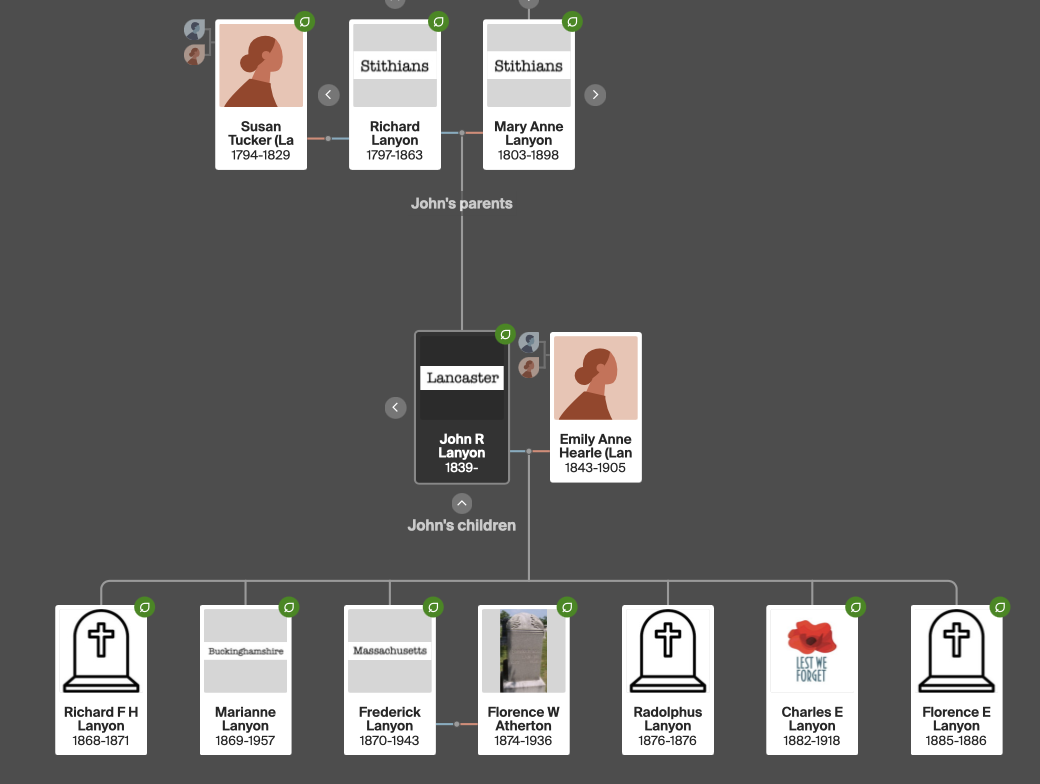
John Rodolphus Lanyon was born on the 20th September 1839 at Stithians in Cornwall. He was the son of Richard Lanyon and Mary Anne Lanyon (cousins).
John was also the half brother of Richard Sampson Lanyon, the father of Arthur Richard Lanyon who was found guilty of larceny of post office letters.
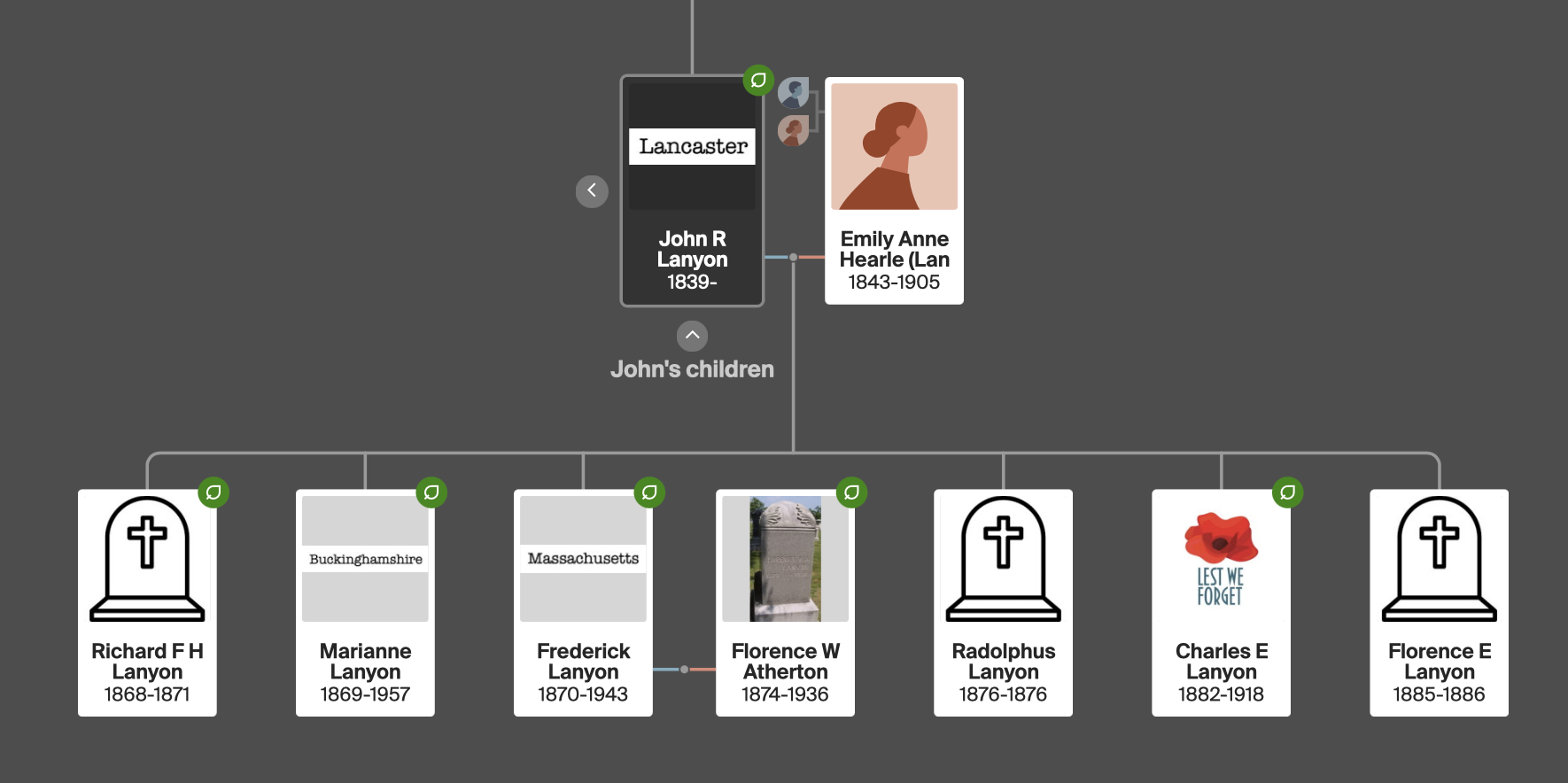
John was a solicitor in London. He married Emily Anne Hearle in 1867 and they had six children.
In 1893 John forged the will of Mary Wellington with the intention to commit fraud along with Richard Stevens an insurance agent. They were tried on the 7th and 8th of November 1893 and found guilty. Both men were sentenced to seven years penal servitude.
Description of John Rodolphus Lanyon
John was described as 5’4″, dark complexion, brown hair and blue eyes, with a cast in each eye. He’s also described as being born in 1841 which is wrong, he was born in 1839.
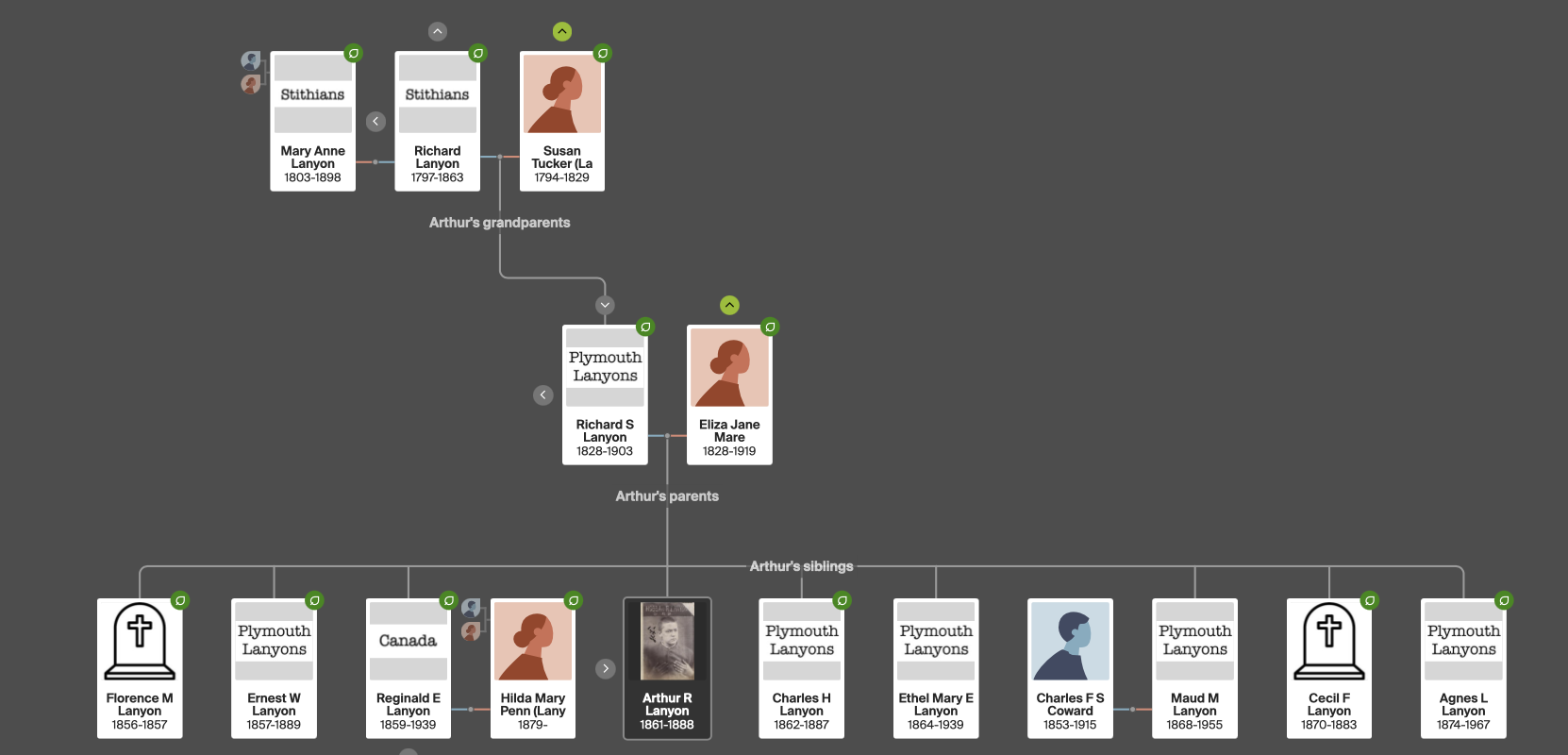
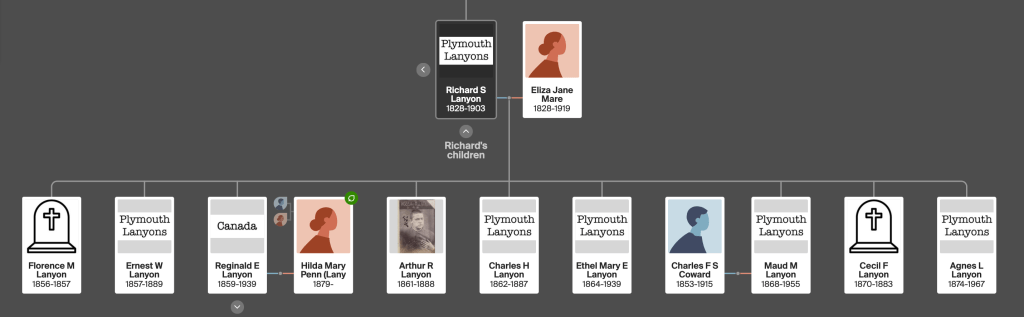
Arthur Richard Lanyon was born in Plymouth in 1861, he was the son of Richard Sampson Lanyon 1828-1903 and Eliza Jane Mare.
Arthur Lanyon’s tree
Richard was a gunpowder manufacturer (like his father) and a merchant in Plymouth. Arthur was one of nine children. They were a very respectable family. When Arthur left school age 16 he joined the post office as a clerk and worked in Exeter. The post office soon noticed that letters were going missing so they ‘posted’ a letter containing three half sovereigns which were marked and they waited to see what would happen.
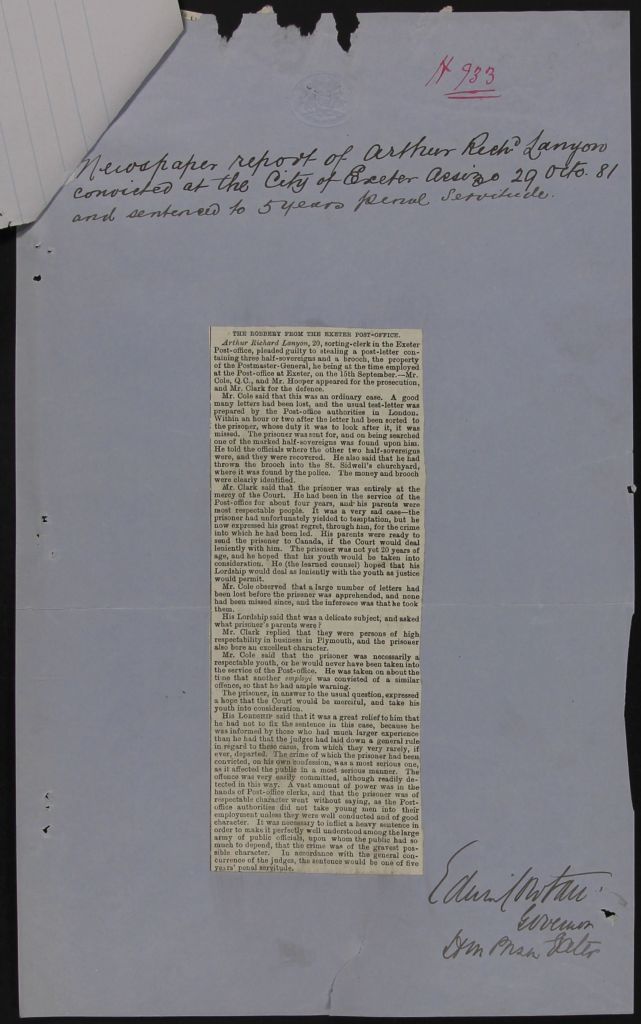
When the letter went missing Arthur was searched and the marked sovereigns recovered. Arthur was charged with larceny of postal letters, found guilty on the 29 October 1881 and sentenced to five years penal servitude. Appeals for leniency due to his age were ignored. His parents offered to send him to Canada instead, the appeal fell on deaf ears. Arthur was sent to Pentonville Prison.
Arthur’s photo from Pentonville Prison
Newspaper report of his conviction from his prison file.
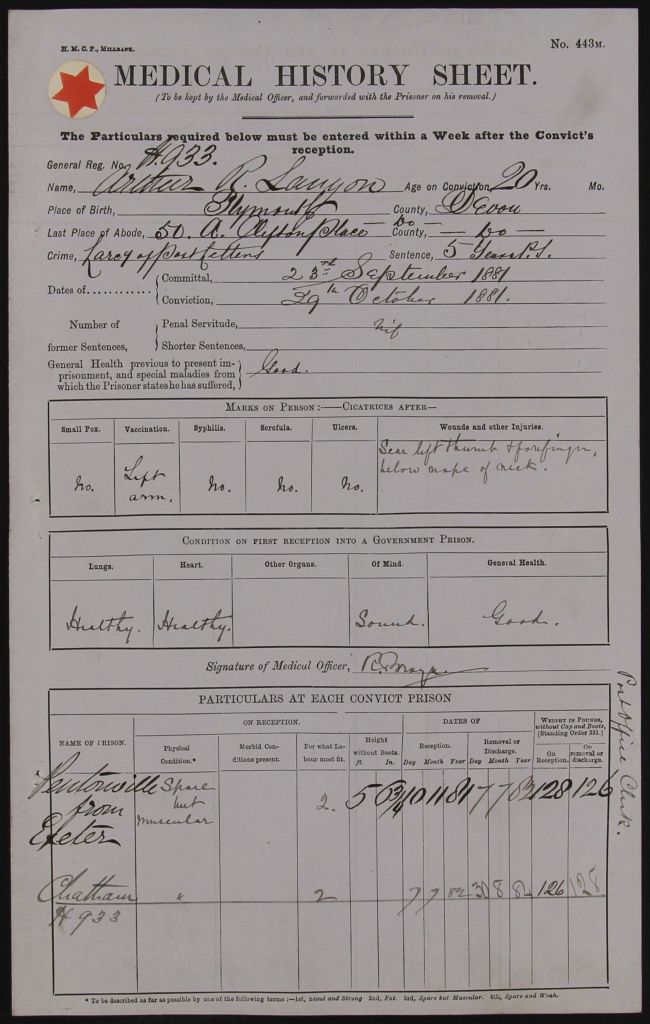
On entering prison Arthur was a healthy young man and his prison medical record notes nothing untoward.
Arthur’s medical sheet
On release his parents sent him to Canada. It was a chance of a new life. Arthur died in Vancouver on 5 August 1888 at the age of 27.
This post is about the Irish War of Independence 1919-1921.
This story starts on 21 January 1919 at Soloheadbeg when the Third Tipperary Brigade of the IRA ambushed and murdered two policemen of the Royal Irish Constabulary (RIC) who were escorting a consignment of explosives. The four men who carried out the ambush were Sean Hogan, Daniel Breen, Sean Tracy and Seamus Robinson, known as the ‘Big Four’.
Following the attack they went on the run and spent months moving around and often sleeping rough.
Public domain, via Wikimedia Commons
Sean Hogan was the ‘most wanted man in Ireland’ and in May 1919 he was finally captured and would almost certainly have faced the death penalty.
Sean Hogan – Public domain, via Wikimedia Commons
Hogan was to be transferred by train to Cork. A member of the RIC, who was also an IRA informant, hatched a plan to rescue him from the train.
The ambush took place at the Knocklong station in Limerick on 13 May 1919. It was the day of Hogan’s 18th birthday.
Hogan was escorted by four armed RIC officers (Michael Enright, Peter Wallace, John Thomas and Jeremiah Ring). The train was attacked by a group of armed men as it passed through the station. Sean Tracy and Ned O’Brien entered the car carrying Hogan and they opened fire on the police officers. Constable Michael Enright was killed immediately. A hand to hand fight then broke out on the train and more IRA volunteers joined in. Sgt Peter Wallace was shot and later died of his injuries.
Hogan was freed and he and the volunteers escaped, although some were injured. David O’Byrne, the local butcher, used his meat cleaver to break open Hogan’s handcuffs. The wounded were taken to Shanahan’s farm at Glenlora where they were treated. A huge manhunt began but Hogan and most of the attackers escaped.
Public domain, via Wikimedia Commons
Constable John Thomas was awarded the Constabulary Medal ‘for exceptional courage’. A year later he was abducted by the IRA to prevent him giving evidence at the trial of one of the Knocklong gang. Fortunately he escaped.
The IRA informant was Constable Jeremiah Ring.
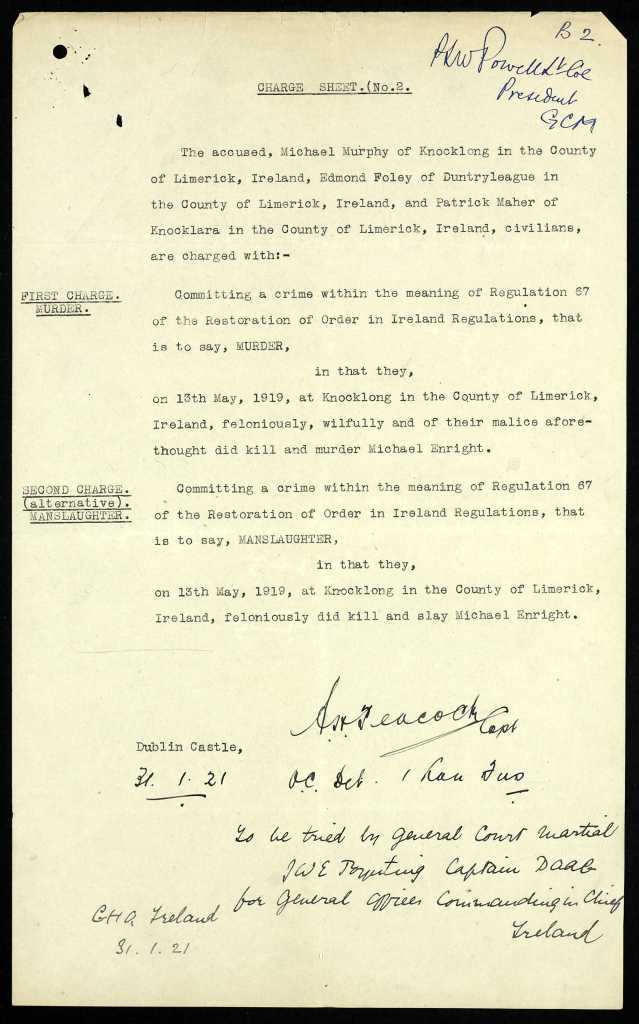
Eventually three men were charged with the murders: Edward Foley, Paddy Maher and Michael Murphy. Edward Foley had taken part in the ambush but Maher and Murphy were innocent men.
Foley and Maher in prison – Public domain, via Wikimedia Commons
There were two civilian trials where they were found not guilty. The authorities then decided on a third military trial and the men were court-martialled.
Charge Sheet Knocklong Trial
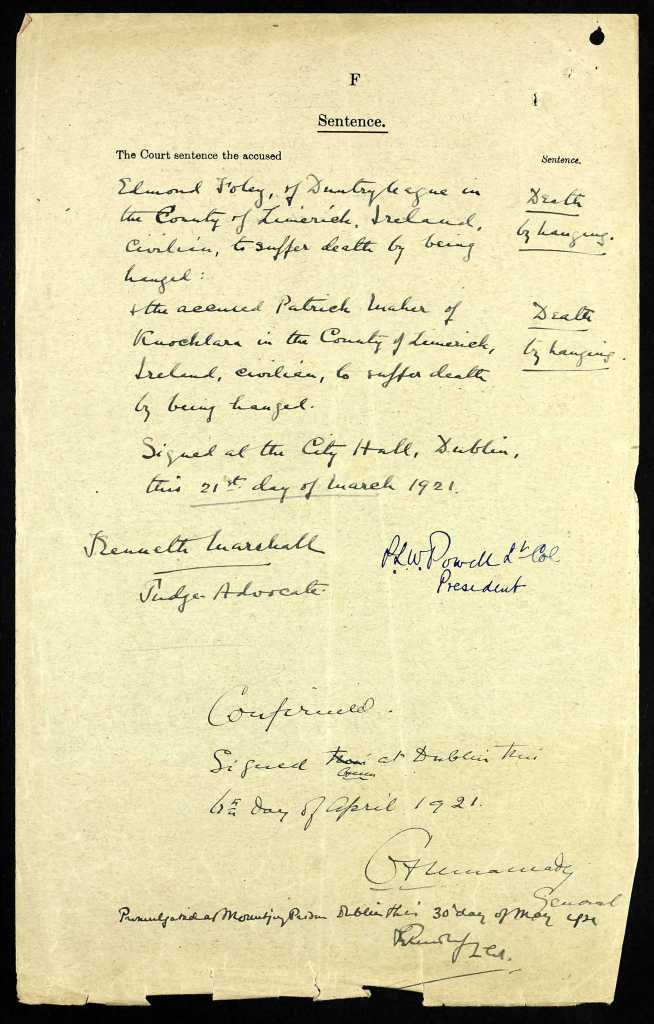
All three were found guilty. Foley and Maher were sentenced to death and Murphy imprisoned. Maher and Murphy were completely innocent of the crime.
Foley and Maher (not Mayer as stated in the newspaper) sentenced to death
Edward Foley and Paddy Maher were hanged at Mountjoy prison on 7 Jun 1921 and were buried within the prison grounds. They were part of the ‘Forgotten Ten’ who were buried there after being executed during the uprising. Their bodies were eventually moved and they were given a state funeral on 14 October 2001.
Michael Murphy was imprisoned and freed after the truce. He had been a private in the First Battalion Irish Guards and served in France. His army number was 10236. The lawyer for the defence described him as “a man of the most distinguished service with the Irish Guards in France.“
So why is this post of any interest to the Lanyon family?
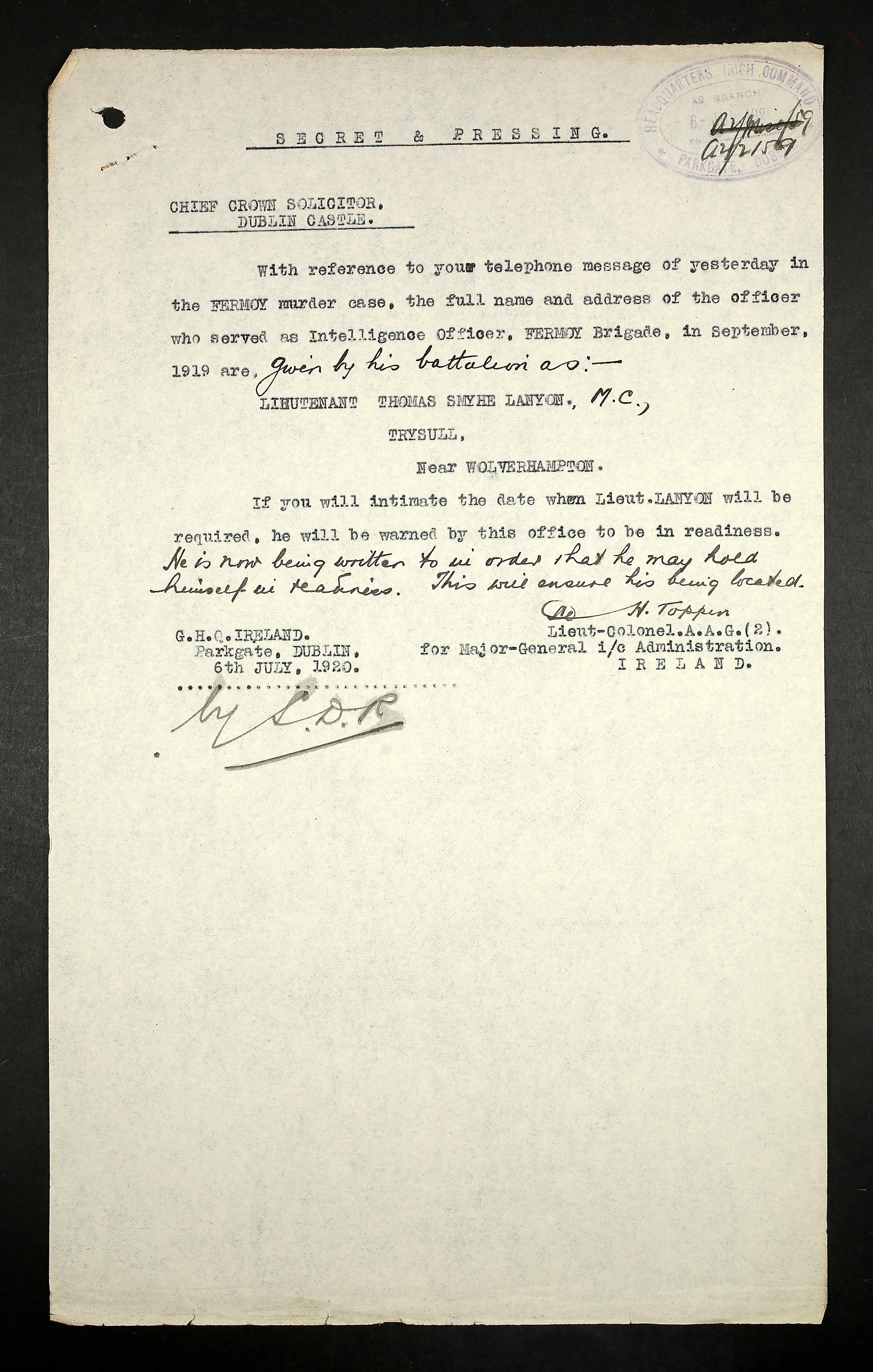
Lieutenant Thomas Smythe Lanyon M.C. was the Intelligence Officer for the Fermoy Brigade in 1919. He was called to attend the court-martial but doesn’t appear to have actually given evidence.
Thomas was in the King’s Shropshire Light Infantry during the First World War and was awarded a Military Cross:-
“For conspicuous gallantry and devotion to duty during a hostile raid on our trenches. Throughout an intense bombardment of all kinds of projectile he moved about the line, encouraging the men and setting a splendid example to all ranks. At one moment he was buried by a trench mortar on his way to visit one of his posts; and finding, on reaching it, that the whole garrison had become casualties, he promptly made a block with fresh men and repulsed the raiders with rifle and machine-gun fire. His fearlessness and energy were most marked.”
Shropshire Light Infantry Facebook Page
Where does Thomas fit on the tree?
Thomas married Vera Wrangle in 1922 and I don’t know what happened to him afterwards. It seems strange that I can discover so much and then hit a brick wall!
The military files relating to this were classified as Secret and sealed for 100 years and were only opened this year. (Source- NA WO/35/105)
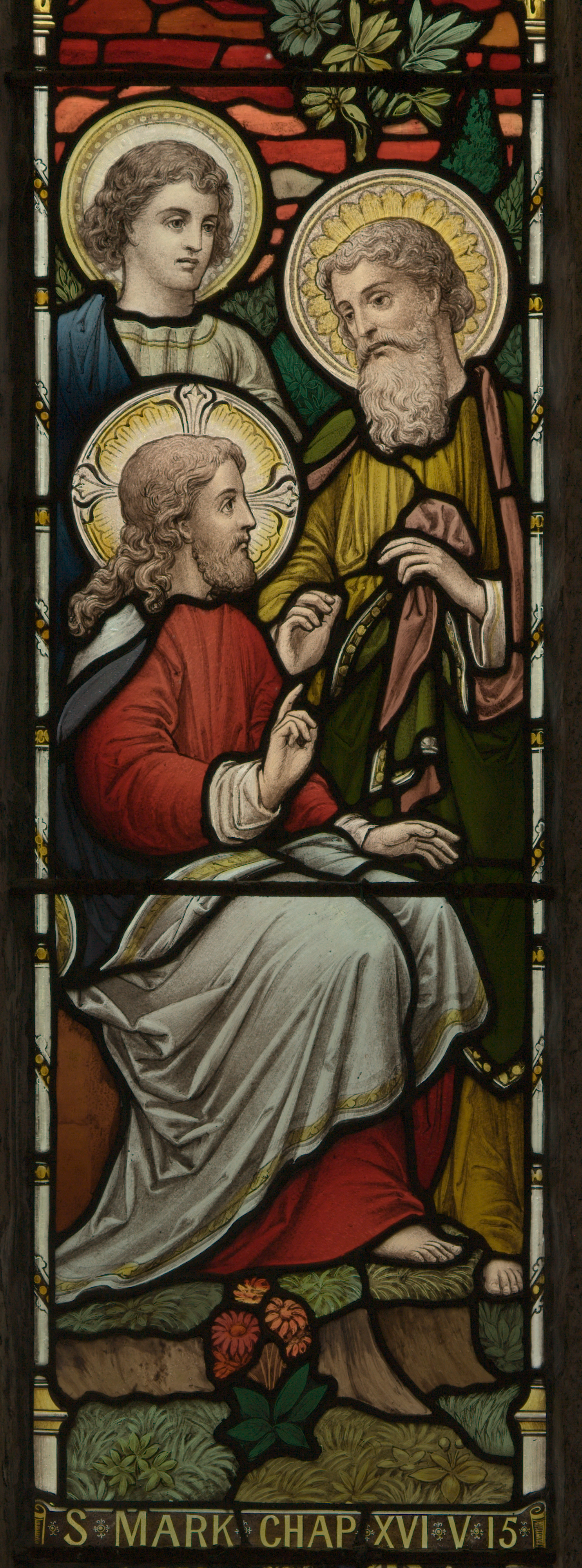
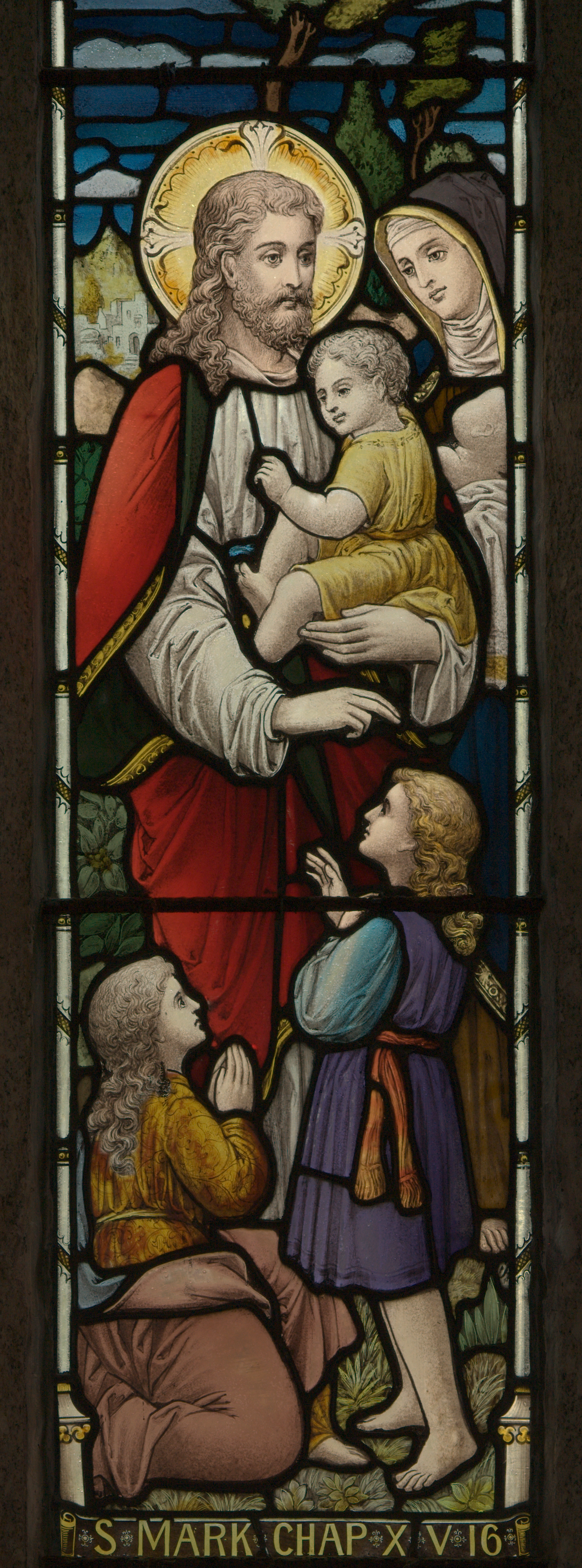
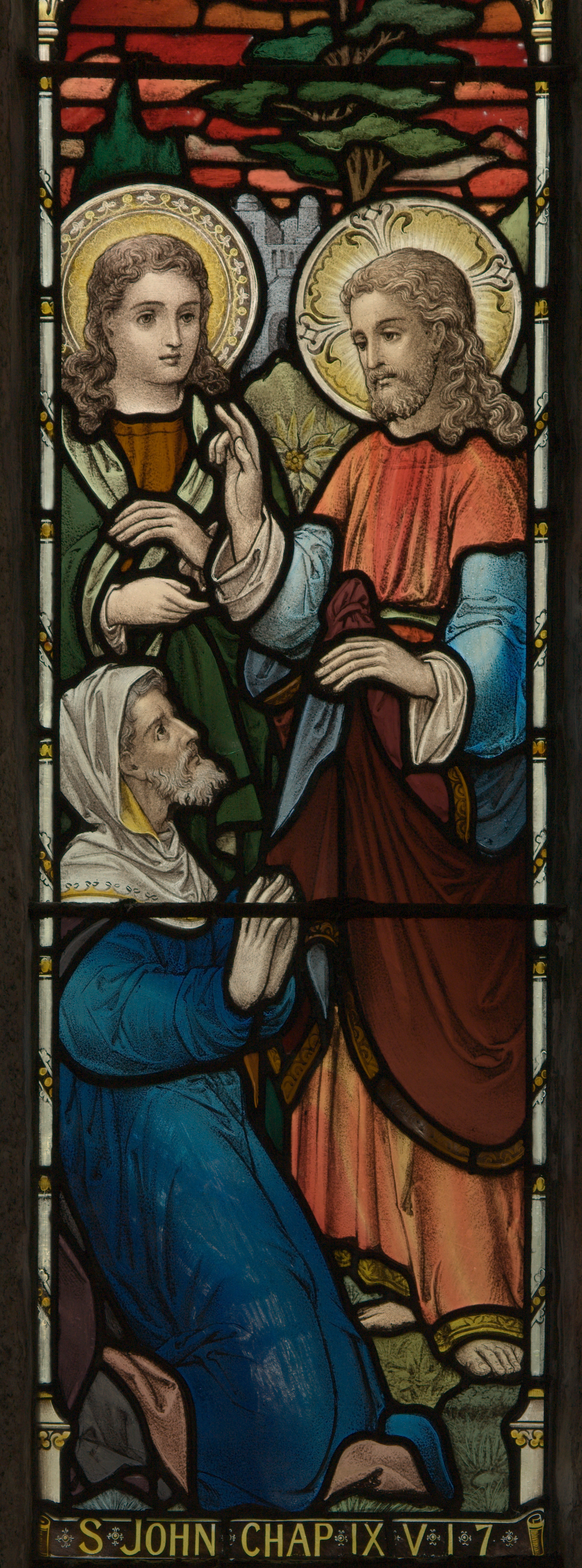
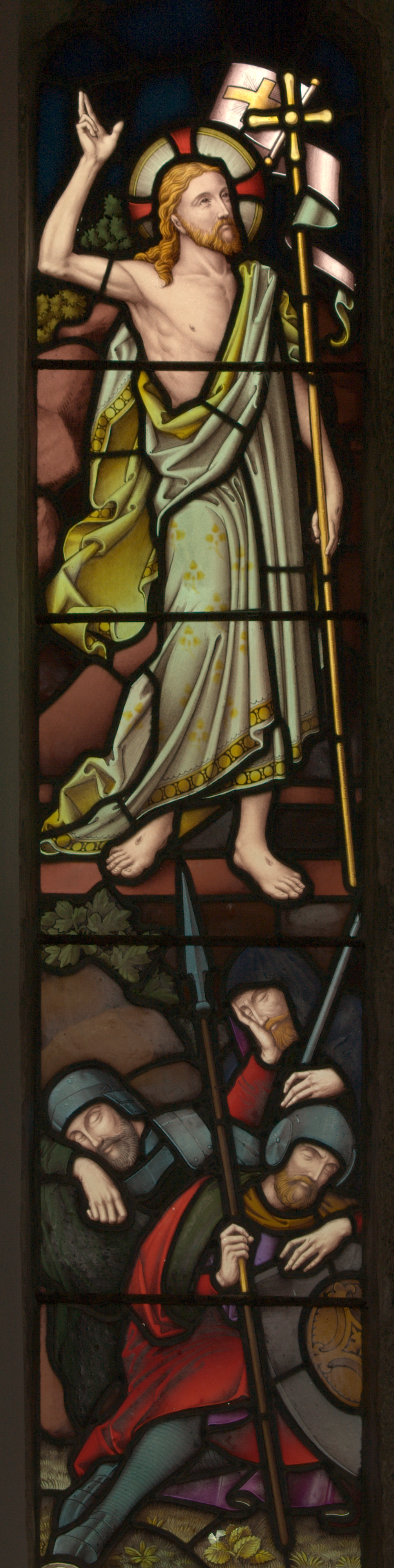
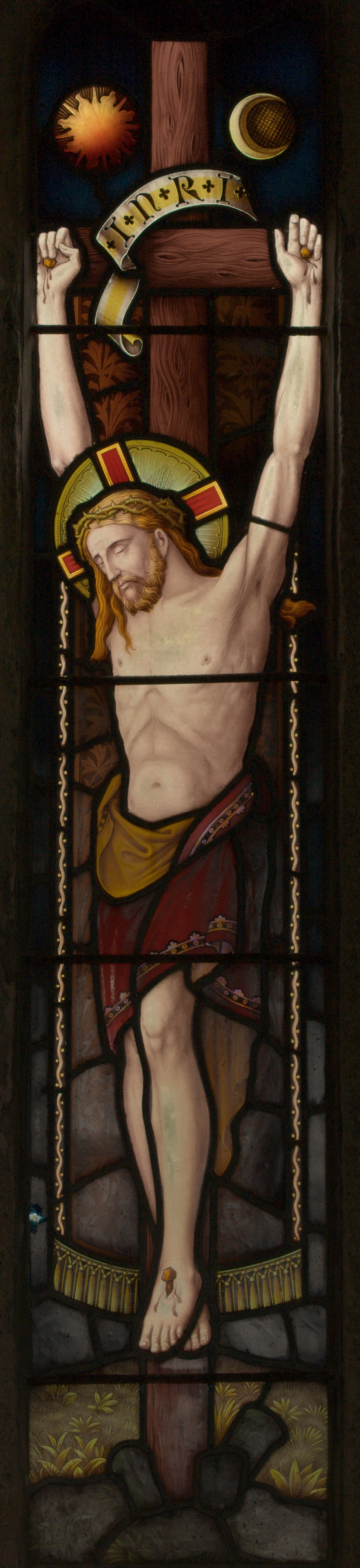
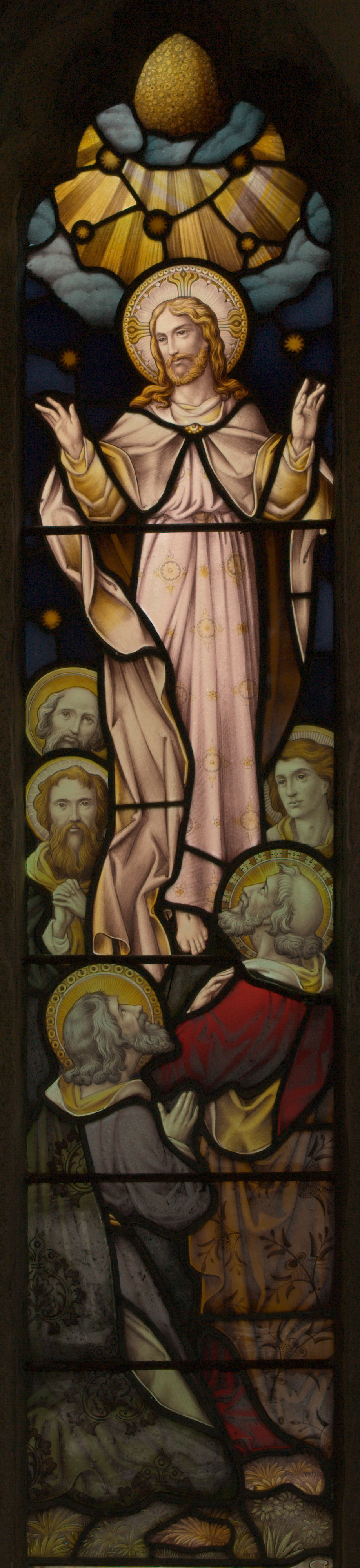
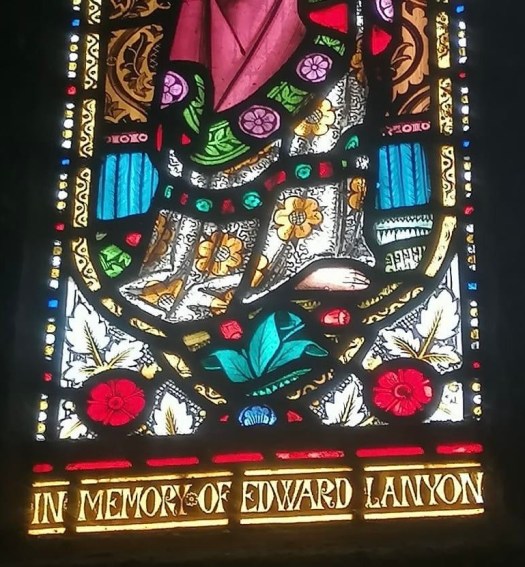
Whilst researching the family tree I discovered that there were several beautiful windows erected in memory of various Lanyons. Whilst the photos are included on the site along with the individuals concerned I thought it worth creating a page with all the windows together.
I’d like to thank Dr Mark Charter the webmaster of Cornish Stained Glass Windows https://www.cornishstainedglass.org.uk for permission to use the photos.
Camborne Church
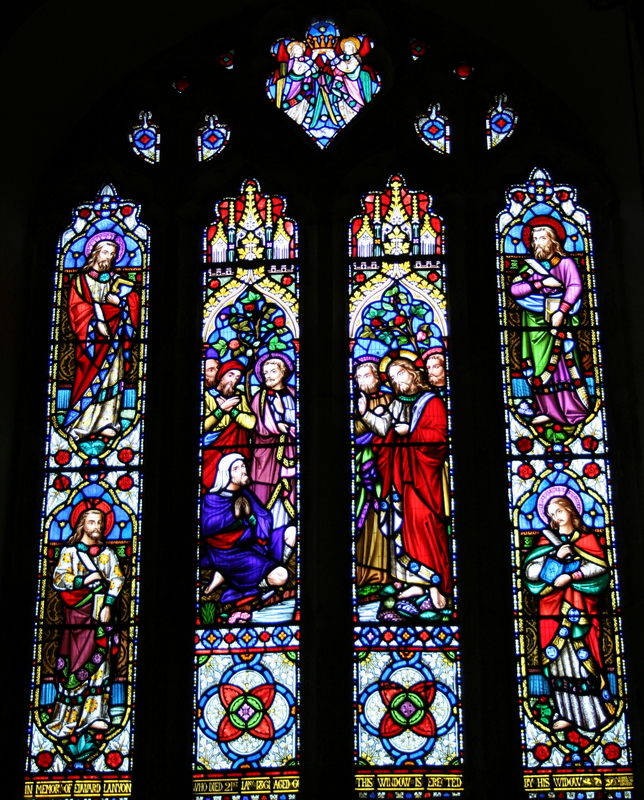
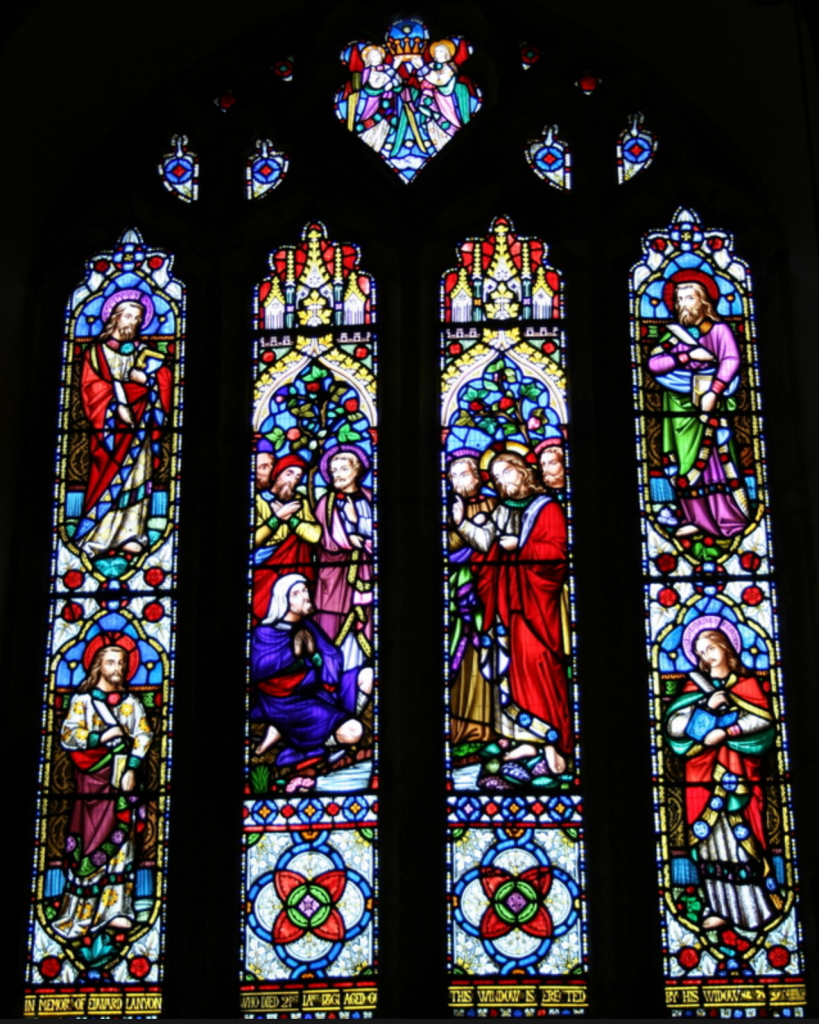
Christ healing the impotent man at the pool of Bethesda.
Made by Alexander Gibbs 1864. Erected by Charlotte Lanyon (Reynolds) in memory of her husband Edward who died in 1861. (Post about Edward in Gwinear Branch – Christ and the Impotent Man!).
St Allen Church
Chancel East
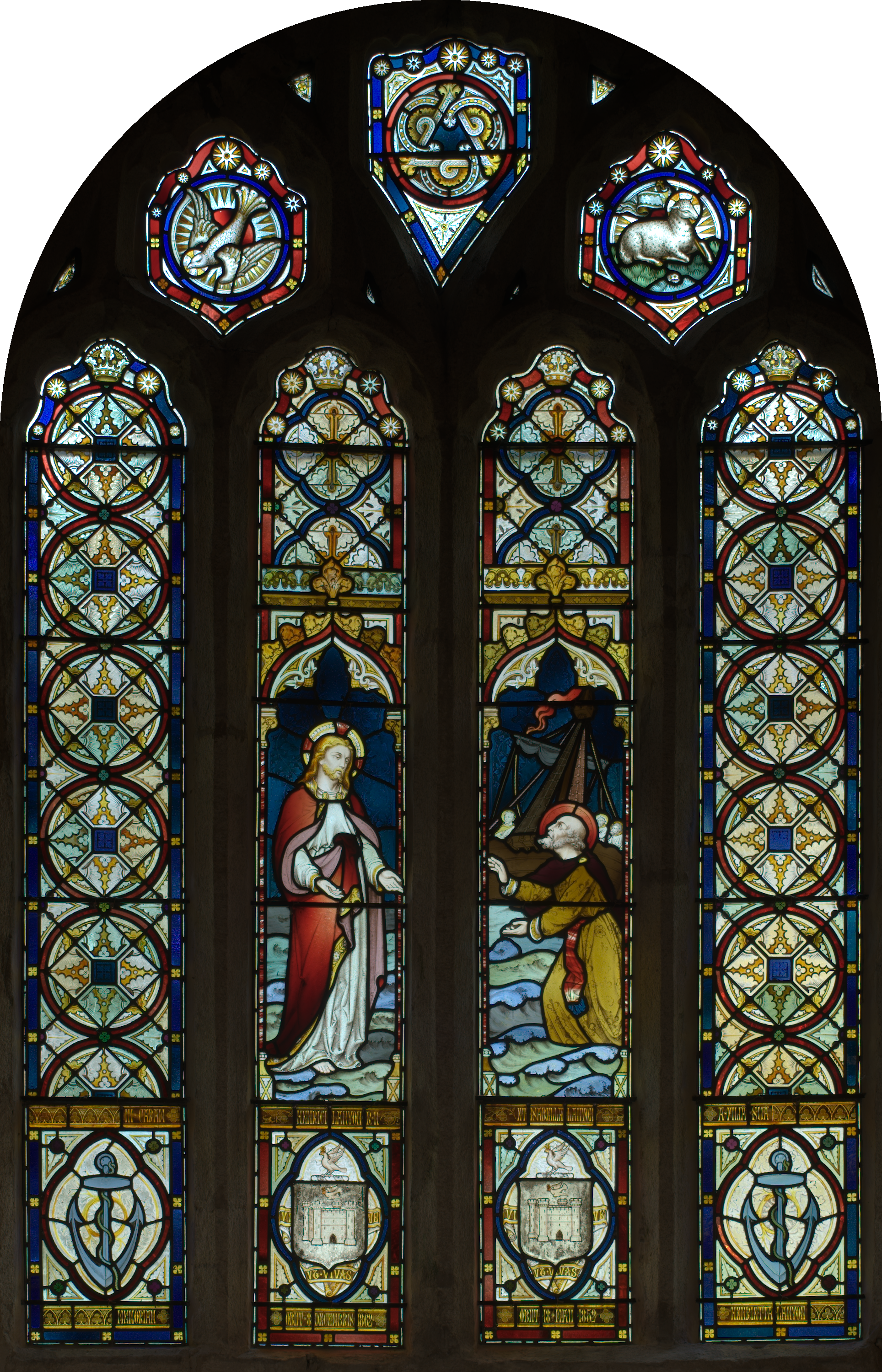
Christ saves Peter from drowning.
Made in 1874 possibly by Lavers and Barreau. Erected by Henrietta Lanyon in memory of her parents Henry Lanyon and Isabella Lanyon. (Post about Henry & Isabella in St Allen branch – ‘Captain Cork!’)
Detail of Christ saving Peter
Lanyon Arms and family motto ‘Vive ut Vivas’.
Nave North 3
Made in 1889 by Arthur Louis Moore
Christ’s commission to Peter: “Feed my sheep” – Panel 1 in memory of John and Peggy Lanyon of Henver. (Post about John and Peggy in St Allen branch – ‘Henry and Mary Lanyon’s Sons’.)
Suffer little children – Panel 2 in memory of Simon Lanyon John and Peggy’s fourth son who died at Mineral Point, Wisconsin. (Post about Simon Lanyon in St Allen branch – Henry Lanyon and Mary Searle’s Grandsons part. 1.)
Healing of a man born blind – erected by Simon Henry Lanyon son of Simon Lanyon on his visit to England in 1889. (Post about Simon Lanyon in St Allen branch – Henry Lanyon and Mary Searle’s Grandsons part. 1.)
Detail Panel 1Detail Panel 2Detail Panel 3
Nave North 4
Made in 1910, maker unknown.
In memory of Eliel Lanyon of Henver, son of John and Peggy Lanyon of Trevalsa, St Allen, died 10th October 1909 aged 86.
Detail Panel 1Detail Panel 2Detail Panel 3
St Stithians
North Aisle East
Window erected in memory of Richard Lanyon of Kennal Vale and of Acton Castle, died 8th December 1863 aged 66.
Made in 1864, maker not known.
Decorative panels with diagonal memorial inscription in centre light. Lanyon arms (Polsue).
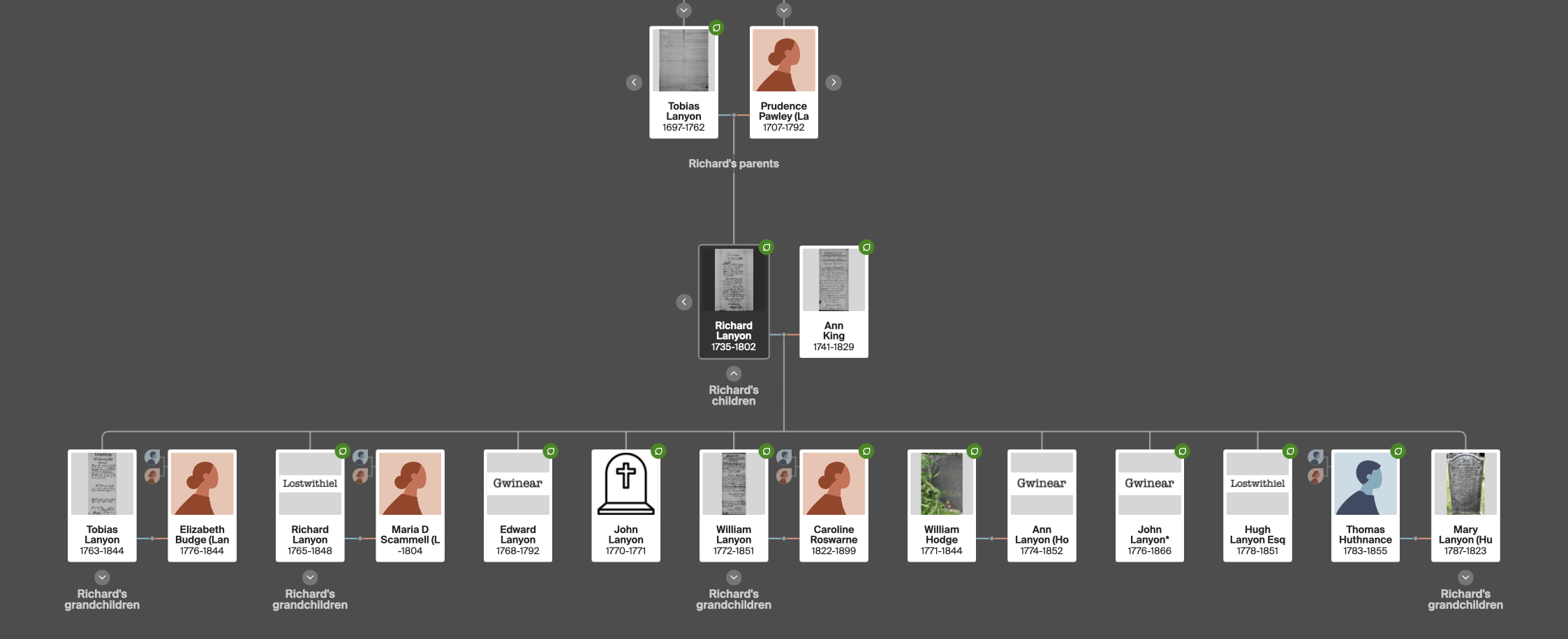
Richard of Lostwithiel was the son of Richard Lanyon and Ann King, baptised at Gwinear in 1765.
Richard & Ann King’s tree
Richard married Maria Dorothea Scammell on 30 Oct 1792 at Plymouth Charles the Martyr but he ended up living in Lostwithiel. He was a surgeon and also served as Mayor of Lostwithiel.
Only Richard survived to adulthood. Like his father he too was a surgeon at Lostwithiel. He never married and died age 53.
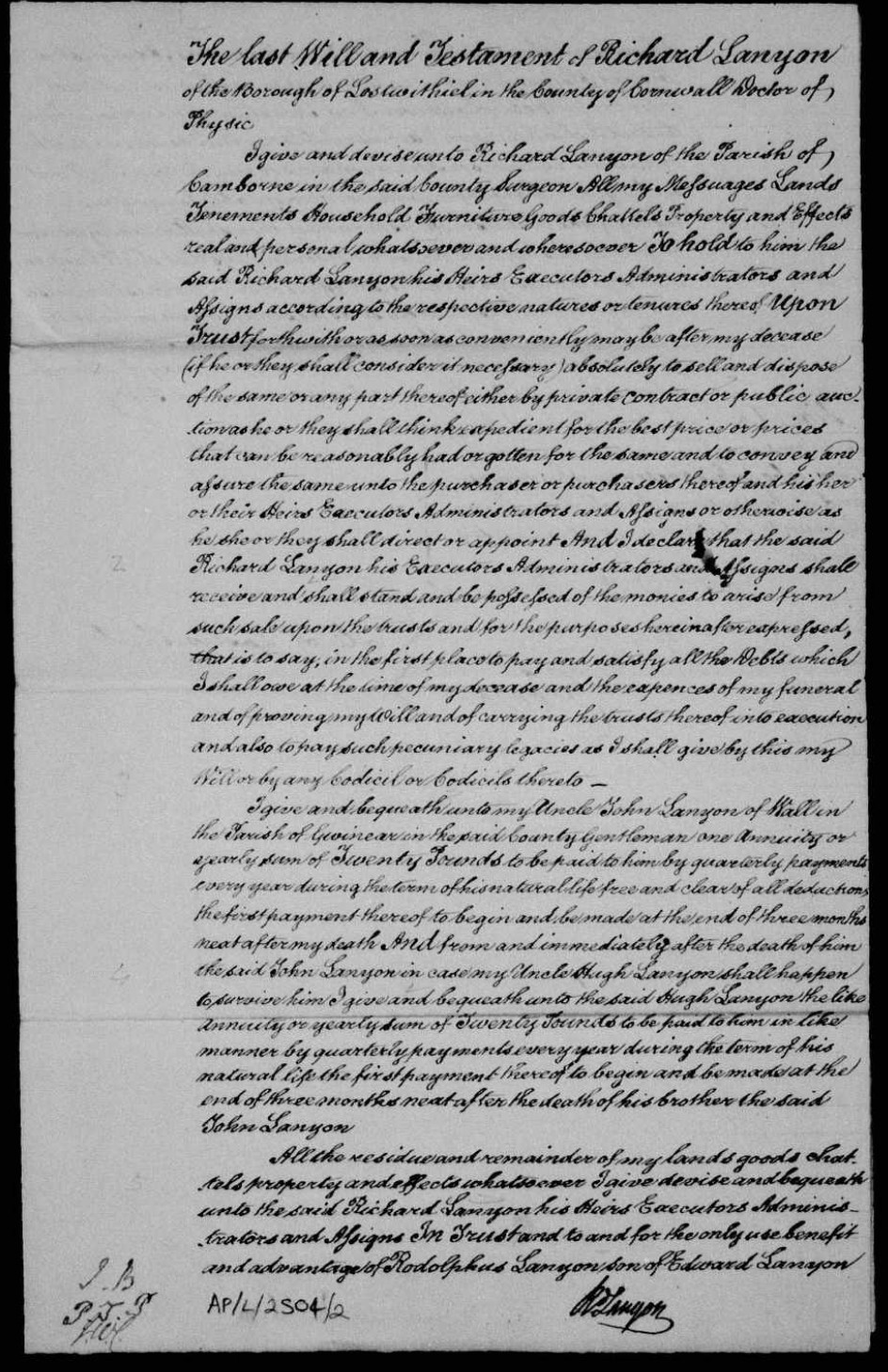
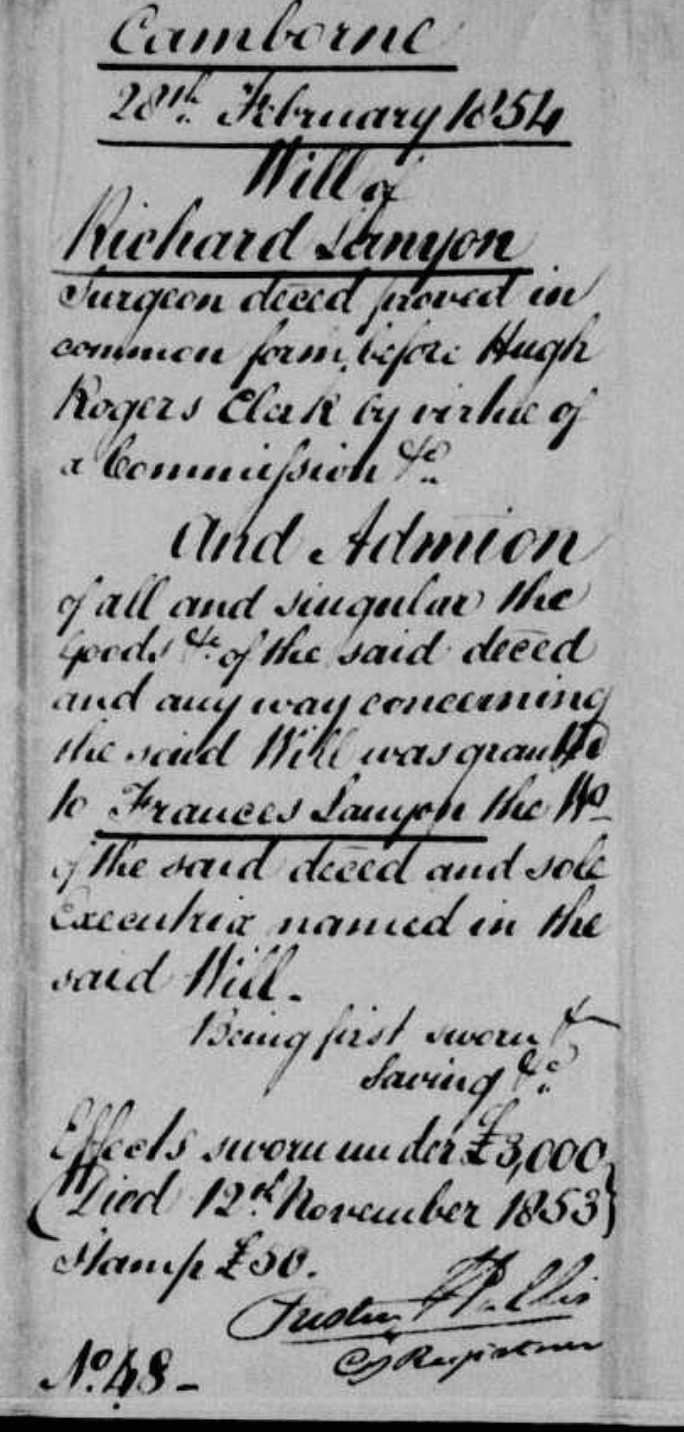
Richard Lanyon’s will Source- AP/L/2505
Without children or siblings Richard’s will benefits his elderly bachelor uncles, Hugh and John Lanyon and a later codicil leaves his estate to nephews Rodolphus Lanyon and William Reynolds Lanyon.
There is a memorial plaque in the church to father and son:
‘Sacred to the memory of Richard Lanyon, Esq., Surgeon, &C. He was descended from the ancient families of Lanyon in Madron and Gwinear, and having passed a long life in the active discharge of the most philanthropic and Christian duties, and filled the highest offices in the corporation of this town, died on the 19th of April, 1848; æt. 82. As he lived, so he died,–a Christian Also of his son Richard Lanyon, M.D., F.A.S., &c., who for many years successfully practised his profession in his native town, where he was well known for his antiquarian researches, and his literary and scientific attainments ; he also zealously and usefully filled the highest offices in the corporation, and died humbly relying on the merits of his Redeemer, Sept. 10th, 1852; æt.53. This monument is erected by Radolphus Edward Lanyon, as a tribute to their worth, and a mark of his gratitude.’
Richard Lanyon was a gunpowder manufacturer at Stithians. He had two wives: Susan Tucker and Mary Anne Lanyon, his cousin. This post is about three of his sons William Henry, Richard Sampson and John Rodolphus and their children.
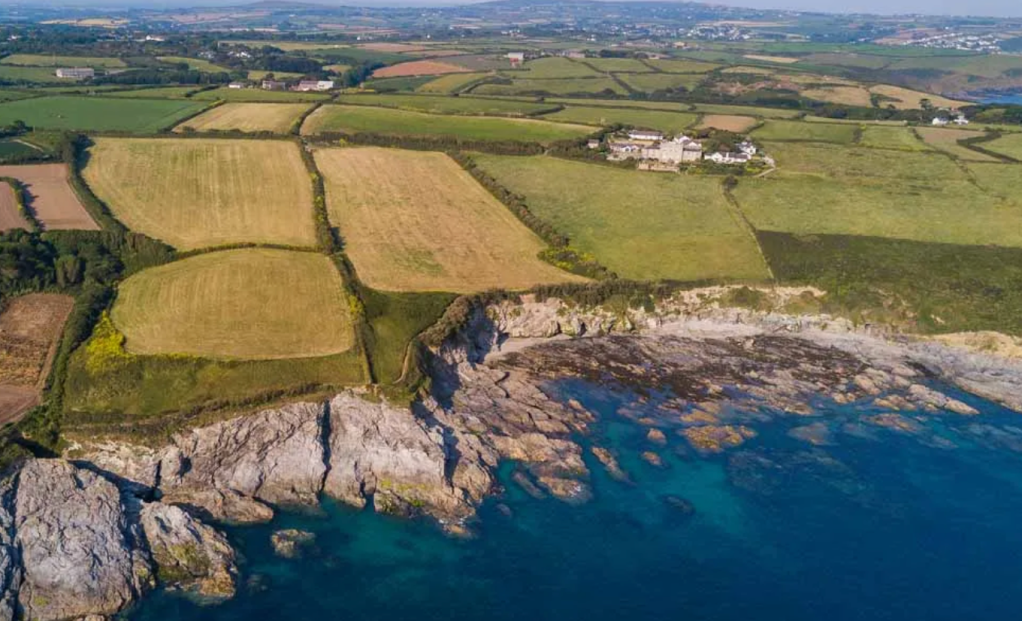
Acton Castle today- holiday lets
The somewhat complicated tree!
William Henry Lanyon 1825-1895
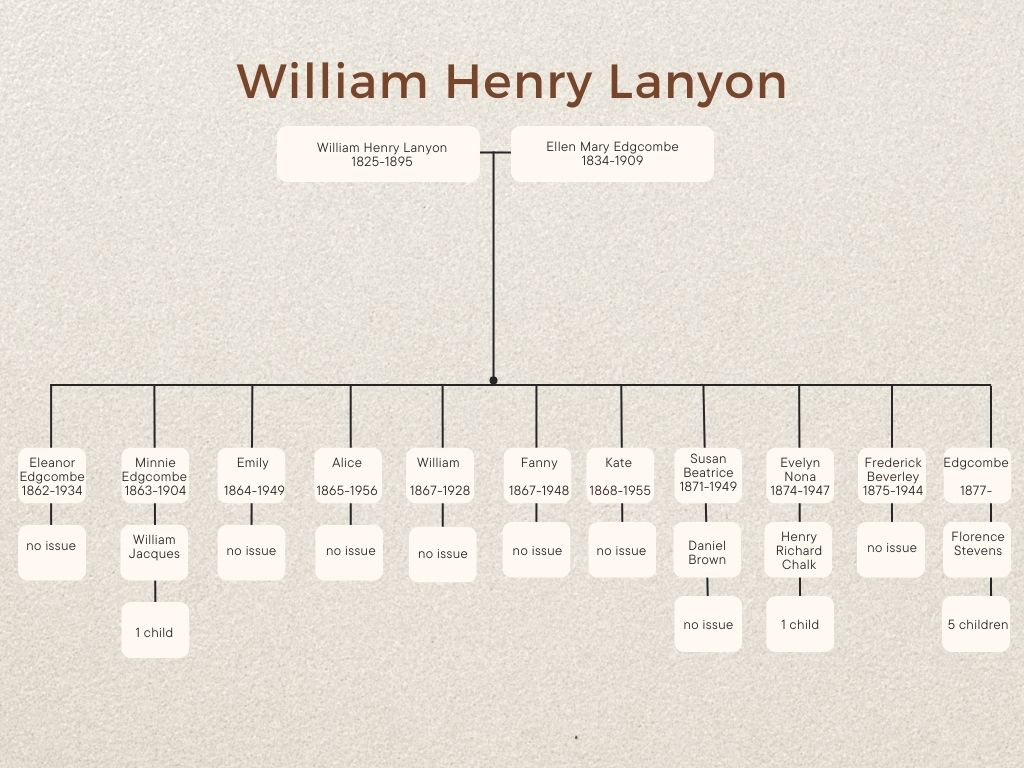
William was Richard and Susan’s eldest son, he was baptised at Stithians in 1825 and like his father was a gunpowder manufacturer. In 1861 he married Ellen Mary Edgcombe at St Gluvias Church, Penryn. Ellen was the daughter of George and Ellen Edgcombe. George was a surgeon in the Indian Medical Service and his daughter, Ellen was born in Madras in 1834.
William and Ellen had eleven children but very few of those children married or had children themselves. Five of their daughters were spinsters and two of their sons were bachelors.
William Henry’s Tree
Eleanor Edgcombe 1862-1934 was a music teacher, she lived with her sister Alice in Falmouth. She never married.
Minnie Edgcombe 1863-1904 married William Jacques Jr. a solicitor, at Truro in 1888 , they moved to Hertfordshire and had one son, William Huskisson Vyvyan Jacques who never married and committed suicide in 1921.
Source – Lancashire Evening Post 3 Feb 1921
Emily 1864-1949 was a spinster, aged 36 she was listed on the census as a companion. In 1911 she was living in Dulwich and working as a ‘Guardian to Children’
Alice 1865-1956 was a spinster, she lived with her elder sister Eleanor and is described as a housekeeper
William 1867-bef. 1928 he worked as a banker’s clerk in 1891 and no trace after that
Fanny 1867-1948 was a spinster, she worked as a hospital sister and in 1939 was living with her sister Evelyn Chalk
Kate 1868-1955 – a spinster, she worked as a draper’s accountant
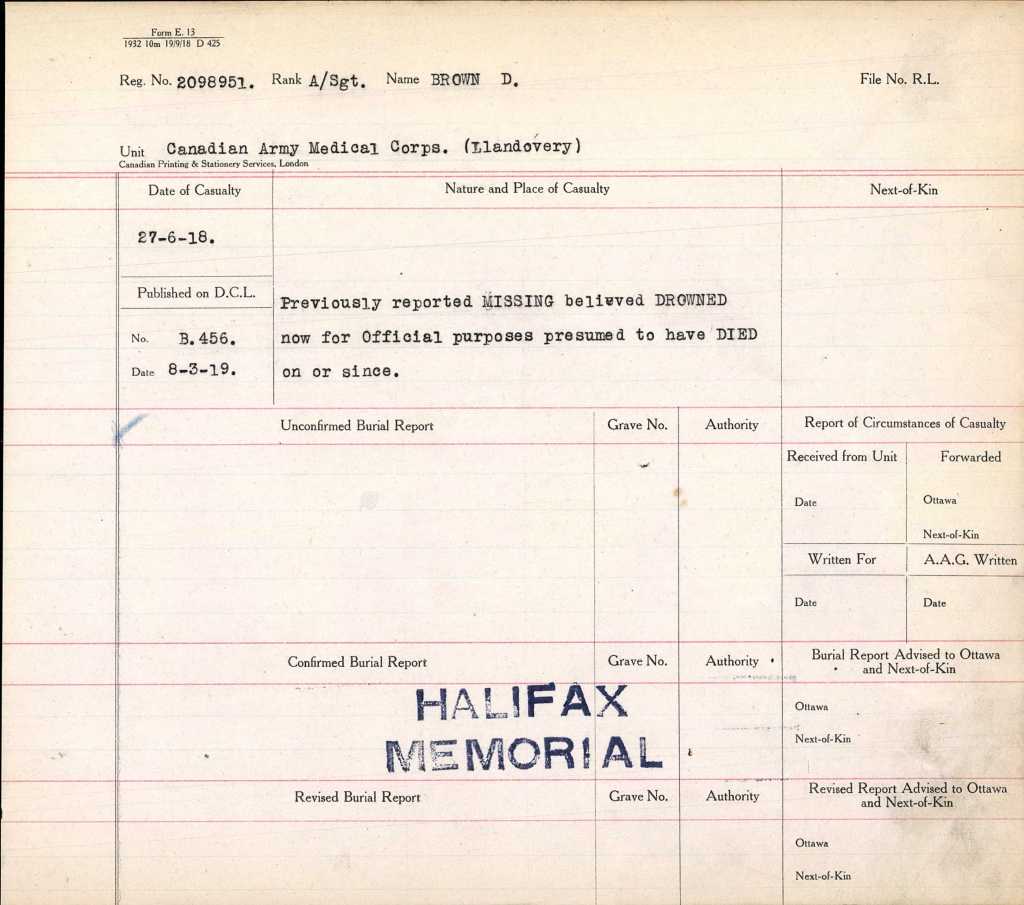
Susan Beatrice 1871- 1949 in 1912 she was a military nursing sister. In 1916 she married Daniel Brown in Ontario. He was a widower, an acting sergeant in the Canadian Medical Corps. He died in Jun 1918, he was missing believed drowned. By 1939 she was living with her sister Alice in Newquay and she died in 1949 at Holloway Sanatorium.
Canada Commonwealth War Graves Registers 1914-19
Evelyn Nona 1873-1947 in 1897 she married Henry Richard Chalk, a clerk in Holy Orders. They had one daughter Mary Lanyon who never married.
Frederick Beverley 1875-1944 he was a bachelor, he went to Selwyn College Cambridge, he broke the entail of Acton Castle and sold it.
Edgcombe 1877-1940s – he married Florence Stevens and had five children, after the war he emigrated to Tasmania and became a teacher.
William Henry was an unusual man, at times he didn’t live with his family and seems to have left his wife to cope with their large brood of children. There is at least one incident which calls into question his mental health. In 1871 He became mentally incapacitated in church. He got up during communion and started to read the Litany aloud. The curate asked him to desist and he shouted back “get thee behind me satan“. The rector came and remonstrated with him so he picked up the great prayer book and struck the rector on the head! (Source – Kilvert Society Newsletter March 1995)
Scroll down to page 2 of the Kilvert Society newsletter for a good article on William Henry.
Why did so many of his children remain single? We’ll never know but perhaps they looked at their parents’ marriage and decided not to risk it!
Richard Sampson Lanyon 1828-1903
Richard was the second son of Richard Lanyon and Susan Tucker. Sampson was the name of his father’s business partner. He married Eliza Jane Mare at Plymouth in 1855. They had nine children.
Richard Sampson Lanyon’s tree
Florence Mary Helen 1856-1857 died in infancy
Ernest William 1857-1889 according to the 1881 census he was a ‘decoration assistant’ and an artist, he was a bachelor and died age just 32 of TB
Reginald Edward 1859-1939 he emigrated to Canada in 1880 and in 1907 he married Hilda Mary Penn – 5 children
Arthur Richard 1861-1888 he was a post office clerk and was convicted of stealing postal letters and sentenced to five years jail in 1881. He died in Vancouver in 1888.
Calendar of Prisoners UK
Charles Hugh 1863-1887 was an architect’s clerk. Died young.
Ethel Mary Elizabeth 1865-1939 housekeeper, spinster.
Maud Margaret 1868- 1955 married Charles Francis Coward at Plymouth in 1905, no children
Of Richard’s nine children just one son, Reginald, had children of his own.
John Rodolphus Lanyon 1839-1931
John Rodolphus was the son of Richard and Mary Anne Lanyon and half brother of William Henry and Richard Samspon. He married Emily Anne Hearle in London in 1867. John was a solicitor. They had six children.
John Rodolphus’ tree
Richard FH 1868-1871 died in infancy
Marianne 1870-1957 she was a matron in an isolation hospital, spinster
Frederick 1870-1943 age 18 he emigrated to Boston Massachusetts and in 1893 he married Florence W Atherton. He worked as a manager of a clothing store. No children.
Radolphus Hearle 1876-1876 died in infancy
Charles Edward 1882-1918 he emigrated to Canada where he worked as a farmer in Saskatchewan. He served as a private in the Canadian Infantry 46th Battalion and was killed in France just 10 days before the end of the First World War, by a sniper while attending the wounded. Unmarried, no children
Florence Emily 1885-1886 died in infancy
Charles Edward Lanyon is buried at Aulnoy Communal Cemetery France
John Rodolphus Lanyon had no grandchildren and his line died out.
There were so many spinsters and bachelors in the family that out of three sons and twenty six children there were only twelve grandchildren and of them only five sons to carry on the Lanyon name.
Many of the male members of the Gwinear branch of the Lanyon family were surgeons. Tobias Lanyon 1619-1698 was a surgeon and apothecary and many of his descendants followed him into the profession.
Apothecary – Unknown author, Public domain, via Wikimedia Commons
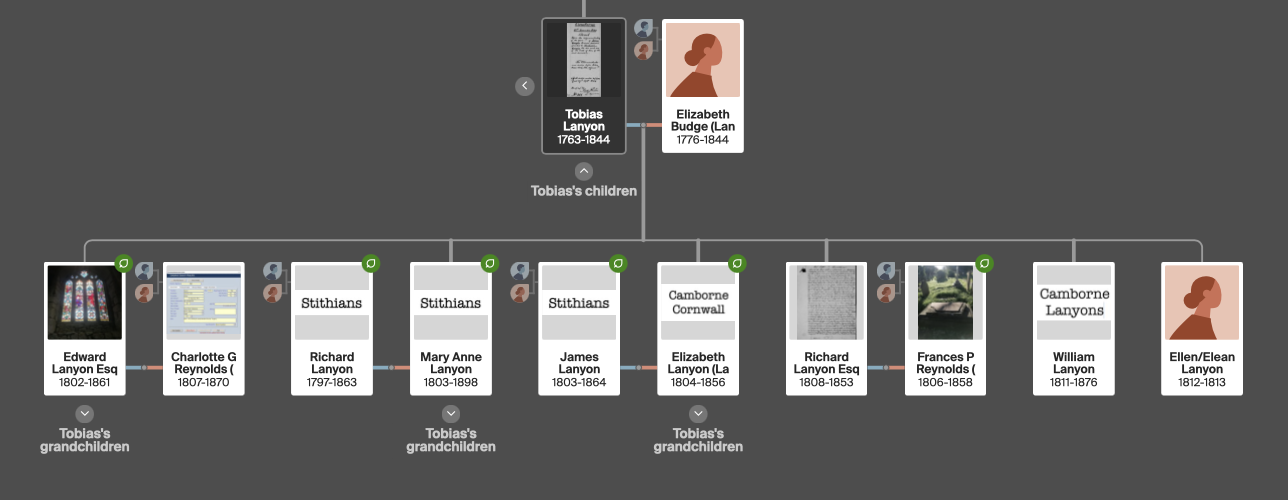
Tobias Lanyon 1763-1844
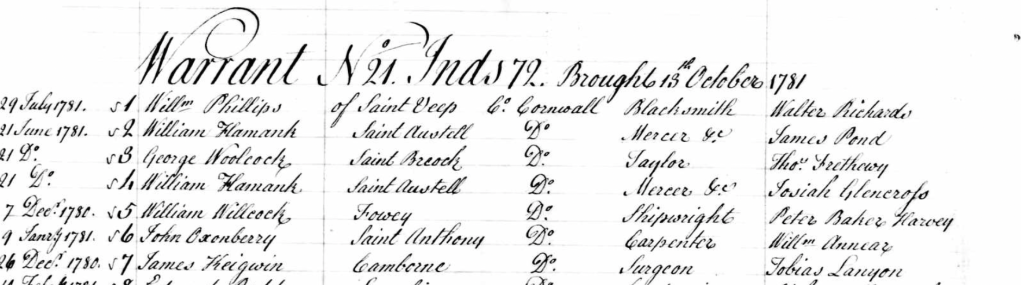
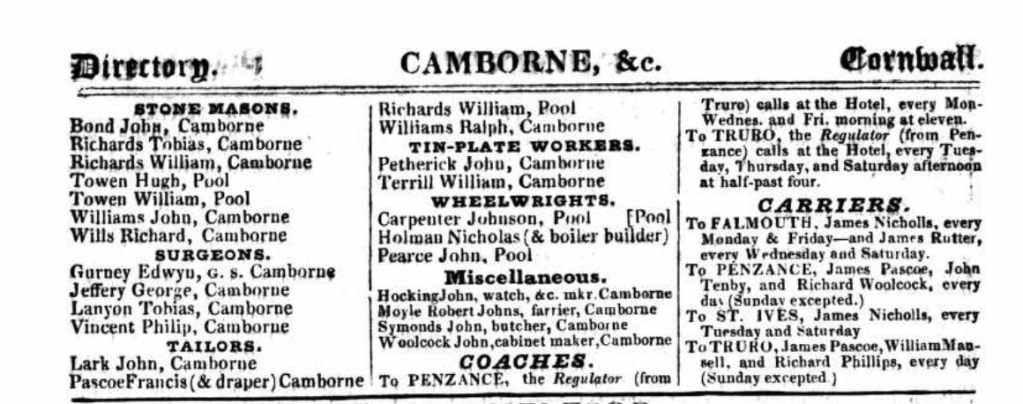
Tobias Lanyon was baptised at Gwinear in 1763. By 1780 he was apprenticed to James Keigwin, surgeon at Camborne.
Source- UK register of Duties Paid for Apprentices 1710-1811UK City and County Directory
In 1801 he married Elizabeth Budge by licence at Camborne. Tobias and Elizabeth had six children.
Edward 1802-1861 married Charlotte Grace Reynolds
Mary Anne 1803-1898 (married cousin Richard Lanyon)
Elizabeth 1804-1856 (married cousin James Lanyon)
Richard 1808-1853 married Frances Philippa Reynolds
William 1811-1876 he was a mine agent who never married
Ellen 1812-1813 died in infancy
Tobias & Elizabeth’s family
Tobias and Elizabeth’s daughters Mary Anne and Elizabeth married Tobias’ cousins Richard and James Lanyon (see post ‘Cousins’). Their sons Edward and Richard married two sisters, Charlotte Grace and Frances Philippa Reynolds. They were the daughters of William Reynolds and Philippa Tellam.
Richard Lanyon 1808-1853
Richard was a surgeon and was awarded an MRCS in 1832. He married Frances Elizabeth Reynolds in Jul 1844. They didn’t have any children.
Richard died in 1853 aged 45. He had been suffering from heart disease for some years and dropsy for three weeks. The Royal Cornwall Gazette (18 Nov 1853) described him as “one of the faculty, his loss will be greatly deplored by all who knew him; and as a kind benefactor he will be greatly lamented by the industrious and deserving of all the neighbourhood”.
He left a will and his estate was valued at less than £3000.
Richard Lanyon will – Source CRO/AP/L/2557
Beneficiaries of his will:
To my dearest wife – furniture, linen, china, jewels, books, pictures, wines, spirits, carriages, harnesses etc.
To James Lanyon of Camborne, mine agent, and to Elizabeth his wife all my one fifth part of my late father’s leasehold property upon trust, the profit for the sole use of their children Ellen and Henry
Residue to my dear wife and nephew Rodolphus Edward Lanyon son of my brother Edward.
My wife to control property during minority of Rodolphus Edward Lanyon
My wife to receive amount or share of my medical practice
To Fanny and William Lanyon children of my said brother Edward, £100 each and to my godson Frederick, son of my sister Mary Anne, the sum of £100
To my brother William Lanyon £50. If my wife die without issue residue to Rodolphus Edward Lanyon my nephew.
My wife to continue on farm for her own use.
The will was signed on 15 Oct and he died less than a month later on 12 Nov. Frances, his wife, died without issue in 1858 and was remembered in the Royal Cornwall Gazette “On Sunday last, relict of the late Richard Lanyon Esq. Her loss will be deeply felt by a large circle of sorrowing relatives and friends, as well as by the poor of the town and neighbourhood to whom she was a liberal benefactor.”
Edward 1802-1861
Edward was the eldest son of Tobias and Elizabeth and like his brother Richard he was a surgeon. He was awarded his MRCS in 1824. He worked as a surgeon at Fore Street in Camborne.
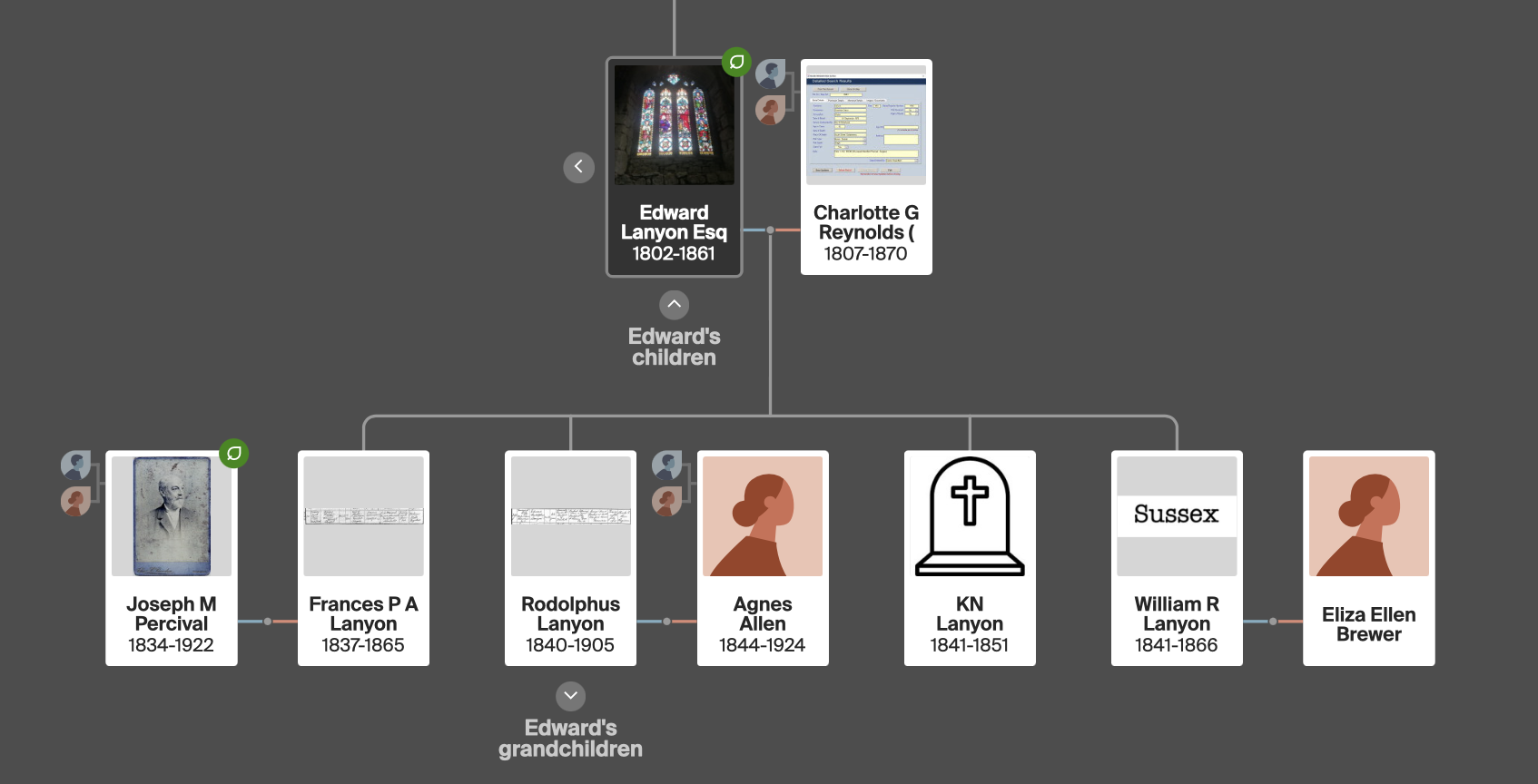
In 1836 he married Charlotte Grace Reynolds the younger sister of Frances Philippa Reynolds at Illogan. They had five children:
Richard 1836-1850 – JVM lists him as the eldest son but no trace of a birth or death (he doesn’t appear on the tree above)
Francis Philippa Austen 1837-1865 married Joseph Mumford Percival, a surgeon, she died age 28 and buried with her brother William at Chichester.
Rodolphus Edward 1840-1905 married Agnes Allen
KN 1841-bef. 1851 – sadly we don’t know the name of this child, she was mentioned as KN on the 1841 census and no further trace
William Reynolds 1841-1866 died age 25 of TB – He married Eliza Ellen Brewer, no issue. From an article (with many mistakes) by P Lanyon-Orgill 1957. “William Lanyon was the author of a large number of sentimental poems, his first appearing in the Helston Grammar-School Magazine Vol 1, pt1, April 1852. This magazine is devoted almost entirely to contributions with a classical tendency…. the sole contribution being an unsigned poem entitled ‘Arthur of Bretagne’. In the copy preserved in the British Museum this piece has the signature ‘W. Lanyon’ added in the headmaster’s hand and this example of the family’s poetical talents may perhaps be rescued from obscurity. William subsequently produced a whole volume of poems, entitled ‘My Old Carpet Bag’ and its contents’ by ‘An Old Traveller’ printed in 1873, the contents of which are uniformly bad and are not even up to the standards of his school boy effort.’)”
Of their five children only Rodolphus married and had children.
Edward died in 1861 and was buried at Camborne. His wife erected a beautiful memorial window in his memory in Camborne Church.
West Window of Inner South Aisle: Christ and the impotent man at the Pool of Bethesda, erected in 1864 in memory of Edward Lanyon (died 1861). Makes : Alexander Gibbs


















 The Lanyons