Chatherin and the Black Tudors

Having checked almost all the parish registers available for Cornwall I turned my attentions to Devon in my search for Lanyon ancestors. Naturally there are quite a few. Younger sons without a property to inherit may have headed for towns like Plymouth, Exeter or Barnstaple to make their fortunes. Others went to the great dockyards to join the navy or work as carpenters and shipwrights.

It was at Barnstaple that I came across William Lanyon and his family and discovered a part of English history that I hadn’t come across before. Black history in Tudor England.

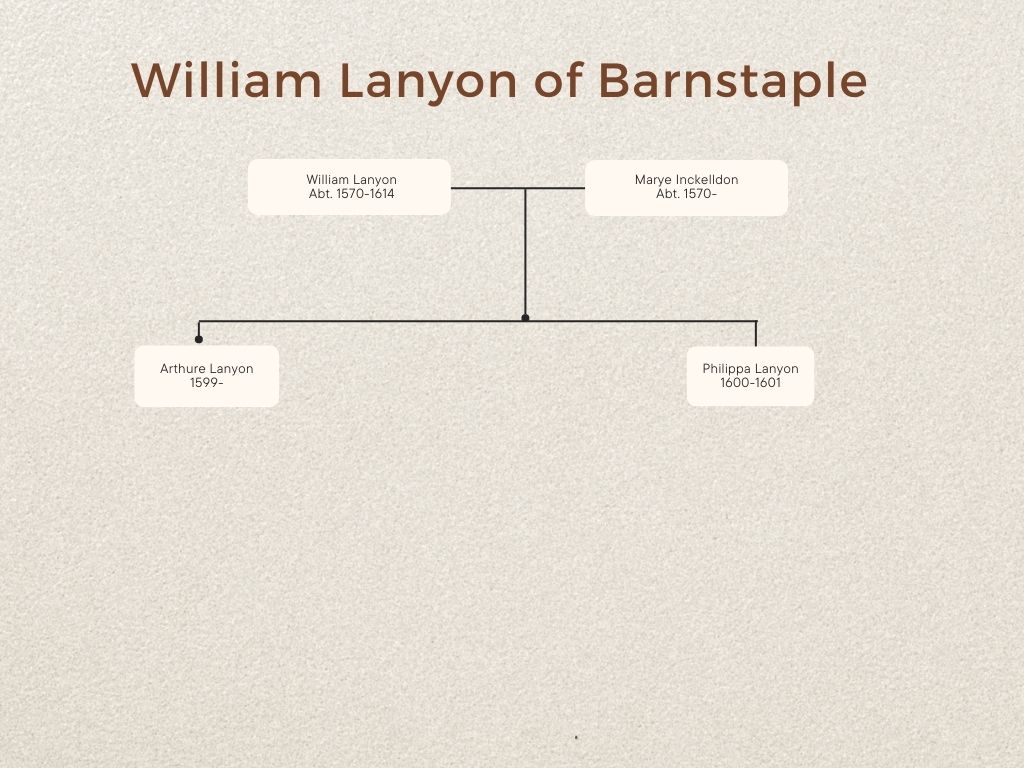
William Lanyon was born about 1570 but I don’t know where or how he fits onto the Lanyon tree. He first appears in Barnstaple’s parish registers on 2 Feb 1596 when he married Marye Inckelldon. Marye was from an old established Devon family, the Incledons/Inckelldons of Braunton. They are listed in the Herald’s Visitations of Devon and the family can trace its roots to the 12th century. Sadly there was no trace of Marye on the Incledon tree.

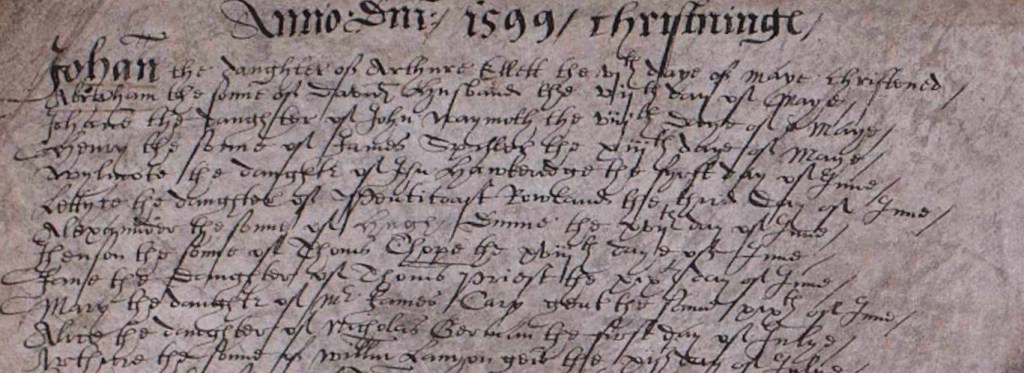
In 1599 William and Marye baptised a son, Arthure at Bideford.

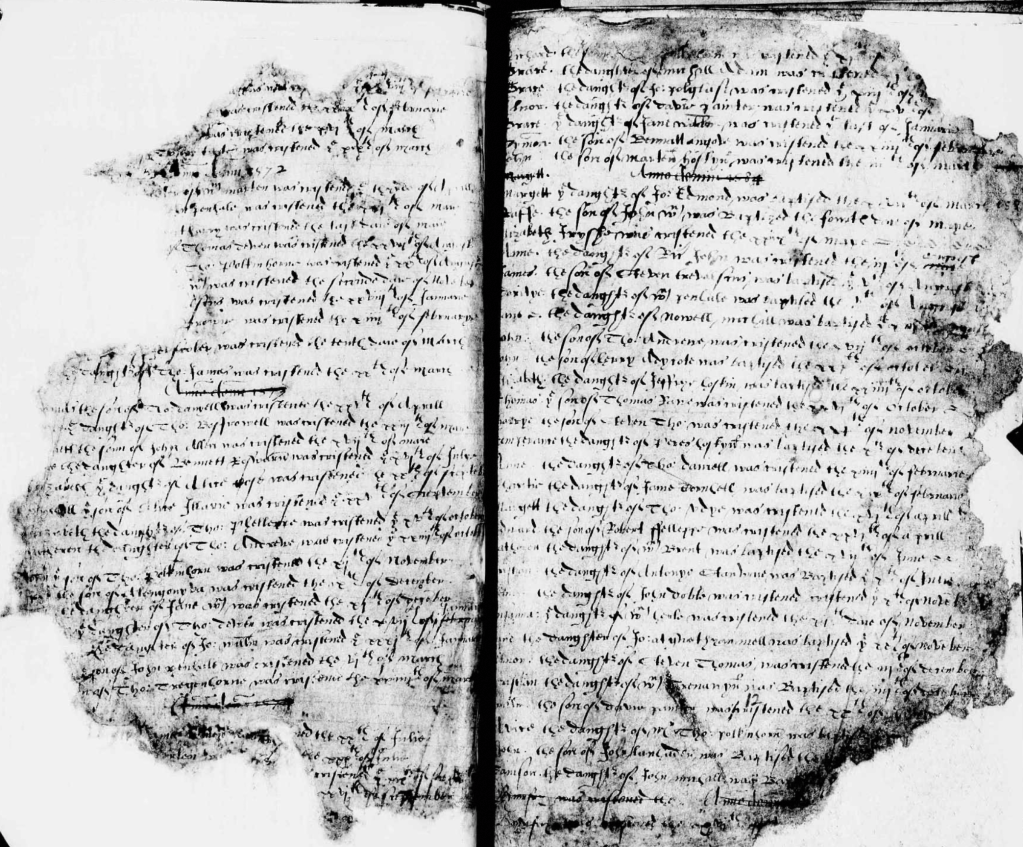
Bideford Parish Register – Arthure is the bottom entry.

On the 26 Oct 1600 they baptised a daughter, Philippa at Barnstaple and on the 8 Jan 1601 they buried her at the same parish.

William Lanyon was buried in 1614 and that’s all I could find about this little branch of the family.

I decided to go through the Barnstaple parish register page by page looking for any information about Arthure or Marye that may have been mis-transcribed and that’s when I stumbled on a whole new area of English history.

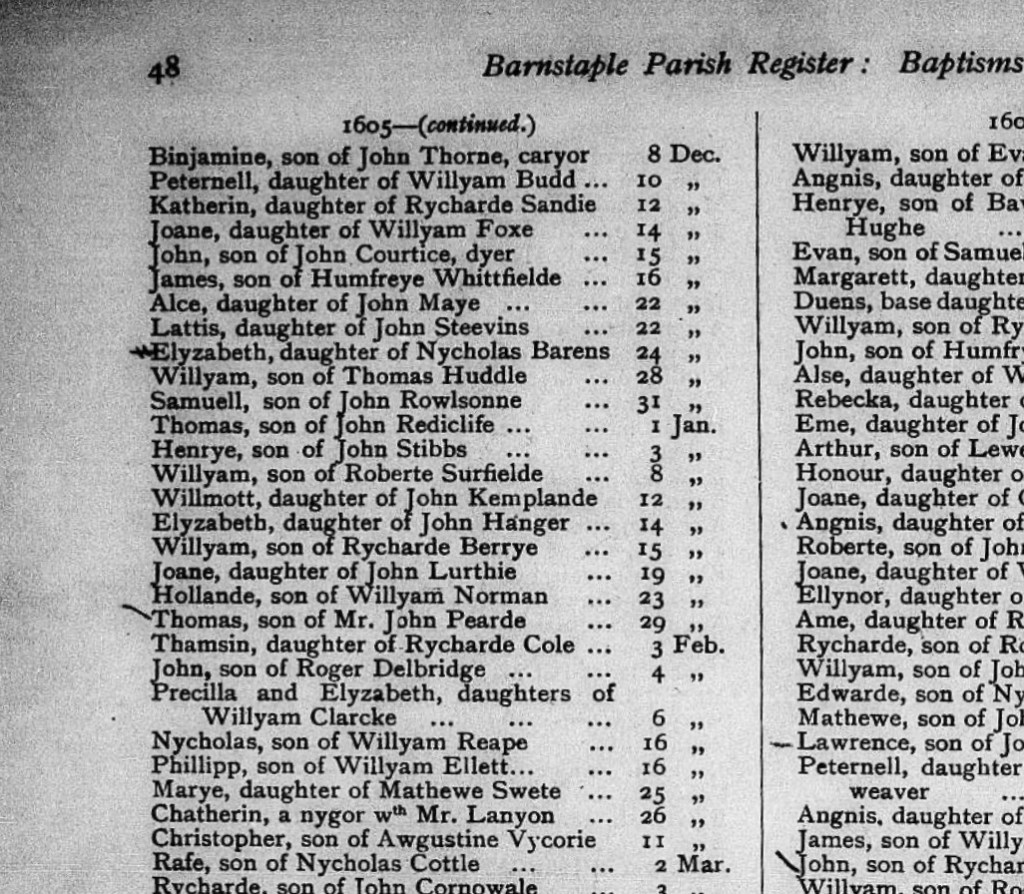
On the 26 Feb 1605 William Lanyon brought Chatherin, a ‘nygor’ to be baptised

My first instinct was outrage that William had been involved in the slave trade. My second was to do some research and find out more.

Like most people I had a rudimentary knowledge of the slave trade from history lessons at school and assumed that any black person in Britain at this time must automatically have been enslaved. Then I read Miranda Kaufman’s DPhil thesis ‘Africans in Britain: 1500-1640’ which gave me a whole new perspective. Dr. Miranda Kaufmann is a Senior Research Fellow at the Institute of Commonwealth Studies and carried out a detailed study using parochial records, wills, and a whole host of records familiar to family historians.

In a nutshell her thesis stated that there were at least 350 documented Africans in England during the Tudor and early Stuart period (1500 – 1640) who mostly came from North and West Africa. None were regarded as being enslaved by law.

John Blanke the Black Trumpeter at Henry VIII’s Tournament – AnonymousUnknown author, Public domain, via Wikimedia Commons

How did these Africans get to Britain?

The Spanish and Portuguese had a thriving slave trade and many Africans ended up in Europe serving their Spanish and Portuguese masters. Royals, nobles, diplomats and merchants may have had African slaves who travelled around Europe with them. Some made it as far as Britain.

After the defeat of the Spanish Armada Queen Elizabeth I allowed English privateers to capture Spanish ships and their cargoes. If the cargo included African slaves they were usually freed on reaching England. There must have been a fair number of freed Africans as Elizabeth I issued an order for their transportation out of the realm but this was never enacted.

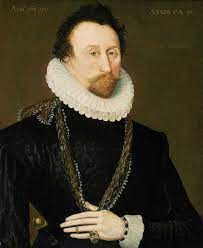
Jack Hawkins, one of the privateers, was England’s first slave trader. He started to trade in slaves from Guinea in 1562 and made four voyages before the Spanish decimated his ships and crew. That was the end of the slave trade in Britain until the 1640s. For most British merchants in the 16th and early 17th century Africa was viewed as a trading partner rather than a source of potential slaves. Fortunes could be made importing spices, hard woods, ivory and other commodities; and without overseas colonies there was no need for slaves. Some Africans were brought back to Britain to learn English to facilitate future trade.

Once in Britain Africans worked in a variety of jobs. Many were servants but working as a servant at this time was a respectable occupation. Some would have served as crew onboard merchant and navy ships. Some served as mercenaries in the army (Sir Pedro Negro served in Henry VIII’s army and was knighted in 1547.) Some were musicians (John Anthony of Stepney who was described as ‘Musician and Maurus’ in 1615. From the records that are available some appear to have had successful businesses (Stephen Driffield was a London needle maker).

The Africans intermarried and had children and appear to have been an accepted part of society. They are mentioned in wills and receive bequests from grateful employers, they also made bequests. William Offley’s will of 1600 stated “to ffrancis my black a moore I geve for her releife the some of tenne poundes and a gowne of twelve shillings the yarde“. (£10 was a huge sum, his other maids received 50 shillings.) Francis appears to have stayed in service to Lady Anne Bromley (formerly the wife of William Offley) and in 1625 she left a legacy of £10 to the poor of St Mary’s parish in Putney.

How did Chatherin end up in Barnstaple?

A search through the Barnstaple parish records shows that Chatherin was not the only black person in the town. Barnstaple is on the north coast of Devon and was a successful maritime trading town.

Perhaps Chatherin arrived on a seized Spanish or Portuguese ship which docked in Devon?

The earliest entry for a baptism of a black person in the Barnstaple Parish Register is 18 Jun 1565, the baptism of Anthony a ‘blackemore’ in the household of Mr Nicholas Witchalse. In 1570 Nicholas left his black servant 5 shillings “Item I geve unto Anthonye my negarre v s so that he remaine withe my wife otherwise yf she mynde not to kepe him to give hym v markes and lette hym go.”

Clearly Anthony is not enslaved but an employee who will be compensated with the amount of 5 marks if Mrs Witchalse does not keep him on after her husband’s death.

The next entry in the Barnstaple register is a baptism of Grace on 6 Apr 1596 ‘a Neiger’ in Richard Dodderidge’s house. There are at least half a dozen more entries in the next decade.

  • 10 Apr 1598 Baptism of Elizabeth in Mrs Ayer’s house
  • 22 May 1605 Baptism of Mary daughter of Elysabeth in Mrs Ayer’s house
  • 26 Feb 1606 Baptism of Chatherin in Mr Lanyon’s house
  • 10 Nov 1606 Baptism of Elysabeth daughter of Susanna ‘a nygor’ – they appear to be independent of any household
  • 8 Jul 1605 Burial of Mary daughter of ‘Elysabeth a negro servante to Mrs Ayer’
  • 12 Dec 1607 Burial of Susanna – ‘ye childe of a negor’

We don’t know what happened to Chatherin. William Lanyon died in 1614, if he left a will it has been lost so we have no clues about his family or Chatherin. There are a couple of mentions of a ‘Katherine’ in other parish registers in that part of England and its tempting to think they could be her but that is pure speculation on my part.

  • 4 Jan 1612 Christ Church Bristol – Burial of Katherine a ‘blacke negra’ she was ‘a servant at the horshed’ – this was the Horshed Tavern in Christmas Street
  • 31 Jan 1635 St Andrew’s Plymouth – Baptism of Margery, daughter of Katherine a ‘blackmoore’ and Fredericke Daniel

If you want to find out more on this subject I recommend:

The Lanyons of St Germans

There was a tiny branch of Lanyons in St Germans in North Cornwall and so far I haven’t managed to link them to the main tree.

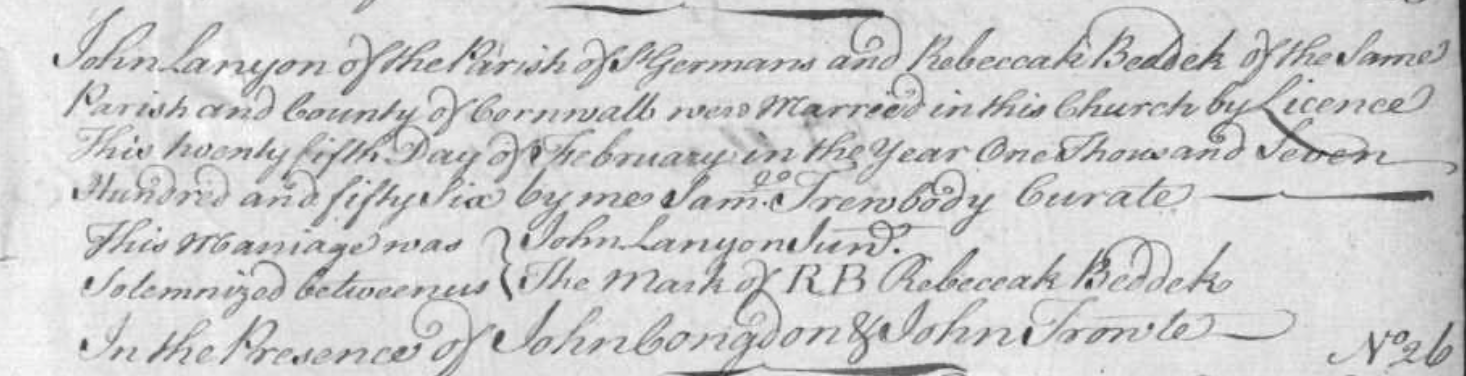
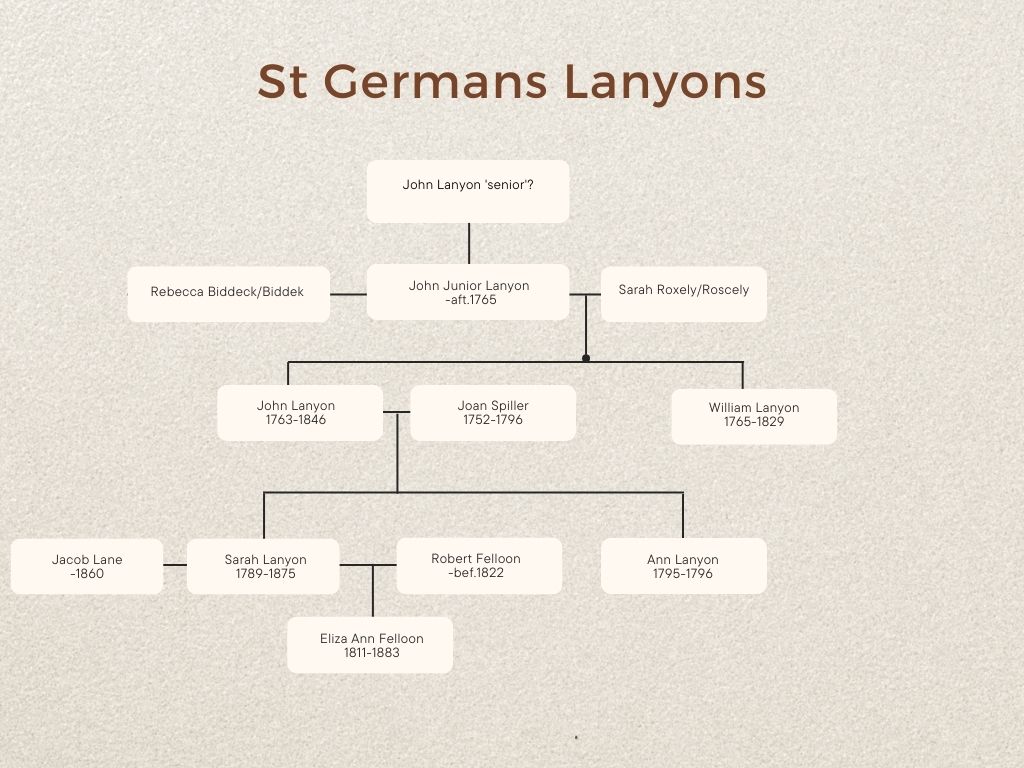
St German’s parish register lists the marriage of a John ‘Junior’ Lanyon to Rebecca Biddeck/Beddek in 1756. Presumably if John is called ‘junior’ then he is the son of John Lanyon ‘senior’ so I pencilled in a John Lanyon ‘senior’ born about 1700-1720. There is no record of a John Lanyon being baptised at St Germans so where did John Junior Lanyon come from?

St Germans parish register

There was also a marriage between John Lanyon and Sarah Roxely/Roscely/Roskelly in 1762. There was a burial of a Rebecca Lanyon in 1760 however this Rebecca is listed as being 75 years old when she was buried giving her a date of birth about 1685! Could she really be the Rebecca Biddeck who married John ‘junior’ in 1754? How old is John ‘junior’? There were no children recorded from the marriage of John and Rebecca.

John and Sarah (his second wife) had two sons:

  • John baptised 1763
  • William baptised 1765

Sarah Roxely died in 1795 age 66 and was buried at St Germans.

John Lanyon 1763

John married Joan Spiller at St Germans in 1788 and they had two daughters:

  • Sarah 1789-1875
  • Ann 1795-1796 died in infancy

Joan died in June 1796. Her husband John died in 1846 (50 years after his wife) aged 83 and was buried at St Germans.

William Lanyon 1765

There is no trace of a marriage for William and he died at St Germans in 1829.

Sarah Lanyon 1789

Sarah Lanyon married Robert Felloon/Falloon at St Germans in 1810 and they had one daughter Eliza Ann born in 1811. Robert was an assistant surgeon in the navy and came from Stoke Damerel in Devon.

Robert died before 1822 as Sarah married for a second time to Jacob Lane at Duloe in Cornwall in that year. Jacob was a victualler and Sarah ran a lodging house. Jacob died in 1860 at Plympton St Mary in Devon and Sarah died in 1875.

Where were John ‘junior’ and ‘senior’ born and why did they move to St Germans? Perhaps one day we’ll be able to answer that question.

Rocketman – Lost in Translation!

The Lanyons moved all over the world; the collapse of the Cornish mining industry led to thousands of cornishmen and their families emigrating to countries with mines in search of work. One of those countries was Chile.

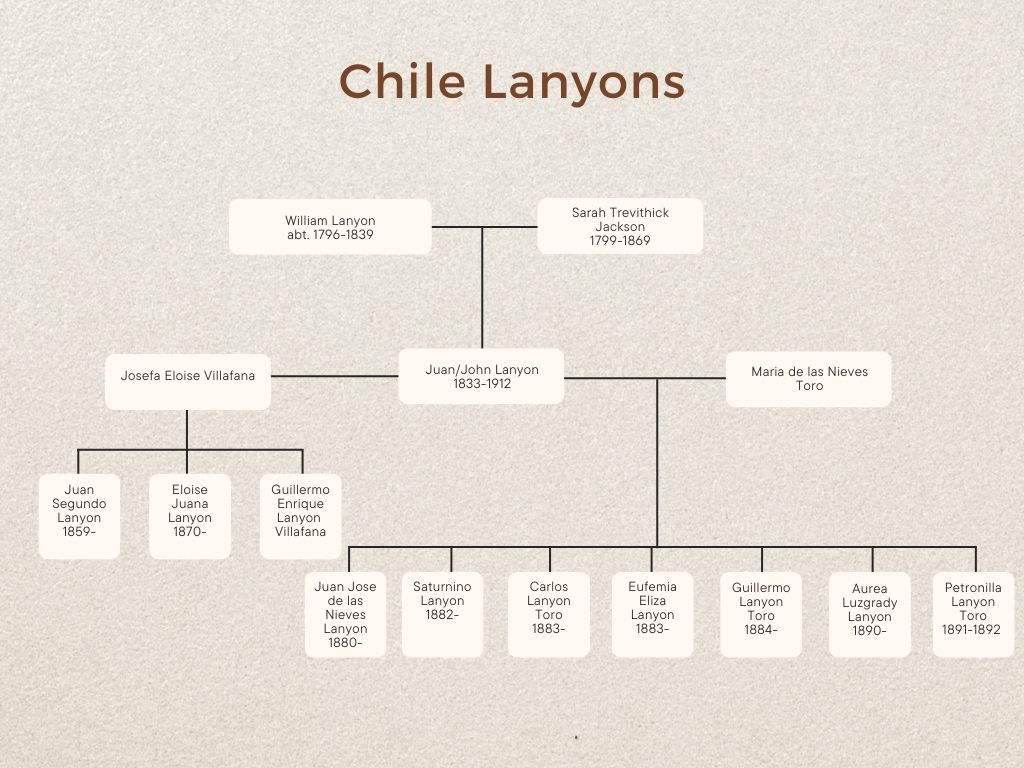
In the 1850s John Lanyon arrived in Chile to work for an English mining company at the El Morado mine. He was quickly renamed Juan and married a local girl – Josefa Eloisa Villafana at Copiapo, Atacama on 10 July 1858.

So where did this John/Juan Lanyon come from?

I wasn’t the first person to ask this question, William Lamparter also discovered a family called Lanyon in Chile and wrote to them. Their responses (in Spanish) led to this post. Thankfully I had Google translate and have managed to piece together this story which may or may not be right! The letters are written by Juan Jose Lanyon b.1880, the son of John/Juan Lanyon.

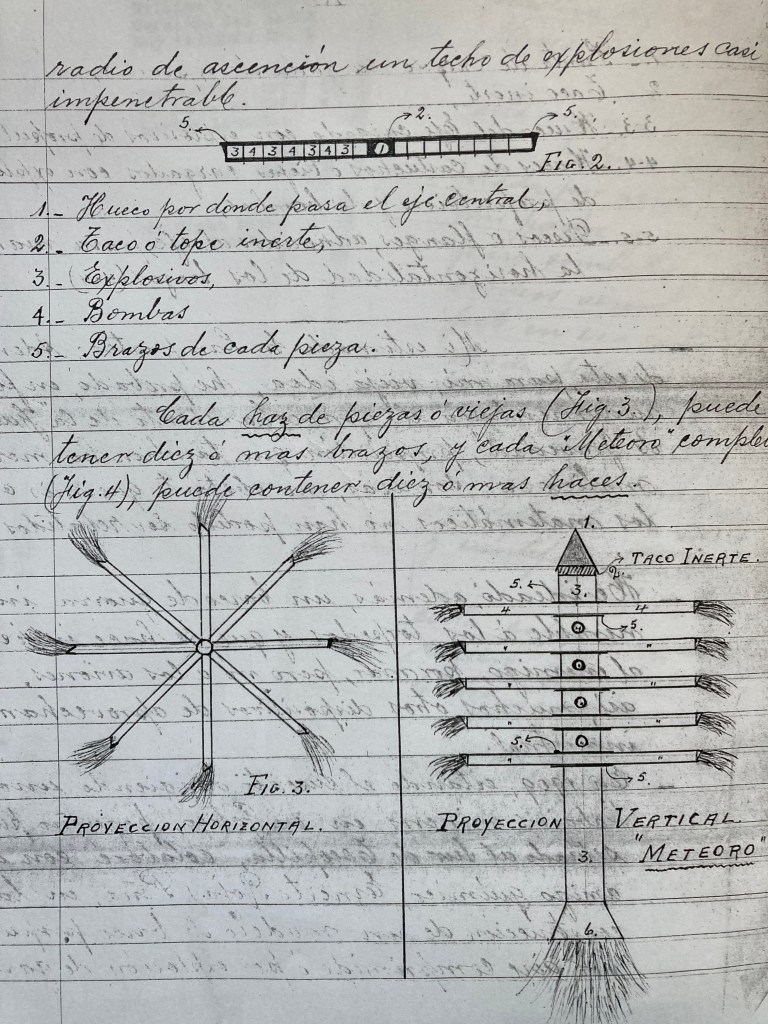
The letters were written in 1948/49 and it quickly becomes apparent that both William and Juan have an obsession: William is obsessed by genealogy and Juan is obsessed with the ‘missile’ he has designed, el Meteoro!

William is trying his hardest to prise family history from Juan who is obsessed with finding someone to market and sell his missile design.

There is however a slight problem: unbeknown to Juan, William is a gay furniture retailer from North Carolina who has not the slightest interest in Juan’s invention and Juan has clearly designed a missile that will never work!

Juan writes a twelve page ‘epistle’ laying out the history of his invention and his attempts (all unsuccessful) to market it to the Americans and British.

Juan admits that “….some engineers and industrial institutions to whom I proposed to do it, considered it delusional.” The British consul was a bit kinder with his rejection “…both Mr Englehurst and Mr Latorre were greatly surprised by the apparatus as a whole and they believed that it was going to have some ‘resonance’ (I bet they did!)…..a few weeks later the secretary of the English consulate returned the documents to me stating that the consulate officer whom they had consulted did not consider it practical.

Juan also mentions his other inventions – “I have also devised a warship that is invulnerable to torpedoes and becomes invisible to the enemy by sea (but not to planes).

Juan explains that his idea for the missile came from watching fireworks at festivals when he was young. Perhaps the designers of the V2 rocket also gained inspiration from watching fireworks when they were young. The difference is that Juan’s missile was based on the Catherine Wheel firework!

Juan tells William he “…will surely win honours and awards in life and perhaps a statue” if he can get a North American company to build his missile!

And so the correspondence continues with William asking questions about Juan’s Lanyon forbears and Juan responding “I have vague memories that the parish where he was baptised was Madron…..now regarding my invention called Meteor….

In January the following year he writes again and mentions Madron again and moves straight on “….regarding my invention called Meteor…

At this point I think William realises that he will not get any further with this little branch of the Lanyon family and abandons the correspondence. I’ve picked up the baton and found out the following information.

John/Juan Lanyon was baptised at Illogan, Cornwall on 9 Nov 1833. His parents were William Lanyon and Sarah Jackson. John was the seventh of nine children. Four of them died in childhood.

  • Elizabeth 1821-1879 emigrated to Australia
  • Frances 1822-1823 died in infancy
  • William 1824- bef. 1861 married two children and died before 1861
  • Frances 1827-1895 emigrated to Australia
  • Joseph 1829-1840 died age 11
  • James 1831-1837 died age 7
  • John/Juan 1833-1912 emigrated to Chile
  • Richard 1836- no trace
  • Edward 1837-1839 died in infancy

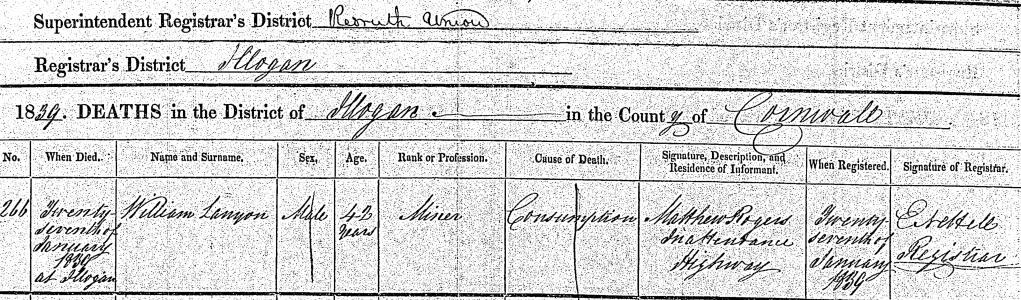
John’s father William Lanyon died in 1839, he had consumption (TB). His death certificate states that he was aged 42 giving a date of birth about 1797. William was a miner and had married his wife at Illogan on 14 October 1820 and that was all I could find out. There was no trace of a baptism anywhere in Cornwall or Devon. As he died before the first census in 1841 I couldn’t see where he was born.

William’s death certificate

I found Sarah, his wife, on the 1841 census with four of his children: William, Frances, John and Richard. Sarah was listed as a widow and 15 year old William was a miner and probably supporting his whole family. I couldn’t find her on the 1851 census and suspect she has been mis-transcribed. By 1861 she was living with a niece and was called Sally Lanyon.

I found four of her children living together on the 1851 census: her daughter Frances age 22 was a mine labourer, sons John age 17 and Richard age 15 are copper miners. Her daughter Elizabeth, was married and now called Williams, was also living with Frances and her young children.

Shortly after the 1851 census both girls emigrated to Victoria, Australia. William was married and had two children but died before the 1861 census. I don’t know what happened to Richard but John headed to South America.

I turned to the early 1948 letters from Juan Jose Lanyon.

My father kept many documents that he revoked the Edict of Nantes and the Huguenots were persecuted. Many of them fled to Germany. Among them my great grandfather. The last name was Lanion but he changed the ‘i’ to a Greek ‘y’ registering as Lanyon on arrival in England.

That threw the cat among the pigeons! It was the first time there had ever been any mention of Lanyons from Germany. I couldn’t find any evidence that the Lanyons had ever lived in Germany in the 18th Century.

He went on to mention that his father’s brother Pablo had died in the Canadian war of Secession (I couldn’t find anything to support that) and another brother Federico died of yellow fever in Tocopilla where he was buried (I couldn’t find anything to support that either.)

He went on “…my father also told me that the Lanyon family by direct maternal descent was related to Jorge Stephenson the inventor of the locomotive.

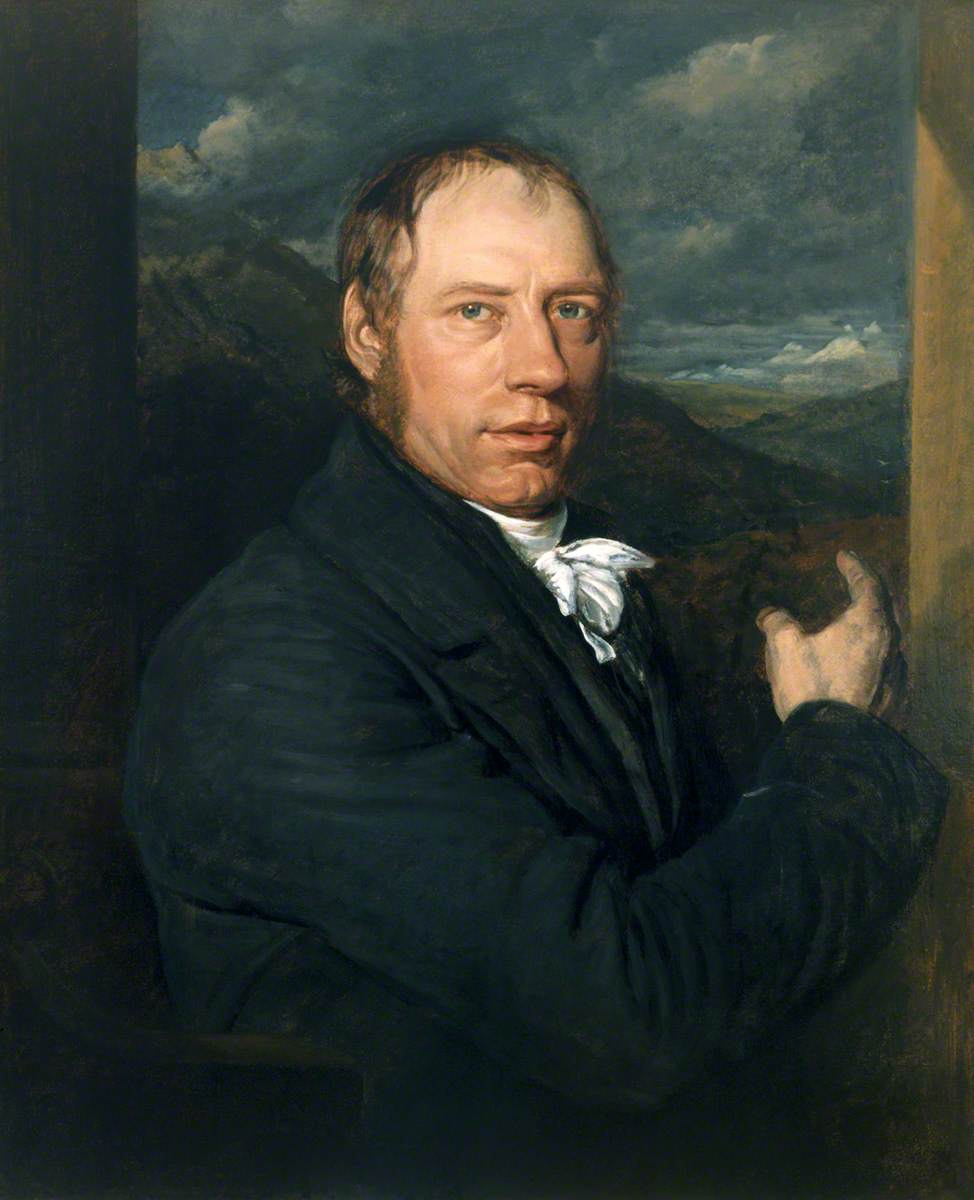
A little research revealed that Juan’s mother Sarah/Sally Jackson was the daughter of William Jackson and Frances Trevithick of Illogan who must have been related to Richard Trevithick from Illogan. Richard Trevithick did indeed invent a locomotive. Bingo!

Richard Trevithick – John Linnell, Public domain, via Wikimedia Commons

The story about George Stephenson wasn’t exactly wrong but something had been lost in translation. I went back over what Juan’s son had written. Perhaps they weren’t Huguenots but just non-conformists, perhaps Germany was really St Germans in Cornwall?

Whilst we can’t say for sure where this little branch of Lanyons originated we can say that a tiny strand of Richard Trevithick’s DNA lives on in Chile!

The ‘Loose Lanyons’ of Sancreed

There is a small group of Lanyons in the parish of Sancreed who don’t fit on the Lanyon tree. We know almost nothing about them but they are worth mentioning as they demonstrate that there were other cadet branches of the tree in the 16th century. They must all be related but it isn’t possible to prove that.

George Lanyon

George was living in the parish in the 1560s and was probably born in the 1530-1540s. There is no record of a marriage for him but a daughter Jane was baptised on 22 Sep 1566. Then on the 2 Oct 1566 George also baptised an illegitimate daughter called Alsen! His first daughter must have died as he baptised another daughter called Jane on 22 Feb 1568 and his final child was Elyzabeth baptised on 25 Apr 1575. (The children’s names were all spelt Lanyne.) With two daughters called Jane perhaps that was his wife’s name?

It’s challenging to see if the name is Lanyne or Lamyne. In fact it’s challenging to read anything in these early registers! Just to make things even more complicated there is a family called Lanner living in the parish at the same time.

Sancreed Parish Register

The only other record we have for George is his burial on 16 Nov 1592.

His daughter Jane Lanyne may be the Jeane who married George Bossens/Bossence in Sancreed in 1601 and they had seven sons: Thomas, Benatt, William, Richard, John, Sampson and George. All good Lanyon names!

Sampson Bosence was baptised 25 Apr 1612, married Earth Richards at Madron on 23 Apr 1637.

There is no trace of what happened to Alsen or Elyzabeth.

Jane Veale Mitchell (early 20th century researcher) states that George is a son of William ‘Generosi’ Lanyon of Breage. It is possible and she would have seen William’s will, which has now been lost, which may have confirmed the relationship.

Digory Lanyne

Digory married Jane on 4 Feb 1564 making him a contemporary of George. A brother perhaps? There are no children of this marriage baptised and no record of a burial for Digory. It’s also the only instance of the name Digory in the Lanyon family.

There is a Jane Lamyne buried at Sancreed 13 May 1583, another Jane Lamyne buried 22 Jun 1592 and a Jane Lanyne widdowe buried on 16 Nov 1607. Any one of them could be Digory’s wife or possibly even George’s wife.

Fraunces Lanyne

We know where Fraunces (Francis) fits on the tree; he was the eldest son of John Lanyon Esq. He married Ales Trewren at Sancreed in 1584. The Trewrens were a Sancreed family and Francis and Ales’ children were baptised in the parish.

  • Richard 8 Sep 1585, he became the heir to John Lanyon Esq when his father Francis died in 1593
  • Elizabeth 11 Nov 1587 (she was an illegitimate child)
  • John 10 Dec 1587

William Lanyne

Francis’ brother William also settled in Sancreed and baptised his children there. We can also place him on the tree. He also had other children whose baptisms weren’t recorded or have been lost from the register.

William married Jane on 19 Nov 1592. She was buried 21 Sep 1619 and William himself died in 1624, his surname in the burial register is recorded as Lanion. His will is signed by Benat Lanion. Both his daughters called Elizabeth survived to adulthood!

  • Elizabeth 31 Oct 1593
  • John 8 Jun 1596 buried 15 Sep 1601
  • Jane 24 Oct 1602
  • William Dec 1603
  • Elyzabethe 17 Jul 1607
Benat signed William’s will of 1624

Thomas Lanyne

Thomas baptised a son called John on 16 Mar 1585. It was the only child Thomas baptised at Sancreed.

Could Thomas be an unrecorded brother of Francis and William?

Rou Lanyne

Rou should probably be Row, a popular first name and surname at the time. He baptised a daughter called Mary on the 28 Jun 1592. There is no further trace of either Row or Mary.

Benat Lanyne

Benat had four children baptised. He was married to Jane on 20 Nov 1593. her burial is recorded on 13 Jun 1621 and Benat’s on 4 Apr 1629. By the time of his death his surname has become Lanion.

  • Watter (sic) 22 Sep 1594 buried 4 Oct 1594 (surname spelt Layne) – probably should be Walter
  • Thomas 8 Feb 1595
  • Mary 24 Feb 1596 buried 7 Jun 1597 (surname spelt Laynne)
  • Jane 6 Jul 1599

It seems likely that Benat Lanyne was a son of Walter Lanyon and Elizabeth Nanspyan but there is no proof.

Cyprian Lanyne

On 13 Nov 1585 a John Lanyne baptised Cyprian Lanyne at Sancreed. Where does this John Lanyne fit on the tree? (A John Lanyne married Mary at Sancreed in 1584, presumably this is the same John.) A Cyprian Lamin signed the 1641/2 Protestation Return for Gulval. This is such an unusual name that I think it likely that it is the same person but is the surname Lamin or Lanyne and is he from this family or unrelated?

There is no record of a marriage or burial for Cyprian.

Raphe Lanyne

Raphe Lanine married one of his wives at Sancreed, further cementing the families ties with the parish. Raphe married Jennett on 26 Sep 1591 and she was buried there 14 Oct 1601 (Raphe’s name becomes Raffe!). Raphe’s will was proved 13 Jan 1604/5 so we know what year he died. His will mentions his wife, Ann, but there is no record of their marriage. Just to confuse things further the Sancreed parish register lists a marriage for a Raphe Lamin to an Ann on 10 May 1606 and a burial of a Raphe Lanine on 29 Apr 1614. Could he be an undocumented son of Raphe?

If only we had a few more records, wills (with signatures to compare) and property transactions which might just clarify things! If only the record keepers had neat writing and the pages weren’t lost or damaged….. if only they could spell!

The Dancing Master

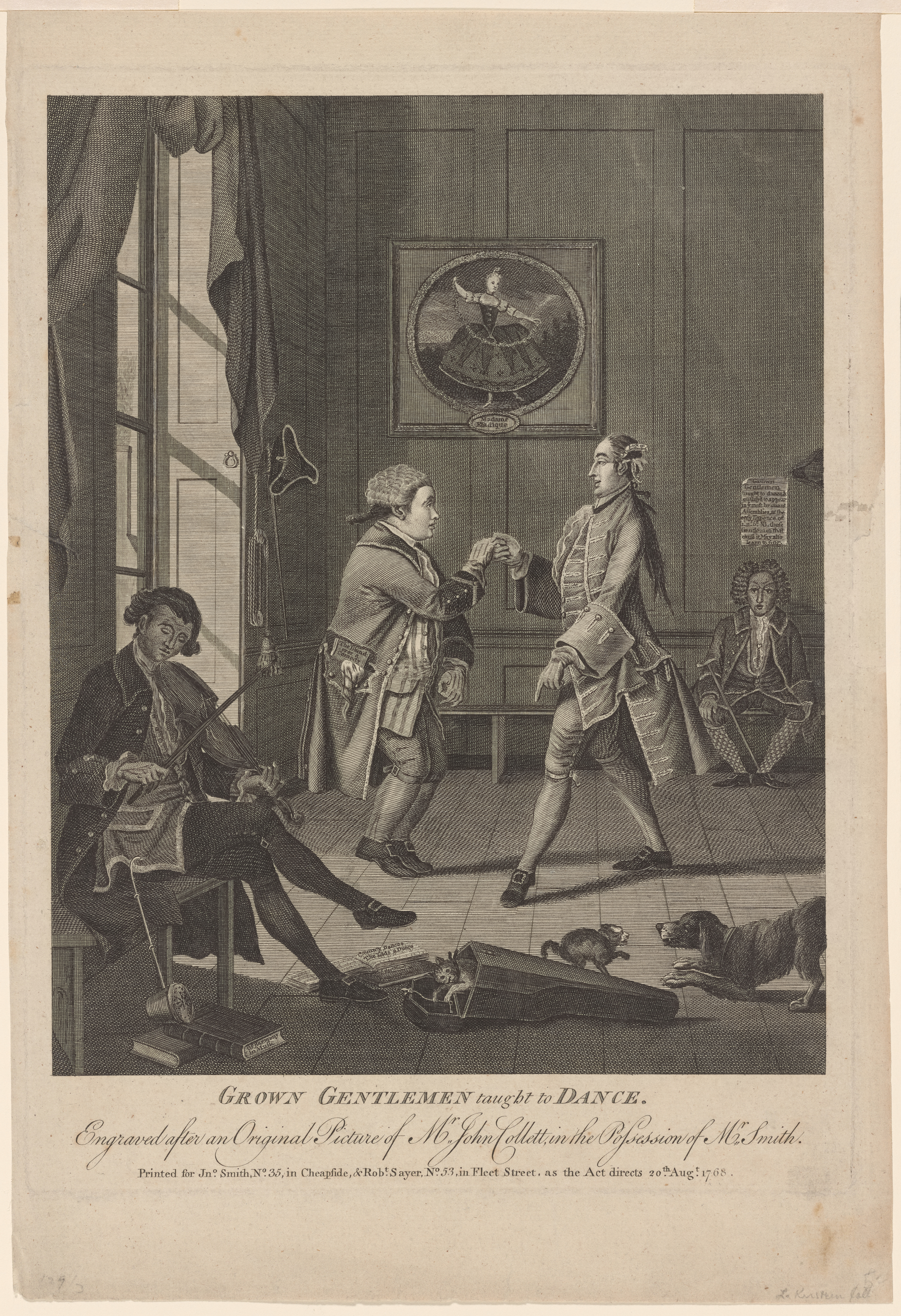
In the 18th century a ‘dancing master’ was a fashionable and profitable job for a gentleman. He would have been at the heart of London society and would have officiated at public balls and advertised his services in the local press.

British Museum, Public domain, via Wikimedia Commons

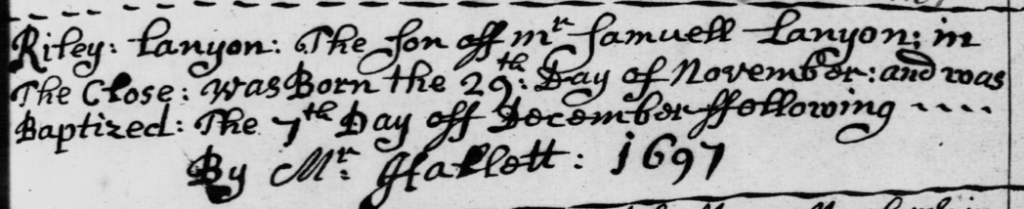
Ryley Lanyon was a dancing master in Bishopsgate Street, London. He was originally born in Exeter on 29 November 1697 and baptised on 7 December. He was the son of Samuel Lanyon. Samuel had another son called Rayly who was baptised at Exeter in 1689 and presumably died before 1697. Ryley/Rayly was obviously a name they wanted to perpetuate.

Exeter Presbyterian

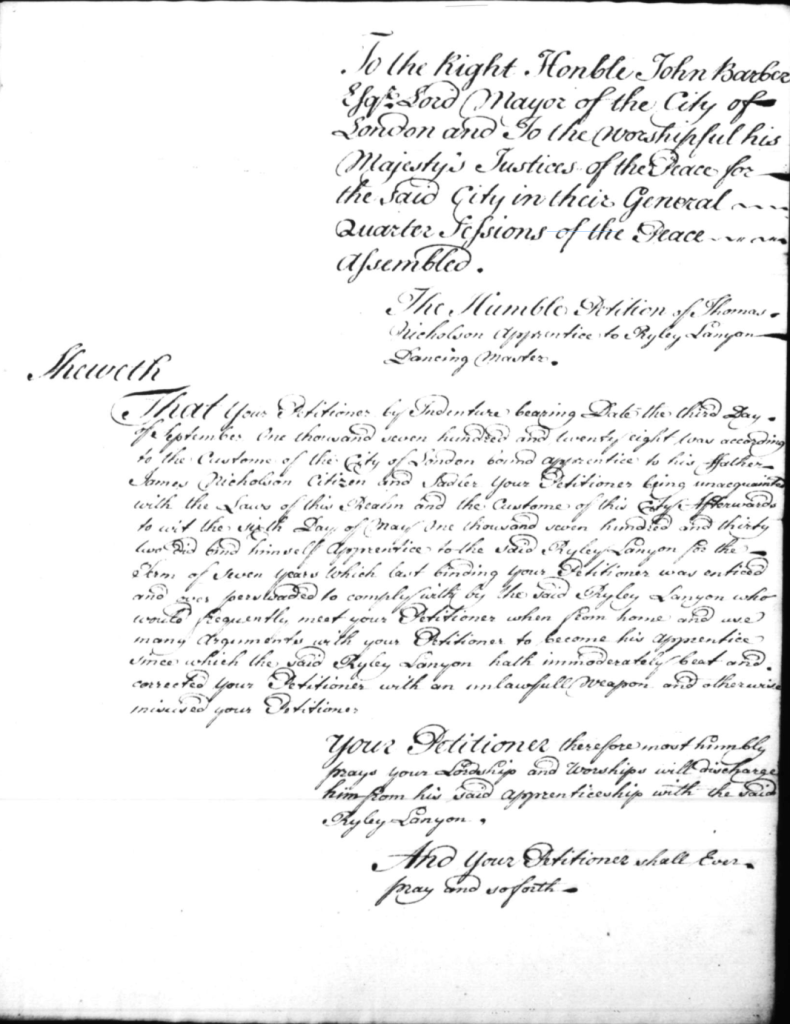
We next see Ryley in the records of London Metropolitan Archives in 1732 when he takes on an apprentice. Thomas Nicholson the son of James Nicholson a sadler. Indenture year 1732 and cost £40 for a seven year apprenticeship. (Source- CLA/047/LJ/13/1733)

A good master would teach his apprentice all he knew and provide board and lodging for seven years. A bad master had almost total control over his apprentice and a free hand to do almost anything he liked. Ryley was a bad master!

In 1733 Thomas Nicholson applied to the Hon. John Barbee Esq, Lord Mayor of the City of London and to the Worshipful his Majesty’s Justices of the Peace’ to be discharged from his apprenticeship because Ryley Lanyon ‘hath immoderatly beat and corrected your petitioners with an unlawful weapon…’

In the 18th century most apprentices would expect to be disciplined and corporal punishment was commonplace. For Thomas to make this appeal, the beating from Ryley must have been particularly bad.

We don’t know the outcome of the appeal.

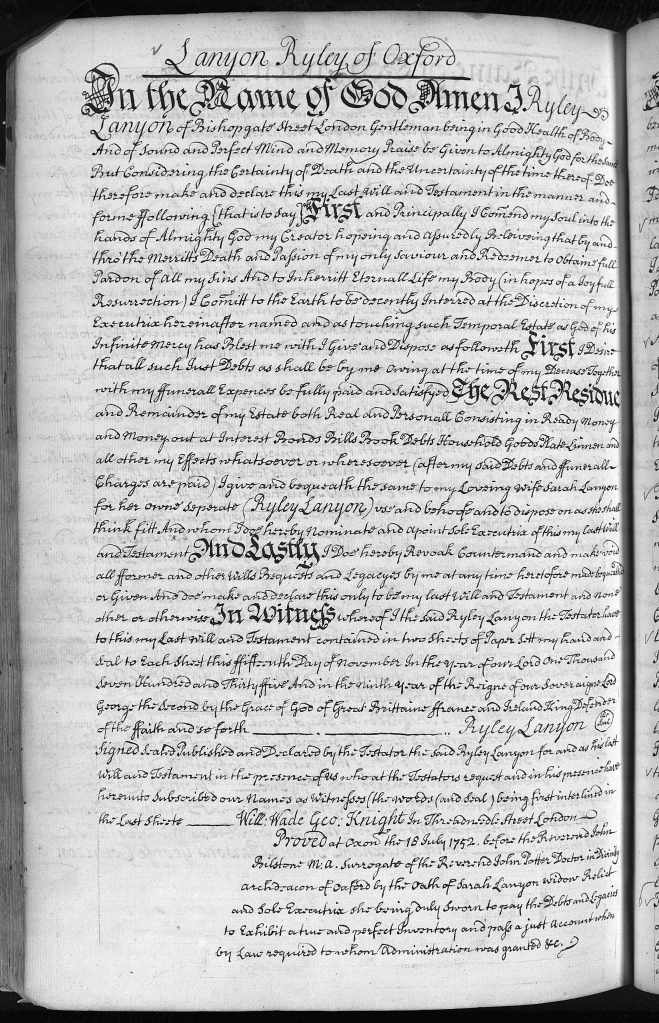
We next see Ryley in the records when he makes his will. It mentions just one relative, his wife, Sarah Lanyon to whom he leaves everything.

The will was proved on the 18 July 1752 and Ryley was buried at St Ebbe, Oxford.

Searching through London records I came across an Anne Ryley Lanyon spinster of Aldgate who had a clandestine marriage with James Howell, bachelor on 6 July 1722. James was a mathematical instrument maker. Could she be a relative of Ryley? I also found a marriage in London between a Samuel Lanyon and an Ann Riley on 7 Oct 1676.

On digging a bit further I found a baptism of a Samuel Lanyon son of James Lanyon in July 1656 at Exeter, Devon.

In 1677 there was an apprenticeship listed between John Lanyon, son of James Lanyon, wool comber of Exeter and Samuel Lanyon, of the Grocer’s Company London. So it looks as though Samuel had taken on his younger brother John to be trained to become a grocer.

On 2 December 1683 John Lanyon married Susanna Osmand at Stoke Canon in Devon.

Are they all related? Possibly! There are insufficient records to say with any certainty.

Can I fit them onto the main Lanyon tree? No. James Lanyon, father of Samuel and John, must have been born in the 1630s or earlier and I don’t have a James Lanyon born around that time. So for the time being Ryley and this little group of people are in the ‘Loose Lanyons’ section.

John Collett, Public domain, via Wikimedia Commons

The Benbow Brandy Men

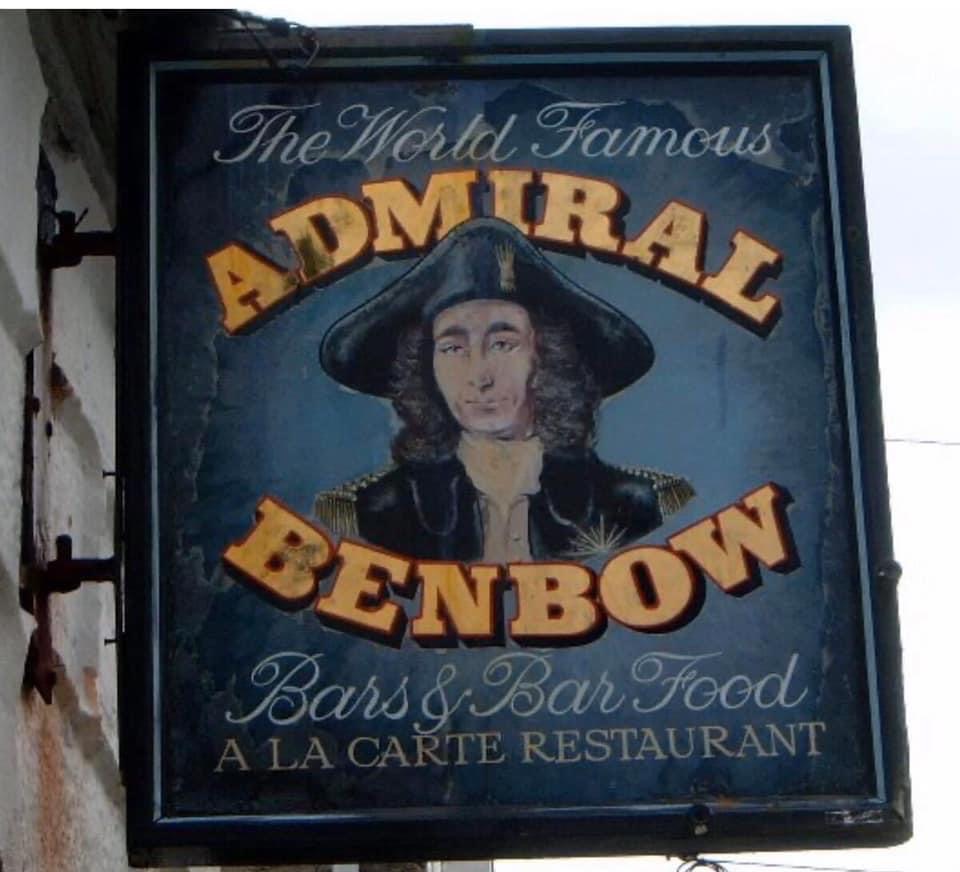
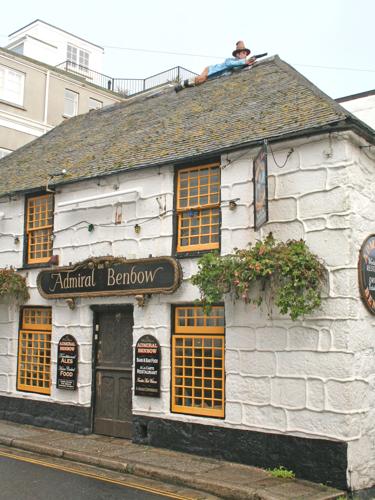
The Admiral Benbow pub in Penzance advertises that it has been serving ‘pirates, smugglers and rum since 1695’!

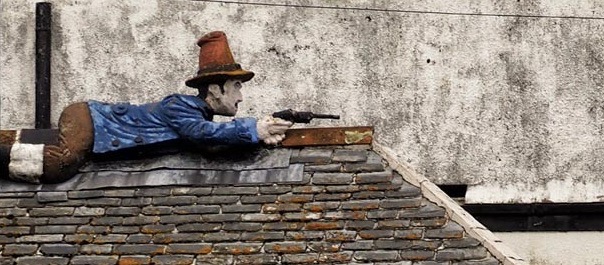
The ‘man on the roof’ of the pub is Octavious Lanyon reputedly the head of the Benbow Brandy Men.

Octavious Lanyon

The government levied duties on a whole range of goods: tea, salt, muslin, silk and brandy. Salt was especially important for the Cornish fishing industry so the taxes were unpopular and many Cornish people had no qualms about smuggling in order to survive. The locals called it ‘Cornish Free Trade’!

Smuggling routes ran from France through the Channel Islands and on to Cornwall. Smugglers often met in local pubs to plan their activities. The Admiral Benbow was the meeting place of the Benbow Brandy Men.

There is a tunnel under the pub (only discovered a few years ago) which led down to the harbour and allowed the smugglers to move their goods out of sight of the revenue men.

Octavious Lanyon was the head of the smugglers and he climbed onto the roof to create a diversion during a raid by the revenue men. He is thought to have been shot and seriously injured.

Some of the gang were captured. John Martin alias Shelly, Walter Cross, John Williams, William Stone alias Quinn, James Bell, William Bell and Benjamin Savory were found guilty of ‘being persons of malicious minds and dispositions’ and of being on the vessel Happy Go Lucky which had fired on the revenue ship.

The Admiral Benbow pub was the inspiration for Robert Louis Stevenson’s ‘Treasure Island’ and it features in the first chapter of the book as the inn owned by Jack Hawkin’s parents.

So who was Octavious Lanyon?

There aren’t any records of a baptism, marriage or burial of anyone called Octavious Lanyon in Cornwall. If he existed it must be an alias. There are plenty of Lanyons in the Penzance area at that time but identifying who Octavious might have been is impossible without more information.

Source – Tom Gainey – Cornwall Live

Edward of St Agnes

The group of Lanyons associated with St Agnes have proved to be quite tricky to pin down. The following is ‘my attempt’ to use the records available to produce a tree. I emphasise it’s my attempt and may not be right!

It’s worth reading the post ‘John Lanyon of Penwinnick Estate’ (Breage Branch) first as that lays out the main players.

Gaps in the records have made it difficult to say with any certainty how this branch of the tree fits together.

The reason there are gaps in the records!

In 1616 at St Agnes an Edward Lenion baptised his son Thomas Lenion and three years later he baptised a son called Humphrye.

There is no trace of a marriage for Edward before 1616. There is a marriage for an Edward Lanyon to an Anne Ascott at Colan in 1627. There is an Edward Lanine and a Humphrie Lanine on the Colan 1641/2 Protestation Return, could that be Edward and his son?

There is a Humphrey/Homphrey Lanyon baptising and burying children in Madron in 1670/80s. Could this Humphrey be the Humphrey son of Thomas Lamone who was baptised on 18 Mar 1649 in Madron and could Thomas Lamone be Thomas (b 1616) son of Edward?

Humphrey had several children baptised in Madron but apart from the burials of the two infant Humphreys there is no further trace of the other children. The names Margaret, Mary and John are too common to be able to state with any certainty that they are these particular people and whilst Ebbott and Arundell are unusual names there is no further trace of them. This little branch dies out through lack of information.

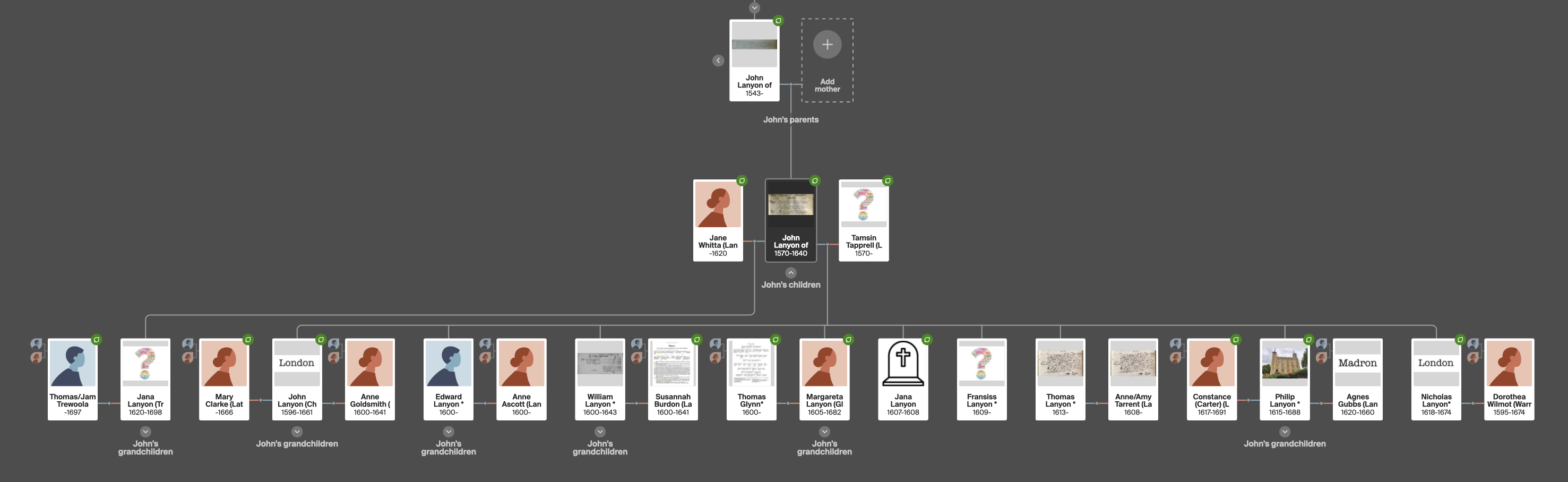
So who is Edward Lanyon/Lenion? He may be an undocumented son of John Lanyon Esq and therefore a brother of John Lanyon who married Tamsin Tapprell at St Agnes in 1596.

He could be the Edward Lanyon son of John Lanyon ‘the elder gentleman’ and his wife Jane who is mentioned in the 1623 document transferring The Penwinnick Estate at St Agnes to Edward Noye. Thomas Tonkin states that this Jane is the daughter of William Whitta. John Lanyon ‘the elder gentleman’ must be the John who married Tamsin Tapprell in 1596 at St Agnes. Jane must be a second wife. We know that John and Tamsin’s eldest son John was born at the earliest in 1596 so a second son called Edward must have been born after that. If that’s the case then he must have married early for his first son to be baptised in 1616.

He could be an undocumented son of Edward Lanyon of Coswin who died at Gwinear in 1630 but Edward of Coswin leaves a will and doesn’t mention any son called Edward so this seems unlikely.

He could even be the undocumented son of Edward Lanyon, the 4th son of William Laniene and Thomasine Tregian who is mentioned in a document of 1586 – source – AR/3/39. There are no records showing any marriage or other children for this Edward so again it seems unlikely.

Map of St Agnes (Colan is near Newquay).

Polsue’s ‘Parochial History of Cornwall’ – “Penwennick, an estate in the manor of Tywarnhaile, was divided, temp. Henry VIII, between Thomas Kemyell, who possessed a moiety, and Sir John Diamond and Urinas Nicholl, who had a fourth each. The representatives of Kemyell sold their moiety in 1568, to William Whitta ; from Whitta it passed to the Lanyons, who resided here several years, and sold the estate in 1622, to Edward Noy, of Carnanton, who sold it in 1627, to John Tonkin, of Trevaunance. Sir John Diamond’s share passed through several female heirs to Francis Basset, of Tehidy ; who sold it to Thomas Tonkin, in 1705.” That would lend credence to a marriage between John Lanyon and Jane Whitta.

So if Edward is the son of John Lanyon of St Agnes (who baptised a number of children at Breage) the tree now looks like this. We can only say for certain that the last child was a daughter of John and Jane as it is recorded in the parish register. The earlier children may have been from the marriage to Tamsin or the marriage to Jane.

Edward the second son was married to an unknown woman and had two sons: Thomas and Humphrye and then he married Anne Ascott in 1827 at Colan and went on to have another child with her. Alice baptised 1634 at Colan and who was buried at St Enoder in 1672.

In 1650 an Edward Lenion married Grace Long at St Enoder, presumably this was another undocumented child of Edward and Anne Ascott? Grace died in 1667 and was buried at St Enoder.

St Enoder isn’t far from Colan (near Newquay)

Sadly without wills and other records it’s impossible to say for sure that this is how the tree should look.

Elcana Lanyon

I spent many months bemoaning the fact that Lanyon parents were not terribly adventurous about naming their children. There are over 300 John Lanyons on my tree and trying to distinguish between them is a nightmare! There are also an awful lot of Williams, Richards, Elizabeths, Janes and Marys but there is definitely only one Elcana Lanion!

I first came across Elcana/Elcaner when I saw a baptism entry in Millet’s transcript of the Madron register:- ‘4 Apr 1670 Bernard son of Eleana Lanion’. I automatically assumed it should be Eleanor and that Bernard was illegitimate. Then I discovered Elcana’s marriage to Honor in 1666. I couldn’t find a baptism or a burial for Elcana despite him having probably the most unusual name in the whole Lanyon family.

A quick trawl on Google revealed that Elkanah was a minor biblical character who was mentioned in the Book of Samuel for having two wives.

I couldn’t find anything else so I tucked the name away and moved on. Some months later I came across a will which mentioned him.

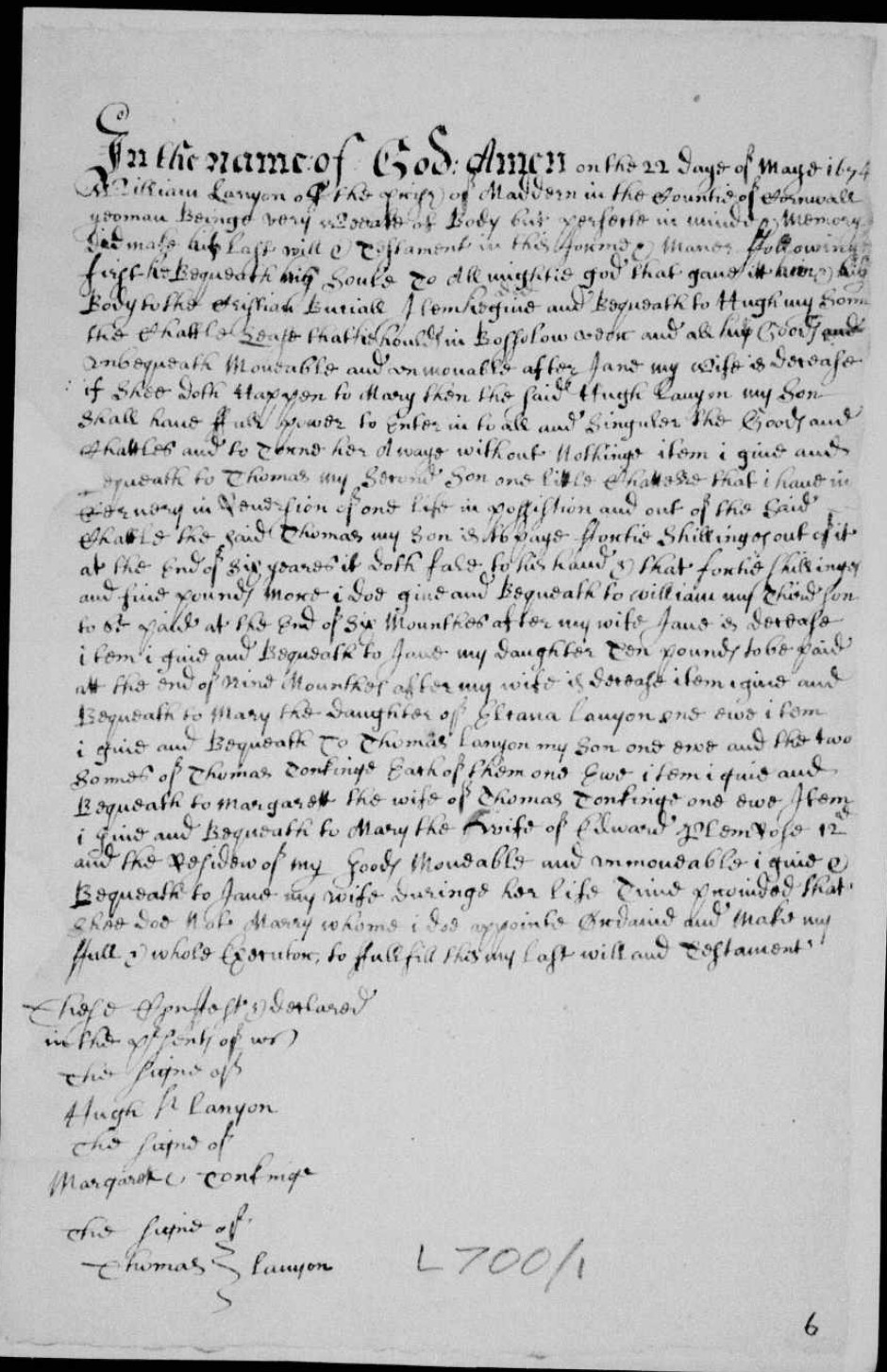
William Lanyon yeoman of Madron died 1674

Transcript:

  • To my son Hugh, lease of Bosollow Veor after mother’s death.
  • Jane my wife
  • Thomas my second son
  • William my third son
  • Daughter Jane £10
  • Mary the daughter of Elcana Lanyon
  • Margaret wife of Thomas Tonkin
  • Mary wife of Edward Primrose

Where does this William Lanyon fit on the tree? He is the grandson of Raphe Lanyon.

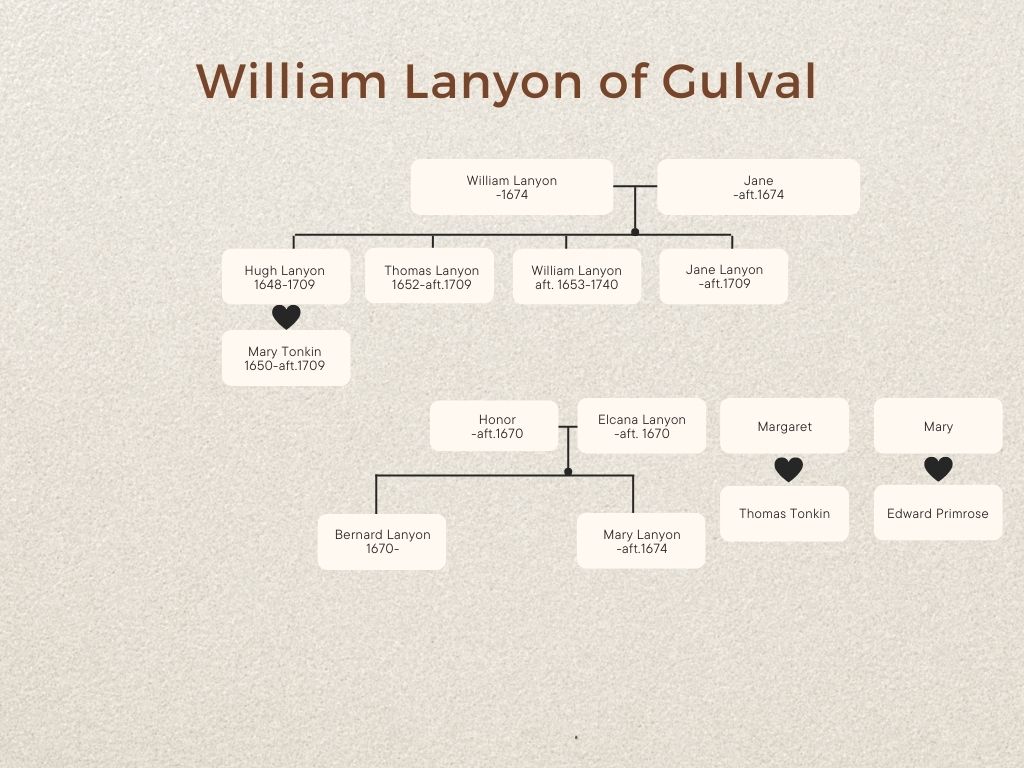
From this will and the Madron parish register we can put together this tree.

Madron parish register lists the baptism of Hugh son of William Lanion of Gulvall in 1648. Hugh is the eldest son according to the will so presumably his parents were married before 1648 but I can’t find a record of this anywhere.

William’s will mentions Mary daughter of Elcana but not the relationship of Elcana or Mary to William. Could Elcana be William’s son and Mary his granddaughter? Or perhaps Elcana is William’s younger brother or even a cousin?

William was probably born in the 1620s if he married in the 1640s. Elcana married Honor in 1666 almost a generation later so could be a son or younger brother. We know from the will that he had a daughter Mary and from the Madron parish register a son called Bernard.

Presumably Margaret (who married Thomas Tonkin) and Mary (who married Edward Primrose) are married daughters of William.

Hugh Lanyon 1648-1709

Hugh was a ‘tynnor’. He married Mary Tonkin from Paul in 1689 but they didn’t have any children.

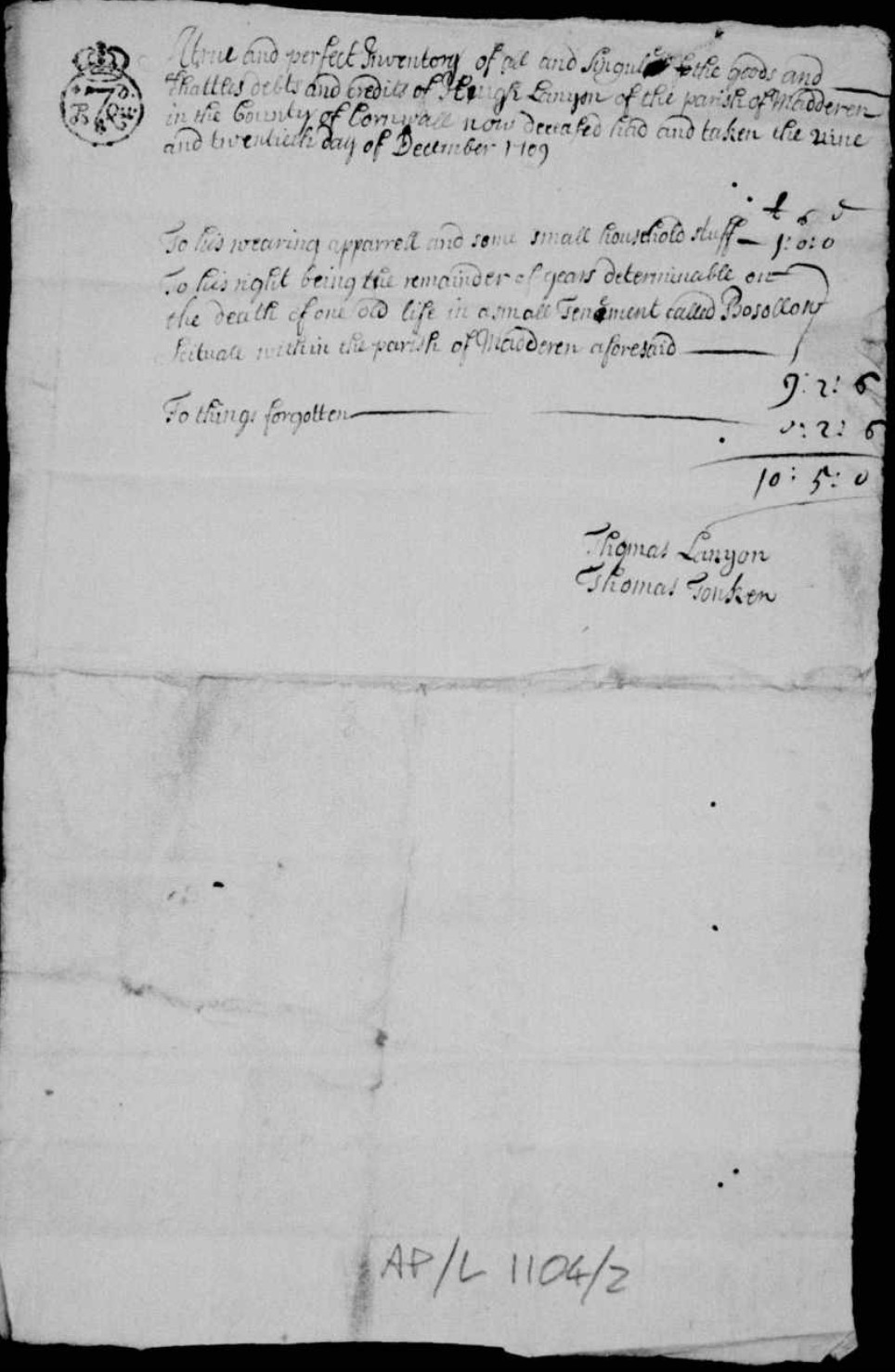
Hugh’s will (Source – CRO AP/L/1104)

  • Bequeathes 1/- to several named widows
  • To Mary my beloved wife, the house that I do live in and garden adjoining, with liberty of commons for cattle
  • To brother Thomas 10/-
  • Sister Jane wife of William (possibly Harris)
  • Sister-in-law Margaret Tonkin and to brother William Lanyon all the estate I have in land what is not formerly bequeathed to my wife and executor
  • 2/- 6d for the poor man’s box, parish of Madron
  • Inventory mentions Bosollow: one old life left on small tenement. Inventory apparently signed by Thomas Lanyon and Thomas Tonkin.

Brother Thomas Lanyon was baptised on 10 Apr 1652 but there is no trace of a marriage or burial. No trace of a baptism for brother William Lanyon. A possible marriage: William Lanyon married Susanna at Madron in 1675 and she died several months later.

Mary Primrose, wife of Edward was buried at Gulval 8 Mar 1729. She had two daughters: Kathren and Mary.

There is no further trace of Elcana, Honor or Bernard so presumably they died (probably before 1674 as they are not mentioned as beneficiaries in William’s will) and their burials are not recorded. There is no further trace of Elcana’s daughter Mary.

John Lanyon of New York

I came across this Lanyon quite by chance whilst looking at a book about the history of Harlem.

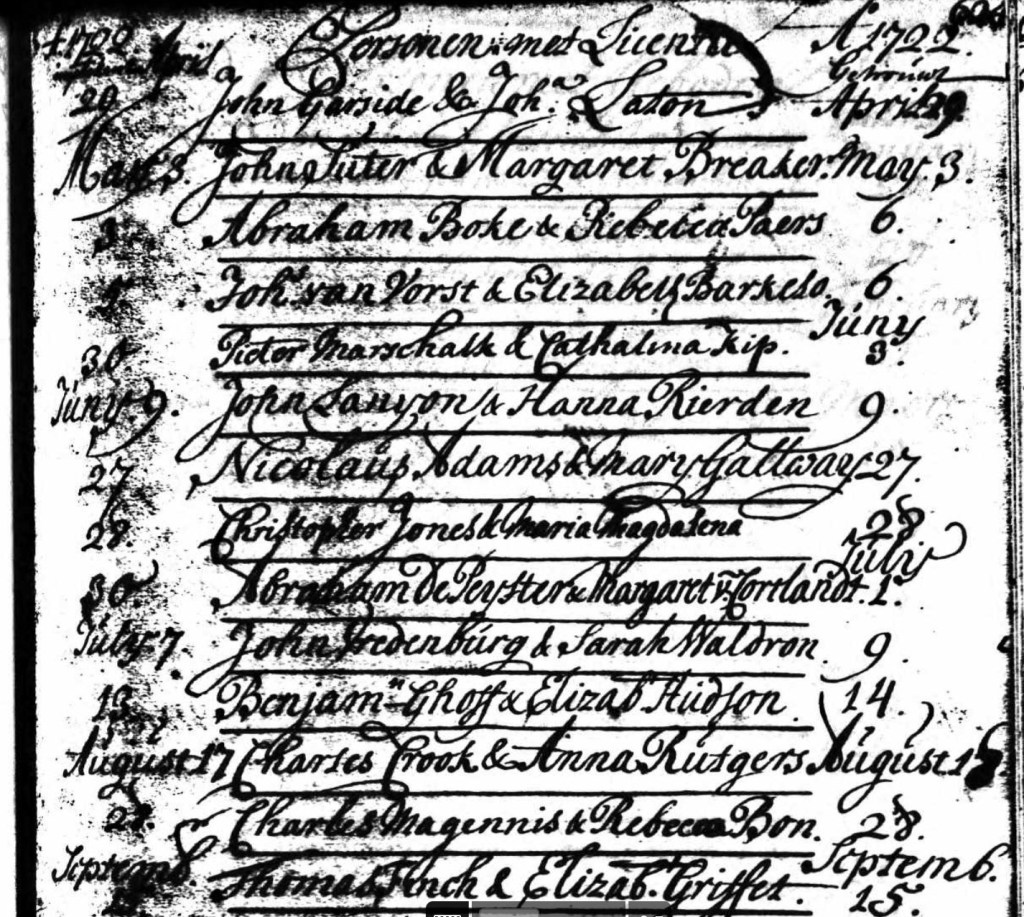
On 9 Jun 1722 John Lanyon married Hanna Rierden in New York.

New York City marriage index 1600-1800

Hanna was the daughter of Thomas Pearsall/Parcell and Christina Van Hattem. She was born about 1680 at Dutch Kills, New York. In 1708 she married Jeremiah Rierden but he died and there were no children of this marriage.

In 1723 Thomas Pearsall wrote his will:-

Hart Island (City Island) is still called that today and is known as Potter’s Field.

Excerpt from History of Harlem by James Riker

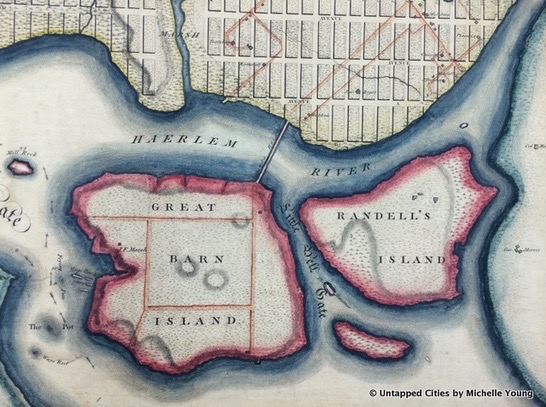
Great Barents Island (now Randalls & Wards Islands) at Harlem was sold 9 Aug 1687 by Jacob Milborne to Thomas Parcell. Thomas Parcell was the son of John Parcell also known as ‘John the butcher’ from Huntingdon county, England, who early settled at Dutch Kills. When John died in 1680 he left his children: Thomas, William, Henry and Catherine an estate worth 6,000 guilders. Thomas, born 1653 and bred a blacksmith, married Christina Van Hattem. On removing to Great Barents Island, he sold his lands at Dutch Kills to Bourgon Broucard and Hans Covert on 21 Jun 1690 for 4,087 pounds. Parcell built a grist mill at the upper side of his island. His son John bought the northern half of the island 4 Jun 1722 and on 29 Mar 1723, Thomas and Christina sold the other half to son-in-law John Lanyon of New York, innkeeper. Parcell died prior to 1732 on Spectacle or Hart Island (Now City Island) which he then owned. His will mentions his children: Nicholas, John, Henry, Hannah and Eda.

  • Nicholas Parcell married a daughter of the Hon, Rip Van Dam.
  • John Parcell kept his half of Great Barent’s or Parcell Island until his death in 1751 age 75. He married Leah Van Alst and they had nine children. He gave his share to his son Thomas Parcell who married Deborah Penfold. Thomas was drowned in Hellgate on 1 Aug 1766 in the evening attempting to swim his horse to the island
  • Henry Parcell succeeded to Hart Island.
  • Eda married Walter Dobbs.

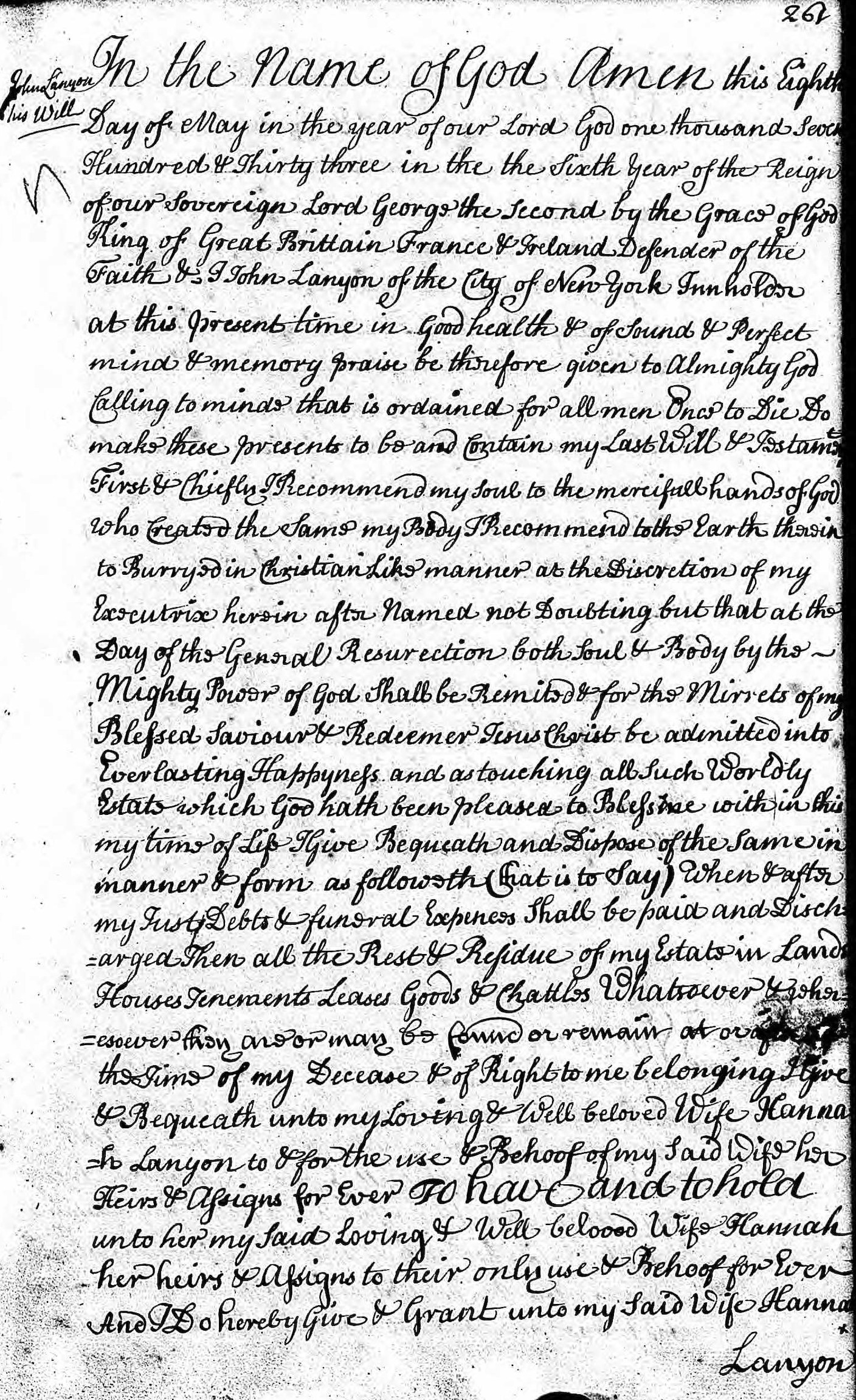
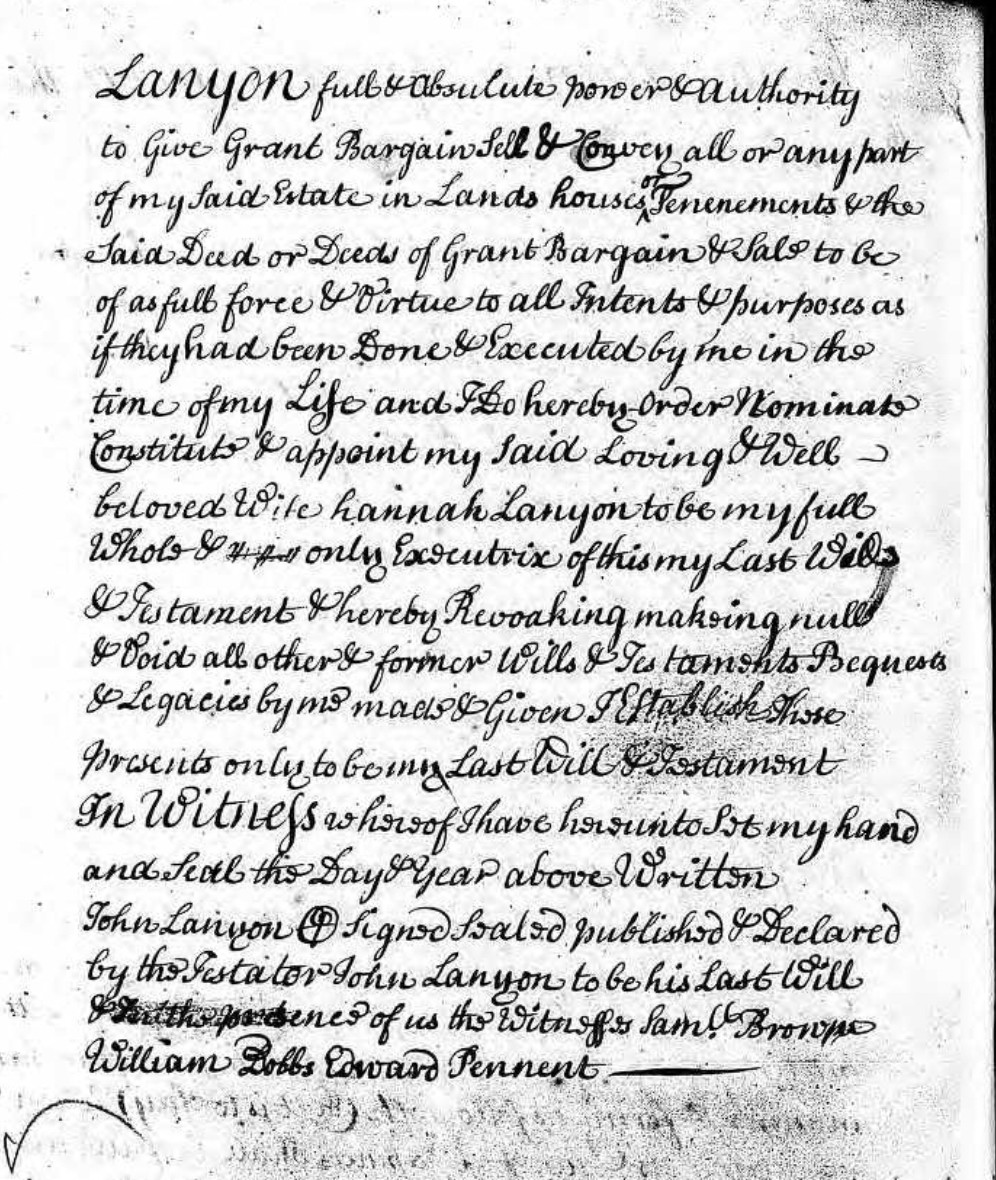
John Lanyon died, probably 1733 and his will was proved 8 Jan 1734.

Hanna and John had no children and there are no clues in his will as to his origins. Could he be the John Lanyon who was the son of Hugh Lanyon and Mary Tonkin (Morvah branch), he was baptised in 1692 and there is no trace of him?

On 17 Jan 1735 Hanna married for a third time, to Thomas Behena. There were no children from this marriage. In 1765 she mortgaged her half of the island.

Great Barents (Barn) Island in New York City