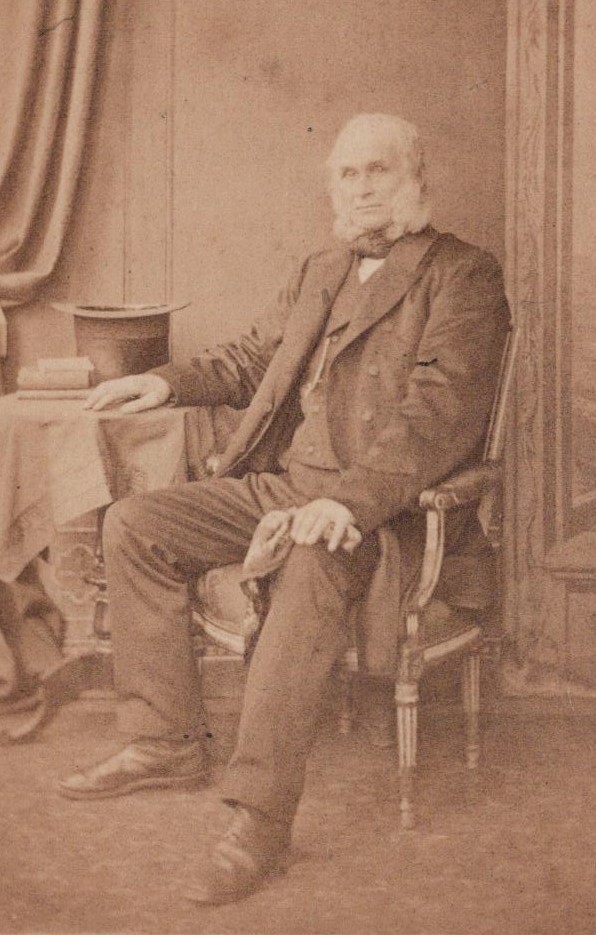
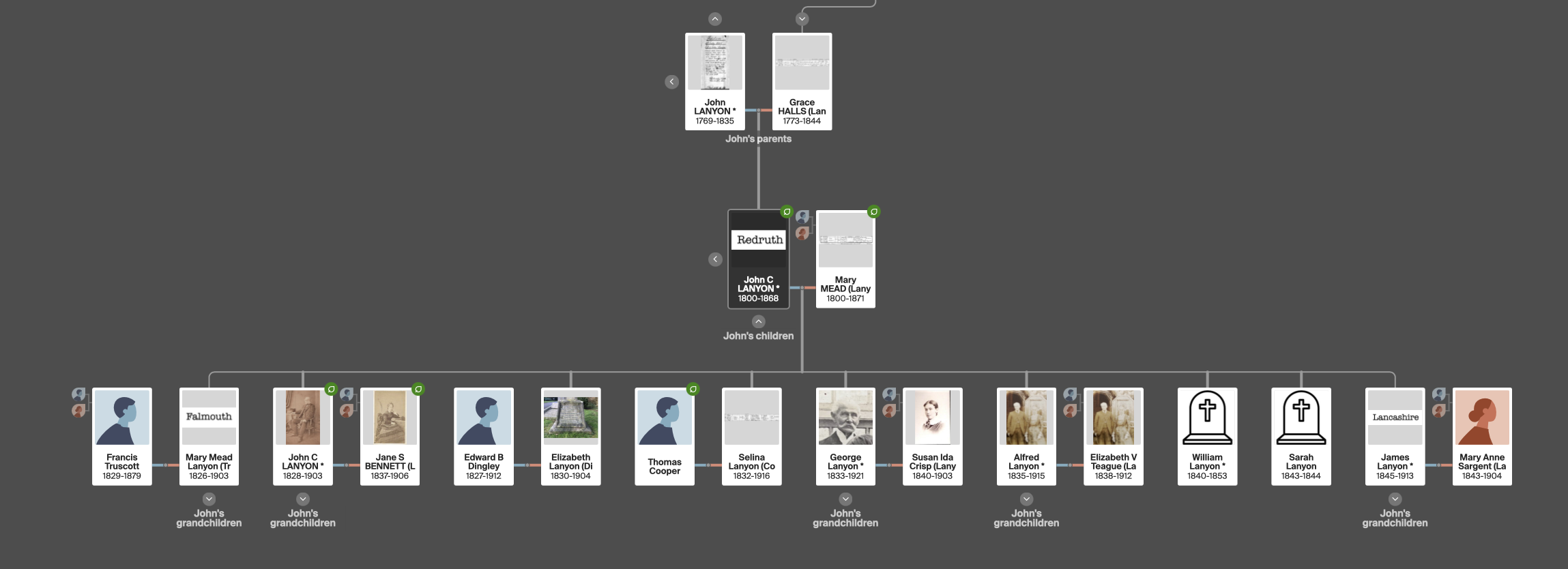
John Charles Lanyon was the eldest son and heir of John Charles Lanyon and Mary Mead of Redruth.
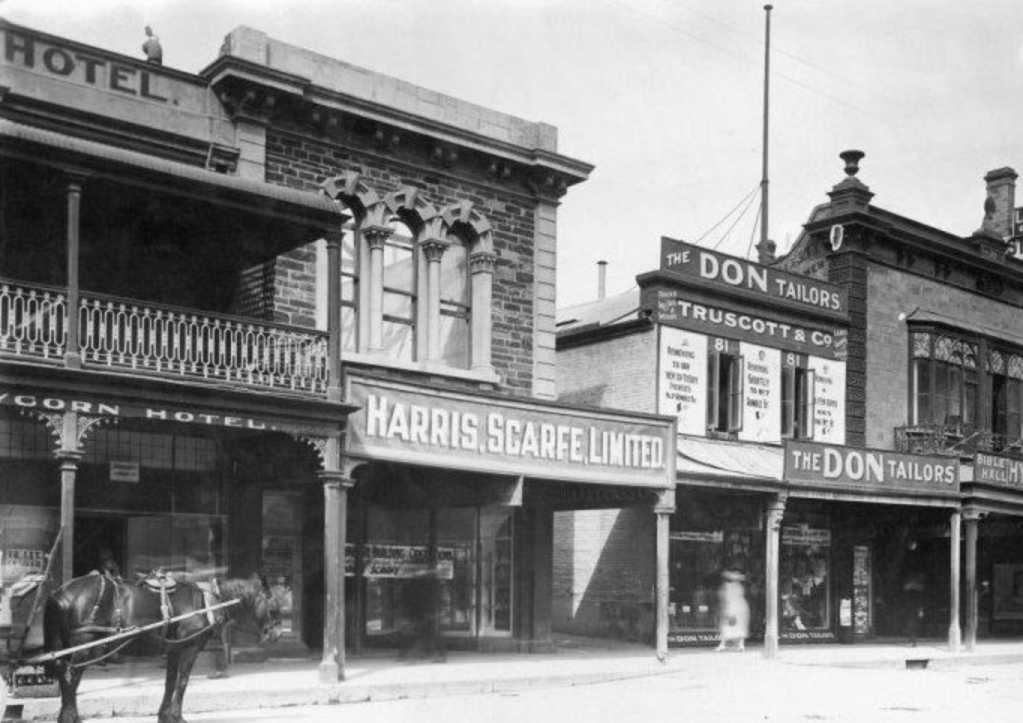
By the age of 22 he was a partner in the British Arsenic Company and and in 1849 he set sail for Adelaide, Australia on the ship ‘Candahar’ to establish a hardware and ironmongery business. On the journey he met George Peter Harris and they were founding partners of a very successful business which became Harris Scarfe, a major supplier of a range of household, agricultural and industrial items in Australia.
In 1855 John Charles left the partnership and returned to London where he opened a buying house for Harris Scarfe and other businesses in Australia. the London end of the business was JC Lanyon & Sons. There were several subsidiary companies: Australasian China & Glass Co, Australasian Implement & House Furnishing Co, The Adelaide Rope, Nail and Barb Wire Manufacturing Co.
In the 1860s with the decline in the copper industry he purchased £12,000 worth of equipment from Poldice Mine and JC. Lanyon & sons became a major dealer and exporter of mining equipment. In 1873 he bought £7,750 worth of equipment from Wheal Busy.
By 1887 he and his brother Alfred had set up the Cornish Tin Smelting with John Branwell and John Jose, they were also major shareholders in the lucrative East Pool mine where most of the ore for their new works came from. (Source: Barton 1967)
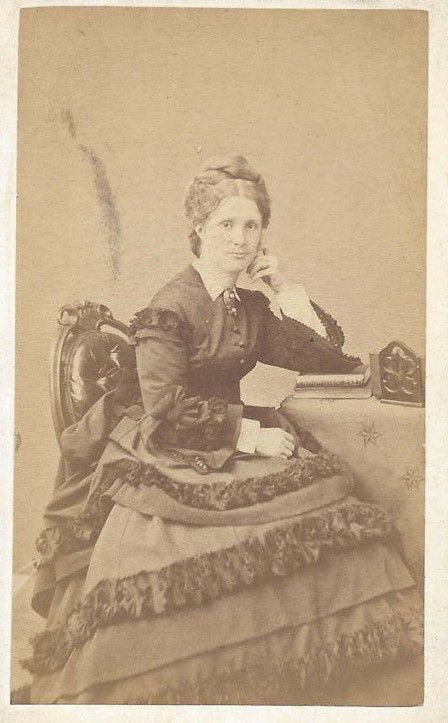
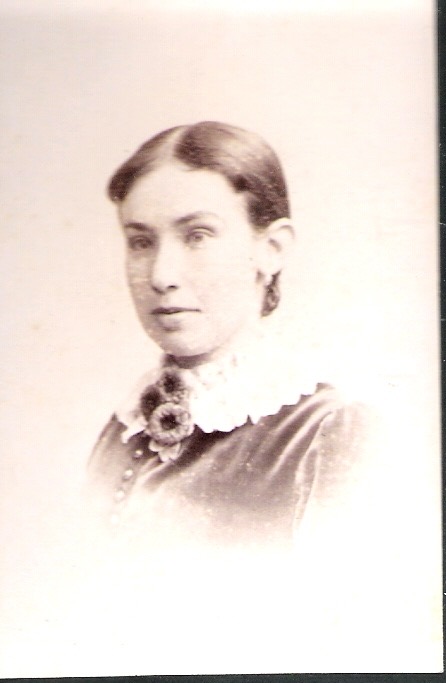
In 1857 he married Jane Stacy Bennett, the daughter of Charles Bennett and Jane Stacy.
Jane Stacy Bennett
Jane was born in 1837 in Redruth. Jane’s family lived at 15 Fore Street next door to the Lanyons at number 16. Charles Bennett was a merchant and draper.
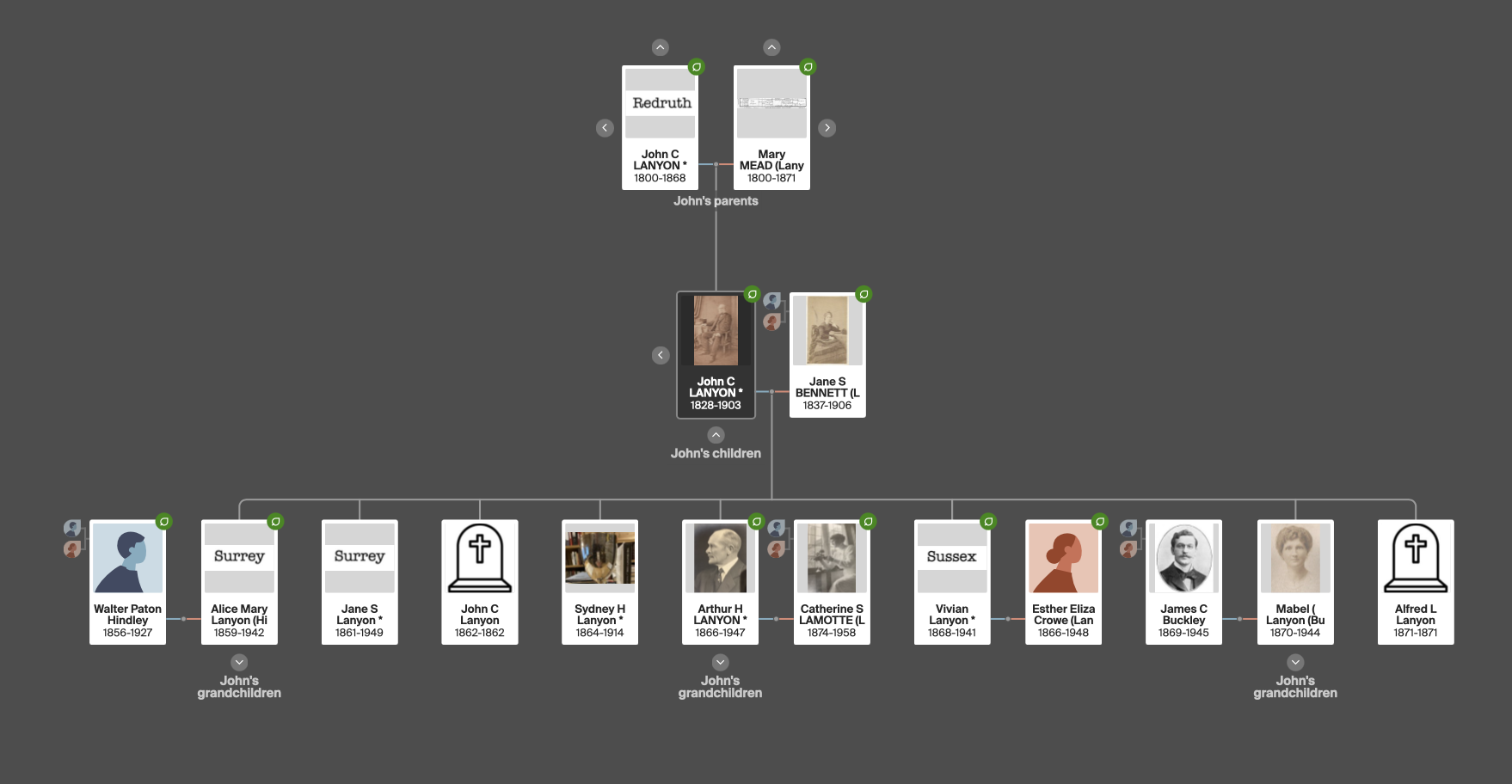
After marriage they moved to Croydon in Surrey as John was working in London. John and Jane had eight children:
Alice Mary 1859-1942 married Walter Paton Hindley – four children
Jane Stacey 1861-1949 spinster
John Charles 1862-1862 died in infancy
Sydney Howard 1864-1914 bachelor, rejected by the army and committed suicide in front of his nephew by jumping off Westminster Bridge on 24 Oct 1914. His body was found at Rotherhithe on 4 Nov.
Arthur Herbert 1866-1947 married Catherine Septima Lamotte
Vivian 1868-1941 married Esther Eliza Crowe, his nurse. He went to Jesus College, Cambridge and worked as a colonial agent. No children.
Mabel 1870 married James Charles Buckley, a doctor, they had four children
Alfred Leonard 1871-1871 died in infancy
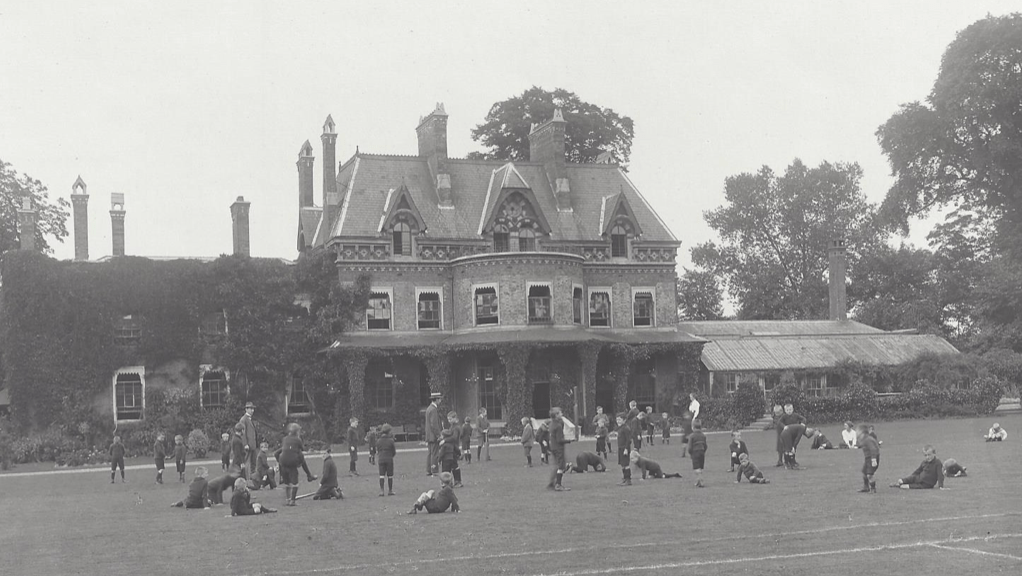
In 1878 they purchased Birdhurst in Croydon.
Birdhurst became a school after the Lanyons left in 1908.
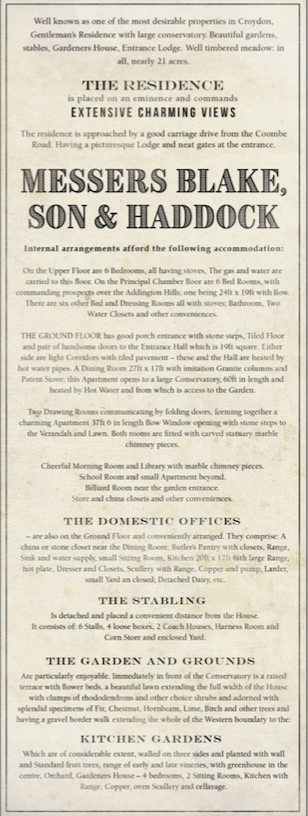
A description of the residence.
“an agreeable and retired residence delightfully situated with gardens and plantations in a beautiful valley leading from the town of Croydon to Croham House”
Mabel (May) Lanyon’s diary.
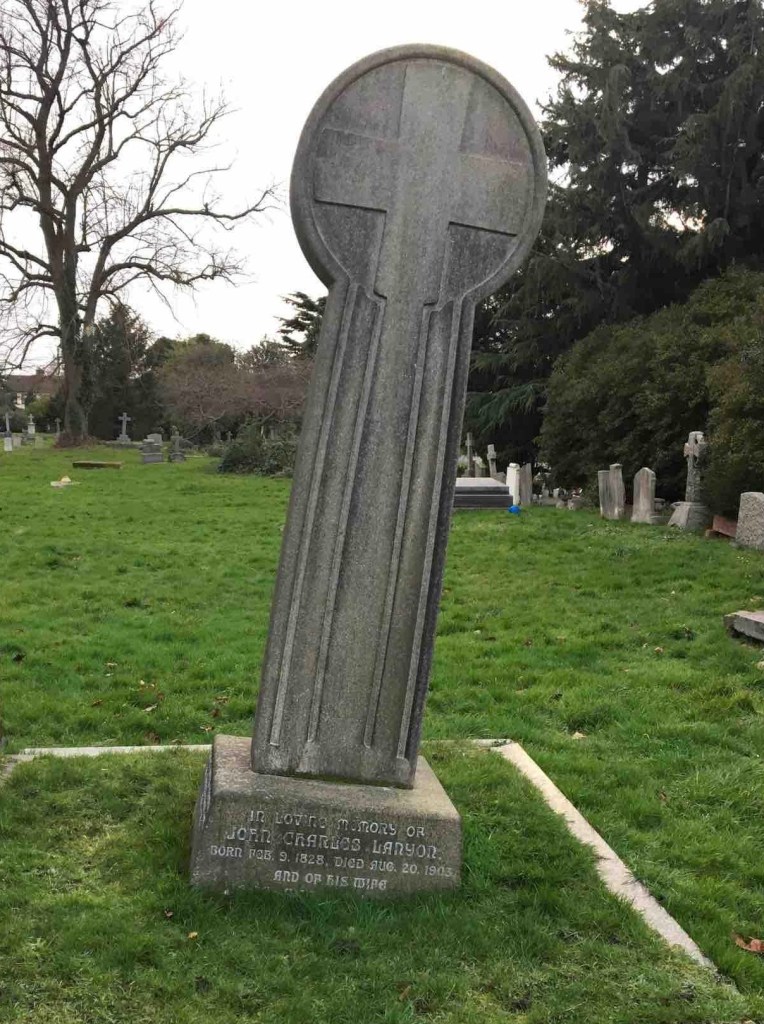
John Charles Lanyon died in 1903 and was buried in Queen’s Road cemetery, Croydon. He left an estate valued at £199,134.
Grave site of John Charles Lanyon Queen’s Road Cemetery in Croydon, Greater London, England, United Kingdom from BillionGraves
John Charles Lanyon was the son of John Lanyon and Grace Halls, he was born in Helston in 1800 but later moved to Redruth and in 1824 he opened an ironmongers in Fore Street. In 1840 by mutual consent the business ‘JC Lanyon & Thomas Lanyon Ironmongers, Curriers & Saddlers’ in Helston was dissolved and John Charles concentrated on his business interests in Redruth. He went on to become a partner in the gas works and other industrial concerns in the town.
In 1845 he was described as an ‘adventurer’ and was involved with Wheal Tehidy, Illogan & Redruth mine. By 1851 he was described on the census as a ‘merchant tanner, merchant shipowner and ironmonger’. In 1861, the census described him as a ‘merchant tanner’ who lived at Sparnon House. He retired on 31 Dec 1861.
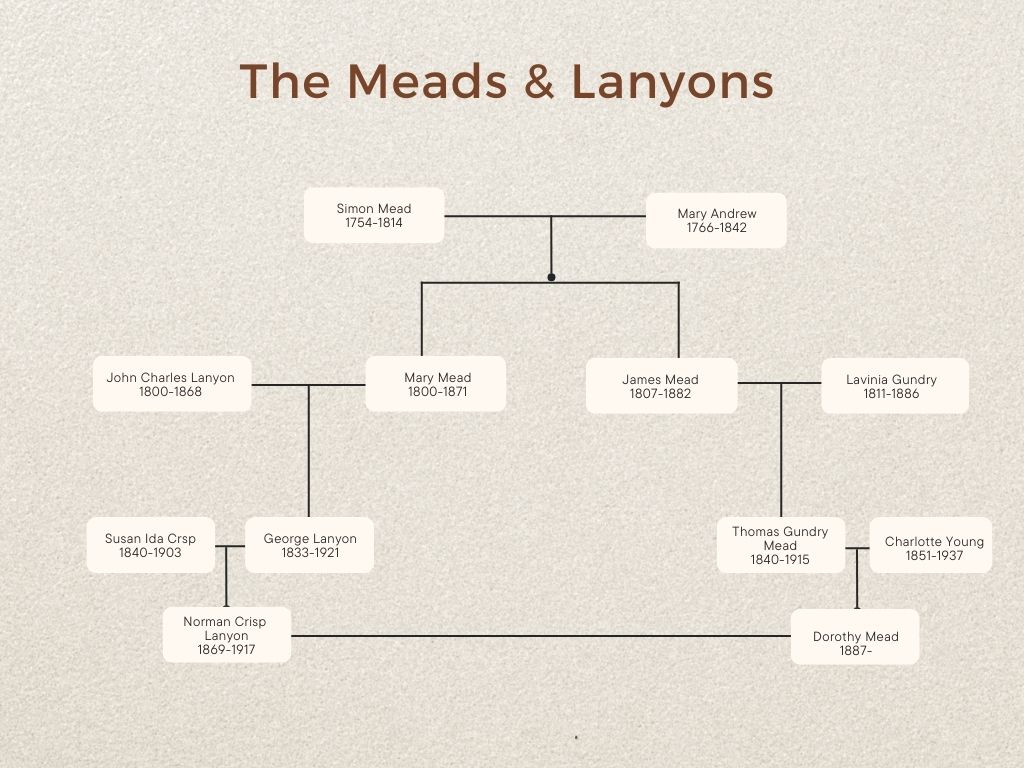
On 21 Jun 1825 he married Mary Mead, the daughter of Simon Mead and Mary Andrew. Simon was a Redruth shopkeeper.
They had ten children of which seven survived to adulthood.
Mary Mead 1826-1903 married Francis Truscott who was a classics tutor from Trinity College Dublin. They had six daughters and one son.
John Charles 1828-1903 (see separate post)
Elizabeth 1830-1904 married Edward Broadlake Dingley who was a draper with 8 assistants, there were no children
Selina 1832-1916 married Thomas Cooper, a merchant, no children
George 1833-1921 married Susan Ida Crisp
Alfred 1835-1915 married Elizabeth Victoria Teague
William 1840-1853 died young
Sarah 1844-1844 died in infancy
James 1845-1913 married Mary Anne Sargent
Harold 1850- died in infancy
John Charles was interested in all sorts of things and the Science Museum has a letter from him dated 1860 sent to Francis Trevithick (son of Richard) stating that he’d ‘been making enquiries respecting Murdoch’s little engine…’ and giving Francis the information he obtained as a result of these enquiries. (Source: Science Museum TREVF/4/66).
In 1847 he was sworn in as a special constable during the Redruth Corn Riots.
John Charles Lanyon died on 23 Nov 1868 at Redruth and left an estate worth £35,000. His wife Mary was listed on the 1871 census as an imbecile (presumably she was suffering from dementia) and died shortly afterwards.
George Lanyon 1833-1921
John Charles’ son George was born 1833 and became a tanner in Falmouth. He married Susan Ida Crisp in Hobart, Tasmania in 1861.
Susan Ida Crisp
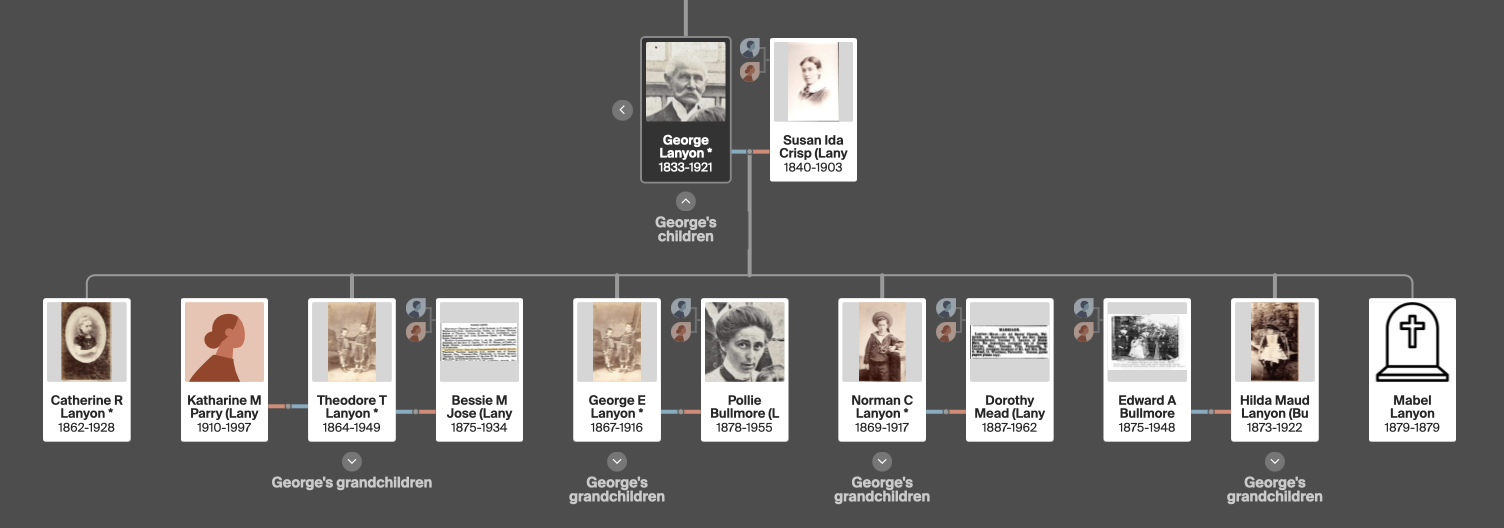
They returned to Falmouth and had six children:
George & Susan’s tree
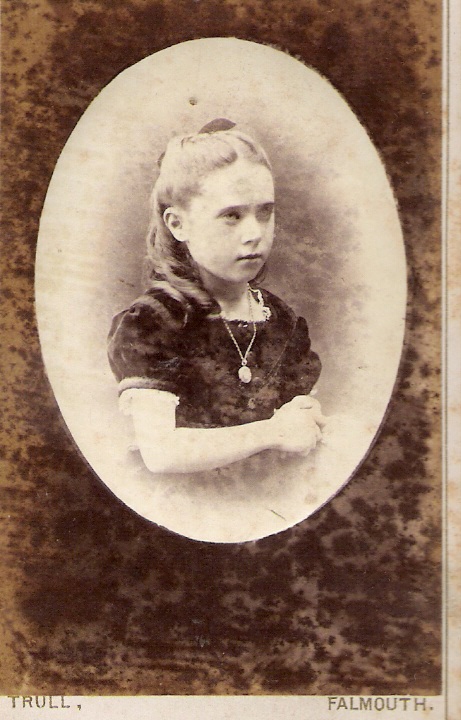
Katherine Rosina 1863-1928 she was an artist and spinster who lived with her parents
Theodore Tasman 1864-1949 married Bessie Michell Jose & Katherine Parry
George Edward 1867 married Polly Bullmore
Norman Crisp 1869-1917 married Dorothy Mead
Hilda Maud 1873-1922 married Edward Augustus Bullmore, two sons
Mabel 1879-1879 died in infancy
Hilda married Edward Bullmore, the brother of Polly Bullmore, who conducted a long correspondence with Jane Veale Mitchell (early 20th century Lanyon researcher) about the history of the Lanyon family.
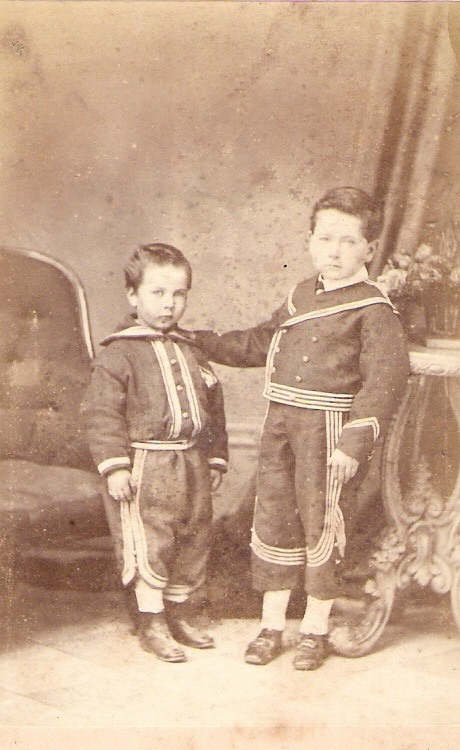
George and Susan’s children L-R in order of age.
Alfred Lanyon 1835-1915
Alfred Lanyon was born in Redruth in 1835. He too started off as an ironmonger but his interests moved to gas and he was the proprietor of the Redruth Gas Works and he established the British and Foreign Safety Fuse Company.
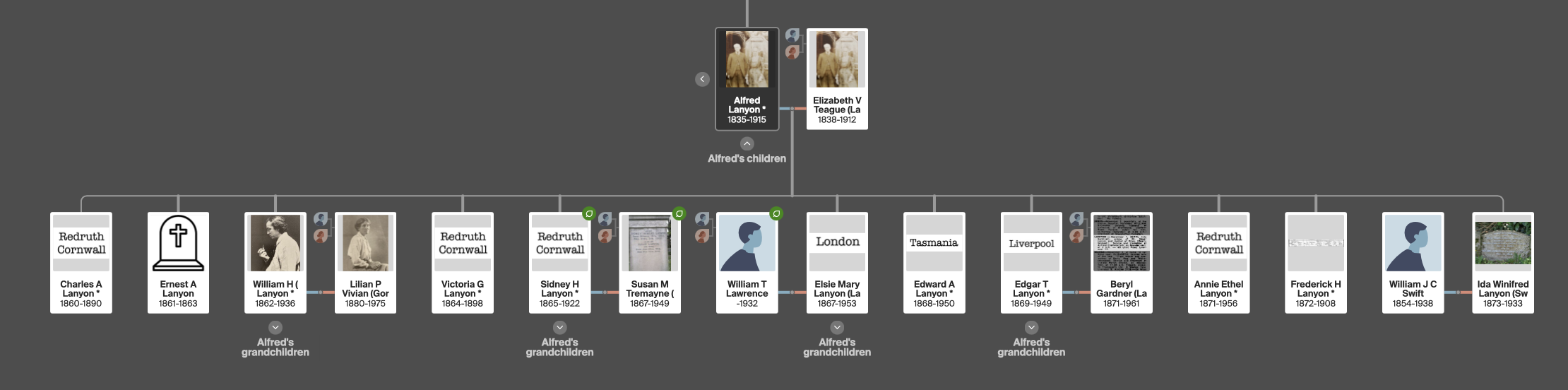
Alfred married Elizabeth Victoria Teague in 1859 and they had eleven children:
Charles Alfred 1860-1890 bachelor died of kidney disease, heart disease and exhaustion
Ernest Alexander 1861-1863 died in infancy
William Herbert 1862-1936 married Lilian Priscilla Vivian
Victoria Grace 1864-1898 spinster
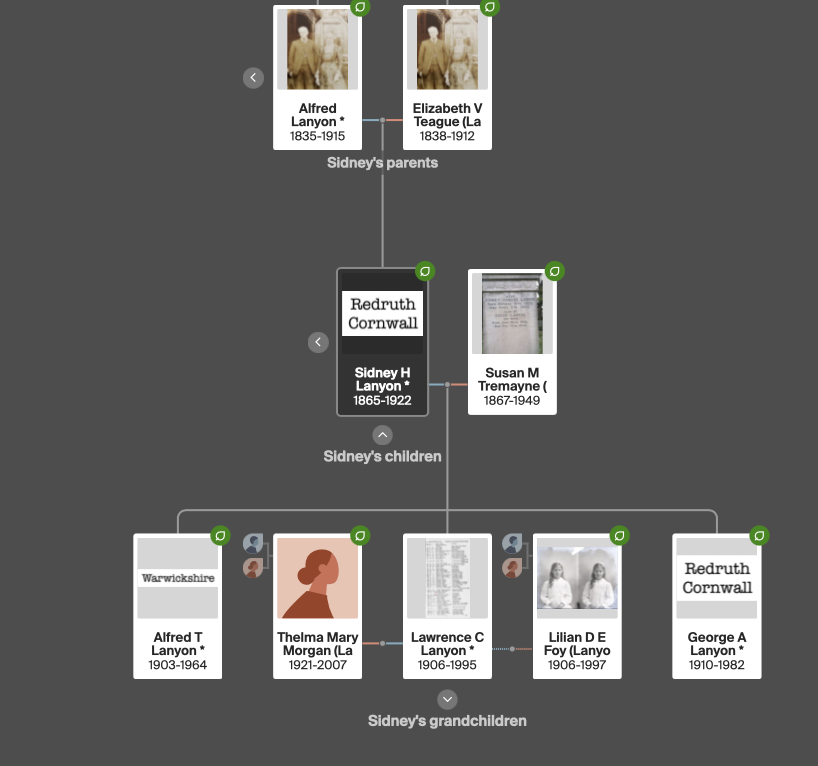
Sidney Howard 1865-1922 married Susan Tremayne
Elsie Mary 1867-1953 married William Thomas Lawrence – one daughter
Edward Arthur 1868-? he may have emigrated and died in Tasmania in 1950
Edgar Temple 1869-1949 married Beryl Gardner – one daughter
Annie Ethel 1871-1956 spinster
Ida Winifred 1873-1933 married William John Cropley no children
Frederick Harold 1873-1908 stock broker, bachelor
In later life he had one of the largest tin smelters in the world. The output of tin from his smelting works amounted to £1,000,000 a year. He was also an alderman and Justice of the Peace.
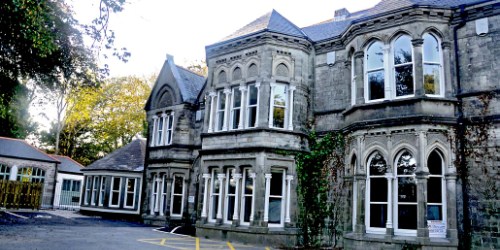
He and his large family lived at Tolvean House in Redruth.
Tolvean House, Redruth
Alfred died of pneumonia on 5 Mar 1915 and left an estate valued at £239,934.
James Lanyon 1845-1913
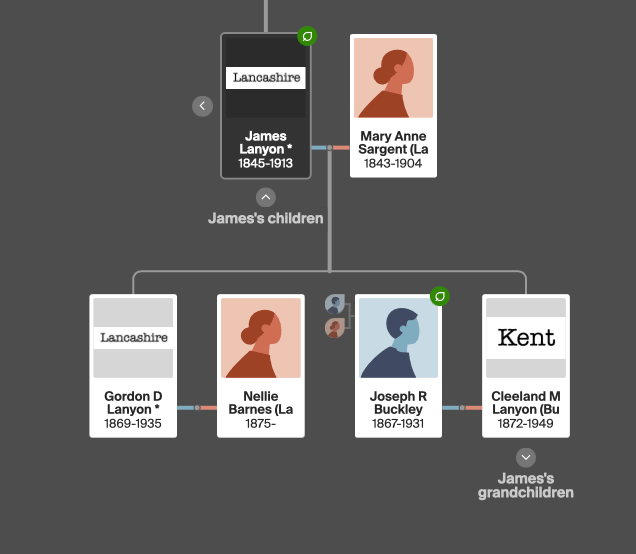
John Charles’ youngest surviving son was James born in 1845. He moved to Lancashire and became a cotton and linen merchant. He married Mary Anne Sargent in 1868 and they had two children:
Gordon Dingley 1869-1935 married Nellie Barnes
Cleeland Mead 1873-1949 married Joseph Richard Buckley – two children
Grandsons
Theodore Tasman Lanyon 1864-1949
Theodore was the eldest son of George Lanyon and Susan Ida Crisp, he was born in Falmouth. In 1897 he married Bessie Michell Jose at Perranarworthal, Cornwall. They had four children. In 1938 he married for a second time to Katharine Myvanwy Jean Macleod Parry who was 46 years younger! Theodore was Fleet Paymaster for the Royal Navy.
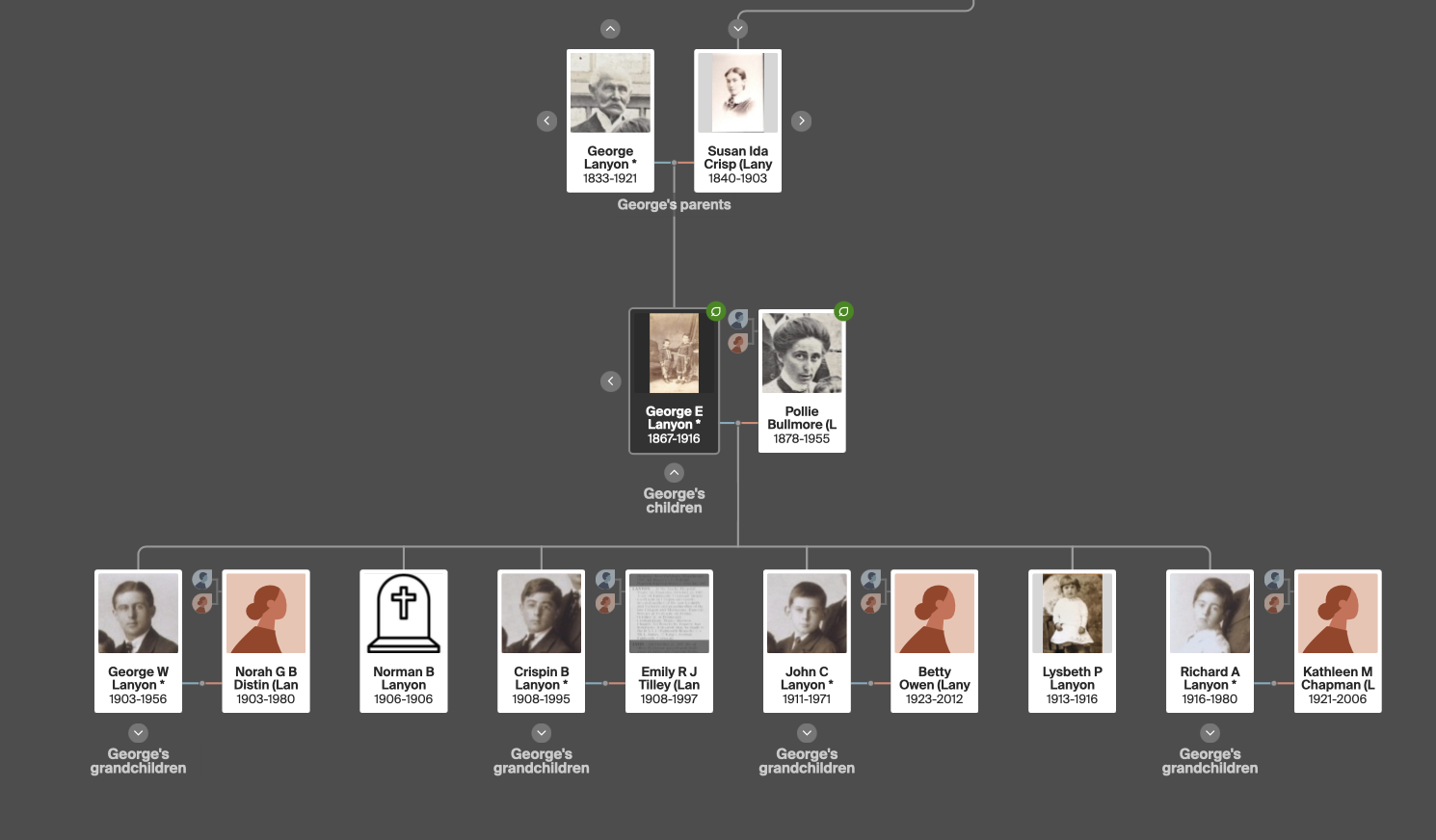
George Edward Lanyon 1867-1916
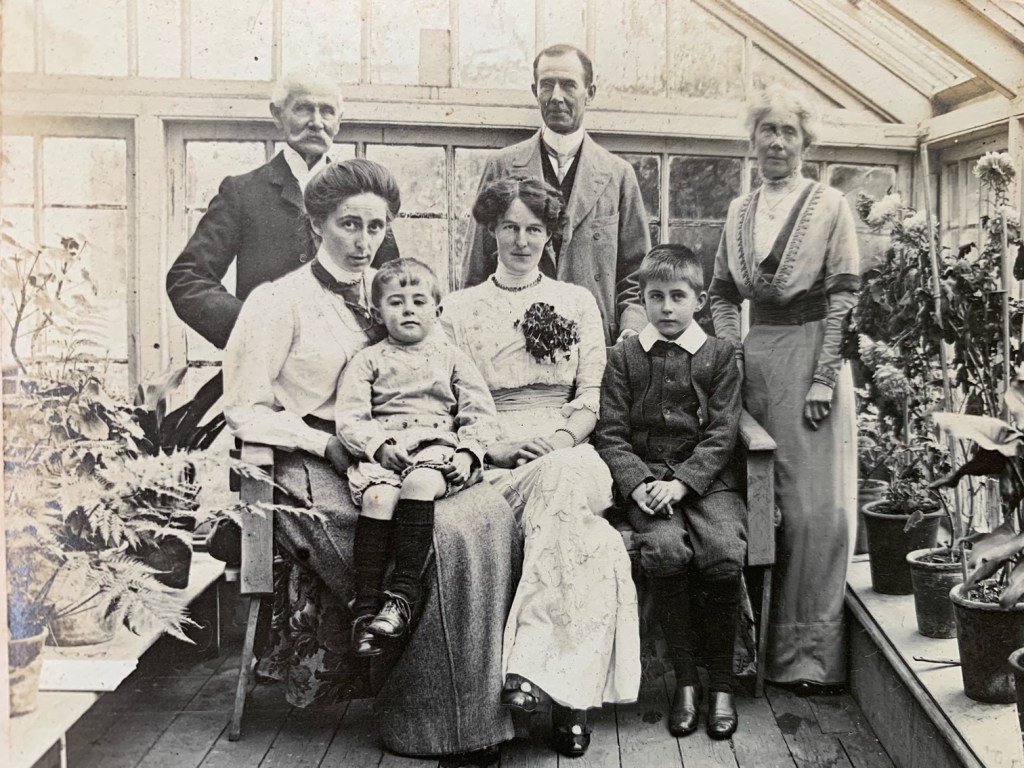
George was the second son of George and Susan. He was a doctor and in 1902 he married Polly Bullmore. They had six children.
Polly with a child on her knee, sitting in front of her father-in-law, George Lanyon
Norman Crisp Lanyon 1869-1917
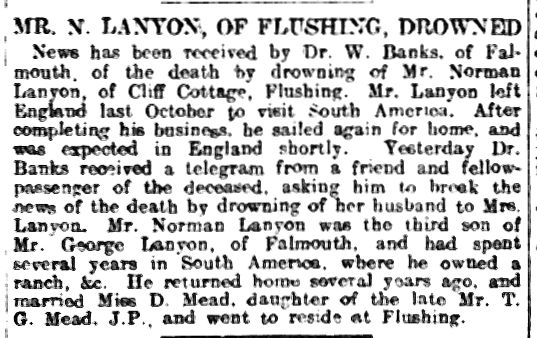
Norman was the third son of George and Susan. He married Dorothy Mead, a cousin, and they had three children. Norman died on 16 May 1917 when he was shipwrecked in the English Channel by a torpedo.
William Herbert Lanyon 1862-1935
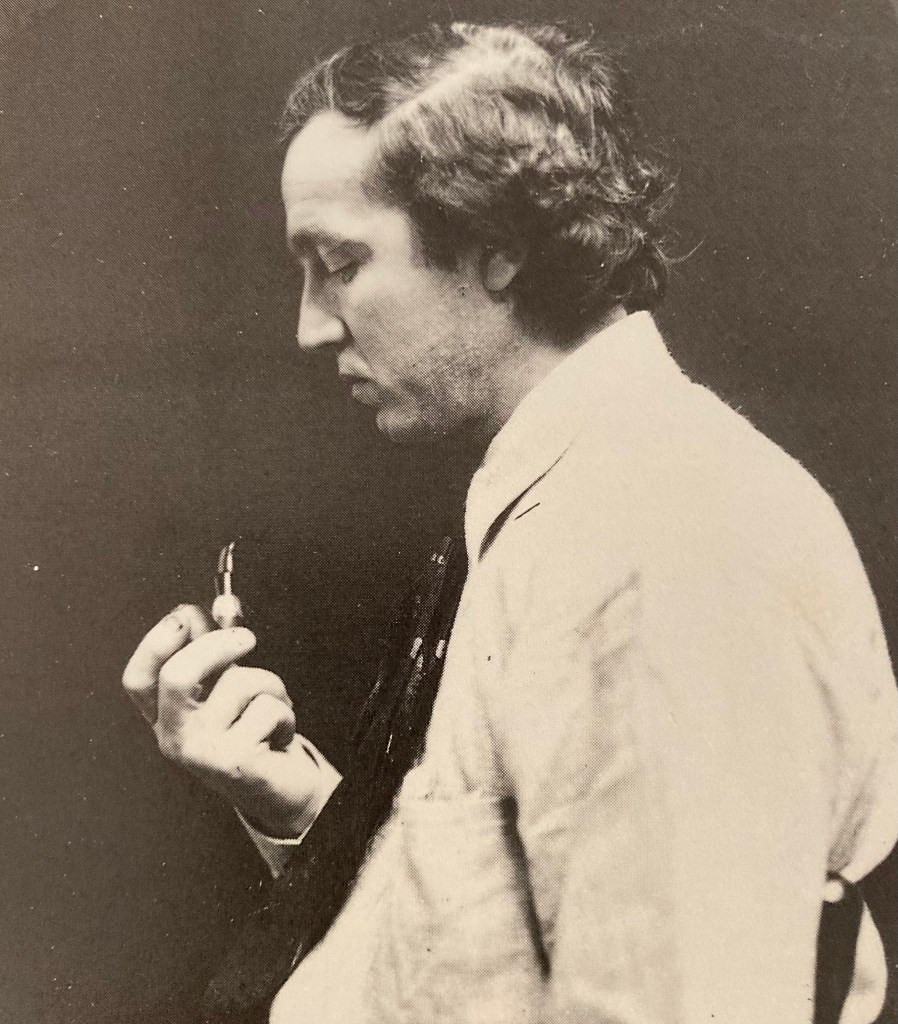
William Herbert (Willie) Lanyon
William was the third son of Alfred Lanyon and Elizabeth Victoria Teague. The 1901 census described him as a professor of music but earlier and later censuses describe him as having no occupation and having ‘private means’. He married in 1916 at the age of 54 to Lillian Priscilla Vivian. They had two children:
Lysbeth Mary Priscilla 1917-2008
George Peter 1918-1964 – (see post ‘Soaring Flight – The Artist Peter Lanyon’)
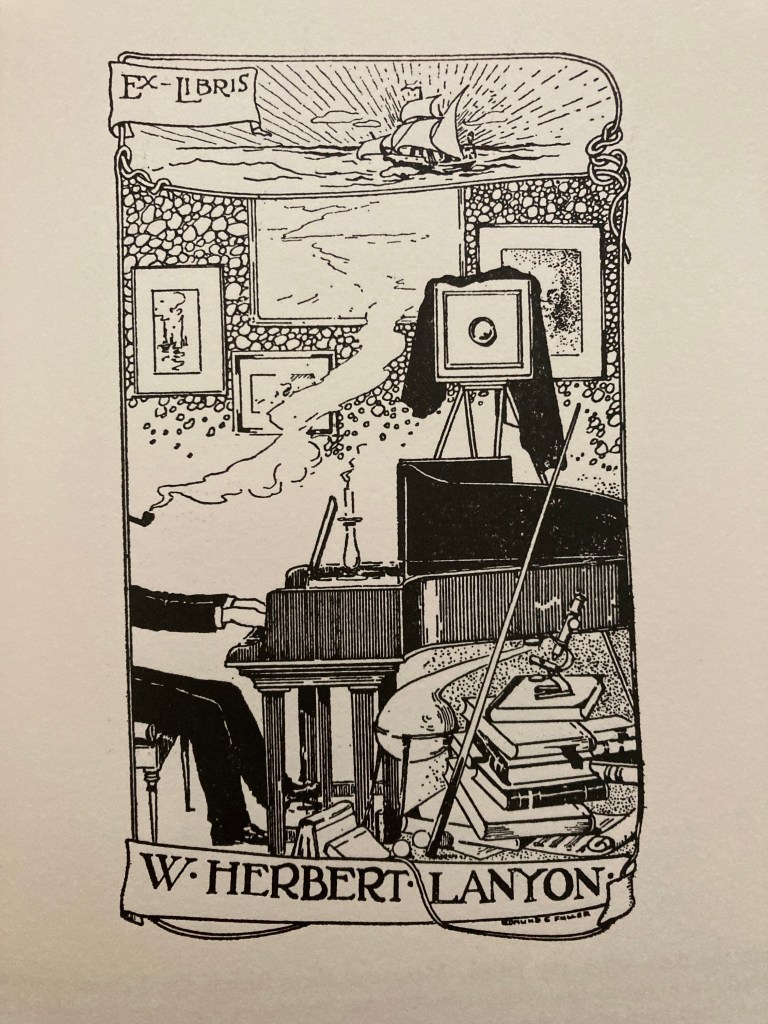
William’s bookplate
Sidney Howard Lanyon 1865-1922
Sidney was the fourth son of Alfred and Elizabeth. He was a gas engineer in his father’s business and in 1892 he married Susan Tremayne. They had three children.
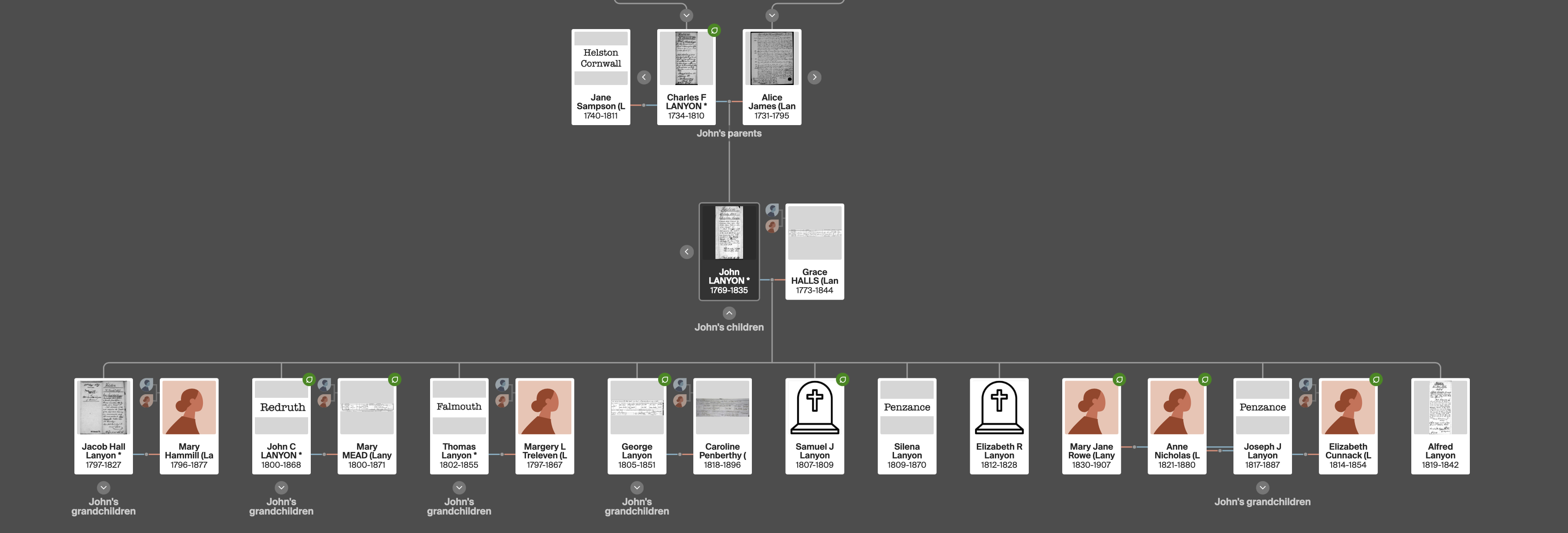
John was born in 1769 in Helston the son of Charles Francis Lanyon and like his four brothers he was a cordwainer and currier however he also diversified into ironmongery. When he died in 1835 after “a very long affliction” his estate was worth £4000.
John married Grace Halls (the daughter of Jacob Halls and Grace Rundle) on 3 May 1796 at St Austell.
John & Grace’s tree
John and Grace had nine children of which seven survived to adulthood.
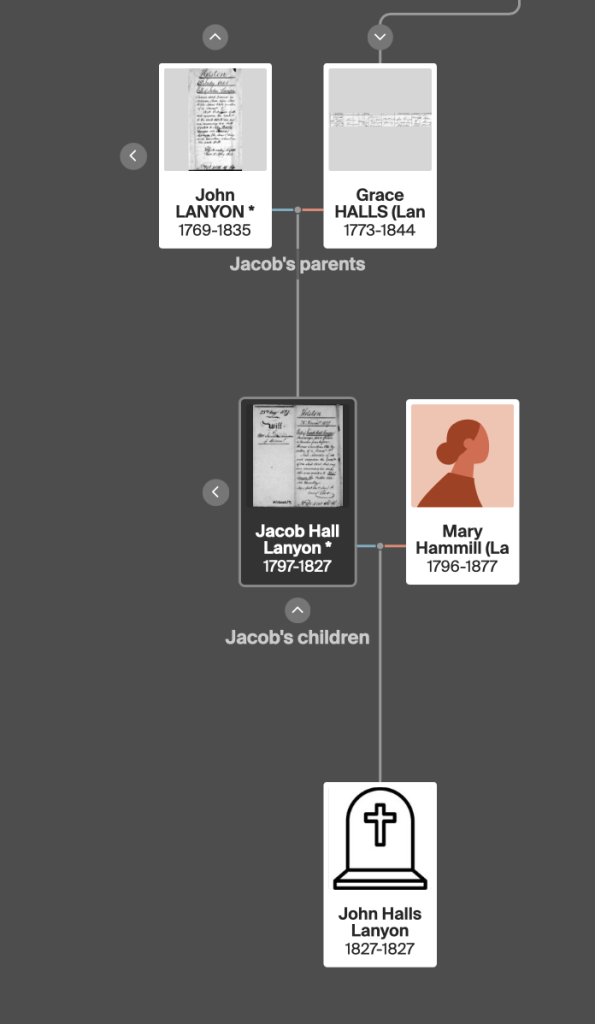
Jacob Hall 1797-1827 married Mary Hammill – one child
John Charles 1800-1868 married Mary Mead – ten children (see post about John Charles Lanyon)
Thomas 1802-1855 married Margery Lawrey Trelevan – nine children
George 1805-1851 married Caroline Penberthy – ten children
Samuel James 1807-1809 died in infancy
Silena 1809-1870 spinster
Elizabeth Rundle 1812-1828 died young
Joseph James 1817-1887 married Elizabeth Cunnack – four children
Alfred 1819-1842 unmarried
Jacob Hall Lanyon 1797-1827
John and Grace’s eldest son and heir Jacob died before his father.
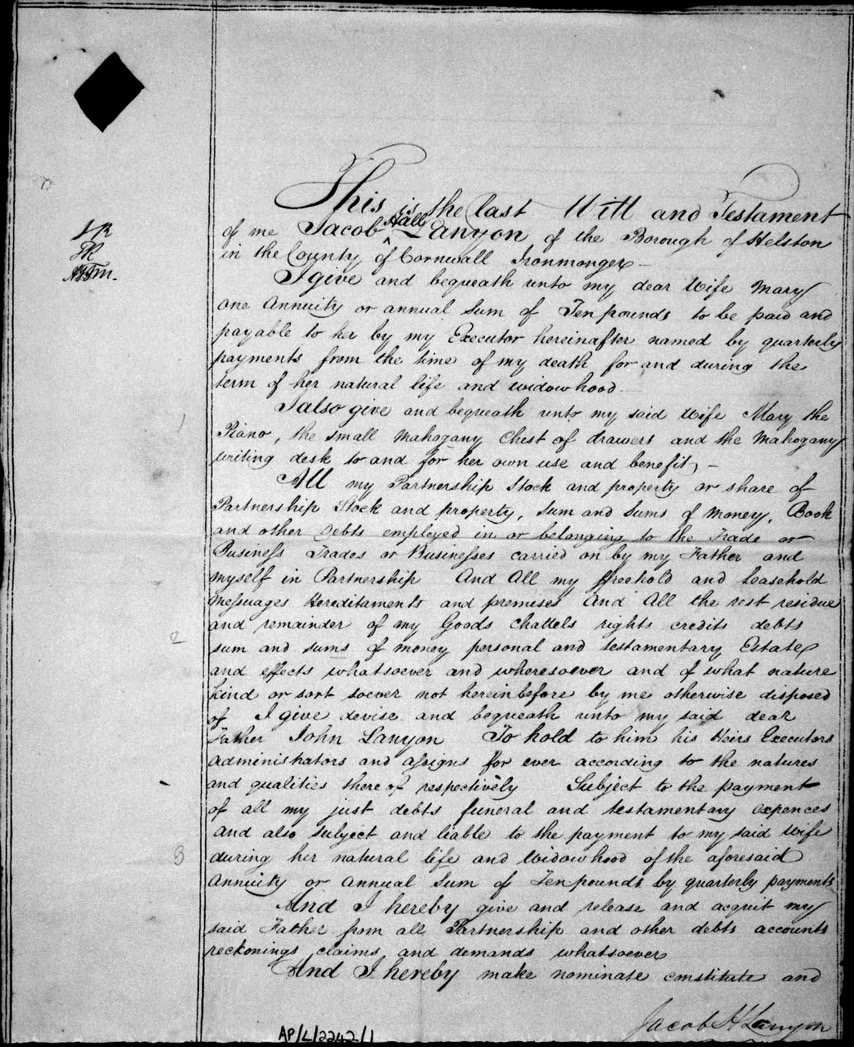
Jacob was an ironmonger and must have known he was going to die as he made a will three months before his death. He leaves Mary, his wife, an annuity of £10, the piano, a mahogany chest of drawers and a mahogany desk. His business interests he leaves to his father John.
Jacob’s will CRO/AP/L/2242
Jacob and Mary’s only son was born in 1827 and only survived a few months.
Thomas Lanyon 1802-1855
Thomas was born in 1802 and was an ironmonger and currier employing three men in Falmouth. He married Margery Lawrey Trelevan and they had nine children:
Thomas Halls 1828-1866 married Elizabeth Jane Studden – six children, five daughters and a son the Rev Thomas Studden Lanyon who married Ann Glencross and emigrated to Australia – one daughter.
Jacob Halls 1833-1913 married Hephzibah Basham – ten children
Elizabeth Ellen 1833-1833 died in infancy
Jane 1835-1907 spinster
Mary 1836-1882 married Edmund Handcock – five children
John 1839-1900 was a currier’s shopman, he emigrated to Canada and died of pneumonia in 1900, he never married.
William 1839-1841 died in infancy
William 1841-1865 died young
Elizabeth Ellen 1842-1921 married Ralph Davenport Waller in 1898, no children
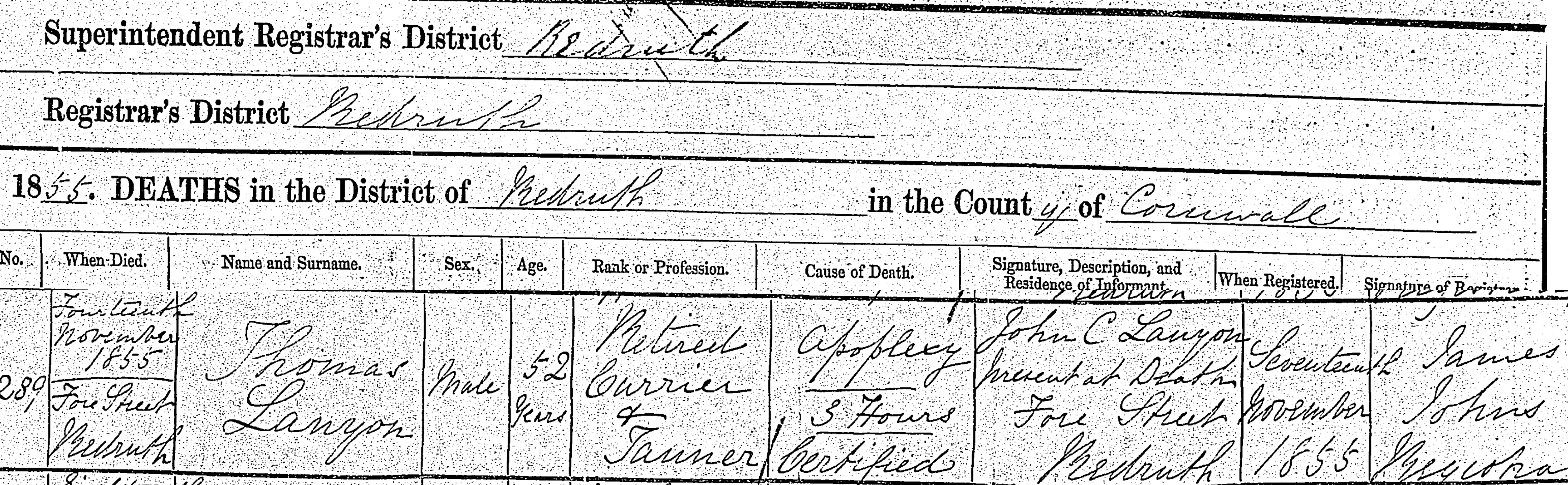
Thomas died suddenly of apoplexy in 1855.
Death Certificate of Thomas Lanyon
George Lanyon 1805-1851
George was born in 1805 and worked as a master saddler and ironmonger. He lived in Church Street in Helston and married Caroline Penberthy in 1841. They had three sons and seven daughters.
Georgiana 1842-1844 died in infancy
George William 1842-1909 married Mary Symons Woolcock – three children
Caroline Mary 1844-1913 spinster
Emily 1845-1923 spinster
Alfred 1846-1846 died in infancy
James Penberthy 1847-1887 worked as a cashier in Brazil and married Mary Treloar whose father worked at the Don Pedro North Del Ray Mines in Brazil, they emigrated to Australia – four children
Selina 1848-1850 died in infancy
Ada 1849-1850 died in infancy
Mary 1850-1939 married Charles Comber Hoadley – four children
Laura 1851-1932 spinster
The last child, Laura was born after her father’s death in April 1851, aged just 46. He had been suffering with Rheumatic fever for six weeks and died of heart failure.
Joseph James Lanyon 1817-1887
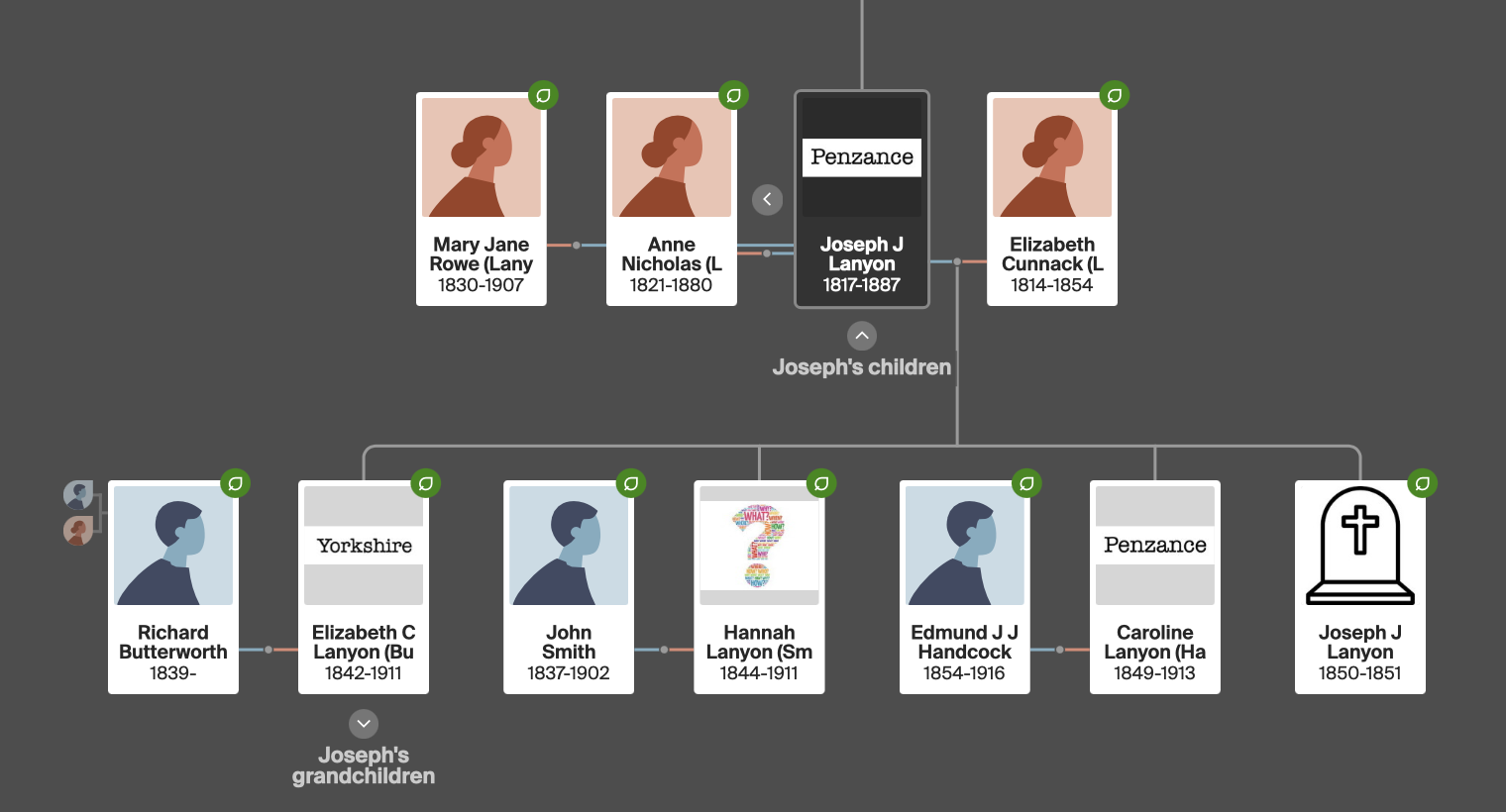
Joseph James was born in 1817 and was a currier and ironmonger in Madron. His first marriage was to Elizabeth Cunnack who died in 1854, his second wife was Anne Nicholas who died in 1880. George didn’t hang around and aged 65 he married his third wife, Mary Jane Rowe in 1881. He had three surviving daughters from his first marriage: Elizabeth, Hannah and Caroline. Joseph died in 1887.
Alfred Lanyon 1819-1842
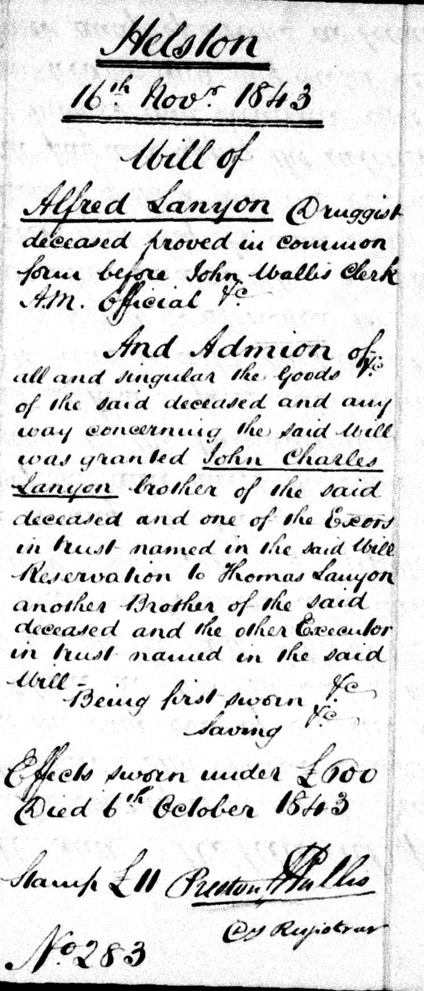
John and Grace’s youngest son Alfred was born in 1819 and died at the age of 24. His death certificate states that he died of ‘decline’, this usually meant TB. He was a druggist and lived with his brother George in Helston. He never married.
Will of Alfred Lanyon CRO/AP/L/2424
John and Grace’s second son and eventual heir was John Charles Lanyon. He moved from Helston to Redruth an opened an ironmongers on Fore Street. In 1840 by mutual consent ‘JC Lanyon & Thomas Lanyon Ironmongers, Curriers & Saddlers’ in Helston was dissolved and John Charles concentrated on his business interests in Redruth. See more about him in the post – ‘John Charles Lanyon 1800-1868’.
Jacob Halls Lanyon 1833-1913
Jacob was the second son of Thomas Lanyon and Margery Trelevan. he emigrated to Victoria, Australia and married Hephzibah Basham in 1862. They had ten children:
Ada Rebecca 1863-1935
Mary Helen 1864-1952
Florence Jane 1867-1957
Harold Trelevan 1868-1938
Kate Trelevan 1870-1954
Arthur Martin 1872-1952
Amy 1873-1957
Jessie May 1876-1916
Athelstane Edward 1878-1965
Raymond Rivers 1881-1946
Ada Rebecca Lanyon and her husband Alfred Collis Morton
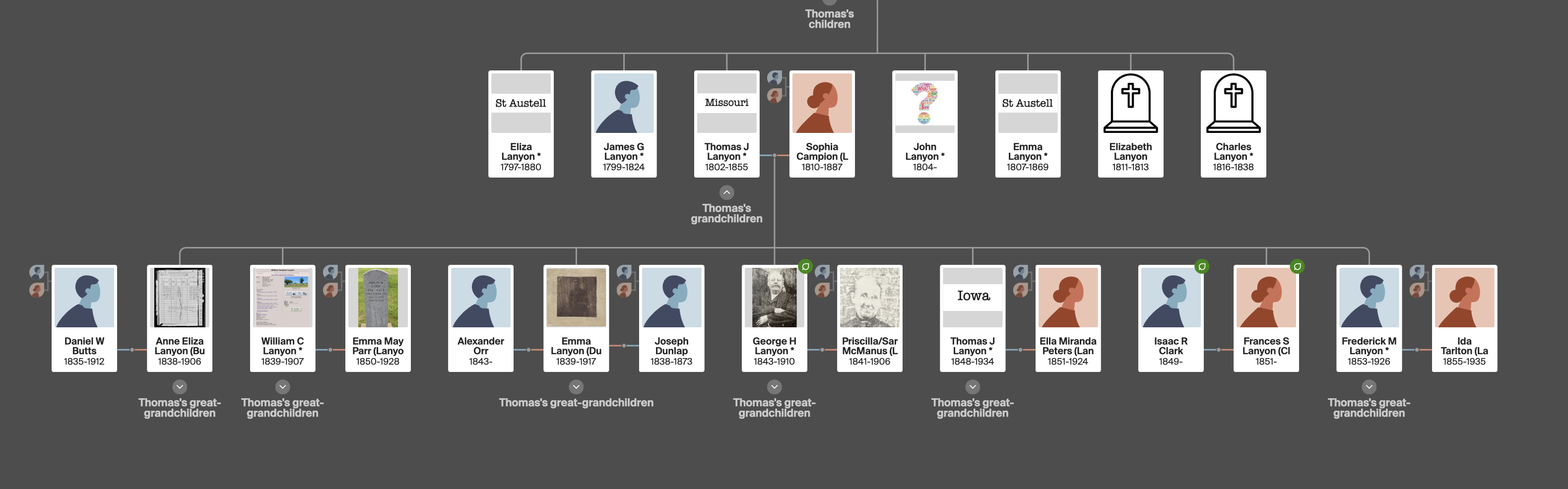
Eliza Lanyon died at St Austell on 18 May 1880 aged 82. A Miss Jewell wrote to Eliza’s niece, Mrs Annie Eliza Butts (nee Lanyon) (Little Sioux, Iowa) in July 1880.
“You will have received my letter informing you of your aunt’s death. I have now to say that I gave your address to the Executor, Mr. Rowse of St Austell so that he may write to you when he wants to do so…..”. It soon becomes apparent that Mr Rowse is a bit of a scoundrel!
Some eighteen months later WT Sanders writes to Mrs Butts: “As you are no doubt aware the distribution of the estate according to the terms of the will was left entirely in the hands of Mr Rowse. Mrs Sanders has written to him on the subject of her legacy but he has not made any reply. In October last I was at St Austell and saw him about it….he pleaded pressure of business ….and that he had been waiting for an account from the auctioneer which he had that very day received, therefore was in a position to draw a cheque and settle the affairs….nothing further has been heard from him. Taking this conduct into consideration and the time which has elapsed since Miss Lanyon’s death it has been thought desirable that you as the residuary legatee should at once take some steps…to enforce the administration of the estate and with this object in view should instruct a solicitor to act on your behalf.”
WT Sanders recommends the solicitor, Mr Harrison. In Feb 1882 Mr Harrison writes to Mrs Butts informing her that he has written to Mr Rowse and it transpires that Eliza Lanyon’s will has not even been proved. Mr Harrison writes to Anne’s brother Thomas James Lanyon in 1884.
“Mr Rowse has again and again promised to prove the will and wind up the estate…..The probate court ordered on our application some months since that if he did not prove the will he would be liable to be arrested. This order is still in force and a copy of it has been served on Mr Rowse but he has not proceeded to wind up the estate, not withstanding that we have endeavoured by personal interviews and otherwise to induce him to do so.”
Later they write again to Thomas: “….we regret to say that Mr Rowse has failed to fulfil his promises and there is we think no alternative but to take proceedings to have Miss Lanyon’s estate administered in the Chancery Division of the High Court. This we endeavoured to avoid as the costs ….are heavy. The £300 we obtained from Mr Rowse is on account bearing interest at 3%.”
They write again on Dec 31st 1885 “We have not been able to obtain a further sum from Mr Rowse…..we fear it will be necessary to take further proceedings against Mr Rowse to enforce a settlement. He now alleges as the reason for not closing the estate , that he has been unable to obtain payment of a mortgage debt, and it may be necessary to sell the property included in the security. Please say if you desire us to proceed in the Supreme Court to obtain administration of the estate.”
August 1886 and Frankfort Chambers in Plymouth send a telegram to Thomas Lanyon: “We very much regret to inform you that Mr Harrison …is at home ill and we fear it may be some weeks before he will be able to attend to business.”
The saga continues with Mr Rowse employing various delaying tactics. In March 1887 Thomas Rowse writes: “I have been pressing for settlement of the mortgage debt and have had two letters from the parties….saying that Mr Williams was undecided and that they were endeavouring to get the money from some friends and they beg for a little further indulgence.”!
At this point a Jason. H. Morris gets involved and writes to Thomas in July 1889 (over nine years after Eliza’s death!)
“Friend Thomas. I have had an interview with Mr Harrison, your solicitor here…he has not done his best for the interest of the estate, I am sure, and I drove that admission from him that he withheld from the heirs more than legal fees. I can see that he is disposed to treat me very ‘gingerly’ and I think I am going to be able to work quite harmoniously with him from this time on. I go to St Austell next week and….then go straight at Mr Rowse for blood. …..My only fear is that he has been using your aunt’s money and now cannot pay for it. In that case all that can be done is to clean out what he has and lock him up for the balance.”
Jason Morris writes again that month: “My arrival here was exceedingly inopportune, as Mr Rowse went to the north of England the Saturday before my arrival…..he returned with a new wife….and I jumped him red hot a half hour later. He was very affable but he is as dishonest as his hide will hold. He promises now to give me a detailed statement of account by one week from today, and I know he does not intend to settle with me then. I feel very sure I shall have to pull him up to London before I get any satisfaction from him….The annuity- Miss Selina will not sell or compromise it…about £173 will buy a government annuity and if she dies next week the government will keep the £173. The only way I can see it is for you to buy U.S Bonds enough to have the coupons pay $50 and deposit them in a bank here until she ceases to call for her interest and then pull down your bonds. She is 45 years old, tough as thunder, likely to live till 90 and so up along.”
Jason Morris writes to Thomas again in August 1889. “Friend Lanyon….you say right when you say “put him through” and “lock him up if he don’t pay” etc. I should have done it without your order for he is the most cheeky dishonest chap I ever met…..I took the trail he came off from with his new wife and followed it up to Lichfield Staffordshire on a hunt for his money as I was sure he had money and equally certain he had sequestered it good and hard. I have found £400…tucked away. The annuity – I have studied that a good bit….and conclude the best thing to do is leave that on Rowse. True he may never pay it but when we have got all we can we shall have less than belongs to us and I have little sympathy for Selina. She is strong as a mule and twice as stubborn, wouldn’t compromise a penny in any way and Miss Jewell told me she listened at your aunt’s door when the will was being made, knew all its provisions perfectly and then never ceased teasing and hounding your aunt to make the codicil until it was done. I think I can prove Rowse indebted over £700 now and I hope to make it greater before I sue him. I feel pretty sure of catching him for something more I know he has got it the only question being whether I can find it but my reputation and pride are at stake and you folks can afford to be as patient. As I can for I feel certain of making you all admit some day that you sent the right man.”
That is the last letter and we are left wondering if the intractable case was ever resolved.
Last Will and Testament of Eliza Lanyon of St Austell 17th Feb 1880
I give and bequeath to:
Sophia Lanyon widow of my late brother Thomas Lanyon the sum of £100
Frederick Mitchell son of Frederick Mitchell of Gwennap £100
Annie Eliza Butts, the daughter of my late said brother Thomas Lanyon, £50
Nanny Mitchell the widow of William Mitchell £50
Sarah Sanders wife of Samuel Sanders of Saltash £5 to buy a mourning ring
Hannah Geach of Saltash, spinster, £5 to buy a mourning ring
Thomas Rowse, £50
Wesleyan Theological Training College at Richmond £50
Wesleyan Foreign Missionary Society £50
St Austell Wesleyan Sunday School £10
Town Missionary Society £10
British and Foreign Bible Society £10
Wesleyan Worn Out Ministers and Minster’s Widows fund £30
Children’s Home in London connected to Wesleyan Society £30
Mrs Henry Andrew of St Austell £2 to buy a mourning ring
Ellen Kate, Laura and Julia Andrew daughters of Mrs Henry Andrews 20 shillings each
Anna Maria Bice, daughter of Malachi Bice of St Austell 20 shillings
The eldest sons of Henry Andrew of Sherborne 20 shillings each
Thomas Rowse £19 19 shillings to be distributed to the poor connected with the Wesleyan Society
Edward Geach of Trethurgey £5
Clara and ? daughters of Walker Hicks of St Austell 50 shillings each
Selina Whetter if living with me at the time of my death…?
Sarah Sanders – portrait of Charles Geach, silver sugar tongs and large sofa rug, my crimson and white antimacasser, drawing room scrap book, album and photographs
Suitable mourning clothing for my servant Selina Whetter
Selina Whetter the bed she normally sleeps on and bed linen and all my undergarments. But in case she shall during any illness from which I may suffer or at any time previous to my death be guilty of unkindness or any other misconduct which in the opinion of the executor renders her unworthy of the bequests to her by this will then such bequests shall be null and void (Eliza evidently has a good measure of Selina!)
All the rest and remainder of my clothing I give to Mrs Joseph James Lanyon of Penzance and Jane Lanyon of Falmouth
Caroline Hancock daughter of Joseph James Lanyon half a dozen silver tea spoons, my gold watch and chain from my Spanish Figures under the large glass shade
Bessie Butterworth daughter of JJ Lanyon half a dozen silver dessert spoons
Jane Lanyon of Falmouth half a dozen tea spoons, a fire screen,
Ellen Lanyon of Falmouth half a dozen ? and my worked wool chair
All the rest and remainder of my silver forks I give unto my first cousin Joseph James Lanyon of Penzance and plated cake basket
Ella Ann wife of John Lovering of St Austell?
Thomas Rowse the Spanish Figures under the two small glass shades and a pair of small globes
Elizabeth Lovering of Fore St St Austell my electro plated coffee pot
Mrs Fred Stephen of Hombal in St Mewan the portaits of my uncle and aunt and also a figure which is on the chiffonier.
Jane Lanyon and Thomas Rowse all my books
Hannah Geach the specimens under the glass shade on the mantelpiece and the thermometer under glass
I give to Jane Lanyon and her sister Ellen my dessert set between them.
Jane Lanyon and Mrs Joseph Lanyon all my ornaments on mantelpieces and chiffionier except those I have before given
My neighbour Mrs John Pearse my small cotton crochet antimacasser with leaves
All the rest and residue and remainder of my real estate and personal estate not otherwise disposed of unto and amongst the children of my late brother Thomas now in America
What a detailed will and it really gives a glimpse into life in Victorian times for a well to do spinster.
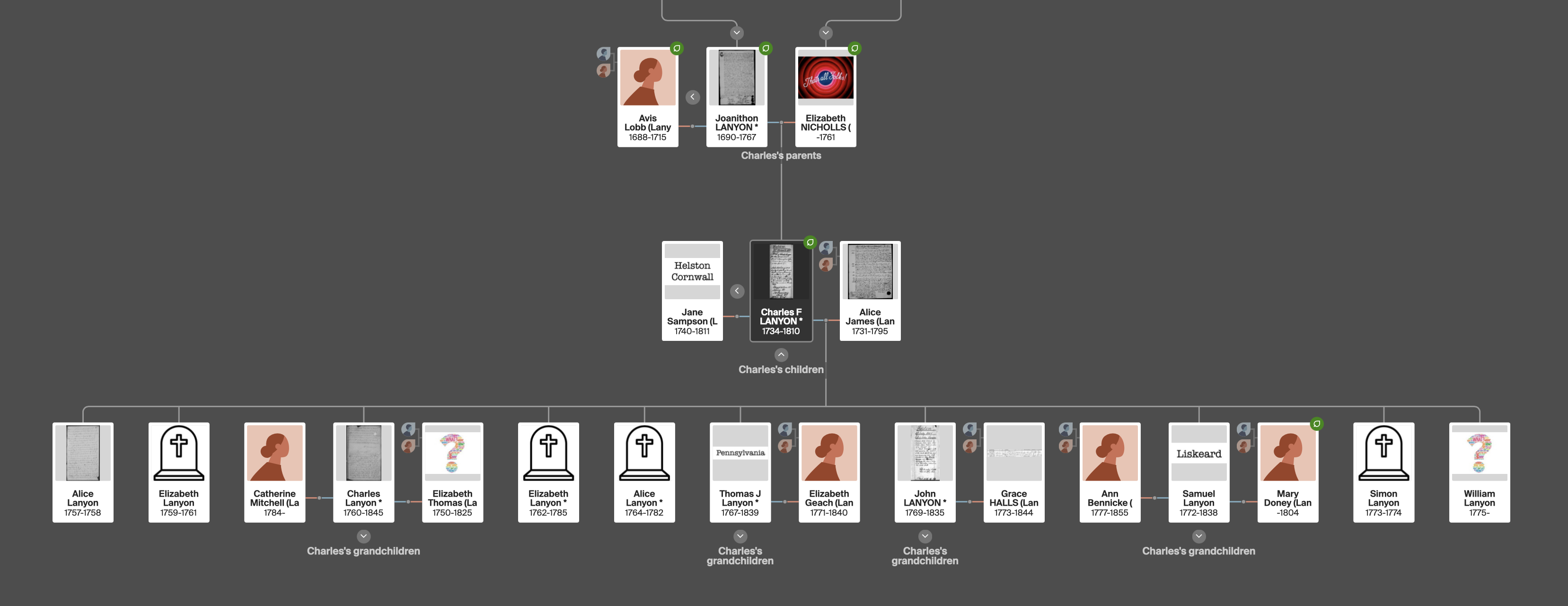
Charles Francis Lanyon was the son of Joanithon Lanyon and Elizabeth Nichol, he was baptised in Helston on 24 Sep 1734. He followed his father into the family business and was a cordwainer. In Sep 1756 he married Alice James, the daughter of Thomas James and Jane Gundry.
Charles and Alice had ten children of which five survived to adulthood.
Alice 1757-1758 died in infancy
Elizabeth 1759-1761 died in infancy
Charles 1760-1845 married Elizabeth Thomas – four children
Elizabeth 1761-1785 died age 23 spinster
Alice 1764-1782 died age 18 spinster
Thomas James 1767-1839 married Elizabeth Geach
John 1769-1835 married Grace Halls
Samuel 1772-1838 married Mary Doney and Ann Bennicke
Simon 1773-1774 died in infancy
William 1775- no trace
Alice died in 1795 and Charles remarried on 17 Sep 1797 to Jane Sampson a 57 year old spinster. When Charles died in 1810 he left his estate to his second wife and although there was provision made for his sons this caused a great deal of ill feeling in the family.
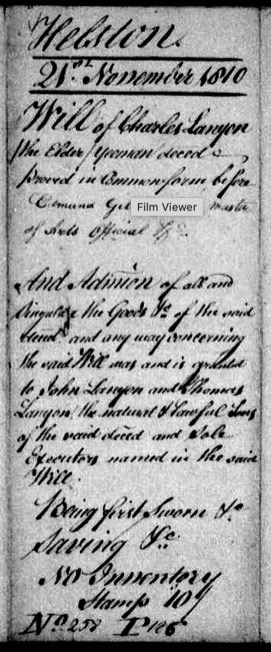
Will of Charles Francis Lanyon Yeoman of Helston 1810
Source: CRO AP/L/2089
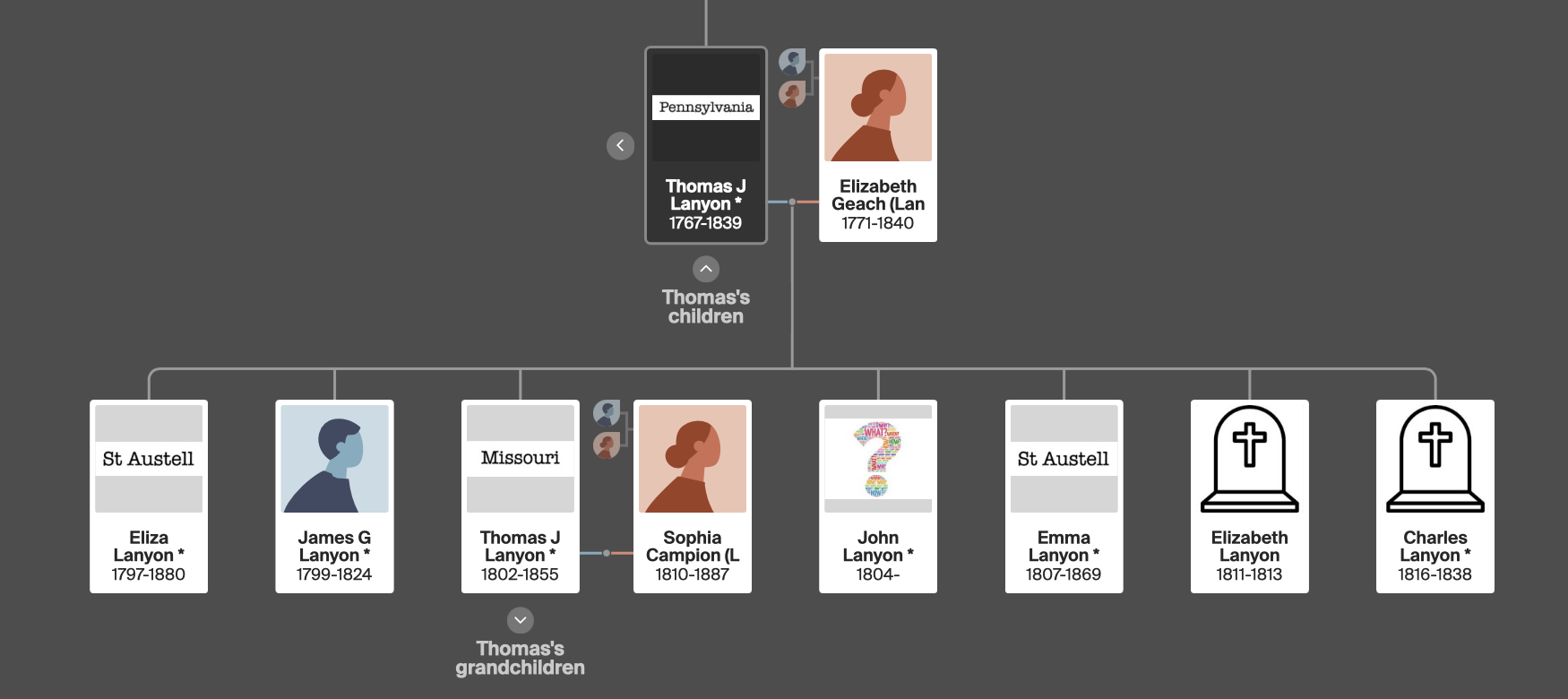
The five surviving sons were Charles, Thomas James, John and Samuel and William. Charles was a cordwainer in Helston, John a currier and ironmonger in Helston, Samuel was a currier in Liskeard and Thomas James Lanyon was a currier who emigrated to America in 1831. Apparently William moved to the ‘north’ and we lose track of him.
It was Thomas’ family who felt he had been cheated of his birthright.
His daughter Eliza wrote a series of letters to her niece Annie Butts detailing some of the family history from their point of view: “Father was a most honest, just man in all his affairs but he was treated badly with some. If he had been treated differently he never would have emigrated.”
In the letters she refers to Charles Francis Lanyon as the Old Shoemaker of Truro but this was incorrect as he worked in Helston. A number of facts contained in the letters were incorrect but they still make interesting reading and fill in some gaps.
In 1866 Eliza writes “We have been estranged since I can recollect, in consequence of money and property matters….your great grandfather married a second wife a deal younger than himself. He made a will and gave all his property to his wife which he could not lawfully do. After his death his sons made a stir of it.”
We know that Jane, Charles’ second wife, was a mere six years younger than him and we can read his will and see that the sons each inherited money and property with Jane having life time enjoyment. In fact she survived Charles by a only a year.
Eliza’s letter “They consented to let her have the property for a certain sum of money and signed off all the title to it.”
The letters are a great source of local history too.
“Do you ever see any person from Cornwall? There are a great many of late, emigrated to America but chiefly the mining population owing to the tin and copper brought from California. The Cornish Mines are many stopped working.” (1866)
Her next letter was some eleven years later! (1877)
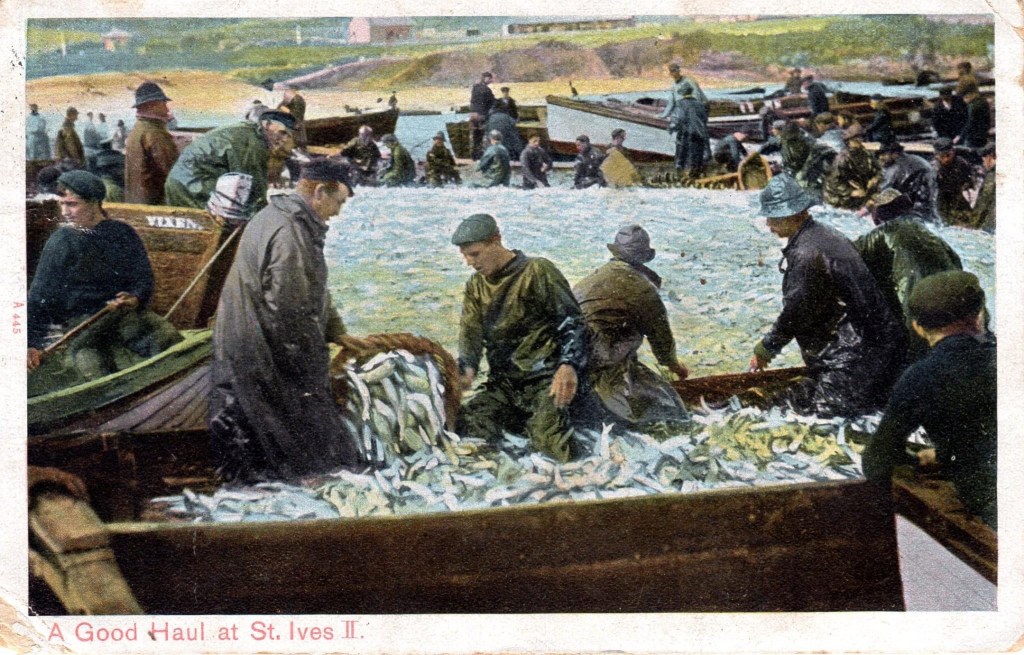
“I am happy to tell you there is improvement in trade in consequence of the mines in Cornwall being put to work as tin has improved in price, also copper….fish has also been remunerative. Tin, fish and copper is the motto for Cornwall. We had a very bad summer for fruit and vegetables….we had very stormy weather last week. It was very bad in Scotland. So bad that the train blew off the bridge that crossed the Tay. There is about 100 dead; but not one left to tell the tale.”
Postcard of the fishing trade at St Ives
in Jan 1879 Eliza writes: “Bank failures which caused new distress even in our town (St Austell). Many persons almost ruined….it has been a most melancholy Christmas indeed…..the mines in Cornwall many of them entirely stopped which has caused several hundreds of men to be unemployed.”
Eliza died in May 1880 aged 82, fortunately her letters survived. A long and protracted probate ensued and is worthy of its own post.
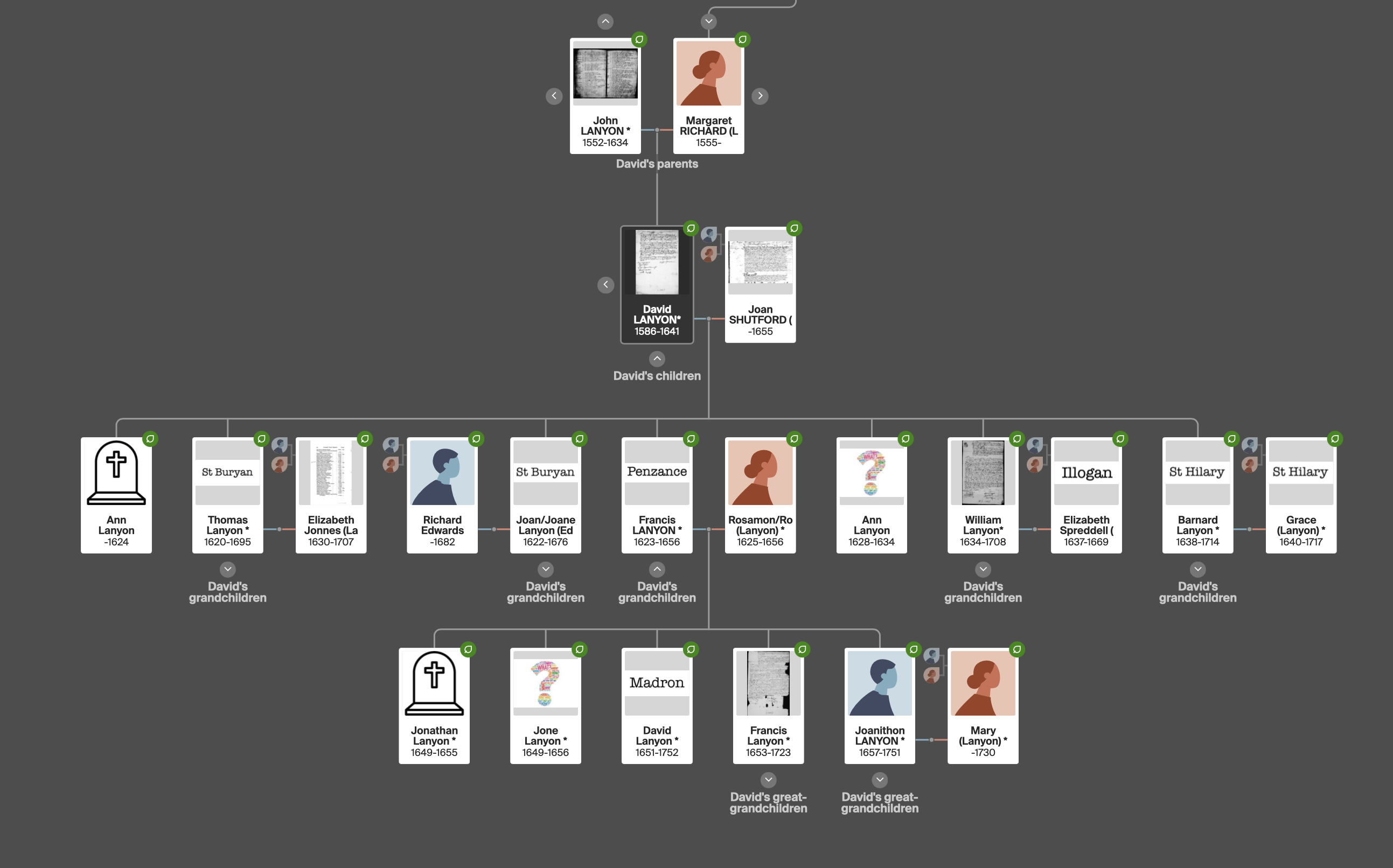
In the 17th and 18th centuries there were five Jonathan Lanyons. The first was born aft. 1649 and died in 1655, the second was baptised in 1657, both the sons of Francis and Rosamon. The third born in 1689 and the fourth in 1690 and the last in 1714. This was the only time the name was used in the family. The name was spelt Joanithon and it’s possible it was in honour of Francis Lanyon’s mother, Joan Shutford, who died in 1655.
Joanithon’s ancestors
The first Jonathan to survive to adulthood was born abt. 1657 and like his father he was a cordwainer. He moved the family to Helston where there was an established tannery. He married Mary and had three children:
Joanithon 1689-1690 died in infancy
Joanithon 1690-1767
Mary 1694- no further trace
David 1699-1759 no trace of a marriage
We know almost nothing about Joanithon senior but he lived to about 95 years of age and was buried 11 Oct 1751 at Helston.
Joanithon’s descendants
Joanithon Lanyon 1690-1767
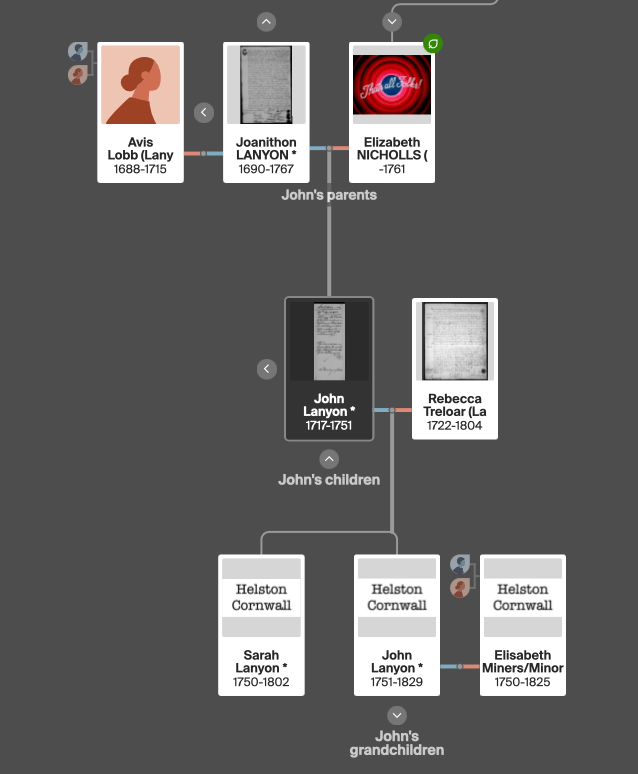
Joanithon was baptised 11 Mar 1690/1 at Helston. He was the second son to be called Joanithon. He too was a cordwainer. He married Avis Lobb 5 Aug 1713 and the following year they had a son, Jonathan. By July 1715 Avis was dead and on 13 Sep 1716 Joanithon married for a second time, to Elizabeth Nichol. They had ten children, of which, only half survived.
Jonathan 1714-1768 unmarried
John 1717-1751 married Rebecca Treloar – two children
Elizabeth 1719-1740 unmarried
Mary 1722-1801 married Peter Lobb – two daughters
Sarah 1725-1748 unmarried
David 1728-1730 died in infancy
Jane 1731- married William Angel soldier 35th regiment
Charles Francis 1734-1810 married Alice James – ten children (see post ‘The Old Shoemaker of Truro)
Grace 1737-1738 died in infancy
Grace 1739-1739 died in infancy
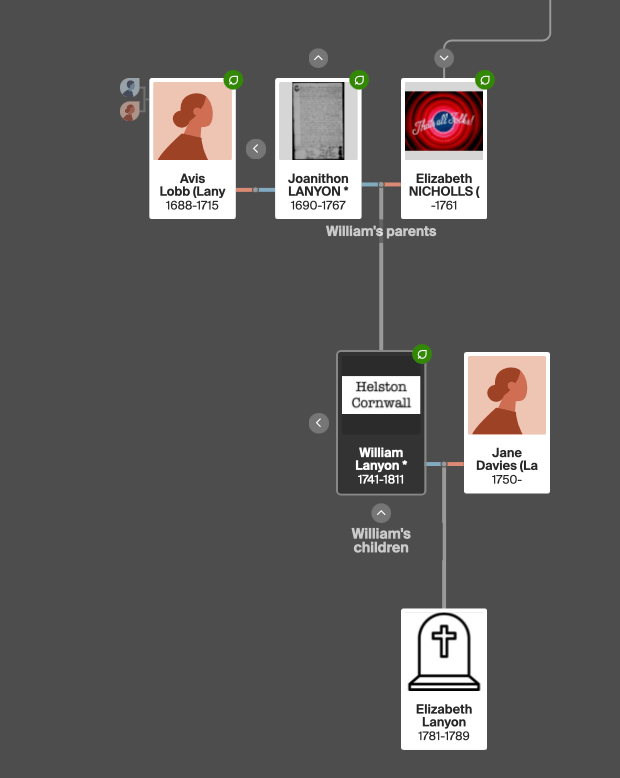
William 1741-1811 married Jane Davies
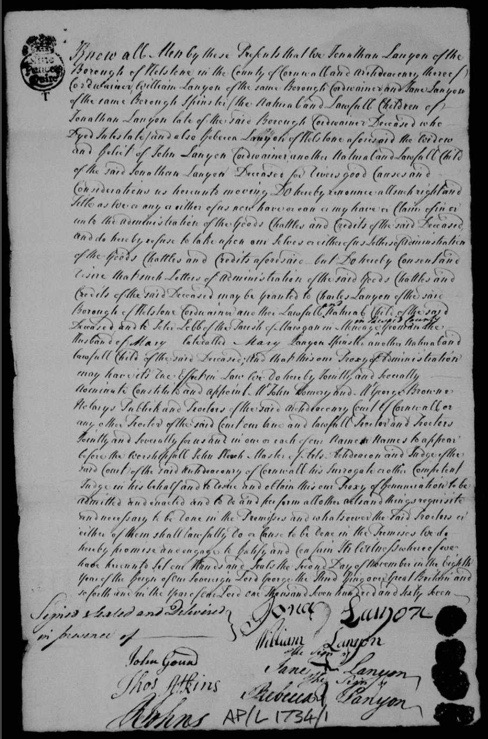
Joanithon was buried on 30th Oct 1767 and left a will.
The last Jonathan never married, he was buried a year after his father in 1768. He too was a cordwainer but, without children, the heir was his younger brother and the third son, Charles Francis Lanyon.
John Lanyon 1717-1751
John was Joanithon’s and Elizabeth Nichol’s eldest son. He was baptised at Helston in Aug 1717 (name spelt Lanyne). He was a cordwainer at Helston and in 1749 he married Rebecca Treloar. They had two children:
Sarah 1750-1802 Rebecca left her estate in trust for her daughter Sarah as she was of unsound mind. Sarah never married.
John 1751-1829 married Elisabeth Miners
John was just a baby when his father died in Aug 1751, aged just 34. He died intestate. His widow lived another 52 years alone and outlived her daughter by a year.
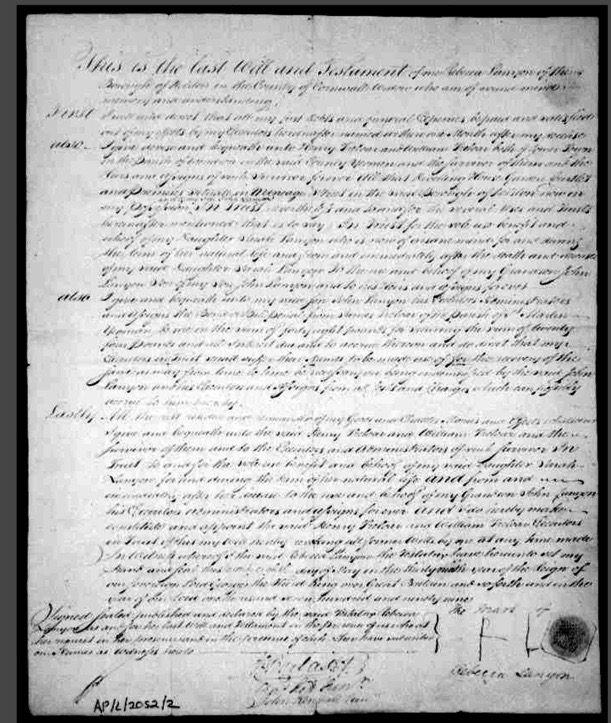
Rebecca’s will – Source AP/L/2052
William Lanyon 1741-1811
William was born in 1841, when his father Joanithon, was 50. In 1775 he married Jane Davies of Helston and they had one daughter Elizabeth who died in 1789 aged 8. At the time of her burial her father was described as a pauper. He was a cordwainer but clearly was unable to work. Perhaps whatever killed his daughter affected his health too.
In 1801 at the age of 59 he volunteered for the 1st Helston Volunteers militia. Ten years later he was dead. There were no other children so his branch died out.
John Lanyon 1751-1829
John was the son of John and Rebecca Treloar. He was also a cordwainer and married Elisabeth Miners at Helston in 1774. They had six children:
John 1775-1818 he married Mary Briant at Helston in 1805, one son Bryant (1810-1880) who was an ostler. He never married but was living with Mary Pascoe between 1851-71, no children
Rebeckah 1777-1852 married William Scorse in 1798, he was a soldier in the Somerset Regiment of Militia. One daughter, Caroline Scorse.
Thomas 1779-1844 married Ann (Nanny) Waters – four children
William 1782-1861 he married Ann Gilbert – six children
Elizabeth 1784- married John Heydon in 1822 – no further trace
Sarah 1786- married Joseph Packer – no further trace
In 1829 John was described as a pauper at the time of his death.
Thomas Lanyon 1779-1844
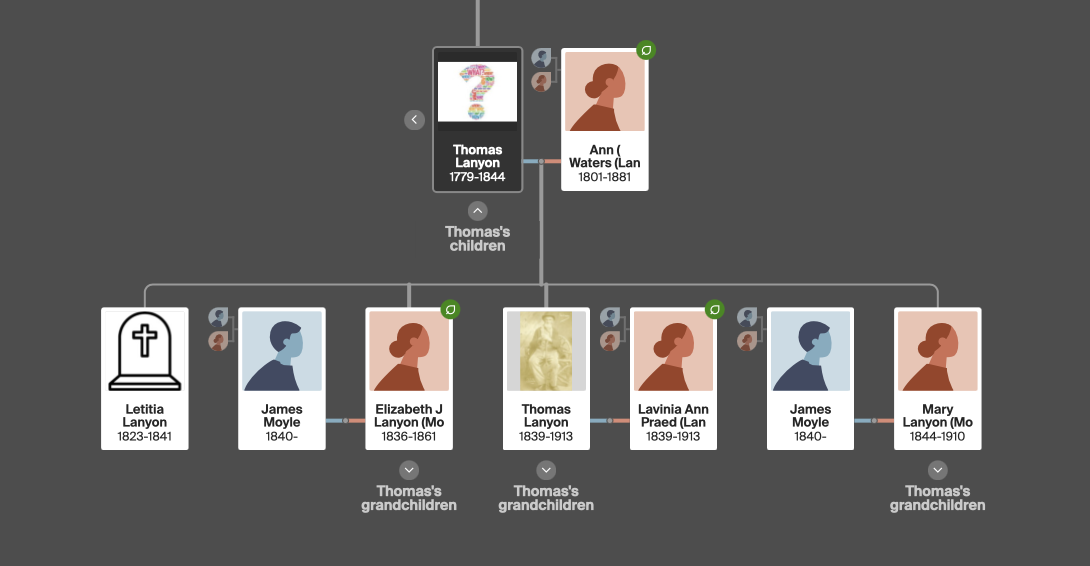
Thomas was 55 when he married Ann (Nanny) Waters at St Gluvias in 1835. He was a painter. They had four children, the first may not have been his child as she was born twelve years before their marriage, she was given the surname Lanyon.
Letitia/Lavinia 1823-1841 she died age 18.
Elizabeth Jane 1836-1861 married James Moyle in 1860 and died the following year.
Thomas 1839-1913 married Lavinia Ann Praed – eight children
Mary 1844-1910 also married James Moyle!
Elizabeth died in quarter 1 of 1861 and James her widower married her younger sister in quarter 2! He was a tin miner and obviously didn’t hang around! They went on to have six children.
William Lanyon 1782-1861
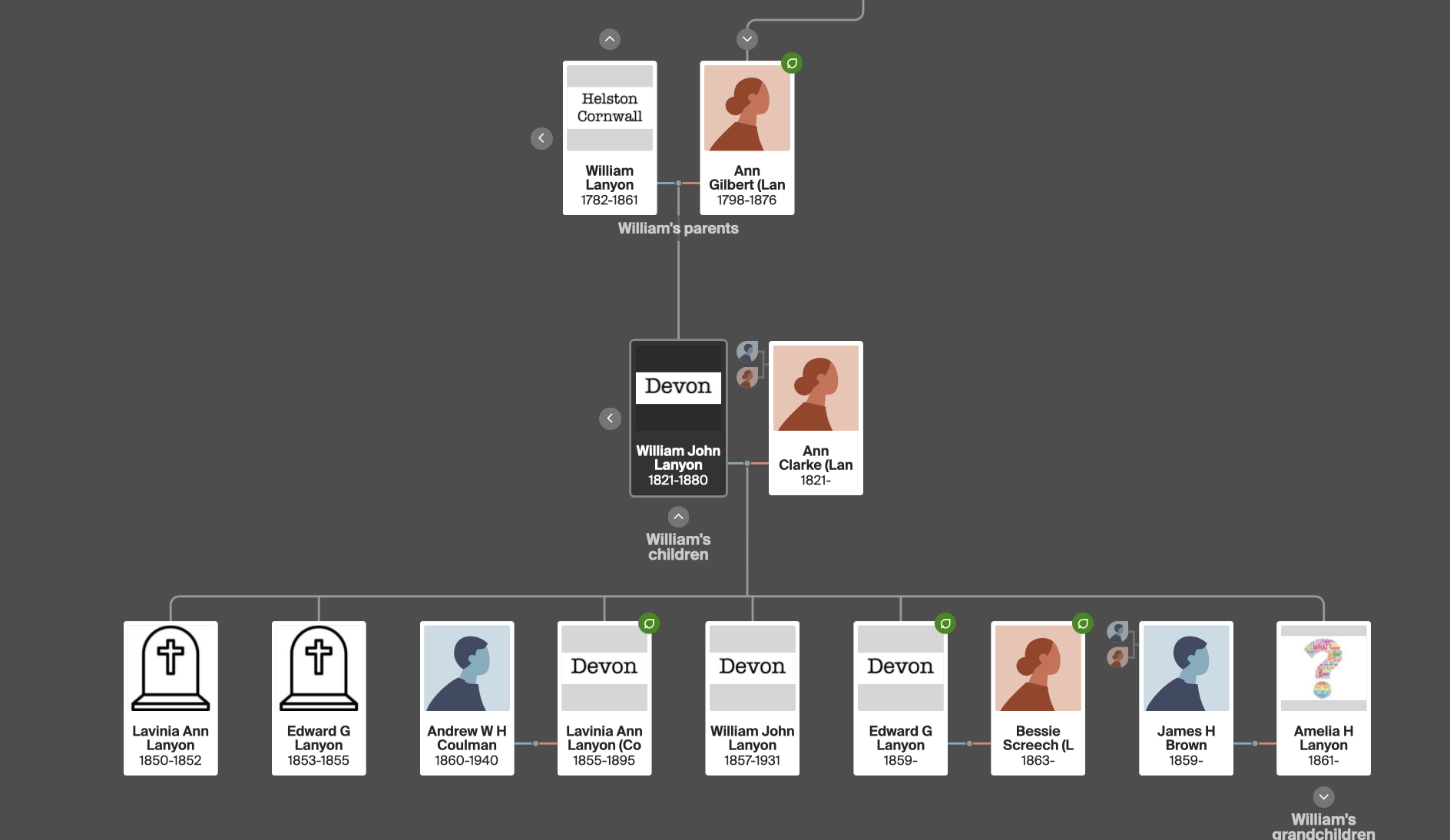
William worked as a shoemaker and a bailiff. In 1820 in Helston he married Ann Gilbert. They had six children:
William 1821-1861 married Ann Clarke
Edward Gilbert 1822-1855 not married
Lavinia 1826-1898 married Thomas Edwards – four children
Amelia 1827-1829 died in infancy
John Thomas 1831- married Elizabeth Rowe Stevens no children traced
Amelia 1842-1921 was a fruit seller, she married George Hellings – five daughters, emigrated to New Zealand
Thomas Lanyon 1839-1913
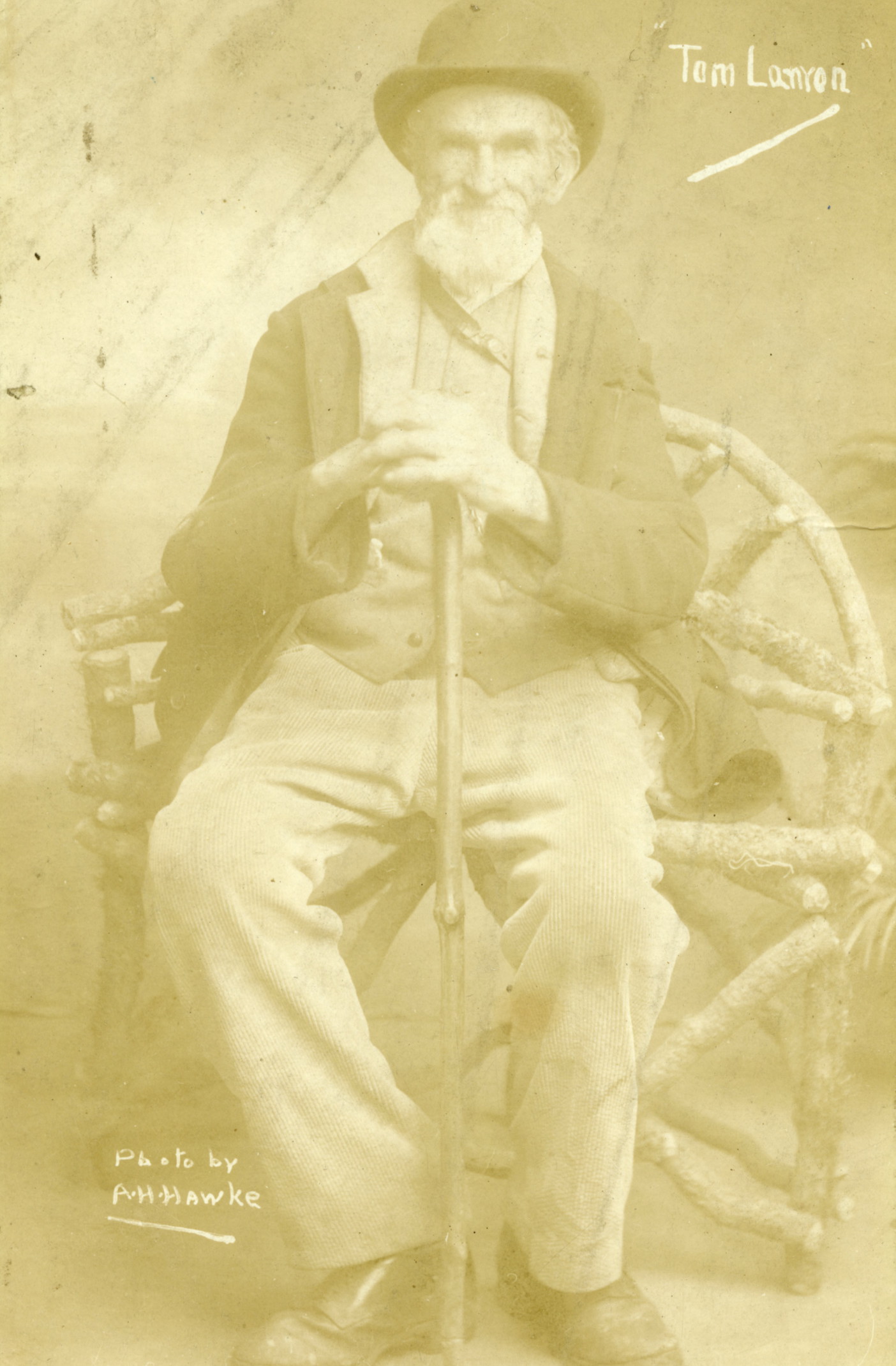
Thomas was born in Helston in 1839 in 1859 he married Lavinia Ann Praed in Falmouth. Thomas had a variety of jobs: age 11 he was a shoemaker, then a green grocer and a dealer selling sand for floors. We have a wonderful photo of him!
Thomas Lanyon
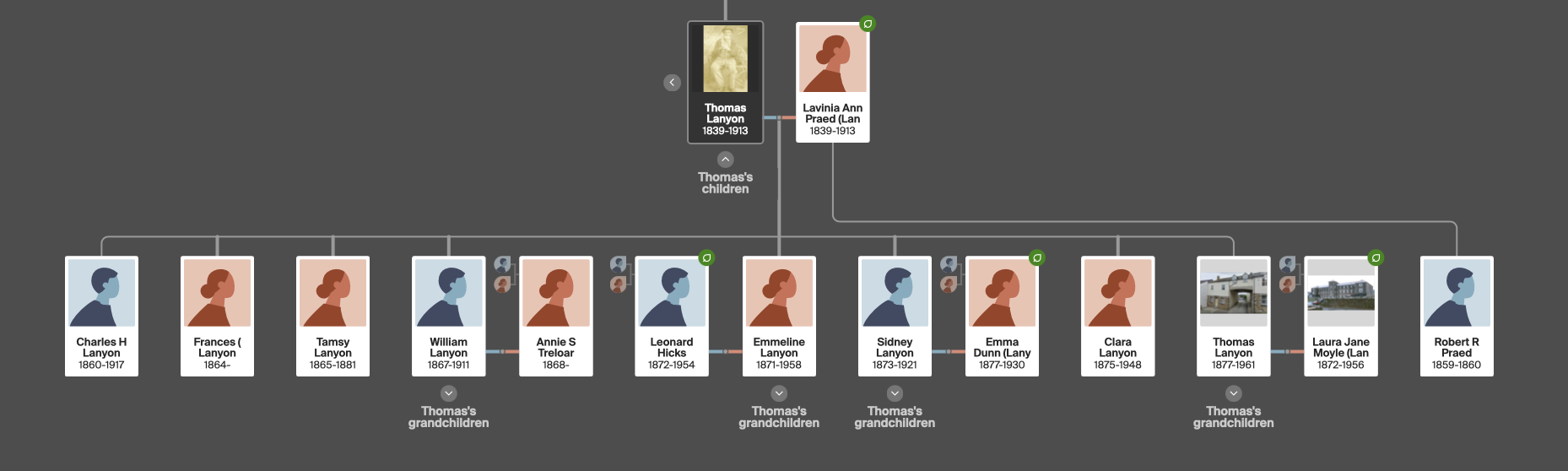
He and Lavinia had eight children:
Charles Henry 1860-1917 he worked as a labourer and never married
Frances (Fanny) 1864- in 1891 she was a servant working on St Mary Scilly Isles
Tamsy 1865-aft. 1881 she’s on the 1881 census but no further trace
William 1867-aft. 1911 he was a quarryman, married Annie Susan Treloar – five children
Emmeline 1871-1958 married Leonard Hicks – six children
Sidney 1873-1921 he was a mason, married Emma Dunn – eight children
Clara 1875-1948 she was a charwoman who never married
Thomas 1877-1961 married Laura Jane Moyle – one daughter
William Lanyon 1821-aft. 1861
William was baptised at Helston in 1821, the son of William Lanyon and Ann Gilbert. He married Ann Clarke in 1851. He was a journeyman mason. He had six children:
Lavinia 1850-1852 died in infancy
Edward Gilbert 1853-1855 died in infancy
Lavinia 1855-1895 married Andrew William Coulman no trace of children
William John 1857-1931 unmarried
Edward Gilbert 1859- married Bessie Screech no trace of children
Amelia Hannah 1861- married 1880 in Devon no further trace
This branch of the family continued on into the 20th century but we must leave them here.










 The Lanyons