Ralph Lanyeyn

Family historians are lucky to find a documented legal dispute from the 14th century to help build their family tree. Ralph’s dispute with Princess Joan of Kent gives us valuable information which confirms names and relationships but it’s not the only record available about Ralph.

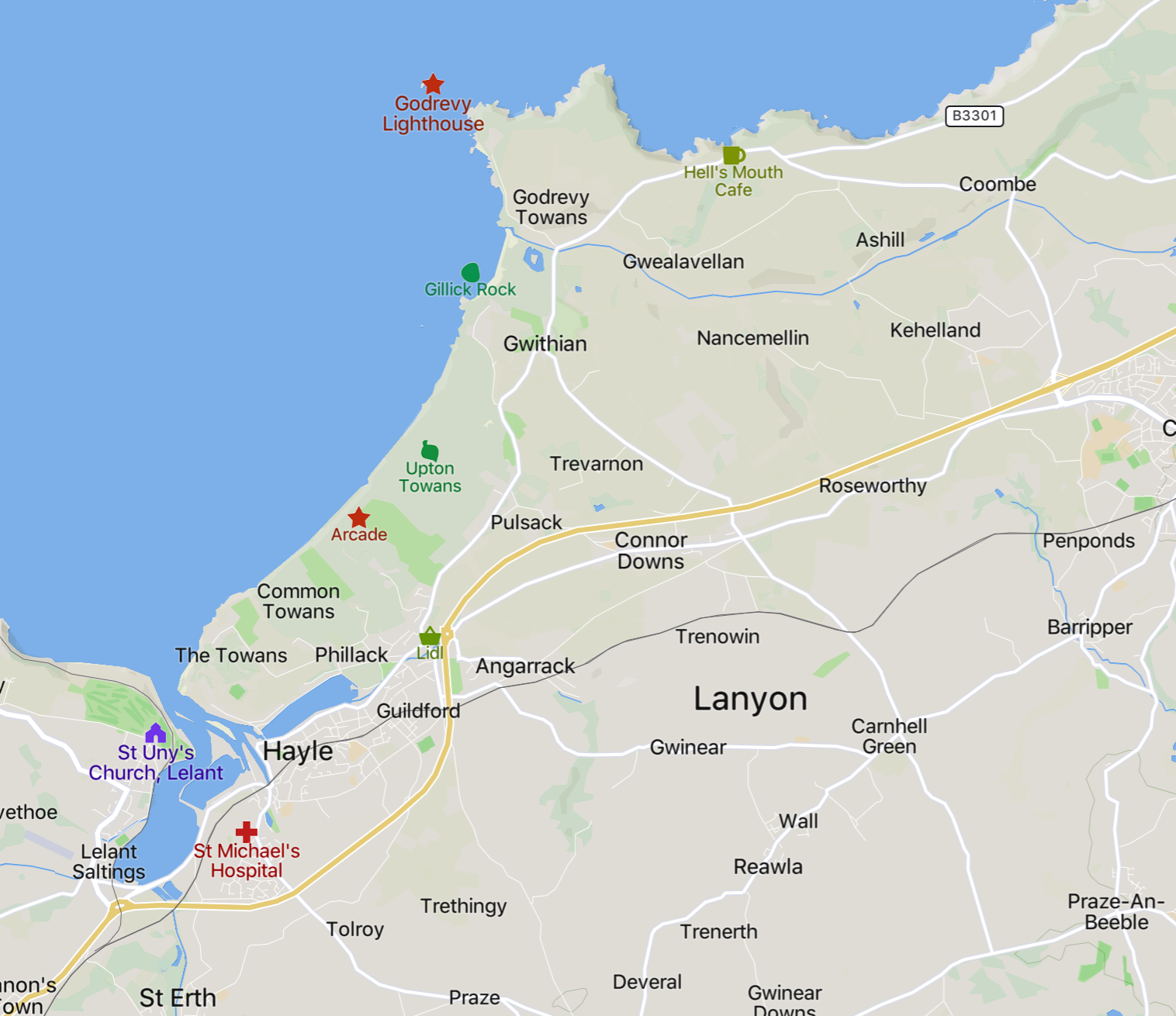
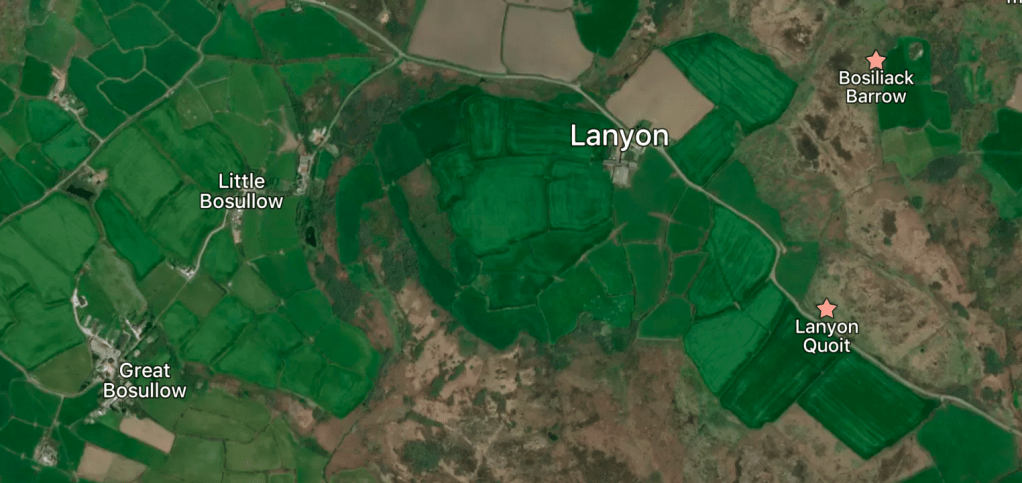
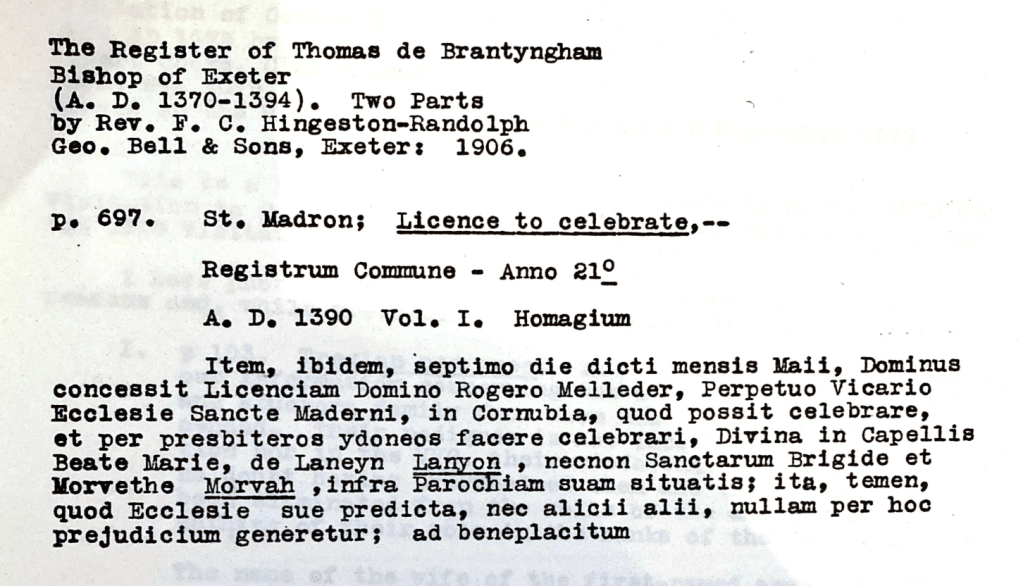
In 1390 the Bishop of Exeter granted a licence to celebrate divine service in the chapel of St Mary at Lanyen in Madron (Lysons 1817). Today the chapel is a ruin but it gives an idea of the size of Ralph’s home, the barton of Lanyon in the late 14th century.
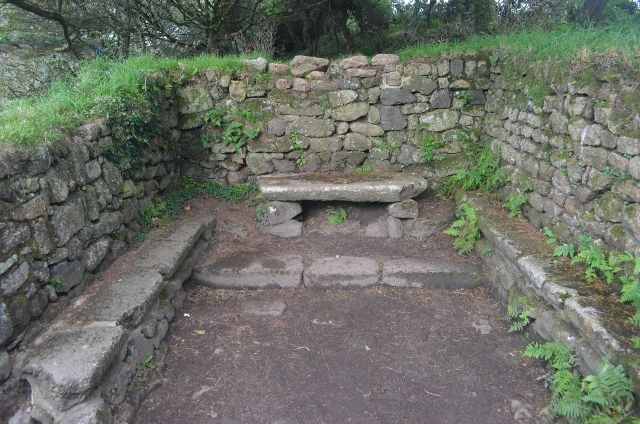
Madron Chapel by Ashley Dace, CC BY-SA 2.0 https://creativecommons.org/licenses/by-sa/2.0, via Wikimedia Commons

There are also three records in the Court of Common Pleas which relate to Ralph.

CP40/561 Easter 1401. Roger Boswarneth sues Ralph Lanyeyn for a debt.

CP40/589 1408 Ralph Lanyeyn sues Luke de Pensans for detinue (the crime of wrongful detention of goods or personal possessions) for a chest of charters.

CP40/589 1408 Alice Reda sues Ralph Lanyeyn, John Cornyssh, Robert Pensans, Richard Joce (tailor), Ralph Joce, Richard Dere & David Shade for trespass.

At a time when there are no records of baptisms, marriages or burials these records prove that Ralph was still alive in 1408.

I also have a letter from Jane Veale Mitchell to Edward Augustus Bullmore dated 23 Jan 1926 which states:

‘In Rolls Office, Chancery Lane, a Radolphus Lanyon asks that Tregamynyan, then in possession of his brother-in-law de Rogers, might come to him and his descendants, because they had no children. Written in old French, date 1327.’

This throws up a query, is the date 1327 correct? Is it the same Ralph Lanyeyn? The original letter has been transcribed, could the transcriber have got it wrong? It’s possible.

We don’t know when Ralph was born but 1327 seems far too early. If Ralph is married with descendants in 1327 then he is a very great age in 1408!

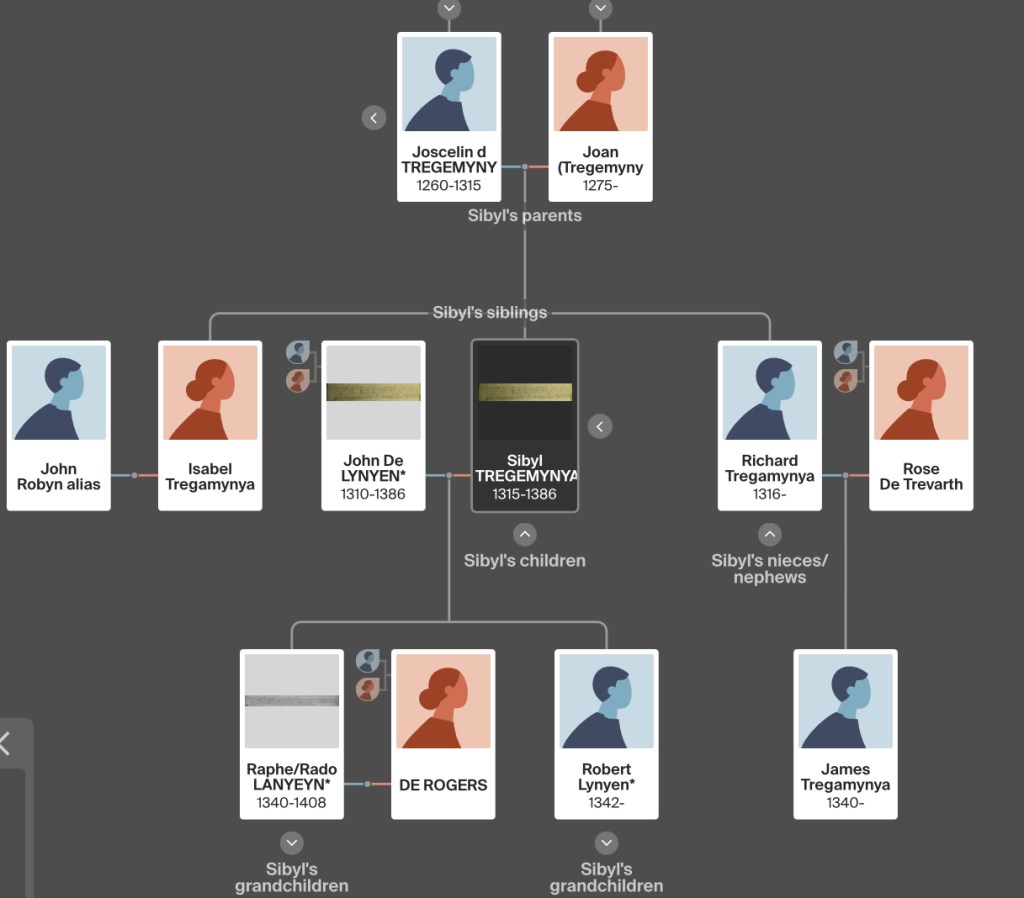
We know that Ralph’s parents were John de Lynyen and Sibyl de Tregamynion. This is confirmed by the record in Calendar Close Rolls CCR Ric II Vol 30 p.71.

We know that John de Lynyen’s father was David de Kylminawis as CCR Hen IV Vol 4 states that ‘David de Kylmynawis to John his firstborn son and heir, and to the heirs of his body by Sibyl daughter of Jocelin de Tregamynion…’

So where does the Radolphus Lanyon mentioned in Jane’s letter fit in? I haven’t found the original record she mentions but I think the date 1327 must be wrong and that the Radolphus Lanyon she mentions is Ralph Lanyeyn, the son of John & Sibyl. This then gives us the name of his brother-in-law, de Rogers, and leaves us wondering why the property Tregamynion at Morvah should be in his possession?
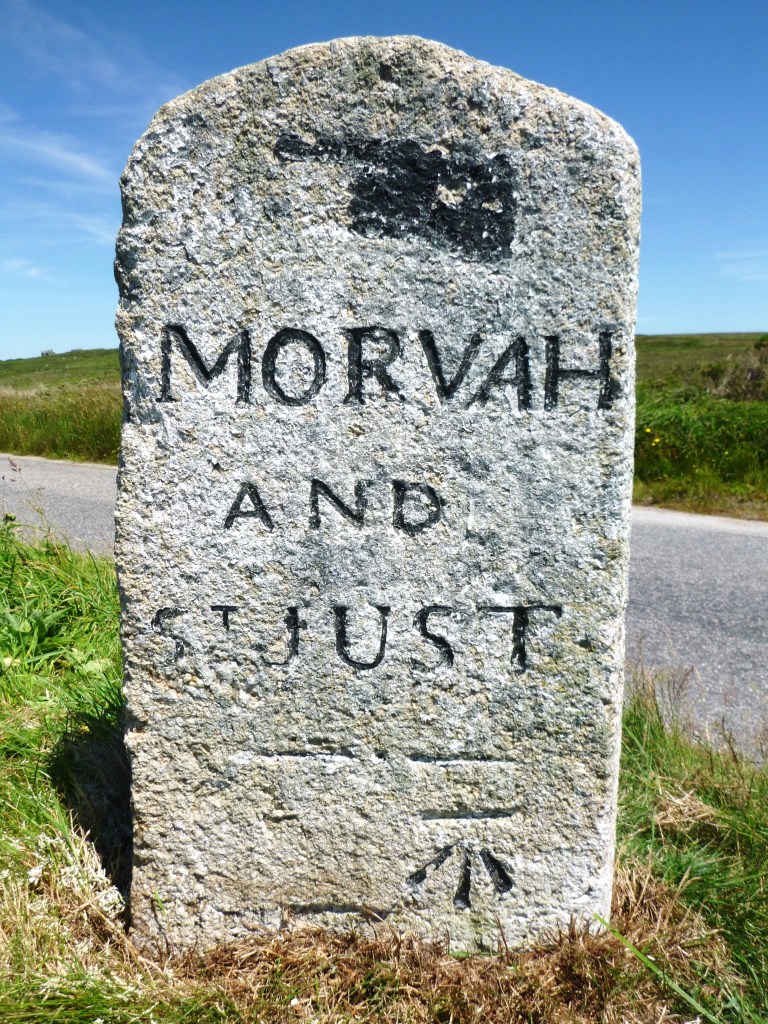
Rosy Hanns / Old Guide Stone on Bosullow Common, south east of Morvah

And that’s the fun of researching your family history, a few records discovered and a whole load of new queries to puzzle over!
1569

1569 was the year the first lottery was held in England, the prize was £5000. It was also the year Mary Queen of Scots was first imprisoned and of the Northern Rebellion against Elizabeth I.

Mary Queen of Scots
François Clouet, Public domain, via Wikimedia Commons

It was also an important year for the Lanyon family.

In 1567 William Laniene esq died. We don’t know his date of birth but his eldest son was born about 1516 and he had older sisters so it is estimated that William was born in the 1480s. There is an Inquisition Post Mortem of William Laniene of Coswynwollard, Gwinnear from 1586 which gives the date 20 Mar 1567 as the date of his death. This Inquisition gives his son Richard’s age as 70 (in 1586), so he was already 51 when he inherited his father’s estate in 1567.

In 1562 at the time of his son John’s marriage to Phelype Myliton, Richard was living at Tregaminian in Morvah. In 1567 he moved to Coswynwollard in Gwinear (now called Lanyon.)

Map of the Lanyon Estate at Gwinear

We don’t know which lands, if any, William Laniene senior intended for his sons as there is no will. In 1569 Richard granted estates to his brothers.

William ‘Generosi’ Lanyon

Richard’s brother William had been living at the family estate in Gwinear. His first wife Tamson was buried there on 26 Jun 1563. His son Baldwin was baptised at Gwinear on 1 Apr 1561 and buried 24 Jun 1563 just two days before his mother.

William was given the estate Tregonen at Breage. He appears on the Breage Muster Roll of 1569 ‘Furnished long bow sheaf arrows steel cap and black bill’ and he lived there until his death in 1597. His burial is listed in the Breage parish register where he is described as ‘generosi’.

Tregonning Hill near Breage which may be the location of Tregonen

Walter Lanyon

Walter married Elizabeth Nanspyan of St Erth. He is listed on the 1569 Muster Roll for St Erth ‘Bow shaft arrows, ability B’. His father owned land at St Erth as it is listed on the 1523 Penwith Subsidy Roll as having a value of 41 shillings (the same as the Gwinear estate.)

In 1569 he was given the tenancy of the Barton of Lanyon (the ancestral family home) at Madron by his brother Richard. Hendersons MSS 30534 pt 7 gives details of the lease and confirms the names of Walter’s son (John) and three grandsons (Francis, Alexander and David) also their ages.

The ancestral home at Lanyon near Madron. Bosullow was also part of the estate.

Edward Lanyon

The only record we have of William Lanyon having a son called Edward is a record from Kresen Kernow (Cornwall Record Office) AR/3/39 dated 11 Feb 1586. It’s a lawsuit over Crugmoreck in St Merryn.

“…..that Richard Lanyen esquire, on 20 September 1569 (11 Elizabeth), had granted to party (1-Edward Lanyen) 30 acres of land, being one close called Crukemorecke (parish of Seynt Meryn), for (1) to hold for term of 6 years from St Bartholomew last past [24 Aug 1569]; on the following 26 Sep [1569], (2-George Arundell)-(3-John Michall) forcibly entered the tenement and ejected him from it…”

The case goes on to mention that the sheriff of Cornwall Peter Edgecombe esq was a kinsman of Edward. Peter was the son of Joan Tregian the daughter of Thomas Tregian and that Edward was the son of Thomasine Tregian the daughter of Thomas Tregian.

We don’t know what happened to Edward after 1586. We don’t know if he had any children. All we know is that Richard Lanyon esq granted him the lease of the estate in Crugmoreck in 1569. There is an Edward Leyne on the Padstow muster roll of 1569 ‘bow 6 arr, ability a-ar’. Could this be the same person?

We don’t know where Crugmoreck lies today but the Lanyons owned lands at Harlyn, St Ervan, St Merryn and Padstow. Perhaps Crugmeer is the location?

Abduction!

This story appeared in the Online History of Parliament.

Plaintiff: John Fursdon. 

Defendants: Richard Trevaignon, of Carhayes, gent., John Trevaignon, of Trevaignon, gent., Thomas Trevaignon, of Tregony, bastard, and many others, nine of whom, mostly husbandmen, are named in the bill of complaint. 

Complaint: They smashed the doors and windows at Fursdon and, as well as taking money, property and documents and causing his wife Margaret to have a miscarriage, they abducted Joan his step-daughter who was the daughter and heir of John Lanyein, Margaret’s first husband.

Date: 1423

John Fursdon of Fursdon in Liskeard.

Son of James Fursdon of Fursdon by his wife Margaret. Married (1) Joan, before 1400; (2) before 1423, Margaret (widow of John Lanyein).

Source: The notice of Oyer and Terminer appeared in the Patent Rolls on 16th June 1424. It covered the complaint but failed to mention the abduction of Joan, daughter and heir of John Lanyein.

CPR H6 Vol 1, p229

The article on the History of Parliament casts doubts about the honesty of Fursdon.

abducted his stepdaughter, Joan heiress, he claimed, to lands worth 100 marks a year

Published in The History of Parliament: the House of Commons 1386-1421, ed. J.S. Roskell, L. Clark, C. Rawcliffe., 1993

In the course of his life, if he himself is to be believed, Fursdon suffered several assaults on his person and depredations of his property. On more than one occasion he brought suits in the King’s bench claiming that bands of armed men had forcibly evicted him from his land, and in the Parliament of 1423-4 he ‘suyst une bille’ against Richard Trevanion of Carhayes and his kinsmen who, he alleged, on 29 June 1423 had come to his house at Fursdon with 121 malefactors, broken down fences, gates, doors and windows, stolen goods worth £40, along with muniments and £9 in cash, assaulted him and his wife (nearly killing the latter and causing her to suffer a miscarriage), and abducted his stepdaughter, Joan (heiress, he claimed, to lands worth 100 marks a year). At other times, so Fursdon said, the Trevanions had lain in wait for him and had so threatened his life that he dared not go about his business except with a great ‘posse’, whereby he suffered much trouble and expense. This bill awaited the attention of the King’s Council with other ‘billes de Riottis’ for several months, and it was only after Fursdon appealed to the chancellor that in June 1424 a commission of oyer and terminer was set up to investigate the affair.

This story leaves us with a problem, where do John, Margaret and Joan Lanyein fit in the family tree?

Lanyon family Tree 14th & 15th Century

We know about Raphe (Radolphus) Lanyeyn involved in the dispute over Tregamynyan in 1388 after Princess Joan’s death. A John Lanyeyn received deeds in October 1446 probably after his father’s death. This John could be the John who died abt. 1476 and is mentioned in the Account Roll of Connerton and would have been the father of the John who married Isabel Ruthfrey. According to Fursdon’s account there must have been a John Lanyein who died before 1423 and left a widow and daughter, Margaret & Joan.

There is a record from Connerton Manor Gwithian Cornwall dated 14 July 1463.

“John Lanyeyn, namely John Hicka, 2 Cornish acres in Coswyn”.

Source: National Archives Kew: AR/2/1337/5

The John Lanyeyn who is deceased in the 1476 Connerton Roll had the same 2 acres at Coswynwulward.

“Goswyn Lanyon , formerly Coswynwulward, in Gwinear.”

‘Connor Downs’ the modern name for Connerton.

It appears as though there was a break in the male line, Joan Lanyein was the heir and married John Hicka who took the Lanyeyn name and became John Hicka alias Lanyeyn.

Princess Joan of Kent

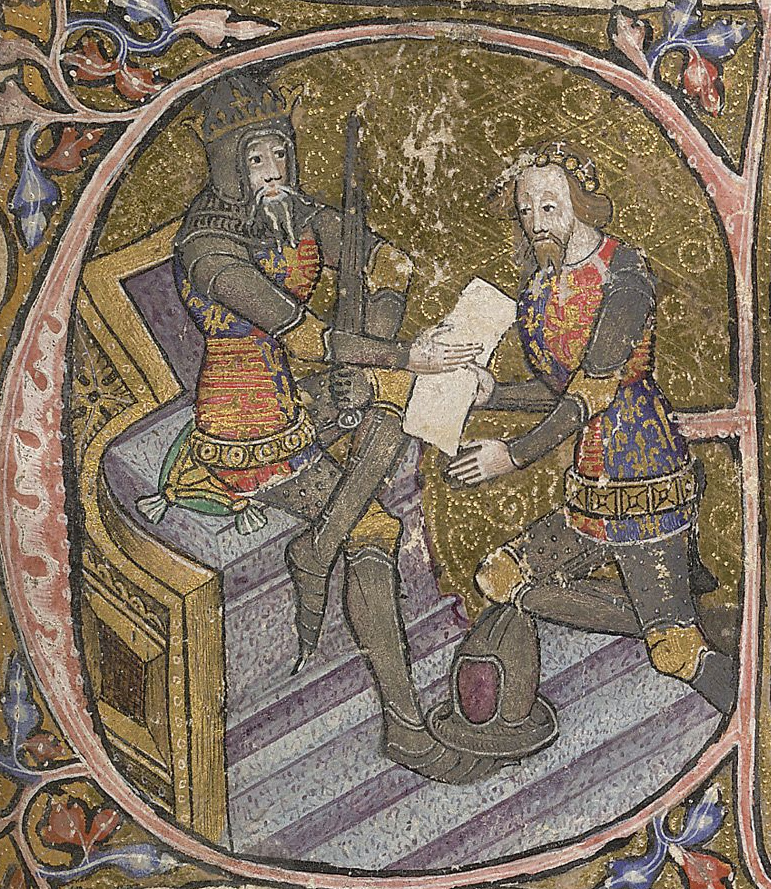
We learn about the next generation of the Lanyon family from a legal dispute of 1386 with Princess Joan of Kent, the widow of Edward the Black Prince, who fought at Crecy. She would have been queen but her husband died before his father, Edward III, and the throne passed to her son, Richard II.

Edward III and the Black Prince

The legal dispute between Princess Joan and the Tregamynyans and Lanyons had rumbled on for many years and was only settled after Joan’s death in 1385.

Joan of Kent from illustrated manuscript, Cotton MS Nero D VII, folio 7v, aka: The Benefactors’ Book of St Albans Abbey (‘the Golden Book of St Albans’)

When James Tregamynyan died without heirs the estate passed to his aunt Sibyl Lanyeyn and her sister Isabel. Isabel was married to John Robyn. Sibyl, Isabel and John Robyn granted the lands to John Lanyeyn but he was ousted by James Park (Keeper of the Fees for Princess Joan of Kent) who claimed that Robyn was a villein of the princess. Consequently when the pincess died the land passed to the king who granted it to a man named Langueth. Raphe Lanyeyn, John and Sibyl’s son, requested that this should be repealed.

The judgement favoured Raphe Lanyeyn but Alexander Langueth was later allowed a rent free life interest in Isabel & John Robyn’s portion.

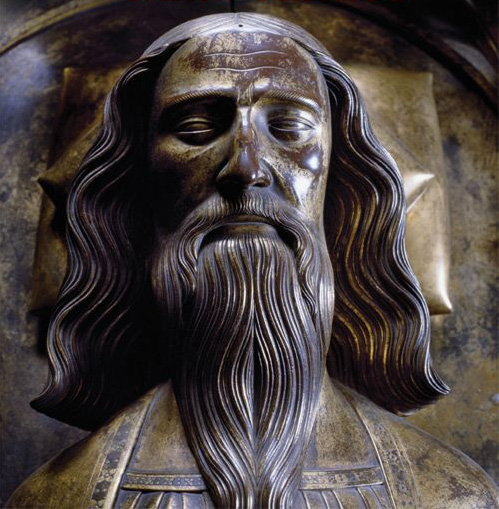
Richard II – Westminster Abbey, Public domain, via Wikimedia Commons

“To John Aston Escheator in Cornwall. Order to remove the King’s hand and meddle no further with a moiety of the lands of Joceus de Tregemyngnoun, delivering to Ralph son of John Lanyeyn any issues thereof taken; as the king. Has learned by inquisition, taken by the Escheator that the said Joceus was seized of 12 messuages, 3 carucates of land and 20s of rent in Tregemynyan, Trenwen, Croghton, Tregessyelle, Keguyn and Bossnyoun, that he had a son named Richard and two daughters Sibyl & Isabel and died, that Richard his son & heir had a son named James. And died, that the said James died without issue, that Sibyl the said first daughter married John Lanyeyn, that they had a son named Ralph and the said John died, that Isabel his second daughter married John Robyn, a villein of the princess as of her dower in Cornwall, that the said Sibyl and John Robyn with Isabel his wife were seized of all the premises and granted the same to the said Ralph and the heirs of his body, that he was seized thereof by virtue of that grant, taking all the profits, until be reason of John Robyn’s neifty (servitude, bondage, or villeinage) James Park, Keeper of the fees of the Princess of Cornwall seized all the premises, thrusting out the said Ralph and that for that cause the same are in the king’s hand by the death of the princess; and now at suit of the said Ralph, after deliberation in chancery with the justices, the king reckons the seizure insufficient in regard to one moiety of the premises being aware that his other’s feodary seized that moiety without process of law.”

Source: Calendar Curia Rolls 9 Richard II Vol 3 (1386)

Calendar of Close Rolls, Ric II, vol. III, 1385-1389, (Public Record Office, 1921), p.71 (1386 order to remove King’s hand from moiety of lands of Joyce de Tregemyngnoun, delivering petitioner any issues taken thereof)

Calendar of Patent Rolls, Ric II, vol. III, 1385-1389, (Public Record Office, 1900), p.304 (1387 grant for life to petitioner of all lands and tenements late of James Tregamynyon).

Legal Dispute with Princess Joan – SC 8/305/15206 National Archives
The Tregamynyan family tree

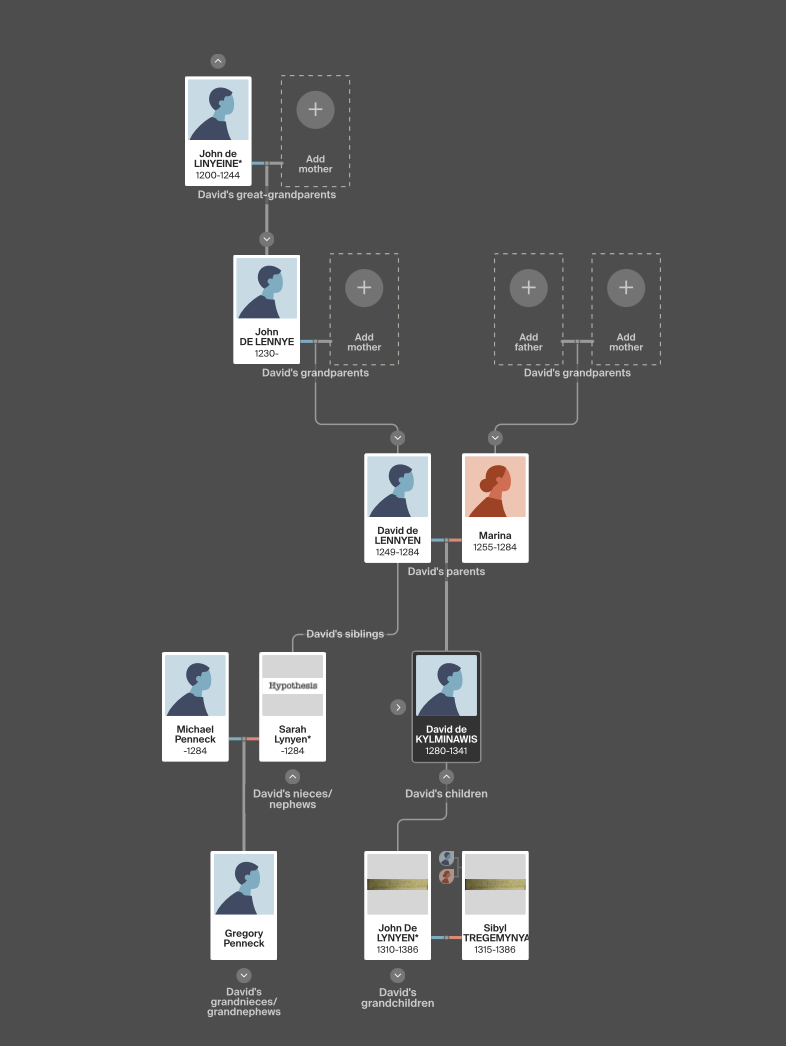
David de Kylminawis

David was born about 1280 and died after 1341. David may have been the brother of Sarah Lynyen. It’s not possible to say with any certainty but they were both living at the same time. The tree below shows the possible relationship.

Kylminawis – Kyl may be the equivalent to the Scottish Kil meaning church so Kylminawis possibly refers to St Minver in North East Cornwall.

A Cornish language expert has also suggested that the name Kylminawis is near identical to the earliest recorded spellings of Kilminorth, Talland on Cornwall’s southeast coast. Those spellings are ‘Kilminawyd’ and ‘Kylmynawyd’ 1284, It’s thought to contain the words ‘kyl’ meaning ‘nook, back, ridge’ and ‘menowes’ meaning ‘awl, or a hill, stone or piece of land shaped like an awl.’ I haven’t been able to find any connection to this area and the 1341 charter mentions David’s bake house in Portzwyhan which is now Port Quin which is on the north coast near St Minver. There are also family connections to St Ervan, St Merryn, Padstow and Harlyn.

In 1341 there is a charter which mentions David de Kylminawis and his son John who married Sibyl de Tregamynyan.

St Enodoc’s Church at St Minver by Peter Skynner,


Edward III – Unknown author, Public domain, via Wikimedia Commons

“David De Kylmynawis to John his firstborn son & heir, and to the heirs of his body by Sibyl daughter of Joceli de Tregaminion his wife, with remainder to the grantor and his heirs. Charter with warranty of all his messuages, lands etc. In Kylmynawis, namely yards, gardens, woods, meadows, moors, turbaries, launds an pastures, and his corn mill there with multiple, waters and watercourses or beads, his bake house with garden in the town of Portzwyhan, the rent and service of John de Landewarnek and his heirs for lands held of the grantor in Kylcoys, of Simon de Kylcoys there, of Paternus and Robert brothers of the grantor for lands of him held for their lives in Kylcoys, of Margery his sister likewise in Araweyte, and the reversion of all lands of the said John, Simon, Paternus, Robert and Margery which they claim to hold for life of the grantor and his heirs when it shall fall in.”

Dated Kylminawis, Friday before St Barnabas 15 Edward III

Source: CCR Calendar Curia Rolls, Henry IV, Vol.4, 1441-47, (Public Records Office, London, 1937), 452/3.

Portzwyhan is Port Quin today.

Port Quin and St Minver in North Cornwall.

The Manor House at Lanyon

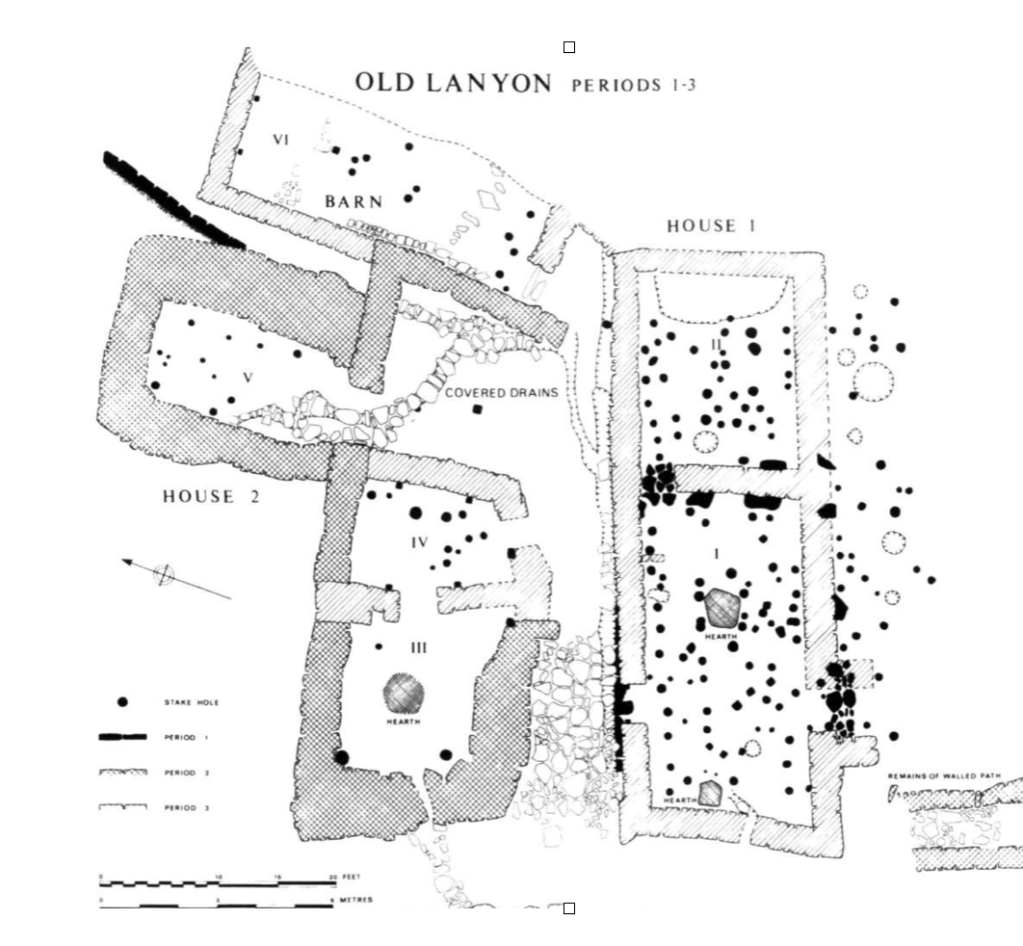
The Manor House at Lanyon was just west of Penzance at Madron. Originally these were turf houses which were extensively rebuilt each generation. In the mid 13th century they were replaced by a long house with thick granite walls, a turf roof and a central hearth. The hall would have been very smoky and smelly from animals in the barn and house. 

In 1390 the Bishop of Exeter licensed the Vicar of Madron to hold services in the Chapel of the Blessed Mary of Lanyen which is next to the present farm and suggests that the main house was at this location in 1390.

The site of Old Lanyon was scheduled under the Monuments Act of 1957 and in 1964 an archeological excavation of the mediaeval settlement took place. It found that Old Lanyon was a series of superimposed buildings dating from c1050 to the 16th century.

Source: 1. Beresford G 1994 – Old Lanyon Madron – A Deserted Medieval Settlement.

Source: 2. Minter EM 1965 – Lanyon in Madron – Interim Report on the Society’s 1964 Excavation.

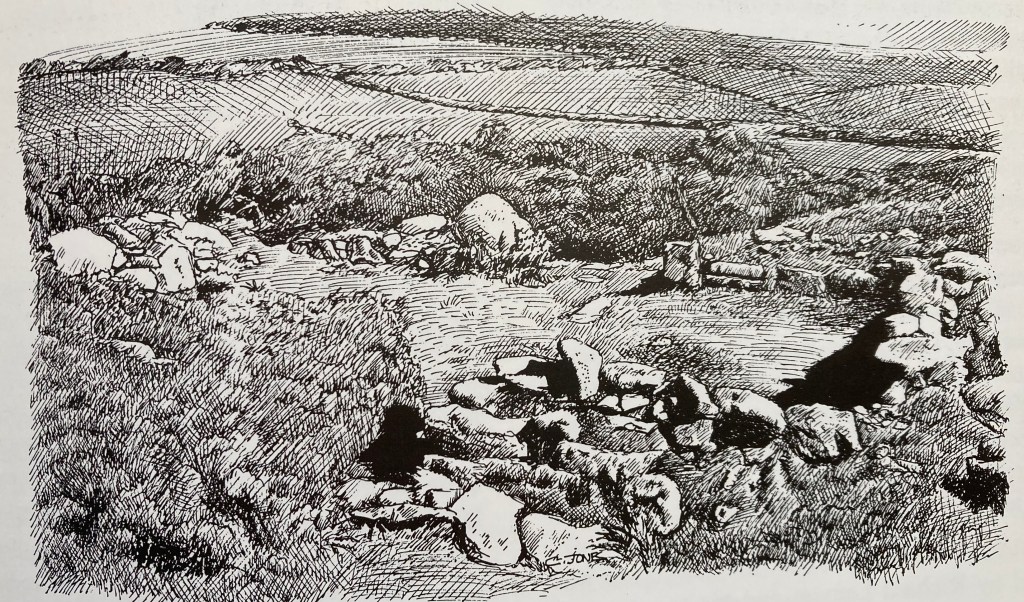
The last Lanyon to live at the old manor house was John Lanyon, who died in 1784 aged 92, after that the old house was taken down and the current farm house was built. It’s still possible to see some parts of the old manor.

Bob Jones / Mounting steps at Lanyon Farm

The remains of the old manor house at Madron – from ‘These Were Our People’ by Ruth Lanyon

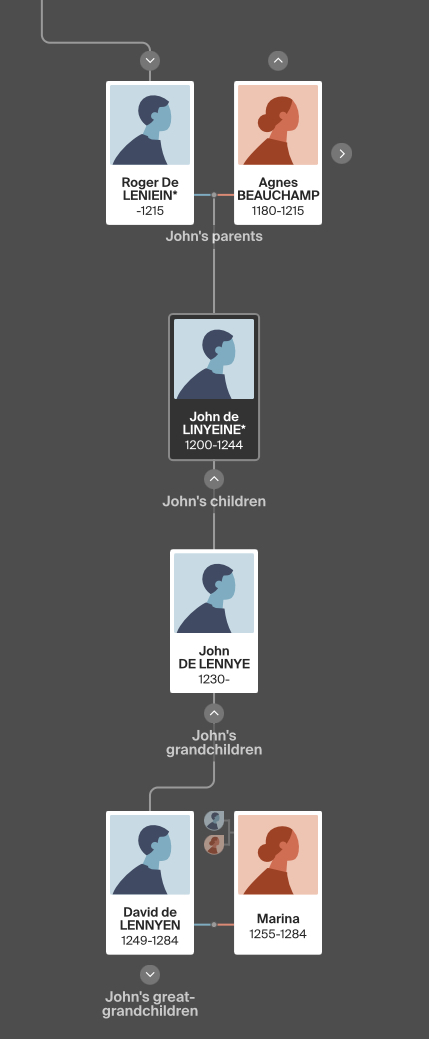
Roger de Linyeine – The First Lanyon

The earliest Lanyon is Roger De Linyeine/Leniein who died before 1215. He was married to Agnes Beauchamp (Bello Campo) and after his death she pleaded for a third part of two acres which she claimed as her dowry on Hugh de Bello Campo. She was successful and passed her land to her son/stepson John de Linyeine. (A Cornish Acre is apparently approx 300 acres but the size varied over time.)

Lanyon was subject to the Domesday Manor of Binnerton held by Hugh de Bello Campo. Agnes may have been the daughter of Stephen de Beauchamp and Stephen was the son of Hugh.

“Cornub Agnes que fuit uxor Rogeri de Leniein optulit se quarto die versus Hugonem de Bello Campo de placito tercie partis duarum acrarum terre cum pertinentiis in Leniein, quam ipsa clamat in dotem versus eum: et Hugo non venit etc. Et summonito etc. Judicum. Tercia pars capitur in manum…”

CRR Curia Regis Rolls, John 15-16, C.T.Fowler (Ed.), (Public Records Office, 1971),p.193.

King John signs Magna Carta 1215

The next time we see the name Lanyon is in 1244 in the Cornwall Feet of Fines. Roger’s son John receives two small parcels of land from Stephen de Bello Campo, one at Little Bosullow and one in Lower Drift in Sancreed. John guarantees no interference to the water supply to the mill.

Henry I – Matthew Paris (Historia Anglorum), Public domain, via Wikimedia Commons

One of the few ways to find families at this time is through property transactions and legal disputes. A charter of 1284 gives us the name of John de Leynen’s son, David and his wife Marina.

Edward I

“At Lanzaveton (Launceston) 1 month from Easter day, in the 28th year of King Henry (1 May 1244). Before Henry de Tracy, Gilbert de Preston and Robert de Haya, justices itinerant, and other liegemen of our lord the King then there present. Between John de Linyeine (Lanyon in Madron), plaintiff, and Hugh de Bello Campo (Beauchamp) [tenant] whom Stephen de Bello Campo vouched to warranty, & who warranted to him 3 ferlings of land in Botuolo bichan (Little Bosullow in Madron) & 1 ferling of land in Drek bichan. John acknowledged the whole of the said land to be the right of Hugh. For this Hugh granted to John the 3 Ferlings in Botuolo bichan, to have and to hold to John and his heirs of Stephen and his heirs for ever, rendering therefor 40 1/2 (?) at the four terms of St Andrew (30 Nov.), Mid Lent, the Nativity of St John the Baptist (24 June), & St Michael (29 Sept.) for all services & demand. Moreover John granted for himself & his heirs that the water which runs from Retsic (Rissick) to Netcurran shall be a free stream by the land of the said John in Retsic as far as the mill of the said Stephen at Netcuran, as in contained in a charter made between Roger father of the said John and Hugh de Bello Campo, without hindrance from John or his heirs for ever.”

Cornwall Feet of Fines, Volume 1, Joseph Hambley Rowe (Ed), (Devon & Cornwall Record Society, Exeter, 1914), pp.39/40.

Charter of 1284 confirms that David, husband of Marina was the son of John de Leynen. The charter also mentions the properties obtained by John de Leynen in 1244.

“John de Leynen to David his son and William de Trenyer chaplain and to the heirs of the body of the said David by Marina his wife. Charter with warranty of all his lands and messuages in the towns of Lennyen, Resik, Bossewolonwyan, Polgon, Hendrenythyn, Boswolnel and Trengwenton, with two mills corn and fulling in Lenyen, and the rent, service and homage of Ralph de Pendyn and his heirs for land there, and of Michael Pennek, Sara his wife and their heirs for land in Trethyn by Treudreuen.”

Dated Lanyen Friday before St Peter’s Chains 12 Edward I

English Groat – Edward I – PHGCOM, Public domain, via Wikimedia Commons

Zoom in and out to see Madron and surrounding areas in Cornwall.

A Pardon from King Edward III

John de Lynyen was born about 1310 in Cornwall the son of David de Kylminawis. John died before 1386. He lived at Bosollow, Madron near Penzance. John married a neighbour Sibyl de Tregamynyan the daughter of Joscelin de Tregamynyan and his wife Joan of Tregamynyan Manor in Morvah.

Joan died in 1344 and Sibyl returned to Tregamynyan. When she went back to her home at Madron she brought her mother’s (possibly step-mother’s) jewels and other goods with her. Perhaps she felt they were rightly hers. Evidently her family thought otherwise and this led to her being charged with the theft. Her husband John was charged as an accessory to a felony as he permitted her to come home with the goods. If found guilty he would have faced being outlawed and his lands forfeit.

Having been charged, John appealed to a higher court and then left home to join the Earl of Derby’s army who were going to France.

French army besieging the citadel of Auberoche, catapaulting an English messenger over the walls- Jean de Wavrin, Public domain, via Wikimedia Commons

The 100 Years’ War started in 1337 and continued until 1453. In 1345 Edward III decided to send an army to France lead by Henry, Earl of Derby, his cousin.

A patent Roll of 24 Edward III (24th year of Edward III’s reign) explicitly states that John was charged before the Earl’s expedition of 1345. The Patent Roll does not disclose what John de Lynyen did in France but on their return The Earl of Derby (now also the Earl of Lancaster) gave personal testimony at Westminster on 3 June 1350 to John’s ‘good service in Gascony’ which obtained a royal pardon for him. John was able to return to Cornwall a free man.

Goran tek-en, CC BY-SA 4.0 https://creativecommons.org/licenses/by-sa/4.0, via Wikimedia Commons –
Map of the Gascon Campaign

Whilst we don’t know what John did in Gascony it seems possible that he fought at the Battle of Auberoche.

The Earl of Derby gave personal testimony at Westminster on 3 June 1350 to John’s ‘good service in Gascony’ which obtained a royal pardon for him.

The National Archives at Kew Ref: SC 8/254/12666 & 12667
Old Cornwall Journal “The Lanions of Lanion, Madron, Cornwall: An Incident in the Family History” 1964
Edward III-AnonymousUnknown author, Public domain, via Wikimedia Commons

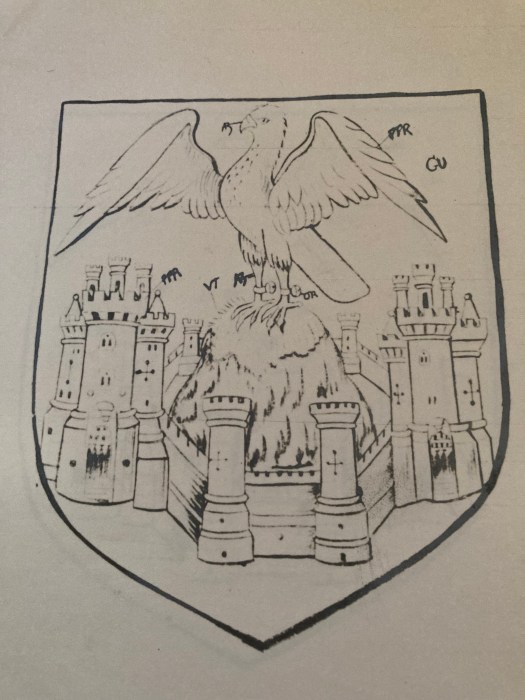
Lanyon Coat of Arms

Family Motto

“Vive Ut Vivas”

Live and Let Live

Another tradition, repeated by Bottrell, of Bosawa in St Buryan, (a house owned by the Lanyons), says ‘In the hall of this house there hung suspended on the wall a coat of mail, a buff jacket and a huge pair of jackboots of Cordovan leather, the monster spurs still buckled on them which once belonged to some renowned Lanyon: over the stone cut Lanyon arms an old rusty sword.

Could these boots have been John de Lynyens?

“Traditions and Hearthside Stories of West Cornwall” by William Bottrell.