Family historians are always looking for new sources of information so I was delighted to find the site medievalsoldier.org which has lists of lots of medieval soldiers. I searched and found one relevant entry:
William Lanyen – Man at arms naval service, serving under Hugh Courtenay, the Earl of Devon (ref: 14180500) this gives us the year 1418.
William was listed on a muster roll held at the National Archives ref: E101/49/34 m.8
So who was William Lanyen and where does he fit on the tree? If he was fighting in 1418 he could have been born sometime during the period 1380 to 1400 and the tree at that time is a little complicated.
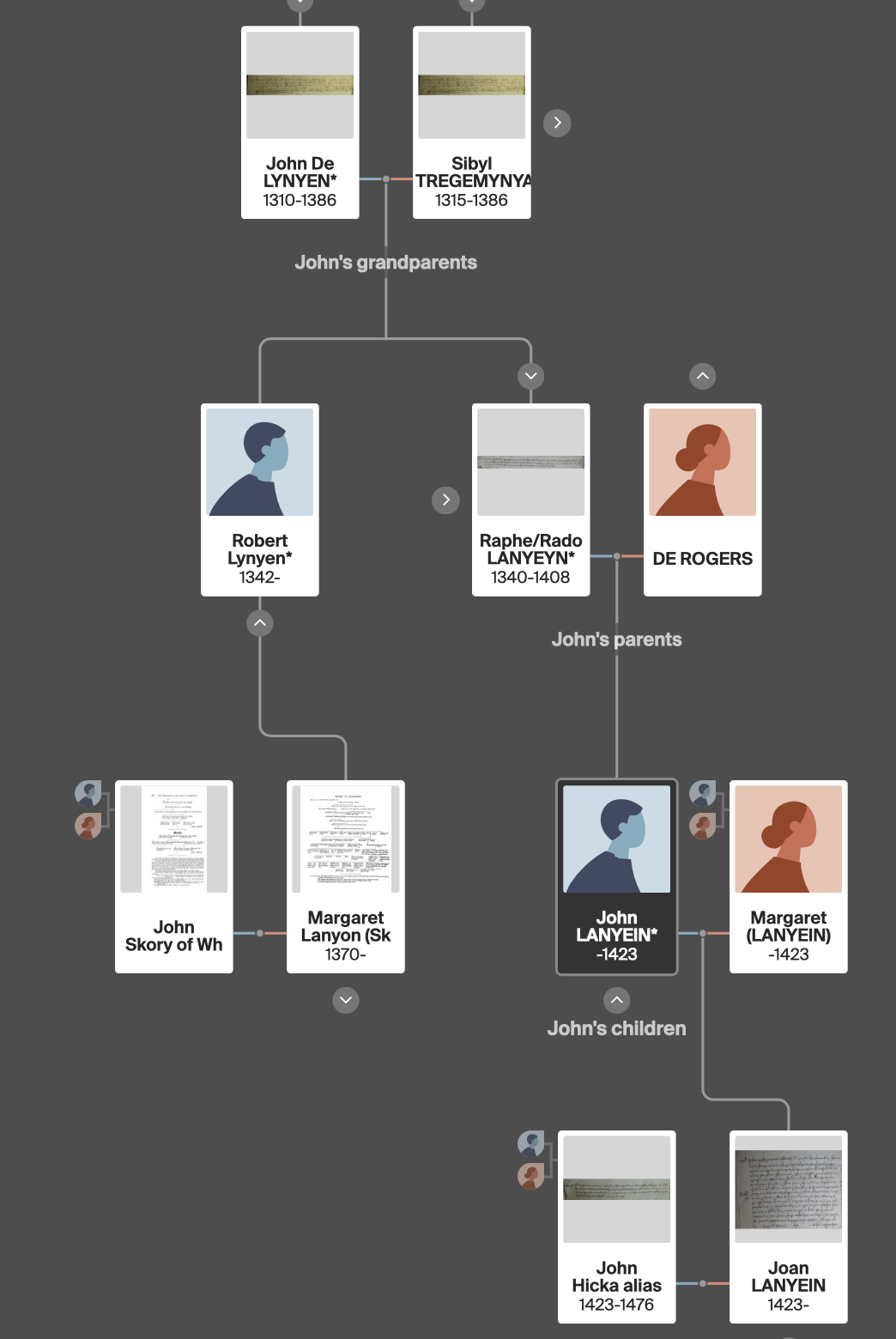
Raphe/Radolphus Lanyeyn was born abt. 1340 and died after 1408. We know his wife was from the de Rogers family, but not her first name. The source for that was a letter from Jane Veale Mitchell to Edward Bullmore: “….in the Rolls Office Chancery Lane, a Radolphus Lanyon asks that Tregaminion then in possession of his brother in law de Rogers might have come to him and his descendents because they had no children, written in old french dated 1327.”
We don’t know which roll this information came from or why Raphe’s brother in law was then in possession of the estate called Tregaminion.
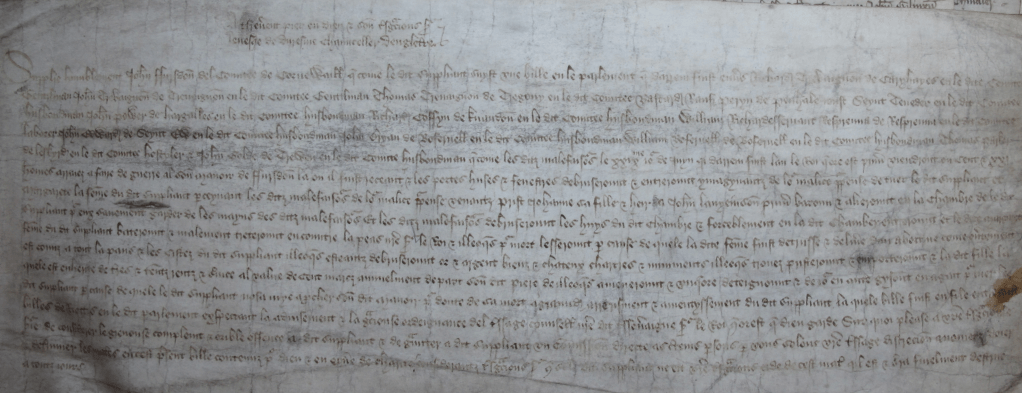
Raphe had a son called John Lanyein who died bef. 1423. His widow Margaret remarried John Fursdon and there is an interesting document: Early Chancery proceedings: C1 Bundle 5/41 which mentions John Fursdon, Margaret and Margaret’s daughter, Joan Lanyein who was born bef. 1423.
If William Lanyen, our naval man at arms, was born abt. 1380 to 1400 then he would have been a contemporary of John and Joan Lanyein but he can’t have been a brother as surely he would have inherited? Which suggests he must have been a cousin from a cadet branch of the family.
There are no other records of this William and we don’t even know if he survived or was killed during his service in the navy.
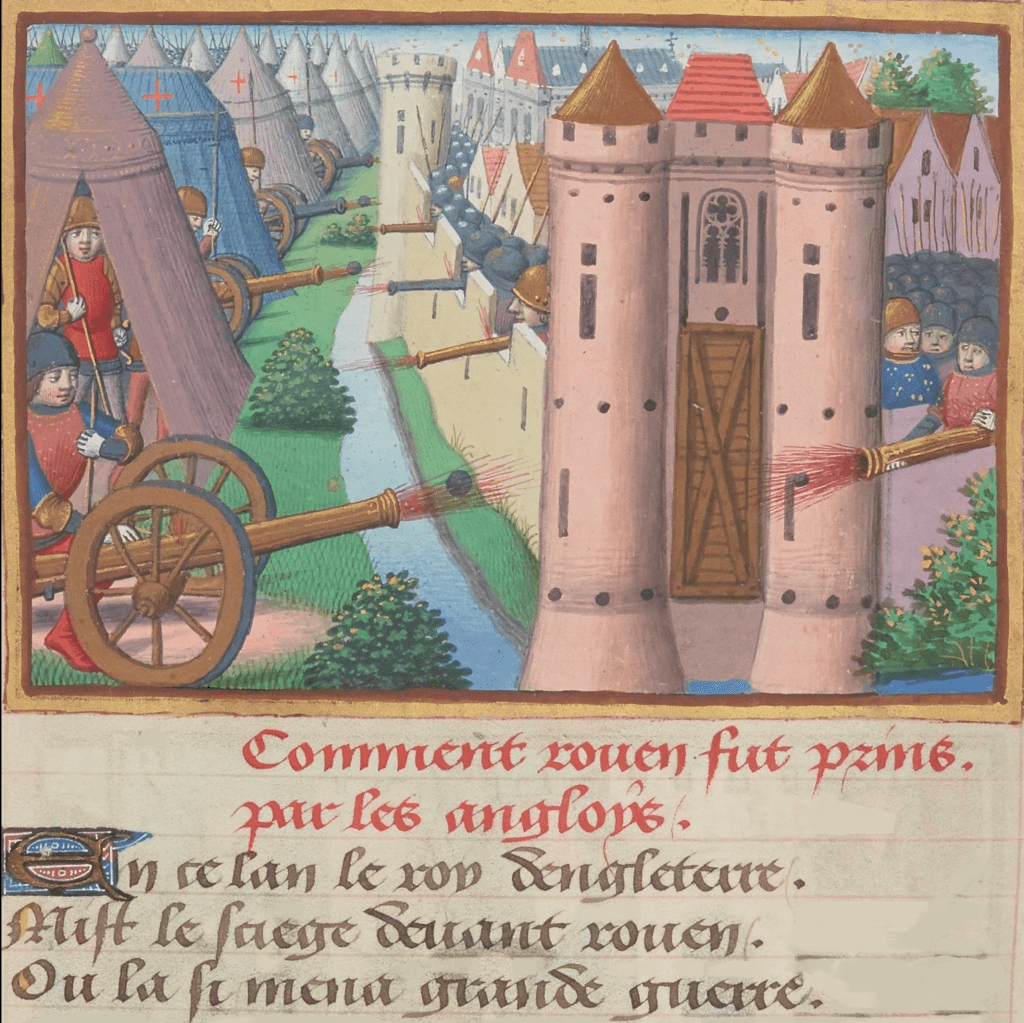
We can however find out a little about the way he lived. In 1415 England defeated the French at Agincourt and in the following years the two countries fought the ‘Hundred Years War’. In 1418 England was laying siege to the city of Rouen, and Rouen could not be taken until the English had control of the sea.
The Siege of Rouen
The southwest—Devon and Cornwall—was one of England’s most important naval regions. The Earl of Devon provided ships and fighting men under contract to the Crown.
Devon & Cornish men were especially valued because they:
Were experienced sailors and coastal fighters
Knew Channel waters well
Were used to defending against Breton and French raids
The siege at Rouen depended on supplies reaching the English and the job of the navy was to escort the ships carrying, food, weapons and horses and to fight off French attackers.
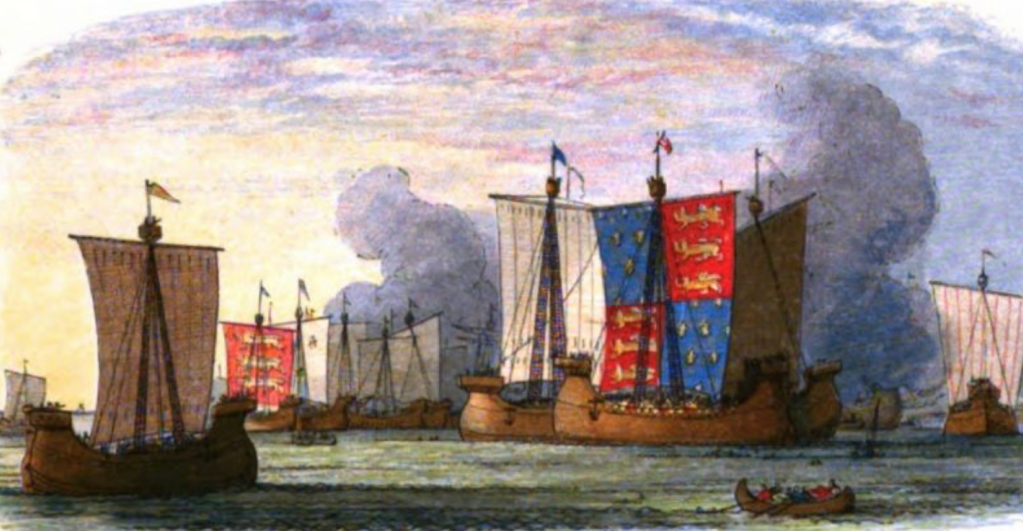
A naval man at arms was not a sailor, he was a soldier. Ships at this time rarely had guns and they fought by grappling the enemy ship and pulling it close enough for the archers to shoot and the men at arms to board and fight the enemy. A man at arms had status greater than an archer but not as high as a knight. Pay was about 12d a day and there was a chance to ransom and loot.
Despite the opportunities to make money it was a very hard life on board. The soldiers often slept outside in the cold and damp and they ate a poor diet. The risk of being killed in action was high and the risk of accidental death for example, from falling overboard whilst wearing chain mail was also high.
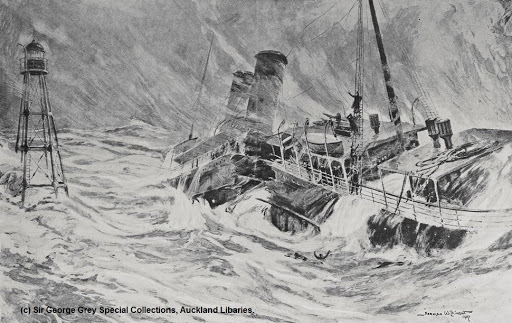
Medieval ships fighting
The English ships prevented supplies getting through to Rouen and eventually the city was starved into submission in January 1419.
Wishing all my subscribers and visitors a very happy new year!
2025 in numbers:-
The website had 7,500 views and 2,200 visitors.
The top three countries for visitors were United Kingdom, USA and Australia but we also had visitors from as far away as Ghana, New Caledonia, Kiribati, Pakistan and Ethiopia! Just amazing!
The most popular post in the last year was ‘The Fiji Lanyons’.
The busiest day for visitors was 11th March 2025.
I only produced four new posts in 2025 as it was a busy year for me. Hopefully in 2026 I’ll have some interesting new posts.
I’m always delighted to read your comments and happy to help, if I can, with family history queries.
If you have a Lanyon family story you’d like to share please get in touch.
William John Glanville Lanyon was born on 31 May 1881 in Saltash Cornwall, the illegitimate son of Mary Ann Lanyon. He was known as John Lanyon. His family also knew him as Barney.
I’ve pieced the following story together from the records available.
According to the 1861 census Mary Ann Lanyon was born in 1858 in Hayle, Cornwall the daughter of John Lanyon & Emma Jane. John was a boiler maker steam engineer and died at the tragically young age of just 24. John was from Marazion and I can trace his family tree back to Barnard Lanyon 1638-1714.
I found a marriage of a John Langon & Emma Elmes in 1857 St Germans and a birth registration for Mary Ann in Penzance in 1857 with a mother’s maiden name of Elums. Various censuses have her born C1857/8 in either Hayle or Saltash.
In 1864 Emma Jane (26) married William Barrett, a fisherman, age 20. She is listed as a widow on the marriage certificate.
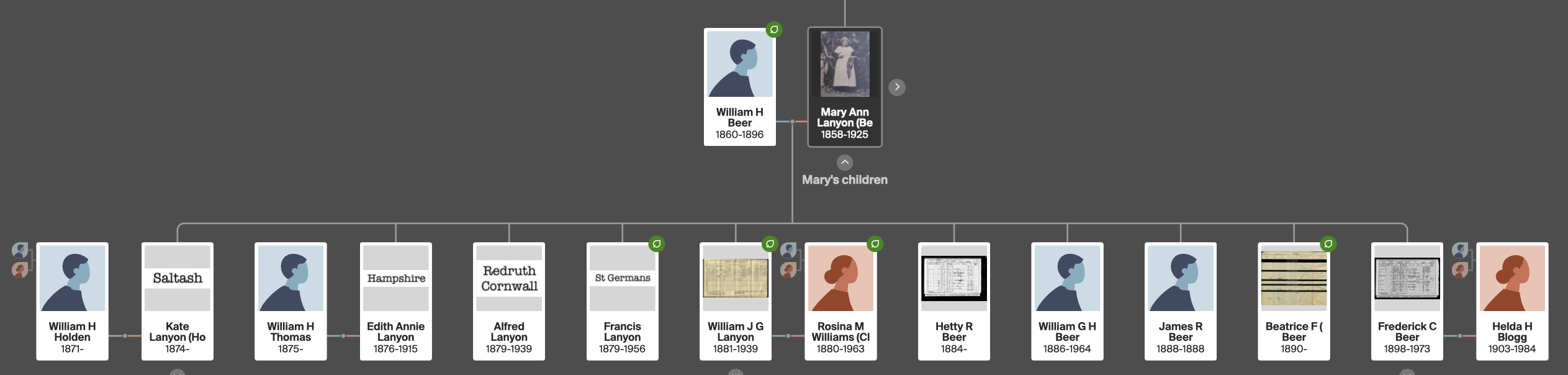
In 1873 at the age of 15 Mary had her first illegitimate child: Kate Lanyon, followed three years later by Edith Annie and then Alfred & Francis Lanyon, twins (they were actually triplets, but the third child was stillborn). Finally in 1881 she gave birth to William John Glanville Lanyon. According to the 1881 census she was an inmate at St Germans Union, Torpoint (the workhouse) with 2 year old twins Frank & Alfred Lanyon. She’s listed as a fisher saleswoman and pauper. Presumably she had been admitted to the workhouse due to the imminent arrival of another child and extreme poverty. What a desperately hard life it must have been.
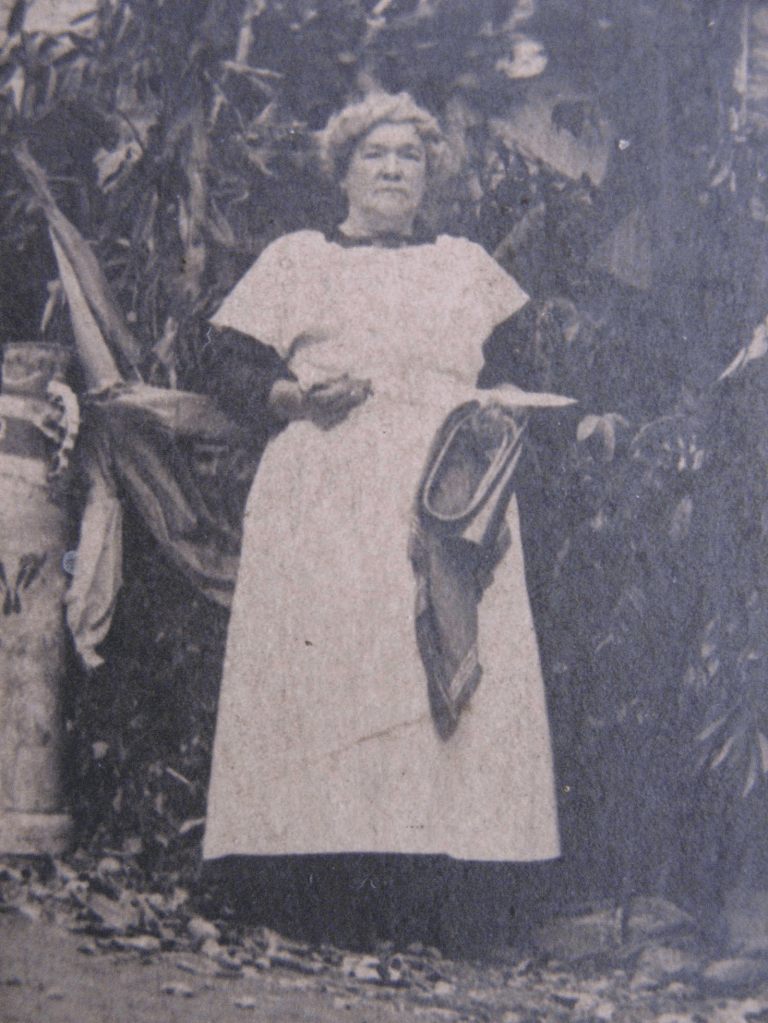
Mary Ann Lanyon
In 1884 she gave birth to another illegitimate child, Hetty Roseanna Beer and the following year she married William Henry Beer in Saltash. William was a tailor journeyman.
In 1886 Mary gave birth to William George Henry Beer (her second child called William). This is presumably why William John Glanville Lanyon used the name John rather than William.
Mary Ann had two more children: James & Beatrice Beer. Then William Beer her husband died aged just 36. Two years later she had another illegitimate child, Frederick Charles Beer.
Mary Ann died 17 Mar 1925 in Saltash.
On the 1911 census William John Glanville Lanyon aka John Lanyon is described as a fisherman and is still living at home with his mother and three of his brothers.
Military records show that he was a private in the army, the Duke of Cornwall’s light infantry, during the first world war and that he was discharged on 14 April 1917 as he had a gun shot wound to his arm which was amputated. Despite this disability he was still able to row a boat with one arm!
The 1921 census shows him still living at home with two of his brothers, working as a fisherman and is still listed as single.
1921 Census
In 1923 his army pension records showed him moving from Saltash to 141 Hertford Road Enfield. The electoral register for Enfield in 1924 showed him living at 141 Hertford Road with Rosina ‘Lanyon’. I was unable to trace a death or burial for Rosina’s first husband Alfred William Clarke.
On 29 May 1939 John Lanyon married Rosina Maud Clarke (nee Williams) she was known as Maud. John was almost 60! Rosina was the ‘widow’ of Alfred William Clarke. There were two children of this first marriage.
Alfred Felix 1900-
Rosalind Jannette 1900-2006
The 1939 register described John Lanyon as incapacitated. The couple were living on a houseboat called ‘Beatrice’ in Saltash.
So far so good…..but this is where it gets complicated and it’s fair to say it took me many months to untangle this little branch of the family.
In 1921 Rosalind Jannette Clarke was working as a shorthand typist and living in Devonport with her parents, Alfred and Rosina. Alfred was a boatman for the RN coastguard service and they lived at Fawley coastguard station. Perhaps Alfred knew a one armed fisherman called John Lanyon!
By Aug 1922 Rosalind had given birth to her first child. She wasn’t married but the father of the child was Sidney Alfred Thomas.
Sidney Alfred Thomas
Sidney was born in Sheerness Kent on 15 Mar 1889, the son of John Battersby Thomas and Mary Louisa Hurrell. On the 1901 census he is listed as attending the Royal Hospital School at Greenwich. In 1904 he joined the navy (service no: 347079). In 1911 he joined the freemasons, Hong Kong United Service lodge of HMS Robin. HMS Robin was a river gunboat in Canton, China.
In January 1915 Sidney married Ida May Boulton at Devonport.
On 8 Jul 1919 Sidney left the Royal Navy and by 1921 he and Ida were no longer living together. He was working as a dairyman and pork butcher. There were no children from this marriage.
1921 census for Plymouth
By Aug 1922 he was the father of Rosalind’s first son. He had also changed his name to John Lanyon! I assume he chose this name as he knew William John Glanville Lanyon.
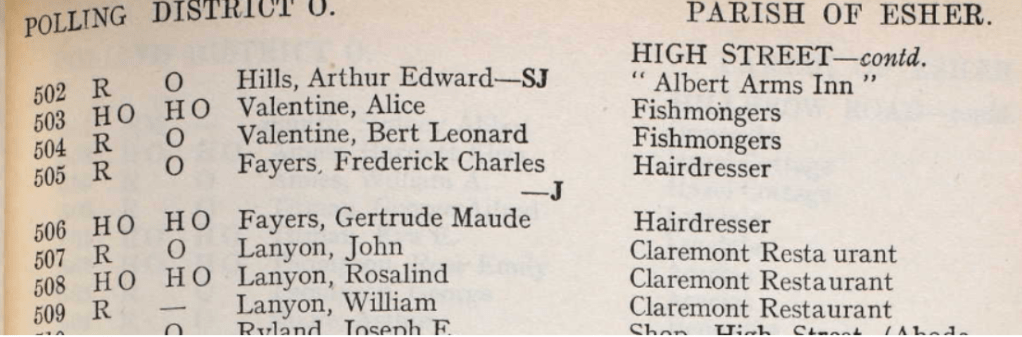
By 1928 he, Rosalind and their son were living in Surrey. I found them on the electoral register in Esher, working at the Claremont Restaurant and living with a William Lanyon. Presumably William John Glanville Lanyon.
Electoral Register for Esher
By 1943 they had two more children and Rosalind was using the surname Lanyon and also using the first name Rosalina. To confuse matters even more by this time her mother Rosina had married William John Lanyon so mother and daughter, Rosalind/Rosalina and Rosina, were both using the surname Lanyon and living with men known as John Lanyon!
Rosina’s wedding certificate was signed by Rosalind J Thomas and Sidney A Thomas even though he had been using the name John Lanyon since 1922.
Marriage certificate of William and Rosina
Sidney/John and Rosalind must have separated sometime after 1943 when their third child was born. Then on 25 Sep 1950 Sidney Alfred Thomas aka John Lanyon married Agnes Taylor at Finsbury London. John described himself as a widower. John had never been married to Rosalind but his first wife Ida was still very much alive and they weren’t divorced!
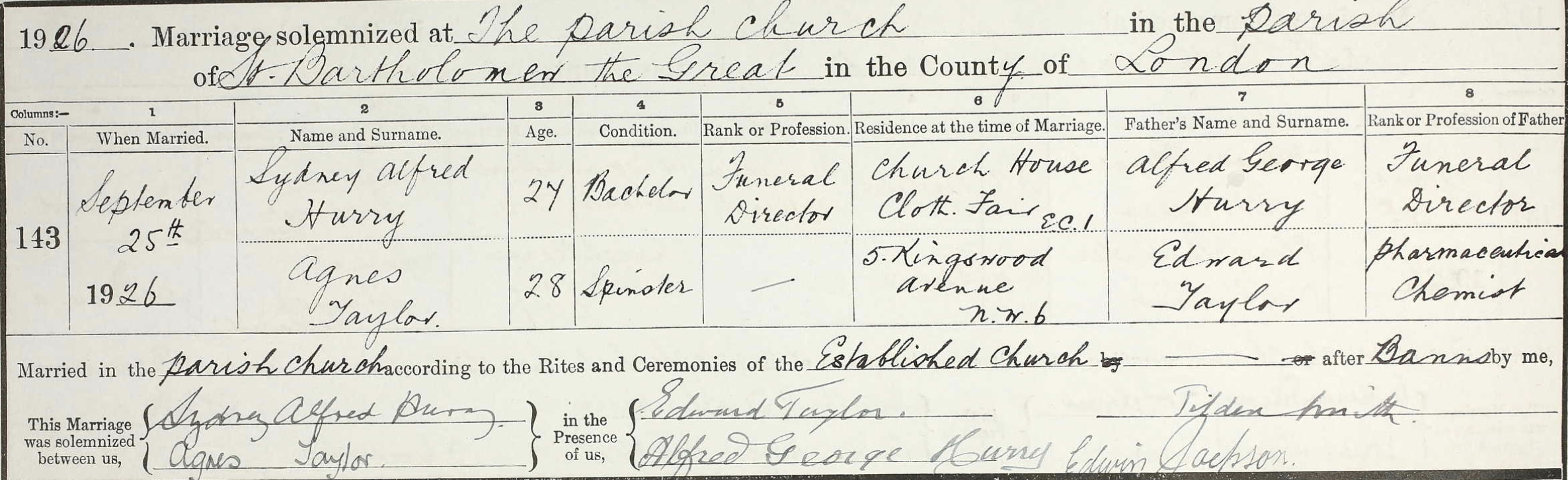
To complicate things even further Agnes Taylor’s first husband was called Sydney Alfred Hurry. It seems incredible that Agnes married two men both called Sidney Alfred! They had married on 25 Sep 1926. The 1939 register records that she was divorced.
Marriage of Agnes Taylor to Sydney Alfred Hurry
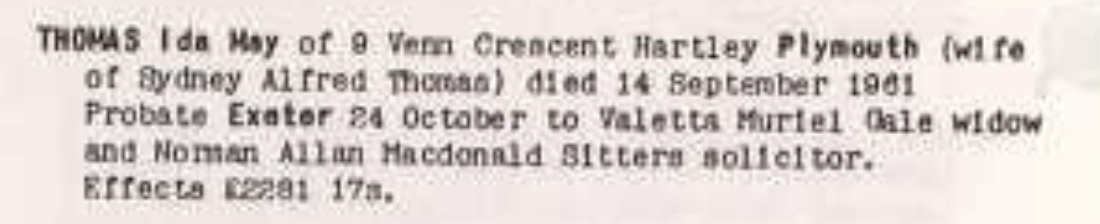
Poor Ida Lanyon had been abandoned and had gone back to live with her mother and sisters. She worked as a school teacher. She died on 14 Sep 1961 at Plymouth and her probate described her as ‘wife of Sidney Alfred Thomas’.
Ida Thomas’ probate
I was unable to trace a death for William John Glanville Lanyon/John Lanyon. He was alive in 1939 and that’s as far as I was able to follow him until a family member got in touch and recalled how he was still alive in 1952.
Rosina Maud Lanyon died Q2 1963 at Portsmouth.
Sidney Alfred Thomas/John Lanyon died 13 June 1964 in Chelmsford.
Rosalind Jannette Clarke aka Lanyon died in 2006 at the age of 106!
Catherine Septima Lamotte 1874-1958 married Arthur Herbert Lanyon, this is her family’s story.
The Lamotte family were Huguenots.
In 1642, in Switzerland, Claude LaMotte and Jeanne LeClair had a son Claude Lagier LaMotte. (Some researchers name Antoine Lagier as the father but the only record I have found names father and son as Claude.)
Claude married Marie Caillat on 16 May 1684 • Vierzon, France. (Marie’s father is also named Claude on the marriage record!) Perhaps it was a second marriage for Claude LaMotte, who was 42 at the time of his marriage. I have only traced two sons, Daniel born in 1698 and John (Jean) born in 1708 when his father was 66 years of age.
The family appears to have moved between France and Switzerland. John was born in France but Claude died in Geneva, Switzerland on 05 Mar 1712.
We next see Jean in George II’s State papers when a bill in the House of Lords was passed to naturalise Jean Lagier Lamotte. His brother Daniel became a British citizen in 1742.
On 06 Feb 1734 at St Martin Orgars French Huguenot Church, St Martin’s Lane, London Jean married Louise D’Albiac, the daughter of Capt. James D’Albiac and Louise De La Porte.
James Dalbiac
James D’Albiac was born 28 Nov 1681 • Nîmes, Gard, Languedoc-Roussillon, France, the son of Scipion D’Albiac and Marie Durand. Scipion was born 18 Jan 1650 at Nîmes.
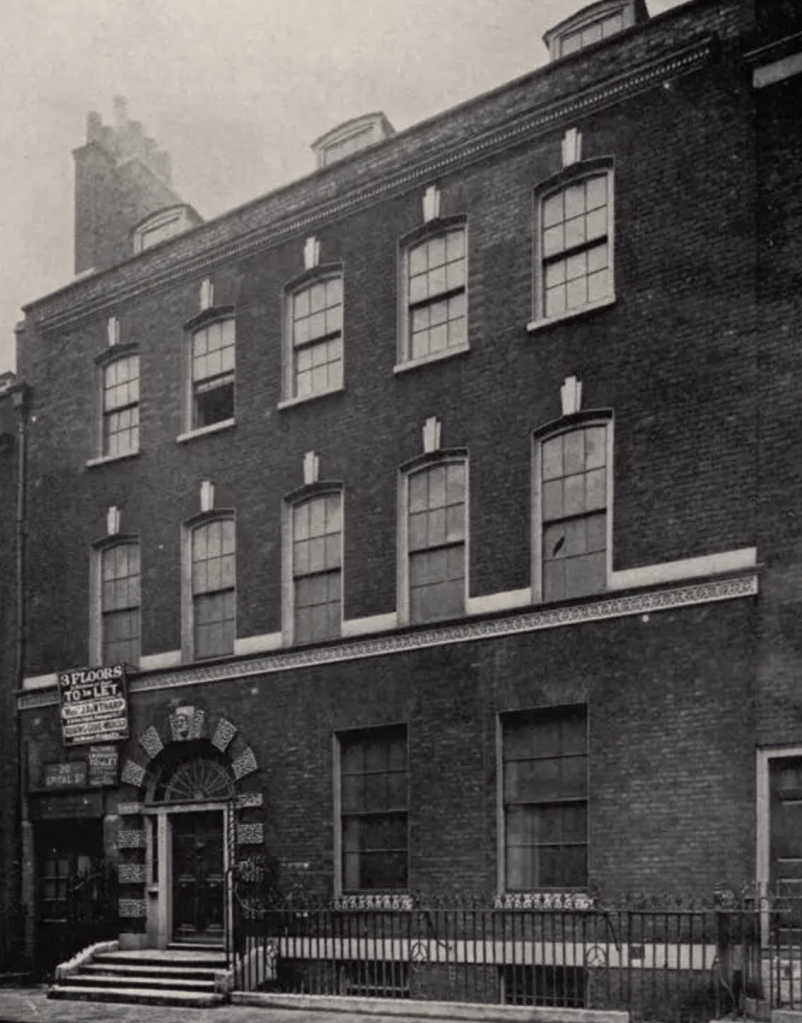
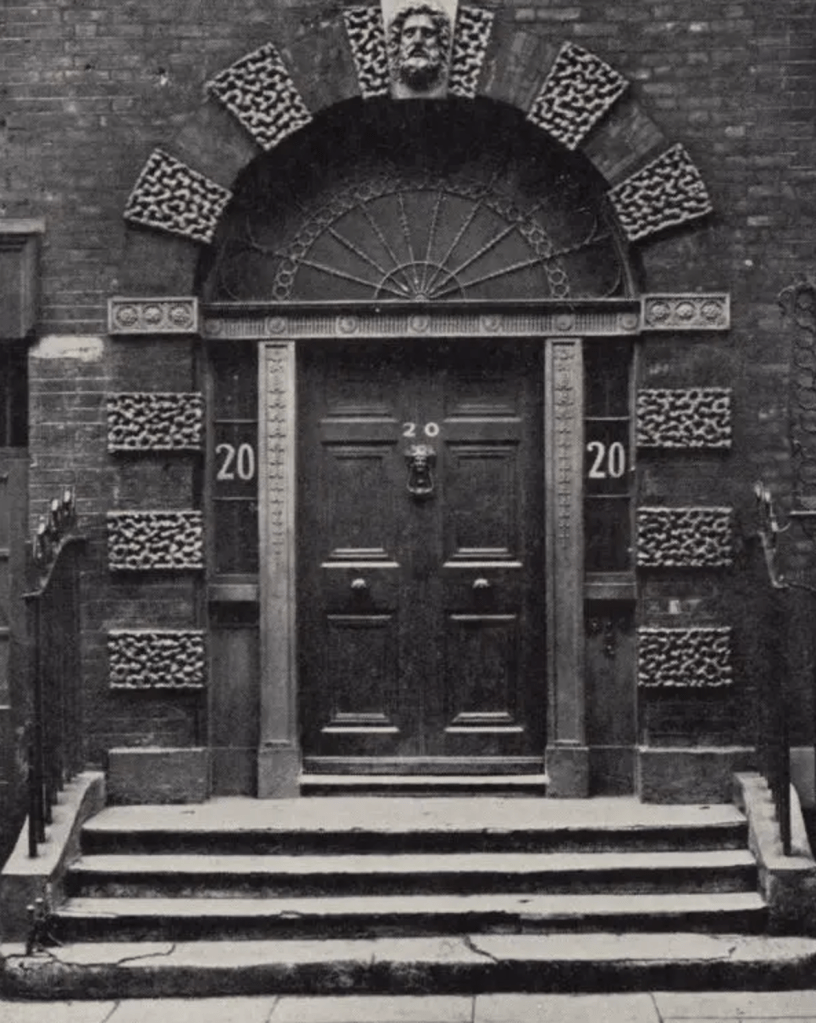
They anglicised their name to Dalbiac. The Dalbiacs lived at 20 Spital Square, Spitalfields London.
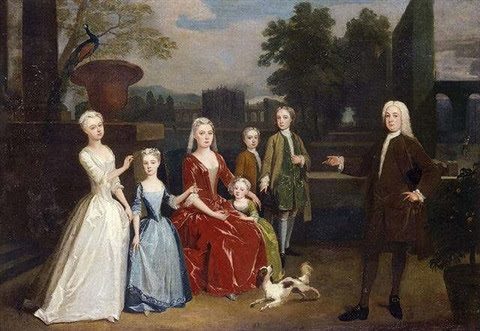
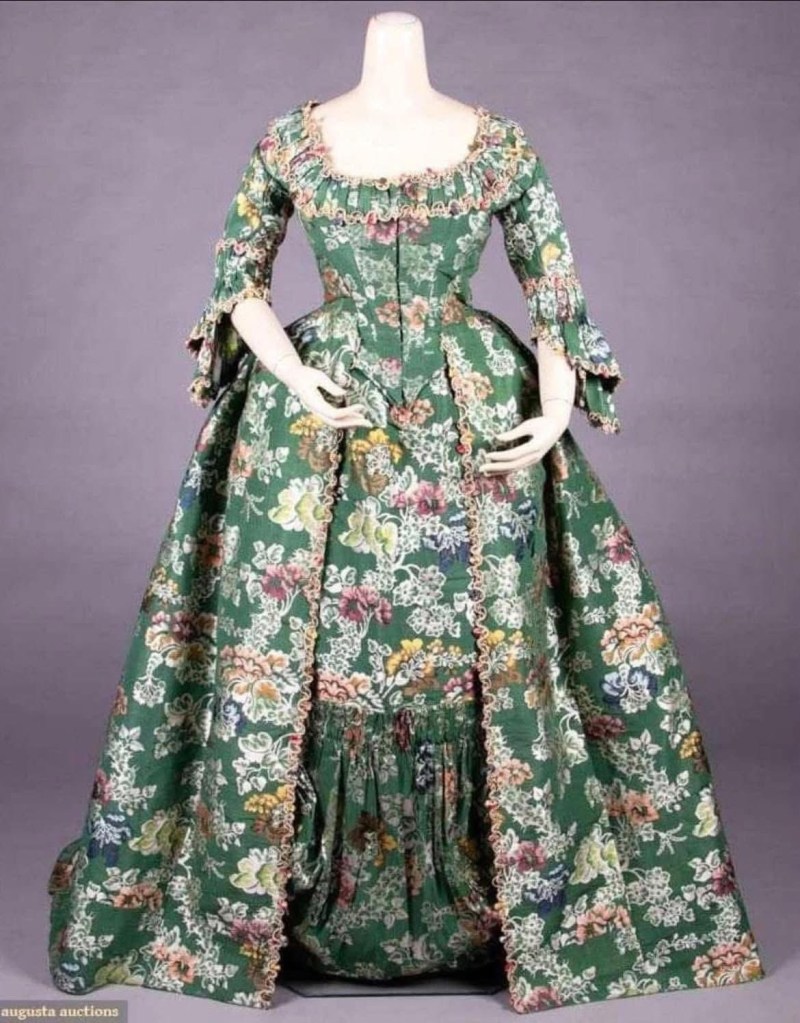
James Dalbiac was a silk weaver and was admitted to the Weaver’s Company in 1711 as a foreign master. The Huguenot silk weavers were not popular and between 1719-1721 the anti-calico campaign led to riots. Many Huguenot silk weavers lived in Spitalfields. Windows were smashed and business disrupted. This didn’t stop James and the other silk weavers from becoming hugely successful. At his death in 1749 he was described as “an eminent black silk weaver reputed to have died very rich”.
James Dalbiac (standing) and his family.
An example of the beautiful Spitalfields woven silk c 1736
James’ daughter, Louise Dalbiac, was born in 1712 and she married John Lagier Lamotte.
John Lagier Lamotte senior
The year before his marriage there was an act to naturalise Jean Lagier LaMotte whose name was anglicised to John Lamotte.
John Lagier Lamotte’s tree
John and Louise had five children:
Louise Lagier 1736-1825 she married Benjamin Dubouley who was the pastor at the French church in Threadneedle Street
Marie Lagier 1737-
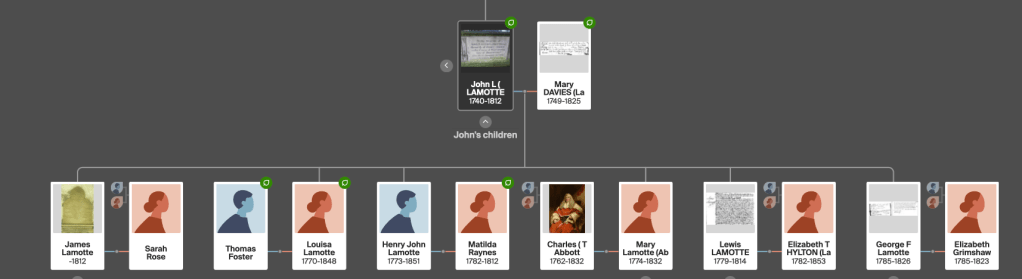
John Lagier Lamotte 1740-1812
Catherine Lagier 1743-1797
Henri Lagier 1746-
In 1743 John Lagier Lamotte, merchant, leased for 7 years vaults for storing beer in the new church Brick Lane. Source – Spitalfields great Synagogue deeds & agreements.
In 1744 he was listed as one of the merchants protesting against papists.
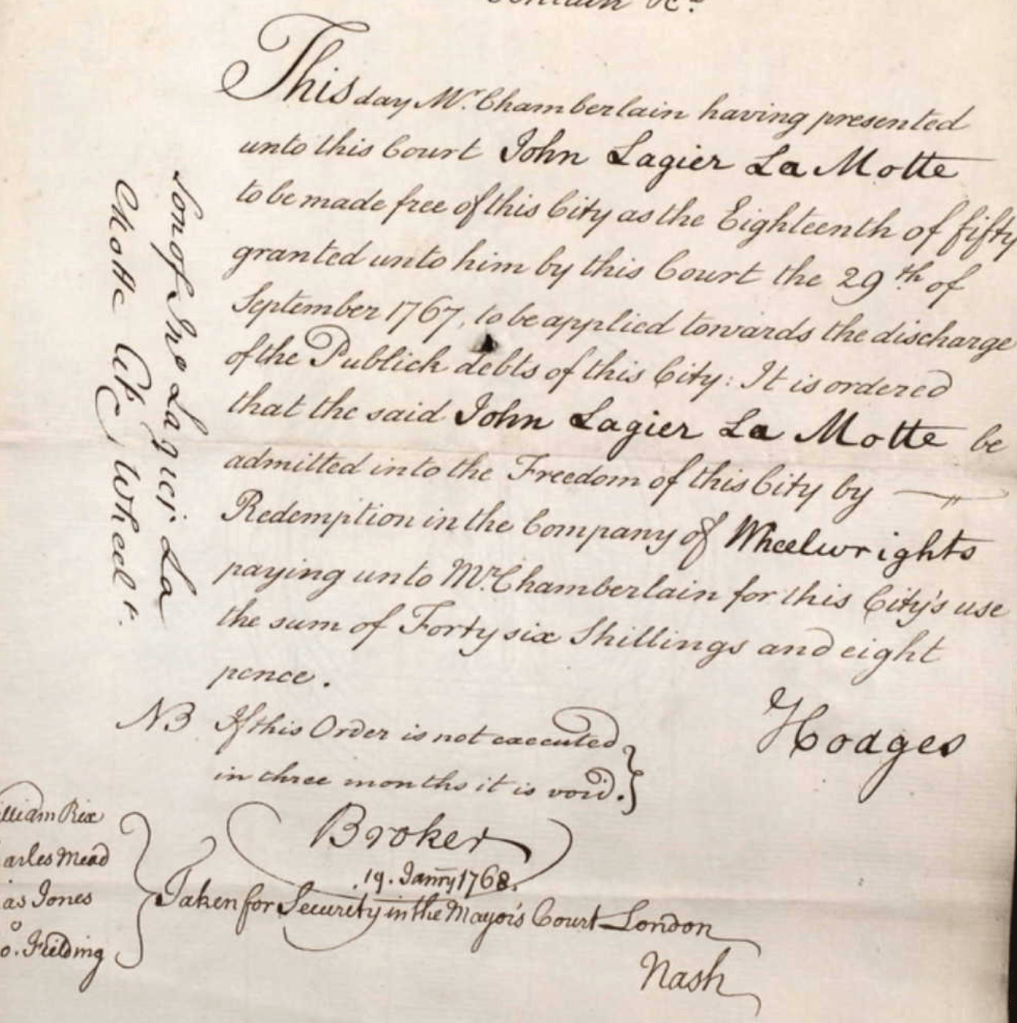
John Lamotte senior was a merchant. He was given the freedom of the City of London in 1767 in the Company of Wheelwrights.
Freedom of the City of London
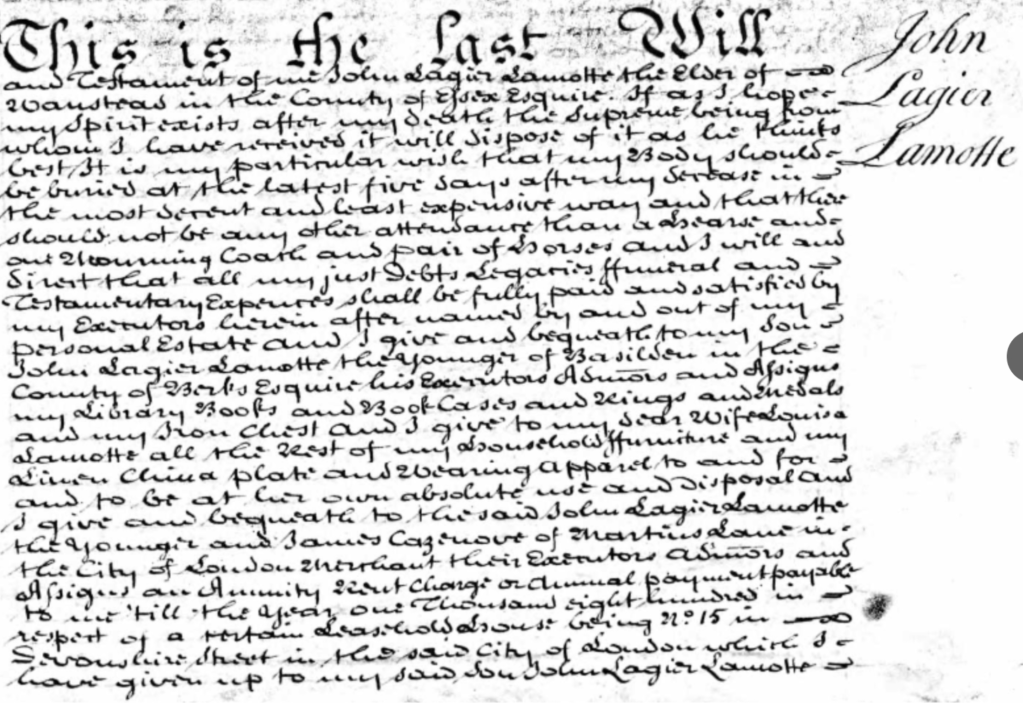
Like his father in law he was a successful businessman and died a rich man. He was buried in 1792 at Wanstead in Essex. Fortunately for us, he left a will which mentions his wife and son, John.
John Lagier Lamotte Junior
John was baptised on 5 Sep 1740 in London. He was 41 before he married Mary Davies in 1781.
I found six children, however only one was born after their date of marriage so it appears as though John Lamotte had another wife who died after 1779 and before 1781:
Louisa 1770-1848 married Thomas Foster
Henry John 1773-1851 married Matilda Raynes
Mary 1774-1832 married Charles Abbott, Lord Tenterden
Lewis 1779-1814 married Elizabeth Hylton
George 1785-1826 married Elizabeth Grimshaw
James -1812 married Sarah Rose (I was unable to find a date of birth or baptism for James)
John was a broker of financial services and a successful and wealthy businessman. he died 26 January 1812 at Brighton.
John’s grave at Brighton
Lewis Lamotte
Lewis was born in 1779. In 1796 he obtained his degree from Oxford University and became a lawyer. In 1805 he was a member of the Middle Temple of the Jamaican Bar. Before 1809 he married Elizabeth Tomlinson Hylton in Jamaica. (We’ll follow her family in a separate post.)
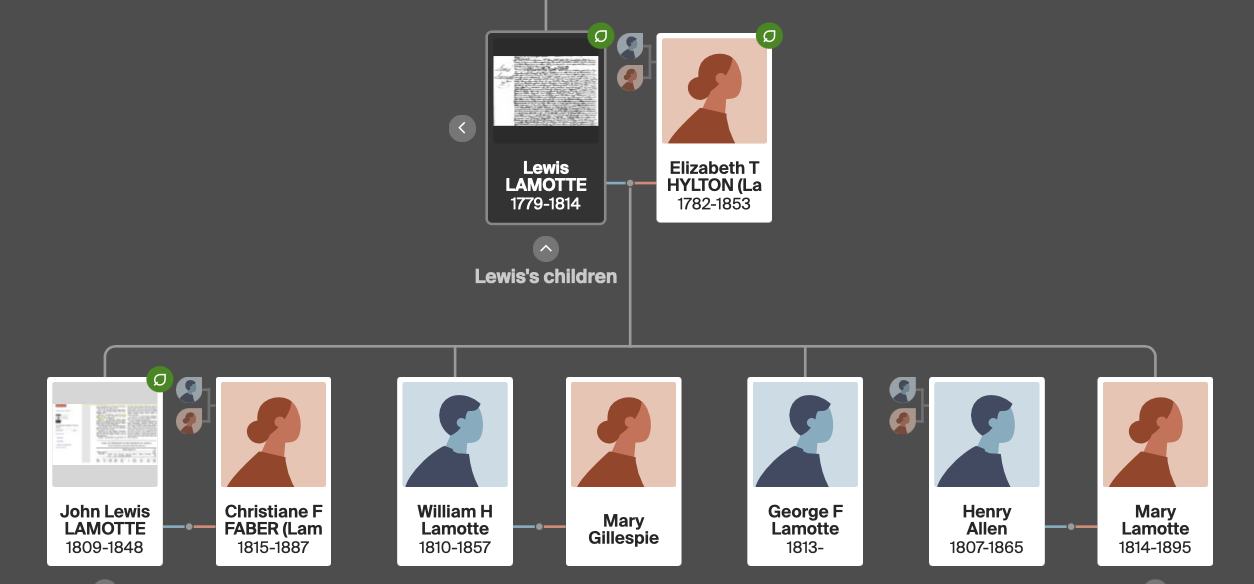
Lewis Lamotte’s tree
Lewis and Elizabeth had four children:
John Lewis 1809-1848
William Hylton 1810-1857 married Mary Gillespie
George Francis 1813-
Mary 1814-1895 married Henry Allen
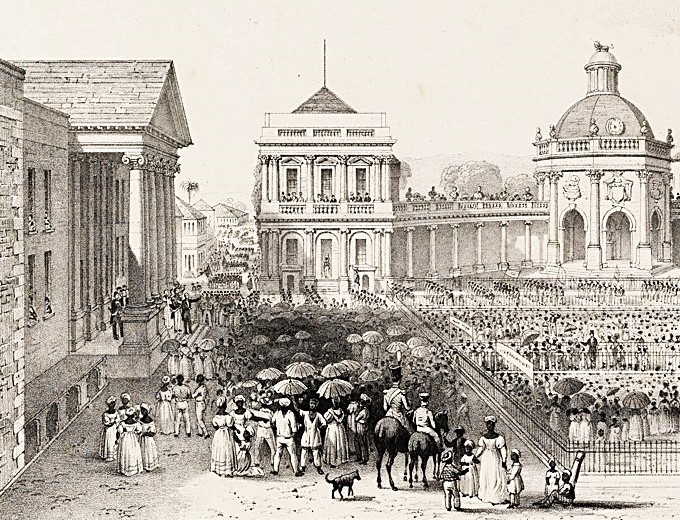
Spanish Town – Thomas Ashburton Picken, Public domain, via Wikimedia Commons
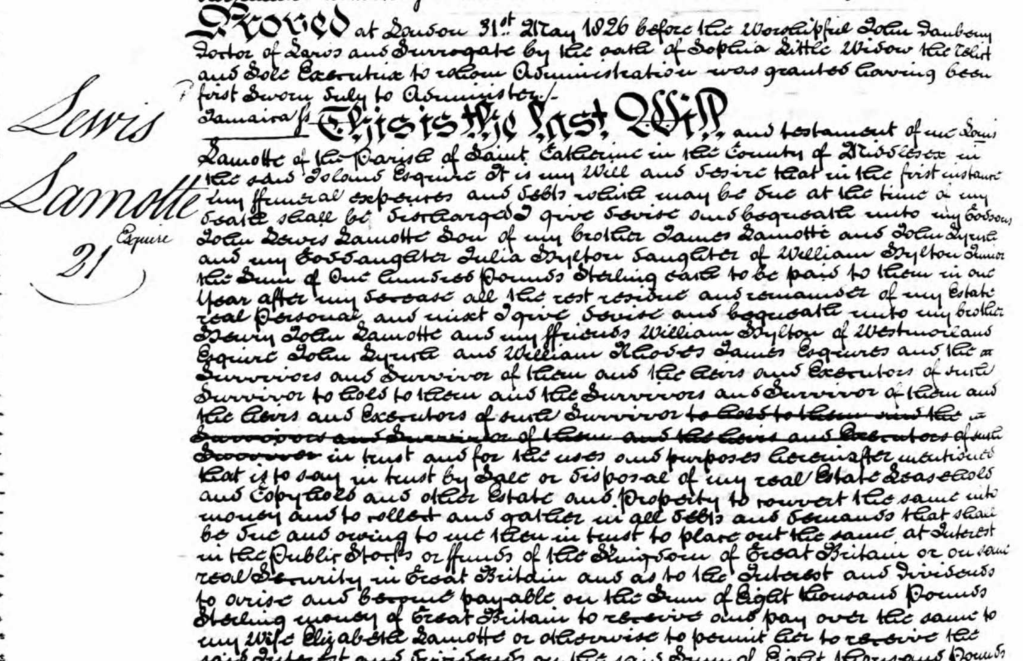
The West Indies was a place to make money but it carried enormous risks and Lewis died in 1814 at Spanish Town, Jamaica. He was 35. He left a long and detailed will.
Lewis Lamotte will – Source NA PROB 11; Piece: 1712
John Lewis Lamotte
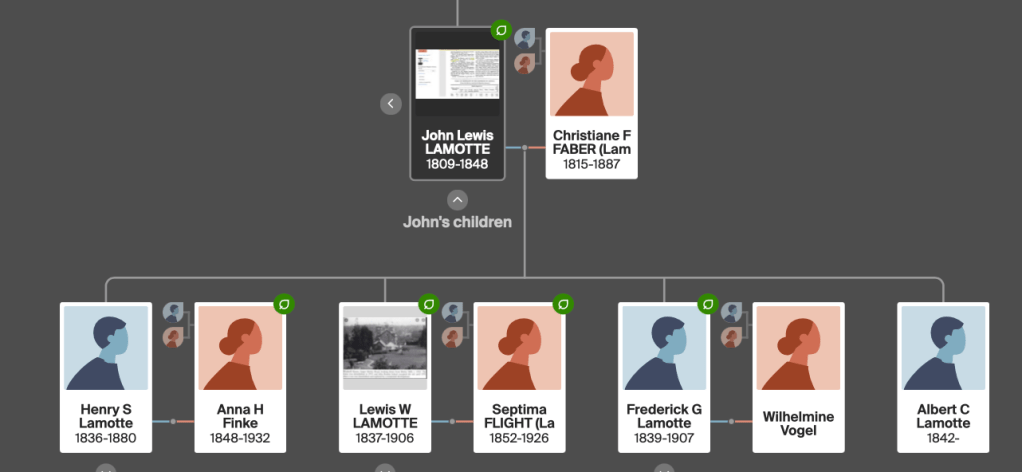
John Lewis Lamotte was just 5 when his father died in Jamaica. He was a tobacco broker and it was this that brought him to Bremen in Germany where he married Christiane Friederike Margarethe Faber sometime before 1836 when their first child was born.
John Lewis Lamotte’s tree
He and Christiane had four children:
Henry Sidney 1836-1880 married Anna Finke
Lewis William 1837-1906
Frederick George 1839-1907 married Wilhelmine Vogel
Albert Charles 1842
German records have proved to be quite impenetrable, especially as I don’t speak German!
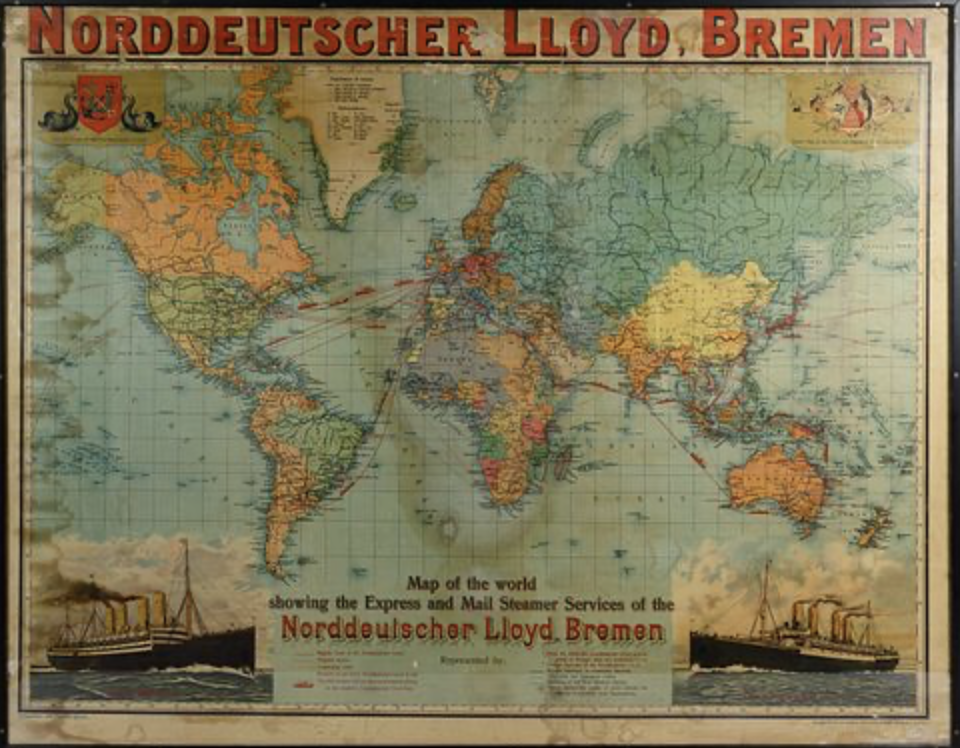
Bremen was a huge port, perfect for a tobacco broker.
John Lewis died in Germany in 1848. He was just 38. His death was listed in The Gentleman’s Magazine Volume 184-5
Lewis William Lamotte
Lewis was born in Bremen but by 1871 he was living in England. He appears on the 1871 census and is described as a tobacco broker. The same year he married Septima Flight at All Saints with St Margaret at Upper Norwood in Surrey.
Lewis Lamotte’s tree
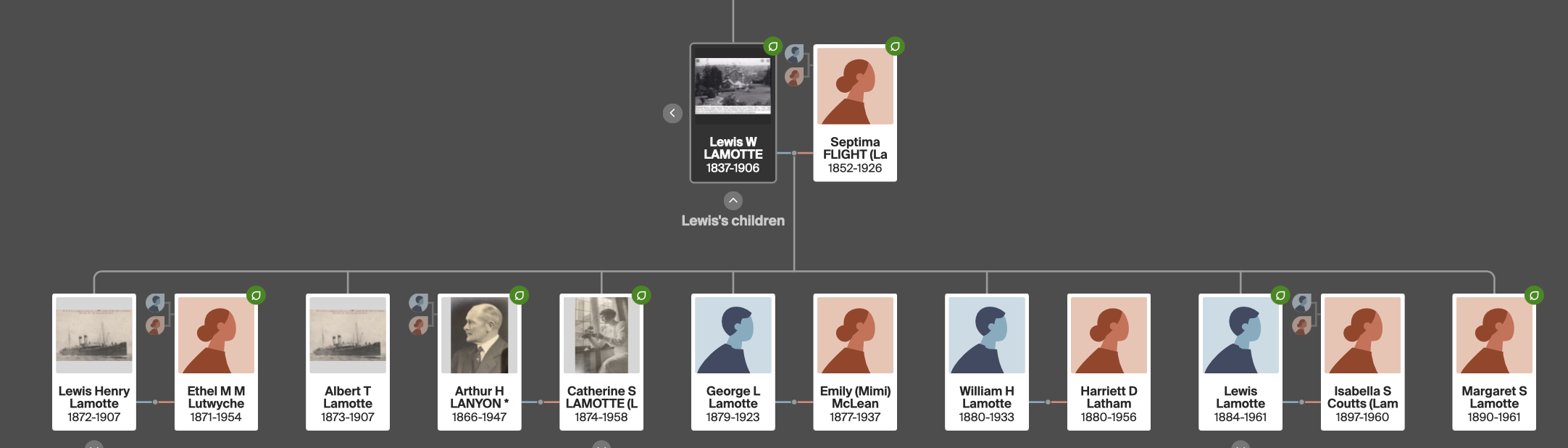
Lewis and Septima had seven children:
Lewis Henry 1872-1907 married Ethel Lutwyche
Albert Thomas 1873-1907
Catherine Septima 1874-1956 married Arthur Herbert Lanyon
George Lagier 1879-1923 married Emily McLean
William Hylton 1880-1933 married Harriett Latham
Lewis 1884-1961 married Isabella Coutts
Margaret Septima 1890-1961
To keep things interesting they named two sons Lewis!
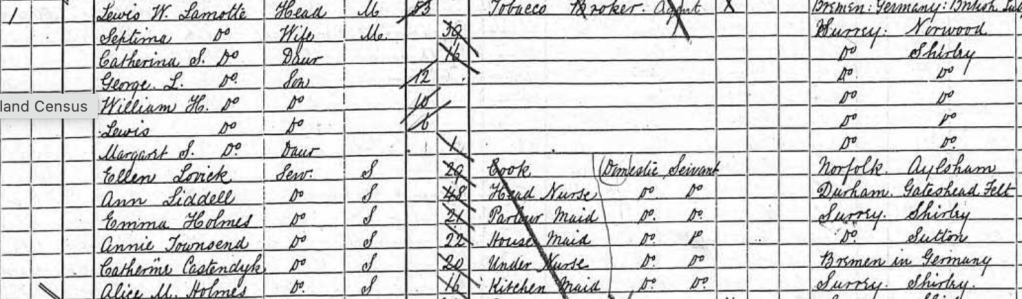
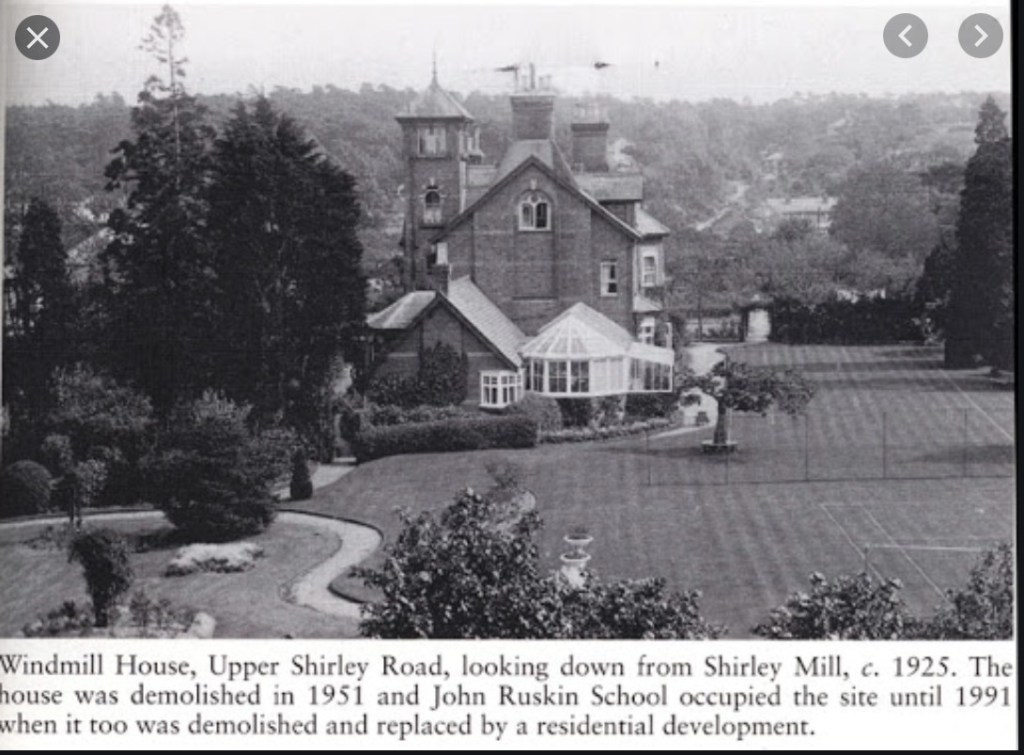
They lived at Windmill House and clearly were wealthy as the 1891 census lists them as having the following servants: cook, house nurse, parlour maid, house maid, under nurse and a kitchen maid.
1891 census
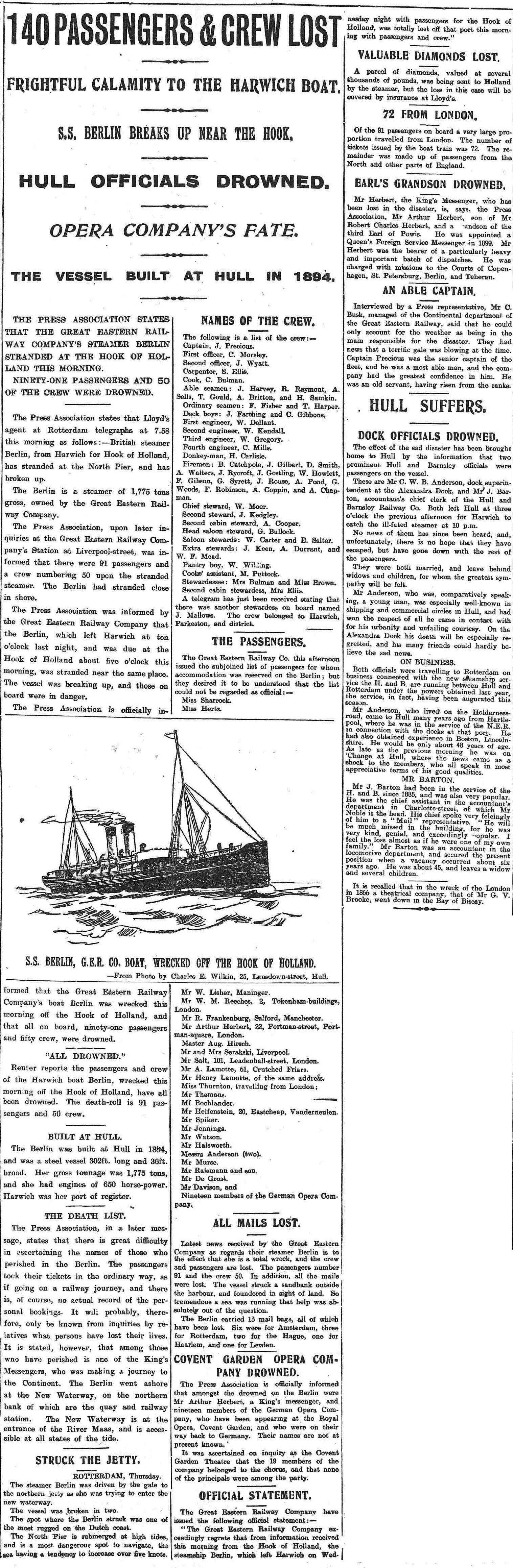
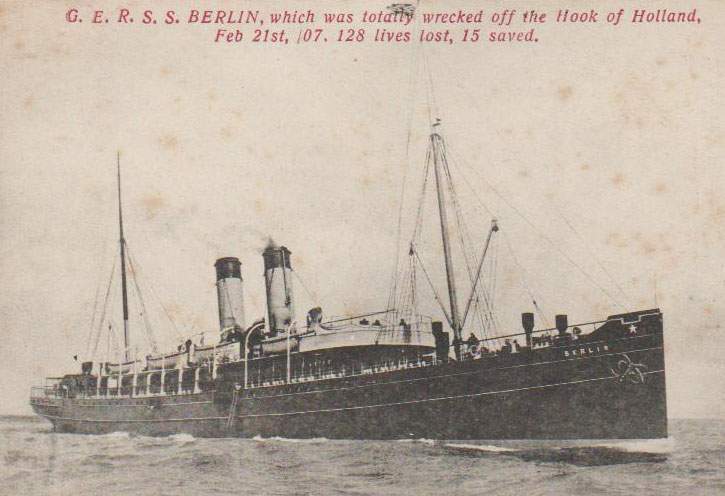
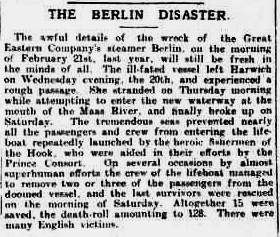
Their eldest sons Lewis and Albert were both killed on 21 Feb 1907 in a shipping disaster at the Hook of Holland. The SS Berlin sank with the loss of 140 lives. They were on their way to visit their dying uncle in Germany.
List of deceased passengers showing the Lamotte brothers
Catherine Septima Lamotte
Catherine was born in Surrey in 1874 and in 1899 she married Arthur Herbert Lanyon. You can find out more about them in the post ‘Arthur Herbert Lanyon’ in the Redruth & Croydon section. You can find out more about Catherine’s Flight ancestors on the website.
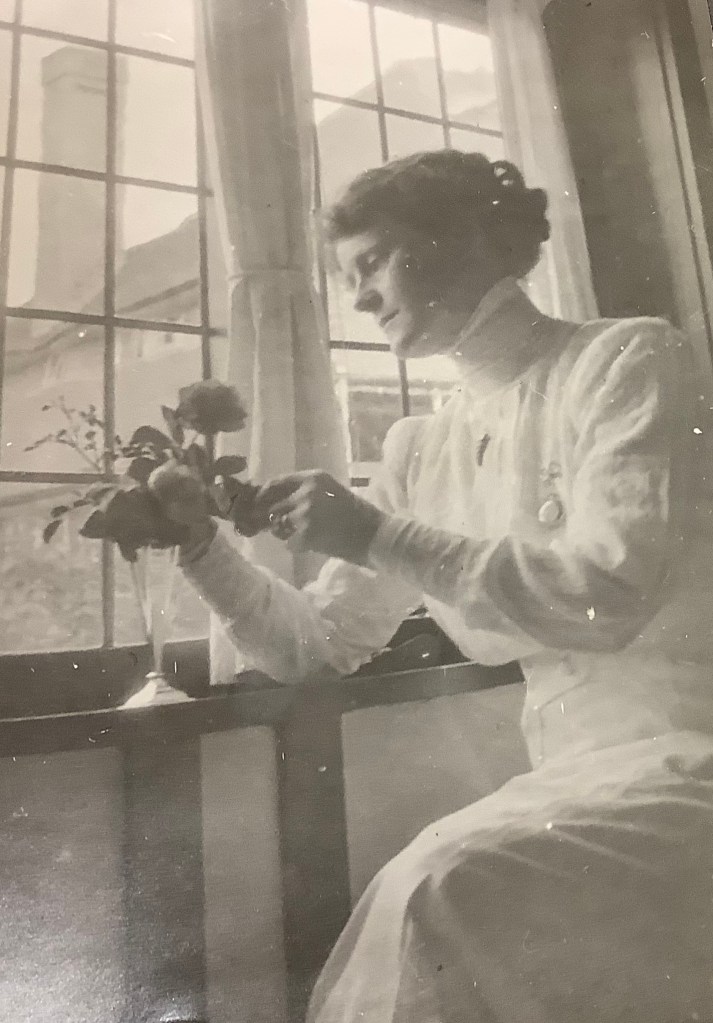
Catherine as a young woman
There is still a branch of the Lamotte family in Germany today.
You can find out more about the Dalbiac family on the really interesting website https://huguenotgirl.com
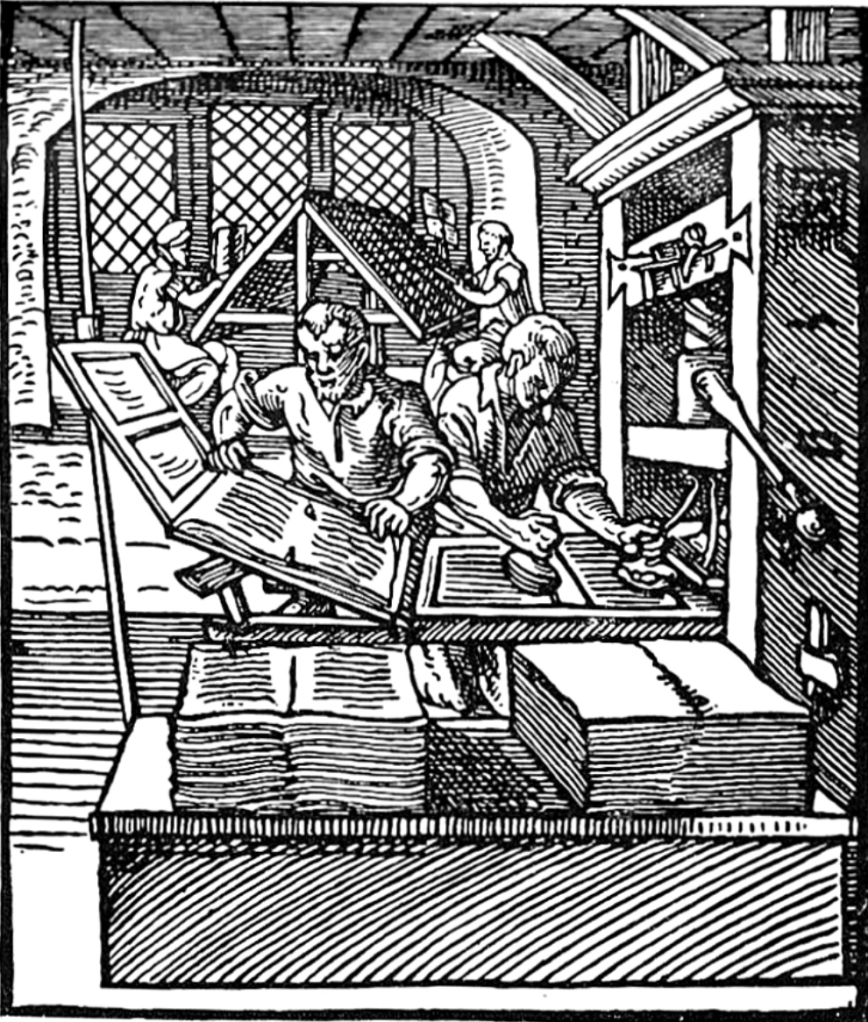
With the introduction of printing in 1476 there were attempts to standardise spelling in Britain but it wasn’t until the first dictionaries began to appear in the mid 17th century that spelling settled down. Often words were spelt the way people pronounced them. In Tudor Cornwall the name Lanyon was pronounced La-nine hence the spelling Lanine, Lanyne, Lenine. Add to that the difficulty in reading old documents and it’s easy for an ‘n’ to become an ‘m’, so other varients like Lamyne and Lamin appeared. Slight changes in pronunciation resulted in Lanion (LanIon) and Lanyon (LanYon). By the 18th century the accepted spelling became Lanyon. To further complicate things there are families called Lamin, Lemin and Lemon who are quite separate from the Lanyons.
It can be really difficult to know if a variant of the name is actually the same family or another family altogether.
When I found the record of a marriage between John Lamelyn and Johan Tregian it was difficult to know if he belonged on the Lanyon tree or not.
Henderson’s MSS gives details of this marriage in 1524.
“Thomas Lamelyn to John his son and heir in marriage with Johan daughter of Thomas Tregian for their lives Lamelyn als Gunvenowe Hole Juxte Tregony Nethercombe 16 Henry VIII”
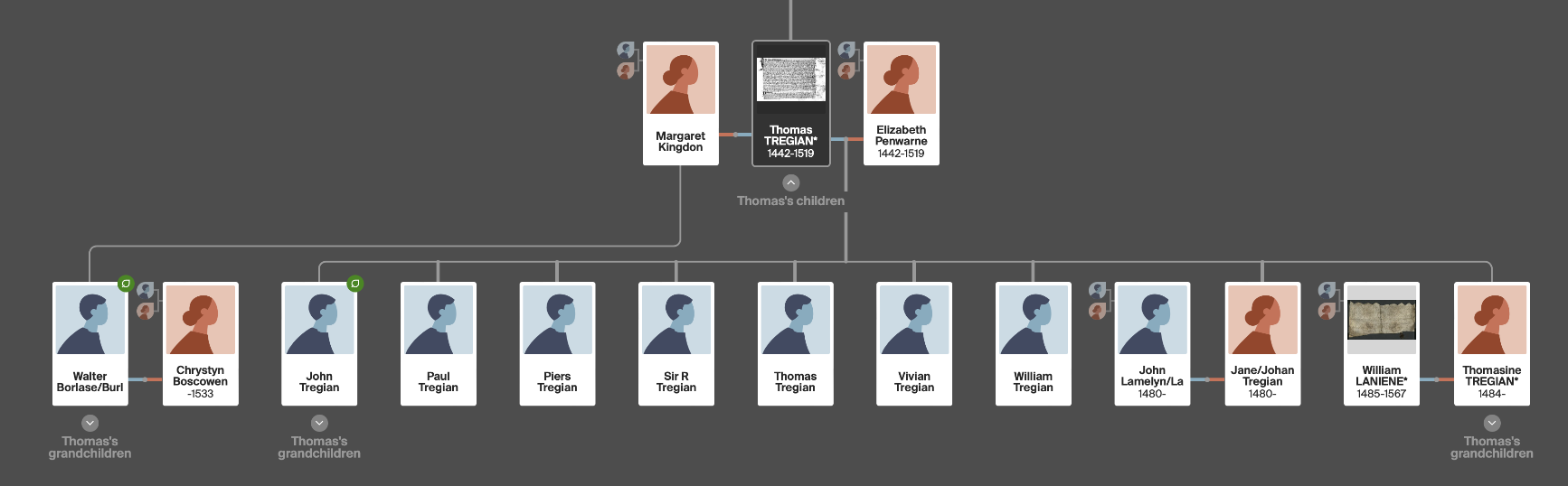
So in 1524 a John Lamelyn married Johan the daughter of Thomas Tregian. Thomas Tregian already features on the Lanyon family tree. His daughter, Thomasine, married William Laniene Esq around the beginning of the 16th century. Almost all the Lanyons I’ve found can trace their ancestry back to William and Thomasine.
William & Thomasine’s children and their spouses
We know so much about William as he was the head of the family when the first Herald’s Visitation took place in Cornwall and he submitted his tree in 1531, his eldest son Richard, did so again at the second visitation in 1573 and Richard’s grandson submitted more information in 1620 when the third and final visitation took place.
The purpose of the Herald’s Visitations was to register and regulate the coats of arms of nobility, gentry and boroughs and to record pedigrees. They are a great resource for family historians but the information they hold is not complete or always accurate. Many families concentrated on recording the details of their eldest son and heir as he would be the person who would have the right to bear arms. Some families embellished their pedigrees especially if they were new to wealth and titles.
The Visitation shows William Laniene Esq with a sister Isabel who married Thomas Trewren but William and Isabel may have had other siblings and cousins which aren’t recorded. So it is possible that Thomas Lamelyn and his son John are related.
Thomas Tregian was born about 1440 at Truro in Cornwall. He was a prosperous tin merchant and shipper and in 1512 he is recorded as owning the ship “Jesus” of Truro. He invested his profits in land and owned several manors in Cornwall. He married Elizabeth Penwarne about 1467. His second marriage was to Margaret (née Kyngdom) the widow of the historian John Borlase of Pendeen. His children were from his first marriage.
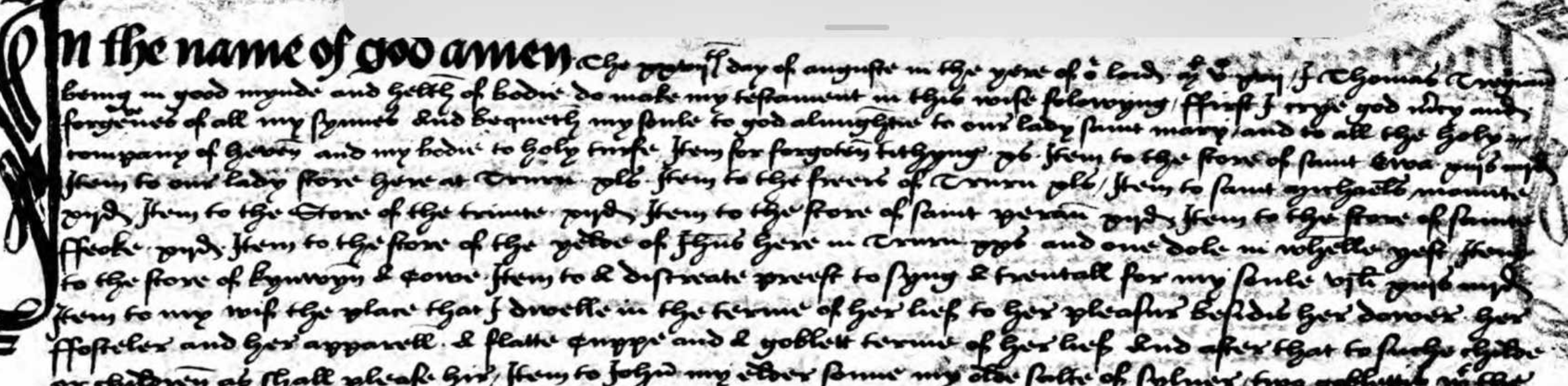
Thomas Tregian’s will exists and helps us build his tree.
PROB 11/19/375
Transcript:-
“In the name of God amen. The 27th day of Auguste in the yere of or lord 1517. I Thomas Tregian being in good mynde and helth of. bodie do make my testament in this wise folowyng. First I crye God m’cy and forgivenes of all my synnes and bequeth my soule to God Almightie to our Lady saint Mary and to all the holy company of hcven and my bodie to holy turfe. Item for forgotcn tithyng 10s. Item to the store of saint Ewa 18s. 4d. Item to our Lady store here at Truru 40s. Item to the freres of Truru 40s. Item to saint Michaels Mounte 12d. Item to the store of the Tiinite 12d. Item to the store of saint Peran 12d. Item to the store of sainte Peoke 12(3. Item to the store of the gelde of .Thus here in Truru 20s. and one dole in whelle Yest. Item to the store of Kynwyn a cowe. Item to a discreate preest to syng a trentall for my soule £6 13s 4d. Item to my wif the place that I dwelle in the terrne of her lief to her plcasur besides her dower her Hosteler [fosterlean] and her apparell a flatte cuppe and a goblett tonne of her liof and after that to sucho childe or children as shall please hir. Item to John my elder sonne my olde salte of sylver, 2 gohlettis with the cover of sylver and gilto, the best bedde the Tubull in the halle, all coi)tenors and hanging clothes bothe in the hallo and in the plor [parlour]. Item to Peers my sonne 12 qter pooos of Tynnn waying by the Kyngis beame three thousand pounde, one qter of the shyppe called the Jhus, the place that William ffornaby dwellith in Chidawe, half of my blowying house, the place that Pascowe fflotcher dwellith in, all my right in Poldisse worke and in Whelle Yeste in Kyllcvrethe downe, my best two saltes of sylver and gilte, oon dosen of spones of sylver and my best standing cuppe of sylver after his moder’s decesse 2 flatte cuppes of aylver. Item to Jane my doughtor £40 to her mariage. Item to Thomysen my doughter a m. [thousand] of tynne wayed by the Kyngis beame. Item to Sir Raynolde my sonne 40s in money and he to synge 30 masses for my soule also more a gowne of blacke furred w’ lambe and a flatte olde cuppe of sylver. Item to Benet Tregian I forgive all that he owith me before this dayo. Item to Peers Treworva a furred gowne w”‘ blake. Item to John Edwarde a coote or a gowne and all that he owith me p’donat. And if it fortune that eny of my children dye without issue that then the same parte to be divided amongeste the other that lyveth equally. And I ordeigne my wif my sonne John and my sonne Peers myn executours, they to fulfill my said wille. In witnes whereof the said Thomas wrote his testament in man’ and forme as ys above rehearsed with his owne hande.”
His will mentions his sons John, Peers and Sir Raynolde (a priest) and daughters Thomasine and Jane.
He bequeathes Thomasine “…a m. (thousand) of tynne wayed by the Kyngis beame.”
He bequeathes Jane “…my doughter £40 to her mariage.” This tells us she isn’t yet married.
The will also tells us by omission that by 1517, when it was written, that Thomas Tregian’s sons Paul, Vivian, Thomas and William must have died.
So could Thomas’ daughter Jane be the Johan that married John Lamelyn? It’s possible. The names Johan, Joan and Jane are often interchangeable at this time and sometimes it’s hard to tell if a letter is an ‘a’ or an ‘o’, although in this case the ‘a’ in Jane is quite clear when compared to the ‘o’ in Doughter.
So what other evidence is there?
Charles Henderson’s record states that John is the son and heir of Thomas Lamelyn. Is there any evidence for a family called Lamelyn at this time?
The National Archives and Kresen Kernow have the following records relating to the name ‘Lamelyn’:-
WM/217 – A Jn Lamelyn is listed as a witness at Polruan in 1399. Kresen Kernow
C/241/249/22 – A John Lamelyn is listed as a constable in 1465. NA
ART/3/12 – A Thomas Lamelyn was listed as a witness at Tywardreth. KK
C/131/102/7 – A Thomas Lamelyn gent of Lamelyan, Cornwall is listed as a debtor. NA
ME/628 – A Thomas Lamelyn Esq is listed as a witness in 1519. KK
C1/1519/74 – Motion v. Lamelyn. Rent due from the parsonage of Lanteglos which was leased to Lamelyn by prior of St John’s Bridgwater, Cornwall. NA
C1/363/39 – Spenser v. Lamelyn. 1504-1515. NA
R/1626 – Property grant to Jn Lamelyn 1508. KK
E/150/177/10 & C/142/58/13 – Inquisition Post Mortem of Thomas Lamelyn 1536-37. NA
Spenser v. Lamelyn is the most interesting. Thomas Spenser, the vicar of Lanteglos, and Thomas Lamelyn, a parishioner of Lanteglos. Spenswer complains that Lamelyn interrupted the sacrament at easter last ‘with his knyff drawen’ and seizure of oblations and tithes at Lanteglos.
So there was definitely a family calling themselves Lamelyn in Cornwall in the 15th-16th century. The Cornwall OPC database has just a handful of entries for the names Lamelyn, Lamellen, Lamellin and Lamelling.
Having started, thinking I had found another variation of the name Lanyon, I now accept that Thomas Lamelyn was from a different family. Sometimes family history leads you down all sorts of pathways and sadly sometimes they are dead ends
Family historians are lucky to find a documented legal dispute from the 14th century to help build their family tree. Ralph’s dispute with Princess Joan of Kent gives us valuable information which confirms names and relationships but it’s not the only record available about Ralph.
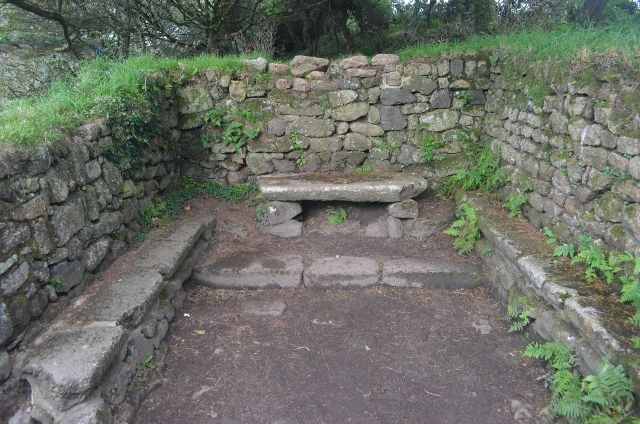
In 1390 the Bishop of Exeter granted a licence to celebrate divine service in the chapel of St Mary at Lanyen in Madron (Lysons 1817). Today the chapel is a ruin but it gives an idea of the size of Ralph’s home, the barton of Lanyon in the late 14th century.
There are also three records in the Court of Common Pleas which relate to Ralph.
CP40/561 Easter 1401. Roger Boswarneth sues Ralph Lanyeyn for a debt.
CP40/589 1408 Ralph Lanyeyn sues Luke de Pensans for detinue (the crime of wrongful detention of goods or personal possessions) for a chest of charters.
CP40/589 1408 Alice Reda sues Ralph Lanyeyn, John Cornyssh, Robert Pensans, Richard Joce (tailor), Ralph Joce, Richard Dere & David Shade for trespass.
At a time when there are no records of baptisms, marriages or burials these records prove that Ralph was still alive in 1408.
I also have a letter from Jane Veale Mitchell to Edward Augustus Bullmore dated 23 Jan 1926 which states:
‘In Rolls Office, Chancery Lane, a Radolphus Lanyon asks that Tregamynyan, then in possession of his brother-in-law de Rogers, might come to him and his descendants, because they had no children. Written in old French, date 1327.’
This throws up a query, is the date 1327 correct? Is it the same Ralph Lanyeyn? The original letter has been transcribed, could the transcriber have got it wrong? It’s possible.
We don’t know when Ralph was born but 1327 seems far too early. If Ralph is married with descendants in 1327 then he is a very great age in 1408!
We know that Ralph’s parents were John de Lynyen and Sibyl de Tregamynion. This is confirmed by the record in Calendar Close Rolls CCR Ric II Vol 30 p.71.
We know that John de Lynyen’s father was David de Kylminawis as CCR Hen IV Vol 4 states that ‘David de Kylmynawis to John his firstborn son and heir, and to the heirs of his body by Sibyl daughter of Jocelin de Tregamynion…’
So where does the Radolphus Lanyon mentioned in Jane’s letter fit in? I haven’t found the original record she mentions but I think the date 1327 must be wrong and that the Radolphus Lanyon she mentions is Ralph Lanyeyn, the son of John & Sibyl. This then gives us the name of his brother-in-law, de Rogers, and leaves us wondering why the property Tregamynion at Morvah should be in his possession?
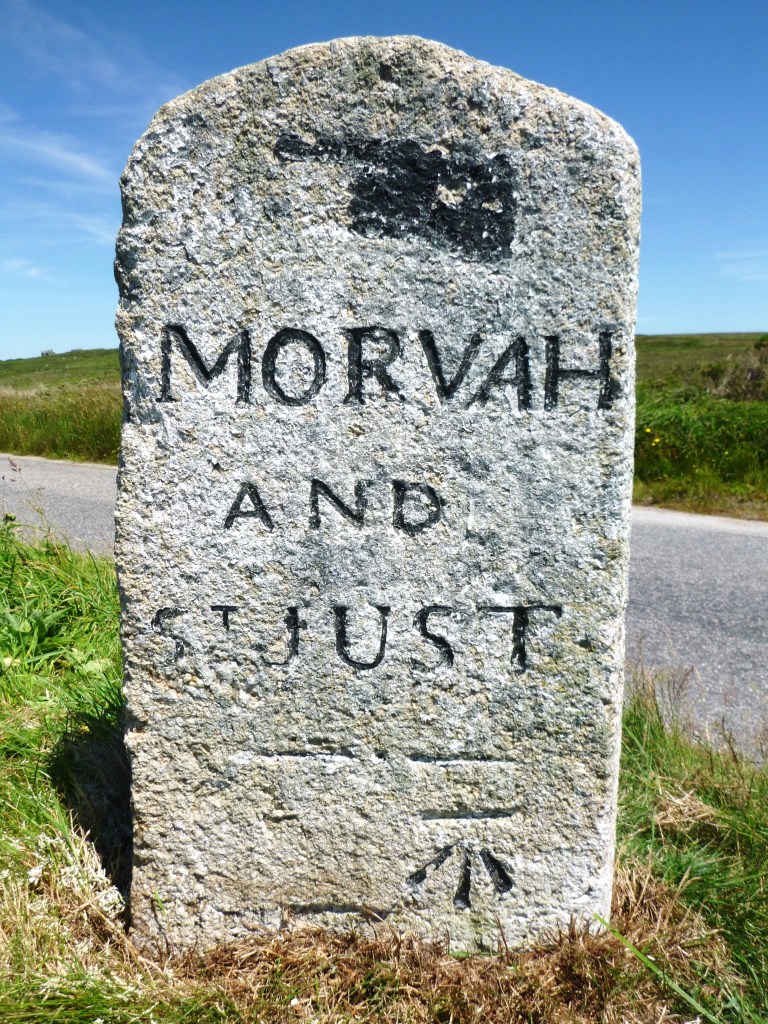
Rosy Hanns / Old Guide Stone on Bosullow Common, south east of Morvah
And that’s the fun of researching your family history, a few records discovered and a whole load of new queries to puzzle over!
Having just watched the men’s tennis final I’m going to add a post about our slightly tenuous family connection to Wimbledon.
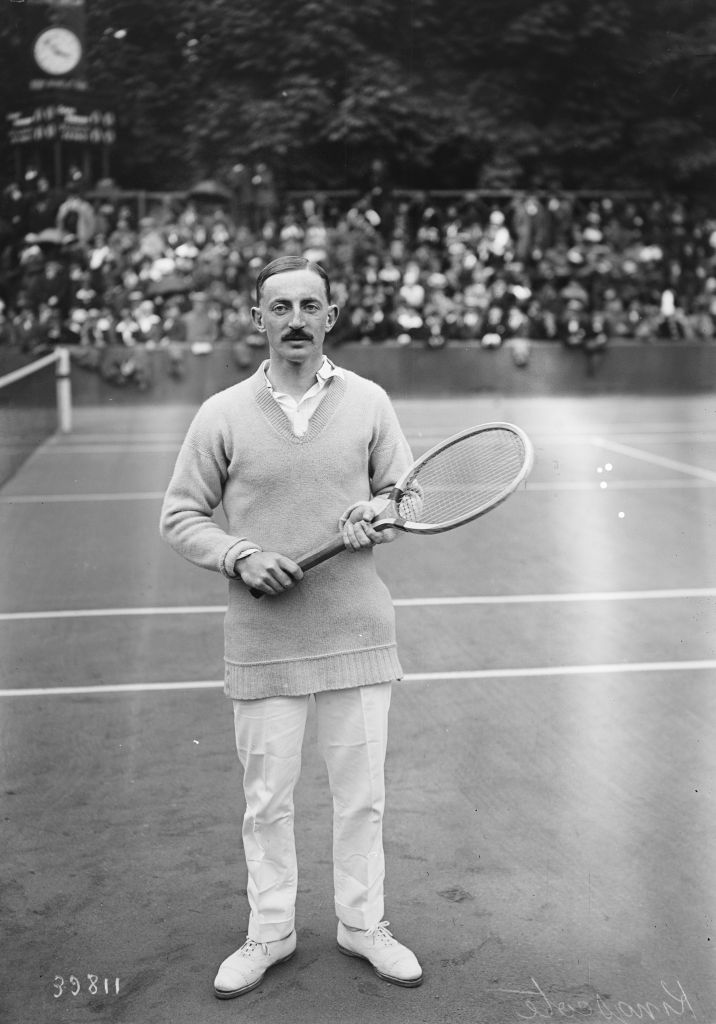
Algernon Robert Fitzhardinge Kingscote was born on the 3 Dec 1888 at Bangalore in India. The son of Howard and Adeline Kingscote. Adeline was the famous author, Lucas Cleeve.
He joined the army, 107th Company Royal Garrison Artillery and during World War I he fought at the First Battle of the Aisne earning the rank of Lieutenant-Colonel and the award of the Military Cross.
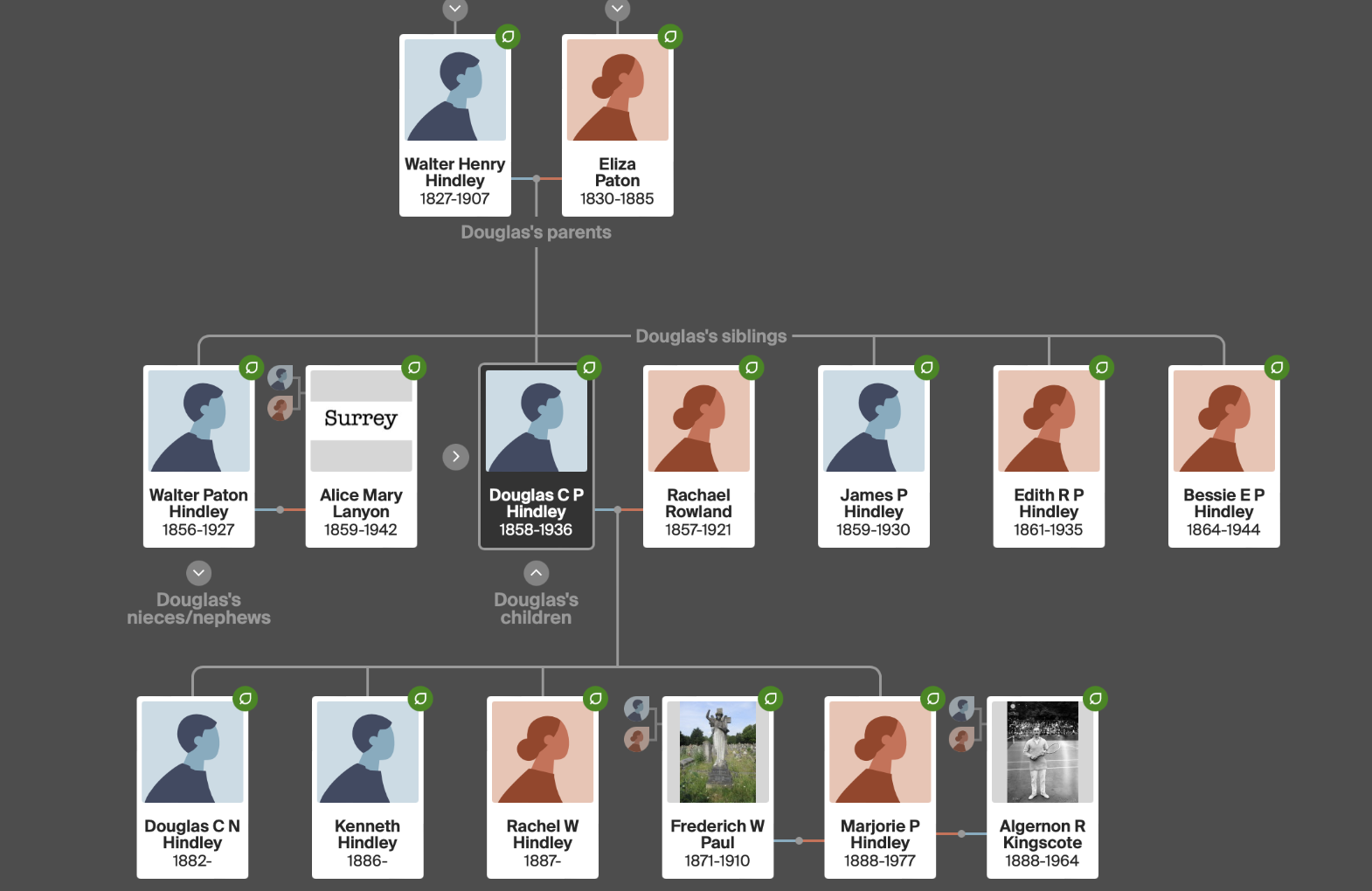
On 9 Sep 1919 (9/9/1919) he married Marjorie Paton Hindley in London. Marjorie was the daughter of Douglas and Rachael Hindley. Douglas was the brother of Walter Paton Hindley who married Alice Mary Lanyon.
Alice Mary Lanyon was the daughter of John Charles Lanyon and Jane Stacey Bennett. She was Marjorie Paton Hindley’s aunt and also my husband’s great grand aunt. (I said it was tenuous!)
So having established a tenuous connection to Algernon Kingscote what is his connection to Wimbledon?
Algernon Kingscote learned playing tennis in Switzerland, where he won numerous championships. He was crowned Swiss champion in 1908 and champion of Bengal in 1913. At Wimbledon in 1919, he lost in the all comers final. He won the singles title at the Australasian Championship in 1919. He reached the men’s doubles final at Wimbledon in 1920. In 1921 Kingscote was a runner-up at the Monte Carlo Championships. He represented Great Britain in the Davis Cup seven times between 1919 and 1924.
Algernon Kingscote – Sport & General Press Agency Ltd., Public domain, via Wikimedia Commons
At the 1922 Wimbledon Championship he established the routine of bowing to the Royal Box, a tradition which lasted until 2003.
Algernon Kingscote in 1914 – Agence Rol, Public domain, via Wikimedia Commons
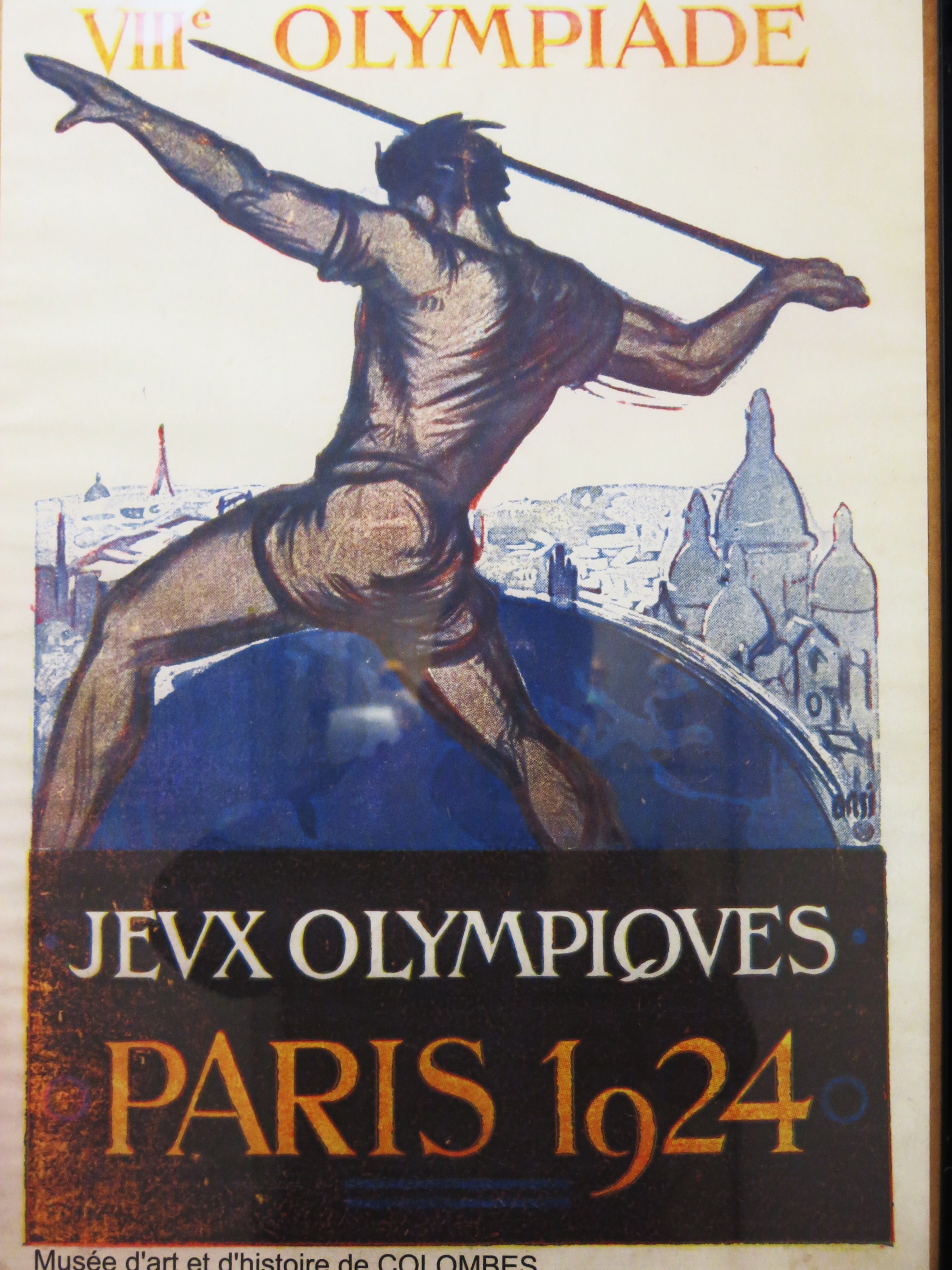
He also competed at the Summer Olympics in Paris in 1924.
Tangopaso, Public domain, via Wikimedia Commons
At the outset of the Second World War he was sent back into action again at the age of 52. He died on 21 Dec 1964 at Woking in Surrey.
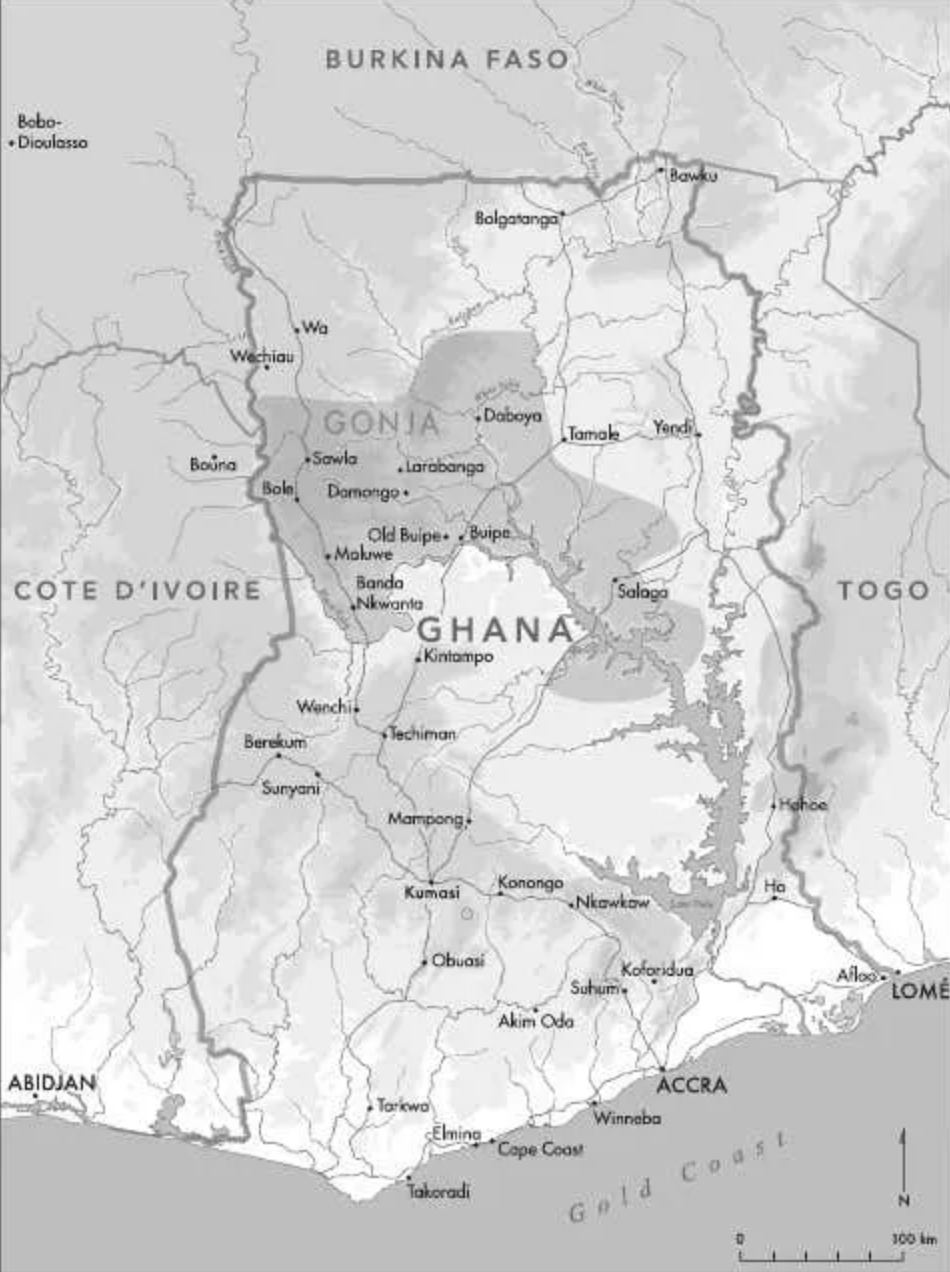
The Lanyons have travelled all over the world and there are branches of the family on most continents. A Lanyon is even listed as a ruler of the Northern State of Gonja in Ghana!
Gonja was created by Mande Conquerors around the beginning of the 17th century. According to Wikipedia the capital is Yagbum.
Map of Ghana showing Gonja region.
The first ruler of Gonja was Sumalia Ndewura Jakpa, a slave trader.
Precolonial Gonja society was stratified into castes, with a ruling class, a Muslim trader class, an animist commoner class, and a slave class. Its economy depended largely on trade in slaves from Central Africa and kola nuts, particularly through the market town of Salaga, sometimes called the “Timbuktu of the South.”
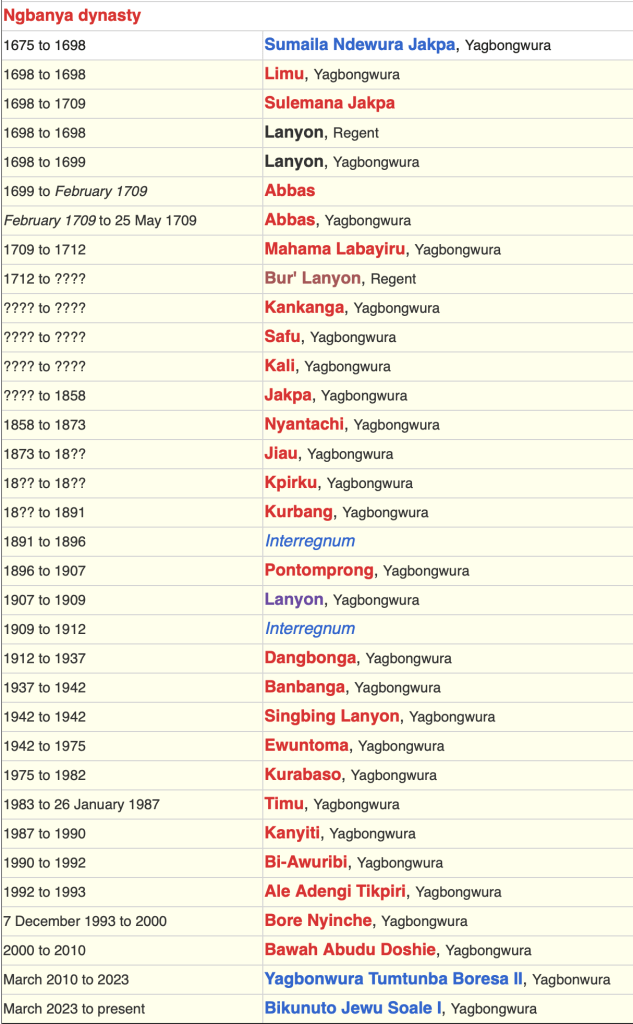
Wikipedia gives a list of rulers of Gonja.
Apparently between 1698 and 1699 Lanyon was regent and Yagbongwura (paramount ruler). I suspect the name Lanyon may have been used to fill a gap in the list!
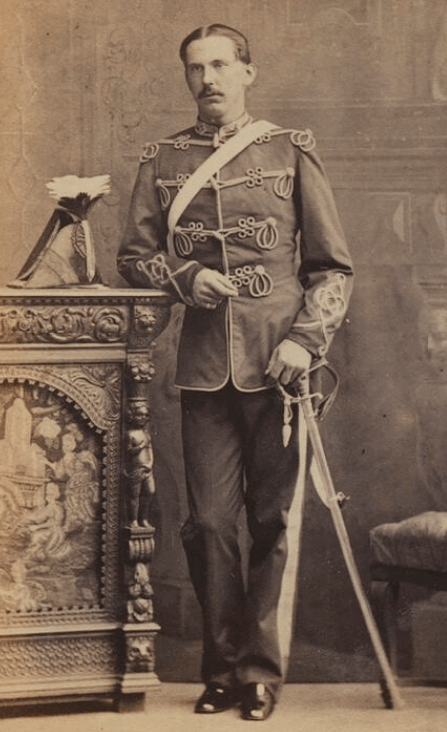
1907 – 1909 Lanyon was again listed as Yagbongwura. Curiously Wikipedia identifies this Lanyon as Colonel SirWilliam Owen Lanyon, who died of cancer in New York in 1887.
William was born in Ireland in 1842 the son of Sir Charles Lanyon and his wife Elizabeth Owen. He was a British colonial administrator and army officer.
William Owen Lanyon – Wikimedia Commons
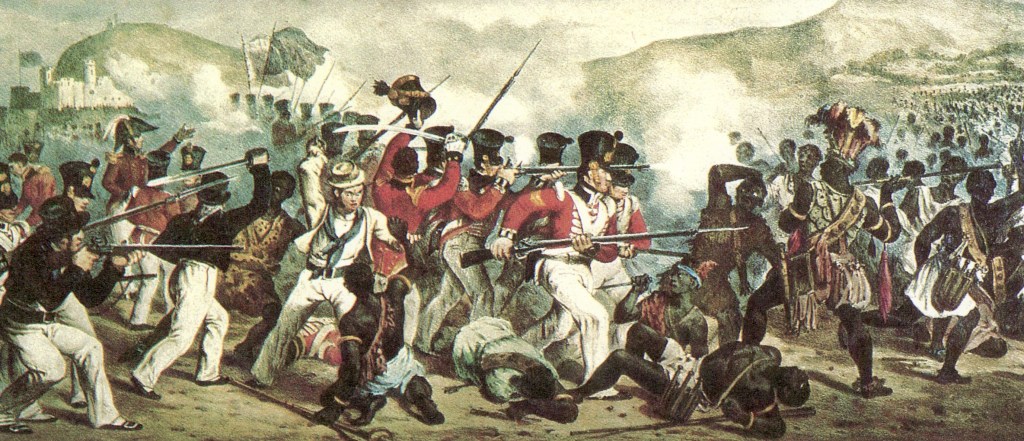
He was invalided in the Ashanti campaign which may be his connection to Gonja.
The Anglo-Ashanti wars lasted 70 years finally ending in 1900. The wars established the British Gold Coast and the country became a British protectorate.
“Defeat of the Ashantees, by the British forces under the command of Coll. Sutherland, July 11th 1824.” Wikimedia Commons
It’s not clear how William Owen Lanyon went from fighting in the Ashanti wars to being listed as a ruler of Gonja twenty years after his death but it makes life interesting for family historians!
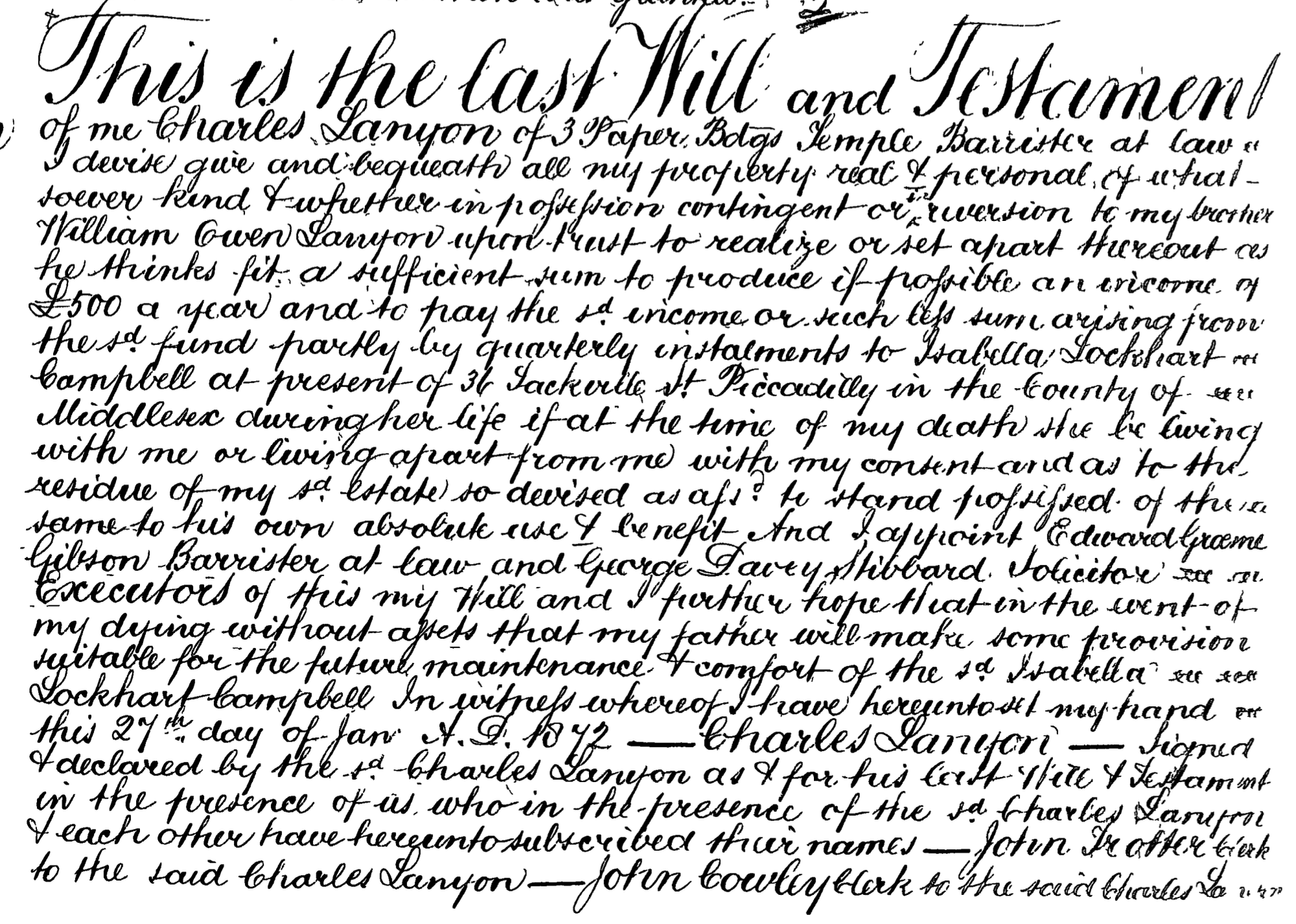
During the winter of 2024 I decided to transcribe all the old Lanyon wills I could find. Most were fairly straightforward but one did catch my attention, the will of Charles Mortimer Lanyon who died in 1877. He left a sizeable bequest to Isabella Lockhart Campbell “if at the time of my death she be living with me or living apart from me with my consent…”
Curiosity piqued I started digging to find out more!
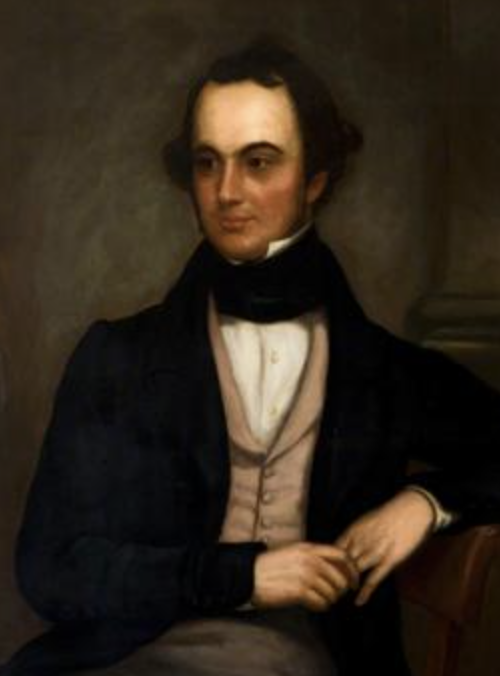
Charles Mortimer Lanyon was born in Belfast on 23 Aug 1840 the son of Charles Mortimer Lanyon and Elizabeth Helen Owen. His father was the famous Irish architect who built a number of well known buildings. He was later knighted and became Mayor of Belfast.
Sir Charles Mortimer Lanyon – Architect
Charles was the third child of Charles and Elizabeth. He trained to be a barrister. He never married and died on 27 Feb 1877 at the age of 37. He was just a name on the Lanyon tree until I read his will and set out to find out more about Isabella.
The name Isabella Campbell is very common, especially in Scotland, and the search for information was long and at times frustrating and whilst searching often involves working backwards I will retell the story chronologically.
Isabella Campbell was born Isabella Jones (an even more common name!) on 9 Dec 1847 in the village of Pontesford in Shropshire. Being so close to the Welsh border they weren’t the only Jones family in the area.
Her father was Richard Jones, a lawyer, and her mother was Jane Lockhart Mills. Isabella was the second of seven children born to the couple. I found them on the 1851 census for Pontesbury, Isabella was aged 4. By the 1861 census Isabella was missing. At the age of 14 she could have been staying with relatives on census night, away at school or possibly even working, although that seemed unlikely as her father was a lawyer and probably financially secure.
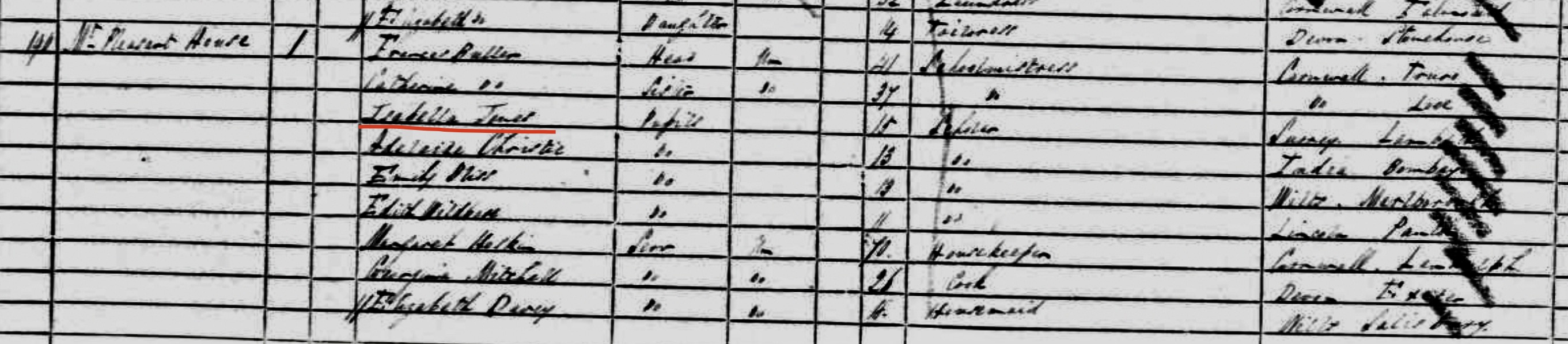
I couldn’t find a single Isabella Jones born in 1847 in Pontesbury on the 1861 census. The most likely candidate I found was an Isabella Jones, born abt. 1846 in Lambeth, Surrey and at school in Plymouth, Devon.
Screenshot
Plymouth seemed the most likely place in view of what happened next. On 15 Feb 1865 Isabella gave birth to a daughter, Florence Lockhart Campbell, at 4 Buckland Street, Plymouth. Isabella was just 18 years of age.
Florence’s birth record names her mother as Isabella Campbell formerly Lockhart (no mention of the name Jones) and names the father – Edward Campbell, a surgeon. I did search before 1865 for a marriage, without success.
I searched for Isabella on the 1871 census. I found her and Florence living with two servants, a mother and daughter, both called Sarah Cowley. Isabella’s occupation is listed as ‘chambers’. Is this a reference to Charles Lanyon who is a barrister?
Screenshot
Isabella is described as a ‘wife’ but I could find no trace of a marriage before 1871.
On 27 Jan 1872 Charles Mortimer Lanyon made his will and named Isabella so they must have been in a relationship before that date.
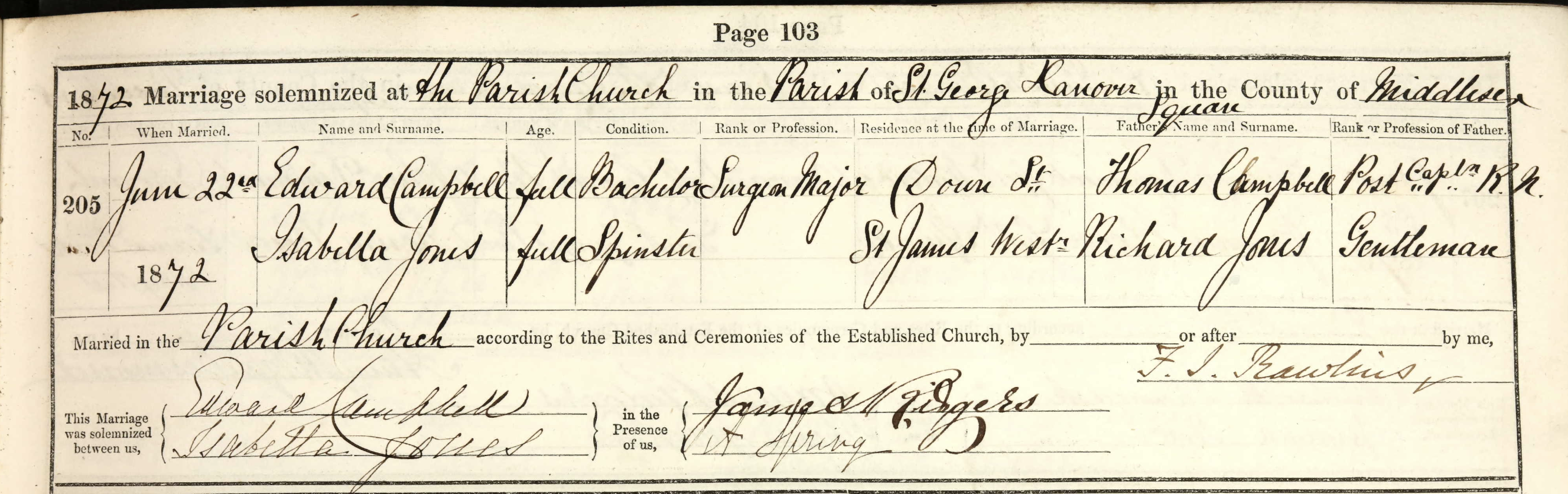
Then on 22 June 1872 Isabella finally got married. Not to bachelor Charles Lanyon but to Edward Campbell!
Edward Campbell was a surgeon major and a little research quickly established that he had served in the Bengal Army and was born in 1815, making him 32 years older than Isabella!
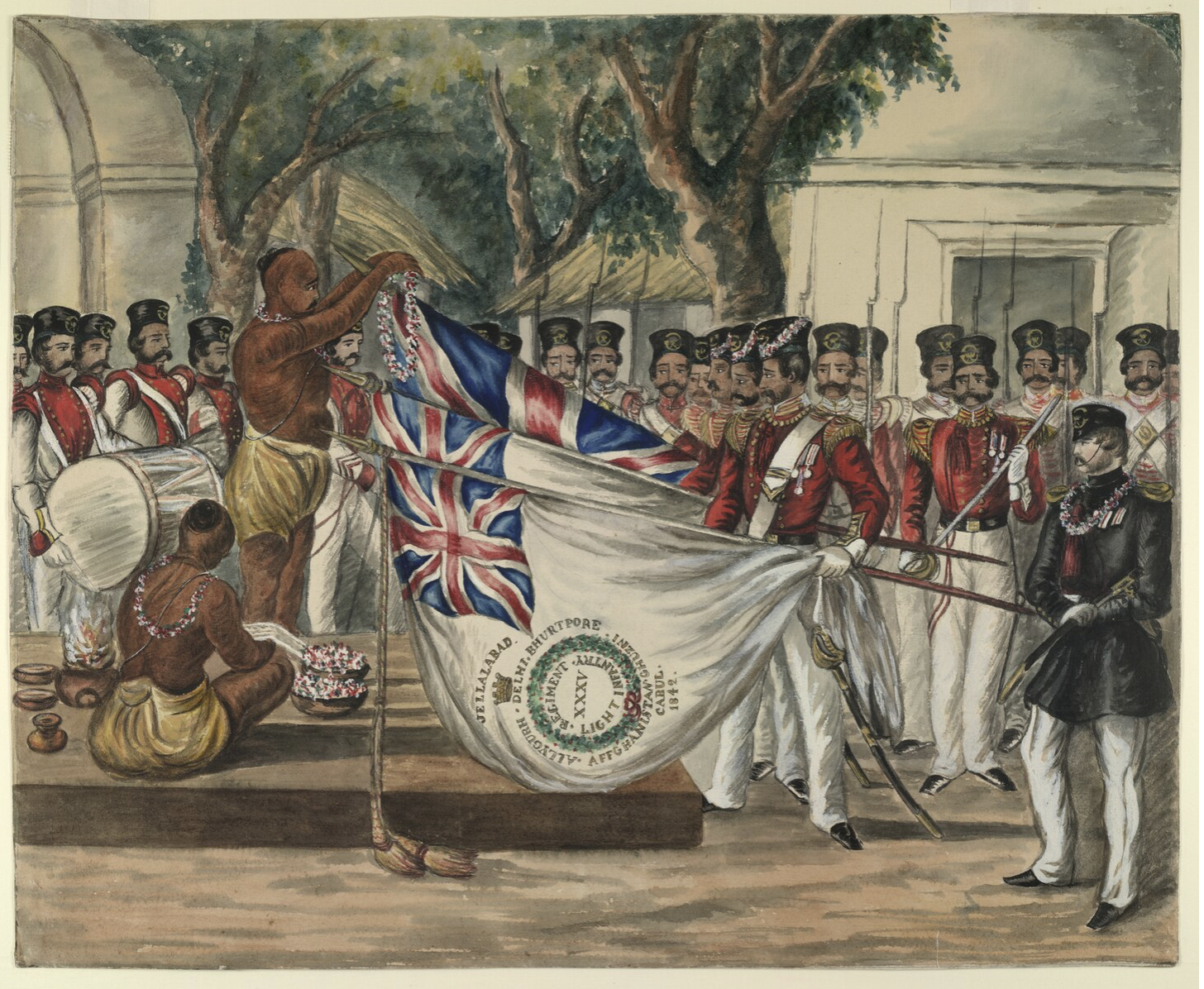
Edward was the son of Thomas Campbell a Captain in the Royal Navy and his wife Phoebe. Edward was baptised at St Martin by Looe in Cornwall on 8 Apr 1815. He was an MRCS (member of the Royal College of Surgeons) by 1837 and served in the following wars:-
Afghanistan 1840-42 – Storming of Istalif
Attended the wounded during the retreat from Kabul
Gwalior War 1843-44
First Sikh War 1845-46
Crimean War 1855
Santhal Rebellion 1855
Hindu priest garlanding the flags of the 35th Bengal Light Infantry (c.1847) – British Museum – Wikimedia Commons
By 1864 Edward had retired from the army and returned to England where he met Isabella.
On 4 Jan 1876 Charles Lanyon wrote a codicil to his will. He reduced the bequest to Isabella from £500 to £300 a year as he had settled some money on her whilst he was still alive and he appointed his brother William Owen Lanyon his sole executor.
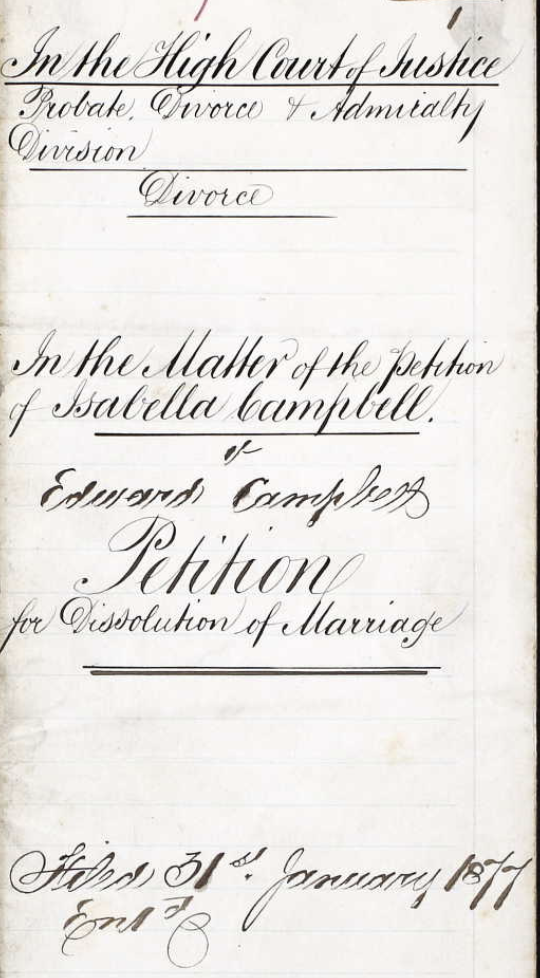
The next time they appear in the records is on 31 Jan 1877 when Isabella filed for divorce from Edward.
Isabella’s petition alleged that in September 1874 Edward had deserted her and since December 1873 he had committed adultery numerous times with various unnamed women in both London and Plymouth. And that on the 25th and 26th of January 1877 he had committed adultery with an unnamed woman at the Norfolk Square Hotel in Paddington. Isabella also alleged that there were no children from this marriage!
Was she divorcing Edward so she could marry Charles? If so she was too late.
Less than one month later Charles was dead.
He suffered from a weak dilated heart and had developed painful inflammation of his collar bone, he was just 37 years old.
Charles’ will was proved on 26 May 1877 and probate was granted to William Owen Lanyon’s attorneys as he was in South Africa. Then nothing happened. The grant of probate ceased and expired.
We next find Isabella and Florence on the 1881 census. Florence was living with her ‘father’ Edward Campbell in Devon (helpfully her name was transcribed as Kormcoh Campbell! Nothing is ever simple in genealogy) and Isabella was a visitor at Clifton in Bristol. She is described as ‘wife of Dr Campbell’.
Screenshot
On 5 Aug 1887 probate of William’s will was finally granted to Sir William Owen Lanyon. We don’t know if William ever paid out the bequest to Isabella.
Isabella died on 3 Dec 1888 at 74 Bishop’s Road, Paddington in London. Her ‘husband’ Edward was present. She too was suffering from heart problems and collapsed. She was just 41.
Edward may have been 32 years older than Isabella but he outlived her and died on 16 Jan 1890.
We could of course leave the story there but I wanted to know what happened to Florence and consequently found myself disappearing down a genealogical rabbit hole!
Florence’s Story
On 8 Aug 1889 Florence married Willington Augustus David Shelton (now that’s the sort of name genealogists love!) Willington was of Irish heritage and I quickly found an obituary for him in the Limerick Archives. They also had a photo of him.
He had a distinguished military career and became a Lieutenant Colonel. He served in India, Ireland and South Africa during the Boer war and was at the siege of Ladysmith in 1900. He was mentioned in dispatches and awarded the DSO.
Perhaps of more interest to family historians was the mention of three wives! His first marriage was to Mary Bridget Goodlake on 17 Jan 1877. He filed for divorce on 25th May 1878 on the grounds of her adultery with Hermon Samler. On 4 Oct 1879 Mary married John Hermon Samler.
Just a year later, on 28 Oct 1880 Mary filed for divorce on the grounds of John’s cruelty (she alleged he was intoxicated and would pinch and kick her) and he counter sued on the grounds of her adultery! The divorce petition is some 64 pages long and they weren’t granted a decree absolute until 1886 and during that time she gave birth to two daughters who were both given the surname Samler!
On 6 Jan 1887 Mary married for a third time to William Middleton Power. She lived to the grand old age of 93!
Willington’s second marriage was to Victoria Chancellor in 1886. Victoria was ten years older than Willington and had been married twice before. Her first marriage was to John Atcheler who was 47 years older than her! Victoria’s father was a coach maker and John Atcheler was a horse dealer. John died in 1867 at the age of 75 and the same year she married for a second time to George Bury a GP who was 30 years older than her! George died in 1886 and that same year she married Willington.
Victoria died on 1 Jan 1889.
Victoria Chancellor
Willington waited eight months and then married Florence on 8 Aug 1889. They had two children but Florence died of scarlet fever at the London Fever hospital on 18 Jun 1905 aged just 40.
Whilst this starts off as a post about Charles Lanyon it develops into a post about marriage, adultery and divorce in the Victorian era.
Sometimes when researching family history you find a tiny story which really has to be retold.
This is the story of William Henry Lanyon’s ‘Difficult Journey.’
William Henry was the son of Richard Lanyon and Susan Tucker of Acton Castle. He was the eldest son born in 1825 and appears to have been quite an unusual man. Although he was married and had a large family he chose to live apart from them.
He was a gunpowder manufacturer and merchant and evidently needed to travel to London on business.
The Royal Cornwall Gazette reports that on 24 June 1869 William contacted Mrs Dobb from the Royal Hotel and ordered a bus to call at his residence at Strangways Terrace in Truro to take him to the train station. Unfortunately his booking was forgotten, the omnibus didn’t call and he missed his train.
William then did something that many modern rail travellers wish they could do….he ordered a special train to be got ready which took him to Bristol to catch the train up to London! The Victorian equivalent of an Uber!
The cost of this special run was £68 and William planned to claim that from the landlady of the Royal Hotel, Mrs Dobb, who had taken the original booking.























 The Lanyons