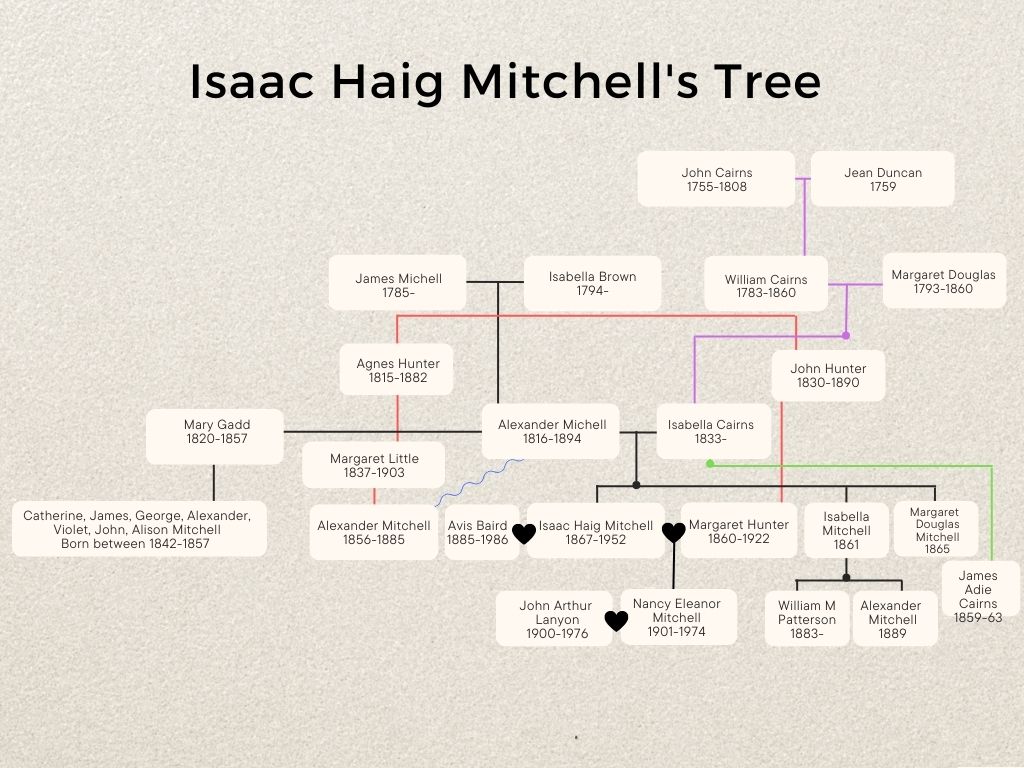
Nancy Eleanor Mitchell (1901-74) married John Arthur Lanyon. Nancy was the only daughter of Isaac Haig Mitchell and Margaret Hunter. Margaret’s story is told in the post ‘DNA Detective’, this is the story of Isaac’s family.
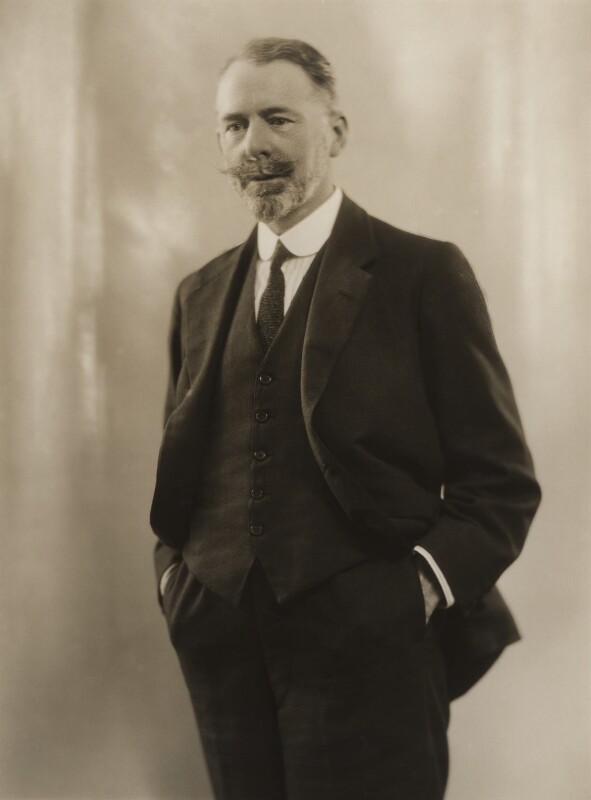
Isaac Haig Mitchell was a mechanical engineer who became a trade unionist. You can read about him on Wikipedia and see his portrait at the National Portrait Gallery in London.
Isaac was named after an uncle also called Isaac Haig Mitchell who was born in 1831. I eventually tracked him down to New York, America where he was working as a clerk and married to Sarah. He died of arthritis chronic inflammation of the joints aged just 36 in 1868, just a year after his nephew Isaac was born.
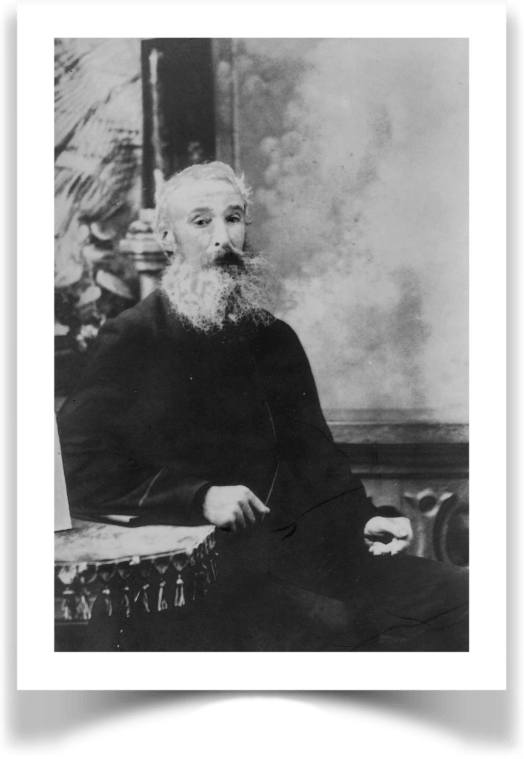
Isaac’s father was Alexander Mitchell 1816-1894 he was born in Eccles and lived all his life in the borders area, dying in Hawick in 1894.
Alexander Mitchell 1816-1894
He was a wool dyer and scourer (scouring is washing the wool to remove all the dirt and grease). Wool was a big industry in this area and many people worked from home, spinning and weaving. Hawick was known for its tweed and cashmere industries.
Alexander’s first wife was Mary Gadd from Leicestershire. They had 7 children together but sadly Mary died of puerperal fever aged 37, five days after giving birth to her seventh child. Baby Alison also died. Alexander was now a widower with six young children to care for.
Alexander may also be the father of Mary Little’s illegitimate son Alexander Mitchell who was born in 1856 and grew up to be a dyer and scourer. (Mary Little was the niece of John Hunter who was the father of Margaret Hunter who married Isaac Haig Mitchell and this may be how the two families knew each other.)
In 1860 Alexander married Isabella Cairns age 27 and the mother of an illegitimate son born in 1859, James Adie Cairns. They were both living at the same address when they married so perhaps Alexander was the father of her child although he had another son named James from his first marriage who was still alive in 1861 so it seems unlikely.
Isabella & Alexander had three children: Isabella, Margaret Douglas & Isaac Haig. Alexander is described as the step father of James Adie Cairns who sadly died age 4 of Phthisis Abdominalis (abdominal tuberculosis). Sometime before 1881 they adopted a child, John Murray born 1871, the son of Elizabeth Murray. Elizabeth may be a relative or a friend. In 1871, aged 23 she was admitted to Roxburgh Poorhouse as she was a pauper, pregnant and unmarried. Ending up in the poorhouse usually meant the woman’s family has disowned her and thrown her out.
By 1891 John Murray was no longer with the family, I couldn’t find a record of his death but did locate a record that showed a John Murray joining the Kings Own Scottish Borderers Militia in 1890. After that there are too many John Murrays to identify what happened to him.
The 1891 census shows that Alexander and Isabella had two grandsons living with them: William Paterson and Alexander Brown Mitchell. These are both the illegitimate sons of Isaac’s older sister Isabella. Isabella was a power loom weaver and as she was able to support herself financially and had support from her family she didn’t end up in the poorhouse.
William’s father is named as William Paterson a solicitor’s clerk. William (junior) changed his name to Mitchell from Paterson. This William Mitchell was staying with Isaac in London in 1901 when Nancy Eleanor was born.
Isabella Cairns is descended from the Cairns family in Yetholm Roxburgh. Yetholm is the gypsy capital of Scotland and most of the families in this small village were descended from or intermarried with the gypsy community.
Isabella’s mother was Margaret Douglas and the Douglas family were a well known gypsy family.
Walter Baxter / Kirk Yetholm Gypsy stone inscription
Unlike his peers Isaac stayed on at school and did an engineering apprenticeship. On the 1891 census he was boarding at Newcastle Upon Tyne where he joined the Amalgamated Society of Engineers. In 1892 he moved to New York and found work as a millwright and joined the Socialist Labour Party of America. In 1894 he moved back to Galashiels in Scotland and founded a branch of the Independent Labour Party. He moved to Glasgow where he was the ASE’s delegate on the TUC. In 1899 he became the first general secretary of the General Federation of Trade Unions.
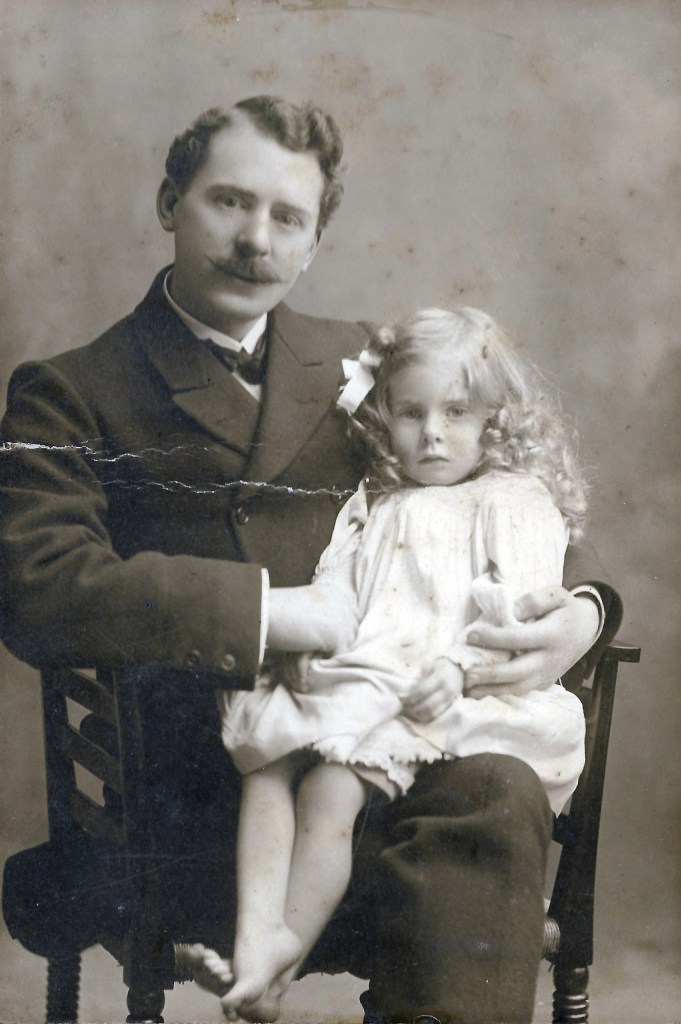
In 1899 he also married Margaret Hunter and in 1901 their daughter Nancy Eleanor was born.
Isaac & Nancy
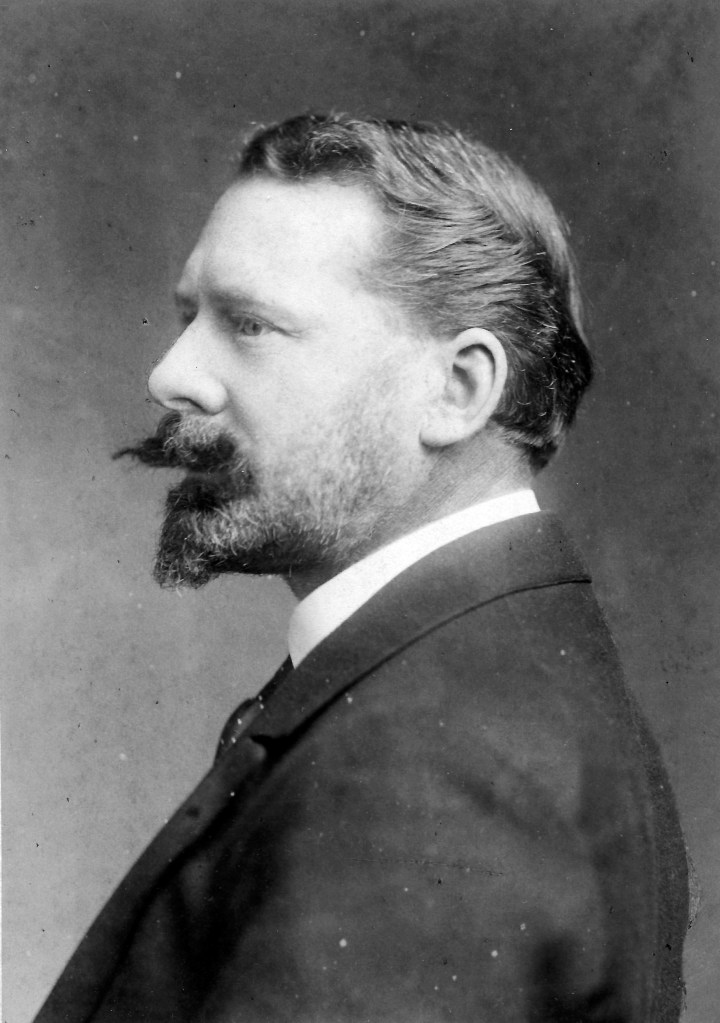
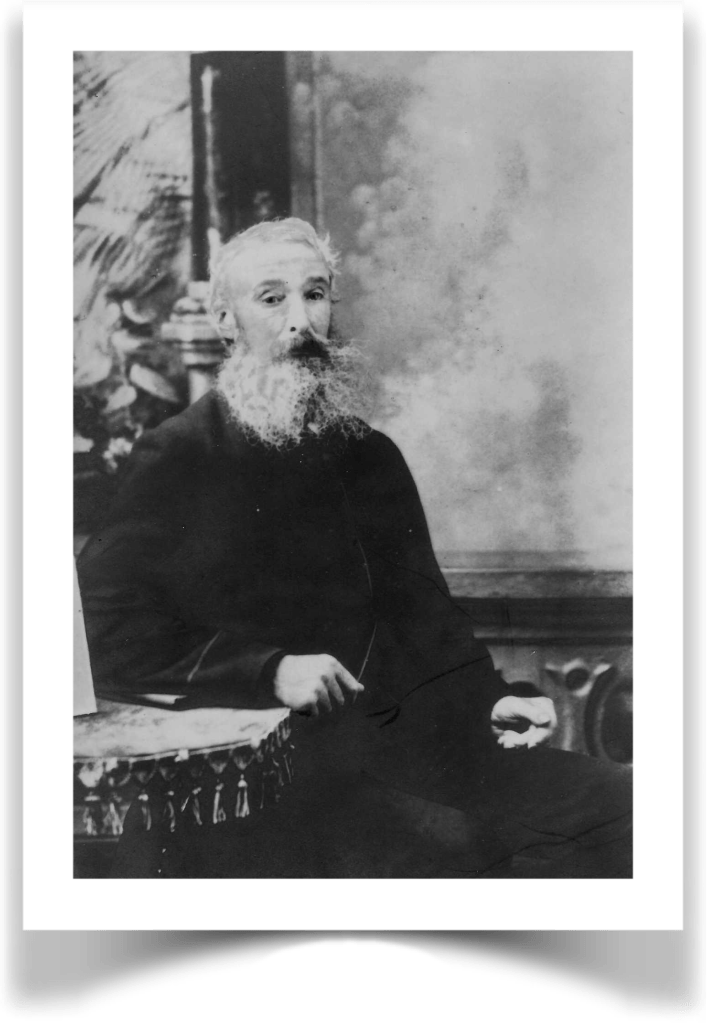
They moved to London and he was elected as a Progressive Party alderman on London City Council. In 1907 he accepted an offer to work for the Board of Trade. He became known as ‘Haig Mitchell’ and grew a distinctive beard.
Isaac after 1907
His first wife Margaret died in 1922. On 29 Jul 1927 he married a widowed neighbour Avis Chatterley Baird. Avis died in 1986 aged 100!
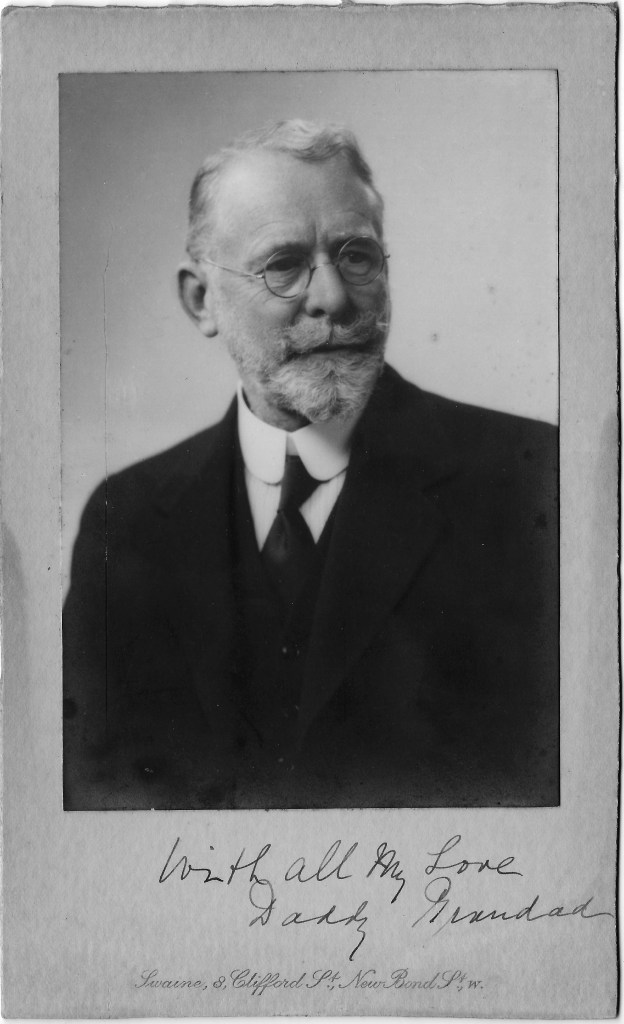
Isaac
In 1941 Isaac wrote an article “The Road to Peace”
Isaac died on 15 Mar 1952 at Wandsworth, London. After his death Avis wrote to his daughter Nancy and the letter gives us an insight to his traits as he aged.
When I started working on the family tree I very quickly progressed on all branches apart from Margaret Hunter’s family. I was completely stumped.
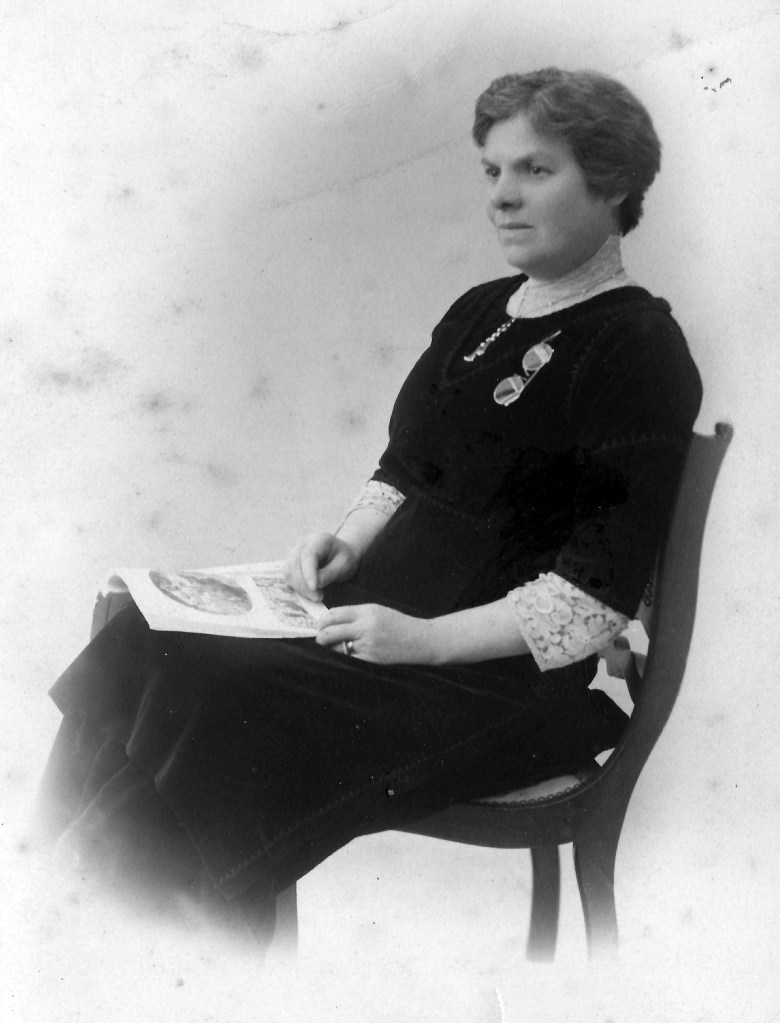
Margaret Hunter
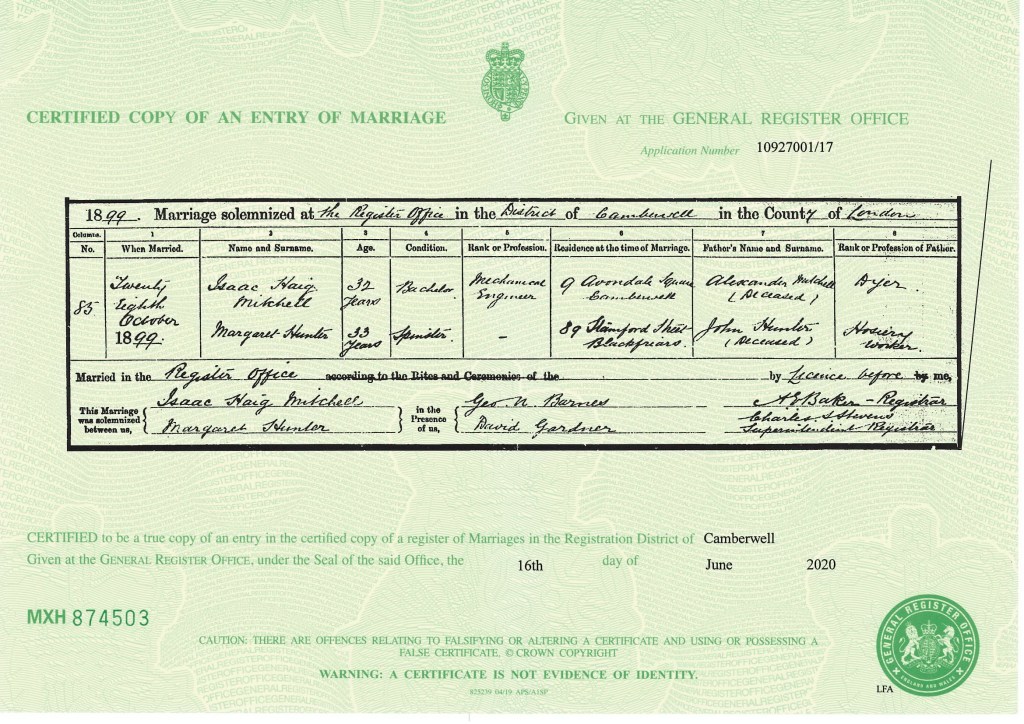
Margaret was the mother of Nancy Eleanor Mitchell and Nancy’s birth certificate gave me her maiden name of Hunter. I found Margaret’s marriage to Isaac Haig Mitchell on 29 Oct 1899 and the marriage certificate stated that her age was 33 and that her father was called John Hunter, a deceased hosiery worker.
Margaret’s marriage certificate
I easily found Isaac and Margaret on the 1901 and 1911 census. In 1901 Margaret is listed as age 34, born in Scotland and on the 1911 census she is described as age 44, born in Hawick and living in Sutton, Surrey. (I haven’t yet managed to find them on the 1921 census.)
1911 Census return
I then started a search for a Margaret Hunter born about 1866/67 in Hawick the daughter of John Hunter a hosiery worker. There weren’t any candidates so I expanded the search to the whole of Roxburgh and, as Margaret Hunter is a fairly common name, I found lots. I found a few with father’s called John but none of them was a hosiery worker or similar and whilst people did change their occupations I thought it unlikely that a man would, in middle age, change from mining or agriculture to become a hosiery worker.
I decided to search in the 1871 census for a 4/5 year old Margaret Hunter in Hawick and then the whole of Roxburgh and again had no real luck. I then searched the 1881 census (the Mormon Church has transcribed this whole census and it is easy and free to search) for the whole of the UK and found a Margaret Hunter born in 1865 in Scotland with a father called John Hunter who was a weaver now living in Cumberland. After months of searching I thought I had at last found ‘our’ Margaret. At age 16 this Margaret had an illegitimate child who was raised by his grandparents. Her father John Hunter was a blind weaver born in Scotland but as there are thousands of John Hunters born in Scotland I thought I couldn’t go any further and I left the story there and moved onto another branch of the tree.
Months later I returned to this branch of the tree and decided to look for John Hunter’s death certificate. He was recorded as deceased on Margaret’s marriage certificate so his death must have occurred sometime after the 1881 census and before October 1899. I eventually found his death on 10th Feb 1887 in Carlisle. He was 68, a woolen weaver and his daughter Margaret registered the death. The only problem was she was called Margaret Martin now. It was fairly easy to find her marriage and then to find her on the 1901 census with Mr Martin so she couldn’t possibly be ‘our’ Margaret.
I started again from a slightly different angle. I had found a record for a burial of a Margaret Mitchell in Banstead Surrey on 15 Nov 1921. Margaret was recorded as being 53 years old giving an approximate date of birth as 1868. I had assumed this was ‘our’ Margaret as there was only one death of a Margaret Mitchell in this area. I decided to obtain the death certificate just to confirm the information. When the certificate arrived many weeks later it stated that she was the wife of George Mitchell a ‘carman’ so she wasn’t ‘our’ Margaret.
The wrong burial!
I spent several days searching for her death. Her death wasn’t registered near her residence in Surrey so I had no idea where to look. Eventually I found her death registered in Lambeth/Brixton on 5 Aug 1922 where she is recorded as being age 55 giving an approximate date of birth as 1867. (She died of stomach cancer and pneumonia.)
Death certificate
I now searched in Scotland for every Margaret Hunter born between 1864-1870, there are lots! I then checked the census and married up every one of them with a family. Some had fathers called John Hunter. I was able to eliminate any John who was still alive after 1899. I was able to eliminate any Margaret who was still a spinster after 1899. I was able to eliminate any Margaret who married someone other than Issac Haig Mitchell and was still married in 1901. I then eliminated any John Hunter who’s occupation didn’t fit with the description ‘hosiery worker’, so all the miners, heavy labourers, farmers etc. Slowly but surely I whittled the list down and still could not find ‘our’ Margaret.
I then took a different approach. I decided to look for all John Hunters in Hawick who were working in any capacity in the wool/cloth industry. Hawick and the surrounding towns in Roxburgh are famous for their wool industries so there were quite a few candidates but one stood out.
1871 census for 50 Loan Street, Hawick. John Hunter age 40, wool frame work knitter but the only problem was he was unmarried. He did however have a daughter called Margaret Hunter. Unfortunately she was aged 11 and therefore born 1860 which is several years before ‘our’ Margaret was supposedly born.
I searched for a birth of Margaret Hunter in 1859/60/61 in Hawick. Again without success.
I then concentrated on John Hunter and slowly but surely worked out the story.
In 1851 John Hunter was recorded on the Hawick census as age 19, a woollen frame work knitter and living as a lodger with the Thomson family. His place of birth is listed as Langholm Dumfries.
I found him again in 1861 lodging with Margaret Graham and her mother Margaret Notman at Myreslaw Green in Hawick. He was age 27, a power stocking frame tender, unmarried.
Margaret Graham is listed as a married seamstress. The following children are also listed at the same property: Elizabeth Graham age 12, Joan Graham age 9, John Hunter age 6, William Hunter age 3 and Margaret Hunter age 1, all born in Hawick. The relationships are listed against the head of the house Margaret Notman so it’s not always clear if they are actually related to the lodger John Hunter.
1861 Census Hawick
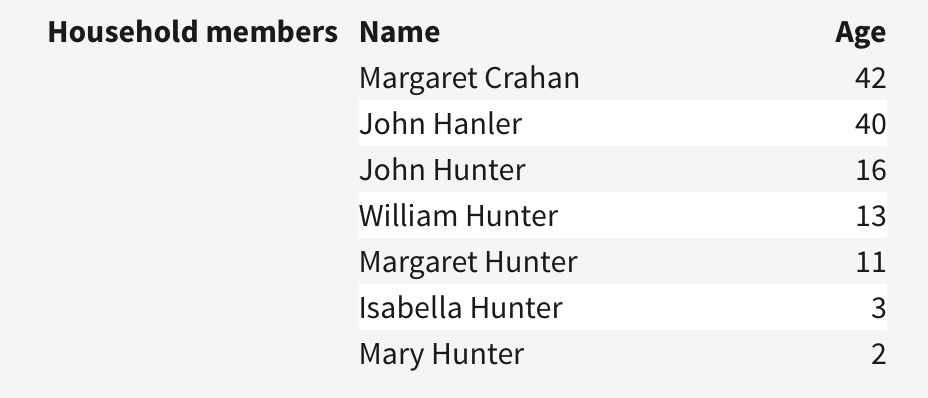
By 1871 John Hunter was listed as the head of the household and the children were listed as his sons and daughters. Margaret Graham is listed as his married housekeeper and there were two more children: Isabella age 7 and Mary age 2. Unfortunately his surname was transcribed as Hanler and hers as Crahan which made the search a little more tricky!
1871 Census Hawick incorrectly transcribed.
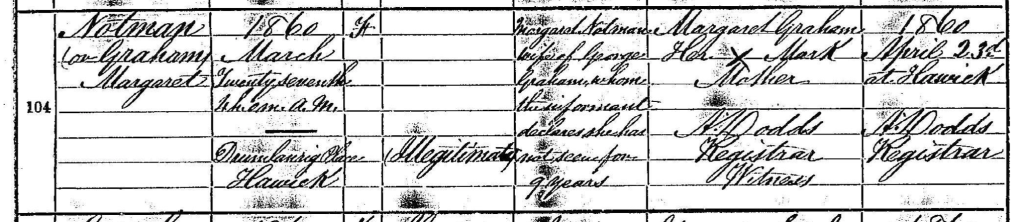
It appears as though John Hunter was co-habiting with Margaret Graham. I decided to search for a birth for a Margaret Graham born 1859/60/61 in Hawick, without success. I then tried using the surname Notman and hit the jackpot!
Margaret’s birth record
Margaret Notman (or Graham) 27 Mar 1860 in Hawick. Margaret is listed as illegitimate but there is a note “Margaret Notman wife of George Graham who the informant declares she has not seen for 9 years”. So having been abandoned by her husband George Graham (a mason’s journeyman) in 1851 she went back to her parents and later met John Hunter, who she lived with until her death in 1877 age 47.
After her death John Hunter continued to live in Hawick with his daughter Isabella and appears on the 1881 census still working as a wool frame work knitter. He died on 4 Nov 1890 at the Melrose District Asylum age 62. Cause of death was paralysis of the insane four years (late stage Syphilis). The death was registered by Andrew Butler, Isabella’s husband.
John Hunter’s death record
By 1881 Margaret Notman/Hunter had left home and I spent quite a long time looking for her on the census. The most credible entries I found were:
Margaret L Hunter age 21, birth year 1860 Hawick, Roxburgh. Working as a tablemaid at The Scores, St Andrews, Fife. (I couldn’t find a Margaret L Hunter born in 1860 in Roxburgh).
B) Margaret Hunter age 18, birth year 1863 Roxburgh. Working as a domestic servant and described as a visitor staying with Robert & Helen Gilholm at their home in Ancrum Roxburgh. I did find a Margaret Stodda Hunter born in Roxburgh 1863 but it wasn’t ‘our’ Margaret.
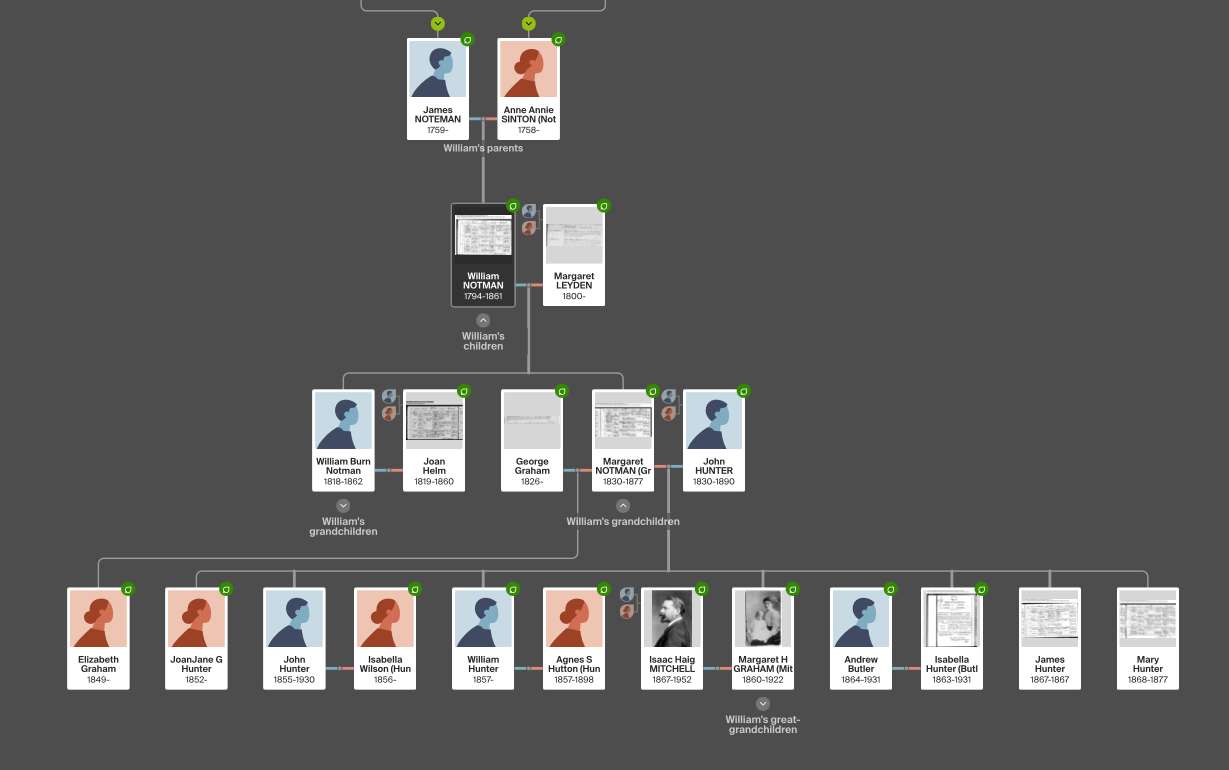
By 1891 there was no obvious candidate for her in the UK census. I decided to look at both Margaret Notman/Graham’s family and John Hunter’s family to see if Margaret had gone to live with any of them.
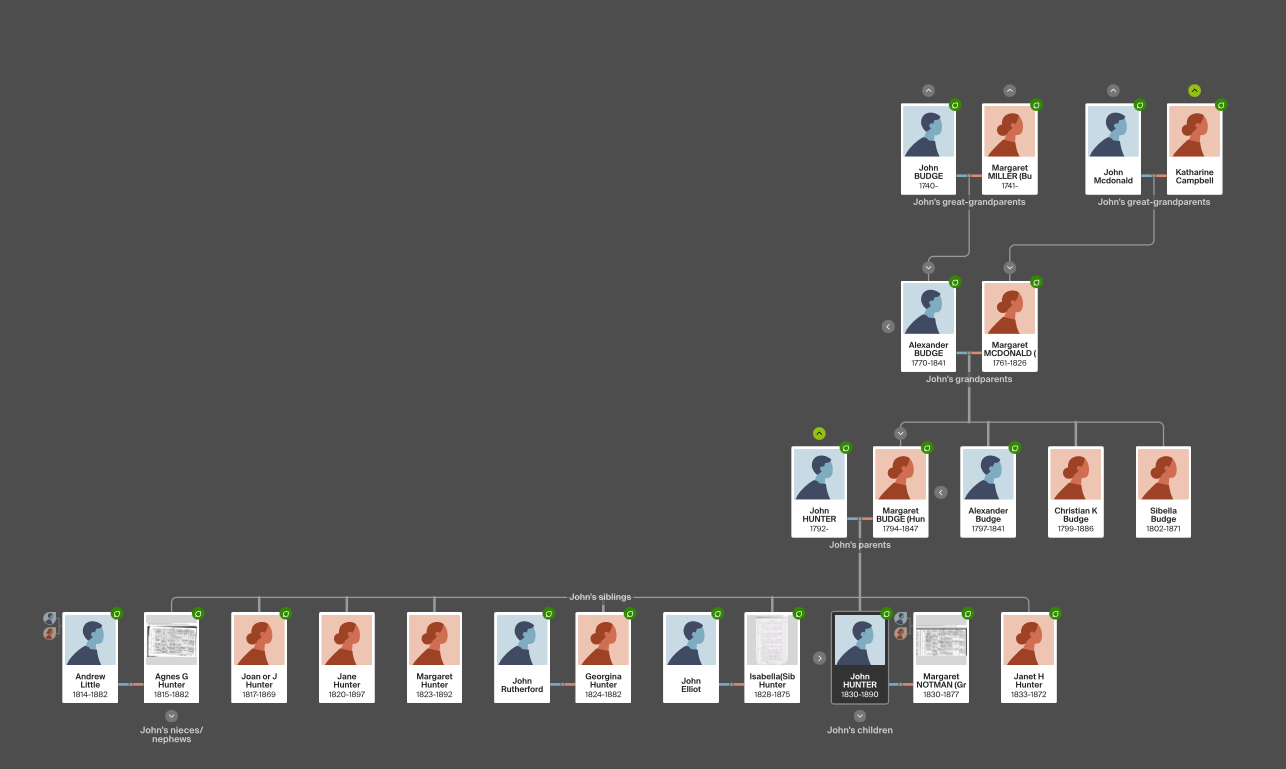
Margaret’s Tree
John Hunter (born 20 Nov 1830) was the son of John Hunter born about 1792 and Margaret Budge baptised 7 Aug 1794 Langholm. He had several brothers and sisters. His elder sister Agnes Gaskill Hunter was born in 1815, she married Andrew Little and their first child was born in 1833. They had several children and their daughter Margaret Little was born in 1837. In 1856 Margaret Little gave birth to an illegitimate child called Alexander Mitchell in Hawick. He grew up to be a wool scourer and dyer. It’s pure speculation but I wondered if he could be the illegitimate son of Isaac Haig Mitchell’s father who was also called Alexander Mitchell who was also a wool scourer and dyer. It would perhaps explain how ‘our’ Margaret knew Isaac Haig Mitchell.
John Hunter’s Tree
Alexander Mitchell, father of Isaac Haig Mitchell and possible father of Alexander Mitchell born 1856.
Alexander Mitchell/Little died age 28 of pulmonary consumption. In 1879 he was involved in a Sheriff Court paternity case with Sarah McWatters over the paternity of her daughter Ellen L Stainton McWatters. He went on to marry Betsy Young the year before he died.
I still don’t know where ‘our’ Margaret was in 1891. But it appears that at age 39 she married 32 year old Isaac Haig Mitchell. In 1901 age 41 she gave birth to Nancy Eleanor Mitchell, her only child. She maintained the lie about her age for the rest of her life.
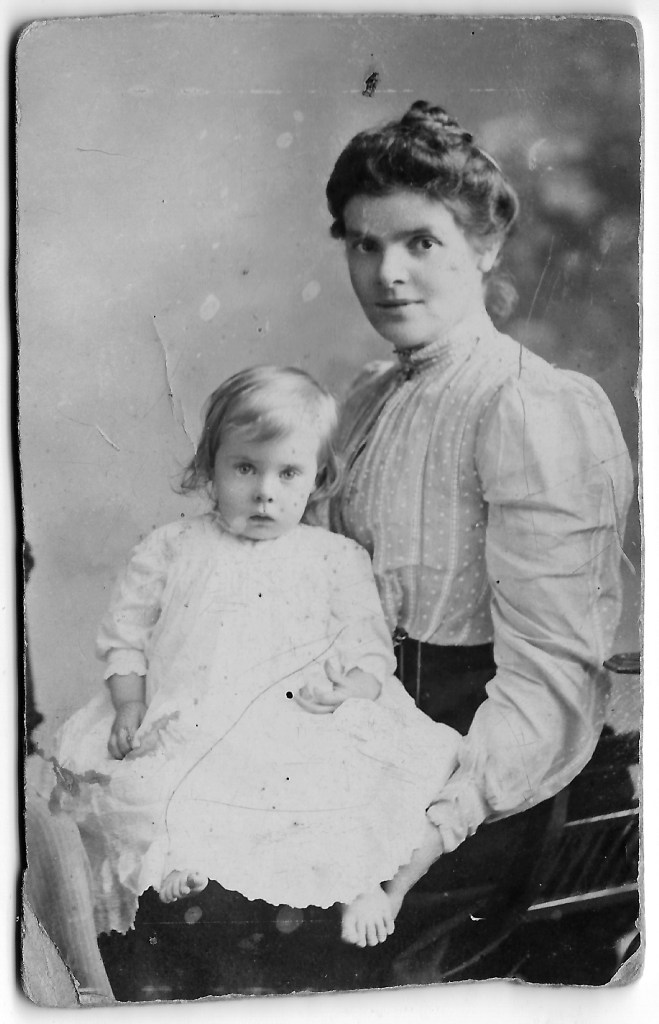
Margaret with her daughter Nancy Eleanor Mitchell
Of course this was all speculation until my husband submitted a DNA test to ancestry.com and we discovered several distant cousins all descended from John Hunter and Margaret Notman/Graham which confirmed at long last that I had indeed found ‘our’ Margaret Hunter.
What happened to Margaret’s brothers and sisters?
Elizabeth Graham her half sister was born about 1849. There are a couple of possible marriages but I could not find anything to prove which was correct.
Joan/Jane Graham/Hunter born 1852 may or may not be George Graham’s daughter. By 1871 she is no longer with the family, she may have died or moved away. No further trace of her.
John Hunter born 1855 and died 3 May 1930 Kilmarnock. He married Isabella Wilson and they had 7 children. Their youngest, born in 1898, was called Maggie Notman Hunter.
William Hunter born 1857 married Agnes Sanderson Hutton and moved to Peebles. They had 4 children, the youngest was born in 1886 and was called Margaret Notman Hunter.
Isabella Hunter born 1863 died 5 Feb 1931 Paisley. She was run over by a lorry and killed, there is a procurator fiscal’s report attached to her death certificate. She married Andrew Butler and had 6 children, the eldest was born in 1885 called Margaret Notman Butler.
James Hunter born 7 Mar 1867 and died 6 Sep 1867 of whooping cough.
Mary Hunter born 17 Aug 1868 and died 19 Mar 1877 of tubercular meningitis.
Without DNA I would never have ben able to confirm that this was indeed ‘our’ Margaret Hunter.
On 3 Nov 1881 Temple Wilmot/Charles Howard was released from prison and then further jailed for a month for failure to report for police supervision.
On release he evidently went straight back to writing ‘letters’ and attempting to commit fraud. By 27 Mar 1882 he was on trial again for unlawfully attempting to obtain by false pretences, from the Duke of Montrose, the Duke of Sutherland, and others, certain moneys, with intent to cheat and defraud.
The Duke of Montrose testified “I received a letter which has since been destroyed; it was in the same handwriting as this one which I hold in my hand—I subsequently saw the prisoner, and he admitted to me that it was in his handwriting (This was a letter signed Hoovardo, dated London, January 19, 1882, referring to a previous letter asking for an advance of 100l., and stating that 50l. would be a material sum, but 100l. would help him to weather the storm till October)—in his former letter, which was destroyed, he stated that he was Count Monti, and had taken his second title of Hoovardo because he was in difficulties, that he was my father’s godson, and in consequence bore the name of Graham, and that he was in difficulties owing to his agent in Italy having disappeared with the rents…”
Charles may have been back in Jersey as the first letter was dated in Jersey. Henry Wright the Duke of Sutherland’s secretary testified that he had received letters “These were also signed “Hoovardo” dated 9th and 10th December, from St. Heliers, and stated that the writer was the son of the late Marquis de Monti, and was the godson of the Duke’s father, and bore the name of Gower, and requested the loan of a few pounds.”
Neither Duke sent any money and Charles Howard was sentenced to a year’s imprisonment without hard labour.
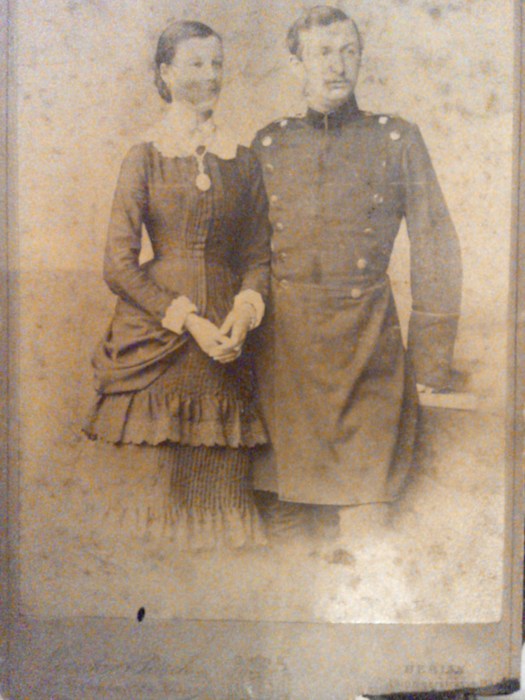
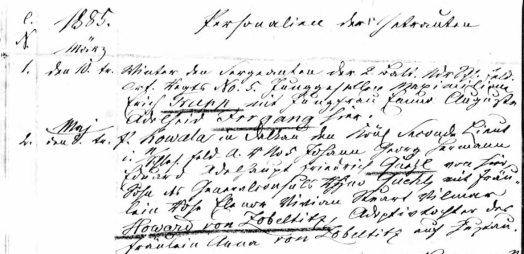
On the 8 May 1885 Charles’ daughter Rose Eleanor Vivian Stuart Howard got married. She has been working in Germany as a governess where she met Major Johann Georg Hermann Friedrich Quehl.
Rose & Johann
On her marriage certificate she used the surname Von Zobeltitz, the daughter of Stuart Vilmar Howard Von Zobeltitz and Ana Von Zobeltitz.
Baden & Hesse marriage register
Rose and Johann had a daughter, Anne Marie who died in 1943. During the war Rose returned to England and lived with her son. She lived to the age of 98 and died in 1961 in Germany. On her death certificate her maiden name is given as Wilmot.
Just 10 days after Rose’s wedding Charles Howard was on trial again!
Charles Howard 58 (born about 1827) a retired Captain ‘with property In Italy’ conned several people into sending him money by postal orders telling them they were potential heirs to a deceased American millionaire and were in line to inherit £3000.’ (I think Charles would have loved the internet!)
We don’t know where he went after his release from prison but by 1893 he was again on remand.
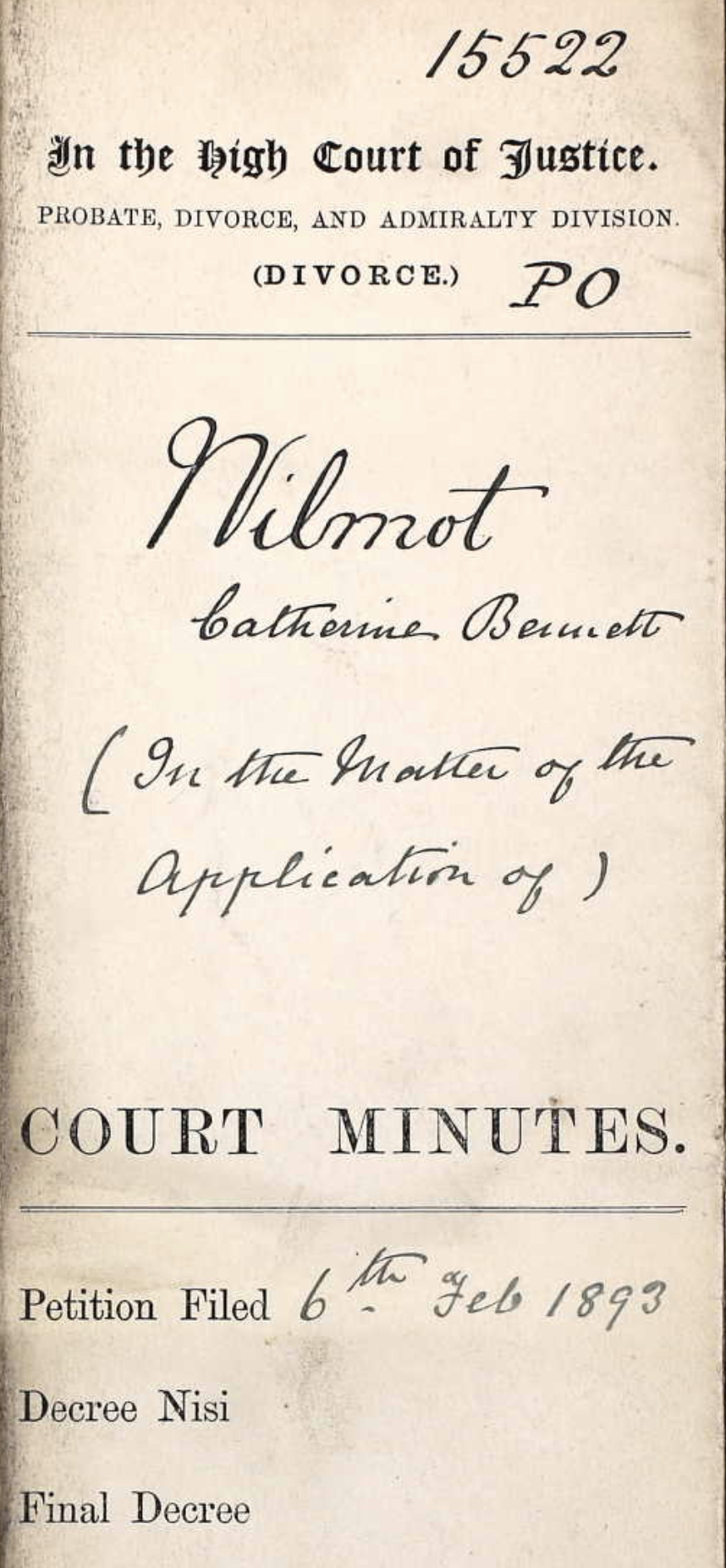
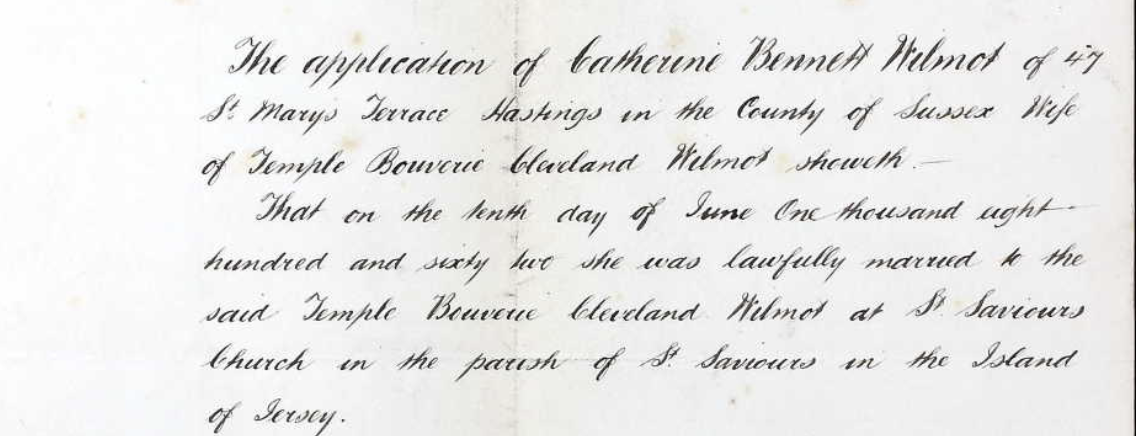
On 2 Feb 1893 Catherine Bennett Wilmot petitioned the divorce court to protect her earnings and property earned by working as a professional nurse. She didn’t use the surname Gould or Howard and no mention is made of her second marriage.
The affidavit states that she was married in 1862 a year earlier than they actually married.
Charles Howard was on remand for obtaining money under false pretences and perhaps she was worried that her assets were at risk if he was found guilty.
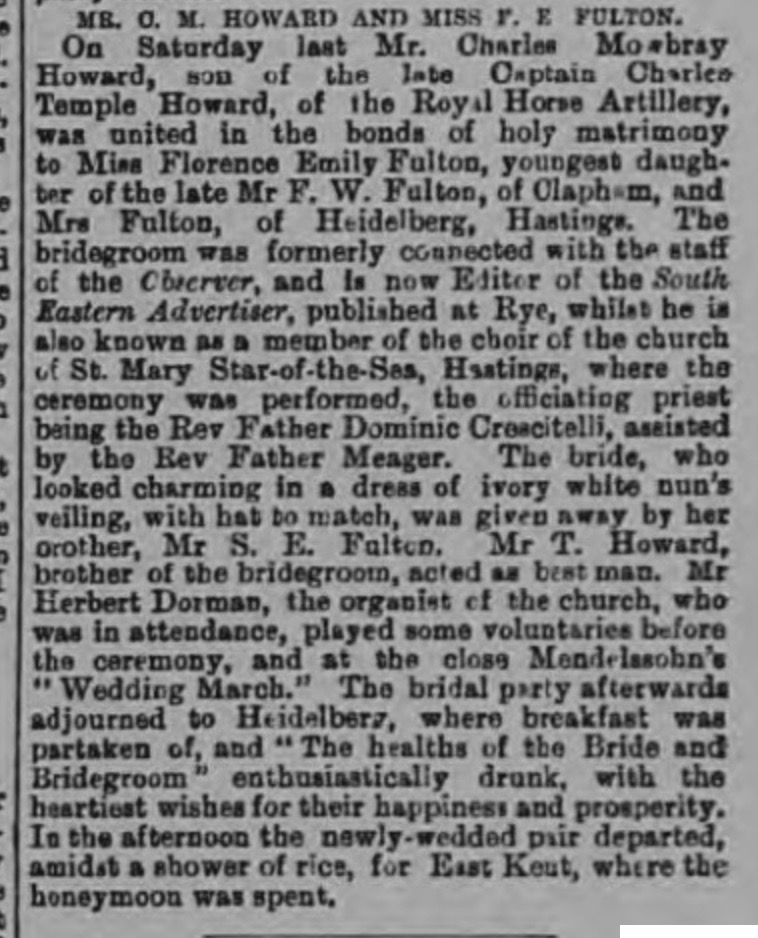
On 17 Jun 1893 Charles Mowbray Fitzallen Howard married Florence Ethel Fulton. Their marriage announcement describes his father as “The Late Captain Charles Temple Howard of the Royal Horse Artillery” but that’s not true, he’s still very much alive and in Holloway prison!
Charles ‘junior’ was working as a journalist and sang in the church choir. By 1939 Charles was working as an actor which seems fitting. He and Florence had four children: Florence, Glory, Catherine and John (Jack). John Mowbray Temple Howard was killed on HMS Invincible at the Battle of Jutland in 1916. Charles died in 1943.
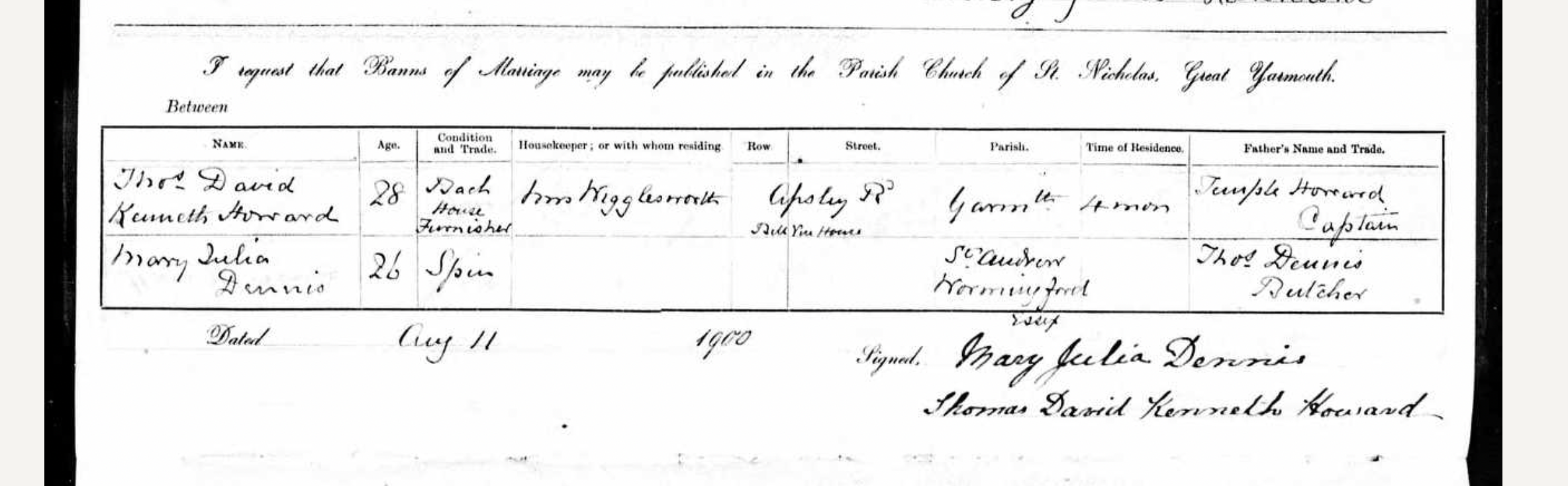
Charles’ brother Thomas David Kenneth Howard married Mary Julia Dennis on 22nd Sep 1900 at Lexden in Essex. His father is recorded as Captain Temple Howard on the entry in the register.
Thomas was a furniture store manager. He and Mary had three daughters: Mary Catherine, Marjorie and Joan. Thomas died in 1944.
And what of Catherine? She died on 24 Jan 1935 at Great Yarmouth. She had been living with her son Thomas. Her probate lists her as Catherine Bennett Gould and she left an estate worth £1100 to her son Thomas.
What happened to Temple Wilmot/Charles Howard?
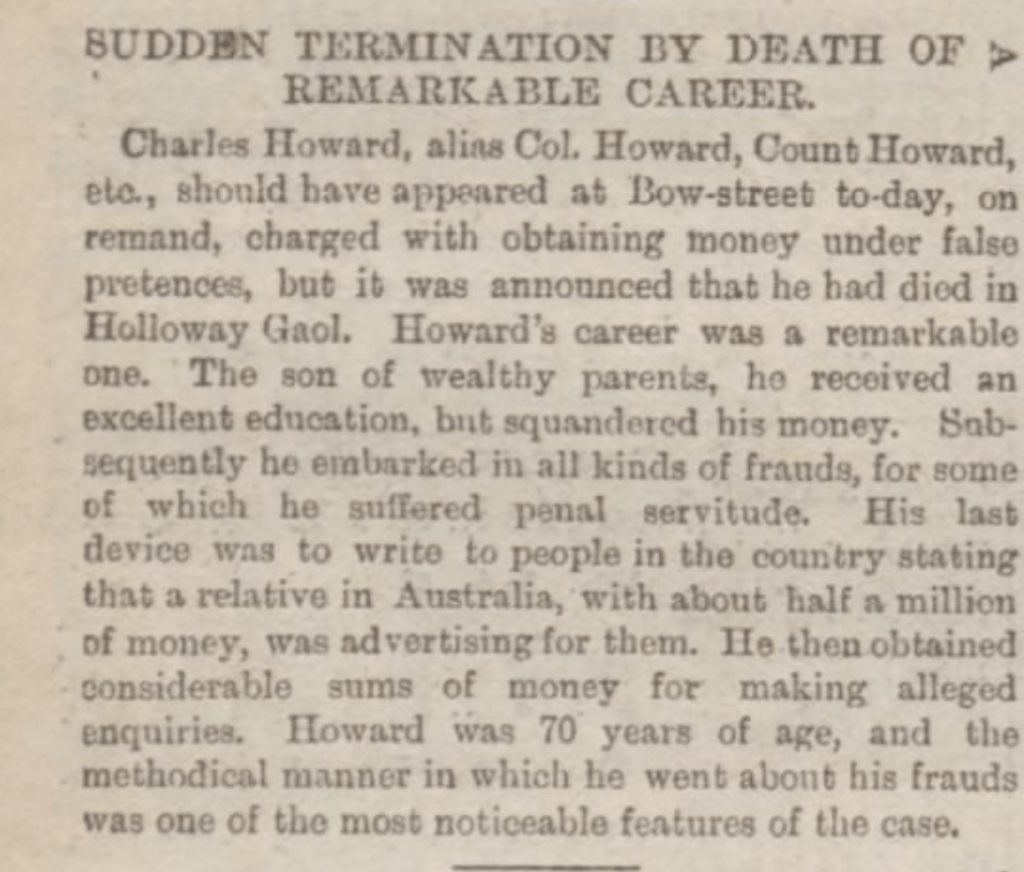
On 25 Nov 1893 Charles Howard died of pneumonia and bronchitis whilst on remand in Holloway Prison. His death certificate states he was age 78 therefore born in 1818.
His newspaper death notice states that he was aged 70 (born about 1823). it also states that he was the son of wealthy parents and had received an excellent education but had squandered his money.
So who was Temple Wilmot aka Charles Howard?
Clearly Temple was an educated man who had sufficient skills to pass as a member of the gentry or aristocracy. Perhaps he was from a wealthy family. He claimed to have been a Captain in the army and a diplomat in the War Office and this was accepted. He seems to have been popular with ladies too! It’s not clear if he was married to them but so far I have found at least five relationships: Catherine Somerville, Louisa Heminger, Marian Davenport, Catherine Boase Bennett Bosustow and Ana Von Zobeltitz.
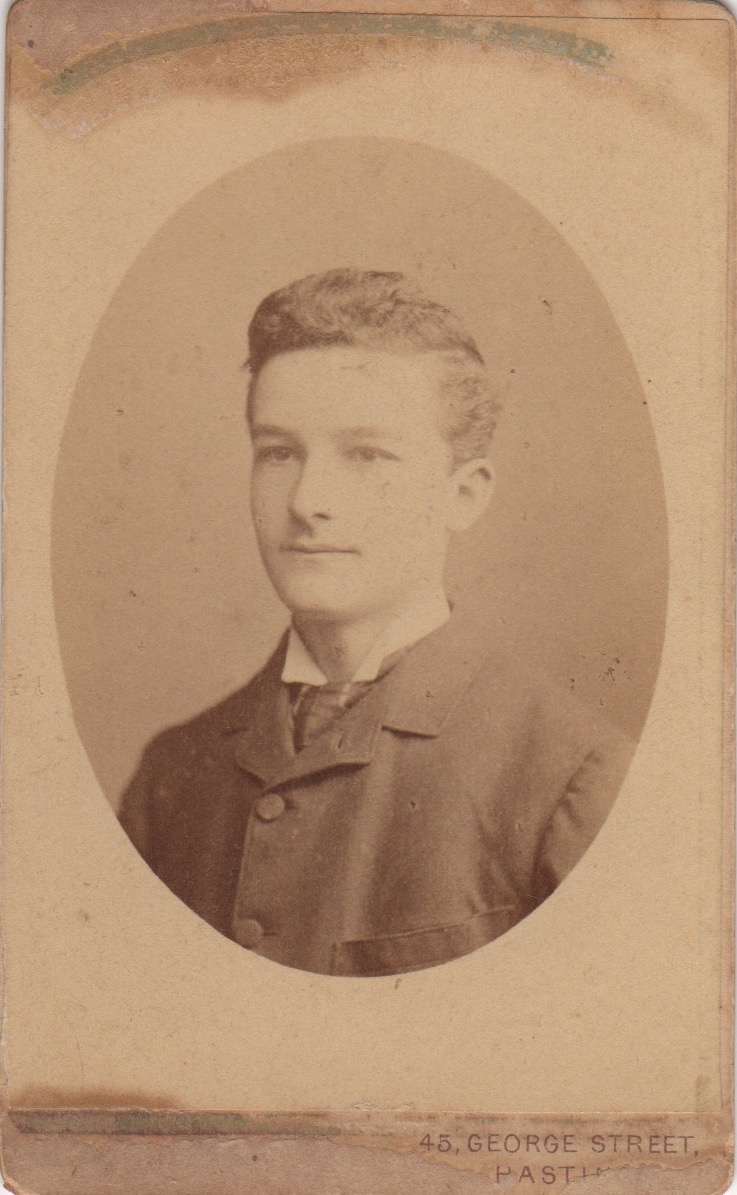
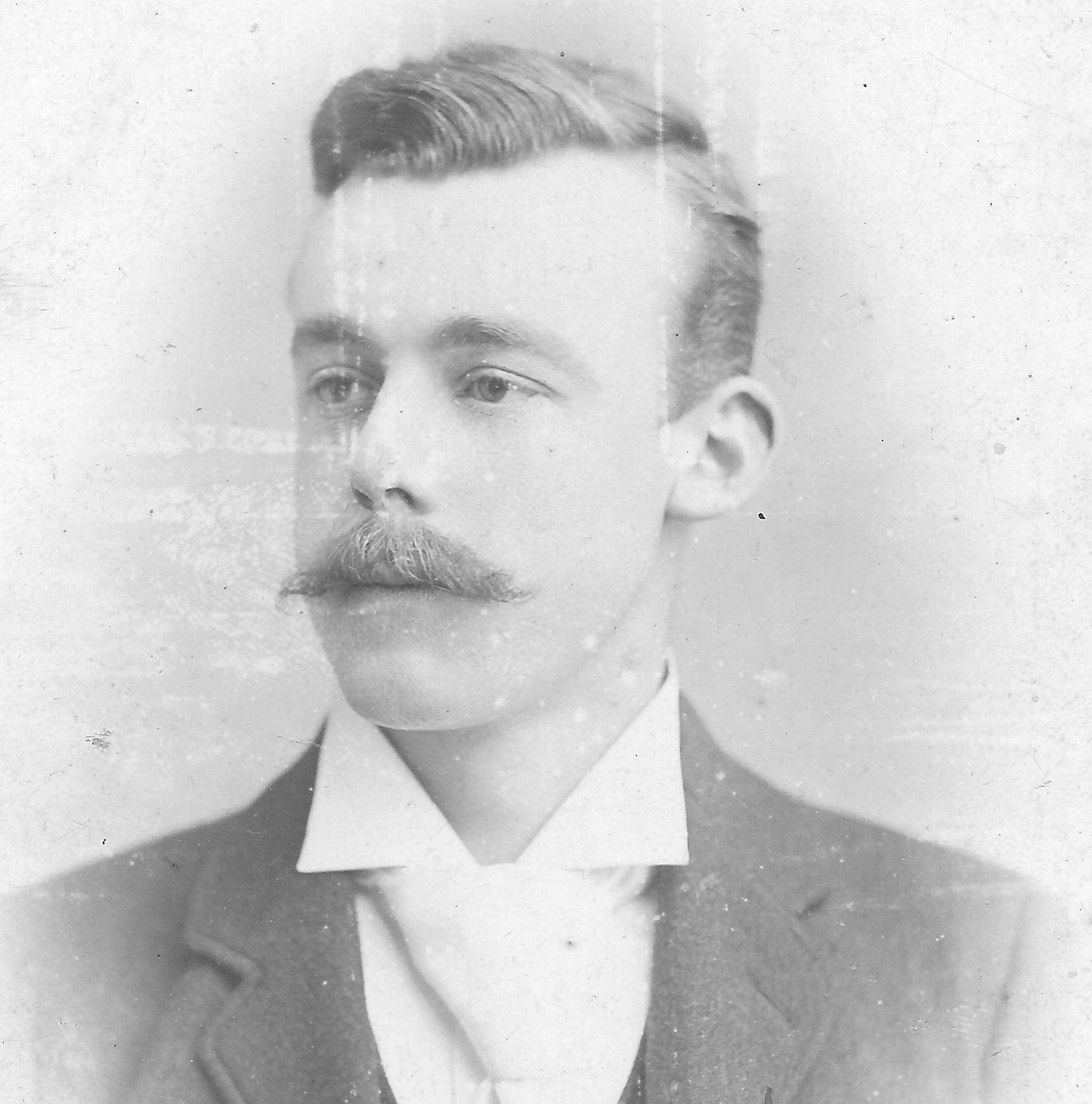
We don’t have any photos of Temple but the photos of his two sons hint at his appearance. We do however have a physical description from the UK Register of Habitual Criminals and Police Gazettes.
The two entries describe his place of birth as Virginia America! Born about 1818 & 1828.
It describes his occupation as a labourer and gives the following physical description: Fair complexion, grey hair, blue eyes, 5ft 5 1/2”, proportionate build with a long face. Right shin was fractured, scars on forehead, over right eye, right groin and left arm. Lost left thumb and left fingers crippled, birthmark on left arm. (That’s a pretty distinctive appearance!)
I don’t think he was American, I think he was good with accents and I think he liked pretending to be someone he wasn’t.
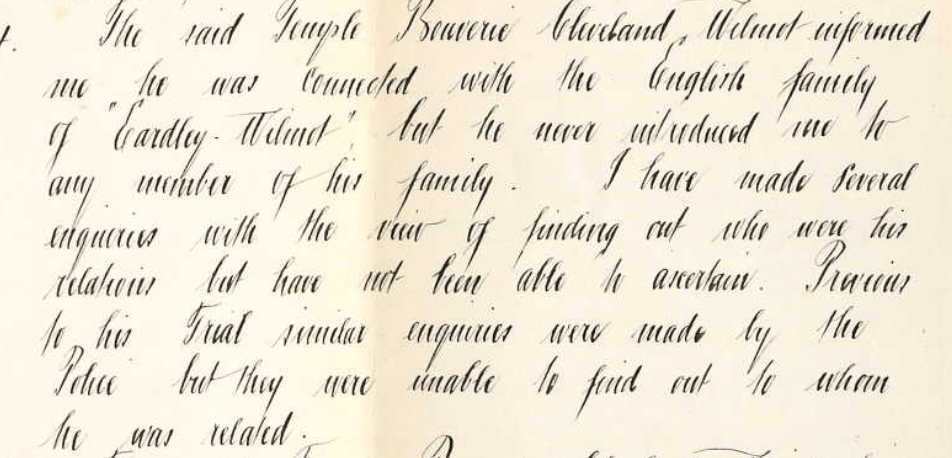
Catherine’s affidavit of 1893 gives us some clues to pursue.
Catherine stated “The said Temple Bouverie Cleveland Wilmot informed me he was connected with the English family of Eardley Wilmot but he never introduced me to any member of his family. I have made several enquiries with the view of finding out who were his relations but have not been able to ascertain. Previous to his trial similar enquiries were made by the police but they were unable to find out to whom he was related.”
The family of Eardley Wilmot proved to be a very interesting line of enquiry.
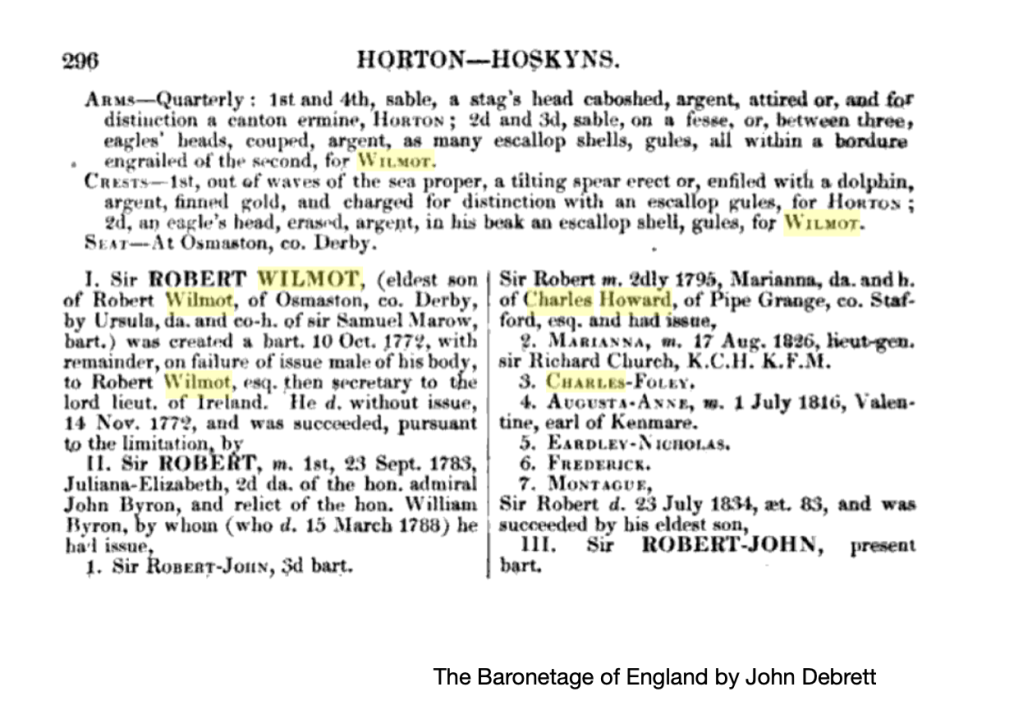
Eardley Nicholas Wilmot (1752-1834) was the son of Sir Robert Eardley Wilmot, 2nd Baronet of Osmaston Hall in Derby. Sir Robert Wilmot was married to Mariana Howard, the heiress of Charles Howard of Stafford (1742-1791). The chance of a family having the names Wilmot, Charles and Howard seems to be too much of a coincidence.
I suspect that by 1851 Temple had already tired of his real name, perhaps he already had a criminal record and a change of name was necessary to find work. Perhaps a newspaper article about the Wilmot family (who had a protracted legal case) inspired his choice of name or perhaps Temple looked through John Debrett’s ‘The Baronetage of England’ and spotted some names he liked. There is no record of a Temple Wilmot on the 1841 census. In fact in 1841 there are only 29 people called Temple in the whole of the country and some of them are women.
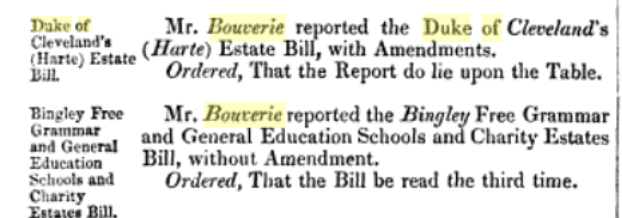
In August 1853 the ‘Journals of the House of Commons’ reported the following and that may have given Temple an idea for some new middle names! Voila, Temple Bouverie Cleveland Wilmot was ‘born’!
Journals of the House of Commons Vol 108 (1853)
In 1855 Edward St Maur, 11th Duke of Somerset died. No doubt this was listed in the journals of the day and that may have given Temple the inspiration for his ‘father’s name’ ‘Somerset St Maur Wilmot’!
Temple even featured in a book: ‘Mysteries of Police & Crime’ by Arthur Griffiths.
“BURTON, ALIAS THE COUNT VON HAVARD.
Compared with these top-sawyers and high-flyers in crime we have little to show on this side of the Atlantic; but I may mention one or two notorious swindlers of these latter days, remarkable in their way for the dexterity and the pertinacity with which they pursue their nefarious trade. Every now and again the police lay their hands on some fine gentleman who is well received in society, like Benson, bearing some borrowed aristocratic name, but who is really an ex-convict repeating the game that originally got him into trouble. There was the man Burton, as he was generally called, who rejoiced in many aliases, such as Temple, Bouverie, Wilmot, St. Maur, Erskine, and many more, and whose career was summarily ended in 1876, when, as Count von Havard, he was sentenced to five years’ penal servitude for obtaining money by fraud. This man’s character may be gathered from the police description of him when he was once more at large. He was described as a native of Virginia, in the United States; was supposed to be a gentleman by birth and education, and spoke English with a slightly foreign accent. The police notice went on to say that he was “an accomplished swindler, an adept in every description of subterfuge and artifice; he tells lies with such a specious resemblance to truth that numerous persons have been deceived by him to their cost. He is highly educated, an excellent linguist, and also skilled in the dead languages, and his good address has obtained him an entrance into the very highest society abroad. By the adroit use of secret information of which he has become possessed he has extorted large sums as blackmail. One of his devices is to enter into a correspondence with relatives of deceased persons, leading them to suppose they are bénéficiaires under wills, and thus obtain money to carry on preliminary inquiries. He frequently makes his claim through a respectable solicitor, whom he first dupes with an account of his brilliant connections and prospects. He represents himself as the son of a foreign nobleman, De Somerset St. Maur Wilmot, and claims relationship with several distinguished persons.”
He was in reality a very old offender, who had done more than one sentence in this country, and had probably known the interior of many foreign prisons. His operations extended throughout Europe, and he had visited the principal health resorts and holiday places of the Continent, such as Biarritz, Homburg, Ostend; and this constant movement to and fro no doubt helped him to elude the police.”
In conclusion
Ultimately we’ll never really know who he was, we don’t know when or where he was born it could have been as early as 1818 making him 45 at the time of his marriage to 16 year old Catherine! We don’t know his real name and with so many aliases we often lose sight of him in the records. Perhaps even his own family never actually knew who he really was.
On 16 Sep 1862, at Chelsea in London, Temple Wilmot (junior) was born. He was the son of Temple Wilmot, Captain Horse Artillery and Marian Wilmot née Davenport. The couple were living at 1 Cheyne Walk, Chelsea, London. Temple has gone up in the world!
Birth registration of Temple Wilmot junior
I could not trace a marriage between Temple and Marian Davenport but they may have married using different names.
Sadly there is no further trace of Temple junior or his mother Marian. Did they die? Were they abandoned and changed their names?
By early 1863 Temple is in Jersey grooming Catherine Bosustow!
I searched the 1861 census for any sign of Temple and eventually found the following entry at Kingston Upon Thames.
He’s listed as Cleaveland Wilmot age 32 (born about 1829) living at The Grey Towers Kingston Upon Thames. Born St James Middlesex and employing two servants. His occupation was listed as Retired Captain from Horse Artillery and ‘foreign’(?) Diplomatic service and HM War Office. (It appears as though he has been promoted!!)
As we saw in ‘part 1’ he married Catherine in Jun 1863 at St Saviour’s church in Jersey and his daughter Rose was born six months later at Ennis, Clare in Ireland.
On 27 Feb 1864 Campbell Bouverie Cleveland Wilmot was indicted for fraud and sentenced to 12 months in prison. I don’t know what happened after he was released from prison but in 1870 when his son was born he was using the name Charles Howard.
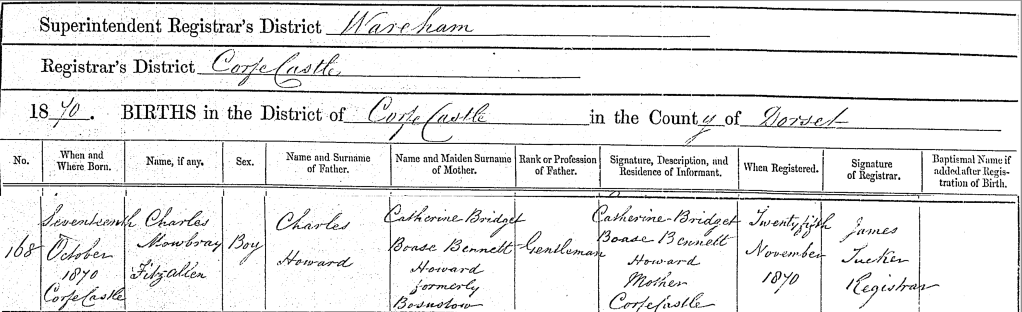
Birth cert of Charles Mowbray Fitzallen Howard
Charles Mowbray Fitzallen Howard was born on 17 Oct 1870 at Corfe Castle, Dorset. This is the second time Temple has been associated with Dorset, his first son and daughter were also baptised at Dorchester in Dorset. The birth is registered by Catherine ‘Howard’ and father’s profession is listed as ‘gentleman’.
By the time of the 1871 census Charles Howard was not living with his family. Catherine, Rose and Charles Junior were living in Southampton. There is no trace of Temple/Charles on the 1871 census so he must be abroad, or using another alias or in prison under a different name.
At his 1876 trial a letter from his wife was mentioned, letter dated Southampton, 23 April, 1874, addressed to ‘Captain Howard, Passas, Bavaria,’ signed ‘your affectionate wife, C. H.‘ (Catherine must have just realised she was pregnant and was perhaps writing to inform him.) On 20 December 1874 Thomas David Kenneth Howard was born in Stoke Damerel, Plymouth. Temple/Charles was using the alias Temple Howard.
By this time Temple Wilmot aka Capt Charles Wilmot had deserted the family and was residing with another woman, as his wife, ‘in a very expensive style’ at the Hotel Rautenkranz Eisenach in Germany.
Hotel Rautenkranz by Uwe Aranas
Temple was now using the name Von Zobeltitz and his wife was Ana Von Zobeltitz! They arrived with 16 portmanteaus and rented 3 rooms. Temple then began to write letters to fraudulently obtain money.
Charles Howard alias FC Judford (47) was charged with unlawfully obtaining 380l. of Richard Harvey, by false pretences. Chief Inspector George Clarke found 82 names of people that he had corresponded with and stated “and there might be more.”
At the trial Richard Harvey described the letter he received “Strictly private and confidential. Mr. F. C. Judford presents his compliments to Mr. John Harvey. In 1870 a man of wealth died leaving a last will signed in compos mentis bequeathing property to the amount of forty thousand pounds to John Harvey, son of William James Harvey, of Carnousie, in the county of Banff, Esq., and of Mrs. Isabella Harvey, his wife.” The will had been deposited with some bankers and that 380l. would be required to release it. Mr Harvey duly sent the money! How many others fell for the con?
At the trial Matthew Wyatt Gunning gave evidence which filled in a few more gaps in the life of Temple Wilmot:
“I am a clerk in the Financial Department of the War Office, Pall Mall—the prisoner was a temporary clerk there, he came l think in 1855, and remained till 1858—I think his name is Talbot Bouverie Cleveland Wilmot—I heard that in 1858, before he left he met with an accident to his thumb, but I was in China at the time—I saw him in Ireland in 1864, but did notice his thumb—I know his writing, I had to examine all queries in his accounts; I believe these letters to be his writing; I have no doubt about it. The last time I saw him write was in 1856, I believe—I gave evidence on the trial in Ireland in 1864…”
The prisoner was further charged with having been previously convicted in February, 1864, in the name of Campbell Bouverie Cleveland Wilmot, of obtaining a book by false pretences, when he was sentenced to twelve months’ imprisonment. To this he PLEADED GUILTY. Inspector Clarke stated that the prisoner “had been pursuing this course for the last ten years, and obtaining from various persons large sums of money.”
On 21 Oct 1876 Charles Howard alias F.C. Judford was sentenced to 5 years penal servitude and 5 years police supervision for fraud and obtaining property by false pretences.
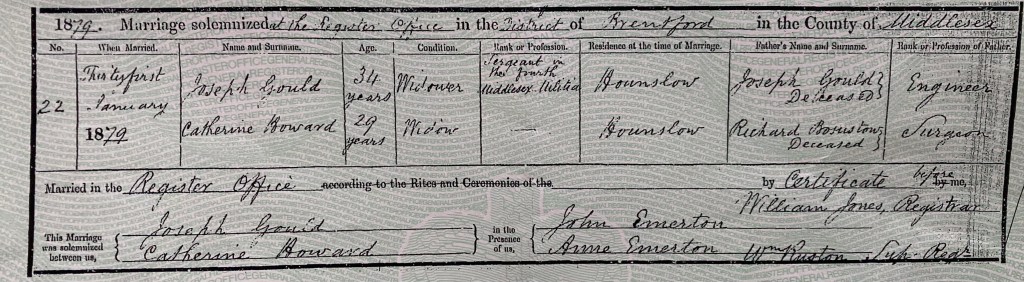
On 31 Jan 1879 Catherine remarried in Brentford Middlesex to Sergeant Joseph Lionel Gould, it’s not clear if she was actually divorced at the time! The marriage certificate describes her as a widow!
Marriage certificate of Catherine and Joseph 1879
On 31 Jul 1882 their son, Francis Joseph Lionel Gould was born at Thanet in Kent.
Joseph Gould’s first wife was Ann Boice/Beice and they married in 1861. She died in 1868 in Wells Somerset. Joseph died in 1886 when his son was aged six.
In 1891 Catherine had reverted to her maiden name of Bosustow and appeared on the census living with her mother at Ramsgate in Kent with her three sons. Catherine was working as a nurse.
The last trace I have of Francis Gould is the 1901 census, he was living at a boarding house in Deptford and working as a draper’s assistant.
Whilst searching for a marriage between Temple Wilmot and Catherine Somerville I came across another possible wife!
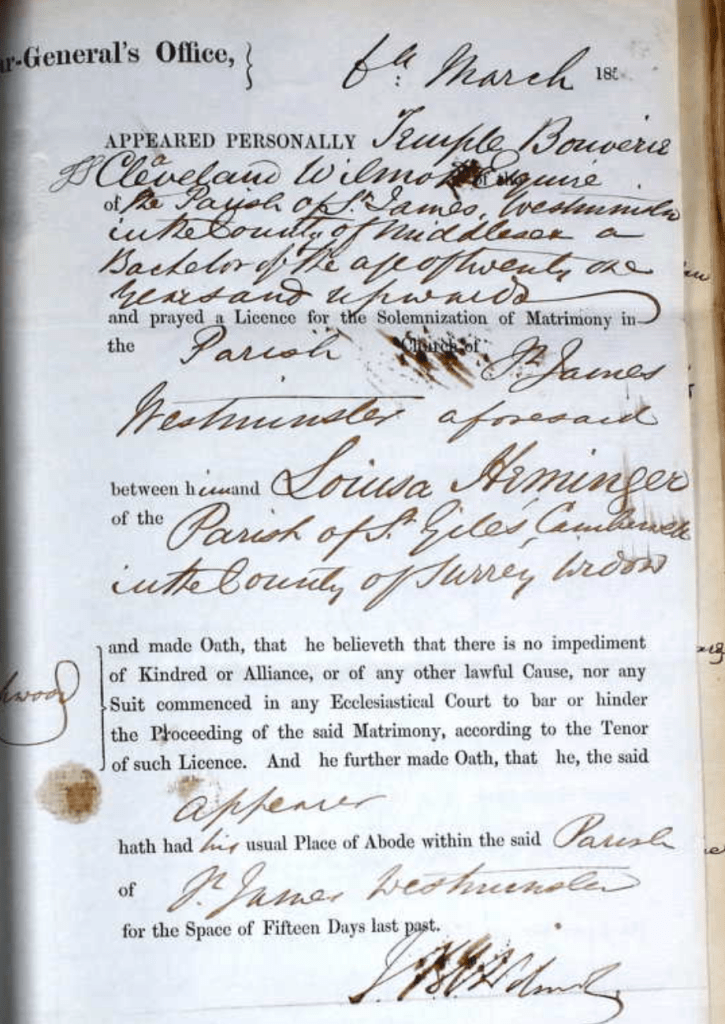
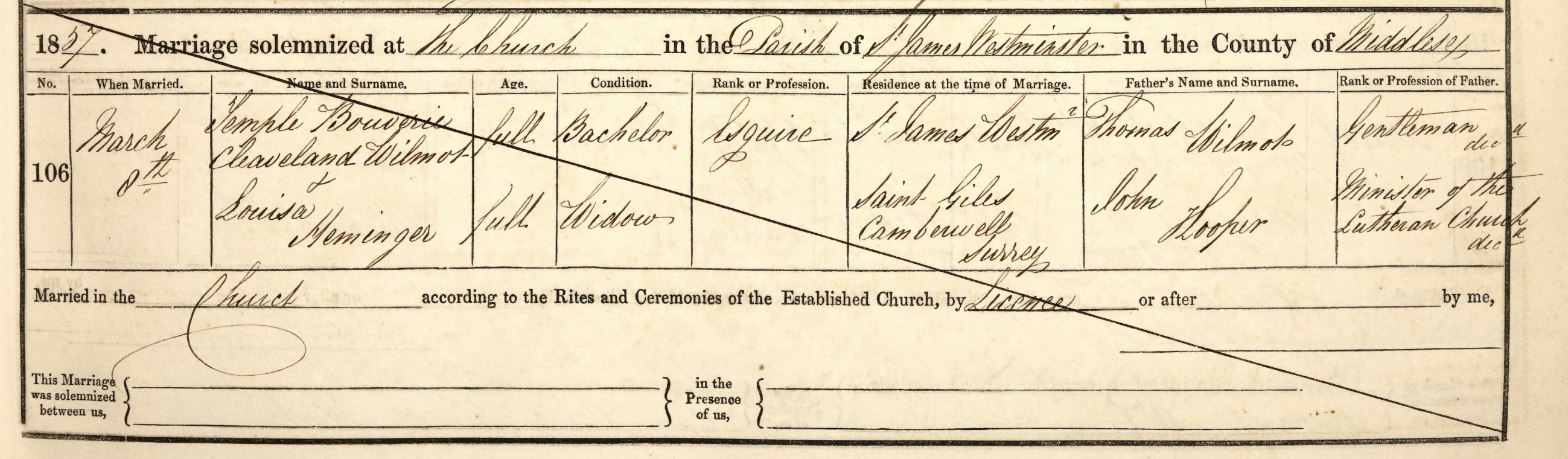
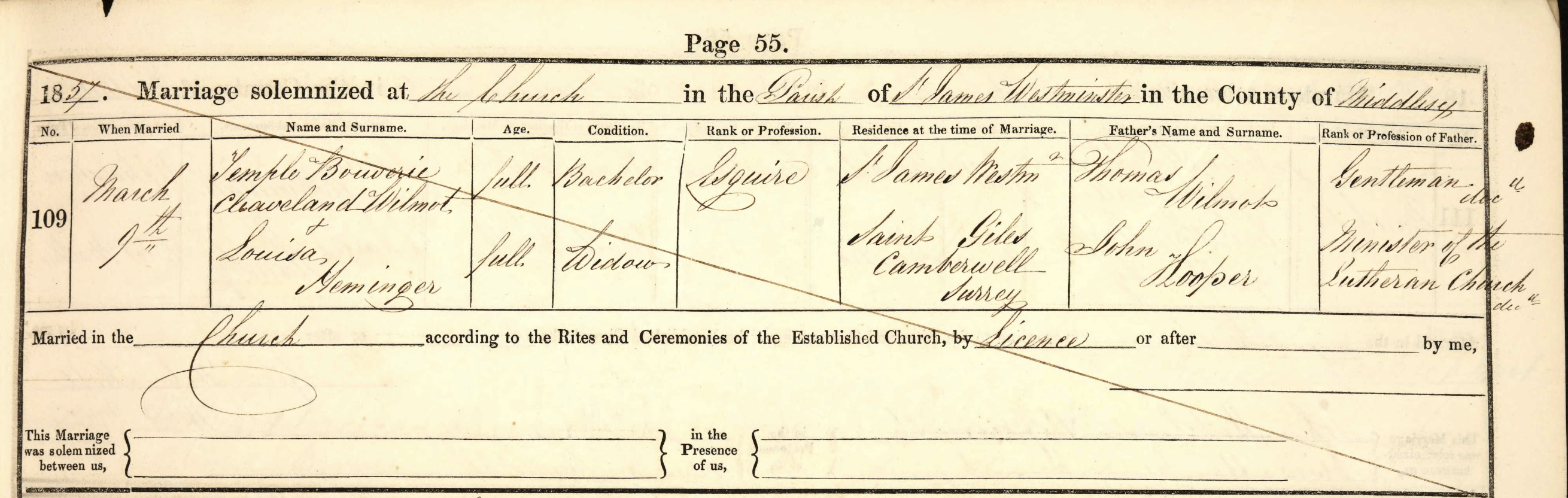
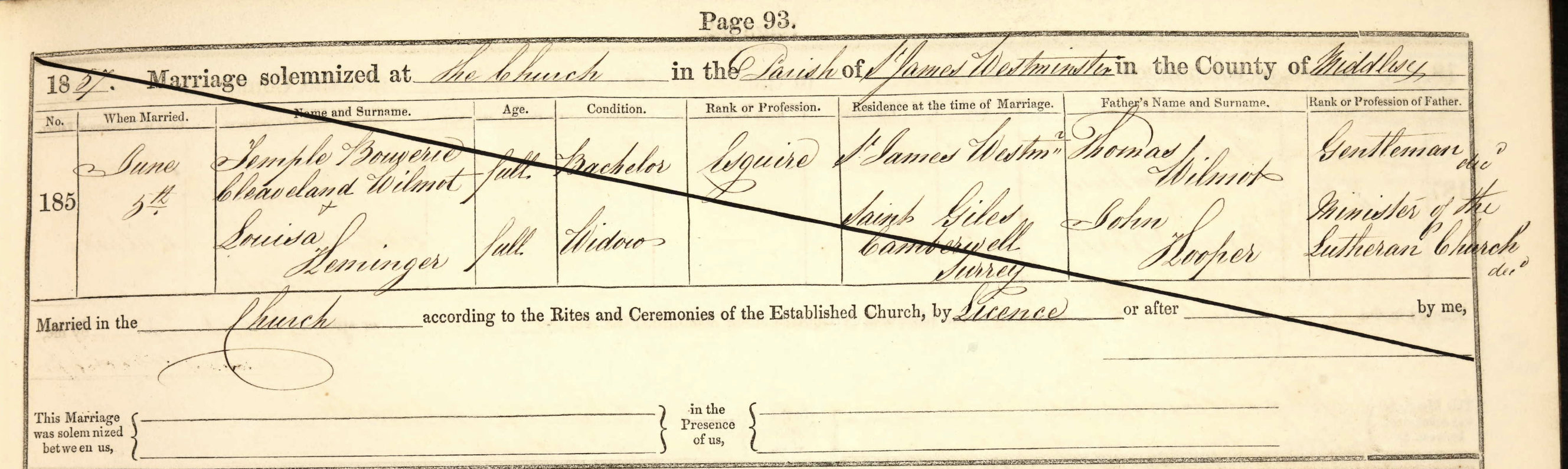
On 8 Mar, 9 Mar 1857 and again on 5 June 1857 there are banns called for a marriage between Temple Bouverie Cleaveland Wilmot and Louisa Heminger née Hooper. It’s not clear if any marriage actually took place as they are crossed through and unsigned however the GRO does have the marriages listed as taking place!
I attempted to obtain the marriage certificates from the General Register Office and received this message back:
‘Thank you for your enquiry. We are sorry that you did not receive notification of the outcome of your order. We should have advised you that we were unable to produce a certificate because we have checked the entries at the references quoted and both entries have been cancelled. As a result it appears there is an error in the indexes.‘
So who was Temple pretending to be now and who was Louisa Heminger?
The crossed out marriage entries are for Temple Bouverie Cleaveland Wilmot Esq the son of Thomas Wilmot, gentleman, deceased.
Louisa Heminger was a widow living in St Giles, Camberwell, Surrey and the daughter of John Hooper, a minister of the Lutheran Church, also deceased.
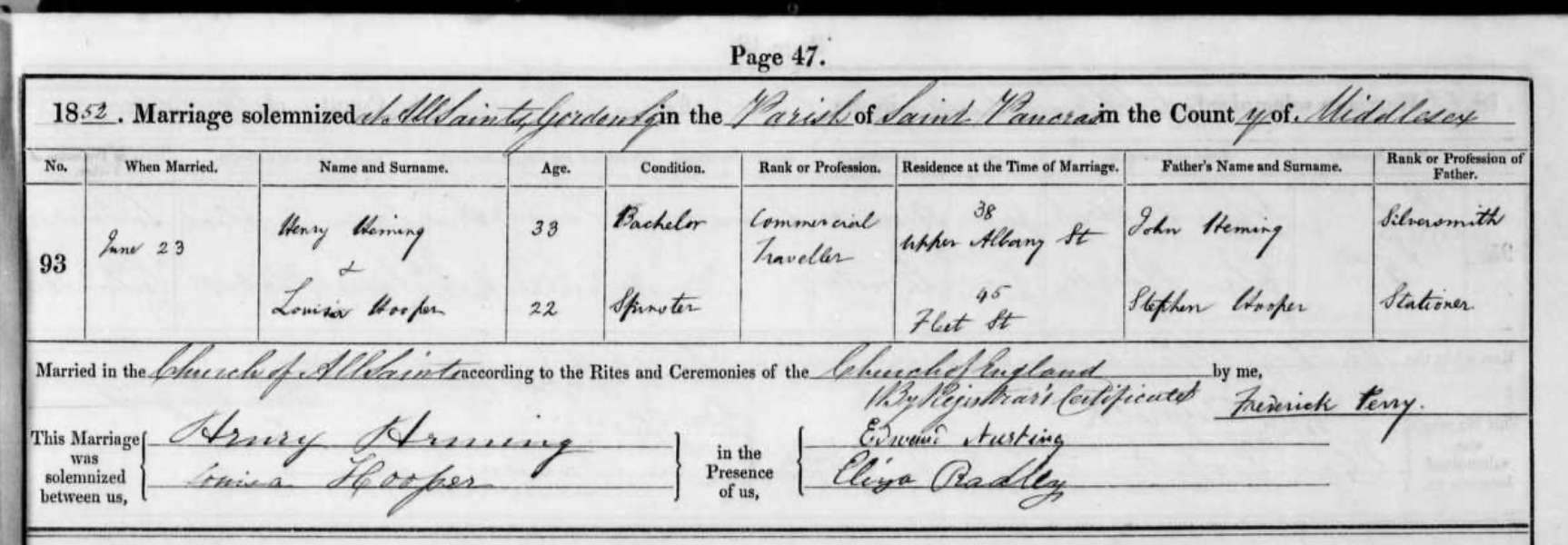
I set out to find her first marriage without much success, I couldn’t find a marriage for Hooper/Heminger. I changed the parameters slightly and found a marriage on 23 Jun 1852 at St Pancras between a Henry Heming and a Louisa Hooper. Louisa was six months pregnant.
Marriage entry of Henry & Louisa
Louisa was aged 22 and the daughter of Stephen Hooper a stationer. Henry was a commercial traveller and the son of John Heming a silversmith.
Louisa’s family lived at 45 Fleet St, London and her father was a legal stationer, a specialised and lucrative trade producing parchment for lawyers. Stephen married Louisa Kingsford in 1827. (Hooper may have been an anglicised form of Huber.)
Louisa and Henry had a son Henry Hooper Heming born 23 Sep 1852.
I can’t find a death for Henry Heming but it must have been before 1857 when Louisa ‘almost’ married Temple. On the 1861 census for Tunbridge Wells Louisa was living with her mother and son and both women were listed as widows. They also have a Cecil Mortimer Esq age 48 living with them as well. I did wonder if this was another of Temple’s aliases but a little research revealed that he was legitimate.
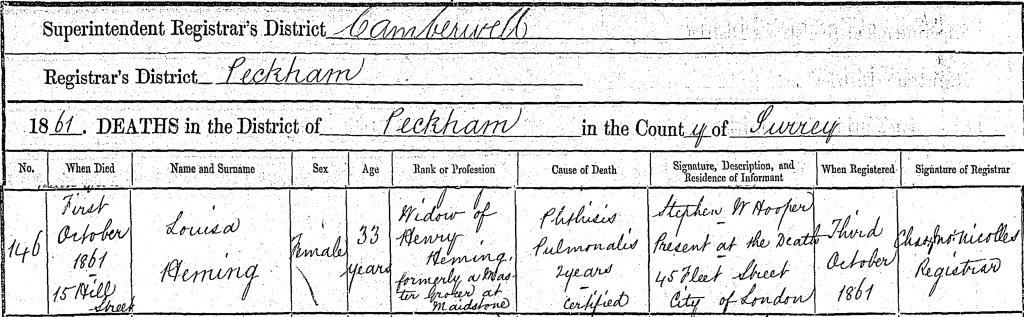
Louisa Heming died on 1 Oct 1861 from Phthisis Pulmonalis (TB), she was just 33 years old.
Louisa’s mother raised her grandson. They are both listed together on the 1871 census. In 1872 Henry emigrated to America where he worked as a journalist.
So why did Temple try and fail three times to marry Louisa? Perhaps her family spotted exactly what kind of man he was and each time put a stop to it. Perhaps their connections with the legal trade enabled them to investigate and find out he wasn’t who he claimed to be.
Temple didn’t stay ‘single’ for long after his failed attempt at marriage with Louisa. By September 1862 he had fathered another child!
Every family has one or two black sheep and it’s every genealogist’s dream to come across a character like Temple Wilmot. Tracking down the story has taken many months of painstaking research but I think it has been worth it!
Jane Stacy Bennett’s cousin was Catherine Bridget Boase Bennett Bosustow and her story must have scandalised the whole family.
Catherine’s relationship to her cousin Jane.
Catherine originally caught my eye as she was married in St Saviour’s church in Jersey, just a few yards from my home, and curiosity piqued I decided to investigate a little further. Thank goodness I did as I uncovered a wonderful scandal!
St. Saviour’s Church – Historical and Topographical Description of the Channel Islands 1840 Robert Mudie
Catherine Bridget Boase Bennett Bosustow was born on 10 Oct 1846 in Redruth Cornwall to Richard Bosustow and Catherine Boase Bennett. Richard was a grocer and in 1845 he married Catherine Bennett the daughter of John Bennett a stationer in Redruth.
The Bennett, Bosustow and Lanyon families were all successful Redruth shopkeepers and pillars of the community and then in 1847 Richard Bosustow was imprisoned at Bodmin Gaol for debt. In 1851 the census showed him living with his wife and daughter and working as a ‘commission agent’. Ten years later he was lodging with another family and described as having ‘independent means’. In 1861 his wife and daughter were living in Guernsey with his sister Ann Bosustow.
In 1861 Catherine ‘senior’ had aged only 3 years since the 1851 census!
It’s not clear why they were in the Channel Islands; they may have been on an extended holiday or avoiding creditors.
They next appear in the records on 10 Jun 1863 when Catherine Bridget Boase Bennett Bosustow married Temple Bouverie Cleaveland Wilmot Esq at St Saviour’s Church in Jersey.
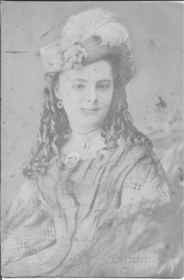
Catherine Bridget Boase Bennett Bosustow
Catherine was 16 and three months pregnant. Bother her parents attended the wedding and signed the register as witnesses.
I obtained a copy of their marriage entry from the register:
It shows that Temple was the son of Somerset St Maur Wilmot Esq of Beaulieu, Hampshire, he was a bachelor and aged 35.
None of this is true!
Temple and Catherine’s first child was born on 26 December 1863 at Ennis, Clare in Ireland. She was baptised for the first time as Rose Eleanor Vivian Stuart Wilmot on 12 Mar 1864 at the Church of Ireland at Drumcliff, Co. Clare. The baptism record shows that her father Temple Wilmot was in jail. She was baptised for a second time at Our Lady’s RC church St John’s Wood Middlesex England on 24 Feb 1865. Her godmother was her grandmother Catherine Bosustow and her christian names had been upgraded to Rosa Eleanora.
Temple and Catherine’s second child was born on 17 Oct 1870 at Corfe Castle in Dorset and his name was registered as Charles Mowbray Fitzallen Howard and Temple was now using the name Charles Howard.
It was time to start investigating Temple Wilmot/Charles Howard.
I started searching for Temple’s birth but there is no record of a Temple Bouverie Cleaveland Wilmot being born or baptised anywhere in the UK or indeed the world, nor is there any trace of a Somerset St Maur Wilmot. Evidently Temple was a little economical with the actualité!
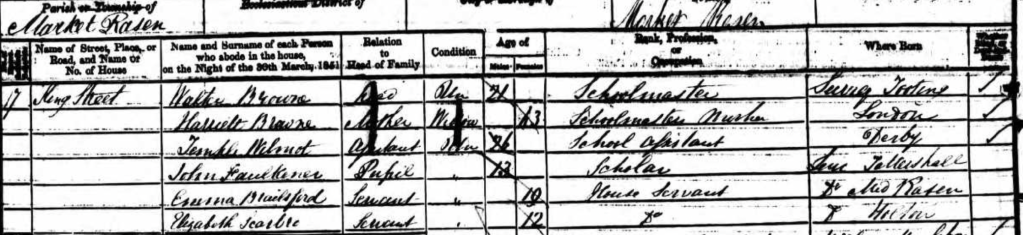
I searched for various iterations of the name and found an 1851 census entry for a Temple Wilmot working as an assistant teacher at Market Rasen in Lincolnshire. The census states that he is aged 26 (born about 1825 in Derby).
1851 Census Market Rasen
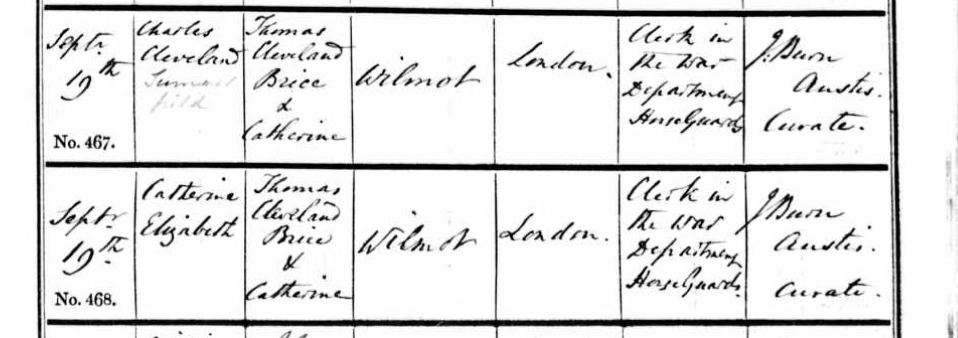
It didn’t take long to find a Thomas Cleveland Brice Wilmot and his wife Catherine (not Catherine Bosustow who would only have been 10 in 1856) baptising two children at the Holy Trinity Church in Dorchester, Dorset on 19 Sep 1856.
Double baptism 1856 – Holy Trinity Church baptismal register.
Charles Cleveland (with a faint third name which looks like Summerfield) and his sister Catherine Elizabeth. Father was described as ‘Clerk in the War Department Horse Guards’ and their residence is London. I could not find any trace of a marriage between Thomas Wilmot and Catherine before 1856.
After a fruitless search for the birth of a Charles Wilmot I found a birth entry for Cleaveland Somerville Wilmot born 10 Mar 1855 Islington (mother’s maiden name Somerville.) Father: Cleaveland Thomas Wilmot and father’s profession was described as ‘formerly in the army.’
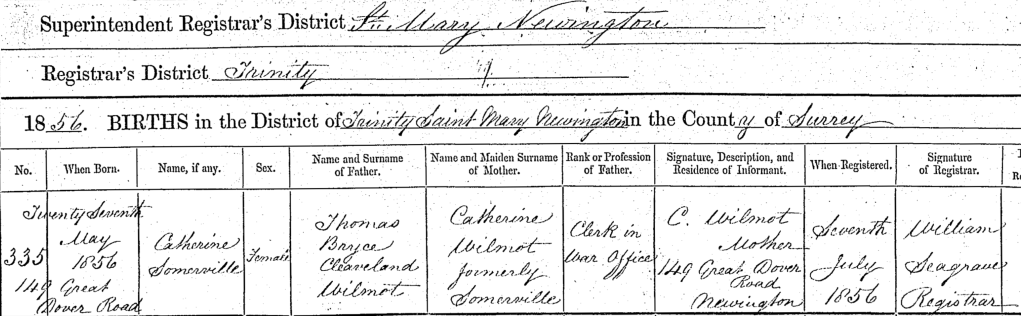
I couldn’t find a birth entry for Catherine Elizabeth but I did find a relevant entry for a Catherine Somerville born 27 May 1856 father’s name Thomas Bryce Cleaveland Wilmot a clerk in the war office.
I also found a death entry for the child Catherine Elizabeth Somerville Wilmot.
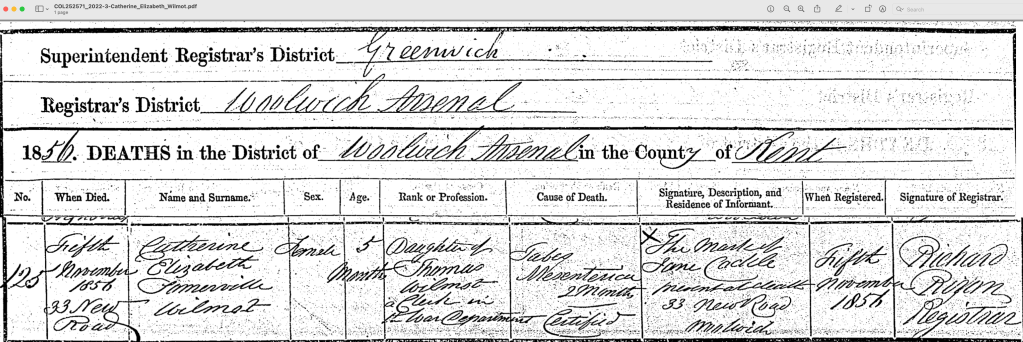
On 5 Nov 1856, at Woolwich Arsenal Greenwich London, Catherine died. Father is listed as Thomas Wilmot, clerk in the war office, and they were living at 33 New Road. Cause of death was Tabes Mesenterica, a form of TB which can occur if an infant is fed cow’s milk. The death was registered by a Jane Cockle who was present. Jane Cockle was a neighbour, she was married to Francis and can be found on the census from 1841 – 1871.
The girl was buried at Greenwich on 10 November and her father was listed in the burial register as Edm. Wilmot!
No further trace of Catherine Wilmot senior.
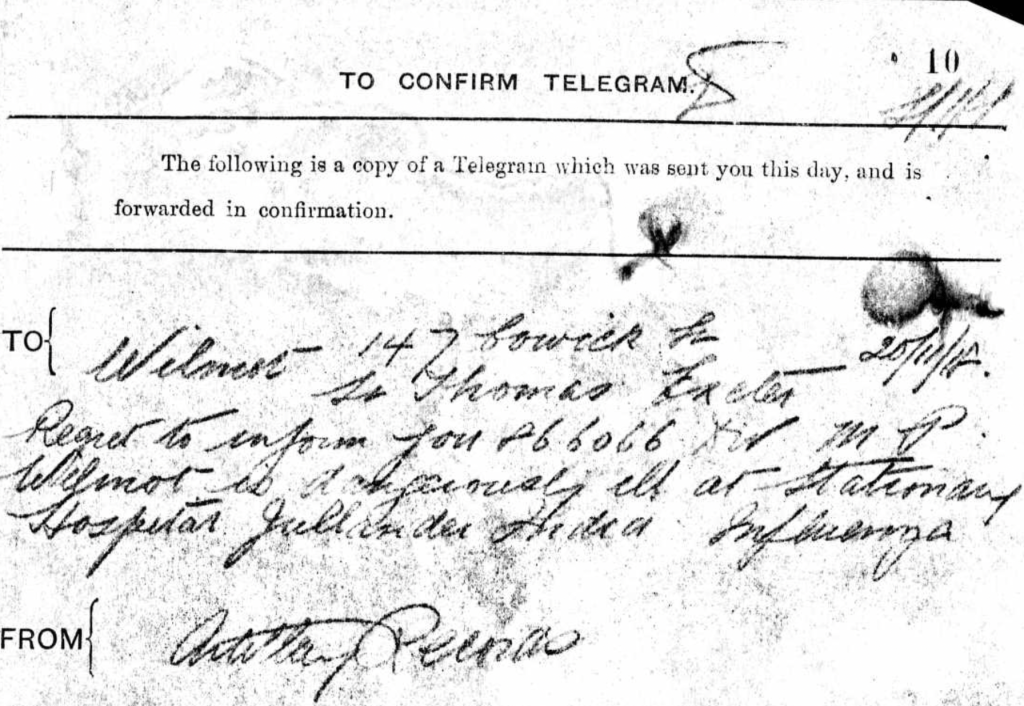
Further research for what happened to Cleaveland Somerville Wilmot produced a Cleaveland Wilmot on the 1881 census for Newington. He was an engineer (metal) worker and lodging with James Stanford. He apparently married Elizabeth Martin and was the father of Mongo Park Wilmot born 1889 at Victoria BC Canada. Mongo married in 1910 to Emily Maud Sercombe in Exeter, Devon. He was dangerously ill with Spanish Flu in Nov 1918 but survived and lived until 1955.
Army Record of Mongo Wilmot
In 1910 his marriage certificate declares that his father Cleaveland Wilmot was a coachman, deceased but I can find no trace of his death.
It’s not clear if Temple continued his contact with his son Cleaveland/Charles Wilmot or if he was raised by his mother or another relative. I can find no trace of him on the census for 1861 or 1871. I can only assume that he was listed under another surname.
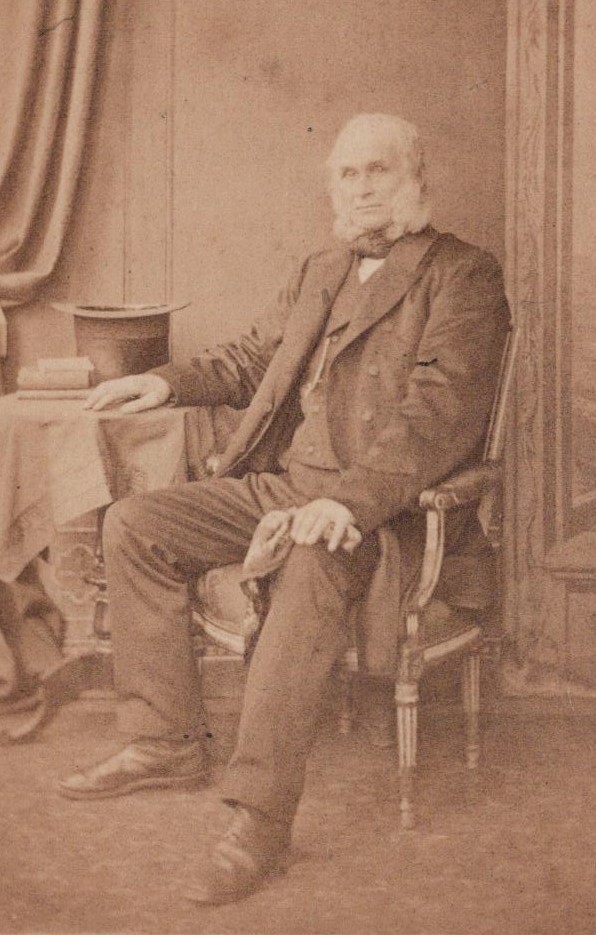
John Charles Lanyon was the eldest son and heir of John Charles Lanyon and Mary Mead of Redruth.
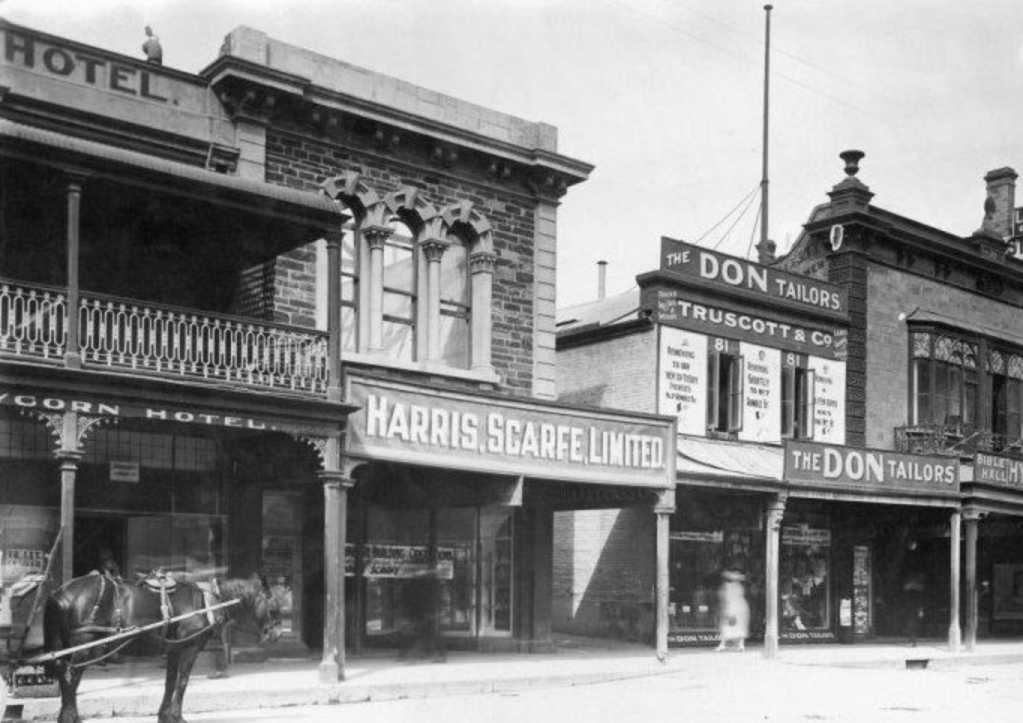
By the age of 22 he was a partner in the British Arsenic Company and and in 1849 he set sail for Adelaide, Australia on the ship ‘Candahar’ to establish a hardware and ironmongery business. On the journey he met George Peter Harris and they were founding partners of a very successful business which became Harris Scarfe, a major supplier of a range of household, agricultural and industrial items in Australia.
In 1855 John Charles left the partnership and returned to London where he opened a buying house for Harris Scarfe and other businesses in Australia. the London end of the business was JC Lanyon & Sons. There were several subsidiary companies: Australasian China & Glass Co, Australasian Implement & House Furnishing Co, The Adelaide Rope, Nail and Barb Wire Manufacturing Co.
In the 1860s with the decline in the copper industry he purchased £12,000 worth of equipment from Poldice Mine and JC. Lanyon & sons became a major dealer and exporter of mining equipment. In 1873 he bought £7,750 worth of equipment from Wheal Busy.
By 1887 he and his brother Alfred had set up the Cornish Tin Smelting with John Branwell and John Jose, they were also major shareholders in the lucrative East Pool mine where most of the ore for their new works came from. (Source: Barton 1967)
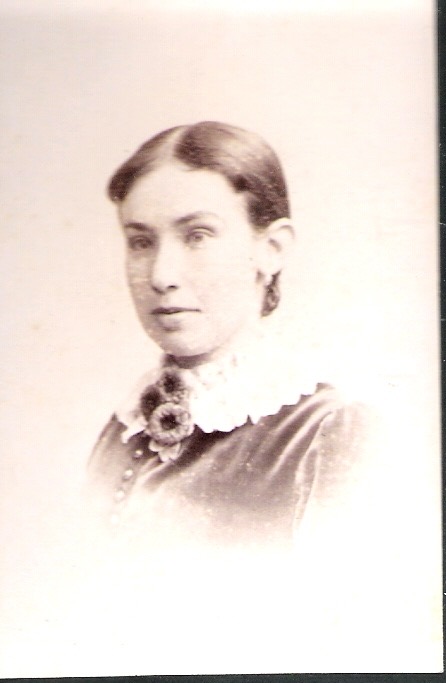
In 1857 he married Jane Stacy Bennett, the daughter of Charles Bennett and Jane Stacy.
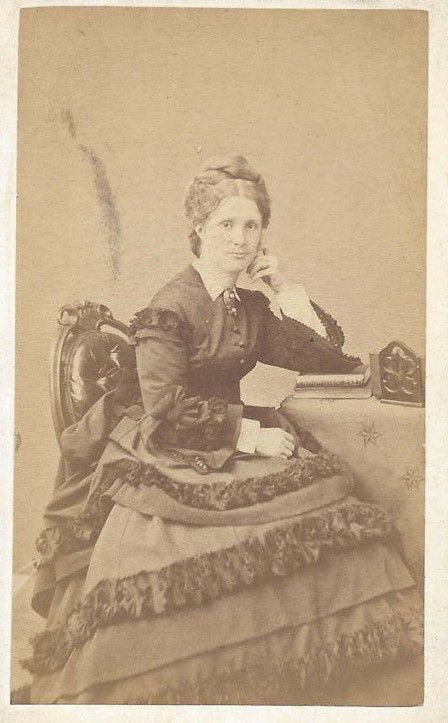
Jane Stacy Bennett
Jane was born in 1837 in Redruth. Jane’s family lived at 15 Fore Street next door to the Lanyons at number 16. Charles Bennett was a merchant and draper.
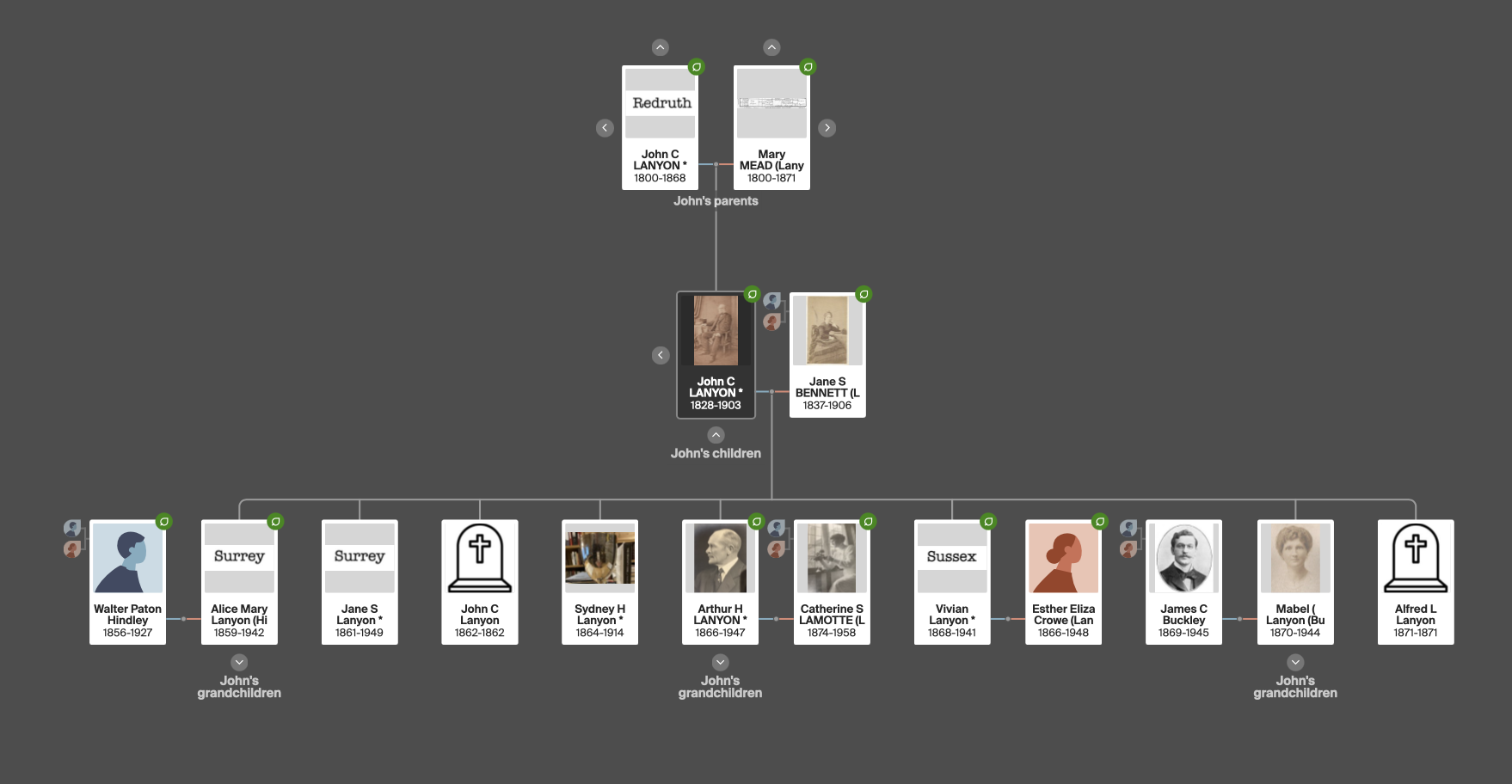
After marriage they moved to Croydon in Surrey as John was working in London. John and Jane had eight children:
Alice Mary 1859-1942 married Walter Paton Hindley – four children
Jane Stacey 1861-1949 spinster
John Charles 1862-1862 died in infancy
Sydney Howard 1864-1914 bachelor, rejected by the army and committed suicide in front of his nephew by jumping off Westminster Bridge on 24 Oct 1914. His body was found at Rotherhithe on 4 Nov.
Arthur Herbert 1866-1947 married Catherine Septima Lamotte
Vivian 1868-1941 married Esther Eliza Crowe, his nurse. He went to Jesus College, Cambridge and worked as a colonial agent. No children.
Mabel 1870 married James Charles Buckley, a doctor, they had four children
Alfred Leonard 1871-1871 died in infancy
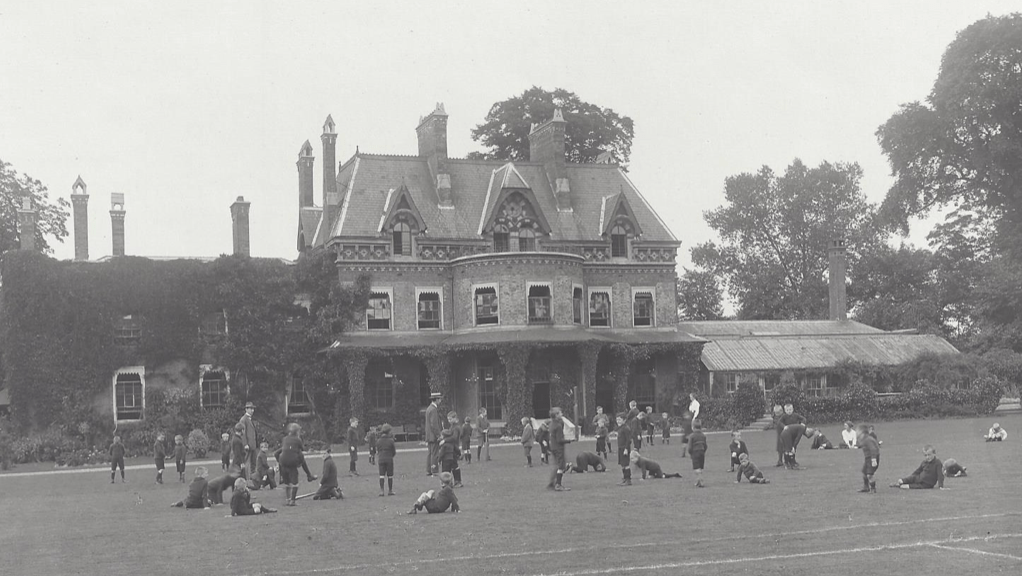
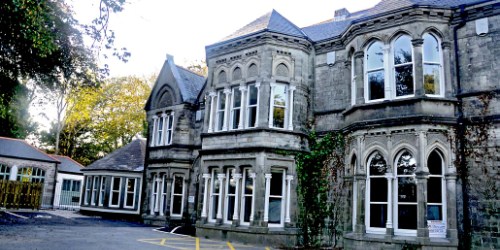
In 1878 they purchased Birdhurst in Croydon.
Birdhurst became a school after the Lanyons left in 1908.
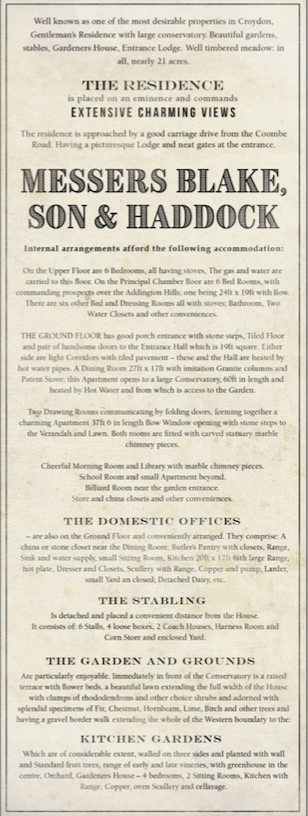
A description of the residence.
“an agreeable and retired residence delightfully situated with gardens and plantations in a beautiful valley leading from the town of Croydon to Croham House”
Mabel (May) Lanyon’s diary.
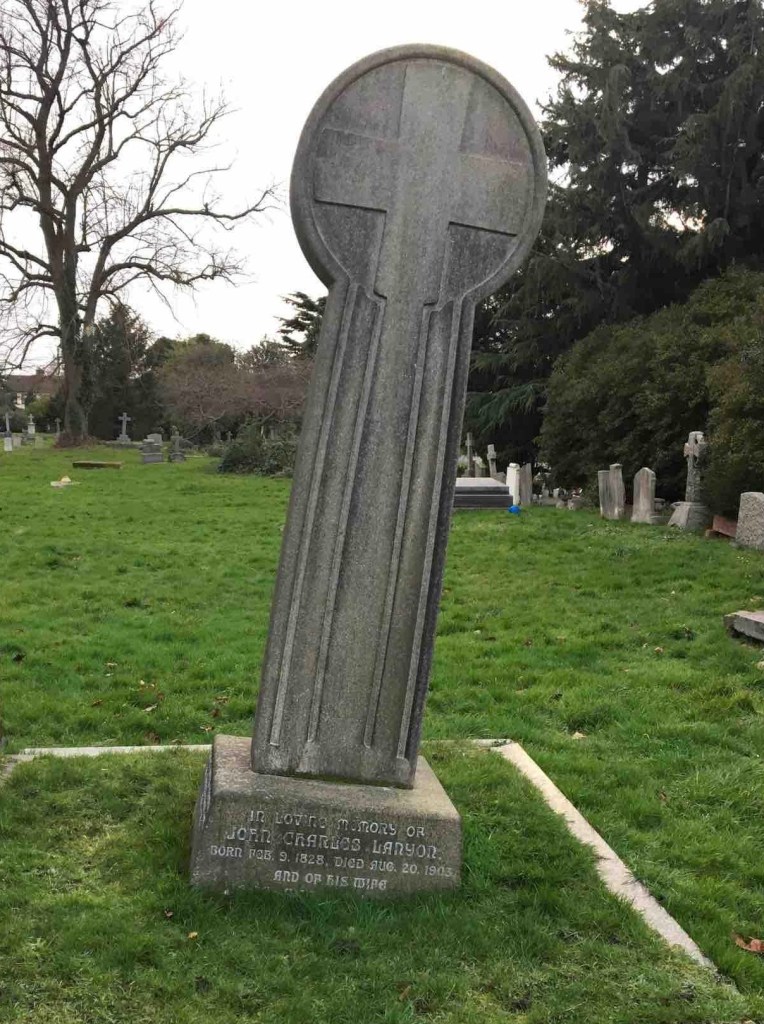
John Charles Lanyon died in 1903 and was buried in Queen’s Road cemetery, Croydon. He left an estate valued at £199,134.
Grave site of John Charles Lanyon Queen’s Road Cemetery in Croydon, Greater London, England, United Kingdom from BillionGraves
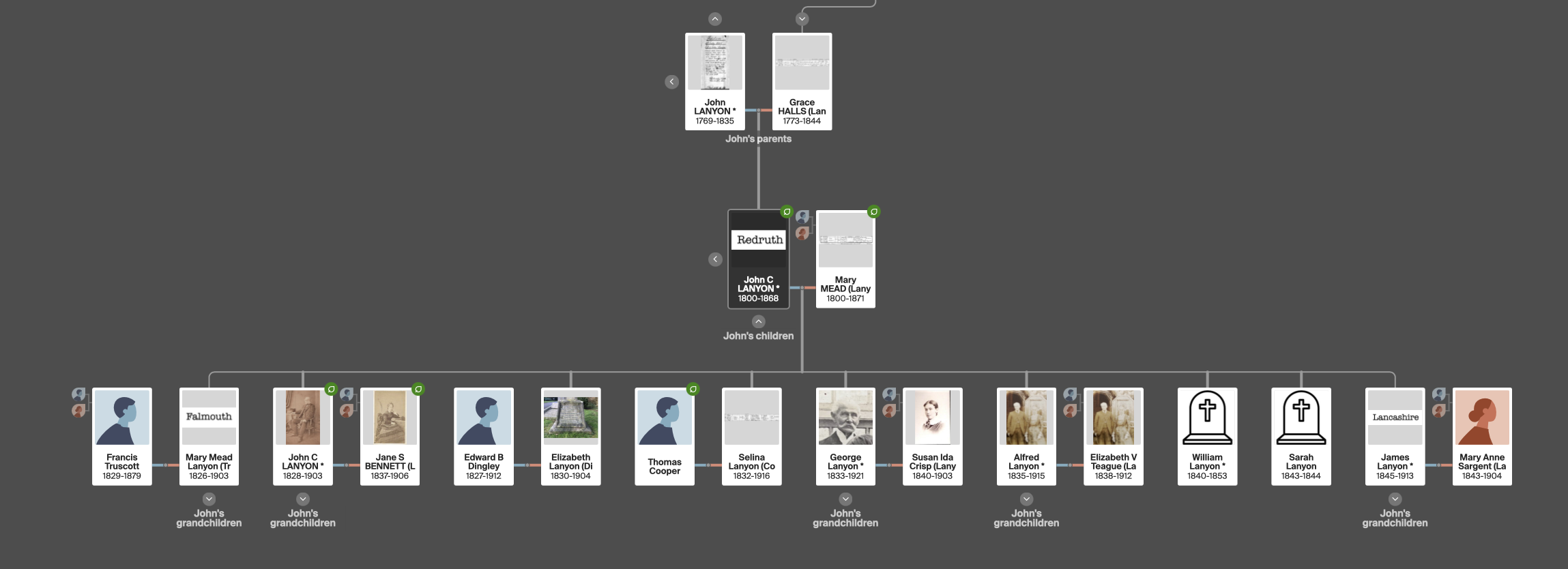
John Charles Lanyon was the son of John Lanyon and Grace Halls, he was born in Helston in 1800 but later moved to Redruth and in 1824 he opened an ironmongers in Fore Street. In 1840 by mutual consent the business ‘JC Lanyon & Thomas Lanyon Ironmongers, Curriers & Saddlers’ in Helston was dissolved and John Charles concentrated on his business interests in Redruth. He went on to become a partner in the gas works and other industrial concerns in the town.
In 1845 he was described as an ‘adventurer’ and was involved with Wheal Tehidy, Illogan & Redruth mine. By 1851 he was described on the census as a ‘merchant tanner, merchant shipowner and ironmonger’. In 1861, the census described him as a ‘merchant tanner’ who lived at Sparnon House. He retired on 31 Dec 1861.
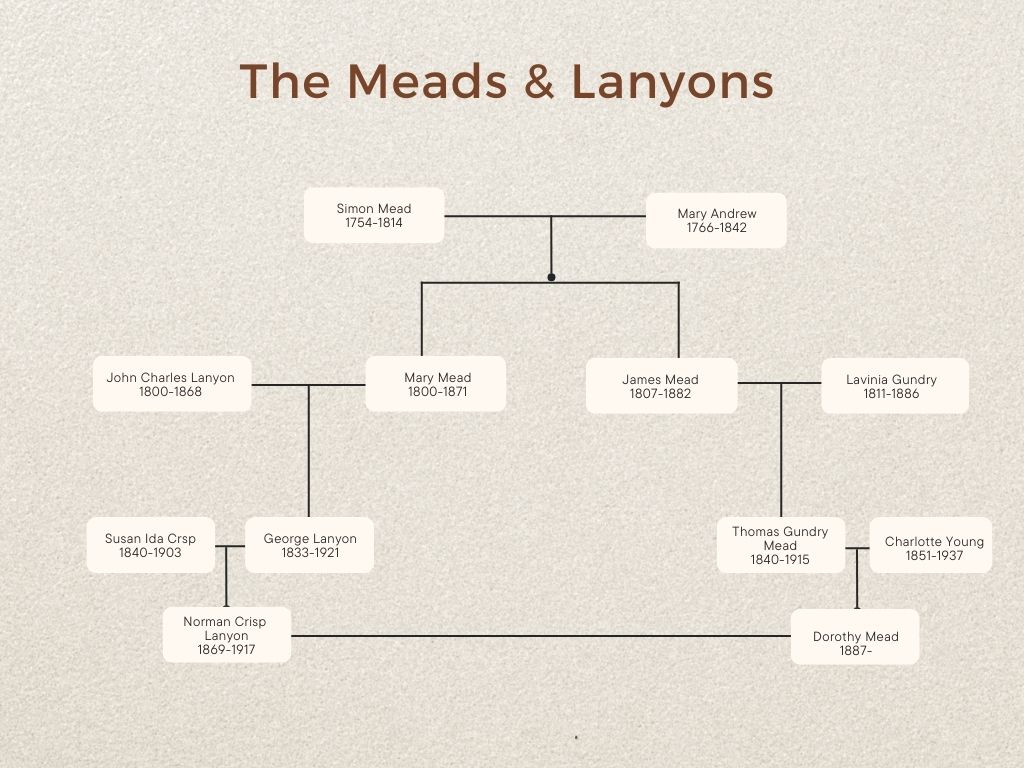
On 21 Jun 1825 he married Mary Mead, the daughter of Simon Mead and Mary Andrew. Simon was a Redruth shopkeeper.
They had ten children of which seven survived to adulthood.
Mary Mead 1826-1903 married Francis Truscott who was a classics tutor from Trinity College Dublin. They had six daughters and one son.
John Charles 1828-1903 (see separate post)
Elizabeth 1830-1904 married Edward Broadlake Dingley who was a draper with 8 assistants, there were no children
Selina 1832-1916 married Thomas Cooper, a merchant, no children
George 1833-1921 married Susan Ida Crisp
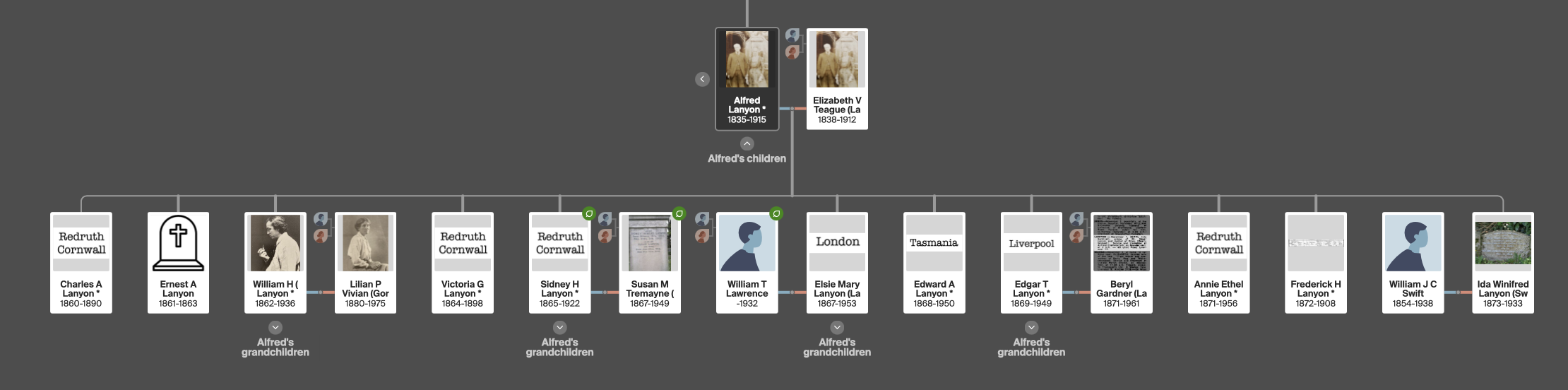
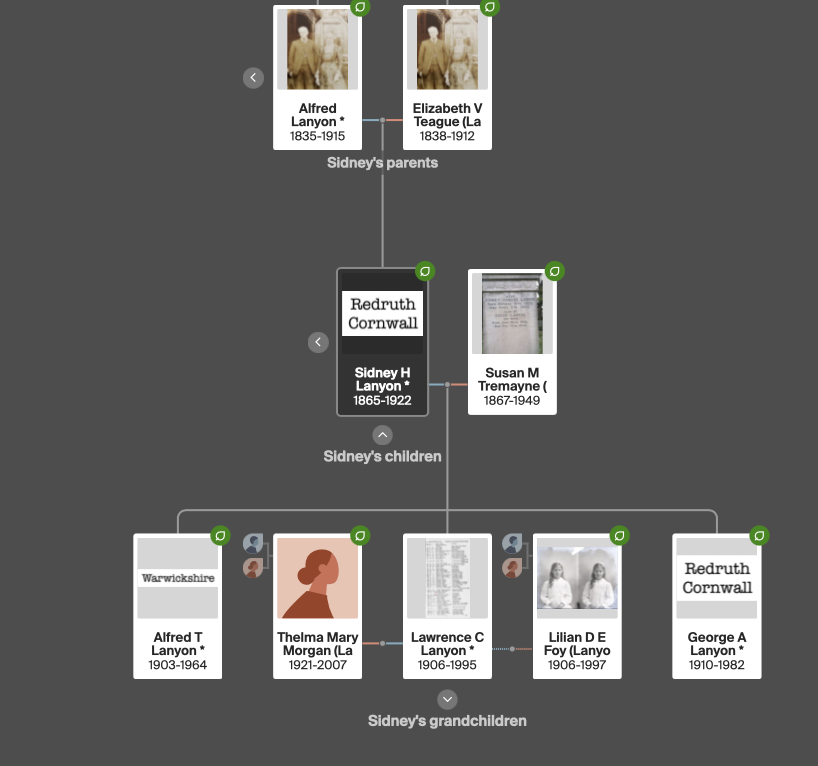
Alfred 1835-1915 married Elizabeth Victoria Teague
William 1840-1853 died young
Sarah 1844-1844 died in infancy
James 1845-1913 married Mary Anne Sargent
Harold 1850- died in infancy
John Charles was interested in all sorts of things and the Science Museum has a letter from him dated 1860 sent to Francis Trevithick (son of Richard) stating that he’d ‘been making enquiries respecting Murdoch’s little engine…’ and giving Francis the information he obtained as a result of these enquiries. (Source: Science Museum TREVF/4/66).
In 1847 he was sworn in as a special constable during the Redruth Corn Riots.
John Charles Lanyon died on 23 Nov 1868 at Redruth and left an estate worth £35,000. His wife Mary was listed on the 1871 census as an imbecile (presumably she was suffering from dementia) and died shortly afterwards.
George Lanyon 1833-1921
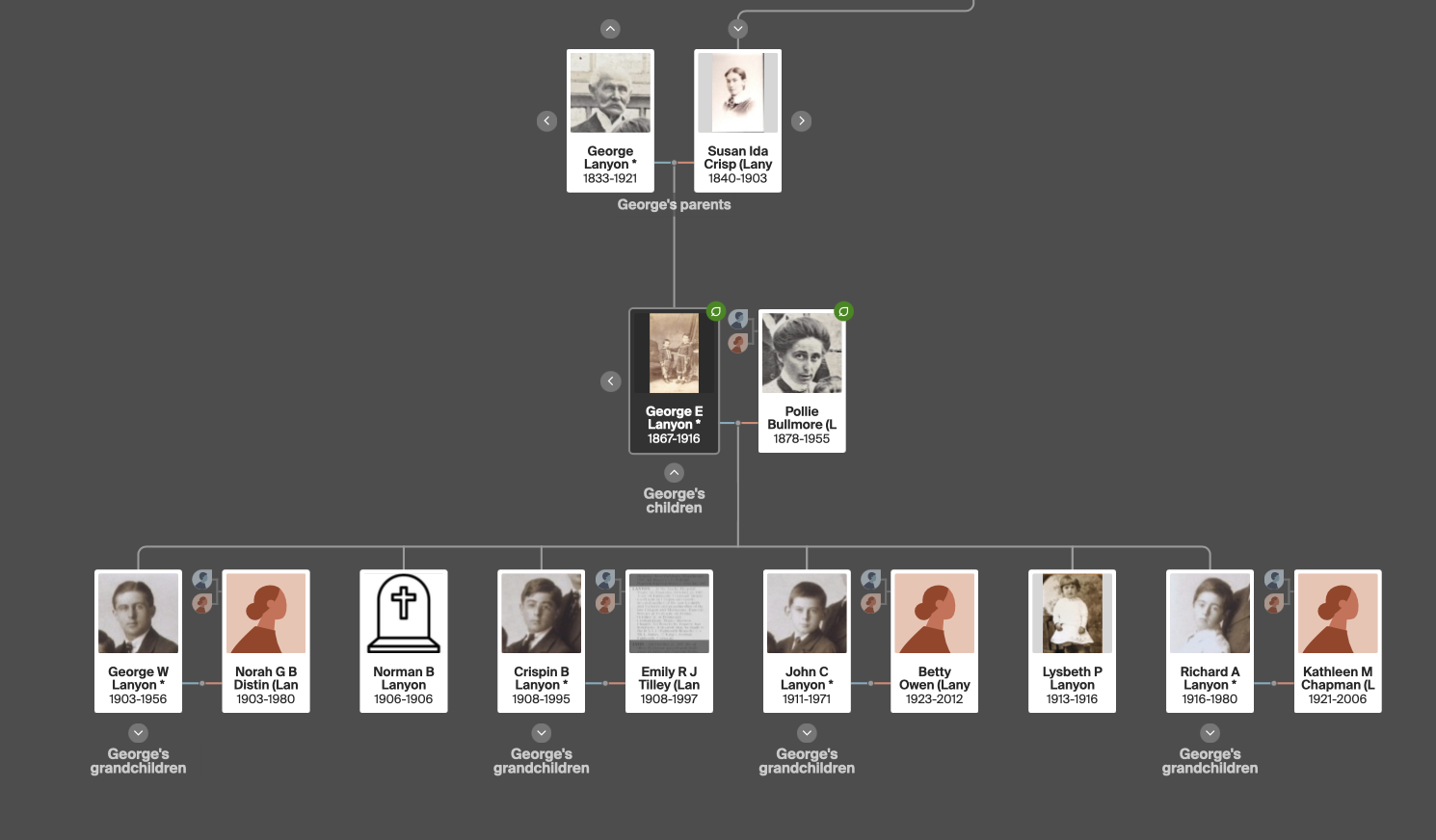
John Charles’ son George was born 1833 and became a tanner in Falmouth. He married Susan Ida Crisp in Hobart, Tasmania in 1861.
Susan Ida Crisp
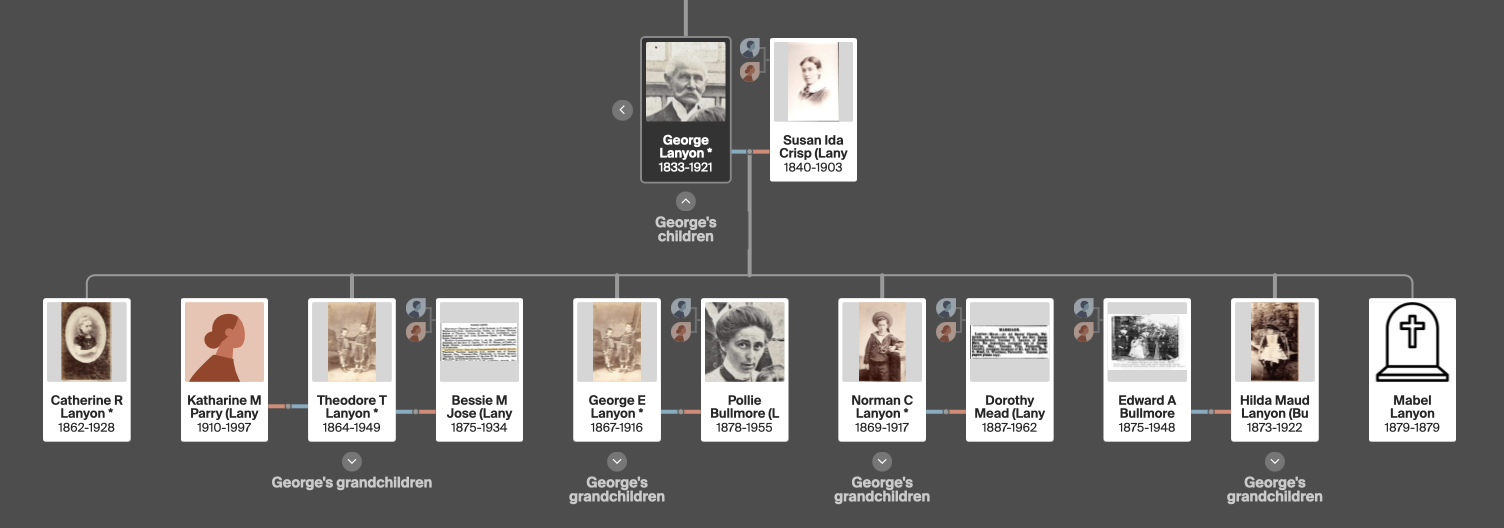
They returned to Falmouth and had six children:
George & Susan’s tree
Katherine Rosina 1863-1928 she was an artist and spinster who lived with her parents
Theodore Tasman 1864-1949 married Bessie Michell Jose & Katherine Parry
George Edward 1867 married Polly Bullmore
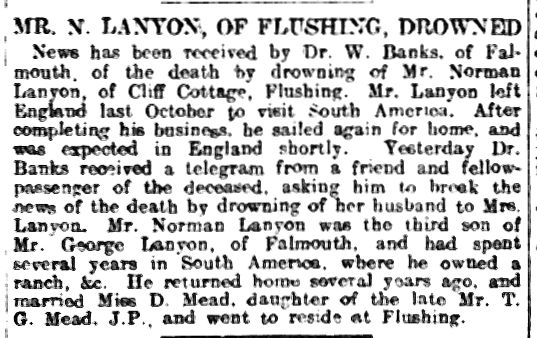
Norman Crisp 1869-1917 married Dorothy Mead
Hilda Maud 1873-1922 married Edward Augustus Bullmore, two sons
Mabel 1879-1879 died in infancy
Hilda married Edward Bullmore, the brother of Polly Bullmore, who conducted a long correspondence with Jane Veale Mitchell (early 20th century Lanyon researcher) about the history of the Lanyon family.
George and Susan’s children L-R in order of age.
Alfred Lanyon 1835-1915
Alfred Lanyon was born in Redruth in 1835. He too started off as an ironmonger but his interests moved to gas and he was the proprietor of the Redruth Gas Works and he established the British and Foreign Safety Fuse Company.
Alfred married Elizabeth Victoria Teague in 1859 and they had eleven children:
Charles Alfred 1860-1890 bachelor died of kidney disease, heart disease and exhaustion
Ernest Alexander 1861-1863 died in infancy
William Herbert 1862-1936 married Lilian Priscilla Vivian
Victoria Grace 1864-1898 spinster
Sidney Howard 1865-1922 married Susan Tremayne
Elsie Mary 1867-1953 married William Thomas Lawrence – one daughter
Edward Arthur 1868-? he may have emigrated and died in Tasmania in 1950
Edgar Temple 1869-1949 married Beryl Gardner – one daughter
Annie Ethel 1871-1956 spinster
Ida Winifred 1873-1933 married William John Cropley no children
Frederick Harold 1873-1908 stock broker, bachelor
In later life he had one of the largest tin smelters in the world. The output of tin from his smelting works amounted to £1,000,000 a year. He was also an alderman and Justice of the Peace.
He and his large family lived at Tolvean House in Redruth.
Tolvean House, Redruth
Alfred died of pneumonia on 5 Mar 1915 and left an estate valued at £239,934.
James Lanyon 1845-1913
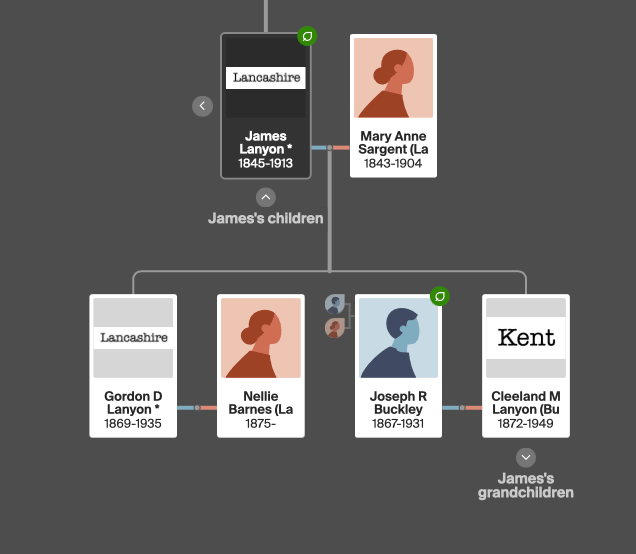
John Charles’ youngest surviving son was James born in 1845. He moved to Lancashire and became a cotton and linen merchant. He married Mary Anne Sargent in 1868 and they had two children:
Gordon Dingley 1869-1935 married Nellie Barnes
Cleeland Mead 1873-1949 married Joseph Richard Buckley – two children
Grandsons
Theodore Tasman Lanyon 1864-1949
Theodore was the eldest son of George Lanyon and Susan Ida Crisp, he was born in Falmouth. In 1897 he married Bessie Michell Jose at Perranarworthal, Cornwall. They had four children. In 1938 he married for a second time to Katharine Myvanwy Jean Macleod Parry who was 46 years younger! Theodore was Fleet Paymaster for the Royal Navy.
George Edward Lanyon 1867-1916
George was the second son of George and Susan. He was a doctor and in 1902 he married Polly Bullmore. They had six children.
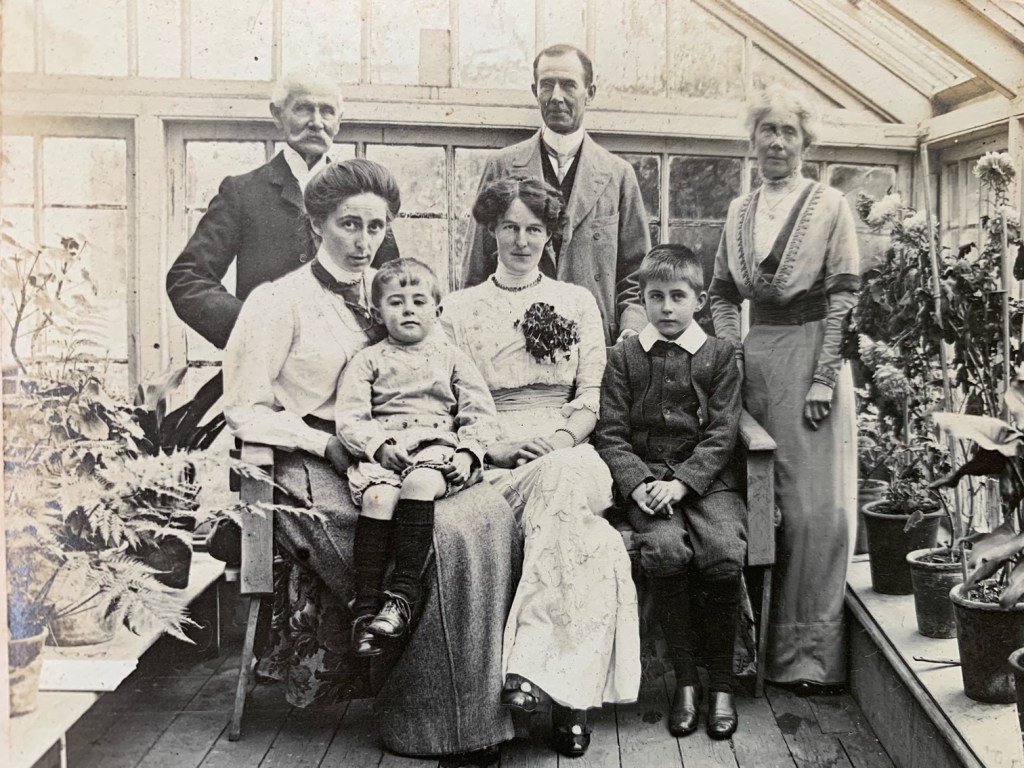
Polly with a child on her knee, sitting in front of her father-in-law, George Lanyon
Norman Crisp Lanyon 1869-1917
Norman was the third son of George and Susan. He married Dorothy Mead, a cousin, and they had three children. Norman died on 16 May 1917 when he was shipwrecked in the English Channel by a torpedo.
William Herbert Lanyon 1862-1935
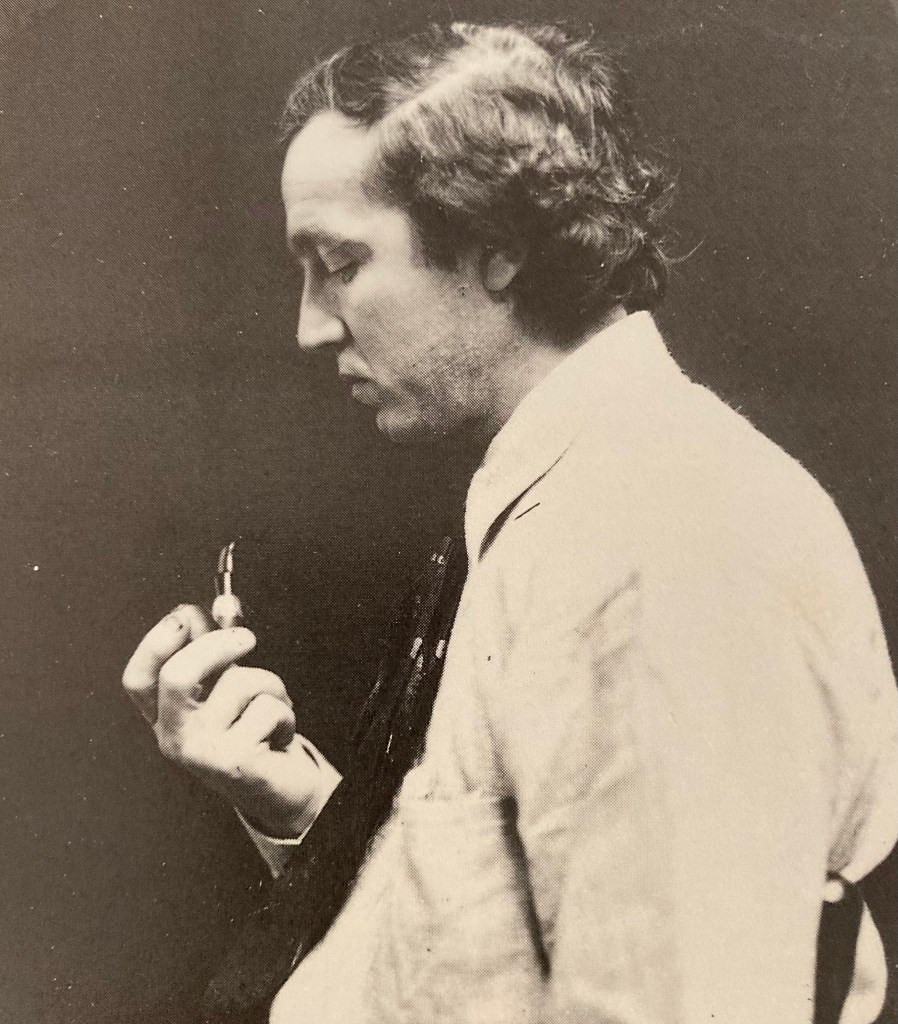
William Herbert (Willie) Lanyon
William was the third son of Alfred Lanyon and Elizabeth Victoria Teague. The 1901 census described him as a professor of music but earlier and later censuses describe him as having no occupation and having ‘private means’. He married in 1916 at the age of 54 to Lillian Priscilla Vivian. They had two children:
Lysbeth Mary Priscilla 1917-2008
George Peter 1918-1964 – (see post ‘Soaring Flight – The Artist Peter Lanyon’)
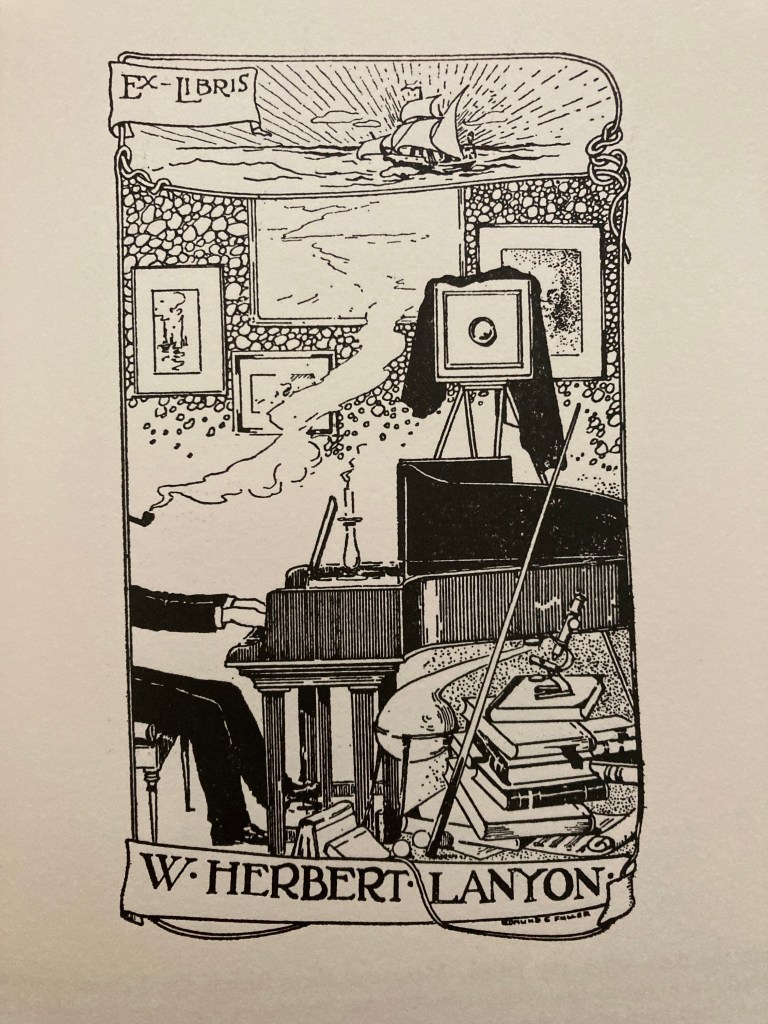
William’s bookplate
Sidney Howard Lanyon 1865-1922
Sidney was the fourth son of Alfred and Elizabeth. He was a gas engineer in his father’s business and in 1892 he married Susan Tremayne. They had three children.
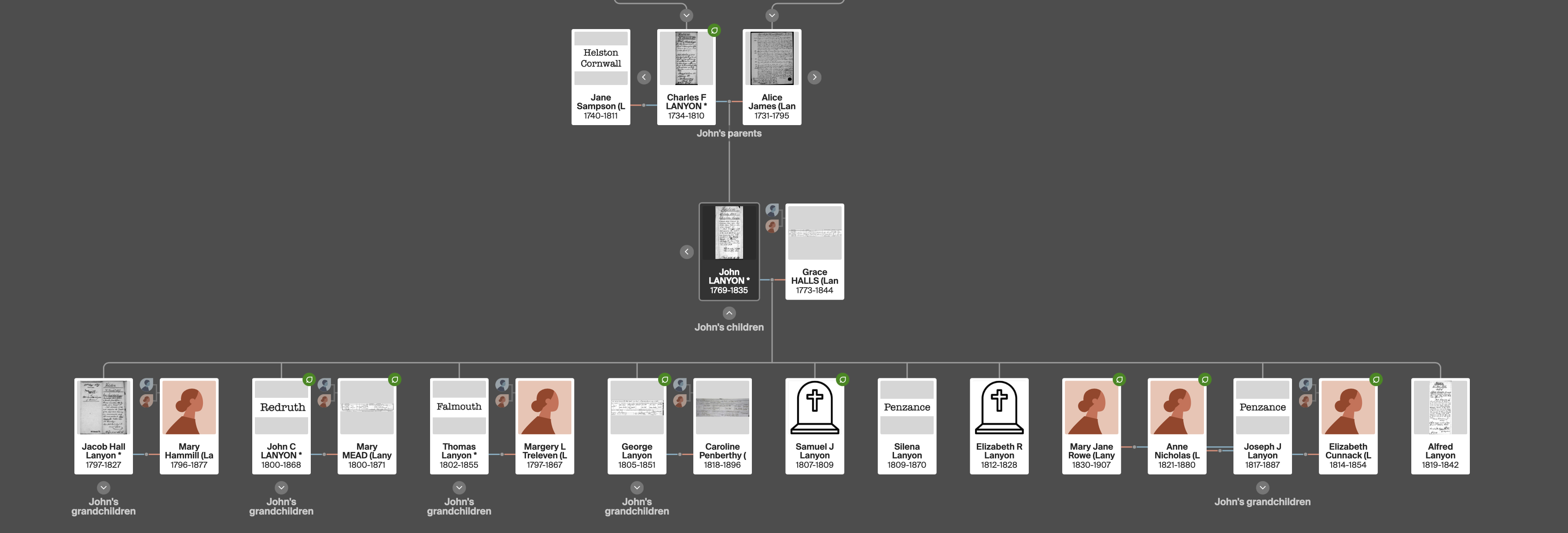
John was born in 1769 in Helston the son of Charles Francis Lanyon and like his four brothers he was a cordwainer and currier however he also diversified into ironmongery. When he died in 1835 after “a very long affliction” his estate was worth £4000.
John married Grace Halls (the daughter of Jacob Halls and Grace Rundle) on 3 May 1796 at St Austell.
John & Grace’s tree
John and Grace had nine children of which seven survived to adulthood.
Jacob Hall 1797-1827 married Mary Hammill – one child
John Charles 1800-1868 married Mary Mead – ten children (see post about John Charles Lanyon)
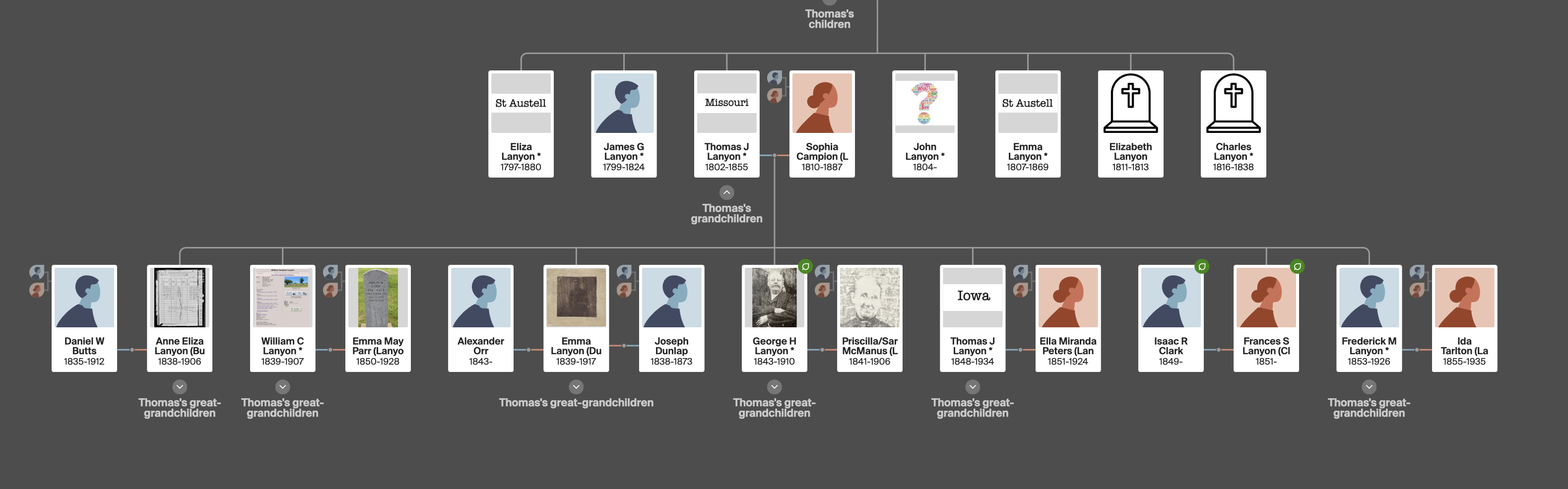
Thomas 1802-1855 married Margery Lawrey Trelevan – nine children
George 1805-1851 married Caroline Penberthy – ten children
Samuel James 1807-1809 died in infancy
Silena 1809-1870 spinster
Elizabeth Rundle 1812-1828 died young
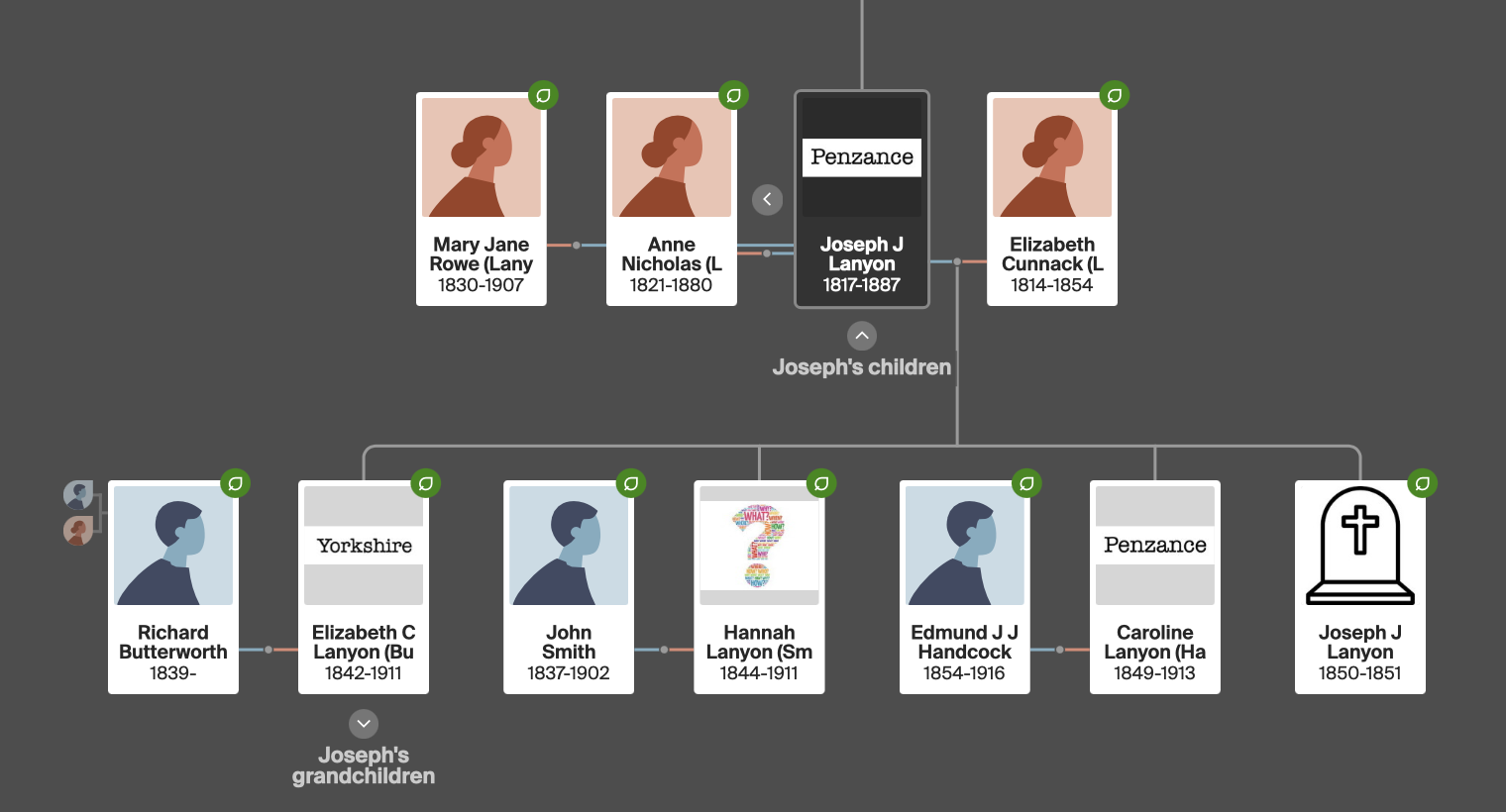
Joseph James 1817-1887 married Elizabeth Cunnack – four children
Alfred 1819-1842 unmarried
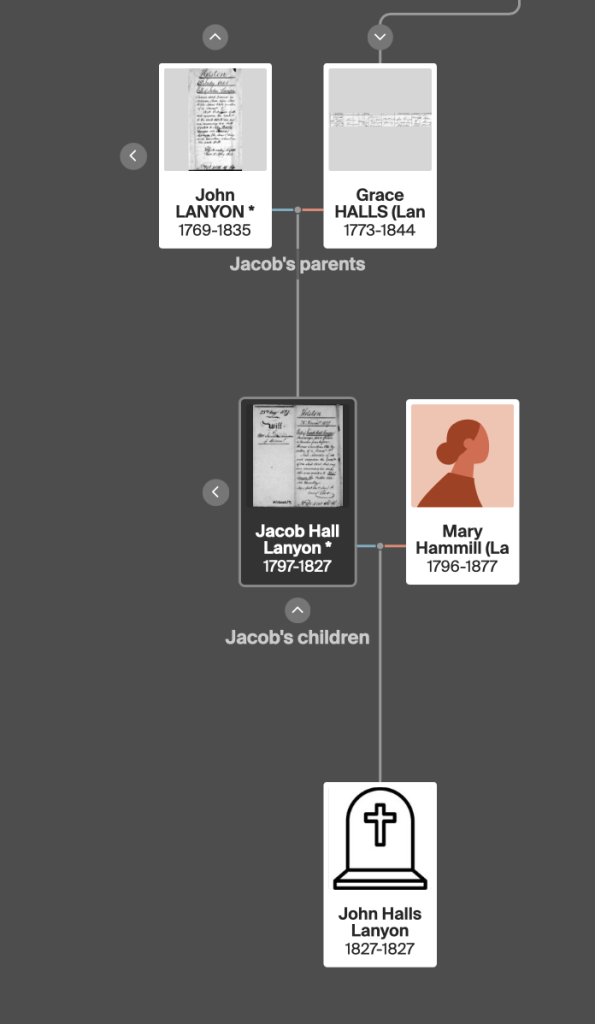
Jacob Hall Lanyon 1797-1827
John and Grace’s eldest son and heir Jacob died before his father.
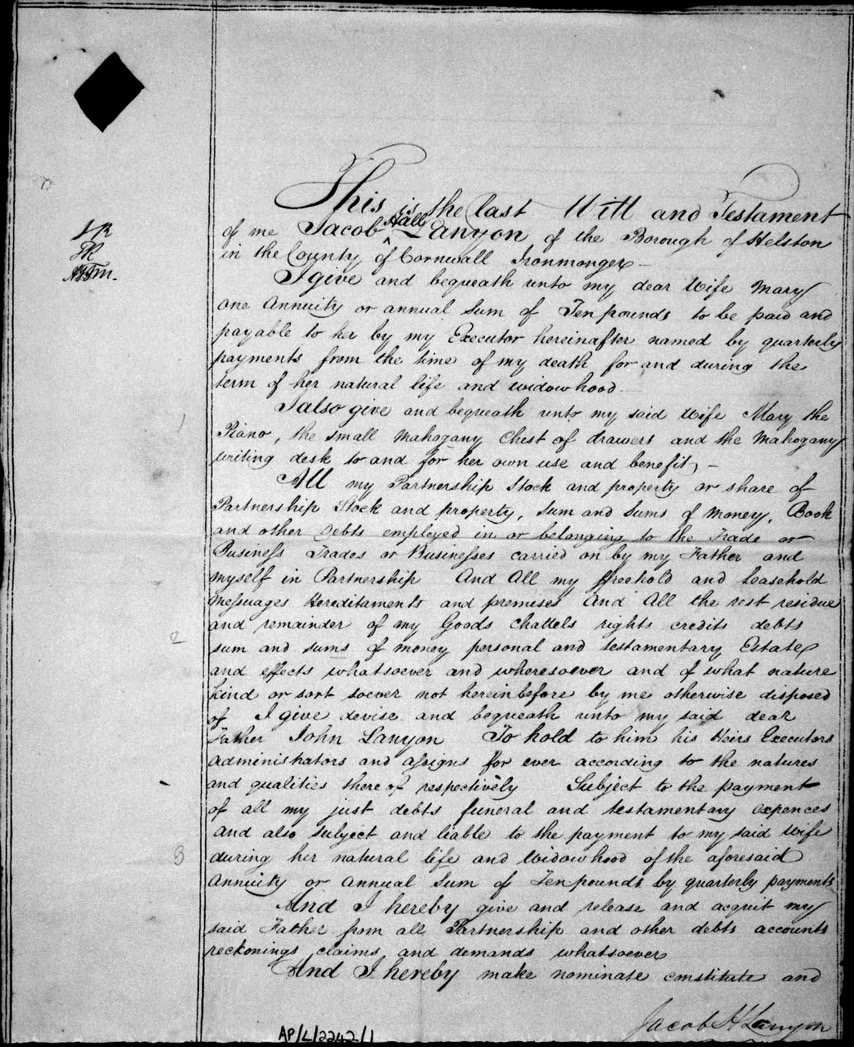
Jacob was an ironmonger and must have known he was going to die as he made a will three months before his death. He leaves Mary, his wife, an annuity of £10, the piano, a mahogany chest of drawers and a mahogany desk. His business interests he leaves to his father John.
Jacob’s will CRO/AP/L/2242
Jacob and Mary’s only son was born in 1827 and only survived a few months.
Thomas Lanyon 1802-1855
Thomas was born in 1802 and was an ironmonger and currier employing three men in Falmouth. He married Margery Lawrey Trelevan and they had nine children:
Thomas Halls 1828-1866 married Elizabeth Jane Studden – six children, five daughters and a son the Rev Thomas Studden Lanyon who married Ann Glencross and emigrated to Australia – one daughter.
Jacob Halls 1833-1913 married Hephzibah Basham – ten children
Elizabeth Ellen 1833-1833 died in infancy
Jane 1835-1907 spinster
Mary 1836-1882 married Edmund Handcock – five children
John 1839-1900 was a currier’s shopman, he emigrated to Canada and died of pneumonia in 1900, he never married.
William 1839-1841 died in infancy
William 1841-1865 died young
Elizabeth Ellen 1842-1921 married Ralph Davenport Waller in 1898, no children
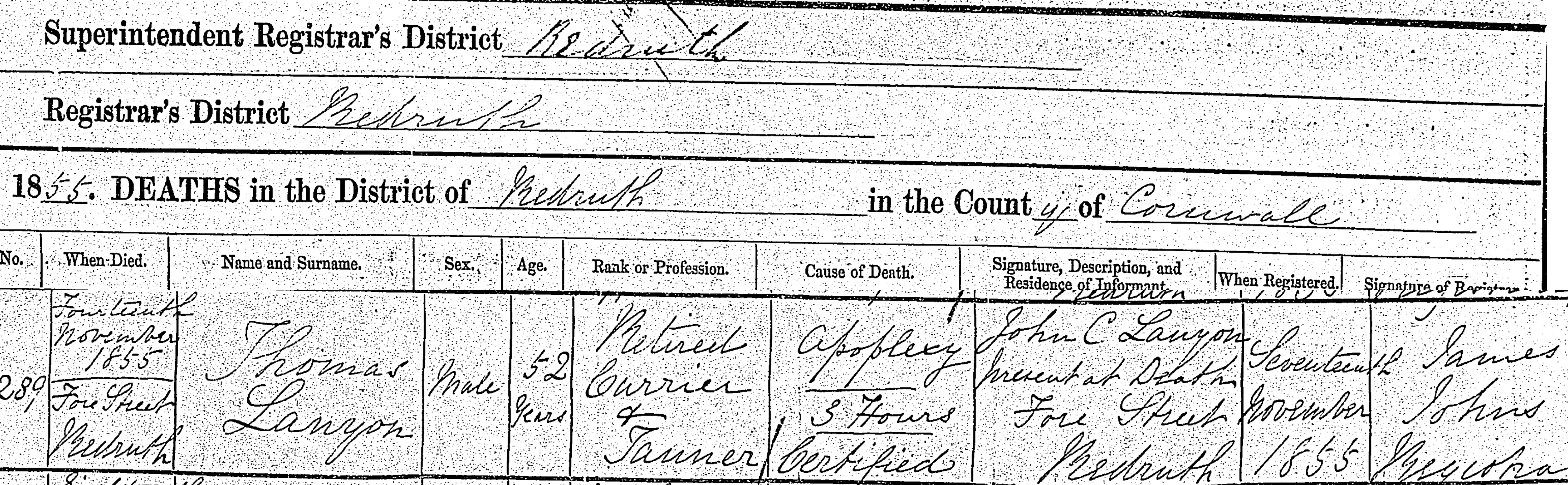
Thomas died suddenly of apoplexy in 1855.
Death Certificate of Thomas Lanyon
George Lanyon 1805-1851
George was born in 1805 and worked as a master saddler and ironmonger. He lived in Church Street in Helston and married Caroline Penberthy in 1841. They had three sons and seven daughters.
Georgiana 1842-1844 died in infancy
George William 1842-1909 married Mary Symons Woolcock – three children
Caroline Mary 1844-1913 spinster
Emily 1845-1923 spinster
Alfred 1846-1846 died in infancy
James Penberthy 1847-1887 worked as a cashier in Brazil and married Mary Treloar whose father worked at the Don Pedro North Del Ray Mines in Brazil, they emigrated to Australia – four children
Selina 1848-1850 died in infancy
Ada 1849-1850 died in infancy
Mary 1850-1939 married Charles Comber Hoadley – four children
Laura 1851-1932 spinster
The last child, Laura was born after her father’s death in April 1851, aged just 46. He had been suffering with Rheumatic fever for six weeks and died of heart failure.
Joseph James Lanyon 1817-1887
Joseph James was born in 1817 and was a currier and ironmonger in Madron. His first marriage was to Elizabeth Cunnack who died in 1854, his second wife was Anne Nicholas who died in 1880. George didn’t hang around and aged 65 he married his third wife, Mary Jane Rowe in 1881. He had three surviving daughters from his first marriage: Elizabeth, Hannah and Caroline. Joseph died in 1887.
Alfred Lanyon 1819-1842
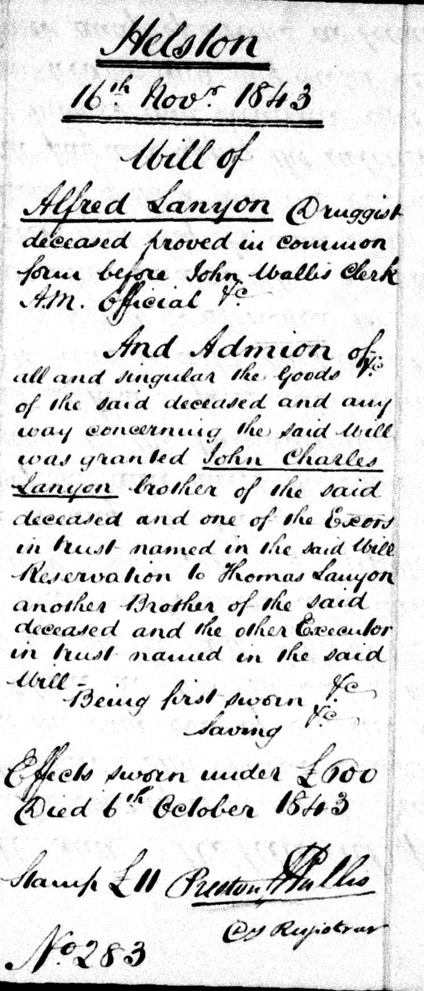
John and Grace’s youngest son Alfred was born in 1819 and died at the age of 24. His death certificate states that he died of ‘decline’, this usually meant TB. He was a druggist and lived with his brother George in Helston. He never married.
Will of Alfred Lanyon CRO/AP/L/2424
John and Grace’s second son and eventual heir was John Charles Lanyon. He moved from Helston to Redruth an opened an ironmongers on Fore Street. In 1840 by mutual consent ‘JC Lanyon & Thomas Lanyon Ironmongers, Curriers & Saddlers’ in Helston was dissolved and John Charles concentrated on his business interests in Redruth. See more about him in the post – ‘John Charles Lanyon 1800-1868’.
Jacob Halls Lanyon 1833-1913
Jacob was the second son of Thomas Lanyon and Margery Trelevan. he emigrated to Victoria, Australia and married Hephzibah Basham in 1862. They had ten children:
Ada Rebecca 1863-1935
Mary Helen 1864-1952
Florence Jane 1867-1957
Harold Trelevan 1868-1938
Kate Trelevan 1870-1954
Arthur Martin 1872-1952
Amy 1873-1957
Jessie May 1876-1916
Athelstane Edward 1878-1965
Raymond Rivers 1881-1946
Ada Rebecca Lanyon and her husband Alfred Collis Morton
Eliza Lanyon died at St Austell on 18 May 1880 aged 82. A Miss Jewell wrote to Eliza’s niece, Mrs Annie Eliza Butts (nee Lanyon) (Little Sioux, Iowa) in July 1880.
“You will have received my letter informing you of your aunt’s death. I have now to say that I gave your address to the Executor, Mr. Rowse of St Austell so that he may write to you when he wants to do so…..”. It soon becomes apparent that Mr Rowse is a bit of a scoundrel!
Some eighteen months later WT Sanders writes to Mrs Butts: “As you are no doubt aware the distribution of the estate according to the terms of the will was left entirely in the hands of Mr Rowse. Mrs Sanders has written to him on the subject of her legacy but he has not made any reply. In October last I was at St Austell and saw him about it….he pleaded pressure of business ….and that he had been waiting for an account from the auctioneer which he had that very day received, therefore was in a position to draw a cheque and settle the affairs….nothing further has been heard from him. Taking this conduct into consideration and the time which has elapsed since Miss Lanyon’s death it has been thought desirable that you as the residuary legatee should at once take some steps…to enforce the administration of the estate and with this object in view should instruct a solicitor to act on your behalf.”
WT Sanders recommends the solicitor, Mr Harrison. In Feb 1882 Mr Harrison writes to Mrs Butts informing her that he has written to Mr Rowse and it transpires that Eliza Lanyon’s will has not even been proved. Mr Harrison writes to Anne’s brother Thomas James Lanyon in 1884.
“Mr Rowse has again and again promised to prove the will and wind up the estate…..The probate court ordered on our application some months since that if he did not prove the will he would be liable to be arrested. This order is still in force and a copy of it has been served on Mr Rowse but he has not proceeded to wind up the estate, not withstanding that we have endeavoured by personal interviews and otherwise to induce him to do so.”
Later they write again to Thomas: “….we regret to say that Mr Rowse has failed to fulfil his promises and there is we think no alternative but to take proceedings to have Miss Lanyon’s estate administered in the Chancery Division of the High Court. This we endeavoured to avoid as the costs ….are heavy. The £300 we obtained from Mr Rowse is on account bearing interest at 3%.”
They write again on Dec 31st 1885 “We have not been able to obtain a further sum from Mr Rowse…..we fear it will be necessary to take further proceedings against Mr Rowse to enforce a settlement. He now alleges as the reason for not closing the estate , that he has been unable to obtain payment of a mortgage debt, and it may be necessary to sell the property included in the security. Please say if you desire us to proceed in the Supreme Court to obtain administration of the estate.”
August 1886 and Frankfort Chambers in Plymouth send a telegram to Thomas Lanyon: “We very much regret to inform you that Mr Harrison …is at home ill and we fear it may be some weeks before he will be able to attend to business.”
The saga continues with Mr Rowse employing various delaying tactics. In March 1887 Thomas Rowse writes: “I have been pressing for settlement of the mortgage debt and have had two letters from the parties….saying that Mr Williams was undecided and that they were endeavouring to get the money from some friends and they beg for a little further indulgence.”!
At this point a Jason. H. Morris gets involved and writes to Thomas in July 1889 (over nine years after Eliza’s death!)
“Friend Thomas. I have had an interview with Mr Harrison, your solicitor here…he has not done his best for the interest of the estate, I am sure, and I drove that admission from him that he withheld from the heirs more than legal fees. I can see that he is disposed to treat me very ‘gingerly’ and I think I am going to be able to work quite harmoniously with him from this time on. I go to St Austell next week and….then go straight at Mr Rowse for blood. …..My only fear is that he has been using your aunt’s money and now cannot pay for it. In that case all that can be done is to clean out what he has and lock him up for the balance.”
Jason Morris writes again that month: “My arrival here was exceedingly inopportune, as Mr Rowse went to the north of England the Saturday before my arrival…..he returned with a new wife….and I jumped him red hot a half hour later. He was very affable but he is as dishonest as his hide will hold. He promises now to give me a detailed statement of account by one week from today, and I know he does not intend to settle with me then. I feel very sure I shall have to pull him up to London before I get any satisfaction from him….The annuity- Miss Selina will not sell or compromise it…about £173 will buy a government annuity and if she dies next week the government will keep the £173. The only way I can see it is for you to buy U.S Bonds enough to have the coupons pay $50 and deposit them in a bank here until she ceases to call for her interest and then pull down your bonds. She is 45 years old, tough as thunder, likely to live till 90 and so up along.”
Jason Morris writes to Thomas again in August 1889. “Friend Lanyon….you say right when you say “put him through” and “lock him up if he don’t pay” etc. I should have done it without your order for he is the most cheeky dishonest chap I ever met…..I took the trail he came off from with his new wife and followed it up to Lichfield Staffordshire on a hunt for his money as I was sure he had money and equally certain he had sequestered it good and hard. I have found £400…tucked away. The annuity – I have studied that a good bit….and conclude the best thing to do is leave that on Rowse. True he may never pay it but when we have got all we can we shall have less than belongs to us and I have little sympathy for Selina. She is strong as a mule and twice as stubborn, wouldn’t compromise a penny in any way and Miss Jewell told me she listened at your aunt’s door when the will was being made, knew all its provisions perfectly and then never ceased teasing and hounding your aunt to make the codicil until it was done. I think I can prove Rowse indebted over £700 now and I hope to make it greater before I sue him. I feel pretty sure of catching him for something more I know he has got it the only question being whether I can find it but my reputation and pride are at stake and you folks can afford to be as patient. As I can for I feel certain of making you all admit some day that you sent the right man.”
That is the last letter and we are left wondering if the intractable case was ever resolved.
Last Will and Testament of Eliza Lanyon of St Austell 17th Feb 1880
I give and bequeath to:
Sophia Lanyon widow of my late brother Thomas Lanyon the sum of £100
Frederick Mitchell son of Frederick Mitchell of Gwennap £100
Annie Eliza Butts, the daughter of my late said brother Thomas Lanyon, £50
Nanny Mitchell the widow of William Mitchell £50
Sarah Sanders wife of Samuel Sanders of Saltash £5 to buy a mourning ring
Hannah Geach of Saltash, spinster, £5 to buy a mourning ring
Thomas Rowse, £50
Wesleyan Theological Training College at Richmond £50
Wesleyan Foreign Missionary Society £50
St Austell Wesleyan Sunday School £10
Town Missionary Society £10
British and Foreign Bible Society £10
Wesleyan Worn Out Ministers and Minster’s Widows fund £30
Children’s Home in London connected to Wesleyan Society £30
Mrs Henry Andrew of St Austell £2 to buy a mourning ring
Ellen Kate, Laura and Julia Andrew daughters of Mrs Henry Andrews 20 shillings each
Anna Maria Bice, daughter of Malachi Bice of St Austell 20 shillings
The eldest sons of Henry Andrew of Sherborne 20 shillings each
Thomas Rowse £19 19 shillings to be distributed to the poor connected with the Wesleyan Society
Edward Geach of Trethurgey £5
Clara and ? daughters of Walker Hicks of St Austell 50 shillings each
Selina Whetter if living with me at the time of my death…?
Sarah Sanders – portrait of Charles Geach, silver sugar tongs and large sofa rug, my crimson and white antimacasser, drawing room scrap book, album and photographs
Suitable mourning clothing for my servant Selina Whetter
Selina Whetter the bed she normally sleeps on and bed linen and all my undergarments. But in case she shall during any illness from which I may suffer or at any time previous to my death be guilty of unkindness or any other misconduct which in the opinion of the executor renders her unworthy of the bequests to her by this will then such bequests shall be null and void (Eliza evidently has a good measure of Selina!)
All the rest and remainder of my clothing I give to Mrs Joseph James Lanyon of Penzance and Jane Lanyon of Falmouth
Caroline Hancock daughter of Joseph James Lanyon half a dozen silver tea spoons, my gold watch and chain from my Spanish Figures under the large glass shade
Bessie Butterworth daughter of JJ Lanyon half a dozen silver dessert spoons
Jane Lanyon of Falmouth half a dozen tea spoons, a fire screen,
Ellen Lanyon of Falmouth half a dozen ? and my worked wool chair
All the rest and remainder of my silver forks I give unto my first cousin Joseph James Lanyon of Penzance and plated cake basket
Ella Ann wife of John Lovering of St Austell?
Thomas Rowse the Spanish Figures under the two small glass shades and a pair of small globes
Elizabeth Lovering of Fore St St Austell my electro plated coffee pot
Mrs Fred Stephen of Hombal in St Mewan the portaits of my uncle and aunt and also a figure which is on the chiffonier.
Jane Lanyon and Thomas Rowse all my books
Hannah Geach the specimens under the glass shade on the mantelpiece and the thermometer under glass
I give to Jane Lanyon and her sister Ellen my dessert set between them.
Jane Lanyon and Mrs Joseph Lanyon all my ornaments on mantelpieces and chiffionier except those I have before given
My neighbour Mrs John Pearse my small cotton crochet antimacasser with leaves
All the rest and residue and remainder of my real estate and personal estate not otherwise disposed of unto and amongst the children of my late brother Thomas now in America
What a detailed will and it really gives a glimpse into life in Victorian times for a well to do spinster.




















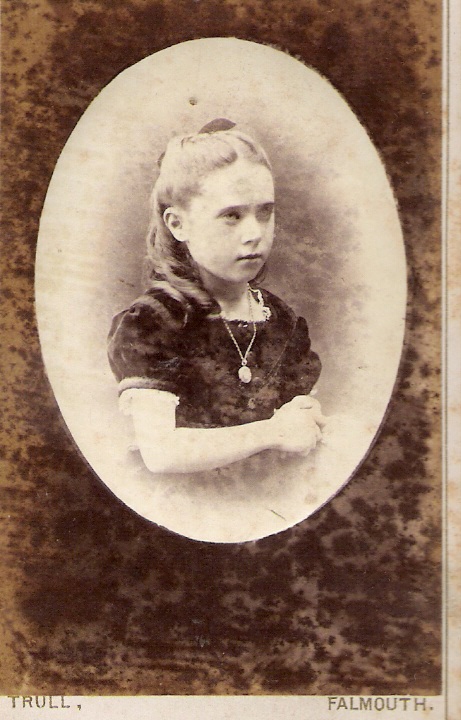
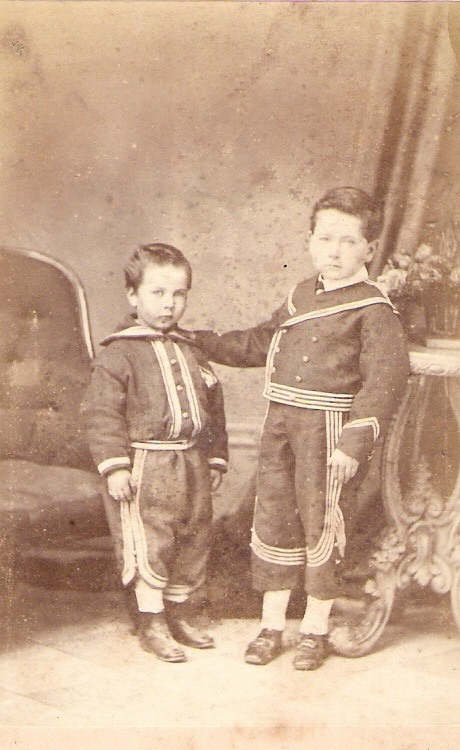

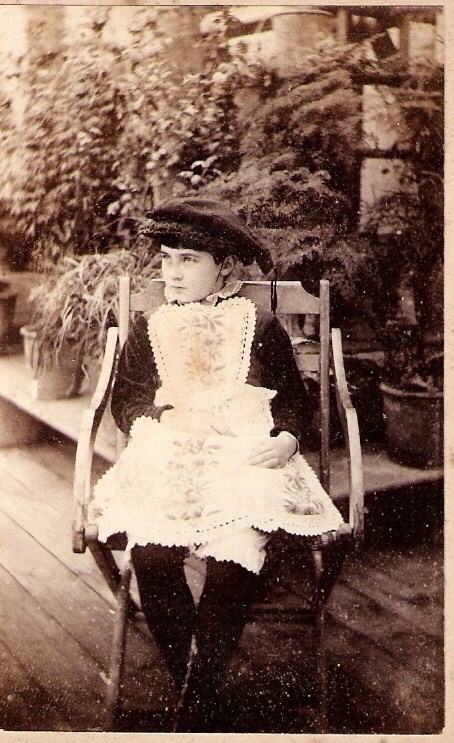




 The Lanyons