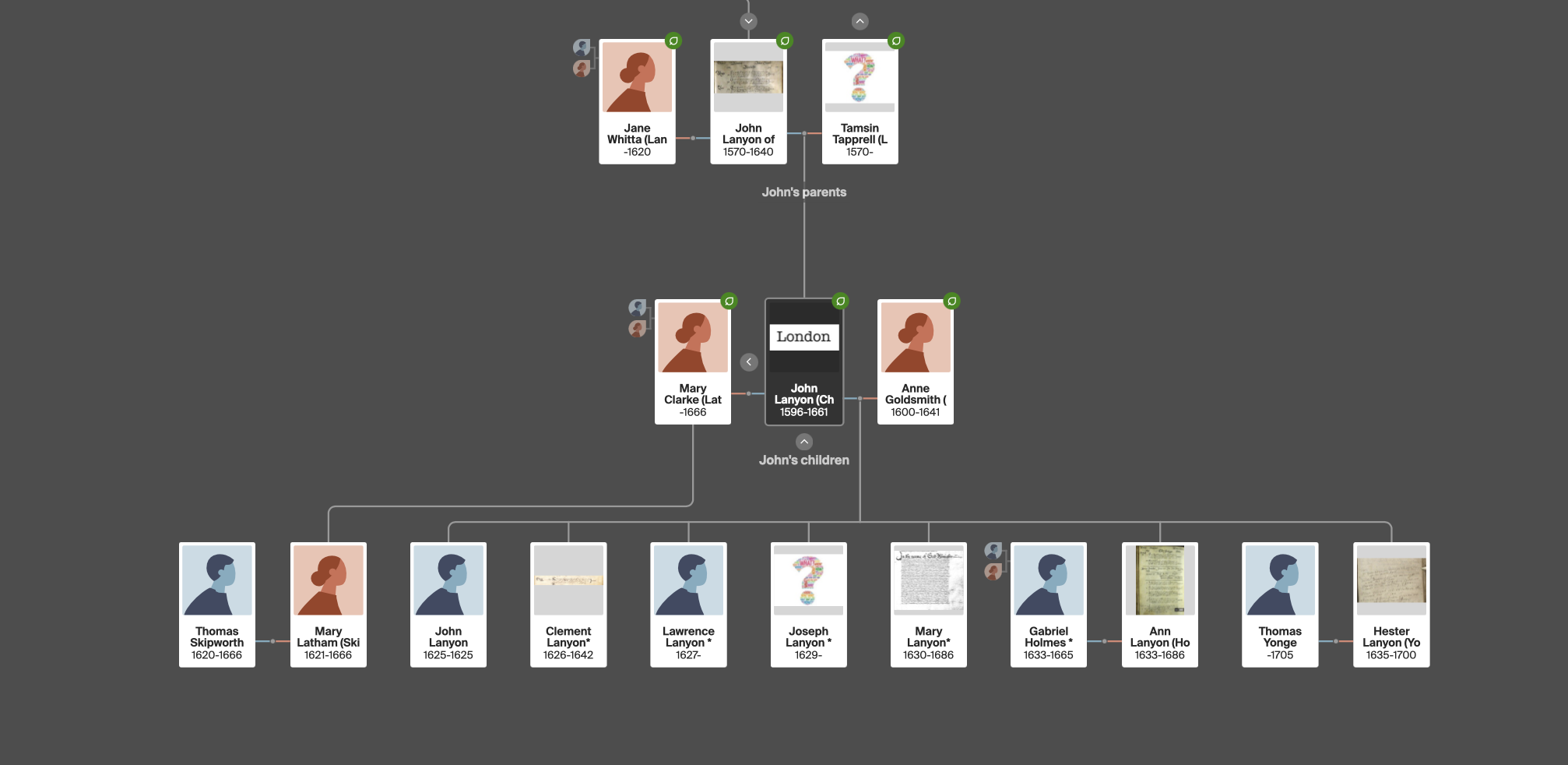
John Lanyon was born after 1596 and before 1600 at either St Agnes or Breage, there is no baptism recorded for him. His parents John & Tamsin were married at St Agnes in 1596 and his younger brother William was baptised at Breage in 1600.
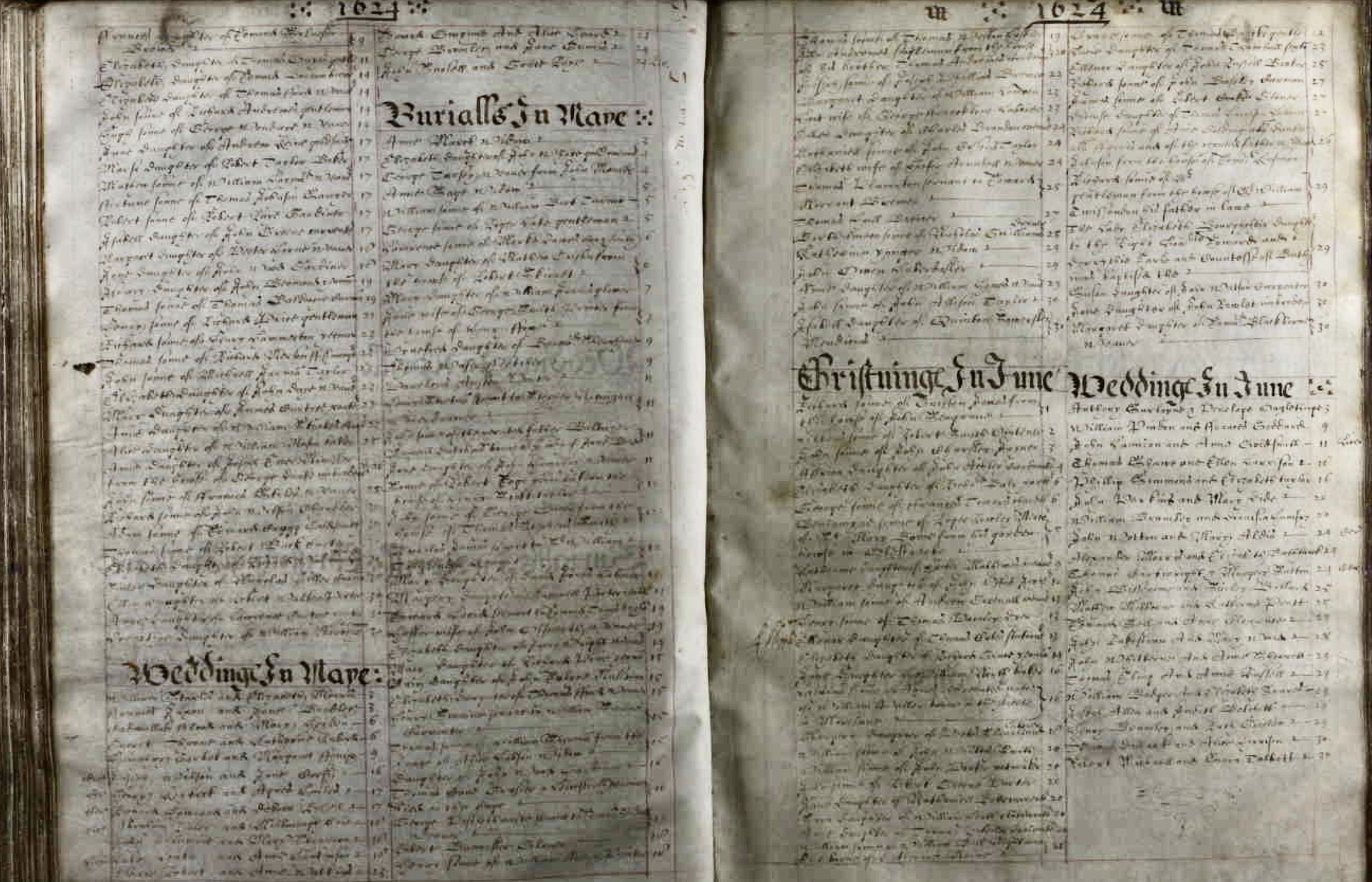
By 1618 John is in London. He was listed on an indenture dated 19 Oct 1618-
John Lanion gent of New Place Essex in chancery indenture re- properties in Breage.
On 11 Jun 1624 John married Anne Goldsmith at Saint Giles Cripplegate, London.
It appears as though they returned to Breage as some of their children were baptised there.
- John – 1625 a John, son of John Lanyon, was buried at Breage in Jun 1625
- Clemens 1626- baptised at Breage 11 Jun 1626 no further trace
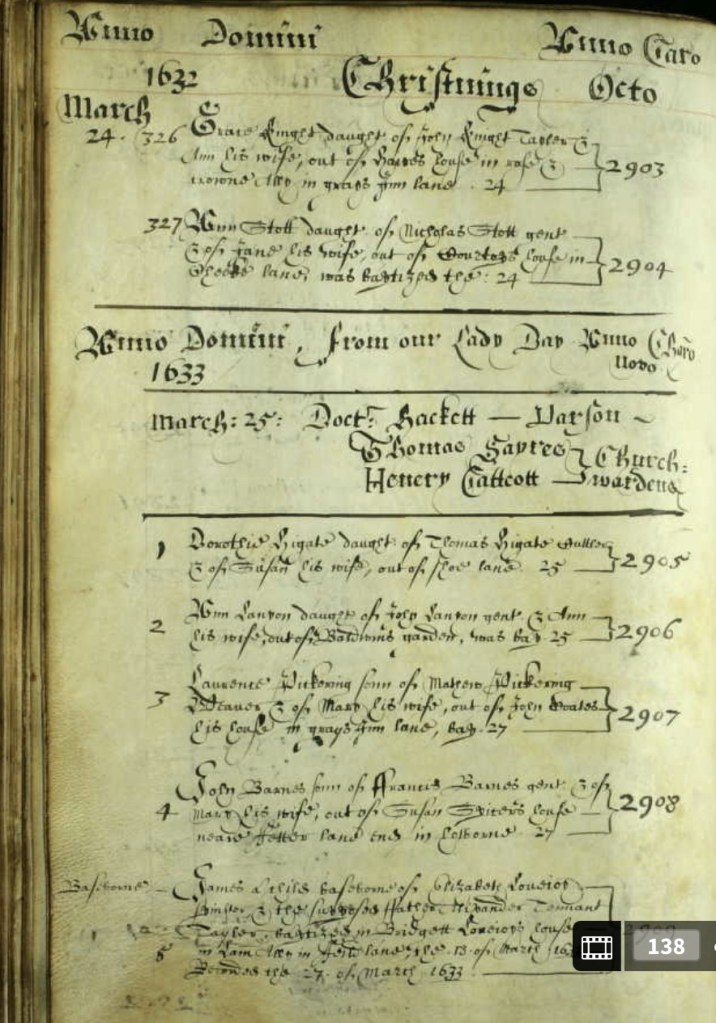
- Lawrence 1627- baptised at Holborn in London no further trace
- Joseph 1629- baptised at Holborn in London no further trace
- Mary 1630-1686 she was a spinster and was buried in Penzance in 1686, she left a great will which mentions lots of relatives
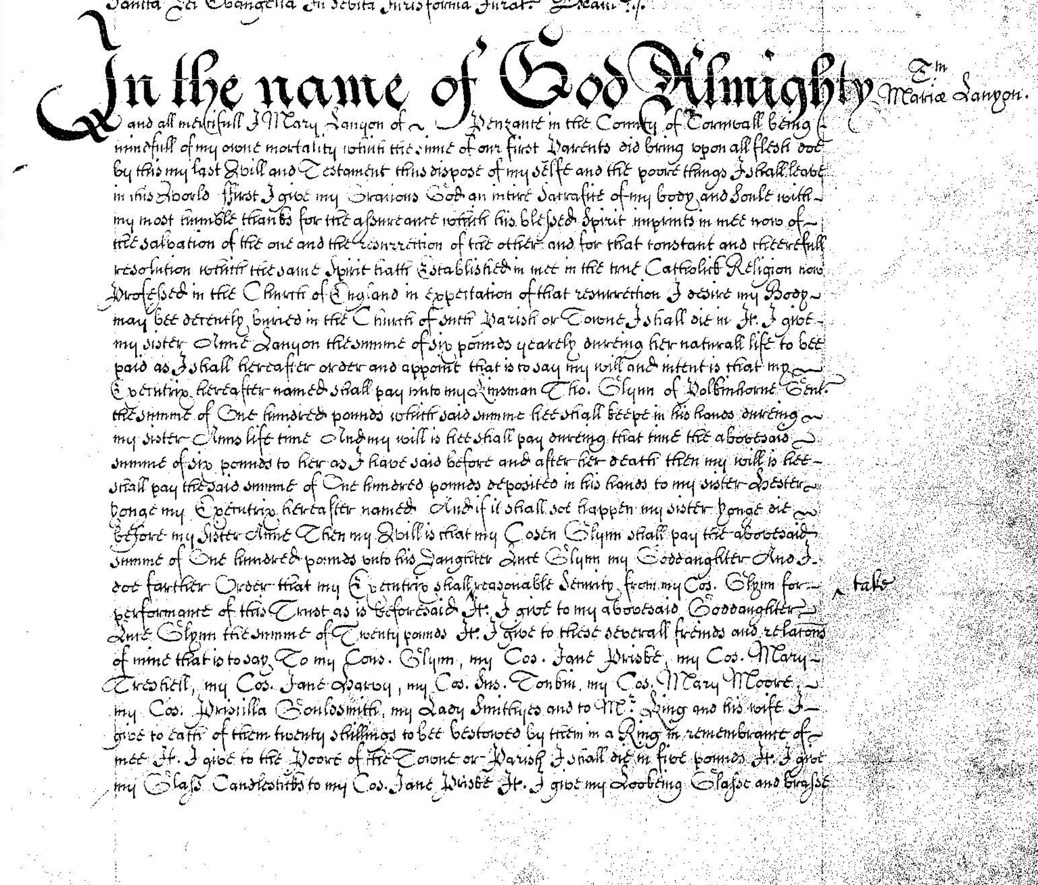
Partial transcript:
- To my sister Anne Lanyon the sum of £6 yearly for her natural life
- To my kinsman Thomas Glynn of Polkinghorne gent the sum of £100 which he shall keep in his house during my sister Anne’s lifetime to pay her £6 yearly and then to my sister Hester
- Thomas Glynn’s daughter my goddaughter Jane Glynn the sum of £20
- Cousins Glynn, cousin Jane Prisbe?, Mary Treshell?, cousin Jane Darby, cousin ? Tonkin, cousin Mary Moore, cousin Priscilla Goldsmith, Mr. King and his wife – 20 shillings each for a ring in remembrance of me
- Poor of the town or parish £5
- Glass candlesticks to Jane Prisbe?
- Looking glass and brass candlesticks to Susanna Glynn
- Sister’s picture and great cabinet to brother Yonge
- Watch to cousin Thomas Glynn the younger
- Chamber furniture to Hester Yonge
- My china and earthenware as my sister will part with to cousin Jane Darby
- My cousins Grace and Jane Daniell
- My sister Yonge
We can place some of these cousins on the tree.
John and Anne’s other children were:
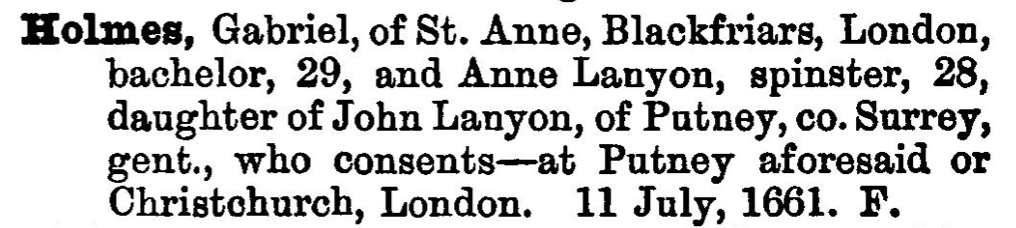
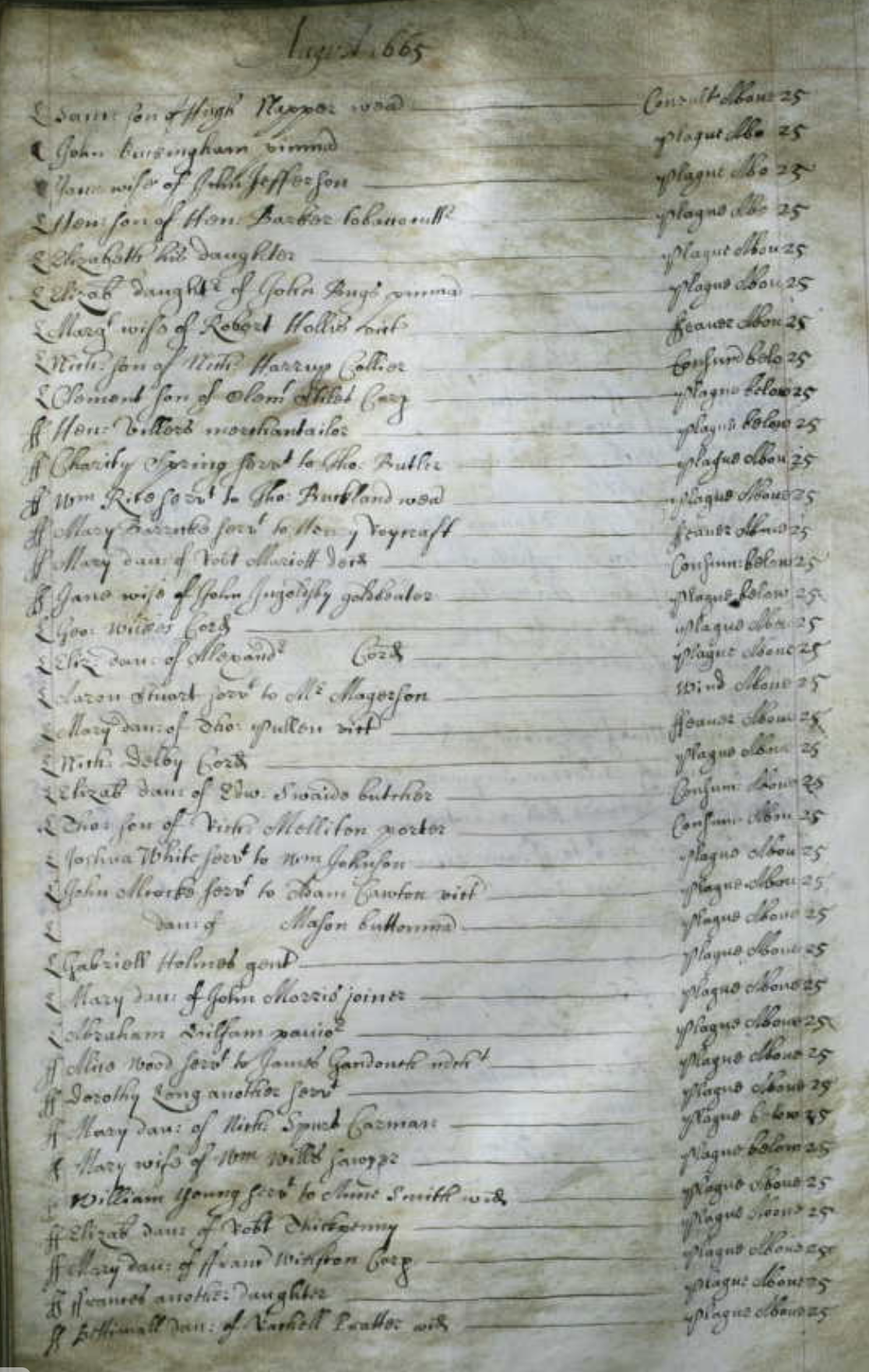
- Ann 1633-aft. 1686 Ann was baptised at Holborn in London in 1633 she is mentioned in her sister’s will so presumably is still alive in 1686. She is called Ann Lanyon in the will however there is a marriage of an Ann Lanyon daughter of John Lanyon who married Gabriel Holmes in 1661. A Gabriel Holmes gent, died of plague and was buried at St Giles Cripplegate in 1665. (There is an Ann Lanyon buried at St Clement Danes on 19 Aug 1691- could it be this Ann? Why would she be called Lanyon and not Holmes?)
- Hester 1635-1700 she was baptised in Holborn London, she married Thomas Yonge and she may have been married to her cousin John Lanyon.
Hester’s sister Mary left a will (dated 1686) that refers to her as Hester Yonge and sister Yonge, Mary also has a clause giving her sister’s picture and great cabinet to brother Yonge.
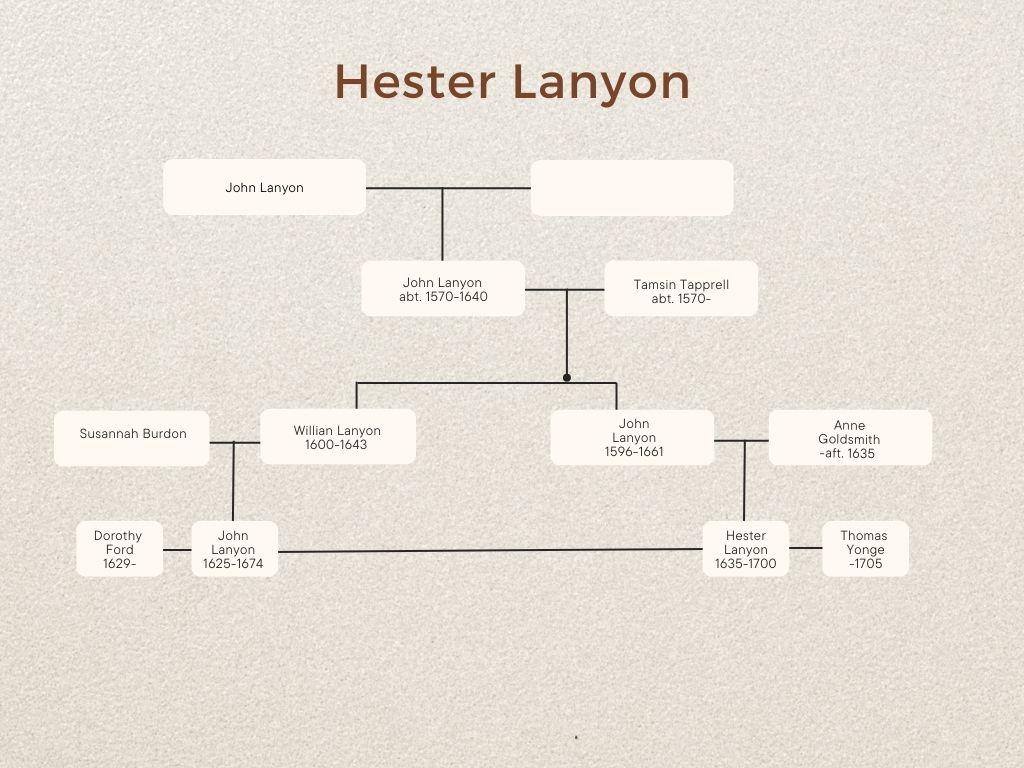
Her possible first husband John Lanyon of Plymouth died in 1674 in Paris, he left a detailed will which helps us fit him into the tree. He mentions his uncle Mr Philip Lanyon, this confirms that John’s father William had a brother called Philip. He leaves a generous bequest to the town of Breage. John mentions various cousins among them are Hester Lanyon who he bequeathes £700 “in case she should survive me and acquit my executors of my obligation for £30 payable to her by me during her natural life”. The will continues “…out of this £700 my cousin Hester do pay or make good unto her sisters, my cousins, Mary and Ann £10 each during their natural lives.” (Source- NA/PROB/11/344/542)
After his death there are legal proceedings over his estate.
Chancery Proceedings Ante 1714 – Writ 297/99 Year 1679
John Lanyon merchant late of Plymouth personal estate valued at £20,000 did by his last will and testament dated 15 Sep 1674 bequeath a legacy of £50 to Totnes in Devon, which sum the Mayor and Burgesses were claiming of the Executors Captain Philip Lanyon, his sister Margaret Richards and niece Hester Lanyon.
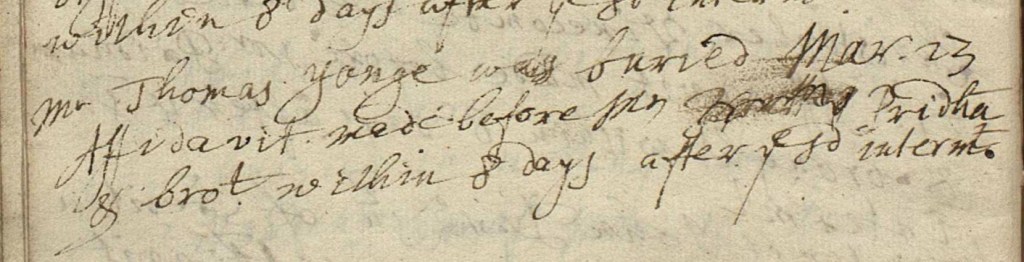
In this chancery lawsuit the Totnes claimants speak of Hester Lanyon as John’s relict “who has since married Thomas Yonge”.
There is no trace of a marriage between Hester and either John Lanyon or Thomas Yonge but they are referred to in the Chancery proceedings. Although John Lanyon’s will describes her as his cousin rather than his wife. Was Hester Lanyon John’s second wife? Until we can find other documentary evidence we can’t be sure.
Hester Yonge was buried on 6 Apr 1700 at Colebrooke, Devon.

Hester’s husband Thomas Yonge died in 1705 at Colebrooke.
We’ll look at Hester’s husband John Lanyon of Plymouth in more detail in another post.
What of Hester’s father John?
John Lanyon was Proof Master and Chief Engineer to Charles I from 1630-39. In 1640 John went to Flanders and wrote to Whitehall from Brussels sealing the letter with the Lanyon (Madron) arms. As the principal engineer he was responsible for forts and castles. It was his misfortune to land such an illustrious post just as the monarchy was about to be swept aside in the Civil War.
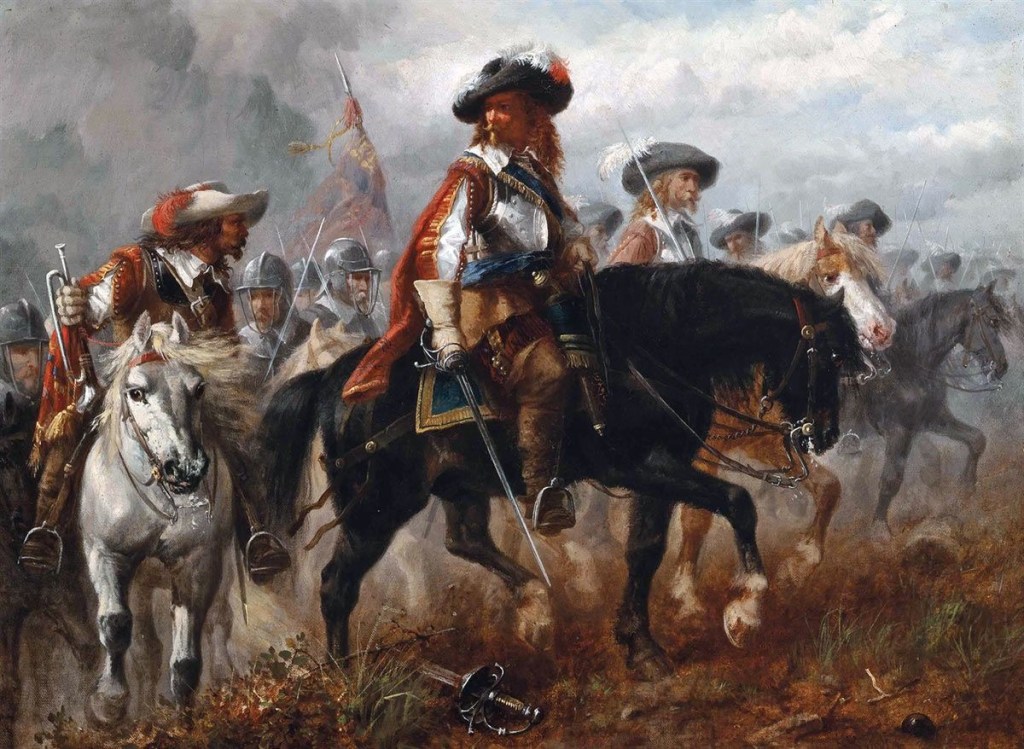
During the Civil War John Lanyon had a tough time; he was plundered, sequestered and imprisoned. In 1661 he petitioned the Lord Treasurer to pay his fee due at Midsummer last. He had been promised £240 a year as chief engineer. Sir William Compton certified that John Lanyon had £240 a year granted him by the late King as chief engineer and that “he is well skilled in his art and deserving of the said salary.” (Source- Charles II State Papers Vol 36 – 1661).
His wife, Anne Goldsmith, must have died because John remarried Mary Latham (née Clarke) the widow of Ralph Latham Esq of Upminster, Essex, late barrister Middle Temple, London. Ralph died in 1642 so sometime after that date the marriage took place. There were no children of this marriage.
John died in Sep 1661 and was buried at Surrey. His widow Mary died in 1666 and her will mentions her children from her first marriage and step daughters Mary, Anne and Hester Lanyon.

As far as we can ascertain none of John’s sons survived and none of his daughters had children of their own so this little branch of the tree died out.
 The Lanyons