Family historians are lucky to find a documented legal dispute from the 14th century to help build their family tree. Ralph’s dispute with Princess Joan of Kent gives us valuable information which confirms names and relationships but it’s not the only record available about Ralph.
In 1390 the Bishop of Exeter granted a licence to celebrate divine service in the chapel of St Mary at Lanyen in Madron (Lysons 1817). Today the chapel is a ruin but it gives an idea of the size of Ralph’s home, the barton of Lanyon in the late 14th century.
There are also three records in the Court of Common Pleas which relate to Ralph.
CP40/561 Easter 1401. Roger Boswarneth sues Ralph Lanyeyn for a debt.
CP40/589 1408 Ralph Lanyeyn sues Luke de Pensans for detinue (the crime of wrongful detention of goods or personal possessions) for a chest of charters.
CP40/589 1408 Alice Reda sues Ralph Lanyeyn, John Cornyssh, Robert Pensans, Richard Joce (tailor), Ralph Joce, Richard Dere & David Shade for trespass.
At a time when there are no records of baptisms, marriages or burials these records prove that Ralph was still alive in 1408.
I also have a letter from Jane Veale Mitchell to Edward Augustus Bullmore dated 23 Jan 1926 which states:
‘In Rolls Office, Chancery Lane, a Radolphus Lanyon asks that Tregamynyan, then in possession of his brother-in-law de Rogers, might come to him and his descendants, because they had no children. Written in old French, date 1327.’
This throws up a query, is the date 1327 correct? Is it the same Ralph Lanyeyn? The original letter has been transcribed, could the transcriber have got it wrong? It’s possible.
We don’t know when Ralph was born but 1327 seems far too early. If Ralph is married with descendants in 1327 then he is a very great age in 1408!
We know that Ralph’s parents were John de Lynyen and Sibyl de Tregamynion. This is confirmed by the record in Calendar Close Rolls CCR Ric II Vol 30 p.71.
We know that John de Lynyen’s father was David de Kylminawis as CCR Hen IV Vol 4 states that ‘David de Kylmynawis to John his firstborn son and heir, and to the heirs of his body by Sibyl daughter of Jocelin de Tregamynion…’
So where does the Radolphus Lanyon mentioned in Jane’s letter fit in? I haven’t found the original record she mentions but I think the date 1327 must be wrong and that the Radolphus Lanyon she mentions is Ralph Lanyeyn, the son of John & Sibyl. This then gives us the name of his brother-in-law, de Rogers, and leaves us wondering why the property Tregamynion at Morvah should be in his possession?
Rosy Hanns / Old Guide Stone on Bosullow Common, south east of Morvah
And that’s the fun of researching your family history, a few records discovered and a whole load of new queries to puzzle over!
Having just watched the men’s tennis final I’m going to add a post about our slightly tenuous family connection to Wimbledon.
Algernon Robert Fitzhardinge Kingscote was born on the 3 Dec 1888 at Bangalore in India. The son of Howard and Adeline Kingscote. Adeline was the famous author, Lucas Cleeve.
He joined the army, 107th Company Royal Garrison Artillery and during World War I he fought at the First Battle of the Aisne earning the rank of Lieutenant-Colonel and the award of the Military Cross.
On 9 Sep 1919 (9/9/1919) he married Marjorie Paton Hindley in London. Marjorie was the daughter of Douglas and Rachael Hindley. Douglas was the brother of Walter Paton Hindley who married Alice Mary Lanyon.
Alice Mary Lanyon was the daughter of John Charles Lanyon and Jane Stacey Bennett. She was Marjorie Paton Hindley’s aunt and also my husband’s great grand aunt. (I said it was tenuous!)
So having established a tenuous connection to Algernon Kingscote what is his connection to Wimbledon?
Algernon Kingscote learned playing tennis in Switzerland, where he won numerous championships. He was crowned Swiss champion in 1908 and champion of Bengal in 1913. At Wimbledon in 1919, he lost in the all comers final. He won the singles title at the Australasian Championship in 1919. He reached the men’s doubles final at Wimbledon in 1920. In 1921 Kingscote was a runner-up at the Monte Carlo Championships. He represented Great Britain in the Davis Cup seven times between 1919 and 1924.
Algernon Kingscote – Sport & General Press Agency Ltd., Public domain, via Wikimedia Commons
At the 1922 Wimbledon Championship he established the routine of bowing to the Royal Box, a tradition which lasted until 2003.
Algernon Kingscote in 1914 – Agence Rol, Public domain, via Wikimedia Commons
He also competed at the Summer Olympics in Paris in 1924.
Tangopaso, Public domain, via Wikimedia Commons
At the outset of the Second World War he was sent back into action again at the age of 52. He died on 21 Dec 1964 at Woking in Surrey.
The Lanyons have travelled all over the world and there are branches of the family on most continents. A Lanyon is even listed as a ruler of the Northern State of Gonja in Ghana!
Gonja was created by Mande Conquerors around the beginning of the 17th century. According to Wikipedia the capital is Yagbum.
Map of Ghana showing Gonja region.
The first ruler of Gonja was Sumalia Ndewura Jakpa, a slave trader.
Precolonial Gonja society was stratified into castes, with a ruling class, a Muslim trader class, an animist commoner class, and a slave class. Its economy depended largely on trade in slaves from Central Africa and kola nuts, particularly through the market town of Salaga, sometimes called the “Timbuktu of the South.”
Wikipedia gives a list of rulers of Gonja.
Apparently between 1698 and 1699 Lanyon was regent and Yagbongwura (paramount ruler). I suspect the name Lanyon may have been used to fill a gap in the list!
1907 – 1909 Lanyon was again listed as Yagbongwura. Curiously Wikipedia identifies this Lanyon as Colonel SirWilliam Owen Lanyon, who died of cancer in New York in 1887.
William was born in Ireland in 1842 the son of Sir Charles Lanyon and his wife Elizabeth Owen. He was a British colonial administrator and army officer.
William Owen Lanyon – Wikimedia Commons
He was invalided in the Ashanti campaign which may be his connection to Gonja.
The Anglo-Ashanti wars lasted 70 years finally ending in 1900. The wars established the British Gold Coast and the country became a British protectorate.
“Defeat of the Ashantees, by the British forces under the command of Coll. Sutherland, July 11th 1824.” Wikimedia Commons
It’s not clear how William Owen Lanyon went from fighting in the Ashanti wars to being listed as a ruler of Gonja twenty years after his death but it makes life interesting for family historians!
During the winter of 2024 I decided to transcribe all the old Lanyon wills I could find. Most were fairly straightforward but one did catch my attention, the will of Charles Mortimer Lanyon who died in 1877. He left a sizeable bequest to Isabella Lockhart Campbell “if at the time of my death she be living with me or living apart from me with my consent…”
Curiosity piqued I started digging to find out more!
Charles Mortimer Lanyon was born in Belfast on 23 Aug 1840 the son of Charles Mortimer Lanyon and Elizabeth Helen Owen. His father was the famous Irish architect who built a number of well known buildings. He was later knighted and became Mayor of Belfast.
Sir Charles Mortimer Lanyon – Architect
Charles was the third child of Charles and Elizabeth. He trained to be a barrister. He never married and died on 27 Feb 1877 at the age of 37. He was just a name on the Lanyon tree until I read his will and set out to find out more about Isabella.
The name Isabella Campbell is very common, especially in Scotland, and the search for information was long and at times frustrating and whilst searching often involves working backwards I will retell the story chronologically.
Isabella Campbell was born Isabella Jones (an even more common name!) on 9 Dec 1847 in the village of Pontesford in Shropshire. Being so close to the Welsh border they weren’t the only Jones family in the area.
Her father was Richard Jones, a lawyer, and her mother was Jane Lockhart Mills. Isabella was the second of seven children born to the couple. I found them on the 1851 census for Pontesbury, Isabella was aged 4. By the 1861 census Isabella was missing. At the age of 14 she could have been staying with relatives on census night, away at school or possibly even working, although that seemed unlikely as her father was a lawyer and probably financially secure.
I couldn’t find a single Isabella Jones born in 1847 in Pontesbury on the 1861 census. The most likely candidate I found was an Isabella Jones, born abt. 1846 in Lambeth, Surrey and at school in Plymouth, Devon.
Screenshot
Plymouth seemed the most likely place in view of what happened next. On 15 Feb 1865 Isabella gave birth to a daughter, Florence Lockhart Campbell, at 4 Buckland Street, Plymouth. Isabella was just 18 years of age.
Florence’s birth record names her mother as Isabella Campbell formerly Lockhart (no mention of the name Jones) and names the father – Edward Campbell, a surgeon. I did search before 1865 for a marriage, without success.
I searched for Isabella on the 1871 census. I found her and Florence living with two servants, a mother and daughter, both called Sarah Cowley. Isabella’s occupation is listed as ‘chambers’. Is this a reference to Charles Lanyon who is a barrister?
Screenshot
Isabella is described as a ‘wife’ but I could find no trace of a marriage before 1871.
On 27 Jan 1872 Charles Mortimer Lanyon made his will and named Isabella so they must have been in a relationship before that date.
Then on 22 June 1872 Isabella finally got married. Not to bachelor Charles Lanyon but to Edward Campbell!
Edward Campbell was a surgeon major and a little research quickly established that he had served in the Bengal Army and was born in 1815, making him 32 years older than Isabella!
Edward was the son of Thomas Campbell a Captain in the Royal Navy and his wife Phoebe. Edward was baptised at St Martin by Looe in Cornwall on 8 Apr 1815. He was an MRCS (member of the Royal College of Surgeons) by 1837 and served in the following wars:-
Afghanistan 1840-42 – Storming of Istalif
Attended the wounded during the retreat from Kabul
Gwalior War 1843-44
First Sikh War 1845-46
Crimean War 1855
Santhal Rebellion 1855
Hindu priest garlanding the flags of the 35th Bengal Light Infantry (c.1847) – British Museum – Wikimedia Commons
By 1864 Edward had retired from the army and returned to England where he met Isabella.
On 4 Jan 1876 Charles Lanyon wrote a codicil to his will. He reduced the bequest to Isabella from £500 to £300 a year as he had settled some money on her whilst he was still alive and he appointed his brother William Owen Lanyon his sole executor.
The next time they appear in the records is on 31 Jan 1877 when Isabella filed for divorce from Edward.
Isabella’s petition alleged that in September 1874 Edward had deserted her and since December 1873 he had committed adultery numerous times with various unnamed women in both London and Plymouth. And that on the 25th and 26th of January 1877 he had committed adultery with an unnamed woman at the Norfolk Square Hotel in Paddington. Isabella also alleged that there were no children from this marriage!
Was she divorcing Edward so she could marry Charles? If so she was too late.
Less than one month later Charles was dead.
He suffered from a weak dilated heart and had developed painful inflammation of his collar bone, he was just 37 years old.
Charles’ will was proved on 26 May 1877 and probate was granted to William Owen Lanyon’s attorneys as he was in South Africa. Then nothing happened. The grant of probate ceased and expired.
We next find Isabella and Florence on the 1881 census. Florence was living with her ‘father’ Edward Campbell in Devon (helpfully her name was transcribed as Kormcoh Campbell! Nothing is ever simple in genealogy) and Isabella was a visitor at Clifton in Bristol. She is described as ‘wife of Dr Campbell’.
Screenshot
On 5 Aug 1887 probate of William’s will was finally granted to Sir William Owen Lanyon. We don’t know if William ever paid out the bequest to Isabella.
Isabella died on 3 Dec 1888 at 74 Bishop’s Road, Paddington in London. Her ‘husband’ Edward was present. She too was suffering from heart problems and collapsed. She was just 41.
Edward may have been 32 years older than Isabella but he outlived her and died on 16 Jan 1890.
We could of course leave the story there but I wanted to know what happened to Florence and consequently found myself disappearing down a genealogical rabbit hole!
Florence’s Story
On 8 Aug 1889 Florence married Willington Augustus David Shelton (now that’s the sort of name genealogists love!) Willington was of Irish heritage and I quickly found an obituary for him in the Limerick Archives. They also had a photo of him.
He had a distinguished military career and became a Lieutenant Colonel. He served in India, Ireland and South Africa during the Boer war and was at the siege of Ladysmith in 1900. He was mentioned in dispatches and awarded the DSO.
Perhaps of more interest to family historians was the mention of three wives! His first marriage was to Mary Bridget Goodlake on 17 Jan 1877. He filed for divorce on 25th May 1878 on the grounds of her adultery with Hermon Samler. On 4 Oct 1879 Mary married John Hermon Samler.
Just a year later, on 28 Oct 1880 Mary filed for divorce on the grounds of John’s cruelty (she alleged he was intoxicated and would pinch and kick her) and he counter sued on the grounds of her adultery! The divorce petition is some 64 pages long and they weren’t granted a decree absolute until 1886 and during that time she gave birth to two daughters who were both given the surname Samler!
On 6 Jan 1887 Mary married for a third time to William Middleton Power. She lived to the grand old age of 93!
Willington’s second marriage was to Victoria Chancellor in 1886. Victoria was ten years older than Willington and had been married twice before. Her first marriage was to John Atcheler who was 47 years older than her! Victoria’s father was a coach maker and John Atcheler was a horse dealer. John died in 1867 at the age of 75 and the same year she married for a second time to George Bury a GP who was 30 years older than her! George died in 1886 and that same year she married Willington.
Victoria died on 1 Jan 1889.
Victoria Chancellor
Willington waited eight months and then married Florence on 8 Aug 1889. They had two children but Florence died of scarlet fever at the London Fever hospital on 18 Jun 1905 aged just 40.
Whilst this starts off as a post about Charles Lanyon it develops into a post about marriage, adultery and divorce in the Victorian era.
Sometimes when researching family history you find a tiny story which really has to be retold.
This is the story of William Henry Lanyon’s ‘Difficult Journey.’
William Henry was the son of Richard Lanyon and Susan Tucker of Acton Castle. He was the eldest son born in 1825 and appears to have been quite an unusual man. Although he was married and had a large family he chose to live apart from them.
He was a gunpowder manufacturer and merchant and evidently needed to travel to London on business.
The Royal Cornwall Gazette reports that on 24 June 1869 William contacted Mrs Dobb from the Royal Hotel and ordered a bus to call at his residence at Strangways Terrace in Truro to take him to the train station. Unfortunately his booking was forgotten, the omnibus didn’t call and he missed his train.
William then did something that many modern rail travellers wish they could do….he ordered a special train to be got ready which took him to Bristol to catch the train up to London! The Victorian equivalent of an Uber!
The cost of this special run was £68 and William planned to claim that from the landlady of the Royal Hotel, Mrs Dobb, who had taken the original booking.
George Lanyon, the second son of John Charles Lanyon and Mary Mead, was nicknamed “The Shepherd”. This post is my attempt to find out why.
George was born 3 Oct 1833 at Redruth in Cornwall. His father owned an ironmongers on Fore Street and in his later years was a successful merchant tanner and ironmonger.
John Charles Lanyon died in 1868 and left a detailed will, there was no mention of his second son George and that was the first indication that all was not well.
JC Lanyon’s eldest son, also called John Charles, his third son Alfred and fourth surviving son Thomas all receive generous bequests and businesses. (The estate was valued at £35,000 in 1868.) But there was nothing for George, why?
George Lanyon appeared on the 1851 census as a seventeen year old ‘assistant’, presumably to his father. Sometime after 1851 and before 1861 he emigrated to Tasmania. His elder brother was already trading in Adelaide in Australia (he was a partner in Adelaide’s department store ‘Harris Scarfe’) perhaps George set out to emulate him?
Initially I thought George may have acquired his nickname ‘The Shepherd’ through a business interest in sheep farming in Tasmania however the story is a little more interesting than that!
On 3 July 1861 George married Susan Ida Crisp at Hobart in Tasmania.
Susan Ida Crisp
By 1862 they had returned to Cornwall and their first child Catherine Rosina Lanyon was born at Falmouth.
Their children:
Catherine Rosina 1862
Theodore Tasman 1864
George Edward 1867
Norman Crisp 1869
Hilda Maud 1873
Mabel 1879 who died in infancy
In 1871 the census describes George as a tanner employing 10 men, by all appearances a successful businessman like his brothers.
A closer look at Susan Ida Crisp revealed why he may have been given his nickname and also why he was left nothing in his father’s will.
Susan was the daughter of Samuel Crisp and Elizabeth Sams. She was born in Hobart in 1840. Samuel’s obituary describes him as one of the original colonists.
What they failed to mention is how he arrived in Tasmania….transported for life for sheep stealing!
Samuel Crisp was born in Sudbury in Suffolk in 1805. In 1820 he was sentenced to a month in prison for larceny, stealing 18 yards of ribbon from the shop of John Holman. Shortly after this he married Elizabeth Sams and they had two young sons, Samuel born 1823 and George born 1824. In September 1825 Samuel was caught sheep stealing. The Bury and Norwich Post for December 1825 has this report:
He was found guilty. The sentence of death was commuted to transportation for life and Samuel aged just 20 was transported to Tasmania on the ship “Earl St Vincent” which set sail on 20 Apr 1826.
The Royal Navy kept detailed records and the ship’s surgeon records the following:-
So 200 years later we know Samuel and three others were suffering with worms which caused intolerable itching! The treatment sounds even worse; they were given a purgative and then had to inject a decoction of tobacco into their rectums! To prevent the worms returning they were told to drink a pint of salt water twice every week.
The journey to Tasmania took 110 days and the ship contained 180 prisoners.
Two years later Samuel’s wife and sons followed him to Tasmania and they produced another 5 children whilst he was still a prisoner.
By 1840 “The Hobart Town Courier and Van Diemen’s Land Gazette” reported that he had been given a free pardon.
Now a free man Samuel set about creating a successful timber business, Crisp & Gunn.
Samuel and Elizabeth had twelve children. In 1853 Elizabeth died and Samuel remarried to an Elizabeth Farquarson. By the time of his death, aged 84, he had 80 grand children and 18 great grand children. He had become a respectable member of Hobart society. His children became solicitors and his son James was a Wesleyan minister. His grandsons served as Mayor of Hobart.
Samuel Crisp
So what became of his grandchildren in Cornwall?
Catherine Rosina never married. She lived with her father in Falmouth and died there in 1928.
Catherine Rosina Lanyon
Theodore Tasman 1867-1949. Theodore was a paymaster Admiral in the Royal Navy. There were four children from his first marriage.
George Edward 1869-1916. George was a doctor. There were six children from his marriage to Pollie Bullmore.
Theodore & George Lanyon
Norman Crisp 1869-1917. Norman married his cousin Dorothy Mead and they had three sons. He was shipwrecked in the English channel by a torpedo and drowned.
Norman Crisp Lanyon
Hilda Maud 1873-1922. Hilda married Edward Augustus Bullmore (Pollie Bullmore’s brother). He too was a doctor. They had two sons.
Hilda Maud Lanyon
George Lanyon and his family lived at Tasman Villa in Falmouth (circled) just behind what is now the Greenbank Hotel.
Susan Ida died in 1903 and George in 1921, at the grand old age of 88. He outlived all his siblings and three of his six children.
George is on the back row (left) standing behind his daughter in law Pollie.
Edward Augustus Bullmore, who was married to Hilda, collaborated with Jane Veale Mitchell to research the Lanyon family tree. He left his papers to William Smith Lamparter so that he could continue the research. In turn those papers made their way to me and ultimately led to the creation of this website.
So now we know why George Lanyon was nicknamed “The Shepherd”. If you have a better theory please get in touch!
Researching a family often necessitates many hours trawling through online resources for any mention of the family surname. A trawl through the Somerset Heritage Centre online index produced the deeds for a farm and lands at St Decumans and the name Thomas Lanyon.
The record starts on 13 Aug 1601. ‘Thomas Fulford of Fulford, Devon, Esq. enfeoffed to John Hooper of Ould Cleve, yeoman, a messuage known as Hooper’s Tenement and ten acres of land, part of the manor of Williton Fulford’ The deeds show the various tenants over the years. In 1715/6 John Leach of Bristol, ‘powterer’ and Sarah his wife (daughter and heir of Robert Mawdsley of Bristol, mariner and brother of Richard Mawdsley of Williton mortgaged the property to Arthur Thomas of Bristol, ‘powterer’. On 1 Jul 1718 John Leach mortgaged the property , by lease and release, to Abraham Lloyd, merchant, John Andrews, merchant, Richard Stafford, merchant and Samuel Cox, soapboiler, all of Bristol.
On 13 Mar 1718/19 John Rowe Esq and Martin Innys and Milborn Taylor, gents, all of Bristol , assigned the property to Daniel Woolmer, haberdasher, Thomas Lanyon, pewterer and George Bridges the younger, distiller, all of Bristol and John Roberts of Bedminster, cotton weaver (all creditors of John Leach, who was now bankrupt.)
So who was Thomas Lanyon and where does he fit on the tree?
Thomas was working as a pewterer (a tinsmith) from around 1715 and is last mentioned in 1755.
In 2021 this charger made by Thomas sold for £318.
Thomas was apprenticed to John Batcheler of Bristol on 2 Feb 1707 and is free by 9 Apr 1715. He’s mentioned in the Poll Books of 1721 and 1739 as of St Nicholas Bristol, the last mention of him in is 1755.
Poll Book 1754 mentions father and son.
We know Thomas Lanyon married someone called Anne before 1725 but I can’t find a record of the marriage anywhere in England. Her name is mentioned alongside Thomas’ apprentices.
They had at least one son, Francis Lanyon, who was baptised on 29 Aug 1725 at St Nicholas, Bristol. He was also working as a pewterer on 26 Jun 1747. In the 1754 Poll Book he is listed as of St Nicholas in Bristol.
Baptism of Francis Lanyon – St Nicholas Bristol
Thomas had at least two apprentices; Thomas Page who was indentured to Lanyon between 1729 and 1737 and Robert Bush who was indentured at a cost of £50 between the years 1748 and 1755. In 1765 he was based in the High Street in Bristol.
To give you an idea of the size of Lanyon’s business, in the 1740s he exported 1148lbs of pewter in one year. The book ‘Old Pewter, its Makers and Marks’ described Thomas Lanyon as being from Bristol and Coventry but I can’t find any records placing him in Coventry.
Lanyon’s Pewter Marks
The same book mentions a Thomas Lanyon of Coventry in 1774. This could be a son or even a grandson but I can find no trace of a baptism, marriage or burial.
A trawl through St Nicholas, Bristol’s parish registers reveals two baptisms which may be relevant: William & Anne Lanyen, twin children of Eli and Anne Lanyen, baptised on 3 Dec 1723 and three days later, William Lanyen and Anne Lanyen both buried 6 Dec 1723. Who was Eli Lanyen and was he any relation to Thomas Lanyon?
Sadly the records do not give us any answers. We don’t know if Eli was related to him or if it was just a coincidence that two men called Lanyon/Lanyen had wives both called Anne and were baptising children at the same time in the same area.
To complicate things even further there is a marriage of an Ann Lanyon/Lanion to a William Wayne/Wain at St Nicholas Bristol on 10 Sep 1758. They had a daughter Anna Maria Wayne. William Wayne was a metallurgist who went to Cornwall with his daughter, presumably after his wife died, to teach the Cornish metallurgy (Jane Veale Mitchell research). Both William and Anna feature in several Lanyon wills and are left very large bequests. They are related to Tobias and Mary Lanyon (the children of Francis Lanyon and Phillipp Nicholls of Sancreed).
Tobias’ Will, proved 1779, mentions ‘…my nephew William Wayne gentleman late of the City of Bristol, now residing with me (at Penzance) and my niece Anna Maria Wayne his daughter….’ Tobias bequeathes them £5000!
Tobias’ Will – PROB 11/1050/103
Tobias’ sister, Mary, also had her will proved in 1779. She bequeathes her nephew William Wayne £1000 and her niece, his daughter, £2000.
Mary’s Will – PROB/11/1051/117
Tobias and Mary clearly regard William Wayne as their nephew which implies that his wife, Ann Lanyon, was their niece.
It was time to look at Tobias & Mary’s branch of the tree and see what information I could find.
The Sancreed branch of the Lanyon family tree.
Tobias and Mary were the children of Francis Lanyon and Phillipp Nicholls of Sancreed. Francis was the son of John Lanyon, called ‘The Golden Lanyon’ as he made so much money from tin. John was a grandson of John Lanyon Esq and Phelype Milliton.
Tobias and Mary had a brother called Thomas and whilst I cannot prove that he was the Thomas who was a successful pewterer in Bristol, it does seem likely.
Tobias and Mary’s sister Jane died in 1738 and she leaves her brother Thomas the sum of one guinea in gold to buy him a ring.
Thomas had a son called Francis Lanyon, perhaps he was named after his father, who died in 1725, or his elder brother Francis, who died in 1723.
This branch of the tree now looks like this –
So Thomas Lanyon of Bristol was born in Sancreed, Cornwall in 1691 and died sometime after 1755. We don’t know what happened to his wife, Anne. We know that his son Francis became a pewterer but we don’t know if he married or had any children (the Thomas Lanyon working as a pewterer in Coventry in 1774 may be his son). There is no record of a birth of a daughter Ann Lanyon but we do have a record of her marriage to William Wayne.
Bristol, England, Church of England Marriages and Banns, 1754-1938
Their marriage was solemnised in the presence of one Thomas Lanyon!
Anna Maria Wayne married Samuel Bird Esq. in London in 1784.
Marriage Register – St James Piccadilly, Westminster
By 1790 William Wayne was dead and administration of Tobias’ will passed to Anna Maria Bird the residuary legatee.
I found one possible burial entry for William at St Philip and St Jacob in Bristol on 19 Feb 1787. If it is ‘our’ William Wayne, he died of asthma.
Bristol Archives; Bristol, England; Bristol Church of England Parish Registers; Reference: P/St P&J/R/1/5
Anna was left a very wealthy young woman with bequests of several thousand pounds, a huge sum at that time.
Sadly she died on 8 Apr 1803, at East Stonehouse in Devon, but her will requests that she be interred at Sancreed in Cornwall. She was just 40, widowed, and suffering from Consumption (TB). She and Samuel were childless so her fortune was left to various cousins. There is a plaque in Sancreed church which reads:-
‘Sacred to the memory of Anna Maria Bird, widow of Samuel Bird, of Ridgeway in the county of Devon, Esqr. She died the 8th day of April, 1803; aged 40 years. Her body is deposited in a vault with the remains of her relatives, Josiah Lanyon, Esqr, and Jane his sister.’ (https://sancreedopccornwall.tripod.com/id1.html)
The Lanyons had connections to mining in Cornwall going back to the mid sixteenth century and possibly earlier. In 1556 John de Veer, Earl of Oxford, Viscount Bulbek and Chamberlain of England gave William Laniene and David Angove a licence to dig and search “…for the loode and veyne of tynne…” within de Veer’s manors and lordships in Cornwall for two years. (Source – CRO AP/1/852) We don’t know where they found tin but the original document has later been endorsed in pencil with the word ‘Gwinear’.
William Laniene’s son, Richard, married Margaret Treskillard in 1531. She is mentioned in Carew’s ‘The Survey of Cornwall’ as having a dream which told her where to find tin.
“Some have found Tynne-workes of great vallew, through meanes no lesse
strange, then extraordinarie, to wit, by dreames. As in Edward the
sixts time, a Gentlewoman, heire to one Tresculierd, and wife to
Lanine, dreamed, that a man of seemely personage told her, how in such
a Tenement of her Land, shee should find so great store of Tynne, as
would serve to inrich both her selfe and her posteritie. This shee
revealed to her husband: and hee, putting the same in triall, found a
worke, which in foure yeeres, was worth him welneere so many thousand
pounds.”
Richard Carew – Survey of Cornwall (1602)
John Lanyon of Sancreed, who died in 1664, was known as the Golden Lanyon as he made so much money from tin.
A document in the National Archives dating from 1605 is the first documented ‘incident’ with mining. Challynor v Buvargus concerns: assault; destruction of property and unlawful assembly.
Plaintiffs: John Challynor esq of Fulham.
Defendants: William Buvargus (Busvargus) of Buryan, Maderne Pendeene of Madron, Sandry Maderne, and others, tinners.
Subject: Assault on Ralph Lanyn, agent of plaintiff John Challynor, and seizure of tin belonging to four ‘doles’ of a tinwork called Wheal (Bennett) at St Tust (reetius St Just). Cornwall.
We don’t know where this Ralph fits on the tree but I think he is the same person who was buried at Sancreed on 29 Apr 1614.
Hugh Lanyon ‘tynner’
The first confirmed ‘tynner’ in the family is Hugh Lanyon 1648-1709. Hugh was born in Madron, the son of William Lanyon and Jane. He married Mary Tonkin and is described as a ‘merchant of Paul.’ His will survives and it is that document which describes him as a ‘tynner’.
Hugh Lanyon’s will. CRO AP/L/1104
Doubtless there were plenty of other Lanyons involved with mining in some way or another but with so few early records available it isn’t possible to identify them.
In the 19th century Coroner’s Inquests, newspaper reports and death certificates make the search much easier.
East Wheal Rose Mining Disaster
The biggest disaster to affect the family was the East Wheal Rose disaster of 1846. At that time the mine employed over 1000 men, women and children. A terrible thunderstorm sent torrential rain pouring into the valley, where the mine was situated, and into the mine itself. The men at the surface struggled to divert the water away from the mine entrance but the shafts quickly began to fill with water. There were great acts of heroism; a timber-man, Samuel Bastion, went down into the mine to lie across a manhole, diverting the flow of water and saving eighteen lives. Men went down to search for sons, only to lose their lives.
In all 39 men died in the mine including Josiah and Reuben Lanyon, brothers from St Allen.
Malcolm Kewn / East Wheal Rose / CC BY-SA 2.0East Wheal Rose Commemorative Sculpture
Most mine accidents aren’t as big as the East Wheal Rose disaster. We only find out about them from Coroner’s inquests or newspaper reports.
10 Nov 1843 – Ralph Lanyon junior from St Just in Penwith aged 14 was working in the Wheal Bosean mine and accidentally fell into one of the shafts, a distance of approx. 10 fathoms and was instantly killed. The verdict was recorded in the Royal Cornwall Gazette “Accidental death.”
Deep Down A Tale of the Cornish Mine – Internet Archive Book Images, No restrictions, via Wikimedia Commons
9 Oct 1838 – John Lanyon who was born in Gwennap, died in the Ellen Beryle Mine and was buried at St Day in Cornwall.
24 Mar 1865 – Simon Lanyon was born in St Allen and was killed at the Cargoll Mine, he was just 19 years old. “On Tuesday, an inquest was held at Zelah, before E. T. Carlyon, Esq., deputy coroner, on the body of Simon Lanyon, of the above place, who was accidentally crushed to death under the bob of the engine at Cargoll mine. A verdict of “Accidental death” was returned.” Royal Cornwall Gazette.
10 Nov 1855 – John Lanyon of St Just in Penwith was killed at Park Noweth Mine. “…in the parish of St. Just in Penwith, on the body of John Lanyon, aged 47 years. The deceased was a miner, and worked at Park Noweth Mine, in that parish, and was at the 80 fathom level, assisting in changing the boxes of the lift, when the engine being working, the rod came down, and the navel-pin thereof struck him on the head and caused such injury thereto that he died on the following day. It appeared to be the usual practice to change the boxes whilst the engine is at work, and that the same may be done without fear of accident where the party doing it is ordinarily careful. – Verdict “accidental death.” –The deceased was very much respected. He leaves a widow and five children to deplore their loss. The poor woman has been very unfortunate, having had her first husband drowned, her father killed, her son killed, and now her second husband also killed, and not long since a grand child was drowned in a well.” Royal Cornwall Gazette
Dolcoath Mine – John Charles Burrow (1852—1918), Public domain, via Wikimedia Commons
5 Jul 1912 – James Lanyon was a timber man at Wheal Carne mine in Pendeen, he was the grandson of John Lanyon (above). “He and another were “spilling” along an old adit level were they were working the sides were of decomposed granite and were weak. The level supports consisted of stull pieces hitched in the hanging and foot walls, and over these supports the piles were driven. The last stull piece, which was about 2 feet from the dirt, had been set with rather less pitch than usual and the bottom ledge of the hitch in the hanging wall was only half an inch deep. At the time of the accident, Lanyon was cutting a hitch in the hanging wall, for another stull piece when a big fall of ground about 4 feet above him fell from the wall knocked out the last stull piece and pinned him under it. The loose stone had been noticed at the commencement of the shift but it was thought that it would not fall. If legs had been set under the stull pieces the accident would probably not have happened.” Source – UK, Coal Mining Accidents and Deaths Index, 1878-1935 on Ancestry.com
When the mining industry in Cornwall started to collapse in the mid 19th century many Cornish miners took their skills to new mines overseas.
Brothers John and James Lanyon of Breage both died in Sarawak on the island of Borneo. John was a tin dresser and he died 30 Dec 1871 and James was a miner and died on 14 Jun 1872.
Simon Searle Lanyon of St Allen emigrated to Australia in 1857. He headed to the gold mines of Ballarat, like so many others, to make his fortune. His sister Emily followed soon after. Simon set up a mining company at Ballarat, Ophir Mine, with Thomas William Bull and a man called Rablin. In 1859 Simon and Rablin were killed by a fall of earth. “The timbers slipped and earth came down in that one section only, covering Rablin and Lanyon so that it was eleven hours before their bodies were recovered.” Source – “These Were Our People” by Ruth Lanyon.
Thomas William Bull broke the terrible news to Emily and in time they became friends. He went on to marry Emily Lanyon in Oct 1859.
Thomas & Emily
This post is a work in progress and will be added to as new information is found.
This isn’t the most interesting post but if anyone actually wants to know more about the properties here is the list of records I’ve found.
Drawing of Lanyon House at Gwinear by Charles Henderson (Henderson’s Antiquities)
Before 1215 – Charter: a Charter made before 1215 between Roger, father of the said John de Linyeine and Hugh de Bello Campo (Beauchamp) re: water rights at Rissick and Nancothan. Source – original charter not found but it is mentioned in 1244 Feet of Fines (see below)
1215 – Dower Rights: Agnes who was the wife of Roger de Leniein through her attorney presented herself on the fourth day against Hugh de Bello Campo (Beauchamp) and pleaded for a third part of two acres of land and a fourth part of one acre of land with appurtenances in Lennein which she claimed as dowry against him: and he did not appear etc. and the land was taken in the hand of the Lord the King by his default which he made on the day of the Holy Trinity 7 May; and he was summoned that he should be in the octave of St Michael etc. And he has not yet appeared etc., and the land has not been sued for. And therefore the verdict is that Agnes has lawful possession through his default; and Hugh is in mercy. Source – Curia Regis Rolls John 15-16 Vol VII p.193. PRO
1215 – The above extract from the Curia Regis Rolls was submitted to Mr P. Gwynn-Jones, MA, Bluemantle Pursuivant of the College of Arms in London and HL Douch, Curator of the Royal Institution of Cornwall in Truro for comment:
Mr Gwynn-Jones:- “Agnes de Leniein was certainly a de Bello Campo. The documents show that her husband was deceased, and indicate her father was also deceased. Her son, John, was living. The real estate which Agnes claimed could have been her dowry which had been supervised by her father but perhaps following her father’s death the father’s son and heir may have moved in and occupied the property. This possibility is made more feasible by the fact that Agnes brought the matter before the King’s Court: in other words, why had the property not been occupied by Agnes previous to her suit? This question, in turn, leads to the assumption that the property had been occupied by someone else, as for example, the heir of Agnes’ father. Hugh was probably not Agnes’ father but more probably her brother who upon the death of his father, occupied her property.”
Mr H l Douch 23 May 1979:- Mr Douch states that the property for which Agnes is bringing suit “…must have been a dowry” and that, accordingly Hugh de Bello Campo was Agnes’ father, who granted the dowry as a marriage portion. Mr Douch points out that Agnes’ husband Roger, was the owner of tenant of a least a moiety of Lanyon prior to the suit in the King’s Court….her entire claim was allowed and thereafter Agnes was in full seizen. (As Hugh de Bello Campo was at Launceston in 1244 it seems more likely he was Agnes’ brother rather than father.)
1228 – “In 1228 John Lanyon Esq of Linyon Madron swore before the judges in Launceston that his Knight Bello Campo had give it (Lanyon property) him and it was settled on him and his heirs forever.” Extract from a letter from Jane Veale Mitchell to Dr JC Rashleigh dated October 1923 and copied from WJ Rashleigh of Stoketon, Cornwall esq.
1244 – 1 May – At Launceston, 1 month from Easter Day, in the 28th year of King Henry. Before Henry de Tracy, Gilbert de Preston and Robert de Haya, justices itinerant, and other liegemen of our Lord the King then there present. Between John de Linyeine (Lanyon in Madron), plaintiff, and Hugh de Bello Campo (Beauchamp), tenant, whom Stephen de Bello Campo vouched to warranty, and who warranted to him 3 ferlings of land in Botuolo Bichan (Little Bosullow in Madron) and 1 ferling of land in Drek Bichan (Lower Drift, Sancreed) . John acknowledged the whole of the said land to be the right of Hugh. For this Hugh granted to John the 3 ferlings in Botuolo Bichan, to have and to hold to John and his heirs of Stephen and his heirs for ever, rendering therefore yearly 40 1/2d…..for all service and demand. Moreover John granted for himself and his heirs that the water which runs from Retsik (Rissick) to Netcurran shall be a free stream by the land of the said John in Retsic as far as the mill of the said Stephen at Netcurran as is contained in a charter made between Roger father of the said John and Hugh de Bello Campo, without hindrance from John or his heirs forever. Source – Feet of Fines Cornwall 28 Henry III Vol 1 Joseph Hambley Rowe. Devon & Cornwall Record Soc, Exeter, 1914.
1283 – 27 Oct – At Westminster, 1 month from the day of St Michael, in the 11th year of King Edward II. Before Thomas Welond, John de Lovetot, Roger de Leycester and William de Burnton, justices, and other liegemen of our Lord the King then were present. Between Thomas de Tregeminion, claimant, and Jocelin de Monte, deforciant, by Ralph de Seint Jermeyn in his place; as to 1 messuage, 1 ploughland and 1 mill in Tregeminion, Chiewoen, Crofton and Treneuan. Plea of covenant was summoned. Jocelin acknowledged the tenement to be the right of Thomas, as that which he has by Jocelin’s gift. For this Thomas granted to Jocelin the said tenement. To have and to hold to Jocelin during his life of Thomas and his heirs. Rendering therefore yearly 1 clove gillyflower at easter for all service, custom and exaction. Source – Feet of Fines Cornwall 11 Edward II. Source – 1446 – 25 Henry VI – Indenture: witnessing that Robert Kerys has this day delivered to the said John Leneyn of Coyswynwelwarde co. Cornwall seven charters, (here called A-G). The charters included:- Source – Calendar Close Rolls Henry VI: October 1446 – British History Online Website
1284 – Charter: John de Lennyen to David his son and William de Trenyer chaplain, and to the heirs of the body of the said David by Marina his wife. Charter with warranty of all his lands and messuages in the towns of Lennyen, Resik, Bossewolonwyan, Polgon, Hendrenythyn, Boswolnel and Trengwenton, with two mills corn and fulling in Lenyen, and the rent, service and homage of Ralph de Pendyn and his heirs for half a Cornish acre of land in Bossancuth, of Richard de Boswarwan and his heirs for land there, and of Michael Pennek, Sara his wife and their heirs for land in Trethyn by Treudreuen. Witnesses: John de Tregillion, Henry de Boscawanros, William de Boswennan, William de Treurnue, Robert de Manscosan, Richard de Treurancon, Nicholas de Tregenwora. Dated Lannyen, Friday before St. Peter’s Chains 12 Edward I. Source – Indenture: witnessing that Robert Kerys has this day delivered to the said John Leneyn of Coyswynwelwarde co. Cornwall seven charters. Source – Calendar Close Rolls Henry VI: October 1446 – British History Online Website
1316 – Charter: Thomas son and heir of Robert de Sancto Maderno to Jocelyn de Tregemynion, his heirs and assigns. Charter with warranty, for 19 marks 6s. 4¾d. received beforehand, of two thirds of one ‘ferlyng’ of land in St. Maderne, namely 1½ acre in Eron Vag formerly held of the grantor by John le Dal, the whole land between Eron Vag (Vaag) and the way from Roscaswall to the church town of St. Maderne, to wit the whole croft and land formerly held of him by John the webster and John le Dal, with a messuage in Beedcadnon (Bedcadnon) wherein dwelt Robert called Ruf and three gardens thereto pertaining, 3 (3½) English acres of land in his moor of Beechcadnon (Bedcadnon), his whole land (lying) together in Blanadlech Woles (Banadlec Woeles), his whole land in Banadleke Warda (Wartha), Doerhyr, Doer Myngam and Doer Creu by Doerhyr (Doerhir) as bounded on every side, his meadow for mowing whereof one head extends to the said messuage of Bedhcadnon and the other to Nanseglos moor by metes and bounds, two day works of turbary in his turbary of Bedhcadnon with all easements of digging, strewing, gathering and piling the same upon all land of the grantor in the moor, and carrying the same thence at will, with common of pasture for all manner of cattle over all land of the grantor in St. Maderne in open time, and in close time where his own cattle go, with free ingress and egress in dry and in wet, and all other appurtenances and profits. Witnesses: Richard de Trewuglud clerk, Jocelin de Trebuher, John Unuen, John de Lyme, Nicholas de Trewarmenez. Dated St. Maderne, 4 June 9 Edward II. Source – 1446 – 25 Henry VI – Indenture: witnessing that Robert Kerys has this day delivered to the said John Leneyn of Coyswynwelwarde co. Cornwall seven charters. Source – Calendar Close Rolls Henry VI: October 1446 – British History Online Website
1317 – Charter: Robert Ruf of St. Maderne to Jocelin de Tregemynion, his heirs or assigns. Grant and quitclaim with warranty, for half a mark beforehand received, of two thirds of one ferling of land in St. Maderne (described as above). Witnesses: Daniel de Sancto Maderno, William de Nanseglos, William de Treurancon, Luke de Nanseglos, Robert de Basinan clerk. Dated St. Maderne, 6 July 10 Edward II. Source – 1446 – 25 Henry VI – Indenture: witnessing that Robert Kerys has this day delivered to the said John Leneyn of Coyswynwelwarde co. Cornwall seven charters. Source – Calendar Close Rolls Henry VI: October 1446 – British History Online Website
1317 – Charter: Richard de Trewuglud clerk and Jocelin de Tregemynion and Joan his wife. Indenture of agreement, dated Friday before Midsummer 8 Edward [II], that whereas by assignment of Richard son and heir of Thomas de Trewormened (Trewermened) the said clerk has attorned tenant (accapitavi) to the said Jocelin and Joan of a messuage and half a Cornish acre of land in Trewuglud which he held of the said Richard son of Thomas, to hold for his life of them and the heirs of their bodies rendering yearly 10d. to them or the lords of Alwerton, and one yearly proffer of aid for all services, so that after his death the said tenement shall remain to them or the heirs of their bodies according to the charter of the said Richard son of Thomas, the said Jocelin and Joan and their heirs aforesaid are hereby bound to warranty of the said tenement to the said clerk for his life by the said service. Witnesses: Thomas de Crewoef, John Chauntether (sic), Benedict le Bastarde, Thomas de Tregessial, Jocelin de Trebuer. Dated Trewuglud, 6 July 10 Edward II. Source – 1446 – 25 Henry VI – Indenture: witnessing that Robert Kerys has this day delivered to the said John Leneyn of Coyswynwelwarde co. Cornwall seven charters. Source – Calendar Close Rolls Henry VI: October 1446 – British History Online Website
1327 – Paroch of Sct Maderni – David de Lynyen assessed at iiijs. Lay Subsidy Rolls Henderson MSS Portfolio XII p.11
1327 – Paroch of Sct Pauli – Henr Lyuown assessed at viis viijd (possibly Lanyon). Lay Subsidy Rolls Henderson MSS Portfolio XII p.12
1327 – Paroch de Morveth – Joceo de Tregemynyon assessed at ijs. Lay Subsidy Rolls Henderson MSS Portfolio XII p.13
1327 – Paroch de Morveth – Jacobus Tegamynyon assessed at ixd. Lay Subsidy Rolls Henderson MSS Portfolio XII p.13
1327 – Paroch de Sct Wynieri – Robto Cuswyn. Lay Subsidy Rolls Henderson MSS Portfolio XII p.14
1341 – Charter: David de Kylmynawis to John his firstborn son and heir and to the heirs of his body by Sibyl daughter of Jocelin de Tregamynion his wife, with remainder to the grantor and his heirs. Charter with warranty of all his mes suages, lands etc. in Kylmynawis, namely yards, gardens, woods, meadows, moors, turbaries, launds and pastures, and his corn mill there with multure, waters and watercourses or beads, his bakehouse with garden in the town of Portzwyhan, the rent and service of John de Landewarnek and his heirs for lands held of the grantor in Kylcoys, of Simon de Kylcoys there, of Paternus and Robert brothers of the grantor for lands of him held for their lives in Kylcoys, of Margery his sister likewise in Araweyte, and the reversion of all lands of the said John, Simon, Paternus, Robert and Margery which they claim to hold for life of the grantor and his heirs when it shall fall in. Witnesses: John de Tallan, John de Kencruke, Walter de Kyencruke, John Broun of Bretzhei, John Morther. Dated Kylminawis, Friday before St. Barnabas 1341, 15 Edward III. Source – 1446 – 25 Henry VI – Indenture: witnessing that Robert Kerys has this day delivered to the said John Leneyn of Coyswynwelwarde co. Cornwall seven charters. Source – Calendar Close Rolls Henry VI: October 1446 – British History Online Website
1347 – Charter: Ralph de Penwore to William de Sulghene and Constance daughter of the grantor and to the heirs of their bodies, with reversion to the grantor and his heirs. Charter with warranty in frank marriage of four messuages and his whole land in Botalek in the parish of St. Just in Penwyth, namely all his messuages, lands etc. with launds, moors, meadows, stanks etc. in wet and dry, and the rent and service of David de Lenyen for lands held of the grantor in Lenyen, rendering yearly to the grantor and his heirs 1d. at Michaelmas, and doing service at the court of the grantor once a year, namely at the next court at Penwore and nowhere else after the feast of St. Philip and St. James, for all services, customs and demands. Witnesses: Jocelin de Antrenon, Osbert de Landa, Oliver de Halap’, John de Trehavirek, John de Bollegh. Dated ‘Truru Marthe,’ Tuesday after St. Dunstan 11 Edward III. Source – 1446 – 25 Henry VI – Indenture: witnessing that Robert Kerys has this day delivered to the said John Leneyn of Coyswynwelwarde co. Cornwall seven charters. Source – Calendar Close Rolls Henry VI: October 1446 – British History Online Website
1353 – Charter: Jocelyn de Monte lord of Tregemynyoun to Richard his son and to the heirs of his body by Rose daughter of John de Trevarthyan. Charter with warranty of all his messuages, lands etc. in Kenesgyek, Treveskan, Tre nougloyth and Trewormeneth, a messuage and half a Cornish acre of land in Trelyew, with the rent and service of John de Lenyeyn and his heirs for land held of the grantor in ‘Seint Madern’ and Bethkednon, of Jankyn de Trenougloith and his heirs in Trenougloyth, of Hervy de Weswa and his heirs for a piece of ground in Porthenys, of the heirs of Benedict Brae and their heirs for lands there, of Ralph Mouer and his heirs for a piece of ground there, and of Isabel daughter of the grantor for lands and a corn mill in Tregassiell, all of him held, and the reversion when it shall fall in, to hold of the grantor and his heirs rendering yearly one red rose at Midsummer for all services and demands. Witnesses: Sir John Byaupre knight, William de Trebethon, Henry de Neulyn, Nicholas de Neulyn, Richard de Respegh. Dated Trevarthyan, Friday after St. Barnabas 26 Edward III. Source – 1446 – 25 Henry VI – Indenture: witnessing that Robert Kerys has this day delivered to the said John Leneyn of Coyswynwelwarde co. Cornwall seven charters. Source – Calendar Close Rolls Henry VI: October 1446 – British History Online Website
1386 – 9 Ric II – List of lands for Radolphus (Ralph) Lanyeyn: Tregemynyou, Trenewan, Croghton, Tregessyel, Kegvyn et Bossynon. Source – Calendarium Inq Post Mortem sive Escaetarum Vol III, Ric II et Hen IV (1821)
1386 – May 24 – Legal dispute: Order to remove the king’s hand and meddle no further with a moiety of the lands of Joceus de Tregemynyon, delivering to Ralph, son of John Lanyeyn and issues thereof taken…”James Tregaminian died without issue and his lands and tenements came to his aunts Sibyl Lanyeyn (the wife of John) and her sister Isabel. Isabel had married John Robyn a villein and he could not inherit the property due to his status. Isabel and John Robyn settled their share on Ralph son of John Lanyeyn. Later Ralph Lanyeyn was ousted by James Park “Keeper of the Fees of Princess Joan of Kent” who claimed that an inquisition found that John Robyn had been a villein of Princess Joan and she claimed the property as of her dower in Cornwall. When Princess Joan died a moiety of the land belonged to the King and he granted it to Alexander Langueth. Judgment was given to Ralph but Alexander Langueth was later allowed a rent free life interest in Robyn’s portion. NA SC 8/305/15206 & Calendar Close Rolls Richard II Vol 3, p71. PRO
1463 – 14 Jul – Rental Survey Conartoun: John Lanyeyn namely John Hicka, 2 acres Cornish in Coswyn – CRO – AR/2/1337/5
1476 – Account Roll: Tremblyth, Conertoun, Stikkyer & Treloweth Conertoun [Connerton]: John Garrek, beadle; perquisites of court include relief upon death of John Lanyeyn for 2 Cornish acres at Coyswynwulward – CRO – AR/2/915
1502 – Lanyon. v Lanyon: Richard son and heir of John Lanyen v Katherine Lanyen his stepmother, executrix of John Lanyen. Detention of deeds relating to messuages and land in Coyswyn, Wolward, Lanyen, Tregamenyon, Rysyk, Bossowolowe, and elsewhere. Cornwall. NA – C 1/266/4
1530 – Fine: “8 – F/F, Cornwall, Mich., 22 Hen VIII Between Walter Burlasse, gent., John Thomas, ‘servientem domini Regis ad Arma,’ Willliam (sic) Laniene, and William Farnaby, plts., and Wymund Carewe, Esq., and Martha, his wife, defts., of the Manor of Landegey, als. Lansegey, with appurtenances; also of 30 messuages, 2 mills, 200 acres of land, 20 acres of meadow, 100 acres of pasture, 140 acres of wood, 200 acres of furze and heath, and 36s 11d rent, with appurtenances, in Landegey, als. Lansegey, Trevyan, Treles, Holwyne, Lannarth, Keylenuke, Kaerlyon, Trethewalle, Trelogas, Trelogosek, Treloske and Strettnewham. Wymund and Martha for themselves and the heirs of Wymund (and separately for the heirs of Martha) grant to the plaintiffs, and to the heirs of William Farnaby, and receive £200 for the concession.” Book “Borlase of Borlase” by William Copeland Borlase, MP. 1888 – p.71
p.74 ‘Tregyan said to John Halle “…and I have sold alle my Woods whych I have in Cornewalle to my cousyn Burlace Mr Serieannt being his father in lawe, and to my brother in lawe William Lanyne…” ‘ (The woods are possibly Treloweth and Sterkkyer). Gilbert Davies Vol II p.299 identifies Landegey as Kea.
1545 – Wynnar – William Lanyne assessed at 10s. Source – Lay Subsidy Roll.
1545 – Maddern – Richard Lanyen assessed at 3s 4d. Source – Lay Subsidy Roll.
1553 – Marriage Settlement: Settlement before marriage of Benedict Penros and Joan Lanyon – RIC Rashleigh MSS – Grant from Joseph Penrose of Sennen gent to Ralph Penrose, John Treuryn and William Lanyon junior of all his lands Sennen, Chygarkie in Mawgan, Brane, Bosence and Zalena in Sancreed, St. Buryan etc. The estate in Sennen to be held to the use of Benedict Penros, son and heir of said Joseph and Joan daughter of William Lanyon, whom Benedict is to marry and to their issue: with remainder to Joseph’s right heirs. CRO R/ 1157
1556 – 1 Oct – 3-4 Philip & Mary – Licence to search for tin: John de Veer, Earl of Oxford, (1) Viscount Bulbek, Lord Badlysmere and Chamberlain of England and (2-3) William Lanyon and David Angove. From party (1) to (2-3) licence to dig and search for tin (‘for the loode and veyne of tynne’) everywhere within (1’s) manors and lordships of Cornwall, for term of 2 years from the present. CRO AR/1/852
Abt. 1560 – John Lanien, convencianary Tenant of Penolva a place between Paul and Mousehole, parish of Paul, paid 13/- 4d p.a. – Source: Alexr Daniell’s notes: early 17th century – extracted by Jane Veale Mitchell in 1927
1561 – Settlement before Marriage: Manor of Lanyon Wm Mylliton of Pengersick Esq. & Wm Lanyon of Gwynear Esq. & Richard Lanyon of Morvagh gent. son & heir of the said Wm in consequence of a marriage to be had between John Lanyon son & heir of Richard & Philippa the dau. of said Wm Mylliton — covenant and settle the manors of Tregamynyan, Lanyon & Treveglos als Treeglos & all lands in Gwinear, Madron, Morvah, Buryan, Senyn, Seleven, Kenwyn, St Just, Paule, St Merin, St Ervan, St Issey and Padstow called Lanyon, Coswyn, Welward, Becathnow, Trengwaynton, Boswarvan, Bosanquick, Rysick, Chyimoter, Helsvychell, Chynon, kenegy, fortherys, Bossolowe vean, Bossuyan als Bosyewyan, Treveglos als Treeglos, Treveglas Barton, Treveglos Myll, Tregontres Trevylgos, Tregenveem, Harlyn Tregona Tresean Cruker Treronell Trelothowe Trehemben Treymber St Cdock Trewola Porthmessen Trevorgas Crukemoreck Martha Cruckemoreck Woolas, Porth, Penros, Boswa als Bosvagh, Crugemeour, Treveour Kirker als Crakker Kyllyvreghe Reskyen Coverack Tregamynyan Polgone, Lenagath and Bodygeall and all their lands in Cornwall except Rescaswell, Trerankan, Treguvyan Preve Trethawe and Nansalvarn to the use of Richard Lanyon for life then to John Lanyon and his issue. Wm Millyton covenants to grant Nancothan to the use of himself his issue male and remainder to Philippa and her issue. Trustees Ric. Erysye Esq, John Trevryn, Will Lanyon Junr. and Henry Gayer gent. Source – Henderson’s MSS pt 7. Salt Lake City Genealogical Library (list incomplete as unable to read some of the place names) & CRO R/1166
1569 – Gwynnyer – Edw. Lanyon gt, assessed in. ter 4 s. Source – Lay Subsidy Rolls Penwithe 39 Eliz p.15
Abt. 1578 John Lanyne paid rent 21d for two tenements & a garden in Mousehole Borough. In the same Boro. lived people called Jermyn’s in the New Boro. of Penzance a John Holla, & Treiffe, and a John Robyns. (See 1634 will of John Lanyon) Source: Alexr Daniell’s notes: early 17th century – extracted by Jane Veale Mitchell in 1927
1569 – 29 Apr – Bargain and Sale with feoffment: Drewe John alias Ryse of St Keverne, gent and his wife Jane to William Whyta of St Agnes, tin merchant. Messuages in Penwennacke, Chyvownder, Chyton , Trevownance, Towen and Gonwyn. Consideration £68. CRO – GP5
1571 – 15 Sep – Lease: Honour Milliton and John Lanyon to gabriel Robyns land in Treworvas Wollas in Breage. RIC – HD/11/52
1574 – 12 May – Exemplification of recognizance between John Carmynowe of Fentengollen, Merther, esquire and Oliver Carmynowe, son and heir apparent of John, and Edward Sparnon of St Breock, gentleman, and William Lanyen senior of St Breock, gentleman, for £300, to perform covenants in pair of indentures of 23 March 1574 between above parties. CRO – ME/820
1578 – Sale: John Noy of Madron yeoman to Richard Lanyon, land in Newlyn. RIC – Rashleigh MSS
1578 – Sale: Ralph Renrose of Penrose gent to John Rashleigh of Fowey gent for £80 – all his land in Sancreed, Buryan and Breage. RIC Rashleigh MSS
1581 – 24 Eliz – Final Concord: William Paynter, gent querent and William Lanyen, sen, gent, and Margaret his wife: William Lanyon jnr, gent and Elizabeth his wife deforciants of one mess. in Trelesicke Walbert in Erthe. Henderson Vol XXX p.237
1586 – 8 Oct – Inquisition Post Mortem: William Lanyon of Coswyn-Wolward – He died seized of 100 acres in Coswyne Wolwarde in Gwinear held by Sir John Arundell Kt. as of his manor of Conerton in Socage by rent of 9s; the manor of Tregamynion and 300 acres and a grain mill in Tregaminion in Morva held of Hugh Trevanyon Esq. manor of Horwall in socage rent 8d. 1 tenement 200 acres and 2 stamping mills in Lanyon in Maddern and of a place in Marketjewe all held of the heirs of a Wm. Reskemer gent as of his manor of Selena in socage rent 6d. Five tenements and 160 acres in Bosullow, Rissick, Trengwaynton, Boscarnowe and Polgone in Maddron, the first held of John St. Aubyn Esq as of Binnerton Manor rent 5s and the rest of Cowlyn Esq as of the Manor of Trengwaynton. Trehgwaynoton and Roscarnowe held of the heirs of Cowlyn as of their manor of Trengwaynton rent 3/6. A toft etc. in Mousehole held of Alverton Manor in socage. Wm Lanyon died on 20 Mar 9 Eliz. (1567). Richard his son and heir age 60. CRO – R/1168
1582 – 2 Sep – Bargain and sale with feoffment: Margery Jenkyn of St Keverne, widow and her son George Jenkyn to John Lanyen, junior, of St Agnes, gent. Messuages in Penwennacke, Chyvownder, Chyton, Trevownance, Towen and Gonewyn. CRO – GP7
1586 – 11 Feb – 28 Eliz. Exemplification of record of lawsuit over Crugmorreck, St Merryn. Edward Lanyen v. George Arundell and John Michall. States that Richard Lanyon Esq on 20 Sep 1569 (11 Eliz) granted Edward 30 acres of land being one close called Crukemorecke (parish of Seynt Meryn) to hold for a term of 6 years. CRO – AR/3/39
1587 – 1 May – Quitclaim: Bennett Lanyen and Francis Lanyen gentlemen of Breage and Wm Lanyen of Breage, gent, their father. Property: Land held of demise of Edward Sparnan, gentleman, deceased, in Menyghye Veor in Wendron. CRO – ME/501
1587 – Sale by Richard Lanyon of Gwinear esquire and John Lanyon of Madron gent his son and heir to Nicholas Botestone of Newlyn. Sale of three gardens and a hemp plot. RIC – Rashleigh MSS
1588 – 1 Eliz – Sale: Richard Lanyon of Wynnar (Gwinear) esquire & John Lanyon of Madderne gent his son and heire apparent for the better preferment of William Lanyon of Wynnar (brother of the said John) & for £100 paid by him grant to him and his heirs all their Manor or Barton called Tregemynion in Morvah with Tregamynyon Mill with all appurts late held by Rich’d Lanyon the father. The said Richard, & John & Katherine his wife will stand etc. Signed – Rychard Lanyon, John Lanyon, Marten Hosken, Richd Roswarn, Wm Lavelis, Jo. Hockyn. Henderson MSS Vol XII p.83
1589 – 31 Eliz – Foot of Fines: Trinity. Fine was passed at Westminster between William Lanyon, gent. and Richard Lanyon, esq. and John Lanyon, gent. of three messuages, ten acres of meadow, sixty acres of pasture, one hundred and fifty acres of furze, one water mill &c. in Tregamynyon. Extracted from Davies Gilbert Vol III, p.242.
1595 – 20 Jan – Bargain and sale: Richard Penwarne of Penwarne, esq and John Carter of St Columb Major, gentleman. Moiety of Gilbert, now held by John Lanyon, gentleman and his wife Jane, quarter of Ventongympys/Fentongympys alias Fentongympys Veor, now held by William Luke and his wife Margaret and their daughter Jane, quarter of Fentongympys Mill, a grist mill, quarter of Chyndowre, now held by John Tregeare and his son Francis, moiety of the annual rent of 2 shillings 1 penny and the service which Sir William Bevill and his heirs pay and do to hold Chyton of Richard Penwarne. Consideration £68 13s 4d. CRO – GP/111
1598 – 40 Eliz – Richard Lanyon gent of Maddern mentions Avice his wife and property Rescaswell alias Rescadswill and Nansalvern in Madron and trustees Alexander Penrose and Ralph Lanyon gent (bought 20 Eliz – 1578 from Henry late Earl of …Rutland?) Richard Lanion (sic), being seized in an estate of fee of a tenement called Rescadswell Lanion, and one moitie of land called Nansalverne (Maddern) and two daughters and heirs Agnes and toberia. Upon his marriage with Avice his late wife did enfeoffe lands to feoffes – to himself – then to Avice for life – then heirs male of Richard and Avice then to right heirs of Richard. Later on marriage of Toberia (youngest daughter) he wished his property to go to her and so disinherit the elder daughter Agnes. But Avice did not consent and survived both daughters. Richard Lanyon died without male heirs. MS Rawlinson C.789 (Oxford)
1599 – 41 Eliz – Alexander Thomas alias Pendarves querent and John Lanyon esquire and Margaret his wife and John Trewren, gentleman, deforciants. Manor of Trescullard [Treskillard] with appurtenances and six messuages, six gardens, sixty acres of land, sixty acres of pasture, one hundred and twenty acres of furze and heath and forty acres of moor, with appurtenances in Trescullard [Treskillard] Veor, Truscullard [Treskillard] Vean, Trewone [Troon], Polcarrowe [Polcarrow], Newton, Carmothe[Carn Marth], Logan [Illogan] and Camborne. Consideration £60. CRO – PD/2/7
1605 – Will of Ralph Lanyon gent of Madron. “…bequeath unto An͞ne my Wife Carowe & Bodener hose two Tenements where I have and estate……my eldest sonne whome I geve Bossolowe Vean…” Source – LDS film 2220866 image 1680-1691. CRO Ref. AP/L/28
1606 – 10 Jan – Bargain & Sale: John Noy of St Buryan gent to Richard Lanyon of Treveglos gent. Manor of Lanyon, Rissick, and Polgone in Madron and Chyoone in Morvah mortgaged to John Noy by John Lanyon dec’d (1605) grandfather of Richard Lanyon. CRO R/1169 & Extracts from a Book of Title Deeds c 1740 Made by Wm Flamank, the Rashleigh Steward. Source CRO – extracted by H.L Douch, Curator of the RIC, 1 Jun 1964.
1608 – Richard Lanyon of Nancothan in Madron esquire to Philippa Risdon of Buckland Brewer esquire (sic) and John Allyn of Little Torrington gent. Conveyance in consideration of his late marriage with Jane his wife – of all the manor of Treveglos in St Merryn, the barton and demesnes of Nancothan in Madron, the manor of Lanyon etc. Nancothan to the use of Jane for her life as jointure. The life interest of Margaret Lanyon widow in Treveglos reserved. Jane’s portion which she brought to the marriage was £360 and a tenement in Clawton, Devon. RIC Rashleigh MSS. CRO – R/1170
1608 – 10 Aug – Sale: Thomas Trethowen and Thomas Anthonie to William Lanyon of Gwinear gent. Land in Stithians. RIC HD/11/231
1608 – 30 Dec – Feoffment St Agnes: John Lanyon of St Agnes, gentleman and Edward Lanyon his son. One quarter of Penwennacke. CRO – GP10
1609 – 6 Jac – Richard Lanyon on 1 July 6 Jac made a settlement of Morvah on his marriage with Jane. The trustees were Phillip Risdon and John Allyn. They had issue John who died without issue and Francis 2nd son who is living and made a lease of estate. Richard Lanyon 20 Mar 3 Car (1628) mortgaged by fine the estates to James Jenkyn on 5 Feb 7 Car (1632) Jenkyn and R Lanyon sold the whole property to Jonathan Rashleigh for £496. 16s by a fine. Richard Lanyon, John his son released the whole to Jonathan Rashleigh and soon afterwards Richard Lanyon died. On 20 Mar 14 Car (1639) the son John sold all residue of rights to Jonn Rashleigh for £100 more and John Lanyon died 14 Nov 1643. Source – Extracted by WS Lamparter from Day Books of the Rashleigh family in possession of William Stuart Rashleigh of Stoketon, Saltash, Oct 1950.
1617 – 20 Jan – Bargain and sale: Pengelly Coombe, Black Coombe, Lake Wistalland and Rilla Mill, Linkinhorne. Leonard Loveis esquire son of William Loveis esq dec’d to Richard Lanyon of St Merryn esq, Anthony Moryce of Whitchurch, Devon, gent and John Nottell of South Petherwin, yeoman. CRO – R/2011
1621 – 10 Dec – Sale: William Lanyon of Gwinear gent to Ezekiel Grosse. Land in Stithians. RIC HD/11/232
1622 – 21 Oct – Quitclaim St Agnes: John Lanyon of St Agnes, gent, his wife Jane, John Lanyon junior and Edward Lanyon of St Agnes to Edward Noy of Mawgan gent. messuages in Penwennack, Chivounder, Chyton, Trevownance, Towen, Gonewyn. CRO – GP/16.
1623 – 16 May – Draft Feoffment and assignment of leases: Edward Noye of Penwennack, gent. to William Noye of Lincoln’s Inn esq and John Arundell of Trerise esq. Moiety of Penwennack, and Chivounder, Breaneck, Chyton, Towen and Gonewyn, lately purchased by Edward Noye off John Lanyon the elder, gentleman, his wife Jane and their son John and Edward. CRO – GP/17
1623 – 16 Oct – Bargain and sale with feoffment: John Lanyon of St Agnes gent, his wife Jane, their eldest son John Lanyon the younger and another son Edward Lanyon of St Agnes to Edward Noye of Mawgan gent. Moiety of the barton, messuages and capital house in Penwennack, Chivounder, Breaneck, Chyton, Trevownance, Towen, Gonewyn, lately held by John and Edward Lanyon. Consideration: 100 marks. CRO – GP/19
1623 – Fine: John Madern, gent and Anne Madern his wife, William Lanyon and Elizabeth Lanyon his wife deforciants. The Revd Richard Veale querent. Fine in two parts for £100 Michaelmas 1623. Trythogga, Barlowenna, Ridge, Trythall, Gulval; Trankan, Madron; Lean anhell alias Lahell, St Ives. CRO – ML/161
1624 – Will of William Lanyon of Sancreed. Inventory taken by Benat Lanyon, Reginald Davy and John Favillor. “Imprymis the tenement of Botreyh beyinge a thoassell lease paysed to xxx £” Source – LDS film 2220867 Image 805-808. CRO Ref. AP/L/256
1624 – 3 Dec – Lease: Brewinney Paul, Richard Lanyon of Treveglos esquire and Jane to William Hutchens of Paul, husbandman. lease for 99 years. CRO – R/1235
1625 – 26 May – Feoffment: Rd Lanyon Esq. of St Merryn and Jane his wife of Nancothan in Madron to Peter Jenkyn of St Columb Major. Extracts from a Book of Title Deeds c 1740 Made by Wm Flamank, the Rashleigh Steward. Source CRO – extracted by H.L Douch, Curator of the RIC, 1 Jun 1964.
1626- 1 Jun – Feoffment for Nancothan, Lanyon, Rissick and Pollgoone in Madron: Rd Lanyon to James Jenkyn. Extracts from a Book of Title Deeds c 1740 Made by Wm Flamank, the Rashleigh Steward. Source CRO – extracted by H.L Douch, Curator of the RIC, 1 Jun 1964.
1626 – 1 Jun – Bargain and Sale (A): Nancothan, Lanyon, Rissick and Pollgoone: John and Jane Lanyon to James Jenkyn. Extracts from a Book of Title Deeds c 1740 Made by Wm Flamank, the Rashleigh Steward. Source CRO – extracted by H.L Douch, Curator of the RIC, 1 Jun 1964.
1626 – 1 Jun – Bond: £640 from Lanyon to Jenkyn on above sale (A). Extracts from a Book of Title Deeds c 1740 Made by Wm Flamank, the Rashleigh Steward. Source CRO – extracted by H.L Douch, Curator of the RIC, 1 Jun 1964.
1626 – 1 Jun – Defeazance on above sale (A) Jenkyn to Lanyon on latter’s paying £133 on 1st November 1627 and £240 1st Nov 1628 Extracts from a Book of Title Deeds c 1740 Made by Wm Flamank, the Rashleigh Steward. Source CRO – extracted by H.L Douch, Curator of the RIC, 1 Jun 1964.
1626 – Fine on above sale (A) – 2 Charles I (1626) Extracts from a Book of Title Deeds c 1740 Made by Wm Flamank, the Rashleigh Steward. Source CRO – extracted by H.L Douch, Curator of the RIC, 1 Jun 1964.
1627 – 28 Mar – Release on above sale (A) Lanyon to Jenkyn Extracts from a Book of Title Deeds c 1740 Made by Wm Flamank, the Rashleigh Steward. Source CRO – extracted by H.L Douch, Curator of the RIC, 1 Jun 1964.
1627 – 28 Mar – Bargain and sale (B): Lanyon to Jenkyn Extracts from a Book of Title Deeds c 1740 Made by Wm Flamank, the Rashleigh Steward. Source CRO – extracted by H.L Douch, Curator of the RIC, 1 Jun 1964.
1627 – 28 Mar – Bond on sale (B) £266 Lanyon to Jenkyn Extracts from a Book of Title Deeds c 1740 Made by Wm Flamank, the Rashleigh Steward. Source CRO – extracted by H.L Douch, Curator of the RIC, 1 Jun 1964.
1628 – Will of Blanche Lanyon widow of Madron. Inventory taken by B…Sparnyn and John Cribb. ” ….those messuages lands …….Their appurtenances in Mulfra Vian and Nenys…tithe of Maddern … £35.” Source – LDS film 2220867 image 1161-1164. CRO Ref. AP/L/317
1629 – 1 Nov – 4 Charles I – Two deeds (unexecuted) Peter Jenkyn and Rd. Lanyon Extracts from a Book of Title Deeds c 1740 Made by Wm Flamank, the Rashleigh Steward. Source CRO – extracted by H.L Douch, Curator of the RIC, 1 Jun 1964.
1631 – 31 Mar – Lease: John Lanyon of Morvah to Richard Angwin of St Just. Close in Bojewan, St Just in Penwith. RIC HM/4/9
1632 Lease: Lanyon and Ressicke – Tenant Walter Lanyon, mort., Elizabeth ux. and John (80) filius by grant of Richard Lanyon Esq. and John Lanyon 11 Eliz (1569) Previous tenant John Angove. Also a corn mill and stamps. John Lanyon gent by grant of Richard Lanyon of Nancothan Esq. 5 James (1608) holds Lanyon Rysech (except the mills) on lives of Francis Lanyon (50), Alexander (48) and David (46) mort. his sons. Rent £6. Hendersons MSS 30534 pt. 7.
1632 – Lease: Breweny. Wm Hitchings by lease of Richard Lanyon Esq and Jane his wife 1624…. and Nancothan Mill. Boscathno – Trengwaynton Mr Colin Chiemptor in Madern … Hendersons MSS 30534 pt.7.
1633 – Will of William Levelis of Madron. “…of my daughter Marye Lanyon her wrongs against as many as soon shall be faine her … in Bossolow Veor or Bussalow Vyan….I gyve to my grand daughter Jane Lanyon all my trad stuffe in Bussollowe there now beinge, I gyve to my grand son Thomas Lanyon my saddell and bridell…And I gyve my wearing apparel to my grandchildren in Bossolowe to be divided amongst them by there mother…” Source – LDS Film 2220867 CRO AP/L/360
1634 – Lease: Nancothan Mill set to Rob.t Collman of St Ervan gent now of Maddern, Robert, 28, his son and George Beare, 30, of St Ervan. Out of the 18s goeth yearly to Mr Ezechiel Grosse and 6/6 to Mr. St Aubyn. Lanyon two best tracts paid on….of John Lanyon viz. one to Mr. Lanyon of Gwinear and for the other Francis Lanyon is to pay 40s to the Lord. David Lanyon tenant of the stamping mill Tho. Fleming, mort., of Madron by grant of Richard Lanyon of Nancothan Esq 1607 holds a lease of Trengwaynton and Bosacthno in Madron on lives of Elizabeth, mort., his wife, Nicholas and Thomas Fleming his sons. Henderson’s MSS 30534 pt.7.
1636 – Will of Richard Lanyon, gent of St Ervan. “To my son John Lanyon £20, and whereas he is indebted to his sister Jane,if she release him, he shall release to her his right in Towen worth and towen wola (?) in St Meryn which he hath by demise of Hugh Boskowen of Tregothan in Cornwall, Esq. and hath since maddover the same to Jane.” Inventory taken by Ezechell Treouren and John Tom – “Consists of household goods, “the moyty of Tregeniger £400” and “the other moyty of Tregeniger being a reversion for 21 years after the death of Jane Periman £100.” Abstracted by Jane Veale Mitchell in 1920s. Original will destroyed in bombing during WW2.
Total £558 18s”
1638 – Release: John Lanyon gent, son and heir of Richard Lanyon late of St Ervan gent deceased to Jonathan Rashleigh esquire. Consideration £100: right in a house in Penzance, Bosanketh in Buryan and manor of Lanyon. RIC Rashleigh MSS
1639 – 15 Nov -Sale: Walter Treuren of Sancreed to John Lanyon of Sancreed. Tredrenan in St Levan. RIC BIR/6/1
1641 – Will of David Lanion/Lanyon gent of Madderne. “Item My will is that after the decease of my wife, my sonne Thomas shall have and ?injoy all my terme and tyme in part of the tenement in Bussalloe that I hold by the devise of Sir Francis Langdon ? and Senobia Prideaux, widdow deceased. Item I doe give and bequeath unto the said Thomas my sonne the land belonging to Lanion Mill after the decease of my wife during the terme and tyme I have therein.” Source – LDS film 2220872. CRO Ref. AP/L/441
1642 – 26 Apr – Agreement between Charles Ellis and John Lanyon of Sancreed gent. as to the intention of a fine levied with Ezekiell Grosse on lands in St Levan, Sithney, Paul and Sennen. RIC EL/7/4
1644 – Will of John Lanyon gent of St Merryn. “To Jane Lanyon my mother my lands and tenements in the little Carkerth in St Meryn, also I give her all my other messuages whatsoever, and all the rest of my goods, and I make her my executrix.” Inventory taken by John Michell and William Williams. “One tenement in the parish of St Merryn called Trevegles £200.” Abstract of Will by Jane Veale Mitchell in 1920s. Original will destroyed in bombing during WW2.
1652- 26 Apr – Sale: John Lanyon of Morvah to Richard Angwin. Stitches in close to Bojewan. RIC HM/4/15
1652 John Lanyon of Morvah gent and John his son and heir sell to John Guy of St Just yeoman a tent in Keigwin in St Just and closes called Gweale Alef Wollas & Leane an veken reserving a lease gr. in 1648 by the said Jo Lanyon to the said Jo Guy & Eliz his wife. Henderson MSS Vol XII P.49
1655 – 28 Mar – Lease: Jonathan Rashleigh of Menabilly esq to Walter Lanyon of Madron gent, lease 99 years for Lanyon and Rissick. CRO – R/1200/1,2
1659 – John Lanyon the elder of Morva gent & John Lanyon junr his son and heir for £1500 sell to John Lanyon of Sankrete gent – all the Mannor or Capital Messuage & Barton of Tregaminion & the Grist Mill these in the tenure of the vendor & part called Hall Gease – being a moor held by Tho. Gye etc. Henderson MSS Vol XII p.83
1659 – 15 Aug – Assignemnt of Lease: Tobias Harrye of Ludgvan yeoman to John Lanyon junior of Morvah. Land in Trerise in Sancreed. RIC HJ/5/43
1659 – 4 Nov – Sale: John Lanyon of Sancreed to John Lanyon junior of Morvah. His land in Trerise. RIC HJ/5/44
1659 – Coswin Wolward – Tobias Lanyon gent holdeth there in socage 2 acres Cornish & payeth yearly 7/8d and 3d for aide besides common suite unto the Courts. Trenawin Wartha – He holdeth also there one ferling of land Cornish in Knight’s service by the same fee and payeth yearly a pound of commen seed or 4d for the same and common suite unto the Court. ‘A Survey of the Lordships Fees & Manors of Sir John Arundell of Lanherne. RIC Henderson MSS. Transcribed by WS Lamparter 1969.
1664 – Fine: Thomas Glynn senior, John Penhellicke and Philip Lanyon versus Otho Polkinghorne. Lands in Gwinear, Illogan, Padstow etc. RIC HF/18/25
1664 – Will of John Lamon (Lanyon) gent of Sancreed. “I John Lamon of Bottreth in the parish of St Crett…to my sonne William Lamon All my Estate in Bottreth and in Bossence and in Deanerall Chegwine vean Treronacke and Treronacke Mill and Lanes and Mannen within the parish of St Crett Lease and Fee And all my Estate of the houses and Land that I Did buy of Thomas Chergwine of Penzance And the Fee land that I did buy of David Graffe being the land that Mrs Margery Rogers hath a Lease of it in Penzance And the One halfe of all my houshould goods And the One halfe of all my Tynn Bounds And Two Hundred pounds in money Item I doe give and bequeath to my sonne Tobias Lamon all my Estate in Tredgion issueing Lease and Fee in Tregenebres within the parish of St Crett And all my Fee land in Brane in St Crett parish and two Hundred and Fifty pounds in money Item I doe give and bequeath to my sonne Francis Lamon All my Estate in Reynald Madderne living in Trigenibres within the parish of St Crett and my Fee land in Cardeney within the parish of Burian And Two Hundred pounds in money Item I doe give and bequeath to my sonne Charles Lamon All my Estate in Bowanante and Bowanante Vead within the parish of St Crett and the Fee Estate of Boddeneak within the parish of St Crett and Two Hundred pounds in money Item I doe give and bequeath to my sonne Philipp Lamon All my Fee land in Laves Treaven and Nanceathon within the parish of St Crett and three Hundred and Fifty pounds in money Item I doe give and bequeath To my sonne Thomas Lamon All my Fee land in Terdeny in Burian parish which I did buy of Mr William Keygwine and Mr William Madderne And Two Hundred and Fifty pounds in money…I doe give and bequeath to my sonne John Lamon the Fee Estate of the Land in Keygwin within the parish of St Just which I bought of Mr Peeter Cely and Foure young mares which I have att Tregenminion And the one halfe of all my Tynn bounds Item I doe give and bequeath To my wife Mary Lamon the living in Sennen parish called Bussume …if doe stay a widow woman she is to have the benfitt and profits of the of Bownonce and Bownance vean And the one halfe of all the profits of Reonald Madderne is living and the one halfe of all the profits of ?‐‐‐ living in Tregenebres And the one halfe of the profits of Bottreth…” NA PROB 11/315/384
1665 – Mar – Lease, release and bond: David Haweis to John Lanyon of Tregaminian. Lands in Bojewyan and Chyrose in St Just in Penwith. RIC HM/4/35-7
1670 – 30 Jan – Marriage Settlement – Jointure deed between John Lanyon of Trerise in Sankret gent and Hugh Jones of Sennin esquire. “As well for and in consideration of a marriage heretofore had and solemnised betweene the said John Lanyon and Anne his now wife beeing the sister of the said Hugh Jones and daughter of Francis Jones late of the parish of Sennin aforesaid esquior deceased and of the summe of one hundred and thirty pounds of lawfull money of England heretofore had and received by the said John Lanyon for the marriage porcion of the said Anne and for a competent joynture to bee had made and assured unto and for the said Anne in case shee happen to survive or outlive the said John Lanyon her husband and in pursuance of certaine articles of agreement heretofore had and made concerning the said marriage before the solemnizacion thereof and for the settling and establishing of the messuages, lands and tenements…etc…all those his messuages lands tene,ments and hereditaments with all and sungular thappurtenances commonly called or knowne by the name of Trerise in Sankret now or late in the tenure and occupacion of the said John Lanyon. Reserving to John and Anne his wife during their lifetimes all tin to be found on the premises.” RIC HJ/5/46
1670 – 20 Nov – Sale: Hugh Jones of Penrose to William Lanyon of Penhelleck – 1/2 Carvanell in Illogan. RIC HC/34/2
1671 – 18 Jul – Lease: John Lanyon to Richard Pearse of Sancreed yeoman. House and land in Trerise. RIC HJ/5/48
1671 – 10 Aug – Assignment: John Borlase to John Lanyon of Morvah. Boswens in Sancreed. RIC HJ/5/24
1672 – 10 Jun – Lease & Release: John Ellis to Mary Lanyon of Sancreed widow. Brea, St Just in Penwith. RIC EL/2/41
1672 – 24 Jun – Lease: Jonathan Rashleigh of Menabilly esq to Sampson Harvey of Madron eqs. 99 years for part of Lanyon. CRO – R/1201
1673 – Will of John Lanyon yeoman of Madderne. “Item I give and bequeath unto Blanch my wife^ during her life ?^ and Bennett Lanyon my Son Jointly and severally all my Rights title for me and interest of and in a certain tenement in Tre(godeck?) In the parish of Madderne And all for all my Rights title terme…” Source – LDS film 2220868 image 907-912. CRO Ref. AP/L/682
1675 – Bond: Emanuel Milett of St Just to John Lanyon of Morvah. RIC HM/4/42
1675 – Bond: Thomas Gye to John Lanyon of Morvah. Ric HM/4/44
1675 – 10 Mar – Bond: Thomas Gye to Mary Lanyon of St Levan widow. RIC HM/4/43
1675 – Will of William Lanyon yeoman of Madderne. “Item doe give and Bequeath to Hugh my Sonne the Chattle Lease that is house in Bossolow Veor and all his Goods un bequeath Moveable and unmoveable after Jane my wife is decease if shee doth happen to mary then the said Hugh Lanyon my Son shall have Full power to enter in to all and Singular the Goods and Chattles and to Turne her Away without Nothinge”. Inventory taken by John Eudie and Thomas Hall. “For his Chattles house that he did hould in Bosollowe Veor £30, For one little Chattle that he had in Gulvall after the death of Blanch Cooke £4.” Source – LDS film 2220868 image 1017-1021. CRO Ref. AP/L/700
1675 – Will of Marey Lanyon (nee Ellis) widow of St Levan. “…from my Brother John Ellis gent of the Parish of St Just upon a mortgage of certain Lands called Burin alias Bury lying and being within the Said Parish of St Just And alsoe Towards the payment thereof I doe give and bequeath unto my Said Sonne John Lanyon and his heirs forever All those Messuages and Lands in the Towne of Pensassti in the County of Cornwall whith Appurtenances of George Hammond of St Just and Johan his wife And alsoe for the bitter payment of the Said Sume and Sumes of money and the Legacies hereinafter by me given I doe give and bequeath unto my Said Sonne John Lanyon the Lands in the Rosekestall within the parish of St Leavan which are all mortgaged unto us by Richard Trewren of St Leavan gent And all the benefitt and advantage of the Said mortgage And Alsoe for the interest aforesaid I doe give and bequeath unto my Said Sonne John Lanyon All the Estate and interest which I have in the Tenement of Bosumi within parish of Sennen And all my Right title and interest in the Sillars And Fishing Trade And all my Bonds Bills particulars and debts due to me…” Source – NA PROB 11/315/384
1676 – 1 & 2 Jan – Lease, release and bond: John Lanyon of Tregaminion to Arthur Paynter. 1/4 Bojewyan and Chyrose. RIC HM/4/56-8
1676 – 29 Apr – Covenant to sell: John Lanyon to Arthur Paynter land in Bojewyan and Chyrose. RIC HM/4/68
1676 – Fine: John Lanyon versus Nicholas Carnsewe. Lands in Burnowe in Cury. RIC HO/5/8
1678 – 10 Jun – Lease and release: John Lanyon to John Borlase. Trerise. RIC HJ/5/49-50
1678 – 17 Oct – Reversionary Lease: Thomas Morrish yeoman of Madron to John Lanyon gent of Tregaminion Morvah. Land in Rosemergy occupied by Thomas Osborne. Term 99 year lease on the lives of John Lanyon and Margaret Lanyon children of John Lanyon. Rent 3 shillings 7 pence. Consideration £23. One of the witnesses – Walter Lanyeon (sic) CRO ML/301
1678 – 19 Oct – Mortgage: Christopher Harris to John Lanyon of Tregaminion gent. 1/4 Rosemergy in Morvah. RIC B/5/1
1679 – 29 Sep – Lease: Jonathan Rashleigh of Menabilly esq to Walter Lanyon of Madron gent. 99 years Lanyon and Rissick. CRO – R/1202/1,2
1683 – 16 Mar – Lease: Sir Joseph Tredenham of Tregonan to William Lanyon of Illogan gent. Kestell in St Hilary. “all that his messuage of tenement commonly called or known by the name of Kestell alias Kistell situate lying and being in the parish of St Hillar etc. with common of pasture, turbary and fuell in the St Hillar Down as other the tenants of Penberthy there have.” RIC HH/3/22
1683 – 16 Nov – Marriage Settlement: John Usticke junior of Botallack and Mary Lanyon. Lands in St Just in Penwith and Sancreed. RIC U/1/1
1684 – 21 Jan – Release: Hugh Lanyon to John Borlase. His right in Trerise. RIC HJ/5/53
1685 – 20 Dec – Lease: John Lanyon of St Ives gent to Matthew Daniell of Zennor yeoman, 1/4 Rosemergy RIC B/5/2
1687 – 3 Nov – Assignment: John Lanyon of St Ives gent to John Ellis, junior. Brea in St Just in Penwith. RIC EL/2/52
1688 – 2 Mar – Sale: John Lanyon of Penhellick to John Lanyon of St Ives gent – 1/2 Carvanell. RIC HC/34/4-5
1688 – 2 Aug – Assignment: John Ustick senior of Botallack, John Lanyon senior of St Ives gent and John Junior to John Ustick junior and Mary his wife (Lanyon). Heay alias Anheay in Madron as part of marriage settlement. RIC U/16/35
1688 – Will of William Lanyon gent of Illogan. “…bequeath unto William Penberthey my grandsonne the summe of One Hundred and fiftie pounds of lawfull mony of England being the Summe for which I hold the moiety of the tenement of Penberthey in Mortgage in the parish of St Hilarey together with the profitts of the said Moietie when hee attaines to the age of eighteen yeares Item I give unto my grandson John Penberthey All my right title Claime and Demand which I have of in and unto the Tenement called Kessell als Kistell in the said parish of st Hilarey which is for fourescore and nineteen yeares next and imediately after the death of Honor Lampeare of the said parish of St Hilarey…unto my Daughter in Law Jane Lanyon the now wife of my said sonne John Lanyon the summe of Twenty pounds of lawfull mony of England yearly and evry yeare during her naturall life to be paid her out of the Tenement of Penhillicke…” Source – NA PROB 11-391-197
1689 – John Lanyon of St Ives gent. conveys to James Trefusis of Constinton gent & Rich’d Tresilian of Buryan gent all his Manor & Barton of Tregaminion & the Mill, Kerrow in Madron (Bernard Laitye) which was the inheritance of Wm Maddern gent – Trendenan als Trendrennan Resplethan & Bodellan in St Levan once the lands of Ezechiell Grosse esq. – Other lands in Trendrennan once the lands of Walter Trewren & Richard Trewren & other lands in Bodellan once of William Paynter of Antron esq. To hold to the uses of a recovery. Henderson MSS Vol XII p.83.
1690-1700 – (and up to 1711) Mr Charles Lanyon held Treviddron. When he left the parish Treviddron passed to the hands of Mr henry Davies. Source – St Burian Churchwarden’s Accounts.
1690 – 23 & 24 May – Mortgage: John Lanyon of St Ives gent to John Foote of Truro gent. 1/2 Carvanell. RIC HC/34/6-7
1692 – 8 Dec – Sale: John Lanyon of Illogan gent and John Lanyon of St Ives gent to Thomas Hearle of Penryn, merchant. Three stitches in Tolgarrack, Camborne. RIC HB/2/68
1692 – 9 Dec – Covenanct: Between Thomas Hearle and John Lanyon of St Ives. That no damage accrue through questioning title to land in Tolgarrack, Camborne. RIC HC/37/1
1693 – Bolanken if the possession of Thomas Lanyon. Source – St Burian Churchwarden’s Accounts.
1696 – Will of Thomas Lanyon yeoman of St Burian. “Item it is my Will and Desire that the fore sayd young men and my Daughters Shall have meate Drink and Lodgin in my house at Bosankan with my Executors before such time as the fore sayd portions are payd unto them…” Source – LDS film 2276076 image 1194-1198. CRO ref. DSB/87
1697 – 14 May – Indenture: Between John Lanyon of St Ives, gent and William Lanyon of St Cret, gent (brothers) and Joseph Williams of London gent, as to farming all tin etc. of that great Ball or capital rich work, South Ball als Baleswidden, of the said John and William Lanyon, for 63 years, paying once a month 1/9 pt tin dish measure of tin ore dug. Source not indicated – Letter from Jane Veale Mitchell to Dr E A Bullmore 31 Oct 1927.
1698 – Mortgage: John Lanyon of St Ives to the Rt. Hon. James Lord Chandos, Baron of Sudley in Glos. All the Manor and Barton of Tregaminion, with the mill, for £800. RIC H/3/17
1698 – 27 Mar – Lease: James Buller to Francis Lanyon of Sancreed gent. Part of Tregonebris in Sancreed. RIC HC/23/2
1699 – Bolanken in the possession of William Lanyon until 1703 when it was transferred to one Paynter. Source – St Burian Churchwarden’s Accounts.
1699 – Treve was in the possession of John Lanyon. Mentioned again in 1702. Source – St Burian Churchwarden’s Accounts.
1699 – Administration of Tobias Lanyon of Sancreed. Inventory of his goods taken by Richard Tresilian and John Ustick junior. “Six Cowes and a Bull that grazed in his Tenement of Tregonebris…” Source – LDS film 2220872 image 171-173. CRO Ref. AP/L/1003
1701 – 20 Jun – Lease: Joseph Marke to John Lanyon lands in St Buryan. RIC HI/10/13
1702 – 3 Jun – Lease and release: John Lanyon of St Ives gent. and John his son to John Roberts of St Levan yeoman. Tredrenan. RIC BIR/6/2-3
1703 – Treve in the possession of Thomas Lanyon. Source – St Burian Churchwarden’s Accounts.
1704 – 20 Nov – Lease: Hender Silly to James Lanyon of St Columb, cordwainer. Dwelling house in St Columb on lives of himself, Pasca his wife and William their son. Abstract of a Deed seen by Sir John Maclean. RIC Letter 1 Nov 1962
1704 – Bernard Lanyon’s Tenement rate – 3s 9d. Source – St Hilary Churchwarden’s Books
1705 – 1 & 2 Feb – Lease & release: John Lanyon of St Ives to Francis Paynter. Stitches in Parke an Chapell, St Just in Penwith. RIC HM/4/92-3
1707 – Assignment: Lord Chandos assigns the mortgage of Tregaminion to Samuel Ennys of Truro esq with the consent of John Lanyon of St Ives. (Title deeds of Tregaminion)
1707 – Occupants of Bernard Lanyon’s tenement 1s 6d. Source – St Hilary Churchwarden’s Books
1708 – Sale: Tobias Lanyon of Truro, Apothecary having this year purchased for £2199 off John Lanyon of St Ives gent and John his son and heir the Manor and Barton of Tregaminion – he now sells it to John Borlase with the consent of Samuel Ennys esq, for £2560. RIC HJ/3/19
1708 – Treve in the possession of Thomas Lanyon and the Holders. Source – St Burian Churchwarden’s Accounts.
1708 – 9 Sep – Lease: Thomas Tonkyn of Lambriggan esquire to John Lanyon of St Agnes gent. Lease for 99 years on dwelling house and garden with a brewhouse, furnace, malthouse and stable called New House and Malt House, Breanick and St Agnes Churchtown. Rent 12 shillings, one capon or 12d and a harvest journey or 6d. Manor of Trevaunance. CRO GP/287
1709 – 11 May – Lease for one year: Tobias Lanyon of Truro Apothecary to John Roberts. Tredrenan. RIC BIR/6/5
1709 – Occupants of Bernard Lanyon’s tenement 1s 6d. Source – St Hilary Churchwarden’s Books
1709 – Will of Hugh Lanyon tynner of Maddern. Inventory taken by Thomas Lanyon and Thomas Tonkin. “On the Death of one old life in a small Tenement called Bosollow Situate within the parish of Madderen aforesaid. £9 2s 6d” Source – LDS 2220872 Image Numbers 663 – 666 CRO Ref. No. AP/L/1104
1711 – Treve in the possession of Thomas Lanyon. Source – St Burian Churchwarden’s Accounts.
1711 – Cardinney in the possession of Robert Shutford and David Lanyon jointly. Source – St Burian Churchwarden’s Accounts.
1711 – 25 Mar – Lease: Phil. Rashleigh of menabilly esq to Walter Lanyon of Madron gent. 99 years for Lanyon and Rissick. CRO – R/1203/1,2
1711 – 1 Nov – Lease: William Pendarves to Charles Penneck of Gwinear. Taskus in Gwinear: on lives of Charles Penneck and Tobias son of Tobias Lanyon of Gwinear. RIC B/11/1
1711 – Occupants of Bernard Lanyon’s tenement 1s 6d. Source – St Hilary Churchwarden’s Books
1712 – Occupants of Bernard Lanyon’s tenement 1s 6d. Source – St Hilary Churchwarden’s Books
1713 – Occupants of Bernard Lanyon’s tenement 1s 6d. Source – St Hilary Churchwarden’s Books
1713 – Will of Walter Lanyon gent of Madderne. “…I give and bequeath unto my well beloved Son John Lanyon my whole Estate right & life that I have and am possessed of ^as well^ houses as Land in the Barton of Lanyon …Item – I likewise give and bequeath unto my Sd Grandson John Lanyon one Tenement of Land that I am possessed of Situate Lying and being in Maddern Church Town …Item – I give and bequeath unto Mary my well beloved wife whom I doe Constitute and Ordain to be my only Sole Executor of this my Last Will and Testament all and Singular all House Messuages Lands and Estates That is to say are ?.. ^of land^ Situate Lying and being in Boseednan within the sd pish of Maddern and alsoe one other Tenement of land in Buswarvah within the Said pish of Maddern…” Source – LDS film 2220872 image 948-953. CRO Ref. AP/L/1174
1714 – Lanyon v. Lanyon: Tobias Lanyon gent having died, his wife Jane and his brother Charles said that the deceased had paid John Trewren for conveyance but that John Ustick had not given Tobias Lanyon the elder the receipt for Reprovance Vean asked for, and which Jane asked for after his death. (John Ustick would rather be torn by wild horses than do it.) Chancery Proceedings Ante 1714 Dept 266, 17 years 1694 – 8
1714 – Lanyon v. Sprye & Lanyon v. Ors and Sprye: Arthur Sprye esq v. Richard Lanyon gent & Francis Carthew gent. In re: property St Eval and St Ervan. Stephen Robin said he did not owe Richard Lanyon 2 small Bills or Bonds but that Richard Lanyon, defendant, did (1661) but said Richard Lanyon demanded from the said Stephen Robin £346 he said was due to him and his family. Deposition signed by Richard Hoblyn (Richard Lanyon was the third son of Richard and Jane Lanyon). Chancery Proceedings Ante 1714 Dept 170, 45 and Dept 827, 3
1717 – 25 Mar – Lease: Phil. Rashleigh of Menabilly esq to John Lanyon of Madron gent. 99 years Lanyon and Rissick. CRO – R/1204
1718 – 1744 Occupants of Bernard Lanyon’s tenement – Mrs Elizabeth Bant. Source – St Hilary Churchwarden’s Books
1719 – Will of Francis Lanyon gent of Madderne. “…Item I Give & Bequeath unto Dorithy my wife Twenty Shillings Sterling yearly During her Naturall Life over and above what was settled on her by deed or Lease in marriage to be paid her by Quarterly paymtts or within Thirty Dais after any of the said Quarter Dais the Tyme to begin att the Tyme of my Death to be paid her by my Executor hereafter Named if she happen to Survive me & During the Tyme she shall Remaine my Widdoe & Noe Longer to be pd for out of my Tenemtts of Lanyon & Bossolow Vean If my ? Estates shall too Long Continue And for Non Paymtt of said Twenty Shillings Sterling Yearly by Quarterly paymtts…the said Dorithy my widow shall peacefully & quietly Enjoy the ? Estate of (crossed out illegible) Bosuljack which I lately Bought of Christopher Harris Esq of Kenogy…” Source – LDS Film Number 2220872 image number 1166-1169 CRO ref. AP/L/1220
1721 – 1 Dec – Sale: John Lanyon of Truro gent to John Borlase of Pendeen. 1/4 Rosemergy in Morvah. RIC B/5/4
1721 – Will of Richard Lanyon yeoman of Sancreed. “…I Give & bequeath to my Deare Wife Margery Lanyon …all of her furniture hereto now belonging wherein I now usually Lye being in my Hall Chamber in Trovean…” Souce – LDS film 2220872 image 1264-1266. CRO Ref. AP/L/1246
1721 – Will of Tobias Lanyon gent of Gwinear. “…all these my Messuages Lands and Tenements commonly Called Coswyn als Polwhele lying within Said Parish of Gwiniar and now in my possession And also the Reversion in Fee of all those my Messuages Lands and Tenements in or Commonly Called or known by the Name of Treranson in the Parish of Maddern in the Said County now in the tenure of one Benedict Harvey or his Assigns And also all that Field or Close of Land called Goodall als Goodalla with a garden on the south Part thereof in or near the Town of Penzance in the Said County now in the holding or occupation of Henry Edmonds & of the Same Town of Penzance or his assigns And also all those my Messuages Lands and Tenements .parter purparter and portions in or Called Parks Penton parka Foreglis Tregliswith Tregliswith wolla Tregliswith wartha and Ethnevar Situate in the Parish of Constantine in the Said County….all those my Messuages Lands & Tenements. with Said appurtenances in or called Rosewarne lying in the Said Parish of Gwiniar…” Source – LDS film 2220872 image 1267-1270. CRO Ref. AP/L/1247
1722 – 2 May -Lease: Stephen Ustick of Botallack St Just in Penwith to Thomas Lanion of Sancreed, yeoman. Moiety of Trevean, Sancreed, namely Park an Gove, Park an Garrack, Park heere Wartha, Park heere Gollas, two crofts over the water and Croft Neweth with commons. 99 years, rent 26s 8d and one capon (12d) consideration £60. CRO BRA2355/157
1732 – Will of Dorothy Lanyon widow of Madderne. “…I give & bequeath unto my well beloved Sister Rebecca Stodden imediately after my Death Twenty Shillings sterling a year during her natural Life off my estate in Bosiljack within the parish of Maddron…” Source – LDS Film Number 2220872, Image Numbers 1734-1735, CRO ref. No AP/L/1356
1734 – Cardinney in the possession of David Lanyon. Source – St Burian Churchwarden’s Accounts.
1735 – 3 May – Assignment: Jonathan Lanyon junior of Helston, cordwainer to Charles Penneck of Taskus gent. House in St Michael’s Street, Helston. RIC U/8/11
1736 – Will of Jane Lanyon spinster of Sancreed. “…I Jane Lanyon of Tregonibris in the parish of Sancrete…” Source – LDS film 2220873 image 6-7. CRO Ref. AP/L/1449
1739 – 1 Jul – Assignment: James Millett of Penzance merchant, Charles Lanyon of Penzance, merchant to Stephen Ustick of Botallack, gent. Finney’s Cellar in St Ives. RIC U/16/24
1748 – 28 Sep – Assignment of lease: Martin Harvey of Sancreed to Hugh Lanyon of Sancreed. Trerise. RIC HJ/5/56
1754 – Mortgage: Lanyon statement of case over mortgage of Tregonebris and Lesbue (?) in Sancreed to Francis Clies of Mylor. RIC HM/13/14
1756 – Will of William Lanyon yeoman of Madron. Inventory taken by Hugh Lanyon and John Eddy “To a Chattle Estate of Tregaminum on Two ^Lives^ £50.” LDS film 2220873 image 777-779. CRO Ref. AP/L/1634
1757 – Legal Case: The answers of Benoni John Lanyon and Jane his wife to the complaint of John Beard, merchant, over the tenure of Tregonebris in Sancreed. RIC HM/13/17
1762 – Will of Tobias Lanyon esq of Gwinear. “…Item I give to my Son Hugh the Sum of Twenty pounds yearly during his natural life by quarterly Payments (to wit) at Christmas Lady Day Michaelmas and Midsummer to be issuing and payable out of my Tenement of Trevoken in the parish of Gwinniar…” Source – LDS film 2220873 image 963-972. CRO Ref. AP/L/1686
1768 – Will of John Lanyon of St Just in Penwith. “I John Lanyon of Boscaswell in the Parish of St Just in Penwith and County of Cornwall …Item I Give and Bequeath unto my Second ^son^ Thomas Lanyon The Sum of Five Shillings of Lawfull Money of England to him in Hand Paid by my Executor imediately after my Decease Together with the Moiety or One Half of my Higher Stamps in Trewellard in St Just…Item I Give and Bequeath unto my Youngest son William Lanyon the sum of Twenty Pounds of Lawfull Money of England to be Paid him by my Executor Twelve Months after my Decease Together with the Moiety or one half of Martin Edwards Stamps on the Tenement of Trewellard …” Source – LDS film 2220873 image 1165-1166. CRO Ref. AP/L/1745
1770 – Will of William Lanyon yeoman of Madron. “I give and bequeath unto my Son William Lanyon, All my Chattle Estate in Boswarthen within the Parish whereof Sr Richard Vivyan Baronet is the Lord And also the Rark Lease Estate in Boswarthen aforsd which I Rent of Mr Beauchamp when my sd Son William shall attain the age of Twenty one years. “ Source – LDS film 2220873 image 1219-1221. CRO Ref. AP/L/1763
1776 – Will of Robert Lanyon yeoman of Penryn. “To before-named kinsman John Lanyon, his heirs and assigns, my messuage and tenement called Ennis-an-Mannen, St Creet, and dwelling house etc. at Penryn called Chenhalls House, also my several tin bounds called Ennis-an-Mannen Bounds, Church Lane Bounds and Tronach Mill Bound, also 1/5 part or share in all other Tin Bounds called Great Vrane, Wheal Reeth, Wheal Yelt, and Wheal-an-Speeren Bound, St Crett, according to the customs of the Stannary of Penwith and Kirrier.To before-named kinsman John Lanyon, his heirs and assigns, my messuage and tenement called Ennis-an-Mannen, St Creet, and dwelling house etc. at Penryn called Chenhalls House, also my several tin bounds called Ennis-an-Mannen Bounds, Church Lane Bounds and Tronach Mill Bound, also 1/5 part or share in all other Tin Bounds called Great Vrane, Wheal Reeth, Wheal Yelt, and Wheal-an-Speeren Bound, St Crett, according to the customs of the Stannary of Penwith and Kirrier.” Abstracted by Jane Veale Mitchell in 1920s. Original will destroyed by bombing during WW2.
1775 – Will of Mary Lanyon widow of Kenwyn. “I give ^unto^ Mary my Daughter the Wife of Mattw Tyack all the House in Chacewater in which Charles Ball now lives and also the field and garden to the House belonging and adjoining (She paying & discharging all Lords rents rates & taxes that now is or that hereafter may be levied upon the same) during the continuance of the same by virtue of the lives whereby the same is now held Also I give and bequeath unto Elizabeth my Daughter the wife of Henry Northy all that dwelling House near Wheal Buty in the western part whereof she now lives and also the field before the door at the House and the two Gardens unto the same belonging and adjoining…” Source – LDS film 2220873 image 1428-1429. CRO Ref. AP/L/1825
1779 – Will of Tobias Lanyon gent of Penzance. “…I give and bequeath unto Jane Pearn my late Faithful Housekeeper and Servant all my Estate and Interest in ^the tenement of Tro?.. ^of Camborne in the said County & of Busloak in the Parish of Illogan in the said County with all arrears of Rent of the said Tenements that shall be due…I give devise and bequeath unto my Godson John Tresilian Reichenberg son of John Rodolphus Reichenberg Gentleman and to his heirs the Fee in reversion of all my Estate and Interest in part of the Tenement of Treledevas in the Parish of St Buryan …Dwelling House wherein I now live in the Town of Penzance together with the Gardens Stable Coachouse and appurtenances hereto belonging and all other my Freehold Messuages Lands Tenements and Real Estate whatsoever and wheresoever not herein otherwise disposed of To hold the same unto the said David Dennis and Nicholas Perry…In Trust to and for the use and benefit of my Sister Mary Lanyon of the said Town of Penzance Spinster…and immediately after her Death to the use and benefit of my Nephew William Wayne Gentleman late of the City of Bristol but now residing with me and my Niece Anna Maria Wayne his Daughter…” Source – NA PROB 11/1050/103
1795 – 24 Oct – Lease: George Coryton to Thomasd Foss of Penzance yeoman and William Lanyon of Ludgvan yeoman. Two fields on Lescudjack in Madron. RIC BIR/8/96
1802 – Will of Richard Lanyon gent of Gwinear. “First I give and bequeath unto my dear wife Anne Lanyon all those my several leasehold Estates in or called Cossawsin and Wall in the said parish of Gwinear …unto my Eldest son Tobias Lanyon the sum of one hundred pounds to be paid him by my Executors hereinafter named three months after my decease And I also give and bequeath unto my said son Tobias Lanyon All my part share or dole in Wheal Providence Mine in the parish of Illogan…” Source – LDS film 2220874 image 32-35. CRO Ref. AP/L/2030
1810 – Will of Charles Lanyon yeoman of Helston. “I Give Devise and Bequeath unto my Wife Jane Lanyon of the Borough of Helston aforesaid All that my freehold Messuage Dwelling House and Premises situate lying and being in Coynage Hall Street otherwise Lady Street in the said Borough of Helston commonly known by the name of the White Hart Inn now in the occupation of Thomas Philp And also all that my other Freehold Messuage Dwelling House and Premises situate lying and being in Meneage Street in the said borough and now in my own Occupation…” Source – LDS film 2220874. CRO ref. AP/L/2089
1829 – 1837 William Lanyon – Property Greenberry value £1 assessed at 1/-. Source – St Hilary Parish Records
1830 – Will of Anne Lanyon widow of Gwinear. “This is the last will and testament of me Anne Lanyon of Lanyon in Gwinear in the county of Cornwall…unto my son Tobias Lanyon the sum of One Hundred Pounds- Also I give devise and bequeath unto the said Tobias Lanyon and his heirs for ever the land tax payable out of the Tenement of Wall in the aforesaid parish of Gwinear…I give and bequeath until my Daughter Ann the wife of William Hodge – the lease of the little part of the Tenement of Wall which I hold under Sir John St Aubyn…I give and bequeath unto my son Hugh Lanyon one annuity or yearly rent charge of Forty Pounds payable and giving out of and from my tenement of Penance…” Source – LDS film 2220874 CRO ref. AP/L/2284
1838 – Will of Henry Lanyon yeoman of St Allen. “And Lastley I Give and Bequeath to my son Henry Lanyon whom I make my Executor and Residual Legatee of this my Last Will and Testament – all that Estate called or known by the name of Trevalsa Situate in the Parish of Saint Allan in the County of Cornwall which said Estate he is not to Mortgage nor sell During his life.” Source – LDS film 2220874 image 1368-1370. CRO Ref. AP/L/1732
1852 – Will of William Lanyon yeoman of Gwinear. “I Give and Bequeath unto my Brother John Lanyon one annuity or clear annual sum of Five pounds to be issuing and payable out of and charged and chargeable upon my Leasehold Tenements Farm and premises in and Called Parbola in the said parish of Gwinear …I Give devise and Bequeath unto my good friend Thomas Hyne Edwards of the Borough of Helston in the said County conveyancer all that my Freehold Estate and premises in and called Wall in the said parish of Gwinear and also that my said Leasehold Tenement and premises in and called Parbola …for the sole use and benefit of my natural Son David Lanyon Rosewarne.” Source – LDS film 2220874 image 2037-2041. CRO Ref. AP/L/2533
1856 – Will of Thomas Lanyon currier and Ironmonger of Falmouth. “…to my eldest son Thomas Hall Lanyon his heirs and assigns All that my moiety or share of and in All that freehold messuage Inn or Public House with the rights members and appurtenances to the same belonging called or known by the name the ‘White Hart Inn’ in the Borough of Helston in the said County of Cornwall and now occupied by Thomas Geach …to my said son Jacob Hall Lanyon his heirs and assigns all my reversion in fee and all my estate and interest of and in all that messuage or dwelling house shop and premises with their rights members and appurtenances situate at Market Strand in the said Town of Falmouth and now occupied by him and formerly being part of the adjoining premises in my own occupation …to my Daughter Jane Lanyon her heirs and assigns All that my freehold messuage or dwelling house with its rights members and appurtenances situate in Killigrew Street in the said Town of Falmouth and now occupied by Samuel Flower Butcher…to my two Daughters Mary Lanyon and Ellen Lanyon and my son William Lanyon and to their respective heirs executors administrators and assigns as tenants in common and in equal third parts or shares All those my freehold Waggon House Stable and part of Smiths Shop and premises with their and every of their rights members and appurtenances situate in Killigrew Street aforesaid and adjoining the said Dwelling house there occupied by the said Samuel Flower and now in the occupations of Richard Rawlings Robert Crispin and John Truccis…And also all that my moiety or share of and in All those hereditaments and premises called Tan yard premises with their and every of their rights members and appurtenances situate in the Parish of Falmouth in the said county of Cornwall and now occupied by myself and my brother John Charles Lanyon …to my son John Lanyon his heirs and assigns all that my reversion in fee and all my estate and interest of and in All that messuage or dwelling house Shop and premises with their rights members and appurtenances situate at Market Strand aforesaid and now in my own occupation…” Source – NA PROB 11-2231-389
1861 – Will of Edward Lanyon surgeon of Camborne. “I give and devise to my dear Wife Charlotte Grace and Richard Lanyon of Kennall Vale Gunpowder Manufacturer …” GRO probate service Vol 1861
1863 – Will of Henry Lanyon Master in the Royal Navy of Truro. “…that is to say as to my dwelling house and premises in Union Place where I now live…Source – GRO probate Service Vol 1863.
1863 – Will of Richard Lanyon gunpowder manufacturer of Stithians. “…I give and bequeath to my Son William Henry Lanyon his executors administrators and assigns The messuage or dwelling house and premises in which I now reside situate at Kennall Vale …I give and devise unto the said William Henry Lanyon and to my Sons Richard Lanyon Tobias Edward Lanyon and John Rodolphus Lanyon and their heirs All that my freehold estate commonly called or known by the name of Acton Castle situate lying and being in the Parish of Perranuthoe…I give and devise All that freehold messuage or dwelling house and premises situate lying and being in Princess Square in the Borough of Plymouth in the County of Devon lately purchased by me and also all and singular my other freehold hereditaments situate in Plymouth aforesaid together with the rights members and appurtenances thereunto ^respectively^ belonging or appertaining unto and to the use of my said Son Richard Lanyon his heirs and assigns for ever…” Source – GRO Probate Service Vol 1863
1864 – Will of William Lanyon yeoman of Newlyn. “This is the last Will and Testament of me William Lanyon of Treludderow in the Parish of Newlyn in the County of Cornwall yeoman” Source – GRO Probate Service Vol 1864
1868 – Will of John Charles Lanyon merchant of Redruth. “…And as to the rest of the said trust estate upon trust to convey the White Hart Inn in the Borough of Helston to my Eldest Son the said John Charles Lanyon the younger to be held by him his heirs and assigns forever …And upon further trust to convey to my Son James Lanyon his heirs and assigns for ever First my freehold hereditaments situate near the Wesleyan Chapel in Redruth aforesaid now or formerly occupied by Thomas Bawden and others and secondly the Freehold hereditaments situate on Tunnel Terrace in Redruth aforesaid some time since purchased by me from Mr James Jenkin and his Mortgagees…my said trust estate my shares or interests in the following businesses namely in the businesses of ‘Reed and Lanyon’ (Redruth Gas Works) The British and Foreign Safety Fuse Company The Lanyard and Tanning Business at Falmouth and the Redruth Tin Smelting Company …” Source – GRO Probate Service Vol 1868
1869 – 12 Apr – Conveyance: Joseph James Lanyon currier and ironmonger of Penzance and John Hallamore accountant Falmouth to John Lanyon, gent of Yale, British Colombia. Recites will of Thomas Lanyon (1853) Conveyance of property, dwelling house, shop and premises at Markey Strand in Falmouth, bequeathed from Joseph to John. CRO BRA1847/1
1856 – Lease: Thomas Hitchens & Others for Lanyon and Rissick. Lease for lives TH Hitchens aged 38, Christoper Hichens (sic) aged 33 and Ellen Hitchens aged 30. Annual rent £7-7-4 and Heriot £6. Source – Extract from MSS of John Cosmo Stuart Rashleigh esq to WSL Lamparter 12 Apr 1956
1872 – 15 Aug – Complete list of the properties in The Manor of Lanyon:-
1. Garden and Pleasure House in New Street Penzance in the Parish of Maddern, Captain Cundy now N Pentreath
1a. Garden in ditto, George Harris
2. Berris in the Parish of Maddern, E Bolitho
3. Blowing House in Maddern, John Tremenheere
4. Bosence in Sancreet
5. Lower Brane in Sancreet, Grace Olds
6. Wallis’s Brane in Sancreet, William Hill
7. Brewenny in the Parish of Paul, C Jenkins
8. Chyowne in the Parish of Morvah, John Mathews and Others
8a. Chyowne Downs
8b. Part of Chyowne in Morvah, William Mathews
9. Cruftee in the Parish of Morvah, John Osborne
9b. hall Downs
10. Hall Mitchell in the Parish of Maddern, TS Bolitho
11. Lanyon in the Parish of Maddern, Thomas Hichens and Others
12. Lanyon Commons and Waste
12a. Lanyon Adjiwall Common
12b. Lanyon Roads etc
13. Nancothan in the Parish of Maddern, MC Hall
13a. Nancothan Vean in the Parish of Maddern
14. Polgoon in the Parish of Maddern, Joseph Thomas
15. Selena in the Parish of St Buryan, Stephen H James
15a. Selena in Common (undivided) with the Honourable Francis Boscawen
16. 4 Acres of land in Brane Common in Sancreet, John Daniel
17. 2 Acres of land in Brane Common in Sancreet, Henry & Benjamin Hitchens
18. 3 Acres and 16 perches in Brane Common, James Oats
19. 5 1/4 Acres and 20 perches in Brane Common, Lewis Grenfell
Source – Extract from an Indenture of Resettlement dated 15 Aug 1872 in the Possession of JCS Rashleigh esq.
1875 – Will of Richard Lanyon farmer of Lelant. “The Last Will and Testament of Richard Lanyon of Splatten Ridden Farm” Source – GRO Probate Service Vol 1875
1875 – Will of Samuel Lanyon farmer of Lanner. “I give devise and bequeath to my brother Richard Lanyon my Leasehold Tenement situate at Zelah in Sant Allen…I give devise and bequeath to my brother Robert Lanyon my Leasehold Cottage and premises situate in the Churchtown of Saint Allen…” GRO Probate service Vol 1875
1876 – Will of Henry Lanyon yeoman of St Endellion. “This is the last Will and Testament of me Henry Lanyon of Tresungers in the parish of Saint Endellion Yeoman.” Source _ GRO Probate Service 1876
1882 – Will of Paul Lanyon farmer of Kenwyn. “I Paul Lanyon of Idless of the parish of Kenwyn in the County of Cornwall.” Source – GRO Probate Service Vol 1882
1884 – Will of William Lanyon farmer of Wendron. “This is the Last Will and Testament of me William Lanyon of Trelill in the parish of Wendron.” GRO Probare Services Vol 1884.
1890 – Will of Johanna Lanyon widow of Perranzabuloe. “The last Will and Testament of me Johannah Lanyon Widow Littlewater Perranzabuloe Cornwall England I give and bequeath all my Leasehold Dwelling House Garden Meadow and all that appertain to the same to my dear daughter Selina Wife of Frederick Bunt…” Source – GRO Probate Service Vol 1890
1908 – 27 May – Conveyance: Dr JCS Rashleigh to TR Bolitho of Lanyon Madron. Source – Letter Graham & Graham Solicitors to WSL Lamparter 18 Apr 1956 (enc copy of original deed.)
Source – NA = National Archives, CRO = Cornish Record Office (now Kresen Kernow), RIC = Royal Institution of Cornwall, PRO = Public Record Office, LDS = Latter Day Saints , GRO = General Register Office
Note – In a lease for lives the tenant paid a lump sum on entering and then a low rent annually. On the death of each life he had to pay the Heriot, and on the death of the last life his tenancy ceased.
Demesne – Formerly an estate or land of which the owner is in possession including (loosely) all an owner’s land except that which is held of him by freehold tenants
Barton –
a – A demesne farm – the demense lands of a manor
b – A farmyard; the outbuildings behind a farmhouse
c – A poulty yard
Messuage – A dwelling house, with the adjacent buildings and cutilage, and the adjoining lands.
Tenement – Originally, that which is the subject of tenure.
Wills – I have only included the parts which mention land or property. Transcriptions of the wills are available on the website Cornwall OPC.
Property and land transactions are a great way to build your family history. The Lanyons owned and leased numerous properties and areas of land in Cornwall and following some of these has helped me to build their story. They owned land and property in four main areas of Cornwall: Penwith, Kerrier, Pydar and Trigg.
Wikimedia Commons map of Cornwall showing parish boundariesMap of the Historical Cornwall Hundreds
Penwith
The oldest property and land records I’ve found relate to Penwith.
Madron & PenzanceParish
Bosullow
The earliest property record I have found was 1244 Feet of Fines (Cornwall Feet of Fines, Volume 1, Joseph Hambley Rowe (Ed), (Devon & Cornwall Record Society, Exeter, 1914), pp.39/40) which mentions that Stephen de Bello Campo (Beauchamp) gave to John de Linyeine 3 ferlings of land at Botuolo bichan (Little Bosollow) and 1 ferling of land at Drek bichan (Drift in Sancreed). The rent at Little Bosollow was 40s 2d per year in 1244.
Little and Great Bosullow still exist today but over the centuries the name has been variously spelt:-
Botilwoelou – 1238
Botuolo – 1244
Bossywoelou – 1296
Botuelou – 1297
Boschiwolou – 1301
Bosuoylagh – 1313
Botywoelou – 1319
Bossuolou – 1334
Bosywolou – 1336
Bussolowe – 1561
(One of the biggest problems is finding the modern location of properties from the old names listed in charters and wills. )
The two houses are called Bosullow Veor (great) and Bosullow Vean or Vyan (small).
We know from Raphe Lanyon’s will of 1604, that in 1580 Walter Lanyon, who lived at the Barton of Lanyon agreed that Raphe Lanyon, his nephew, would live at Bosollow. Following Raphe’s death in 1604 his son William lived there. William died in 1627 and his widow Mary Lavelis continued to live there, her father’s will confirms this. Some time after that Walter’s grandson David Lanyon lived at Little Bosollow with his family. Following David’s death in 1641 the house appears to have been occupied by William Lanyon, yeoman, the grandson of Raphe.
Barton of Lanyon
Probably the oldest property was the Barton of Lanyon near Madron. An archaeological dig in 1964 revealed that the manor house was a series of superimposed buildings dating back to at least the 11th century. Originally it would have been a turf house but by the 13th century that had been replaced by granite walls and in 1390 the Bishop of Exeter licensed the chapel at Lanyon to hold services. In 1784 the old house was taken down and a new farm built. Today the ancient site is a ‘national monument’ but little of the original house remains.
Rev. T Taylor prepared a second volume of the Victoria County History of Cornwall. The unpublished work is at the Royal Institution of Cornwall. He states:-
“Lanyon (Lanyon, Lynyen, Lanine), the ancient seat of the family of that name and styled a manor in the 17th century, is situated in an exposed position on the outskirts of the moors which form the northern extremity of the parish. In 1390 Roger Melledor, vicar of Madron, had the bishop’s licence to celebrate divine service in the chapel of Blessed Mary of Lanyon. The family of Lanyon is first found in connection with Tregaminion. In the reign of Henry VIII William Lanyon who was assessed at the large sum of 111s 8d for lands in Madron, to the first subsidy in that reign, acquired lands in Gwinear parish and his grandson Edward Lanyon settled there and became the ancestor of the Lanyons of Lanyon in Gwinear. Less is known of the parent stock. In 1627 Richard Lanyon, who as head of the family signed the Visitation Pedigree in 1620, and Jane his wife conveyed the manor of Lanyon in Madron to James Jenkyn (Feet of Fines Trinity 3 Charles I). The family of Lanyon lived at Tregaminion in good condition until the reign of Queen Anne when they sold the estate.”
Taylor hadn’t discovered that the Lanyon’s had a much longer association with Gwinear and Madron and that the manor in Madron was sold to Johnathan Rashleigh in 1634.
In 1569 Richard Lanyon Esq leased the house to his younger brother Walter and his descendants lived here until 1784.
Lanyon Quoit is so named as it is close to the old manor house.
Nancealverne
Nancealverne is on the outskirts on Penzance, parts of the house date from Elizabethan times but it was extensively rebuilt in 1700. It was home to Richard (son of Richard Lanyon Esq) and Margery Lanyon who married at Madron on 6 Jan 1587.
Richard also owned the property Rosecadghill at Penzance which is very close to Nancealverne.
Tregaminian came into the family in the 14th century when Sybil Tregemynyan married John de Lynyen. Richard Lanyon Esq and his son John sold it to Richard’s fourth son William in 1589. William’s son John sold it to his cousin John Lanyon of Botrea and it was sold to John Borlase of Pendeen during the reign of Queen Anne.
Charles Henderson wrote of Tregaminion in Morvah c. 1925
“Close to the church is the farm of Tregaminion where are the remains of an ancient manor house. A blocked up pointed granite doorway in the wall of a cart shed is apparently 14th century, the remaining portions being 15th century or later.
On this estate were to be seen an ancient chapel and holy well. They stood in a marshy field about 30 yards from the cliff and due north of the church. The well still remains and can be found by following a grassy lane from the church to the sea.”
Sancreed Parish
Drift
The 1244 Feet of Fines also mentions Drek Bichan or Drift at Sancreed as another Lanyon property. Drift was the ancient seat of the Trewren family who intermarried with the Lanyons.
Botrea in Sancreed is another property that can be traced back to at least 1624. William Lanyon (the second son of John Lanyon Esq and Phelype Milliton) lived here and the property is mentioned in the inventory of his possessions after his death. It passed from him to his son John.
Botrea House today
John Lanyon, often called the Golden Lanyon as he made so much money from tin and money lending, mentions a number of properties in his will of 1664:- Tregonebris, Bossence, Treronacke and Treronacke Mill, Deanerall Chegwine, Tredgion, Brane, Bowante, Boddeneak, Laven Treaven, Nanceathon, Terdeny & Bownance.
The Lanyons owned several farms in this area: Treviddron, Bolankan, Treave, Cardinney and Kerrow. Some are still farms today but some have become holiday cottages and camping parks.
Gwinear became the home for the senior branch of the family. Their seat was known as Coswyn or Coswynwullard and later was renamed Lanyon Manor.
The rental or survey of Connerton Manor in Gwithian dated 14 July 1463 and states:-
“John Lanyeyn namely John Hicka, 2 Cornish acres in Coswyn.” (Cornish acres are much larger). John Hicka married the heiress Joan Lanyeyn and became John Hicka Alias Lanyeyn.
In the late 16th century Coswyn was renamed Lanyon and in 1688 Tobias Lanyon rebuilt the house in the French style. Oriel chamber over the porch. The family custom was to bring their dead and light a fire and keep it burning constantly until they were buried. This ancient custom was observed for Mrs Ann Lanion who died 21 Oct 1829, the last of the family to die at Lanyon in Gwinear.
Rev. T Taylor prepared a second volume of the Victoria County History of Cornwall. The unpublished work is at the Royal Institution of Cornwall. He states:-
“Lanyon in this parish must be distinguished from the place of the same name in Madron, both of which were seats of the Lanyon family. In the latter half of the 16th century Edward Lanyon, a younger brother of John Lanyon of Madron, is found living at Coswin in Gwinear (Feet of Fines Michaelmas 41 Elizabeth). The position which Coswin occupies on Norden’s map, and the fact that in deeds of conveyance (Visitation of Cornwall 1620. Harl MS 1162) made in 1786 the estate is described as “Coswyn Woolva otherwise Coswyn Wellard otherwise Lanyon” renders it probable that when the mansion was built (Feet of Fines Trinity 44 Eliz) at Coswin in 1668 the name was changed to Lanyon. (The Rent Roll of Connerton given in Bowles’ History of Penwith (the date of which may be as early as 1637 and cannot be later than 1673) states that Tobias Lanyon, the builder of Lanyon, was living at Coswin Wolver, and paid yearly 7s 11d to the manor of Connerton. No high rent is now paid for Lanyon.”
Charles Henderson wrote the following about Gwinear c.1925
“Between the churchtown and the railway station – picturesquely embowered amongst trees – stands the old manor house of Lanyon. The family who lived here was a younger branch of the family of Lanyon in Madron. Edward Lanyon – the youngest son of Richard Lanyon of Madron was the first to settle in Gwinear circa 1600 and gave his name to the barton.
The House continued in the family until 1785 when it was sold. The Lanyon family are said to have originated from Lannion in Brittany and there are still descendants of them bearing the same name.
The first house built circa 1600 formed three sides of a square surrounding a courtyard and faced north. In 1668 it was – like so many in the district – reconstructed, the mullions being ejected and square stones substituted. The charming old porch was allowed to remain and the eastern wing pulled down. At present – the back of the house has been enlarged and only a few years since – the eastern wing was partially destroyed and turned into a stable. The porch id the only original portion of the building and very charming it is. The granite dorrway has a drip stone and moulded jambs. Above it is a shield bearing the family arms and the date 1688. The former are :- sable a castle with four towers argent, a falcon hovering with bells, proper. Below is the motto – “Vive et Vivas.” Above this is a mullioned window and the gable of the roof is picturesquely finished off with a granite border. Inside the house there are two good ceilings on the ground floor but nothing else remarkable. The western wing of the being turned into a stable it was found that rats from it infested the house and so a small portion of it was pulled down and the rest disconnected from the main portion of the house. Unfortunately this alteration necessitated the destruction of a stone spiral staircase.
A large number of mullions and cut stones are to be seen lying about the farmyard or built into walls. two portions of a fine granite fireplace can be seen in the former. The ‘lintel’ now serves the purpose of a lintel above a door in one of the cow houses and one of the jambs is built upside down into the wall of the yard and a small iron pump has been inserted through it. The inner angle has a hollow moulding and at the base is an ornamentation representing a dice box and a ball. Both fragments show the work to be remarkably good and it is a thousand pities that they were ever ejected. Acting as the arch of the loft doorway in the same stable is a very fine Tudor doorway. In the spandrils are balls similar to those on the fireplace.
Just above it is a small stone head built into the wall. It has eyes, nose and a curious moustache and seems to be a crude imitation of a lion’s head. It may have formed at one time part of a garden ornament.
The old walled garden is at the back of the house and is shut in by huge high stone walls, one of which has been pulled down.
Lanyon is approached by a fine avenue of ash and oak but the oldest tree is near the house and is said to be 150 years old.”
Whilst some of the history is incorrect, Charles’ descriptions of the house are very useful.
Norden’s 1584 map of Penwith which shows Edward Lanion’s home at Gwinear called Coswyn
These aren’t the only properties in Penwith but they give an idea of the extent of the family’s property in this area.
Kerrier
Breage Parish
William ‘Generosi’ Lanyon moved to Tregonen in Breage in 1569. I think Tregonen is now called Tregonning.
In 1341 a charter names David de Kylmynawis as the father of John de Lynyen. Where is Kylminawis?
Kylminawis appears to be St Minver. The charter also mentions Portzwyhan which today is better known as Port Quin.
“David De Kylmynawis to John his firstborn son & heir, and to the heirs of his body by Sibyl daughter of Joceli de Tregaminion his wife, with remainder to the grantor and his heirs. Charter with warranty of all his messuages, lands etc. In Kylmynawis, namely yards, gardens, woods, meadows, moors, turbaries, launds an pastures, and his corn mill there with multiple, waters and watercourses or beads, his bake house with garden in the town of Portzwyhan, the rent and service of John de Landewarnek and his heirs for lands held of the grantor in Kylcoys, of Simon de Kylcoys there, of Paternus and Robert brothers of the grantor for lands of him held for their lives in Kylcoys, of Margery his sister likewise in Araweyte, and the reversion of all lands of the said John, Simon, Paternus, Robert and Margery which they claim to hold for life of the grantor and his heirs when it shall fall in.”
John Lanyon, probably the second son of Richard Lanyon Esq, lived at St Agnes, he appears on the 1569 Muster Roll for St Agnes. William Whitta owned the Penwennick Estate. Around 1569 it appears that John Lanyon married William Whitta’s daughter Jane. In 1596 when John & Jane’s son also called John married Tamsin Tapprell at St Agnes John Lanyon gent purchased the Penwennick Estate. By 1623 John, his wife Jane and their sons John and Edward sold the estate to Edward Noy.
We don’t know the name of any property owned in St Erth but William Laniene paid 41 shillings for property in the parish according to the Penwith Subsidy Roll of 1509-1523. His Gwinear estate also cost 41 shillings so the St Erth property was of a similar size.
St Erth was also the home to Elizabeth Nanspian, the wife of William Laniene’s son Walter. The Nanspyan’s lived at the Manors of Godrevy, Tregender and Gurlyn in St Erth.
St Allen Parish
John Lanyon descended from the Sancreed branch of the Lanyons. He married Sarah Straight and they moved to St Allen parish. They lived at Henver Wartha and the family purchased more farms at Polstain, Trevalsa and Lanner.
In the late 16th century John Lanyon Esq married for a third time to Margaret Trewinnard and moved to St Merryn near Padstow. They lived at the Treveglos.
His grandson Richard Lanyon Esq lived at Treginegar at St Ervan. This was absorbed into the Royal Naval Air Station at St Merryn and became the officers wardroom.
In 1586 Edward Lanyon was involved in a legal dispute over the property at Cruckmorreck, it’s not clear where this is today but it could be Crugmeer near St Merryn.
John Lanyon Esq’s marriage settlement of 1561 lists the various properties he was to receive on his marriage. They were in Gwinear, Madron, Morvah, Buryan, Sennen, St Levan, Kenwyn, St Just, Paul, St Merryn, St Ervan, St Issey and Padstow.
Just sixty years later John’s grandson, Richard Lanyon Esq, lost many of the properties when he fell into debt and sold much of the estate to his cousin Jonathan Rashleigh for £500. Rashleigh leased some of the properties back to the family.
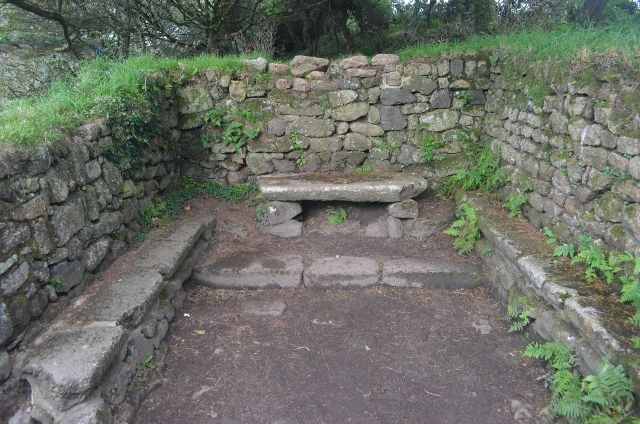


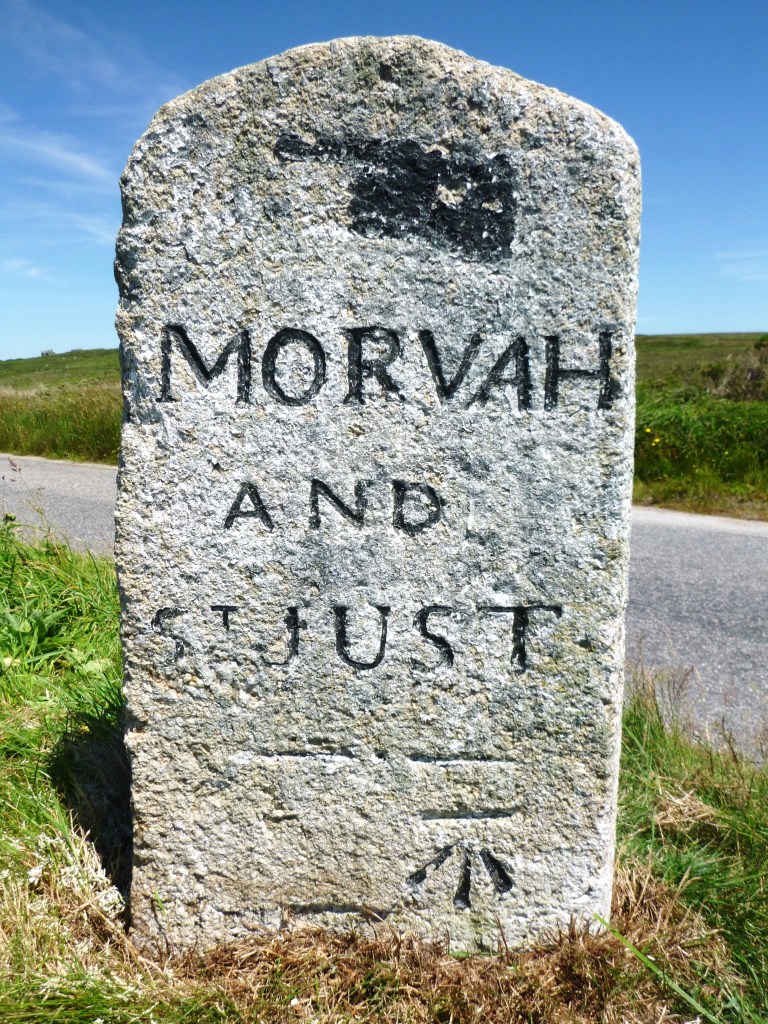
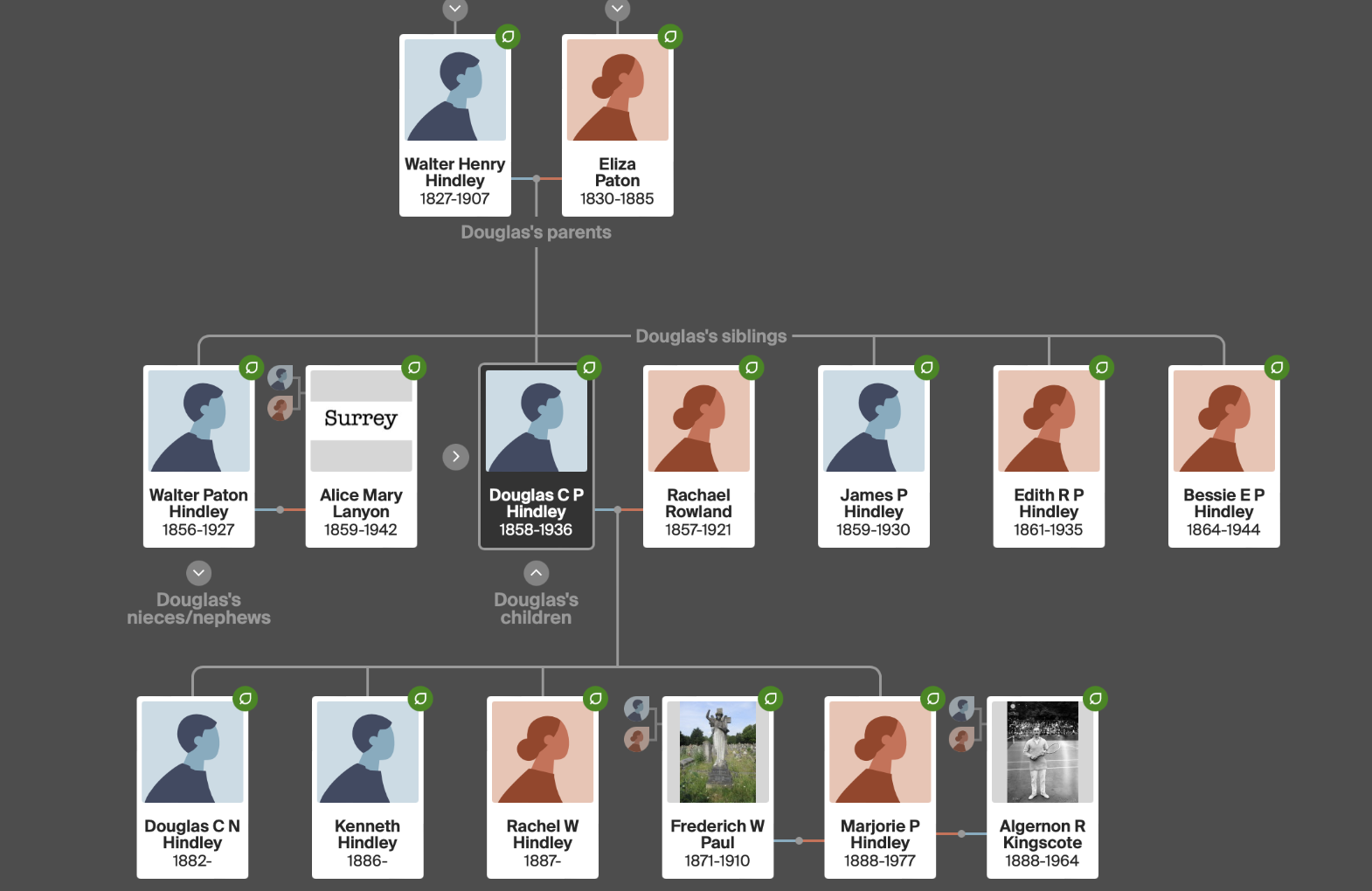

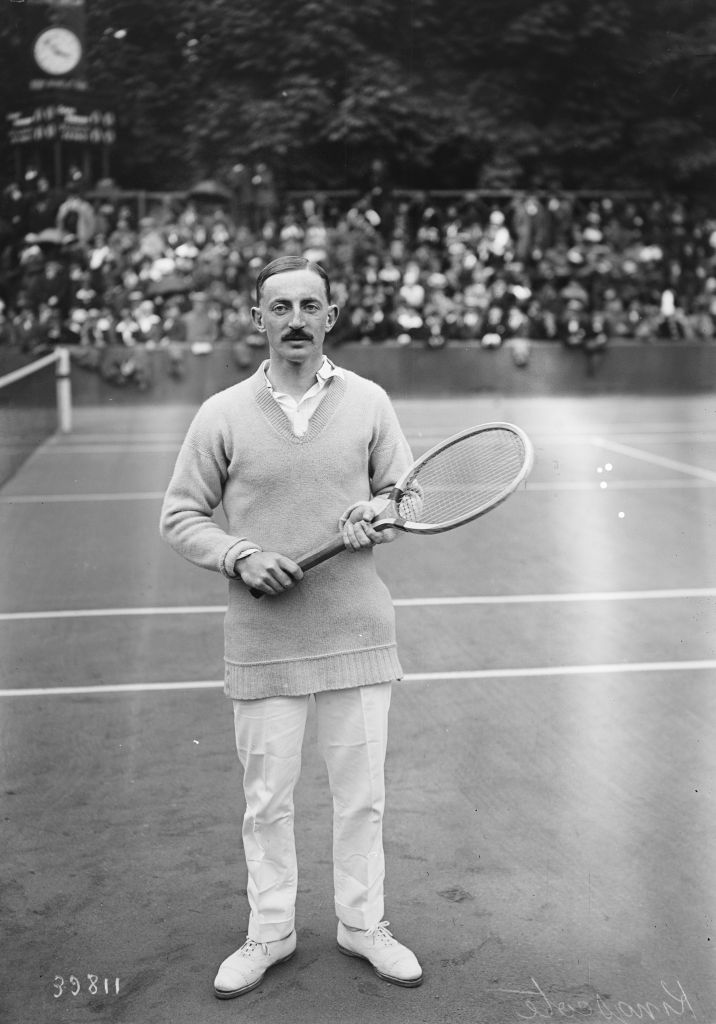
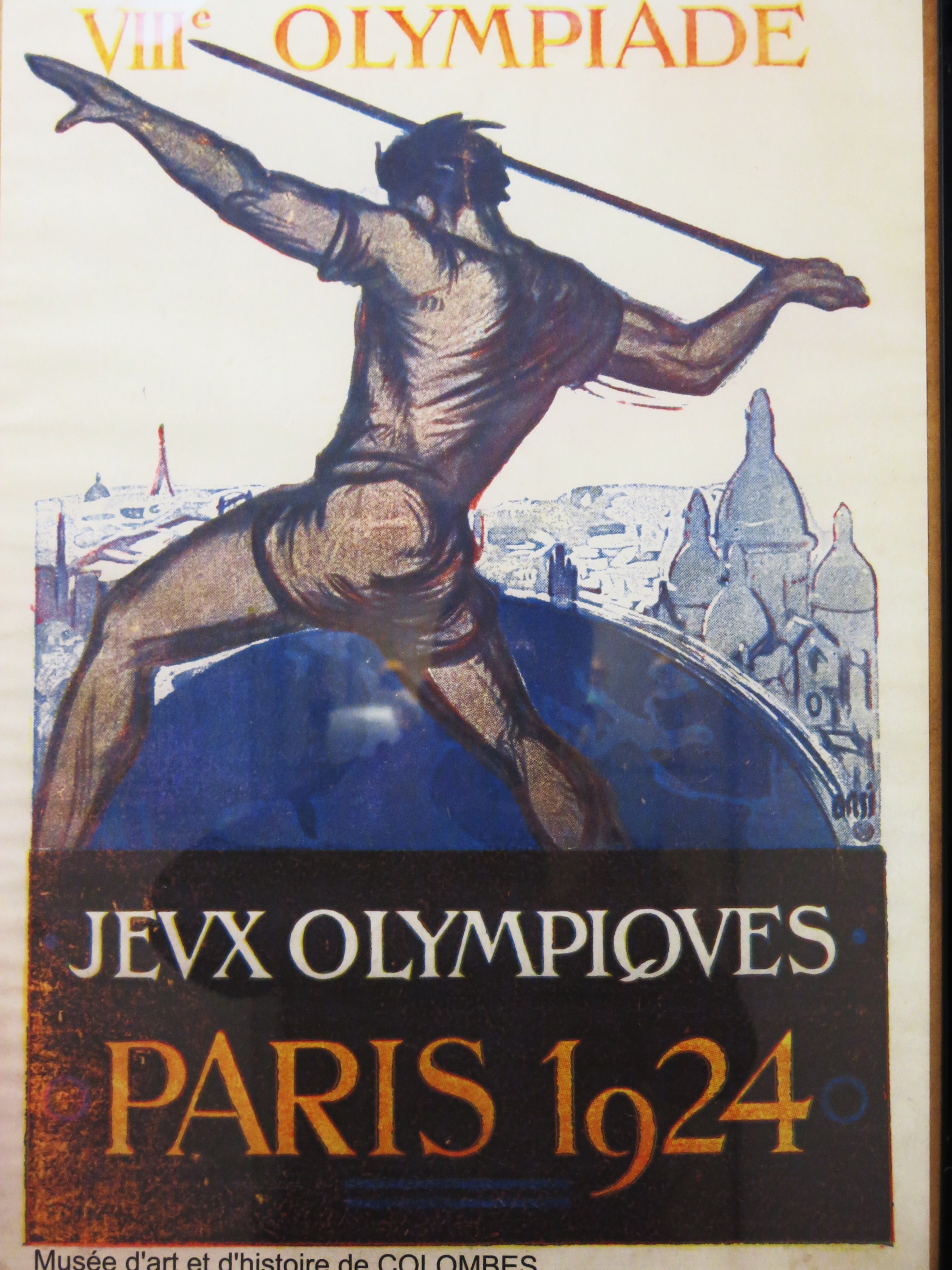
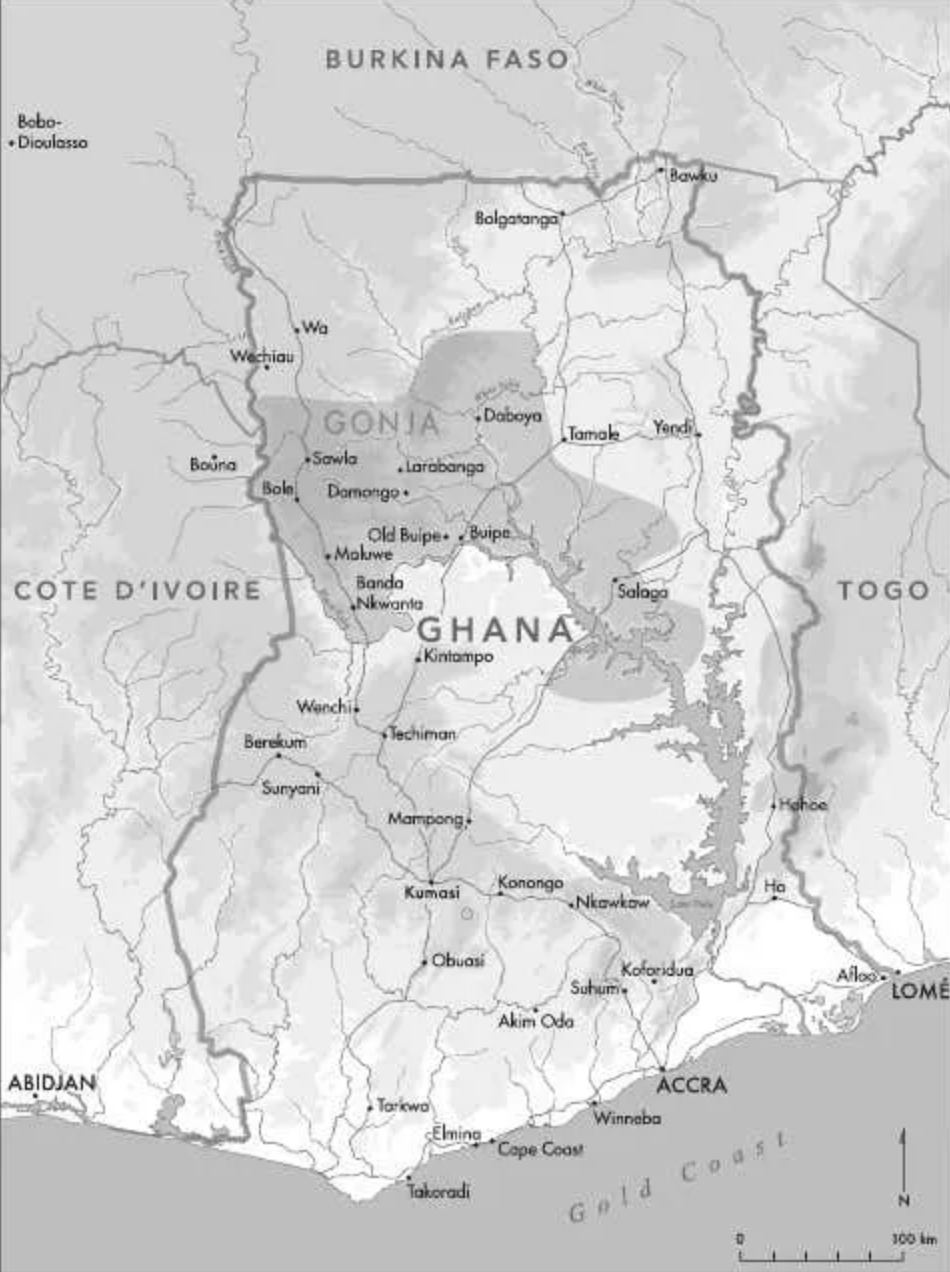
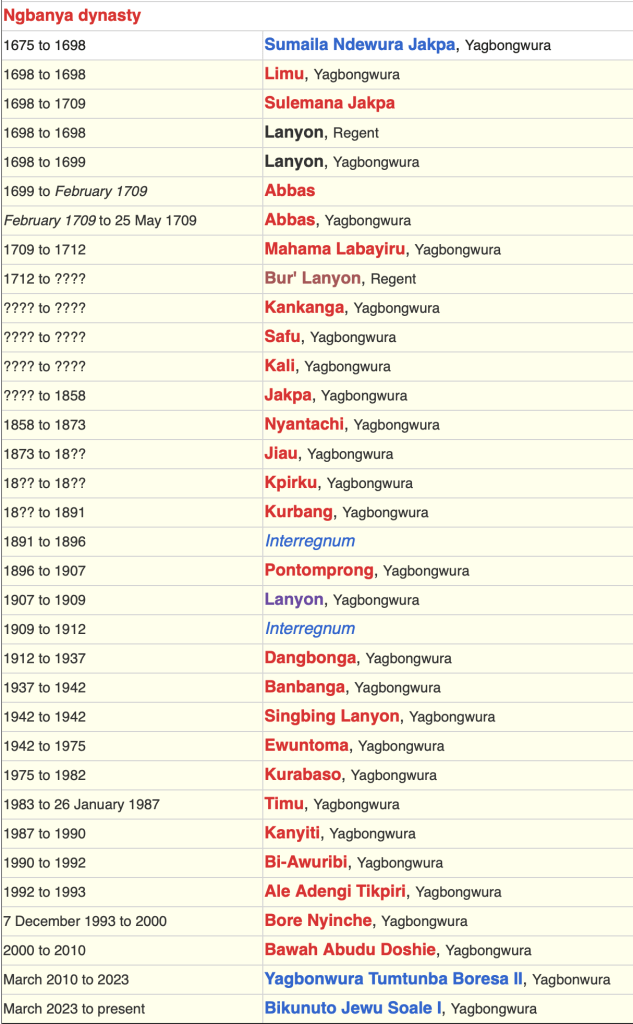
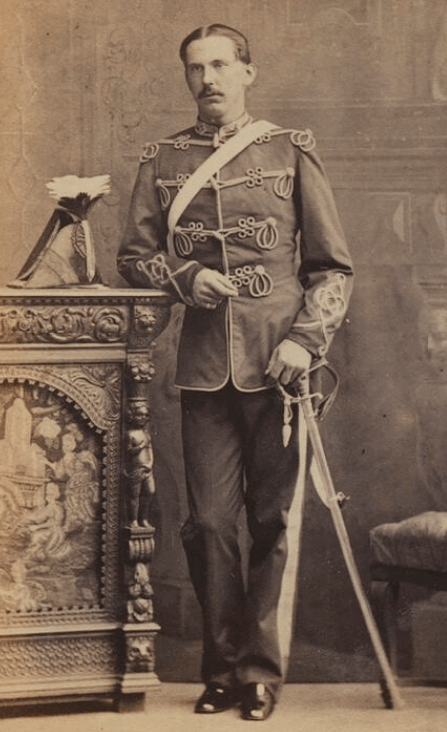
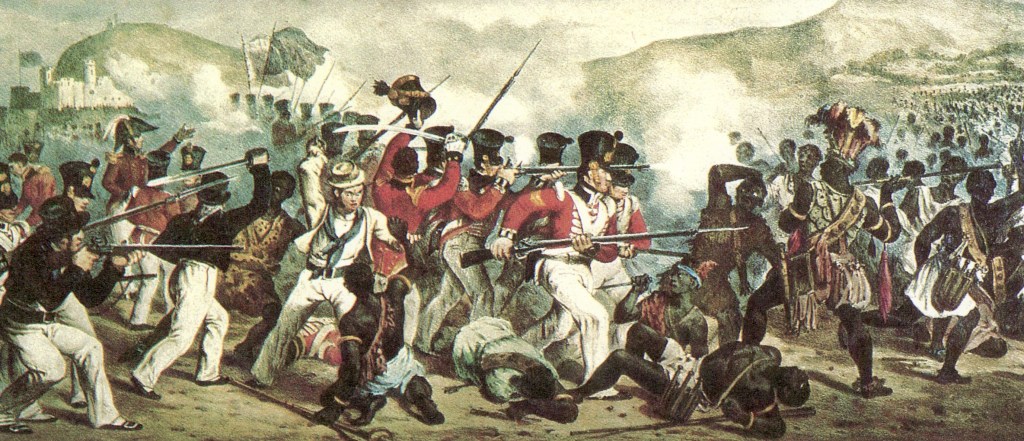
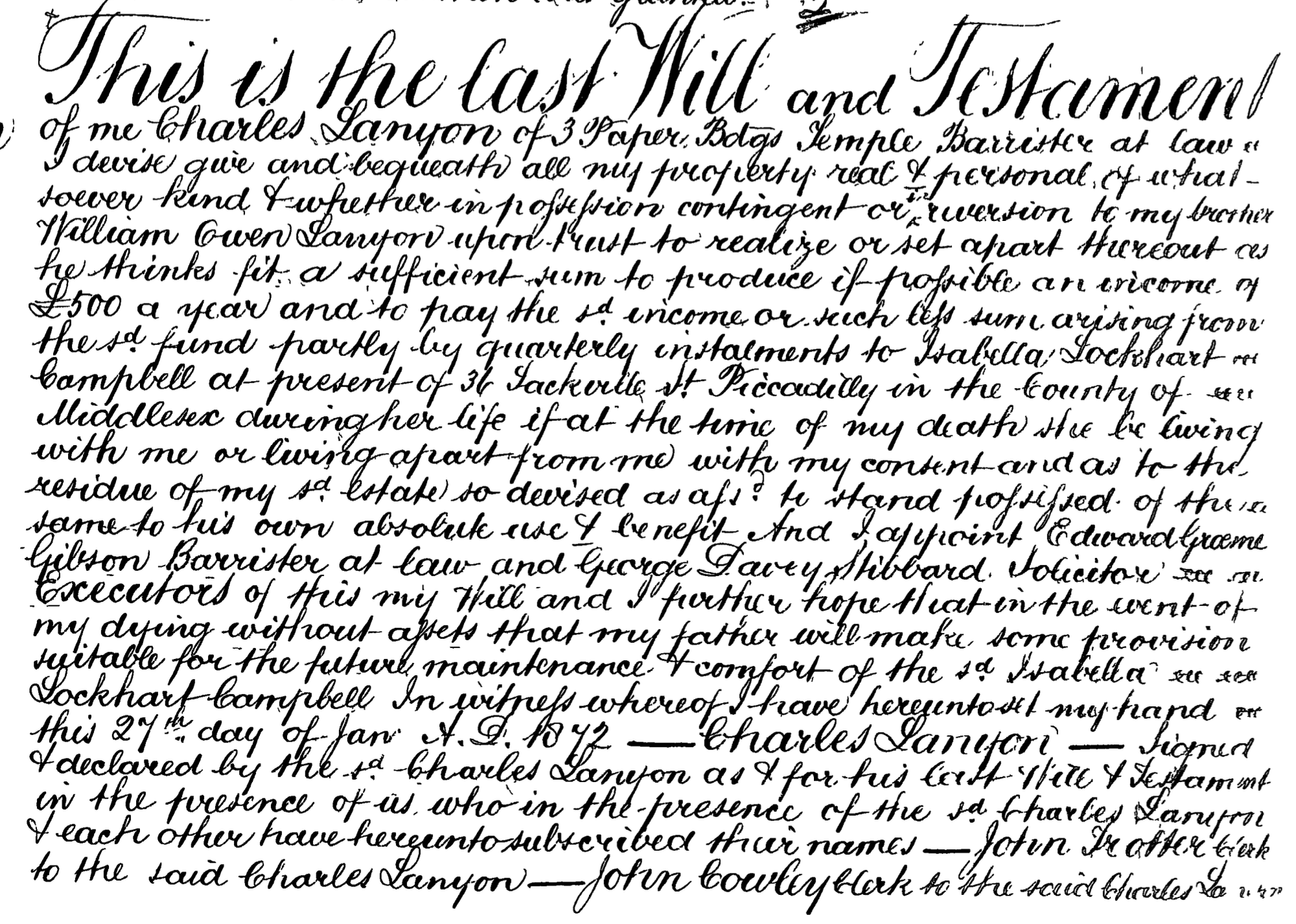
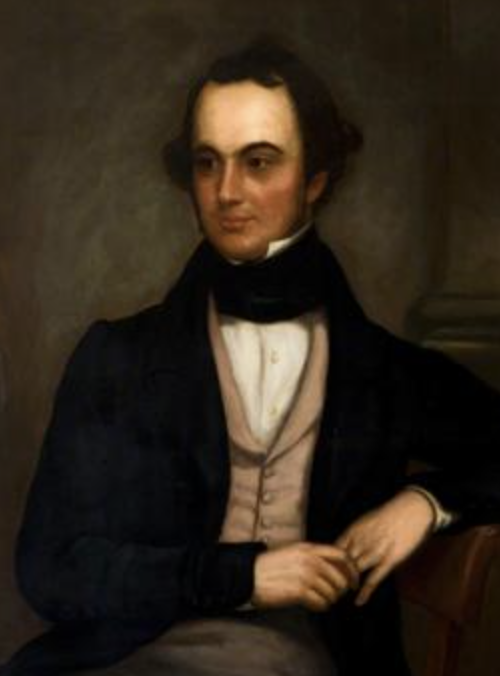
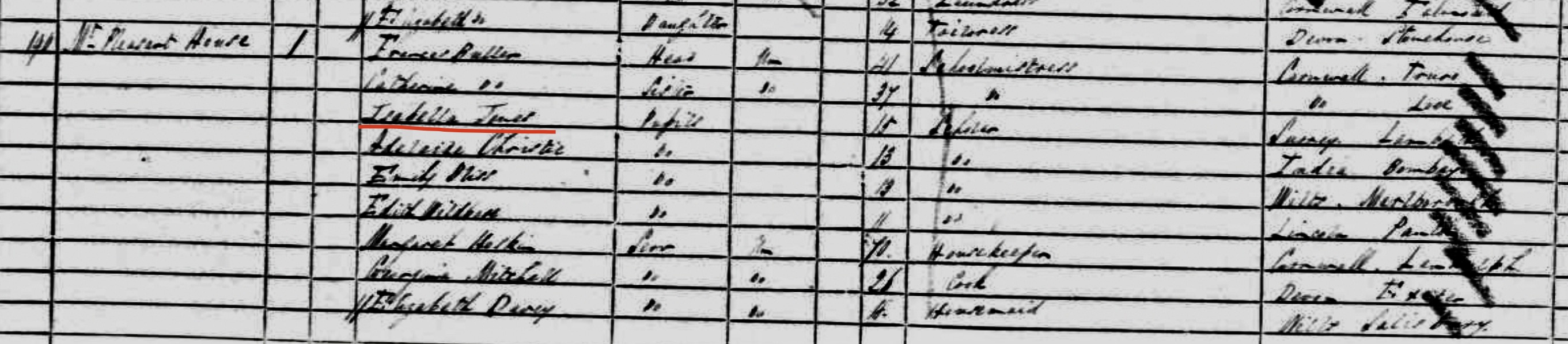


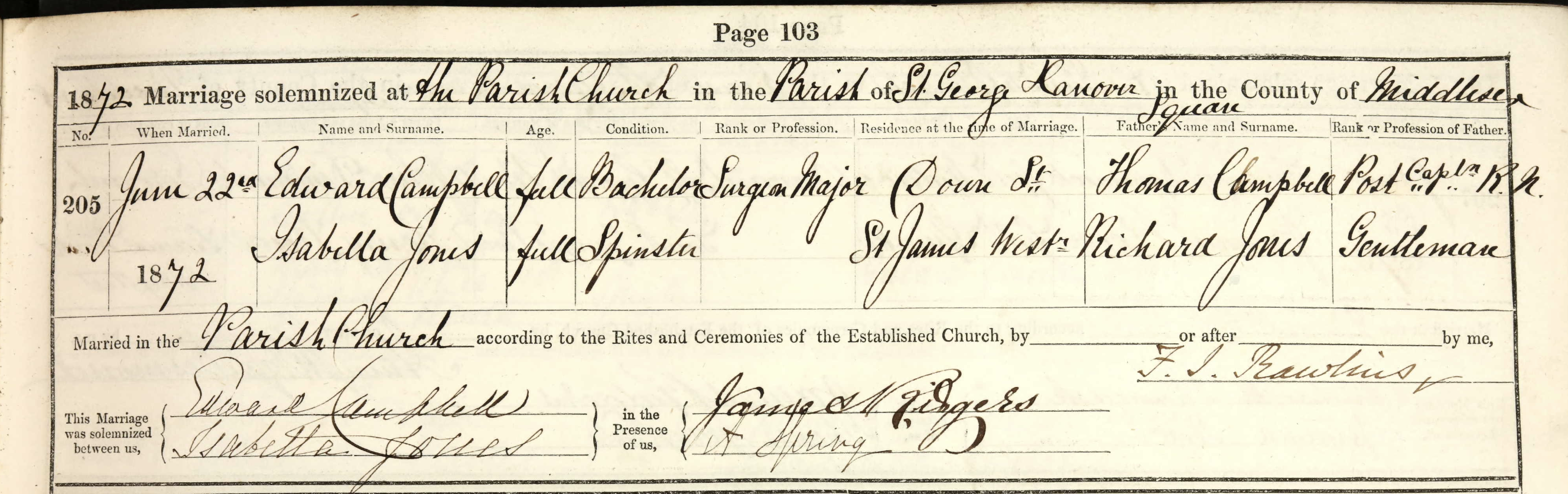
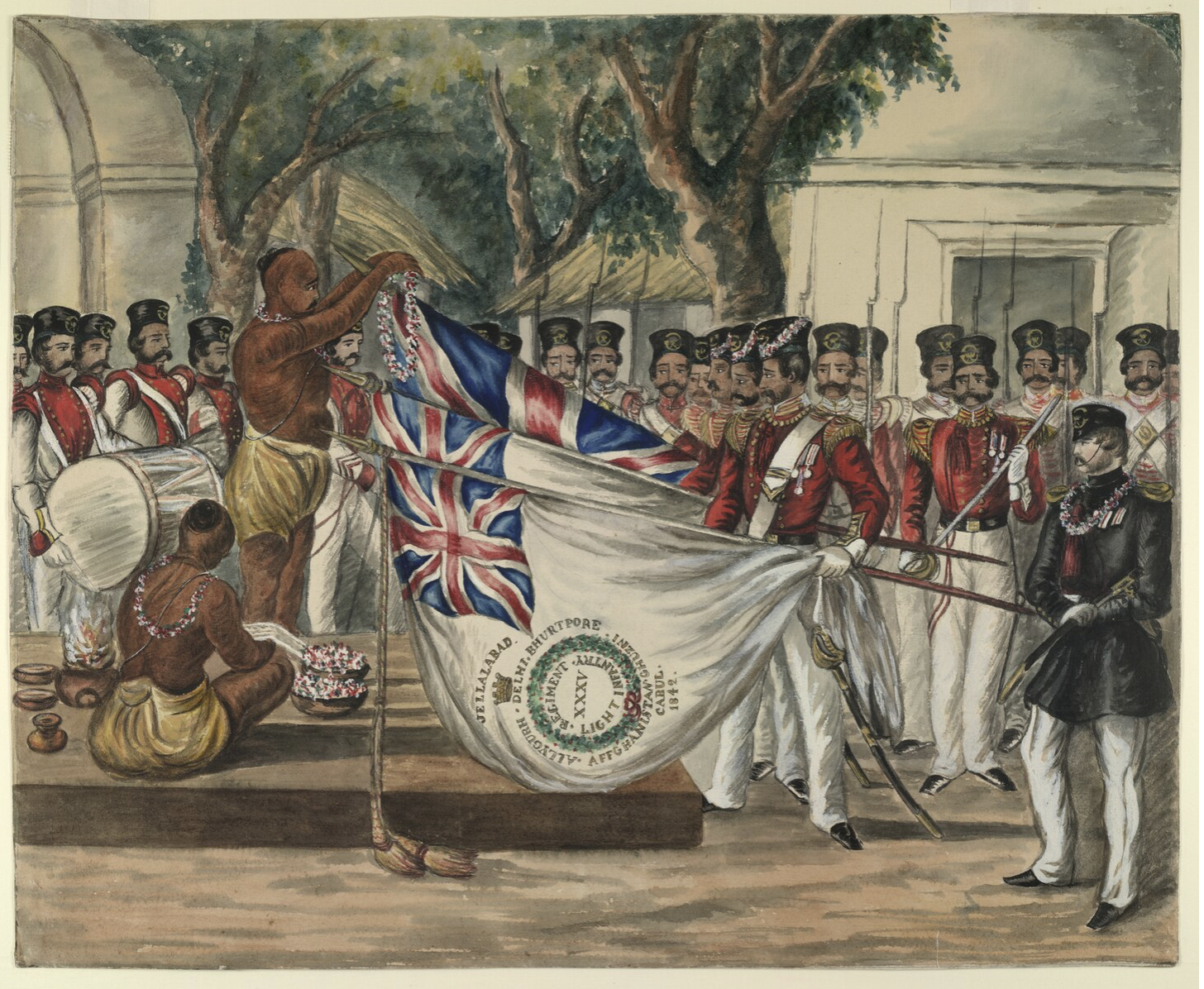
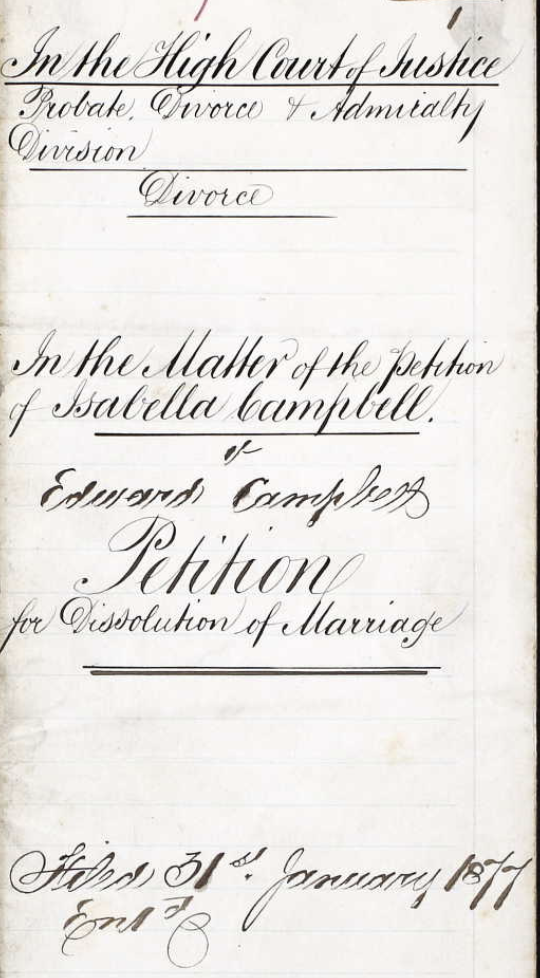




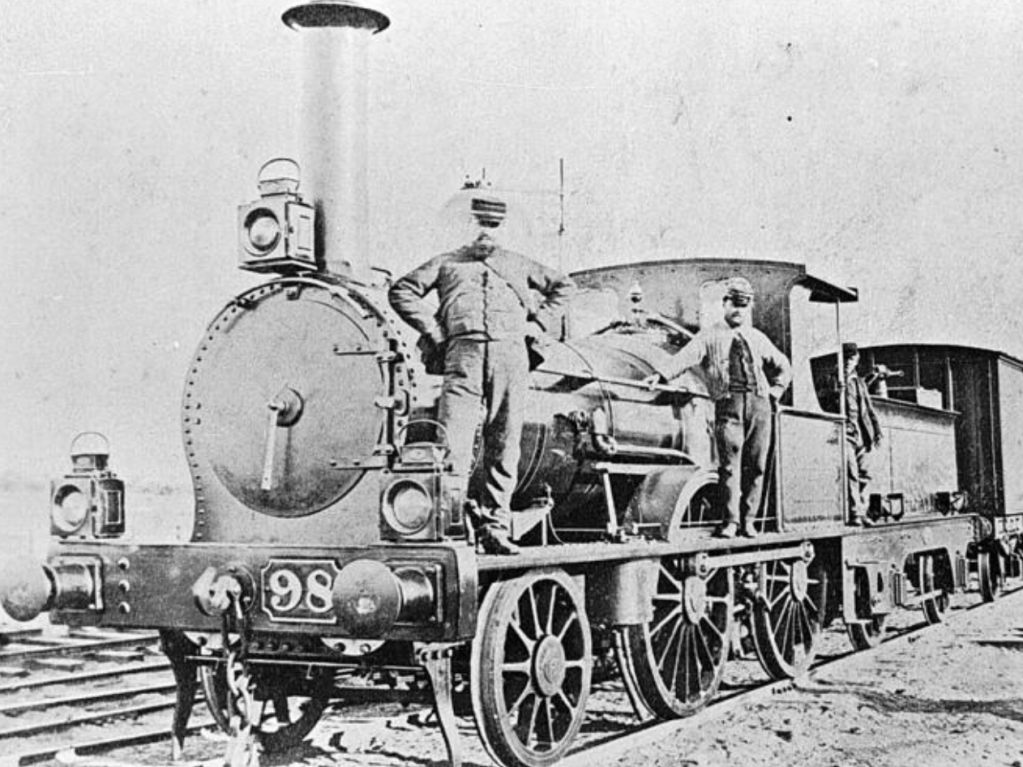
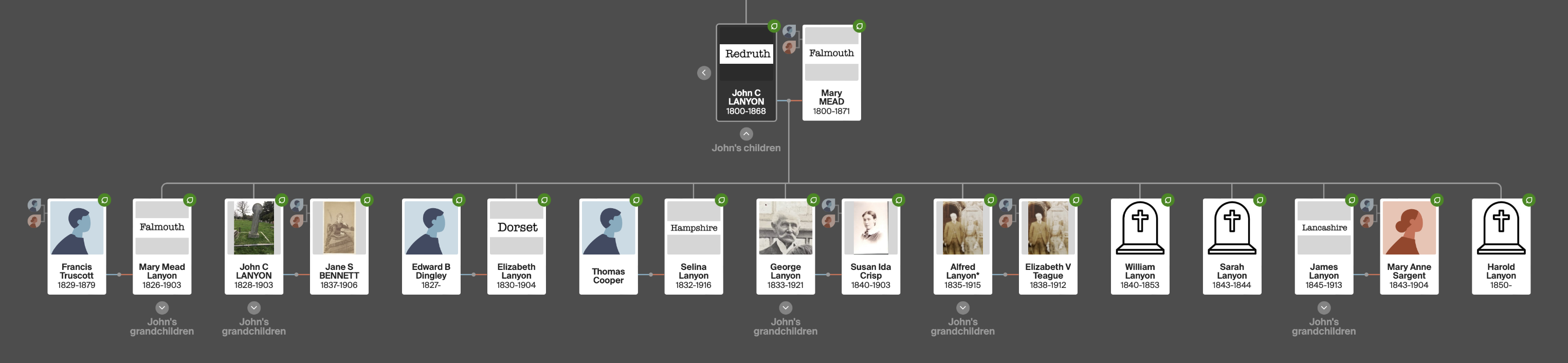
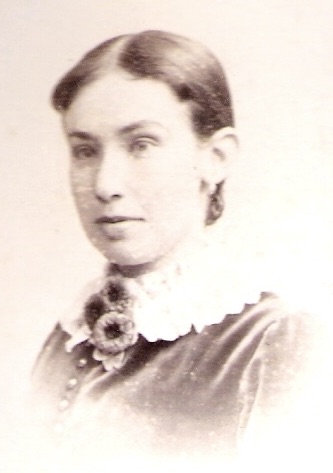
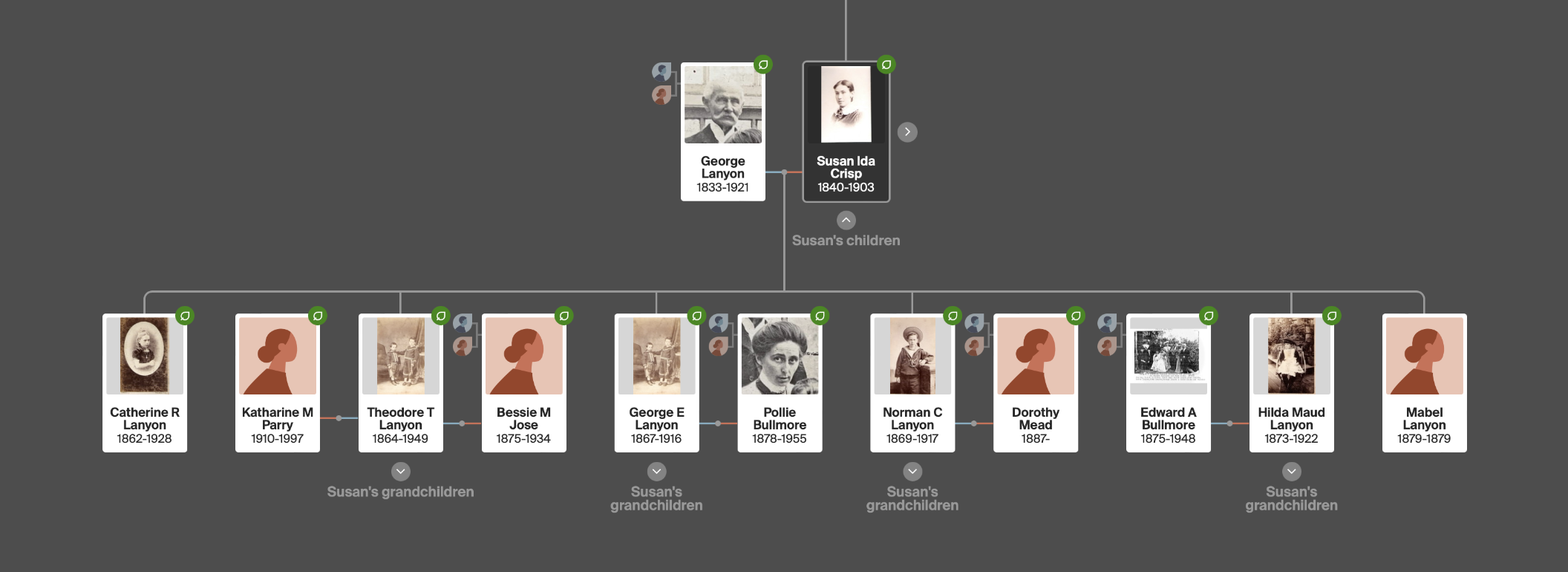
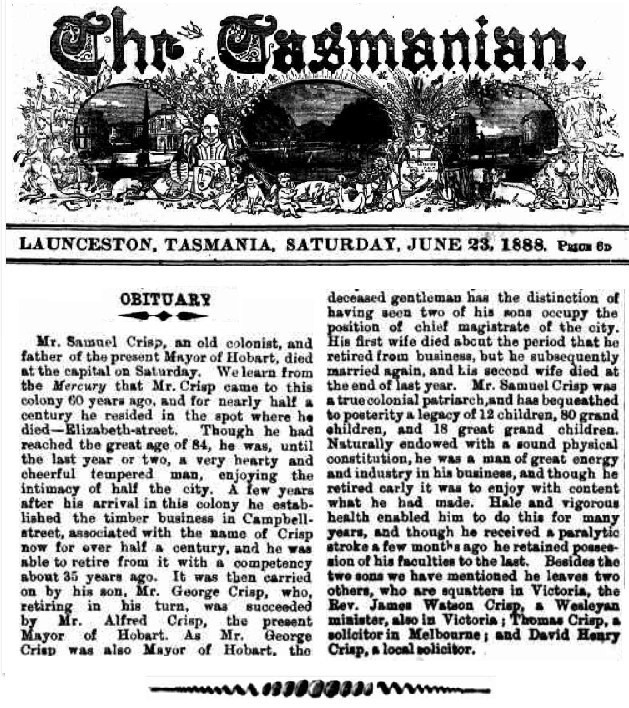
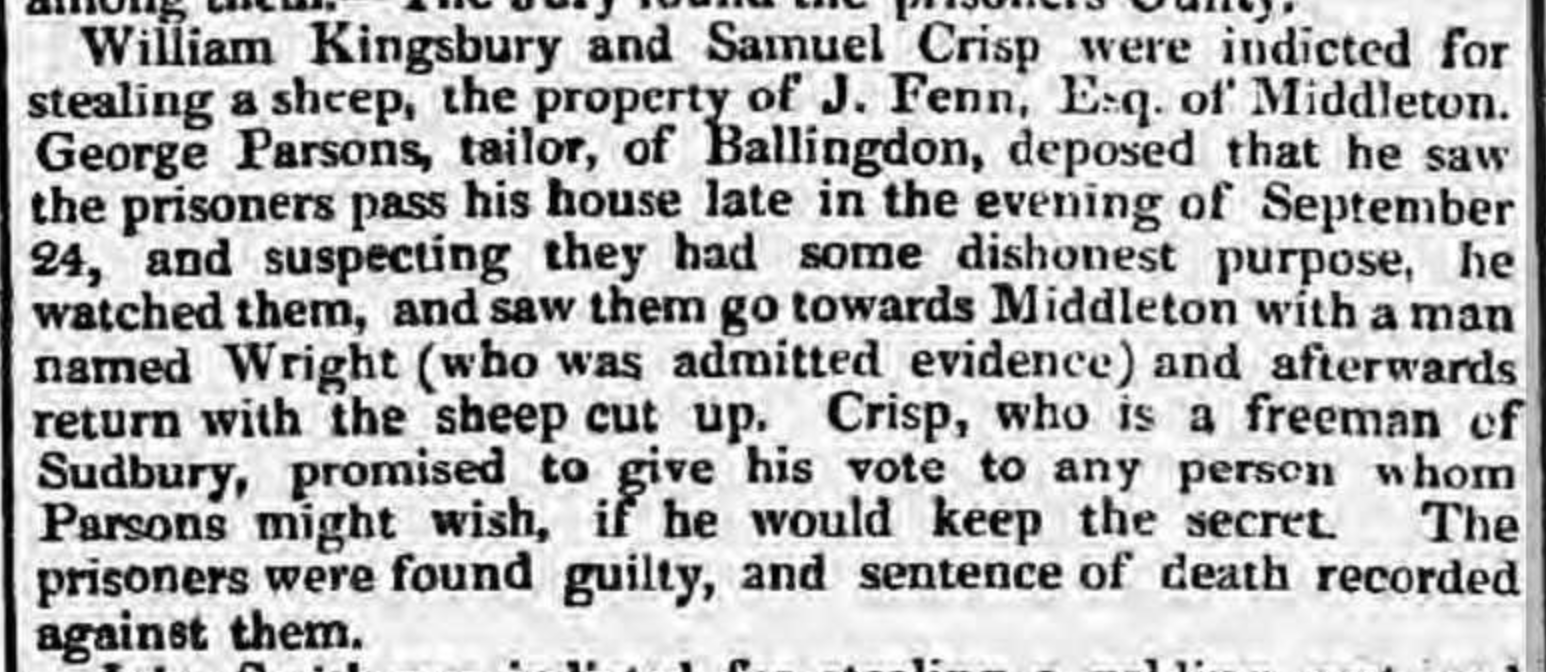
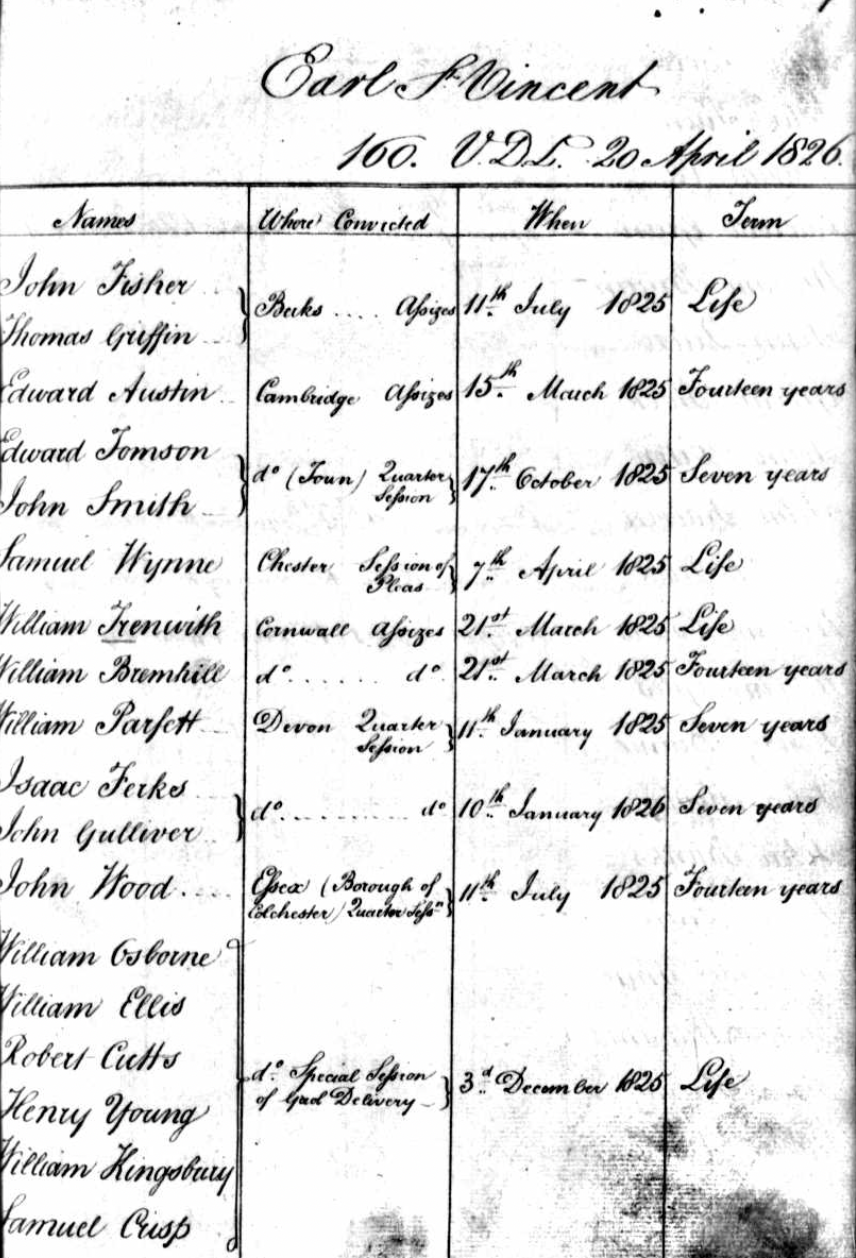
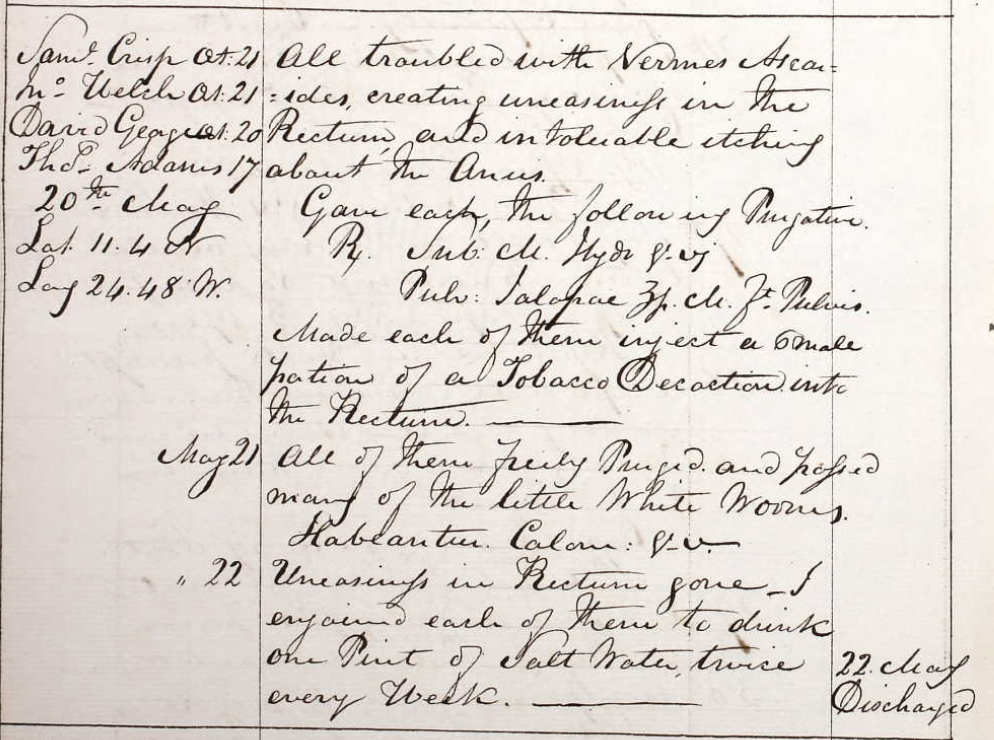
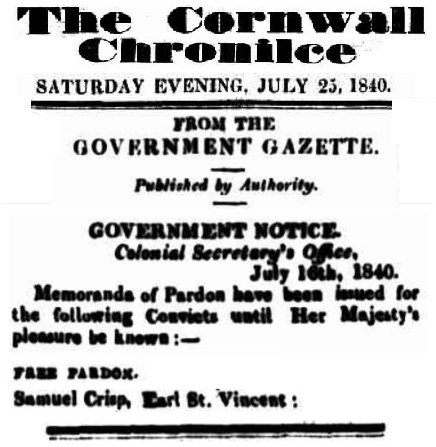
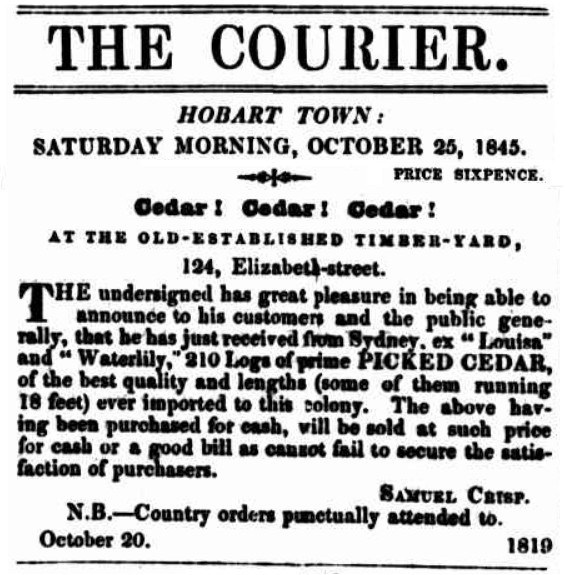
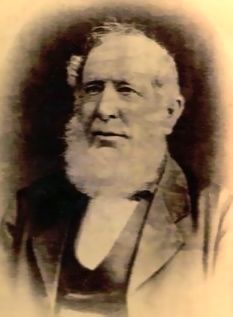
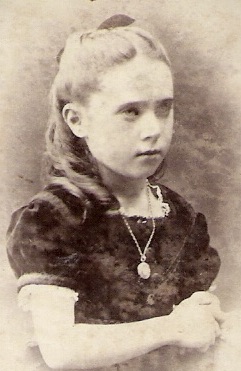
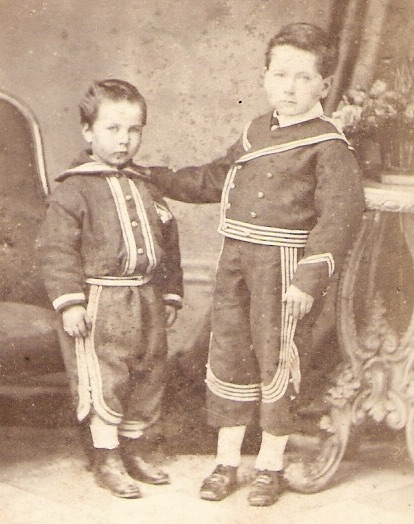
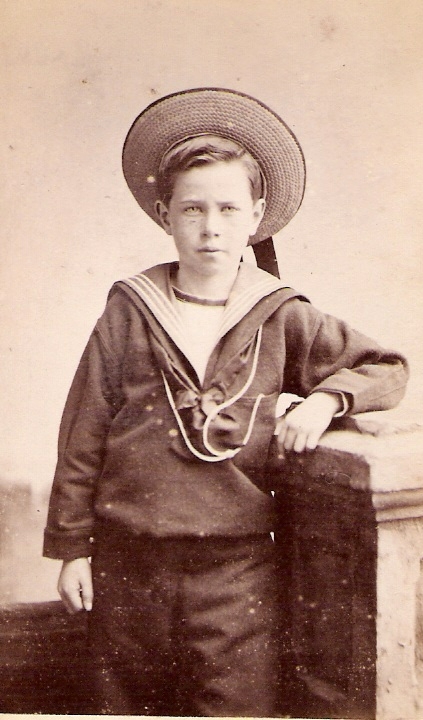


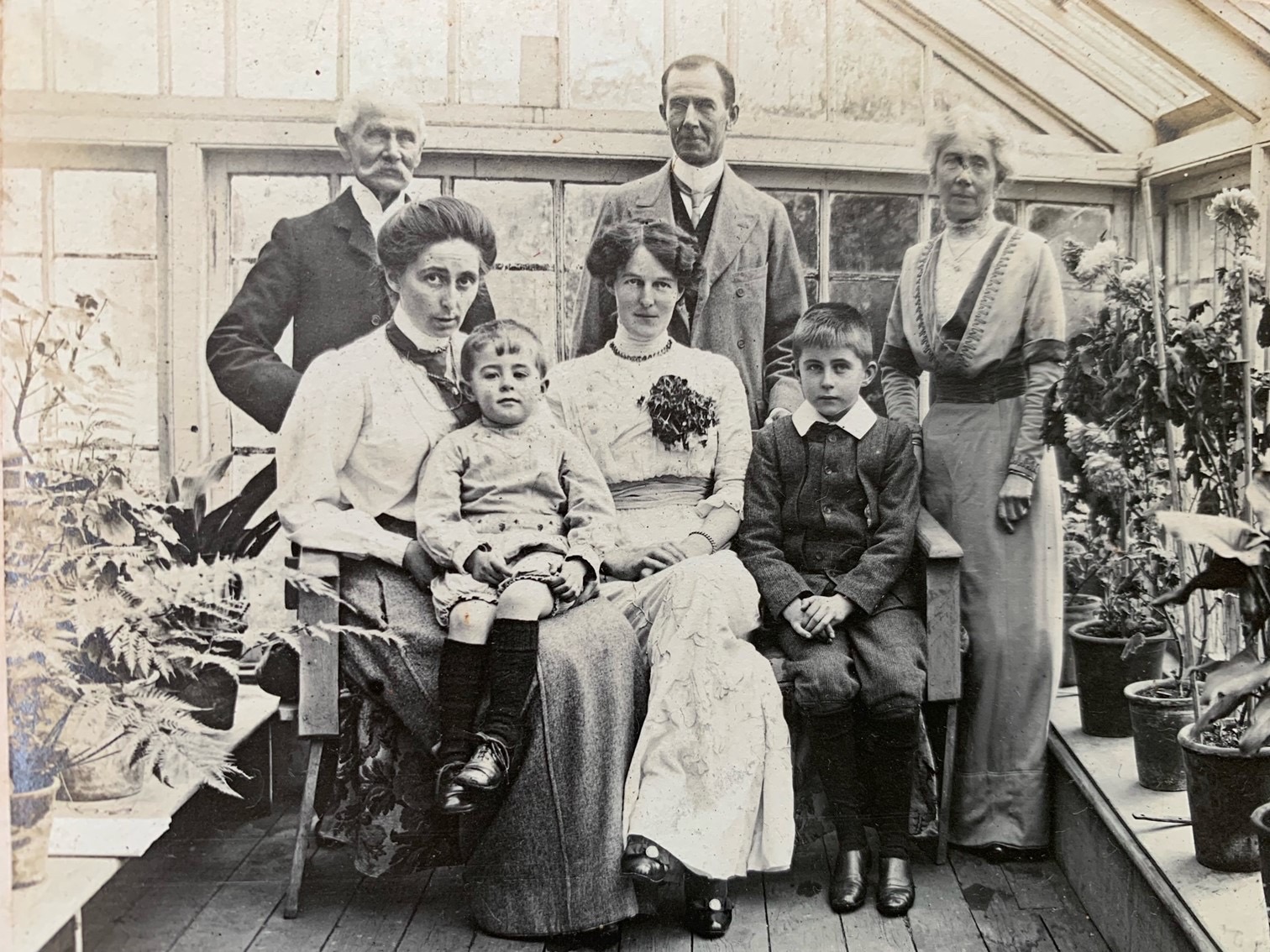
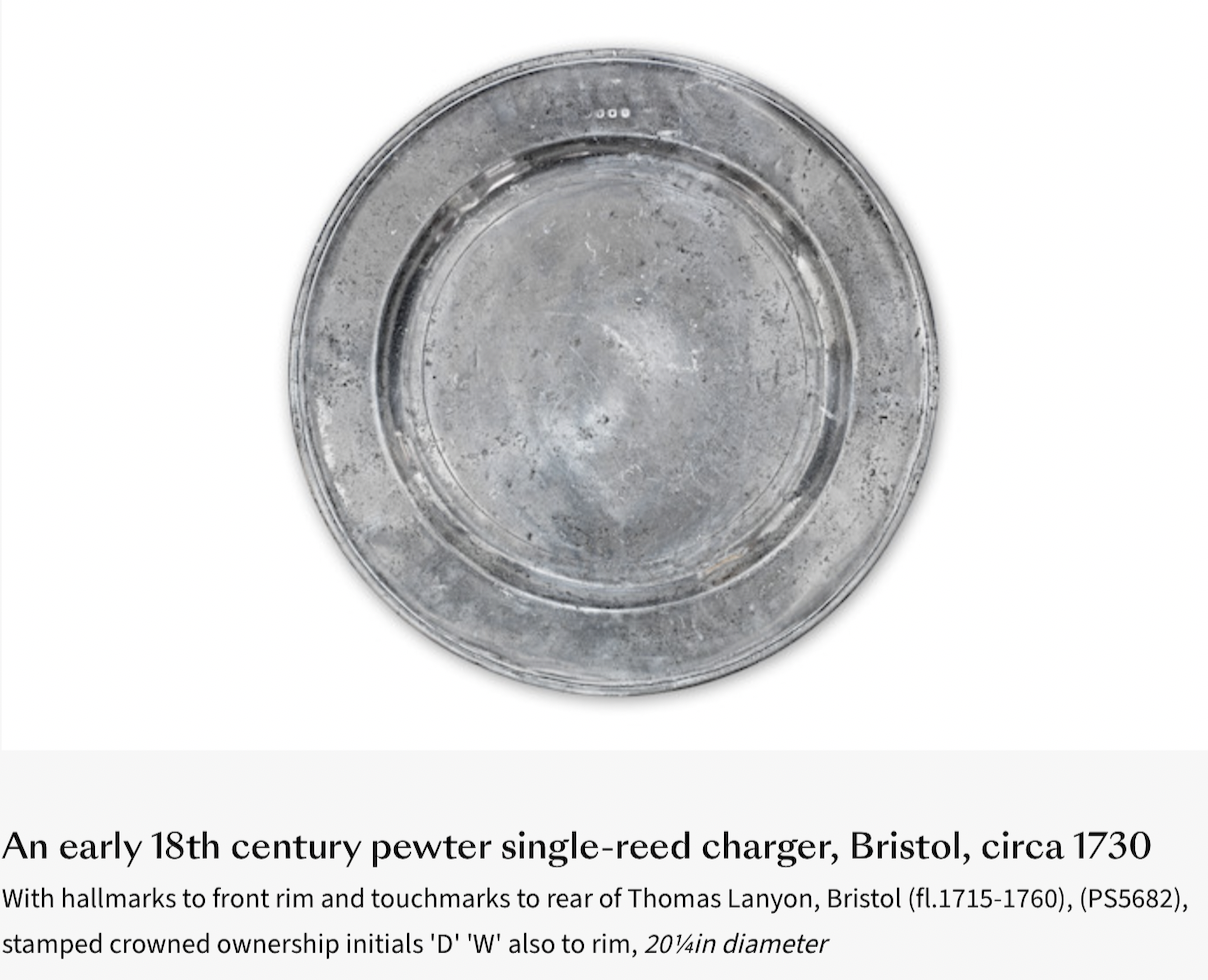
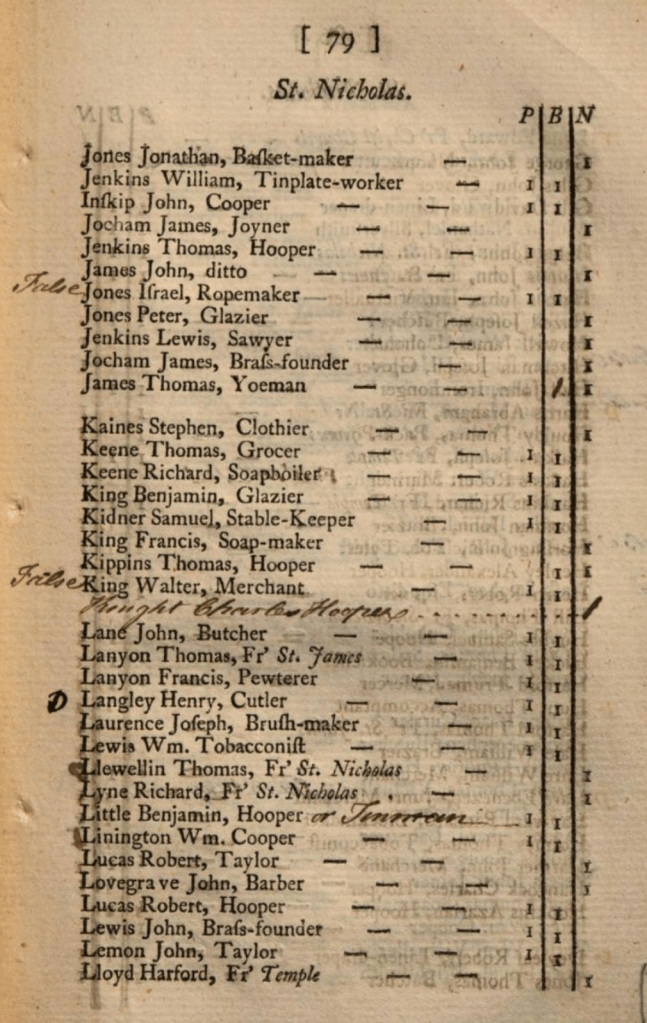
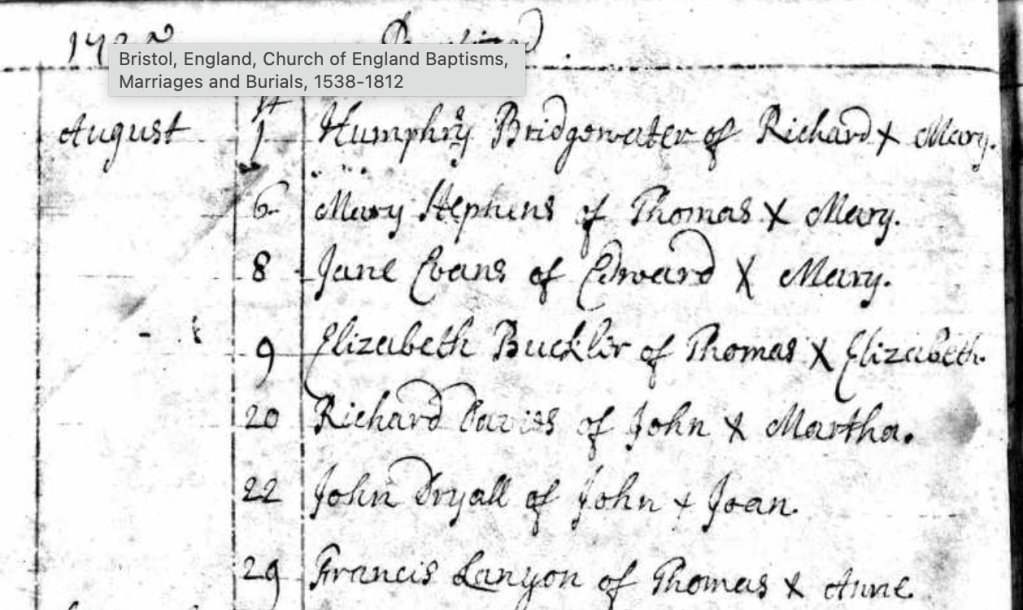
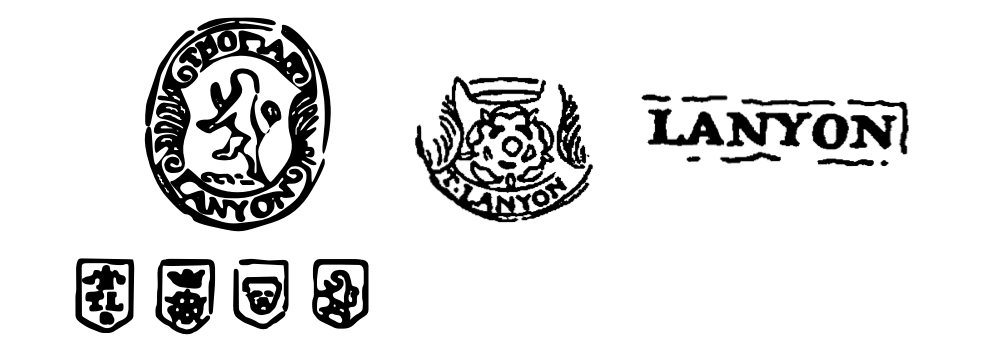

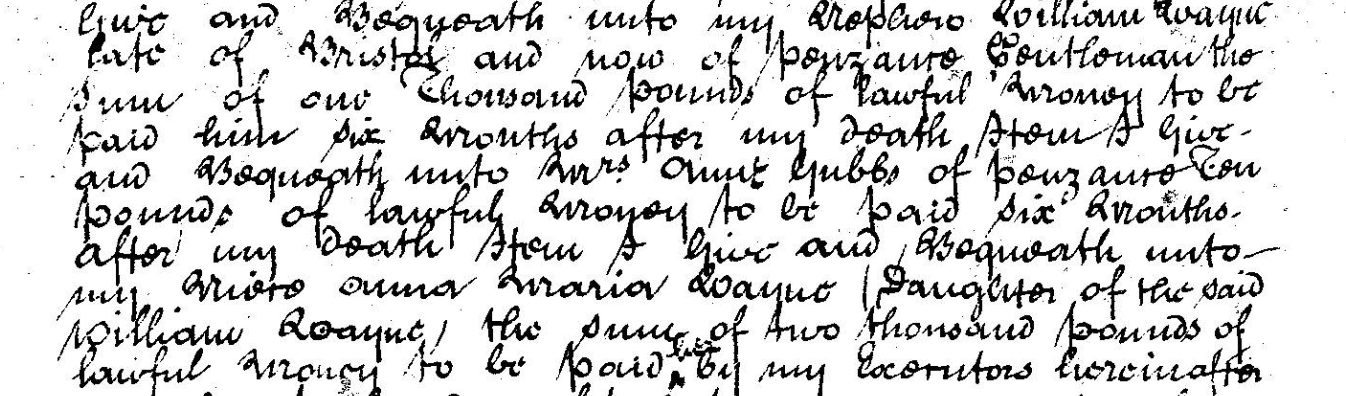
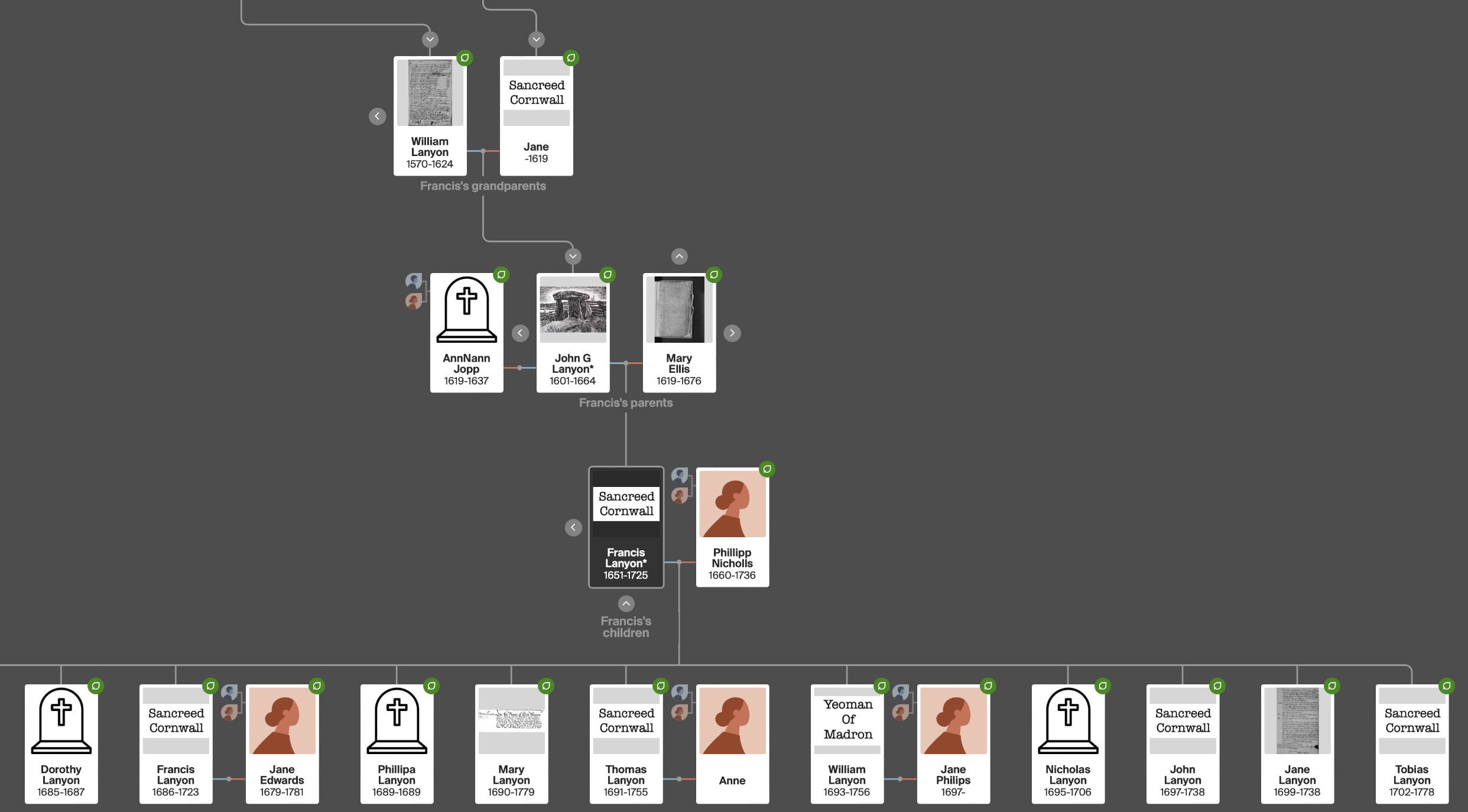
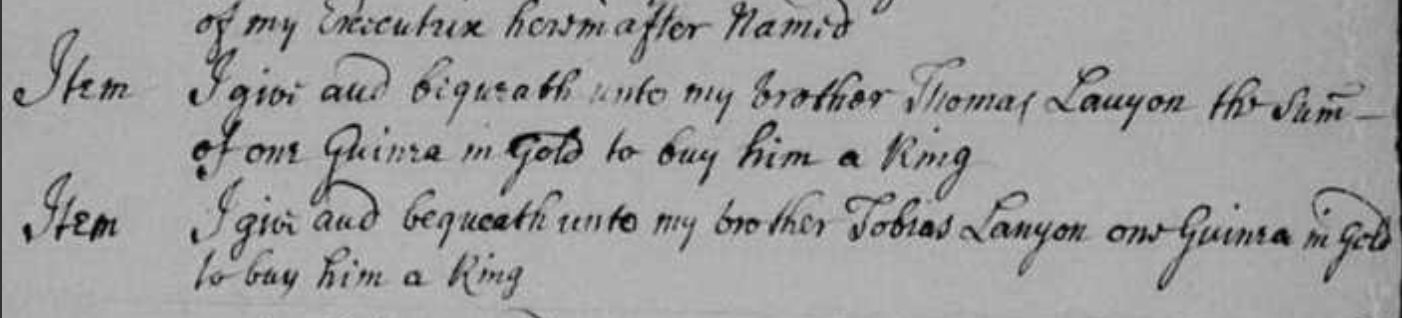
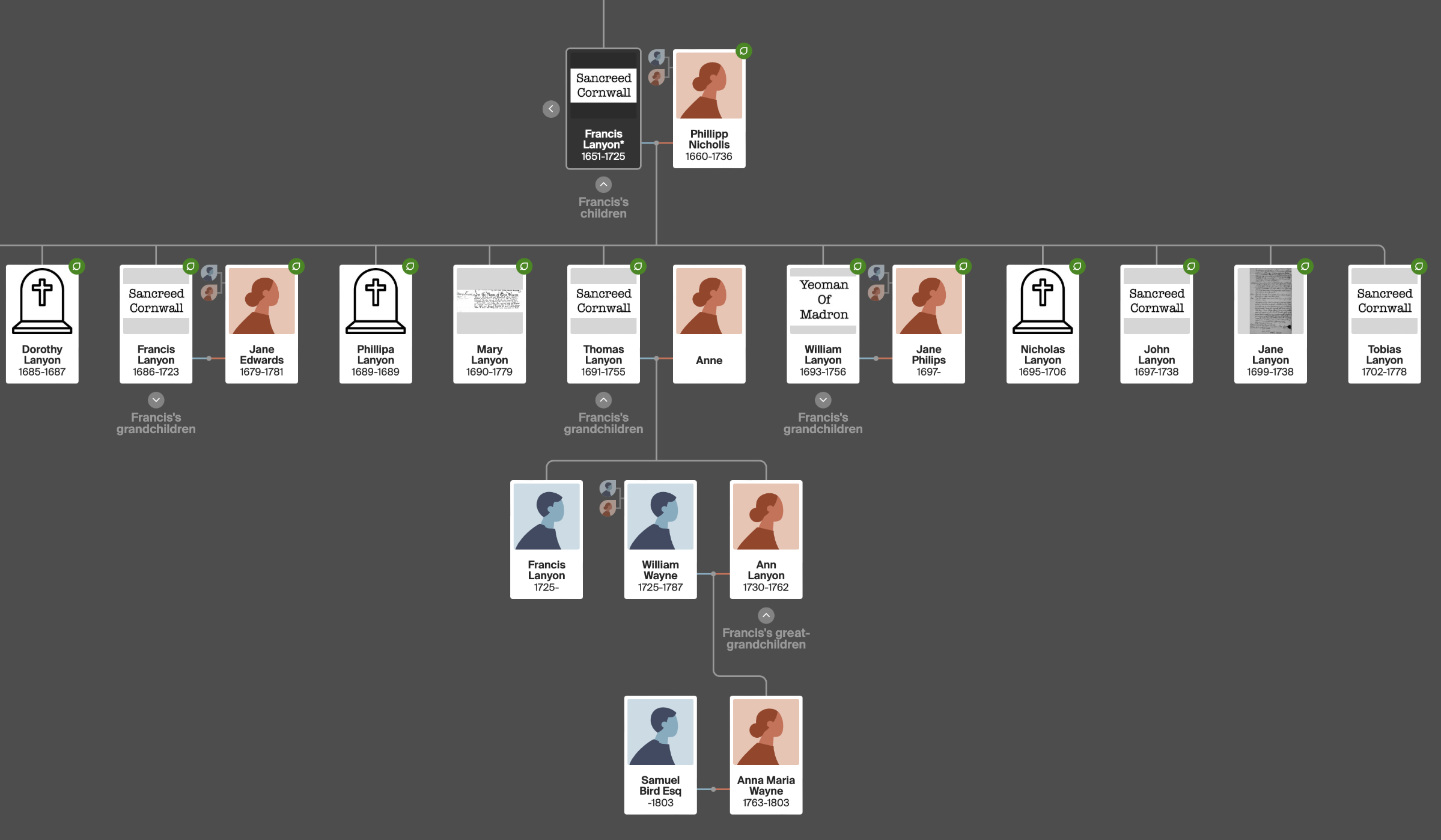
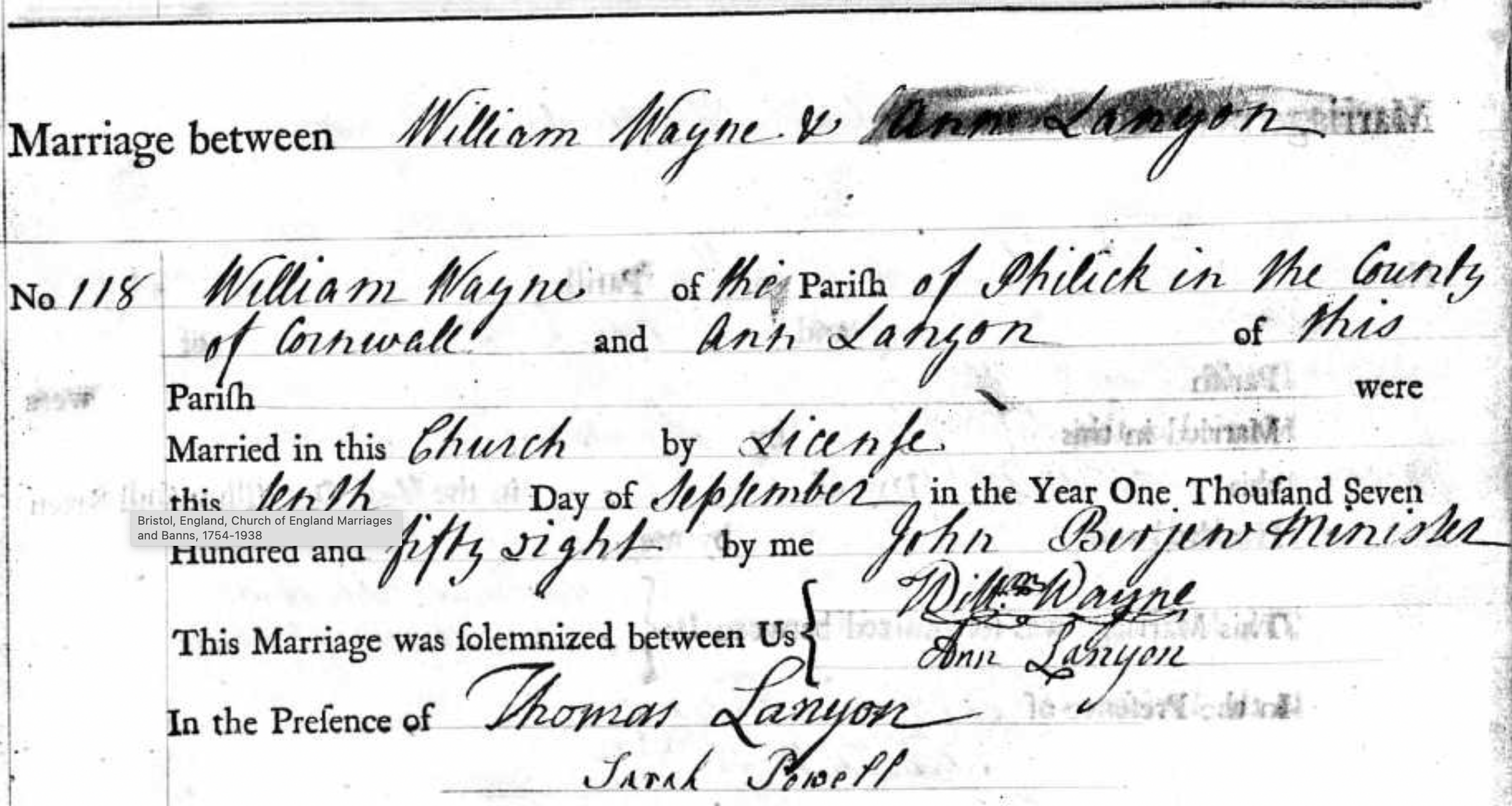
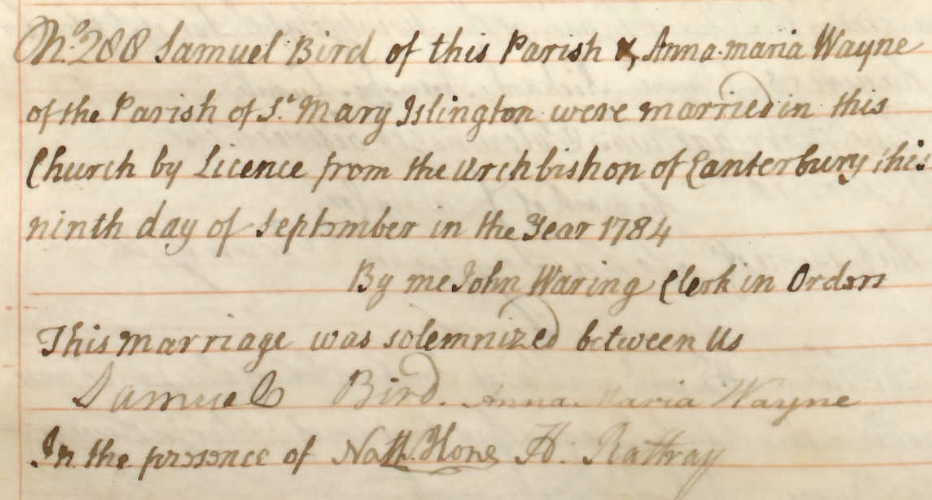
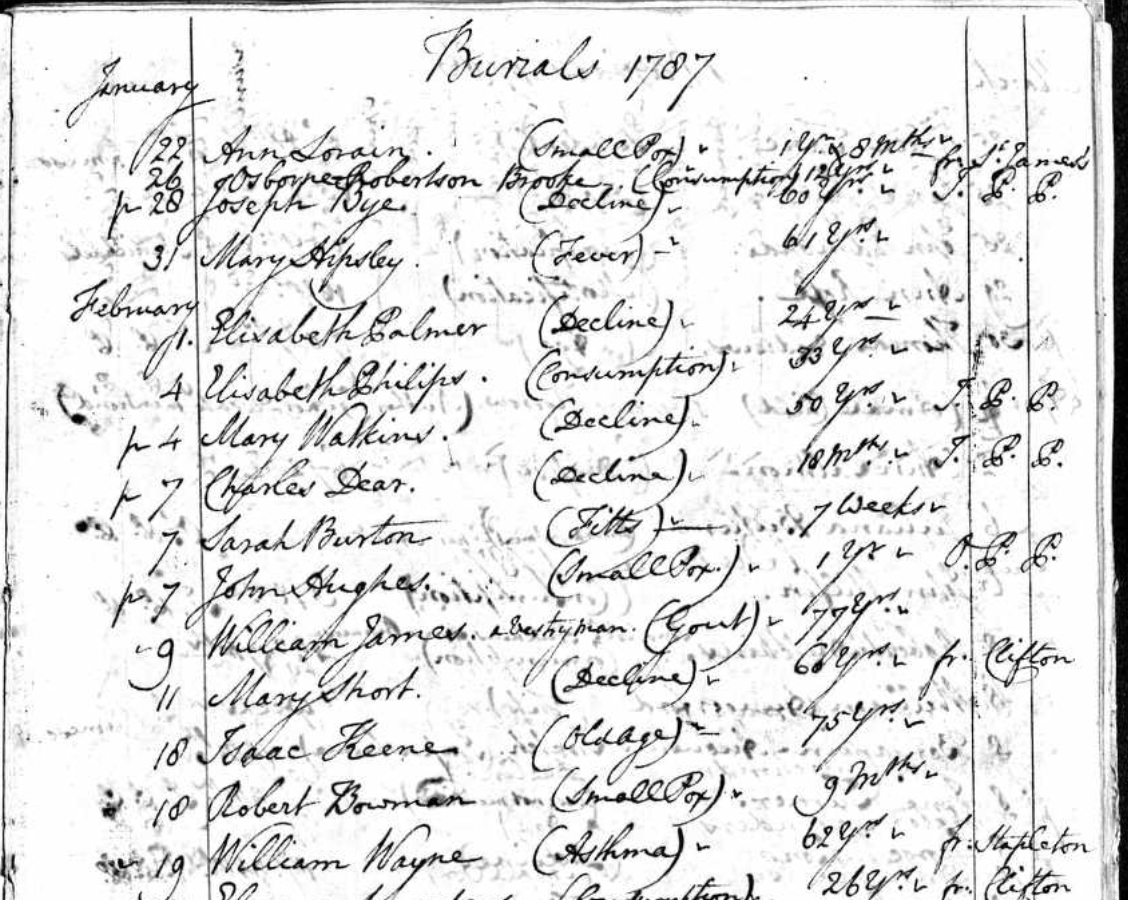
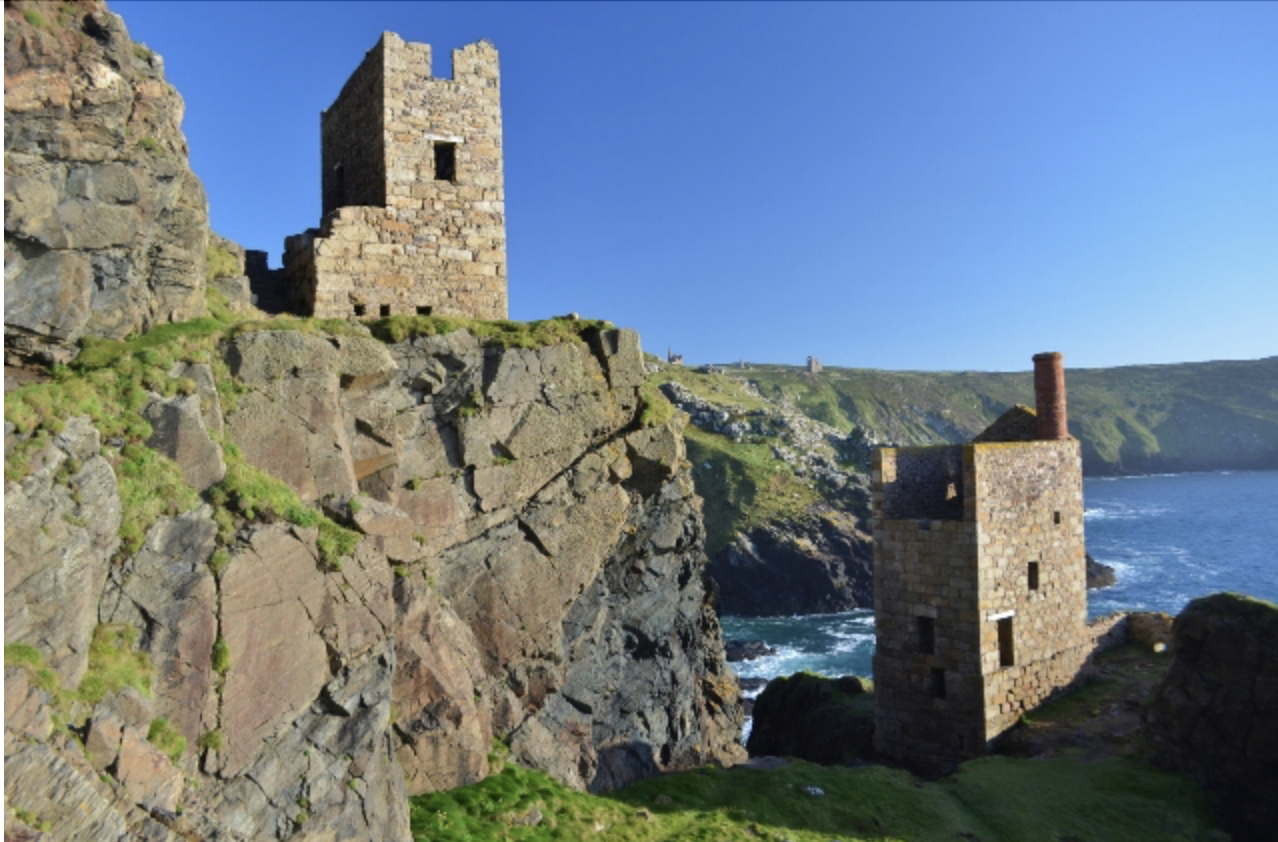

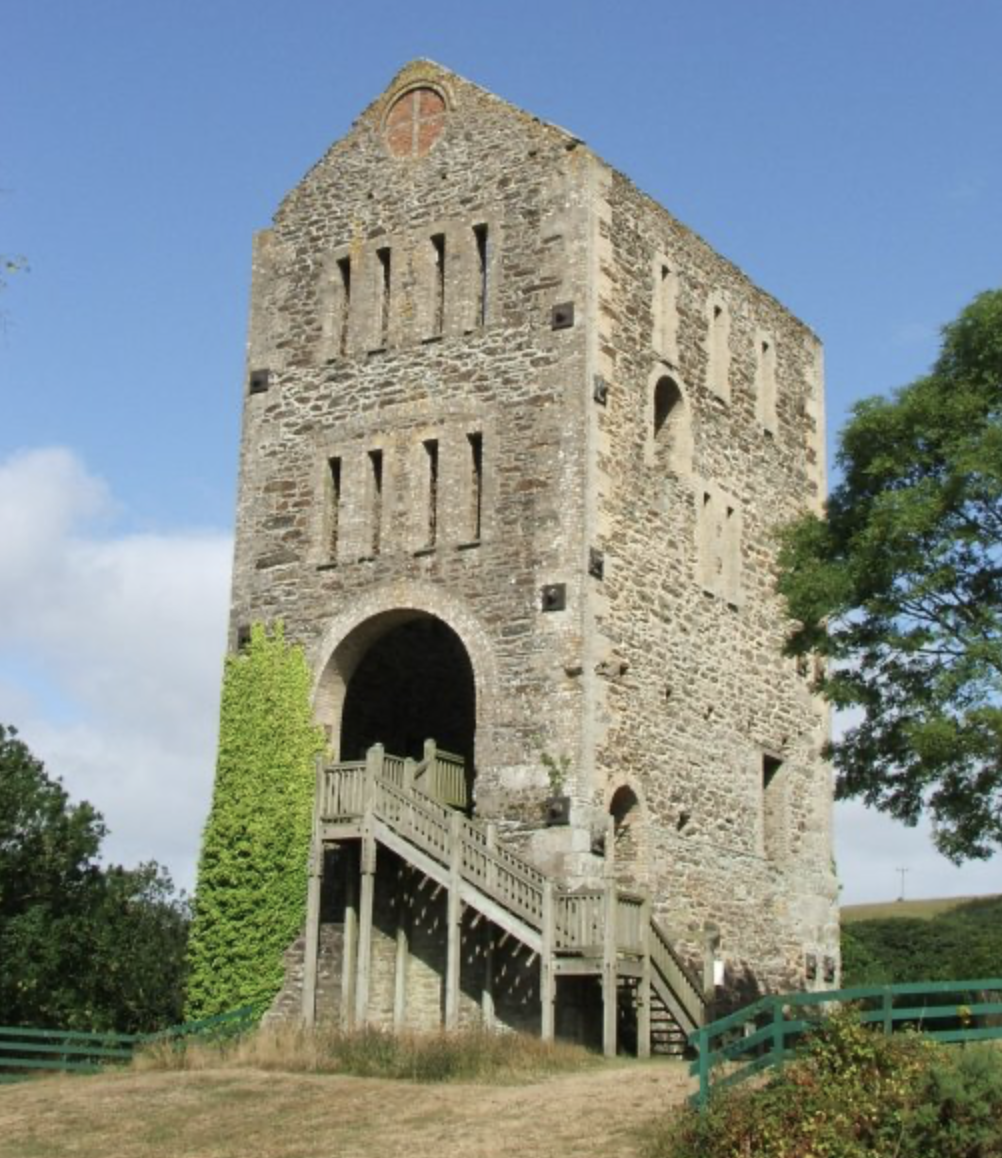
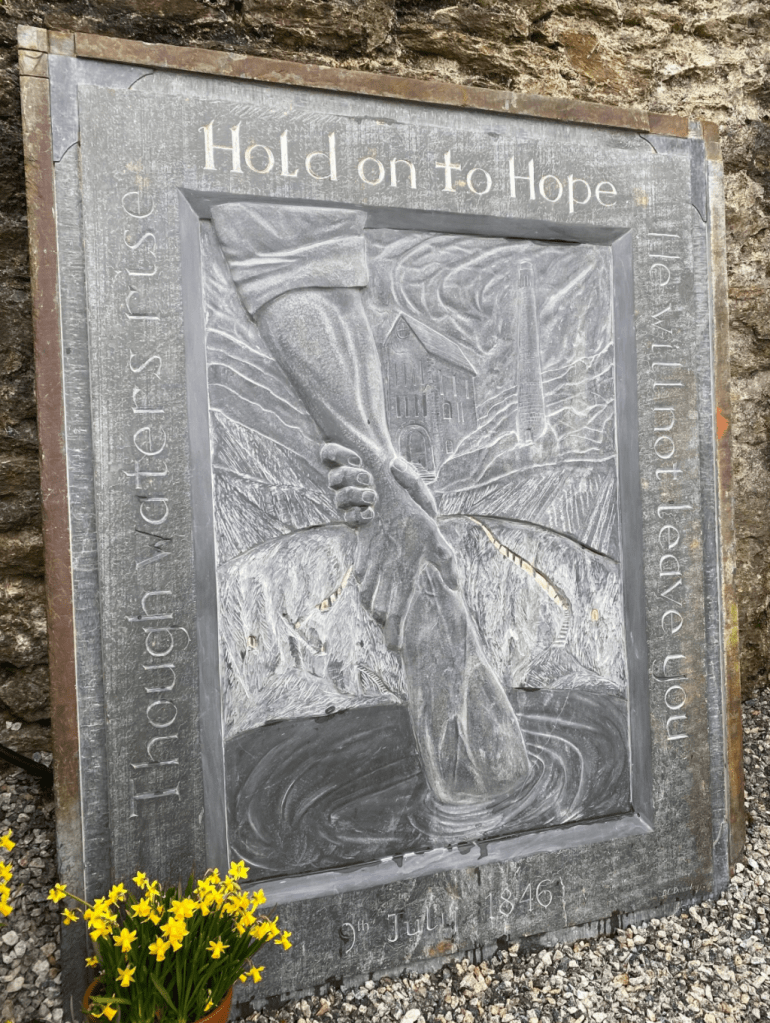
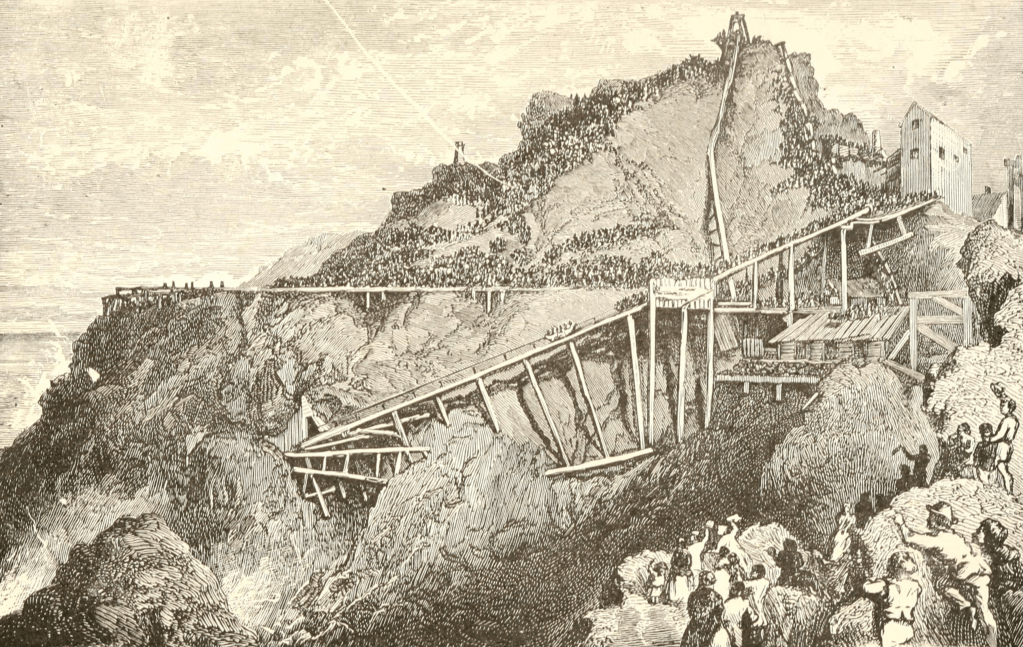
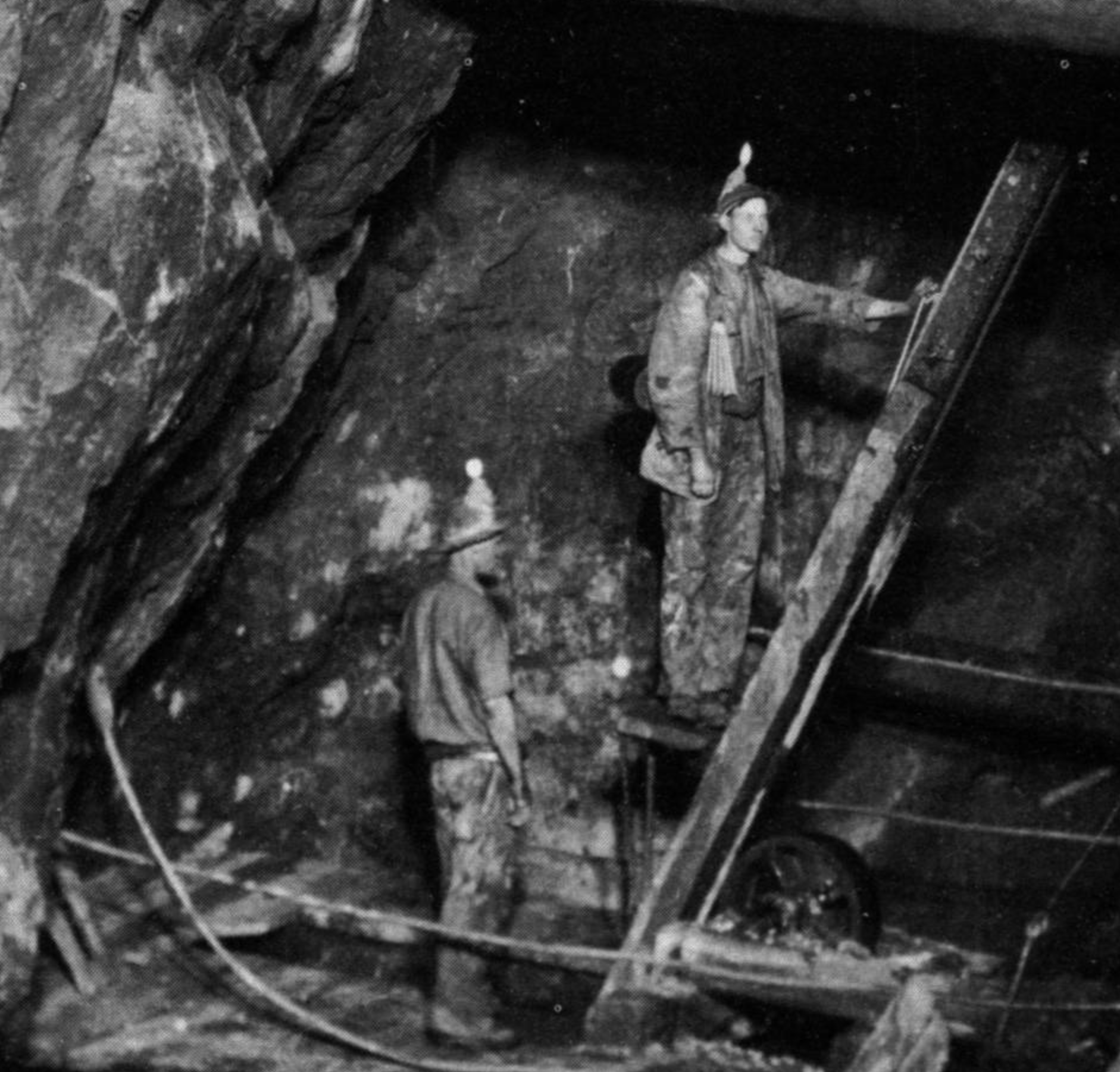
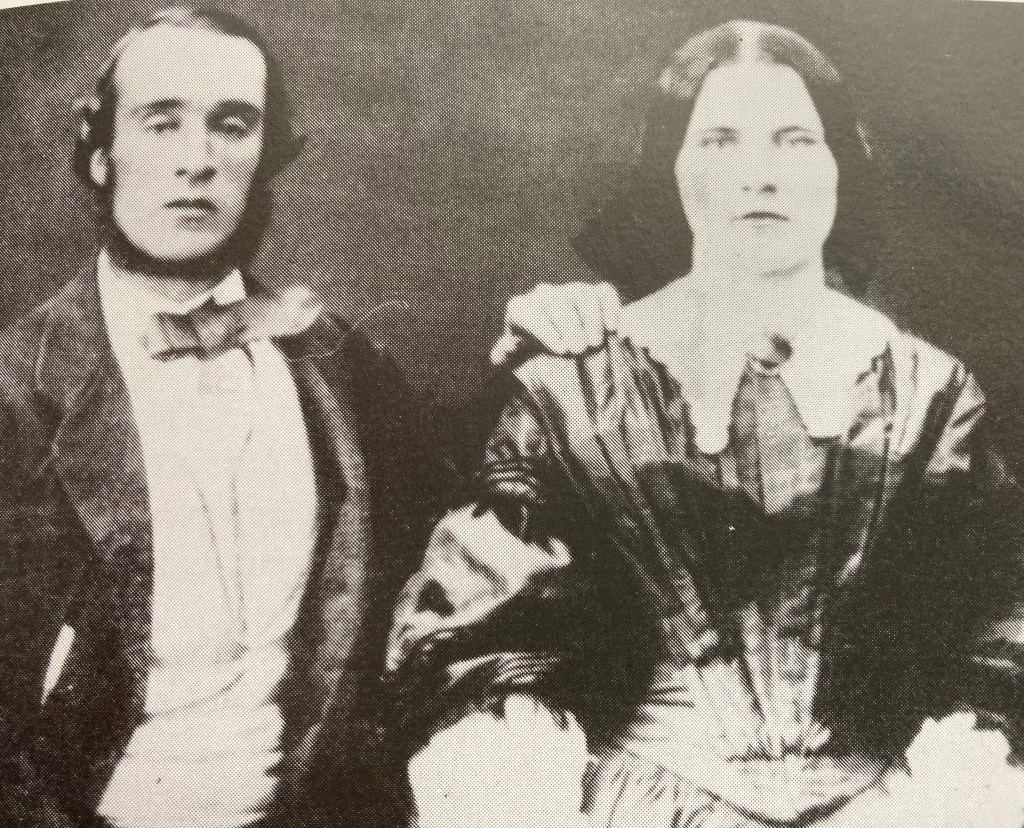
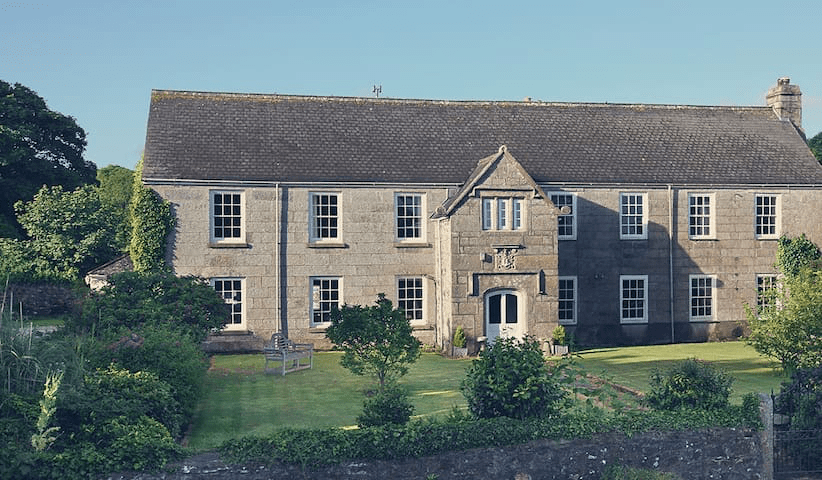

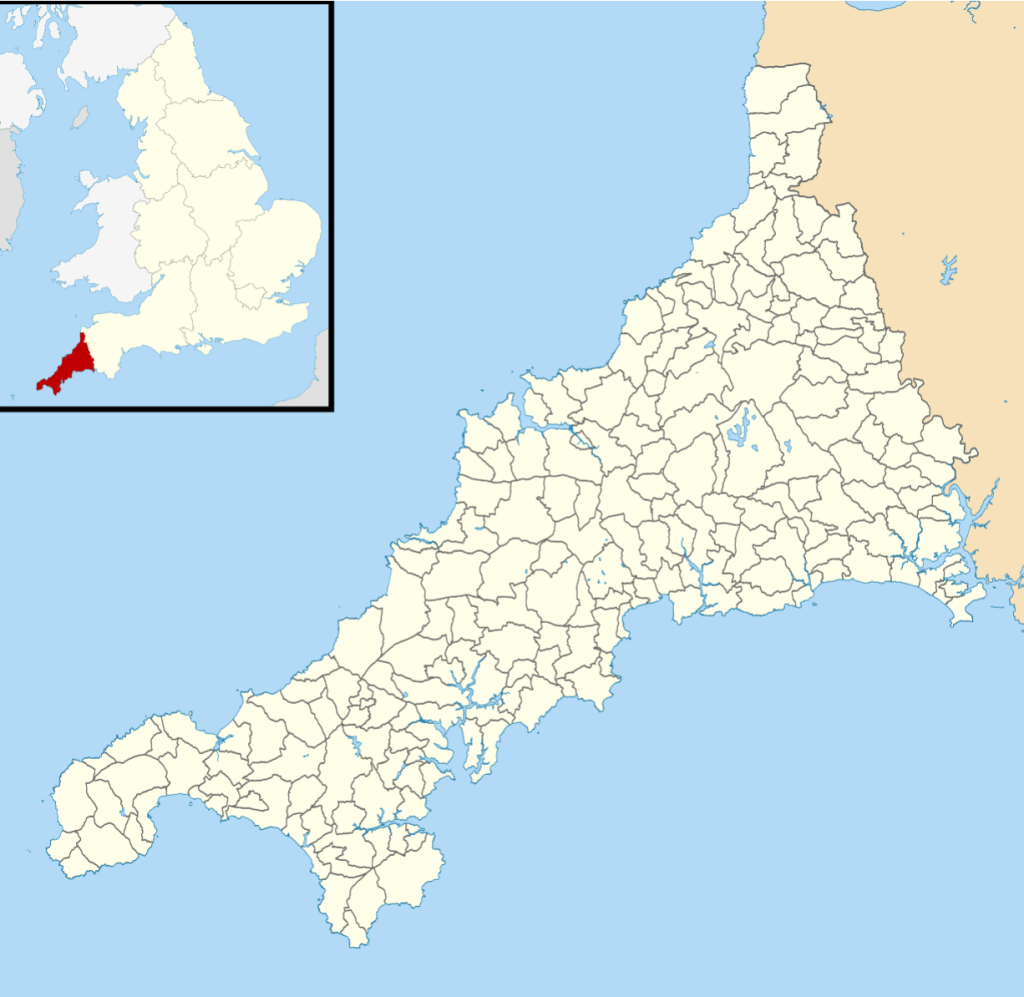
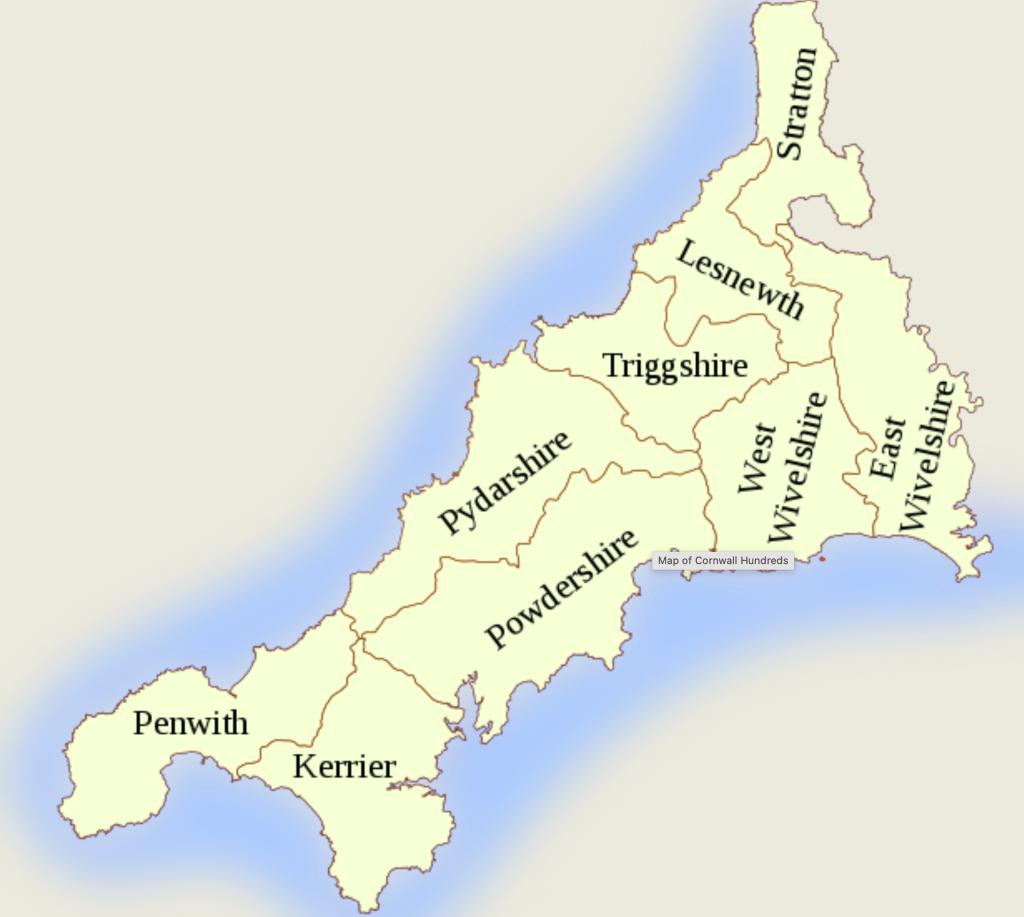
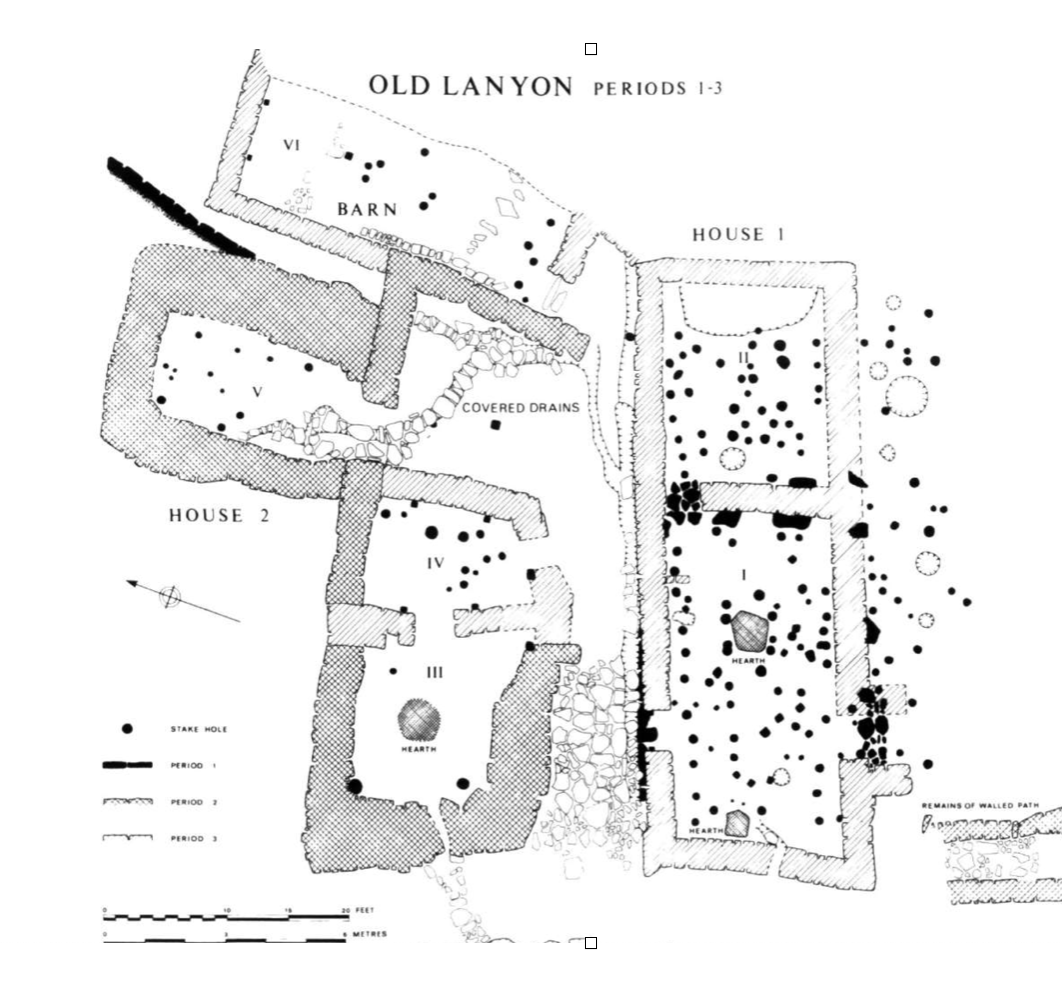
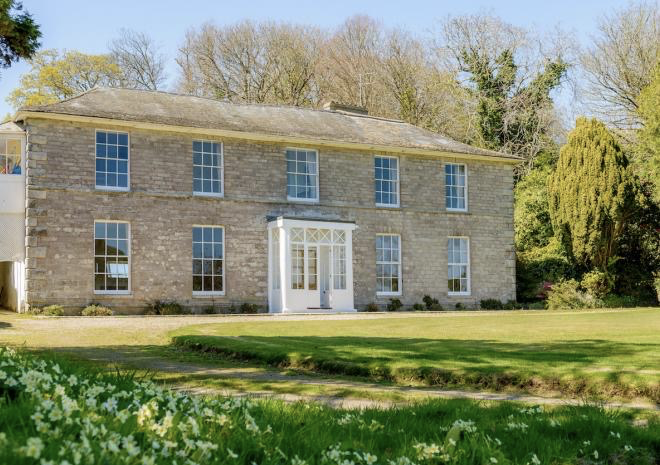
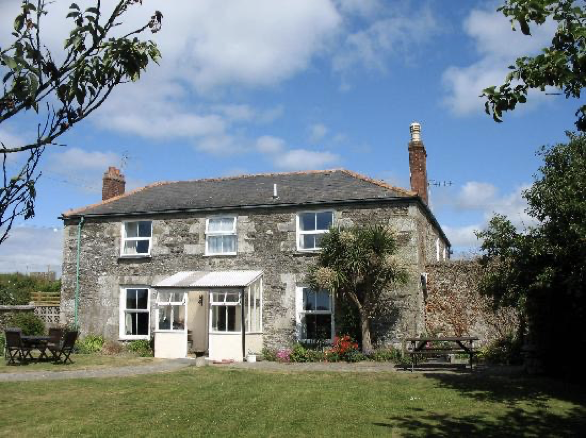
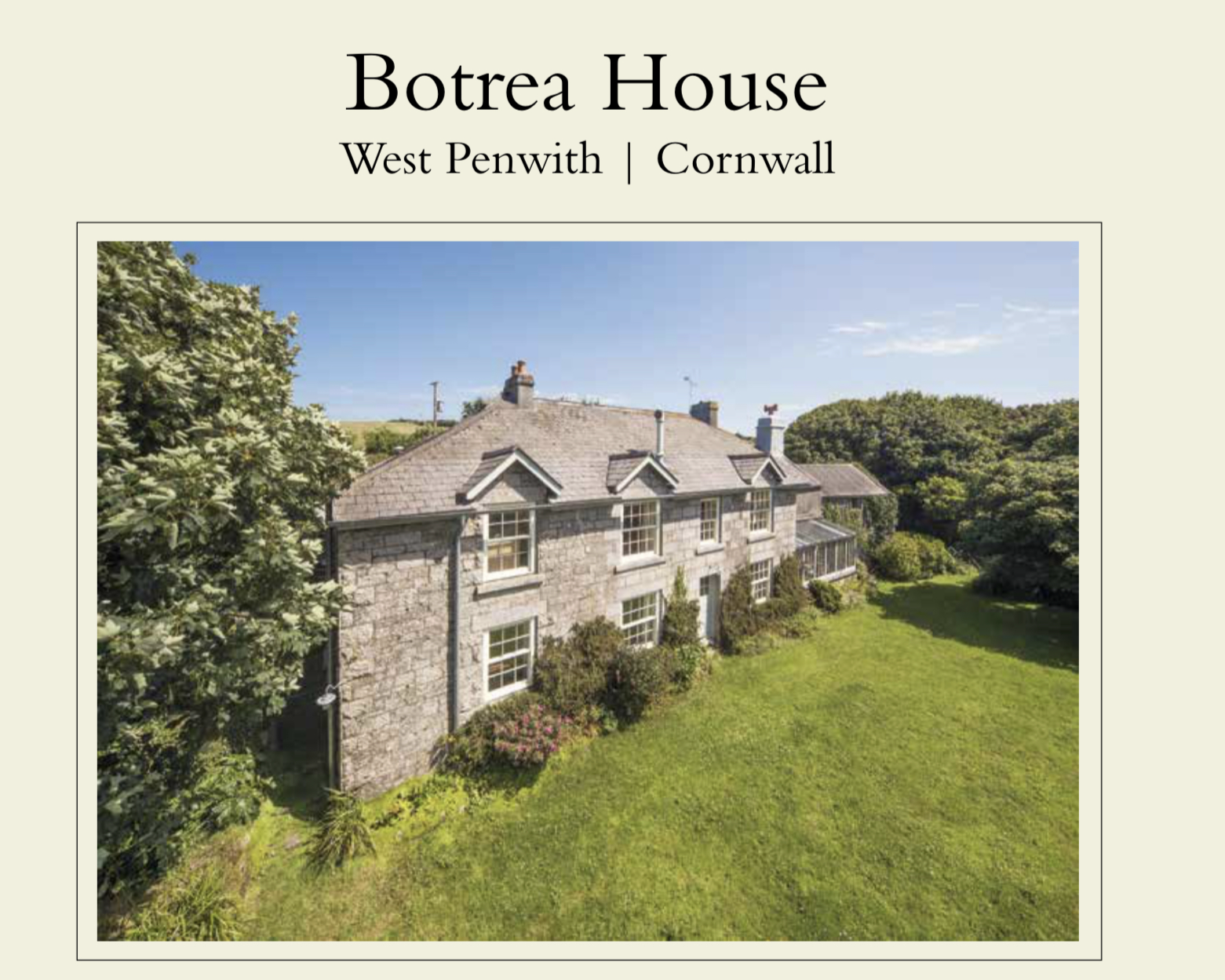
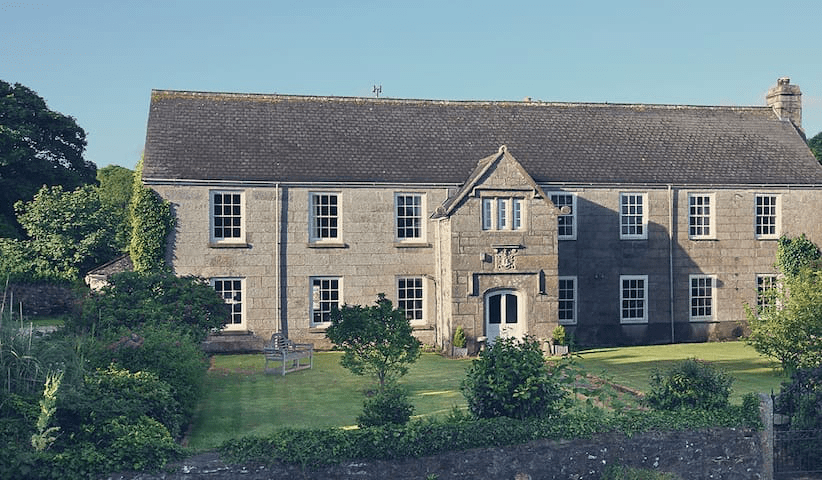
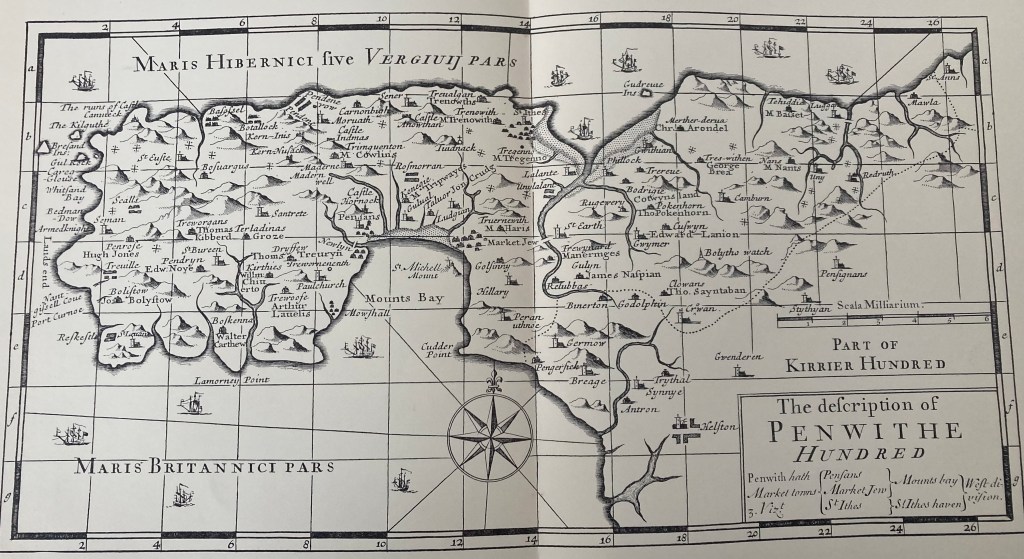
 The Lanyons