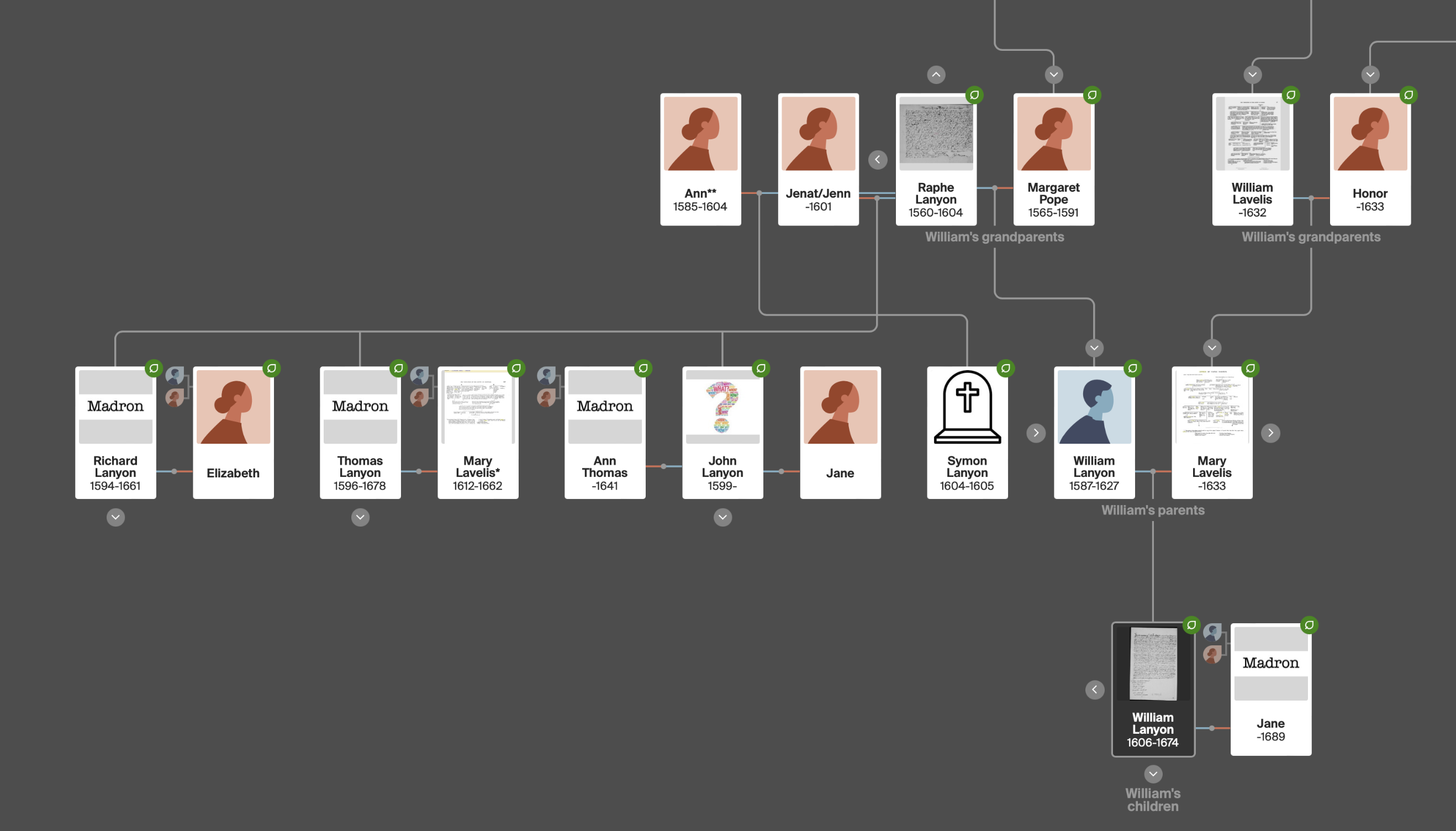
William Lanyon, yeoman of Bussalowe Veor, died in 1674 and left a will but it wasn’t until I read Raphe Lanyon’s will of 1604 and William Lavelis’s will of 1633 that I worked out where William should be placed on the tree.
William Lanyon’s tree
Raphe’s will mentions his five sons: William, Richard, Thomas, John and Symon. His will mentions that he bequeathes Bussalowe to his son William. William married Mary Lavelis after his father’s death in 1605. William died in 1627. His father-in-law William Lavelis died in 1632 and his will mentions his daughter Mary Lanyon and his Lanyon grand children at Bussalowe.
There is no record of the baptism of William and Mary’s eldest son but as he inherited Bussalowe Veor he must have been the eldest and born after 1605.
We know very little about him but his will fills in some of the gaps.
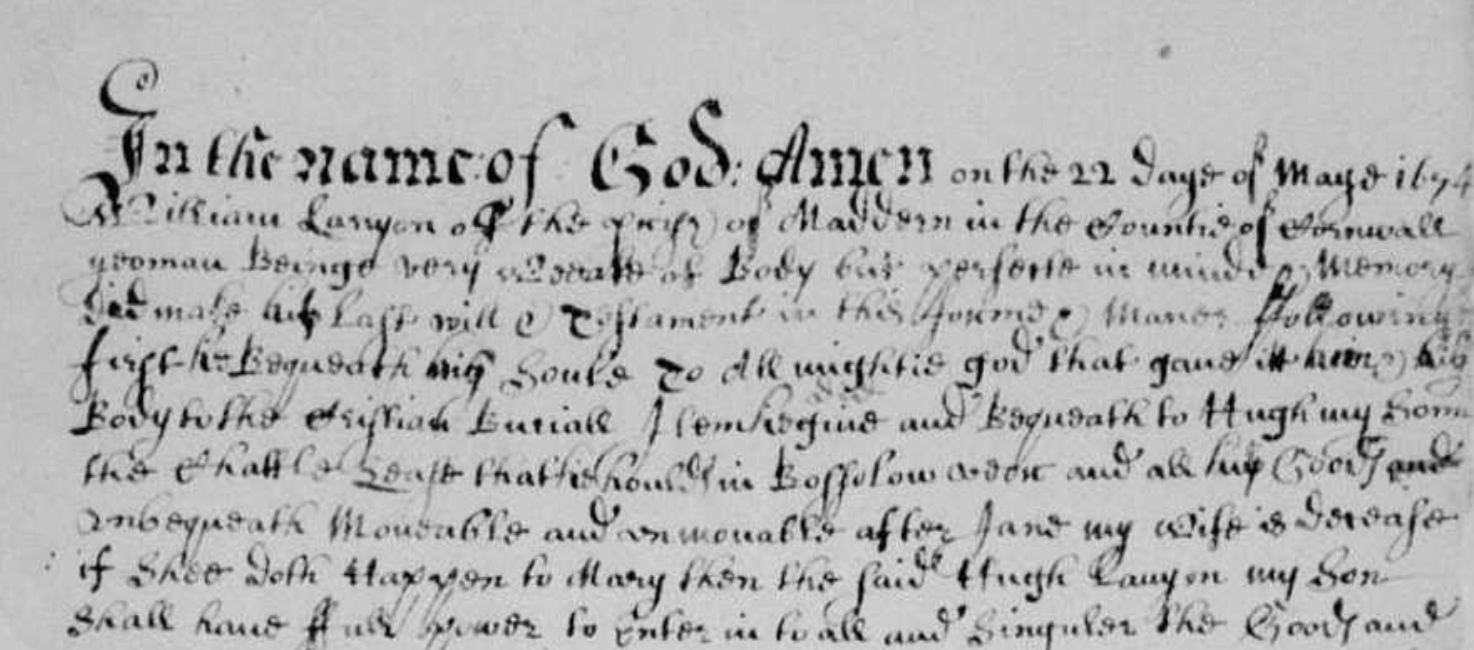
Will of William Lanyon written 1674
“In the name of God Amen On the 22 Daye of May 1674 William Lanyon of the parish of Maddern in the Countie of Cornwall yeoman Beinge very weake of Body but perfect in minde & memory Did make his Last will & Testament in this forme & maner following First he Bequeath his Soule To Allmightie God that gave it him & his Body to the Christian Buriall Item doe give and Bequeath to Hugh my Sonne the Chattle Lease that is house in Bossolow Veor and all his Goods un bequeath Moveable and unmoveable after Jane my wife is decease if shee doth happen to mary then the said Hugh Lanyon my Son shall have Full power to enter in to all and Singular the Goods and Chattles and to Turne her Away without Nothinge Item I give and bequeath to Thomas my Second Son one little Chattelle that I have in ?.. in Reversion of one life in possession and out of the Said Chattle the Said Thomas my Son is to paye Fortie Shillings and five pounds more I Doe give and Bequeath to William my Third Son to be paid at the End of Six Mounthes after my wife Jane is decease Item I give and Bequeath to Jane my Daughter Ten pounds to be paid att the end of nine mounthes after my wife is decease Item I give and Bequeath to Mary the Daughter of Elcana Lanyon one ewe Item I give and Bequeath to Thomas Lanyon my Son one ewe and the two Sonnes of Thomas Tonkinge Each of them one ewe Item I give and Bequeath to Margarett the wife of Thomas Tonkinge one ewe Item I give and Bequeath to Mary the wife of Edward Plomrose 12s and the residue of my Goods Moveable and unmoveable I give & Bequeath to Jane my wife during her life Time provided that shee doe not Marry whome I doe appoint Ordaine and make my Full & whole Executor, to Fullfill this my Last will and Testament”
His wife is Jane but her maiden name is not recorded. In common with most men at that time William leaves his property to his eldest son Hugh Lanyon and gives his wife lifetime enjoyment so long as she doesn’t remarry. William’s will however seems particularly harsh:
“if shee doth happen to mary (marry) then the said Hugh Lanyon my Son shall have Full power to enter in to all and Singular the Goods and Chattles and to Turne her Away without Nothinge”
William Lanyon will dated 22 May 1674
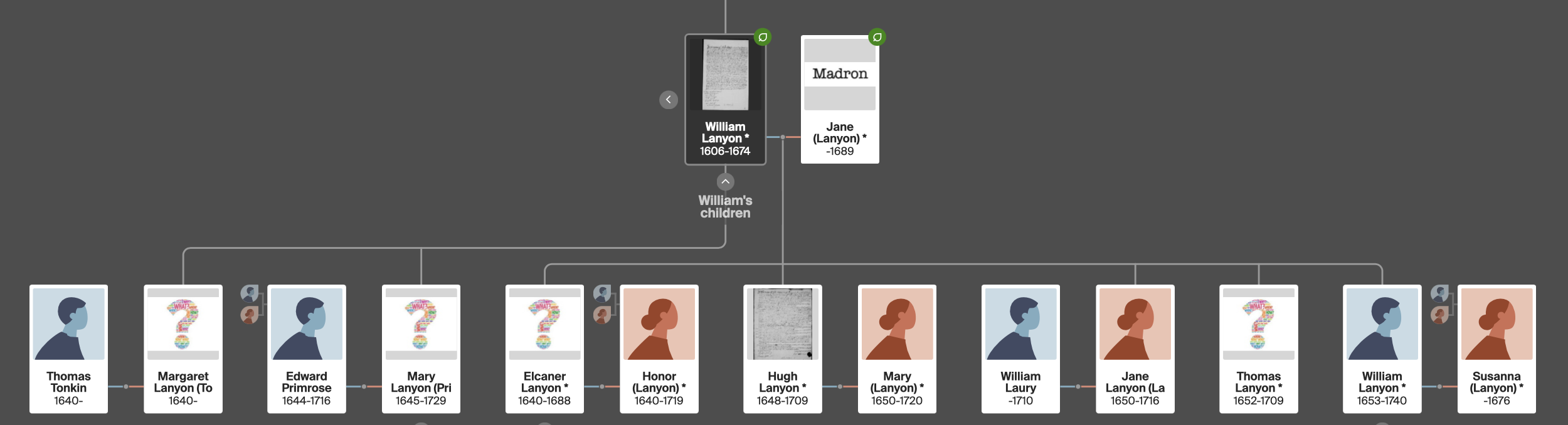
The will names his children:-
Hugh 1648-1709
Thomas 1652- aft. 1709
William 1653 – aft. 1709
Jane – aft. 1709
He also mentions Mary the daughter of Elcana Lanyon, Margarett the wife of Thomas Tonkinge and Mary the wife of Edward Plomrose.
It’s not clear what the relationship is between William and Elcana, Margarett and Mary but clearly they are related somehow as he remembers them in his will. There is no trace of William’s marriage to Jane but his ‘eldest’ son Hugh is born in 1648 when he was aged about 40. Could Elcana, Margaret and Mary be the children of an earlier unrecorded marriage?
William’s tree showing Elcana, Margaret & Mary. This may not be correct!
See the post ‘Elcana Lanyon’ under ‘Loose Lanyons’ for more on this branch of the family.
Phillimores Marriage Records show that on 3 May 1615 Elizabeth Lanyne married Oliver Neilder at Menheniot in Cornwall. Despite several attempts I couldn’t initially place Elizabeth on the Lanyon tree, who was she?
Early marriage records rarely mention the parent’s names and Elizabeth is one of the most common names in the Lanyon family so I decided to look at Oliver Neilder in more depth to see if I could discover anything useful.
Oliver Neilder baptised at least four children at Menheniot in the early 17th century: Marye 1619, Jane 1621, John 1624 and Elizabeth 1627. The Menheniot parish register also lists the following burials: Elizabeth Neilder was buried on 15 Jan 1659 (she was noted as being ‘old’) and Oliver Neilder was buried the following year on 26 Sep 1660 (he’s noted as ‘old senr’.)
Neither Oliver nor Elizabeth left a will so that avenue for research was closed. I did find Oliver Nealder (sic) listed on the 1641/2 Protestation Return for Menheniot but that was it. I then turned to Kresen Kernow (The Cornish Record Office) and the National Archives to see if there was anything useful there.
I found just one relevant record at Kresen Kernow. Assignment of land at Trenant, the parties were Oliver Nealder, yeoman of Menheniot and Peter Carveth also a yeoman of Menheniot (BRA991/120).
The National Archives were more forthcoming. I found records of litigation between the Neilder family and the Kekewich family. I’ve come across the Kekewich family before whilst researching the Lanyons so I was curious to find out more.
The Kekewich’s were one of the most powerful families in Cornwall in the late 16th and early 17th centuries. The family resided at Catchfrench near Saltash and Trehawke near Menheniot. So Oliver and Elizabeth Neilder were neighbours of the Kekewich family.
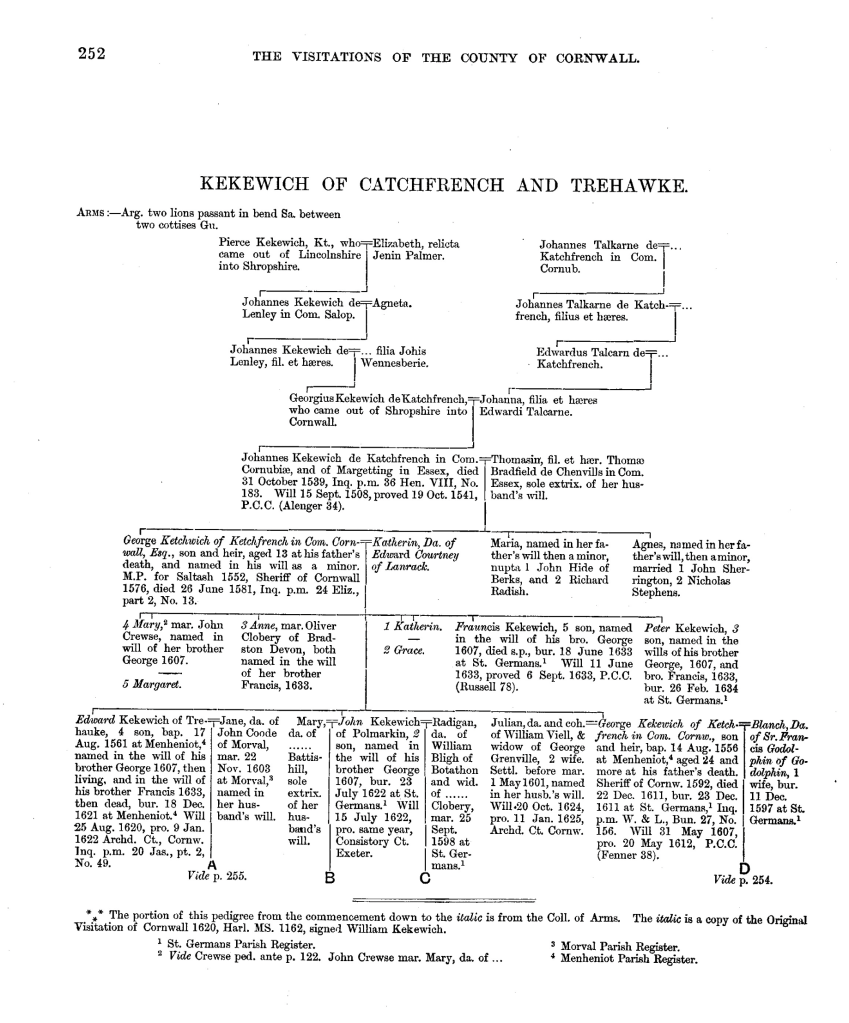
The Herald’s Visitation of Cornwall gives us the Kekewich family tree for that period.
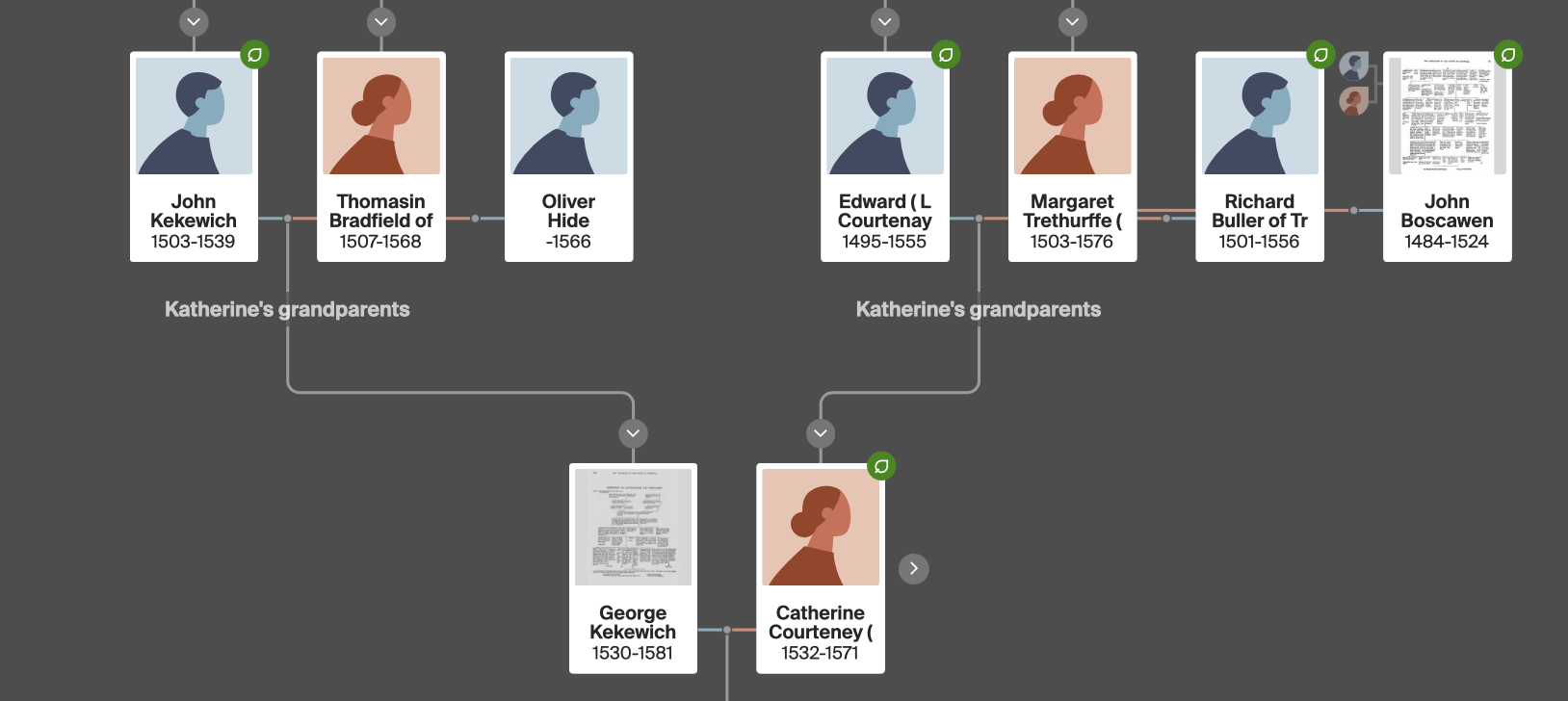
George Kekewich married Katherine/Catherine Courtney, descended from an aristocratic family. Her mother Margaret, daughter of Thomas Trethurfe, was one of the co-heirs of Edward Courtenay, Earl of Devon. Margaret married three times; first to John Boscowen, second to Edward Courtenay of Landrake and third to Richard Buller of Tregarrick.
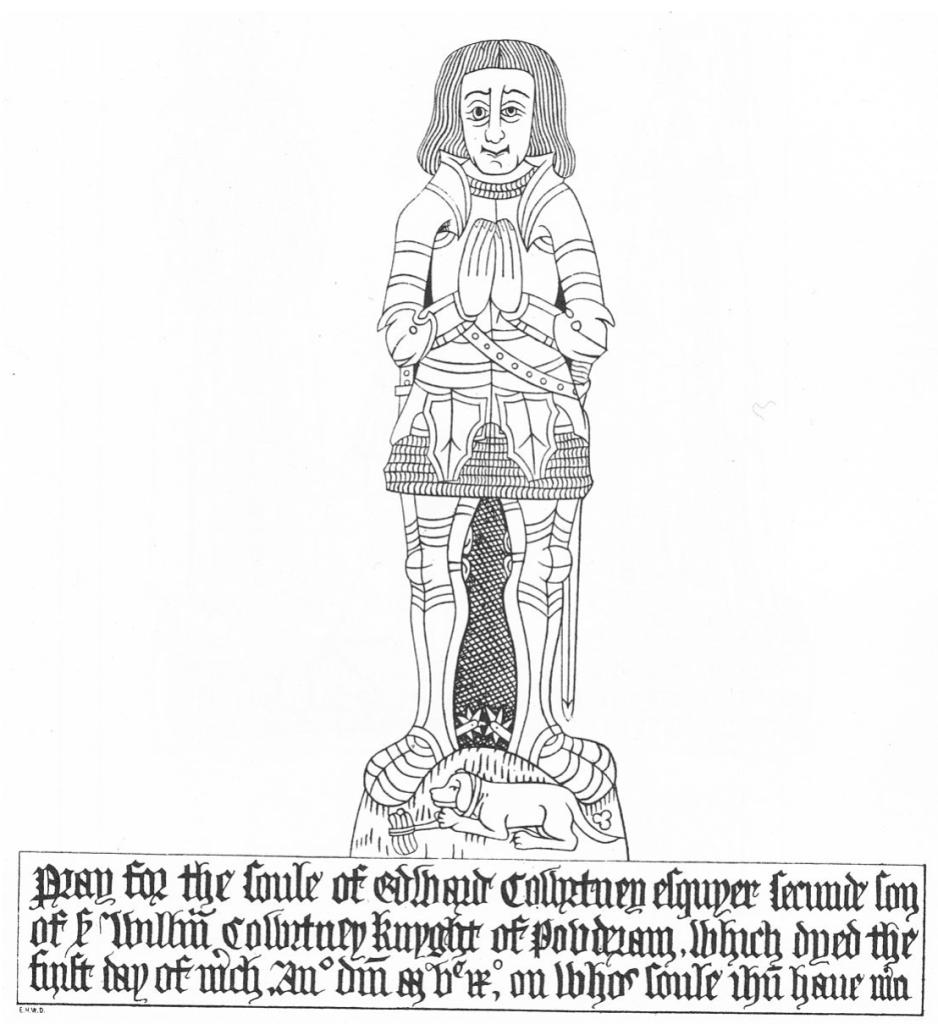
Edward Courtenay 1509 brass – Dunkin, E.H.W. The Monumental Brasses of Cornwall, 1882, Plate XXIKekewich – Courtenay family tree
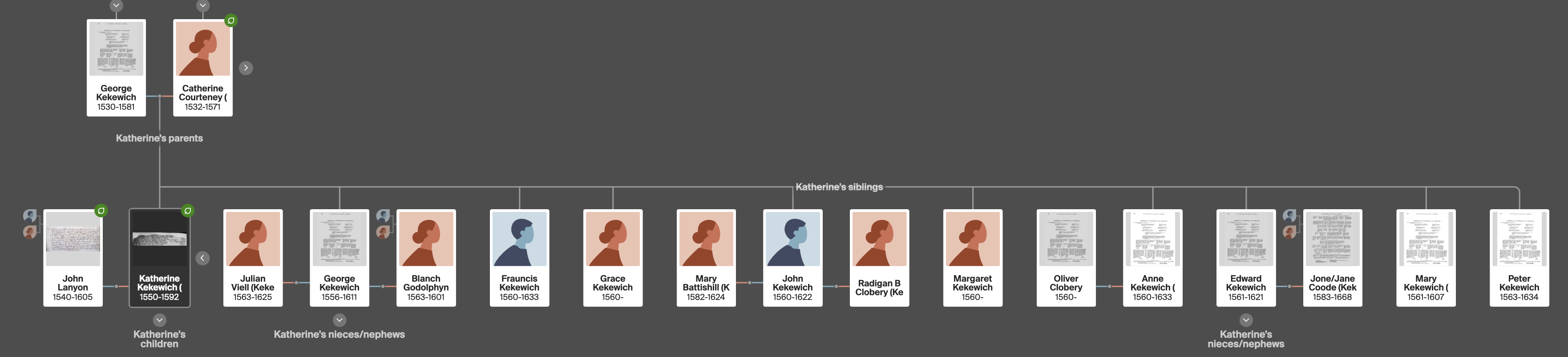
George and Katherine Kekewich had several children but we’re interested in their first born daughter Katherine and their fourth son Edward. Edward Kekewich of Trehawke was baptised on the 17 Aug 1561 at Menheniot, he married Jane, the daughter of John Coode of Morval on 22 Nov 1603 at Morval. Edward was buried at Menheniot on 18 Dec 1621. Edward and Jane’s second son, Peter Kekewich, was born in 1605 and he was the man involved in litigation with the Neilder family.
The children of George & Catherine Kekewich
National Archives document C9/47/58 Neilder v. Kekewich 1668 states that Nicholas Honey on behalf of his stepchildren, Oliver and Elizabeth Neilder, who were under 18 started the litigation. Honey stated that in 1657 Oliver Neilder was 83 years old (giving him a birthdate about 1574) and he was blind and decayed in memory. Honey alleged that Peter Kekewich and his brother-in-law Roger Porter were not related to Oliver Neilder and had conned the elderly man.
Peter Kekewich and Roger Porter (the husband of Peter’s sister, Elizabeth) responded that Oliver wasn’t quite so blind or so poor in memory, despite his age. They also pointed out that Oliver Neilder’s wife Elizabeth (Lanyne) was cousin germane to Peter Kekewich and Roger’s wife. (National Archives C10/178/69 & C8/352/249)
A cousin germane is a first cousin so Elizabeth Neilder (Lanyne) must have been the daughter of one of Edward Kekewich’s sisters. Edward had five sisters: Katherine, Grace, Anne, Mary and Margaret. We know that Anne married Oliver Clobery of Bradston, Devon and Mary married John Crewse so we can discount them.
That leaves Katherine, Grace and Margaret as possible mothers. George Kekewich’s will of 1581 is in the National Archives (PROB 11/64/488) and it shows that his eldest daughter Katherine/Catherine had married a Lanyon.
His will states that his daughter “Cate Lanyan have the sixe pounds thirtene shillings Fower pence given her by her grandmother Buller and three poundes sixe shillings eighte pence for to make the whole somme Tenne poundes.”
PROB 11/64/488
So ‘Cate’ had married a Lanyon, but which one?
Richard Carew’s ‘Survey of Cornwall’ states:
“Diverse other Gentlemen there dwell in this Hundred: as Lanyne the husband of Kekewich his father married Militon and beneath s. a castle a. standing in waves b. over the same a falcon hovering with bells o.”
Richard Carew National Trust, Public domain, via Wikimedia Commons
We know that John Lanyon (the son of Richard Lanyon Esq) married Phelype Militon on 18 Jan 1562 at Breage. Their eldest son Francis married Alice Trewren in 1584. John & Phelype’s second son William married Jane at Sancreed in 1592. There is one other son, John who is described as the son of John Lanyon esq. and he was buried at Madron in 1587, he appears to be a child but his age isn’t given. Phelype Militon was buried 29 Dec 1578 at Breage.
So which ‘son’ of John Lanyon married Cate Kekewich?
John and Phelype’s son Francis was born at the earliest in 1563 and he married Alice Trewren in 1584. He was still married to her at the time of his death in about 1593. Cate Lanyon was named in her father’s will which was dated 1581 so whilst it was just about possible for Francis to have married her when he was aged 17 or 18 years old she would have to have died before 1584, when he married Alice. There is no evidence that Cate Lanyon was buried at this time. Francis did have an illegitimate daughter called Elizabeth who was baptised in 1587 however I think it highly unlikely that Cate Kekewich would have had an illegitimate daughter who was later described as a cousin germane by her nephews. I think we can safely disregard Francis as a possible husband to Cate and father to Elizabeth Neilder.
That leaves his second son William Lanyon as a possible candidate. We don’t know when William was born but it must have been 1564 at the earliest and it could have been a few years later. The oldest he could have been was just 17 and that’s if Cate married the same year as the will was written. If she was married a year or two before that William would have been only 15 or 16. We don’t know when Cate was born but she was the eldest daughter of George Kekewich and Katherine Courtenay. Their date of marriage is suggested as 1555 at Landrake, in Cornwall. We know that their eldest son and heir was baptised on 14 Aug 1556, it seems likely that Cate was born soon after. Her mother Katherine Courtenay died in 1571 so all nine children must have been born before that date. This makes Cate several years older than William Lanyon.
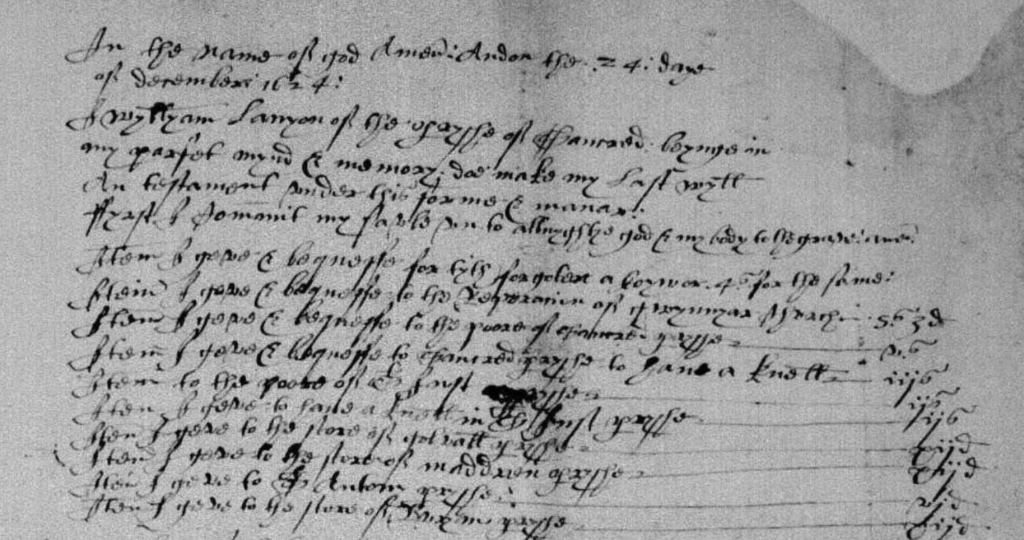
William Lanyon did marry a woman called Jane at Sancreed in 1592 and they had six children. He died in 1624 and his will survives and names his children. He had two daughters, both called Elizabeth! The eldest was born in 1593 after his marriage to Jane so Cate couldn’t be her mother. The youngest was born in 1607 and would be too young to marry Oliver Neilder in 1615.
William Lanyon’s 1624 will naming his children
George Kekewich was an MP for Saltash and Sheriff of Cornwall, Katherine Courtenay was descended from an aristocratic family, would they have married their eldest daughter to a teenage second son?
It seems much more likely that Cate Kekewich married the recently widowed John Lanyon, the eldest son and heir to Richard Lanyon Esq and the head of the Lanyon family.
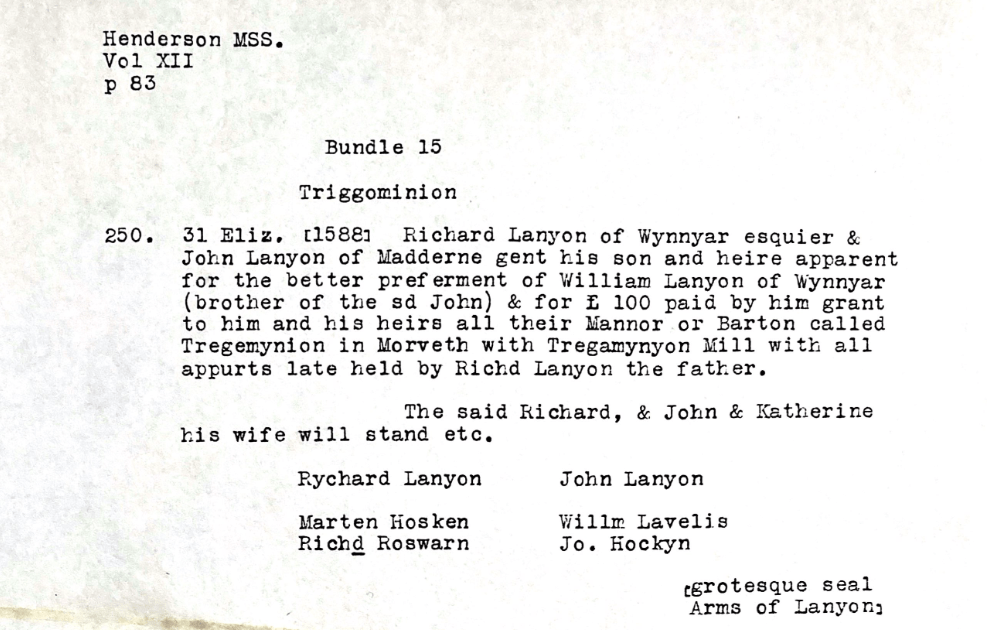
Whilst there is no record of a marriage for John Lanyon and Cate Kekewich there is a record which may help prove the relationship. In 1589 Richard Lanyon Esq and his eldest son John sold Tregemynion in Morvah to Richard’s fourth son William. The agreement is signed by Richard, John and Katherine his wife. (Hendersons MSS Vol XII p.83)
Abstract from Hendersons MSS
So it appears as though sometime after 29 Dec 1578, when Phelype Militon died, and before 1581 when George Kekewich’s will was written, that John Lanyon married for a second time to a woman named Katherine.
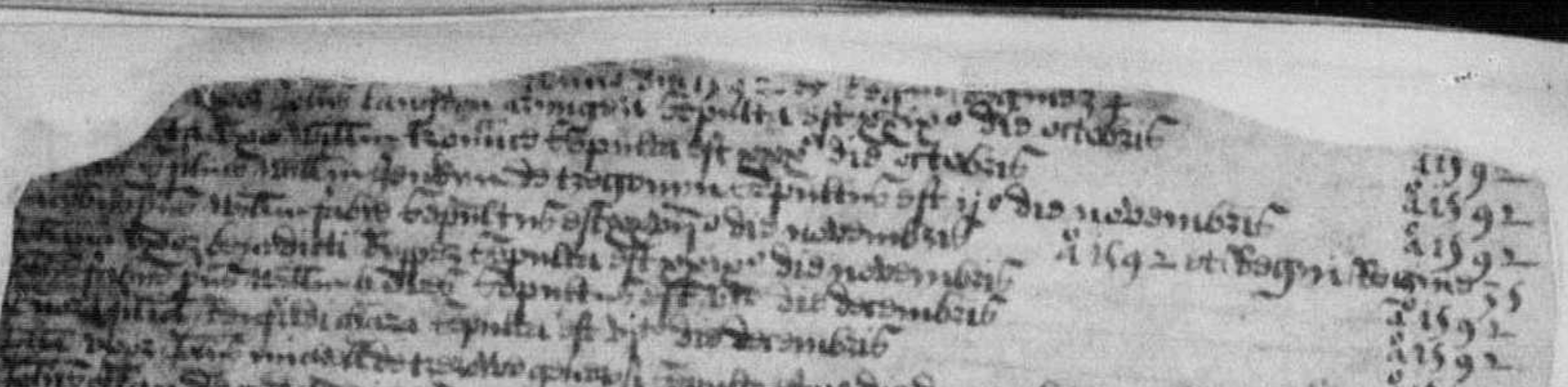
Breage parish register also has an interesting entry for a burial. On 29 Oct 1592 there is the following entry ‘uxor Johis Lanyon armiger’. Sadly the page is damaged so the wife’s name is not legible but John Lanyon, who has the right to bear arms, buried his wife. There is only one John Lanyon who has the right to bear arms at this time.
Breage Parish Register Burials
There are no records of any children of this marriage being baptised or buried. However looking at the wills of Cate’s brothers gives us some more clues. George Kekewich the younger’s will was written 22 Jun 1607 and proved 20 May 1612. It states:
“I give the blynde Lanian, my kinsman xx s a year towards his mayntenance untill my heire accomplish the age of xxj years.”
National Archives PROB 11/119/518
So Cate’s brother had a ‘kinsman’ called Lanian who was blind.
Cate’s brother Francis also left a will which was written 20 May 1633 which states:
“I give George Lanion twenty shillings a year during my lease of Manoby with the proviso that he wander not the country as a beggar contrary to God’s and Man’s laws. Hoping the rest of his friends will make up the rest that must be paid for his board.” (National Archives PROB 11/164/299)
So it appears as though Cate Lanyon had a son called George who was blind. He’s not mentioned in any Lanyon wills however most of the 16th century Cornish wills were destroyed during World War II bombing.
There is no record of a baptism, marriage or death of George Lanyon and we wouldn’t know anything about him but for these wills. None of the wills mentions Elizabeth Lanyne or Oliver Neilder.
Whilst none of this is actual proof that Elizabeth Neilder was the daughter of Katherine Kekewich and John Lanyon Esq it’s probably as close as we’ll come.
We know what happened to Elizabeth, she died an old woman in Menheniot. Perhaps ‘Blynde George’ lived out his life with her?
The opera singer Cecile Lanyon performed in England and Australia in the 1940s and 50s but who was she?
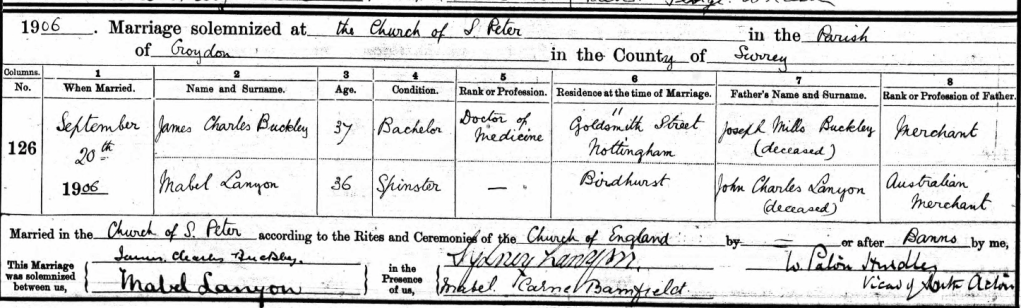
Cecile was the daughter of Mabel Lanyon and Dr. James Charles Buckley. They married at Croydon on the 20 Sep 1906 (the groom’s brother Rev W.F Buckley married them).
Marriage certificate of Mabel and James
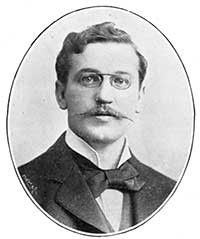
James Charles Buckley
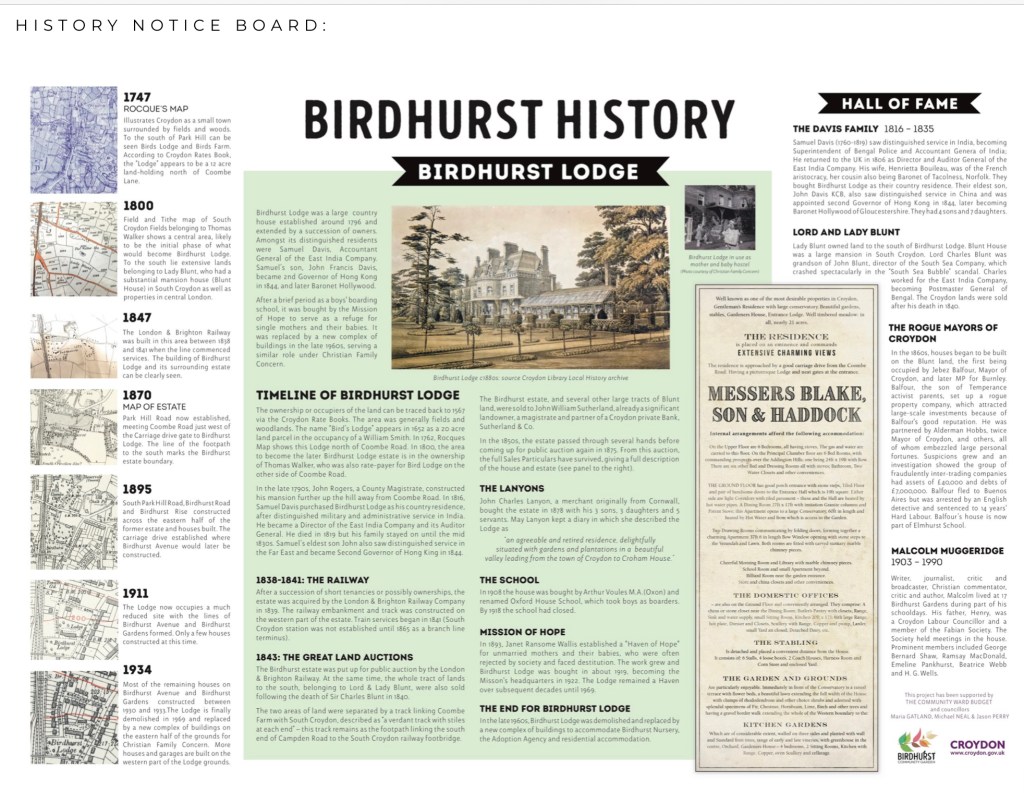
Mabel was the younger daughter of John Charles Lanyon of Birdhurst, Croydon.
Birdhurst
Mabel’s first child, John Charles was born in Jun 1907 and a daughter Joyce Catherine Stacey Buckley arrived in 1911.
Joyce’s baptismal name
Stacey was a family surname and perhaps the name Catherine came from Mabel’s sister-in-law Catherine Septima Lanyon.
Joyce was born and raised in Nottingham where her father worked as a Doctor and venereologist. We don’t know much about Joyce’s early life but the 1939 register lists her as a musician’s singer.
In 1940 she appeared at the Gaiety Theatre in The Magic Flute as The Queen of the Night and her name is listed as Cecile Lanyon.
She chose her mother’s maiden name ‘Lanyon’ as her stage name and adopted the name Cecile.
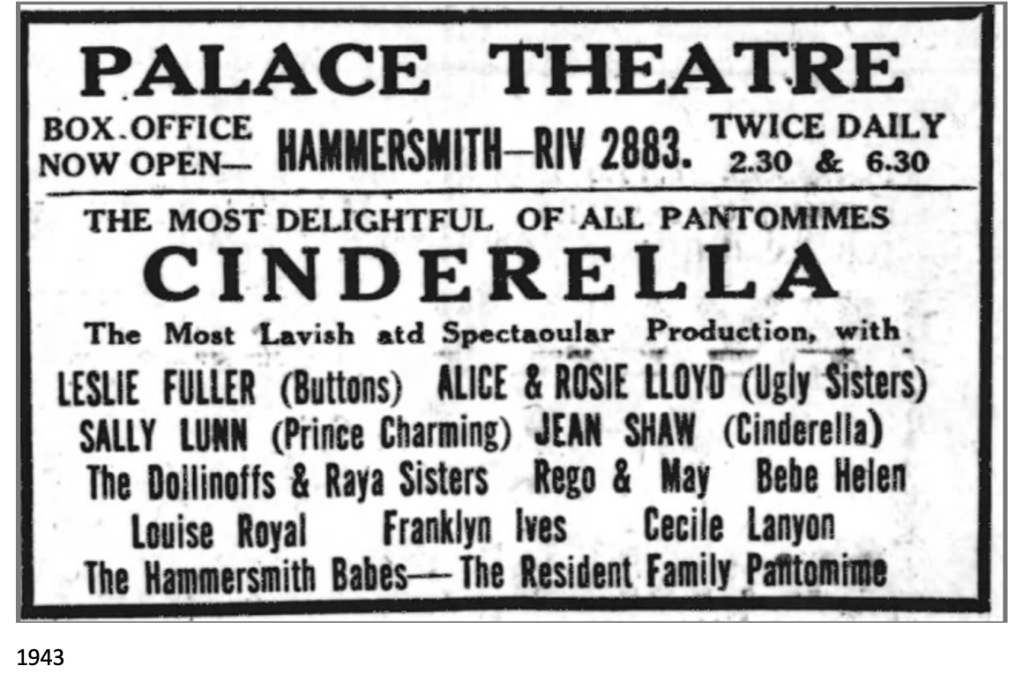
In 1943 she was in Cinderella at the Palace Theatre, Hammersmith.
Her mother Mabel died in 1944 and her father the following year. We don’t know when or where she met William Montgomery but by 1948 she had decided to marry him.
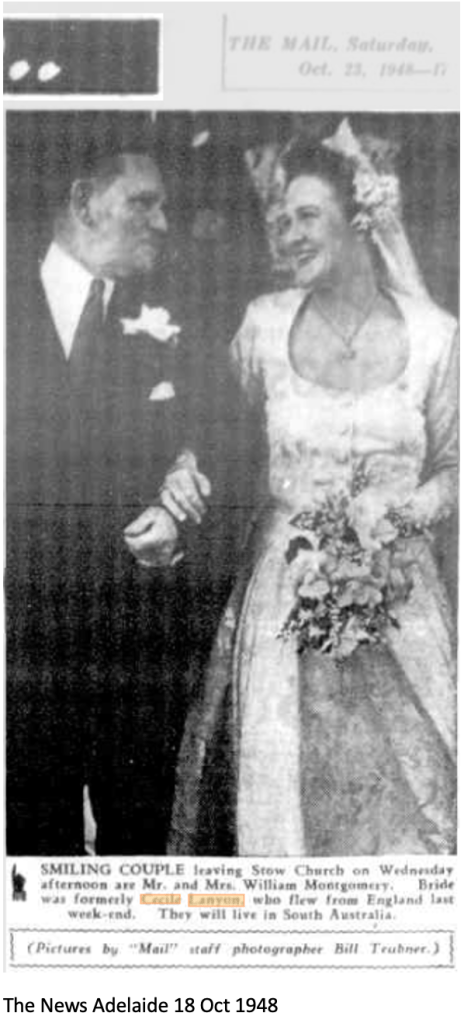
In 1948 Cecile married William Conway Montgomery. She had emigrated to Australia the previous weekend! Their photo appeared in the News Adelaide on 18 Oct 1948.
William Conway Montgomery was born in Ceylon on 17 Sep 1895.
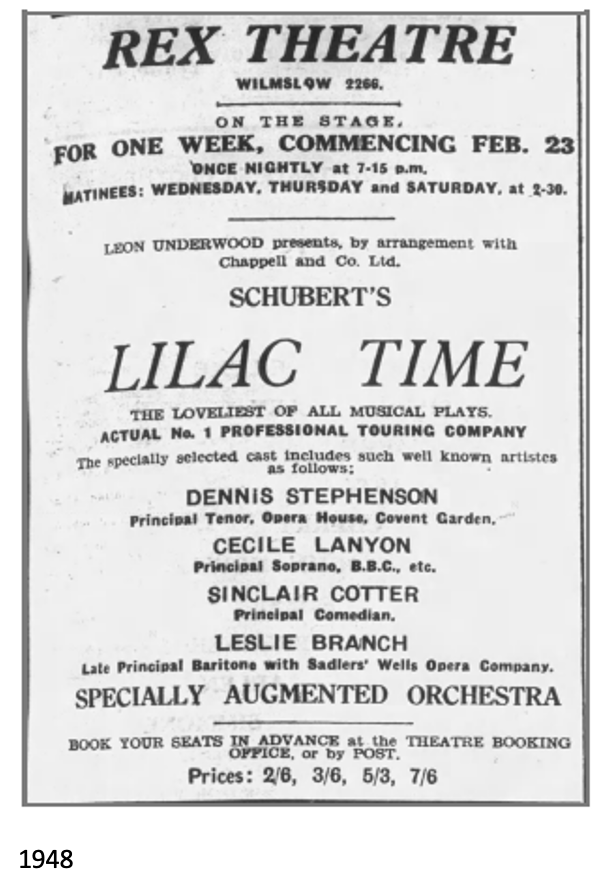
In 1948 she was described as ‘principal soprano’ for a performance of Schubert’s ‘Lilac Time’. The credits also mention BBC so perhaps she had also performed for them.
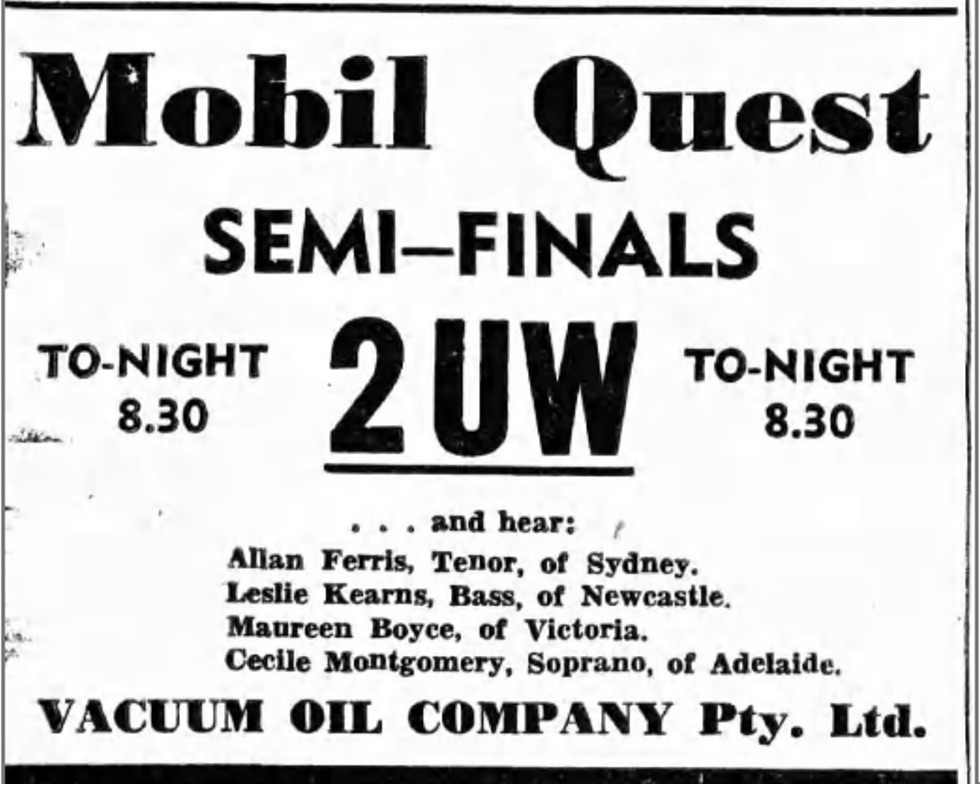
By 1949 she had changed her stage name to Cecile Montgomery.
1949
William died in Colombo, Ceylon in 1958. For the rest of her life Cecile lived with a friend and bred dogs.
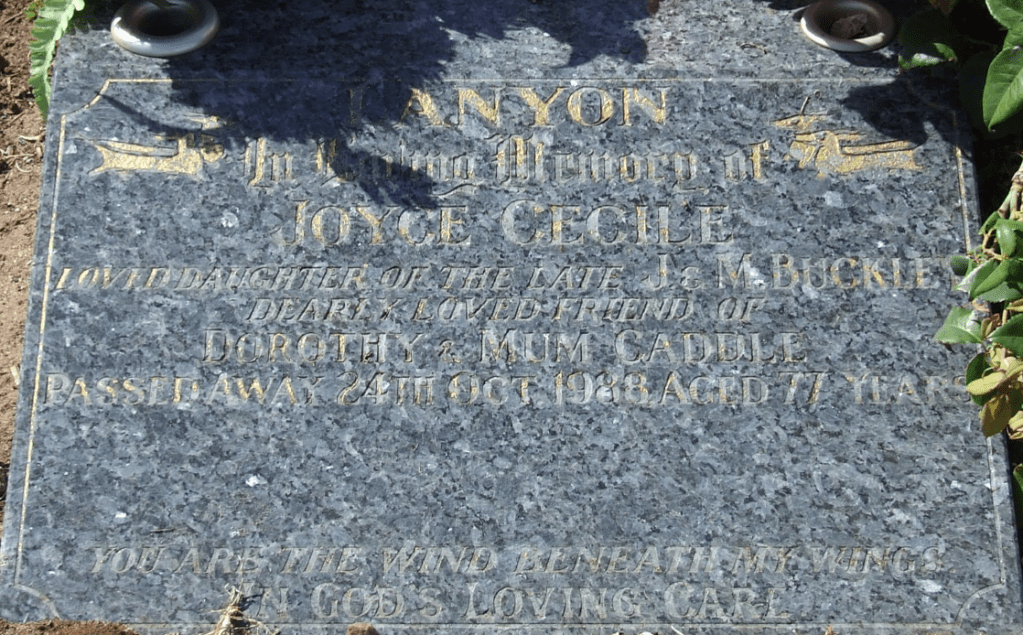
She died in at Burnside City Australia on 24 Oct 1988 aged 77 years.
On her headstone she is named as Joyce Cecile Lanyon, loved daughter of the late J&M Buckley.
With thanks to Peter Duke of the Nottingham Family History Society who gave me the story.
1569 was the year the first lottery was held in England, the prize was £5000. It was also the year Mary Queen of Scots was first imprisoned and of the Northern Rebellion against Elizabeth I.
Mary Queen of Scots François Clouet, Public domain, via Wikimedia Commons
It was also an important year for the Lanyon family.
In 1567 William Laniene esq died. We don’t know his date of birth but his eldest son was born about 1516 and he had older sisters so it is estimated that William was born in the 1480s. There is an Inquisition Post Mortem of William Laniene of Coswynwollard, Gwinnear from 1586 which gives the date 20 Mar 1567 as the date of his death. This Inquisition gives his son Richard’s age as 70 (in 1586), so he was already 51 when he inherited his father’s estate in 1567.
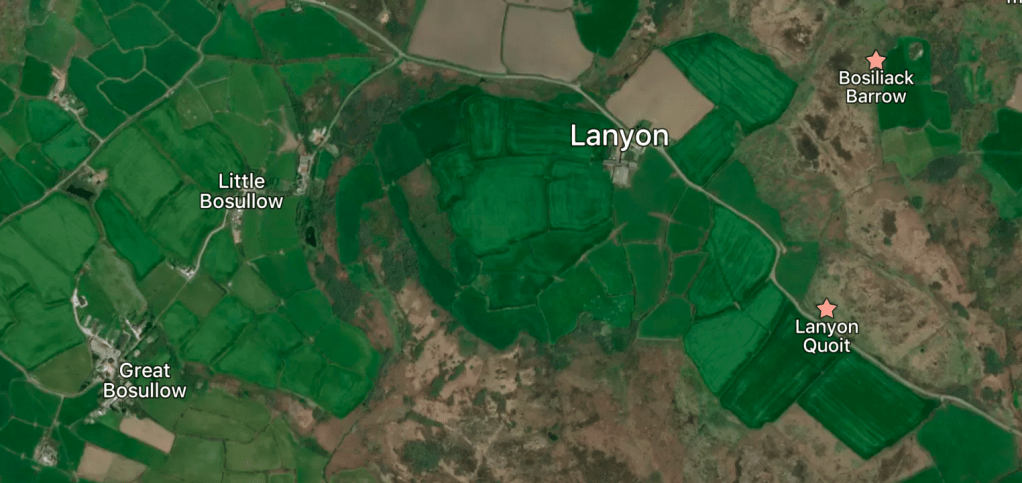
In 1562 at the time of his son John’s marriage to Phelype Myliton, Richard was living at Tregaminian in Morvah. In 1567 he moved to Coswynwollard in Gwinear (now called Lanyon.)
Map of the Lanyon Estate at Gwinear
We don’t know which lands, if any, William Laniene senior intended for his sons as there is no will. In 1569 Richard granted estates to his brothers.
William ‘Generosi’ Lanyon
Richard’s brother William had been living at the family estate in Gwinear. His first wife Tamson was buried there on 26 Jun 1563. His son Baldwin was baptised at Gwinear on 1 Apr 1561 and buried 24 Jun 1563 just two days before his mother.
William was given the estate Tregonen at Breage. He appears on the Breage Muster Roll of 1569 ‘Furnished long bow sheaf arrows steel cap and black bill’ and he lived there until his death in 1597. His burial is listed in the Breage parish register where he is described as ‘generosi’.
Tregonning Hill near Breage which may be the location of Tregonen
Walter Lanyon
Walter married Elizabeth Nanspyan of St Erth. He is listed on the 1569 Muster Roll for St Erth ‘Bow shaft arrows, ability B’. His father owned land at St Erth as it is listed on the 1523 Penwith Subsidy Roll as having a value of 41 shillings (the same as the Gwinear estate.)
In 1569 he was given the tenancy of the Barton of Lanyon (the ancestral family home) at Madron by his brother Richard. Hendersons MSS 30534 pt 7 gives details of the lease and confirms the names of Walter’s son (John) and three grandsons (Francis, Alexander and David) also their ages.
The ancestral home at Lanyon near Madron. Bosullow was also part of the estate.
Edward Lanyon
The only record we have of William Lanyon having a son called Edward is a record from Kresen Kernow (Cornwall Record Office) AR/3/39 dated 11 Feb 1586. It’s a lawsuit over Crugmoreck in St Merryn.
“…..that Richard Lanyen esquire, on 20 September 1569 (11 Elizabeth), had granted to party (1-Edward Lanyen) 30 acres of land, being one close called Crukemorecke (parish of Seynt Meryn), for (1) to hold for term of 6 years from St Bartholomew last past [24 Aug 1569]; on the following 26 Sep [1569], (2-George Arundell)-(3-John Michall) forcibly entered the tenement and ejected him from it…”
The case goes on to mention that the sheriff of Cornwall Peter Edgecombe esq was a kinsman of Edward. Peter was the son of Joan Tregian the daughter of Thomas Tregian and that Edward was the son of Thomasine Tregian the daughter of Thomas Tregian.
We don’t know what happened to Edward after 1586. We don’t know if he had any children. All we know is that Richard Lanyon esq granted him the lease of the estate in Crugmoreck in 1569. There is an Edward Leyne on the Padstow muster roll of 1569 ‘bow 6 arr, ability a-ar’. Could this be the same person?
We don’t know where Crugmoreck lies today but the Lanyons owned lands at Harlyn, St Ervan, St Merryn and Padstow. Perhaps Crugmeer is the location?
Every family has a ‘fruitcake’, this post is about ours!
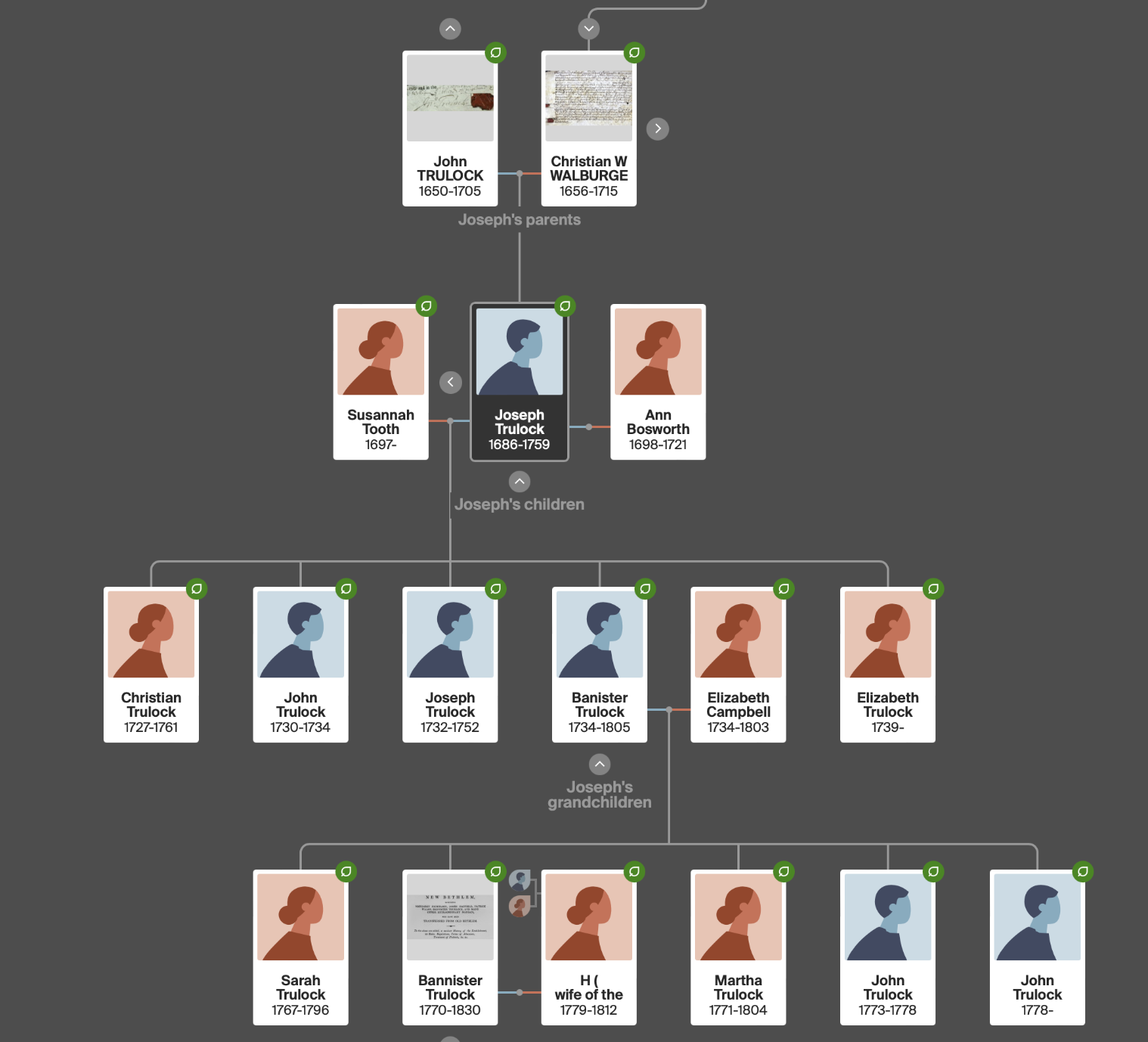
John Trulock and Christian Wallburge were the great grandparents of Banister Trulock born in 1770.
Their son Joseph Trulock married Ann Bosworth on 25 Feb 1719 at St Benet Paul’s Wharf, London. Ann sadly died in Sep 1721 and Joseph remarried on 07 Jun 1722 • St. Anne’s Church, Lewes, Sussex to Susannah Tooth.
Their first two sons John and Joseph died young and that left their third son, Banister as the eldest son and heir.
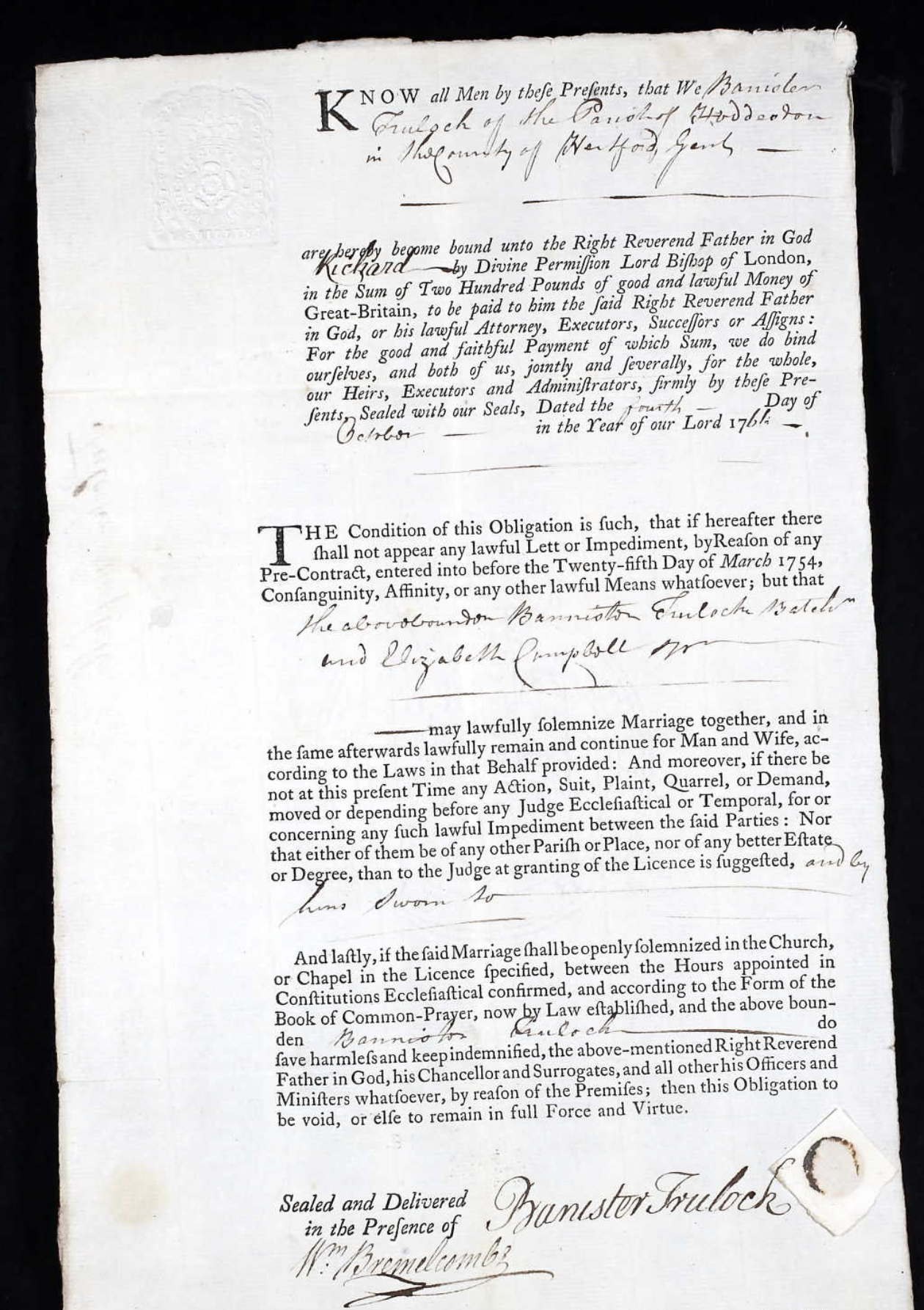
Banister was born about 1734 in East Grinstead. He married Elizabeth Campbell 05 Oct 1766 at Broxbourne, Hertfordshire. He signed a marriage bond.
London and Surrey Marriage Bonds DL/A/D/24/MS10091E/79
Their son also called Banister was born about 1770 at Hertfordshire. In 1783 Banister was apprenticed to John Payne a cordwainer in East Grinstead, Sussex. His father is described as a husbandman.
(The name Banister and Trulock are variously recorded as Bannister, Banester and Truelock.)
Before 1799 he married Ann/Hannah and they had two sons: Banester who died age 4 and William Henry who was baptised in 1812.
Banister was a religious fanatic who prophesied the second coming of the messiah. He also insisted in the belief that the Messiah would be born from his mouth!
“He met Hadfield by accident in White-Conduit Fields, and talked the unfortunate fellow into a persuasion, that the first step to the commencement of his doctrines, and to its fulfilment in a happy change of things throughout the world, would be the death of the Sovereign ; with this view, Hadfield set out as the supposed chosen instrument for the accomplishment of the great design. Hadfield, in his examination, mentioned this man’s name ; he was accordingly apprehended the next day, underwent several examinations, and was committed to prison ; but from his incoherent manner, his answers, and the evidence of his mother, he was found to be deranged, and was sent ultimately to Old Bethlem.By May 1800 he was working as a shoemaker and living in the White Lion, Islington, London. Whilst there he was visited by James Hadfield, whom Trulock encouraged to try to assassinate King George III. ”
He was lodging with Sarah Lock until Dec 1799, she evicted him after he told her on Christmas Eve that there was a plot to assassinate the king. (Source: Hampshire Chronicle, 2 Jun 1800)
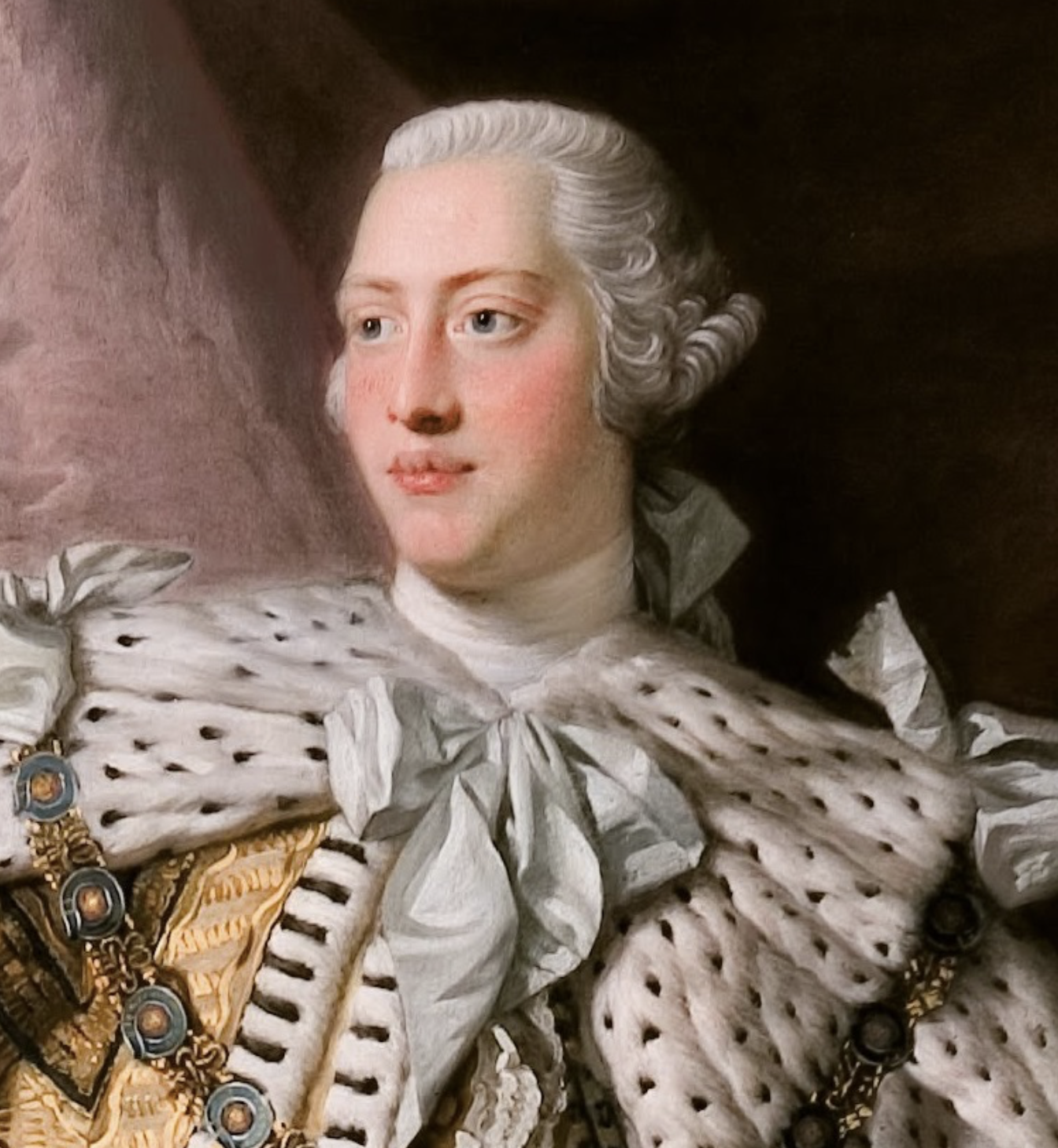
George III – Studio of Allan Ramsay, Public domain, via Wikimedia Commons
The Assassination Attempt
At the Theatre Royal, Drury Lane, on 15 May 1800, James Hadfield tried to shoot King George III while the national anthem was being played, and the king was standing to attention in the royal box.
It’s reported that after missing his target, Hadfield then said to the king:
‘God bless your royal highness; I like you very well; you are a good fellow.’
Hmm, we’re thinking that his words might be a very good examples of quick thinking…
Hadfield went on trial for high treason but, after listening to evidence from three doctors as to Hadfield’s state of mind, the judge decided on an acquittal, with the proviso that Hadfield would be detained indefinitely at his majesty’s pleasure.
Hadfield died from tuberculosis in Bethlehem Hospital (i.e. ‘Bedlam’) in 1841.
Chester Chronicle – Friday 27 June 1800
Banister Trulock was apprehended the next day and was committed to prison ; but from his manner, his answers, and the evidence of his mother, he was found to be deranged, and was sent to Old Bethlem.
Visitors reported that he sounded sane until he started to discuss religion. He was kept in some comfort and had an apartment at the top of the hospital which had a view of the Surrey hills. He had ‘coal, candle and every convenience for his use; his provisions are regularly brought to him and in the fine weather he is permitted to walk in the garden.’
He was later moved to New Bethlem hospital.
Visitors to Bethlem could pay to ‘view’ the patients and Banister Trulock was one of the celebrated patients.
Visitors to Bethlem – British Museum, Public domain, via Wikimedia Commons
Banister died on 02 Nov 1830 at Bethlehem Hospital, St Saviour Southwark, London
Cecil was born 07 Aug 1894 • Brooklyn, New York, USA. He was the son of Ernest James Lanyon (originally from Guernsey) and Helen Sullivan. He was the eldest of three children. He was a private, service number: 2444596 in the 305th Infantry, 77th Division. He was killed in action on 31 Aug 1918 and was buried at Oise-Aisne American Cemetery, France.
Charles Edward Lanyon 1882-1918
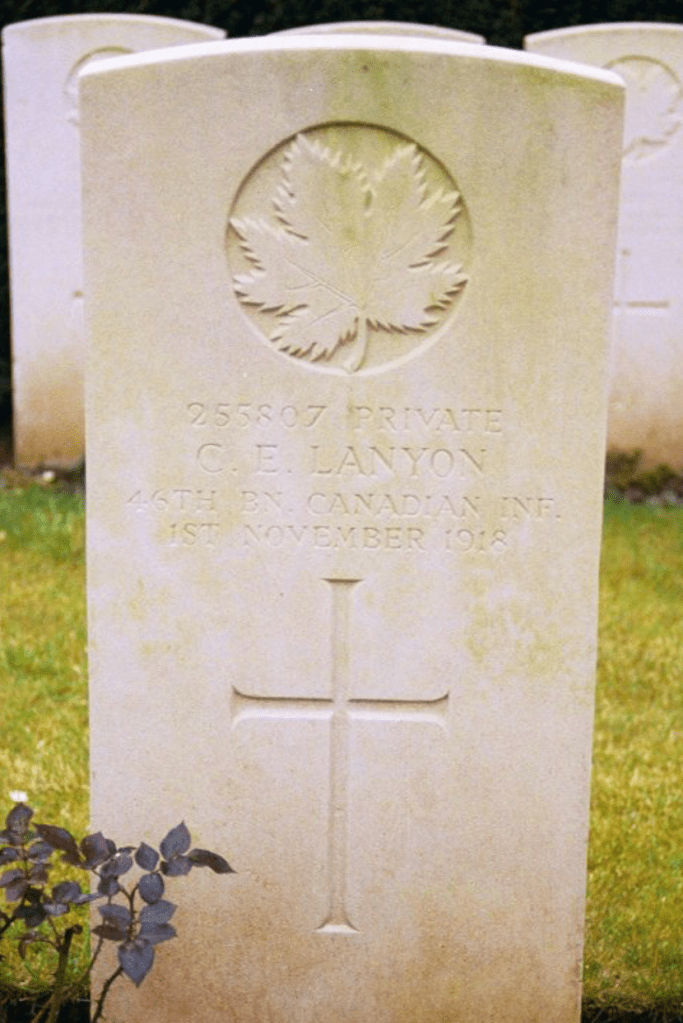
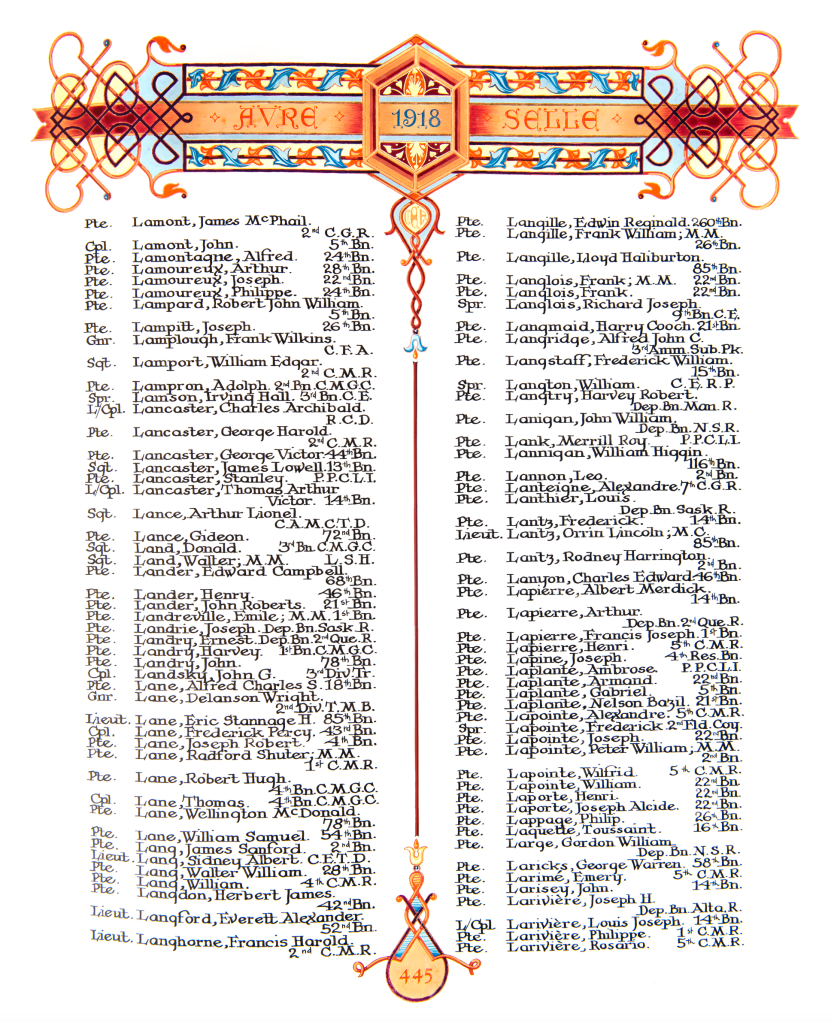
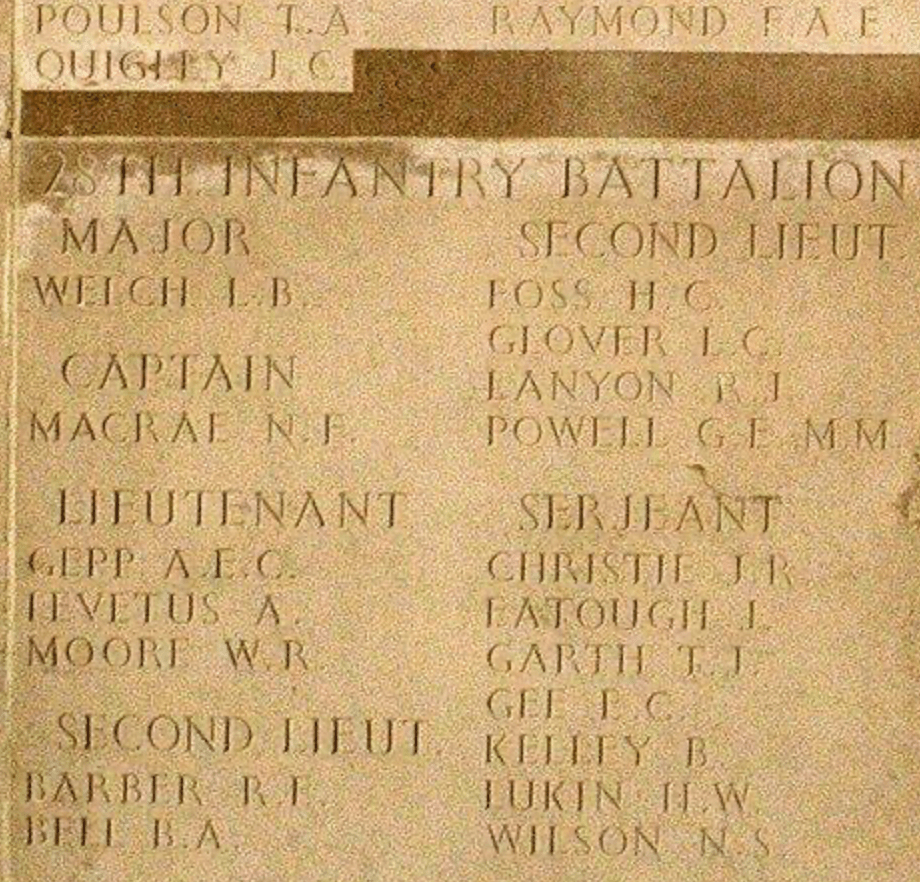
Charles was born 05 Mar 1882 • Penzance, Cornwall, England the son of John Rodolphus Lanyon and Emily Anne Hearle. He was the fifth of six children born to the couple. He was a farmer who emigrated to Manitoba, Canada in 1909. He was a private in the 46th battalion of the Canadian Infantry (Saskatchewan Regiment), service number: 255807. He was killed in action (shot by a sniper) on the 1 Nov 1918, just days from the armistice on 11 Nov. He was buried at Aulnoy Communal Cemetery, Nord, France.
Charles Edward Lanyon’s graveFirst World War Book of Remembrance (Canada)
Frederick Lanyon 1895-1916
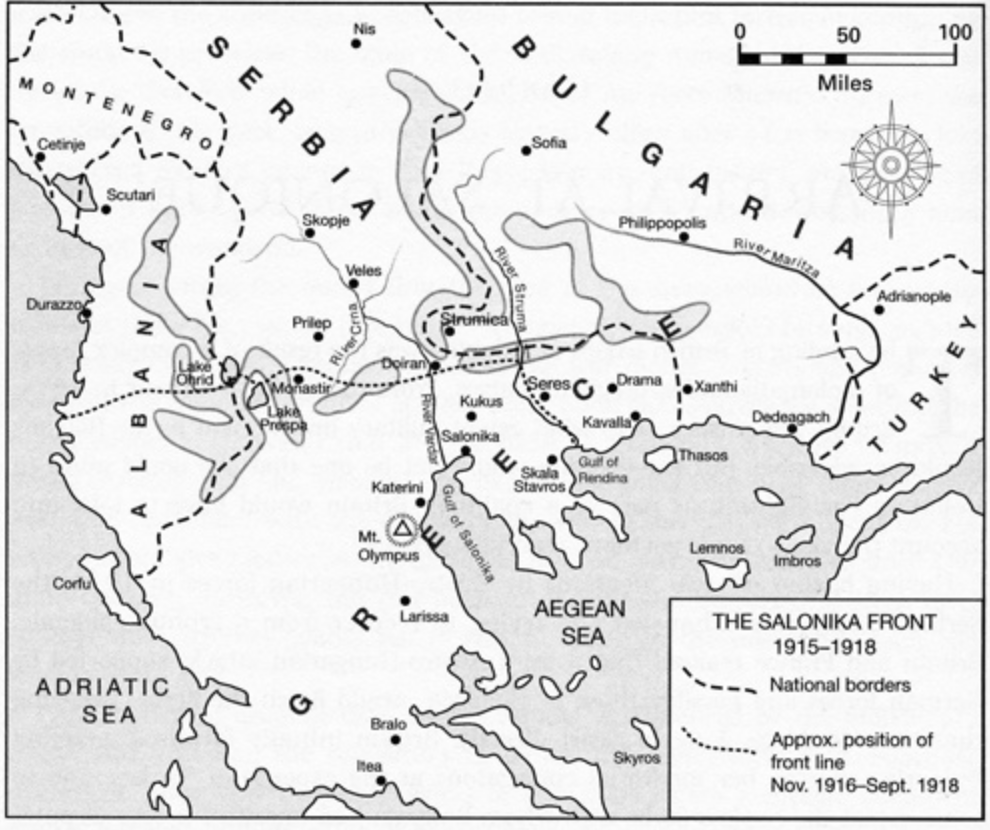
Frederick was born 16 Apr 1895 • Chacewater, Cornwall, England, the son of Frederick Lanyon and Susanna Tregoning. Frederick was a private (service number SE/20297) in the Army Veterinary Corp. He died on 30 Nov 1916 at Salonika, Greece.
George James Lanyon 1909-1942
George was born 8 Nov 1909 • Harlton, Kent, England, the son of George Henry Lanyon and Daisy Harriet Warren. He was the second of five children born to the couple. The 1939 Register shows he was a munitions worker. He served in Fighter Command as an Air Craftsman First Class, service number 1031229. He was killed, aged 32, in an accident at the military base at Llanbedr, Merioneth on 9 Sep 1942 when he was struck while on drogue collection duty by a Spitfire which was taking off.
Harold Merrill Lanyon 1920-1942
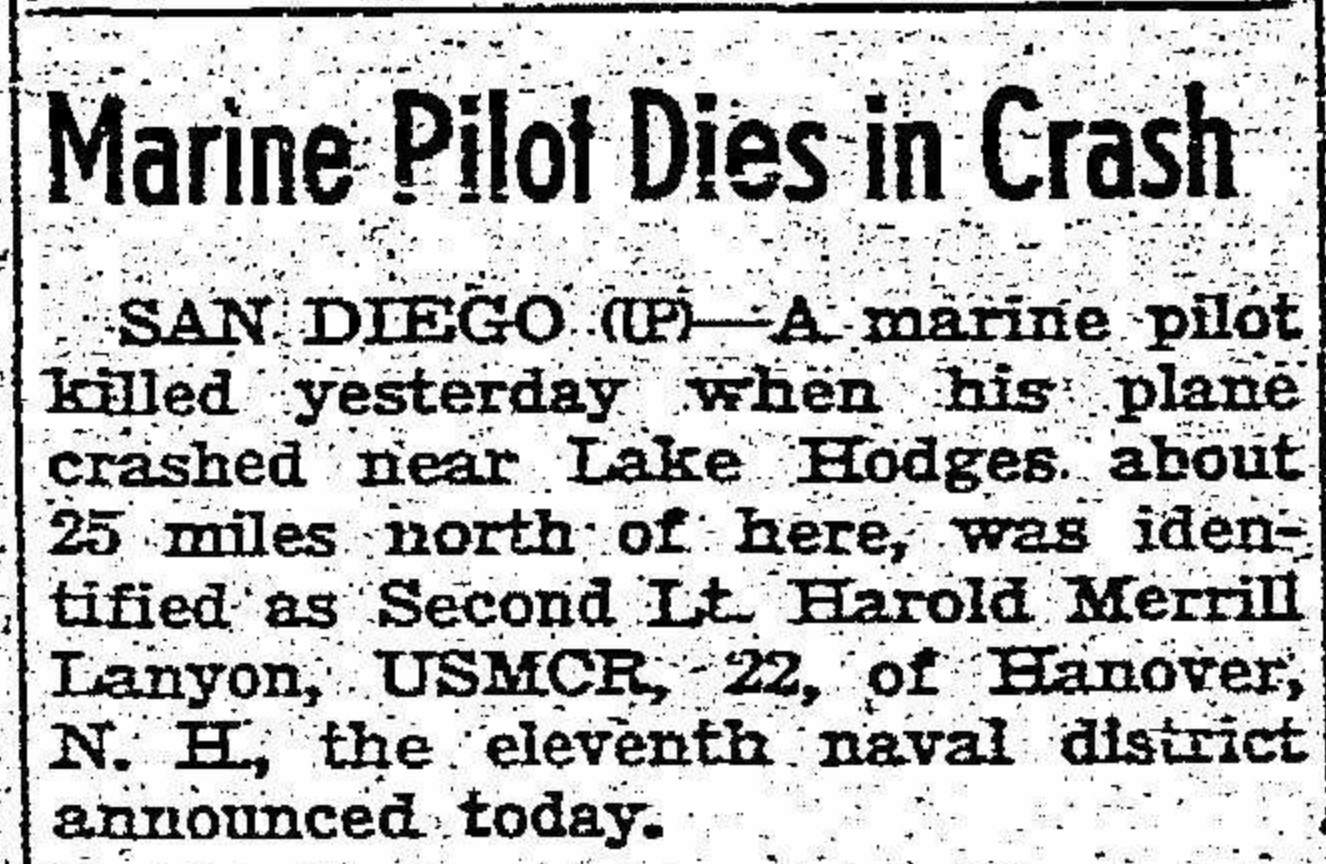
Harold was born 01 Jun 1920 • Hanover, New London, Connecticut, USA. He was the son of William Jacob Lanyon and Frances Merrill and the eldest of four children. He joined the Marine Corps and was a marine pilot. He was accidentally killed when his plane crashed on 24 Nov 1942 in California, USA.
Irving Frances Lanyon 1922-1944
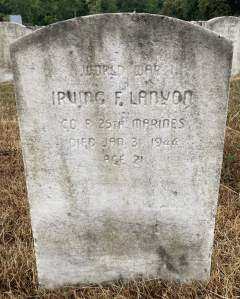
Irving was born 11 Jul 1922 • Stamford, Connecticut, USA, the only son of Irving Lanyon and Leona Madelon Farrell. He was a Private First Class (service number: 439683) in the 2nd Btn, 25th Marines. He was killed in action in the Marshall Islands on 31 Jan 1944 age just 21.
John William Haig Lanyon 1929-1952
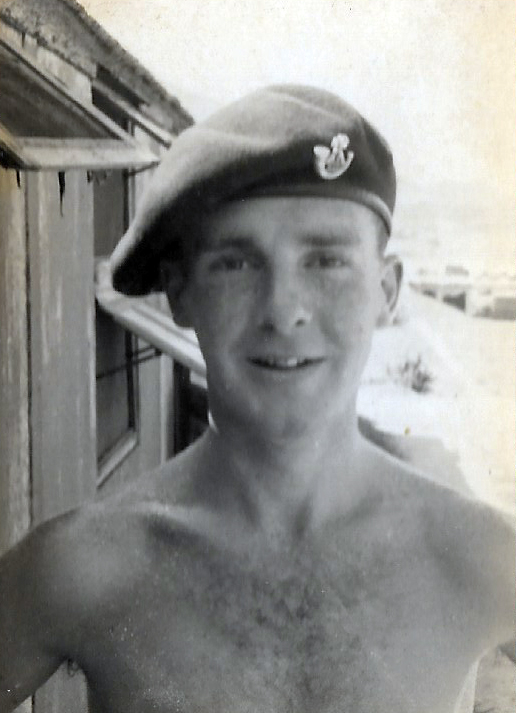
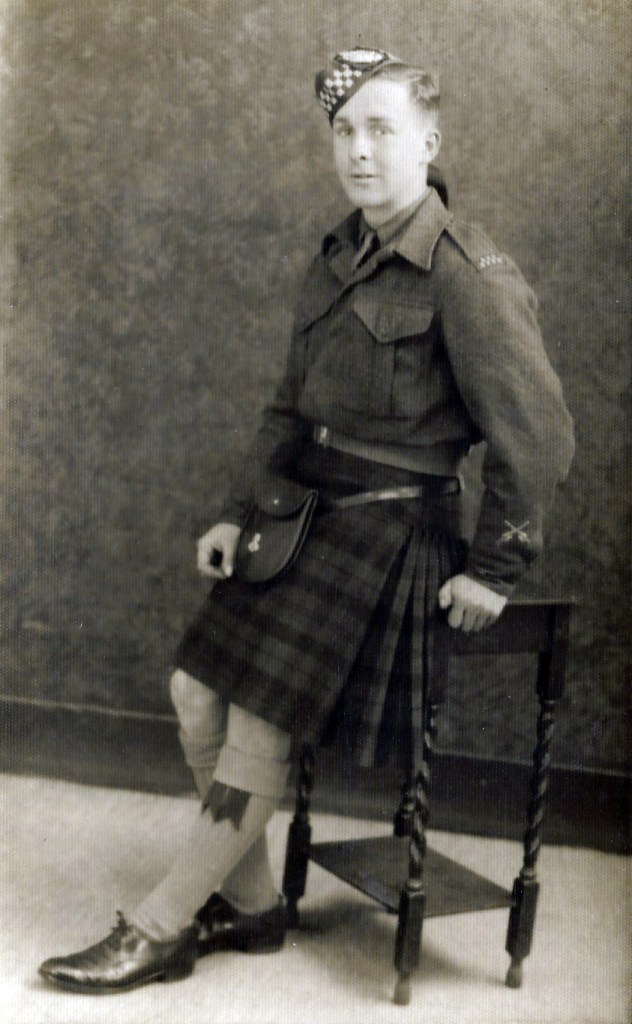
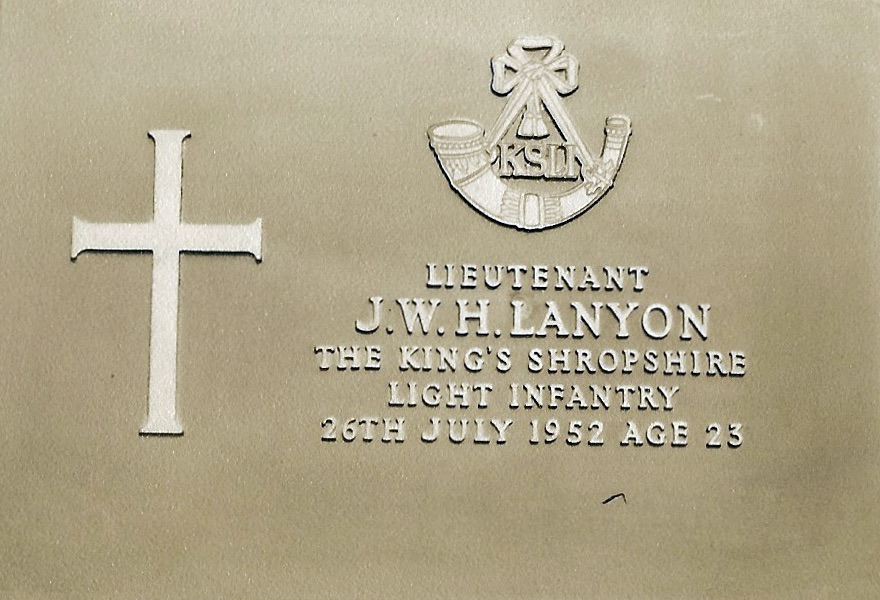
John, known to his family as ‘Bill’, was born in 1929 in Nantwich, Cheshire, England, the eldest son of John Arthur Lanyon and Nancy Eleanor Mitchell. He was a Lieutenant (service number: P/407938) in the 1st Battalion King’s Shropshire Light Infantry. He was killed on 26 Jul 1952 in Korea and buried at the United Nations Memorial Cemetery Tanggok, Busan, South Korea. He is commemorated on the Kelsall War Memorial in Cheshire.
Joseph James Lanyon 1894-1916
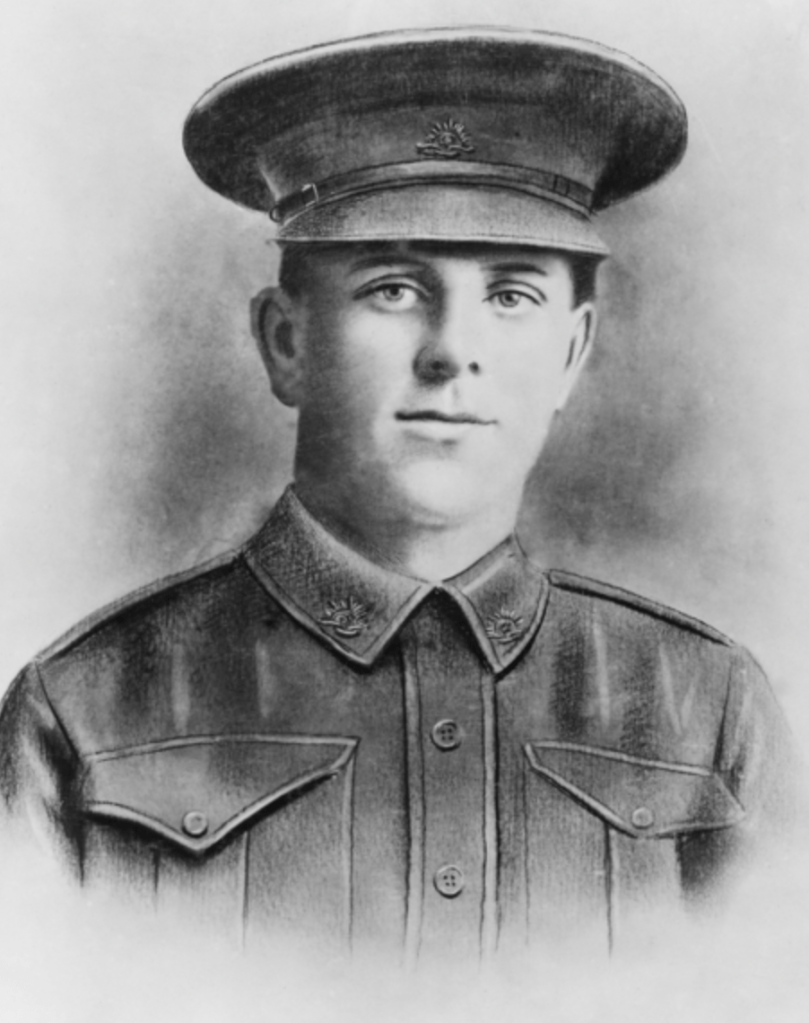
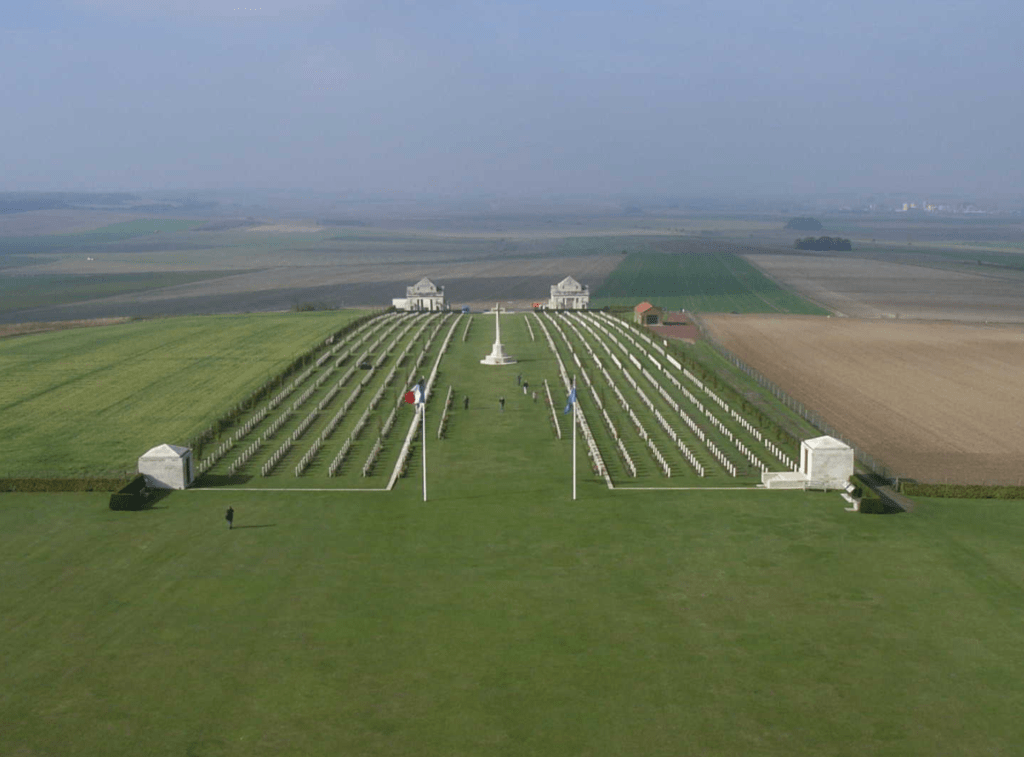
Joseph was born at Broken Hill, New South Wales, Australia in 1894, the son of John James Lanyon and Eliza Jane Sampson. He was the fourth of seven children. Private Joseph James Lanyon, 1st Battalion from Broken Hill, NSW. A 21 year old labourer with previous service in the 20th Militia prior to enlisting on 13 Apr 1916, he embarked for overseas with the 3rd Divisional Cyclist Company from Sydney on 18 May 1916 aboard HMAT Demosthenes (A64). On arrival in France, he transferred to the 1st Battalion on 29 Oct 1916 and was killed in action near Gueudecourt, France on 5 Nov 1916. Pte Lanyon is commemorated on the Australian National Memorial at Villers-Bretonneux, France with others who have no known grave.
Joseph James Lanyon (public domain photo)Australian National Memorial at Villers-Bretonneux
Kenneth Maurice Munro Lanyon 1913-1940
Kenneth was born in Portsmouth, Hampshire, England in 1913. He was the only son Harold John Lanyon and Ada Maud Munro. In 1939 he married Pattie Vinson Hewitt. He was a gunner in the Royal Artillery, 4th Battalion City of London Regiment. Service number: 1432428. He died in hospital on 30 Dec 1940, he was suffering from inflammation of the kidneys and heart weakness aged 27. He was buried at Rakowicki Cemetery, Małopolskie, Poland.
Robert Jordan Lanyon 1891-1917
Robert was born 16 May 1891 • Cometville, Queensland, Australia, the son of Richard Lanyon and Kate Jordan. He was one of 15 children born to the couple, 9 of which died in infancy. Robert was a bank clerk who volunteered for the Australian Infantry. He was a 2nd Lieutenant. He was killed on 3 May 1917 at the Battle of Bullecourt and was buried at Villers-Bretonneux, Departement de la Somme, Picardie, France.
Angus Herbert William Kennedy 1906-1941
Angus was born 13 Mar 1906 • Bendigo, Victoria, Australia, the only son of Donald Dan Kennedy and Elizabeth Anne Lanyon. He was a gunner in the Second Australian Imperial Force (service number: Vx1088). He was killed at the Battle for Crete on 24 May 1941 and buried at Athens, Greece.













 The Lanyons