Phillimores Marriage Records show that on 3 May 1615 Elizabeth Lanyne married Oliver Neilder at Menheniot in Cornwall. Despite several attempts I couldn’t initially place Elizabeth on the Lanyon tree, who was she?
Early marriage records rarely mention the parent’s names and Elizabeth is one of the most common names in the Lanyon family so I decided to look at Oliver Neilder in more depth to see if I could discover anything useful.
Oliver Neilder baptised at least four children at Menheniot in the early 17th century: Marye 1619, Jane 1621, John 1624 and Elizabeth 1627. The Menheniot parish register also lists the following burials: Elizabeth Neilder was buried on 15 Jan 1659 (she was noted as being ‘old’) and Oliver Neilder was buried the following year on 26 Sep 1660 (he’s noted as ‘old senr’.)
Neither Oliver nor Elizabeth left a will so that avenue for research was closed. I did find Oliver Nealder (sic) listed on the 1641/2 Protestation Return for Menheniot but that was it. I then turned to Kresen Kernow (The Cornish Record Office) and the National Archives to see if there was anything useful there.
I found just one relevant record at Kresen Kernow. Assignment of land at Trenant, the parties were Oliver Nealder, yeoman of Menheniot and Peter Carveth also a yeoman of Menheniot (BRA991/120).
The National Archives were more forthcoming. I found records of litigation between the Neilder family and the Kekewich family. I’ve come across the Kekewich family before whilst researching the Lanyons so I was curious to find out more.
The Kekewich’s were one of the most powerful families in Cornwall in the late 16th and early 17th centuries. The family resided at Catchfrench near Saltash and Trehawke near Menheniot. So Oliver and Elizabeth Neilder were neighbours of the Kekewich family.
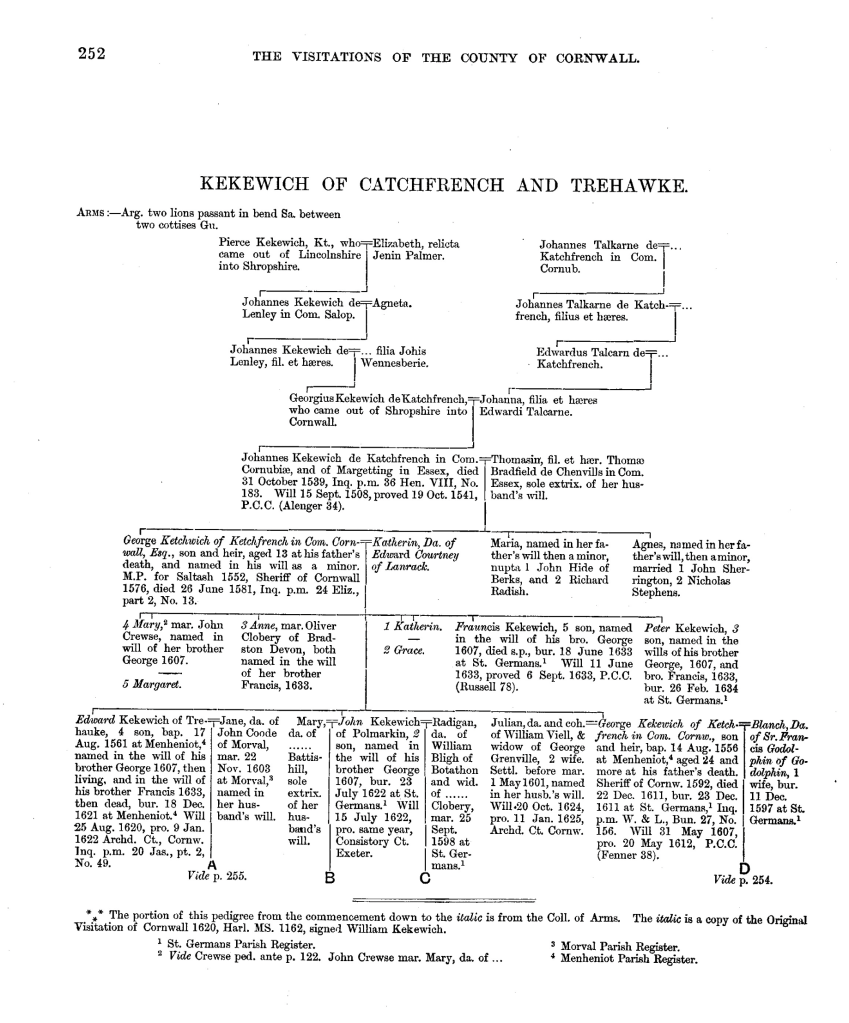
The Herald’s Visitation of Cornwall gives us the Kekewich family tree for that period.
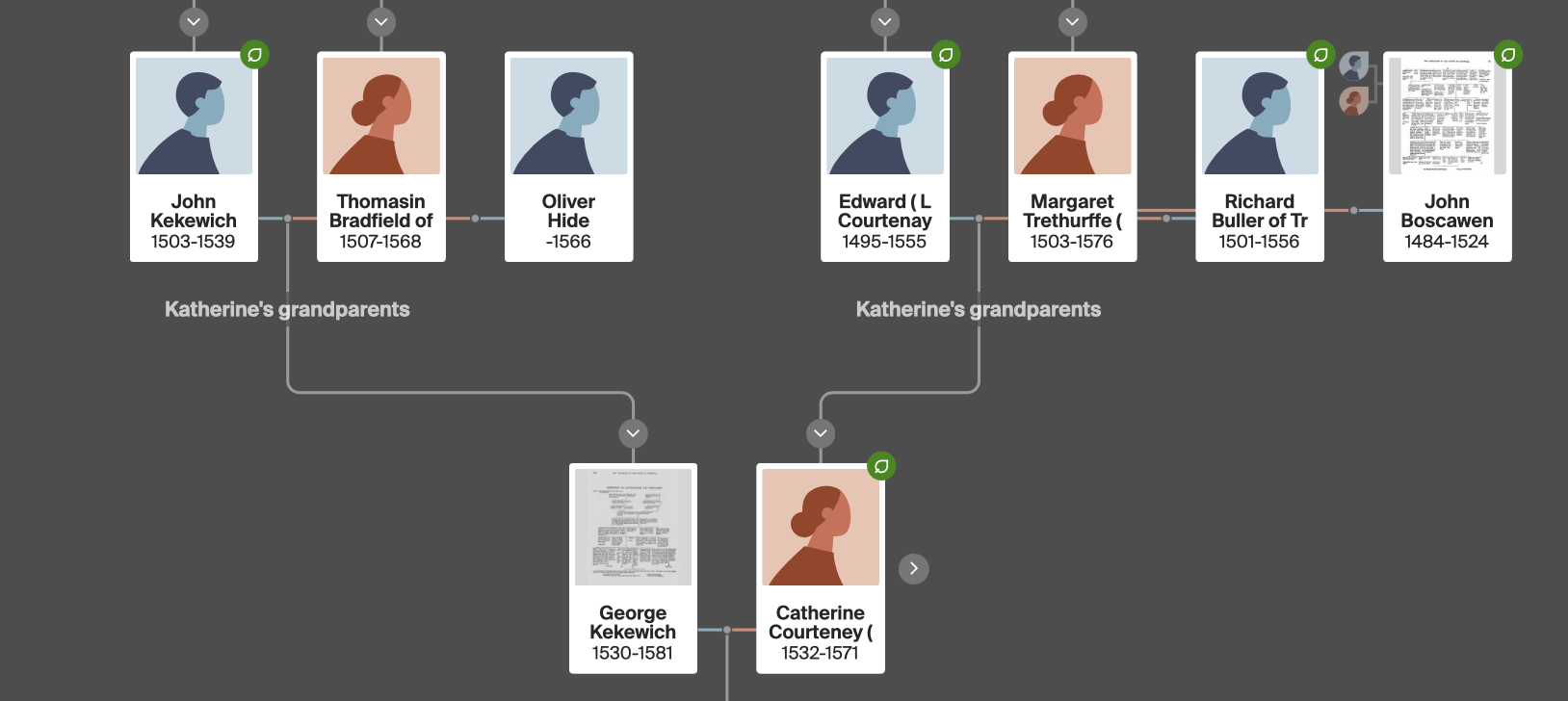
George Kekewich married Katherine/Catherine Courtney, descended from an aristocratic family. Her mother Margaret, daughter of Thomas Trethurfe, was one of the co-heirs of Edward Courtenay, Earl of Devon. Margaret married three times; first to John Boscowen, second to Edward Courtenay of Landrake and third to Richard Buller of Tregarrick.
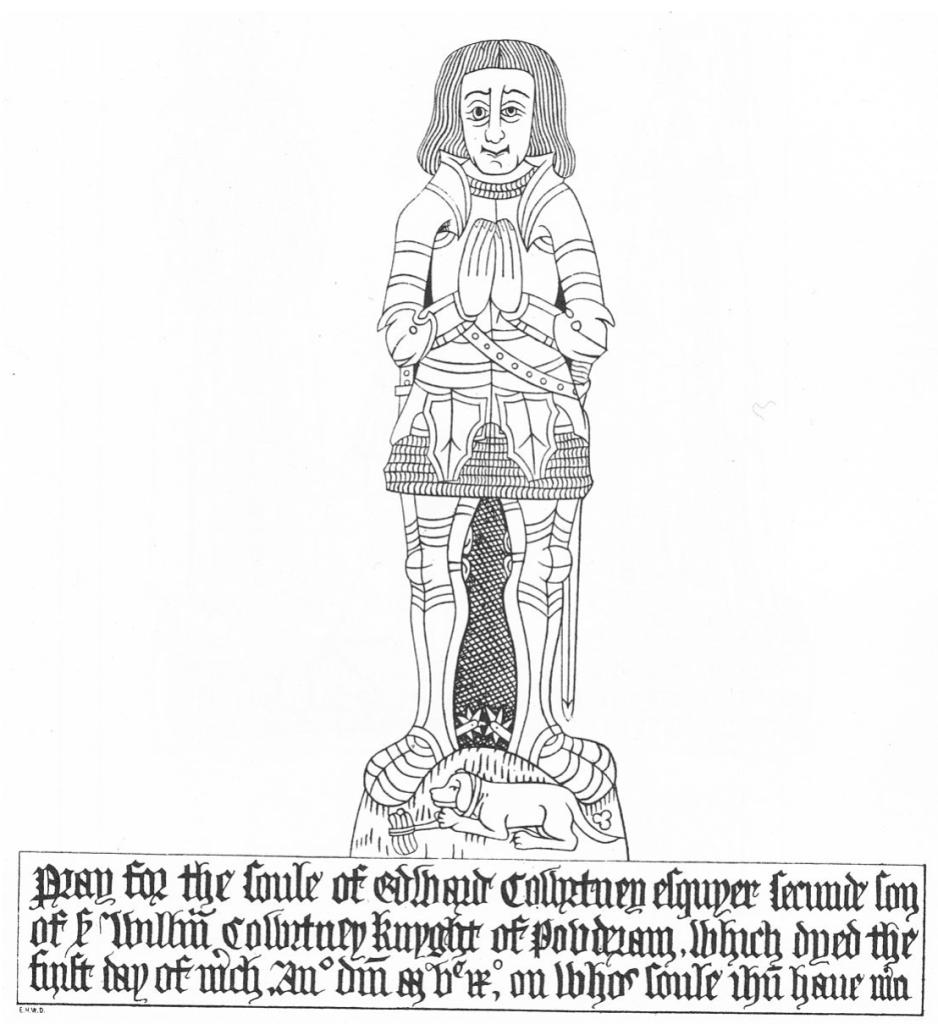
Edward Courtenay 1509 brass – Dunkin, E.H.W. The Monumental Brasses of Cornwall, 1882, Plate XXIKekewich – Courtenay family tree
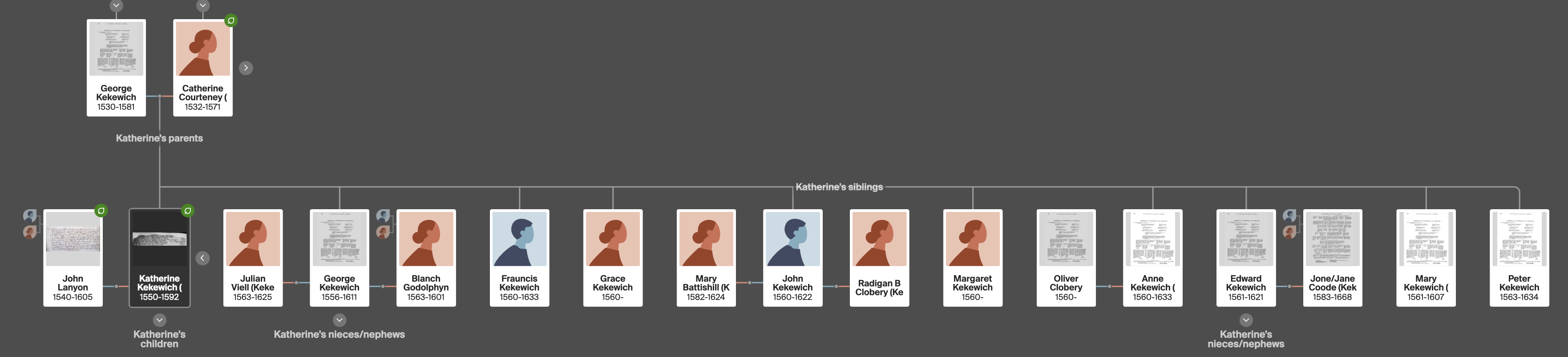
George and Katherine Kekewich had several children but we’re interested in their first born daughter Katherine and their fourth son Edward. Edward Kekewich of Trehawke was baptised on the 17 Aug 1561 at Menheniot, he married Jane, the daughter of John Coode of Morval on 22 Nov 1603 at Morval. Edward was buried at Menheniot on 18 Dec 1621. Edward and Jane’s second son, Peter Kekewich, was born in 1605 and he was the man involved in litigation with the Neilder family.
The children of George & Catherine Kekewich
National Archives document C9/47/58 Neilder v. Kekewich 1668 states that Nicholas Honey on behalf of his stepchildren, Oliver and Elizabeth Neilder, who were under 18 started the litigation. Honey stated that in 1657 Oliver Neilder was 83 years old (giving him a birthdate about 1574) and he was blind and decayed in memory. Honey alleged that Peter Kekewich and his brother-in-law Roger Porter were not related to Oliver Neilder and had conned the elderly man.
Peter Kekewich and Roger Porter (the husband of Peter’s sister, Elizabeth) responded that Oliver wasn’t quite so blind or so poor in memory, despite his age. They also pointed out that Oliver Neilder’s wife Elizabeth (Lanyne) was cousin germane to Peter Kekewich and Roger’s wife. (National Archives C10/178/69 & C8/352/249)
A cousin germane is a first cousin so Elizabeth Neilder (Lanyne) must have been the daughter of one of Edward Kekewich’s sisters. Edward had five sisters: Katherine, Grace, Anne, Mary and Margaret. We know that Anne married Oliver Clobery of Bradston, Devon and Mary married John Crewse so we can discount them.
That leaves Katherine, Grace and Margaret as possible mothers. George Kekewich’s will of 1581 is in the National Archives (PROB 11/64/488) and it shows that his eldest daughter Katherine/Catherine had married a Lanyon.
His will states that his daughter “Cate Lanyan have the sixe pounds thirtene shillings Fower pence given her by her grandmother Buller and three poundes sixe shillings eighte pence for to make the whole somme Tenne poundes.”
PROB 11/64/488
So ‘Cate’ had married a Lanyon, but which one?
Richard Carew’s ‘Survey of Cornwall’ states:
“Diverse other Gentlemen there dwell in this Hundred: as Lanyne the husband of Kekewich his father married Militon and beneath s. a castle a. standing in waves b. over the same a falcon hovering with bells o.”
Richard Carew National Trust, Public domain, via Wikimedia Commons
We know that John Lanyon (the son of Richard Lanyon Esq) married Phelype Militon on 18 Jan 1562 at Breage. Their eldest son Francis married Alice Trewren in 1584. John & Phelype’s second son William married Jane at Sancreed in 1592. There is one other son, John who is described as the son of John Lanyon esq. and he was buried at Madron in 1587, he appears to be a child but his age isn’t given. Phelype Militon was buried 29 Dec 1578 at Breage.
So which ‘son’ of John Lanyon married Cate Kekewich?
John and Phelype’s son Francis was born at the earliest in 1563 and he married Alice Trewren in 1584. He was still married to her at the time of his death in about 1593. Cate Lanyon was named in her father’s will which was dated 1581 so whilst it was just about possible for Francis to have married her when he was aged 17 or 18 years old she would have to have died before 1584, when he married Alice. There is no evidence that Cate Lanyon was buried at this time. Francis did have an illegitimate daughter called Elizabeth who was baptised in 1587 however I think it highly unlikely that Cate Kekewich would have had an illegitimate daughter who was later described as a cousin germane by her nephews. I think we can safely disregard Francis as a possible husband to Cate and father to Elizabeth Neilder.
That leaves his second son William Lanyon as a possible candidate. We don’t know when William was born but it must have been 1564 at the earliest and it could have been a few years later. The oldest he could have been was just 17 and that’s if Cate married the same year as the will was written. If she was married a year or two before that William would have been only 15 or 16. We don’t know when Cate was born but she was the eldest daughter of George Kekewich and Katherine Courtenay. Their date of marriage is suggested as 1555 at Landrake, in Cornwall. We know that their eldest son and heir was baptised on 14 Aug 1556, it seems likely that Cate was born soon after. Her mother Katherine Courtenay died in 1571 so all nine children must have been born before that date. This makes Cate several years older than William Lanyon.
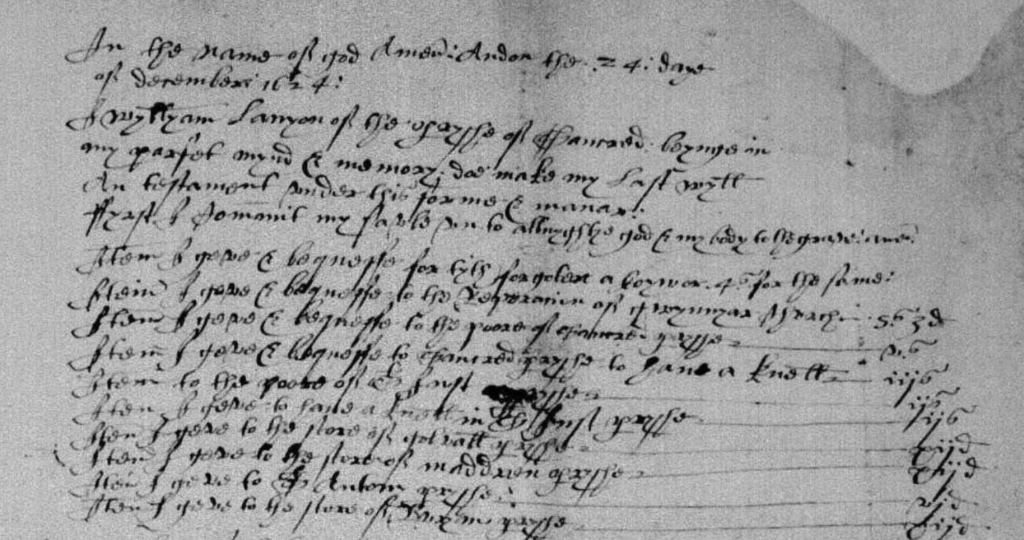
William Lanyon did marry a woman called Jane at Sancreed in 1592 and they had six children. He died in 1624 and his will survives and names his children. He had two daughters, both called Elizabeth! The eldest was born in 1593 after his marriage to Jane so Cate couldn’t be her mother. The youngest was born in 1607 and would be too young to marry Oliver Neilder in 1615.
William Lanyon’s 1624 will naming his children
George Kekewich was an MP for Saltash and Sheriff of Cornwall, Katherine Courtenay was descended from an aristocratic family, would they have married their eldest daughter to a teenage second son?
It seems much more likely that Cate Kekewich married the recently widowed John Lanyon, the eldest son and heir to Richard Lanyon Esq and the head of the Lanyon family.
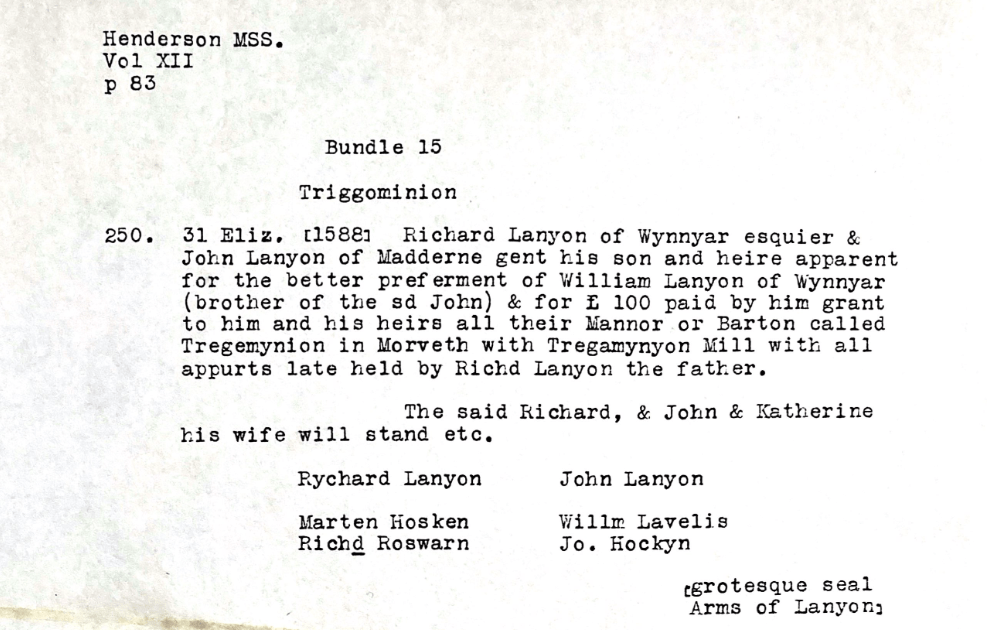
Whilst there is no record of a marriage for John Lanyon and Cate Kekewich there is a record which may help prove the relationship. In 1589 Richard Lanyon Esq and his eldest son John sold Tregemynion in Morvah to Richard’s fourth son William. The agreement is signed by Richard, John and Katherine his wife. (Hendersons MSS Vol XII p.83)
Abstract from Hendersons MSS
So it appears as though sometime after 29 Dec 1578, when Phelype Militon died, and before 1581 when George Kekewich’s will was written, that John Lanyon married for a second time to a woman named Katherine.
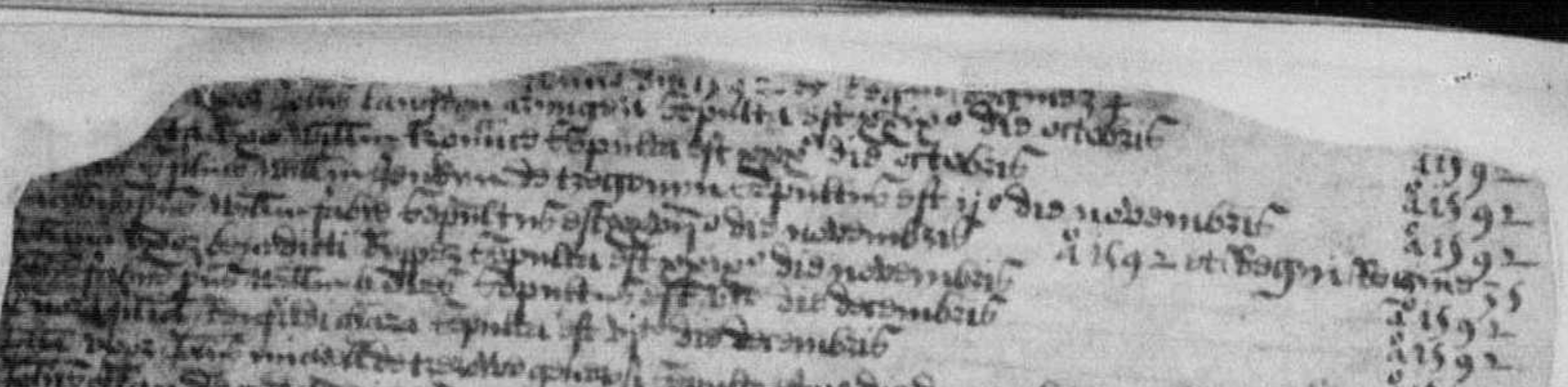
Breage parish register also has an interesting entry for a burial. On 29 Oct 1592 there is the following entry ‘uxor Johis Lanyon armiger’. Sadly the page is damaged so the wife’s name is not legible but John Lanyon, who has the right to bear arms, buried his wife. There is only one John Lanyon who has the right to bear arms at this time.
Breage Parish Register Burials
There are no records of any children of this marriage being baptised or buried. However looking at the wills of Cate’s brothers gives us some more clues. George Kekewich the younger’s will was written 22 Jun 1607 and proved 20 May 1612. It states:
“I give the blynde Lanian, my kinsman xx s a year towards his mayntenance untill my heire accomplish the age of xxj years.”
National Archives PROB 11/119/518
So Cate’s brother had a ‘kinsman’ called Lanian who was blind.
Cate’s brother Francis also left a will which was written 20 May 1633 which states:
“I give George Lanion twenty shillings a year during my lease of Manoby with the proviso that he wander not the country as a beggar contrary to God’s and Man’s laws. Hoping the rest of his friends will make up the rest that must be paid for his board.” (National Archives PROB 11/164/299)
So it appears as though Cate Lanyon had a son called George who was blind. He’s not mentioned in any Lanyon wills however most of the 16th century Cornish wills were destroyed during World War II bombing.
There is no record of a baptism, marriage or death of George Lanyon and we wouldn’t know anything about him but for these wills. None of the wills mentions Elizabeth Lanyne or Oliver Neilder.
Whilst none of this is actual proof that Elizabeth Neilder was the daughter of Katherine Kekewich and John Lanyon Esq it’s probably as close as we’ll come.
We know what happened to Elizabeth, she died an old woman in Menheniot. Perhaps ‘Blynde George’ lived out his life with her?
When researching a family tree it can be hard to see beyond the name and dates associated with each individual and come up with information that brings a person to life. We might be lucky enough to find their occupation, if they had a criminal conviction and their religion. Occasionally we’re lucky enough to find a physical description or even a photograph. However, one thing that is particularly hard to discover is whether or not they were disabled.
When searching through old records it can be challenging to see the words used to describe disability. Many of the terms used are considered offensive today but I have chosen to use the words in the original documents as that is part of the history of this subject.
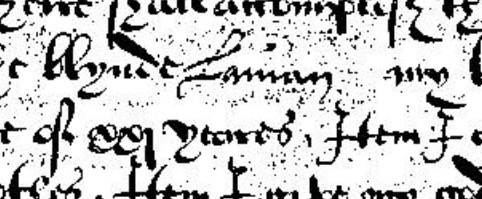
I discovered ‘blynde Lanian’ when I was sent a copy of his uncle’s will written in 1607.
“I give the blynde Lanian, my kinsman xxs a year towards his mayntenance untill my heire accomplish the age of xxi years.”
The will of George Kekewich was written 22 June 1607 and proved 20 May 1612. The National Archives Ref. PROB 11/119/518
‘Blynde Lanian’
‘Blynde Lanian’ was George Lanyon the son of John Lanyon Esq and Katherine Kekewich. (See the post in Tudor & Stuart Lanyons about John Lanyon Esq’s children.) George must have been born about 1586 and died after 1633. There is no record of his baptism or burial and no record of a marriage or children. We only know he existed from two Kekewich wills. His uncle George’s will of 1607 and his cousin Francis Kekewich also mentions him in his will of 1633.
“Item I give George Lanion Twentie shillings a yeare during my lease of Manely with this premise that he wander not the Country as a beggar, contrary to God and Mans lawe hopeing the rest of his friends will make up the rest that maie paie for his board.”
The will of Francis Kekewich was written 11 July 1633 and proved 6 Sep 1633. The National Archives Ref. PROB 11/164/299. Transcribed by Angela Wood and Richard Samways. With permission of Cornwall Online Parish Clerks
George’s mother Katherine died in 1592 and her brother and nephew have made provision for him so that he does not wander the country as a beggar which is probably what happened to other disabled people who did not have the means to support themselves or families to take care of them.
I could not find mention of George in any Lanyon wills of the period. Perhaps he was raised by his mother’s family in St Germans, Cornwall?
We know very little about George but it did make me wonder what life was like for disabled people in the past and whether there were any more ancestors with disabilities. There must have been others but would I be able to find them in the records?
Historic England provided some interesting information about the history of disability. In medieval times it was thought that those who were charitable to the sick and disabled could speed their journey to heaven after their death. That led the wealthy to endow hospitals and leper houses and to care for the poor and disabled. A statute of 1388 talks of the ‘deserving poor’ and ‘undeserving poor’, the deserving poor were those born with disabilities and they were deserving of alms and support.
At the start of the Tudor period in 1485 disabled people were cared for in ‘spyttals’ or hospitals and almshouses run by monks and nuns. This worked fairly well until the dissolution of the monasteries in Henry VIII’s reign. With nowhere to go and no one to care for them the sick and disabled were often to be found dying on the streets. Many of the disabled were wounded seamen and soldiers and senior officers, horrified at the way they were treated, he argued for hospitals and pensions for the men. In 1590 the Chatham Chest was created to pay pensions to disabled seamen. The world’s first occupational pension!
In practice most disabled people stayed with their families and played a part in their local community. Families tended to work together and any disabled family members would work alongside their parents and siblings carrying out tasks they were able to perform. Those with learning disabilities were thought of as ‘natural fools’ or ‘innocents’ and were not excluded from village life.
In 1570 the city of Norwich carried out a census of the poor. Fourteen hundred of the poorest people were questioned. Of them 63 were disabled men and women who suffered from ‘lameness’ or ‘crookedness’, had missing limbs or were blind or deaf. Interestingly almost all the disabled people were married to non-disabled people and many had children. They had jobs and were part of their community in every sense.
By the 18th century hospitals such as Bedlam had been built and were home to many people with learning and physical disabilities. There was no real treatment offered and the afflicted were seen as a source of entertainment for visitors to the hospital.
Scene in Bedlam from Rake’s Progress – National Library of Medicine, No restrictions, via Wikimedia Commons
By the 19th century the Victorians had built huge asylums and the ‘mentally afflicted’ were moved away from their communities to be cared for in institutions. At the same time the first schools for deaf and blind people were opened. In the 20th century, especially after the first World War, the concept of rehabilitation took hold and with the arrival of modern medicine our whole understanding of disability changed. From the 1930s onwards charities and organisations were formed to fight for disability rights and today many countries have laws enshrining equal rights for disabled people.
Discovering our Disabled Ancestors in the Census
One of the easiest ways of discovering our disabled ancestors is to use the census. From 1841 onwards a census was held in Britain every ten years. The householder completing the form was asked to note if a person was: blind, deaf, ‘dumb’, ‘imbecile’, ‘idiot’ or ‘lunatic.’ One narrow column to represent a lifetime of disability.
The words ‘dumb’, ‘imbecile’, ‘idiot’ and ‘lunatic’ are today considered offensive and unacceptable but in the 19th century they were proper medical terminology and had different definitions:
‘Idiot’ – someone with a congenital mental impairment, an IQ under 25
‘Imbecile’ – someone who had lost their mental faculties e.g. dementia or had an IQ between 25 and 50
‘Lunatic’ – someone of average intelligence suffering from mental illness
Of course the people completing the census forms were not doctors and did not always use the correct terms. There was also a stigma attached to mental illness and disability in Victorian times so some people were reluctant to mention family members who were affected.
The census returns were used to produce all sorts of statistics and formulate government policy.
The 1851 census revealed some interesting statistics relating to blindness. It was much more common in rural areas than industrial areas. This was probably because younger and healthier people migrated to the cities and left older and more infirm members of the family behind. Also those who were blind were less suited to work in factories and perhaps less likely to leave the security of their village.
Blindness also affected the south more than the north. In Cornwall in 1851 one in 793 persons was blind whereas in York it was one in 1296 people. Were the Cornish more likely to suffer accidents that caused blindness? Were they more likely to have children with congenital blindness? There doesn’t seem to be an answer to that.
More men than women were blind, 105 males and 88 females per 100,000 people. This was probably due to male occupations being more hazardous.
One of the major causes of blindness was Smallpox. In Ireland the potato famine caused an epidemic of Opthalmia which led to much higher levels of blindness in that population.
The south west also had the highest proportion of ‘deaf and dumb’ people, the north the least. One in 1390 in the south and one in 1995 in the north.
Muteness was often attributed to the mother suffering a fright in the final stages of her confinement! In reality an inability to speak was associated with congenital deafness. Those who were born deaf were less likely to be able to speak. It was thought that congenital deafness could be caused by cousins marrying which was more likely in small remote communities. Disease was a major cause of deafness; Scarlatina, Smallpox, Typhus and Measles could all cause fevers and deafness.
Searching the Census Returns
I started searching the census for any Lanyons with disabilities. Having all the census returns online makes this a relatively easy task. I have selected just a few of the people I found for this post.
Philip Body Lanyon 1802-1892 was blind. He was working as a farmer; we don’t know if he was born blind or became blind following an accident or disease. (Some census enumerators have noted whether a person was disabled ‘from birth’ on the form.)
In 1851 Philip was working as a farmer of 13 acres and was blind
In 1881 Philip was working as a carpenter!
Philip shows us that despite a disability he was able to work, marry, raise a family and live to the ripe old age of 90! However I can’t be the only person slightly concerned about the health and safety of a blind man working as a carpenter!
Dorothy Lanyon born in 1806 was deaf and working as a power loom cotton weaver in Blackburn 1861. The census tells us she was a widow and the daughter (possibly daughter in law) of William and Ann Lanyon. Again we don’t know if she was born deaf, or became deaf as a result of disease, accident or industrial accident.
Mary Addison Lanyon, born in 1812, was deaf. In 1851 she was living with her mother and unmarried sisters in Penzance. Mary was married to John Mathews Lanyon, a confectioner. They married on 19 Apr 1836 and in 1838 their only daughter Rebecca Addison Lanyon was born. Shortly afterwards John disappeared from the local records and it appears that he abandoned his family. Did he abandon her after she became deaf or was she born deaf? Mary worked as a stay maker mistress (a corset maker). By 1871 she was described on the census as a confectioner’s widow but there is no trace of John’s death. Rebecca married James Eva and they had at least nine children and lived in Penzance until after 1881. Mary lived with her daughter and her family until her death in 1877 . The family later emigrated to the United States and Rebecca died in Minnesota in 1898.
Henry Lanyon 1842-1856. Henry was the son of James and Elizabeth Lanyon, who were cousins.
The 1851 census described Henry as ‘dumb’. It’s not clear if this was to describe his inability to talk or a learning disability. Henry sadly died in 1856 the same year as his mother. His death certificate describes his cause of death as ‘idiocy from birth and Scrofula’ (Scrofula was Tuberculosis of the throat.) Her death was described as following ‘a lingering illness’ which often meant Tuberculosis. Henry’s two sisters both called Mary Anne died aged one in 1841 and 1843. Perhaps they all suffered from autosomal recessive genetic disorders caused by close relatives marrying?
Richard Lanyon 1844-1919 was born into a St Just family that suffered more than their fair share of tragedy. He was the son of John Lanyon and Elizabeth Bowden.
The Royal Cornwall Gazette, 16 November 1855
Coroner’s Inquest John Lanyon
(The following inquests have been held by W. Hichens, Esq., county coroner:—) —On the following day (the 10th inst.) in the parish of St. Just in Penwith, on the body of John Lanyon, aged 47 years. –The deceased was a miner, and worked at Park Noweth Mine, in that parish, and was at the 80 fathom level, assisting in changing the boxes of the lift, when the engine being working, the rod came down, and the navel-pin thereof struck him on the head and caused such injury thereto that he died on the following day. It appeared to be the usual practice to change the boxes whilst the engine is at work, and that the same may be done without fear of accident where the party doing it is ordinarily careful. – Verdict “accidental death.” –The deceased was very much respected. He leaves a widow and five children to deplore their loss. The poor woman has been very unfortunate, having had her first husband drowned, her father killed, her son killed, and now her second husband also killed, and not long since a grand child was drowned in a well.
Reproduced by kind permission of Cornwall OPC – Transcribed by Karen Duvall
Richard was Elizabeth’s last child. He was disabled and is variously described as an ‘imbecile’ or a ‘dumb imbecile’. We don’t know the cause or severity of his disability but he lived at home with his mother until her death in 1878 and then lived with his older sister Cordelia until 1884 when she finally married at the age of 47. (Cordelia worked as a tin dresser – someone who broke up the lumps of rock when they were brought to the surface.)
1871 census St Just
1881 census St Just
1891 census Madron Penzance
From 1884 until 1919 Richard was an inmate of the Penzance Union Workhouse at Madron. The 1891 census described him as a mine labourer so even though he was disabled he had been employed.
It’s heartbreaking to think he spent the last 35 years of his life in such a bleak place.
Mary Mead 1800-1871 was married to John Charles Lanyon (senior). On the 1871 census she is listed as an ‘imbecile’ but in this case the word is used to show that she was suffering from dementia. Mary lived with her daughter and son-in-law until her death.
1871 census Falmouth
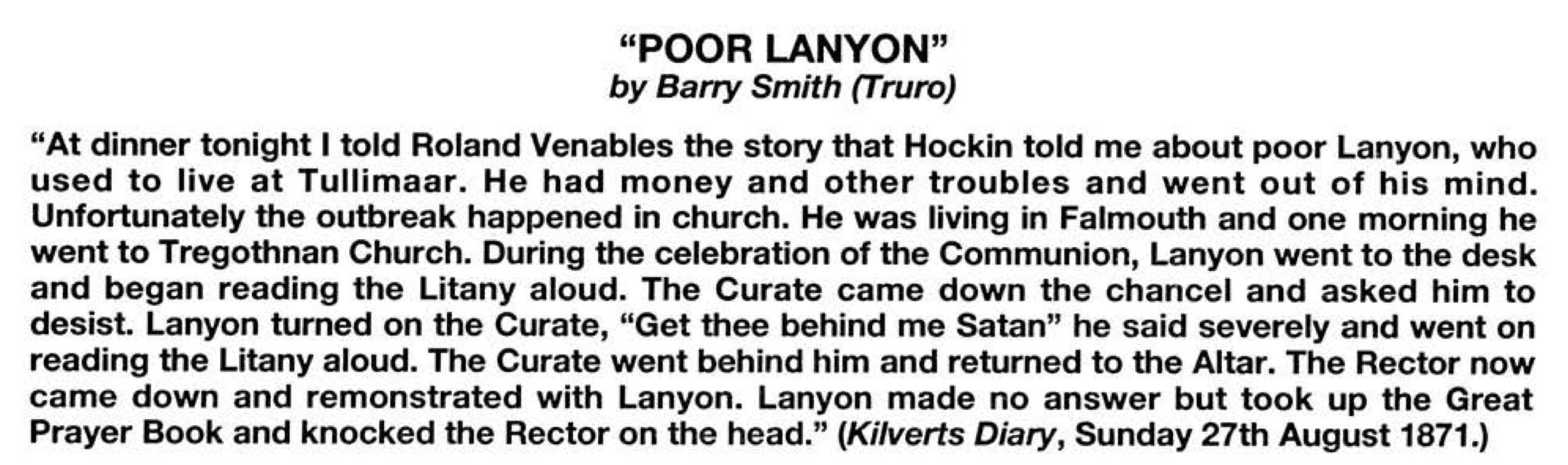
William Henry Lanyon 1825-1895 was a wealthy gunpowder manufacturer and merchant who lived at Tullimaar House with his large family. He was a successful but unusual man and he suffered a rather dramatic mental breakdown in 1871.
In the 1891 census William is described as an ‘imbecile’ but it is hard to know if he is still suffering from his mental breakdown or has developed dementia.
One word in one small column and yet so many different meanings.
1891 census Falmouth
It’s curious that the census asks about so few disabilities. Where are all the people suffering from paralysis or with missing limbs? Why is the government just interested in the numbers of deaf, ‘dumb’, blind and mentally impaired people? Surely a column that listed those unable to work due to ill health or disability would have been more useful? Or perhaps a column listing all those with Tuberculosis (a disease responsible for protracted illness and so many deaths).
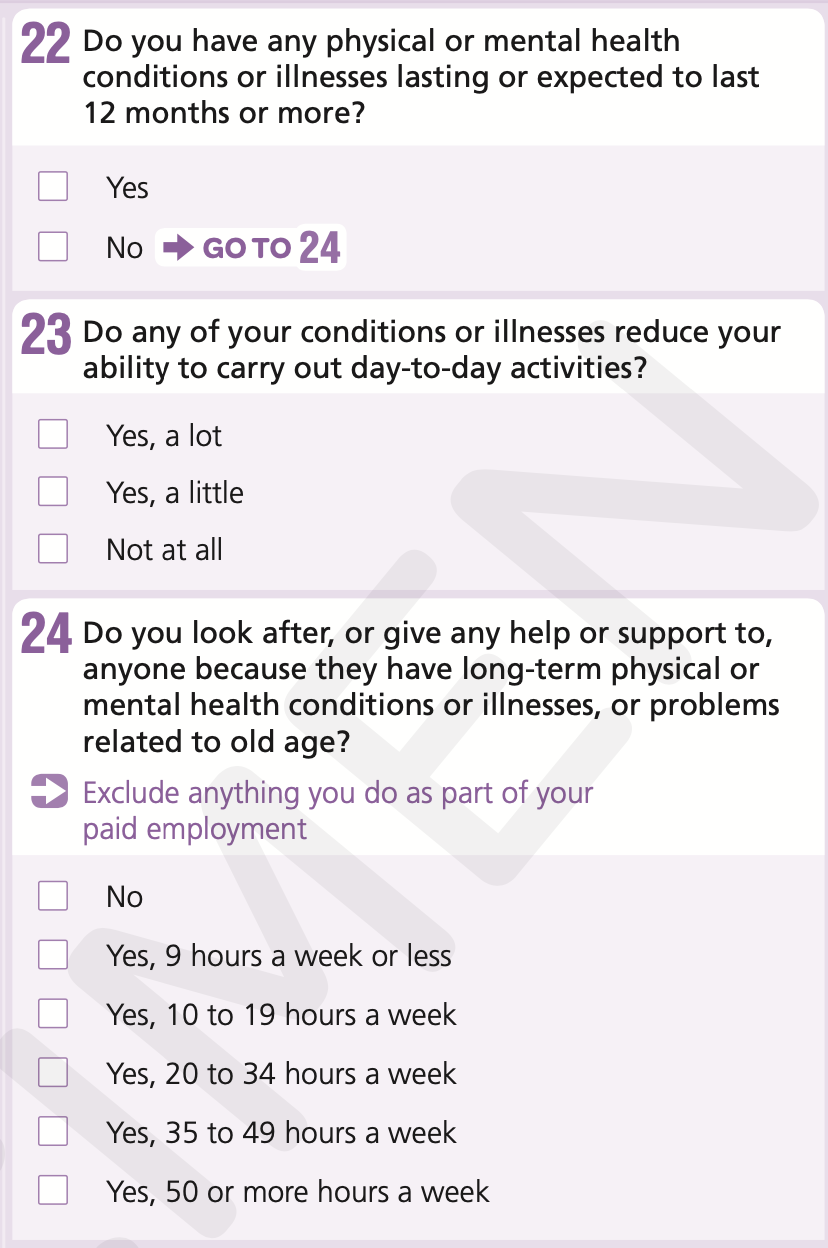
The 2021 census asks a number of questions about health.
They also ask if a person is caring for someone What will our descendants make of our answers in 100 years time?
Discovering our Disabled Ancestors in other Family History Resources
If we want to discover our disabled ancestors before 1841 (when the census began) we need to use other resources like wills, diaries, letters and obituaries.
Wills
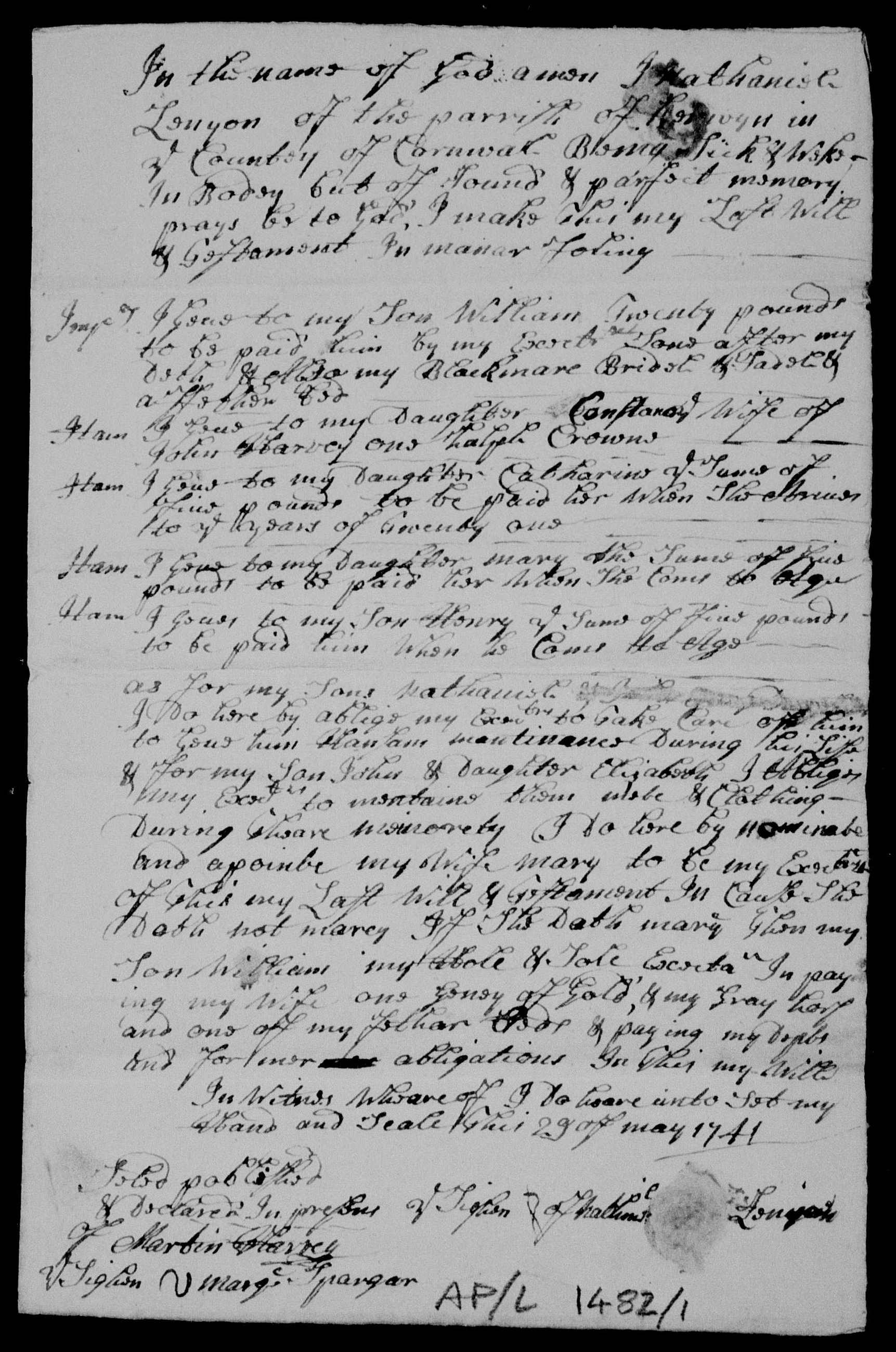
Nathaniel Lanyon abt. 1685-1741 of Kenwyn in Cornwall left a detailed will which hints that his son, also called Nathaniel, may have a disability of some kind.
Nathaniel the younger was born in 1720, the fourth of twelve children. Nathaniel senior bequeathes his children various amounts of money:
My son William £20
Daughter Constance, wife of John Harvey half a crown (as a married daughter she has already received her ‘portion’)
Daughter Catherine £5 when she is 21
Daughter Mary £5 when she is 21
Son Henry £5 when he is 21
As for my sons Nathaniel (the second name is erased, perhaps the child died before his father) – I do hereby oblige my executor to take care of him and to give him handsome maintenance during his life.
The will doesn’t state that Nathaniel is disabled but why is he treated differently? Is it because he can’t take care of himself? We don’t know when Nathaniel junior died but he’s not mentioned in his mother’s will.
Nathaniel’s Will – AP/L/1482
The situation is much clearer when it comes to Sarah Lanyon 1750-1802. Sarah was the daughter of John Lanyon and Rebecca Treloar of Helston, Cornwall. John was a cordwainer (shoemaker) and died at the age of 34 just a year after Sarah was born. Rebecca was just 29 when she became a widow and she never remarried. She spent her life raising her son and looking after her daughter.
In her will she spells out that ‘Sarah Lanyon is now of insane mind’ and makes provision for her future.
In the event Sarah predeceased her mother and was buried on 15 Feb 1802 and her mother died just a few days later and was buried on the 24th Feb.
Letters
In Jane Veale Mitchell’s letters from the 1920s she makes numerous mentions of her delicate health:
“I am so sorry that I cannot earn a little in some light employment….but this is not easy to do in Cornwall and I am not strong.”
“I went to London ….but as it was Easter and I was not so strong as I could have wished for….”
“I have not been at all well lately, under the doctor pro tem, so that must account for my silence.”
Jane was a descendant of the St Allen branch of the Lanyon family and a family history researcher. Perhaps if she had been more robust she would never have started her research into the family tree. She was killed in an accident at Perranzabuloe train station in 1929 when she was sucked off the platform by a passing train, she was 62.
Obituaries
Obituaries often give clues as to the cause of death, long illnesses and disabilities. I found one amazing obituary for Charles Bennett born abt. 1740-1804, who was the great grandfather of Jane Stacey Bennett who married John Charles Lanyon (junior).
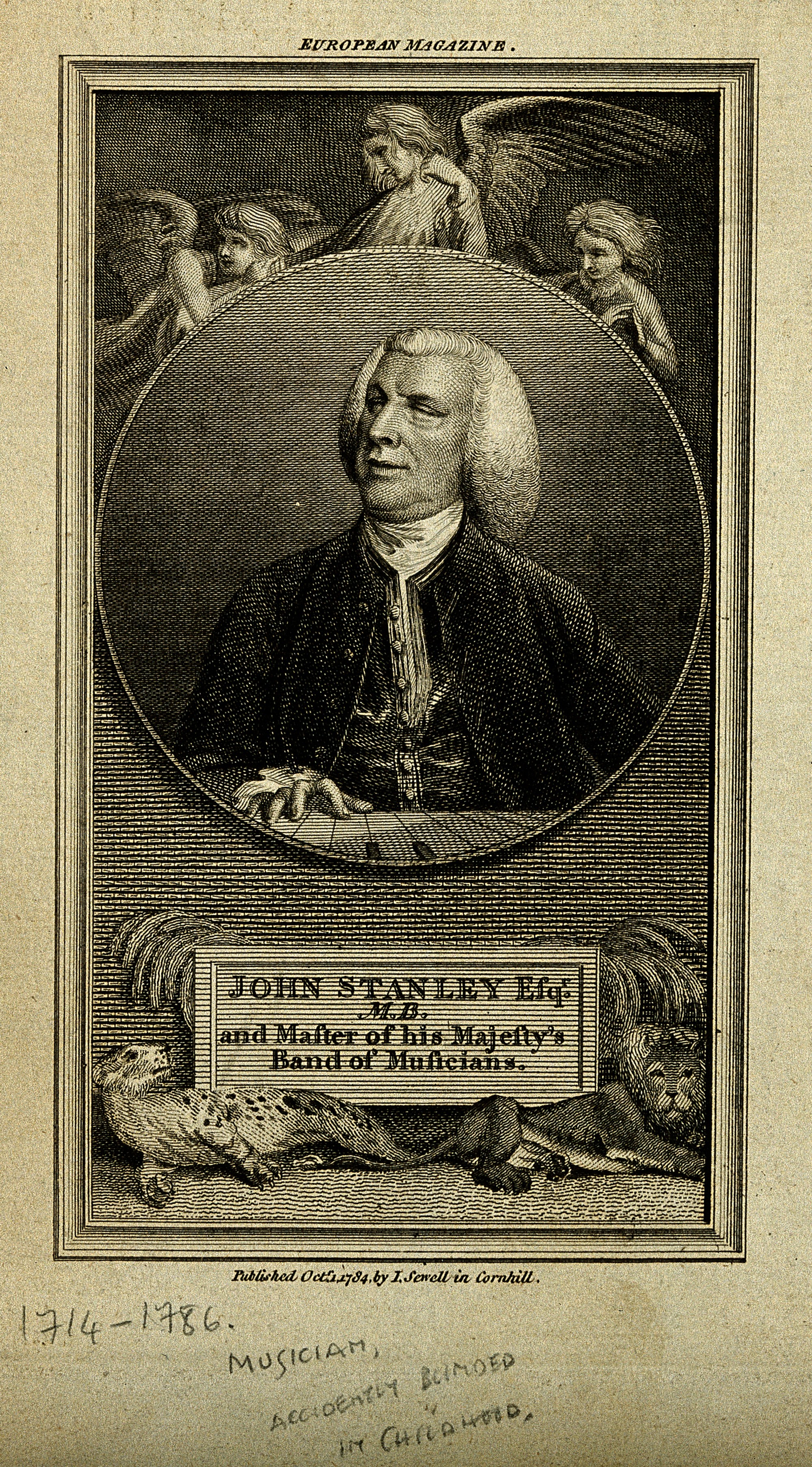
Charles was the organist at Truro Church for forty years and he was blind but we only know this fact from the obituary. It details how he lost his sight in a childhood accident when a wooden gun exploded. His parents then sent him to be taught music by the celebrated organist John Stanley, who was also blind.
John Stanley, a blind musician. Line engraving, 1784 – Wellcome Images
Charles didn’t allow his disability to prevent him living a full and interesting life. He married Anne Vivian and they had several children. He is described thus ‘his wit and convivial temper made him a welcome visitor wherever he went, and often has he “felt the table in a roar.”
He was ‘partial to horticulture and so exquisite was his touch that he could distinguish and describe all his flowers and even the different weeds.’
Charles also ‘enjoyed a game of whist and played with skill and perfection having previously marked his cards with a needle that the punctures were imperceptible to his adversaries.’
He was an author of musical compositions and had a memory for voices and events. In short he coped with his disability so well that the writer of the obituary commented that ‘although blind he delighted in amusements which would appear to give pleasure chiefly to the sighted.’
Charles died in 1804 of cancer of the throat. How tragic that a man deprived of his sight was in the end deprived of his voice as well.
Clearly there must have been many more people in the family who had disabilities but without records we’ll never be able to identify them. Perhaps the records don’t exist as disabled people weren’t considered ‘disabled’, or perhaps there was no need to note they were blind or deaf as everyone in a small community would already know this. Perhaps disability was just part of life in a society that was used to disease, infant mortality and untimely death on a scale we now find hard to comprehend.
Friends by the Ears – British Museum, Public domain, via Wikimedia Commons


















 The Lanyons