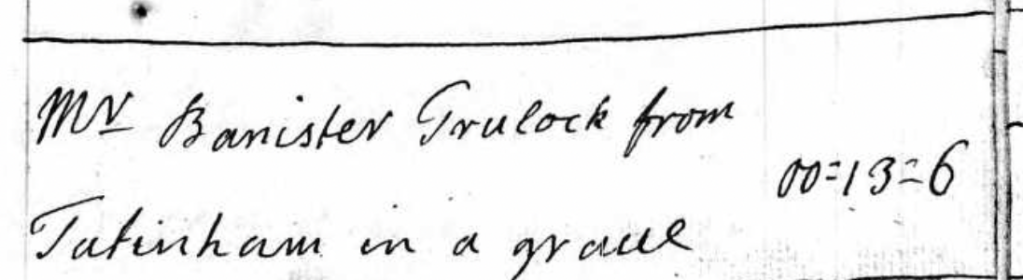
The Plot to Assassinate the King!

Every family has a ‘fruitcake’, this post is about ours!

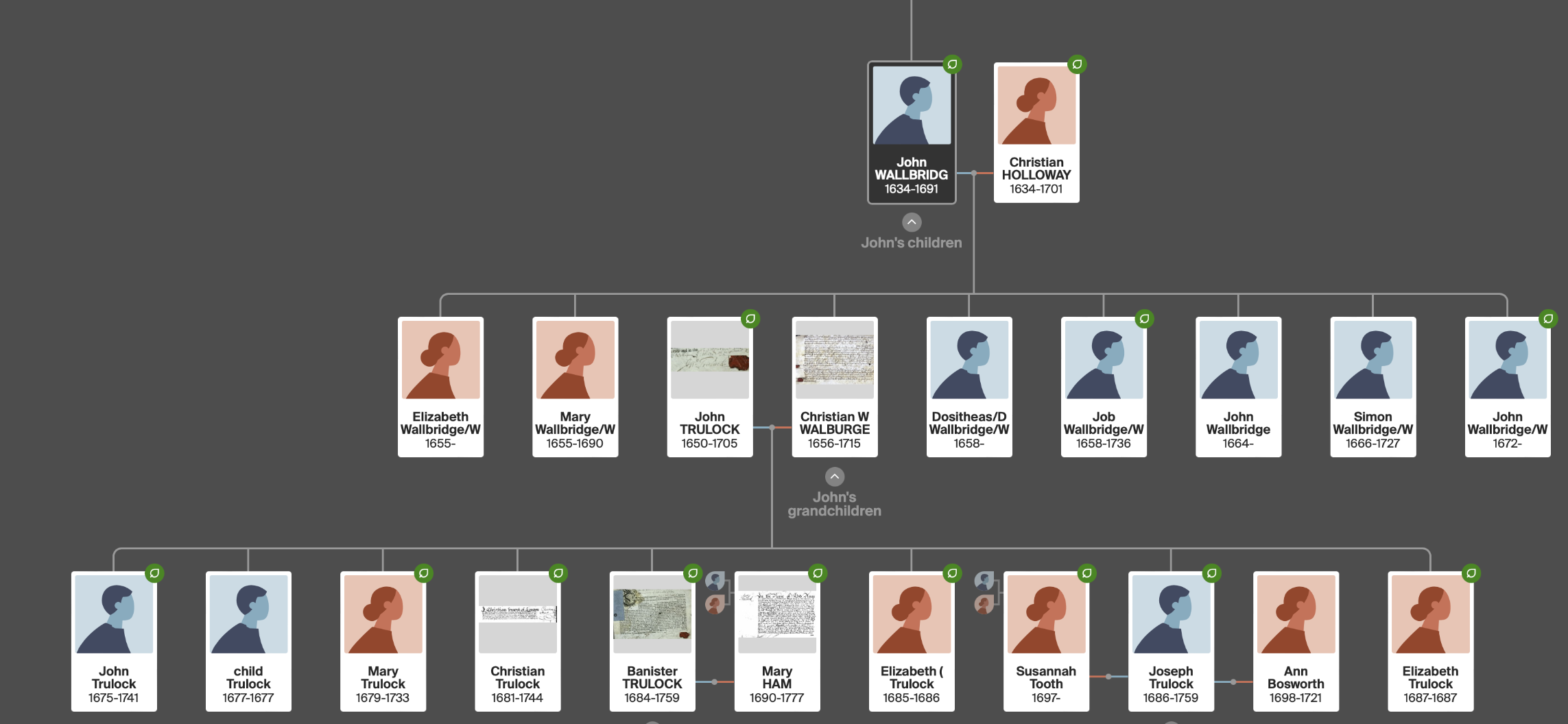
John Trulock and Christian Wallburge were the great grandparents of Banister Trulock born in 1770.

Their son Joseph Trulock married Ann Bosworth on 25 Feb 1719 at St Benet Paul’s Wharf, London. Ann sadly died in Sep 1721 and Joseph remarried on 07 Jun 1722 • St. Anne’s Church, Lewes, Sussex to Susannah Tooth.

Their first two sons John and Joseph died young and that left their third son, Banister as the eldest son and heir.
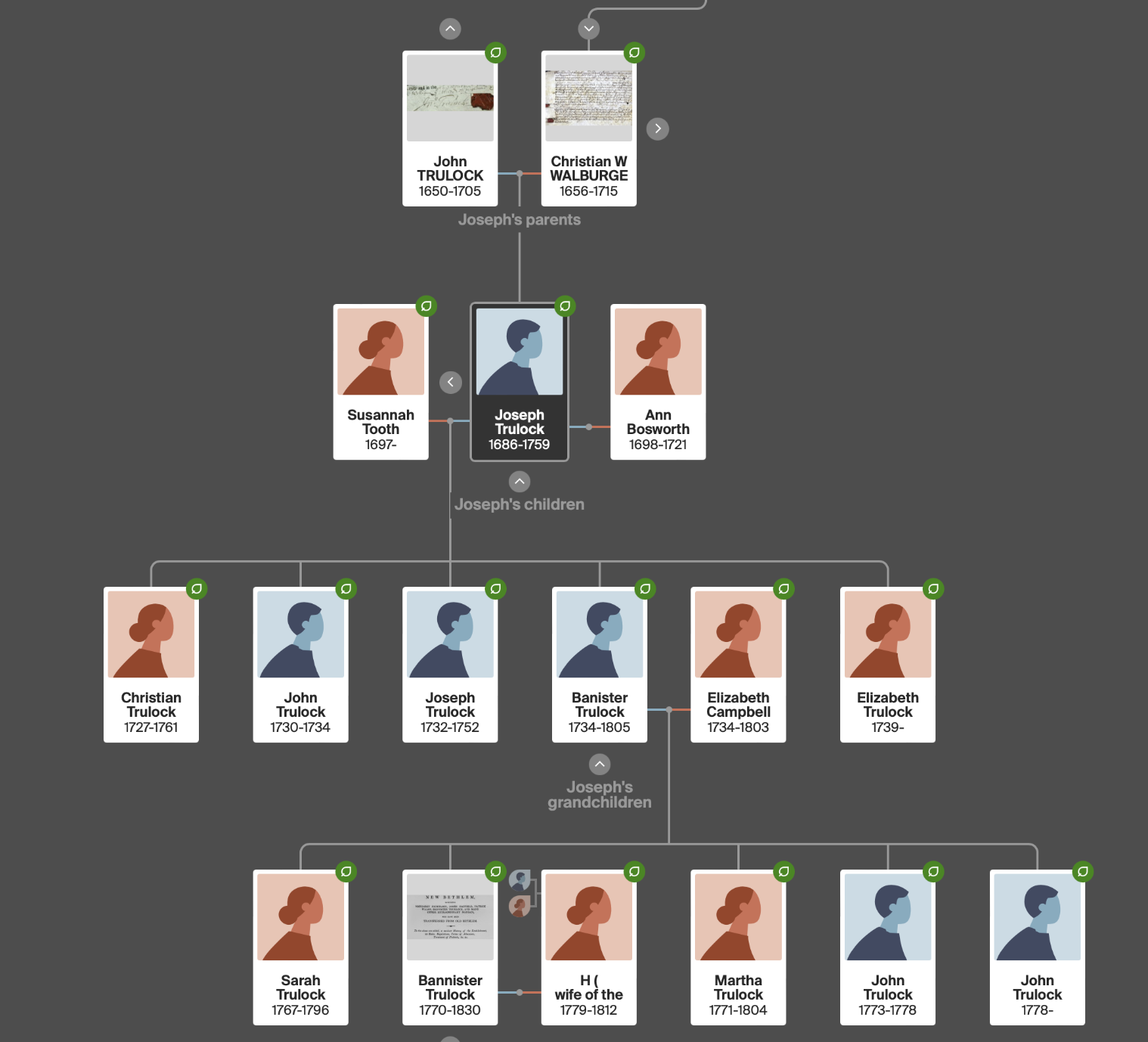
Banister was born about 1734 in East Grinstead. He married Elizabeth Campbell 05 Oct 1766 at Broxbourne, Hertfordshire. He signed a marriage bond.
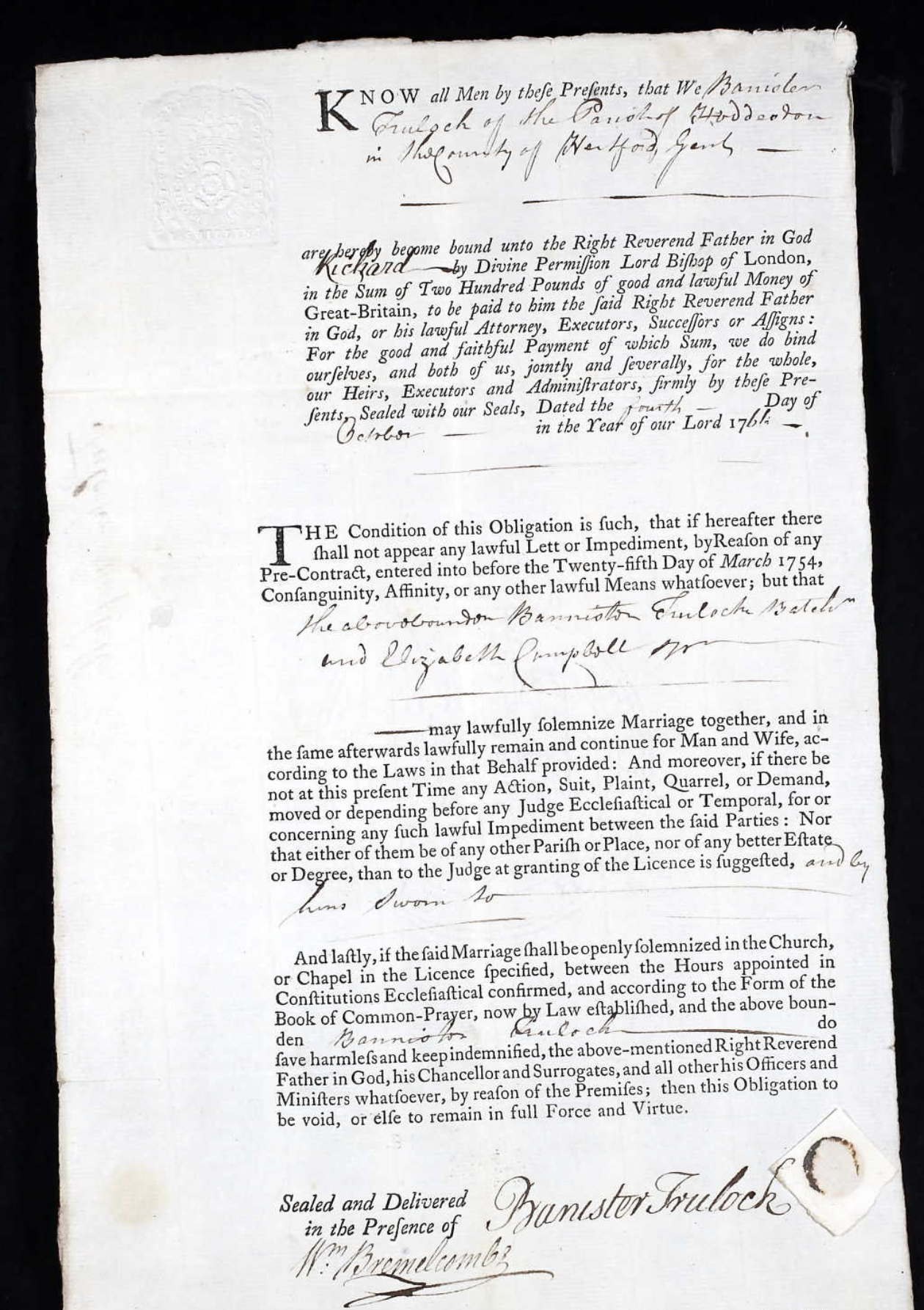
London and Surrey Marriage Bonds DL/A/D/24/MS10091E/79

Their son also called Banister was born about 1770 at Hertfordshire. In 1783 Banister was apprenticed to John Payne a cordwainer in East Grinstead, Sussex. His father is described as a husbandman.

(The name Banister and Trulock are variously recorded as Bannister, Banester and Truelock.)

Before 1799 he married Ann/Hannah and they had two sons: Banester who died age 4 and William Henry who was baptised in 1812.

Banister was a religious fanatic who prophesied the second coming of the messiah. He also insisted in the belief that the Messiah would be born from his mouth!

“He met Hadfield by accident in White-Conduit Fields, and talked the unfortunate fellow into a persuasion, that the first step to the commencement of his doctrines, and to its fulfilment in a happy change of things throughout the world, would be the death of the Sovereign ; with this view, Hadfield set out as the supposed chosen instrument for the accomplishment of the great design. Hadfield, in his examination, mentioned this man’s name ; he was accordingly apprehended the next day, underwent several examinations, and was committed to prison ; but from his incoherent manner, his answers, and the evidence of his mother, he was found to be deranged, and was sent ultimately to Old Bethlem.By May 1800 he was working as a shoemaker and living in the White Lion, Islington, London. Whilst there he was visited by James Hadfield, whom Trulock encouraged to try to assassinate King George III. ”

Source – https://www.gethistory.co.uk/reference/sources/modern/georgian/sketches-in-bedlam-males

He was lodging with Sarah Lock until Dec 1799, she evicted him after he told her on Christmas Eve that there was a plot to assassinate the king. (Source: Hampshire Chronicle, 2 Jun 1800)
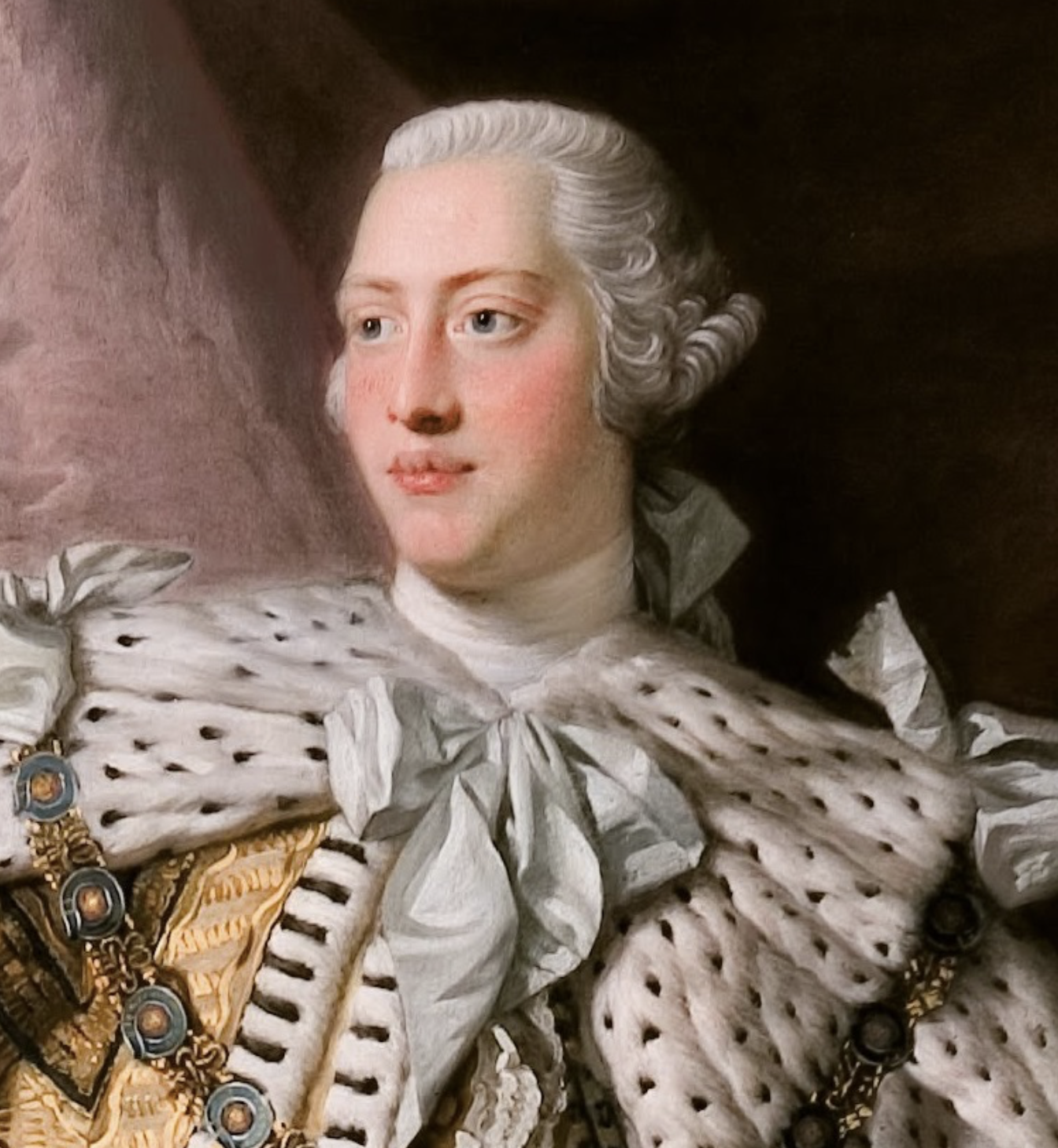
George III – Studio of Allan Ramsay, Public domain, via Wikimedia Commons

The Assassination Attempt

At the Theatre Royal, Drury Lane, on 15 May 1800, James Hadfield tried to shoot King George III while the national anthem was being played, and the king was standing to attention in the royal box.

It’s reported that after missing his target, Hadfield then said to the king:

‘God bless your royal highness; I like you very well; you are a good fellow.’

Hmm, we’re thinking that his words might be a very good examples of quick thinking…

Hadfield went on trial for high treason but, after listening to evidence from three doctors as to Hadfield’s state of mind, the judge decided on an acquittal, with the proviso that Hadfield would be detained indefinitely at his majesty’s pleasure.

Hadfield died from tuberculosis in Bethlehem Hospital (i.e. ‘Bedlam’) in 1841.

Chester Chronicle – Friday 27 June 1800

Banister Trulock was apprehended the next day and was committed to prison ; but from his manner, his answers, and the evidence of his mother, he was found to be deranged, and was sent to Old Bethlem.

Bethlem Hospital at Moorfields London – John Maurer, CC BY 4.0 https://creativecommons.org/licenses/by/4.0, via Wikimedia Commons

Visitors reported that he sounded sane until he started to discuss religion. He was kept in some comfort and had an apartment at the top of the hospital which had a view of the Surrey hills. He had ‘coal, candle and every convenience for his use; his provisions are regularly brought to him and in the fine weather he is permitted to walk in the garden.’

He was later moved to New Bethlem hospital.

Visitors to Bethlem could pay to ‘view’ the patients and Banister Trulock was one of the celebrated patients.

Visitors to Bethlem – British Museum, Public domain, via Wikimedia Commons

Banister died on 02 Nov 1830 at Bethlehem Hospital, St Saviour Southwark, London

Citizens of London – The Walburge and Trulock Families

John Walburge

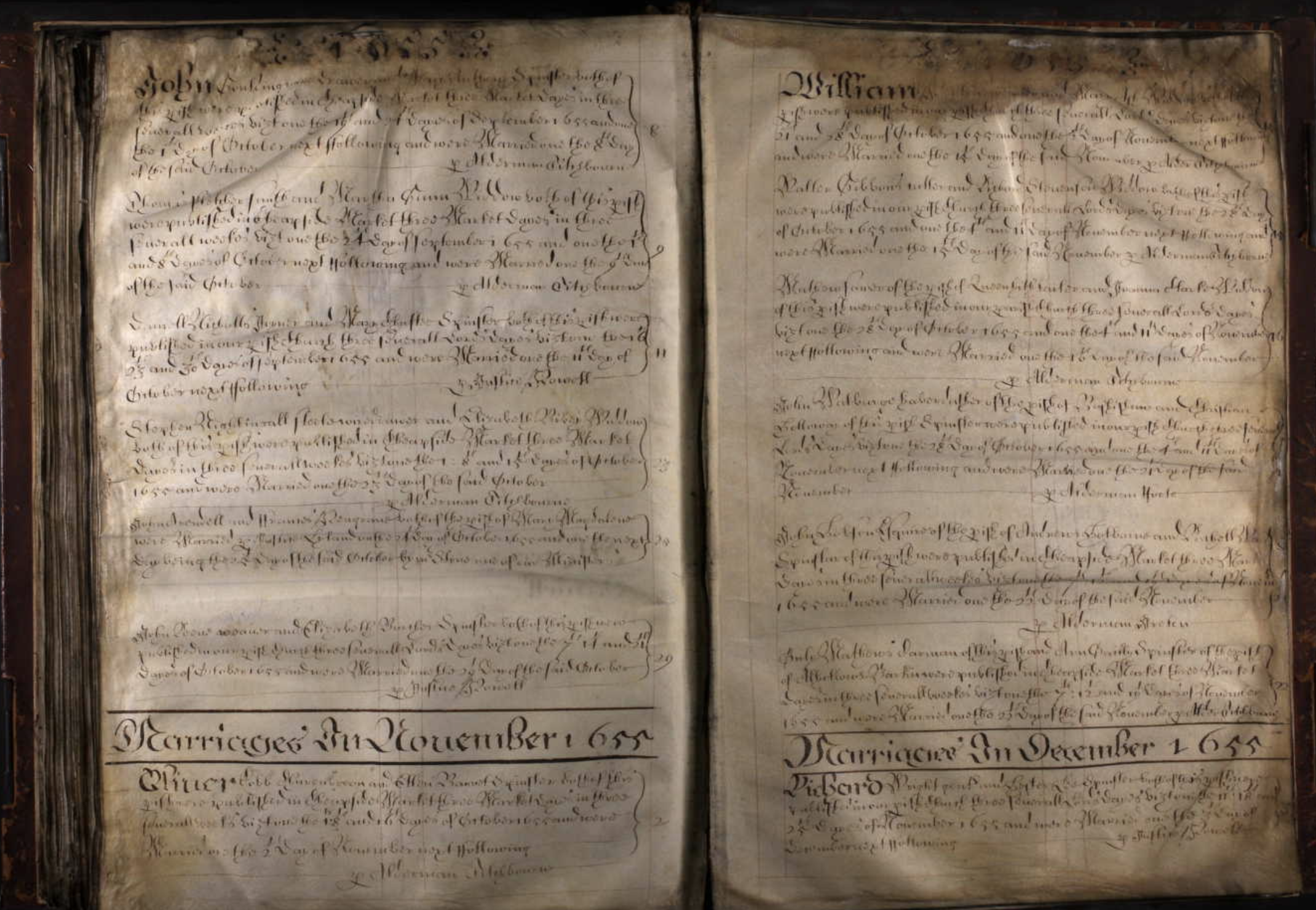
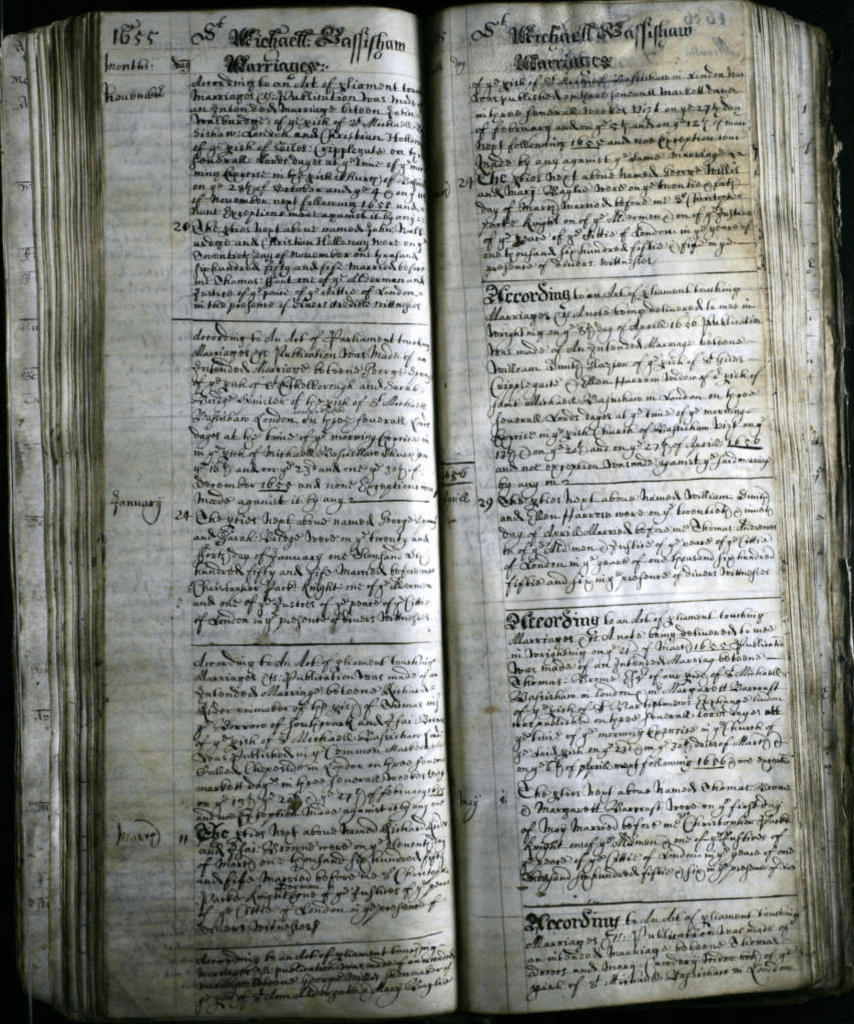
John Walburge was born about 1634. We don’t know where he was from. He was a haberdasher who married Christian Holloway on 20 Nov 1655  at St Michael Bassishaw, City of London and again on 21 Nov 1655 at St Giles Cripplegate, City of London! Perhaps the marriage was recorded in both home parishes?

(The name Walburge is variously spelt: Walburge, Walburghe, Walbarge, Wallbridge.)


St Giles Cripplegate Parish Register
St Michael Bassishaw Parish Register

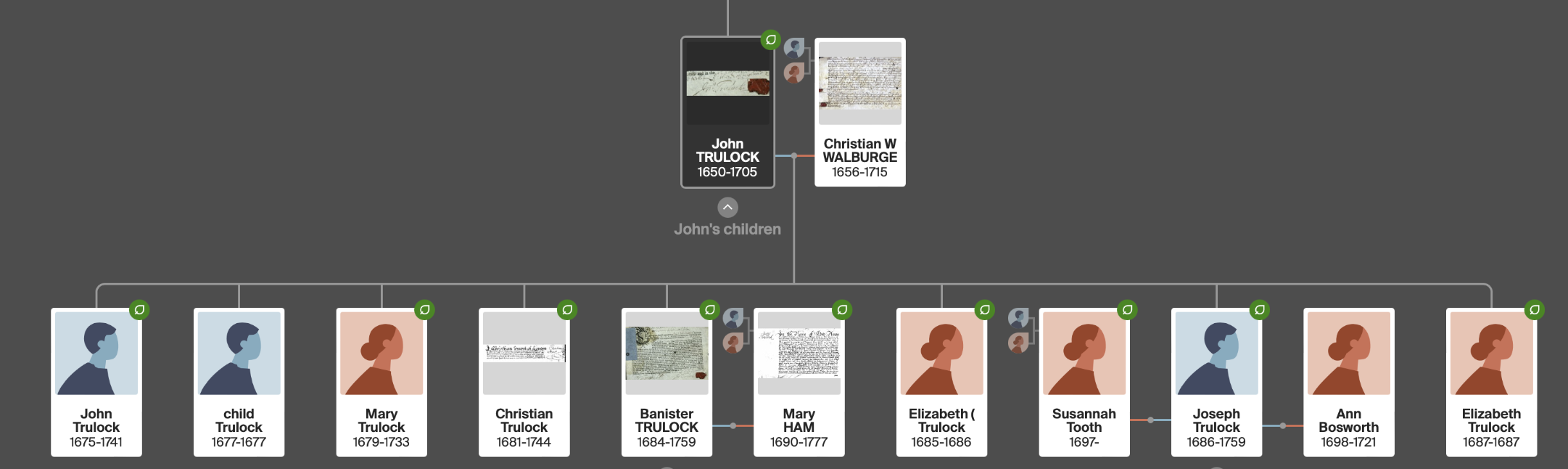
John and Christian had several children. Our ancestor is Christian Walburge, she married John Trulock.

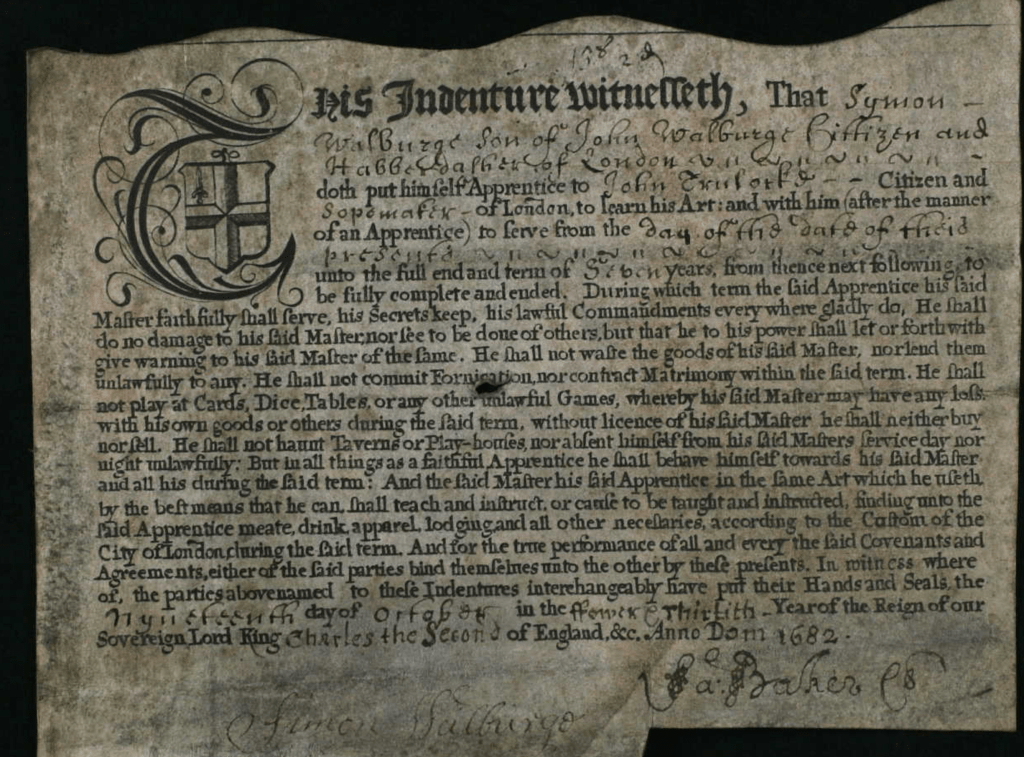
Both John Walburge and his son in law John Trulock were citizens of and had the freedom of the City of London. John Walburge apprenticed his son Simon to John Trulock, soapmaker in 1682

London, England, Freedom of the City Admission Papers, 1681-1930, London Metropolitan Archives

John Walburge died in 1690 and was buried at Bishopsgate, Middlesex. He left a will proved 29 Jan 1690. His will mentions his dear and loving wife Christian, his daughter Christian ‘now wife of John Trulock’, his house at Tottenham which has a garden and orchard. He bequeaths various tenements and messuages to his children and grandchildren. Clearly he is a wealthy man. His wife Christian (Holloway) was buried in 1701.

John Trulock

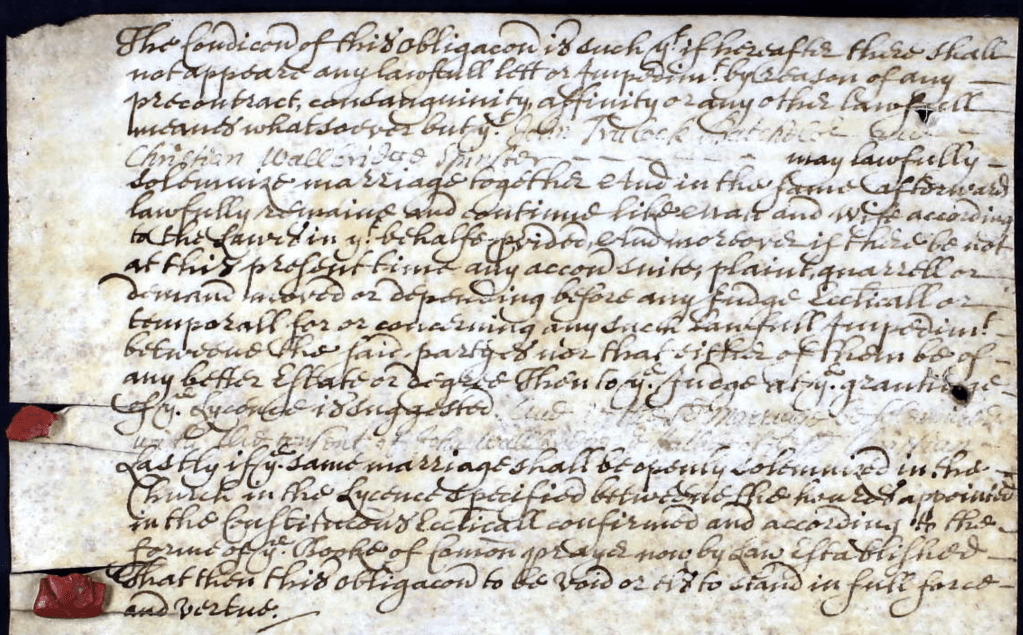
John Trulock was born about 1650 and Christian Walburge was baptised 03 Oct 1656 • St Michael Bassishaw, London. They married at St Helens, Bishopsgate, London on 27 Nov 1674.

London & Surrey Marriage Bonds & Allegations 1674

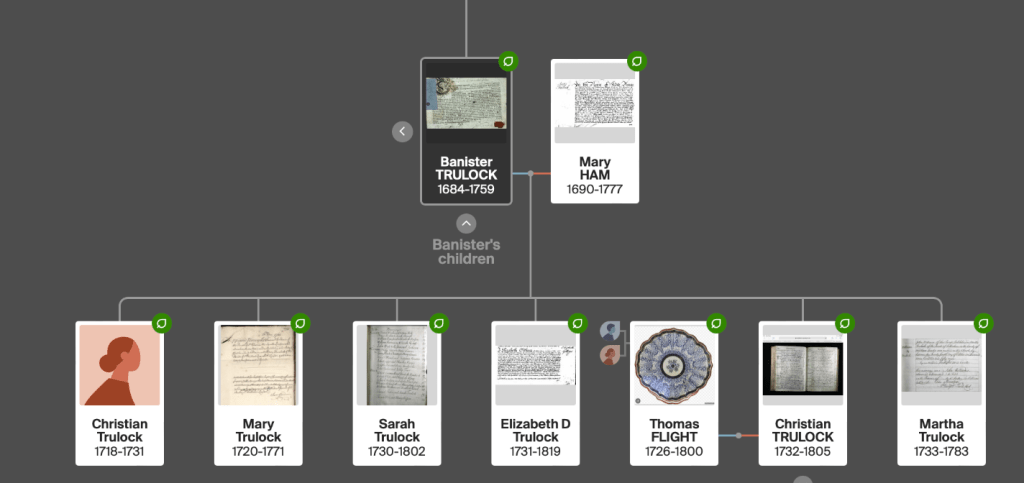
John and Christian had several children all born towards the end of the 17th century. Their son Banister Trulock was born in 1684. He married Mary Ham at St Paul’s Cathedral, London, on 23 Nov 1714.

John was buried in 1705 and Christian his wife was buried in 1715. She is recorded as being a widow who died of convulsions. Buried Tindals Ground/Bunhill Fields, London.

Banister Trulock

Thank goodness John and Christian chose such an interesting name for their son as it made research a lot easier! Banister was born in 1684 and was a successful soapmaker like his father. His name means: English (of Norman origin): from Old French banaste, banastre ‘covering for a cart or wagon; basket’, i.e. a large wicker container. Perhaps this had been a family surname in the past.

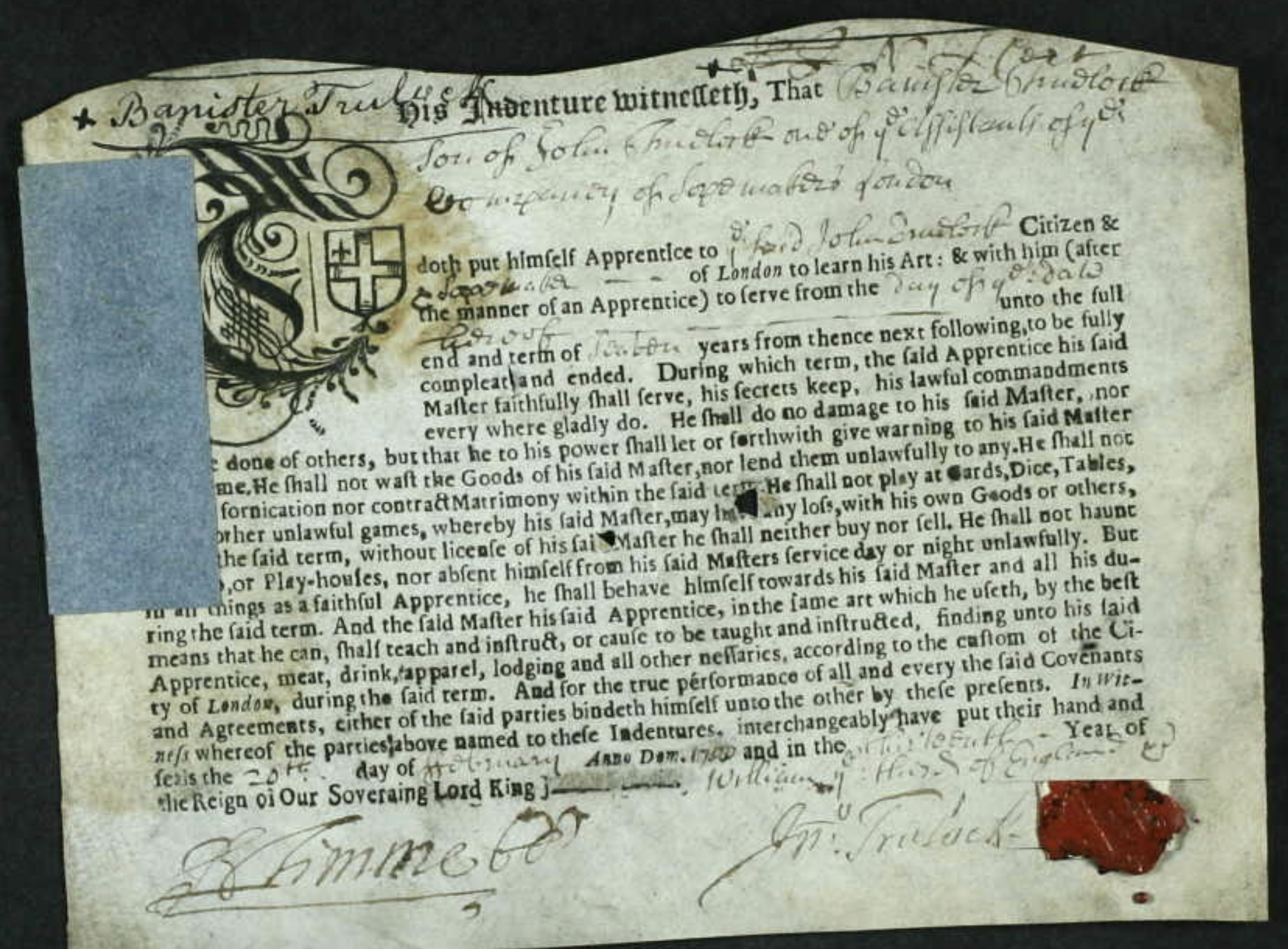
Banister Trulock Apprentice Indenture

In Oct 1711 Banister Trulock was the victim of a crime.

Whereas at the Sessions of the Peace
holden for ye County of Midx in Febry last
an Indictmt. was preferrd agt Thos Hatton
of ye Pish of Tottenham High Cross in ye Sd County
Yeoman & other for an Assault & Battery upon
Banister Trulock These are to Authorize
and require you that you enter or Cause to
be entred a less at processd on the sd Indictmt.
& stay all proceedings thereon agt. the sd.
Thomas Hatton onely And for so doing
this Shall be of Warrant Dated the 27th
day of Novr. 1711

Middlesex Sessions : Sessions Papers – Justices’ Working Documents  SM | PS, 10th October 1711

He married Mary Ham (possibly Horn) at St Paul’s Cathedral, London, on 23 Nov 1714.

Their first child was born in 1718 and the second in 1720 then there is a gap of 10 years before their third child was born. Perhaps there were more children which died in infancy.

Banister was a non-conformist and lived at Tottenham, we know he was buried at Bunhill Fields as the burial was recorded. His wife was buried there in Sep 1777.

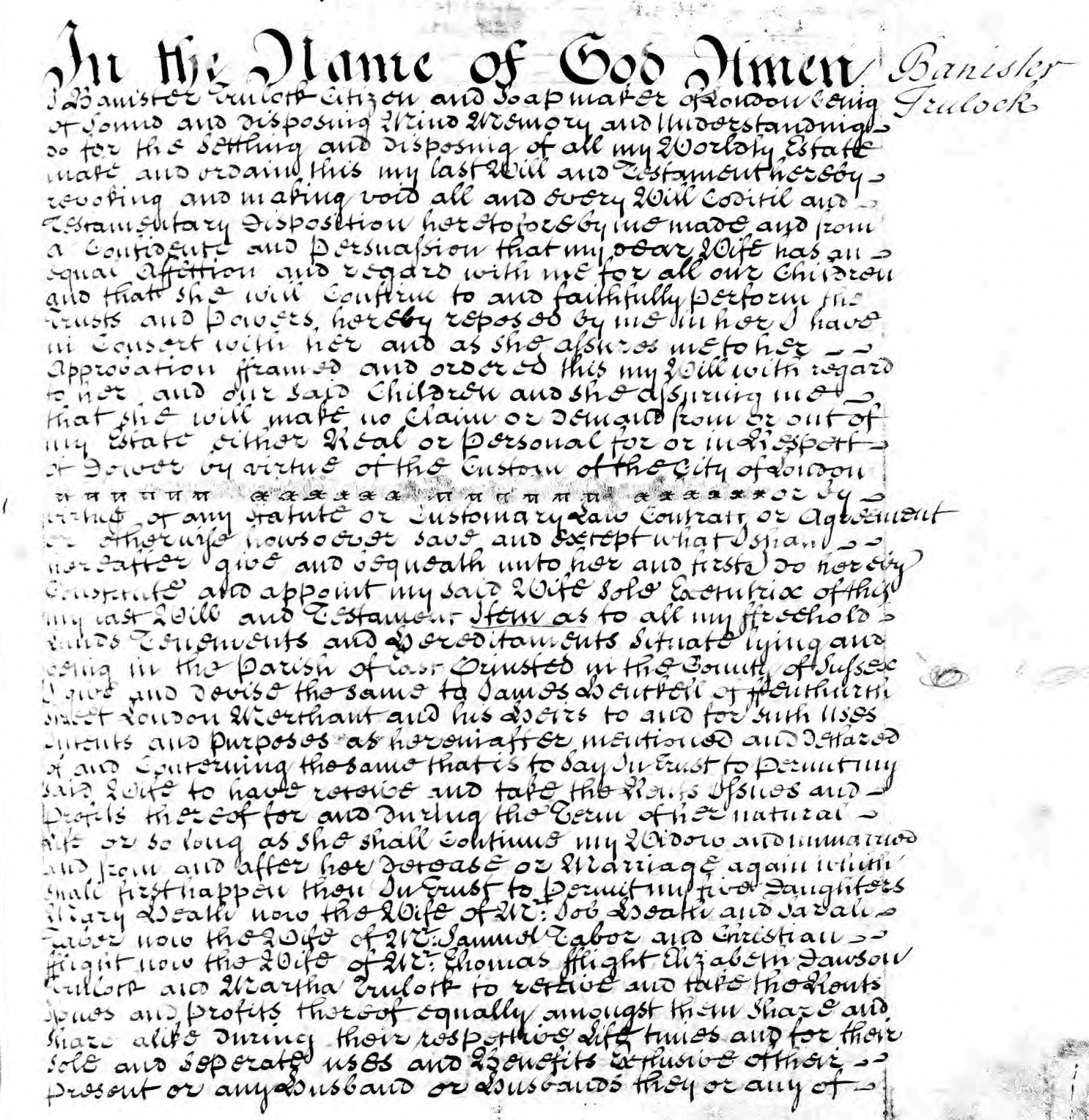
Banister’s will was proved on 23 Apr 1759 and he left his various property at Tottenham and East Grinstead to his wife and daughters. The will is several pages long and shows that this was a wealthy family.

National Archives PROB 11; Piece: 846

Their fifth daughter, Christian married Thomas Flight who was a porcelain manufacturer on 11 Sep 1751 at Allhallows London Wall,London.

London Metropolitan Archives; London, England; Reference Number: P69/ALH5/A/005/MS05088

You can find out all about the Flight family from the posts: The Flight Family, Thomas Flight and the Royal Worcester China Factory and Banister Flight and his Descendants.