In 1578, the plague came to Madron, a small parish in Cornwall. It did not announce itself dramatically. There were no proclamations, no clear beginning—only a quiet shift in the pattern of burials, noticed first in the parish register.
By chance, Madron had only recently begun recording burials in its new register. Without that, much of what happened would have passed unrecorded. Instead, we are left with a sparse but powerful account: names, dates, and, occasionally, a few telling words. It is not a narrative in the usual sense, but when read closely, it reveals the progress of a devastating outbreak as it moved through families, households, and the parish as a whole.
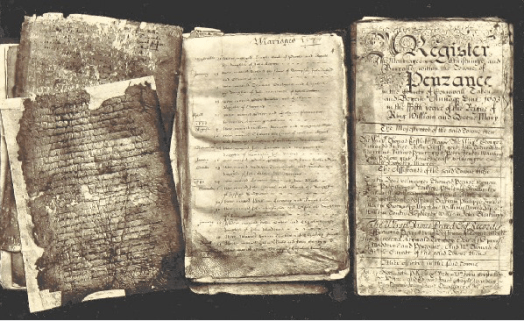
In a ‘normal’ year, Madron buried perhaps two or three parishioners a month. Even in 1583, several years after the events described here, there were just 23 burials across the entire year. In 1578, however, from January to December, the parish recorded 172 burials. There are no causes of death listed—no death certificates existed at the time—but the pattern speaks for itself. When several members of the same family are buried within days of one another, the explanation is hard to escape.
The first clear indication in the register that something unusual was happening appears on 7th July, when a woman named Elizabeth was buried. Next to her entry, the clerk added a brief Latin note: quadam, morbo eonvitiali lahorans—“suffering from a certain insulting or reproachful disease.” The phrase was not used exclusively for plague, but in this context it carries a particular weight. It suggests that, by early July at least, the parish authorities recognised that something more than ordinary illness was at work.
And yet, Elizabeth was not the first to die.
The register shows that the disease had already begun to take hold in June, most clearly in the experience of the Skotte (or Skott) family. On 7th June, John, son of John Skotte, was buried. Two days later, on 9th June, two more of his sons—Richard and William—were buried. On 13th June, his wife, Christian Skotte, was laid to rest. Three days later, John Skotte himself was buried.
Within just over a week, an entire household had disappeared.
There is no commentary in the register, no expression of alarm or grief—only the steady recording of names. But in the clustering of deaths, in the repetition of surnames, and in the tightening intervals between burials, the presence of plague becomes unmistakable. What follows in the months ahead is not a sudden catastrophe, but a relentless accumulation of loss, spreading from family to family until it touches nearly every part of the parish.
There were 9 burials in June 1578.
On 6th July, Margerie, daughter of Roger Tule, was buried. A few weeks later, on 17th August, John Vian, servant to Roger Tule, was also buried—loss reaching both household and home.
On 8th July, the day after Elizabeth was buried, the crisis sharpened suddenly. Five burials were recorded in a single day: Robert, son of Nicholas Thomas; Richard Harries; Thomas Davye; and two of William Hawke’s children, Thomas and Radigonn. The following day, William Hawke’s daughter Jane was buried. By 25th July, William Hawke himself had joined them.
On 11th July, Maderne, son of Thomas Bodenar (or Bodynar), was buried. Twelve days later, another son—John—was also buried.
On 13th July, Thomas Noye buried his daughter Jennett; the next day, his son Raphe.
After Raphe’s burial there was a pause of five days—a brief, deceptive lull. Then the burials resumed. Henrie Maderne, son of Richard, was buried, followed by Thomas, son of Leonard Gillard. On 22nd July, Michaell, son of John described as “an Irish man,” was buried. Two days later, Margarett, an Irish woman—presumably Michaell’s mother—was buried. On 4th August, Katharin, daughter of John Irishe, was also buried.
On 25th July, the Goodale family buried their son Nicholas. On 6th August, William, son of John Goodale, was buried. Then, on 10th August, John’s son—also called John—a son named Jonathan, and his wife Christian were all buried.
Also on 25th July, Nicholas Carpenter buried his son John. The following day, Cutberd, servant to Nicholas Carpenter, was buried; on 27th July, Nicholas himself was interred.
On 26th July, John Thomas and his wife Agnes were buried. We do not know who cared for their children after their deaths, but on 10th August their son Edward was buried, followed two days later by their daughter Fraunces.
There were 33 burials in the month of July.
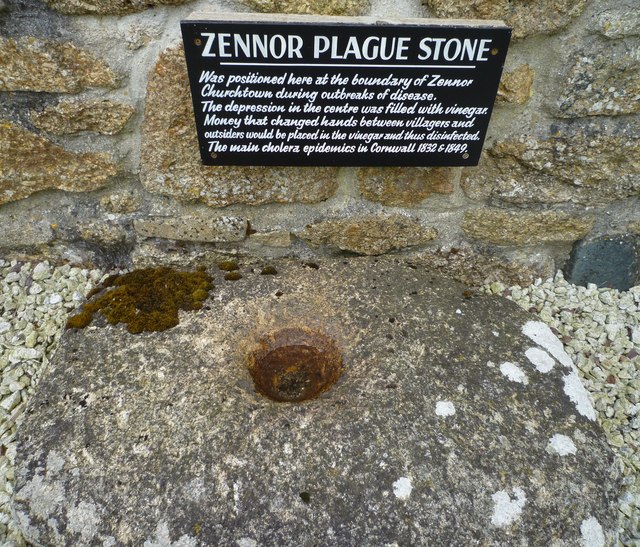
By August, fear of the plague must have been everywhere. In towns anxious to hold the disease at bay, plague stones filled with vinegar were often set out—small, desperate measures against an invisible and unstoppable force.
On 3rd August, John Panalvian buried his wife Elizabeth. Three days later, he buried his daughter Margarett. The following day, two sons—Nicholas and John—were laid to rest, and on 9th August, his son Thomas followed them. In less than a week, an entire family was gone.
That same day, 3rd August, Thomas Gaye buried his son John. Ten days later, he buried another son, William.
By 11th August, the toll had deepened. Five burials were recorded that day. Richard Rabnett buried his daughter Agnes, and the next day his son—also named Richard. On the 11th itself, John Porria was buried; Joan Porria followed on 8th September. The same day also saw the burial of Thomas Davie, servant to John Maderne, and Marten Smythe. Stephen Peares was buried on the 11th, his wife Jane following him on the 24th.
On 12th August, Joane, the illegitimate daughter of Elizabeth Benet, was buried. The next day, John, the illegitimate son of Joane Thomas, was laid to rest, and on 30th August, Richard, the illegitimate son of Elizabeth Syse. Even in the midst of plague, the ‘stain’ of illegitimacy was carefully recorded.
On 13th August, Lodovicke Bell was buried; on 4th September, Tyrracke Bell followed.
On 16th August, Allice, daughter of Stephen Anthony, was buried. Three days later, Stephen himself was buried.
On 17th August, Allice Terrenacke was buried. On 21st August, Elizabeth Tredynneck, daughter of John, was buried. On 25th August, Katherin, daughter of John Terrynacke, was buried; two days later her sister Fraunces joined her. On 29th August, John Terrynacke himself was buried.
By the end of August, there had been 54 burials in Madron.
The pattern continued into September. On 3rd September, Symon Cokewell (or Cockwell) buried his son John. Two days later, his wife Jane was buried, and on 26th September, another son—also called John—was buried.
On 22nd September, Elizabeth Champion was buried. On 3rd October, Agnes, daughter of William Champion, followed. On 26th October, Elizabeth, daughter of Sacharie Champion, was buried; the next day, Sacharie’s daughter Allice and a Rycharde Champion. Finally, on 8th November, Norowe Champion, a widow, was buried. The Madron register records that the wife of Sacharie Champion had been buried on 26th May 1581, though her name is not recorded. Sacharias Champion himself was buried on 28th January 1611.
On 27th September, Agnes, daughter of Maderne Wolcoke, was buried. His son William followed on 2nd October, and ten days later his daughter Elizabeth. Another William Wolcoke, the son of William, was buried on 8th October.
In September, the burials fell to 19.
On 14th October, John, son of Sampson Barber, was buried. Four days later, his sisters Katherin and Hellen were buried, and on 22nd October, Sampson Barber himself. On the 27th, a Barnarde Barber was buried. Later, on 24th August 1579, Katherin Barber was buried. Perhaps the horror of losing a husband and three children was too much to bear.
In October, there were 23 burials.
On 1st November, John Sellowe’s son John was buried. A fortnight later, his wife Elizabethe followed.
On 17th November, Joane, daughter of William Robertes, was buried; on the 28th, his wife Richoe. Then, on 26th December, his son William was buried.
In November, there were 11 burials.
On 10th December, Rich, son of James Tremethacke, was buried; on 12th December, his son Thomas.
In December, there were 7 burials.
The plague appears to have continued into the new year. On 12th January, Agnes, daughter of John Wallter, was buried; two days later, his son Thomas.
In January, there were 6 burials.
By the turn of the year, the worst of the outbreak appears to have passed. The number of burials fell sharply—from the relentless pace of July and August to smaller, though still troubling, numbers in the months that followed. Life in Madron did not return to normal all at once, but the pattern in the register suggests that the grip of the disease was loosening.
What remains is the record itself: a stark sequence of names, dates, and occasional fragments of description. There are no explanations, no reflections, no acknowledgement of the scale of what was happening. Yet, read together, these entries form a powerful account of a community under strain. The repetition of family names, the clustering of deaths within days, and the quiet disappearance of entire households speak more eloquently than any narrative could.
The register preserves small, human details as well. Servants are recorded alongside masters, children alongside parents. Even in the midst of an epidemic, distinctions were carefully noted—such as the marking of illegitimacy—reminding us that social boundaries endured even as the disease cut across them. There is no sense that the parish understood the nature of the plague, but there is a clear determination to record, to name, and in doing so, to acknowledge each loss.
Even during August 1578 at the height of the outbreak the church continued to perform marriages and in November 1578 the marriage took place between John Lanyon and Margaret the daughter of Sampson John Richard, our ancestor.
For those who lived through it, the experience must have been one of uncertainty and fear. The sudden gaps between entries, followed by sudden surges, hint at moments of fragile hope and renewed despair. Measures such as the use of plague stones filled with vinegar suggest attempts—however limited—to contain what could not yet be understood.
Today, the register offers something different. It does not tell us everything, but it allows us to see enough: the scale of the outbreak, the speed with which it moved, and its deeply personal impact. Behind each entry is a life, a relationship, a place within the community. Together, they form not just a list of the dead, but a record of how a small Cornish parish endured one of the most devastating events of its time.