
Thank goodness the Lanyons were so litigious as it has left us with a paper trail to follow.
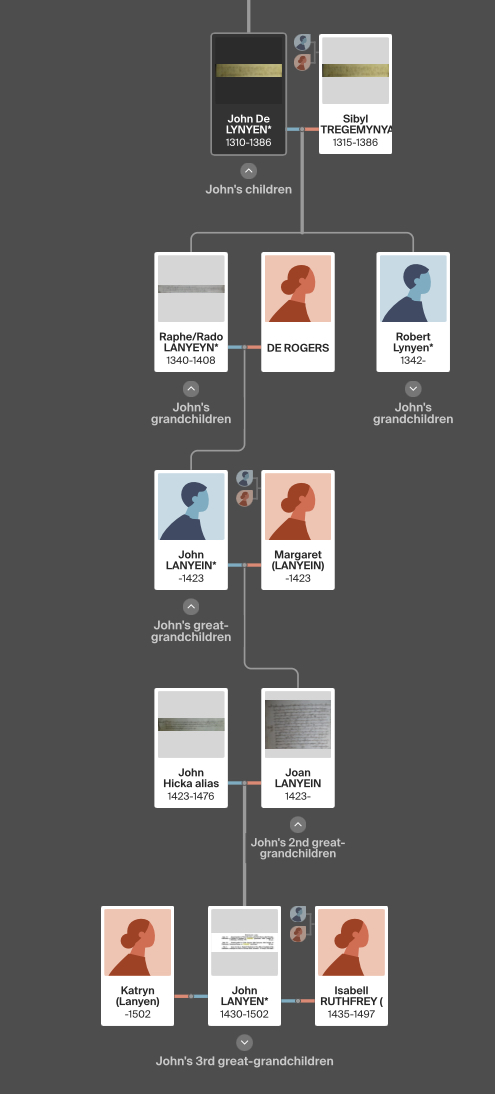
John Lanyeyne (the son of John Hicka alias Lanyein) died in 1476 and his heir was also called John Lanyen. The Account Roll of Connerton for 1476/77 records the death of John Lanyeyne who held 2 acres Cornish at Coswynwulward.
Source: (CRO AR/2/195)
“Goswyn Lanyon, formerly “Coswynwolward”, in Gwinear: John Lanyeyn, the heir of John Hicka, in Goswyn, 2 acres Cornish, in socage; yearly rent, with common suit of court, 6s. at the 3 dates stated, and 20d. at Michaelmas = 7s. also for offering and aid at Michaelmas, 3d.”
Source: Devon and Cornwall Record Society, Vol 41, 1955, p45.
John Lanyen married Isabell Ruthfrey, daughter of Thomas. The name is variously spelt Ruthfrey, Rathrey and Ruthvey. Their son and heir Richard Lanyne was born abt. 1460.
In 1488, John Lanyen is listed among the free tenants who paid a fine for release of suit of court at Connerton, Gwithian. (CRO AR/2/92.)
There is no record of Isabell’s death but John remarried and his second wife Katryn was in dispute with her step son Richard, in 1502, following John’s death.
Lanyen v Lanyen.
Plaintiffs: Richard, son and heir of John Lanyen.
Defendants: Katherine Lanyen, his stepmother, executrix of John Lanyen.
Subject: Detention of deeds relating to messuages and land in Coyswyn, Wolward, Lanyen, Tregamenyon, Rysyk, Bossowolowe, and elsewhere. Cornwall
The dispute shows that John Lanyeyn was in possession of 12 messuages (a dwelling house with outbuildings and land assigned to its use) 300 acres of land, 40 acres of meadow, 200 acres of pasture and 200 acres of furze and heath. The land was situated in Coswyn Wolward, Lanyen, Tregamynyan, Rysyk, Bossowolowe and elsewhere is Cornwall.
Source: Early Chancery Proceedings C1 Bundle 266/4

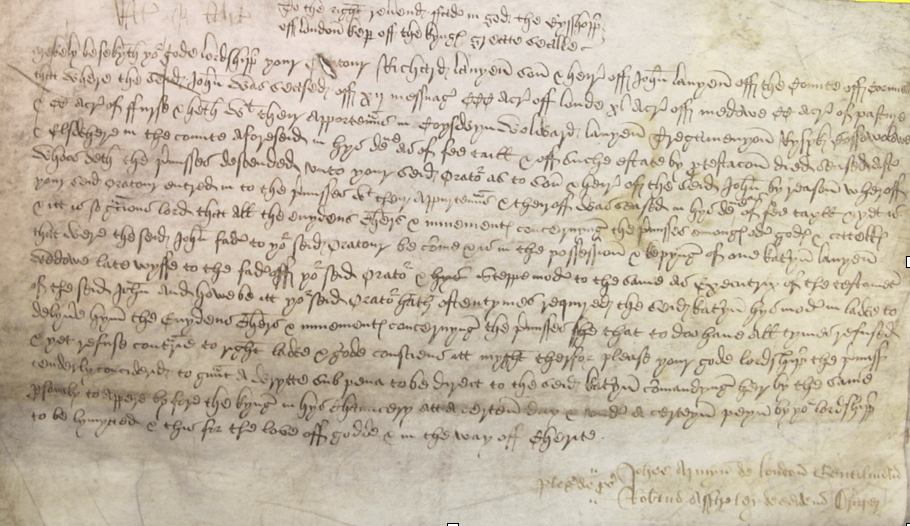
“Mekely besechyth your gode Lordshipp your oratour Richard Lanyen son and heir of John Lanyen of the Counte of Cornwall that where the seid John was seased of XII messuag CCC acre of londs XL acre of medowe CC acre of pasture CC acre of furze and heth with their appurtenances in Coswyn Wolward Lanyen Tregamenyan Rysyk Bossowolowe and elsewhere in the counte aforeseid in hys demesne as of fee tail and of such estate by ptestacon (protestation) died seased after whose deth the premisses descended unto your seid oratour as to son and heir of the seid John by reason whereof your seid oratour entred in to the premisses and their apputenances and thereof was seased in hys demesne as of fee tail and yet is and it is so gracious lord that all the evydens charters and munements concernyng the premisses that were the seid John fader to your seid oratour be come and in the possession and kepyng of one Katryn Lanyen Wedowe late wife to the fader of your seid oratour and steppe moder to the same and executryx of the testament of the seid John and howe be it your seid oratour hath oftentymes required the seid Katryn hys moder in lawe to delyver hym the evydens charters and munements concernyng the premisses and that to do has at all tymes refused and yet refuse contrarie to right lawe and gode constiens (conscience) as might thereof please your gode lordshipp the premiss tenderly considered to grant a derycte sub poena to be direct to the seid Katryn commandyng her by the same personaly to appear by fore the Kyng in hys chauncery at a certen day and under a certeyn payn by your lordshipp to be lymytted and this for the love of godde and in the way of charitie.”
David Thomas V Thomas Tregian 1504-1515
From all the properties listed in Lanyen v Lanyen we can see that they were a wealthy family however before his death John Lanyen was in ”great necessities and need” and borrowed £260 from David Thomas.
Source: National Archives C 1/367/7
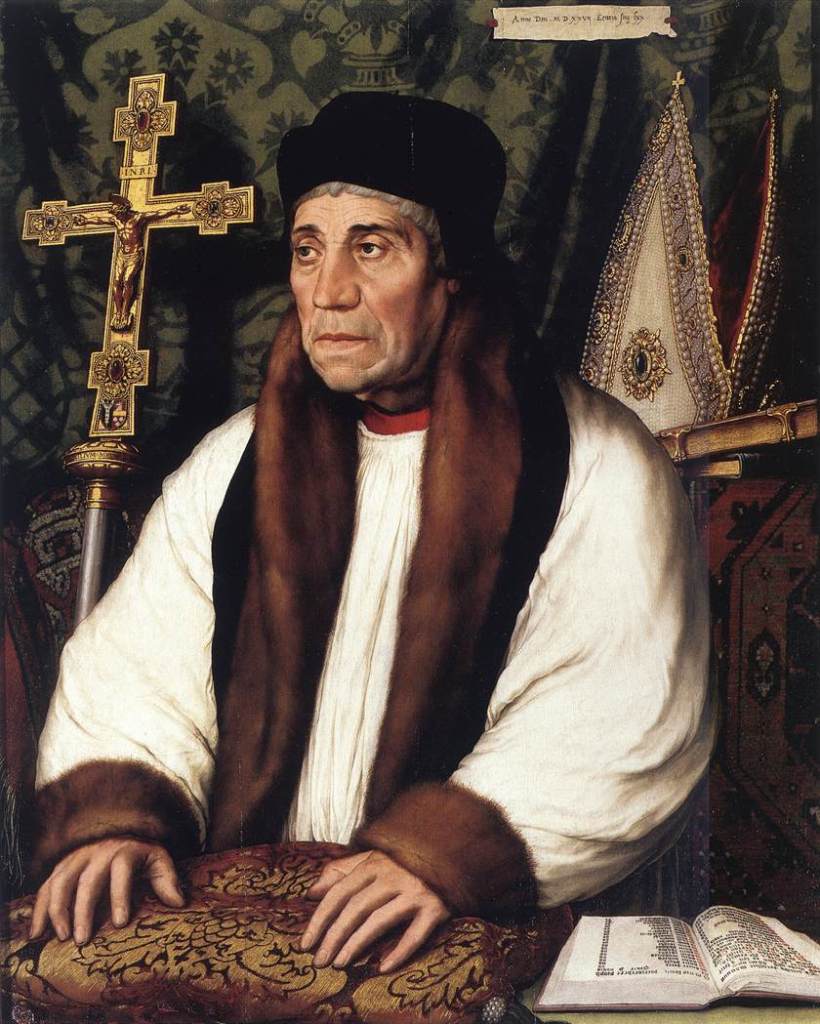
To William Archbishop of Canterbury and Chancellor of England.
‘John Lannyen being in “great necessitie and nede” borrowed £260 from David Thomas, and for guarantee of repayment “made estate” to D. Thomas of his messuages lands and tents in Lannyen, Resyk, Chy[woo]n and Trenyventon. The conditions of the loan were that D. Thomas should have possession and all the issues and profits of these properties until the loan was repaid. The terms for repayment were that there should be 6 payments of £20, followed by a payment of £40 and a final payment of £100. J. Lannyen guaranteed that his heirs or assignees would honour this agreement. At the time of J. Lannyen’s death only the six £20 payments had been made. Richard Lannyen, son and heir of J. Lannyen then disposessed D. Thomas and installed Thomas Tregian in the said properties. T. Tregian promised D. Thomas that if he was given all the deeds to the said properties and documents relating to the loan that he would take over the loan, of which £140 was still outstanding. D. Thomas handed over all such documentation but T. Tregian has subsequently ignored all requests to repay the outstanding debt.‘
So begins a period in the family’s history where they spent a great deal of time on litigation which is great for family historians!
 The Lanyons