
Britain may have ruled the waves with its huge navy of sailing ships but the only way it could man all those ships was by impressment or the ‘press gang’. From the late 17th century until the early 19th century men between the ages of 18-55 could be forced to serve in the navy. Today we’d probably call it kidnapping!
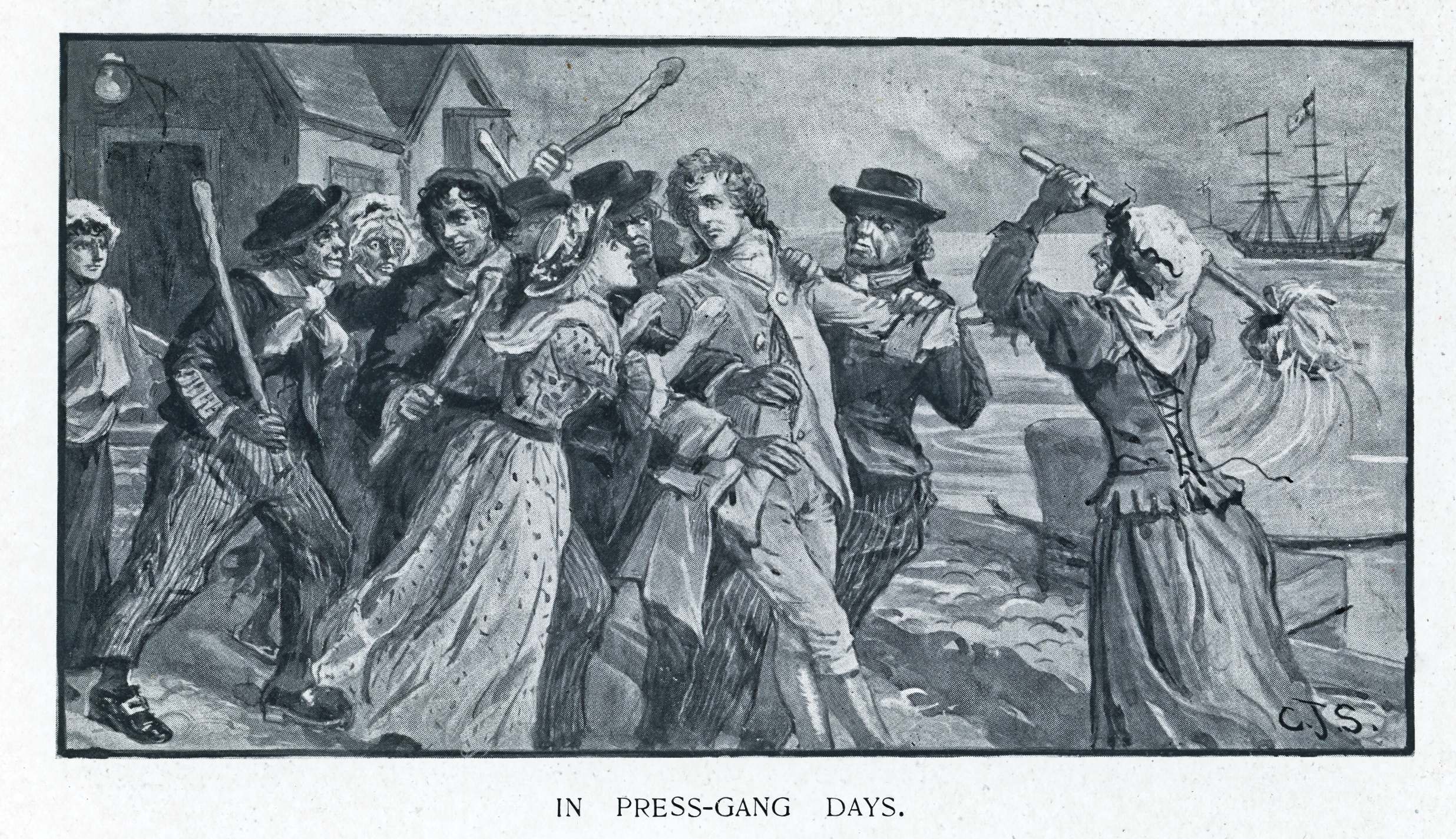
The navy preferred sea faring men so merchant seaman and fishermen were liable to be ‘pressed’ and this made coastal communities particularly vulnerable. Merchant seamen ashore (easily identifiable by their uniforms) would be asked to volunteer to join the navy, if they refused they could be seized or plied with drink and taken. Many seamen were ‘pressed’ whilst at sea. Their ships, usually homeward bound, would be stopped and the merchant seamen seized and placed on the navy ships.
Understandably the press gangs were very unpopular and fights often broke out when men were seized from their communities. Wives and children suffered from poverty and hardship when their husbands and fathers were seized. Having been seized it was difficult to return and deserters could face the death penalty.
At Trafalgar half of the navy’s 120,000 men were pressed into service.
Richard Lanyon of Marazion
This post is about Richard Lanyon of Marazion and what happened when the Press Gang arrived in town.
Richard was born in 1770 the youngest son of William Lanyon and Florence Michell. In 1794 he married his cousin Jane Lanyon (the daughter of James Lanyon and Catherine Brownfield) at St Hilary in Cornwall. (See St Hilary branch of the Lanyon tree.)
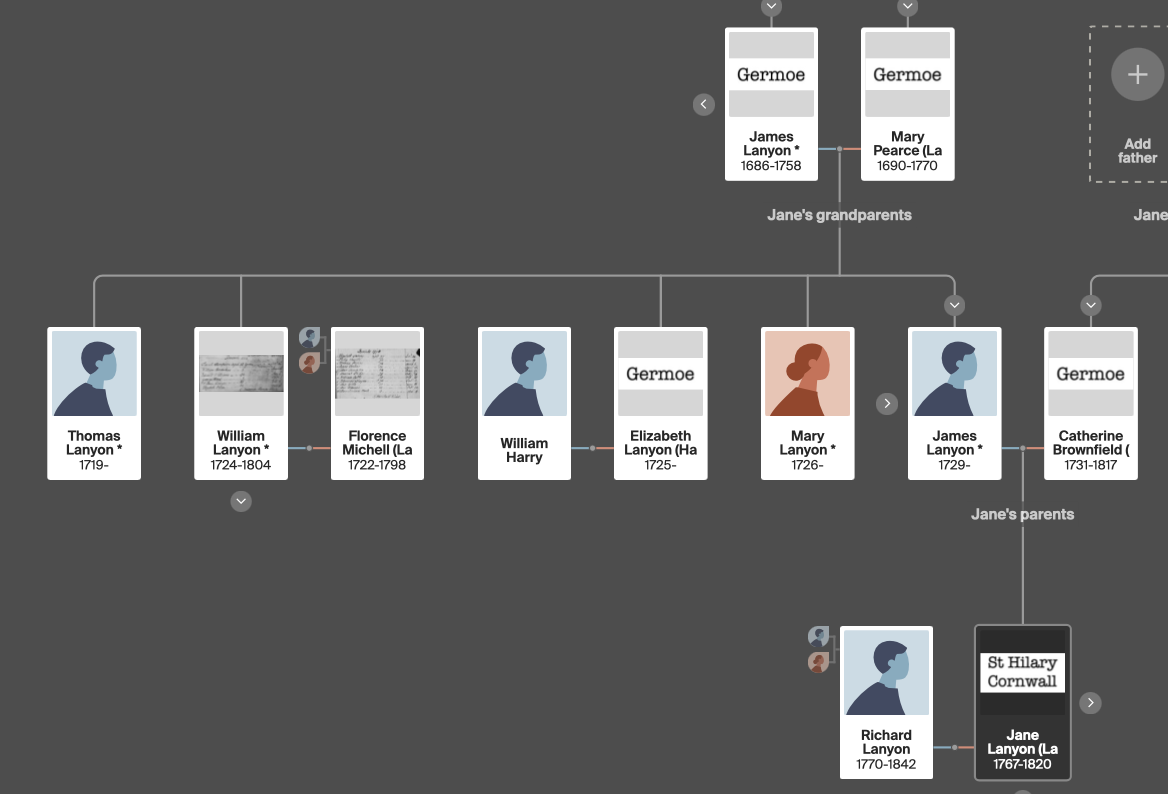
Richard was the blacksmith at Marazion. The town opposite St Michael’s Mount.
Richard also served as a sergeant in the 2nd Regiment of Mount’s Bay Volunteers. Britain was at war with France and all over the country there were volunteer regiments prepared to defend the country in the event of an invasion.

On the 9 October 1804 the volunteers had been at a field day practising their fighting skills. The day went well and the officers bought the men a ‘few’ drinks to celebrate. That evening the press gang, led by Lieutenant Andrew Wills arrived in town in search of seamen who had deserted. Accompanied by the constable they went to a home expecting to find one of the deserters, instead they found Richard Lanyon with several others.
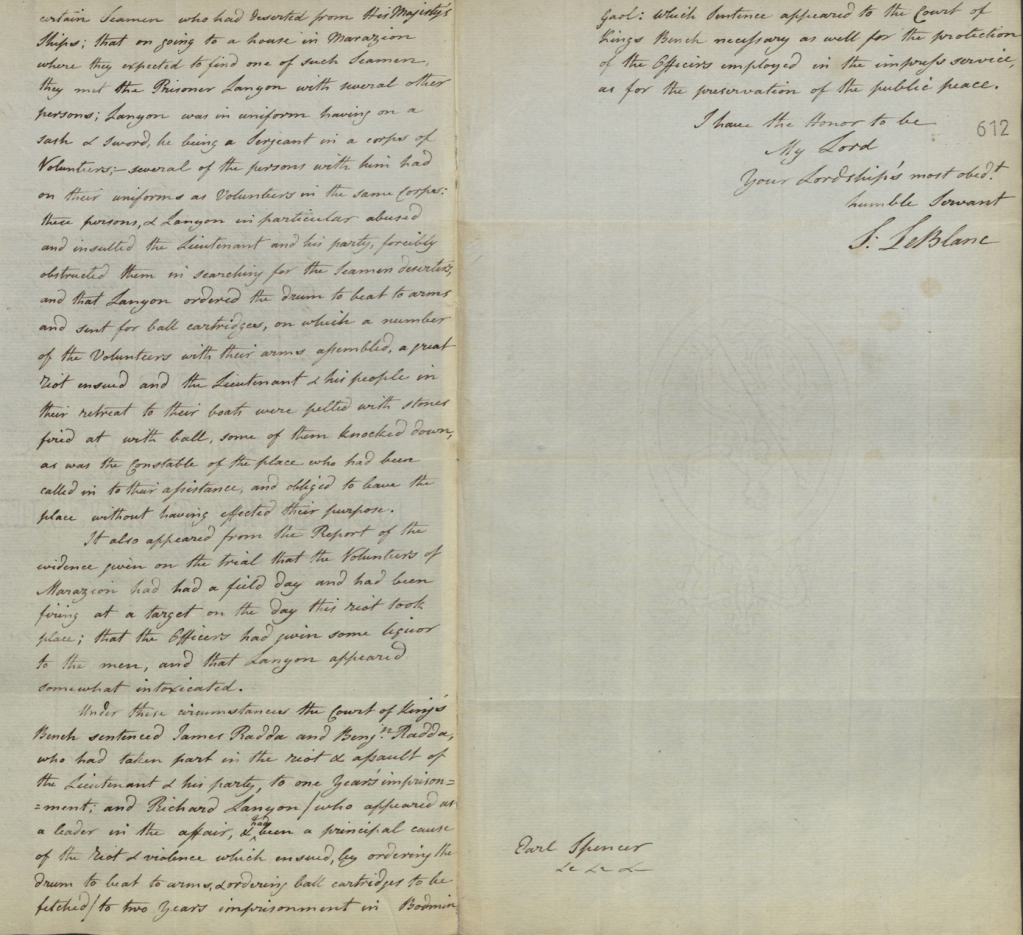
Richard was still wearing his uniform, sash and sword and several of the men with him still had on their volunteer uniforms. Lanyon in particular abused and insulted the lieutenant and his party and obstructed them in searching for the deserters. “Lanyon then ordered the drum to beat to arms and sent for ball cartridges.” A great riot ensued and the lieutenant and his people in their retreat to their boat were pelted with stones, fired at with ‘balls’ and some of them were assaulted.
A letter to Earl Spencer from J. Le Blanc explaining what had happened stated “Lanyon was somewhat intoxicated“!
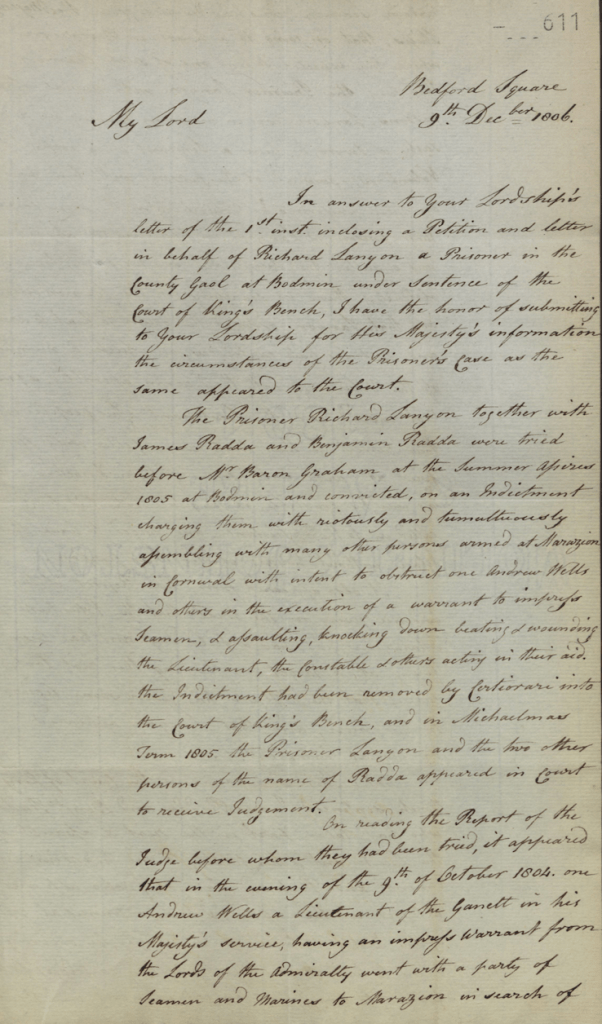
Richard and his nephews James and Benjamin Rodda were arrested and tried before Mr Baron Graham at the summer assizes at Bodmin in 1805. They were convicted on an indictment charging them with “riotously and tumultuously assembling with many other persons armed at Marazion in Cornwall with intent to obstruct one Andrew Wills and others in the execution of a warrant to impress seamen…“
The trial was the transferred to the Court of the King’s Bench in Westminster, London.

The Roddas were sentenced to one year in prison and Lanyon was sentenced to two years. After a year he appealed for an early release. Mr Gryles, a gentleman of considerable property in Marazion, gave a reference and stated that Lanyon was of previous good character and always a ‘man of fair and upright character’, he also had a wife and several children who had suffered ‘the severest deprivations by means of the long confinement’ but the appeal fell on deaf ears and Richard served two years.
Richard eventually returned home and was still living in Marazion in 1841. He’s listed on the census living with his youngest daughter Julia. His wife Jane had died in 1820. Richard died shortly after the 1841 census.
Press gangs finally came to an end with the fall of Napoleon in 1815.

 The Lanyons