Plague Outbreaks in 1578: The Madron Parish Register

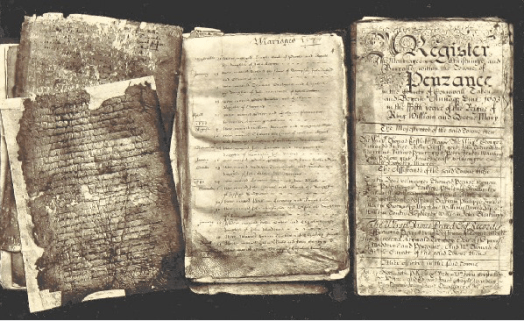
In 1578, the plague came to Madron, a small parish in Cornwall. It did not announce itself dramatically. There were no proclamations, no clear beginningโ€”only a quiet shift in the pattern of burials, noticed first in the parish register.

By chance, Madron had only recently begun recording burials in its new register. Without that, much of what happened would have passed unrecorded. Instead, we are left with a sparse but powerful account: names, dates, and, occasionally, a few telling words. It is not a narrative in the usual sense, but when read closely, it reveals the progress of a devastating outbreak as it moved through families, households, and the parish as a whole.

Madron’s Parish Register

In a โ€˜normalโ€™ year, Madron buried perhaps two or three parishioners a month. Even in 1583, several years after the events described here, there were just 23 burials across the entire year. In 1578, however, from January to December, the parish recorded 172 burials. There are no causes of death listedโ€”no death certificates existed at the timeโ€”but the pattern speaks for itself. When several members of the same family are buried within days of one another, the explanation is hard to escape.

The first clear indication in the register that something unusual was happening appears on 7th July, when a woman named Elizabeth was buried. Next to her entry, the clerk added a brief Latin note: quadam, morbo eonvitiali lahoransโ€”โ€œsuffering from a certain insulting or reproachful disease.โ€ The phrase was not used exclusively for plague, but in this context it carries a particular weight. It suggests that, by early July at least, the parish authorities recognised that something more than ordinary illness was at work.

And yet, Elizabeth was not the first to die.

The register shows that the disease had already begun to take hold in June, most clearly in the experience of the Skotte (or Skott) family. On 7th June, John, son of John Skotte, was buried. Two days later, on 9th June, two more of his sonsโ€”Richard and Williamโ€”were buried. On 13th June, his wife, Christian Skotte, was laid to rest. Three days later, John Skotte himself was buried.

Within just over a week, an entire household had disappeared.

There is no commentary in the register, no expression of alarm or griefโ€”only the steady recording of names. But in the clustering of deaths, in the repetition of surnames, and in the tightening intervals between burials, the presence of plague becomes unmistakable. What follows in the months ahead is not a sudden catastrophe, but a relentless accumulation of loss, spreading from family to family until it touches nearly every part of the parish.

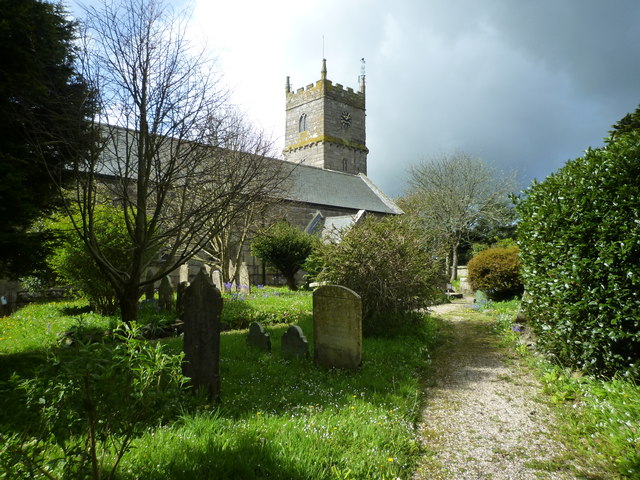
Madron parish church byย Maurice D Budden, CC BY-SA 2.0 https://creativecommons.org/licenses/by-sa/2.0, via Wikimedia Commons

There were 9 burials in June 1578.

On 6th July, Margerie, daughter of Roger Tule, was buried. A few weeks later, on 17th August, John Vian, servant to Roger Tule, was also buriedโ€”loss reaching both household and home.

On 8th July, the day after Elizabeth was buried, the crisis sharpened suddenly. Five burials were recorded in a single day: Robert, son of Nicholas Thomas; Richard Harries; Thomas Davye; and two of William Hawkeโ€™s children, Thomas and Radigonn. The following day, William Hawkeโ€™s daughter Jane was buried. By 25th July, William Hawke himself had joined them.

On 11th July, Maderne, son of Thomas Bodenar (or Bodynar), was buried. Twelve days later, another sonโ€”Johnโ€”was also buried.

On 13th July, Thomas Noye buried his daughter Jennett; the next day, his son Raphe.

After Rapheโ€™s burial there was a pause of five daysโ€”a brief, deceptive lull. Then the burials resumed. Henrie Maderne, son of Richard, was buried, followed by Thomas, son of Leonard Gillard. On 22nd July, Michaell, son of John described as โ€œan Irish man,โ€ was buried. Two days later, Margarett, an Irish womanโ€”presumably Michaellโ€™s motherโ€”was buried. On 4th August, Katharin, daughter of John Irishe, was also buried.

On 25th July, the Goodale family buried their son Nicholas. On 6th August, William, son of John Goodale, was buried. Then, on 10th August, Johnโ€™s sonโ€”also called Johnโ€”a son named Jonathan, and his wife Christian were all buried.

Also on 25th July, Nicholas Carpenter buried his son John. The following day, Cutberd, servant to Nicholas Carpenter, was buried; on 27th July, Nicholas himself was interred.

On 26th July, John Thomas and his wife Agnes were buried. We do not know who cared for their children after their deaths, but on 10th August their son Edward was buried, followed two days later by their daughter Fraunces.

There were 33 burials in the month of July.

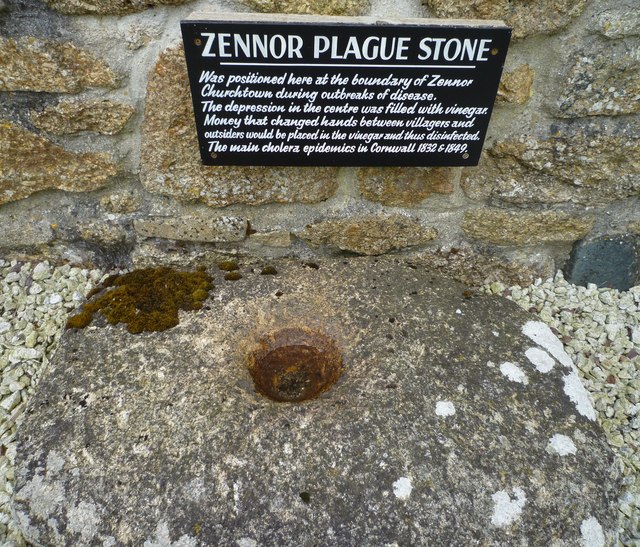
By August, fear of the plague must have been everywhere. In towns anxious to hold the disease at bay, plague stones filled with vinegar were often set outโ€”small, desperate measures against an invisible and unstoppable force.

Zennor Plague Stone byย Maurice D Budden, CC BY-SA 2.0 https://creativecommons.org/licenses/by-sa/2.0, via Wikimedia Commons

On 3rd August, John Panalvian buried his wife Elizabeth. Three days later, he buried his daughter Margarett. The following day, two sonsโ€”Nicholas and Johnโ€”were laid to rest, and on 9th August, his son Thomas followed them. In less than a week, an entire family was gone.

That same day, 3rd August, Thomas Gaye buried his son John. Ten days later, he buried another son, William.

By 11th August, the toll had deepened. Five burials were recorded that day. Richard Rabnett buried his daughter Agnes, and the next day his sonโ€”also named Richard. On the 11th itself, John Porria was buried; Joan Porria followed on 8th September. The same day also saw the burial of Thomas Davie, servant to John Maderne, and Marten Smythe. Stephen Peares was buried on the 11th, his wife Jane following him on the 24th.

On 12th August, Joane, the illegitimate daughter of Elizabeth Benet, was buried. The next day, John, the illegitimate son of Joane Thomas, was laid to rest, and on 30th August, Richard, the illegitimate son of Elizabeth Syse. Even in the midst of plague, the โ€˜stainโ€™ of illegitimacy was carefully recorded.

On 13th August, Lodovicke Bell was buried; on 4th September, Tyrracke Bell followed.

On 16th August, Allice, daughter of Stephen Anthony, was buried. Three days later, Stephen himself was buried.

On 17th August, Allice Terrenacke was buried. On 21st August, Elizabeth Tredynneck, daughter of John, was buried. On 25th August, Katherin, daughter of John Terrynacke, was buried; two days later her sister Fraunces joined her. On 29th August, John Terrynacke himself was buried.

By the end of August, there had been 54 burials in Madron.

The pattern continued into September. On 3rd September, Symon Cokewell (or Cockwell) buried his son John. Two days later, his wife Jane was buried, and on 26th September, another sonโ€”also called Johnโ€”was buried.

On 22nd September, Elizabeth Champion was buried. On 3rd October, Agnes, daughter of William Champion, followed. On 26th October, Elizabeth, daughter of Sacharie Champion, was buried; the next day, Sacharieโ€™s daughter Allice and a Rycharde Champion. Finally, on 8th November, Norowe Champion, a widow, was buried. The Madron register records that the wife of Sacharie Champion had been buried on 26th May 1581, though her name is not recorded. Sacharias Champion himself was buried on 28th January 1611.

On 27th September, Agnes, daughter of Maderne Wolcoke, was buried. His son William followed on 2nd October, and ten days later his daughter Elizabeth. Another William Wolcoke, the son of William, was buried on 8th October.

In September, the burials fell to 19.

On 14th October, John, son of Sampson Barber, was buried. Four days later, his sisters Katherin and Hellen were buried, and on 22nd October, Sampson Barber himself. On the 27th, a Barnarde Barber was buried. Later, on 24th August 1579, Katherin Barber was buried. Perhaps the horror of losing a husband and three children was too much to bear.

In October, there were 23 burials.

On 1st November, John Selloweโ€™s son John was buried. A fortnight later, his wife Elizabethe followed.

On 17th November, Joane, daughter of William Robertes, was buried; on the 28th, his wife Richoe. Then, on 26th December, his son William was buried.

In November, there were 11 burials.

On 10th December, Rich, son of James Tremethacke, was buried; on 12th December, his son Thomas.

In December, there were 7 burials.

The plague appears to have continued into the new year. On 12th January, Agnes, daughter of John Wallter, was buried; two days later, his son Thomas.

In January, there were 6 burials.

By the turn of the year, the worst of the outbreak appears to have passed. The number of burials fell sharplyโ€”from the relentless pace of July and August to smaller, though still troubling, numbers in the months that followed. Life in Madron did not return to normal all at once, but the pattern in the register suggests that the grip of the disease was loosening.

What remains is the record itself: a stark sequence of names, dates, and occasional fragments of description. There are no explanations, no reflections, no acknowledgement of the scale of what was happening. Yet, read together, these entries form a powerful account of a community under strain. The repetition of family names, the clustering of deaths within days, and the quiet disappearance of entire households speak more eloquently than any narrative could.

The register preserves small, human details as well. Servants are recorded alongside masters, children alongside parents. Even in the midst of an epidemic, distinctions were carefully notedโ€”such as the marking of illegitimacyโ€”reminding us that social boundaries endured even as the disease cut across them. There is no sense that the parish understood the nature of the plague, but there is a clear determination to record, to name, and in doing so, to acknowledge each loss.

Even during August 1578 at the height of the outbreak the church continued to perform marriages and in November 1578 the marriage took place between John Lanyon and Margaret the daughter of Sampson John Richard, our ancestor.

For those who lived through it, the experience must have been one of uncertainty and fear. The sudden gaps between entries, followed by sudden surges, hint at moments of fragile hope and renewed despair. Measures such as the use of plague stones filled with vinegar suggest attemptsโ€”however limitedโ€”to contain what could not yet be understood.

Today, the register offers something different. It does not tell us everything, but it allows us to see enough: the scale of the outbreak, the speed with which it moved, and its deeply personal impact. Behind each entry is a life, a relationship, a place within the community. Together, they form not just a list of the dead, but a record of how a small Cornish parish endured one of the most devastating events of its time.


Guernsey Lanyons

The Guernsey Lanyons are descended from the Helston branch of the family.

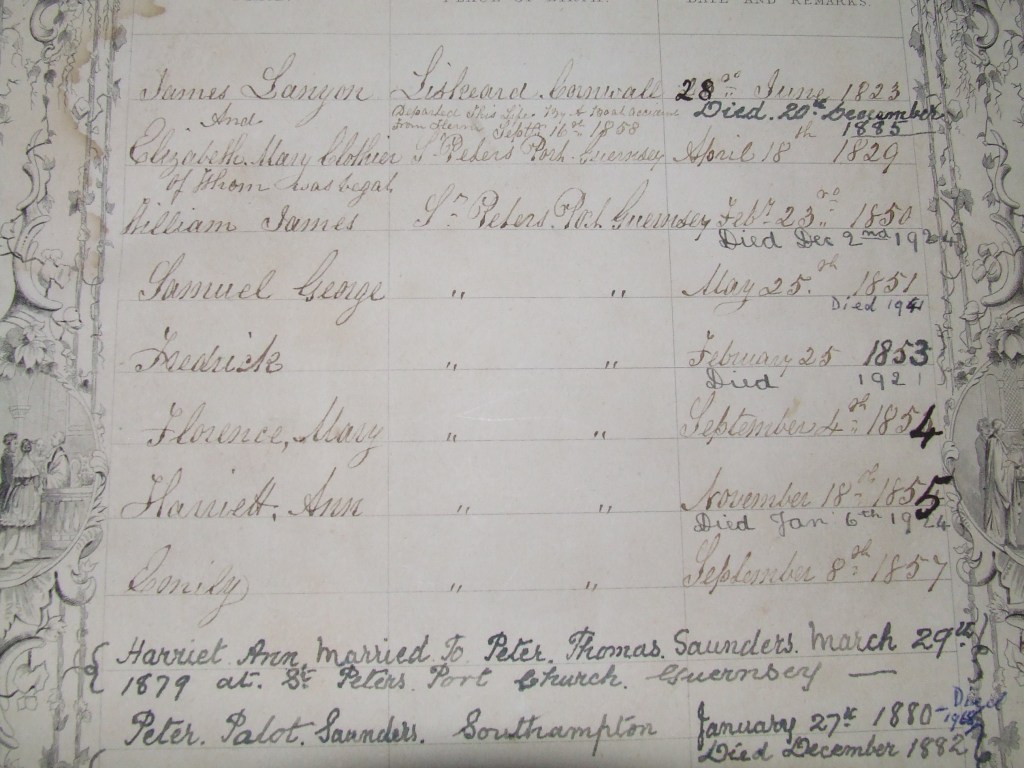
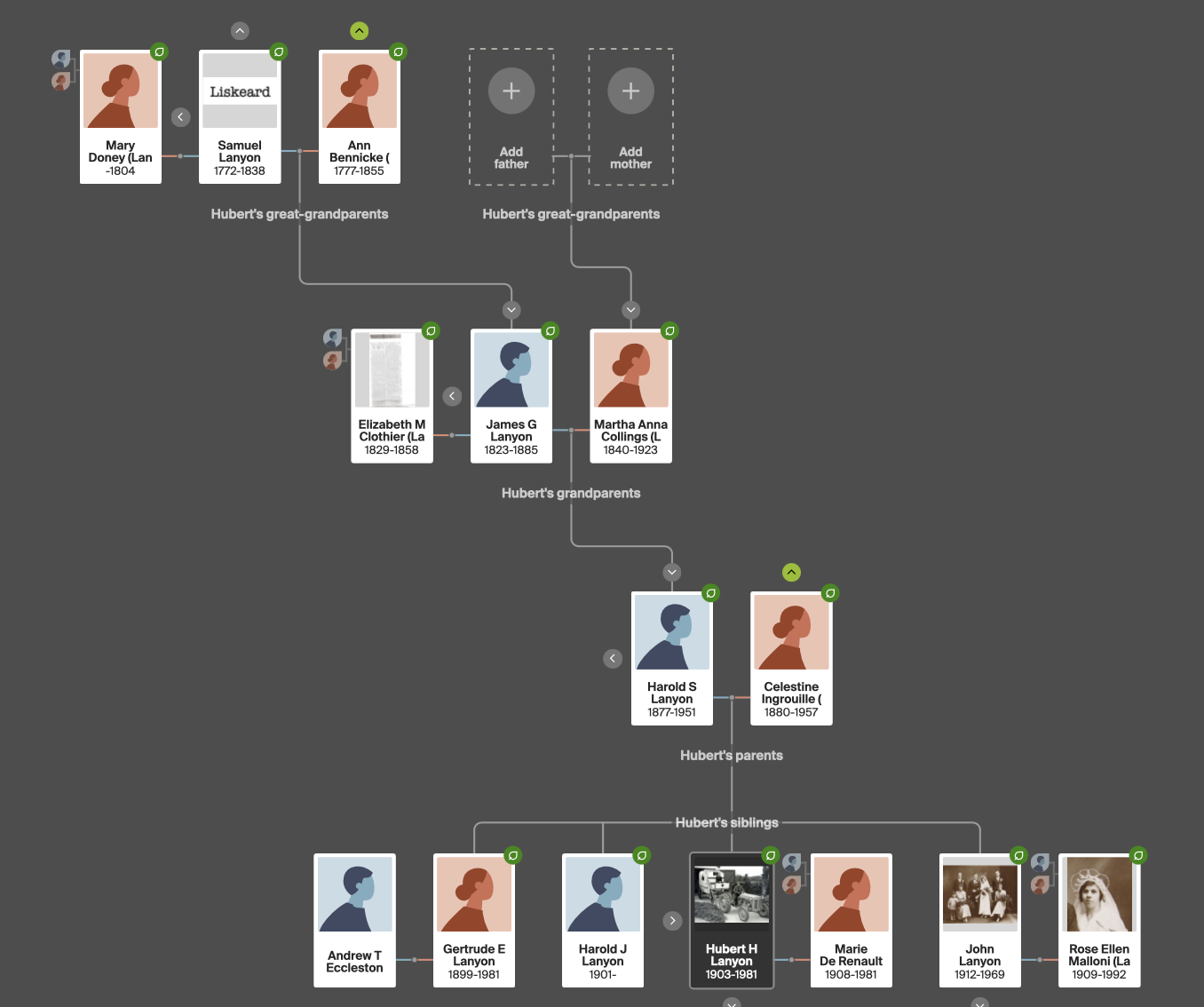
Samuel Lanyon was the son of Charles Francis Lanyon and Alice James, he was born in 1772 at Helston. He was a currier (a specialist leather worker) in Liskeard. Charles Francis fell out with his sons over his second marriage to Jane Sampson and this may explain why Samuel left Helston and moved to Liskeard. Samuel’s first wife, Mary Doney died in childbirth and their son Thomas Doney Lanyon died in 1827 at the age of 23.

Samuel married Ann Bennicke in 1806 at Stoke Damerel in Devon. They had seven children, the youngest being James George Lanyon born in 1823.

James George Lanyon 1823-1885

James was born in Liskeard but by 1851 he had moved to St Peter Port, the capital of Guernsey, and was working as a cordwainer.

The 1851 census shows him living with a wife, Elizabeth and with three children.

1851 Census St Peter Port

Elizabeth Mary Clothier was the daughter of William Clothier and Harriette Baptiste. She and James had six children:

  • William James Lanyon 1850-1924
  • Samuel George Lanyon 1851-1941
  • Frederick Lanyon 1853-1922
  • Florence Mary Lanyon 1854-1877
  • Harriett Ann Lanyon 1855-1924
  • Emily Lanyon 1857-1922

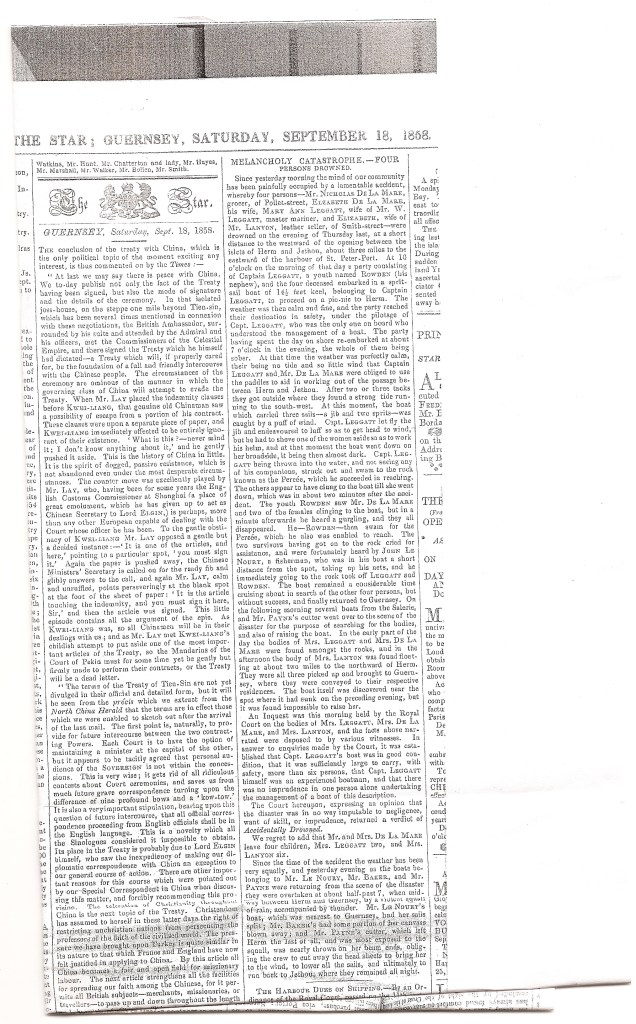
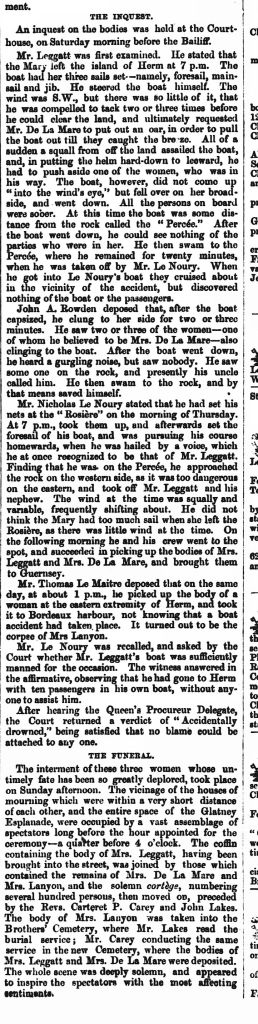
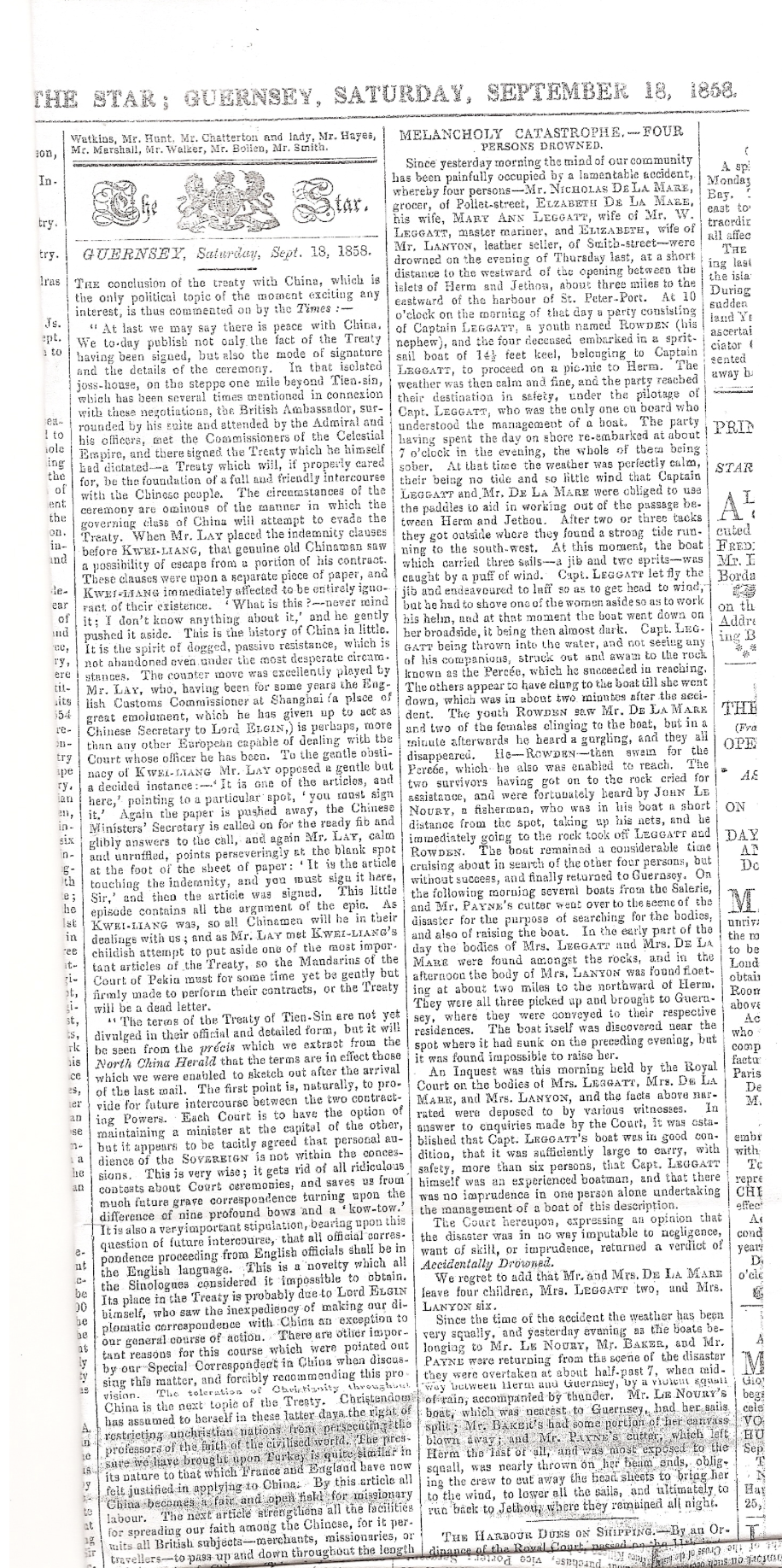
Elizabeth tragically drowned in a boating accident on a day trip to picnic in Herm, a tiny island next to Guernsey.

In 1861 James appears on the census as a widowed bootmaker, living with his mother-in-law.

Before 1869 James married Martha Anna (Hannah) Collings, they had seven children. the youngest born 31 years after his eldest child!
  • Ernest James Lanyon 1869-1929
  • Gertrude Elizabeth Bennicke Lanyon 1871-1961
  • Annie Bennicke Lanyon 1873-
  • Agnes Lanyon 1875-1962
  • Harold St John Lanyon 1877-1951
  • John Henry Lanyon 1880-1935
  • Reginald Hubert Lanyon 1881-1944

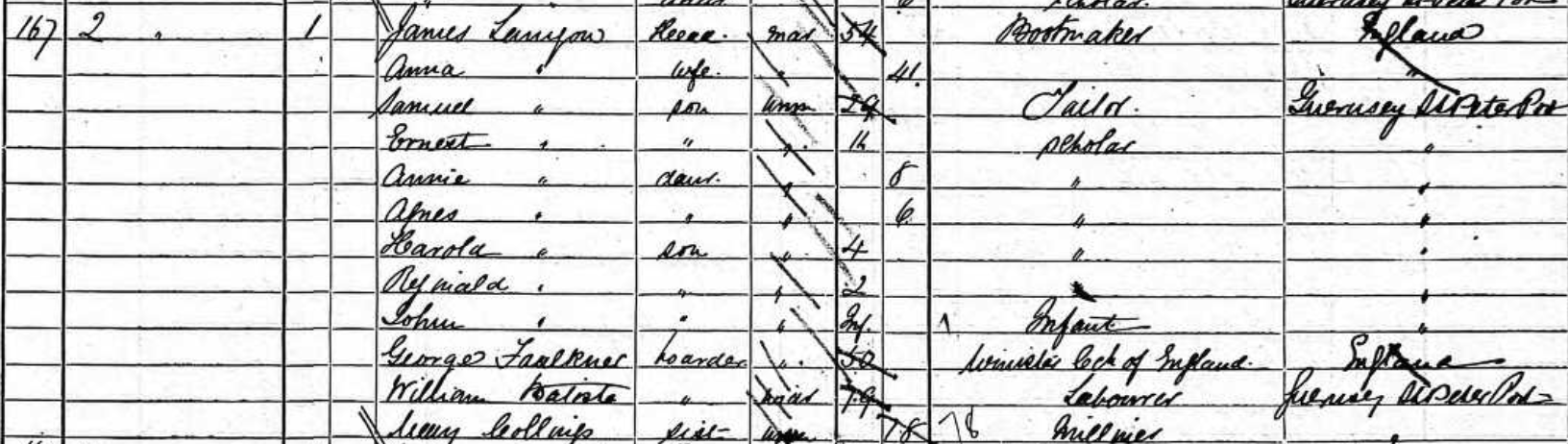
The 1881 census shows them all living at 2 Kings Road, St Peter Port. The house must have been pretty crowded as there were two elderly lodgers as well!

1881 Census St peter Port

On 20 Dec 1885 James died leaving his wife to care for their young family alone. She never remarried and finally died on 24 August 1923.

William James Lanyon 1850-1924

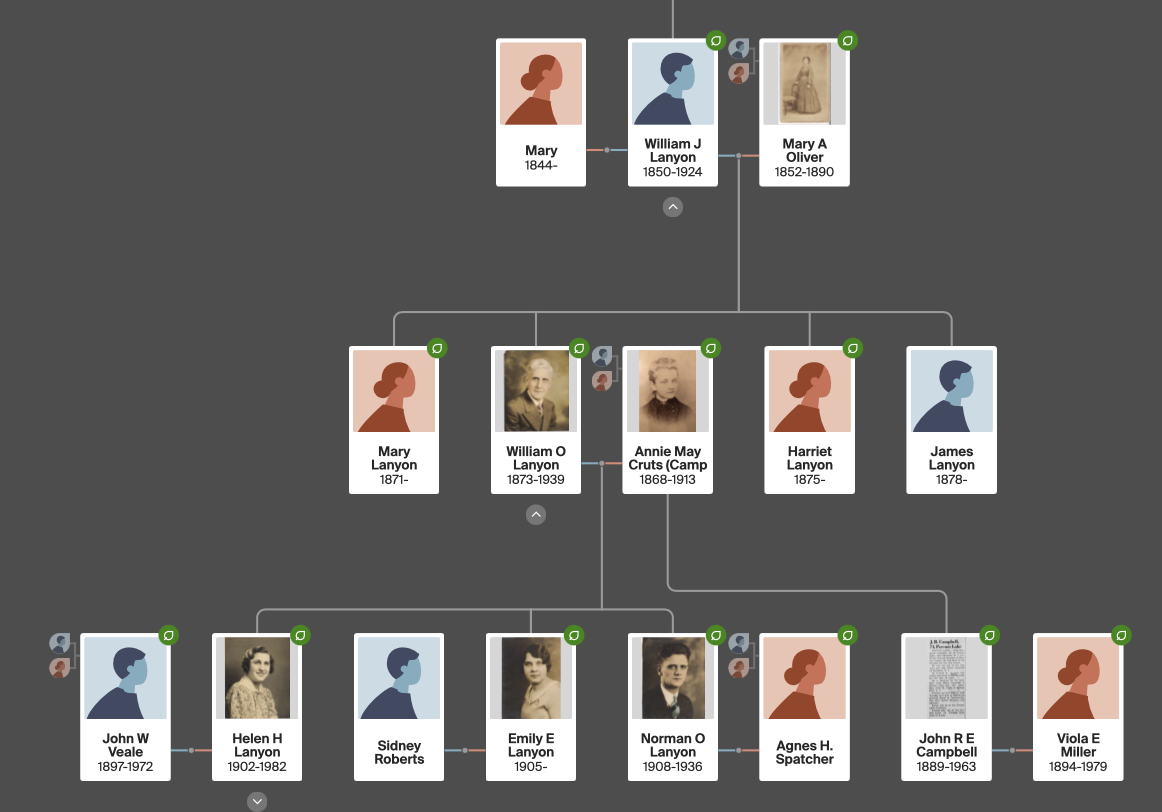
William was a typesetter and emigrated to New Jersey in 1867. His first marriage was to Mary Augusta Oliver on 7 Jun 1871 at New Jersey, USA.

Mary Augusta Oliver

They had four children:

  • Mary Lanyon 1871-
  • William Oliver Lanyon 1873-1939
  • Harriet Lanyon 1875-
  • James Lanyon 1878-

Mary Augusta died in 1890 and in 1891 (according to the 1900 census) William James married another Mary. I haven’t found this marriage so I don’t know her maiden name.

Samuel George Lanyon 1851-1941

Samuel George Lanyon was born in St Peter Port in 1851. On the 1881 census he was still living at home and working as a tailor but by 1891 he had married and was working as a postman.

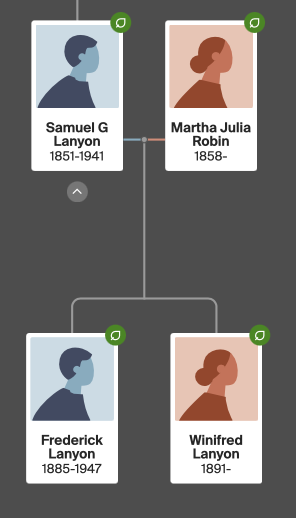
He married Martha Julia Robin and they had two children, Frederick and Winifred.

Samuel appears on the 1921 census as a retired postman alongside his wife Martha. I have not found a date of death but some other family historians report that he died in 1941 in Ohio, USA.

Frederick Lanyon 1852-1923

Frederick was the third son of James George Lanyon and Elizabeth Clothier.

The 1871 census describes him as a carpenter. Sometime after 1871 he emigrated to New South Wales, Australia. There in 1889 he married Sarah Emily Radford (1854-1944) and they had two sons; Percy Frederick Lanyon 1891-1955 and Harold Edgar Lanyon 1894-1973.

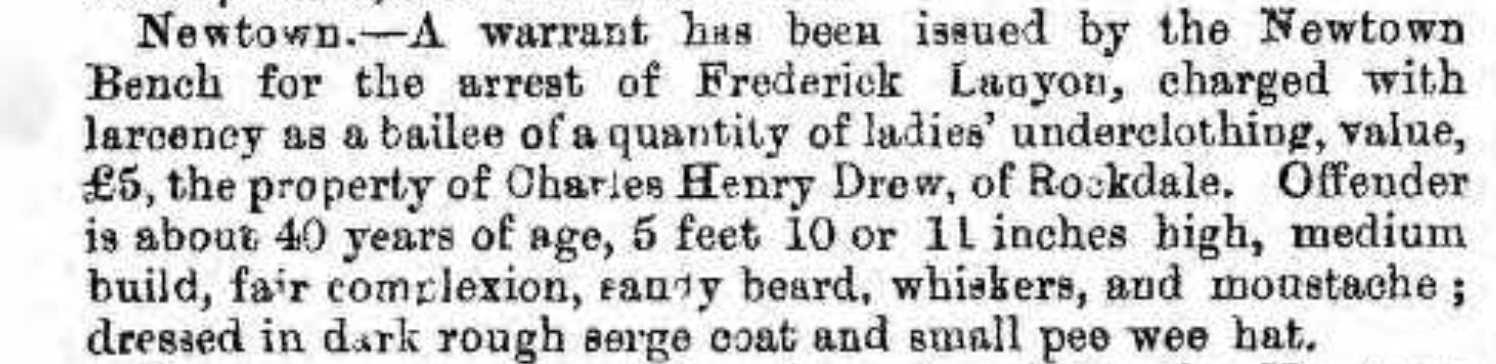
He appears in the New South Wales Police Gazettes. It gives us a good description of him.

New South Wales Police Gazette

Ernest James Lanyon 1869-1929

Ernest was the eldest son of James George Lanyon’s second marriage to Martha Anna Collings.

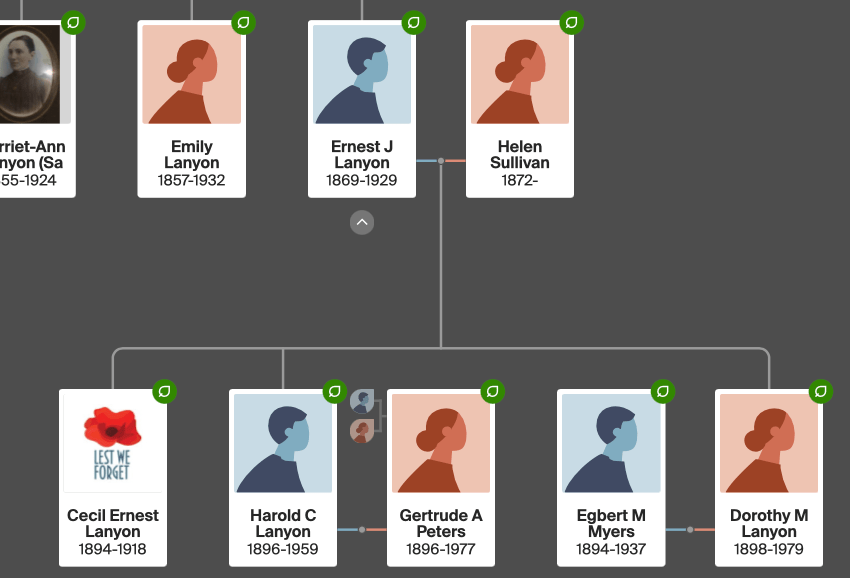
He was born at St Peter Port in 1869 and by 1891 he was working as a compositer. By 1893 he had emigrated to America and married Helen Sullivan in New York. They had three children:

  • Cecil Ernest Lanyon 1894-1918 Killed in action in France in August 1918
  • Harold Collings Lanyon 1869-1959
  • Dorothy Mable Lanyon 1898-1979

Harold St John Lanyon 1877-1951

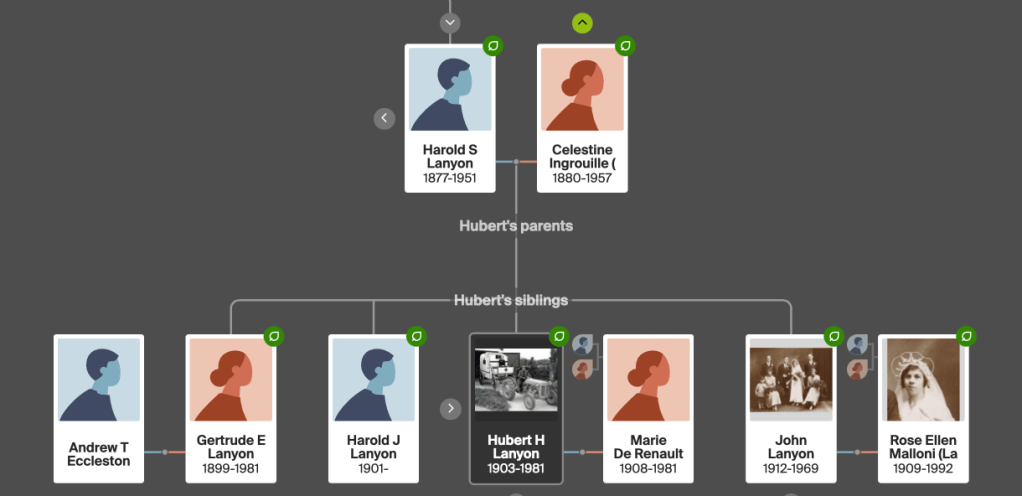
Harold was born in 1877 by 1891 he was working as a gardener. Sometime before 1899 he married Celestine Ingrouille in Guernsey.

They had four children:

  • Gertrude Emily Lanyon 1899-1981
  • Harold James Lanyon 1901-
  • Hubert Henry Lanyon 1903-1981
  • John Lanyon 1912-1969

Reginald Hubert Lanyon 1881-1944

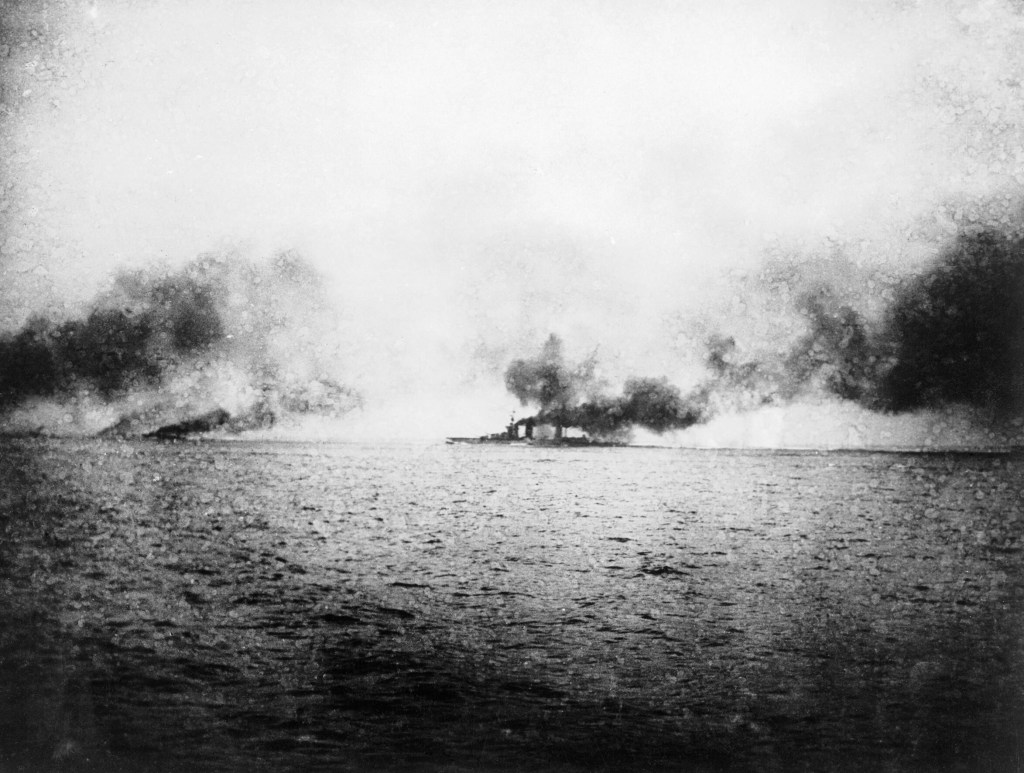
Reginald was born in 1881 and in 1915 he joined the navy as an able seaman. He served at the Battle of Jutland in 1916 on HMS Cochrane and was mentioned in dispatches.

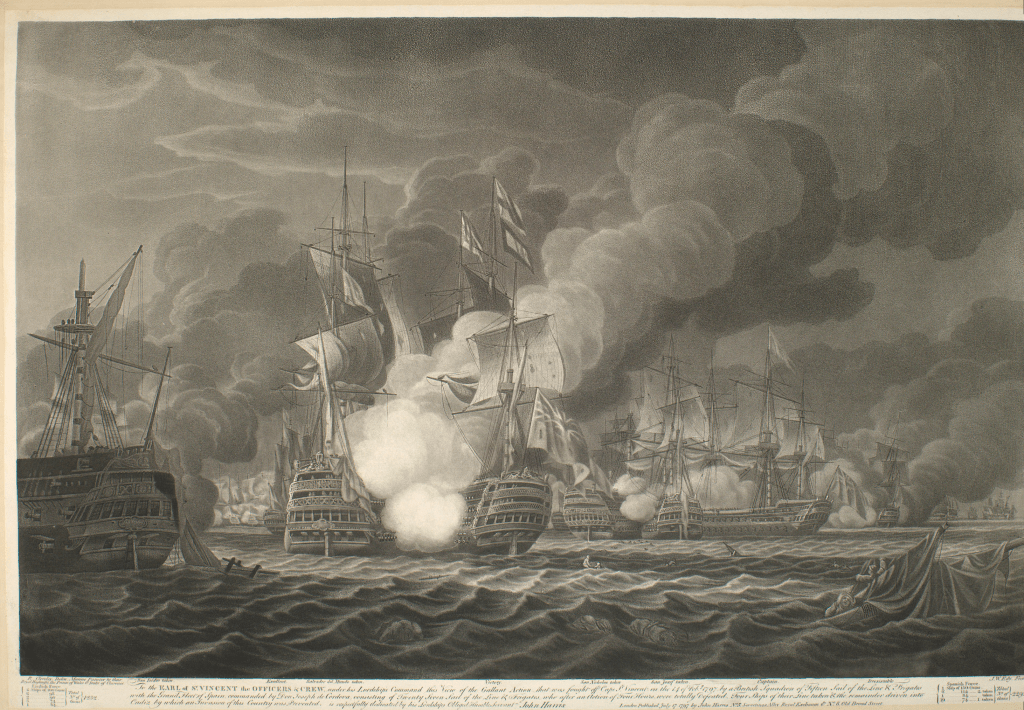
Battle of Jutland – Public domain, via Wikimedia Commons

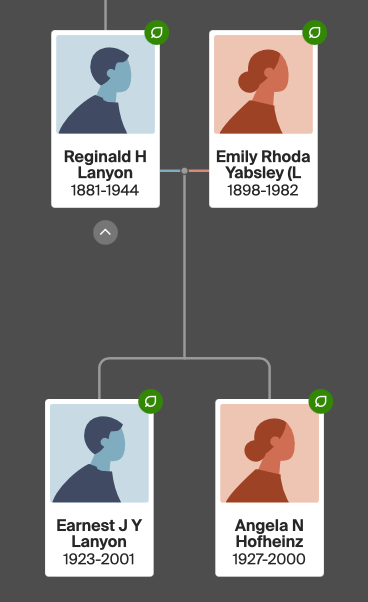
He married Emily Rhoda Yabsley and they had two children: Earnest and Angela.

Hubert Henry Lanyon 1903-1981

Hubert was born in St Peter Port in 1903 the second son of Harold St John Lanyon and Celestine Ingrouille. On 14 May 1929 he married Marie de Renault. They had three children: Megan, Mark and Maisie. Hubert worked as a baker on the small island of Sark.

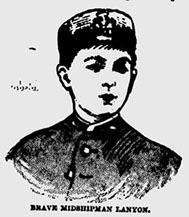
Hubert was active in the Channel Islands Underground during the second world war.

After the British and French Armies were evacuated from Dunkirk in May and June 1940, British authorities decided not to defend the Channel Islands. The Islands were demilitarised and thousands of Islanders tried to evacuate. In total, 17,000 out of 42,000 left Guernsey and 6,600 out of 50,000 left Jersey. 471 remained in Sark and around 20 people stayed in Alderney. On 28 June 1940, German air raids on St Peter Port and St Helier killed 34 and 11 civilians respectively. Between 30 June and 4 July 1940, the islands of Guernsey, Jersey, Alderney and Sark were occupied by German forces. Islanders had no idea how long the Occupation might last or how German rule would affect their lives.

During the Occupation, Frank Falla was invited to join an underground newspaper. After radios were confiscated in June 1942 and listening to the BBC made a severely punishable offence, Charles Machon, Fallaโ€™s colleague and typesetter at the Guernsey Star newspaper, decided to set up the news service. He had to be careful not to let each member of the group know who else was involved in case any of them were caught. The other members of the group were initially husband and wife team Joseph and Henrietta Gillingham, and Henriettaโ€™s brother Ernest Legg. Later on, Frank Falla and Cecil Duquemin joined. It was Fallaโ€™s idea to name the news service GUNS (Guernsey Underground News Service). The newssheet was distributed throughout St Peter Port where all the members lived and further afield. It was also smuggled to Sark where baker Hubert Lanyon made it available to customers. The men were informed on and arrested. Henriettaโ€™s brother and husband covered for her and she was not arrested. The five men were deported but Lanyon was fortunate to serve his sentence locally.ย (Guernsey Museum)

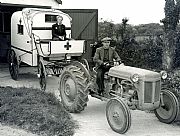
Hubert and the Sark ambulance.

‘More Brawn than Brain’

Hugh Lanyon 1801-1846

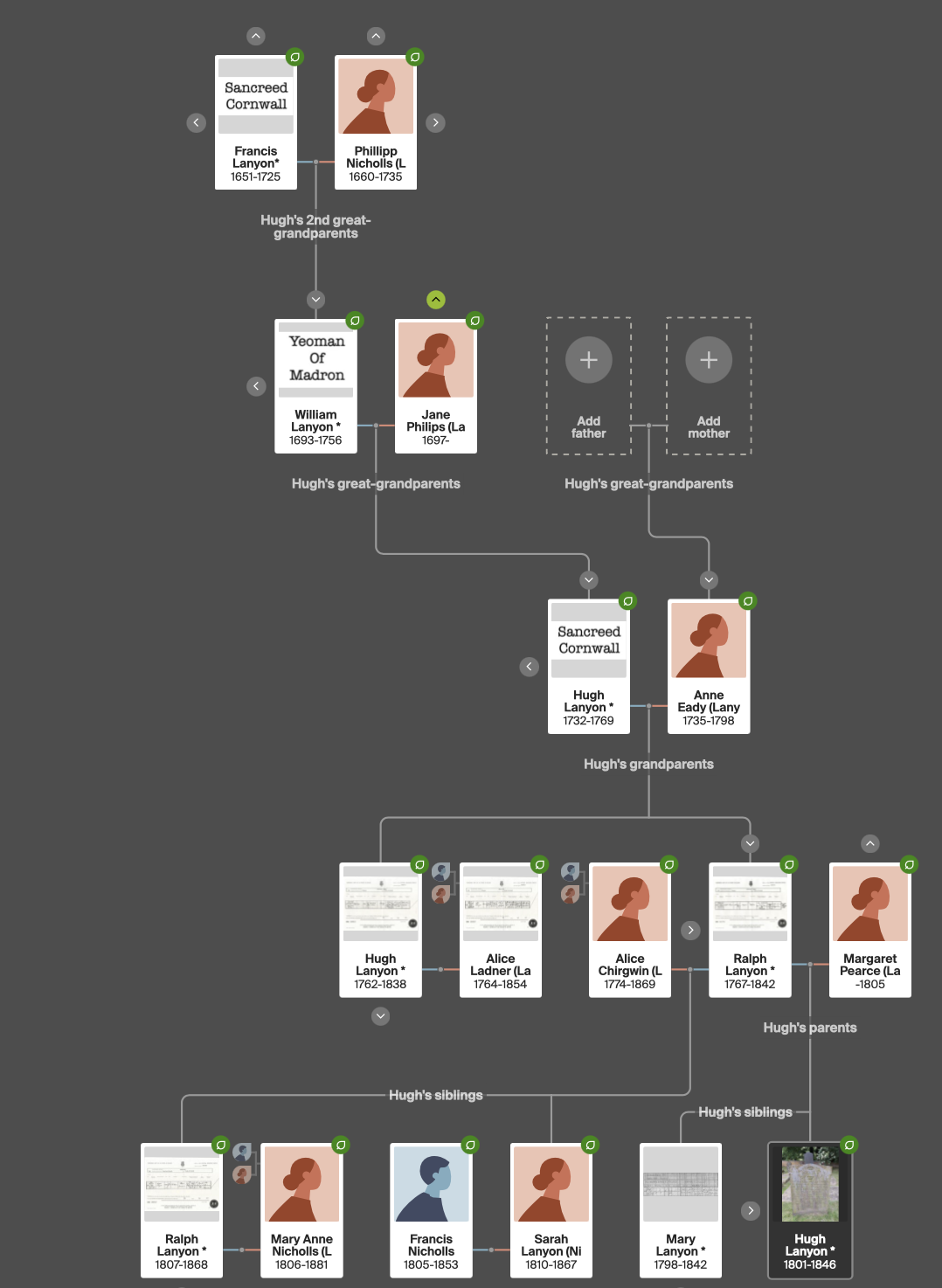
Hugh was the son of Ralph Lanyon, an agricultural labourer, and Margaret Pearce. Ralph and Margaret married at Paul in 1796 and Hugh was their second child.

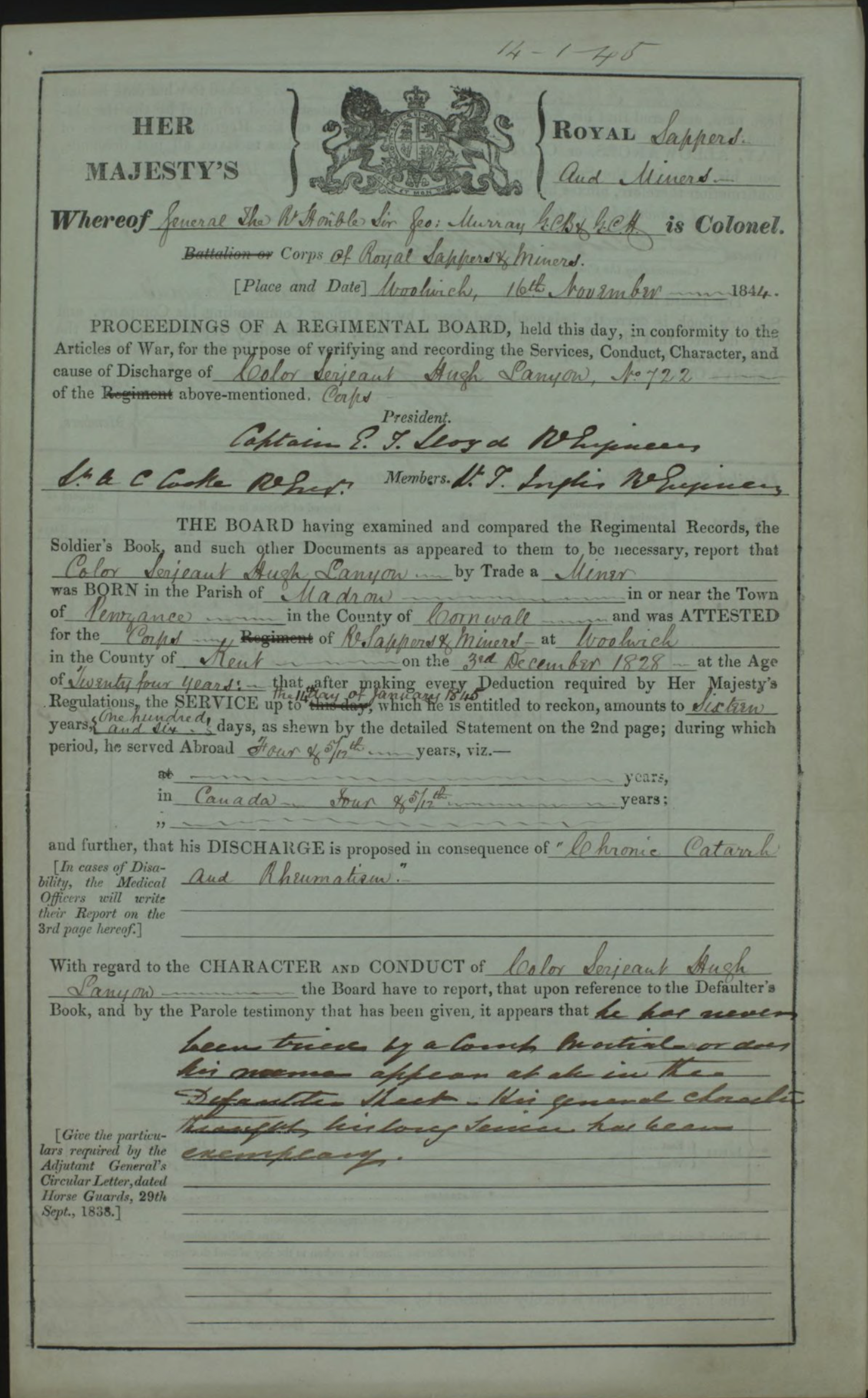
Age 24 Hugh enlisted in the army. He was a Colour Sergeant in the Royal Sappers & Miners.

While bound for Vera Cruz in the ship โ€˜Cambriaโ€™ he helped rescue 551 of the passengers and crew of the โ€˜Kentโ€™ an East India ship which caught fire in the Bay of Biscay in Feb 1825.

Connolly, in hisย โ€˜History of the Royal Sappers and Minersโ€™ย p309, writes of himย โ€˜Sergeant Hugh Lanyon, after Sergeant โ€“ Major Forbesโ€™ removal, was appointed to the charge of the detachment at Sandhurst College, and carried on the file details in every way to the satisfaction of the authorities. For many years, as a private and non-commissioned officer, he worked at the College, and his example had the best effect on the successive parties with which he served. As a practical sapper he was one of the ablest and most skilful in the corps, and in the rapidity with which he threw up earth works was unsurpassed. Sir Charles Pasley has done him the honour by noticing the extraordinary labours of the sergeant in his โ€˜Practical Operations for a Siegeโ€™. His willing ness and ability in this respect covered, in great measure, his educational deficiencies. In charge of the detachment he displayed his usual industry and exertion, kept his men in perfect discipline and orderโ€ฆ so effectively were all the instructions carried out, that the governor of the college, with the sanction of the Master-General, presented him in November (1837) with a case of drawing instruments bearing an inscription โ€˜flattering to his zeal and services.โ€™ย 

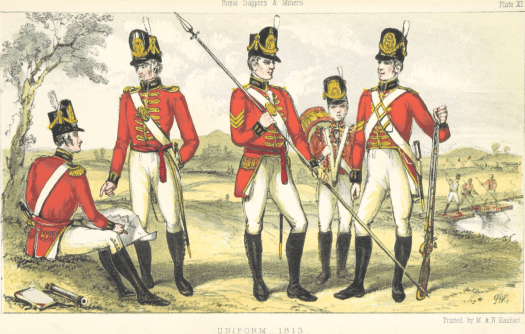
CONNOLLY(1855) Vol2, p337 (Plate 11) ROYAL SAPPERS & MINERS, UNIFORM 1813.jpg

Shortly afterwards he was promoted to colour-sergeant and served in Canada during the rebellion.

Somewhat broken in health he was discharged in 1844 and became a surveyor on the Trent and Mersey Canal, working under James Forbes. He died in 1846 at Lawton in Cheshire.

He was a โ€˜remarkable man with rather more brawn than brain one suspectsโ€˜ (P.A Lanyon-Orgill).

Connolly recounts a story about him while building a stockade at Mississawra in Canada in 1842;ย โ€˜six men complained to him of the heavy task they were subjected to in removing timbers about 15 feet long and 12 inches squareโ€ฆ.Lanyon made no observation, but shouldered one of the unweildy logs and, to the amazement of the grumblers, carried it to the spot unassisted.โ€™ย 

In 1843 he was in Ireland and was sent to explore a sewer running into the Liffe river which might provide a means of entry into Dublin Castle.ย โ€˜He did so and found that a strong iron grating existed in the passage, which would effectually prevent the supposed entrance. In this duty, being much exposed to the influence of noxious vapours, he soon afterwards was seized with fever and jaundice, which shortened his days.โ€™ย (Connolly).

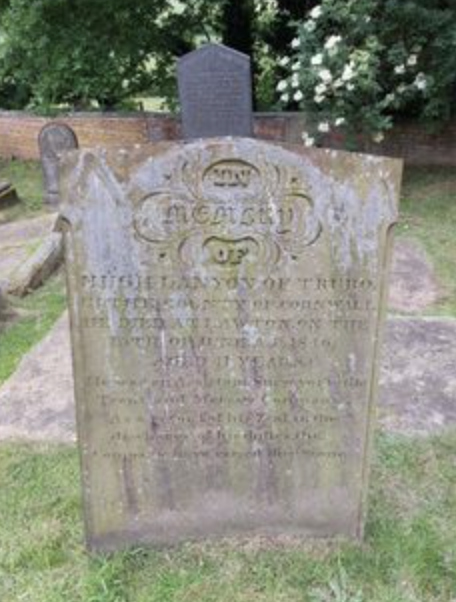
Hugh’s gravestone

He never married or had any children.

Fined 6 pence

Whilst exploring the National Archives catalogue I came across an extract from the Lostwithiel Sessions which opened a really complicated can of worms!

On 11 January 1781 Richard Lanyon and his wife, Elizabeth, charged with assault against Sarah Bishop, base child of Richard Lanyon, changed their plea to guilty and were fined 6d each. (Source – QS/1/4/292-298)

That was the first mention of Richard Lanyon’s illegitimate daughter, I had to find out more!

It didn’t take long to find the baptism of Sarah Lenyne Bishop at Newlyn East on 14 March 1774, the base daughter of Mary Bishop. Assuming that Sarah was baptised shortly after her birth that would make her just 6 or 7 at the time of the assault. At a time when it was common for children to be chastised this must have been far more serious to lead to an actual charge of assault.

Who was Richard Lanyon?

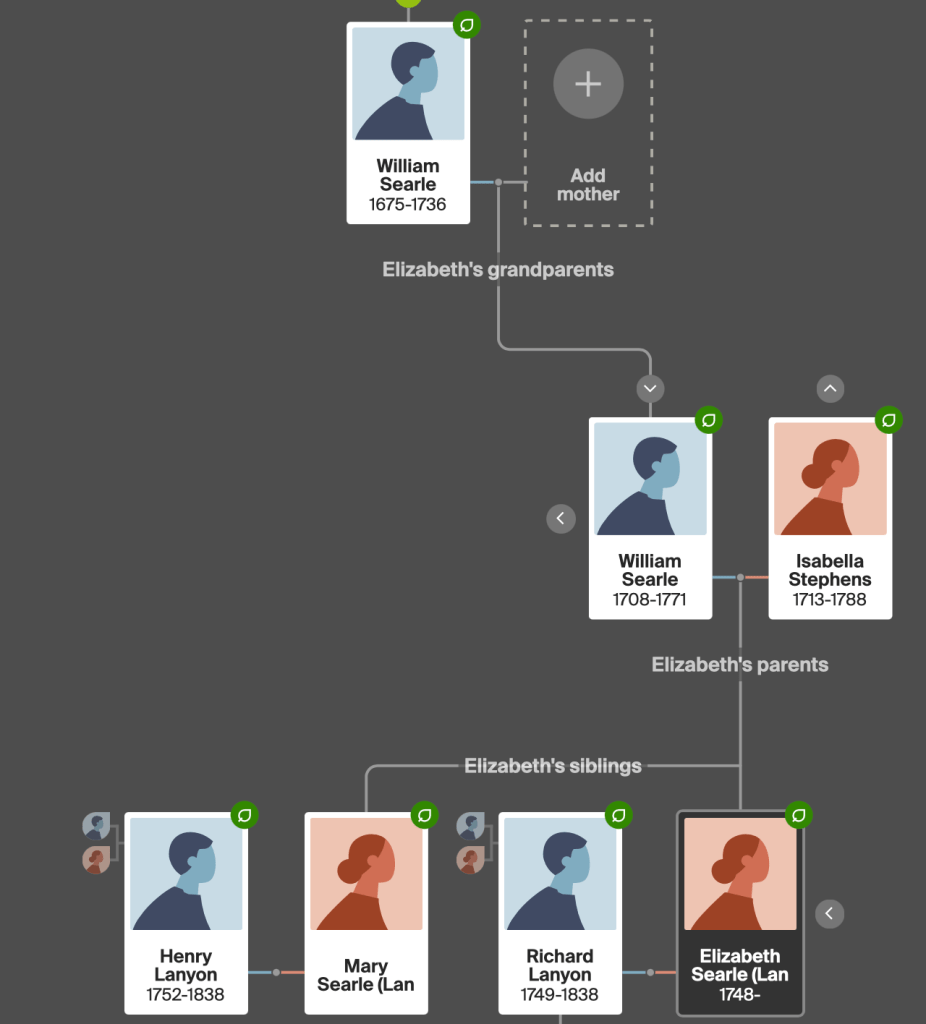
He was baptised on 1 January 1749 at St Allen, the son of John Lanyon (Lanion) and Sarah Straight. John and Sarah had six children: Margaret 1736-1802, John 1740-1771, William 1743-1763, Richard 1746-1747, Richard 1749-1838 and Henry 1752-1838. The three surviving children married into the Searle family. Margaret married John Searle and Richard and Henry married two sisters, Elizabeth and Mary Searle.

Elizabeth and Mary Searle were the children of William Searle and Isabella Stephens. William Searle jr was the son of William Searle 1675-1736.

The Searle Tree

Richard Lanyon was a yeoman and his mother, Sarah Straight (Lanyon) bought the farm Polstain, at Zelah near St Allen, for him. He later bought the farm Lanner. On 18 April 1774, just four months after his illegitimate daughter Sarah was baptised, he married Elizabeth Searle at St Allen. He and Elizabeth had 10 children. Elizabeth died in 1825 and in 1827 Richard married again to a widow, Catherine Charles. He died on 17 February 1838 at the age of 89.

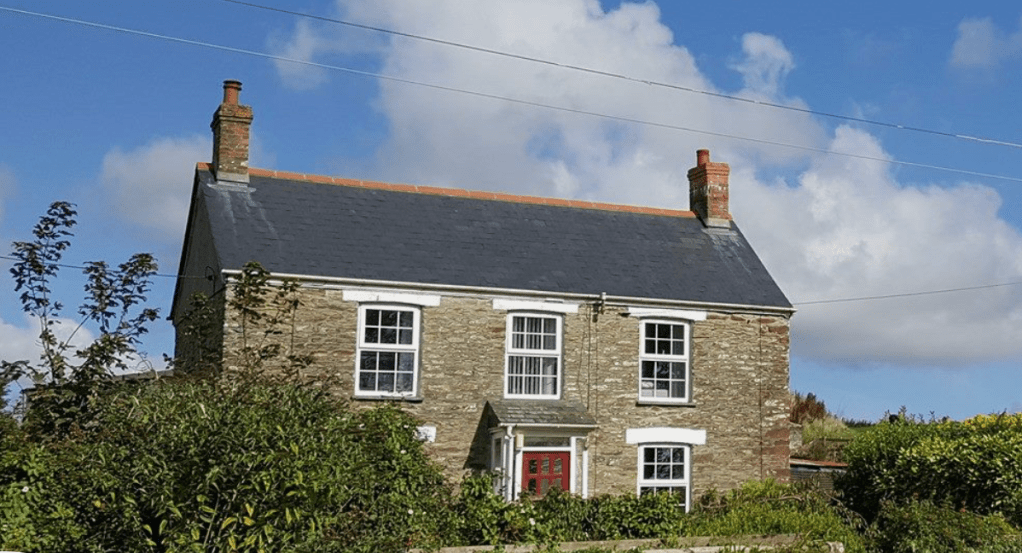
Polstain still exists today.

Polstain Farm

So why is this a ‘can of worms’?

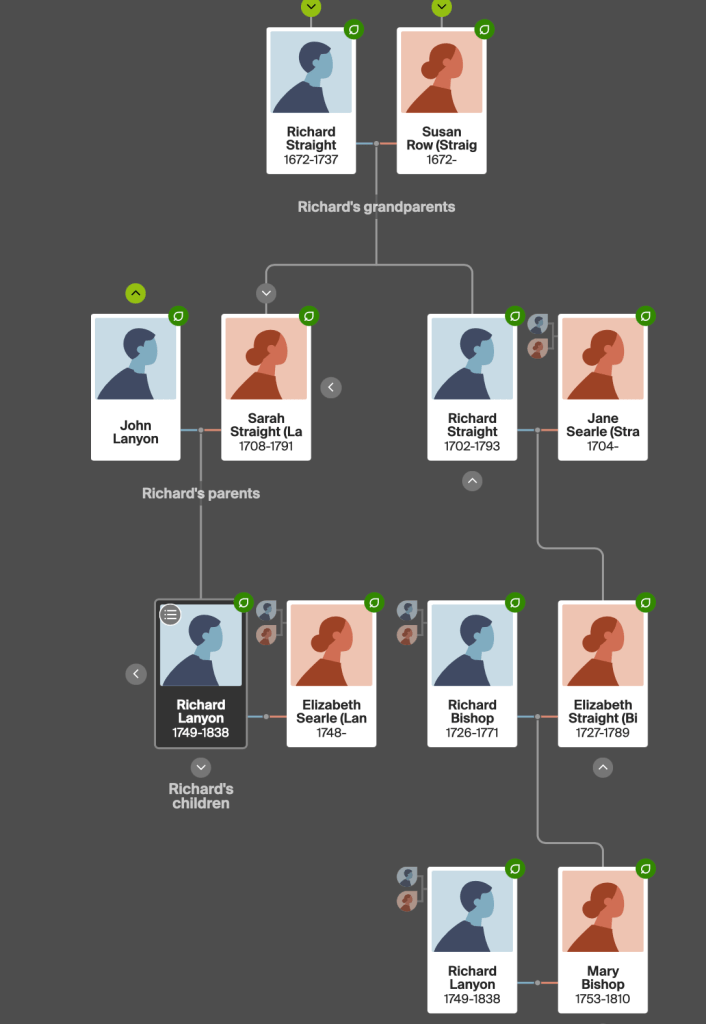
Richard Lanyon’s mother, Sarah Straight was the sister of Mary Bishop’s grandfather, making Richard and Mary first cousins, once removed. The family connections don’t end there.

Poor old Ancestry’s family tree templates can’t quite cope with that! Richard appears twice!

Straight family tree

But it gets even more complicated because Mary Bishop’s grandmother is Jane Searle (Straight) 1704- and Jane was the sister to Richard Lanyon’s father-in-law, William Searle 1708-. So Mary Bishop’s granny was Elizabeth Searle (Lanyon)’s aunt!

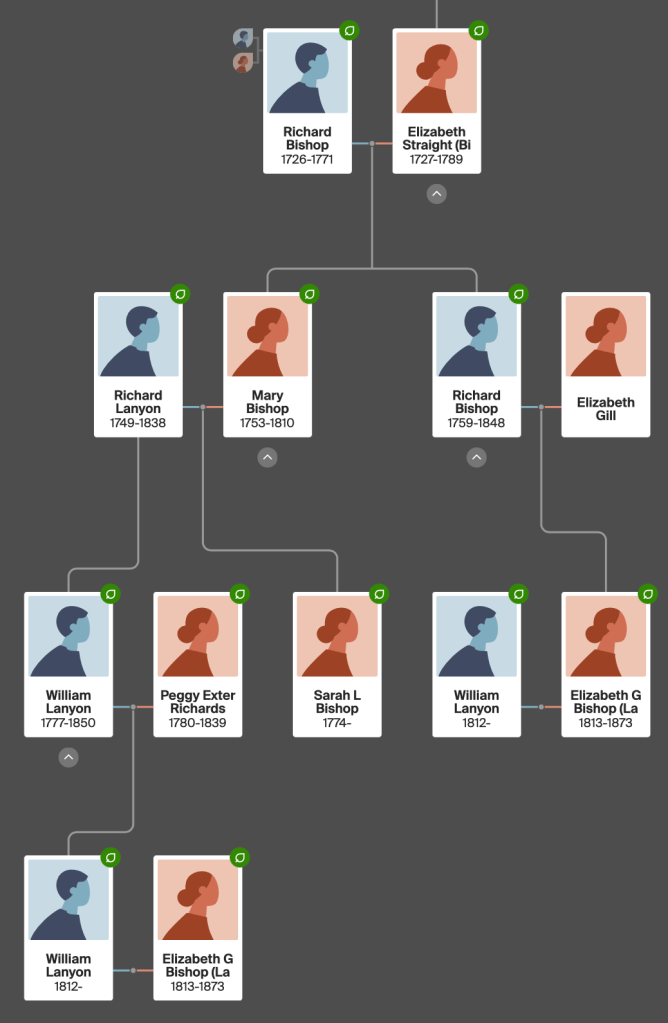
To complicate things further Mary Bishop had a brother called Richard (1759-1848) and Richard Bishop married Elizabeth Gill. Their daughter Elizabeth Gill Bishop married William Lanyon, the grandson of Richard Lanyon and Elizabeth Searle!

Bishop, Lanyon, Gill Tree

So that’s all clear then?

So what of Sarah Lenyne Bishop?

Her existence can’t have been a secret, the whole family are interrelated and must surely have known about Mary Bishop’s illegitimate child. When Sarah was born Richard Lanyon was unmarried, why did he not marry Mary? We’ll never know.

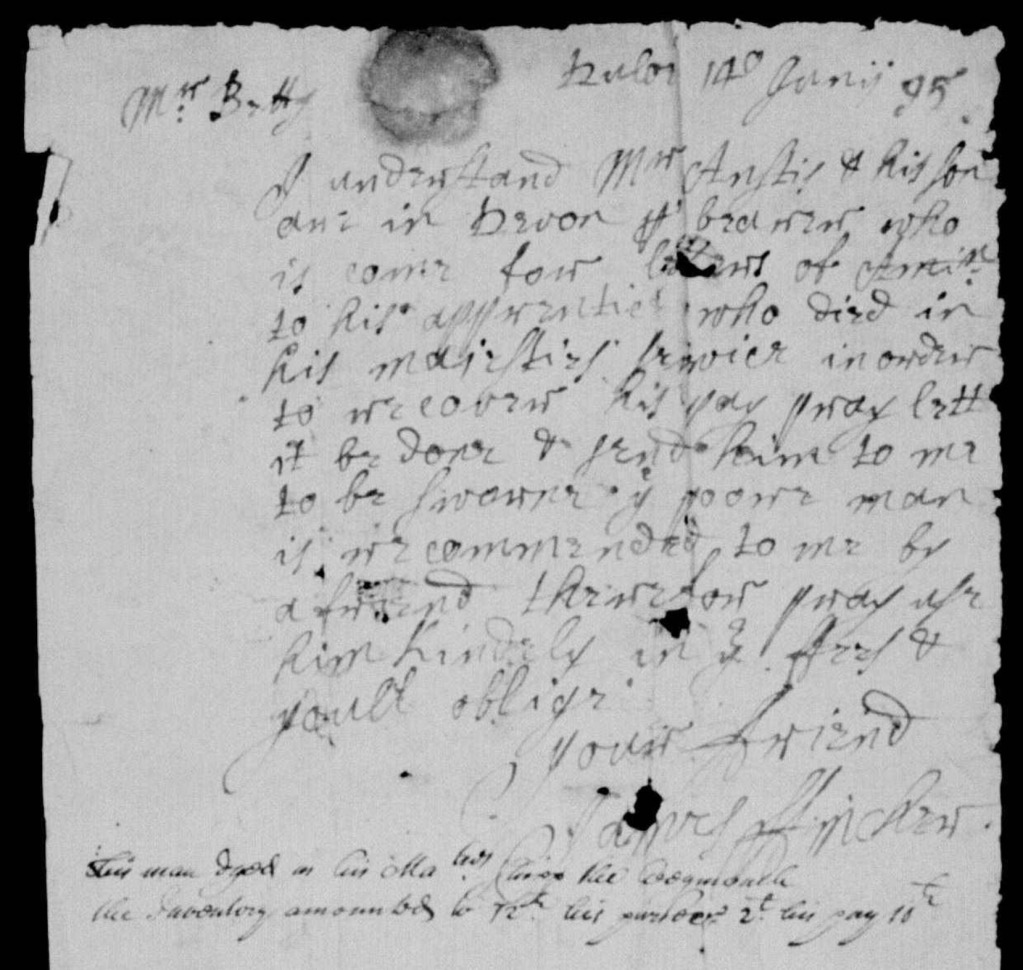
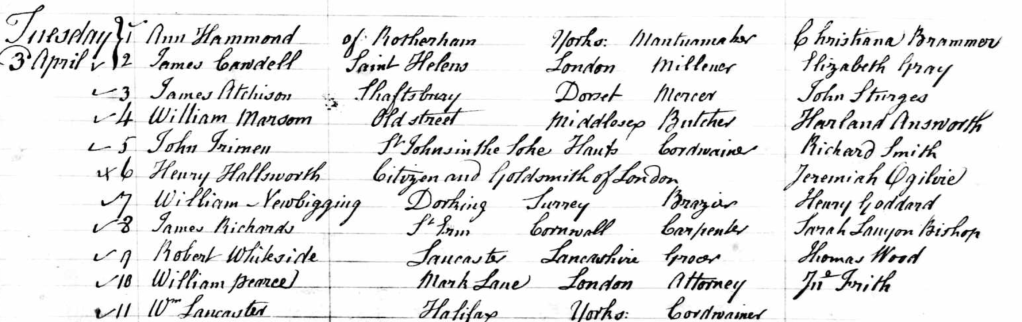
We’ll also never know the reason for the assault but just a few months after the Lostwithiel Sessions Sarah Lanyon Bishop was apprenticed to James Richards of St Erme, a carpenter. Did Richard Lanyon pay for her apprenticeship?

Apprenticeships Tuesday 3 April 1781

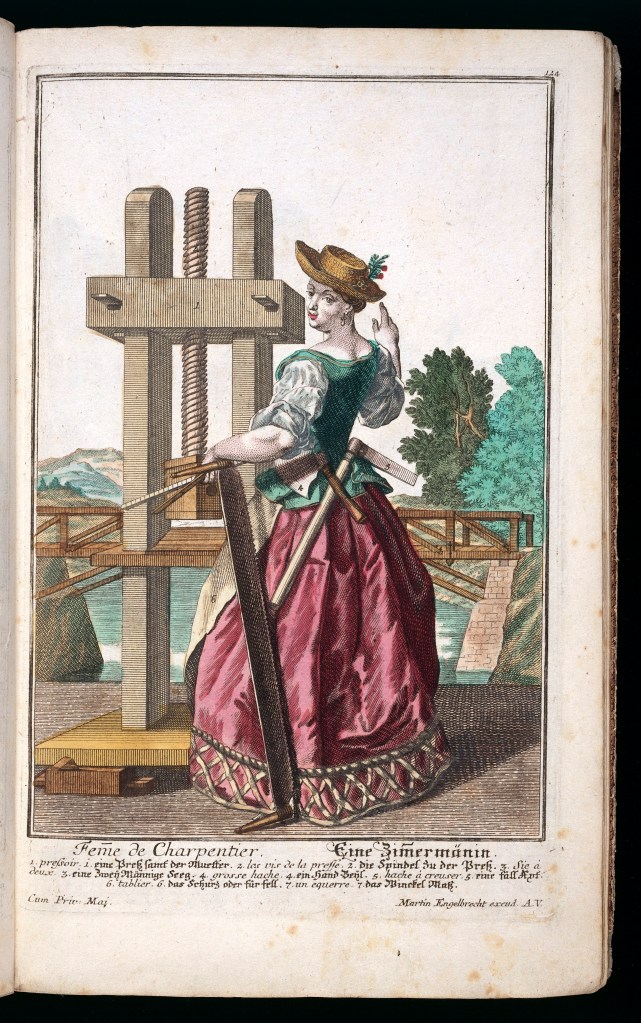
Carpentry is an unusual job for a girl but not completely unknown, the other female apprentices were training to become mantua-makers and milliners, why did Sarah end up as a carpentry apprentice?

Is there a family connection between the Lanyons and Richards families? Richard Lanyon’s son William married a Peggy Exter Richards, could she be related to James of St Erme? That’s a question for another day!

L0038569 Feme de Charpentier, A female Carpenter
Credit: Wellcome Library, London. Wellcome Images
images@wellcome.ac.uk
http://wellcomeimages.org
Feme de Charpentier, A female Carpenter with tools costume and apparatus
Coloured engraving
18th Century By: Martin Engelbrecht50 coloured plates / engraved by Martin Engelbrecht, from 18th-cent. German works.
Published: c. 1721

Copyrighted work available under Creative Commons Attribution only licence CC BY 4.0 http://creativecommons.org/licenses/by/4.0/

Sadly we don’t know what happened to Sarah. There is no trace of a Sarah Lanyon/Lenyne Bishop marrying or being buried in England. There are lots of Sarah Bishops the name is quite common and it’s not possible to prove if any of them is our Sarah Bishop.

Sarah’s mother, Mary, died unmarried in 1810 at Newlyn East. She was buried on 4 August.

Richard Lanyon left a will but there is no mention of Sarah. His estate was valued at under ยฃ300.

Medieval Soldier

Family historians are always looking for new sources of information so I was delighted to find the site medievalsoldier.org which has lists of lots of medieval soldiers. I searched and found one relevant entry:

William Lanyen – Man at arms naval service, serving under Hugh Courtenay, the Earl of Devon (ref: 14180500) this gives us the year 1418.

William was listed on a muster roll held at the National Archives ref: E101/49/34 m.8

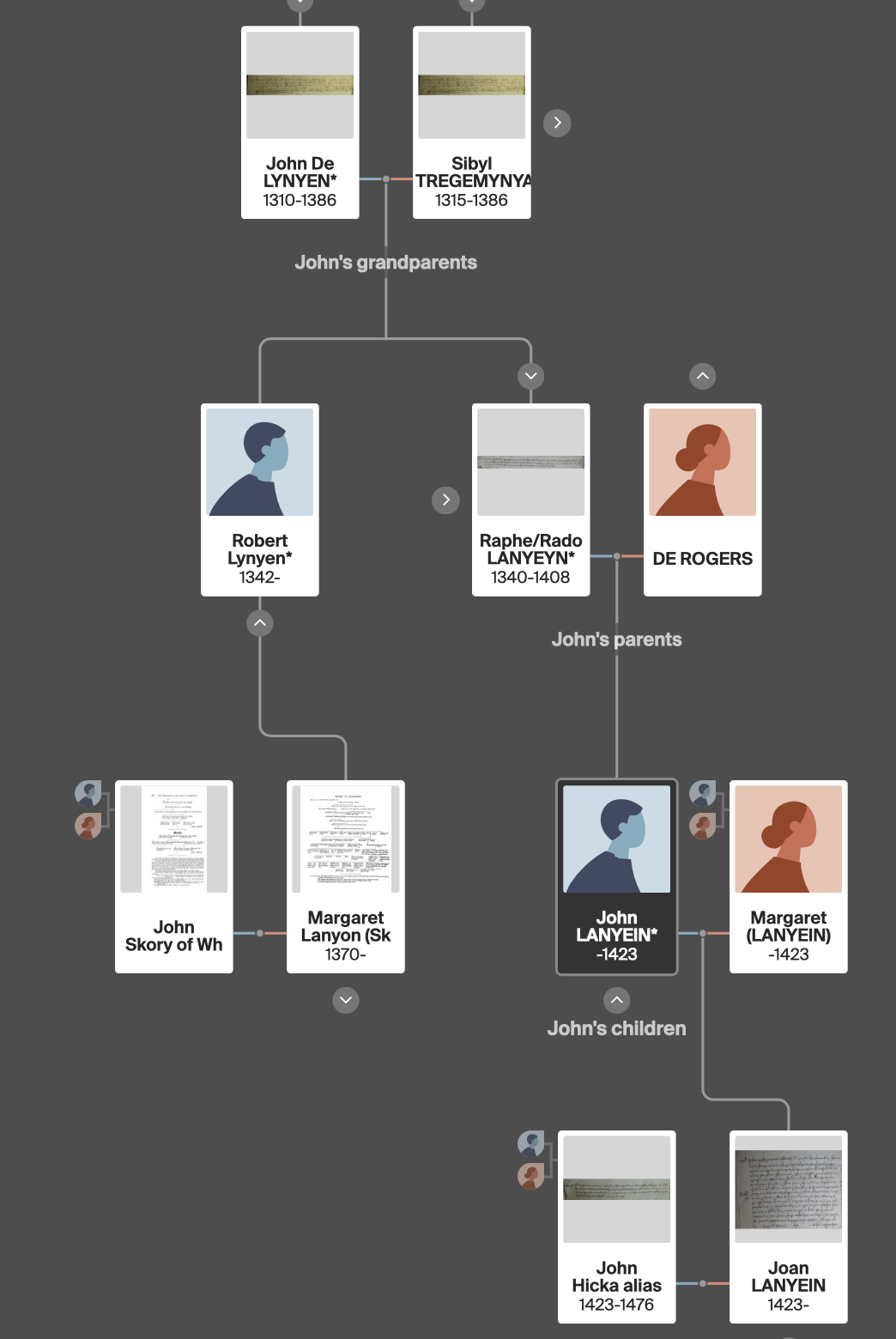
So who was William Lanyen and where does he fit on the tree? If he was fighting in 1418 he could have been born sometime during the period 1380 to 1400 and the tree at that time is a little complicated.

Raphe/Radolphus Lanyeyn was born abt. 1340 and died after 1408. We know his wife was from the de Rogers family, but not her first name. The source for that was a letter from Jane Veale Mitchell to Edward Bullmore: “….in the Rolls Office Chancery Lane, a Radolphus Lanyon asks that Tregaminion then in possession of his brother in law de Rogers might have come to him and his descendents because they had no children, written in old french dated 1327.”

We don’t know which roll this information came from or why Raphe’s brother in law was then in possession of the estate called Tregaminion.

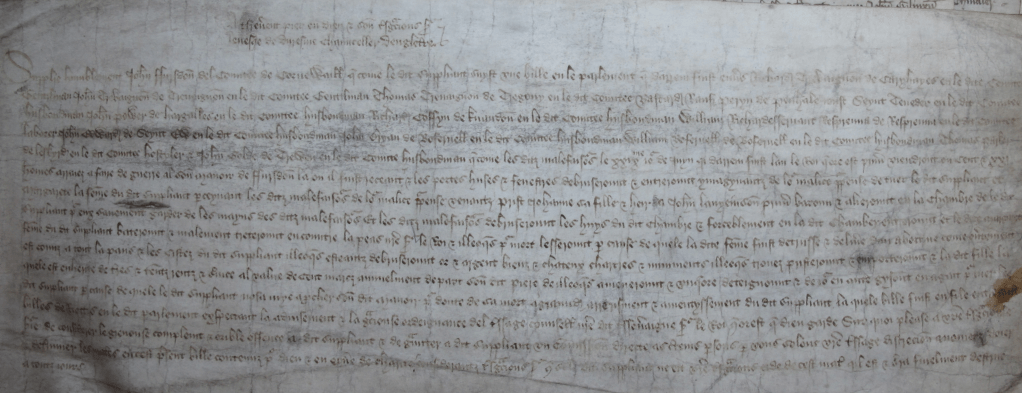
Raphe had a son called John Lanyein who died bef. 1423. His widow Margaret remarried John Fursdon and there is an interesting document: Early Chancery proceedings: C1 Bundle 5/41 which mentions John Fursdon, Margaret and Margaret’s daughter, Joan Lanyein who was born bef. 1423.

Early Chancery proceedings: C1 Bundle 5/41

You can read all about Joan and how she was John Lanyein’s heir, in the post ‘Abduction’. https://thelanyonstree.com/2022/08/17/abduction/

If William Lanyen, our naval man at arms, was born abt. 1380 to 1400 then he would have been a contemporary of John and Joan Lanyein but he can’t have been a brother as surely he would have inherited? Which suggests he must have been a cousin from a cadet branch of the family.

There are no other records of this William and we don’t even know if he survived or was killed during his service in the navy.

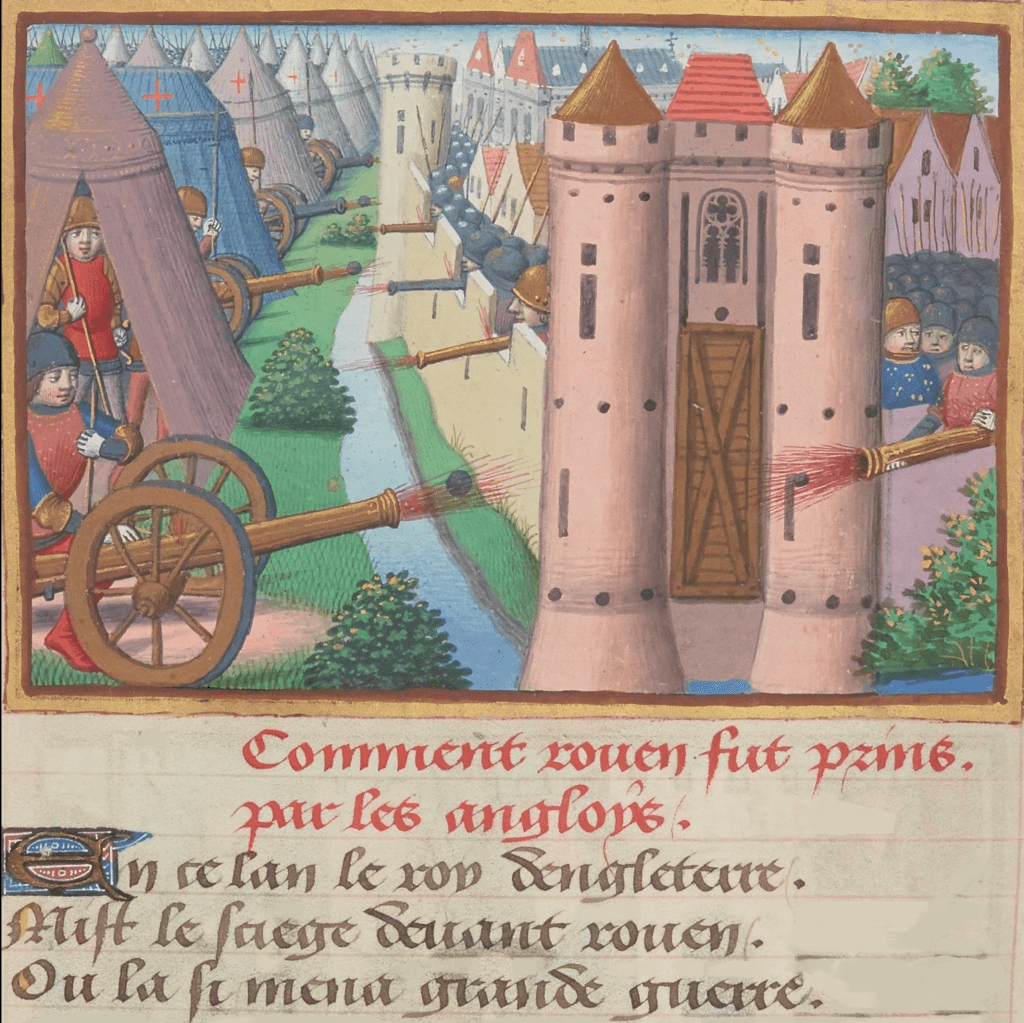
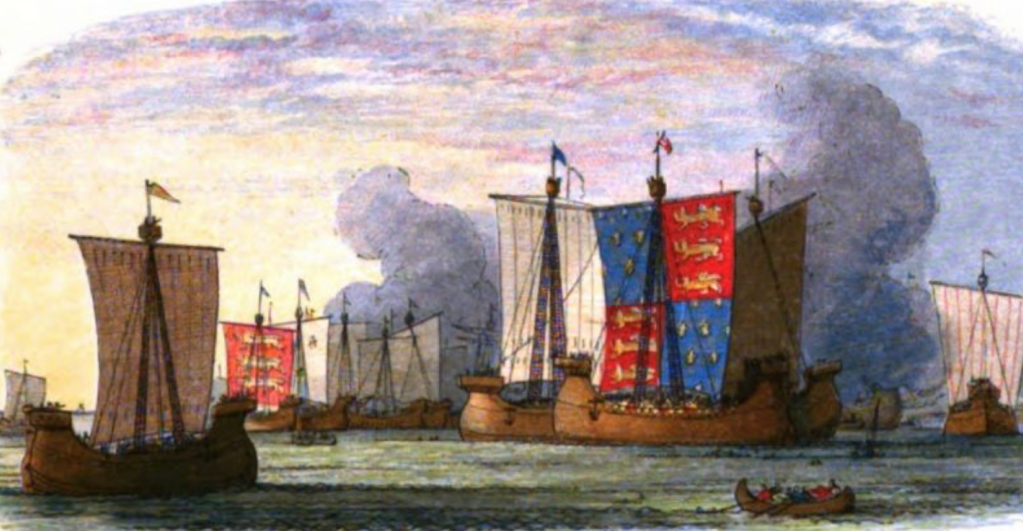
We can however find out a little about the way he lived. In 1415 England defeated the French at Agincourt and in the following years the two countries fought the ‘Hundred Years War’. In 1418 England was laying siege to the city of Rouen, and Rouen could not be taken until the English had control of the sea.

The Siege of Rouen

The southwestโ€”Devon and Cornwallโ€”was one of Englandโ€™s most important naval regions. Theย Earl of Devon provided ships and fighting men under contract to the Crown.

Devon & Cornish men were especially valued because they:

  • Were experienced sailors and coastal fighters
  • Knew Channel waters well
  • Were used to defending against Breton and French raids

The siege at Rouen depended on supplies reaching the English and the job of the navy was to escort the ships carrying, food, weapons and horses and to fight off French attackers.

A naval man at arms was not a sailor, he was a soldier. Ships at this time rarely had guns and they fought by grappling the enemy ship and pulling it close enough for the archers to shoot and the men at arms to board and fight the enemy. A man at arms had status greater than an archer but not as high as a knight. Pay was about 12d a day and there was a chance to ransom and loot.

Despite the opportunities to make money it was a very hard life on board. The soldiers often slept outside in the cold and damp and they ate a poor diet. The risk of being killed in action was high and the risk of accidental death for example, from falling overboard whilst wearing chain mail was also high.

Medieval ships fighting

The English ships prevented supplies getting through to Rouen and eventually the city was starved into submission in January 1419.

Happy New Year!

By Gill Lanyon 1st Jan 2026

Wishing all my subscribers and visitors a very happy new year!

2025 in numbers:-

The website had 7,500 views and 2,200 visitors.

The top three countries for visitors were United Kingdom, USA and Australia but we also had visitors from as far away as Ghana, New Caledonia, Kiribati, Pakistan and Ethiopia! Just amazing!

The most popular post in the last year was ‘The Fiji Lanyons’.

The busiest day for visitors was 11th March 2025.

I only produced four new posts in 2025 as it was a busy year for me. Hopefully in 2026 I’ll have some interesting new posts.

I’m always delighted to read your comments and happy to help, if I can, with family history queries.

If you have a Lanyon family story you’d like to share please get in touch.

William John Glanville Lanyon

William John Glanville Lanyon was born on 31 May 1881 in Saltash Cornwall, the illegitimate son of Mary Ann Lanyon. He was known as John Lanyon. His family also knew him as Barney.

I’ve pieced the following story together from the records available.

According to the 1861 census Mary Ann Lanyon was born in 1858 in Hayle, Cornwall the daughter of John Lanyon & Emma Jane. John was a boiler maker steam engineer and died at the tragically young age of just 24. John was from Marazion and I can trace his family tree back to Barnard Lanyon 1638-1714.

I found a marriage of a John Langon & Emma Elmes in 1857 St Germans and a birth registration for Mary Ann in Penzance in 1857 with a motherโ€™s maiden name of Elums. Various censuses have her born C1857/8 in either Hayle or Saltash.

In 1864 Emma Jane  (26) married William Barrett, a fisherman, age 20. She is listed as a widow on the marriage certificate.

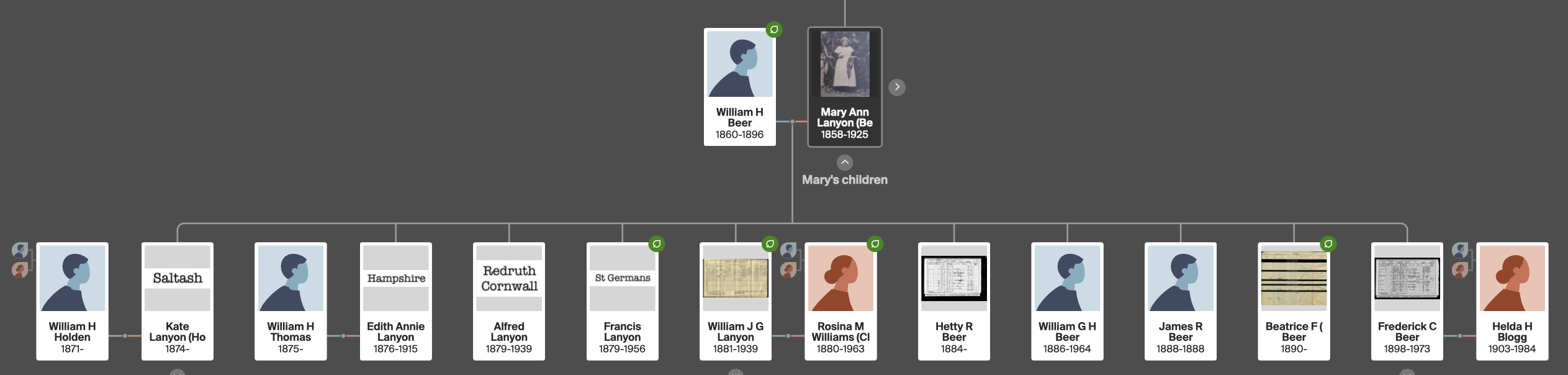
In 1873 at the age of 15 Mary had her first illegitimate child: Kate Lanyon, followed three years later by Edith Annie and then Alfred & Francis Lanyon, twins (they were actually triplets, but the third child was stillborn). Finally in 1881 she gave birth to William John Glanville Lanyon. According to the 1881 census she was an inmate at St Germans ย Union, Torpoint (the workhouse) with 2 year old twins Frank & Alfred Lanyon. Sheโ€™s listed as a fisher saleswoman and pauper. Presumably she had been admitted to the workhouse due to the imminent arrival of another child and extreme poverty. What a desperately hard life it must have been.

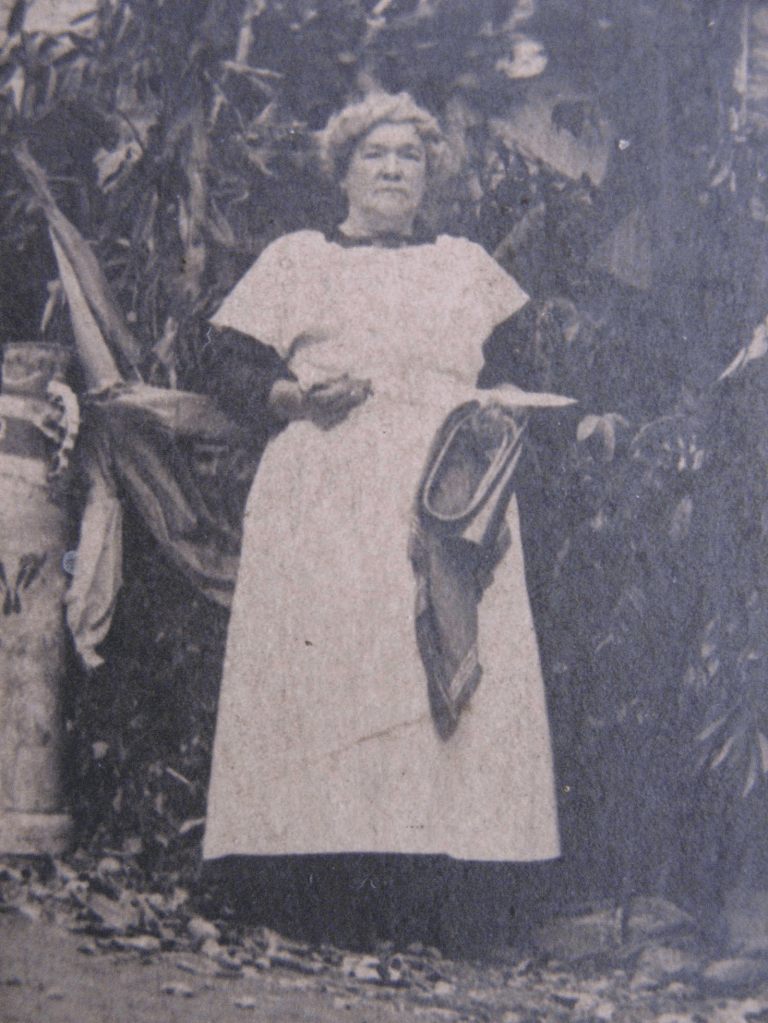
Mary Ann Lanyon

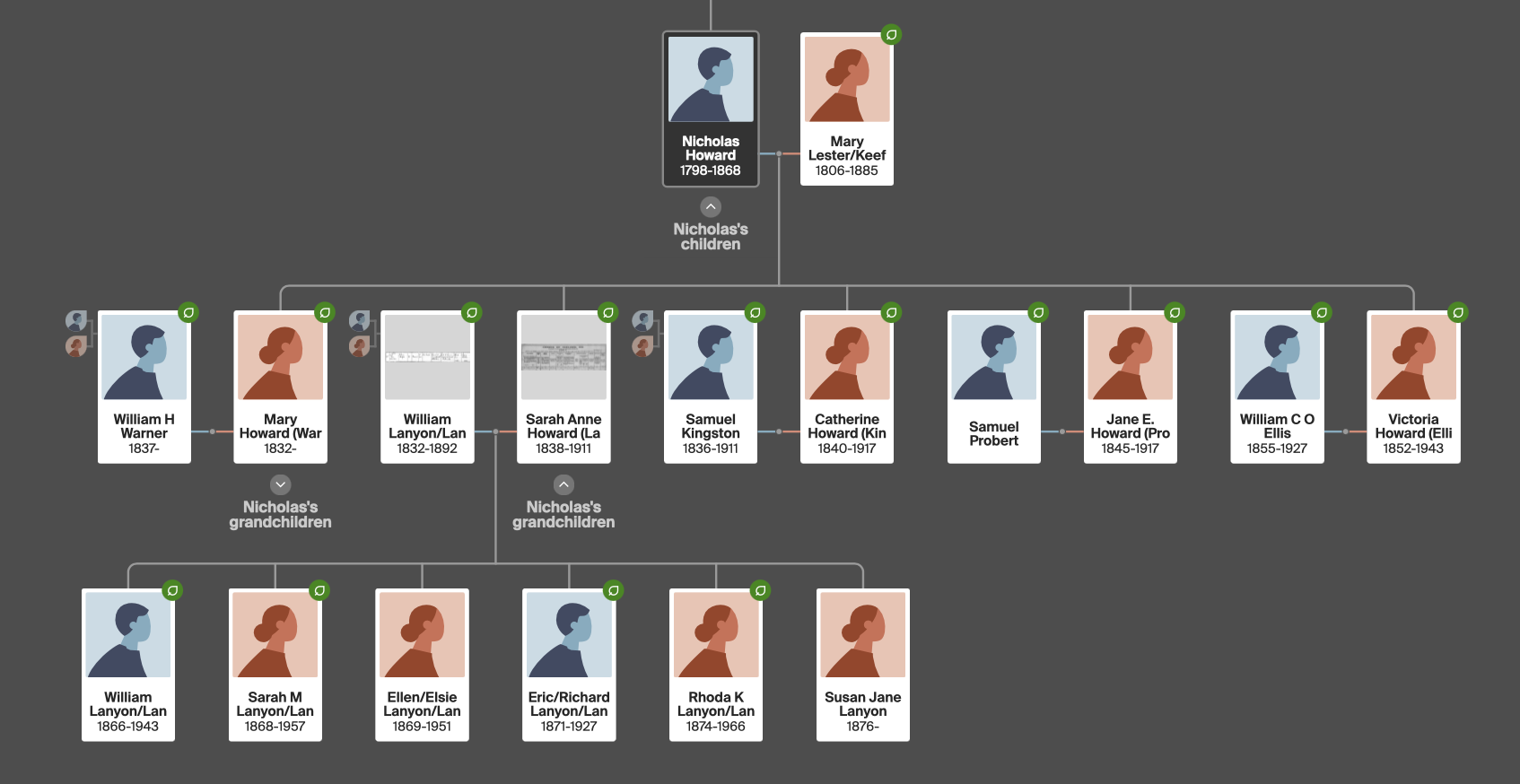
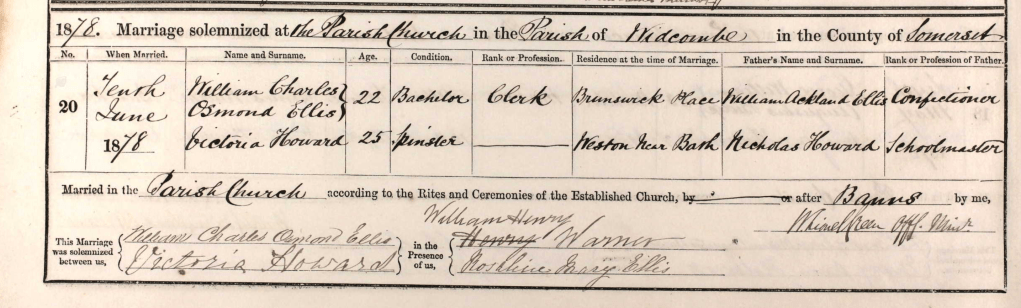
In 1884 she gave birth to another illegitimate child, Hetty Roseanna Beer and the following year she married William Henry Beer in Saltash. William was a tailor journeyman.

In 1886 Mary gave birth to William George Henry Beer (her second child called William). This is presumably why William John Glanville Lanyon used the name John rather than William.

Mary Ann had two more children: James & Beatrice Beer. Then William Beer her husband died aged just 36. Two years later she had another illegitimate child, Frederick Charles Beer.

Mary Ann died 17 Mar 1925 in Saltash.

On the 1911 census William John Glanville Lanyon aka John Lanyon is described as a fisherman and is still living at home with his mother and three of his brothers.

Military records show that he was a private in the army, the Duke of Cornwall’s light infantry, during the first world war and that he was discharged on 14 April 1917 as he had a gun shot wound to his arm which was amputated. Despite this disability he was still able to row a boat with one arm!

The 1921 census shows him still living at home with two of his brothers, working as a fisherman and is still listed as single.

1921 Census

In 1923 his army pension records showed him moving from Saltash to 141 Hertford Road Enfield.  The electoral register for Enfield in 1924 showed him living at 141 Hertford Road with Rosina ‘Lanyon’. I was unable to trace a death or burial for Rosina’s first husband Alfred William Clarke.

On 29 May 1939 John Lanyon married Rosina Maud Clarke (nee Williams) she was known as Maud. John was almost 60! Rosina was the ‘widow’ of Alfred William Clarke. There were two children of this first marriage.

  • Alfred Felix 1900-
  • Rosalind Jannette 1900-2006

The 1939 register described John Lanyon as incapacitated. The couple were living on a houseboat called ‘Beatrice’ in Saltash.

So far so good…..but this is where it gets complicated and it’s fair to say it took me many months to untangle this little branch of the family.

In 1921 Rosalind Jannette Clarke was working as a shorthand typist and living in Devonport with her parents, Alfred and Rosina. Alfred was a boatman for the RN coastguard service and they lived at Fawley coastguard station. Perhaps Alfred knew a one armed fisherman called John Lanyon!

By Aug 1922 Rosalind had given birth to her first child. She wasn’t married but the father of the child was Sidney Alfred Thomas.

Sidney Alfred Thomas

Sidney was born in Sheerness Kent on 15 Mar 1889, the son of John Battersby Thomas and Mary Louisa Hurrell. On the 1901 census he is listed as attending the Royal Hospital School at Greenwich. In 1904 he joined the navy (service no: 347079). In 1911 he joined the freemasons, Hong Kong United Service lodge of HMS Robin. HMS Robin was a river gunboat in Canton, China.

In January 1915 Sidney married Ida May Boulton at Devonport.

On 8 Jul 1919 Sidney left the Royal Navy and by 1921 he and Ida were no longer living together. He was working as a dairyman and pork butcher. There were no children from this marriage.

1921 census for Plymouth

By Aug 1922 he was the father of Rosalind’s first son. He had also changed his name to John Lanyon! I assume he chose this name as he knew William John Glanville Lanyon.

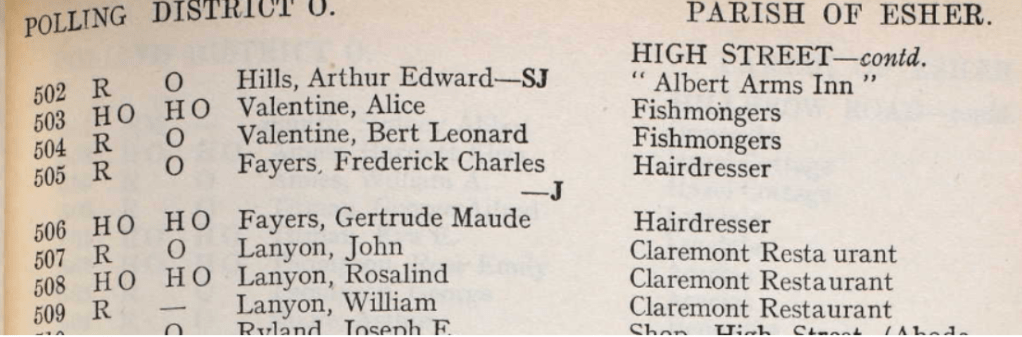
By 1928 he, Rosalind and their son were living in Surrey. I found them on the electoral register in Esher, working at the Claremont Restaurant and living with a William Lanyon. Presumably William John Glanville Lanyon.

Electoral Register for Esher

By 1943 they had two more children and Rosalind was using the surname Lanyon and also using the first name Rosalina. To confuse matters even more by this time her mother Rosina had married William John Lanyon so mother and daughter, Rosalind/Rosalina and Rosina, were both using the surname Lanyon and living with men known as John Lanyon!

Rosina’s wedding certificate was signed by Rosalind J Thomas and Sidney A Thomas even though he had been using the name John Lanyon since 1922.

Marriage certificate of William and Rosina

Sidney/John and Rosalind must have separated sometime after 1943 when their third child was born. Then on 25 Sep 1950 Sidney Alfred Thomas aka John Lanyon married Agnes Taylor at Finsbury London. John described himself as a widower. John had never been married to Rosalind but his first wife Ida was still very much alive and they weren’t divorced!

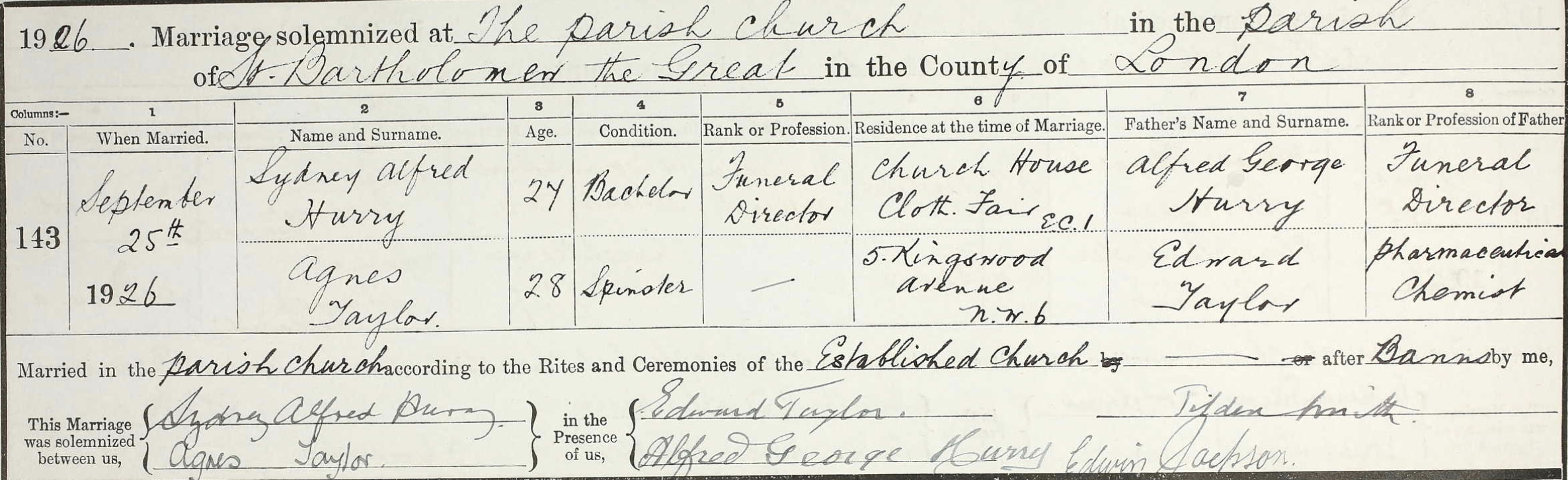
To complicate things even further Agnes Taylor’s first husband was called Sydney Alfred Hurry. It seems incredible that Agnes married two men both called Sidney Alfred! They had married on 25 Sep 1926. The 1939 register records that she was divorced.

Marriage of Agnes Taylor to Sydney Alfred Hurry

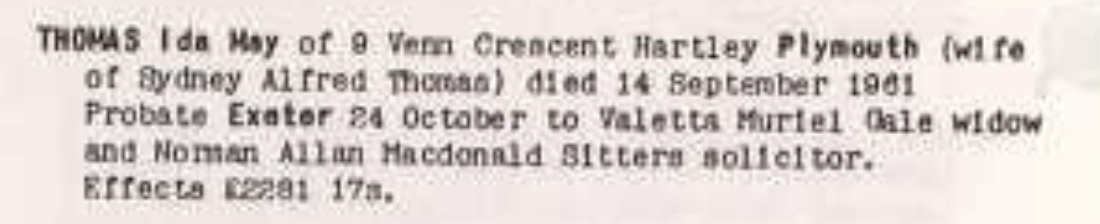
Poor Ida Lanyon had been abandoned and had gone back to live with her mother and sisters. She worked as a school teacher. She died on 14 Sep 1961 at Plymouth and her probate described her as ‘wife of Sidney Alfred Thomas’.

Ida Thomas’ probate

I was unable to trace a death for William John Glanville Lanyon/John Lanyon. He was alive in 1939 and that’s as far as I was able to follow him until a family member got in touch and recalled how he was still alive in 1952.

Rosina Maud Lanyon died Q2 1963 at Portsmouth.

Sidney Alfred Thomas/John Lanyon died 13 June 1964 in Chelmsford.

Rosalind Jannette Clarke aka Lanyon died in 2006 at the age of 106!

The Huguenot Branch

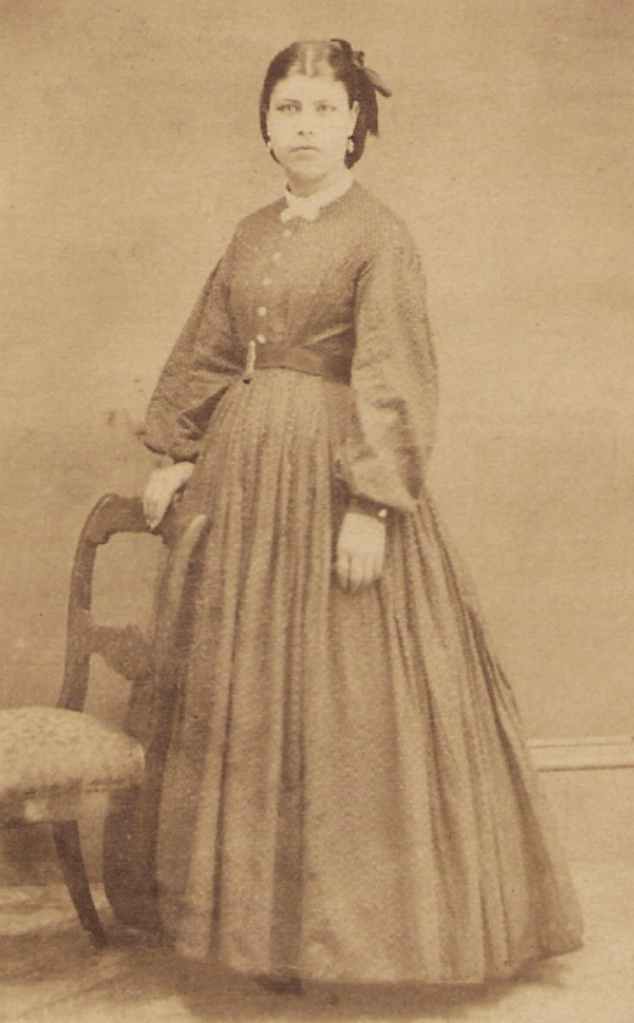
Catherine Septima Lamotte 1874-1958 married Arthur Herbert Lanyon, this is her family’s story.

The Lamotte family were Huguenots.

In 1642, in Switzerland, Claude LaMotte and Jeanne LeClair had a son Claude Lagier LaMotte. (Some researchers name Antoine Lagier as the father but the only record I have found names father and son as Claude.)

Claude married Marie Caillat on 16 May 1684 โ€ข Vierzon, France. (Marie’s father is also named Claude on the marriage record!) Perhaps it was a second marriage for Claude LaMotte, who was 42 at the time of his marriage. I have only traced two sons, Daniel born in 1698 and John (Jean) born in 1708 when his father was 66 years of age.

The family appears to have moved between France and Switzerland. John was born in France but Claude died in Geneva, Switzerland on 05 Mar 1712.

We next see Jean in George II’s State papers when a bill in the House of Lords was passed to naturalise Jean Lagier Lamotte. His brother Daniel became a British citizen in 1742.

On 06 Feb 1734ย  at ย St Martin Orgars French Huguenot Church, St Martin’s Lane, London Jean married Louise D’Albiac, the daughter of Capt. James D’Albiac and Louise De La Porte.

James Dalbiac

James D’Albiac was born 28 Nov 1681 โ€ข Nรฎmes, Gard, Languedoc-Roussillon, France, the son of Scipion D’Albiac and Marie Durand. Scipion was born 18 Jan 1650 at Nรฎmes.

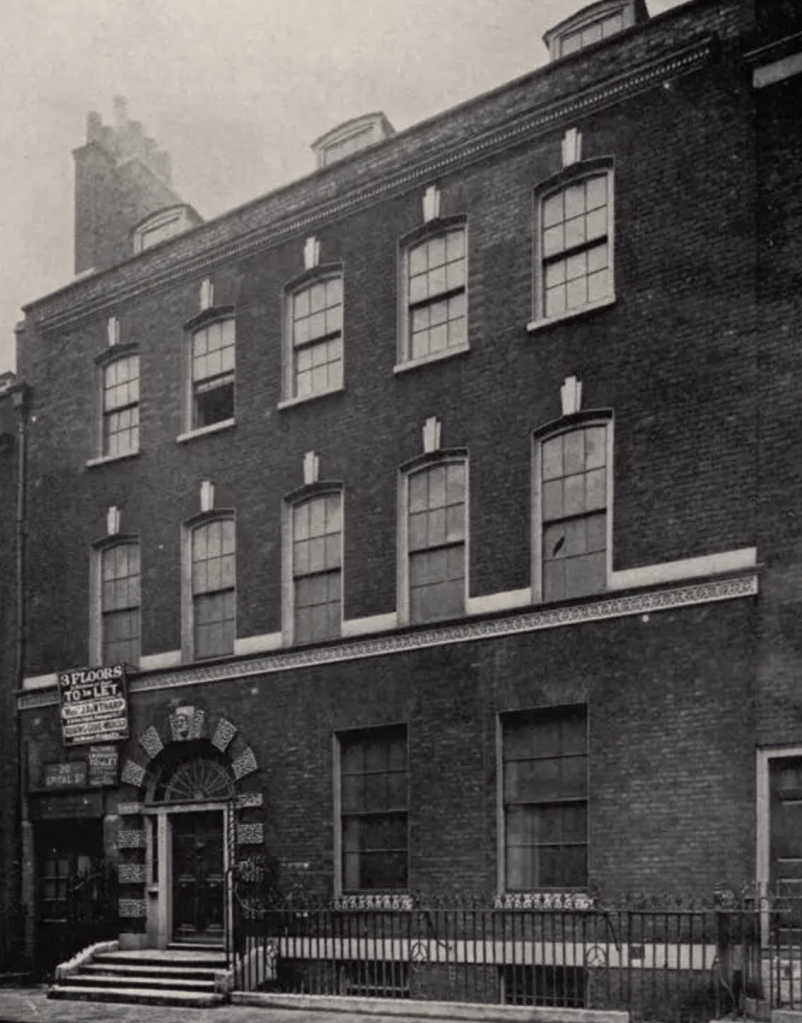
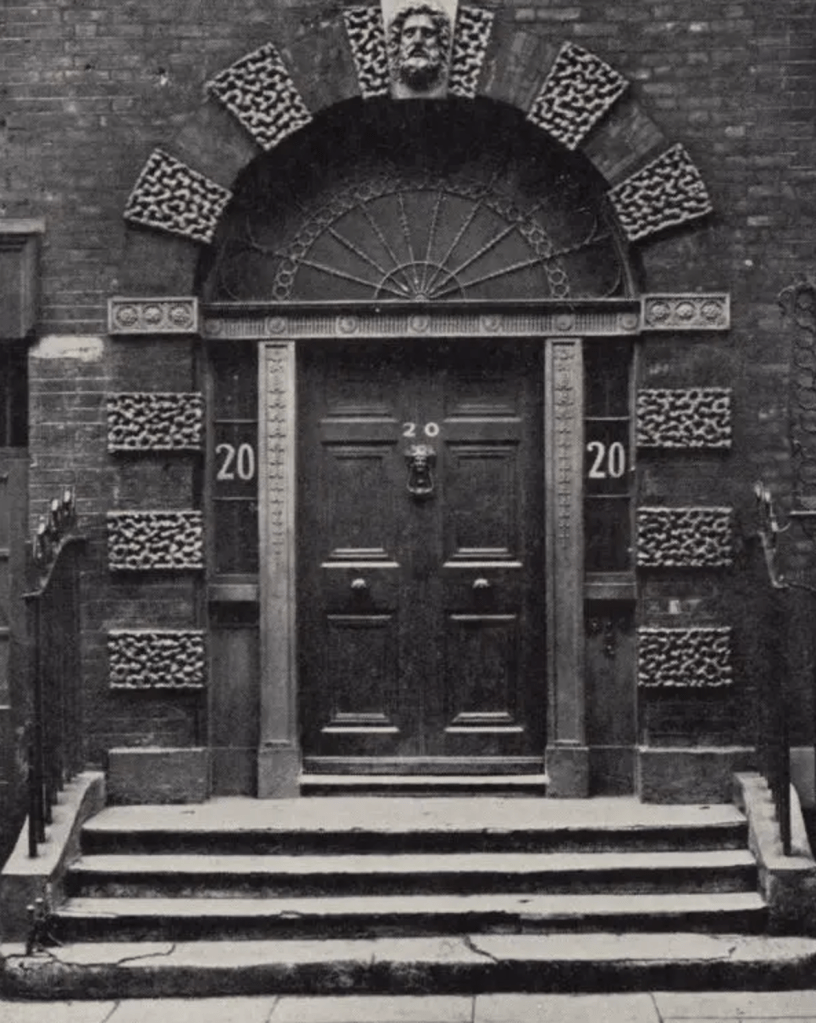
They anglicised their name to Dalbiac. The Dalbiacs lived at 20 Spital Square, Spitalfields London.

20 Spital Square – https://spitalfieldslife.com/2017/07/29/lost-spitalfields-2/

The doorway of 20 Spital Square – https://spitalfieldslife.com/2017/07/29/lost-spitalfields-2/

James Dalbiac was a silk weaver and was admitted to the Weaver’s Company in 1711 as a foreign master. The Huguenot silk weavers were not popular and between 1719-1721 the anti-calico campaign led to riots. Many Huguenot silk weavers lived in Spitalfields. Windows were smashed and business disrupted. This didn’t stop James and the other silk weavers from becoming hugely successful. At his death in 1749 he was described as โ€œan eminent black silk weaver reputed to have died very richโ€.

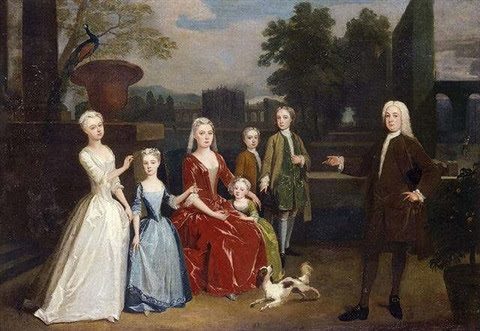
James Dalbiac (standing) and his family.
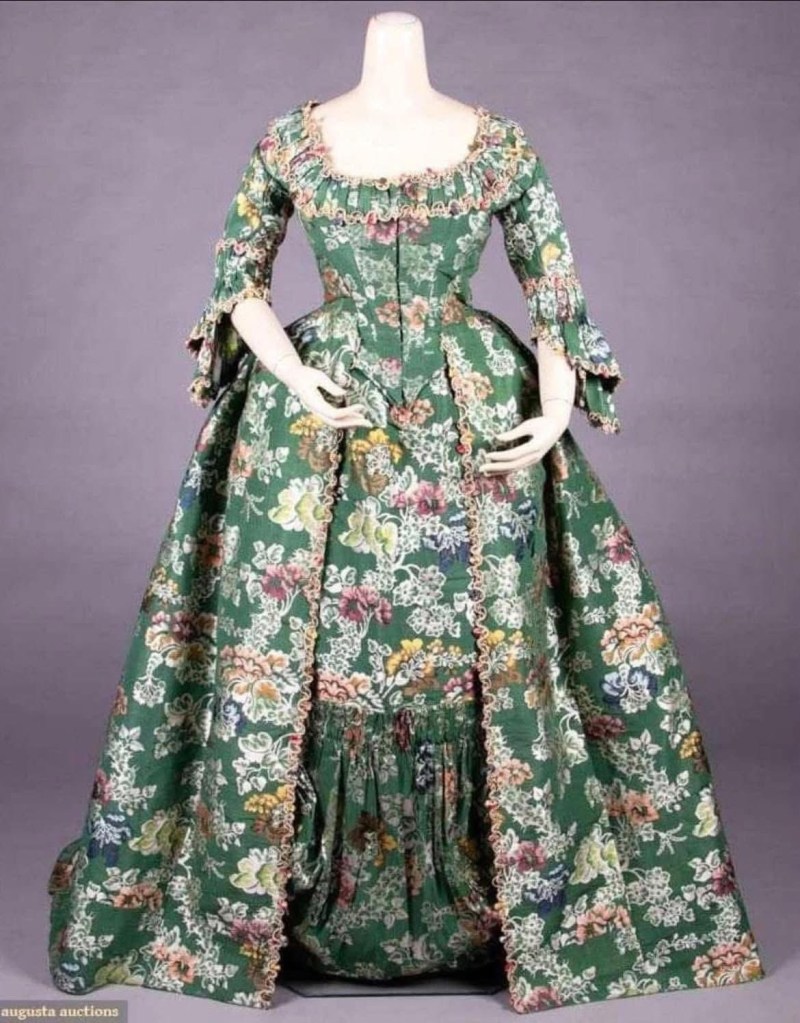
An example of the beautiful Spitalfields woven silk c 1736

James’ daughter, Louise Dalbiac, was born in 1712 and she married John Lagier Lamotte.

John Lagier Lamotte senior

The year before his marriage there was an act to naturalise Jean Lagier LaMotte whose name was anglicised to John Lamotte.

John Lagier Lamotte’s tree

John and Louise had five children:

  • Louise Lagier 1736-1825 she married Benjamin Dubouley who was the pastor at the French church in Threadneedle Street
  • Marie Lagier 1737-
  • John Lagier Lamotte 1740-1812
  • Catherine Lagier 1743-1797
  • Henri Lagier 1746-

In 1743 John Lagier Lamotte, merchant, leased for 7 years vaults for storing beer in the new church Brick Lane. Source – Spitalfields great Synagogue deeds & agreements.

In 1744 he was listed as one of the merchants protesting against papists.

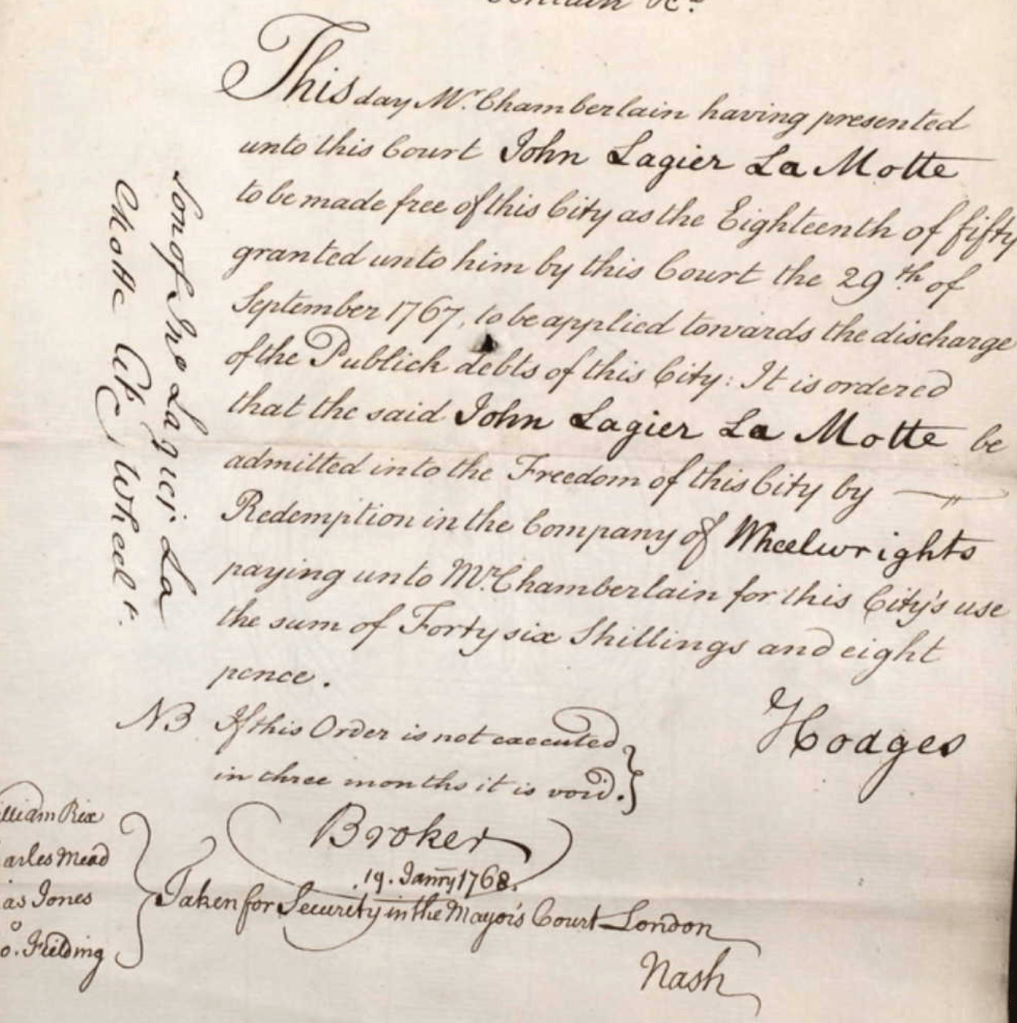
John Lamotte senior was a merchant. He was given the freedom of the City of London in 1767 in the Company of Wheelwrights.

Freedom of the City of London

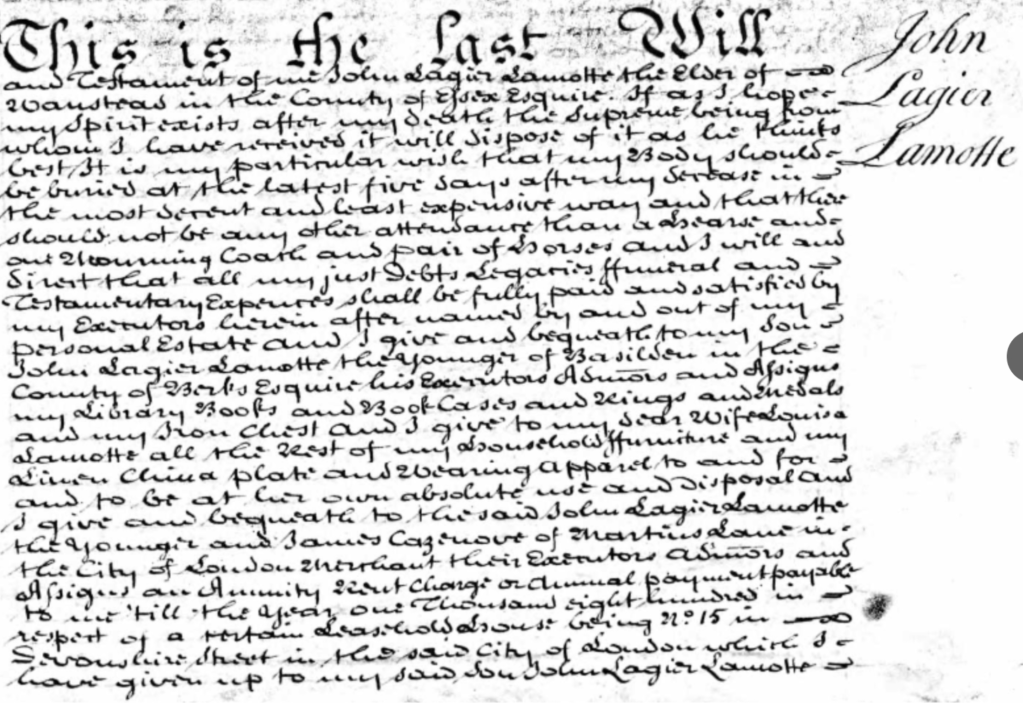
Like his father in law he was a successful businessman and died a rich man. He was buried in 1792 at Wanstead in Essex. Fortunately for us, he left a will which mentions his wife and son, John.

John Lagier Lamotte Junior

John was baptised on 5 Sep 1740 in London. He was 41 before he married Mary Davies in 1781.

I found six children, however only one was born after their date of marriage so it appears as though John Lamotte had another wife who died after 1779 and before 1781:

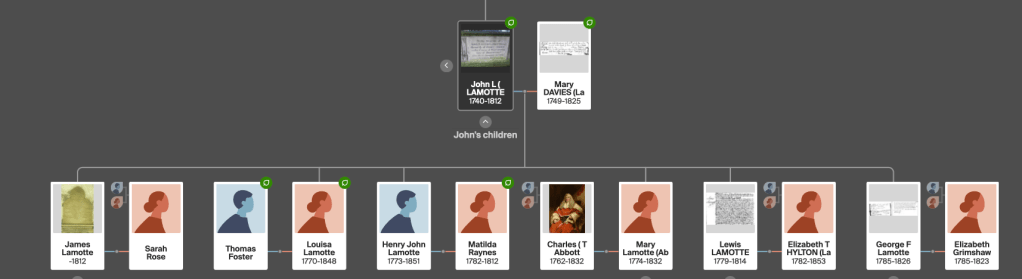
  • Louisa 1770-1848 married Thomas Foster
  • Henry John 1773-1851 married Matilda Raynes
  • Mary 1774-1832 married Charles Abbott, Lord Tenterden
  • Lewis 1779-1814 married Elizabeth Hylton
  • George 1785-1826 married Elizabeth Grimshaw
  • James -1812 married Sarah Rose (I was unable to find a date of birth or baptism for James)
Owen, William; Charles Abbott (1762-1832), Baron Tenterden, Lord Chief Justice; Corpus Christi College, University of Oxford; http://www.artuk.org/artworks/charles-abbott-17621832-baron-tenterden-lord-chief-justice-221895

John was a broker of financial services and a successful and wealthy businessman. he died 26 January 1812 at Brighton.

John’s grave at Brighton

Lewis Lamotte

Lewis was born in 1779. In 1796 he obtained his degree from Oxford University and became a lawyer. In 1805 he was a member of the Middle Temple of the Jamaican Bar. Before 1809 he married Elizabeth Tomlinson Hylton in Jamaica. (We’ll follow her family in a separate post.)

Lewis Lamotte’s tree

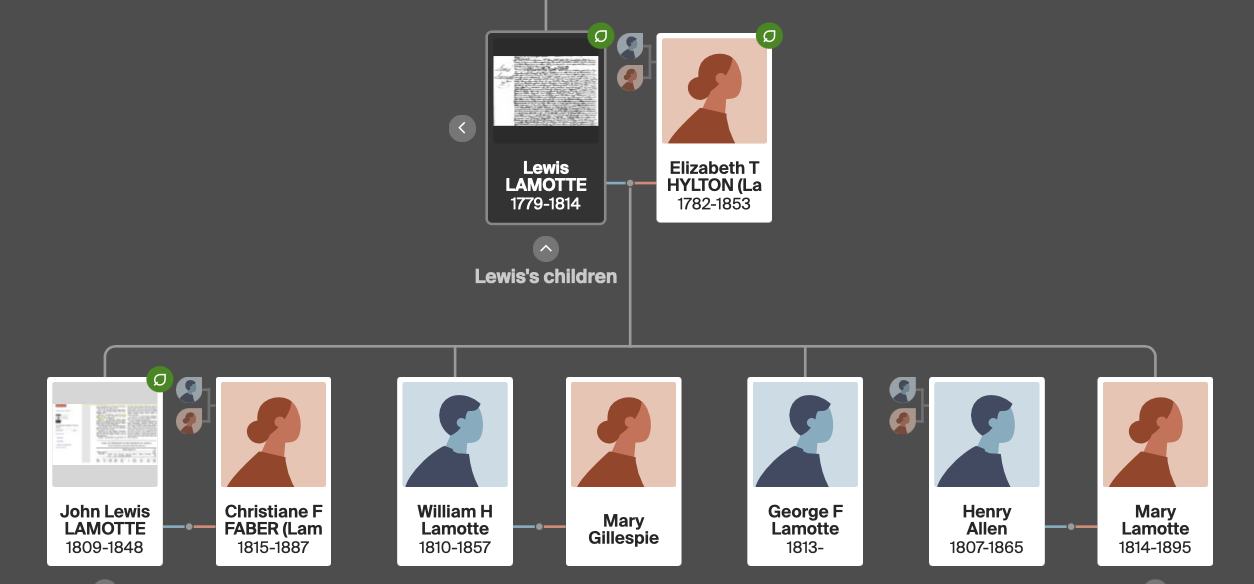
Lewis and Elizabeth had four children:

  • John Lewis 1809-1848
  • William Hylton 1810-1857 married Mary Gillespie
  • George Francis 1813-
  • Mary 1814-1895 married Henry Allen
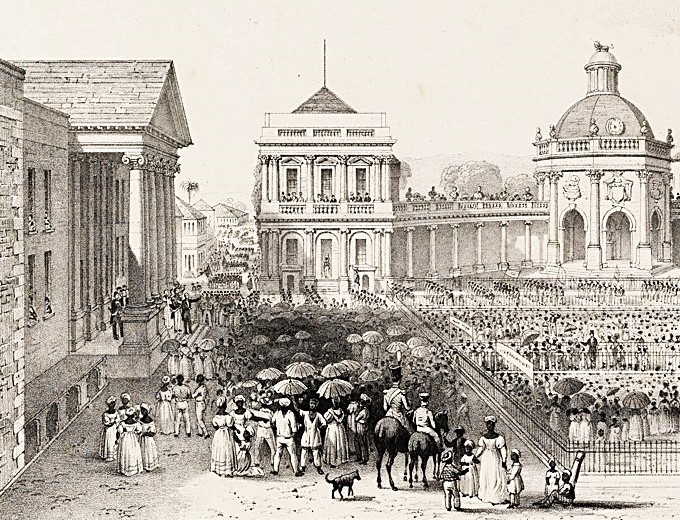
Spanish Town – Thomas Ashburton Picken, Public domain, via Wikimedia Commons

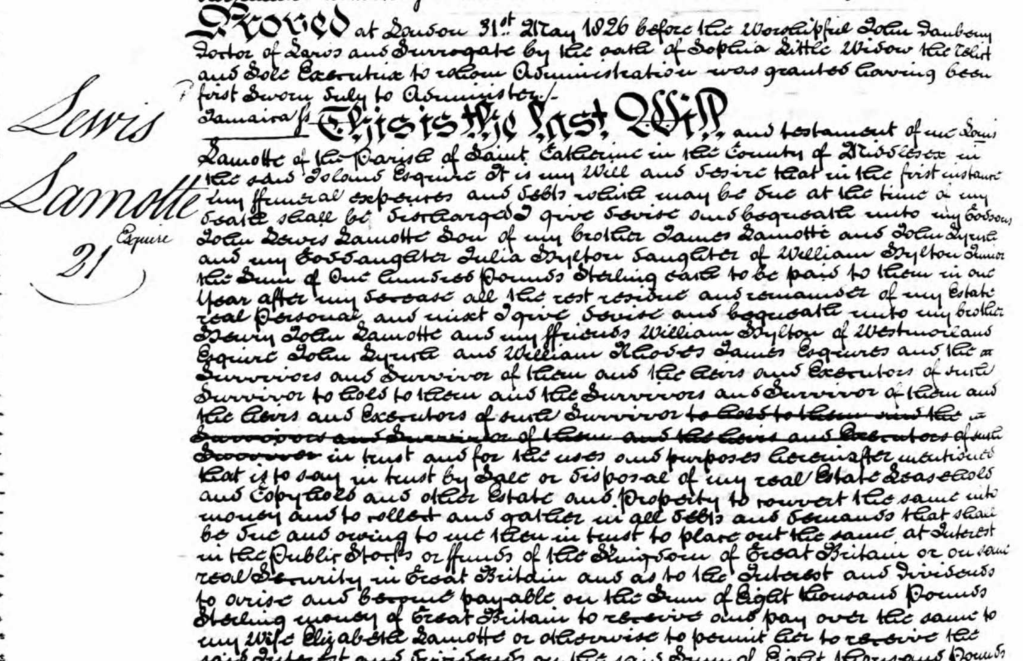
The West Indies was a place to make money but it carried enormous risks and Lewis died in 1814 at Spanish Town, Jamaica. He was 35. He left a long and detailed will.

Lewis Lamotte will – Source NA PROB 11; Piece: 1712

John Lewis Lamotte

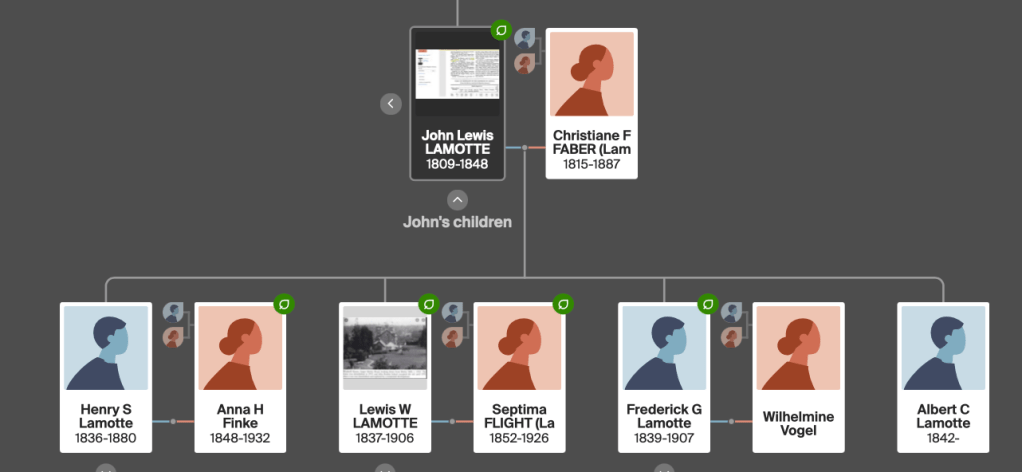
John Lewis Lamotte was just 5 when his father died in Jamaica. He was a tobacco broker and it was this that brought him to Bremen in Germany where he married Christiane Friederike Margarethe Faber sometime before 1836 when their first child was born.

John Lewis Lamotte’s tree

He and Christiane had four children:

  • Henry Sidney 1836-1880 married Anna Finke
  • Lewis William 1837-1906
  • Frederick George 1839-1907 married Wilhelmine Vogel
  • Albert Charles 1842

German records have proved to be quite impenetrable, especially as I don’t speak German!

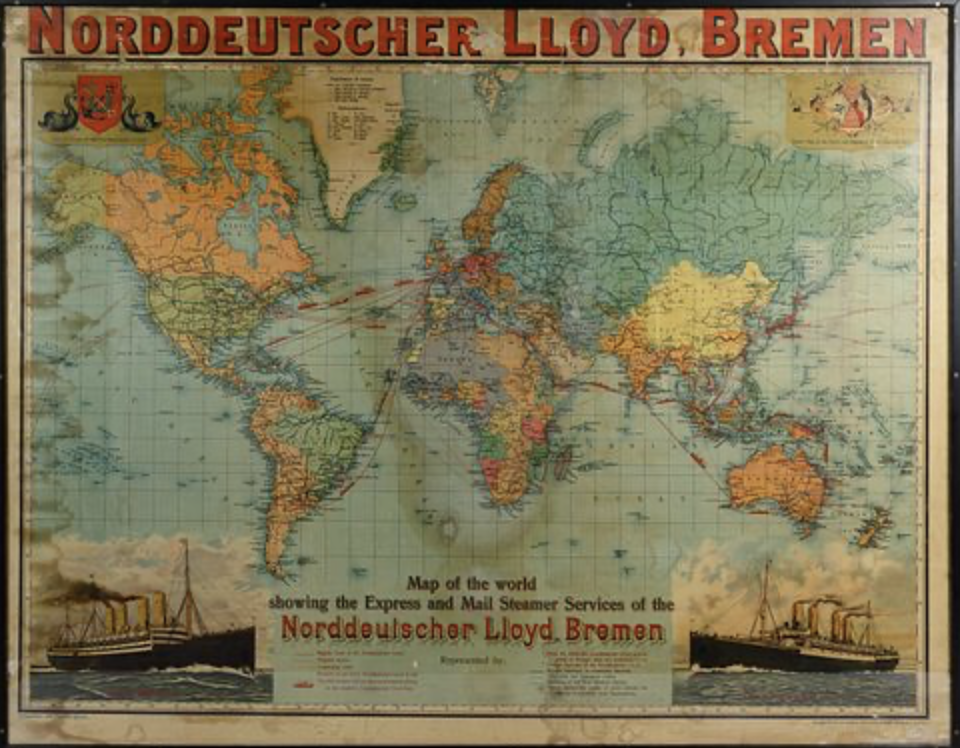
Bremen was a huge port, perfect for a tobacco broker.

John Lewis died in Germany in 1848. He was just 38. His death was listed in The Gentleman’s Magazine Volume 184-5

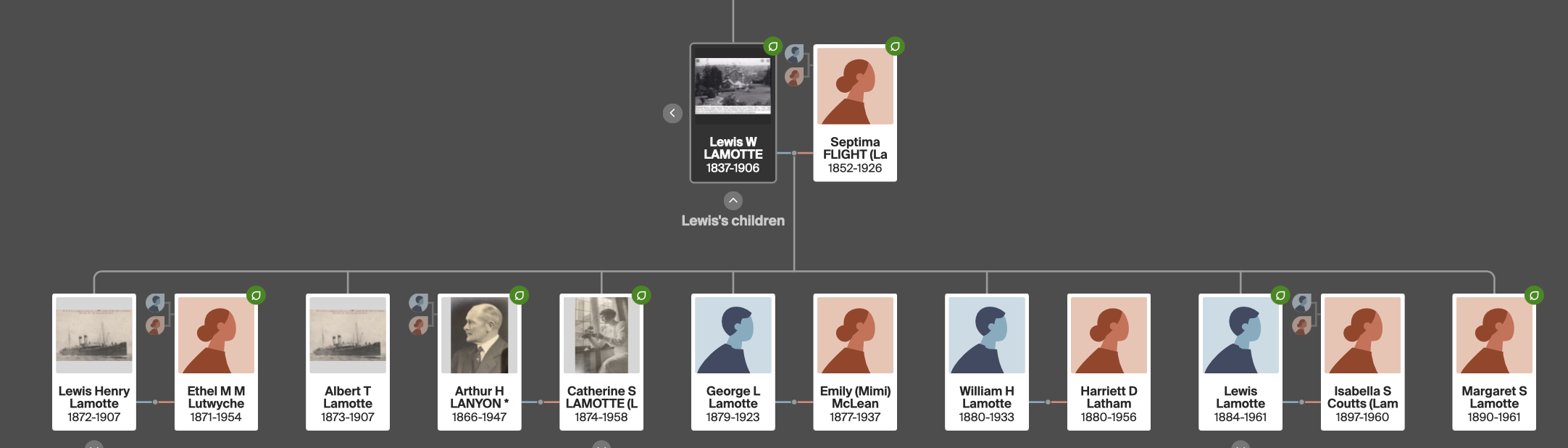
Lewis William Lamotte

Lewis was born in Bremen but by 1871 he was living in England. He appears on the 1871 census and is described as a tobacco broker. The same year he married Septima Flight at All Saints with St Margaret at Upper Norwood in Surrey.

Lewis Lamotte’s tree

Lewis and Septima had seven children:

  • Lewis Henry 1872-1907 married Ethel Lutwyche
  • Albert Thomas 1873-1907
  • Catherine Septima 1874-1956 married Arthur Herbert Lanyon
  • George Lagier 1879-1923 married Emily McLean
  • William Hylton 1880-1933 married Harriett Latham
  • Lewis 1884-1961 married Isabella Coutts
  • Margaret Septima 1890-1961

To keep things interesting they named two sons Lewis!

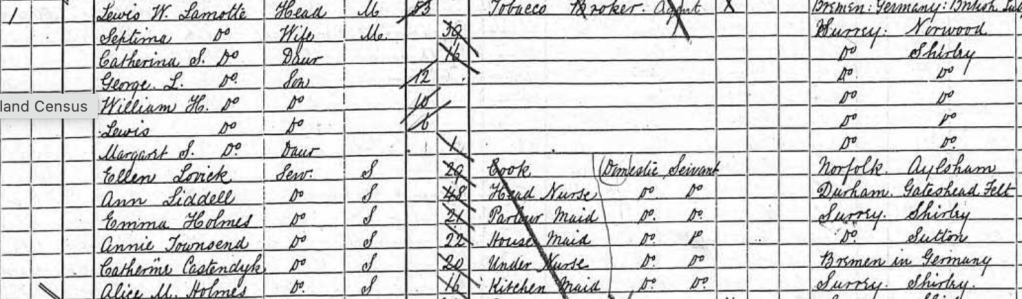
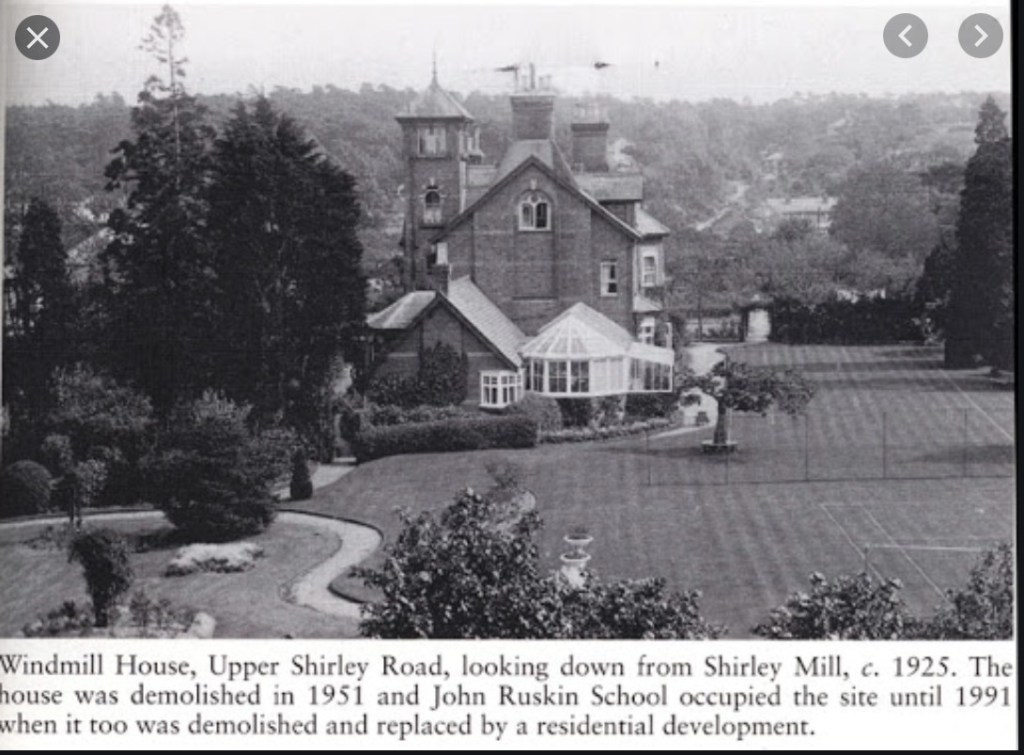
They lived at Windmill House and clearly were wealthy as the 1891 census lists them as having the following servants: cook, house nurse, parlour maid, house maid, under nurse and a kitchen maid.

1891 census

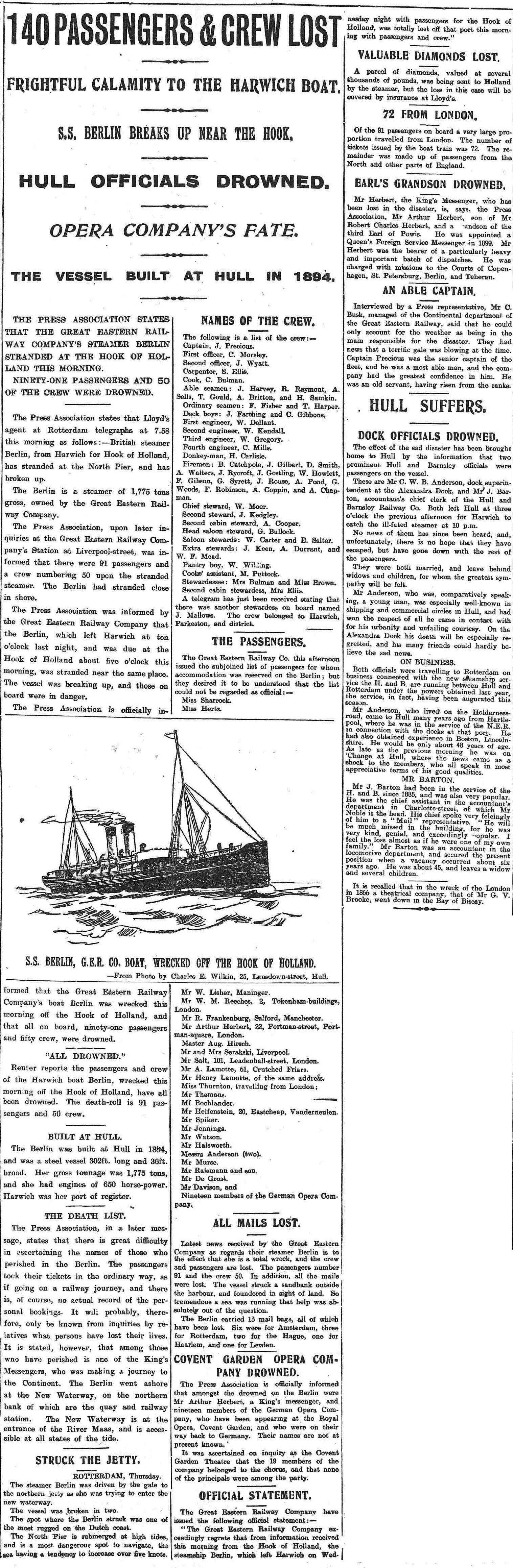
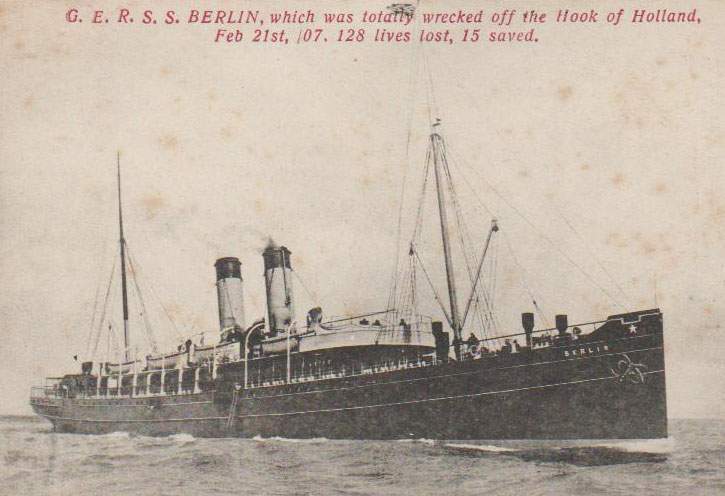
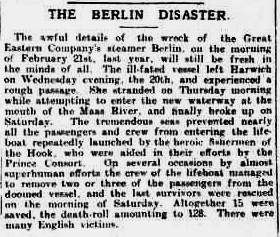
Their eldest sons Lewis and Albert were both killed on 21 Feb 1907 in a shipping disaster at the Hook of Holland. The SS Berlin sank with the loss of 140 lives. They were on their way to visit their dying uncle in Germany.

List of deceased passengers showing the Lamotte brothers

Catherine Septima Lamotte

Catherine was born in Surrey in 1874 and in 1899 she married Arthur Herbert Lanyon. You can find out more about them in the post ‘Arthur Herbert Lanyon’ in the Redruth & Croydon section. You can find out more about Catherine’s Flight ancestors on the website.

Catherine as a young woman

There is still a branch of the Lamotte family in Germany today.

You can find out more about the Dalbiac family on the really interesting website https://huguenotgirl.com

If only they could spell!

Jost Amman, Public domain, via Wikimedia Commons

With the introduction of printing in 1476 there were attempts to standardise spelling in Britain but it wasn’t until the first dictionaries began to appear in the mid 17th century that spelling settled down. Often words were spelt the way people pronounced them. In Tudor Cornwall the name Lanyon was pronounced La-nine hence the spelling Lanine, Lanyne, Lenine. Add to that the difficulty in reading old documents and it’s easy for an ‘n’ to become an ‘m’, so other varients like Lamyne and Lamin appeared. Slight changes in pronunciation resulted in Lanion (LanIon) and Lanyon (LanYon). By the 18th century the accepted spelling became Lanyon. To further complicate things there are families called Lamin, Lemin and Lemon who are quite separate from the Lanyons.

It can be really difficult to know if a variant of the name is actually the same family or another family altogether.

When I found the record of a marriage between John Lamelyn and Johan Tregian it was difficult to know if he belonged on the Lanyon tree or not.

Henderson’s MSS gives details of this marriage in 1524.

“Thomas Lamelyn to John his son and heir in marriage with Johan daughter of Thomas Tregian for their lives Lamelyn als Gunvenowe Hole Juxte Tregony Nethercombe 16 Henry VIII”

So in 1524 a John Lamelyn married Johan the daughter of Thomas Tregian. Thomas Tregian already features on the Lanyon family tree. His daughter, Thomasine, married William Laniene Esq around the beginning of the 16th century. Almost all the Lanyons I’ve found can trace their ancestry back to William and Thomasine.

William & Thomasine’s children and their spouses

We know so much about William as he was the head of the family when the first Herald’s Visitation took place in Cornwall and he submitted his tree in 1531, his eldest son Richard, did so again at the second visitation in 1573 and Richard’s grandson submitted more information in 1620 when the third and final visitation took place.

The purpose of the Herald’s Visitations was to register and regulate the coats of arms of nobility, gentry and boroughs and to record pedigrees. They are a great resource for family historians but the information they hold is not complete or always accurate. Many families concentrated on recording the details of their eldest son and heir as he would be the person who would have the right to bear arms. Some families embellished their pedigrees especially if they were new to wealth and titles.

The Visitation shows William Laniene Esq with a sister Isabel who married Thomas Trewren but William and Isabel may have had other siblings and cousins which aren’t recorded. So it is possible that Thomas Lamelyn and his son John are related.

Thomas Tregian was born about 1440 at Truro in Cornwall. He was a prosperous tin merchant and shipper and in 1512 he is recorded as owning the ship “Jesus” of Truro. He invested his profits in land and owned several manors in Cornwall. He married Elizabeth Penwarne about 1467. His second marriage was to Margaret (nรฉe Kyngdom) the widow of the historian John Borlase of Pendeen. His children were from his first marriage.

Thomas Tregian’s will exists and helps us build his tree.

PROB 11/19/375

Transcript:-

“In the name of God amen. The 27th day of Auguste in the yere of or lord 1517. I Thomas Tregian being in good mynde and helth of. bodie do make my testament in this wise folowyng. First I crye God m’cy and forgivenes of all my synnes and bequeth my soule to God Almightie to our Lady saint Mary and to all the holy company of hcven and my bodie to holy turfe. Item for forgotcn tithyng 10s. Item to the store of saint Ewa 18s. 4d. Item to our Lady store here at Truru 40s. Item to the freres of Truru 40s. Item to saint Michaels Mounte 12d. Item to the store of the Tiinite 12d. Item to the store of saint Peran 12d. Item to the store of sainte Peoke 12(3. Item to the store of the gelde of .Thus here in Truru 20s. and one dole in whelle Yest. Item to the store of Kynwyn a cowe. Item to a discreate preest to syng a trentall for my soule ยฃ6 13s 4d. Item to my wif the place that I dwelle in the terrne of her lief to her plcasur besides her dower her Hosteler [fosterlean] and her apparell a flatte cuppe and a goblett tonne of her liof and after that to sucho childe or children as shall please hir. Item to John my elder sonne my olde salte of sylver, 2 gohlettis with the cover of sylver and gilto, the best bedde the Tubull in the halle, all coi)tenors and hanging clothes bothe in the hallo and in the plor [parlour]. Item to Peers my sonne 12 qter pooos of Tynnn waying by the Kyngis beame three thousand pounde, one qter of the shyppe called the Jhus, the place that William ffornaby dwellith in Chidawe, half of my blowying house, the place that Pascowe fflotcher dwellith in, all my right in Poldisse worke and in Whelle Yeste in Kyllcvrethe downe, my best two saltes of sylver and gilte, oon dosen of spones of sylver and my best standing cuppe of sylver after his moder’s decesse 2 flatte cuppes of aylver. Item to Jane my doughtor ยฃ40 to her mariage. Item to Thomysen my doughter a m. [thousand] of tynne wayed by the Kyngis beame. Item to Sir Raynolde my sonne 40s in money and he to synge 30 masses for my soule also more a gowne of blacke furred w’ lambe and a flatte olde cuppe of sylver. Item to Benet Tregian I forgive all that he owith me before this dayo. Item to Peers Treworva a furred gowne w”‘ blake. Item to John Edwarde a coote or a gowne and all that he owith me p’donat. And if it fortune that eny of my children dye without issue that then the same parte to be divided amongeste the other that lyveth equally. And I ordeigne my wif my sonne John and my sonne Peers myn executours, they to fulfill my said wille. In witnes whereof the said Thomas wrote his testament in man’ and forme as ys above rehearsed with his owne hande.”

His will mentions his sons John, Peers and Sir Raynolde (a priest) and daughters Thomasine and Jane.

He bequeathes Thomasine “…a m. (thousand) of tynne wayed by the Kyngis beame.”

He bequeathes Jane “…my doughter ยฃ40 to her mariage.” This tells us she isn’t yet married.

The will also tells us by omission that by 1517, when it was written, that Thomas Tregian’s sons Paul, Vivian, Thomas and William must have died.

So could Thomas’ daughter Jane be the Johan that married John Lamelyn? It’s possible. The names Johan, Joan and Jane are often interchangeable at this time and sometimes it’s hard to tell if a letter is an ‘a’ or an ‘o’, although in this case the ‘a’ in Jane is quite clear when compared to the ‘o’ in Doughter.

So what other evidence is there?

Charles Henderson’s record states that John is the son and heir of Thomas Lamelyn. Is there any evidence for a family called Lamelyn at this time?

The National Archives and Kresen Kernow have the following records relating to the name ‘Lamelyn’:-

  • WM/217 – A Jn Lamelyn is listed as a witness at Polruan in 1399. Kresen Kernow
  • C/241/249/22 – A John Lamelyn is listed as a constable in 1465. NA
  • ART/3/12 – A Thomas Lamelyn was listed as a witness at Tywardreth. KK
  • C/131/102/7 – A Thomas Lamelyn gent of Lamelyan, Cornwall is listed as a debtor. NA
  • ME/628 – A Thomas Lamelyn Esq is listed as a witness in 1519. KK
  • C1/1519/74 – Motion v. Lamelyn. Rent due from the parsonage of Lanteglos which was leased to Lamelyn by prior of St John’s Bridgwater, Cornwall. NA
  • C1/363/39 – Spenser v. Lamelyn. 1504-1515. NA
  • R/1626 – Property grant to Jn Lamelyn 1508. KK
  • E/150/177/10 & C/142/58/13 – Inquisition Post Mortem of Thomas Lamelyn 1536-37. NA

Spenser v. Lamelyn is the most interesting. Thomas Spenser, the vicar of Lanteglos, and Thomas Lamelyn, a parishioner of Lanteglos. Spenswer complains that Lamelyn interrupted the sacrament at easter last ‘with his knyff drawen’ and seizure of oblations and tithes at Lanteglos.

So there was definitely a family calling themselves Lamelyn in Cornwall in the 15th-16th century. The Cornwall OPC database has just a handful of entries for the names Lamelyn, Lamellen, Lamellin and Lamelling.

Having started, thinking I had found another variation of the name Lanyon, I now accept that Thomas Lamelyn was from a different family. Sometimes family history leads you down all sorts of pathways and sadly sometimes they are dead ends

Ralph Lanyeyn

Family historians are lucky to find a documented legal dispute from the 14th century to help build their family tree. Ralph’s dispute with Princess Joan of Kent gives us valuable information which confirms names and relationships but it’s not the only record available about Ralph.

In 1390 the Bishop of Exeter granted a licence to celebrate divine service in the chapel of St Mary at Lanyen in Madron (Lysons 1817). Today the chapel is a ruin but it gives an idea of the size of Ralph’s home, the barton of Lanyon in the late 14th century.

Madron Chapel by Ashley Dace, CC BY-SA 2.0 https://creativecommons.org/licenses/by-sa/2.0, via Wikimedia Commons

There are also three records in the Court of Common Pleas which relate to Ralph.

CP40/561 Easter 1401. Roger Boswarneth sues Ralph Lanyeyn for a debt.

CP40/589 1408 Ralph Lanyeyn sues Luke de Pensans for detinue (the crime of wrongful detention of goods or personal possessions) for a chest of charters.

CP40/589 1408 Alice Reda sues Ralph Lanyeyn, John Cornyssh, Robert Pensans, Richard Joce (tailor), Ralph Joce, Richard Dere & David Shade for trespass.

At a time when there are no records of baptisms, marriages or burials these records prove that Ralph was still alive in 1408.

I also have a letter from Jane Veale Mitchell to Edward Augustus Bullmore dated 23 Jan 1926 which states:

โ€˜In Rolls Office, Chancery Lane, a Radolphus Lanyon asks that Tregamynyan, then in possession of his brother-in-law de Rogers, might come to him and his descendants, because they had no children. Written in old French, date 1327.’

This throws up a query, is the date 1327 correct? Is it the same Ralph Lanyeyn? The original letter has been transcribed, could the transcriber have got it wrong? It’s possible.

We don’t know when Ralph was born but 1327 seems far too early. If Ralph is married with descendants in 1327 then he is a very great age in 1408!

We know that Ralph’s parents were John de Lynyen and Sibyl de Tregamynion. This is confirmed by the record in Calendar Close Rolls CCR Ric II Vol 30 p.71.

We know that John de Lynyen’s father was David de Kylminawis as CCR Hen IV Vol 4 states that ‘David de Kylmynawis to John his firstborn son and heir, and to the heirs of his body by Sibyl daughter of Jocelin de Tregamynion…’

So where does the Radolphus Lanyon mentioned in Jane’s letter fit in? I haven’t found the original record she mentions but I think the date 1327 must be wrong and that the Radolphus Lanyon she mentions is Ralph Lanyeyn, the son of John & Sibyl. This then gives us the name of his brother-in-law, de Rogers, and leaves us wondering why the property Tregamynion at Morvah should be in his possession?

Rosy Hanns / Old Guide Stone on Bosullow Common, south east of Morvah

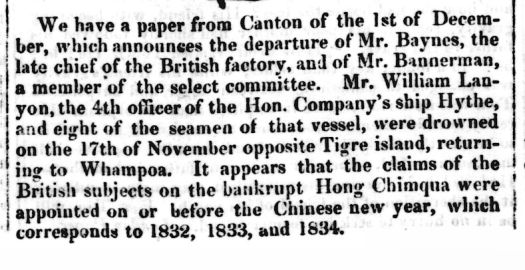
And that’s the fun of researching your family history, a few records discovered and a whole load of new queries to puzzle over!