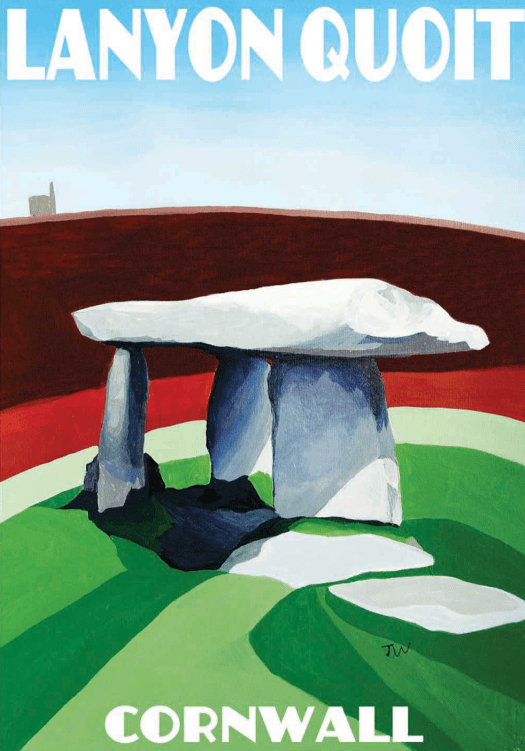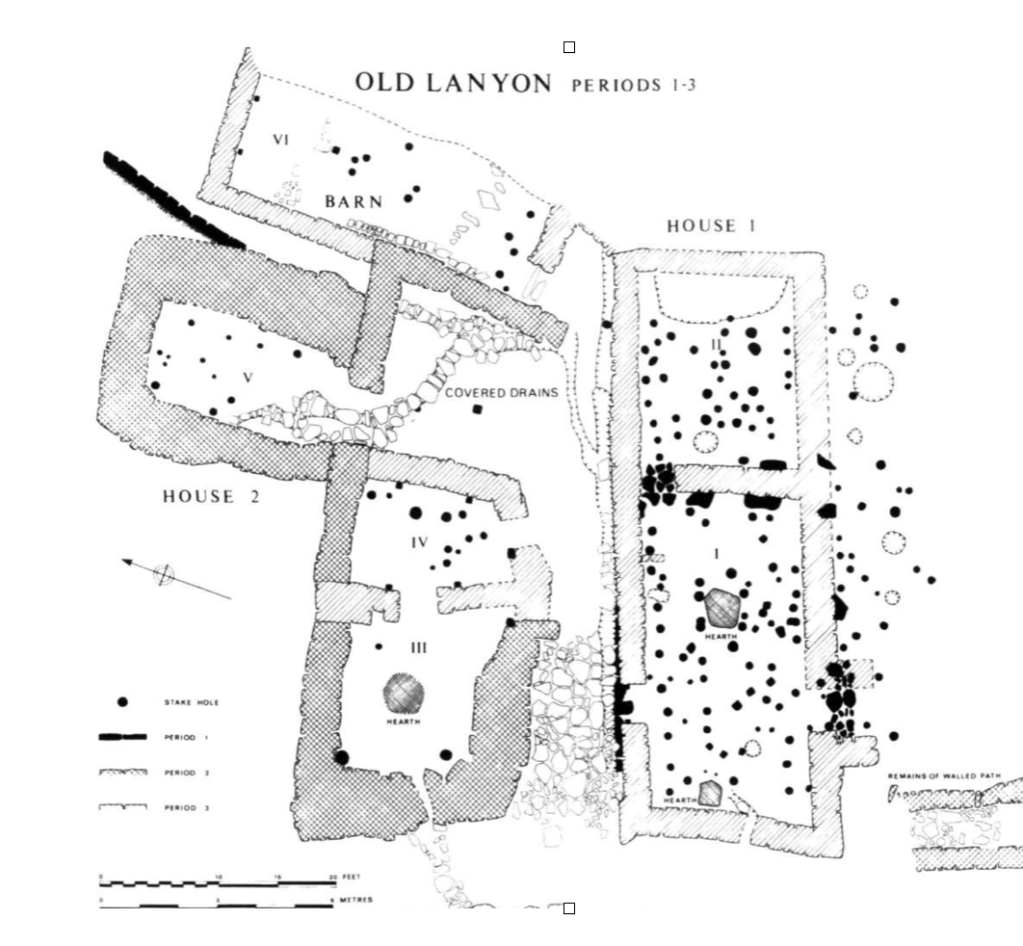
The Manor House at Lanyon was just west of Penzance at Madron. Originally these were turf houses which were extensively rebuilt each generation. In the mid 13th century they were replaced by a long house with thick granite walls, a turf roof and a central hearth. The hall would have been very smoky and smelly from animals in the barn and house.
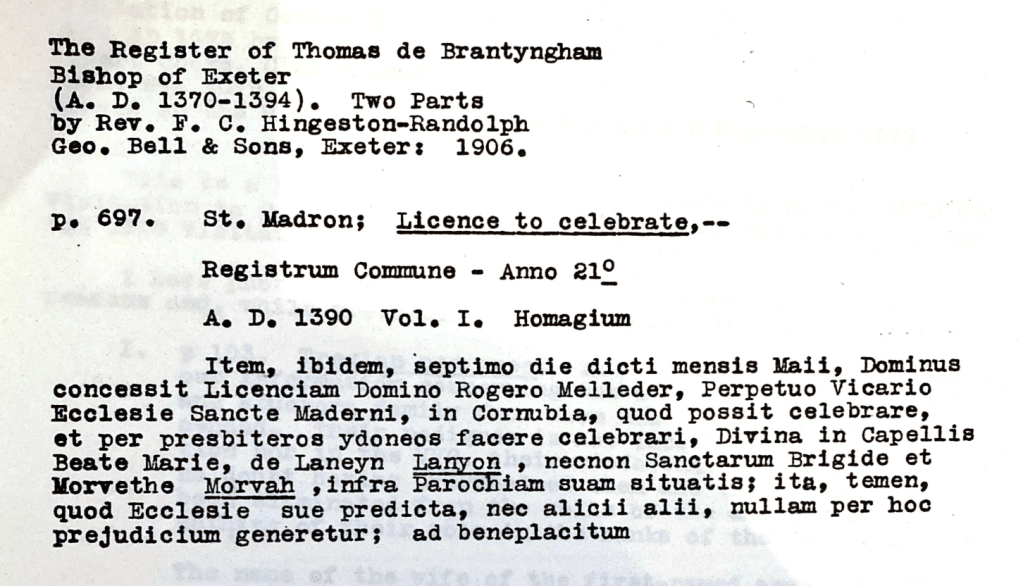
In 1390 the Bishop of Exeter licensed the Vicar of Madron to hold services in the Chapel of the Blessed Mary of Lanyen which is next to the present farm and suggests that the main house was at this location in 1390.
The site of Old Lanyon was scheduled under the Monuments Act of 1957 and in 1964 an archeological excavation of the mediaeval settlement took place. It found that Old Lanyon was a series of superimposed buildings dating from c1050 to the 16th century.
Source: 1. Beresford G 1994 – Old Lanyon Madron – A Deserted Medieval Settlement.
Source: 2. Minter EM 1965 – Lanyon in Madron – Interim Report on the Society’s 1964 Excavation.
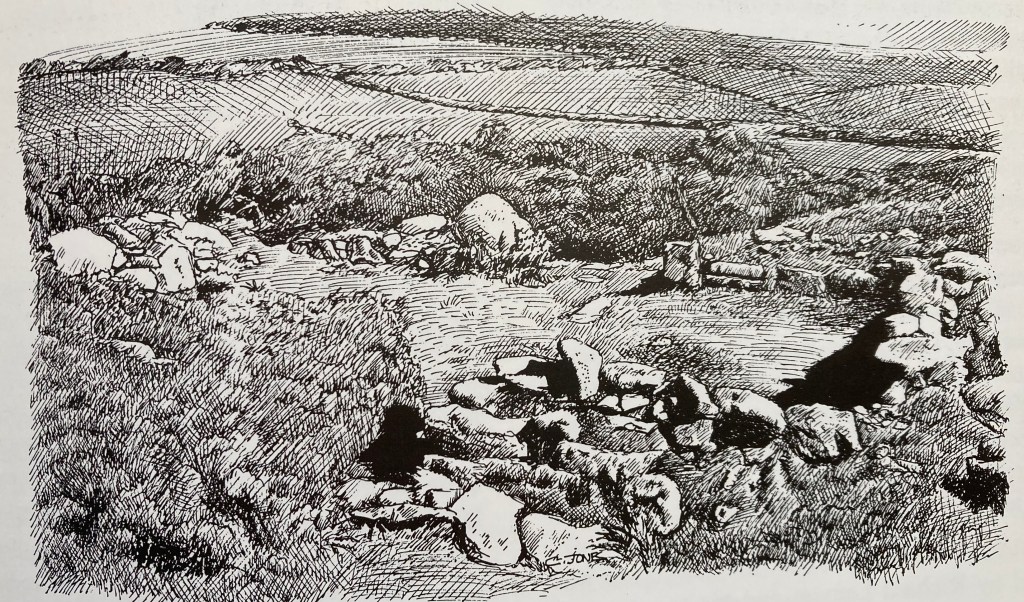
The last Lanyon to live at the old manor house was John Lanyon, who died in 1784 aged 92, after that the old house was taken down and the current farm house was built. It’s still possible to see some parts of the old manor.
Bob Jones / Mounting steps at Lanyon FarmThe remains of the old manor house at Madron – from ‘These Were Our People’ by Ruth Lanyon
The earliest Lanyon is Roger De Linyeine/Leniein who died before 1215. He was married to Agnes Beauchamp (Bello Campo) and after his death she pleaded for a third part of two acres which she claimed as her dowry on Hugh de Bello Campo. She was successful and passed her land to her son/stepson John de Linyeine. (A Cornish Acre is apparently approx 300 acres but the size varied over time.)
Lanyon was subject to the Domesday Manor of Binnerton held by Hugh de Bello Campo. Agnes may have been the daughter of Stephen de Beauchamp and Stephen was the son of Hugh.
“Cornub Agnes que fuit uxor Rogeri de Leniein optulit se quarto die versus Hugonem de Bello Campo de placito tercie partis duarum acrarum terre cum pertinentiis in Leniein, quam ipsa clamat in dotem versus eum: et Hugo non venit etc. Et summonito etc. Judicum. Tercia pars capitur in manum…”
CRR Curia Regis Rolls, John 15-16, C.T.Fowler (Ed.), (Public Records Office, 1971),p.193.
King John signs Magna Carta 1215
The next time we see the name Lanyon is in 1244 in the Cornwall Feet of Fines. Roger’s son John receives two small parcels of land from Stephen de Bello Campo, one at Little Bosullow and one in Lower Drift in Sancreed. John guarantees no interference to the water supply to the mill.
Henry I – Matthew Paris (Historia Anglorum), Public domain, via Wikimedia Commons
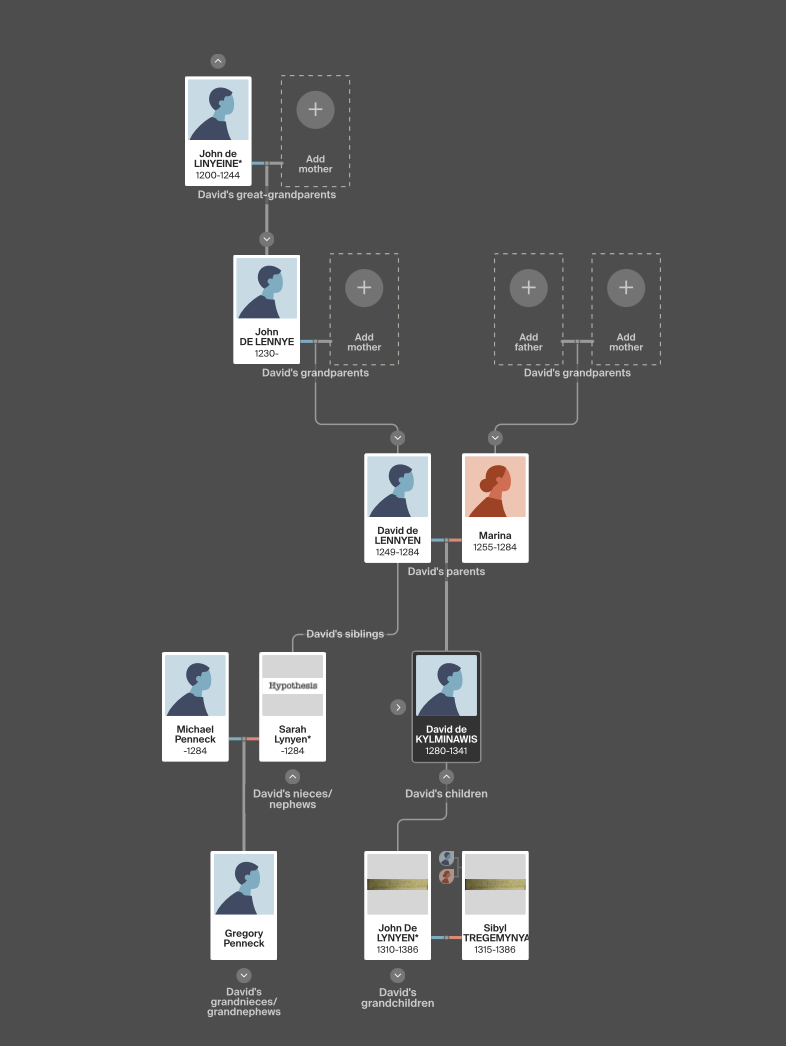
One of the few ways to find families at this time is through property transactions and legal disputes. A charter of 1284 gives us the name of John de Leynen’s son, David and his wife Marina.
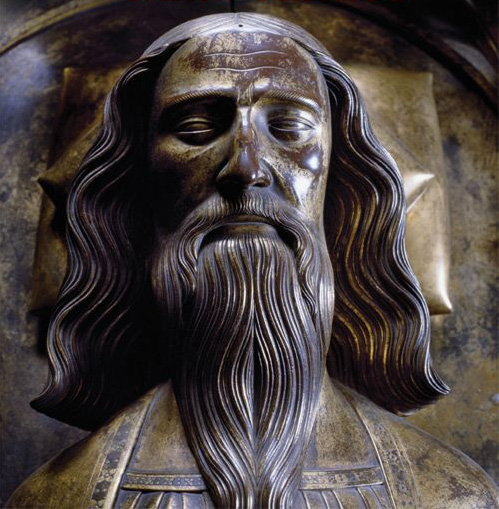
Edward I
“At Lanzaveton (Launceston) 1 month from Easter day, in the 28th year of King Henry (1 May 1244). Before Henry de Tracy, Gilbert de Preston and Robert de Haya, justices itinerant, and other liegemen of our lord the King then there present. Between John de Linyeine (Lanyon in Madron), plaintiff, and Hugh de Bello Campo (Beauchamp) [tenant] whom Stephen de Bello Campo vouched to warranty, & who warranted to him 3 ferlings of land in Botuolo bichan (Little Bosullow in Madron) & 1 ferling of land in Drek bichan. John acknowledged the whole of the said land to be the right of Hugh. For this Hugh granted to John the 3 Ferlings in Botuolo bichan, to have and to hold to John and his heirs of Stephen and his heirs for ever, rendering therefor 40 1/2 (?) at the four terms of St Andrew (30 Nov.), Mid Lent, the Nativity of St John the Baptist (24 June), & St Michael (29 Sept.) for all services & demand. Moreover John granted for himself & his heirs that the water which runs from Retsic (Rissick) to Netcurran shall be a free stream by the land of the said John in Retsic as far as the mill of the said Stephen at Netcuran, as in contained in a charter made between Roger father of the said John and Hugh de Bello Campo, without hindrance from John or his heirs for ever.”
Cornwall Feet of Fines, Volume 1, Joseph Hambley Rowe (Ed), (Devon & Cornwall Record Society, Exeter, 1914), pp.39/40.
Charter of 1284 confirms that David, husband of Marina was the son of John de Leynen. The charter also mentions the properties obtained by John de Leynen in 1244.
“John de Leynen to David his son and William de Trenyer chaplain and to the heirs of the body of the said David by Marina his wife. Charter with warranty of all his lands and messuages in the towns of Lennyen, Resik, Bossewolonwyan, Polgon, Hendrenythyn, Boswolnel and Trengwenton, with two mills corn and fulling in Lenyen, and the rent, service and homage of Ralph de Pendyn and his heirs for land there, and of Michael Pennek, Sara his wife and their heirs for land in Trethyn by Treudreuen.”
Dated Lanyen Friday before St Peter’s Chains 12 Edward I
English Groat – Edward I – PHGCOM, Public domain, via Wikimedia Commons
The Fine Rolls mention a few of the medieval Lanyons but it is impossible to say where they fit on the tree.
1272 Fine Roll 56 – Henry III Cornwall – Simon de Lenyeyn gave a mark for a writ ad term.
1291 Fine Roll 19 Edward I – John de Lynyen gave half a mark for a pone.
1293 Fine Roll 21 Edward I – John de Lynyen gave half a mark for a pone.
In the context of medieval English Fine Rolls (records of payments to the King for favours and legal concessions), a pone refers to a legal writ used to remove a case from a lower court (such as a county court) to a higher court, specifically the Court of Common Pleas at Westminster.
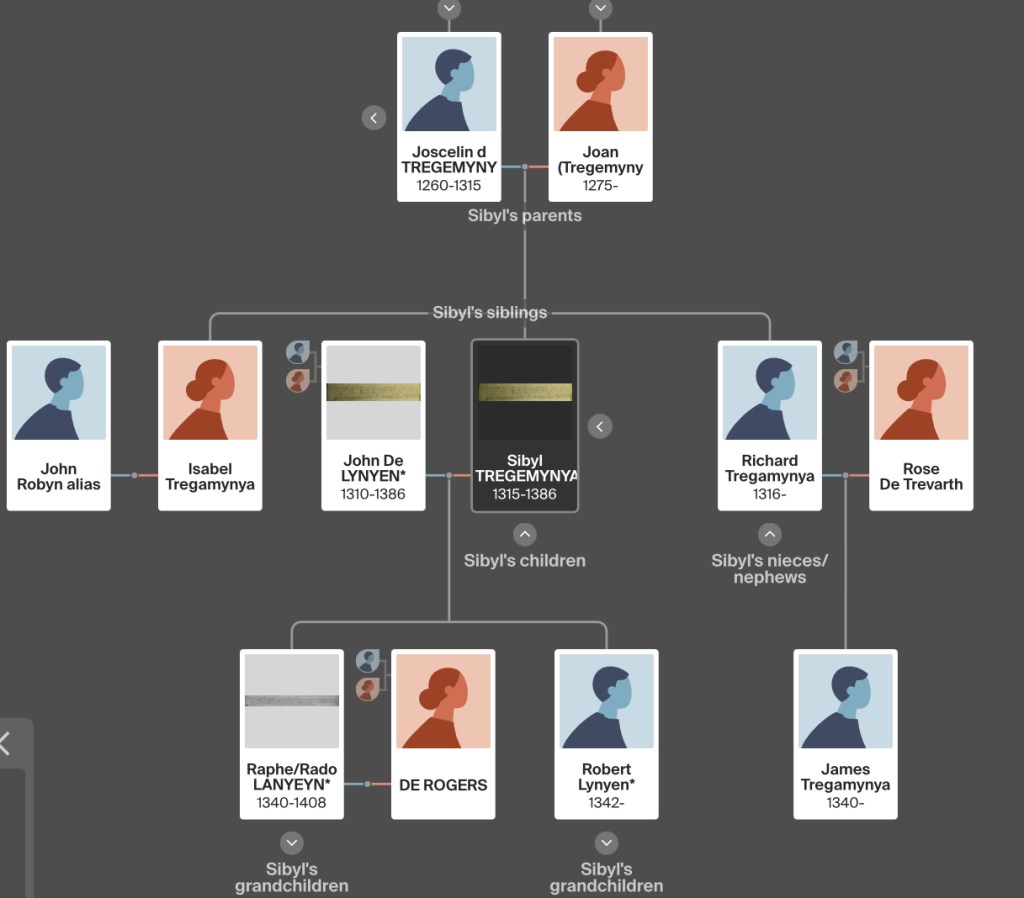
John de Lynyen was born about 1310 in Cornwall the son of David de Kylminawis. John died before 1386. He lived at Bosollow, Madron near Penzance. John married a neighbour Sibyl de Tregamynyan the daughter of Joscelin de Tregamynyan and his wife Joan of Tregamynyan Manor in Morvah.
Joan died in 1344 and Sibyl returned to Tregamynyan. When she went back to her home at Madron she brought her mother’s (possibly step-mother’s) jewels and other goods with her. Perhaps she felt they were rightly hers. Evidently her family thought otherwise and this led to her being charged with the theft. Her husband John was charged as an accessory to a felony as he permitted her to come home with the goods. If found guilty he would have faced being outlawed and his lands forfeit.
Having been charged, John appealed to a higher court and then left home to join the Earl of Derby’s army who were going to France.
French army besieging the citadel of Auberoche, catapaulting an English messenger over the walls- Jean de Wavrin, Public domain, via Wikimedia Commons
The 100 Years’ War started in 1337 and continued until 1453. In 1345 Edward III decided to send an army to France lead by Henry, Earl of Derby, his cousin.
A patent Roll of 24 Edward III (24th year of Edward III’s reign) explicitly states that John was charged before the Earl’s expedition of 1345. The Patent Roll does not disclose what John de Lynyen did in France but on their return The Earl of Derby (now also the Earl of Lancaster) gave personal testimony at Westminster on 3 June 1350 to John’s ‘good service in Gascony’ which obtained a royal pardon for him. John was able to return to Cornwall a free man.
Whilst we don’t know what John did in Gascony it seems possible that he fought at the Battle of Auberoche.
The Earl of Derby gave personal testimony at Westminster on 3 June 1350 to John’s ‘good service in Gascony’ which obtained a royal pardon for him.
The National Archives at Kew Ref: SC 8/254/12666 & 12667 Old Cornwall Journal “The Lanions of Lanion, Madron, Cornwall: An Incident in the Family History” 1964
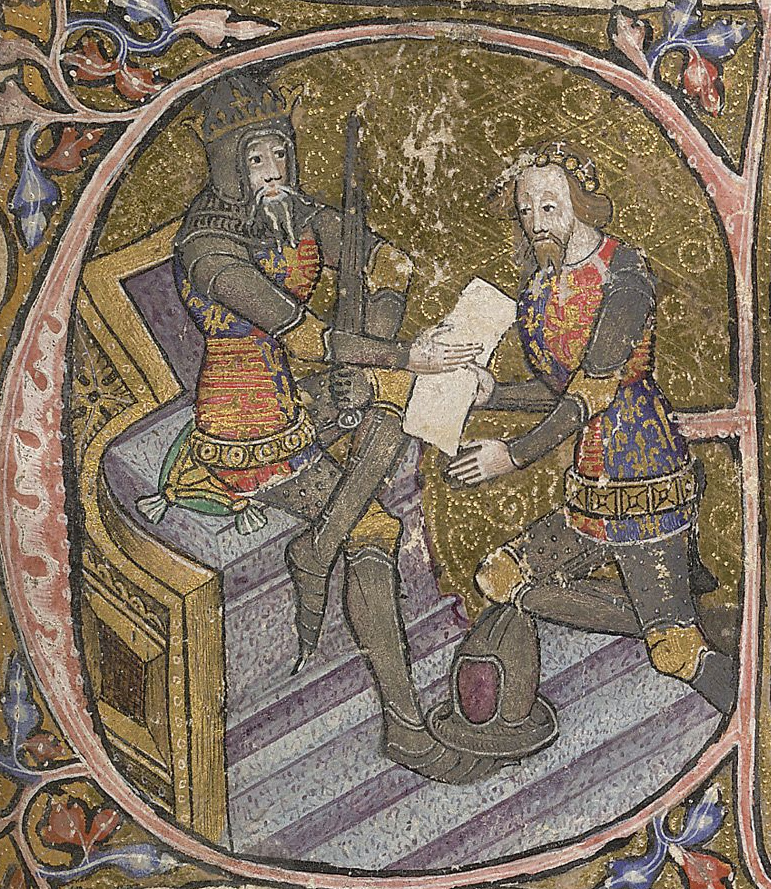
Edward III-AnonymousUnknown author, Public domain, via Wikimedia Commons
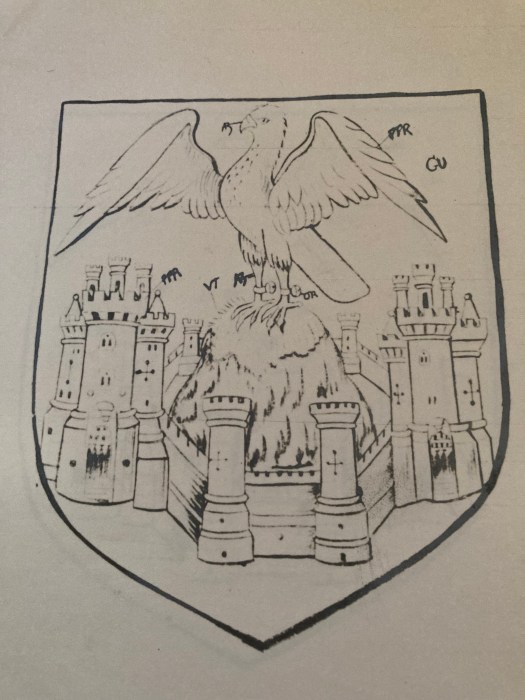
Another tradition, repeated by Bottrell, of Bosawa in St Buryan, (a house owned by the Lanyons), says ‘In the hall of this house there hung suspended on the wall a coat of mail, a buff jacket and a huge pair of jackboots of Cordovan leather, the monster spurs still buckled on them which once belonged to some renowned Lanyon: over the stone cut Lanyon arms an old rusty sword.‘
Could these boots have been John de Lynyens?
“Traditions and Hearthside Stories of West Cornwall” by William Bottrell.