Press Gang

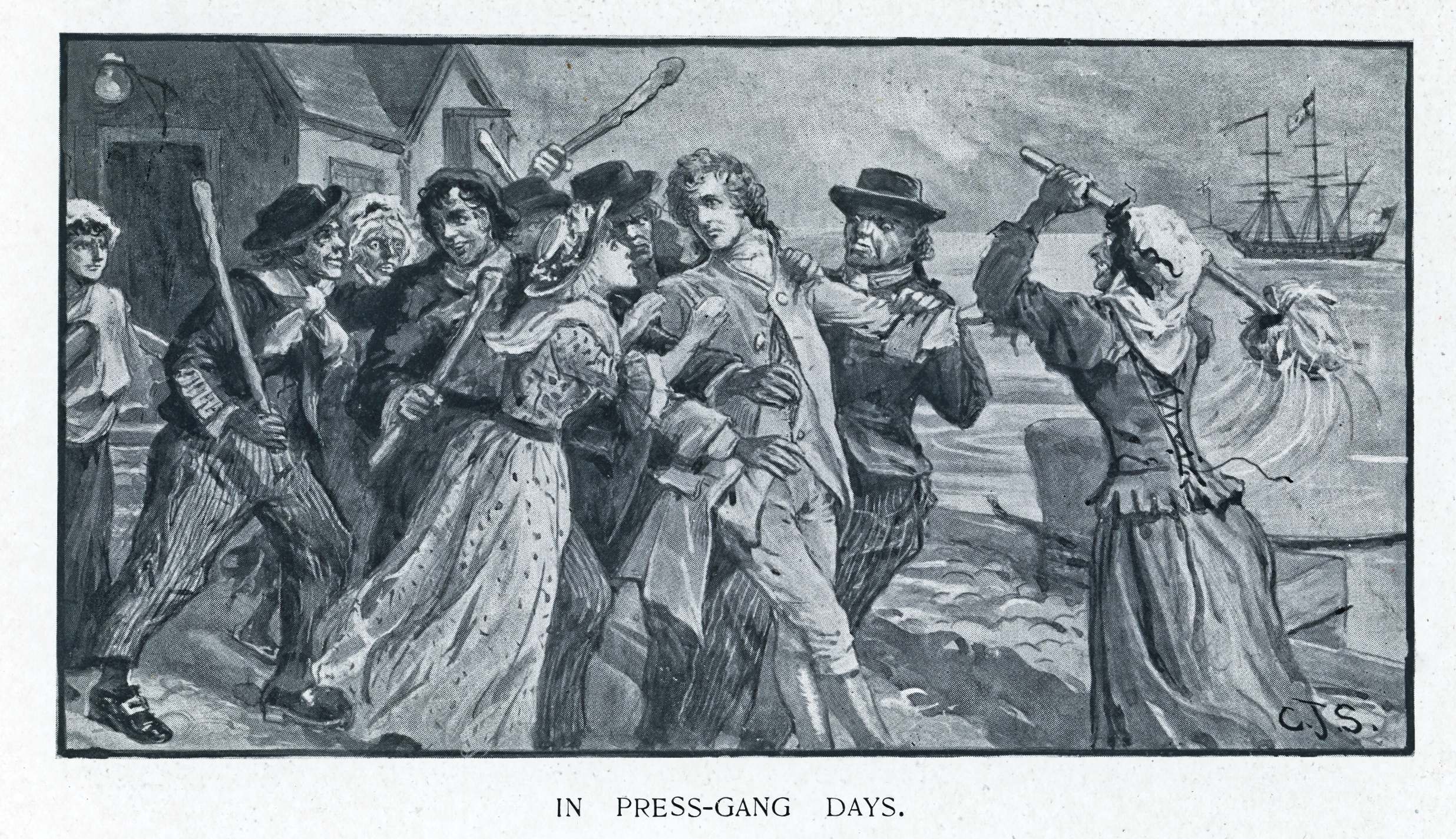
Britain may have ruled the waves with its huge navy of sailing ships but the only way it could man all those ships was by impressment or the ‘press gang’. From the late 17th century until the early 19th century men between the ages of 18-55 could be forced to serve in the navy. Today we’d probably call it kidnapping!
Charles Joseph Staniland, Public domain, via Wikimedia Commons

The navy preferred sea faring men so merchant seaman and fishermen were liable to be ‘pressed’ and this made coastal communities particularly vulnerable. Merchant seamen ashore (easily identifiable by their uniforms) would be asked to volunteer to join the navy, if they refused they could be seized or plied with drink and taken. Many seamen were ‘pressed’ whilst at sea. Their ships, usually homeward bound, would be stopped and the merchant seamen seized and placed on the navy ships.

Understandably the press gangs were very unpopular and fights often broke out when men were seized from their communities. Wives and children suffered from poverty and hardship when their husbands and fathers were seized. Having been seized it was difficult to return and deserters could face the death penalty.

The Neglected Tar – Unknown author, Public domain, via Wikimedia Commons

At Trafalgar half of the navy’s 120,000 men were pressed into service.

Richard Lanyon of Marazion

This post is about Richard Lanyon of Marazion and what happened when the Press Gang arrived in town.

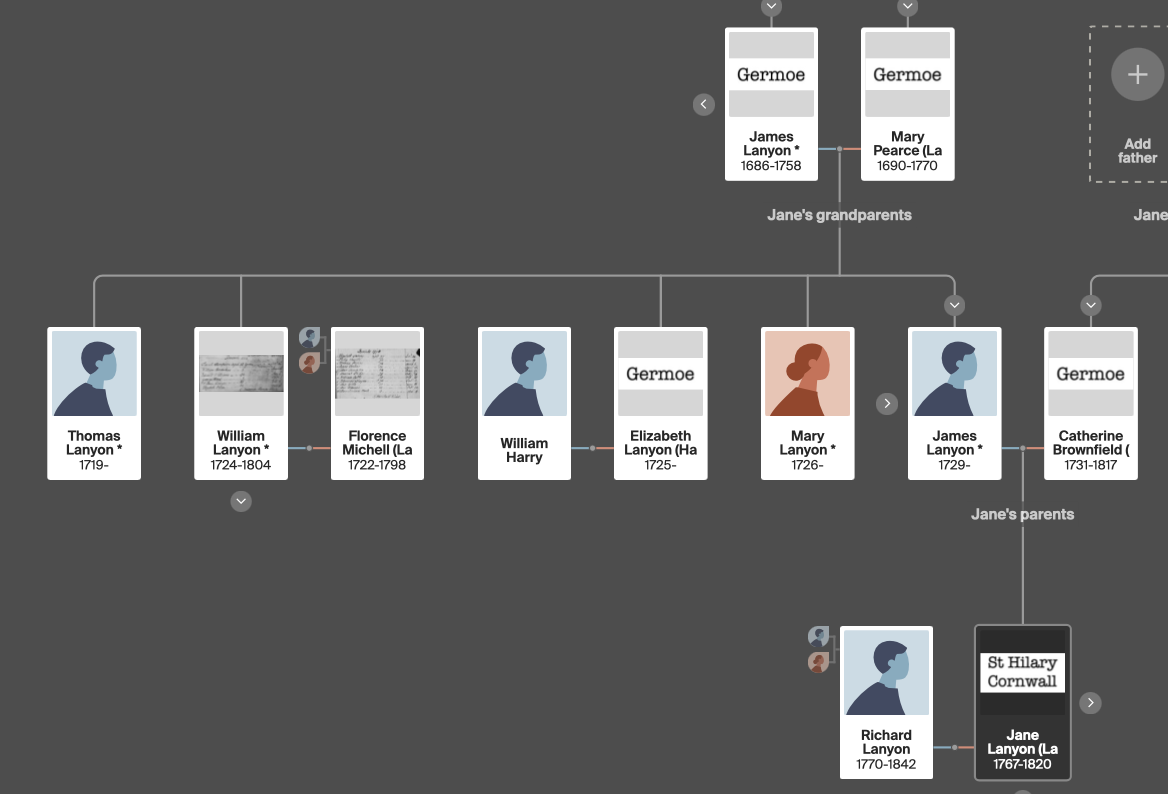
Richard was born in 1770 the youngest son of William Lanyon and Florence Michell. In 1794 he married his cousin Jane Lanyon (the daughter of James Lanyon and Catherine Brownfield) at St Hilary in Cornwall. (See St Hilary branch of the Lanyon tree.)

Richard was the blacksmith at Marazion. The town opposite St Michael’s Mount.

Richard also served as a sergeant in the 2nd Regiment of Mount’s Bay Volunteers. Britain was at war with France and all over the country there were volunteer regiments prepared to defend the country in the event of an invasion.

Marazion : St Michael’s Mount Wall Painting by Lewis Clarke, CC BY-SA 2.0 https://creativecommons.org/licenses/by-sa/2.0, via Wikimedia Commons

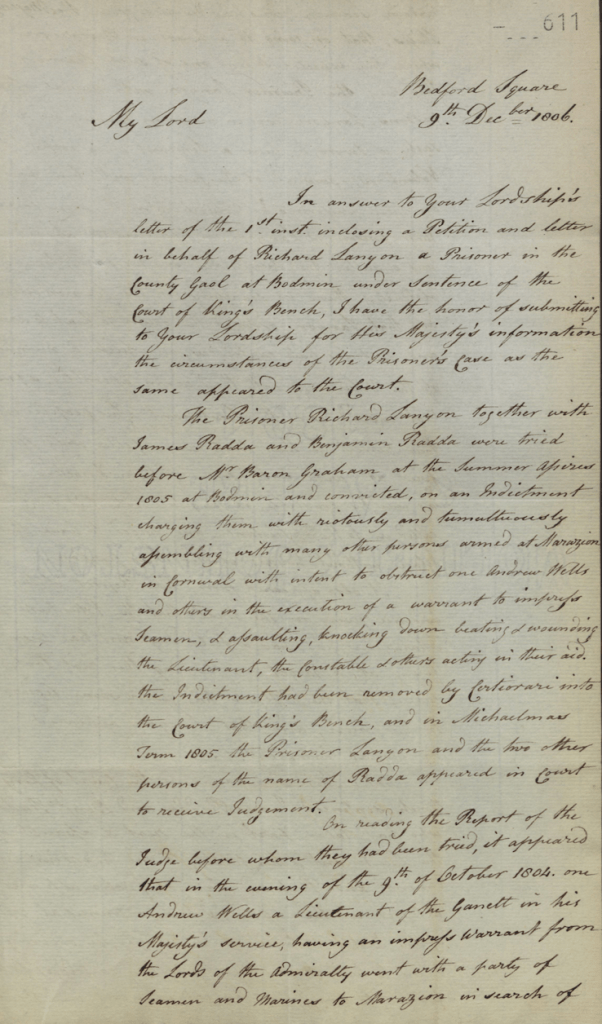
On the 9 October 1804 the volunteers had been at a field day practising their fighting skills. The day went well and the officers bought the men a ‘few’ drinks to celebrate. That evening the press gang, led by Lieutenant Andrew Wills arrived in town in search of seamen who had deserted. Accompanied by the constable they went to a home expecting to find one of the deserters, instead they found Richard Lanyon with several others.

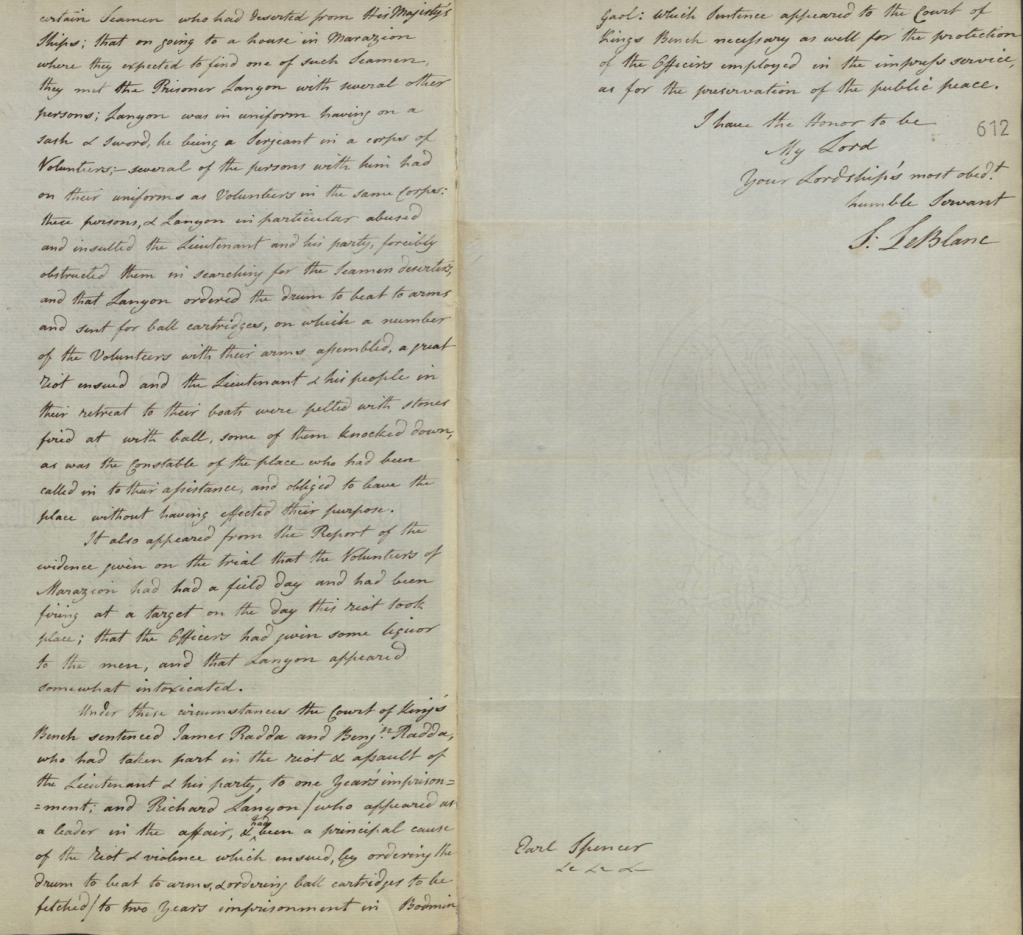
Richard was still wearing his uniform, sash and sword and several of the men with him still had on their volunteer uniforms. Lanyon in particular abused and insulted the lieutenant and his party and obstructed them in searching for the deserters. “Lanyon then ordered the drum to beat to arms and sent for ball cartridges.” A great riot ensued and the lieutenant and his people in their retreat to their boat were pelted with stones, fired at with ‘balls’ and some of them were assaulted.

A letter to Earl Spencer from J. Le Blanc explaining what had happened stated “Lanyon was somewhat intoxicated“!

Richard and his nephews James and Benjamin Rodda were arrested and tried before Mr Baron Graham at the summer assizes at Bodmin in 1805. They were convicted on an indictment charging them with “riotously and tumultuously assembling with many other persons armed at Marazion in Cornwall with intent to obstruct one Andrew Wills and others in the execution of a warrant to impress seamen…

The trial was the transferred to the Court of the King’s Bench in Westminster, London.

The Roddas were sentenced to one year in prison and Lanyon was sentenced to two years. After a year he appealed for an early release. Mr Gryles, a gentleman of considerable property in Marazion, gave a reference and stated that Lanyon was of previous good character and always a ‘man of fair and upright character’, he also had a wife and several children who had suffered ‘the severest deprivations by means of the long confinement’ but the appeal fell on deaf ears and Richard served two years.

Richard eventually returned home and was still living in Marazion in 1841. He’s listed on the census living with his youngest daughter Julia. His wife Jane had died in 1820. Richard died shortly after the 1841 census.

Press gangs finally came to an end with the fall of Napoleon in 1815.

The Southwold Fire

In the 17th century if a house caught fire it could have devastating consequences for the whole town. Wooden buildings burned easily and without a fire brigade to fight the fire the flames could consume huge areas.

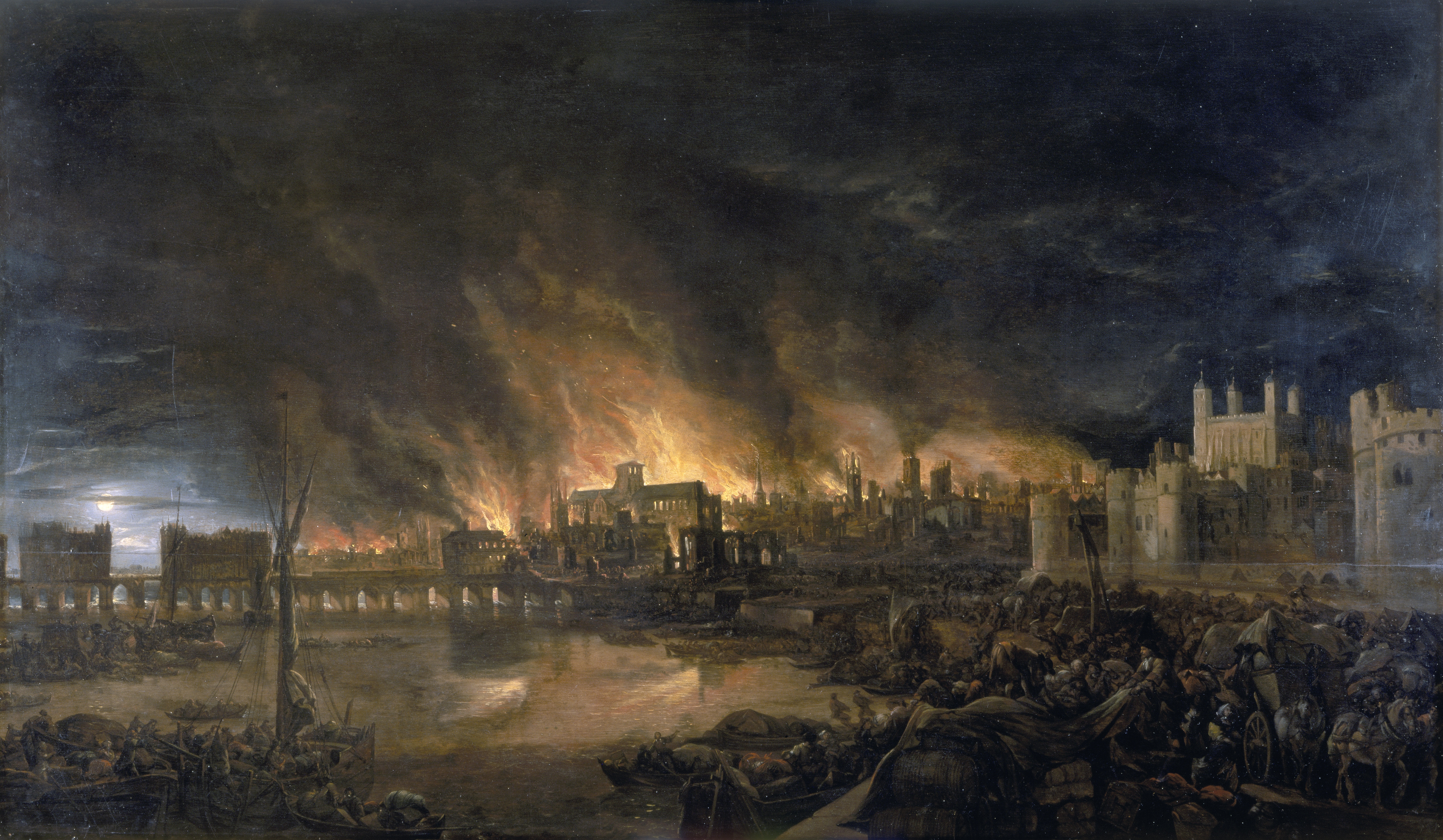
The Great Fire of London in 1666 is probably the most famous fire. It started in Pudding Lane and spread rapidly and destroyed over 13,000 homes, 87 churches and St Paul’s Cathedral in the medieval city. Miraculously the death toll was relatively small.

1666 Great Fire of London – Museum of London, Public domain, via Wikimedia Commons

In 1659 the town of Southwold in Suffolk suffered a devastating fire. Over 450 buildings were lost and many families faced poverty and ruin. In the space of four hours the town was changed forever.

The fire left many open spaces and the town didn’t rebuild on them. This created natural fire breaks and has resulted in the town having lots of green spaces today.

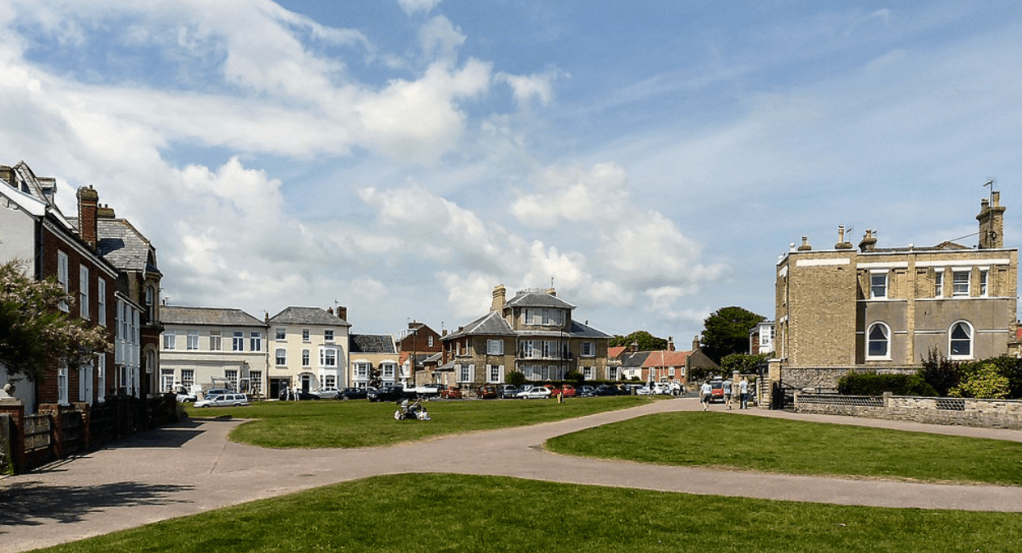
The green spaces in Southwold today.

So why am I mentioning this on a Lanyon website? On the 2 October 1659 the church warden at St Michael Penkevil Church in Cornwall held a collection for the inhabitants of Southwold in Suffolk who had ‘suffered fire’. He collected £2. 8/- 1d.

The church warden was John Lanine, he was described in the Parochial History of Cornwall by Davies Gilbert as ‘a sea sand barge daily labourer’. He was the father of John Lanyon who is the subject of the post ‘Poisoned’.

The stone that commemorates the 300th anniversary of the fire.

Horse Stealing

James Lanyon was arrested for stealing a horse rug on 11 May 1873 and stealing a horse (presumably to go with the rug!) on 26 May 1873. The horse belonged to William Uren of the Devon and Cornwall Artillery Militia. James appeared at the midsummer assizes at Bodmin and was tried by Sir Charles Brune Graves Sawle.

James appears to have been caught ‘red handed’ as he plead guilty and was sentenced to six months hard labour at the house of correction at Bodmin. That meant the dreaded treadmill.

Bodmin Jail was pretty grim! Robert Linsdell from St. Andrews, Canada, CC BY 2.0 https://creativecommons.org/licenses/by/2.0, via Wikimedia Commons
Bodmin Jail Inmates

I found a second conviction for James in 1873. he was found guilty of stealing Fras. Osborne’s trousers at Camborne. He was described as crippled in his right hand and having an ‘enlargement in right breast’. Again he was sentenced to the treadmill.

In 1874 he was convicted of trespassing on the land of Gustavus Lambart Basset esq, in Illogan, in search of game. His description is as follows: Roman nose, eyes rather small, right forefinger small and useless. Again he was sentenced to the treadmill.

British Library, Public domain, via Wikimedia Commons

James Lanyon was aged just 19 at his conviction in 1873 (born in 1854) and a labourer. James is quite a common name in the Lanyon family but it didn’t take long to find him on the tree.

James was the son of William Lanyon and Mary Maddern.

James’ grandfather, William Lanyon 1767-1836, was transported to Australia!

James’ parents married in 1841 at St Buryan and by 1861 they were living in Lelant. By 1871 James was no longer living at home but I can’t find him on the census. He may have been avoiding the authorities!

After jail we lose track of James but he may be the James Lanyon aged 21 who sailed to Australia in 1875 and was described as a copper miner. He may have died, prison wasn’t conducive to good health and a long life.

Guilty

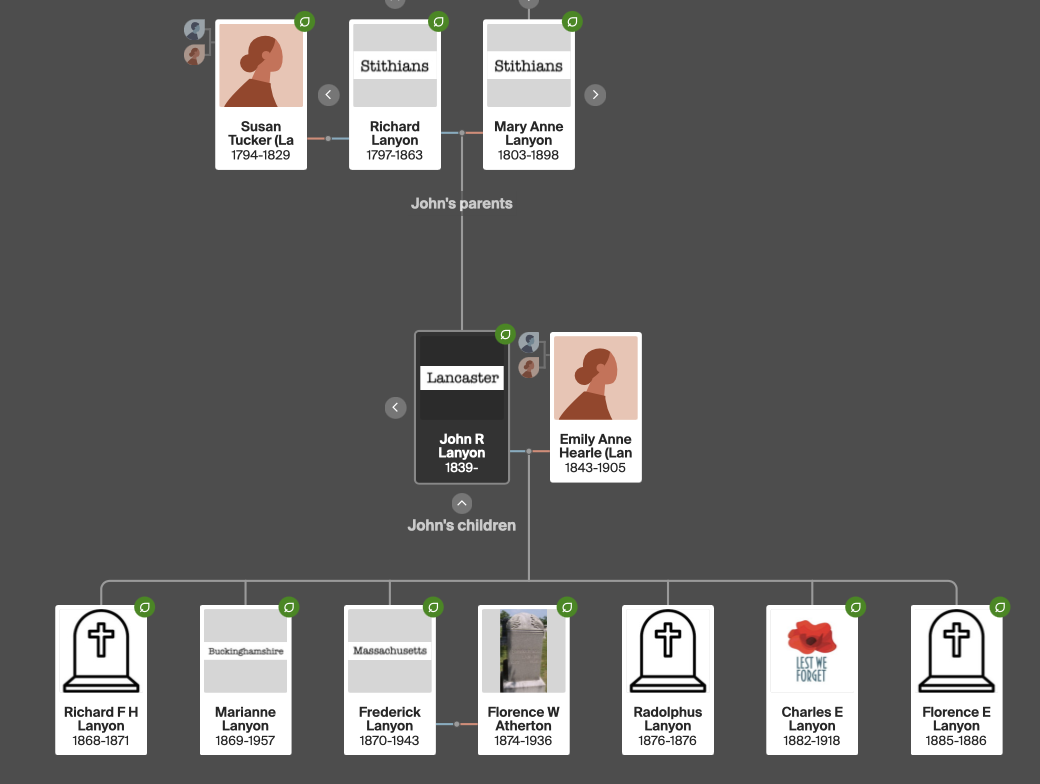
John Rodolphus Lanyon was born on the 20th September 1839 at Stithians in Cornwall. He was the son of Richard Lanyon and Mary Anne Lanyon (cousins).

John was also the half brother of Richard Sampson Lanyon, the father of Arthur Richard Lanyon who was found guilty of larceny of post office letters.

John was a solicitor in London. He married Emily Anne Hearle in 1867 and they had six children.

In 1893 John forged the will of Mary Wellington with the intention to commit fraud along with Richard Stevens an insurance agent. They were tried on the 7th and 8th of November 1893 and found guilty. Both men were sentenced to seven years penal servitude.

Description of John Rodolphus Lanyon

John was described as 5’4″, dark complexion, brown hair and blue eyes, with a cast in each eye. He’s also described as being born in 1841 which is wrong, he was born in 1839.

He was released from prison in 1900.

Stole a Letter

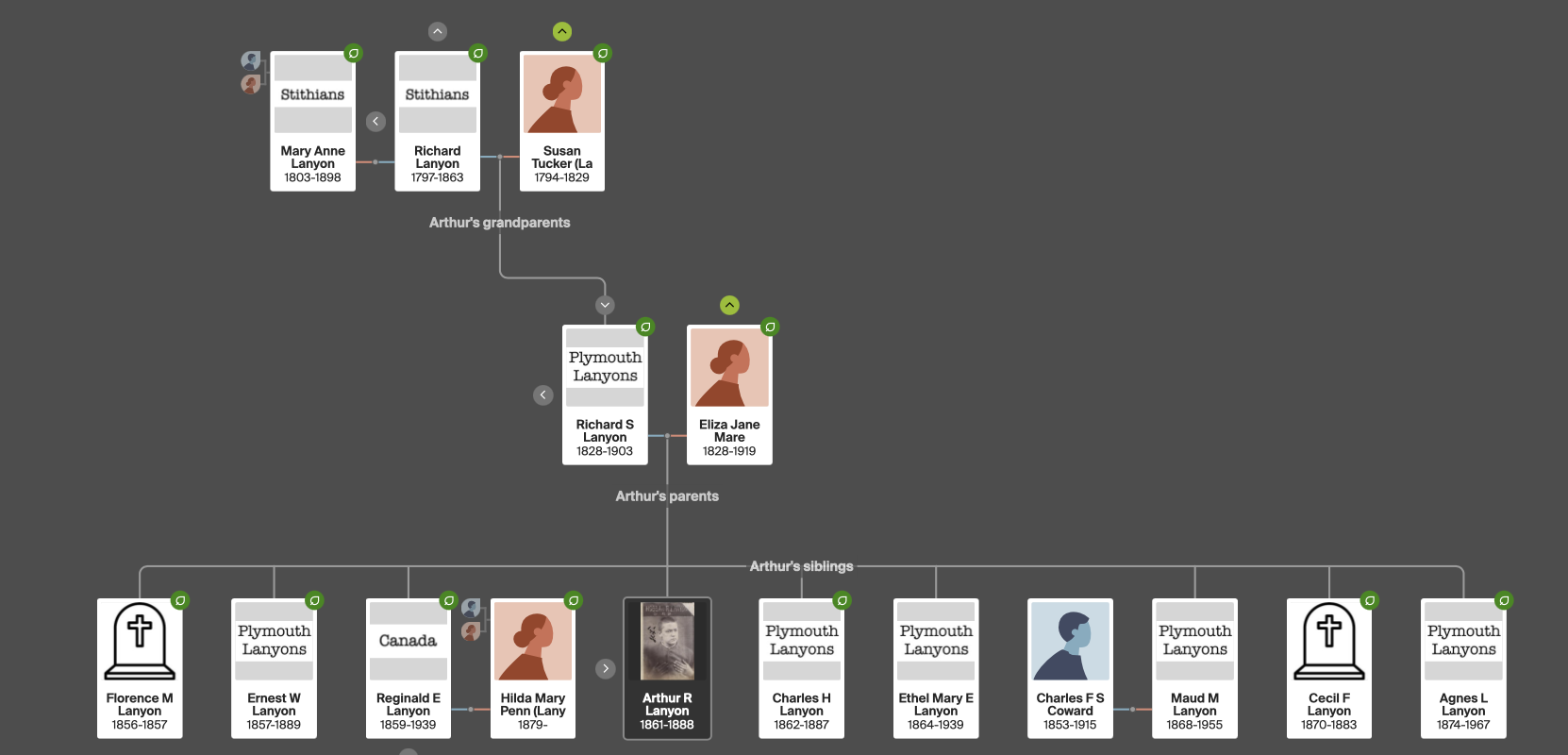
Arthur Richard Lanyon was born in Plymouth in 1861, he was the son of Richard Sampson Lanyon 1828-1903 and Eliza Jane Mare.

Arthur Lanyon’s tree

Richard was a gunpowder manufacturer (like his father) and a merchant in Plymouth. Arthur was one of nine children. They were a very respectable family. When Arthur left school age 16 he joined the post office as a clerk and worked in Exeter. The post office soon noticed that letters were going missing so they ‘posted’ a letter containing three half sovereigns which were marked and they waited to see what would happen.

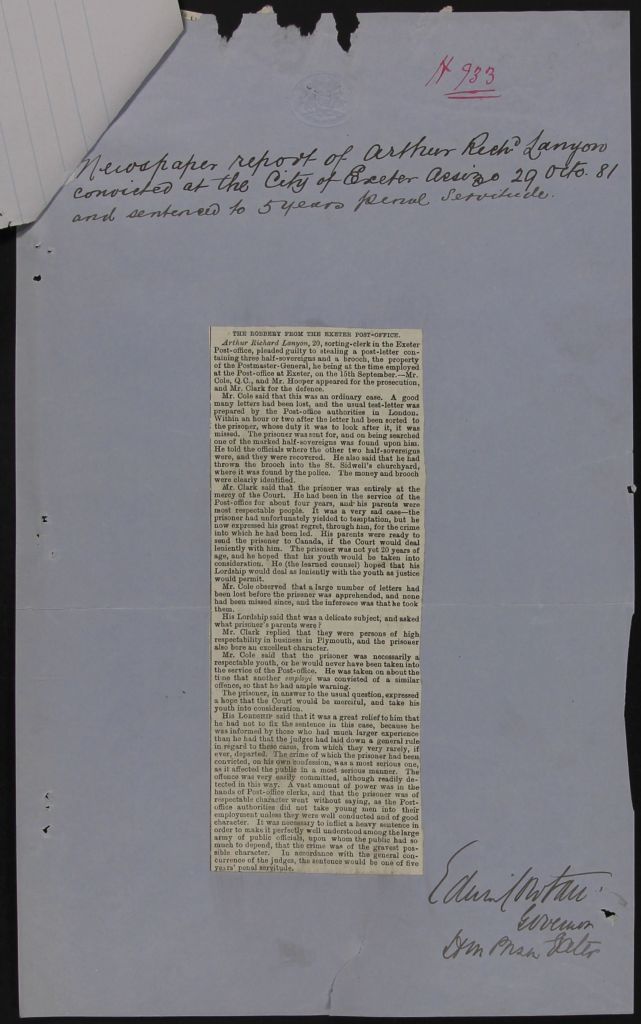
When the letter went missing Arthur was searched and the marked sovereigns recovered. Arthur was charged with larceny of postal letters, found guilty on the 29 October 1881 and sentenced to five years penal servitude. Appeals for leniency due to his age were ignored. His parents offered to send him to Canada instead, the appeal fell on deaf ears. Arthur was sent to Pentonville Prison.

Arthur’s photo from Pentonville Prison
Newspaper report of his conviction from his prison file.

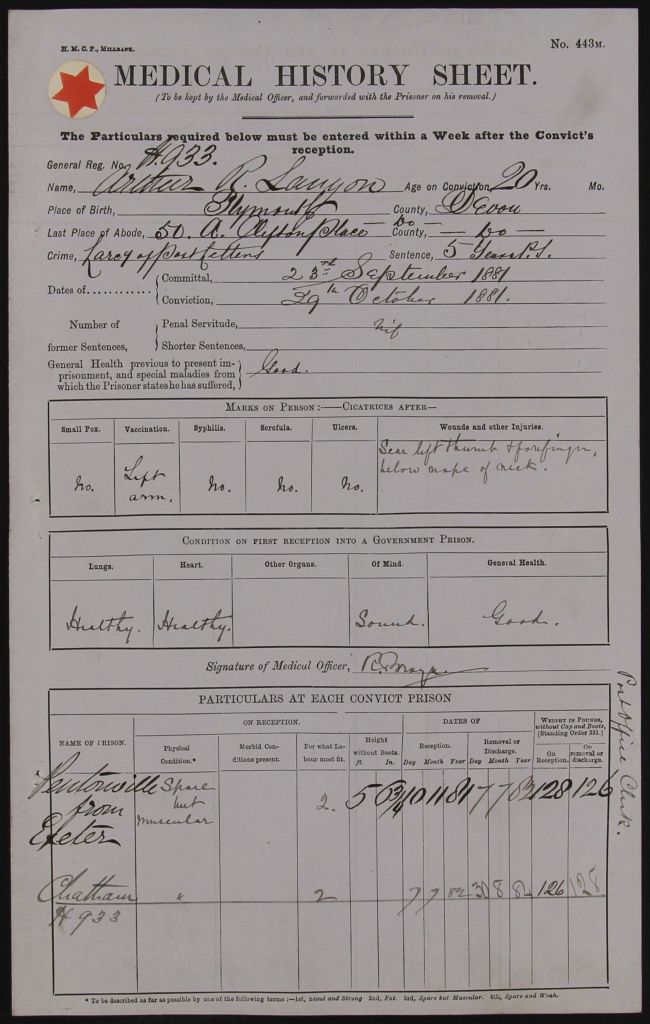
On entering prison Arthur was a healthy young man and his prison medical record notes nothing untoward.

Arthur’s medical sheet

On release his parents sent him to Canada. It was a chance of a new life. Arthur died in Vancouver on 5 August 1888 at the age of 27.

The Knocklong Ambush

This post is about the Irish War of Independence 1919-1921.

This story starts on 21 January 1919 at Soloheadbeg when the Third Tipperary Brigade of the IRA ambushed and murdered two policemen of the Royal Irish Constabulary (RIC) who were escorting a consignment of explosives. The four men who carried out the ambush were Sean Hogan, Daniel Breen, Sean Tracy and Seamus Robinson, known as the ‘Big Four’.

Following the attack they went on the run and spent months moving around and often sleeping rough.

Public domain, via Wikimedia Commons

Sean Hogan was the ‘most wanted man in Ireland’ and in May 1919 he was finally captured and would almost certainly have faced the death penalty.

Sean Hogan – Public domain, via Wikimedia Commons

Hogan was to be transferred by train to Cork. A member of the RIC, who was also an IRA informant, hatched a plan to rescue him from the train.

The ambush took place at the Knocklong station in Limerick on 13 May 1919. It was the day of Hogan’s 18th birthday.

Hogan was escorted by four armed RIC officers (Michael Enright, Peter Wallace, John Thomas and Jeremiah Ring). The train was attacked by a group of armed men as it passed through the station. Sean Tracy and Ned O’Brien entered the car carrying Hogan and they opened fire on the police officers. Constable Michael Enright was killed immediately. A hand to hand fight then broke out on the train and more IRA volunteers joined in. Sgt Peter Wallace was shot and later died of his injuries.

Hogan was freed and he and the volunteers escaped, although some were injured. David O’Byrne, the local butcher, used his meat cleaver to break open Hogan’s handcuffs. The wounded were taken to Shanahan’s farm at Glenlora where they were treated. A huge manhunt began but Hogan and most of the attackers escaped.

Public domain, via Wikimedia Commons

Constable John Thomas was awarded the Constabulary Medal ‘for exceptional courage’. A year later he was abducted by the IRA to prevent him giving evidence at the trial of one of the Knocklong gang. Fortunately he escaped.

The IRA informant was Constable Jeremiah Ring.

Eventually three men were charged with the murders: Edward Foley, Paddy Maher and Michael Murphy. Edward Foley had taken part in the ambush but Maher and Murphy were innocent men.

Foley and Maher in prison – Public domain, via Wikimedia Commons

There were two civilian trials where they were found not guilty. The authorities then decided on a third military trial and the men were court-martialled.

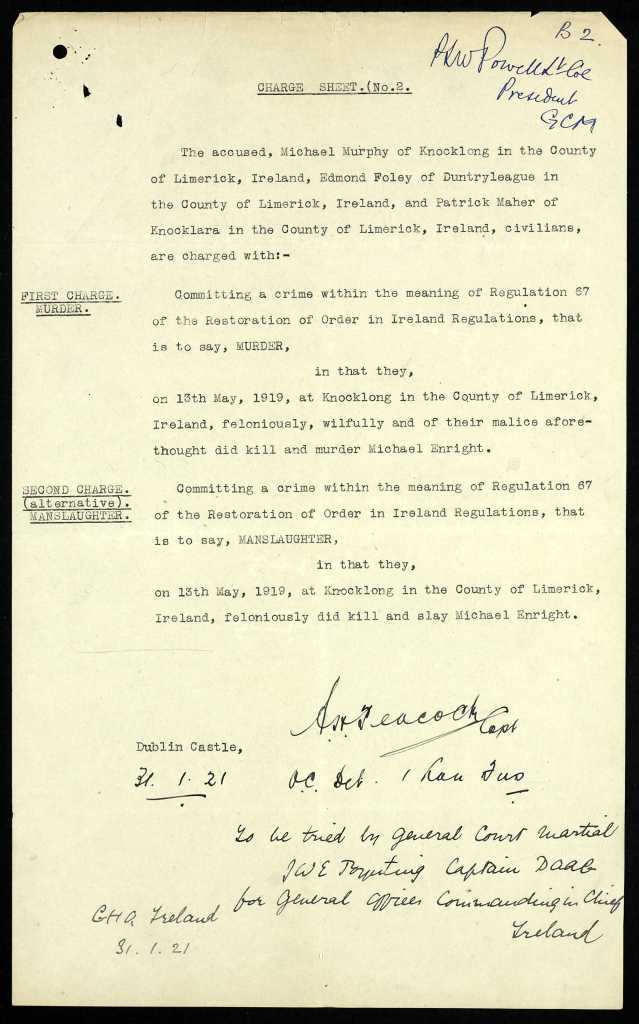
Charge Sheet Knocklong Trial

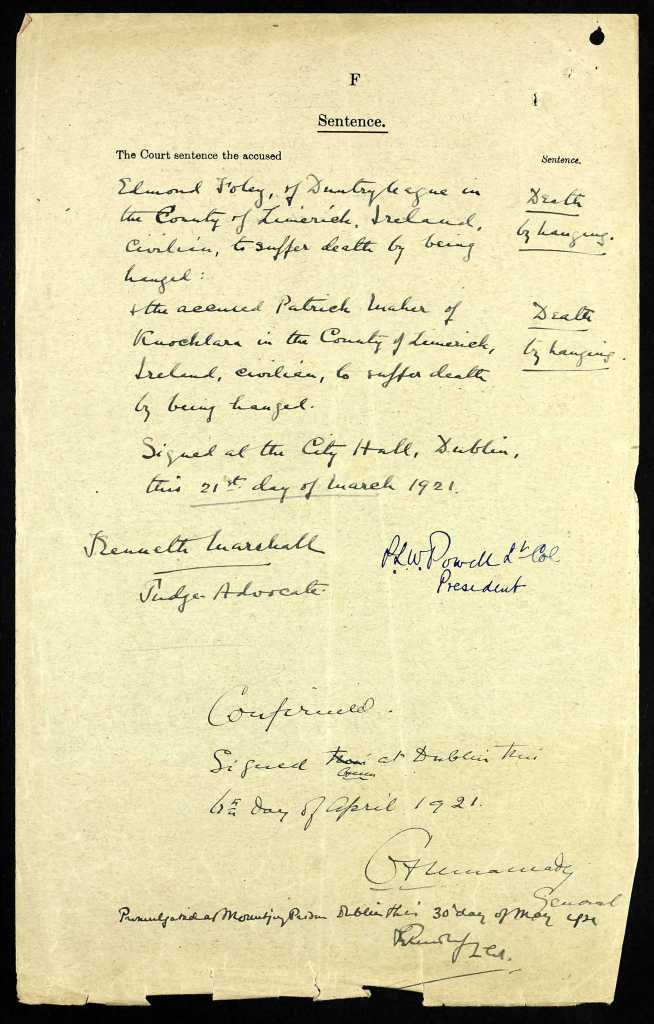
All three were found guilty. Foley and Maher were sentenced to death and Murphy imprisoned. Maher and Murphy were completely innocent of the crime.

Foley and Maher (not Mayer as stated in the newspaper) sentenced to death

Edward Foley and Paddy Maher were hanged at Mountjoy prison on 7 Jun 1921 and were buried within the prison grounds. They were part of the ‘Forgotten Ten’ who were buried there after being executed during the uprising. Their bodies were eventually moved and they were given a state funeral on 14 October 2001.

Michael Murphy was imprisoned and freed after the truce. He had been a private in the First Battalion Irish Guards and served in France. His army number was 10236. The lawyer for the defence described him as “a man of the most distinguished service with the Irish Guards in France.

So why is this post of any interest to the Lanyon family?

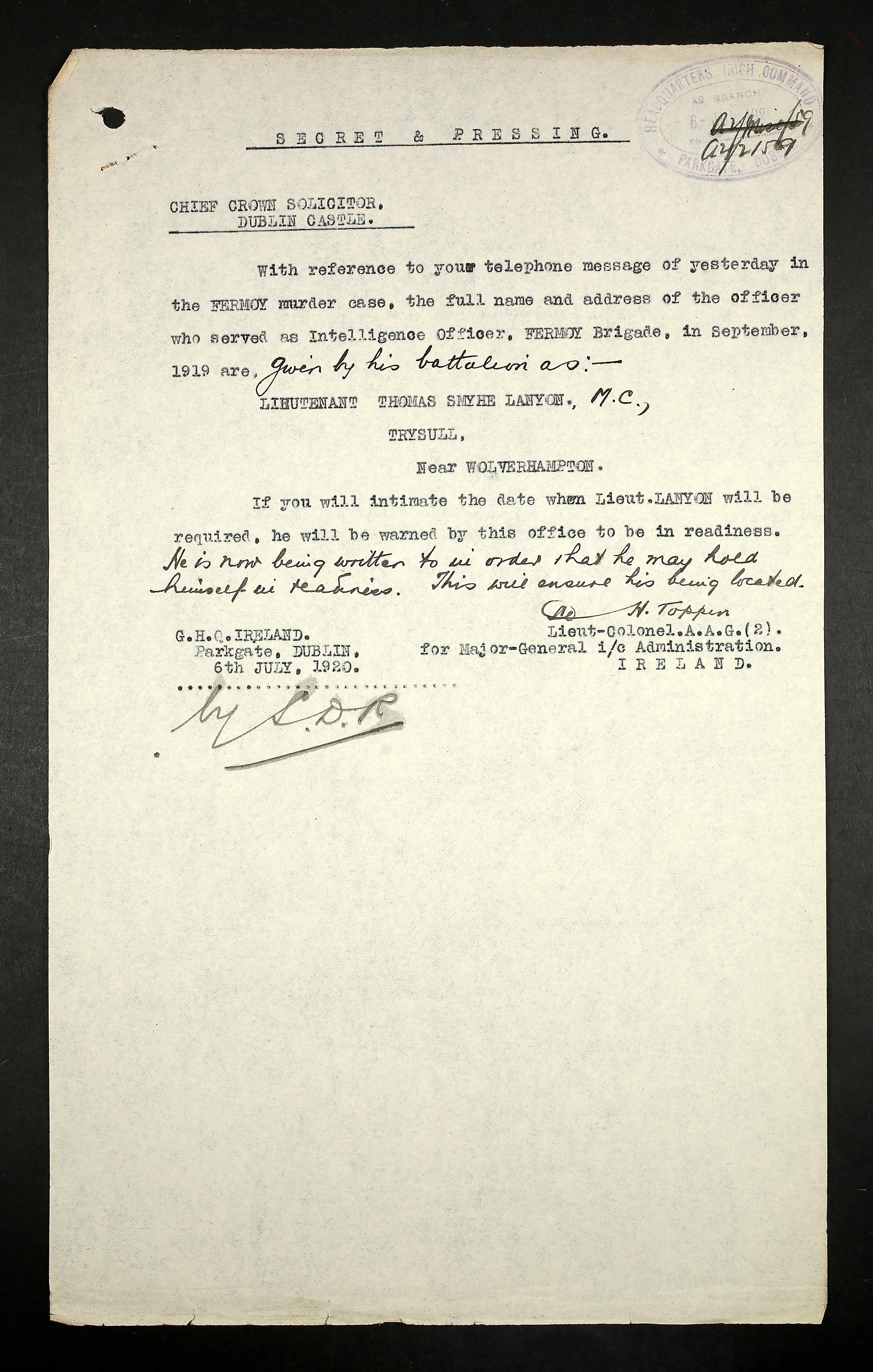
Lieutenant Thomas Smythe Lanyon M.C. was the Intelligence Officer for the Fermoy Brigade in 1919. He was called to attend the court-martial but doesn’t appear to have actually given evidence.

Thomas was in the King’s Shropshire Light Infantry during the First World War and was awarded a Military Cross:-

“For conspicuous gallantry and devotion to duty during a hostile raid on our trenches. Throughout an intense bombardment of all kinds of projectile he moved about the line, encouraging the men and setting a splendid example to all ranks. At one moment he was buried by a trench mortar on his way to visit one of his posts; and finding, on reaching it, that the whole garrison had become casualties, he promptly made a block with fresh men and repulsed the raiders with rifle and machine-gun fire. His fearlessness and energy were most marked.”

Shropshire Light Infantry Facebook Page

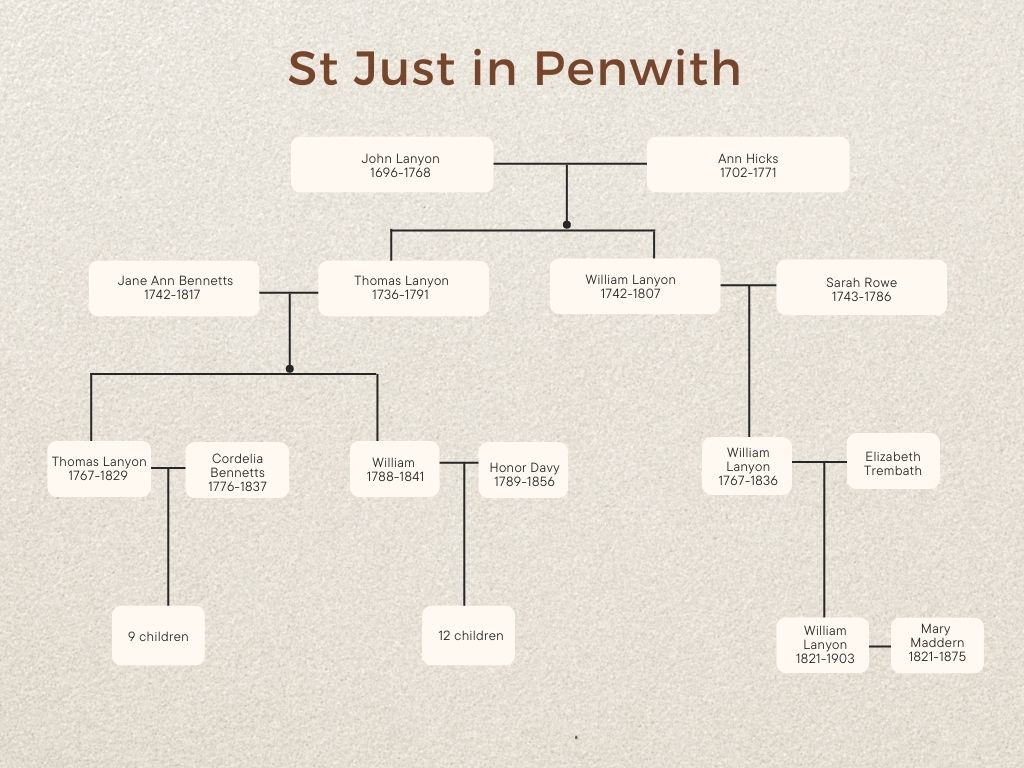
Where does Thomas fit on the tree?

Thomas married Vera Wrangle in 1922 and I don’t know what happened to him afterwards. It seems strange that I can discover so much and then hit a brick wall!

The military files relating to this were classified as Secret and sealed for 100 years and were only opened this year. (Source- NA WO/35/105)

The ‘Loose Lanyons’ of Sancreed

There is a small group of Lanyons in the parish of Sancreed who don’t fit on the Lanyon tree. We know almost nothing about them but they are worth mentioning as they demonstrate that there were other cadet branches of the tree in the 16th century. They must all be related but it isn’t possible to prove that.

George Lanyon

George was living in the parish in the 1560s and was probably born in the 1530-1540s. There is no record of a marriage for him but a daughter Jane was baptised on 22 Sep 1566. Then on the 2 Oct 1566 George also baptised an illegitimate daughter called Alsen! His first daughter must have died as he baptised another daughter called Jane on 22 Feb 1568 and his final child was Elyzabeth baptised on 25 Apr 1575. (The children’s names were all spelt Lanyne.) With two daughters called Jane perhaps that was his wife’s name?

It’s challenging to see if the name is Lanyne or Lamyne. In fact it’s challenging to read anything in these early registers! Just to make things even more complicated there is a family called Lanner living in the parish at the same time.

Sancreed Parish Register

The only other record we have for George is his burial on 16 Nov 1592.

His daughter Jane Lanyne may be the Jeane who married George Bossens/Bossence in Sancreed in 1601 and they had seven sons: Thomas, Benatt, William, Richard, John, Sampson and George. All good Lanyon names!

Sampson Bosence was baptised 25 Apr 1612, married Earth Richards at Madron on 23 Apr 1637.

There is no trace of what happened to Alsen or Elyzabeth.

Jane Veale Mitchell (early 20th century researcher) states that George is a son of William ‘Generosi’ Lanyon of Breage. It is possible and she would have seen William’s will, which has now been lost, which may have confirmed the relationship.

Digory Lanyne

Digory married Jane on 4 Feb 1564 making him a contemporary of George. A brother perhaps? There are no children of this marriage baptised and no record of a burial for Digory. It’s also the only instance of the name Digory in the Lanyon family.

There is a Jane Lamyne buried at Sancreed 13 May 1583, another Jane Lamyne buried 22 Jun 1592 and a Jane Lanyne widdowe buried on 16 Nov 1607. Any one of them could be Digory’s wife or possibly even George’s wife.

Fraunces Lanyne

We know where Fraunces (Francis) fits on the tree; he was the eldest son of John Lanyon Esq. He married Ales Trewren at Sancreed in 1584. The Trewrens were a Sancreed family and Francis and Ales’ children were baptised in the parish.

  • Richard 8 Sep 1585, he became the heir to John Lanyon Esq when his father Francis died in 1593
  • Elizabeth 11 Nov 1587 (she was an illegitimate child)
  • John 10 Dec 1587

William Lanyne

Francis’ brother William also settled in Sancreed and baptised his children there. We can also place him on the tree. He also had other children whose baptisms weren’t recorded or have been lost from the register.

William married Jane on 19 Nov 1592. She was buried 21 Sep 1619 and William himself died in 1624, his surname in the burial register is recorded as Lanion. His will is signed by Benat Lanion. Both his daughters called Elizabeth survived to adulthood!

  • Elizabeth 31 Oct 1593
  • John 8 Jun 1596 buried 15 Sep 1601
  • Jane 24 Oct 1602
  • William Dec 1603
  • Elyzabethe 17 Jul 1607
Benat signed William’s will of 1624

Thomas Lanyne

Thomas baptised a son called John on 16 Mar 1585. It was the only child Thomas baptised at Sancreed.

Could Thomas be an unrecorded brother of Francis and William?

Rou Lanyne

Rou should probably be Row, a popular first name and surname at the time. He baptised a daughter called Mary on the 28 Jun 1592. There is no further trace of either Row or Mary.

Benat Lanyne

Benat had four children baptised. He was married to Jane on 20 Nov 1593. her burial is recorded on 13 Jun 1621 and Benat’s on 4 Apr 1629. By the time of his death his surname has become Lanion.

  • Watter (sic) 22 Sep 1594 buried 4 Oct 1594 (surname spelt Layne) – probably should be Walter
  • Thomas 8 Feb 1595
  • Mary 24 Feb 1596 buried 7 Jun 1597 (surname spelt Laynne)
  • Jane 6 Jul 1599

It seems likely that Benat Lanyne was a son of Walter Lanyon and Elizabeth Nanspyan but there is no proof.

Cyprian Lanyne

On 13 Nov 1585 a John Lanyne baptised Cyprian Lanyne at Sancreed. Where does this John Lanyne fit on the tree? (A John Lanyne married Mary at Sancreed in 1584, presumably this is the same John.) A Cyprian Lamin signed the 1641/2 Protestation Return for Gulval. This is such an unusual name that I think it likely that it is the same person but is the surname Lamin or Lanyne and is he from this family or unrelated?

There is no record of a marriage or burial for Cyprian.

Raphe Lanyne

Raphe Lanine married one of his wives at Sancreed, further cementing the families ties with the parish. Raphe married Jennett on 26 Sep 1591 and she was buried there 14 Oct 1601 (Raphe’s name becomes Raffe!). Raphe’s will was proved 13 Jan 1604/5 so we know what year he died. His will mentions his wife, Ann, but there is no record of their marriage. Just to confuse things further the Sancreed parish register lists a marriage for a Raphe Lamin to an Ann on 10 May 1606 and a burial of a Raphe Lanine on 29 Apr 1614. Could he be an undocumented son of Raphe?

If only we had a few more records, wills (with signatures to compare) and property transactions which might just clarify things! If only the record keepers had neat writing and the pages weren’t lost or damaged….. if only they could spell!

The Dancing Master

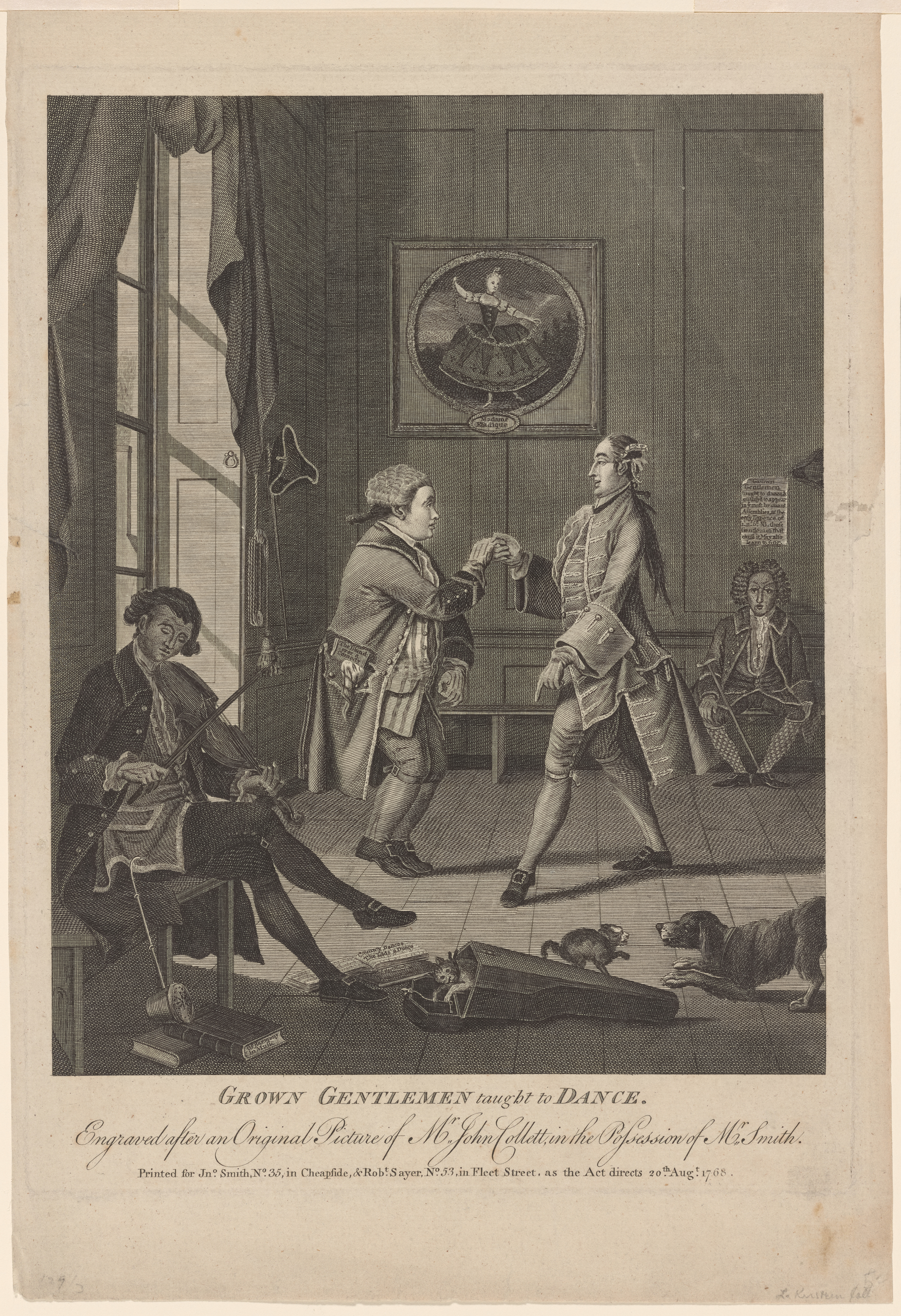
In the 18th century a ‘dancing master’ was a fashionable and profitable job for a gentleman. He would have been at the heart of London society and would have officiated at public balls and advertised his services in the local press.

British Museum, Public domain, via Wikimedia Commons

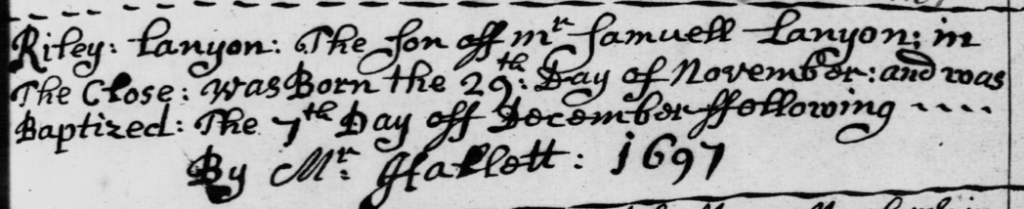
Ryley Lanyon was a dancing master in Bishopsgate Street, London. He was originally born in Exeter on 29 November 1697 and baptised on 7 December. He was the son of Samuel Lanyon. Samuel had another son called Rayly who was baptised at Exeter in 1689 and presumably died before 1697. Ryley/Rayly was obviously a name they wanted to perpetuate.

Exeter Presbyterian

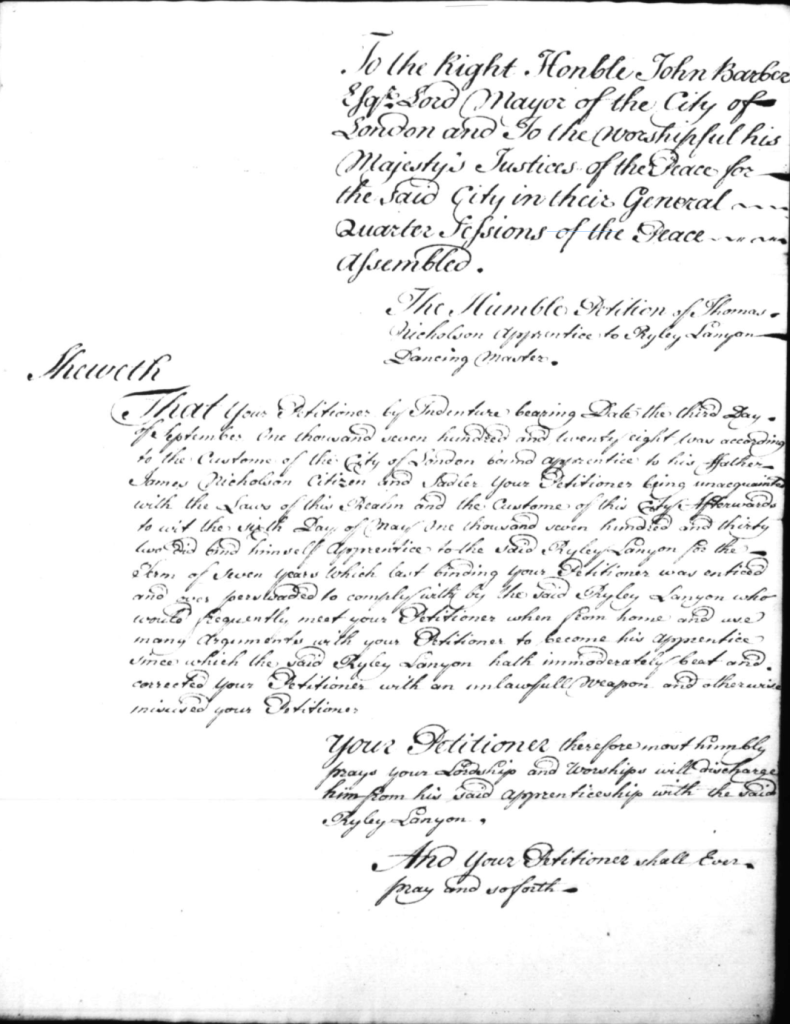
We next see Ryley in the records of London Metropolitan Archives in 1732 when he takes on an apprentice. Thomas Nicholson the son of James Nicholson a sadler. Indenture year 1732 and cost £40 for a seven year apprenticeship. (Source- CLA/047/LJ/13/1733)

A good master would teach his apprentice all he knew and provide board and lodging for seven years. A bad master had almost total control over his apprentice and a free hand to do almost anything he liked. Ryley was a bad master!

In 1733 Thomas Nicholson applied to the Hon. John Barbee Esq, Lord Mayor of the City of London and to the Worshipful his Majesty’s Justices of the Peace’ to be discharged from his apprenticeship because Ryley Lanyon ‘hath immoderatly beat and corrected your petitioners with an unlawful weapon…’

In the 18th century most apprentices would expect to be disciplined and corporal punishment was commonplace. For Thomas to make this appeal, the beating from Ryley must have been particularly bad.

We don’t know the outcome of the appeal.

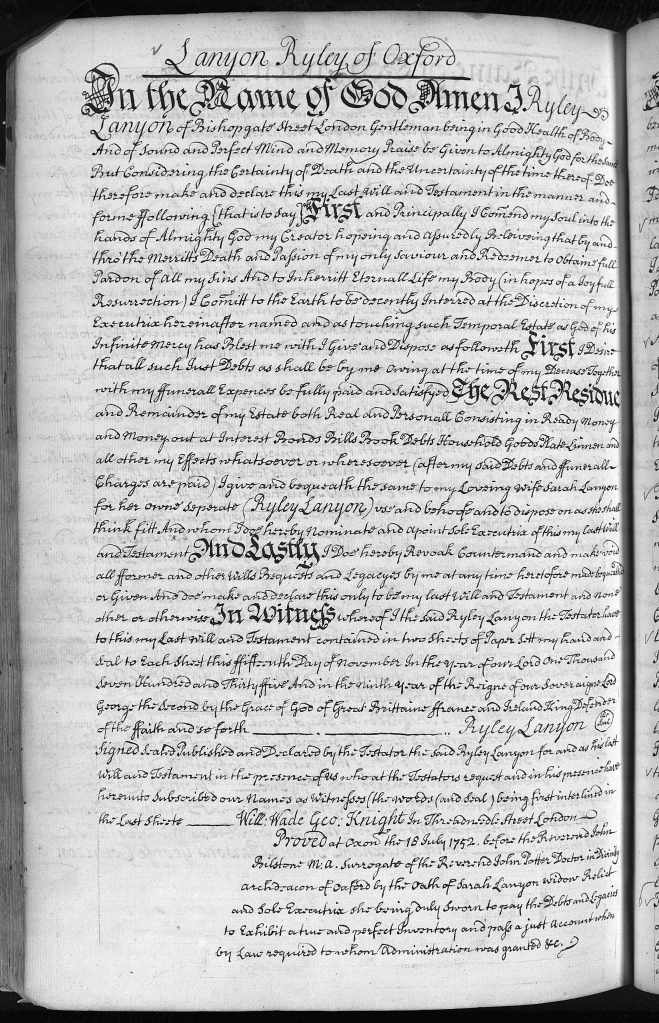
We next see Ryley in the records when he makes his will. It mentions just one relative, his wife, Sarah Lanyon to whom he leaves everything.

The will was proved on the 18 July 1752 and Ryley was buried at St Ebbe, Oxford.

Searching through London records I came across an Anne Ryley Lanyon spinster of Aldgate who had a clandestine marriage with James Howell, bachelor on 6 July 1722. James was a mathematical instrument maker. Could she be a relative of Ryley? I also found a marriage in London between a Samuel Lanyon and an Ann Riley on 7 Oct 1676.

On digging a bit further I found a baptism of a Samuel Lanyon son of James Lanyon in July 1656 at Exeter, Devon.

In 1677 there was an apprenticeship listed between John Lanyon, son of James Lanyon, wool comber of Exeter and Samuel Lanyon, of the Grocer’s Company London. So it looks as though Samuel had taken on his younger brother John to be trained to become a grocer.

On 2 December 1683 John Lanyon married Susanna Osmand at Stoke Canon in Devon.

Are they all related? Possibly! There are insufficient records to say with any certainty.

Can I fit them onto the main Lanyon tree? No. James Lanyon, father of Samuel and John, must have been born in the 1630s or earlier and I don’t have a James Lanyon born around that time. So for the time being Ryley and this little group of people are in the ‘Loose Lanyons’ section.

John Collett, Public domain, via Wikimedia Commons

Margaret’s Will

Wills are a great way to build a tree especially when there are gaps in the baptism, marriage and burial records.

Margaret Richard’s will (which I came across by accident whilst looking for another document) helped with the early Breage Lanyons.

Margaret was baptised on the 27 Oct 1622 at Breage, the daughter of William Lanyon and Susannah Burdon. William must have been a farmer as his will inventory values his corn and the corn in the ground.

Margaret married John Richards but we don’t have a date of marriage. When her older brother William died unmarried in 1661 he left his estate to her.

Margaret made a will in 1675 (it was proved in 1679) and her will helps confirm relationships on this very early branch of the tree.

She is described as Margaret Richards of Plymouth, ‘widdow, being sick and weake in body but of perfect minde and memory’ and she mentions the following relatives:

  • My brother-in-law Nowell Tonkin £5 for a mourning ring
  • My sister Susannah Tonkin £5 for a ring
  • Their daughter Dorothy Tonkin £20
  • Uncle Philip Lanyon of Plymouth Esq 20 shillings for a ring
  • His wife Constance Lanyon 20 shillings for a ring
  • Mary and Anne Lanyon daughters of my Uncle John late of the City of London £20 (John was Chief Engineer to Charles I) £20 each
  • Hester Lanyon daughter of Uncle John £100 (again Hester is described as a cousin and not the wife of her brother John Lanyon)
  • Cousin James Trewollah £5
  • Cousin Elizabeth Lanyon daughter of George Lanyon £5
  • Cousin John Penhellick and Humphrey Penhellick sons of John Penhellick of Helston £3 each (not sure where they fit on the tree)
  • Roger Lampoire? servant of my brother John Lanyon £5
  • All the rest to my dear and only daughter Susannah Richards.
  • Nowell Tonkin and Hester Lanyon to be her guardians

Interestingly the name Lanyon is spelt two ways in this will; Lanyon and Lanion.

Until this document we had no idea that George had a daughter. Now we know he had a daughter but we’ve no idea what happened to her! So the search continues!

Poisoned?

Occasionally you come across a document which really helps to paint an accurate picture of a person.

Whilst searching through the online archives at Kresen Kernow (Cornish Record Office) I found a legal opinion dated 1689 for Sir John Coryton against Sir James Tillie. This is of interest to us as Sir John’s servant was called John Lanyon.

From the documents held at Kresen Kernow John Lanyon was witnessing Sir John Coryton’s documents from 1674 onwards so by 1689 he must have been a trusted member of staff.

Sir John Coryton was the 2nd baronet of Newton Ferrers. He was married to Lady Elizabeth.

Sir James Tillie was Sir John Coryton’s land agent. He wanted to be married to Lady Elizabeth!

Sir James Tillie – Creative Commons Licence

The counsel’s opinion for Sir John Coryton against Sir James Tillie details how Sir John’s wife Elizabeth had been ‘carried off’ by Sir James Tillie. Sir John was advised that he could take action against the man/men who carried off his wife but he was liable to give her reasonable maintenance until a divorce.

The document also explains that Lady Coryton had been a ‘maltster’ (a brewer) in Sir John’s house and he was advised that he could sell the stock and receive the proceeds. The legal opinion goes on to explain that if Lady Coryton was with child which Sir John did not want to inherit then he must sue for divorce but must have full proof of adultery.

Elizabeth was the daughter of Sir Richard Chiverton who had been Lord Mayor of London from 1657-1658.

Whilst all this was going on John Lanyon had been busy defrauding Sir John. He wrote secret letters to James Tillie threatening to murder John Coryton and his wife. When Lady Elizabeth left her husband and was ‘carried away’, John Lanyon, realising the game was up, fled.

After he’d gone papers and goods belonging to Sir John were found in Lanyon’s study. These showed that he had been threatening Sir John’s tenants and trying to obtain rents and properties.

Legal Opinion 1689 – Source CY/7197

Conveniently Sir John died mysteriously at the age of only 42. There is speculation that he was poisoned. Lady Elizabeth married Sir James Tillie who divided the Newton Ferrers estate and built ‘Pentillie’. John Lanyon escaped prosecution.

Rod Allday / Pentillie Castle

James Tillie died in 1713 and his will left instructions that he was not to be buried but placed in a vault sitting in a sturdy chair in his finest clothes with his pipe so he could await resurrection! His instructions were carried out but his body was later moved and then lost. 300 years later it was found!

So what happened to John Lanyon and where does he fit on the tree?

Clearly John Lanyon was an educated man. If he was working for Sir John from 1674 onwards then he was probably born early 1650s.

There are currently 315 John Lanyons on the family tree but there is only one candidate that really stands out and that is John Lanyon 1652-1720. (See post ‘William ‘Generosi’ Lanyon of Breage.)

John was the eldest son and heir of John Lanyon a ‘sea and sand barge daily labourer’.

The Parochial History of Cornwall stated that John Lanyon senior:

‘…had a son named John Lanyon who having had his education under Hugh Boscawen, gent, Master of Arts, who kept a school at St Michael Penkevill Church, became afterwards a steward to Trefusis, St Aubyn, Coryton and lastly came into the service of Brook Lord Chandos, and having by these services accumulated considerable riches he gave lands and built and endowed an almshouse for the poor people.’

John Lanyon’s branch of the tree.

After he fled he must have headed to London and persuaded Lord Chandos to hire him. He later married Sarah Symons. We now have a pretty good idea how he acquired ‘considerable riches’! Perhaps the alms houses were a way to atone for past sins!

For more information see Nigel Baker’s article on John Lanyon:

https://www.keaparishcouncil.org.uk/lanyon-alms-houses-author-councillor-nigel-baker