Property and land transactions are a great way to build your family history. The Lanyons owned and leased numerous properties and areas of land in Cornwall and following some of these has helped me to build their story. They owned land and property in four main areas of Cornwall: Penwith, Kerrier, Pydar and Trigg.
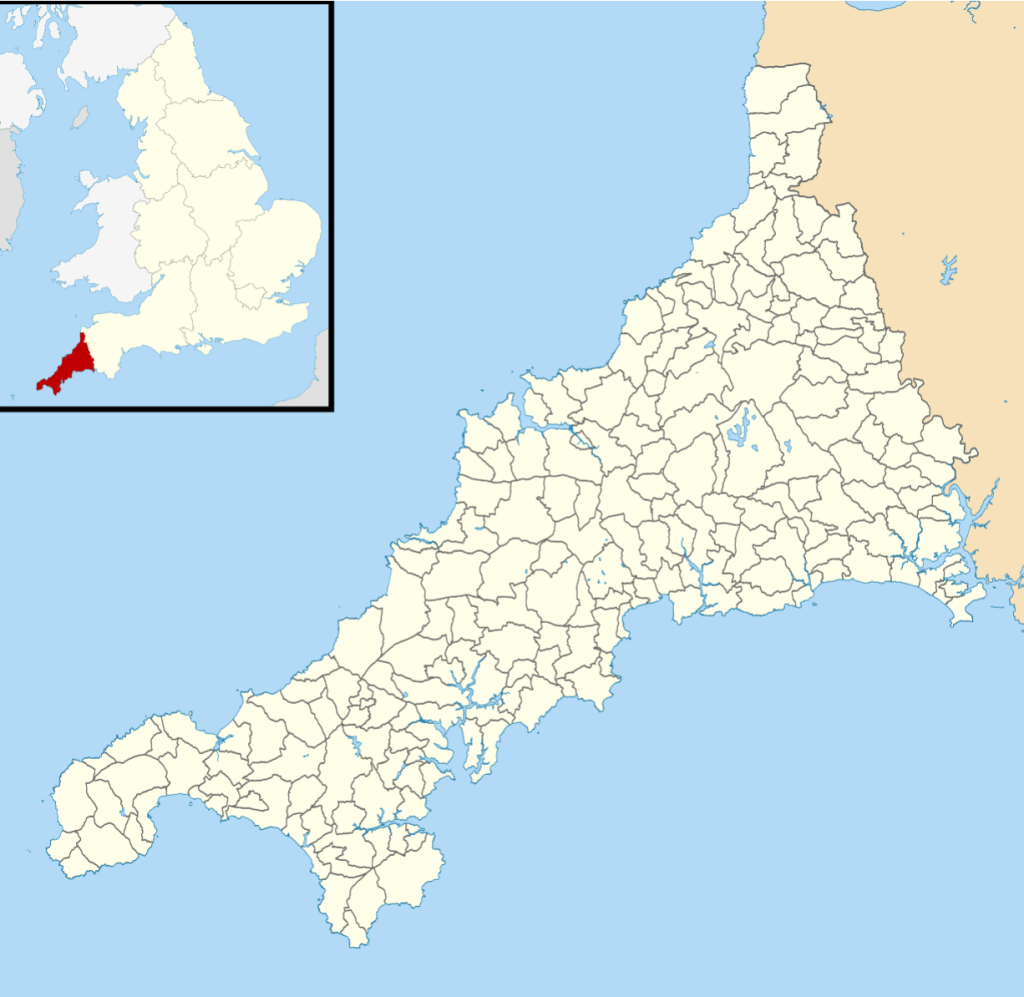
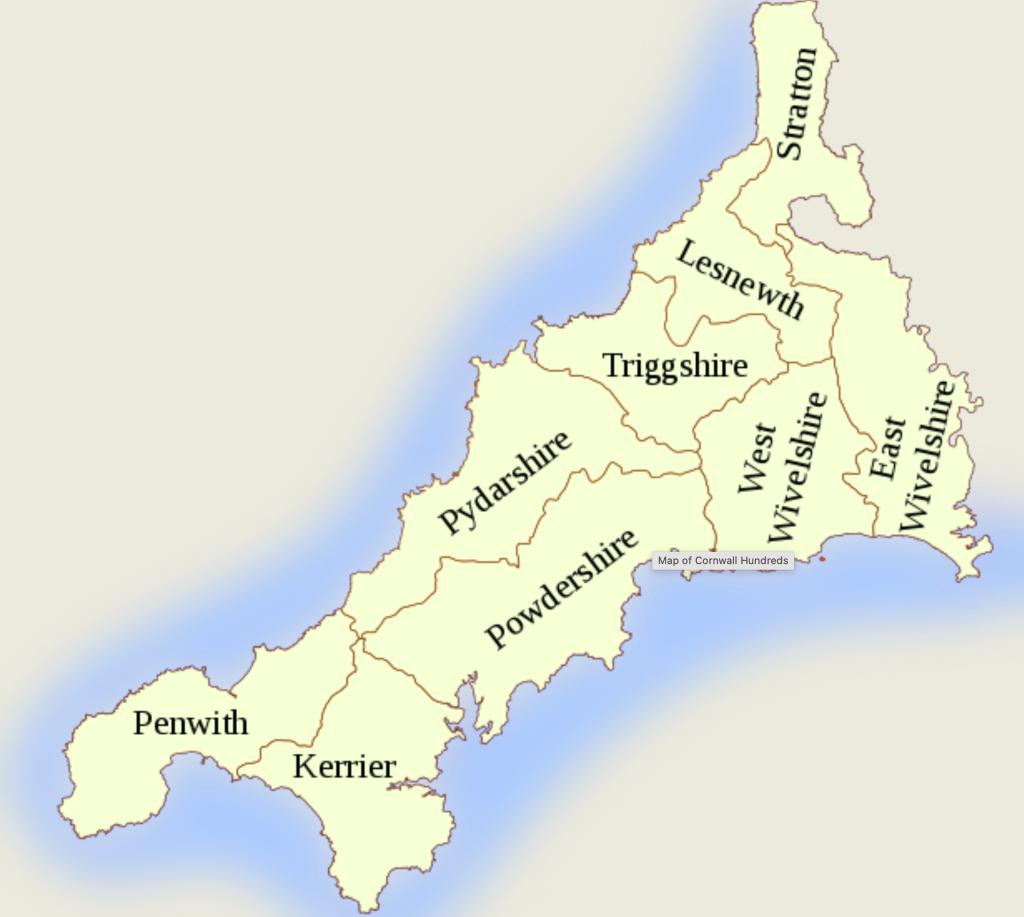
Penwith
The oldest property and land records I’ve found relate to Penwith.
Madron & Penzance Parish
Bosullow
The earliest property record I have found was 1244 Feet of Fines (Cornwall Feet of Fines, Volume 1, Joseph Hambley Rowe (Ed), (Devon & Cornwall Record Society, Exeter, 1914), pp.39/40) which mentions that Stephen de Bello Campo (Beauchamp) gave to John de Linyeine 3 ferlings of land at Botuolo bichan (Little Bosollow) and 1 ferling of land at Drek bichan (Drift in Sancreed). The rent at Little Bosollow was 40s 2d per year in 1244.
Little and Great Bosullow still exist today but over the centuries the name has been variously spelt:-
- Botilwoelou – 1238
- Botuolo – 1244
- Bossywoelou – 1296
- Botuelou – 1297
- Boschiwolou – 1301
- Bosuoylagh – 1313
- Botywoelou – 1319
- Bossuolou – 1334
- Bosywolou – 1336
- Bussolowe – 1561
(One of the biggest problems is finding the modern location of properties from the old names listed in charters and wills. )
The two houses are called Bosullow Veor (great) and Bosullow Vean or Vyan (small).
We know from Raphe Lanyon’s will of 1604, that in 1580 Walter Lanyon, who lived at the Barton of Lanyon agreed that Raphe Lanyon, his nephew, would live at Bosollow. Following Raphe’s death in 1604 his son William lived there. William died in 1627 and his widow Mary Lavelis continued to live there, her father’s will confirms this. Some time after that Walter’s grandson David Lanyon lived at Little Bosollow with his family. Following David’s death in 1641 the house appears to have been occupied by William Lanyon, yeoman, the grandson of Raphe.
Barton of Lanyon
Probably the oldest property was the Barton of Lanyon near Madron. An archaeological dig in 1964 revealed that the manor house was a series of superimposed buildings dating back to at least the 11th century. Originally it would have been a turf house but by the 13th century that had been replaced by granite walls and in 1390 the Bishop of Exeter licensed the chapel at Lanyon to hold services. In 1784 the old house was taken down and a new farm built. Today the ancient site is a ‘national monument’ but little of the original house remains.
Rev. T Taylor prepared a second volume of the Victoria County History of Cornwall. The unpublished work is at the Royal Institution of Cornwall. He states:-
“Lanyon (Lanyon, Lynyen, Lanine), the ancient seat of the family of that name and styled a manor in the 17th century, is situated in an exposed position on the outskirts of the moors which form the northern extremity of the parish. In 1390 Roger Melledor, vicar of Madron, had the bishop’s licence to celebrate divine service in the chapel of Blessed Mary of Lanyon. The family of Lanyon is first found in connection with Tregaminion. In the reign of Henry VIII William Lanyon who was assessed at the large sum of 111s 8d for lands in Madron, to the first subsidy in that reign, acquired lands in Gwinear parish and his grandson Edward Lanyon settled there and became the ancestor of the Lanyons of Lanyon in Gwinear. Less is known of the parent stock. In 1627 Richard Lanyon, who as head of the family signed the Visitation Pedigree in 1620, and Jane his wife conveyed the manor of Lanyon in Madron to James Jenkyn (Feet of Fines Trinity 3 Charles I). The family of Lanyon lived at Tregaminion in good condition until the reign of Queen Anne when they sold the estate.”
Taylor hadn’t discovered that the Lanyon’s had a much longer association with Gwinear and Madron and that the manor in Madron was sold to Johnathan Rashleigh in 1634.
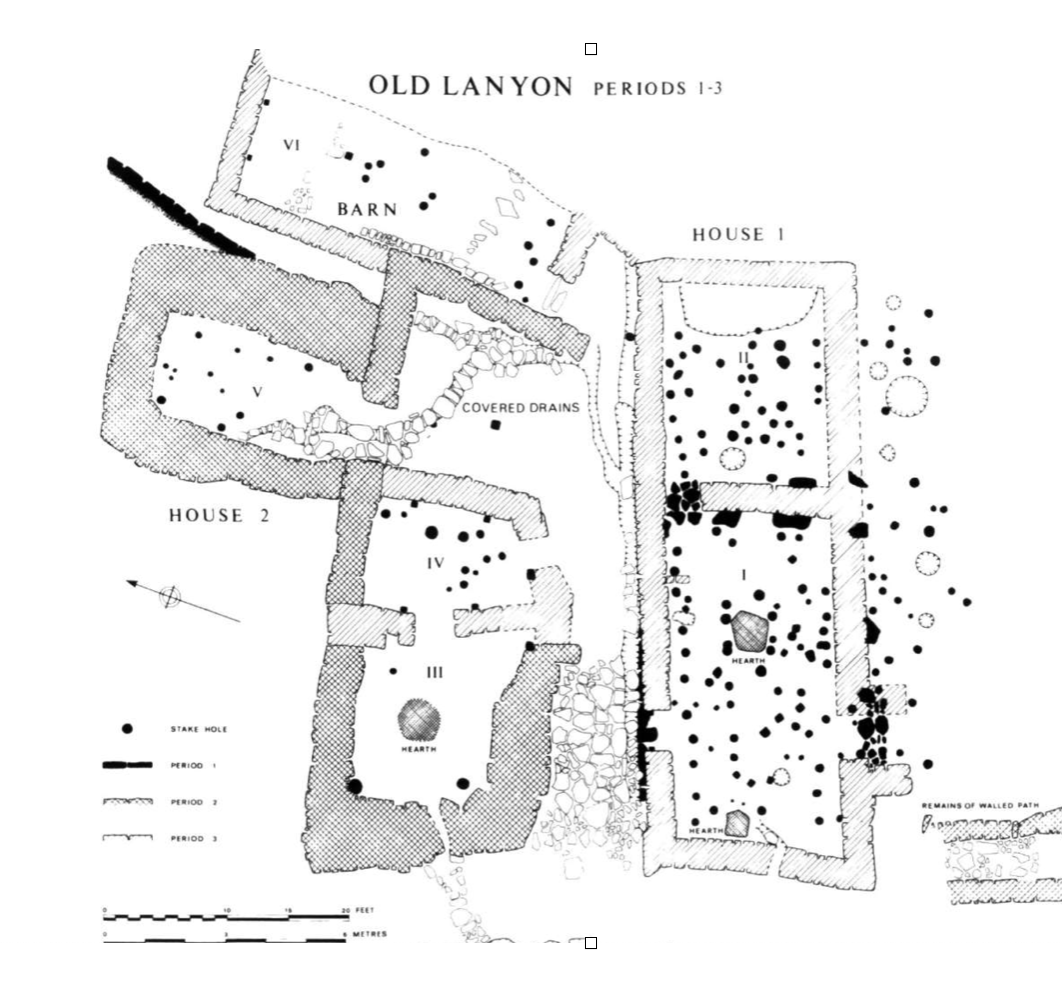
In 1569 Richard Lanyon Esq leased the house to his younger brother Walter and his descendants lived here until 1784.
Lanyon Quoit is so named as it is close to the old manor house.
Nancealverne
Nancealverne is on the outskirts on Penzance, parts of the house date from Elizabethan times but it was extensively rebuilt in 1700. It was home to Richard (son of Richard Lanyon Esq) and Margery Lanyon who married at Madron on 6 Jan 1587.
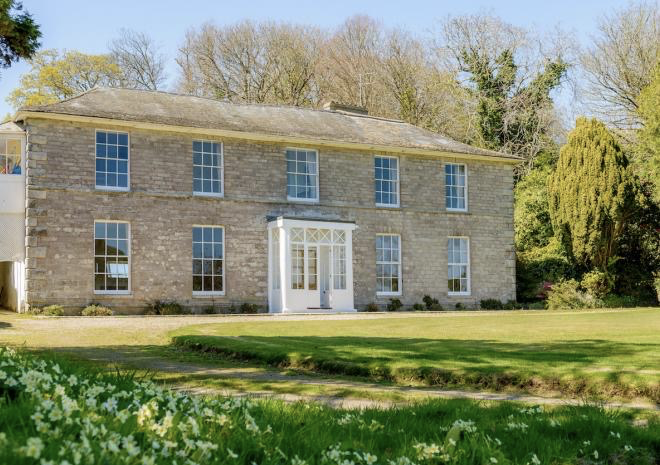
Richard also owned the property Rosecadghill at Penzance which is very close to Nancealverne.
Nancothan, Polgoon and Trengwainton
Nancothan had two mills. In the early 17th century it was home to Richard Lanyon before he moved to St Ervan with his family.
Polgoone was another Lanyon property, today it is a working vineyard.
Trengwainton is also listed as one of their properties, today it is a National Trust property and the gardens are open to the public.
Morvah Parish
Tregaminian
Tregaminian came into the family in the 14th century when Sybil Tregemynyan married John de Lynyen. Richard Lanyon Esq and his son John sold it to Richard’s fourth son William in 1589. William’s son John sold it to his cousin John Lanyon of Botrea and it was sold to John Borlase of Pendeen during the reign of Queen Anne.
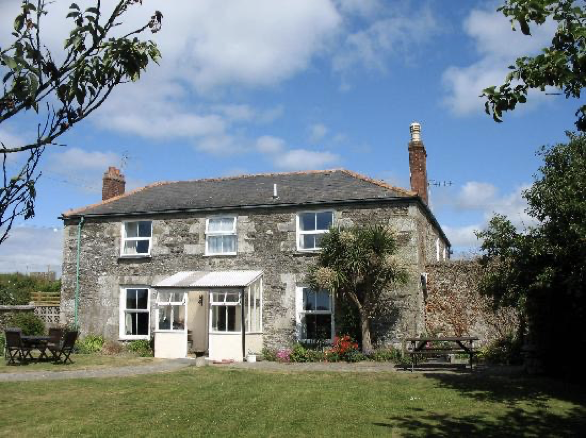
Charles Henderson wrote of Tregaminion in Morvah c. 1925
“Close to the church is the farm of Tregaminion where are the remains of an ancient manor house. A blocked up pointed granite doorway in the wall of a cart shed is apparently 14th century, the remaining portions being 15th century or later.
On this estate were to be seen an ancient chapel and holy well. They stood in a marshy field about 30 yards from the cliff and due north of the church. The well still remains and can be found by following a grassy lane from the church to the sea.”
Sancreed Parish
Drift
The 1244 Feet of Fines also mentions Drek Bichan or Drift at Sancreed as another Lanyon property. Drift was the ancient seat of the Trewren family who intermarried with the Lanyons.
Botrea
Botrea in Sancreed is another property that can be traced back to at least 1624. William Lanyon (the second son of John Lanyon Esq and Phelype Milliton) lived here and the property is mentioned in the inventory of his possessions after his death. It passed from him to his son John.
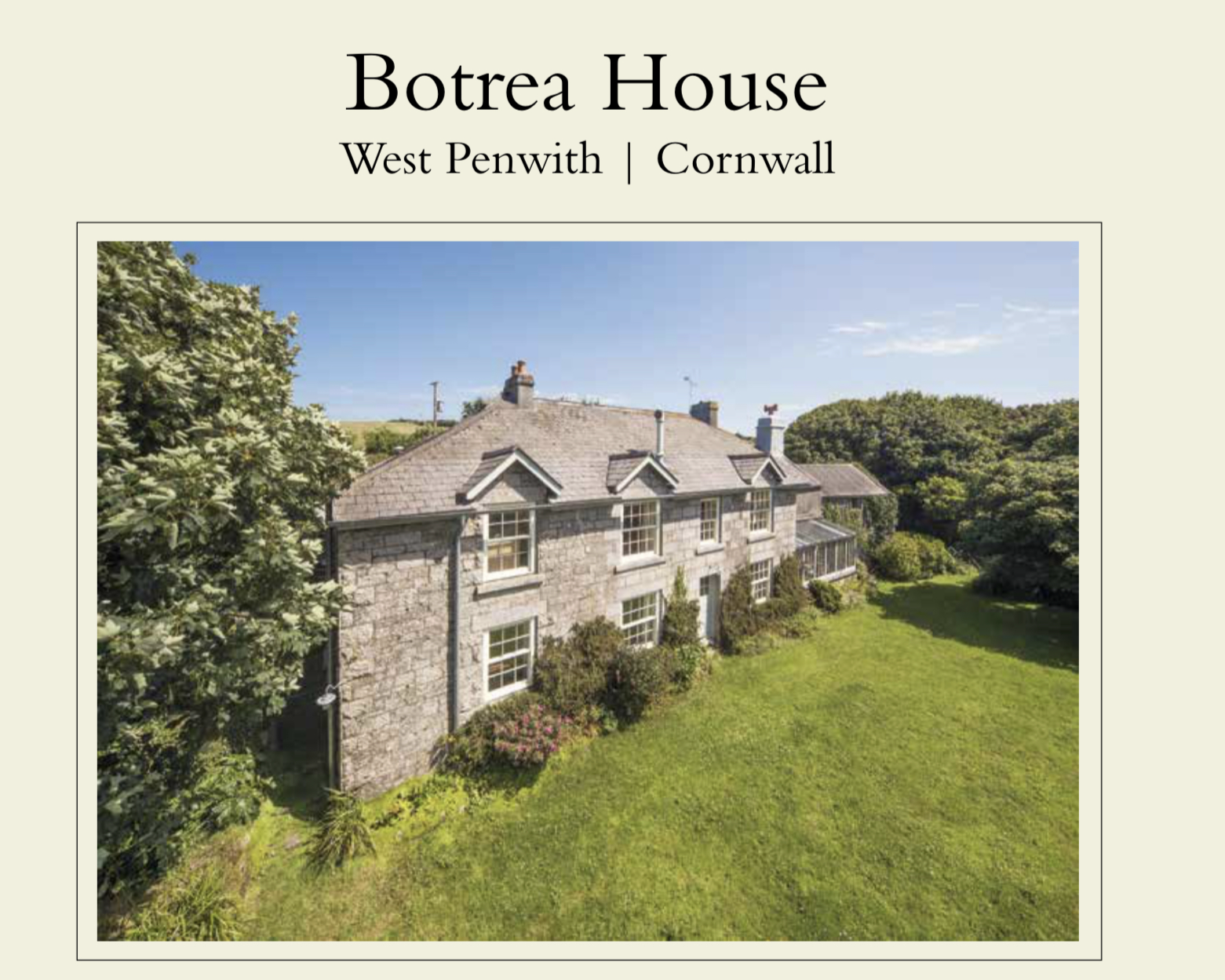
Botrea House today
John Lanyon, often called the Golden Lanyon as he made so much money from tin and money lending, mentions a number of properties in his will of 1664:- Tregonebris, Bossence, Treronacke and Treronacke Mill, Deanerall Chegwine, Tredgion, Brane, Bowante, Boddeneak, Laven Treaven, Nanceathon, Terdeny & Bownance.
Paul Parish
The family owned the Manor of Brewinney which is now the site of the village of Paul.
St Buryan & St Just in Penwith Parishes
The Lanyons owned several farms in this area: Treviddron, Bolankan, Treave, Cardinney and Kerrow. Some are still farms today but some have become holiday cottages and camping parks.
St Levan Parish
In 1639 John ‘Golden’ Lanyon purchased from Walter Lanyon Tredrenan at St Levan.
Gwinear Parish
Gwinear became the home for the senior branch of the family. Their seat was known as Coswyn or Coswynwullard and later was renamed Lanyon Manor.
The rental or survey of Connerton Manor in Gwithian dated 14 July 1463 and states:-
“John Lanyeyn namely John Hicka, 2 Cornish acres in Coswyn.” (Cornish acres are much larger). John Hicka married the heiress Joan Lanyeyn and became John Hicka Alias Lanyeyn.
In the late 16th century Coswyn was renamed Lanyon and in 1688 Tobias Lanyon rebuilt the house in the French style. Oriel chamber over the porch. The family custom was to bring their dead and light a fire and keep it burning constantly until they were buried. This ancient custom was observed for Mrs Ann Lanion who died 21 Oct 1829, the last of the family to die at Lanyon in Gwinear.
Rev. T Taylor prepared a second volume of the Victoria County History of Cornwall. The unpublished work is at the Royal Institution of Cornwall. He states:-
“Lanyon in this parish must be distinguished from the place of the same name in Madron, both of which were seats of the Lanyon family. In the latter half of the 16th century Edward Lanyon, a younger brother of John Lanyon of Madron, is found living at Coswin in Gwinear (Feet of Fines Michaelmas 41 Elizabeth). The position which Coswin occupies on Norden’s map, and the fact that in deeds of conveyance (Visitation of Cornwall 1620. Harl MS 1162) made in 1786 the estate is described as “Coswyn Woolva otherwise Coswyn Wellard otherwise Lanyon” renders it probable that when the mansion was built (Feet of Fines Trinity 44 Eliz) at Coswin in 1668 the name was changed to Lanyon. (The Rent Roll of Connerton given in Bowles’ History of Penwith (the date of which may be as early as 1637 and cannot be later than 1673) states that Tobias Lanyon, the builder of Lanyon, was living at Coswin Wolver, and paid yearly 7s 11d to the manor of Connerton. No high rent is now paid for Lanyon.”
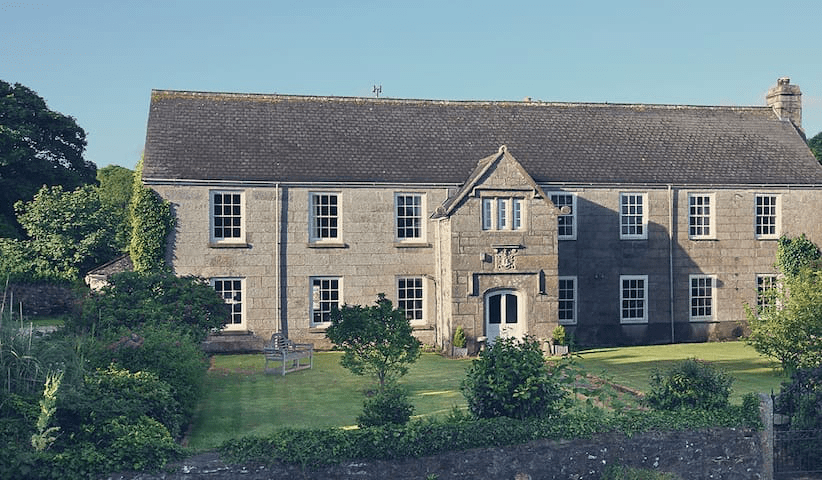
Charles Henderson wrote the following about Gwinear c.1925
“Between the churchtown and the railway station – picturesquely embowered amongst trees – stands the old manor house of Lanyon. The family who lived here was a younger branch of the family of Lanyon in Madron. Edward Lanyon – the youngest son of Richard Lanyon of Madron was the first to settle in Gwinear circa 1600 and gave his name to the barton.
The House continued in the family until 1785 when it was sold. The Lanyon family are said to have originated from Lannion in Brittany and there are still descendants of them bearing the same name.
The first house built circa 1600 formed three sides of a square surrounding a courtyard and faced north. In 1668 it was – like so many in the district – reconstructed, the mullions being ejected and square stones substituted. The charming old porch was allowed to remain and the eastern wing pulled down. At present – the back of the house has been enlarged and only a few years since – the eastern wing was partially destroyed and turned into a stable. The porch id the only original portion of the building and very charming it is. The granite dorrway has a drip stone and moulded jambs. Above it is a shield bearing the family arms and the date 1688. The former are :- sable a castle with four towers argent, a falcon hovering with bells, proper. Below is the motto – “Vive et Vivas.” Above this is a mullioned window and the gable of the roof is picturesquely finished off with a granite border. Inside the house there are two good ceilings on the ground floor but nothing else remarkable. The western wing of the being turned into a stable it was found that rats from it infested the house and so a small portion of it was pulled down and the rest disconnected from the main portion of the house. Unfortunately this alteration necessitated the destruction of a stone spiral staircase.
A large number of mullions and cut stones are to be seen lying about the farmyard or built into walls. two portions of a fine granite fireplace can be seen in the former. The ‘lintel’ now serves the purpose of a lintel above a door in one of the cow houses and one of the jambs is built upside down into the wall of the yard and a small iron pump has been inserted through it. The inner angle has a hollow moulding and at the base is an ornamentation representing a dice box and a ball. Both fragments show the work to be remarkably good and it is a thousand pities that they were ever ejected. Acting as the arch of the loft doorway in the same stable is a very fine Tudor doorway. In the spandrils are balls similar to those on the fireplace.
Just above it is a small stone head built into the wall. It has eyes, nose and a curious moustache and seems to be a crude imitation of a lion’s head. It may have formed at one time part of a garden ornament.
The old walled garden is at the back of the house and is shut in by huge high stone walls, one of which has been pulled down.
Lanyon is approached by a fine avenue of ash and oak but the oldest tree is near the house and is said to be 150 years old.”
Whilst some of the history is incorrect, Charles’ descriptions of the house are very useful.
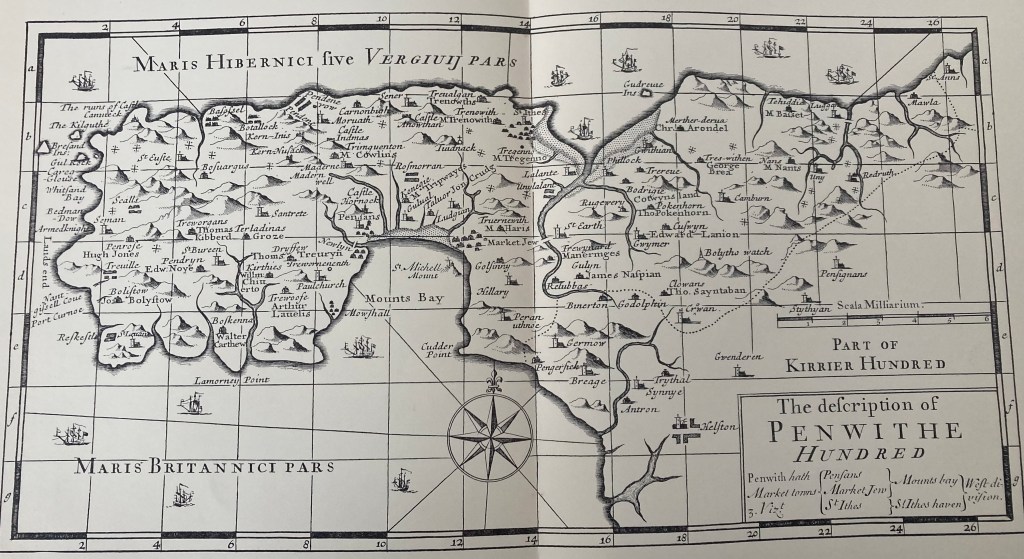
These aren’t the only properties in Penwith but they give an idea of the extent of the family’s property in this area.
Kerrier
Breage Parish
William ‘Generosi’ Lanyon moved to Tregonen in Breage in 1569. I think Tregonen is now called Tregonning.
Helston
The cordwainer descendants of David Lanyon of Little Bossulow moved to Helston in the late 17th century. There was a tannery at Helston.
They owned the White Hart Inn on Coynage Hall Street and various properties in Meneage Street. Sadly the White Hart Inn no longer exists.
Triggshire
In 1341 a charter names David de Kylmynawis as the father of John de Lynyen. Where is Kylminawis?
Kylminawis appears to be St Minver. The charter also mentions Portzwyhan which today is better known as Port Quin.
“David De Kylmynawis to John his firstborn son & heir, and to the heirs of his body by Sibyl daughter of Joceli de Tregaminion his wife, with remainder to the grantor and his heirs. Charter with warranty of all his messuages, lands etc. In Kylmynawis, namely yards, gardens, woods, meadows, moors, turbaries, launds an pastures, and his corn mill there with multiple, waters and watercourses or beads, his bake house with garden in the town of Portzwyhan, the rent and service of John de Landewarnek and his heirs for lands held of the grantor in Kylcoys, of Simon de Kylcoys there, of Paternus and Robert brothers of the grantor for lands of him held for their lives in Kylcoys, of Margery his sister likewise in Araweyte, and the reversion of all lands of the said John, Simon, Paternus, Robert and Margery which they claim to hold for life of the grantor and his heirs when it shall fall in.”
Pydarshire
St Agnes Parish
John Lanyon, probably the second son of Richard Lanyon Esq, lived at St Agnes, he appears on the 1569 Muster Roll for St Agnes. William Whitta owned the Penwennick Estate. Around 1569 it appears that John Lanyon married William Whitta’s daughter Jane. In 1596 when John & Jane’s son also called John married Tamsin Tapprell at St Agnes John Lanyon gent purchased the Penwennick Estate. By 1623 John, his wife Jane and their sons John and Edward sold the estate to Edward Noy.
St Erth Parish
We don’t know the name of any property owned in St Erth but William Laniene paid 41 shillings for property in the parish according to the Penwith Subsidy Roll of 1509-1523. His Gwinear estate also cost 41 shillings so the St Erth property was of a similar size.
St Erth was also the home to Elizabeth Nanspian, the wife of William Laniene’s son Walter. The Nanspyan’s lived at the Manors of Godrevy, Tregender and Gurlyn in St Erth.
St Allen Parish
John Lanyon descended from the Sancreed branch of the Lanyons. He married Sarah Straight and they moved to St Allen parish. They lived at Henver Wartha and the family purchased more farms at Polstain, Trevalsa and Lanner.
Padstow, St. Ervan & St, Merryn
In the late 16th century John Lanyon Esq married for a third time to Margaret Trewinnard and moved to St Merryn near Padstow. They lived at the Treveglos.
His grandson Richard Lanyon Esq lived at Treginegar at St Ervan. This was absorbed into the Royal Naval Air Station at St Merryn and became the officers wardroom.
The Lanyons owned land at Harlyn.
In 1586 Edward Lanyon was involved in a legal dispute over the property at Cruckmorreck, it’s not clear where this is today but it could be Crugmeer near St Merryn.
John Lanyon Esq’s marriage settlement of 1561 lists the various properties he was to receive on his marriage. They were in Gwinear, Madron, Morvah, Buryan, Sennen, St Levan, Kenwyn, St Just, Paul, St Merryn, St Ervan, St Issey and Padstow.
Just sixty years later John’s grandson, Richard Lanyon Esq, lost many of the properties when he fell into debt and sold much of the estate to his cousin Jonathan Rashleigh for £500. Rashleigh leased some of the properties back to the family.
 The Lanyons