
Family historians are always looking for new sources of information so I was delighted to find the site medievalsoldier.org which has lists of lots of medieval soldiers. I searched and found one relevant entry:
William Lanyen – Man at arms naval service, serving under Hugh Courtenay, the Earl of Devon (ref: 14180500) this gives us the year 1418.
William was listed on a muster roll held at the National Archives ref: E101/49/34 m.8
So who was William Lanyen and where does he fit on the tree? If he was fighting in 1418 he could have been born sometime during the period 1380 to 1400 and the tree at that time is a little complicated.
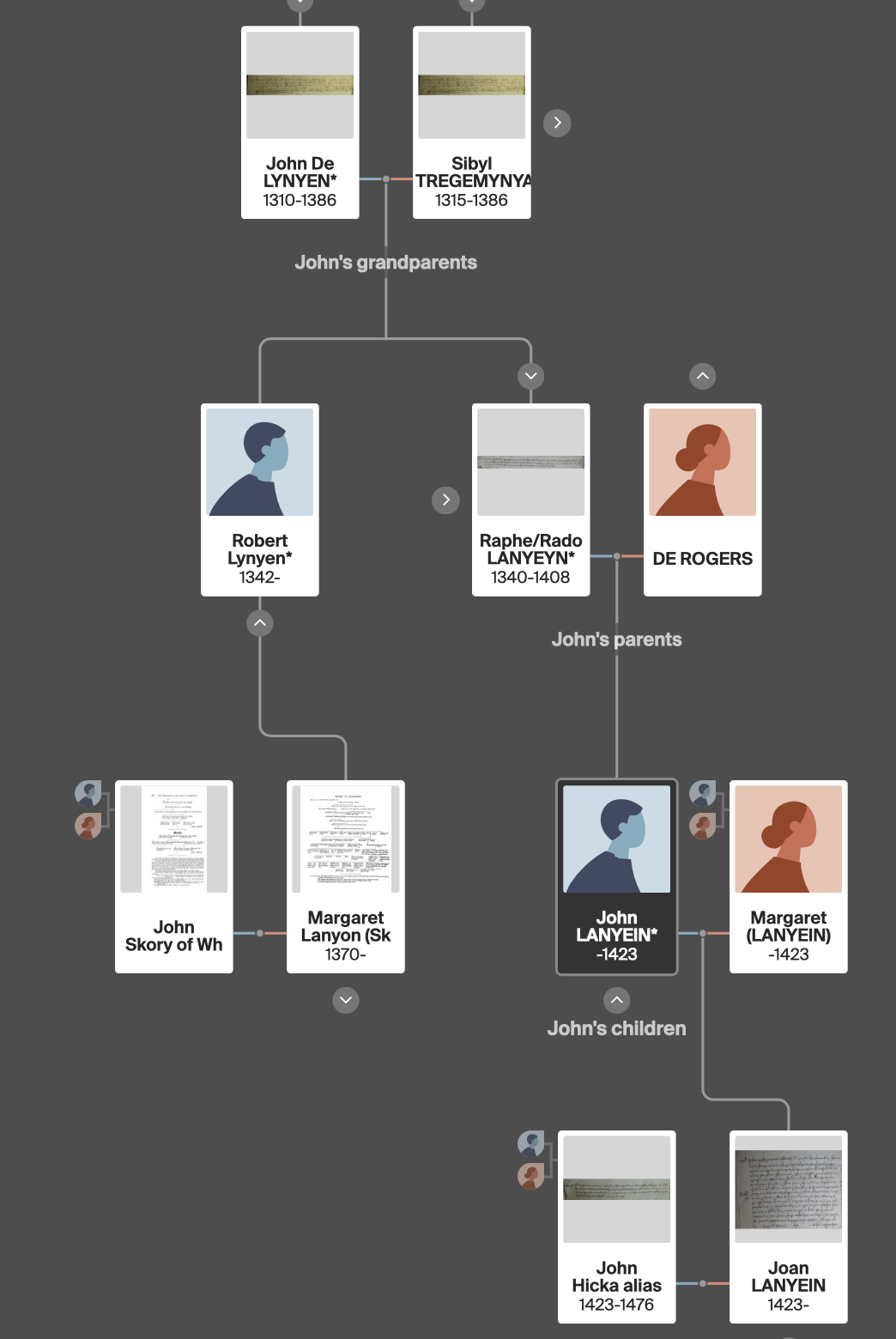
Raphe/Radolphus Lanyeyn was born abt. 1340 and died after 1408. We know his wife was from the de Rogers family, but not her first name. The source for that was a letter from Jane Veale Mitchell to Edward Bullmore: “….in the Rolls Office Chancery Lane, a Radolphus Lanyon asks that Tregaminion then in possession of his brother in law de Rogers might have come to him and his descendents because they had no children, written in old french dated 1327.”
We don’t know which roll this information came from or why Raphe’s brother in law was then in possession of the estate called Tregaminion.
Raphe had a son called John Lanyein who died bef. 1423. His widow Margaret remarried John Fursdon and there is an interesting document: Early Chancery proceedings: C1 Bundle 5/41 which mentions John Fursdon, Margaret and Margaret’s daughter, Joan Lanyein who was born bef. 1423.
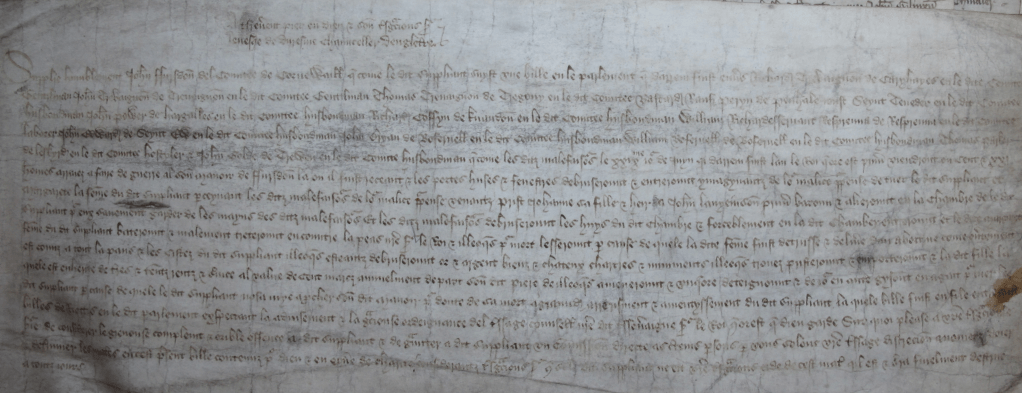
You can read all about Joan and how she was John Lanyein’s heir, in the post ‘Abduction’. https://thelanyonstree.com/2022/08/17/abduction/
If William Lanyen, our naval man at arms, was born abt. 1380 to 1400 then he would have been a contemporary of John and Joan Lanyein but he can’t have been a brother as surely he would have inherited? Which suggests he must have been a cousin from a cadet branch of the family.
There are no other records of this William and we don’t even know if he survived or was killed during his service in the navy.
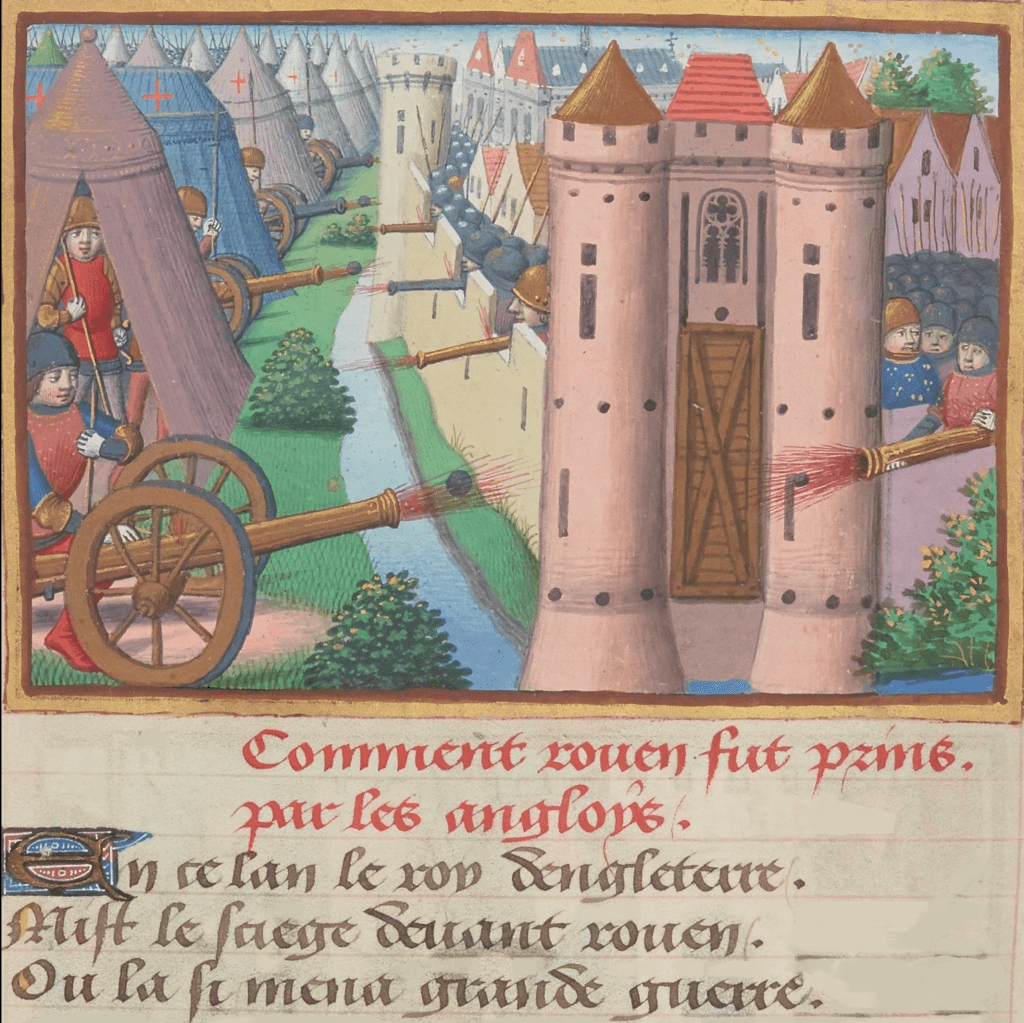
We can however find out a little about the way he lived. In 1415 England defeated the French at Agincourt and in the following years the two countries fought the ‘Hundred Years War’. In 1418 England was laying siege to the city of Rouen, and Rouen could not be taken until the English had control of the sea.
The southwest—Devon and Cornwall—was one of England’s most important naval regions. The Earl of Devon provided ships and fighting men under contract to the Crown.
Devon & Cornish men were especially valued because they:
- Were experienced sailors and coastal fighters
- Knew Channel waters well
- Were used to defending against Breton and French raids
The siege at Rouen depended on supplies reaching the English and the job of the navy was to escort the ships carrying, food, weapons and horses and to fight off French attackers.
A naval man at arms was not a sailor, he was a soldier. Ships at this time rarely had guns and they fought by grappling the enemy ship and pulling it close enough for the archers to shoot and the men at arms to board and fight the enemy. A man at arms had status greater than an archer but not as high as a knight. Pay was about 12d a day and there was a chance to ransom and loot.
Despite the opportunities to make money it was a very hard life on board. The soldiers often slept outside in the cold and damp and they ate a poor diet. The risk of being killed in action was high and the risk of accidental death for example, from falling overboard whilst wearing chain mail was also high.
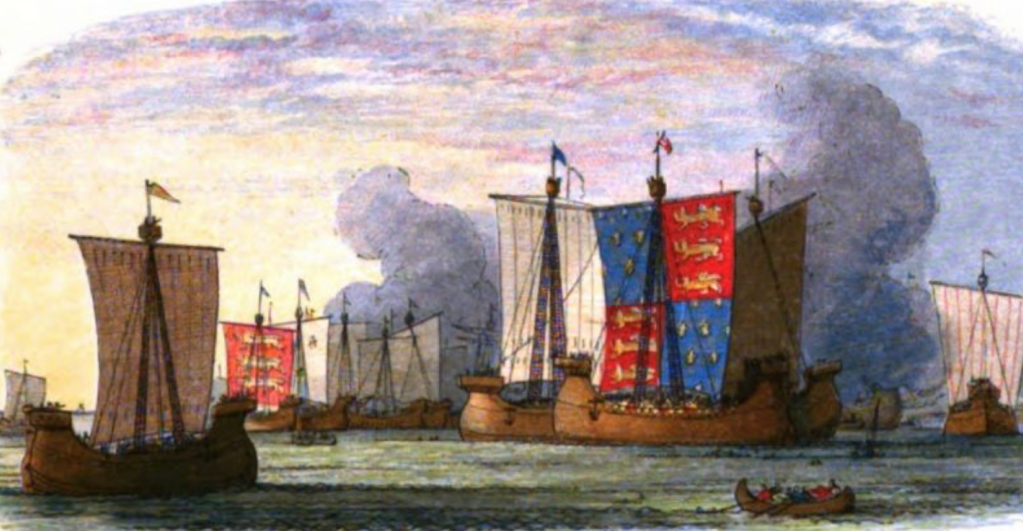
The English ships prevented supplies getting through to Rouen and eventually the city was starved into submission in January 1419.

 The Lanyons