Thomas was the eldest son of David Lanyon and Joan Shutford, he was born about 1620 but there is no record of his baptism. His father died in 1641 and his will suggests that Thomas is 21.
His father David bequeathed Thomas land that can be traced back to Richard Lanyon Esq and Margaret Treskillard.
‘Unto Thomas my sonne ye land belonging to Lanion Mill (adjoining Little Bosullow) after decease of my wife during the terme and time I have therein’
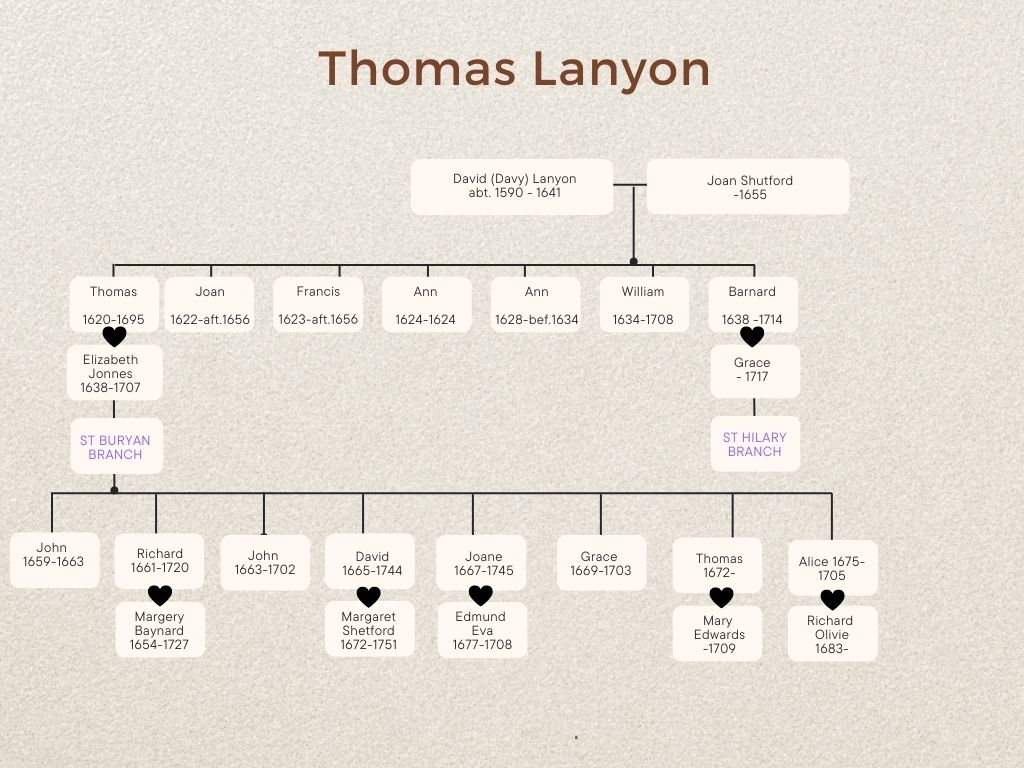
Thomas was a gentleman and yeoman. He married Elizabeth Jonnes at St Buryan in 1658. They had eight children:
John 1659-1663 died in infancy
Richard 1661-1720 married Margery Baynard – four children
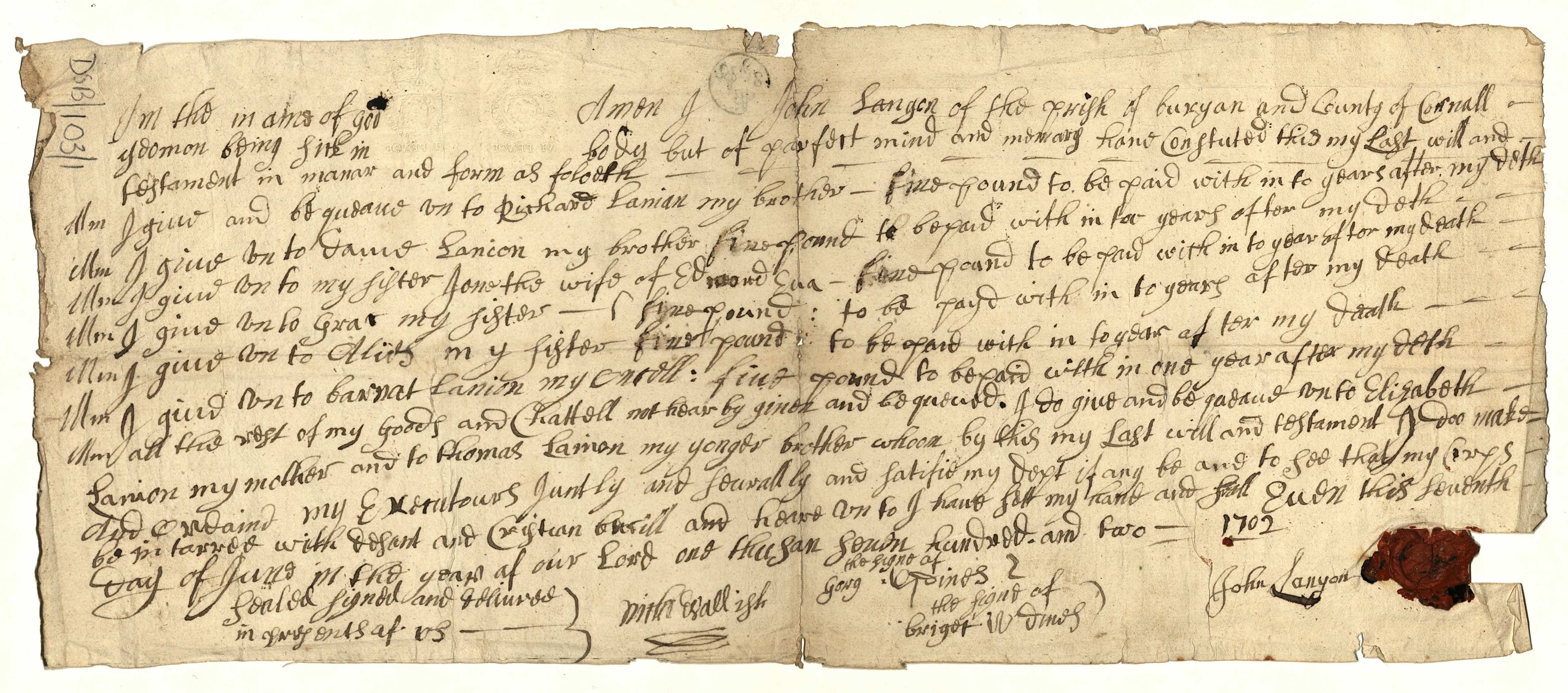
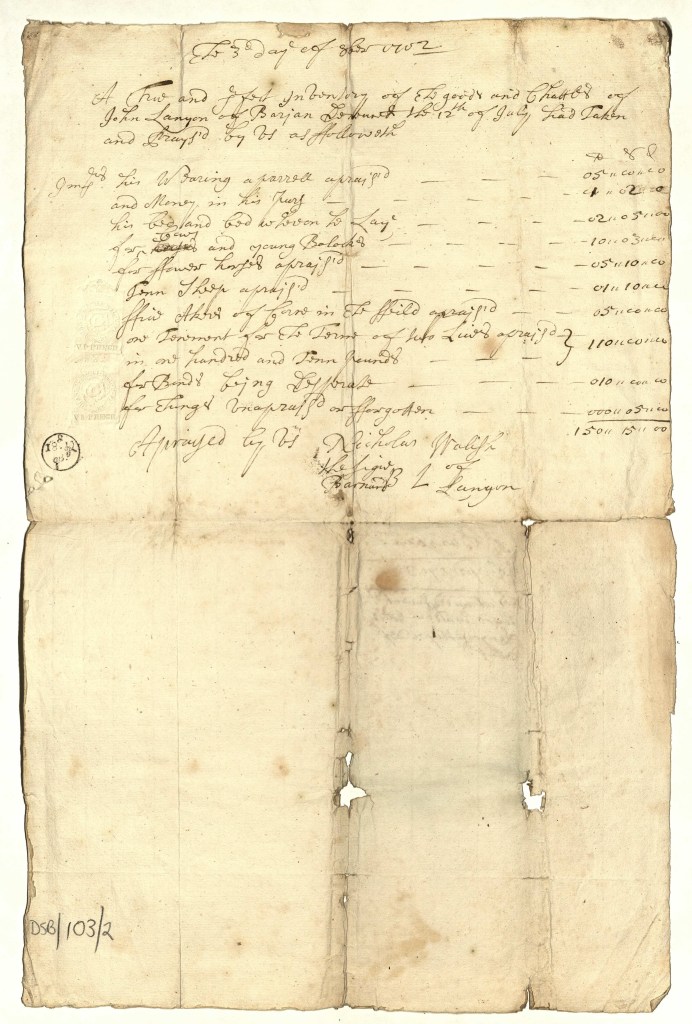
John 1663-1702 died unmarried but left a will which mentions his siblings: Richard, David, Thomas, Grace, Alice and Joan wife of Edmund Eva, Uncle Barnard and mother Elizabeth.
Will of John Lanyon – Source St Buryan Deanery CRO/DSB/103Inventory of his goods DSB/103
David 1665-1744 married Margaret Shetford – five children
Joane 1667-1745 married Edmund Eva – four children
Grace 1669-aft. 1703 – no further trace
Thomas 1672 – married Mary Edwards – four children
Alice 1675-1705 married Richard Olivie – one son who lived for a day, Alice was buried eight days later so probably died of puerperal fever.
Thomas Lanyon’s tree
Thomas died in 1695 his estate was valued at £113 5/- and he left a will which mentions:
Son Richard Lanyon of Sancret 2/- 6d and his daughter Grace 5/-
Third son David
Eldest son Thomas
Daughter Jane £40
Daughter Alice
Brother Barnard, large chest , woolen clothes
wife Elizabeth and son John executors
His son David and daughters were to have meat and drink and lodging at my house at Bolanken
The church wardens account at St Buryan lists the following properties connected to the Lanyons:
Treviddron – held by Mr Charles Lanyon between 1690-1700 and up to 1711. Charles left the Parish in 1711 and the property passed to Mr Henry Davies.
Bolanken – In 1693 in the possession of Thomas lanyon, by 1699 it was in the possession of William Lanyon and remained there until 1703 when possession was transferred to Paynter.
Treve – In possession of John Lanyon in 1699 and is again mentioned in 1702. By 1703 it was in Thomas Lanyon’s possession and it remained there until 1711.
Cardinney – In 1734 David lanyon held Cardinney as far back as 1711 it was listed as belonging to Robert Shutford and David Lanyon jointly.
The rector comments that the social status of these Lanyons in the parish in the 17th and 18th centuries was that of gentlemen and non-working farm owners.
Richard was the eldest surviving son of Thomas and Elizabeth Jonnes, he was baptised at St Buryan in 1661. He married Margery Baynard at Sancreed in 1688. They had four children:
Richard 1686-1687 died in infancy
Thomas 1690-1693 died in infancy
Grace 1693-1777 married William Mason of St Just in 1715 and they had five children
Thomas 1695-1737 or 1738 married Mary Rowe – eight children
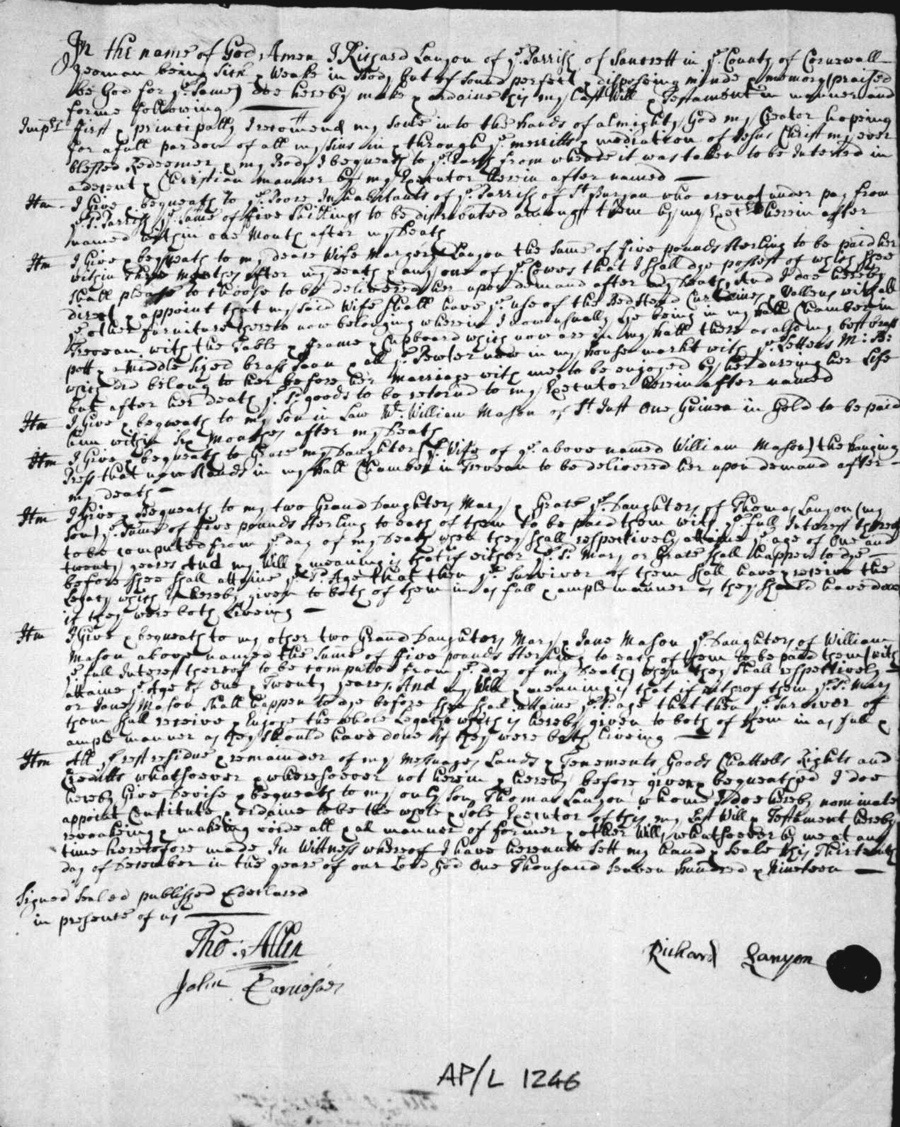
Richard died in 1720 and left a detailed will:
Richard’s Will – Source CRO/AP/L/1246
Partial transcript:
Parish of St Burian 5/-
Wife Margery £5 and bedroom furniture in hall chamber in Trovean and other furniture, brass pots and pewter marked with the letters MB belonging to her before marriage
Son-in-law William Mason, St Just
To daughter Grace, wife of William Mason, hanging press in Trevean (sic)
To granddaughters Mary and Grace the daughters of Thomas Lanyon £5
To granddaughters Mary and Joan Mason
All the rest to son Thomas
David Lanyon 1665-1744
David was mentioned specifically in his father Thomas’ will of 1696 ‘to have meat and drink and lodging in my house at Bosanken’. It seems strange to put that in a will and not mention his other brothers. David married Margaret Shetford at Sancreed in 1695, had there been a family falling out? Did they expect David to need board and lodging?
David was a yeoman of Cardinney, St Buryan. According to the church warden’s accounts David owned this house jointly with Robert Shetford, Margaret’s father.
David and Margaret had five children:
John 1696-1751 married Ann Hicks – seven children
Elizabeth 1697-1779 married William Hutchens – four children
Robert 1699-1700 died in infancy
Mary 1701- married John Vingoe – three children
Richard 1702-1766 married Grace Phillips – four children
Thomas Lanyon 1672-
Thomas was the youngest son of Thomas and Elizabeth yet his father’s will calls him the eldest! He lived at the Tenement of Kerrow and was called a gentleman. He married Mary Edwards at St Buryan in 1703. They had four children:
Isabella 1703- possible marriage in 1738 at Madron to Thomas Teague?
Francis 1704-1705 died in infancy
Jane 1706- married John Inch at St Buryan in 1728 no further trace
Francis 1708- no further trace
We’ll follow this family in the post ‘Thomas Lanyon’s Grandsons’.
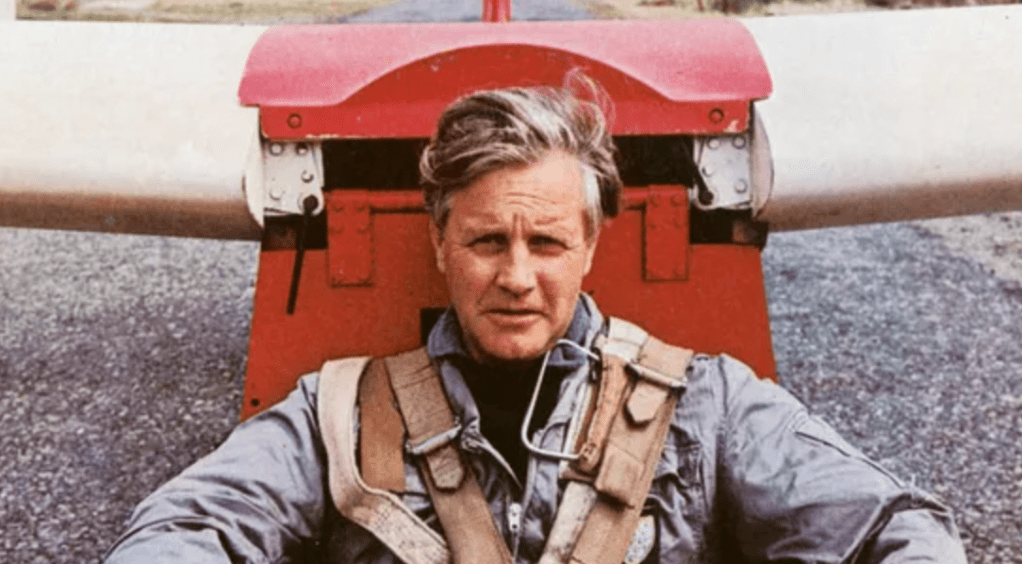
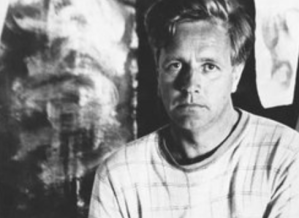
George Peter Lanyon was born in St Ives in 1918, the son of William Herbert Lanyon and Lilian Priscilla Vivian. He was a leading figure in the St Ives group of artists and is best known for his abstract landscapes of Cornwall. He died at Taunton in Somerset following a gliding accident at the age of 46.
Peter Lanyon in his glider
He studied at the Penzance School of Art and in 1939 he met Ben Nicholson and Barbara Hepworth and was tutored by Nicholson. He married Sheila Margaret St John Brown in 1946. They had six children some of whom also became artists.
Peter with some of his children
‘When Lanyon returned to St Ives after active service in the second world war, he fell out with most of the other artists. As the only native Cornishman among them, he saw them as incomers who did not share his interest in getting under the skin of the landscape – which he attempted literally, scrambling down mine shafts as well as soaring above them.
The rift became so bitter that, according to local legend, every time he passed Nicholson’s house on the coastal path, he urinated on the gable wall – hoping that the house would eventually fall down.’ Source -The Guardian 17th Aug 2015)
Peter Lanyon
He taught at the Bath Academy of Art and held his first exhibition in London in 1949. In 1959 he began training as a glider pilot “to get a more complete knowledge of the landscape” and this became the basis for his art.
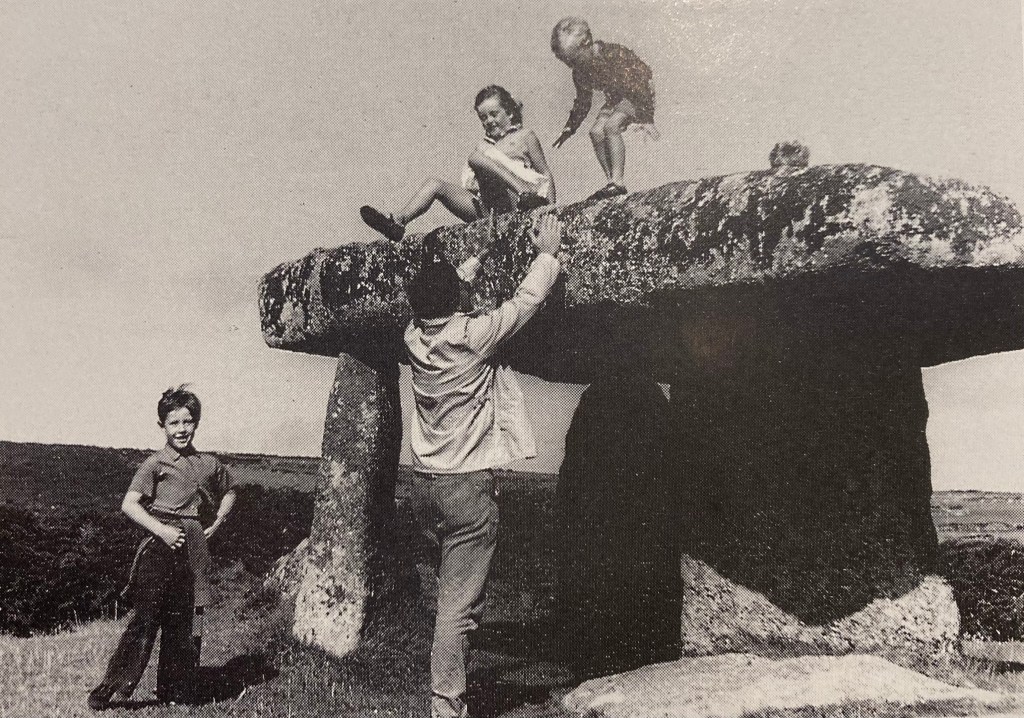
Peter with his children at Lanyon Quoit
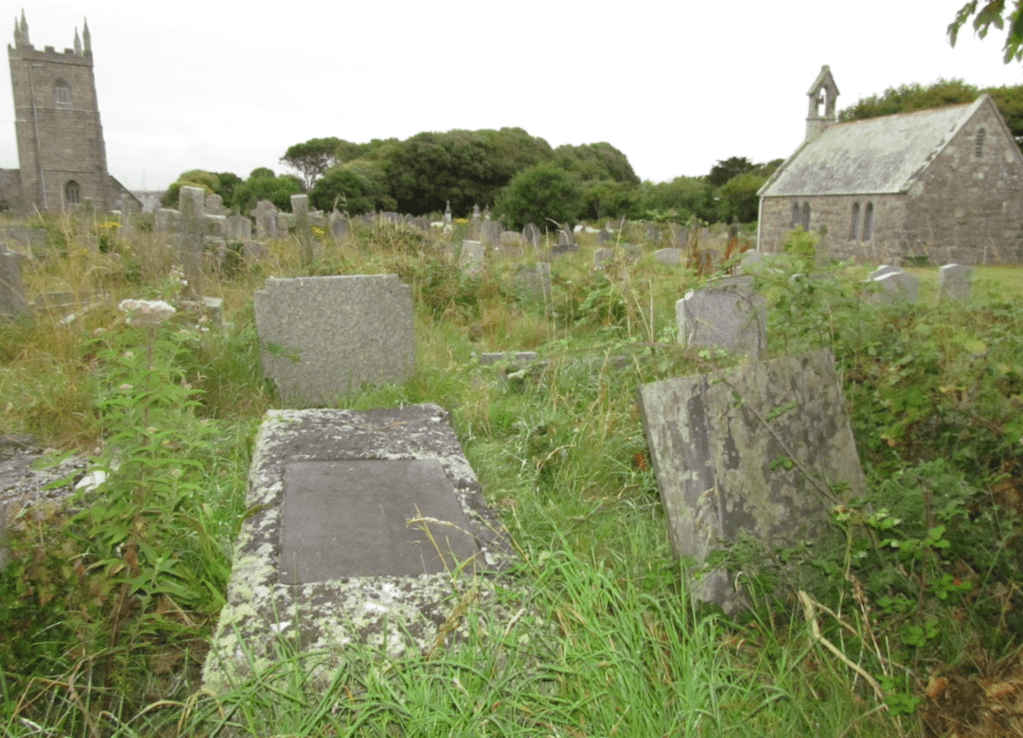
He was buried at Lelant in Cornwall and his headstone bears the inscription:
I will ride now The barren kingdoms In my history And in my eye
An old May Day tradition, which was still being observed in 1879, was for many young folks to head from Penzance before sunrise, to perform a ceremony, to learn the number of years they would have to wait before they got married. (Source – The Cornishman. No. 43. 8 May 1879. p. 4)
The Rev R.S Hawker even penned a poem about the well.
"PLUNGE thy right hand in St. Madron's Spring,
If true to it's troth be the palm you bring;
But if a false sigil thy fingers bear,
Lay them the rather on the burning share"

Loud laughed King Arthur when as he heard
That solemn friar his boding word;
And blithely he swore, as a king he may,
"We tryst for St. Madron's at the break of day."
How many Lanyons walked over the fields to visit the holy well near their manor house?
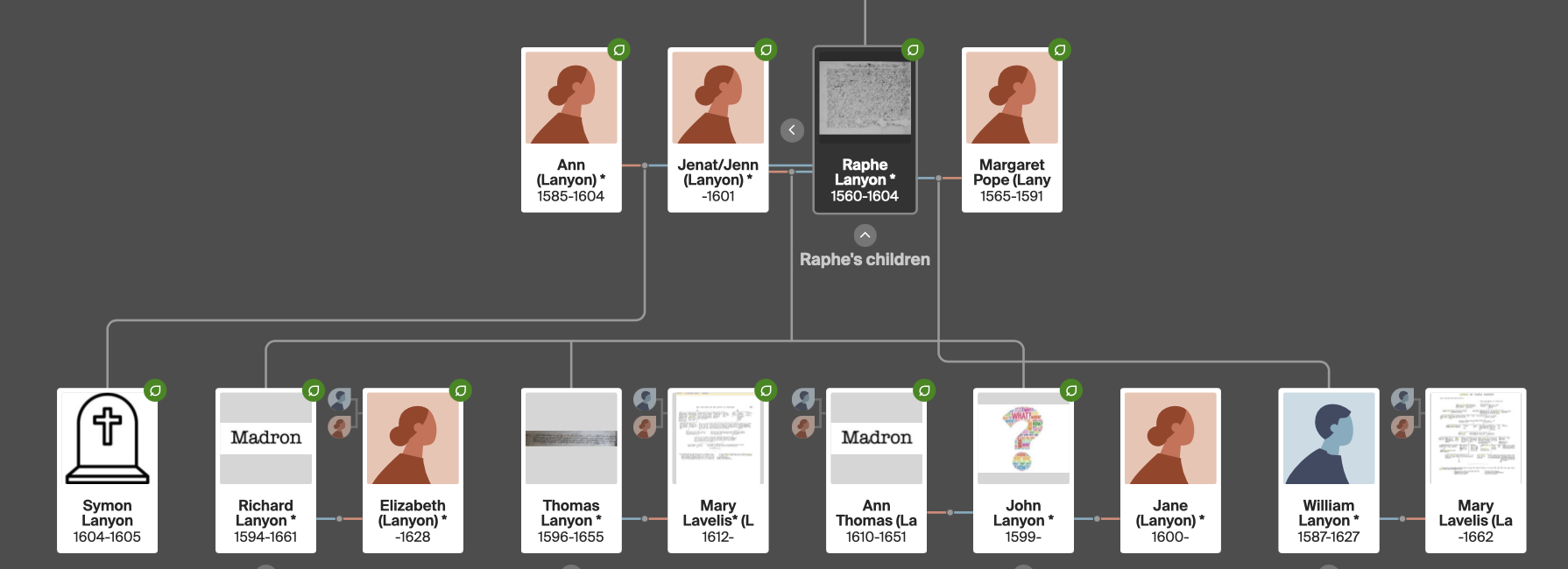
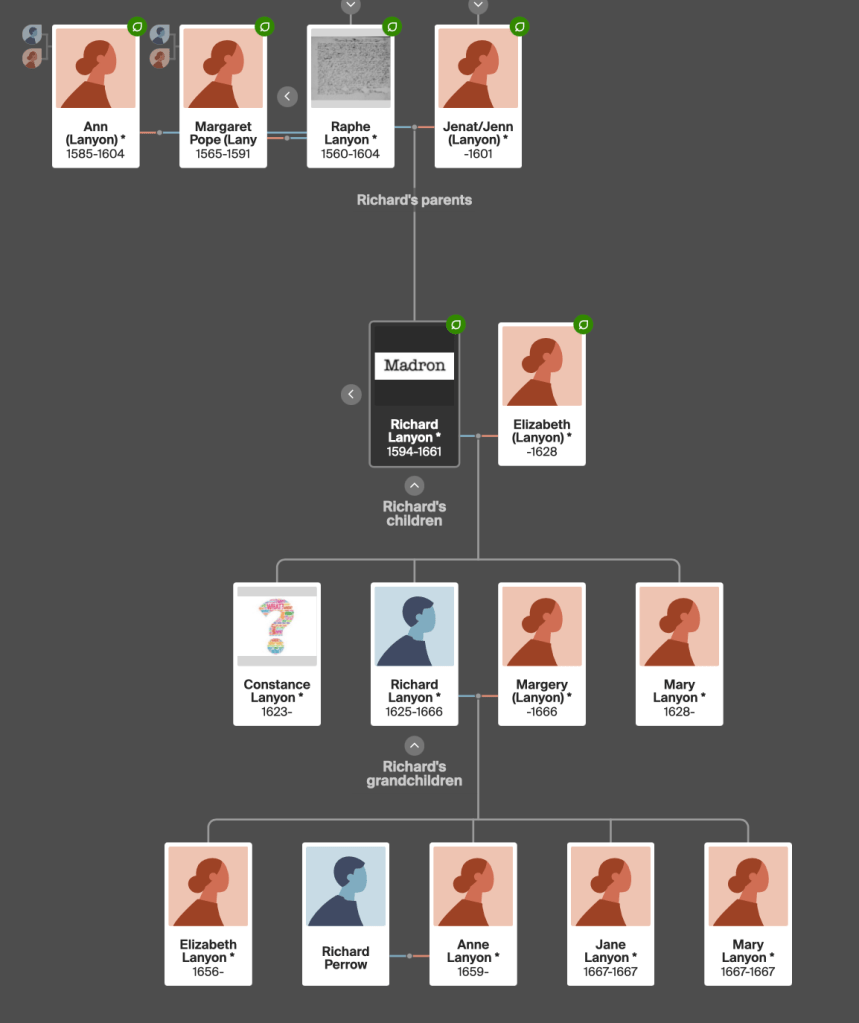
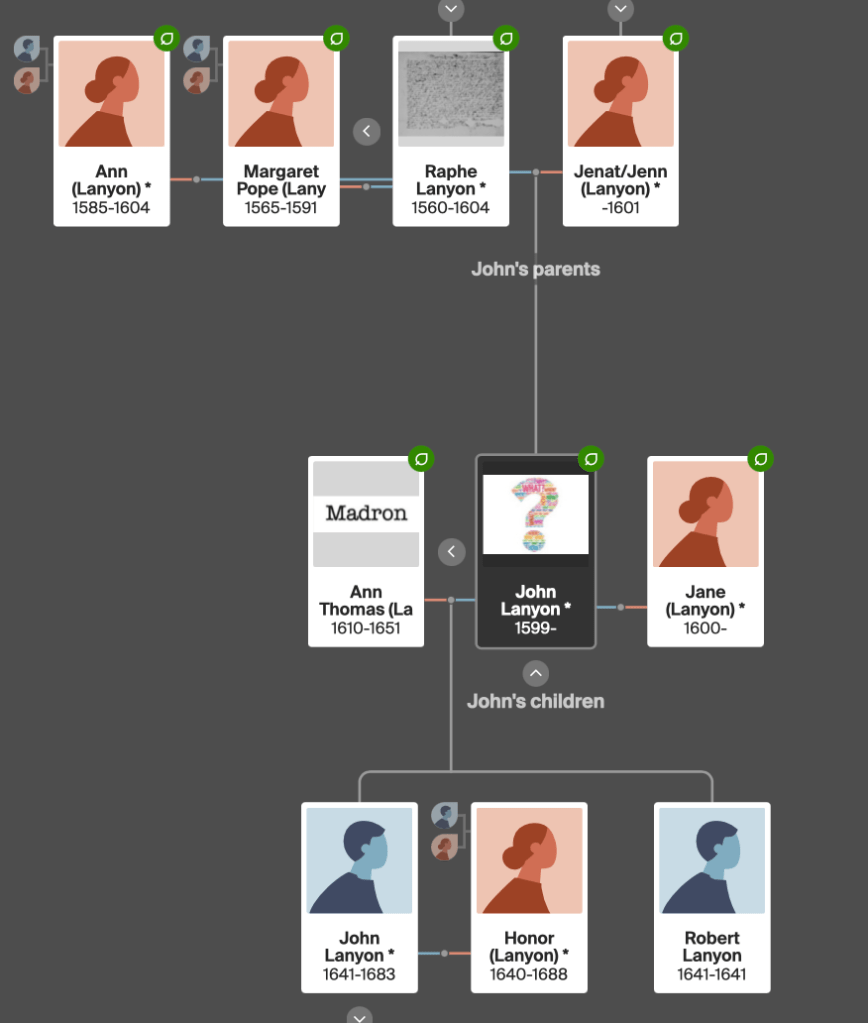
Raphe’s tree was the most difficult to draw and it’s fair to say the word ‘hypothetical’ should be liberally sprinkled over most of this post! At best this is my interpretation of the records to hand.
Raphe’s Tree
Raphe was the 6th son of Richard Lanyon and Margaret Treskillard. He was probably born late 1550s or 1560s. On the 7 Nov 1587 he married Margaret Pope at Breage. There is no record of their son William’s baptism. Margaret must have died before 1591, there is no record of her burial but Raphe married for a second time to Jenat at Sancreed in Sep 1591 (name is spelt Lannyne or Lamyne in the parish register). They had three sons all baptised at Madron.
Richard 1594-1661
Thomas 1596-1678
John 1599-
Jenat was buried on 14 Oct 1601 (name spelt Jennett Lavine in Sancreed’s register).
There is no record of a third marriage however Raphe’s will and administration papers mention his widow, Ann, so sometime after 1601 he must have married again.
(There is a marriage between a Raphe Lamin and Ann on 10 May 1606 in Sancreed. This is after Raphe’s death in 1604/5, could this be an undocumented son called Raphe who coincidentally married someone called Ann? Or has the date been mistranscribed as 1606? there is a burial of a Raphe Lanine in Sancreed on 29 Apr 1614, could this be the same Raphe who married Ann in 1606?)
Raphe’s fifth son Symon was baptised in Madron on 24 Jan 1603/4 and buried on 18 Sep 1605.
We have very little information about Raphe Lanyon. In 1598 along with Alexander Penrose he was trustee of Rosecadghill and Nanselverne in Madron for his brother Richard Lanyon’s wife Avice. (Source – MS Rawlinson c.789 (Oxford) Dated 40 Eliz {1598}).
We do have his will and administration papers and whilst difficult to read we learn the following from them.
“I geve and bequeath unto Anne my wife all such lands or monies contained & specified in a paire of Indentures bearinge date the xxij the daye of October in the xxij yeare of the Raigne of or Severeaigne Ladye Elizabeth late Queene of England & made between the said Ralpe Lanyone on the one partye & Walter Lanyon Francis Lanyon & others on the other partye.” So in October 1580 Raphe and his uncle Walter had agreed a pair of Indentures regarding land.
The will goes on to say the “…lands in the said Indenture mencioned shalbe to the benifett of my said Childeren…”
He bequeathes the tenements of Carowe & Bodener to his wife.
“…my said wife shall releive maintaine & finde all my said Childeren sufficient meat drinke & apparell untill they & everye of them doe accomplishe the Age of xxti years unless my said wife can procure them some Arte or science wherin they maye be better able to gett their livinge..”
Raphe bequeathes to William Lanyon “…my eldest sonne whome I geve Bossolowe Vean…” he also makes him his executor.
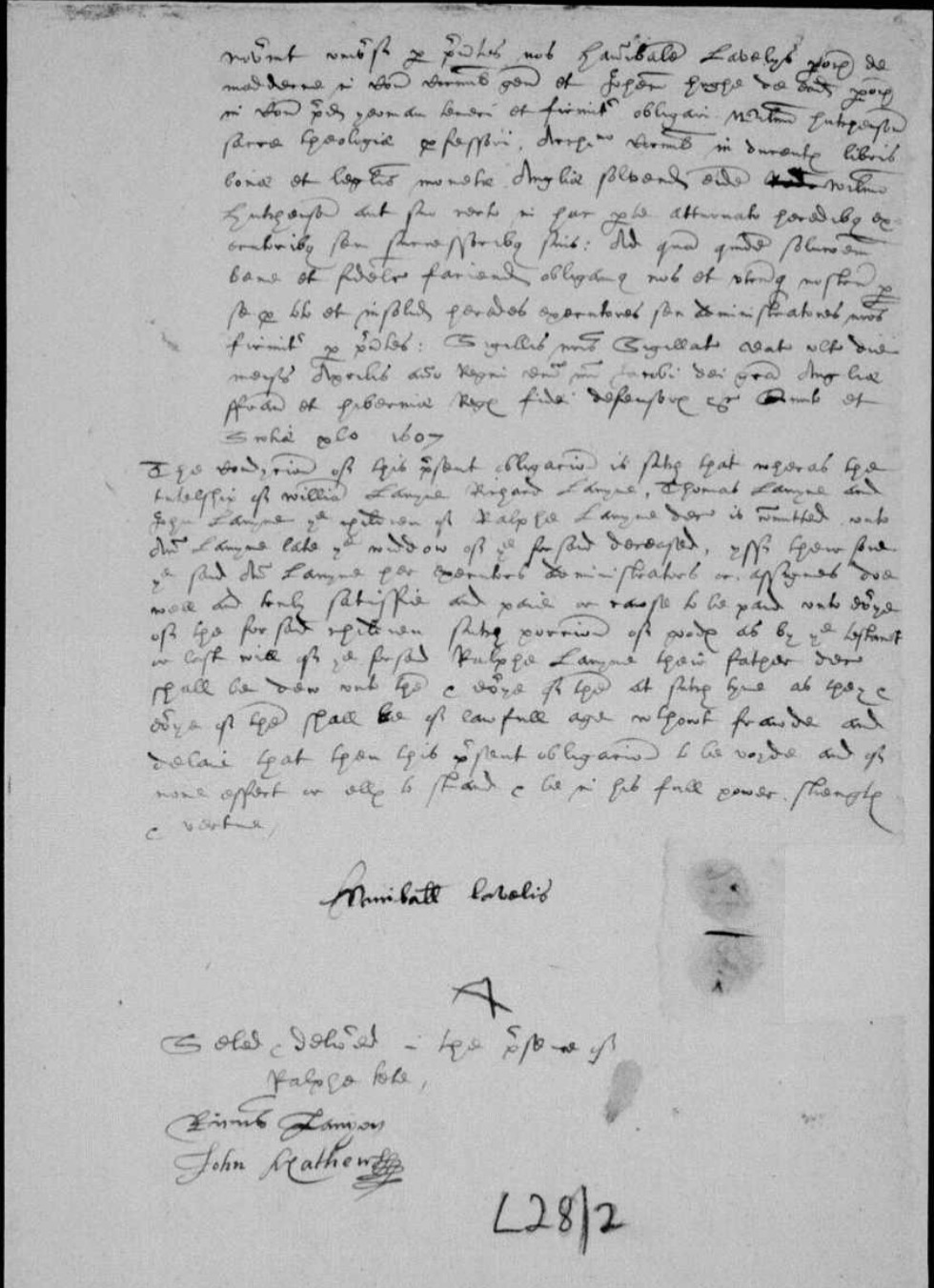
Raphe Lanyon administration Source- AP/L/28Bond signed by Hannibal Lavelis of Castle Horneck and John Matthews
The inventory is approved by John & William Lanyon junr, John may be Walter’s son and heir and William junior may be Raphe’s son.
Frustratingly Jane Veale Mitchell (early 20th century researcher) notes that Raphe was a ‘family favourite’ and often mentioned in wills but provides no transcriptions or evidence to back this up. She lists his sons: William, Richard, Thomas, John and Symon but says nothing else about them. The following is my attempt to build a tree.
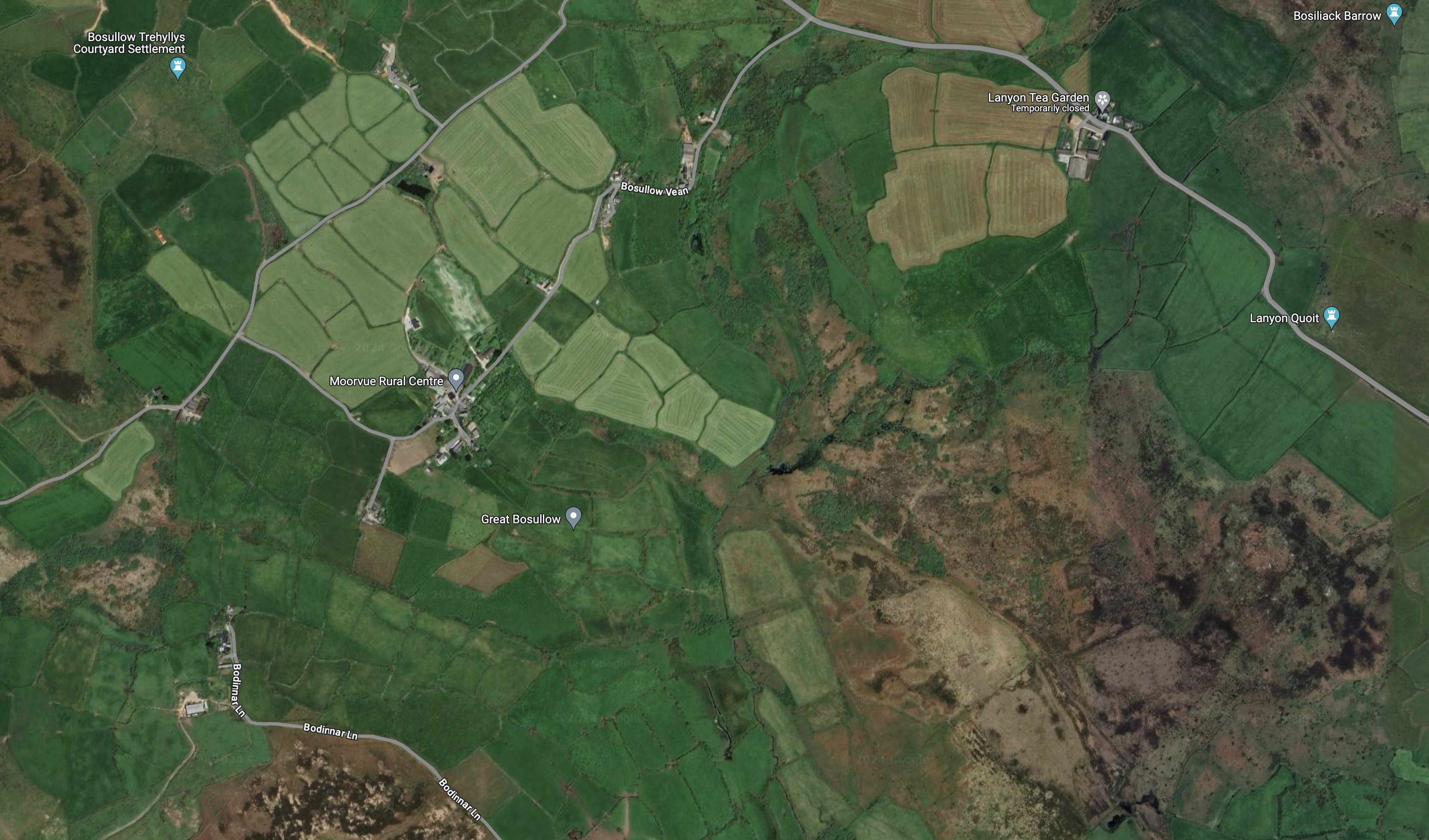
Map showing Great & Little Bosullow and Bodinar – ‘Lanyon Tea Room’ is the location of Walter Lanyon’s home
William Lanyon aft. 1587-1627
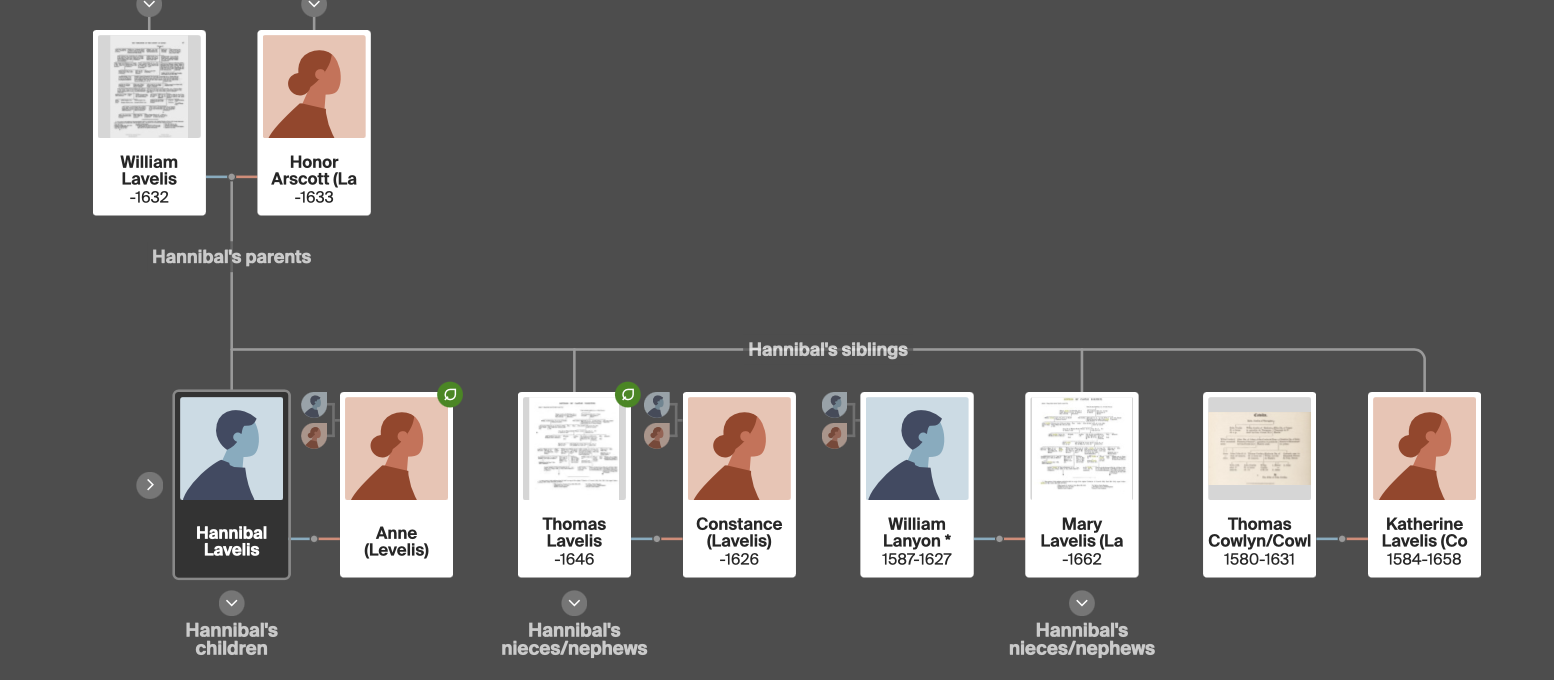
On Jan 21 1605/6 William Lanyon, gent, married Mary Lavelis (Levelis) at Madron. Mary was the sister of Hanniball Lavelis (source Vivian’s – The Visitations of Cornwall : comprising the Heralds’ visitations of 1530, 1573, & 1620). Understanding the Lavelis tree helps compile the Lanyon tree.
The Lavelis family tree
William married Mary Lavelis and his brother Thomas married Mary’s niece also called Mary Lavelis!
William and Mary had at least four children:
William – his baptism isn’t recorded but he was living at Bossolowe Vean until his death in 1674.
Jane 1609-aft. 1634 she married Thomas Bond in 1634
Mary
Thomas -aft. 1633 mentioned in grandfather William Levelis’ will of 1633. In 1637 a Thomas Lanyon gent married Mary, possibly his marriage.
William died in 1627 and Mary was still alive in 1633 as she was mentioned in her father William Lavelis’s will. His will also mentions Raphe’s properties of Bossolowe Veor and Bossolowe Vean as Mary’s home. (Bossolowe Veor or Little Bossolowe is the home of Walter Lanyon’s grandson David at the time of his death in 1641.)
William Lavelis bequeathes “…I gyve to my grand daughter Jane Lanyon all my trad stuffe in Bussollowe there now beinge, I gyve to my grand son Thomas Lanyon my saddell and bridell and I gyve my wearing apparel to my grand children in Bossolowe to be divided amongst them…”
He leaves all his oxen to his son Hanniball Lavelis provided that “…Marye Lanyon shall hath them to turne and plough her land until she be married and have an husband…”
We don’t know if Mary remarried but we do know that Jane and Thomas Bond had at least one daughter also called Jane who married Thomas Levelis the son of James Levelis and Joan Archar of Lizard. (Source – 1620 Herald’s Visitation.)
Richard Lanyon 1594-1661
Richard was the first son of Raphe and Jenat. He was baptised at Madron in 1594. he married Elizabeth at Madron in 1617. Sadly most female surnames were not recorded in the Madron register at this time. They had at least three children:
Constance 1623- no further trace
Richard abt. 1625-1666 there is no record of his baptism, he married Margery in 1656 at Madron – at least two daughters: Elizabeth 1656-(daughter of Richard Lanion the youngest) and Anne 1659- (daughter of Richard Junior).
Mary 1628- recorded as Mary daughter of Richard Lamyn, no further trace
The Madron register lists the deaths of three Richard Lanions in the 1660s; 11 Mar 1661/2, 17 Mar 1665/6 and 2 Sep 1666. Which is which? I’ve put the eldest Richard dying first but that may not be correct.
Bodmin probate Registry lists an administration for Richard Lanion of Madron dated 17 Apr 1677 granted to Jane Boddy, wife of John Boddy. Guardian of Mary and Jane , minors, children of the deceased. Did Richard have another two daughters unrecorded in the baptism register after Elizabeth and Anne? Presumably his wife Margery was already deceased or else she would have cared for their daughters. So many questions without answers!
Thomas Lanyon 1596-1678
Thomas was Raphe and Jenat’s second son. He married his sister-in-law’s niece, Mary Lavelis. The Madron register records that Thomas Lanyon, gent, married Mary on 28 Jan 1637. Vivian’s Herald’s Visitation confirms that it was Mary Lavelis.
They had at least five children:
Mary 1637-
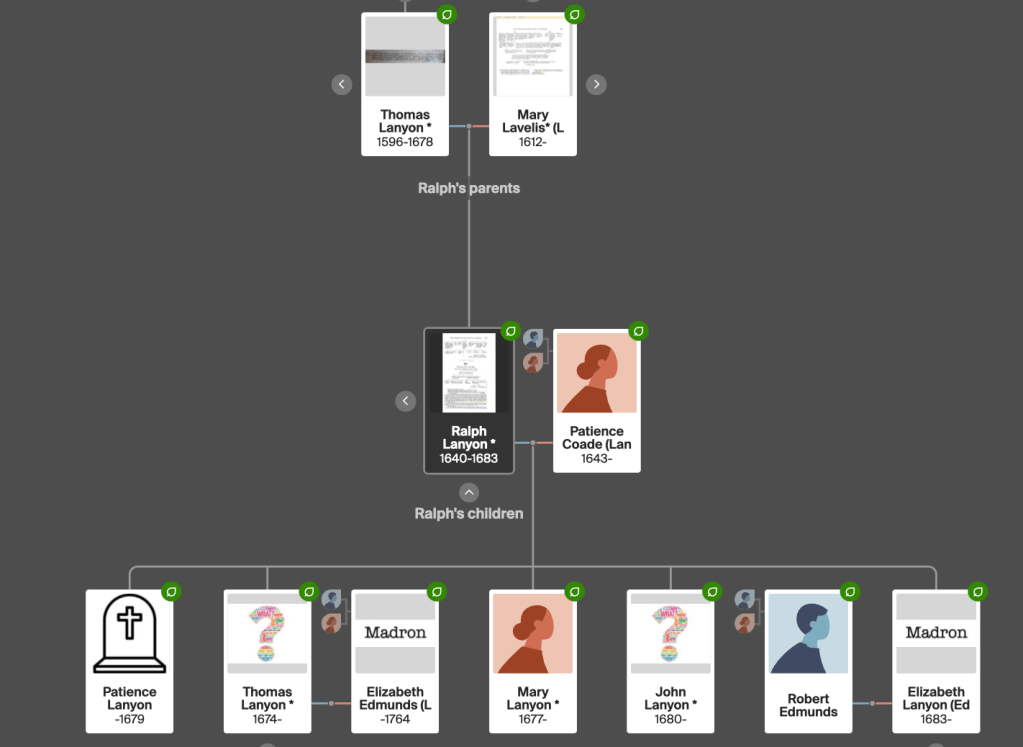
Ralph- 1640-1683 married Patience Coade
Thomas 1643- married ? – 4 children – Ursula, Elizabeth, Grace and Hugh, no further trace of them.
Constance 1655- married Henry Trenwith
A Thomas Lanyon signs the 1641/2 Protestation Return but it could be this Thomas or Thomas the son of David Lanyon. Thomas was buried at Madron on 30 Dec 1678.
John Lanyon 1599-
John was baptised at Madron in 1599. There are so many John Lanyons in this area at this time that it is difficult to pin any of them down with any real certainty.
In the early 1600s a John Lanyon gent lived at the Manor of Selena in Buryan, it’s possible that it was John son of Raphe Lanyon.
In Jun 1625 a John Lanyon married a Jane at Madron. This John?
In Jan 1641 a John Lanyon married Ann Thomas at Madron. Could it be this John?
A John Lanyon signed the 1641/2 Protestation Return at Madron.
A John Lanyon was baptised at Madron in Apr 1641/2, could this be a son of John and Ann Thomas?
Ralph Lanyon abt. 1640-aft. 1683
Ralph was the son of Thomas and Mary and the grandson of Raphe and Jenat. We don’t have a date of baptism for him but it must have been about 1640. He married Patience Coade at Madron in May 1674 and the register described him as ‘gent’. In 1676 he was mentioned in Litigation along with Thomas and Mary (his brother and sister?).
Ralph is mentioned in his uncle Thomas Lavelis’ will of 1657. He is left a ‘red copper brewing pan and guilded beer bowl.’ A perfect bequest for a teenage boy!
THOMAS LEVELIS, gent, of Penzance
written: 3 Mar 1656/7
proved: 12 Sep 1657
poor of Madron 10 L
poor of Penzance 10 L
poor who come to my burial 5 L among them
friends: GEORGE VEALE of Gulval, gent and THOMAS GAME of Penzance,
gent 1 meadow called Madderne Meadow in Madron purchased of
WILLIAM MADDERNE of Penzance, merchant & MARTYN MADDERNE his
son of Penzance, merchant. To hold the sd. meadow to the use
of MARY LANYON, d/o THOMAS LANYON, of Madron, gent for her
natural life and then to the heirs of her body. In default of
issue to the use of RALPH LANYON s/o THOMAS LANYON & then to
his issue. In default of issue, to the use of the right heirs
of me, THOMAS LEVELIS forever.
ANNE w/o MARTIN BOSAVERNE of Penzance 10 L
niece: JOANE COWLING of Penzance 5 L
THOMAS COWLING s/o JOHN COWLING of Madron, gent my silver guilter
tankard, best suit & cloak, best hat & hatband
RAPH LANYON (same one named above) red copper brewing pan & guilded
beer bowl
FRANCES w/o sd. JOHN COWLING one gold ring engraved with “your
love my life”
kinsman: DAVID GROSSE my organ & what belongs to it
TOBYAS GROSSE my signet
ELIZABETH w/o RICHARD DUKE my great chest in the chamber over the
kitchen in RICHARD DUKE’s house
MARY w/o THOMAS LANYON 1 gold ring engraved with “of sufferance
comes ease”
TOBYAS COWLING s/o WILLIAM COWLING of Madron, gent my white silver
tankard
“STONE” 10 sh.
sister: MARY LANYON of Madron, widow 5 L
KATHERINE COWLING d/o JOHN COWLING 100 L
MARY LANYON d/o THOMAS LANYON all the rest & executrix
Ralph and Patience had at least five children.
Thomas 1674- married Elizabeth Edmunds – 4 daughters all died in infancy
Mary 1677- no further trace
John 1681- no further trace
Patience -1679 died in infancy
Elizabeth 1683- I originally thought that this Elizabeth married Robert Edmunds in 1720 at Madron. Elizabeth would have been quite old at 37 to marry.
I now think that this Elizabeth married Samuel Blight at St. Erth in 1709 which would have made her about 26 years old. Elizabeth and Samuel had five children: Elizabeth, Mary, Samuel, Robert and Patience, probably named after her mother.
Both Samuel and Elizabeth left wills (CRO AP/B/3971 & CRO AP/B/3725) naming their children and grandchildren.
There is no trace of a burial for Ralph but his daughter Elizabeth was baptised in Feb 1682/3 so presumably he was still alive around then.
Sadly there are too many people with the same name in this area to determine what actually happened to them. There are other branches of the Lanyon family marrying, baptising children and being buried at Madron at the same time. If only they had been a little more adventurous with christian names rather than naming most of the boys John, Thomas and William and most of the girls Elizabeth, Mary and Jane!
Richard of Lostwithiel was the son of Richard Lanyon and Ann King, baptised at Gwinear in 1765.
Richard & Ann King’s tree
Richard married Maria Dorothea Scammell on 30 Oct 1792 at Plymouth Charles the Martyr but he ended up living in Lostwithiel. He was a surgeon and also served as Mayor of Lostwithiel.
Only Richard survived to adulthood. Like his father he too was a surgeon at Lostwithiel. He never married and died age 53.
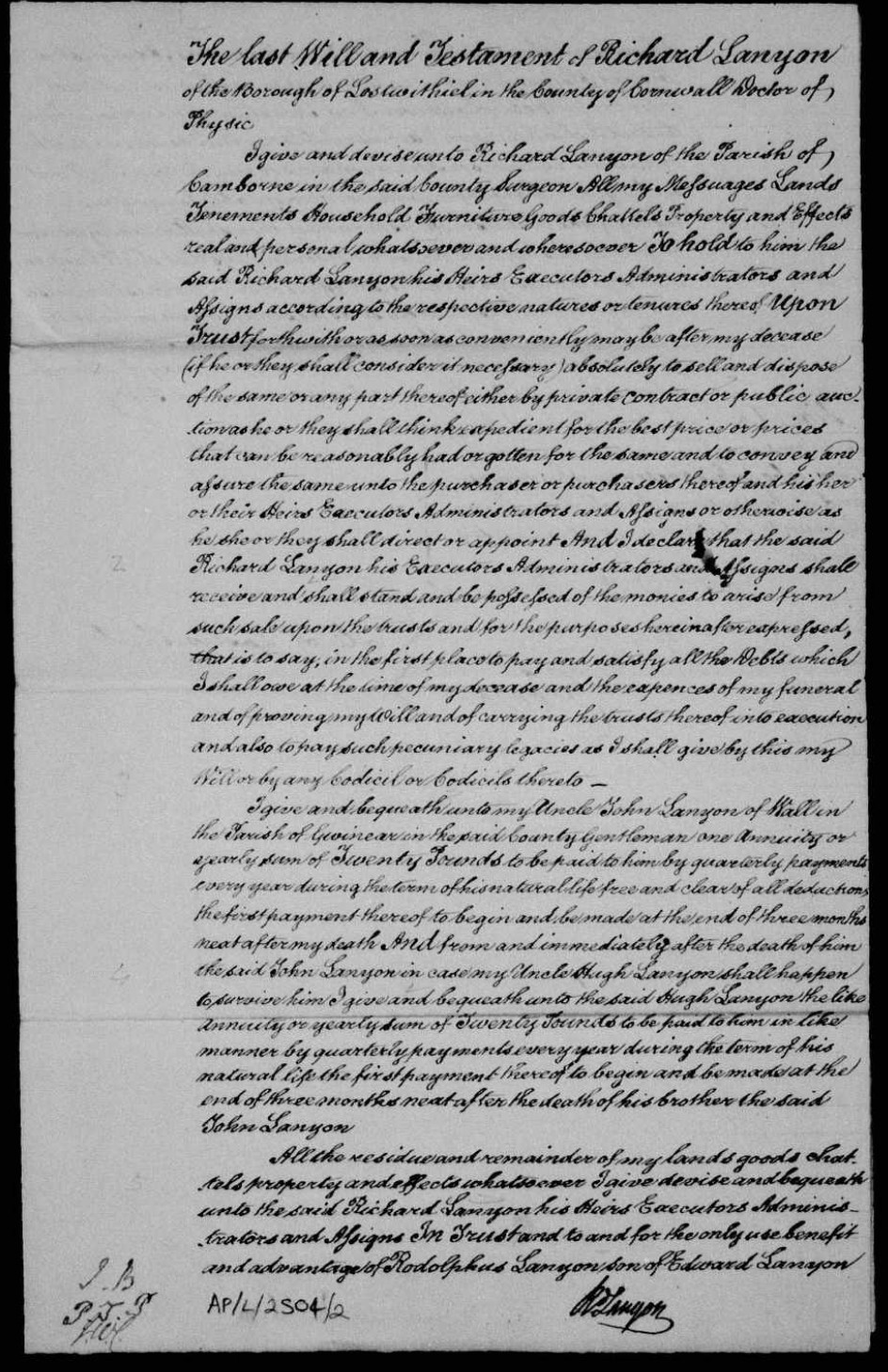
Richard Lanyon’s will Source- AP/L/2505
Without children or siblings Richard’s will benefits his elderly bachelor uncles, Hugh and John Lanyon and a later codicil leaves his estate to nephews Rodolphus Lanyon and William Reynolds Lanyon.
There is a memorial plaque in the church to father and son:
‘Sacred to the memory of Richard Lanyon, Esq., Surgeon, &C. He was descended from the ancient families of Lanyon in Madron and Gwinear, and having passed a long life in the active discharge of the most philanthropic and Christian duties, and filled the highest offices in the corporation of this town, died on the 19th of April, 1848; æt. 82. As he lived, so he died,–a Christian Also of his son Richard Lanyon, M.D., F.A.S., &c., who for many years successfully practised his profession in his native town, where he was well known for his antiquarian researches, and his literary and scientific attainments ; he also zealously and usefully filled the highest offices in the corporation, and died humbly relying on the merits of his Redeemer, Sept. 10th, 1852; æt.53. This monument is erected by Radolphus Edward Lanyon, as a tribute to their worth, and a mark of his gratitude.’
Richard Lanyon was a gunpowder manufacturer at Stithians. He had two wives: Susan Tucker and Mary Anne Lanyon, his cousin. This post is about three of his sons William Henry, Richard Sampson and John Rodolphus and their children.
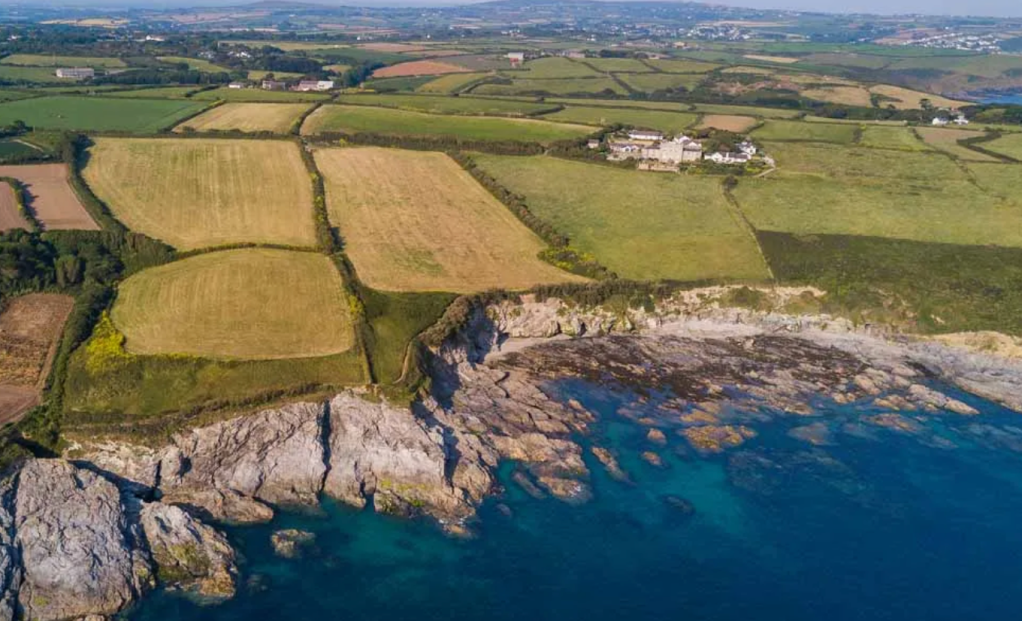
Acton Castle today- holiday lets
The somewhat complicated tree!
William Henry Lanyon 1825-1895
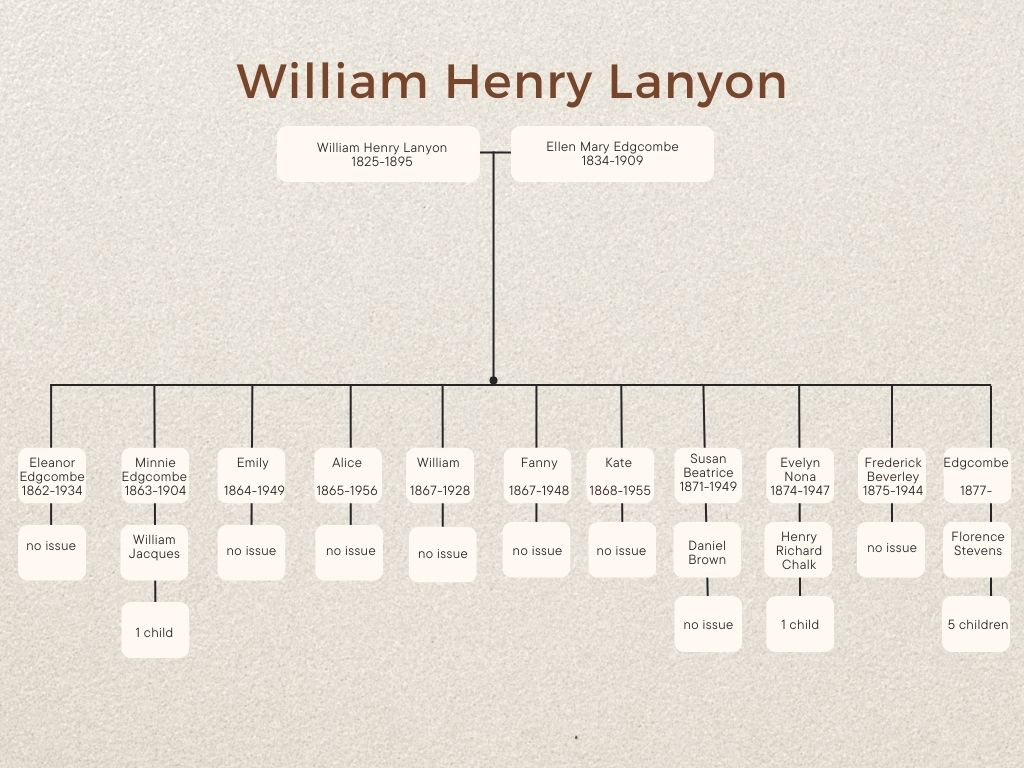
William was Richard and Susan’s eldest son, he was baptised at Stithians in 1825 and like his father was a gunpowder manufacturer. In 1861 he married Ellen Mary Edgcombe at St Gluvias Church, Penryn. Ellen was the daughter of George and Ellen Edgcombe. George was a surgeon in the Indian Medical Service and his daughter, Ellen was born in Madras in 1834.
William and Ellen had eleven children but very few of those children married or had children themselves. Five of their daughters were spinsters and two of their sons were bachelors.
William Henry’s Tree
Eleanor Edgcombe 1862-1934 was a music teacher, she lived with her sister Alice in Falmouth. She never married.
Minnie Edgcombe 1863-1904 married William Jacques Jr. a solicitor, at Truro in 1888 , they moved to Hertfordshire and had one son, William Huskisson Vyvyan Jacques who never married and committed suicide in 1921.
Source – Lancashire Evening Post 3 Feb 1921
Emily 1864-1949 was a spinster, aged 36 she was listed on the census as a companion. In 1911 she was living in Dulwich and working as a ‘Guardian to Children’
Alice 1865-1956 was a spinster, she lived with her elder sister Eleanor and is described as a housekeeper
William 1867-bef. 1928 he worked as a banker’s clerk in 1891 and no trace after that
Fanny 1867-1948 was a spinster, she worked as a hospital sister and in 1939 was living with her sister Evelyn Chalk
Kate 1868-1955 – a spinster, she worked as a draper’s accountant
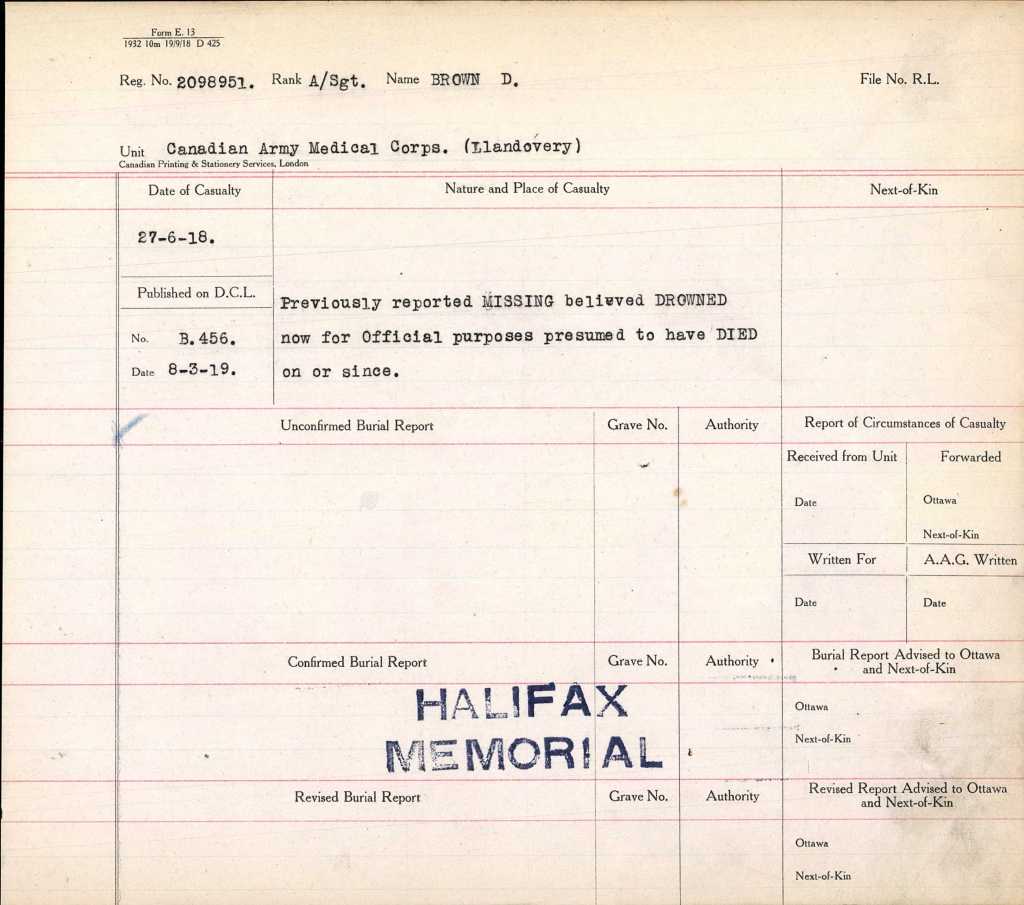
Susan Beatrice 1871- 1949 in 1912 she was a military nursing sister. In 1916 she married Daniel Brown in Ontario. He was a widower, an acting sergeant in the Canadian Medical Corps. He died in Jun 1918, he was missing believed drowned. By 1939 she was living with her sister Alice in Newquay and she died in 1949 at Holloway Sanatorium.
Canada Commonwealth War Graves Registers 1914-19
Evelyn Nona 1873-1947 in 1897 she married Henry Richard Chalk, a clerk in Holy Orders. They had one daughter Mary Lanyon who never married.
Frederick Beverley 1875-1944 he was a bachelor, he went to Selwyn College Cambridge, he broke the entail of Acton Castle and sold it.
Edgcombe 1877-1940s – he married Florence Stevens and had five children, after the war he emigrated to Tasmania and became a teacher.
William Henry was an unusual man, at times he didn’t live with his family and seems to have left his wife to cope with their large brood of children. There is at least one incident which calls into question his mental health. In 1871 He became mentally incapacitated in church. He got up during communion and started to read the Litany aloud. The curate asked him to desist and he shouted back “get thee behind me satan“. The rector came and remonstrated with him so he picked up the great prayer book and struck the rector on the head! (Source – Kilvert Society Newsletter March 1995)
Scroll down to page 2 of the Kilvert Society newsletter for a good article on William Henry.
Why did so many of his children remain single? We’ll never know but perhaps they looked at their parents’ marriage and decided not to risk it!
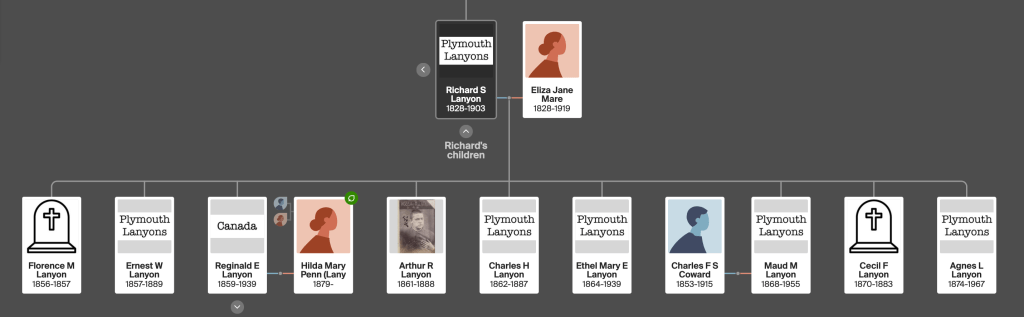
Richard Sampson Lanyon 1828-1903
Richard was the second son of Richard Lanyon and Susan Tucker. Sampson was the name of his father’s business partner. He married Eliza Jane Mare at Plymouth in 1855. They had nine children.
Richard Sampson Lanyon’s tree
Florence Mary Helen 1856-1857 died in infancy
Ernest William 1857-1889 according to the 1881 census he was a ‘decoration assistant’ and an artist, he was a bachelor and died age just 32 of TB
Reginald Edward 1859-1939 he emigrated to Canada in 1880 and in 1907 he married Hilda Mary Penn – 5 children
Arthur Richard 1861-1888 he was a post office clerk and was convicted of stealing postal letters and sentenced to five years jail in 1881. He died in Vancouver in 1888.
Calendar of Prisoners UK
Charles Hugh 1863-1887 was an architect’s clerk. Died young.
Ethel Mary Elizabeth 1865-1939 housekeeper, spinster.
Maud Margaret 1868- 1955 married Charles Francis Coward at Plymouth in 1905, no children
Of Richard’s nine children just one son, Reginald, had children of his own.
John Rodolphus Lanyon 1839-1931
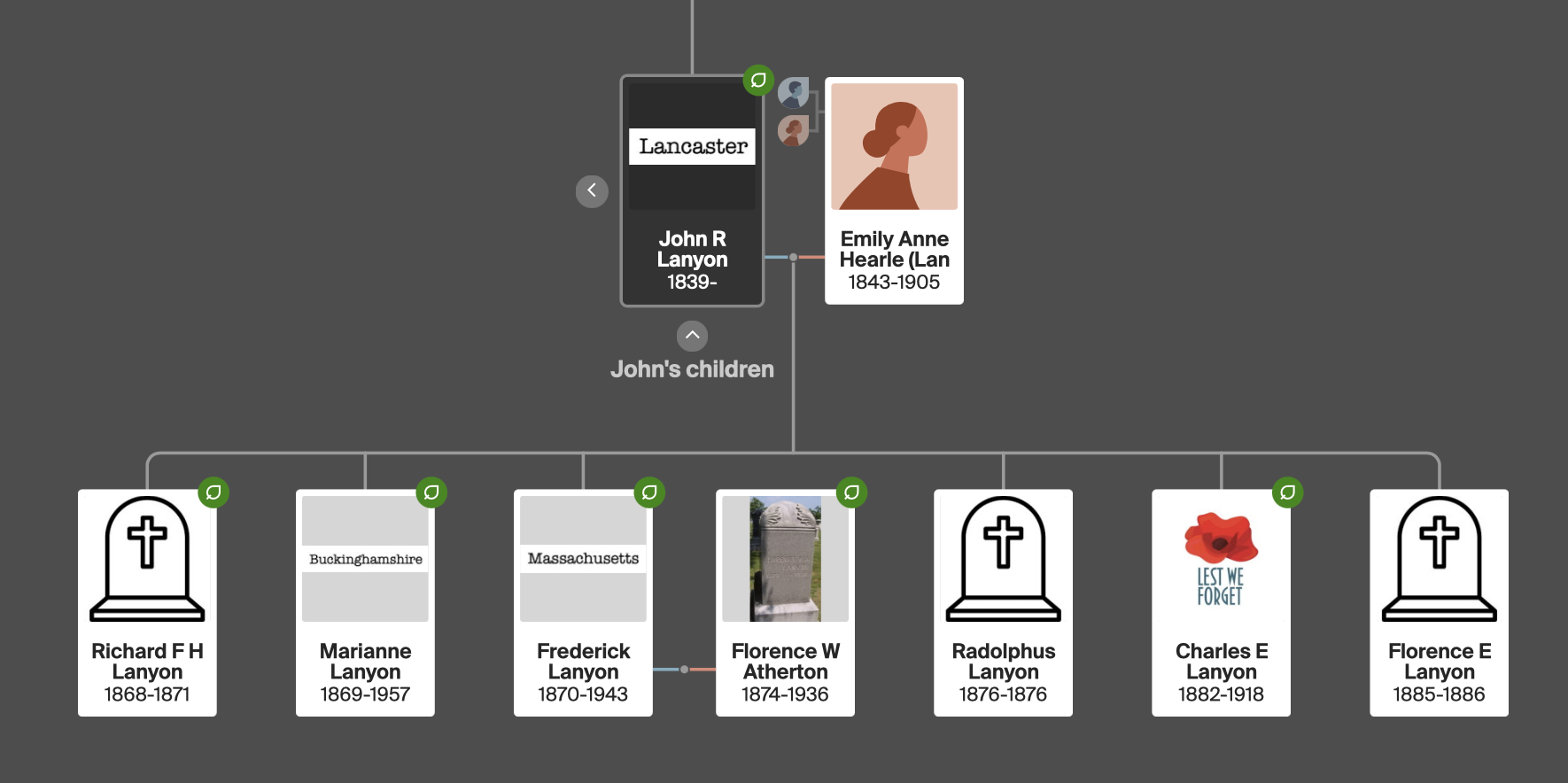
John Rodolphus was the son of Richard and Mary Anne Lanyon and half brother of William Henry and Richard Samspon. He married Emily Anne Hearle in London in 1867. John was a solicitor. They had six children.
John Rodolphus’ tree
Richard FH 1868-1871 died in infancy
Marianne 1870-1957 she was a matron in an isolation hospital, spinster
Frederick 1870-1943 age 18 he emigrated to Boston Massachusetts and in 1893 he married Florence W Atherton. He worked as a manager of a clothing store. No children.
Radolphus Hearle 1876-1876 died in infancy
Charles Edward 1882-1918 he emigrated to Canada where he worked as a farmer in Saskatchewan. He served as a private in the Canadian Infantry 46th Battalion and was killed in France just 10 days before the end of the First World War, by a sniper while attending the wounded. Unmarried, no children
Florence Emily 1885-1886 died in infancy
Charles Edward Lanyon is buried at Aulnoy Communal Cemetery France
John Rodolphus Lanyon had no grandchildren and his line died out.
There were so many spinsters and bachelors in the family that out of three sons and twenty six children there were only twelve grandchildren and of them only five sons to carry on the Lanyon name.
Many of the male members of the Gwinear branch of the Lanyon family were surgeons. Tobias Lanyon 1619-1698 was a surgeon and apothecary and many of his descendants followed him into the profession.
Apothecary – Unknown author, Public domain, via Wikimedia Commons
Tobias Lanyon 1763-1844
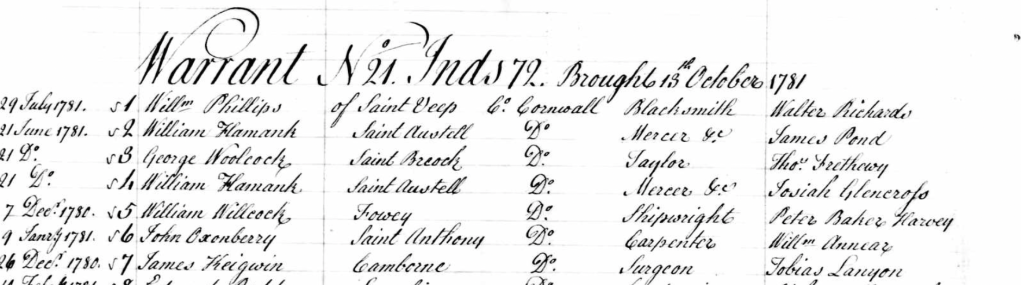
Tobias Lanyon was baptised at Gwinear in 1763. By 1780 he was apprenticed to James Keigwin, surgeon at Camborne.
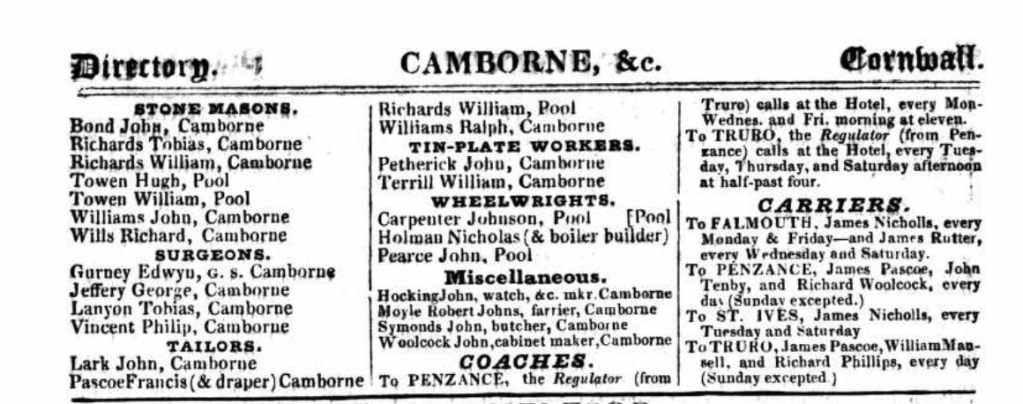
Source- UK register of Duties Paid for Apprentices 1710-1811UK City and County Directory
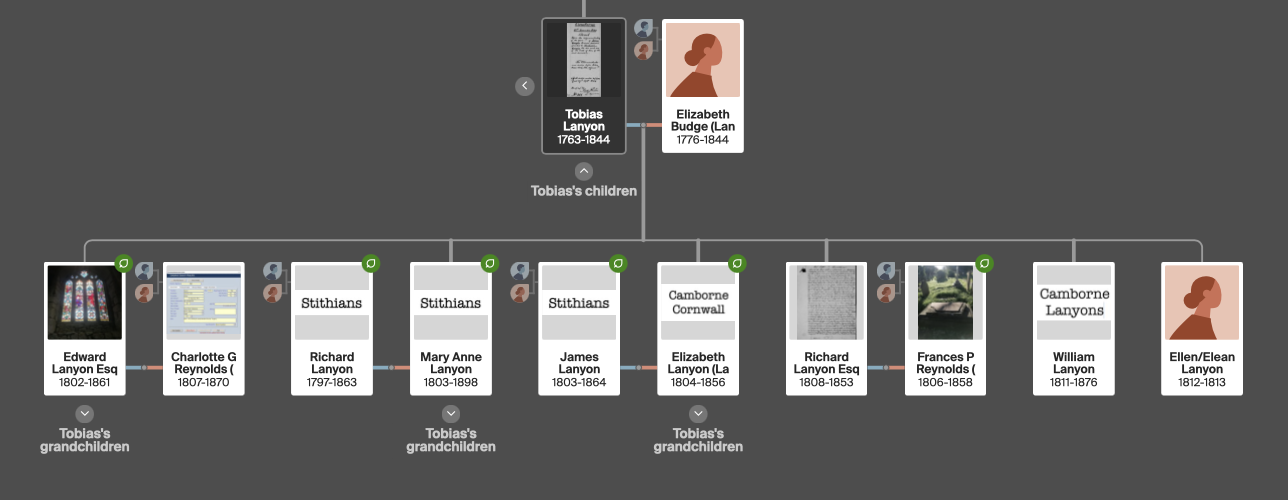
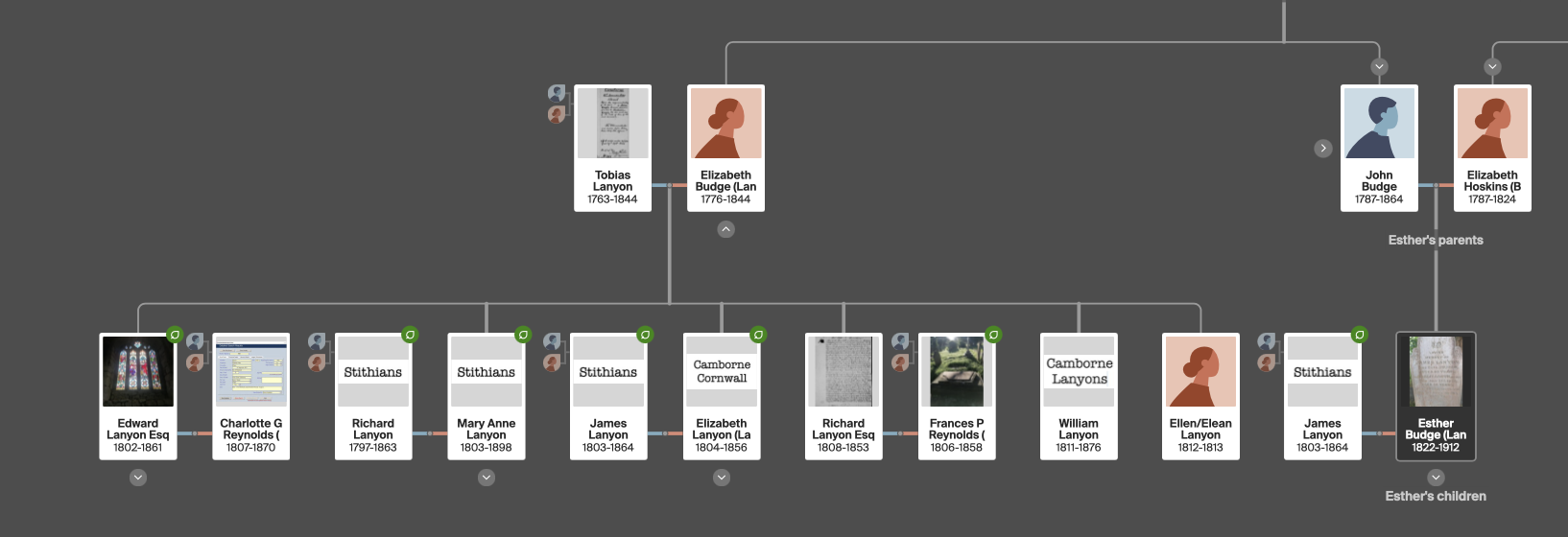
In 1801 he married Elizabeth Budge by licence at Camborne. Tobias and Elizabeth had six children.
Edward 1802-1861 married Charlotte Grace Reynolds
Mary Anne 1803-1898 (married cousin Richard Lanyon)
Elizabeth 1804-1856 (married cousin James Lanyon)
Richard 1808-1853 married Frances Philippa Reynolds
William 1811-1876 he was a mine agent who never married
Ellen 1812-1813 died in infancy
Tobias & Elizabeth’s family
Tobias and Elizabeth’s daughters Mary Anne and Elizabeth married Tobias’ cousins Richard and James Lanyon (see post ‘Cousins’). Their sons Edward and Richard married two sisters, Charlotte Grace and Frances Philippa Reynolds. They were the daughters of William Reynolds and Philippa Tellam.
Richard Lanyon 1808-1853
Richard was a surgeon and was awarded an MRCS in 1832. He married Frances Elizabeth Reynolds in Jul 1844. They didn’t have any children.
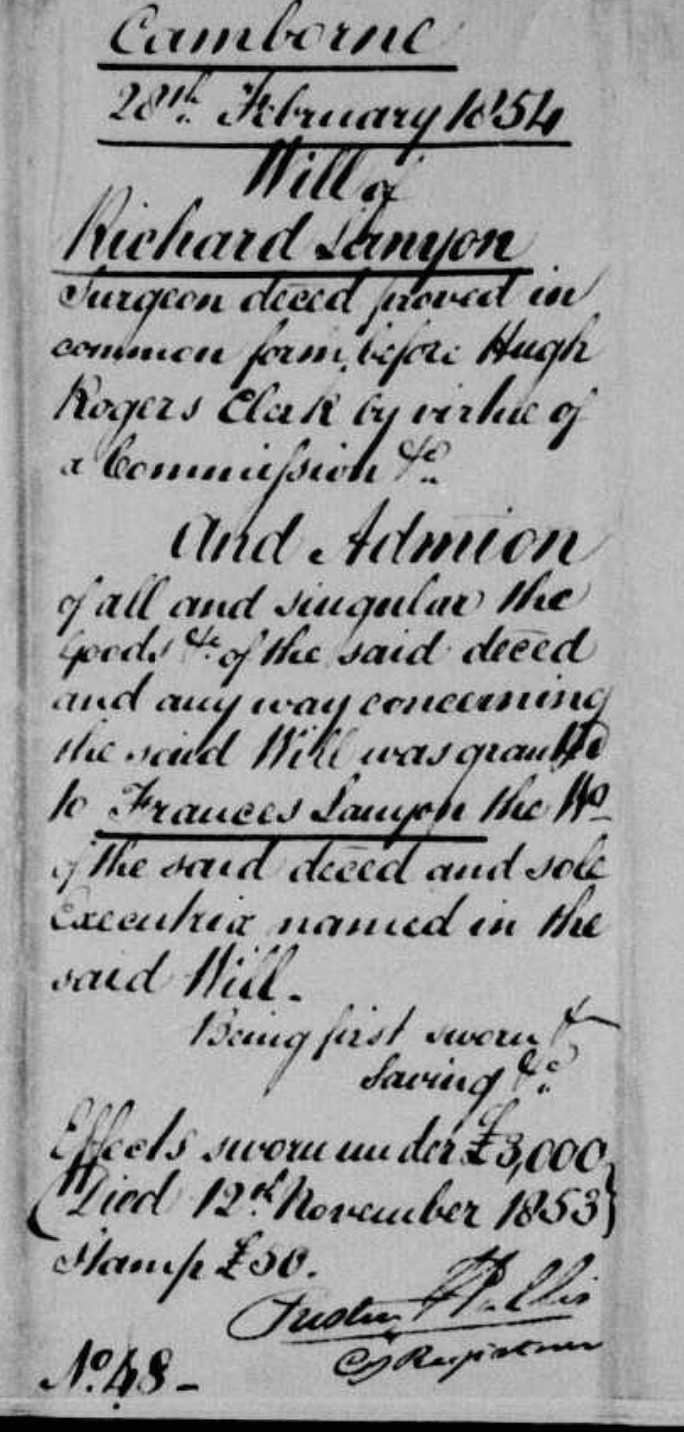
Richard died in 1853 aged 45. He had been suffering from heart disease for some years and dropsy for three weeks. The Royal Cornwall Gazette (18 Nov 1853) described him as “one of the faculty, his loss will be greatly deplored by all who knew him; and as a kind benefactor he will be greatly lamented by the industrious and deserving of all the neighbourhood”.
He left a will and his estate was valued at less than £3000.
Richard Lanyon will – Source CRO/AP/L/2557
Beneficiaries of his will:
To my dearest wife – furniture, linen, china, jewels, books, pictures, wines, spirits, carriages, harnesses etc.
To James Lanyon of Camborne, mine agent, and to Elizabeth his wife all my one fifth part of my late father’s leasehold property upon trust, the profit for the sole use of their children Ellen and Henry
Residue to my dear wife and nephew Rodolphus Edward Lanyon son of my brother Edward.
My wife to control property during minority of Rodolphus Edward Lanyon
My wife to receive amount or share of my medical practice
To Fanny and William Lanyon children of my said brother Edward, £100 each and to my godson Frederick, son of my sister Mary Anne, the sum of £100
To my brother William Lanyon £50. If my wife die without issue residue to Rodolphus Edward Lanyon my nephew.
My wife to continue on farm for her own use.
The will was signed on 15 Oct and he died less than a month later on 12 Nov. Frances, his wife, died without issue in 1858 and was remembered in the Royal Cornwall Gazette “On Sunday last, relict of the late Richard Lanyon Esq. Her loss will be deeply felt by a large circle of sorrowing relatives and friends, as well as by the poor of the town and neighbourhood to whom she was a liberal benefactor.”
Edward 1802-1861
Edward was the eldest son of Tobias and Elizabeth and like his brother Richard he was a surgeon. He was awarded his MRCS in 1824. He worked as a surgeon at Fore Street in Camborne.
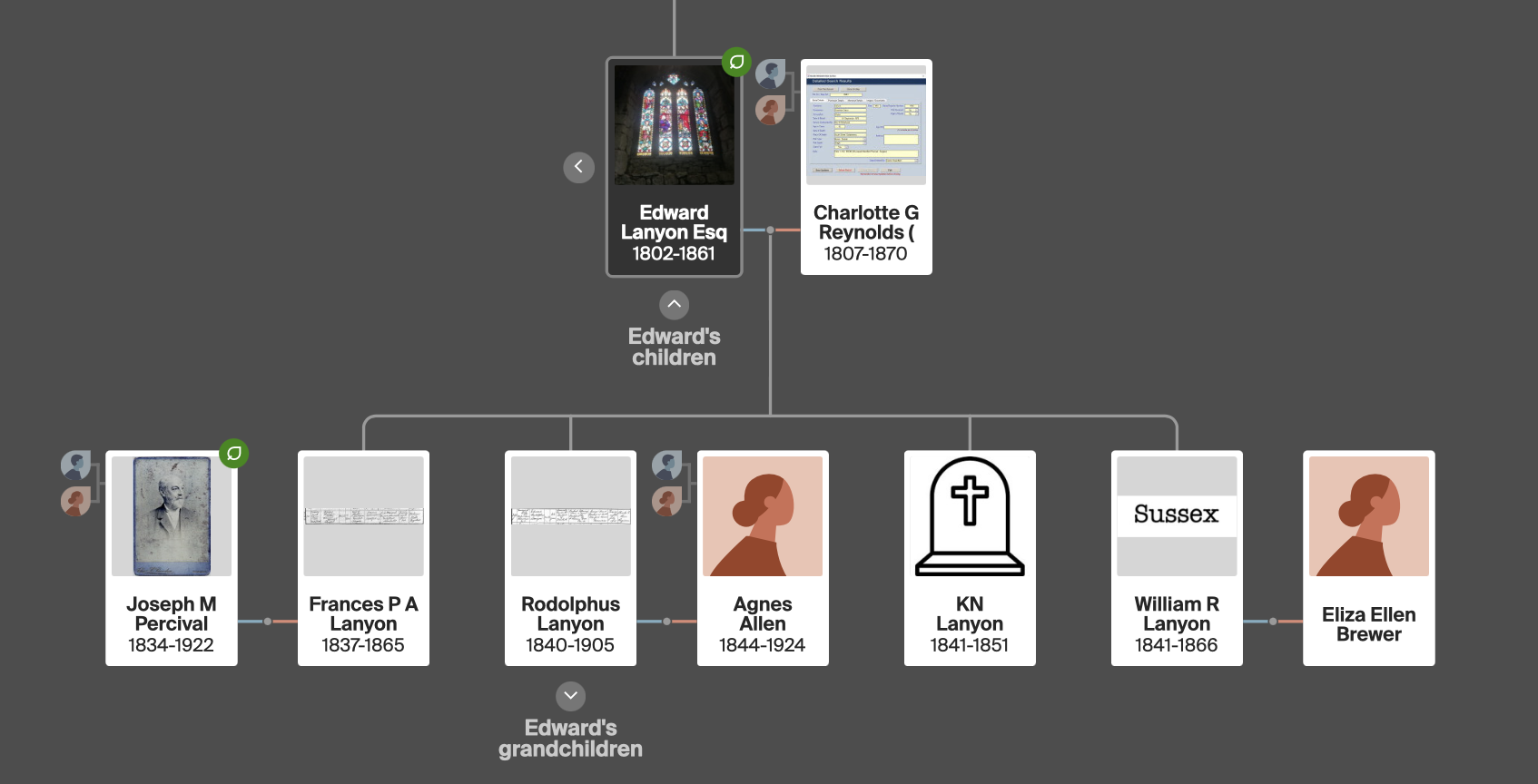
In 1836 he married Charlotte Grace Reynolds the younger sister of Frances Philippa Reynolds at Illogan. They had five children:
Richard 1836-1850 – JVM lists him as the eldest son but no trace of a birth or death (he doesn’t appear on the tree above)
Francis Philippa Austen 1837-1865 married Joseph Mumford Percival, a surgeon, she died age 28 and buried with her brother William at Chichester.
Rodolphus Edward 1840-1905 married Agnes Allen
KN 1841-bef. 1851 – sadly we don’t know the name of this child, she was mentioned as KN on the 1841 census and no further trace
William Reynolds 1841-1866 died age 25 of TB – He married Eliza Ellen Brewer, no issue. From an article (with many mistakes) by P Lanyon-Orgill 1957. “William Lanyon was the author of a large number of sentimental poems, his first appearing in the Helston Grammar-School Magazine Vol 1, pt1, April 1852. This magazine is devoted almost entirely to contributions with a classical tendency…. the sole contribution being an unsigned poem entitled ‘Arthur of Bretagne’. In the copy preserved in the British Museum this piece has the signature ‘W. Lanyon’ added in the headmaster’s hand and this example of the family’s poetical talents may perhaps be rescued from obscurity. William subsequently produced a whole volume of poems, entitled ‘My Old Carpet Bag’ and its contents’ by ‘An Old Traveller’ printed in 1873, the contents of which are uniformly bad and are not even up to the standards of his school boy effort.’)”
Of their five children only Rodolphus married and had children.
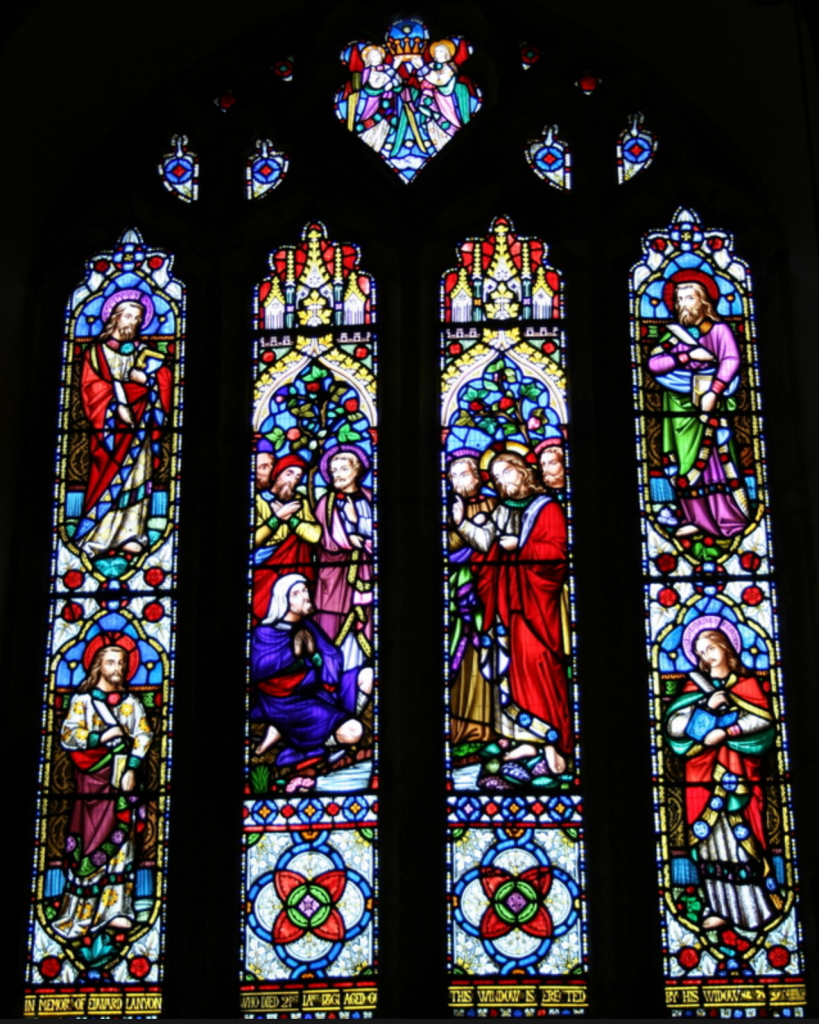
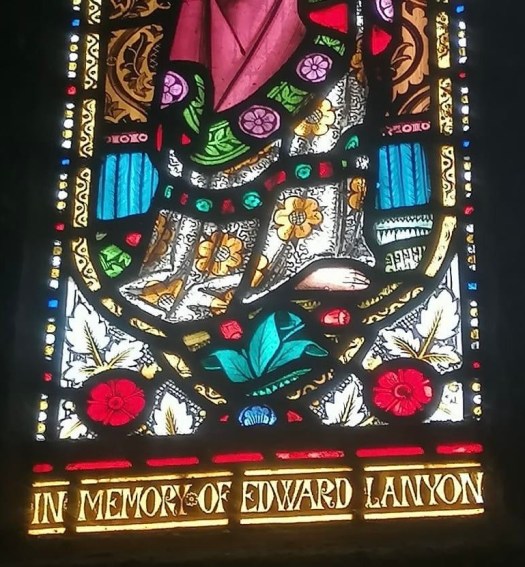
Edward died in 1861 and was buried at Camborne. His wife erected a beautiful memorial window in his memory in Camborne Church.
West Window of Inner South Aisle: Christ and the impotent man at the Pool of Bethesda, erected in 1864 in memory of Edward Lanyon (died 1861). Makes : Alexander Gibbs
Two of William Lanyon’s (1741-1808) sons married two of his great nieces which makes the tree a little more complicated!
William and Richard were the sons of Tobias and Prudence. William’s sons James and Richard married Mary Anne and Elizabeth the daughters of William’s nephew Tobias!
Richard Lanyon 1797-1863
Richard was chosen by lot to join the Cornwall Militia in 1821 but appointed a substitute. In 1824 he married Susan Tucker at Stithians in Cornwall. They had three children:
William Henry 1825-1895 married Ellen Mary Edgcombe – 11 children
Susan Tucker 1827-1829 died in infancy
Richard Sampson 1828-1903 married Eliza Jane Mare – 9 children
Susan senior died in 1829 and in 1831 widower Richard married his cousin Mary Anne Lanyon, the daughter of Tobias Lanyon & Elizabeth Budge, they had a further five children:
Frances Elizabeth 1833-1833 died in infancy
Tobias Edward 1834-1891 married but no children
John Rodolphus 1839-1931 married Emily Anne Hearle – 6 children
Frederick Beverley 1841-1869 unmarried but left a son, George. George was a stationer in Southwark. He married Ann Lingard, eleven years his senior and they had no children.
Charles 1842-1844 died in infancy
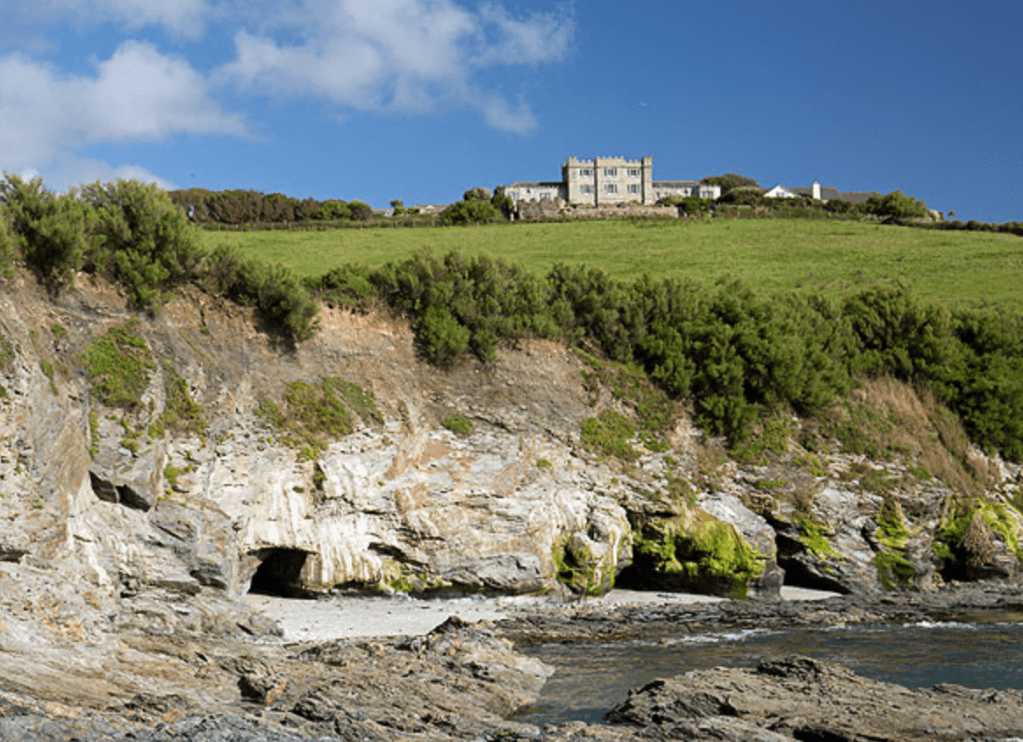
Richard was a gunpowder manufacturer at Stithians and in 1770 he lived at Acton Castle (built 1770).
Acton Castle Cornwall
Richard died age 66 after a short illness and was deeply respected and lamented. Mary Anne outlived him by 32 years and was still living at Acton Castle at the time of her death in 1898 aged 95.
James Lanyon 1803-1864
Richard’s younger brother James married his cousin and sister-in-law Elizabeth Lanyon at Stithians in 1837. James was a mine agent. He died after a long illness in 1864. They had four children:
Ellen 1838-1915 married Henry Parrott – 3 children (Ellen also had an illegitimate son with her cousin Frederick Beverley Lanyon
Mary Anne 1840-1841 died in infancy
Henry 1842-1856 died young
Mary Anne 1843-1844 died in infancy
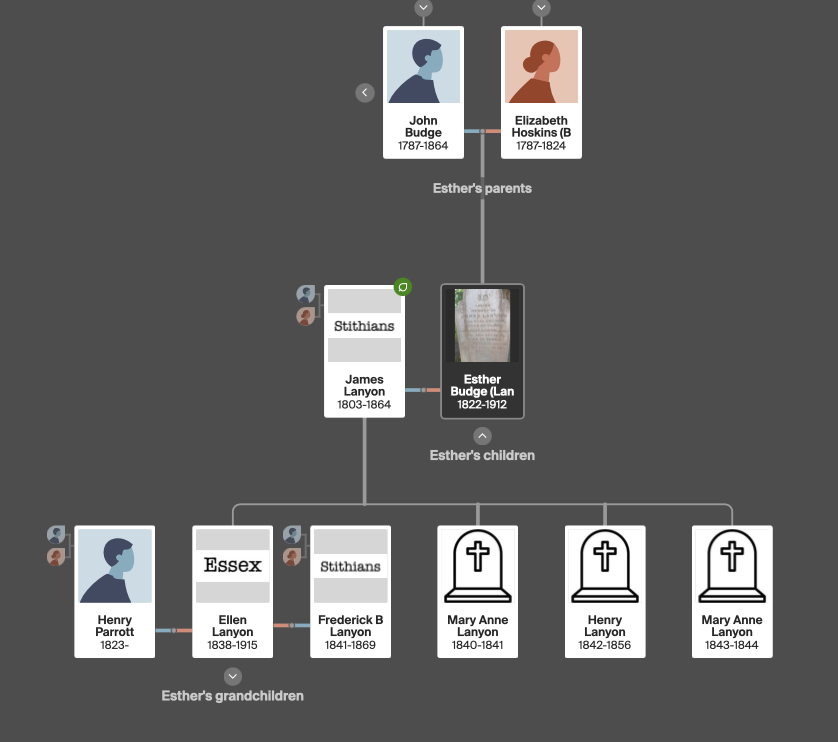
Elizabeth died in 1856 and James married Esther Budge in London in 1861.
Esther Budge was his mother-in-law’s niece!
Budge/Lanyon family tree
George Lanyon 1864-1922
George was the illegitimate son of Ellen Lanyon and her cousin Frederick Beverley Lanyon. The father wasn’t named on the birth certificate however he was named on his son’s marriage certificate. Ellen married Henry Parrott in 1867 and George became known as George Lanyon Parrott, he later reverted to the surname Lanyon and by the 1881 census he was listed as George Lanyon, step son of Henry Parrott.
If social media had been around in the 19th century it’s fair to say the Lanyons would probably have described their relationships as ‘it’s complicated’! Although perhaps not quite as complicated as the St Allen branch of the family.
Tobias was the eldest son of Tobias and Mary Penneck, he was baptised at Gwinear in 1697. He attended Pembroke College at Cambridge University and was awarded a B.A. in 1720.
Pembroke College – Monsarc, Public domain, via Wikimedia Commons
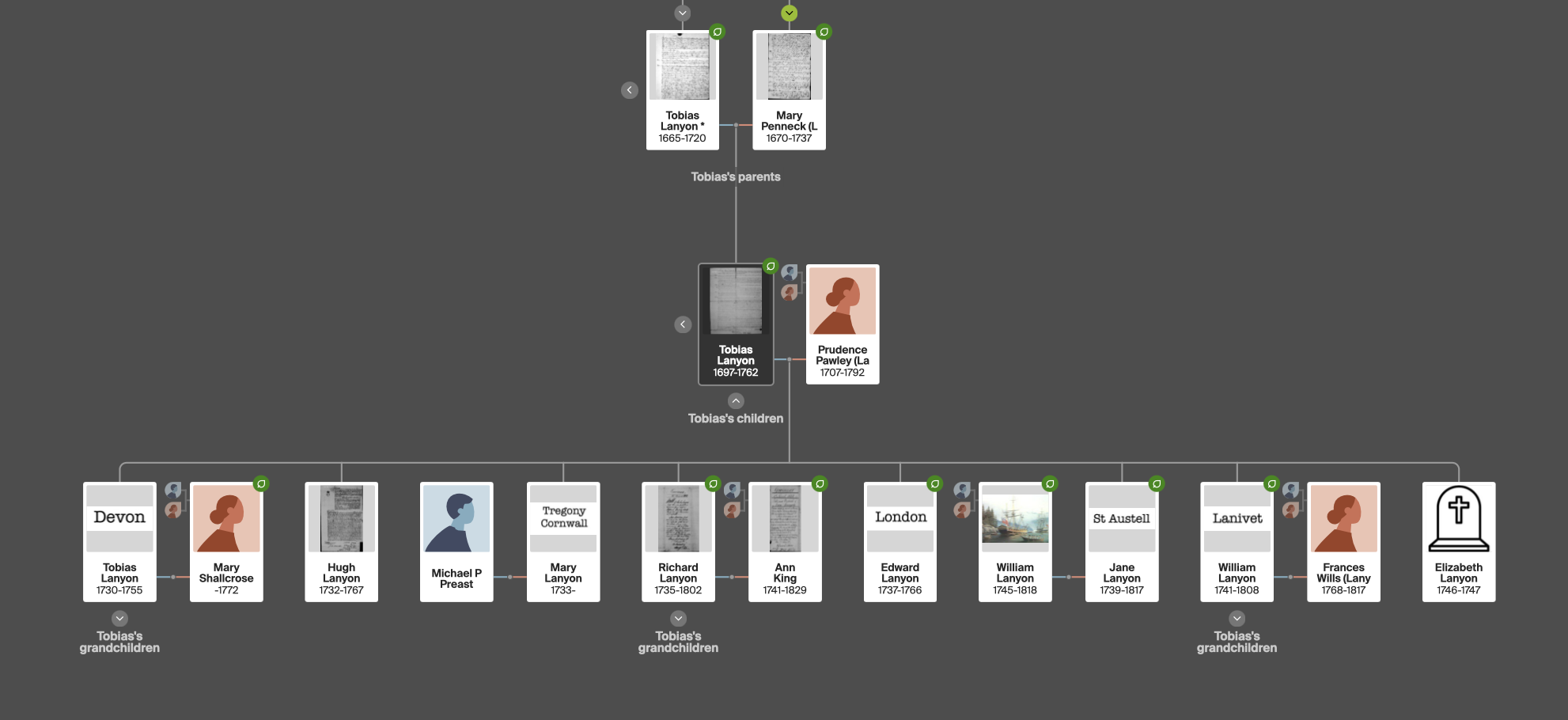
He married Prudence Pawley at Uny Lelant in 1727. They had eight children:
Tobias 1730-1755 he was an attorney and married Mary Shallcross in 1752 at Maker, Cornwall. Jane Veale Mitchell states that he died in 1755 but we can’t find a record of that. Their only son Tobias was baptised in 1753 and buried at Lifton in Devon on 22 Sep 1774, two years after his mother Mary.
Hugh 1732-1767 Hugh died unmarried
Mary 1733- married Michael Proust in 1781 at Cuby with Tregony. He was a clerk vicar. There were no children.
Richard 1735-1802 married Ann King
Edward 1737-1766 he died at St Martin in the Fields, London. He was a bachelor and left his estate to his mother.
Jane 1739-1817 married William Lanyon R.N. who sailed with Captain Cook, no children.
William 1741-1808 married Frances Wills
Elizabeth 1746-1747 died in infancy
Tobias died in 1762 and was buried at Gwinear. Prudence outlived him by thirty years, she was buried in 1792.
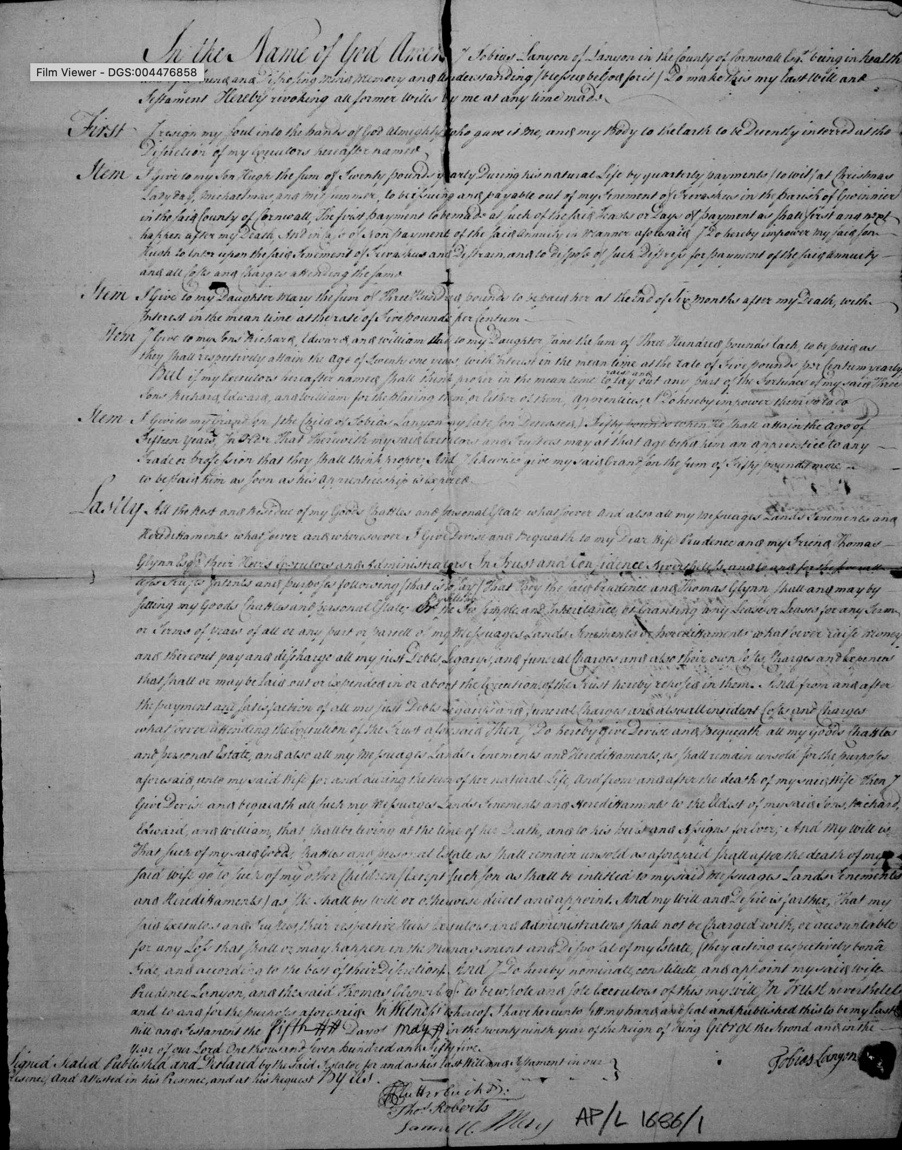
Tobias Lanyon will of 1762 – Source: AP/L/1686
His will made the following provisions:
Hugh £30 yearly out of the tenement Trevoken, Gwinear
Sons Richard, Edward and William and Daughter Mary, £300 when aged 21.
Grandson Tobias £50 when age 15 to bind as an apprentice and £50 more to be paid when of age.
Residue and executorship to wife Prudence and friend Thomas Glynn Esq, in trust.
Richard Lanyon 1735-1802
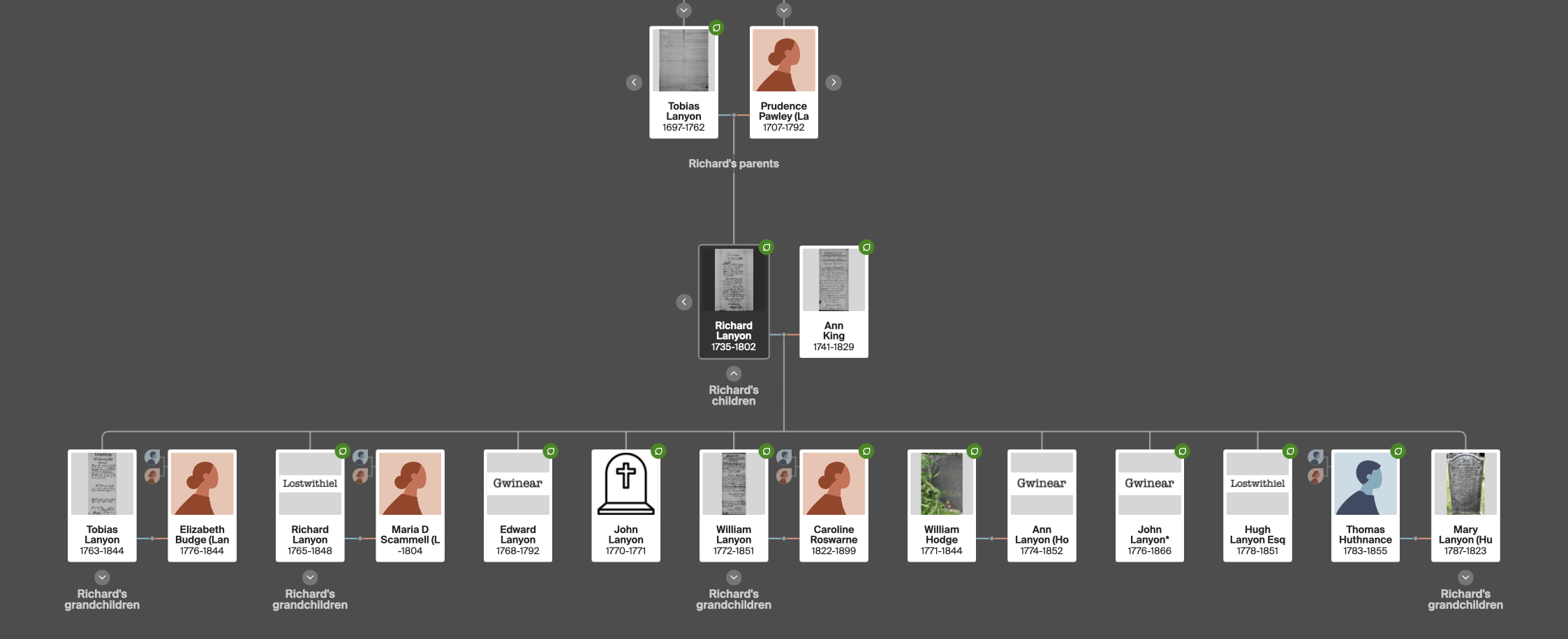
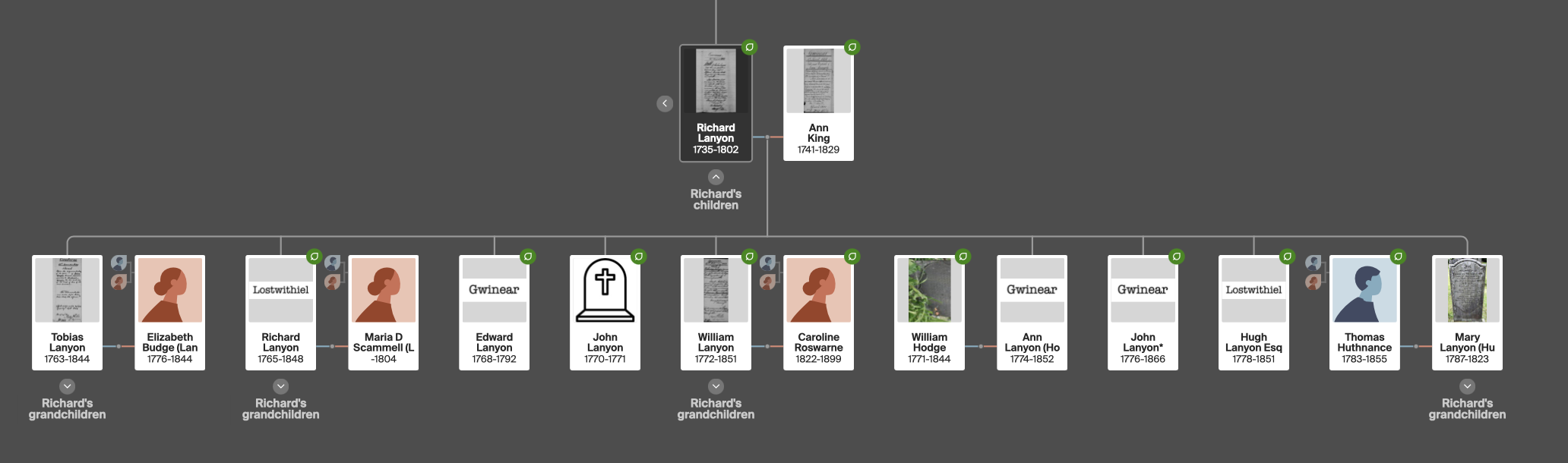
Richard married Ann King at Gwinear in 1762. They had nine children. Richard was the last to live at Lanyon Manor, he sold the property in 1785. When Ann died she was the last to be laid in the oriel room above the porch at the house and a fire lit and maintained until she was buried.
Richard & Ann’s tree
Tobias 1763-1844 married Elizabeth Budge
Richard 1765-1848 married Maria Dorothea Scammell
Edward 1768-1792 unmarried
John 1770-1771 died in infancy
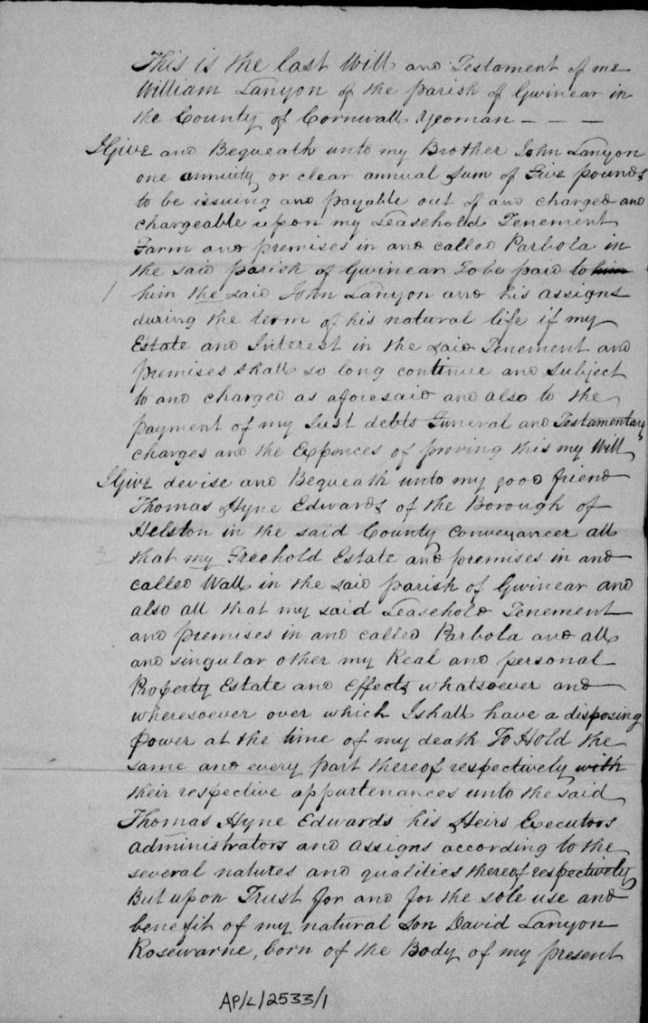
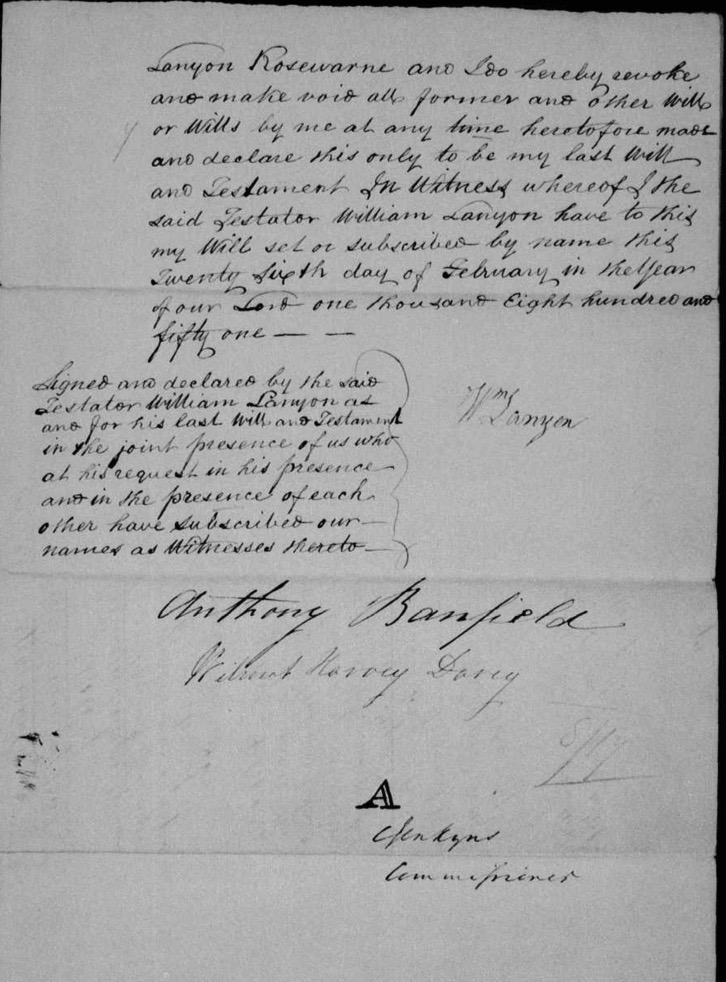
William 1772-1851 aged 74 bachelor William fathered an illegitimate son with his servant Caroline Rosewarne who was fifty years his junior! Their son David Lanyon Rosewarne was born in 1846. His father bequeathed him the tenement of Parbola in Gwinear. David emigrated to Australia and married Auguste Terese Franks in 1873. He started out in the mining business but later was a member of the Bendigo Stock Exchange. He died in 1909 after a lingering illness. He had no children.
William’s will 1851 – source AP/L/2533
Ann 1774-1852 married William Hodge – 8 daughters, 4 sons
John 1776-1866 he was a farmer, bachelor who lived with his brother William, no children. Died aged 90
Hugh 1778-1851 also a bachelor, no children. He died at Lostwithiel in 1851.
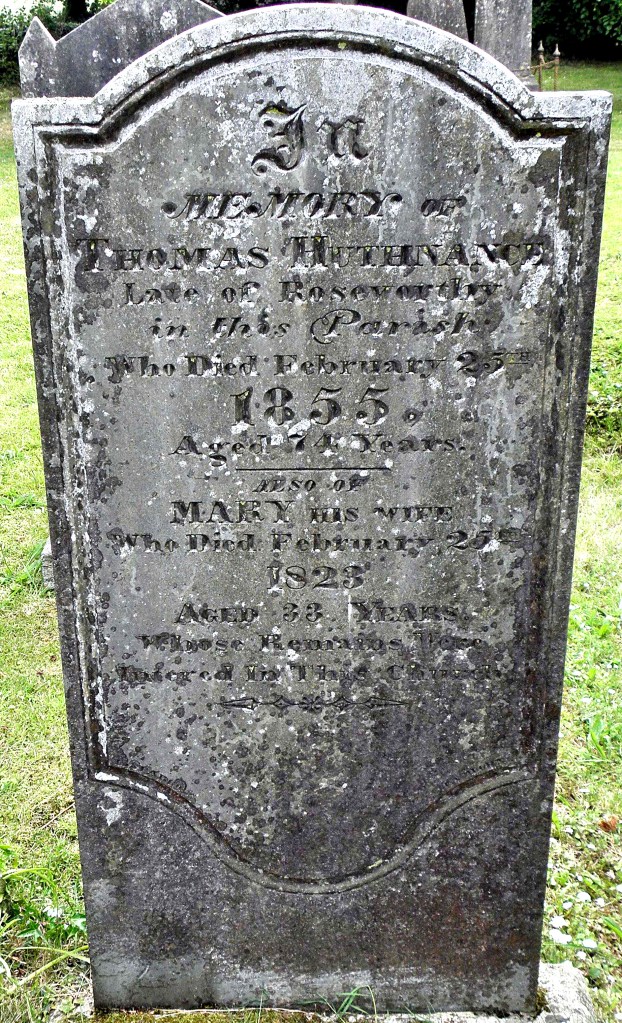
Mary 1787-1823 married Thomas Huthnance – 9 children (curiously her headstone states she was buried in 1823 aged 33 years but her baptism took place at Gwinear in 1787.)
Mary Huthnance headstone at Gwinear churchyard
William Lanyon 1741-1808
William has already been mentioned in the post about William Lanyon and Captain Cook. His sister Jane married her cousin William Lanyon and when he died in 1818 he left much of his estate to William’s children.
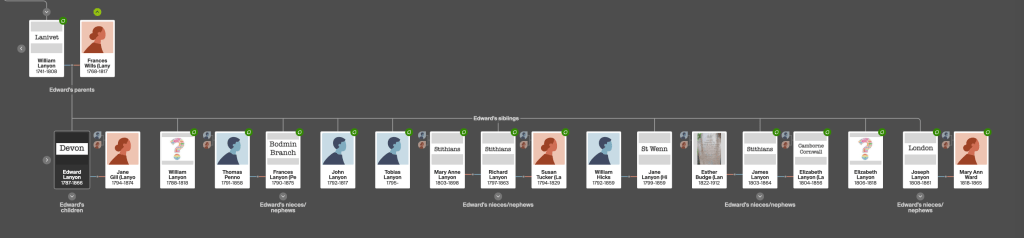
William married Frances Wills at St Ewe in 1786. They had eleven children:
Willian & Frances’ tree
Edward 1787-1866 married Jane Gill
William 1788-aft. 1818 mentioned in his uncles will, no further trace
Frances 1790-1875 married Thomas Penno – 7 children
John 1792-bef. 1817
Tobias 1795- no trace
Richard 1797-1863 married Susan Tucker and Mary Anne Lanyon
Jane 1799-1859 married William Hicks – 8 children
Henry 1801-aft. 1818 no trace
James 1803-1864 married Elizabeth Lanyon and Esther Budge
Elizabeth 1806-aft. 1818 no trace
Joseph 1808-1861 was a saddler, he moved to London and married Mary Ann Ward at Islington in 1842. They had two daughters: Maria and Mary.
Two of William’s sons married two of his great nieces! We’ll follow them in a separate post ‘Cousins’.

William Lanyon was a lieutenant in the Royal Navy and twice sailed with Captain James Cook.
Captain James Cook – Nathaniel Dance-Holland, Public domain, via Wikimedia Commons
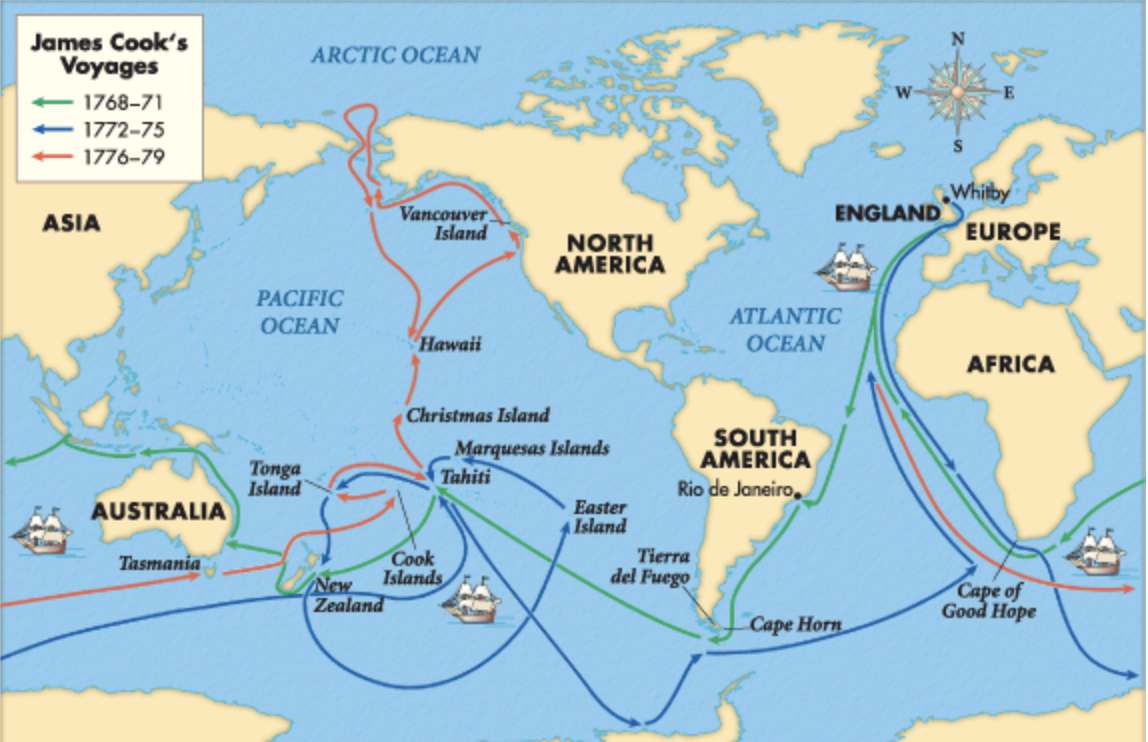
William Lanyon joined the navy when he was about 15 years old. His first recorded service was as an Able Seaman on the Orford and then the Mars. He then served on HMS Jason as a midshipman. He moved onto HMS Terrible. In 1772 he joined HMS Adventure one of the companion ships on Cook’s second voyage. In 1773 he was promoted to Master’s Mate.
He was promoted to Lieutenant in 1774 but when he was taken on for Cook’s third voyage he was a Master’s Mate again on HMS Resolution. He was eventually promoted to Second Lieutenant on HMS Discovery in 1779.
John Cleveley the younger (1747-1786) (style of) – HMS ‘Resolution’ and ‘Discovery’ in Tahiti – BHC1939 – Royal Museums Greenwich.jpg
He supposedly collected vocabularies of the South Pacific languages which were published in 1979 by Peter Lanyon-Orgill but there is some doubt as to their authenticity.
Cook’s three voyages
Between 1790 and 1796 he was in command of the Spider a cutter based at Plymouth. In 1799 he commanded the Kent. In November of that year he captured a French privateer the Four Brothers out of Calais. His last recorded command was of HMS Genereux a prison ship at Plymouth.
By 1814 he was retired and living at St Austell. He was buried there on 26 Mar 1818, the register states he was ‘paralytic’. His wife Jane had been buried at St Austell almost exactly a year earlier on 27 Mar 1817. They had no children.
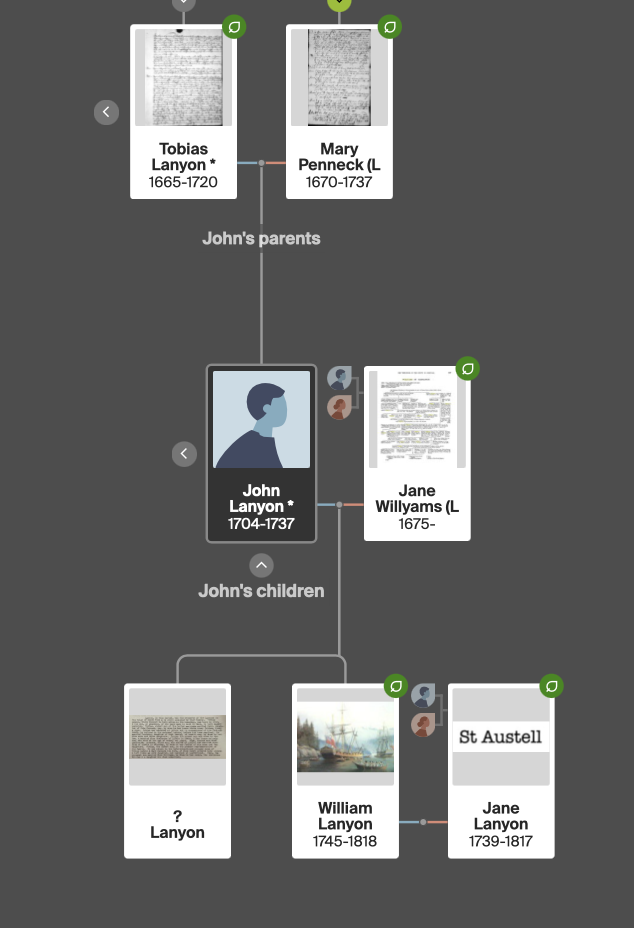
So where does William fit on the tree?
‘A Genealogical & Heraldic History of the Commoners of Great Britain & Ireland enjoying Territorial Possessions…..’ Vol IV by Burke. has the following entry in the index.
Lanyon, John, 36.
‘Jane b. in November 1765 m. to John Lanyon of Lanyon in Gwinear, grandfather of lieutenant William Lanyon R.N., well known for his various acts of heroism and benevolence in his profession, the last survivor of those gallant officers who accompanied Captain Cook in his voyages. Twice he circumnavigated the globe with that distinguished commander and was with him at the period of his melancholy end.’
The Jane referred to is Jane Willyams and Burke has transposed her date of birth from 1675 to 1765! Vivian’s ‘The Visitations of Cornwall: Comprising the Heralds’ Visitations of 1530, 1573 & 1620‘ prints the family tree of the Willyams family and shows the correct date.
Visitations of Cornwall -Willyams Family
Jane is shown as the daughter of Humphry Willyams of Roseworthy and Dorothy Addington of Devon. Jane was baptised 11 Nov 1675 at Gwinear and married John Lanyon of Lanyon Gwinear.
So who is John Lanyon of Lanyon Gwinear?
Assuming John was a similar age to Jane we are looking for a John born in the 1670s who lived at Lanyon Manor in Gwinear. This would probably be a child of Tobias Lanyon and Susannah Reynolds but they don’t have a child called John and don’t mention a son of that name in their wills. Tobias and Susannah’s son Tobias does have a son called John however he must have been born after 1703 and would be at least twenty-eight years younger than Jane Willyams!
We need to go back and look at the information we have for William Lanyon. There is a note on his Lieutenant’s certificate dated 29 July 1774 which says ‘we have examined Mr. William Lanyon who by certificate appears to be more than 28 years of age and find he has gone to sea more than six years….’ (Captain John Campbell and Captain Abraham North). This implies that William must have been born before 1746.
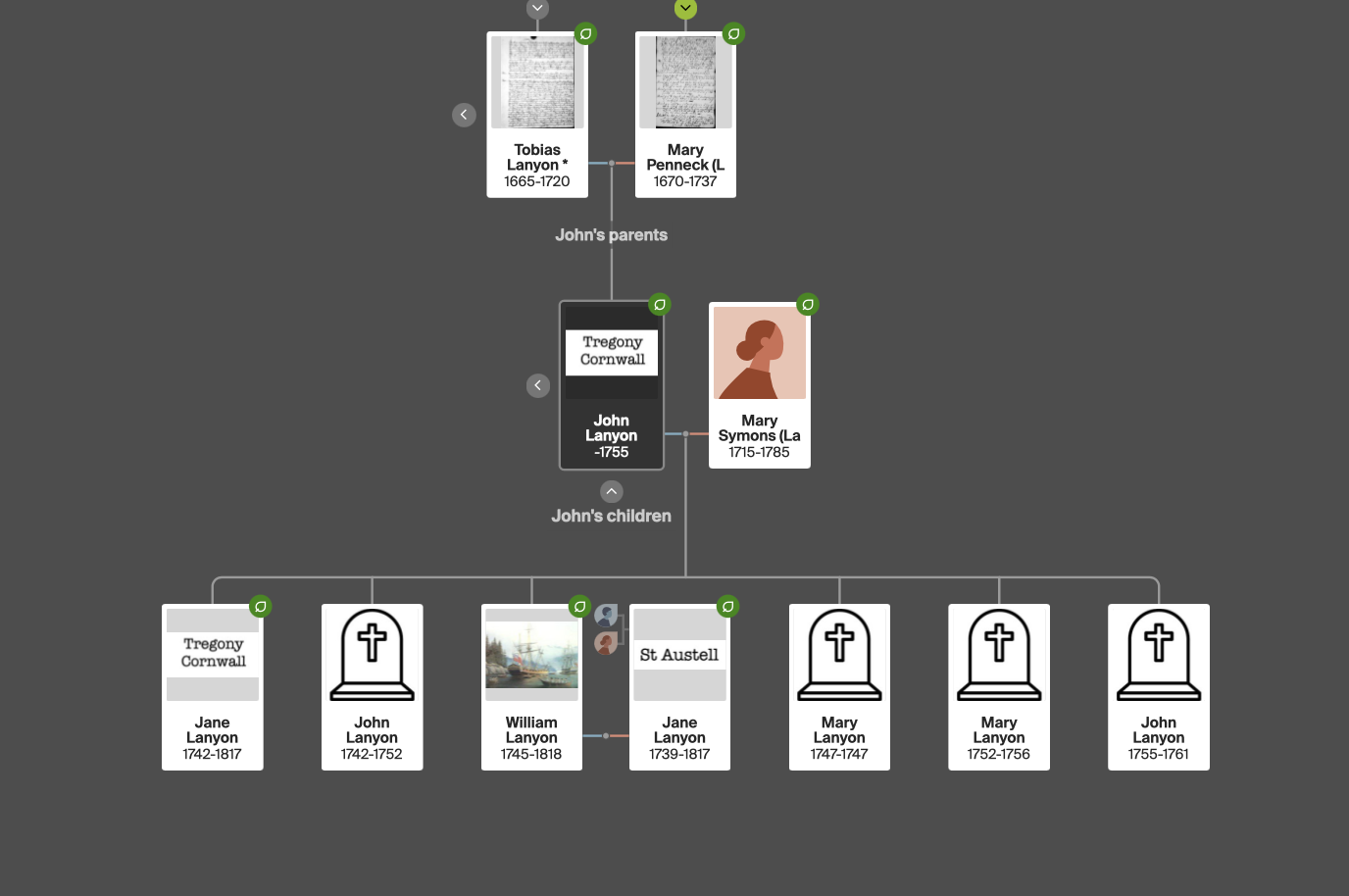
There is a baptism of William Lanyon son of Mr. John Lanyon and Mary on 2 Apr 1745 at Cuby with Tregony. They have three other children baptised there: Mary 1747, Mary 1752 and John 1755. Of their children, only William survived to adulthood.
There is a marriage between a Mr. John Lanyon and Mrs. Mary Symons at Creed in Cornwall (not far from Cuby with Tregony) on 3 Jan 1742. There is a Mary Symons baptised at Creed in 1715, the daughter of William Symons. We can’t prove it is the same person.
There is a John Lanyon son of Tobias Lanyon, deceased who is apprenticed to Philip Webber of Falmouth, Attorney at Law on 25 Sep 1722 for £52. 10/-
Proposed tree for William Lanyon
Possible tree but Jane would be far too old to give birth to William in 1745. Perhaps John & Jane had a son called John Lanyon who married Mary Symons?
The Jane Lanyon that William married appears to be the daughter of Tobias and Prudence Pawley.
John Lanyon left a will which might have helped clarify this part of the tree but it has been lost!
The Admiralty Record Office wrote to Captian Wingfield D.S.O., R.N., D.G.W. on 17 Feb 1959 and confirmed that:
William was born in 1745
Enlisted Sep 1760
Appointed lieutenant Aug 1779
Retired on half pay plus pension from Greenwich Hospital
Superannuated Commander 1814
Served on Spider 1790-1795, Kent 1795-1799, Matilda 1800-1804 and Genereux 1805-1806
Served on HMS Nelson & Resistance under Captain Cook on the voyages of discovery
The Will of William Lanyon proven on 15 May 1818 (PROB 11/1604). This is the last Will and Testament of me William Lanyon of the Parish of Saint Austell in the County of Cornwall, Esquire, Commander in the Royal Navy.
I give, devise and bequeath all that my Leasehold Dwelling House situate in the said Parish of Saint Austell in which I now reside with the Garden Courtlage and Appurtenances thereunto belonging unto Tobias Lanyon of Camborne in the said County, Surgeon, his Exors, Admors, and Assigns, for and during all the Estate and Interest which I shall have therein at the time of my decease, to and for his and their own absolute use and benefit, subject to the rent and other reservations payable by or under the Indenture of Lease by virtue of which I am intitled to hold the same.
I give and bequeath unto my Niece, Frances the Wife of Thomas Penna, all and singular my Household Furniture, Plate, Linen and China whatsoever which I may be possessed of at the time of my decease (except the Bed and Bedding hereinafter bequeathed to my Servant Mary Eplett) and I do will and direct that my Executors hereinafter named do and shall release and discharge the said Thomas Penna of and from all sum and sums of money which he may be indebted to me at the time of my decease, and particularly of and from the Sum of Two Hundred Pounds which I advanced him on a note of hand bearing date the 16th day of May last, which Note of Hand I hereby direct shall be given up to the said Thomas Penna.
I give and bequeath to my Servant Mary Eplett, if she shall be living with me at the time of my decease, over and above what may be due to her for wages, the sum of twenty pounds to be paid to her within six Months after my decease. Also I give to the said Mary Eplett the Bed and Bedding in the Garret on which she usually sleeps.
And as for and concerning all and singular other the property, Stocks, Funds, Money and Effects which I shall be possessed of or intitled to, or over which I shall have a disposing power at the time of my decease, of what nature or kind soever the same may be, I give, devise and bequeath the same and every of them unto the said Tobias Lanyon and John Carne of the said Parish of Saint Austell, Gentlemen, their Heirs, Exors & Admors upon the Trusts and to and for the several ends, intents and purposes hereinafter declared of or concerning the same, that is to say, upon Trust in the first place that they, my said Trustees, do and shall thereout with all convenient speed after my decease pay, discharge and satisfy all my just Debts and my Funeral and Testamentary Expences and the aforesaid Legacy of twenty pounds, and do and shall in the next place lay out and invest such of my Monies as shall not be already invested in the Stocks in the purchase of Parliamentary Stocks or Funds of Great Britain in the names of them my said Trustees, or the Survivor of them, his Exors or Admors and do and shall stand and be possessed of all such Stocks, Funds and Securities In Trust that they my said Trustees or the survivor of them, his Exors, or Admors do and shall pay the following Legacies (that is to say):
unto my Nephew Edward Lanyon (Son of the late William Lanyon of Surry) the sum of Eighty Pounds of lawful Money of Great Britain and my watch, unto my Nephew William Lanyon (Son of the said William Lanyon of Surry) the Sum of One hundred pounds of like lawful Money and my Sleeve buttons, unto my Niece Jane Lanyon, (Daughter of the said Willian Lanyon of Surry) the Sum of One hundred pounds of like lawful Money, unto my Nephew Richard Lanyon (Son of the said William Lanyon of Surry) the Sum of One hundred pounds of like lawful Money, unto my Nephew Henry Lanyon (Son of the said William Lanyon of Surry) the Sum of Fifty pounds of like lawful Money unto my Nephew James Lanyon (Son of the said William Lanyon of Surry) the Sum of Fifty pounds of like lawful Money, unto my Niece Elizabeth Lanyon (Daughter of the said William Lanyon of Surry) the Sum of Eighty Pounds of like lawful money, and unto my Nephew Joseph Lanyon (Son of the said Willaim Lanyon of Surry) the Sum of Fifty pounds of like lawful Money,
such several Legacies to be paid to such of my said Nephews and Nieces respectively as shall have attained the age of twenty one years immediately after my decease, and to such of my said Nephews and Nieces as shall be under that age, as and when they shall severally attain the age of twenty one years,
and my mind and will is and I hereby direct that it shall and may be Lawful to and for my said Trustees to receive the Dividends and Proceeds of such of the said Legacies as shall not be payable at the time of my decease by reason of the Legatees being under the age of twenty one years and do and shall lay out and invest the same in the purchase of the like Stock there to accumulate to and for the use and benefit of such last mentioned Legatees which accumulations shall be paid to them with their original Legacies as and when they shall severally attain the age of twenty one years, Provided always that it shall be lawful to and for my said Trustees to apply so much of the Dividends arising from any such Legacy as they shall think proper in and towards the education of the Person intitled thereto, and I direct that the Residue of my Property after payment of the before mentioned Legacies and the expences incident thereto shall be divided equally between and among my said last named eight Nephews and Nieces, to be paid to them at the time the youngest of them shall attain the age of Twenty one years, provided always that if any of my said Nephews or Nieces shall happen to die under the age of Twenty one years then it is my will and meaning and I do hereby direct that the Legacy and accumulation or Legacies and accumulations of him, her or them so dying shall go and accrue to the Survivors or such nephews and Nieces or Nephew and Niece as shall not have attained the age of twenty one years at the time of the death of such Nephew and Niece so happening to die, to be equally divided between them and to be vested, paid and payable to them at such age and in such manner as their original legacies are hereinbefore directed to be paid, Provided also and I do hereby further declare and direct that it shall be lawful for my said Trustees at any time and from time to time when and as often as they shall think fit or adviseable to sell, transfer and dispose of or vary all or any of the Funds or Stock wherein the said Trust monies shall at any time be invested and to lay out and invest the money to arise by any such sale, transfer or disposition in the purchase of other or the same or like Stocks or Funds in the joint names of them my said Trustees, and all such new or other Stocks and Funds shall stand and be in the names of such Trustees and the Dividends and annual produce thereof and of every part thereof respectively shall be applicable and applied upon and for such and the same Trusts, end, intents and purposes as the original Stocks and Funds and the Dividends thereof were subject and applicable to at the time of such Sale, Transfer, Disposition or variance thereof.
And lastly I nominate, constitute and appoint the said Tobias Lanyon and John Carne Execuitors of this my Will hereby revoking all former Wills by me made. In Witness whereof I have hereunto set my hand and Seal this eighth day of July in the year of our Lord One thousand Eight hundred and Seventeen – Wm Lanyon.Signed and sealed by the said Testator William Lanyon and by him publiched and declared as and for his last Will and Testament in the presence of us who in his presence at his request and in the presence of each other have hereunto subscribed our Names as Witnesses John Cary Maria Cary.
Proved at London 15 May 1818 before the Judge by the Oaths of Tobias Lanyon and John Carne the Executors to whom Admon. was granted being first sworn by Comm. Duly to Adminr.
Source NA/PROB/11/1604/220
(William Lanyon of Surrey is Tobias and Prudence’s son William born in 1741.)
We can’t prove that William Lanyon RN is the son of John and Mary Lanyon but it seems the most likely explanation.
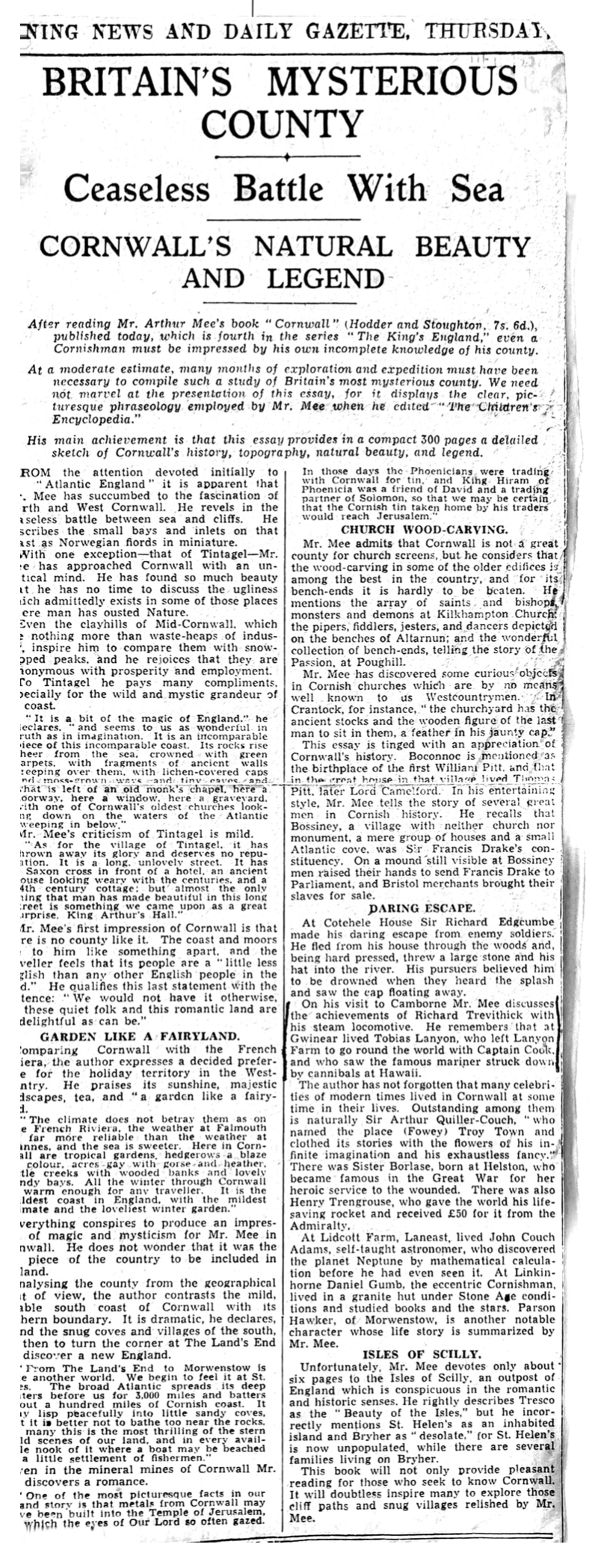
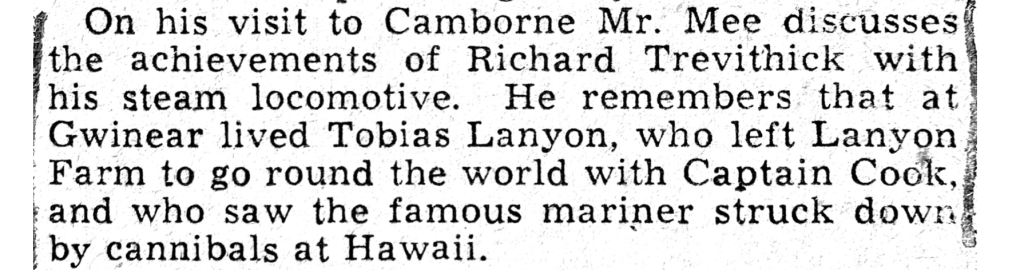
To add to the confusion there is a newspaper cutting that further muddies the water by naming Tobias as the person who sailed with Cook!
It’s a valuable lesson on the accuracy of documents!
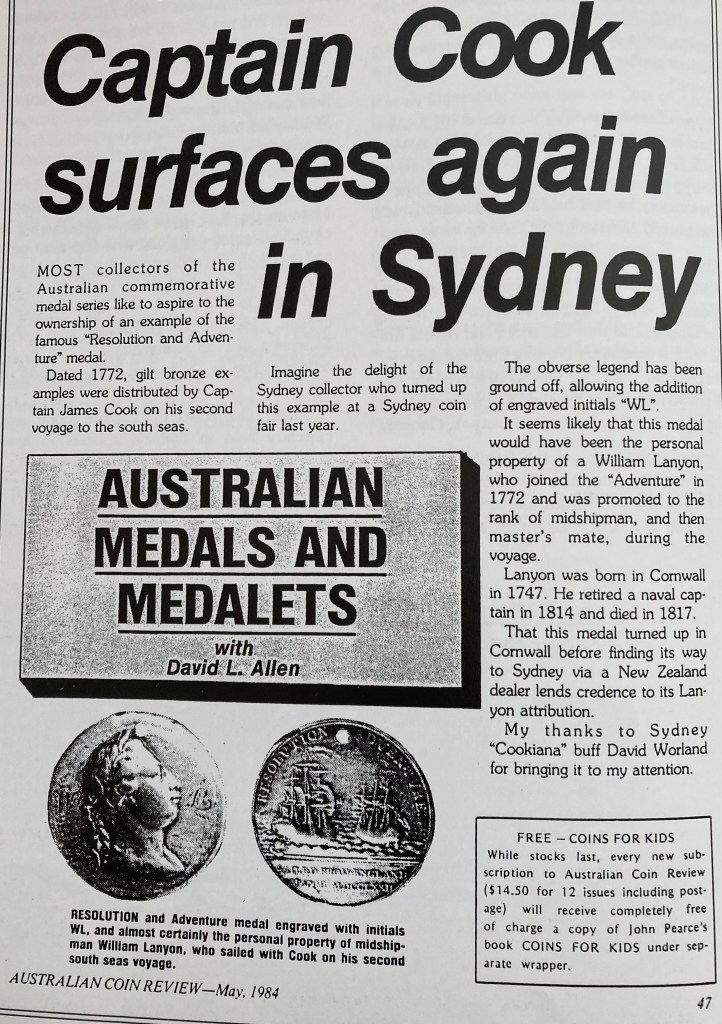
And finally another article where the dates aren’t quite right, is it any wonder that genealogists make mistakes?