Sarah was baptised at Sancreed, Cornwall in 1690. She was the second daughter of Charles Lanyon and Sarah Tresilian and her grandfather was called ‘The Golden Lanyon’ due to his great wealth.
Sarah was the second of three daughters and they also had a younger brother Abraham. We know very little about Sarah; she witnessed the will of Anne Basset of Manwinnion, Illogan in 1713 and was mentioned in the 1778 will of Mary Lanyon and left the considerable sum of £100.
Sarah never married and appears to have lived in Penzance for most of her life.
We do know that at the age of 95 Sarah sold her reserved pew seat at St Mary’s Church Penzance. It was the 5th seat from the stairs in the north gallery of the chapel and it was sold for 7 Guineas. (Source – CRO P179/2/4/8)
Perhaps she didn’t think that she would require the seat for much longer. In the event she lived to the grand old age of 102 and was buried on the 10 January 1793!
When researching a family tree it can be hard to see beyond the name and dates associated with each individual and come up with information that brings a person to life. We might be lucky enough to find their occupation, if they had a criminal conviction and their religion. Occasionally we’re lucky enough to find a physical description or even a photograph. However, one thing that is particularly hard to discover is whether or not they were disabled.
When searching through old records it can be challenging to see the words used to describe disability. Many of the terms used are considered offensive today but I have chosen to use the words in the original documents as that is part of the history of this subject.
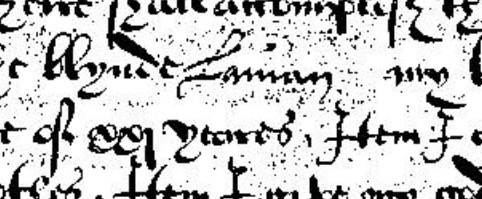
I discovered ‘blynde Lanian’ when I was sent a copy of his uncle’s will written in 1607.
“I give the blynde Lanian, my kinsman xxs a year towards his mayntenance untill my heire accomplish the age of xxi years.”
The will of George Kekewich was written 22 June 1607 and proved 20 May 1612. The National Archives Ref. PROB 11/119/518
‘Blynde Lanian’
‘Blynde Lanian’ was George Lanyon the son of John Lanyon Esq and Katherine Kekewich. (See the post in Tudor & Stuart Lanyons about John Lanyon Esq’s children.) George must have been born about 1586 and died after 1633. There is no record of his baptism or burial and no record of a marriage or children. We only know he existed from two Kekewich wills. His uncle George’s will of 1607 and his cousin Francis Kekewich also mentions him in his will of 1633.
“Item I give George Lanion Twentie shillings a yeare during my lease of Manely with this premise that he wander not the Country as a beggar, contrary to God and Mans lawe hopeing the rest of his friends will make up the rest that maie paie for his board.”
The will of Francis Kekewich was written 11 July 1633 and proved 6 Sep 1633. The National Archives Ref. PROB 11/164/299. Transcribed by Angela Wood and Richard Samways. With permission of Cornwall Online Parish Clerks
George’s mother Katherine died in 1592 and her brother and nephew have made provision for him so that he does not wander the country as a beggar which is probably what happened to other disabled people who did not have the means to support themselves or families to take care of them.
I could not find mention of George in any Lanyon wills of the period. Perhaps he was raised by his mother’s family in St Germans, Cornwall?
We know very little about George but it did make me wonder what life was like for disabled people in the past and whether there were any more ancestors with disabilities. There must have been others but would I be able to find them in the records?
Historic England provided some interesting information about the history of disability. In medieval times it was thought that those who were charitable to the sick and disabled could speed their journey to heaven after their death. That led the wealthy to endow hospitals and leper houses and to care for the poor and disabled. A statute of 1388 talks of the ‘deserving poor’ and ‘undeserving poor’, the deserving poor were those born with disabilities and they were deserving of alms and support.
At the start of the Tudor period in 1485 disabled people were cared for in ‘spyttals’ or hospitals and almshouses run by monks and nuns. This worked fairly well until the dissolution of the monasteries in Henry VIII’s reign. With nowhere to go and no one to care for them the sick and disabled were often to be found dying on the streets. Many of the disabled were wounded seamen and soldiers and senior officers, horrified at the way they were treated, he argued for hospitals and pensions for the men. In 1590 the Chatham Chest was created to pay pensions to disabled seamen. The world’s first occupational pension!
In practice most disabled people stayed with their families and played a part in their local community. Families tended to work together and any disabled family members would work alongside their parents and siblings carrying out tasks they were able to perform. Those with learning disabilities were thought of as ‘natural fools’ or ‘innocents’ and were not excluded from village life.
In 1570 the city of Norwich carried out a census of the poor. Fourteen hundred of the poorest people were questioned. Of them 63 were disabled men and women who suffered from ‘lameness’ or ‘crookedness’, had missing limbs or were blind or deaf. Interestingly almost all the disabled people were married to non-disabled people and many had children. They had jobs and were part of their community in every sense.
By the 18th century hospitals such as Bedlam had been built and were home to many people with learning and physical disabilities. There was no real treatment offered and the afflicted were seen as a source of entertainment for visitors to the hospital.
Scene in Bedlam from Rake’s Progress – National Library of Medicine, No restrictions, via Wikimedia Commons
By the 19th century the Victorians had built huge asylums and the ‘mentally afflicted’ were moved away from their communities to be cared for in institutions. At the same time the first schools for deaf and blind people were opened. In the 20th century, especially after the first World War, the concept of rehabilitation took hold and with the arrival of modern medicine our whole understanding of disability changed. From the 1930s onwards charities and organisations were formed to fight for disability rights and today many countries have laws enshrining equal rights for disabled people.
Discovering our Disabled Ancestors in the Census
One of the easiest ways of discovering our disabled ancestors is to use the census. From 1841 onwards a census was held in Britain every ten years. The householder completing the form was asked to note if a person was: blind, deaf, ‘dumb’, ‘imbecile’, ‘idiot’ or ‘lunatic.’ One narrow column to represent a lifetime of disability.
The words ‘dumb’, ‘imbecile’, ‘idiot’ and ‘lunatic’ are today considered offensive and unacceptable but in the 19th century they were proper medical terminology and had different definitions:
‘Idiot’ – someone with a congenital mental impairment, an IQ under 25
‘Imbecile’ – someone who had lost their mental faculties e.g. dementia or had an IQ between 25 and 50
‘Lunatic’ – someone of average intelligence suffering from mental illness
Of course the people completing the census forms were not doctors and did not always use the correct terms. There was also a stigma attached to mental illness and disability in Victorian times so some people were reluctant to mention family members who were affected.
The census returns were used to produce all sorts of statistics and formulate government policy.
The 1851 census revealed some interesting statistics relating to blindness. It was much more common in rural areas than industrial areas. This was probably because younger and healthier people migrated to the cities and left older and more infirm members of the family behind. Also those who were blind were less suited to work in factories and perhaps less likely to leave the security of their village.
Blindness also affected the south more than the north. In Cornwall in 1851 one in 793 persons was blind whereas in York it was one in 1296 people. Were the Cornish more likely to suffer accidents that caused blindness? Were they more likely to have children with congenital blindness? There doesn’t seem to be an answer to that.
More men than women were blind, 105 males and 88 females per 100,000 people. This was probably due to male occupations being more hazardous.
One of the major causes of blindness was Smallpox. In Ireland the potato famine caused an epidemic of Opthalmia which led to much higher levels of blindness in that population.
The south west also had the highest proportion of ‘deaf and dumb’ people, the north the least. One in 1390 in the south and one in 1995 in the north.
Muteness was often attributed to the mother suffering a fright in the final stages of her confinement! In reality an inability to speak was associated with congenital deafness. Those who were born deaf were less likely to be able to speak. It was thought that congenital deafness could be caused by cousins marrying which was more likely in small remote communities. Disease was a major cause of deafness; Scarlatina, Smallpox, Typhus and Measles could all cause fevers and deafness.
Searching the Census Returns
I started searching the census for any Lanyons with disabilities. Having all the census returns online makes this a relatively easy task. I have selected just a few of the people I found for this post.
Philip Body Lanyon 1802-1892 was blind. He was working as a farmer; we don’t know if he was born blind or became blind following an accident or disease. (Some census enumerators have noted whether a person was disabled ‘from birth’ on the form.)
In 1851 Philip was working as a farmer of 13 acres and was blind
In 1881 Philip was working as a carpenter!
Philip shows us that despite a disability he was able to work, marry, raise a family and live to the ripe old age of 90! However I can’t be the only person slightly concerned about the health and safety of a blind man working as a carpenter!
Dorothy Lanyon born in 1806 was deaf and working as a power loom cotton weaver in Blackburn 1861. The census tells us she was a widow and the daughter (possibly daughter in law) of William and Ann Lanyon. Again we don’t know if she was born deaf, or became deaf as a result of disease, accident or industrial accident.
Mary Addison Lanyon, born in 1812, was deaf. In 1851 she was living with her mother and unmarried sisters in Penzance. Mary was married to John Mathews Lanyon, a confectioner. They married on 19 Apr 1836 and in 1838 their only daughter Rebecca Addison Lanyon was born. Shortly afterwards John disappeared from the local records and it appears that he abandoned his family. Did he abandon her after she became deaf or was she born deaf? Mary worked as a stay maker mistress (a corset maker). By 1871 she was described on the census as a confectioner’s widow but there is no trace of John’s death. Rebecca married James Eva and they had at least nine children and lived in Penzance until after 1881. Mary lived with her daughter and her family until her death in 1877 . The family later emigrated to the United States and Rebecca died in Minnesota in 1898.
Henry Lanyon 1842-1856. Henry was the son of James and Elizabeth Lanyon, who were cousins.
The 1851 census described Henry as ‘dumb’. It’s not clear if this was to describe his inability to talk or a learning disability. Henry sadly died in 1856 the same year as his mother. His death certificate describes his cause of death as ‘idiocy from birth and Scrofula’ (Scrofula was Tuberculosis of the throat.) Her death was described as following ‘a lingering illness’ which often meant Tuberculosis. Henry’s two sisters both called Mary Anne died aged one in 1841 and 1843. Perhaps they all suffered from autosomal recessive genetic disorders caused by close relatives marrying?
Richard Lanyon 1844-1919 was born into a St Just family that suffered more than their fair share of tragedy. He was the son of John Lanyon and Elizabeth Bowden.
The Royal Cornwall Gazette, 16 November 1855
Coroner’s Inquest John Lanyon
(The following inquests have been held by W. Hichens, Esq., county coroner:—) —On the following day (the 10th inst.) in the parish of St. Just in Penwith, on the body of John Lanyon, aged 47 years. –The deceased was a miner, and worked at Park Noweth Mine, in that parish, and was at the 80 fathom level, assisting in changing the boxes of the lift, when the engine being working, the rod came down, and the navel-pin thereof struck him on the head and caused such injury thereto that he died on the following day. It appeared to be the usual practice to change the boxes whilst the engine is at work, and that the same may be done without fear of accident where the party doing it is ordinarily careful. – Verdict “accidental death.” –The deceased was very much respected. He leaves a widow and five children to deplore their loss. The poor woman has been very unfortunate, having had her first husband drowned, her father killed, her son killed, and now her second husband also killed, and not long since a grand child was drowned in a well.
Reproduced by kind permission of Cornwall OPC – Transcribed by Karen Duvall
Richard was Elizabeth’s last child. He was disabled and is variously described as an ‘imbecile’ or a ‘dumb imbecile’. We don’t know the cause or severity of his disability but he lived at home with his mother until her death in 1878 and then lived with his older sister Cordelia until 1884 when she finally married at the age of 47. (Cordelia worked as a tin dresser – someone who broke up the lumps of rock when they were brought to the surface.)
1871 census St Just
1881 census St Just
1891 census Madron Penzance
From 1884 until 1919 Richard was an inmate of the Penzance Union Workhouse at Madron. The 1891 census described him as a mine labourer so even though he was disabled he had been employed.
It’s heartbreaking to think he spent the last 35 years of his life in such a bleak place.
Mary Mead 1800-1871 was married to John Charles Lanyon (senior). On the 1871 census she is listed as an ‘imbecile’ but in this case the word is used to show that she was suffering from dementia. Mary lived with her daughter and son-in-law until her death.
1871 census Falmouth
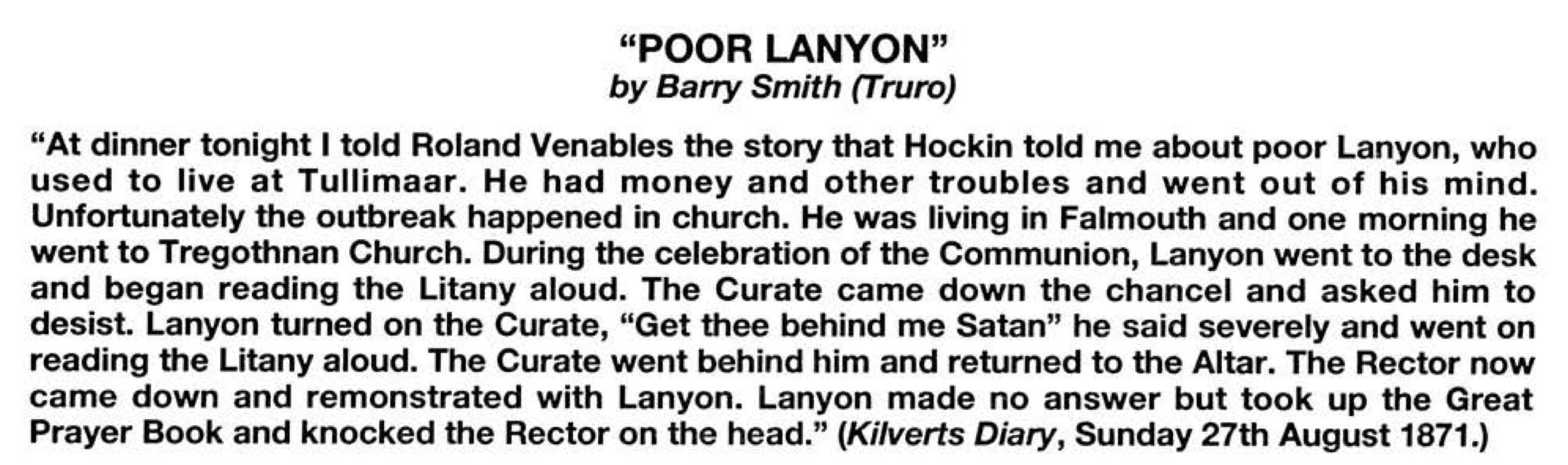
William Henry Lanyon 1825-1895 was a wealthy gunpowder manufacturer and merchant who lived at Tullimaar House with his large family. He was a successful but unusual man and he suffered a rather dramatic mental breakdown in 1871.
In the 1891 census William is described as an ‘imbecile’ but it is hard to know if he is still suffering from his mental breakdown or has developed dementia.
One word in one small column and yet so many different meanings.
1891 census Falmouth
It’s curious that the census asks about so few disabilities. Where are all the people suffering from paralysis or with missing limbs? Why is the government just interested in the numbers of deaf, ‘dumb’, blind and mentally impaired people? Surely a column that listed those unable to work due to ill health or disability would have been more useful? Or perhaps a column listing all those with Tuberculosis (a disease responsible for protracted illness and so many deaths).
The 2021 census asks a number of questions about health.
They also ask if a person is caring for someone What will our descendants make of our answers in 100 years time?
Discovering our Disabled Ancestors in other Family History Resources
If we want to discover our disabled ancestors before 1841 (when the census began) we need to use other resources like wills, diaries, letters and obituaries.
Wills
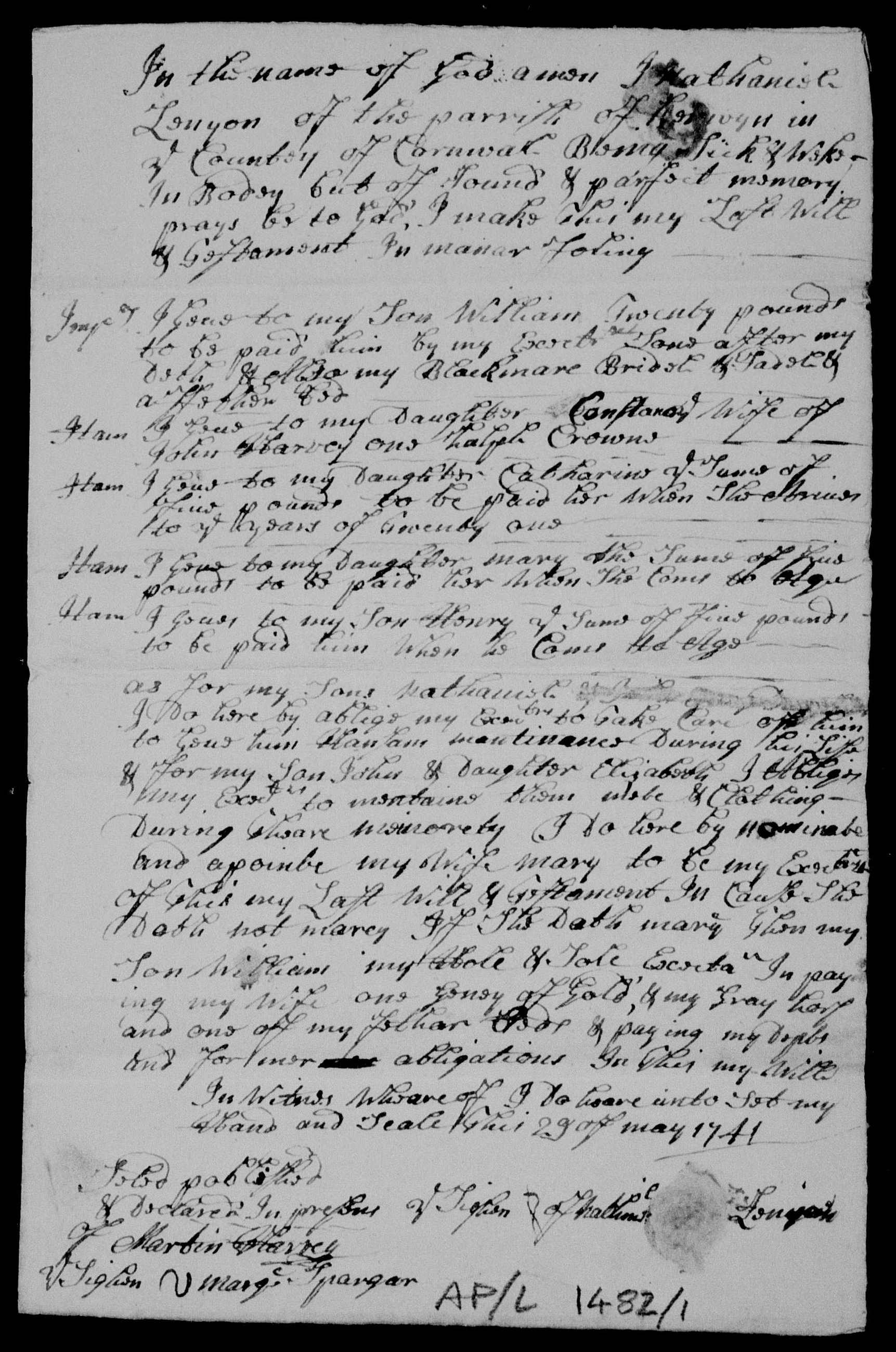
Nathaniel Lanyon abt. 1685-1741 of Kenwyn in Cornwall left a detailed will which hints that his son, also called Nathaniel, may have a disability of some kind.
Nathaniel the younger was born in 1720, the fourth of twelve children. Nathaniel senior bequeathes his children various amounts of money:
My son William £20
Daughter Constance, wife of John Harvey half a crown (as a married daughter she has already received her ‘portion’)
Daughter Catherine £5 when she is 21
Daughter Mary £5 when she is 21
Son Henry £5 when he is 21
As for my sons Nathaniel (the second name is erased, perhaps the child died before his father) – I do hereby oblige my executor to take care of him and to give him handsome maintenance during his life.
The will doesn’t state that Nathaniel is disabled but why is he treated differently? Is it because he can’t take care of himself? We don’t know when Nathaniel junior died but he’s not mentioned in his mother’s will.
Nathaniel’s Will – AP/L/1482
The situation is much clearer when it comes to Sarah Lanyon 1750-1802. Sarah was the daughter of John Lanyon and Rebecca Treloar of Helston, Cornwall. John was a cordwainer (shoemaker) and died at the age of 34 just a year after Sarah was born. Rebecca was just 29 when she became a widow and she never remarried. She spent her life raising her son and looking after her daughter.
In her will she spells out that ‘Sarah Lanyon is now of insane mind’ and makes provision for her future.
In the event Sarah predeceased her mother and was buried on 15 Feb 1802 and her mother died just a few days later and was buried on the 24th Feb.
Letters
In Jane Veale Mitchell’s letters from the 1920s she makes numerous mentions of her delicate health:
“I am so sorry that I cannot earn a little in some light employment….but this is not easy to do in Cornwall and I am not strong.”
“I went to London ….but as it was Easter and I was not so strong as I could have wished for….”
“I have not been at all well lately, under the doctor pro tem, so that must account for my silence.”
Jane was a descendant of the St Allen branch of the Lanyon family and a family history researcher. Perhaps if she had been more robust she would never have started her research into the family tree. She was killed in an accident at Perranzabuloe train station in 1929 when she was sucked off the platform by a passing train, she was 62.
Obituaries
Obituaries often give clues as to the cause of death, long illnesses and disabilities. I found one amazing obituary for Charles Bennett born abt. 1740-1804, who was the great grandfather of Jane Stacey Bennett who married John Charles Lanyon (junior).
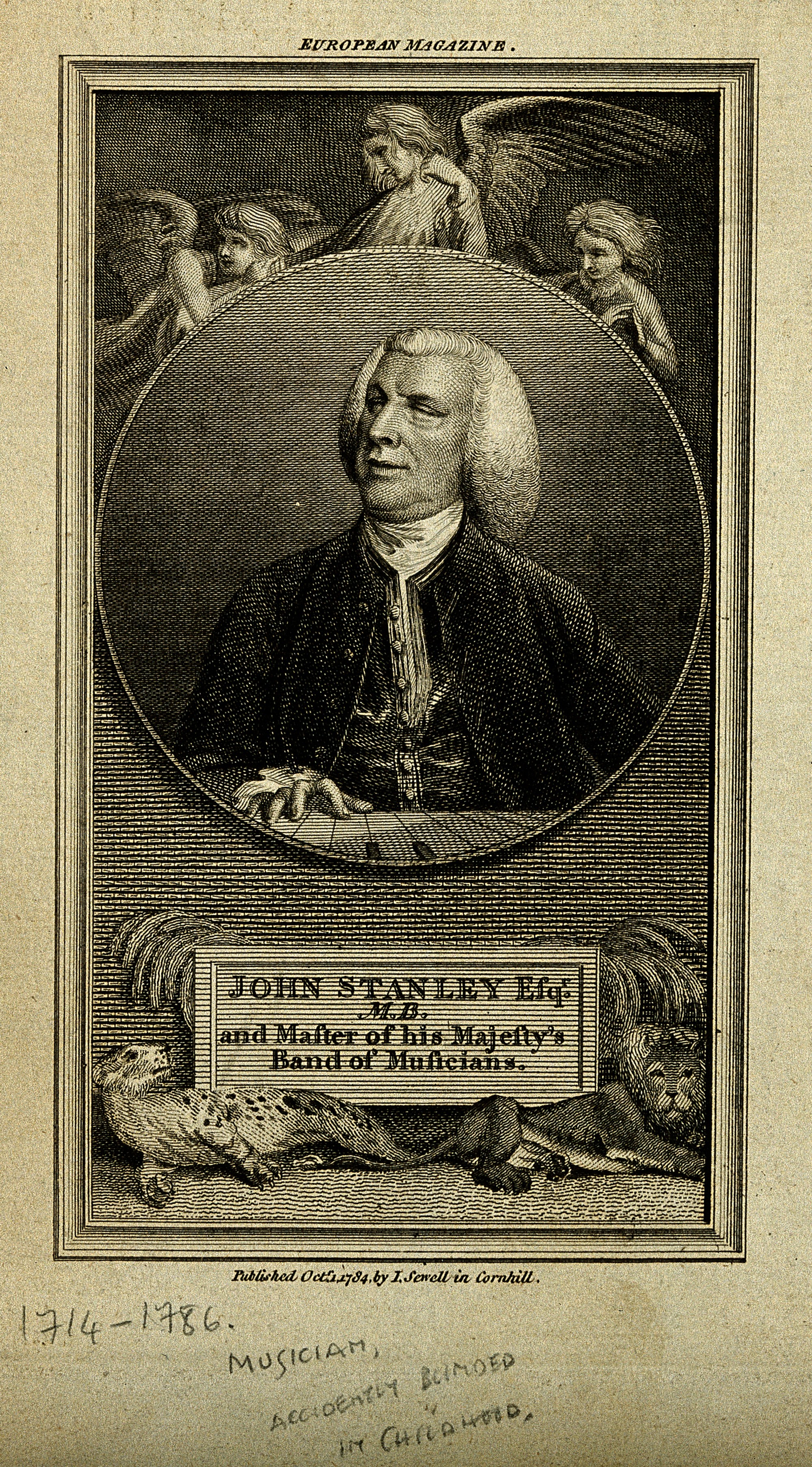
Charles was the organist at Truro Church for forty years and he was blind but we only know this fact from the obituary. It details how he lost his sight in a childhood accident when a wooden gun exploded. His parents then sent him to be taught music by the celebrated organist John Stanley, who was also blind.
John Stanley, a blind musician. Line engraving, 1784 – Wellcome Images
Charles didn’t allow his disability to prevent him living a full and interesting life. He married Anne Vivian and they had several children. He is described thus ‘his wit and convivial temper made him a welcome visitor wherever he went, and often has he “felt the table in a roar.”
He was ‘partial to horticulture and so exquisite was his touch that he could distinguish and describe all his flowers and even the different weeds.’
Charles also ‘enjoyed a game of whist and played with skill and perfection having previously marked his cards with a needle that the punctures were imperceptible to his adversaries.’
He was an author of musical compositions and had a memory for voices and events. In short he coped with his disability so well that the writer of the obituary commented that ‘although blind he delighted in amusements which would appear to give pleasure chiefly to the sighted.’
Charles died in 1804 of cancer of the throat. How tragic that a man deprived of his sight was in the end deprived of his voice as well.
Clearly there must have been many more people in the family who had disabilities but without records we’ll never be able to identify them. Perhaps the records don’t exist as disabled people weren’t considered ‘disabled’, or perhaps there was no need to note they were blind or deaf as everyone in a small community would already know this. Perhaps disability was just part of life in a society that was used to disease, infant mortality and untimely death on a scale we now find hard to comprehend.
Friends by the Ears – British Museum, Public domain, via Wikimedia Commons
Having checked almost all the parish registers available for Cornwall I turned my attentions to Devon in my search for Lanyon ancestors. Naturally there are quite a few. Younger sons without a property to inherit may have headed for towns like Plymouth, Exeter or Barnstaple to make their fortunes. Others went to the great dockyards to join the navy or work as carpenters and shipwrights.
It was at Barnstaple that I came across William Lanyon and his family and discovered a part of English history that I hadn’t come across before. Black history in Tudor England.
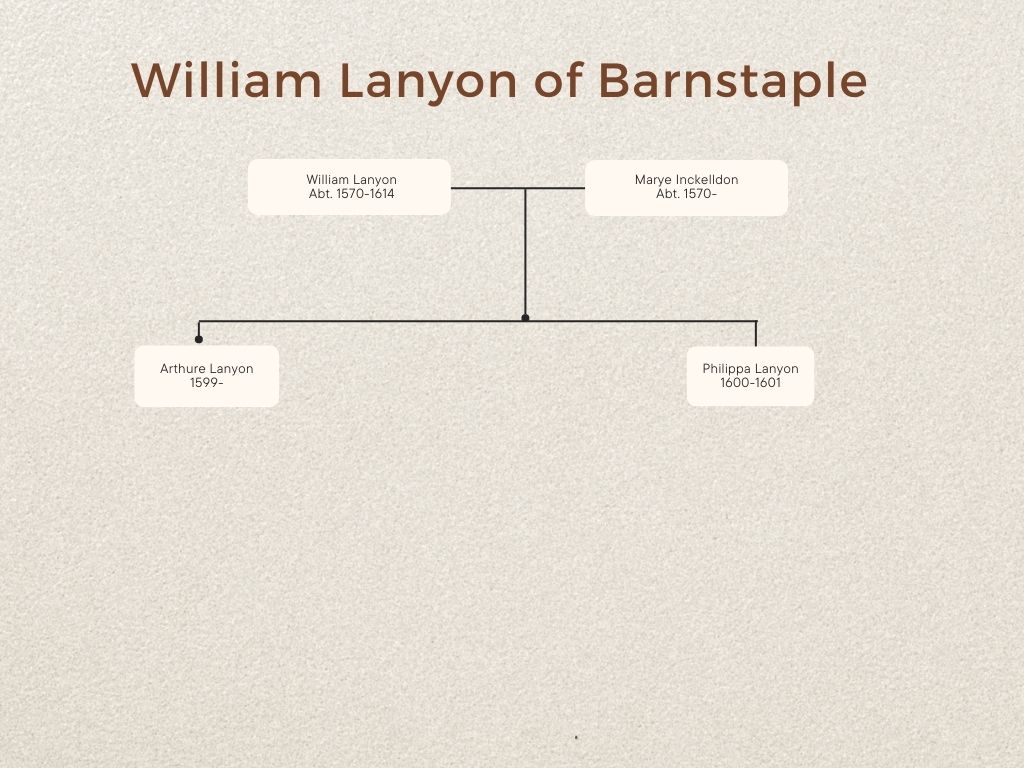
William Lanyon was born about 1570 but I don’t know where or how he fits onto the Lanyon tree. He first appears in Barnstaple’s parish registers on 2 Feb 1596 when he married Marye Inckelldon. Marye was from an old established Devon family, the Incledons/Inckelldons of Braunton. They are listed in the Herald’s Visitations of Devon and the family can trace its roots to the 12th century. Sadly there was no trace of Marye on the Incledon tree.
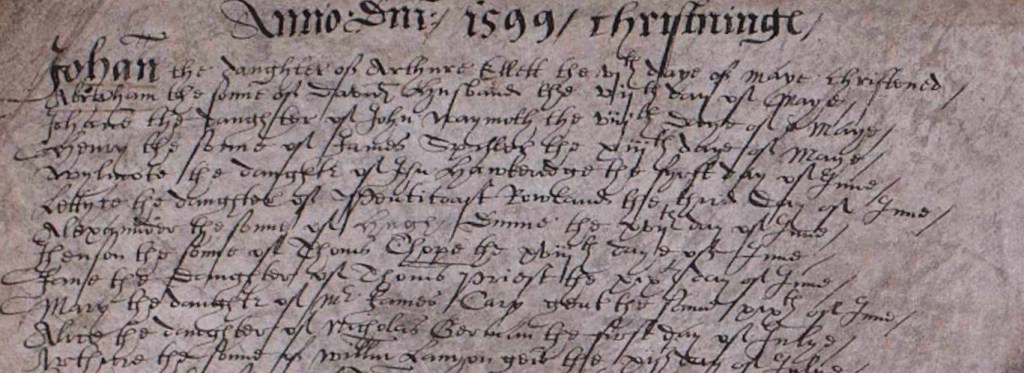
In 1599 William and Marye baptised a son, Arthure at Bideford.
Bideford Parish Register – Arthure is the bottom entry.
On the 26 Oct 1600 they baptised a daughter, Philippa at Barnstaple and on the 8 Jan 1601 they buried her at the same parish.
William Lanyon was buried in 1614 and that’s all I could find about this little branch of the family.
I decided to go through the Barnstaple parish register page by page looking for any information about Arthure or Marye that may have been mis-transcribed and that’s when I stumbled on a whole new area of English history.
My first instinct was outrage that William had been involved in the slave trade. My second was to do some research and find out more.
Like most people I had a rudimentary knowledge of the slave trade from history lessons at school and assumed that any black person in Britain at this time must automatically have been enslaved. Then I read Miranda Kaufman’s DPhil thesis ‘Africans in Britain: 1500-1640’ which gave me a whole new perspective. Dr. Miranda Kaufmann is a Senior Research Fellow at the Institute of Commonwealth Studies and carried out a detailed study using parochial records, wills, and a whole host of records familiar to family historians.
In a nutshell her thesis stated that there were at least 350 documented Africans in England during the Tudor and early Stuart period (1500 – 1640) who mostly came from North and West Africa. None were regarded as being enslaved by law.
John Blanke the Black Trumpeter at Henry VIII’s Tournament – AnonymousUnknown author, Public domain, via Wikimedia Commons
How did these Africans get to Britain?
The Spanish and Portuguese had a thriving slave trade and many Africans ended up in Europe serving their Spanish and Portuguese masters. Royals, nobles, diplomats and merchants may have had African slaves who travelled around Europe with them. Some made it as far as Britain.
After the defeat of the Spanish Armada Queen Elizabeth I allowed English privateers to capture Spanish ships and their cargoes. If the cargo included African slaves they were usually freed on reaching England. There must have been a fair number of freed Africans as Elizabeth I issued an order for their transportation out of the realm but this was never enacted.
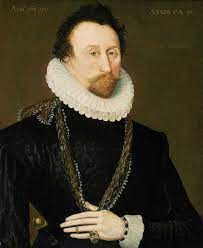
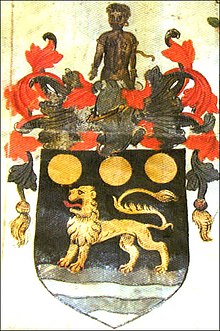
Jack Hawkins, one of the privateers, was England’s first slave trader. He started to trade in slaves from Guinea in 1562 and made four voyages before the Spanish decimated his ships and crew. That was the end of the slave trade in Britain until the 1640s. For most British merchants in the 16th and early 17th century Africa was viewed as a trading partner rather than a source of potential slaves. Fortunes could be made importing spices, hard woods, ivory and other commodities; and without overseas colonies there was no need for slaves. Some Africans were brought back to Britain to learn English to facilitate future trade.
Jack HawkinsHawkins Coat of Arms acknowledging the source of his wealth
Once in Britain Africans worked in a variety of jobs. Many were servants but working as a servant at this time was a respectable occupation. Some would have served as crew onboard merchant and navy ships. Some served as mercenaries in the army (Sir Pedro Negro served in Henry VIII’s army and was knighted in 1547.) Some were musicians (John Anthony of Stepney who was described as ‘Musician and Maurus’ in 1615. From the records that are available some appear to have had successful businesses (Stephen Driffield was a London needle maker).
The Africans intermarried and had children and appear to have been an accepted part of society. They are mentioned in wills and receive bequests from grateful employers, they also made bequests. William Offley’s will of 1600 stated “to ffrancis my black a moore I geve for her releife the some of tenne poundes and a gowne of twelve shillings the yarde“. (£10 was a huge sum, his other maids received 50 shillings.) Francis appears to have stayed in service to Lady Anne Bromley (formerly the wife of William Offley) and in 1625 she left a legacy of £10 to the poor of St Mary’s parish in Putney.
How did Chatherin end up in Barnstaple?
A search through the Barnstaple parish records shows that Chatherin was not the only black person in the town. Barnstaple is on the north coast of Devon and was a successful maritime trading town.
Perhaps Chatherin arrived on a seized Spanish or Portuguese ship which docked in Devon?
The earliest entry for a baptism of a black person in the Barnstaple Parish Register is 18 Jun 1565, the baptism of Anthony a ‘blackemore’ in the household of Mr Nicholas Witchalse. In 1570 Nicholas left his black servant 5 shillings “Item I geve unto Anthonye my negarre v s so that he remaine withe my wife otherwise yf she mynde not to kepe him to give hym v markes and lette hym go.”
Clearly Anthony is not enslaved but an employee who will be compensated with the amount of 5 marks if Mrs Witchalse does not keep him on after her husband’s death.
The next entry in the Barnstaple register is a baptism of Grace on 6 Apr 1596 ‘a Neiger’ in Richard Dodderidge’s house. There are at least half a dozen more entries in the next decade.
10 Apr 1598 Baptism of Elizabeth in Mrs Ayer’s house
22 May 1605 Baptism of Mary daughter of Elysabeth in Mrs Ayer’s house
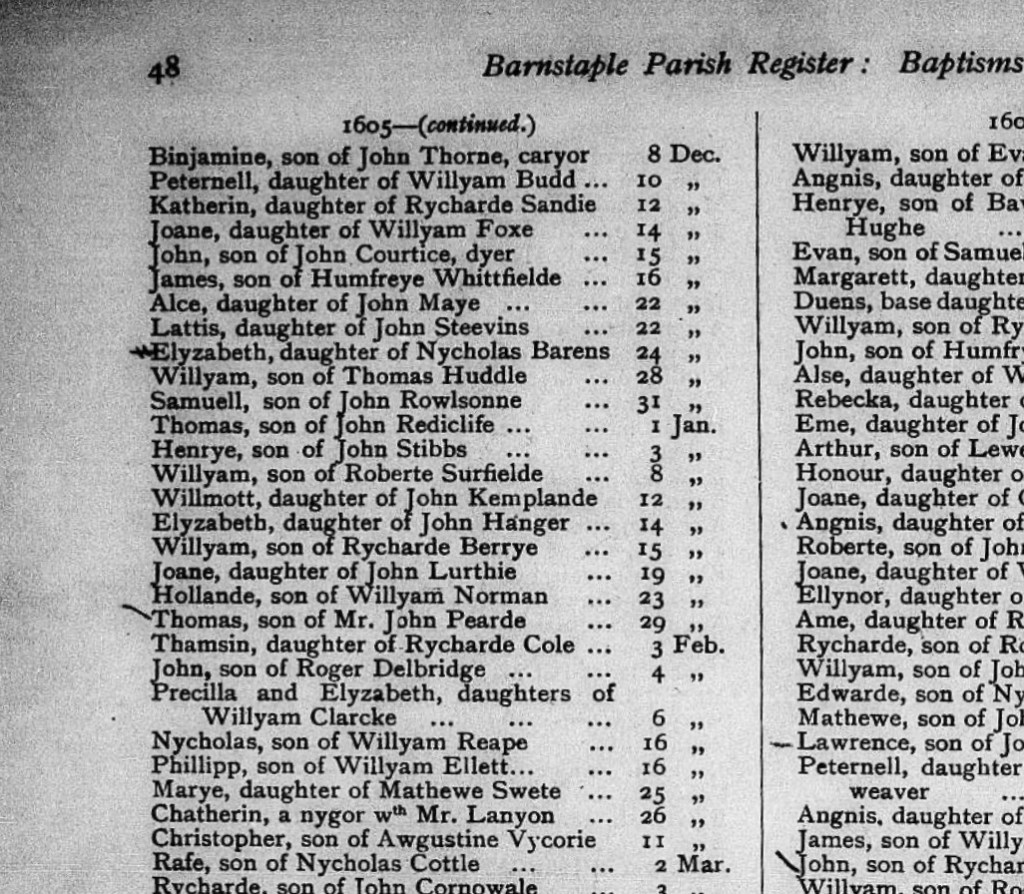
26 Feb 1606 Baptism of Chatherin in Mr Lanyon’s house
10 Nov 1606 Baptism of Elysabeth daughter of Susanna ‘a nygor’ – they appear to be independent of any household
8 Jul 1605 Burial of Mary daughter of ‘Elysabeth a negro servante to Mrs Ayer’
12 Dec 1607 Burial of Susanna – ‘ye childe of a negor’
We don’t know what happened to Chatherin. William Lanyon died in 1614, if he left a will it has been lost so we have no clues about his family or Chatherin. There are a couple of mentions of a ‘Katherine’ in other parish registers in that part of England and its tempting to think they could be her but that is pure speculation on my part.
4 Jan 1612 Christ Church Bristol – Burial of Katherine a ‘blacke negra’ she was ‘a servant at the horshed’ – this was the Horshed Tavern in Christmas Street
31 Jan 1635 St Andrew’s Plymouth – Baptism of Margery, daughter of Katherine a ‘blackmoore’ and Fredericke Daniel
If you want to find out more on this subject I recommend:
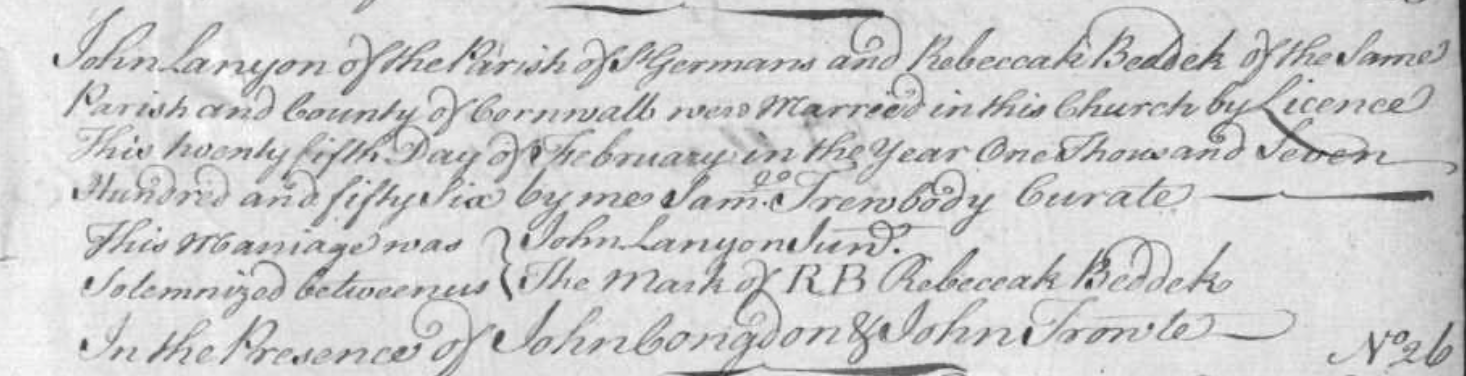
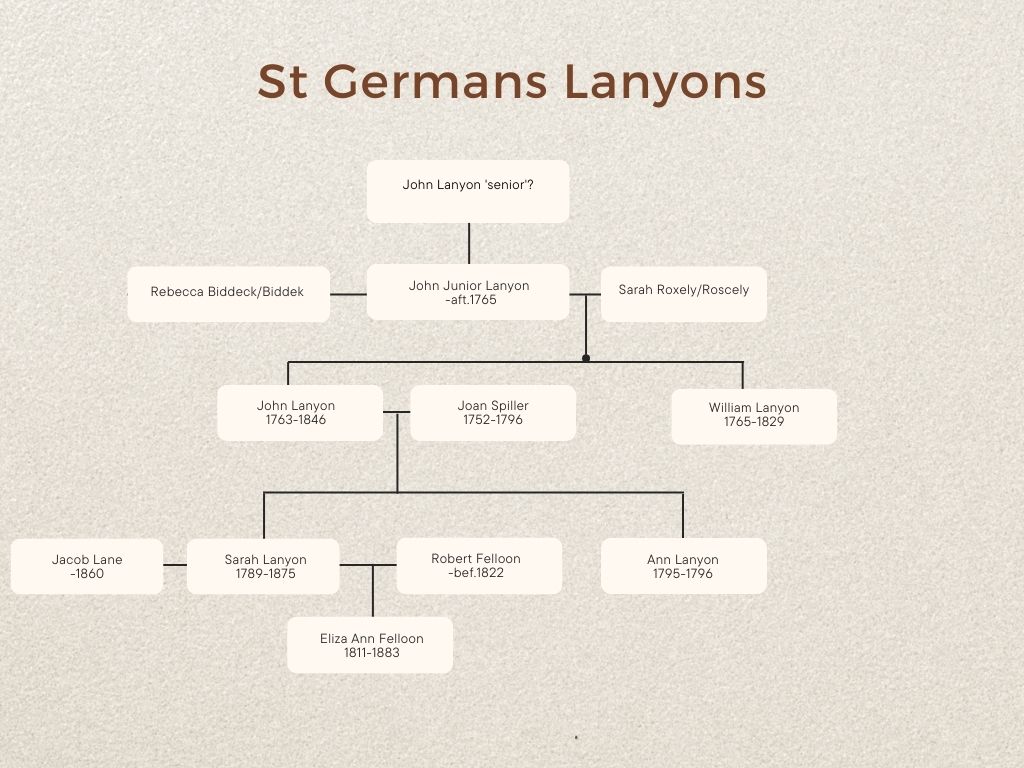
St German’s parish register lists the marriage of a John ‘Junior’ Lanyon to Rebecca Biddeck/Beddek in 1756. Presumably if John is called ‘junior’ then he is the son of John Lanyon ‘senior’ so I pencilled in a John Lanyon ‘senior’ born about 1700-1720. There is no record of a John Lanyon being baptised at St Germans so where did John Junior Lanyon come from?
St Germans parish register
There was also a marriage between John Lanyon and Sarah Roxely/Roscely/Roskelly in 1762. There was a burial of a Rebecca Lanyon in 1760 however this Rebecca is listed as being 75 years old when she was buried giving her a date of birth about 1685! Could she really be the Rebecca Biddeck who married John ‘junior’ in 1754? How old is John ‘junior’? There were no children recorded from the marriage of John and Rebecca.
John and Sarah (his second wife) had two sons:
John baptised 1763
William baptised 1765
Sarah Roxely died in 1795 age 66 and was buried at St Germans.
John Lanyon 1763
John married Joan Spiller at St Germans in 1788 and they had two daughters:
Sarah 1789-1875
Ann 1795-1796 died in infancy
Joan died in June 1796. Her husband John died in 1846 (50 years after his wife) aged 83 and was buried at St Germans.
William Lanyon 1765
There is no trace of a marriage for William and he died at St Germans in 1829.
Sarah Lanyon 1789
Sarah Lanyon married Robert Felloon/Falloon at St Germans in 1810 and they had one daughter Eliza Ann born in 1811. Robert was an assistant surgeon in the navy and came from Stoke Damerel in Devon.
Robert died before 1822 as Sarah married for a second time to Jacob Lane at Duloe in Cornwall in that year. Jacob was a victualler and Sarah ran a lodging house. Jacob died in 1860 at Plympton St Mary in Devon and Sarah died in 1875.
Where were John ‘junior’ and ‘senior’ born and why did they move to St Germans? Perhaps one day we’ll be able to answer that question.
The Lanyons moved all over the world; the collapse of the Cornish mining industry led to thousands of cornishmen and their families emigrating to countries with mines in search of work. One of those countries was Chile.
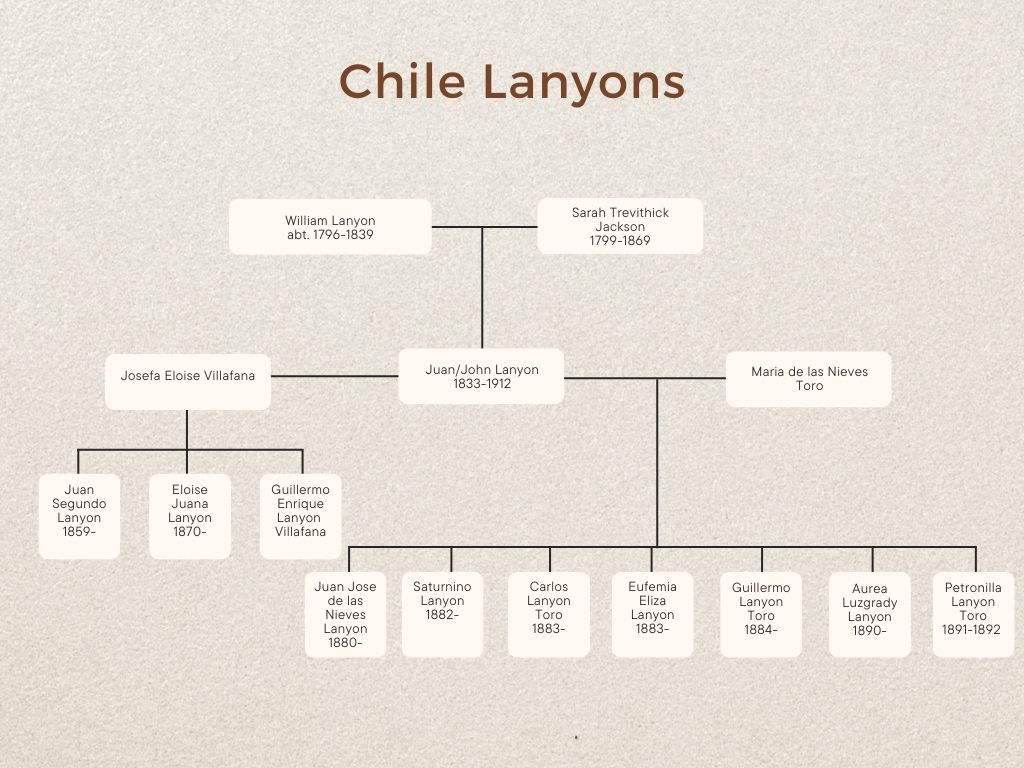
In the 1850s John Lanyon arrived in Chile to work for an English mining company at the El Morado mine. He was quickly renamed Juan and married a local girl – Josefa Eloisa Villafana at Copiapo, Atacama on 10 July 1858.
I wasn’t the first person to ask this question, William Lamparter also discovered a family called Lanyon in Chile and wrote to them. Their responses (in Spanish) led to this post. Thankfully I had Google translate and have managed to piece together this story which may or may not be right! The letters are written by Juan Jose Lanyon b.1880, the son of John/Juan Lanyon.
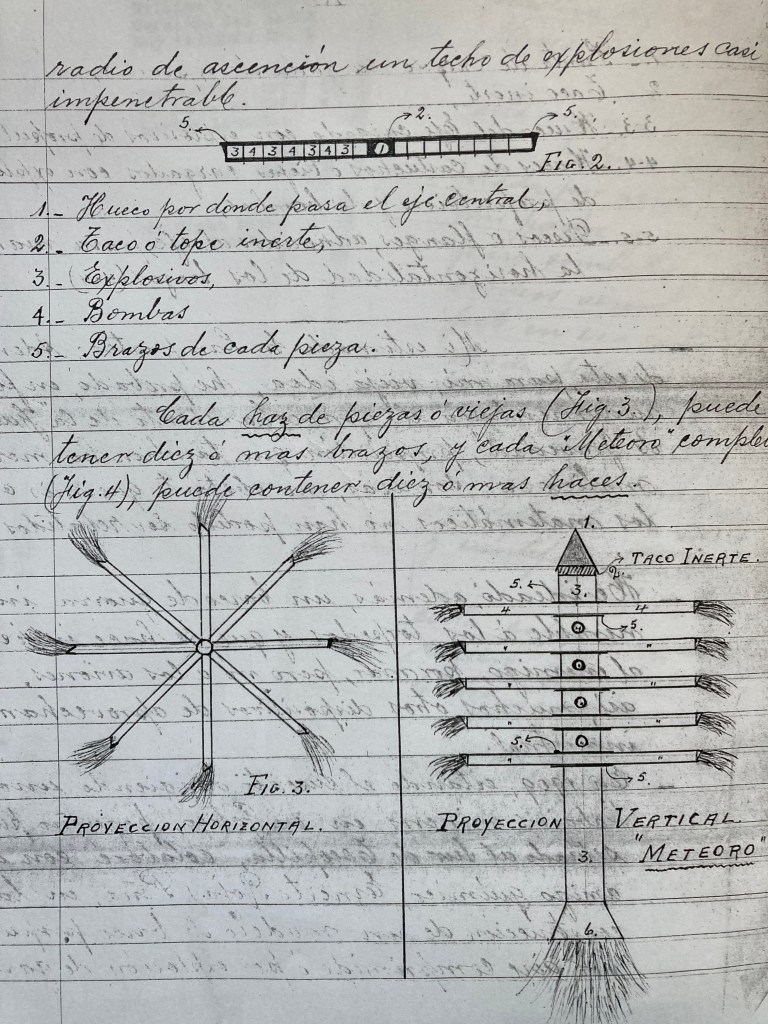
The letters were written in 1948/49 and it quickly becomes apparent that both William and Juan have an obsession: William is obsessed by genealogy and Juan is obsessed with the ‘missile’ he has designed, el Meteoro!
William is trying his hardest to prise family history from Juan who is obsessed with finding someone to market and sell his missile design.
There is however a slight problem: unbeknown to Juan, William is a gay furniture retailer from North Carolina who has not the slightest interest in Juan’s invention and Juan has clearly designed a missile that will never work!
Juan writes a twelve page ‘epistle’ laying out the history of his invention and his attempts (all unsuccessful) to market it to the Americans and British.
Juan admits that “….some engineers and industrial institutions to whom I proposed to do it, considered it delusional.” The British consul was a bit kinder with his rejection “…both Mr Englehurst and Mr Latorre were greatly surprised by the apparatus as a whole and they believed that it was going to have some ‘resonance’ (I bet they did!)…..a few weeks later the secretary of the English consulate returned the documents to me stating that the consulate officer whom they had consulted did not consider it practical.“
Juan also mentions his other inventions – “I have also devised a warship that is invulnerable to torpedoes and becomes invisible to the enemy by sea (but not to planes).“
Juan explains that his idea for the missile came from watching fireworks at festivals when he was young. Perhaps the designers of the V2 rocket also gained inspiration from watching fireworks when they were young. The difference is that Juan’s missile was based on the Catherine Wheel firework!
Juan tells William he “…will surely win honours and awards in life and perhaps a statue” if he can get a North American company to build his missile!
And so the correspondence continues with William asking questions about Juan’s Lanyon forbears and Juan responding “I have vague memories that the parish where he was baptised was Madron…..now regarding my invention called Meteor….“
In January the following year he writes again and mentions Madron again and moves straight on “….regarding my invention called Meteor…“
At this point I think William realises that he will not get any further with this little branch of the Lanyon family and abandons the correspondence. I’ve picked up the baton and found out the following information.
John/Juan Lanyon was baptised at Illogan, Cornwall on 9 Nov 1833. His parents were William Lanyon and Sarah Jackson. John was the seventh of nine children. Four of them died in childhood.
Elizabeth 1821-1879 emigrated to Australia
Frances 1822-1823 died in infancy
William 1824- bef. 1861 married two children and died before 1861
Frances 1827-1895 emigrated to Australia
Joseph 1829-1840 died age 11
James 1831-1837 died age 7
John/Juan 1833-1912 emigrated to Chile
Richard 1836- no trace
Edward 1837-1839 died in infancy
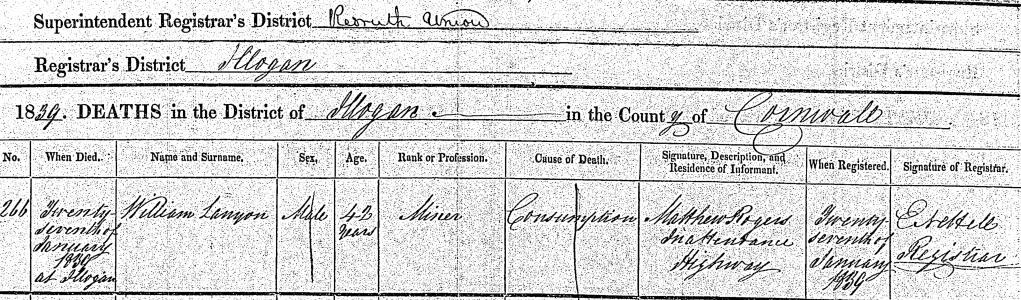
John’s father William Lanyon died in 1839, he had consumption (TB). His death certificate states that he was aged 42 giving a date of birth about 1797. William was a miner and had married his wife at Illogan on 14 October 1820 and that was all I could find out. There was no trace of a baptism anywhere in Cornwall or Devon. As he died before the first census in 1841 I couldn’t see where he was born.
William’s death certificate
I found Sarah, his wife, on the 1841 census with four of his children: William, Frances, John and Richard. Sarah was listed as a widow and 15 year old William was a miner and probably supporting his whole family. I couldn’t find her on the 1851 census and suspect she has been mis-transcribed. By 1861 she was living with a niece and was called Sally Lanyon.
I found four of her children living together on the 1851 census: her daughter Frances age 22 was a mine labourer, sons John age 17 and Richard age 15 are copper miners. Her daughter Elizabeth, was married and now called Williams, was also living with Frances and her young children.
Shortly after the 1851 census both girls emigrated to Victoria, Australia. William was married and had two children but died before the 1861 census. I don’t know what happened to Richard but John headed to South America.
I turned to the early 1948 letters from Juan Jose Lanyon.
“My father kept many documents that he revoked the Edict of Nantes and the Huguenots were persecuted. Many of them fled to Germany. Among them my great grandfather. The last name was Lanion but he changed the ‘i’ to a Greek ‘y’ registering as Lanyon on arrival in England.“
That threw the cat among the pigeons! It was the first time there had ever been any mention of Lanyons from Germany. I couldn’t find any evidence that the Lanyons had ever lived in Germany in the 18th Century.
He went on to mention that his father’s brother Pablo had died in the Canadian war of Secession (I couldn’t find anything to support that) and another brother Federico died of yellow fever in Tocopilla where he was buried (I couldn’t find anything to support that either.)
He went on “…my father also told me that the Lanyon family by direct maternal descent was related to Jorge Stephenson the inventor of the locomotive.“
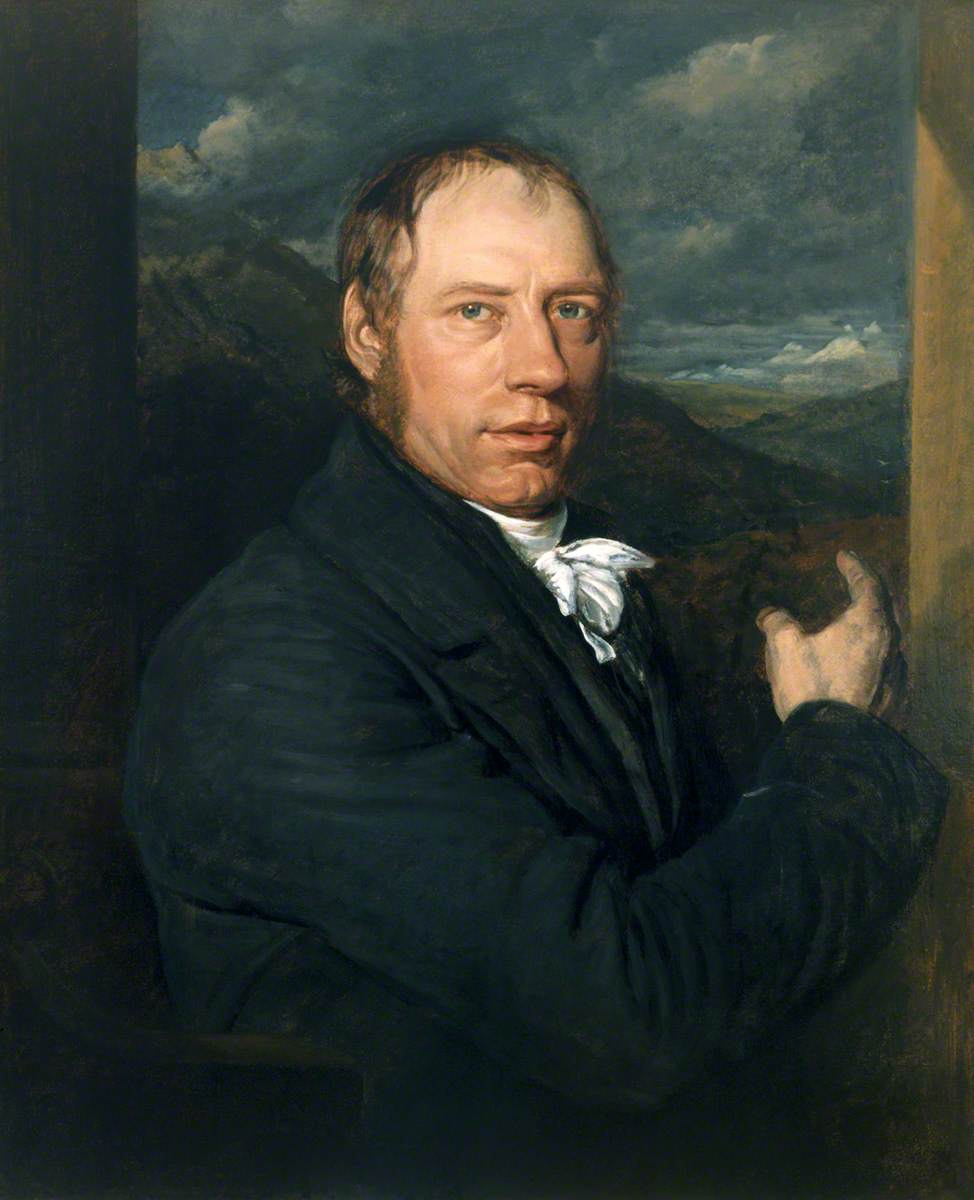
A little research revealed that Juan’s mother Sarah/Sally Jackson was the daughter of William Jackson and Frances Trevithick of Illogan who must have been related to Richard Trevithick from Illogan. Richard Trevithick did indeed invent a locomotive. Bingo!
Richard Trevithick – John Linnell, Public domain, via Wikimedia Commons
The story about George Stephenson wasn’t exactly wrong but something had been lost in translation. I went back over what Juan’s son had written. Perhaps they weren’t Huguenots but just non-conformists, perhaps Germany was really St Germans in Cornwall?
Whilst we can’t say for sure where this little branch of Lanyons originated we can say that a tiny strand of Richard Trevithick’s DNA lives on in Chile!
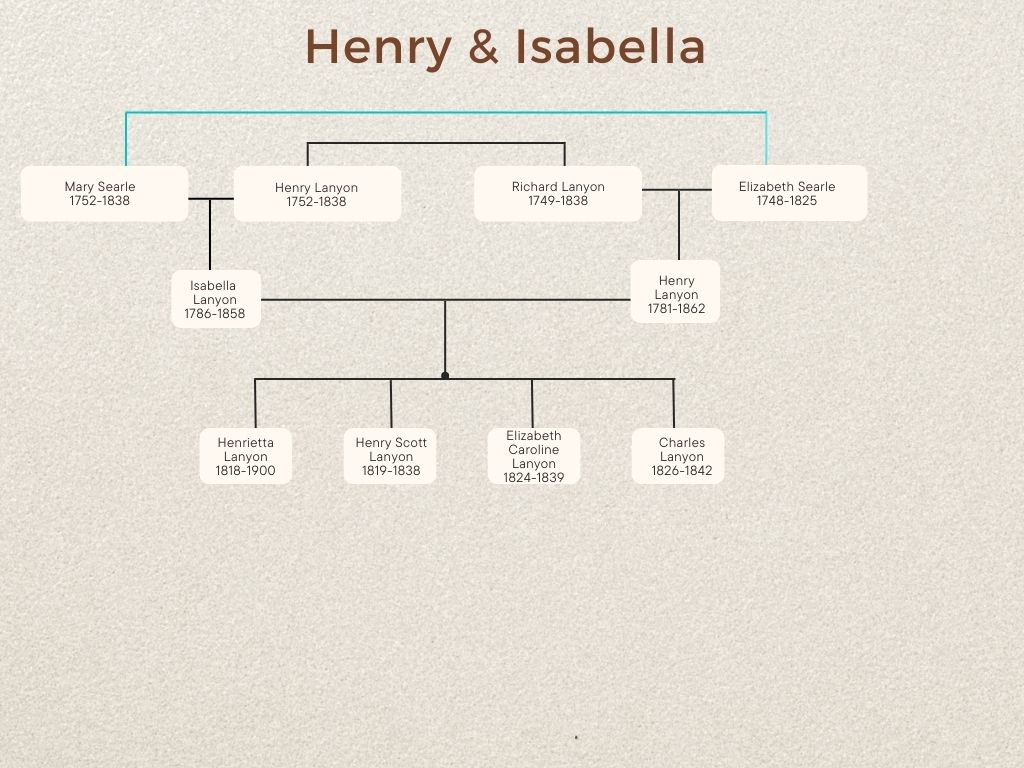
Henrietta was the eldest daughter of Henry and Isabella Lanyon (see the post Captain Cork!)
Henrietta was born in 1818, her brother Henry Scott a year later. He died aged 19 of a fever. Elizabeth Caroline was born in 1824 and died aged 14 of water on the brain. Charles was born in 1826 and died aged 16 of TB.
Henrietta, as the sole surviving child, set out to commemorate her parents by installing a beautiful stained glass window at St Allen church in their memory.
She also made a number of donations to Truro cathedral, including her father’s jewelled sword and gold snuff box. These items are now lost.
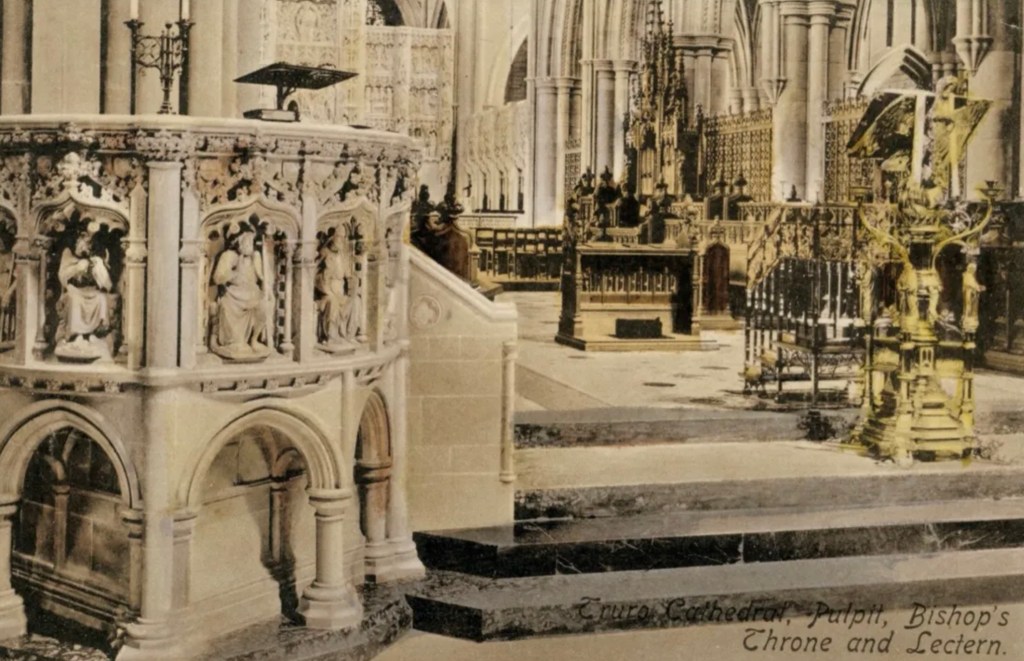
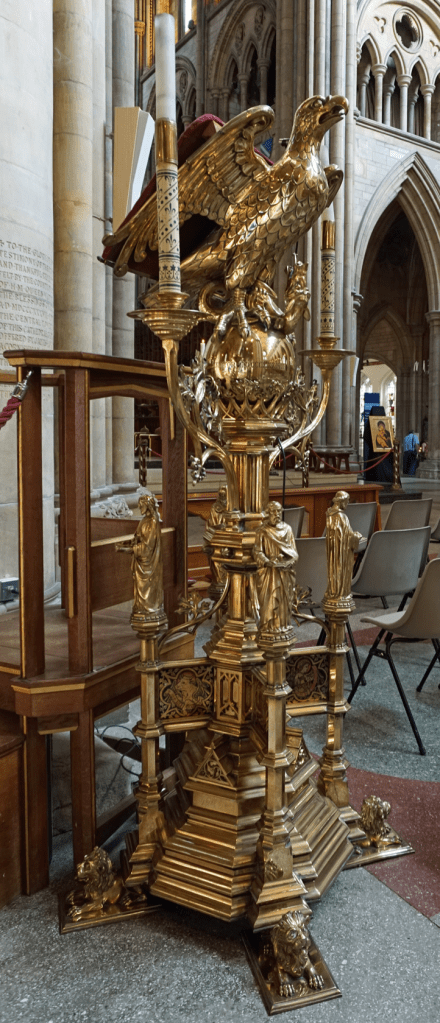
But her pièce de résistance was the lectern at Truro cathedral!
Postcard of Truro Cathedral showing the pulpit, Bishop’s throne and lectern.
The eagle was chosen to represent St John the Evangelist. Henrietta paid £550 for the lectern, a huge sum in those days and despite that they spelt her name incorrectly on the commemorative plaque! Harriett rather than Henrietta!
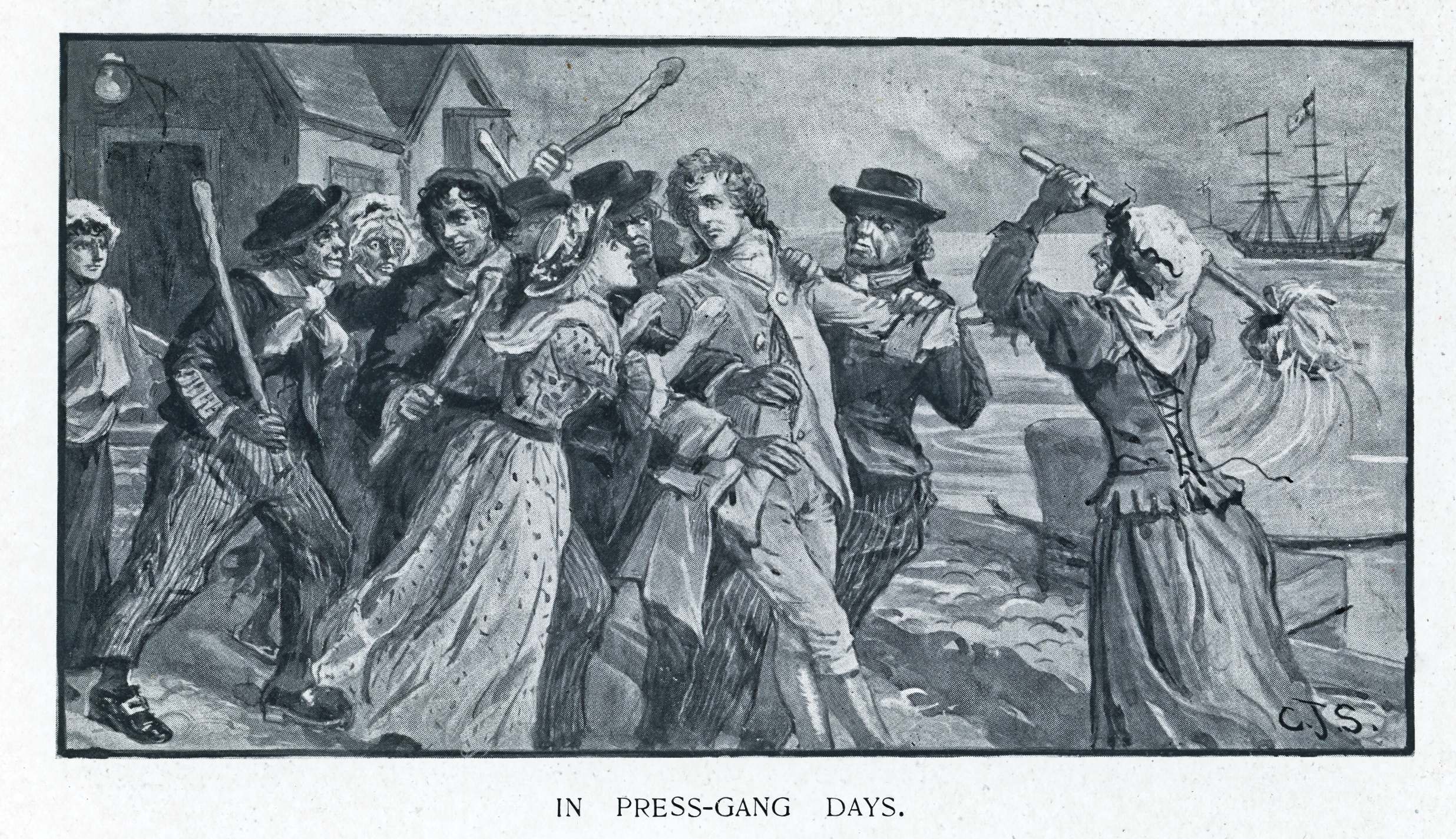
Britain may have ruled the waves with its huge navy of sailing ships but the only way it could man all those ships was by impressment or the ‘press gang’. From the late 17th century until the early 19th century men between the ages of 18-55 could be forced to serve in the navy. Today we’d probably call it kidnapping!
Charles Joseph Staniland, Public domain, via Wikimedia Commons
The navy preferred sea faring men so merchant seaman and fishermen were liable to be ‘pressed’ and this made coastal communities particularly vulnerable. Merchant seamen ashore (easily identifiable by their uniforms) would be asked to volunteer to join the navy, if they refused they could be seized or plied with drink and taken. Many seamen were ‘pressed’ whilst at sea. Their ships, usually homeward bound, would be stopped and the merchant seamen seized and placed on the navy ships.
Understandably the press gangs were very unpopular and fights often broke out when men were seized from their communities. Wives and children suffered from poverty and hardship when their husbands and fathers were seized. Having been seized it was difficult to return and deserters could face the death penalty.
The Neglected Tar – Unknown author, Public domain, via Wikimedia Commons
At Trafalgar half of the navy’s 120,000 men were pressed into service.
Richard Lanyon of Marazion
This post is about Richard Lanyon of Marazion and what happened when the Press Gang arrived in town.
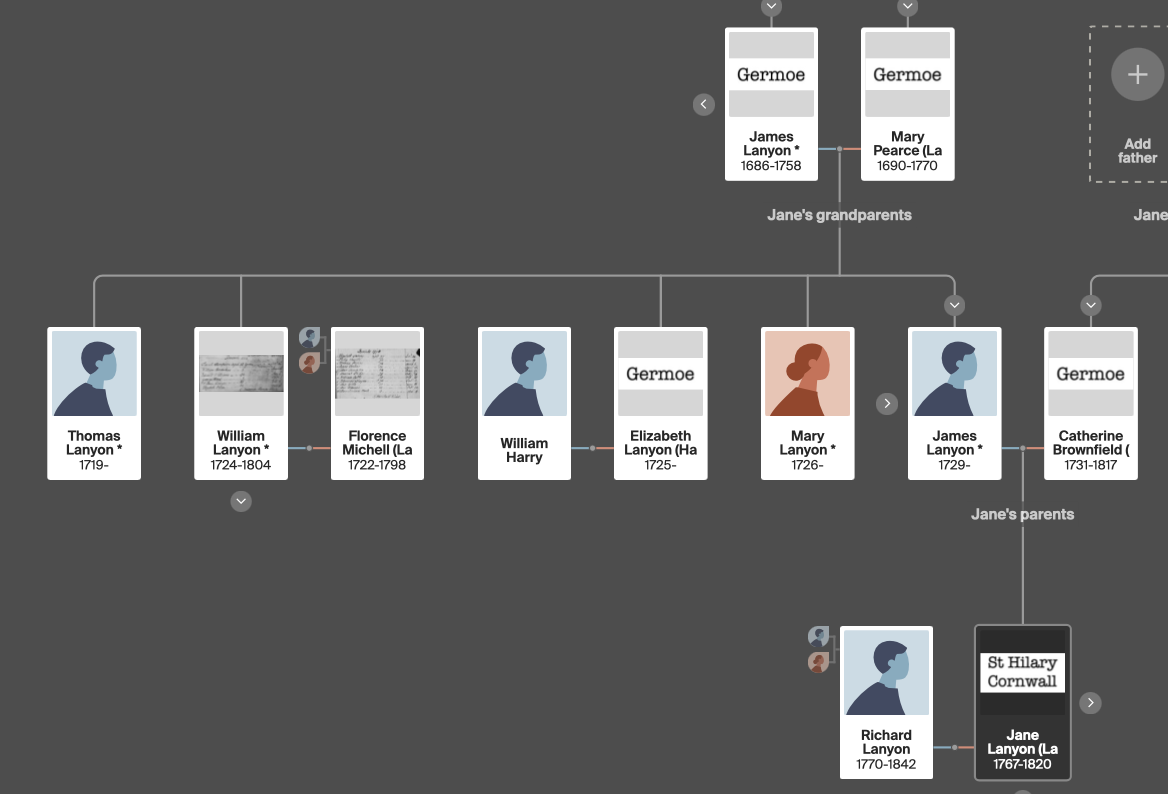
Richard was born in 1770 the youngest son of William Lanyon and Florence Michell. In 1794 he married his cousin Jane Lanyon (the daughter of James Lanyon and Catherine Brownfield) at St Hilary in Cornwall. (See St Hilary branch of the Lanyon tree.)
Richard was the blacksmith at Marazion. The town opposite St Michael’s Mount.
Richard also served as a sergeant in the 2nd Regiment of Mount’s Bay Volunteers. Britain was at war with France and all over the country there were volunteer regiments prepared to defend the country in the event of an invasion.
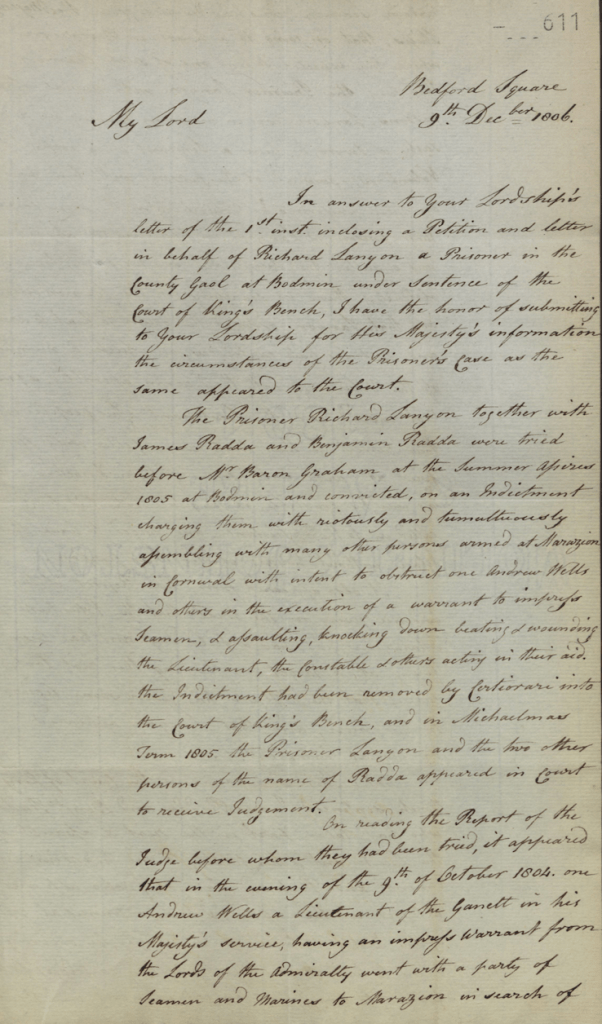
On the 9 October 1804 the volunteers had been at a field day practising their fighting skills. The day went well and the officers bought the men a ‘few’ drinks to celebrate. That evening the press gang, led by Lieutenant Andrew Wills arrived in town in search of seamen who had deserted. Accompanied by the constable they went to a home expecting to find one of the deserters, instead they found Richard Lanyon with several others.
Richard was still wearing his uniform, sash and sword and several of the men with him still had on their volunteer uniforms. Lanyon in particular abused and insulted the lieutenant and his party and obstructed them in searching for the deserters. “Lanyon then ordered the drum to beat to arms and sent for ball cartridges.” A great riot ensued and the lieutenant and his people in their retreat to their boat were pelted with stones, fired at with ‘balls’ and some of them were assaulted.
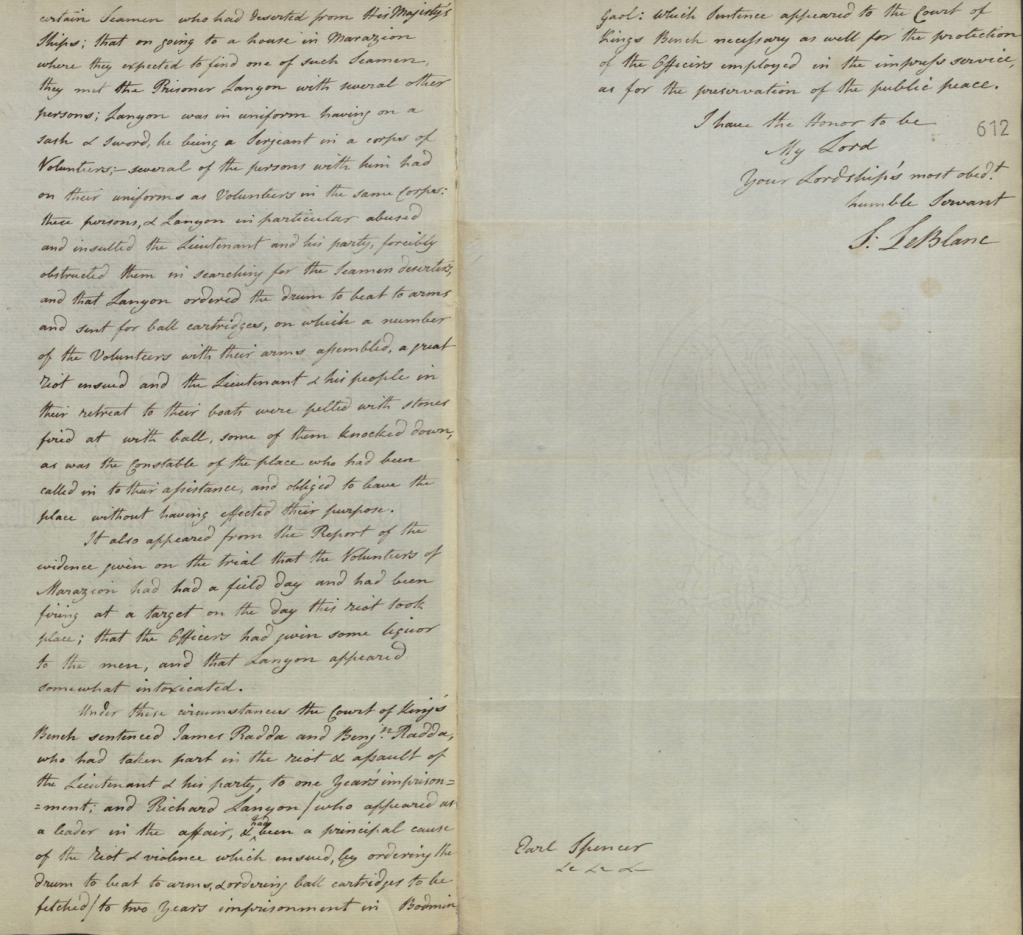
A letter to Earl Spencer from J. Le Blanc explaining what had happened stated “Lanyon was somewhat intoxicated“!
Richard and his nephews James and Benjamin Rodda were arrested and tried before Mr Baron Graham at the summer assizes at Bodmin in 1805. They were convicted on an indictment charging them with “riotously and tumultuously assembling with many other persons armed at Marazion in Cornwall with intent to obstruct one Andrew Wills and others in the execution of a warrant to impress seamen…“
The trial was the transferred to the Court of the King’s Bench in Westminster, London.
The Roddas were sentenced to one year in prison and Lanyon was sentenced to two years. After a year he appealed for an early release. Mr Gryles, a gentleman of considerable property in Marazion, gave a reference and stated that Lanyon was of previous good character and always a ‘man of fair and upright character’, he also had a wife and several children who had suffered ‘the severest deprivations by means of the long confinement’ but the appeal fell on deaf ears and Richard served two years.
Richard eventually returned home and was still living in Marazion in 1841. He’s listed on the census living with his youngest daughter Julia. His wife Jane had died in 1820. Richard died shortly after the 1841 census.
Press gangs finally came to an end with the fall of Napoleon in 1815.
In the 17th century if a house caught fire it could have devastating consequences for the whole town. Wooden buildings burned easily and without a fire brigade to fight the fire the flames could consume huge areas.
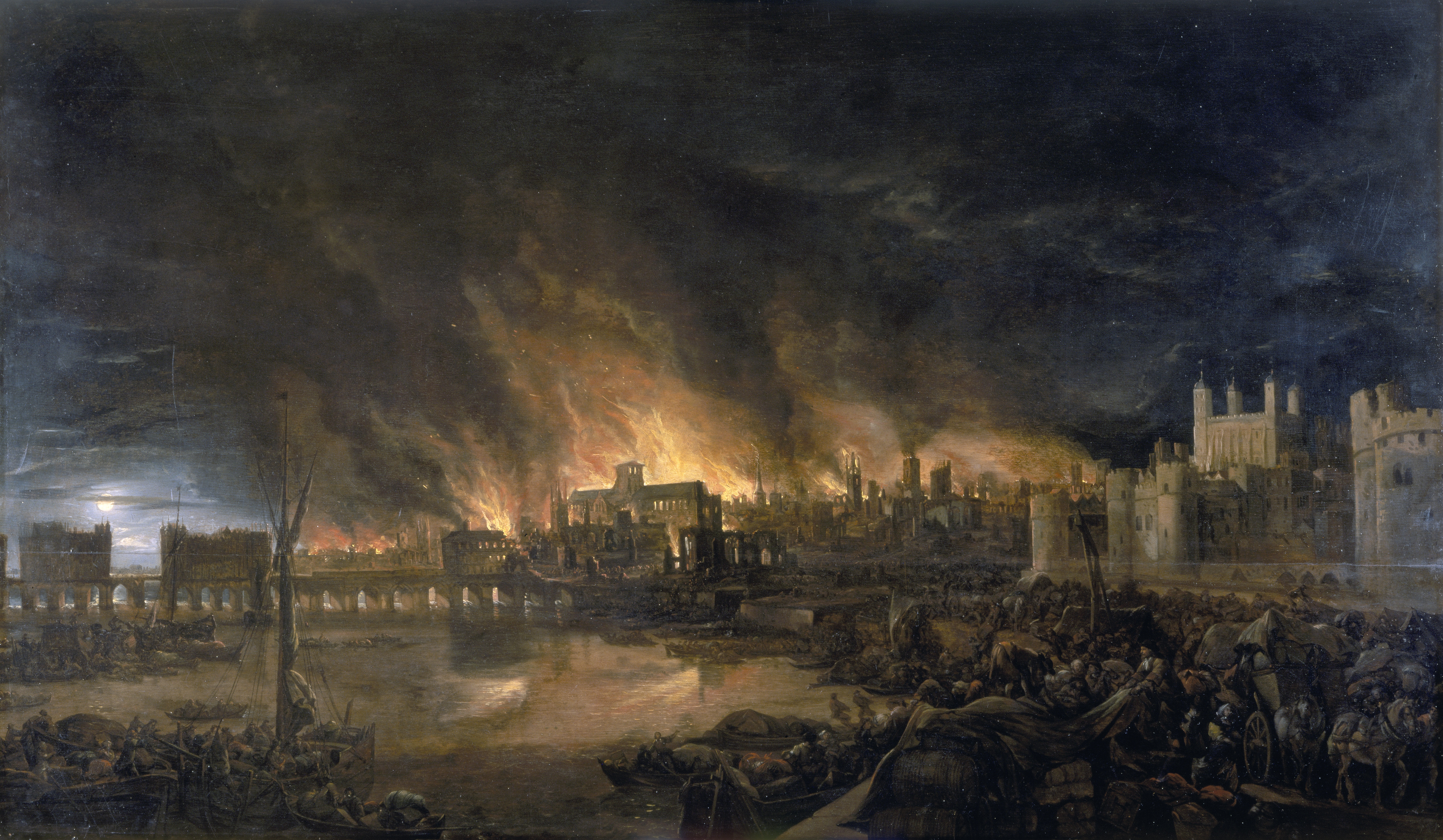
The Great Fire of London in 1666 is probably the most famous fire. It started in Pudding Lane and spread rapidly and destroyed over 13,000 homes, 87 churches and St Paul’s Cathedral in the medieval city. Miraculously the death toll was relatively small.
1666 Great Fire of London – Museum of London, Public domain, via Wikimedia Commons
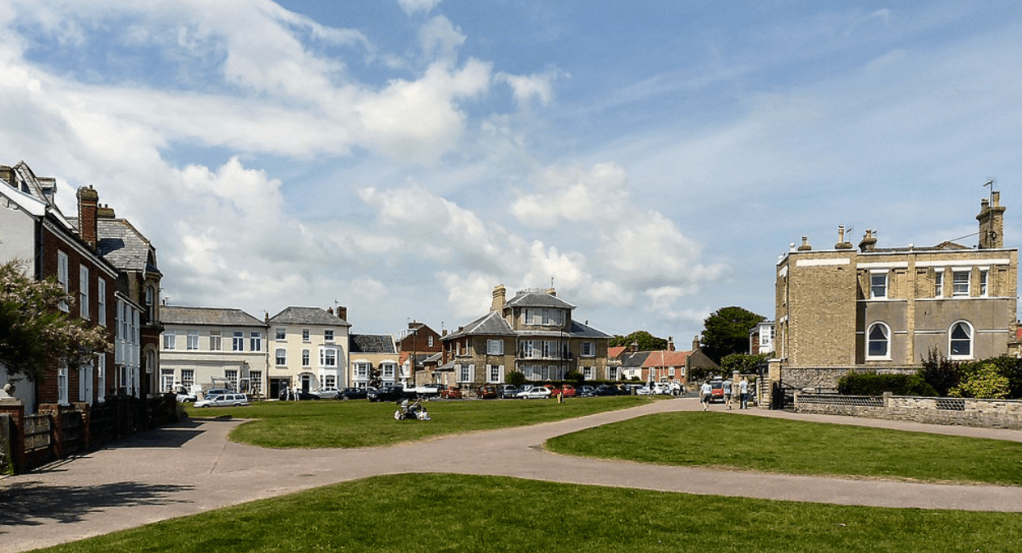
In 1659 the town of Southwold in Suffolk suffered a devastating fire. Over 450 buildings were lost and many families faced poverty and ruin. In the space of four hours the town was changed forever.
The fire left many open spaces and the town didn’t rebuild on them. This created natural fire breaks and has resulted in the town having lots of green spaces today.
The green spaces in Southwold today.
So why am I mentioning this on a Lanyon website? On the 2 October 1659 the church warden at St Michael Penkevil Church in Cornwall held a collection for the inhabitants of Southwold in Suffolk who had ‘suffered fire’. He collected £2. 8/- 1d.
The church warden was John Lanine, he was described in the Parochial History of Cornwall by Davies Gilbert as ‘a sea sand barge daily labourer’. He was the father of John Lanyon who is the subject of the post ‘Poisoned’.
The stone that commemorates the 300th anniversary of the fire.
James Lanyon was arrested for stealing a horse rug on 11 May 1873 and stealing a horse (presumably to go with the rug!) on 26 May 1873. The horse belonged to William Uren of the Devon and Cornwall Artillery Militia. James appeared at the midsummer assizes at Bodmin and was tried by Sir Charles Brune Graves Sawle.
James appears to have been caught ‘red handed’ as he plead guilty and was sentenced to six months hard labour at the house of correction at Bodmin. That meant the dreaded treadmill.
I found a second conviction for James in 1873. he was found guilty of stealing Fras. Osborne’s trousers at Camborne. He was described as crippled in his right hand and having an ‘enlargement in right breast’. Again he was sentenced to the treadmill.
In 1874 he was convicted of trespassing on the land of Gustavus Lambart Basset esq, in Illogan, in search of game. His description is as follows: Roman nose, eyes rather small, right forefinger small and useless. Again he was sentenced to the treadmill.
British Library, Public domain, via Wikimedia Commons
James Lanyon was aged just 19 at his conviction in 1873 (born in 1854) and a labourer. James is quite a common name in the Lanyon family but it didn’t take long to find him on the tree.
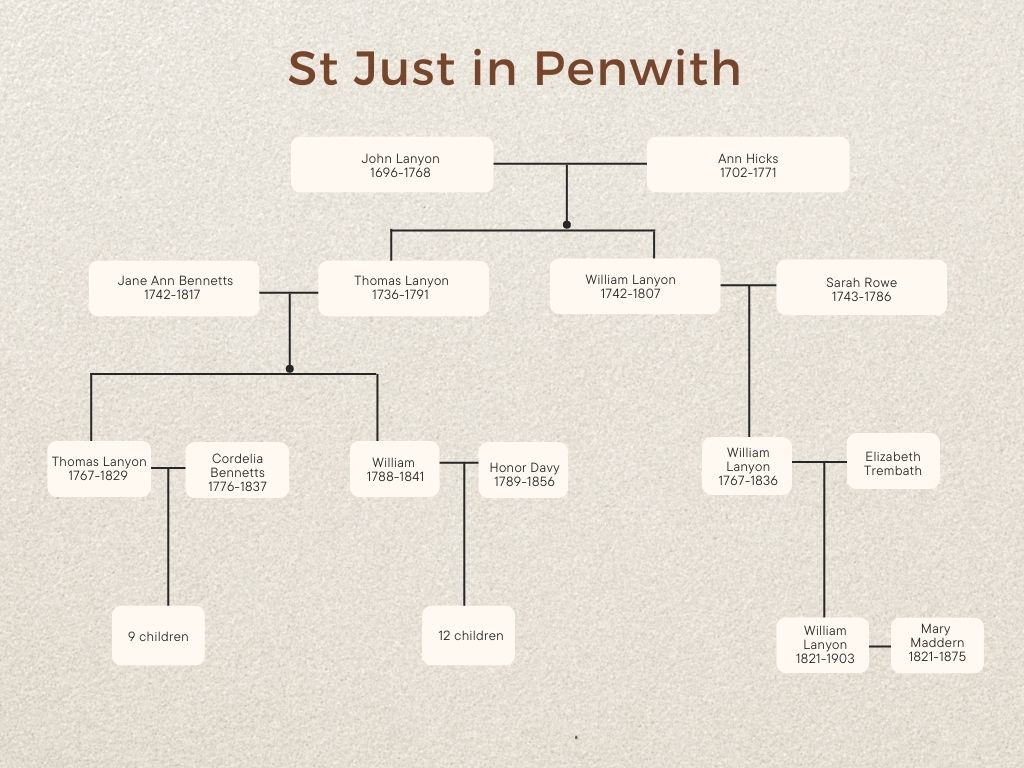
James was the son of William Lanyon and Mary Maddern.
James’ grandfather, William Lanyon 1767-1836, was transported to Australia!
James’ parents married in 1841 at St Buryan and by 1861 they were living in Lelant. By 1871 James was no longer living at home but I can’t find him on the census. He may have been avoiding the authorities!
After jail we lose track of James but he may be the James Lanyon aged 21 who sailed to Australia in 1875 and was described as a copper miner. He may have died, prison wasn’t conducive to good health and a long life.
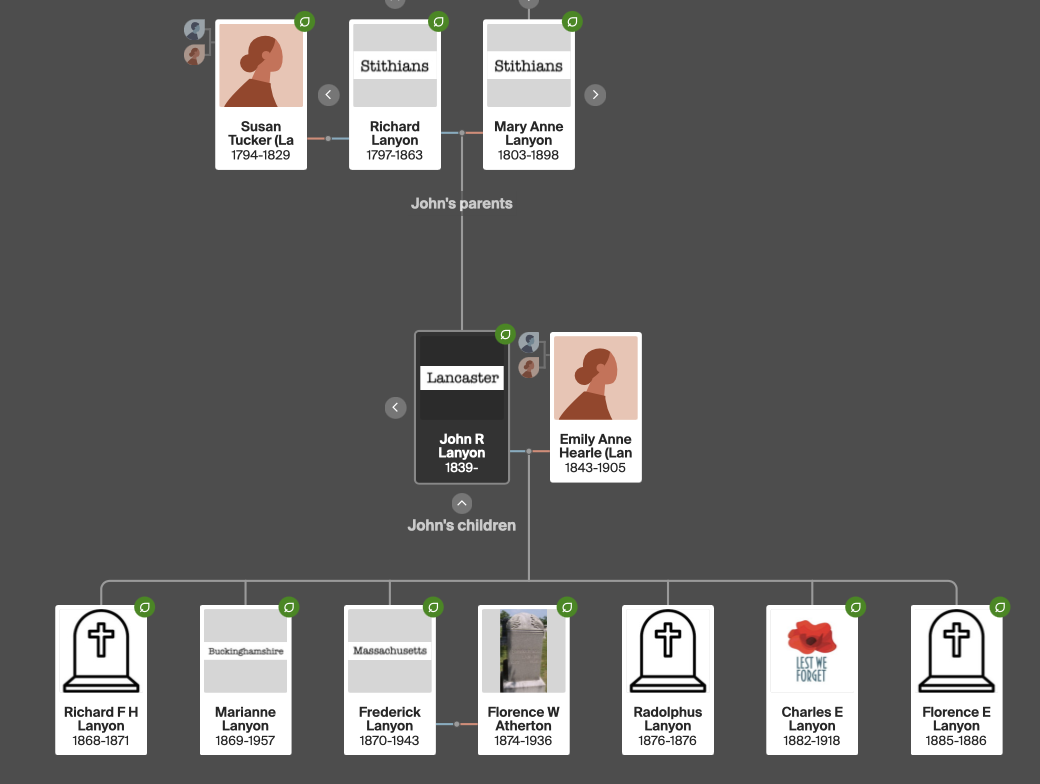
John Rodolphus Lanyon was born on the 20th September 1839 at Stithians in Cornwall. He was the son of Richard Lanyon and Mary Anne Lanyon (cousins).
John was also the half brother of Richard Sampson Lanyon, the father of Arthur Richard Lanyon who was found guilty of larceny of post office letters.
John was a solicitor in London. He married Emily Anne Hearle in 1867 and they had six children.
In 1893 John forged the will of Mary Wellington with the intention to commit fraud along with Richard Stevens an insurance agent. They were tried on the 7th and 8th of November 1893 and found guilty. Both men were sentenced to seven years penal servitude.
Description of John Rodolphus Lanyon
John was described as 5’4″, dark complexion, brown hair and blue eyes, with a cast in each eye. He’s also described as being born in 1841 which is wrong, he was born in 1839.
























 The Lanyons