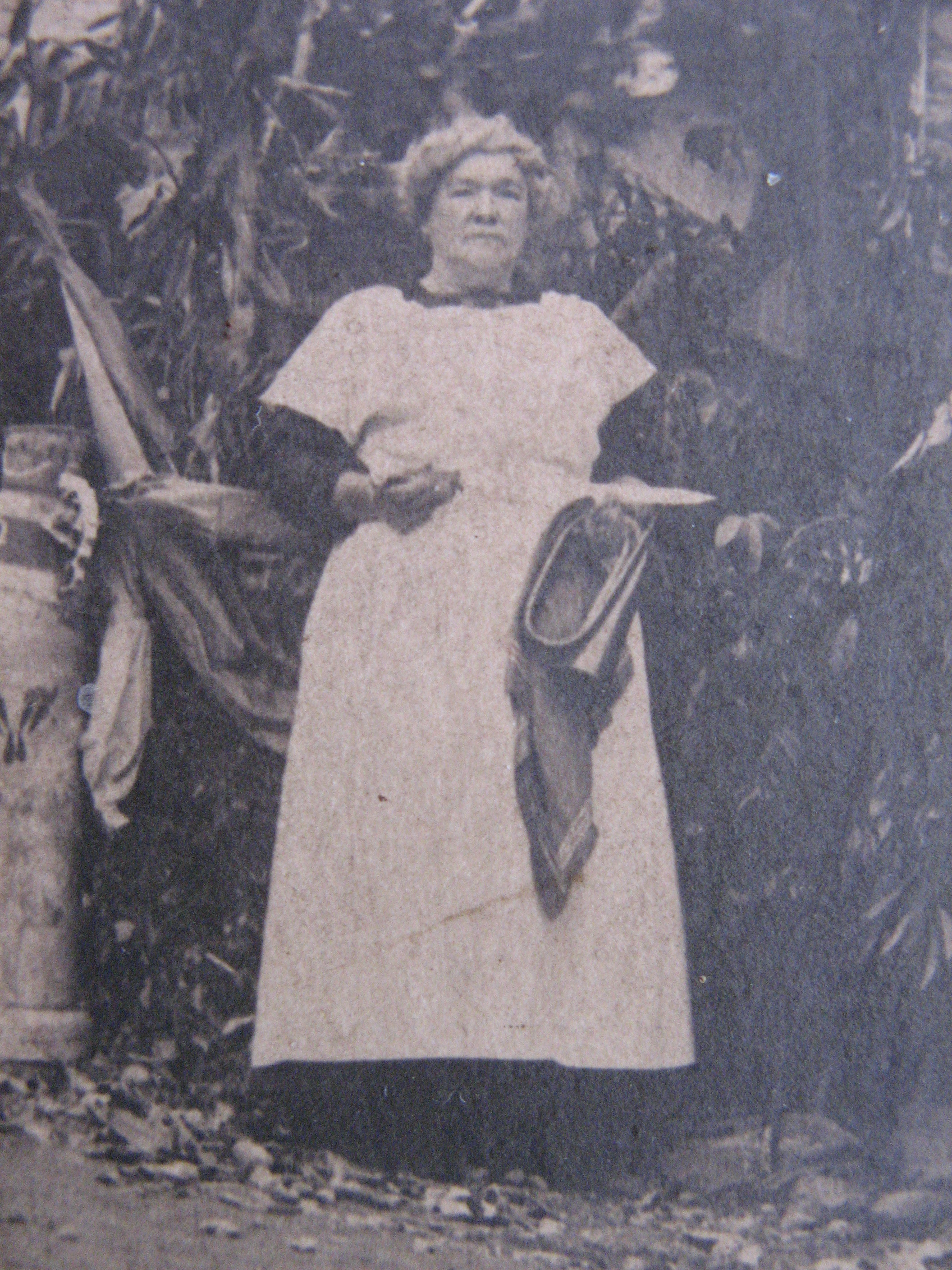
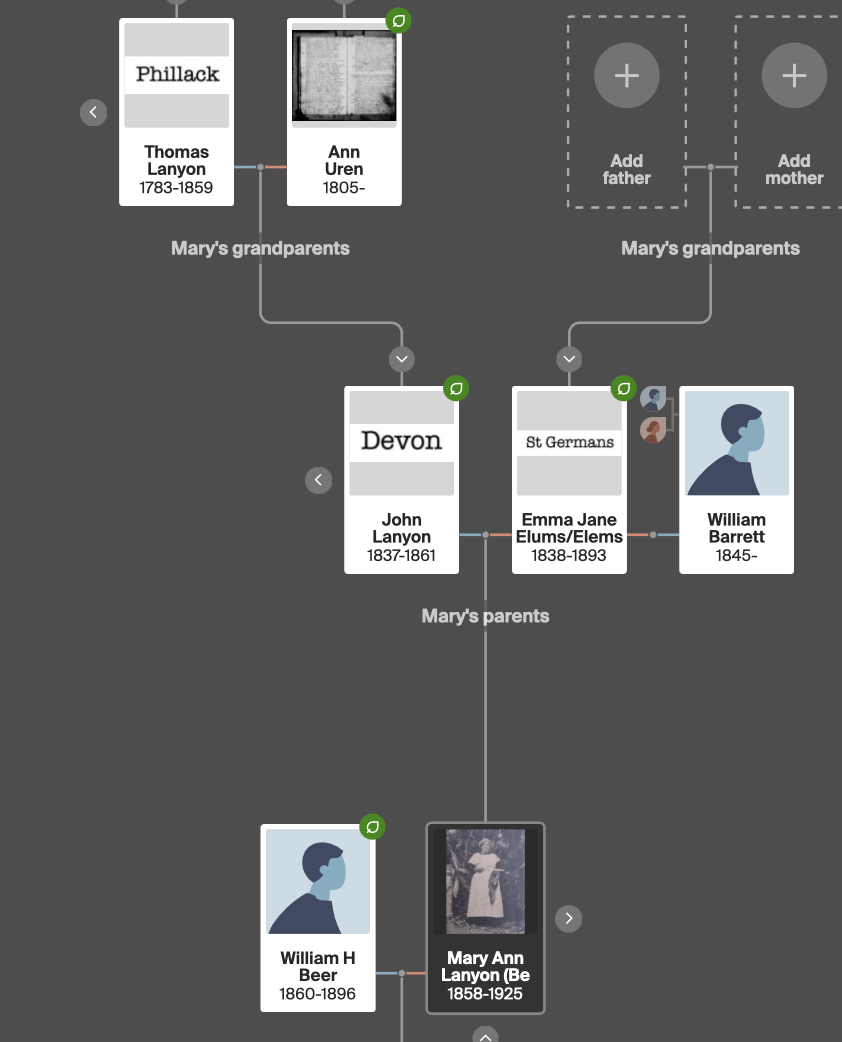
Mary Ann Lanyon was born abt. 1858 at Hayle in Cornwall but I can’t find a record of her birth or her parents’ marriage. Her father was John Lanyon the son of Thomas Lanyon and Ann Uren and her mother was Emma Jane and perhaps her surname was Elems, Elums or Bassett!
John was a boilermaker, steam engineer and in 1861 the family were living in Tavistock, Devon. It’s not clear if John died or just abandoned his family but by 1864 his ‘wife’ had remarried to William Barrett, a fisherman, almost ten years younger than she was.
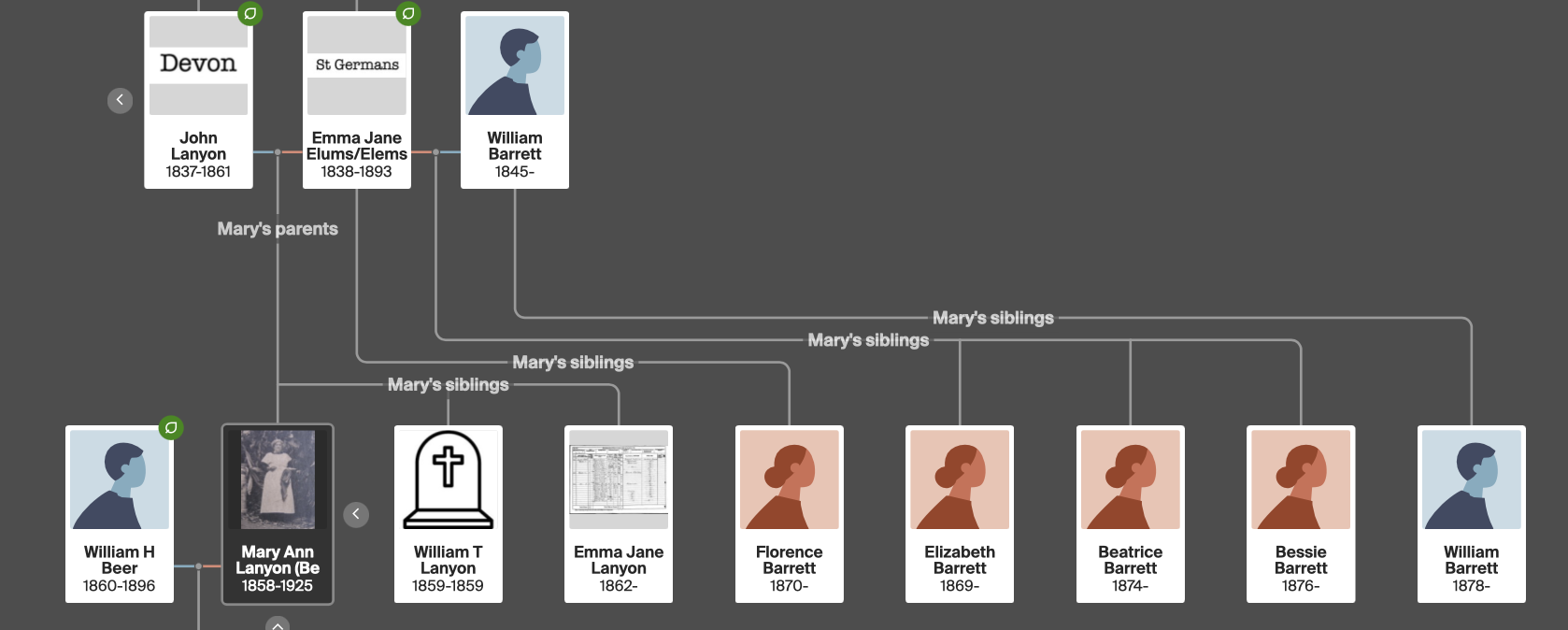
Children from her ‘marriage’ to John Lanyon:
Mary Ann Lanyon1858-1925
William Thomas Lanyon 1859-1859
Emma Jane Lanyon 1862-
Children from her marriage to William Barrett:
Elizabeth Barrett 1869-
Beatrice Barrett 1874-
Bessie Barrett 1876-
Florence barrett 1870-
William Barrett 1878-
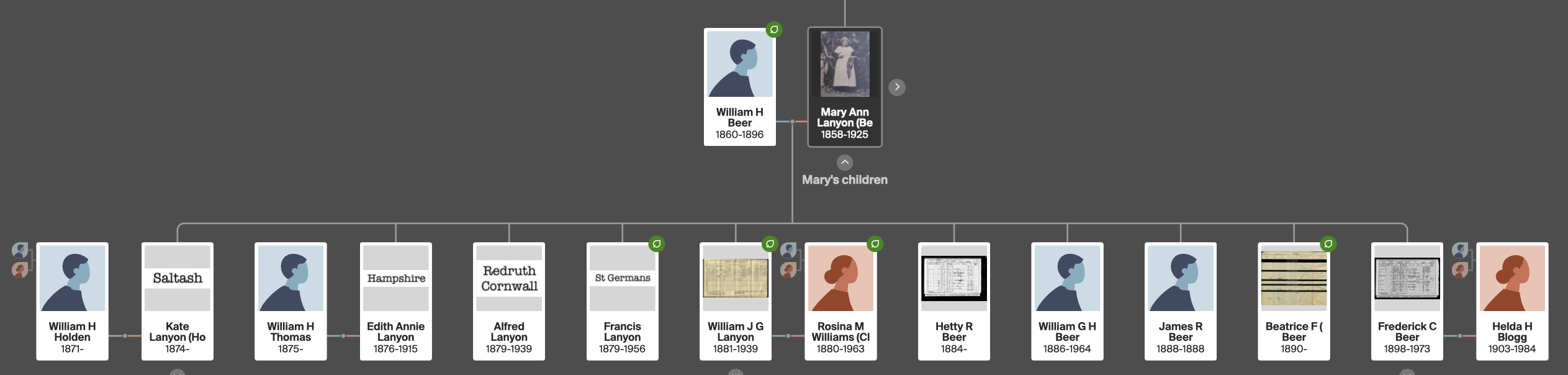
At the age of sixteen Mary Ann had her first illegitimate child, Kate and two years later she had Edith Annie. In 1879 she had twin boys, Francis and Alfred. By 1881 she was in the St Germans Union workhouse with her twins and expecting her fifth illegitimate child. She was just 24 years old. The census described her as a fish saleswoman and a pauper. Whilst she was in the workhouse her daughters Kate and Edith were living with her mother.
Her fifth child was William John Glanville Lanyon. Her sixth child was Hetty Roseanna Beer born in 1884. Mary Ann married Hetty’s father, William Henry Beer in 1885. William was a journeyman tailor born in Saltash in 1860. They had three more children before William died in 1896: William George Henry 1886 (her second son called William, the first was known as John), James Robert Beer 1888, Beatrice Florence (Betty) Beer 1890.
Two years after her husband’s death Frederick Charles Beer was born in 1898. According to the 1911 census she had twelve children altogether and three died. There are two still to trace.
In 1901 she was working as a charwoman and in 1911 she was living with her four single sons: Alfred (an invalid), Francis, John and George.
Settlement Certificates or Paupers Passports were documents that in effect permitted poor people to travel between parishes usually to look for work.
Under the old Poor Law everyone was deemed to have a home parish or place of settlement. The Act for the Better Relief of the Poor of 1662 (Act of Settlement) was an attempt to provide for the poorest, to prevent migration and to restrict the arrival of vagrants who may become an expense for the parish.
In effect it tied labourers to a particular parish and enabled employers to exploit them and pay poor wages as they could not leave to search for work elsewhere.
Eventually Settlement Certificates were issued. These documents proved an individual’s parish of settlement, enabling him or her to move to other parishes, perhaps to find work. Without one, a migrant was liable to be sent back to his or her parish of settlement. Settlement certificates could be issued for individuals or whole families. They guaranteed that their home parish would pay for their ‘removal’ costs (from the host parish) back to their home if they needed poor relief.
If a removal order was issued the Settlement Certificate would be pinned to the pauper and they would be returned to their home parish.
In 1834 the New Poor Law was brought in and ensured that paupers were clothed, housed and fed but many still encountered terrible problems when they fell on hard times.
Poor Law of 1834 in Britain – Public Domain
This post is about Louisa Lanyon and the order to remove her and her child from St Allen to Mawgan in Meneage in 1856.
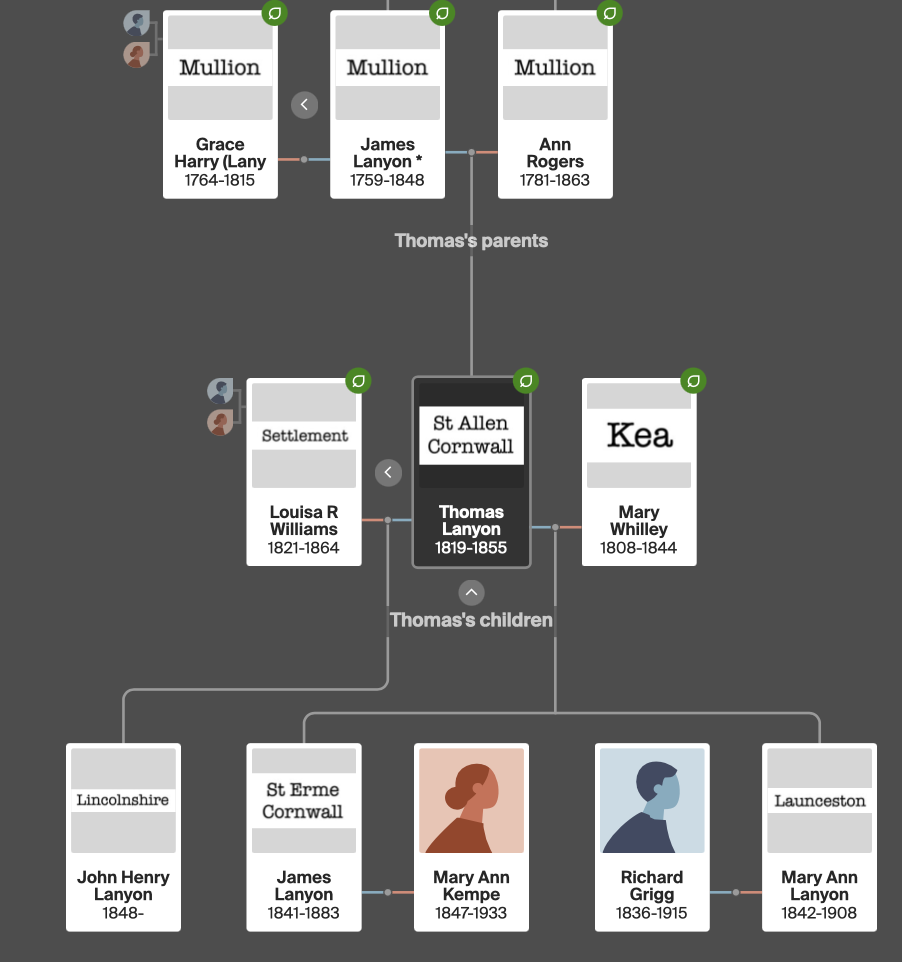
Louisa was the wife of Thomas Lanyon. She was baptised on 22 Apr 1821 at Kenwyn in Cornwall, the daughter of Soloman and Ann Williams. Thomas was the son of James Lanyon and Ann Rogers and was baptised in 1819 in Mawgan in Meneage. James, a widower, got Ann Rogers pregnant and had to marry her. He became a father again at the age of 60!
Thomas married his first wife Mary Whilley abt. 1840 and they had two children, James and Mary Ann. Mary died in 1844 and Thomas married for a second time in 1845 to Louisa Rawling Williams at St Allen.
Thomas was a labourer/husbandman and he died of kidney disease on 4 Nov 1855 at St Allen aged just 36. Louisa was left a widow with a young son, John Henry Lanyon and James and Mary Ann were left orphans.
The Parish of St Allen, full of compassion for the young widow and her son, promptly ordered her removal back to Mawgan in Meneage, her husband’s home parish (wives automatically assumed the home parish of their husband on marriage) even though Louisa had never lived there or knew anyone there.
Louisa appealed:
Removal Order Appeal – 9 April* 1856 – Louisa Lanyon, widow, and son St. Allen to Mawgan in Meneage
MAWGAN IN MENEAGE, appellant; Mr. Shilson and Mr. F.V. Hill. ST. ALLEN, respondent; Mr. Childs and Mr. Chilcott.—An appeal against an order by H.P. Andrew, Esq., and W.P. Kempe, Esq., for removal of Louisa Lanyon, widow, and John Henry, her son, aged 7 years, from the parish of St. Allen, to Mawgan in Meneage.
Settlement in respondent parish being admitted, the appellant set up a settlement of pauper’s deceased husband in the parish of Cury, by hiring and service with Mr. James Randle, farmer, of Colvenor in that parish.
Mr. CHILDS took a preliminary objection to the ground of appeal in which it was alleged that, ‘in or about the year 1831,’ the pauper’s husband, Thomas Lanyon, hired himself to James Randle of Cury,—the objection being that the words ‘in or about the year 1831’ were not sufficiently definite to establish a complete year’s service prior to the year 1834—the date of the Poor Law Act, which abolished settlement by hiring and service. In support of the objection Mr. Childs cited the cases of St. Ann’s Westminster, and St. Paul’s Covent Garden.
The Court overruled the objection, and held that the grounds of appeal would enable the appellant to go on.
Mr. SHILSON then stated the nature of the appellant’s case—for establishing a settlement of the pauper’s deceased husband in Cury. The deceased being born in 1819 was in or about 1831 hired, by agreement made in his behalf by his mother, to Mr. James Randle of Colvenor, as a yearly servant; and in two subsequent years, he served in a similar way, by fresh agreements made in his behalf by his mother.
In support of this case, Mr. SHILSON examined Ann Lanyon, aged 75 years, mother of the deceased Thomas Lanyon; and Samuel Hendy, aged 40, who at the time of Thomas Lanyon’s service with James Randle, was living with his father at Sawanna, within one field of Colvenor, and was in the habit of seeing Thomas Lanyon at labour on the farm; and the COURT, on the evidence adduced, held that the settlement in Cury had been made out.
Mr. CHILDS proposed to rebut the evidence of dates by counter evidence. He would show that at the time Lanyon went into the service of Randle, he was of the age of 14 years, and consequently, on the evidence of his birth in 1819, the time of his entering that service was in September 1833, and the conclusion of the year’s service would not have been until after the passing of the Poor Law Act, in August 1834. This evidence of the period of service would be corroborated by an account book, belonging to Mr. James Randle of Colvenor, who would also prove that Lanyon was not in his service more that twelve months. If these facts were substantiated, then the respondent’s case was fully made out; while the appellants could not maintain their case, unless they showed, without doubt, that the alleged settlement in Cury was clearly prior to the passing of the Poor Law Act.
The witnesses called and examined for the respondent, were Mr. James Randle of Colvenor; his servant Martha Rogers; and his son Samuel Randle, now living at Stithians.
The Court held that the settlement in Cury was gained previous to the statute of August 1834. Order quashed, £5 costs.
Source: Royal Cornwall Gazette 11 April 1856 (Cornwall Easter Sessions)
It’s quite a distance to remove someone from their family and friends.
By 1861 (source – the census) Louisa Lanyon (a charwoman) was living in St Allen with her mother Ann Williams (a charwoman) and her son John Henry who was 13 and working as an agricultural labourer.
By 1864 at the age of 43 she was dead. In 1868 Ann Williams was dead. We don’t know what happened to John Henry Lanyon, did he die, did he emigrate, did he use a different name? There is a John Henry Lanyon who died in Lincolnshire in 1935 is it the same person?
What happened to his half brother and sister?
James Lanyon 1841-1883 married Mary Ann Kempe. He worked as an agricultural labourer and they never had any children.
Mary Ann Lanyon 1842-1908 married Richard Grigg, a carrier, in 1883 at Penzance and they never had any children.
Perhaps becoming orphans put them off ever having children of their own.
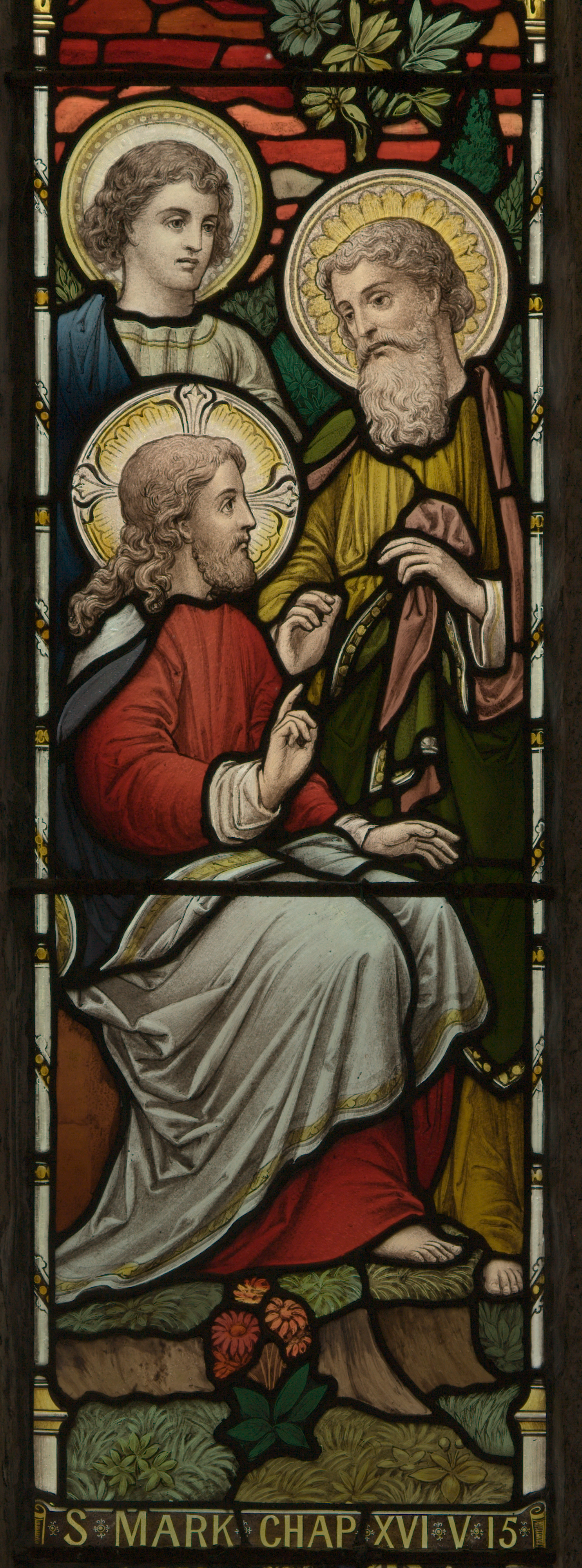
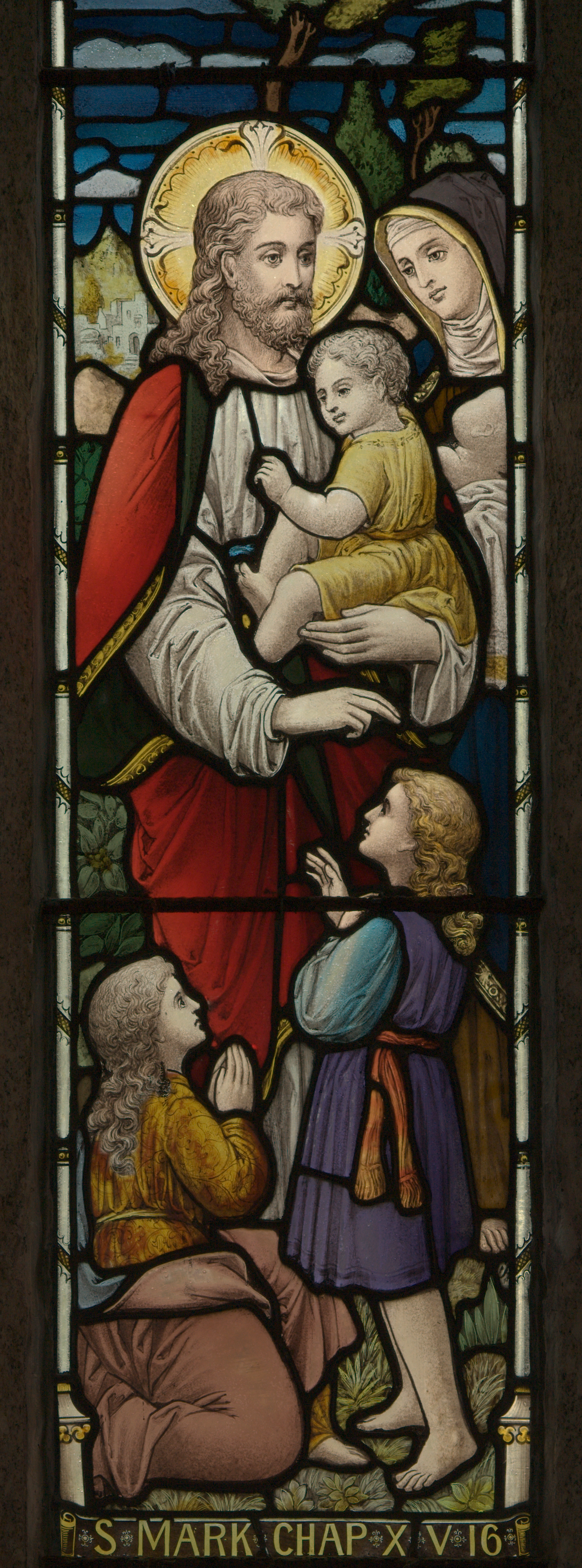
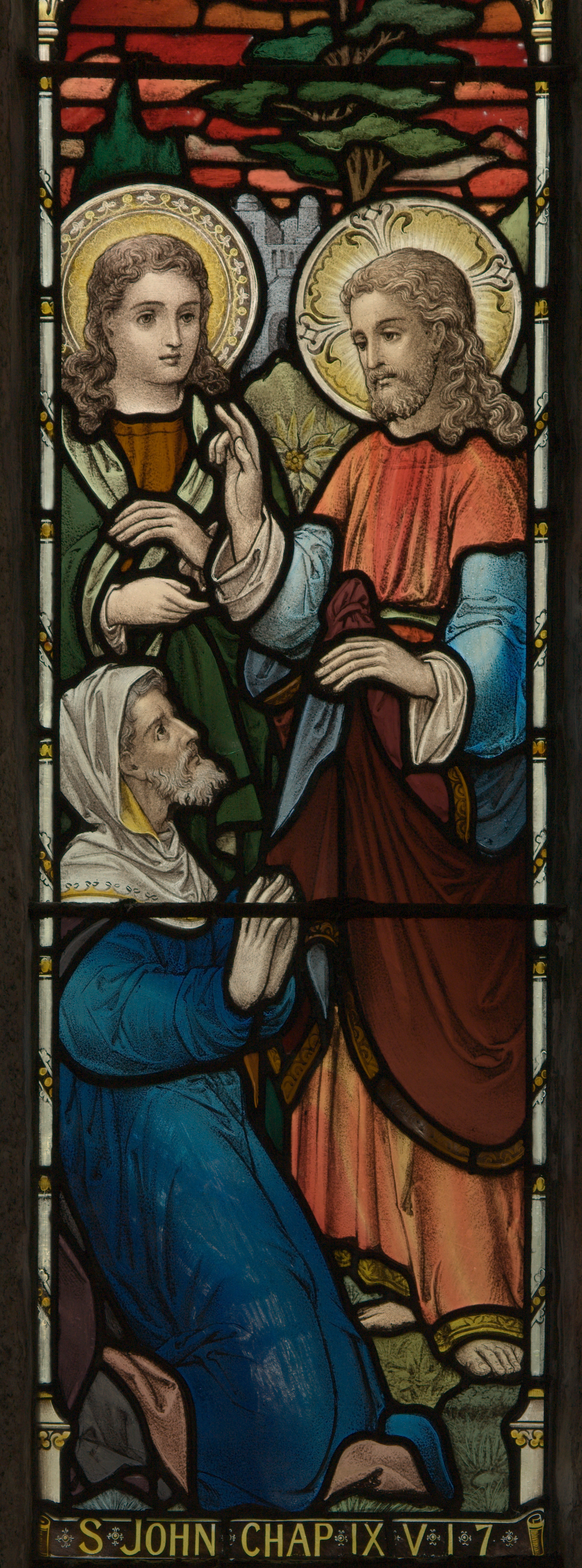
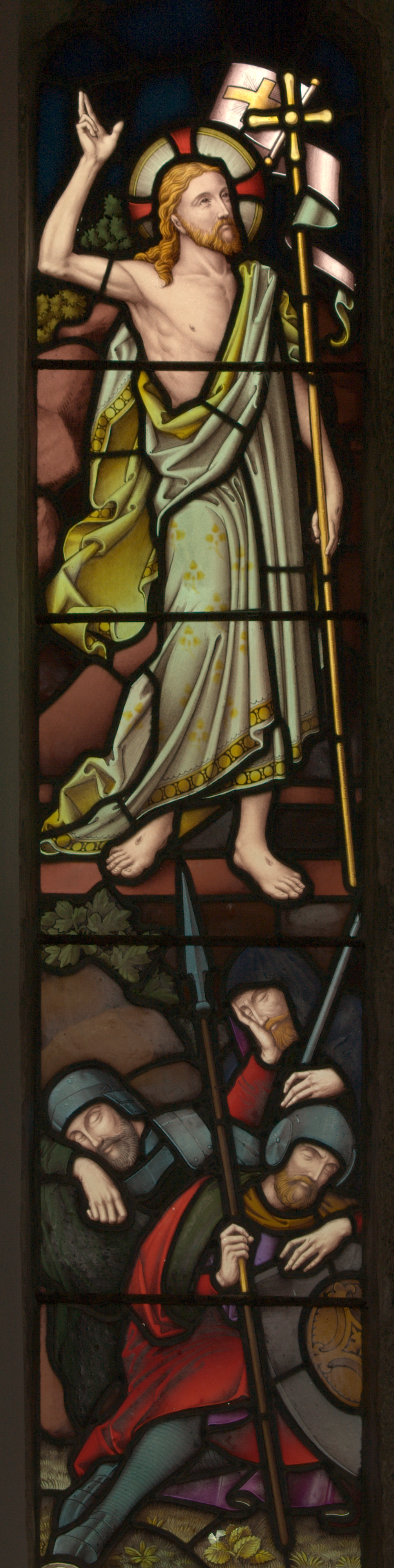
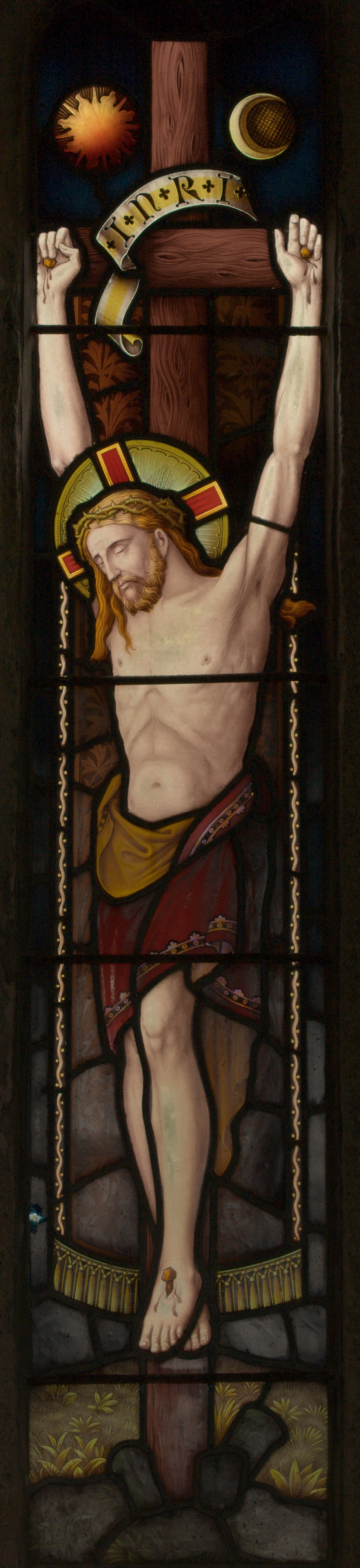
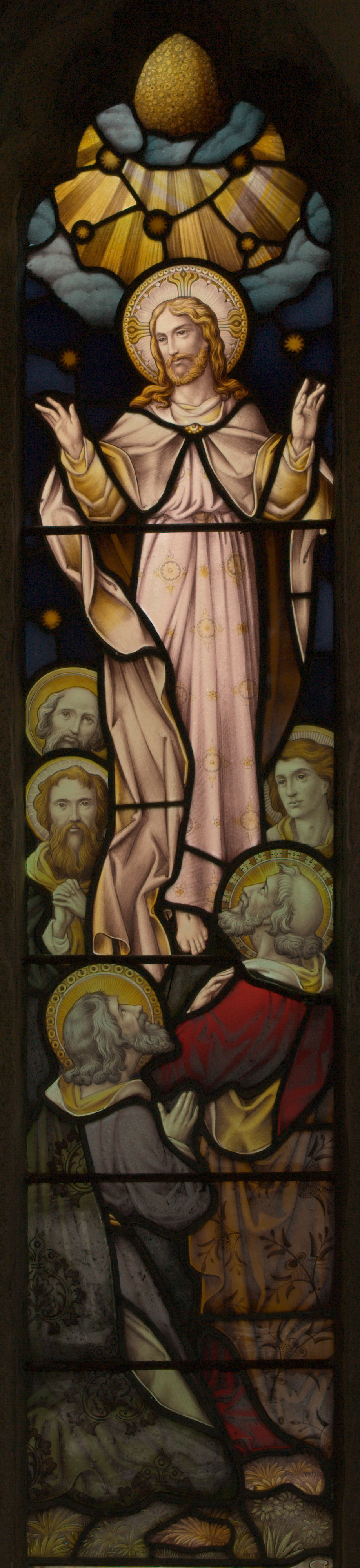
Whilst researching the family tree I discovered that there were several beautiful windows erected in memory of various Lanyons. Whilst the photos are included on the site along with the individuals concerned I thought it worth creating a page with all the windows together.
I’d like to thank Dr Mark Charter the webmaster of Cornish Stained Glass Windows https://www.cornishstainedglass.org.uk for permission to use the photos.
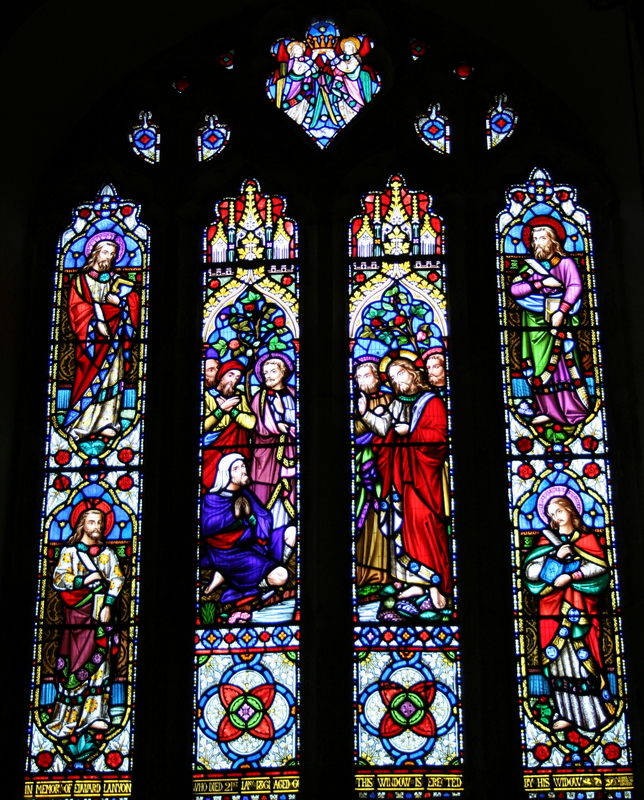
Camborne Church
Christ healing the impotent man at the pool of Bethesda.
Made by Alexander Gibbs 1864. Erected by Charlotte Lanyon (Reynolds) in memory of her husband Edward who died in 1861. (Post about Edward in Gwinear Branch – Christ and the Impotent Man!).
St Allen Church
Chancel East
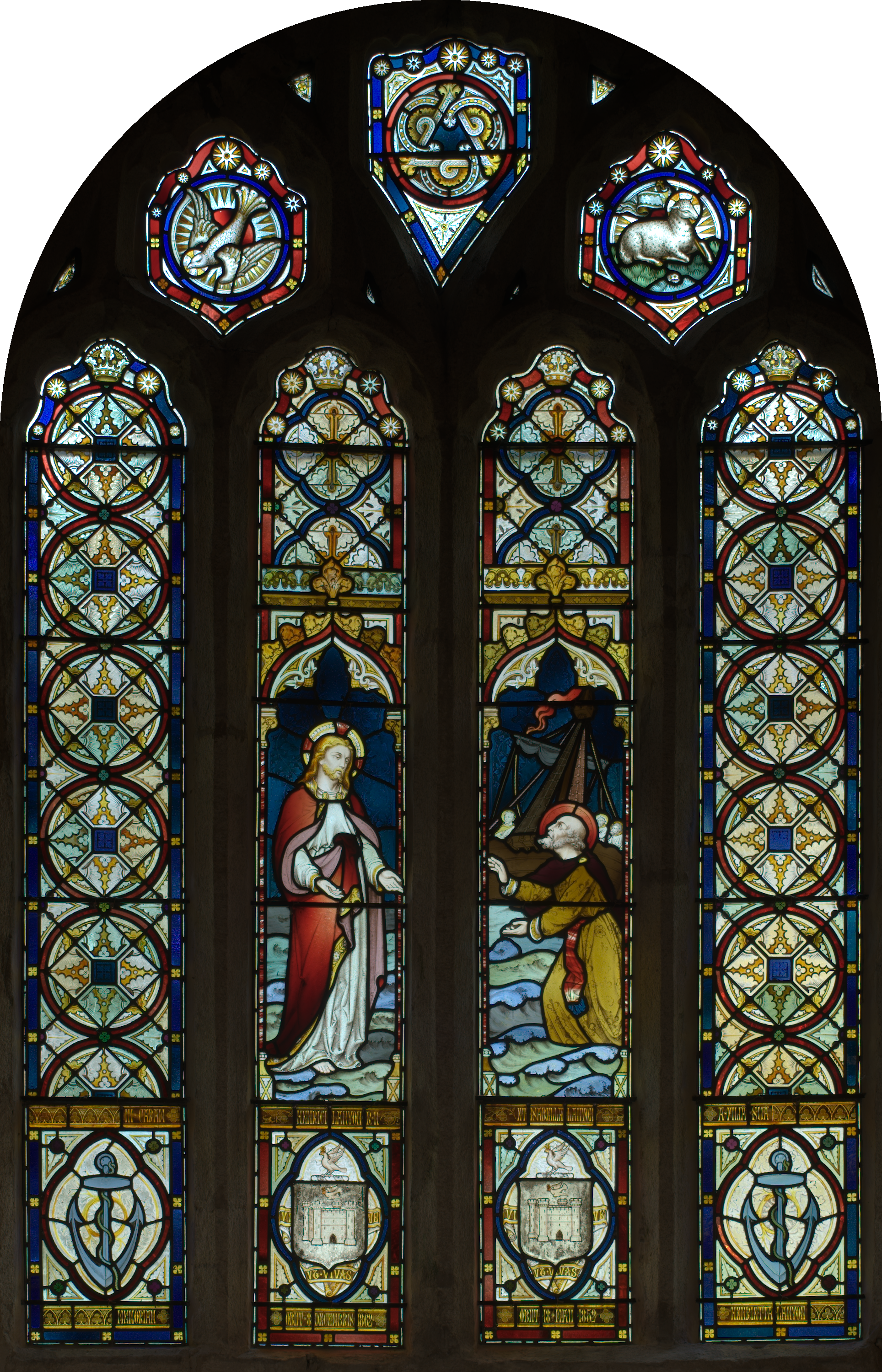
Christ saves Peter from drowning.
Made in 1874 possibly by Lavers and Barreau. Erected by Henrietta Lanyon in memory of her parents Henry Lanyon and Isabella Lanyon. (Post about Henry & Isabella in St Allen branch – ‘Captain Cork!’)
Detail of Christ saving Peter
Lanyon Arms and family motto ‘Vive ut Vivas’.
Nave North 3
Made in 1889 by Arthur Louis Moore
Christ’s commission to Peter: “Feed my sheep” – Panel 1 in memory of John and Peggy Lanyon of Henver. (Post about John and Peggy in St Allen branch – ‘Henry and Mary Lanyon’s Sons’.)
Suffer little children – Panel 2 in memory of Simon Lanyon John and Peggy’s fourth son who died at Mineral Point, Wisconsin. (Post about Simon Lanyon in St Allen branch – Henry Lanyon and Mary Searle’s Grandsons part. 1.)
Healing of a man born blind – erected by Simon Henry Lanyon son of Simon Lanyon on his visit to England in 1889. (Post about Simon Lanyon in St Allen branch – Henry Lanyon and Mary Searle’s Grandsons part. 1.)
Detail Panel 1Detail Panel 2Detail Panel 3
Nave North 4
Made in 1910, maker unknown.
In memory of Eliel Lanyon of Henver, son of John and Peggy Lanyon of Trevalsa, St Allen, died 10th October 1909 aged 86.
Detail Panel 1Detail Panel 2Detail Panel 3
St Stithians
North Aisle East
Window erected in memory of Richard Lanyon of Kennal Vale and of Acton Castle, died 8th December 1863 aged 66.
Made in 1864, maker not known.
Decorative panels with diagonal memorial inscription in centre light. Lanyon arms (Polsue).
James Lanyon and Mary Pearce had six great grandsons to carry on the family name: two called Thomas, two called William and two called John!
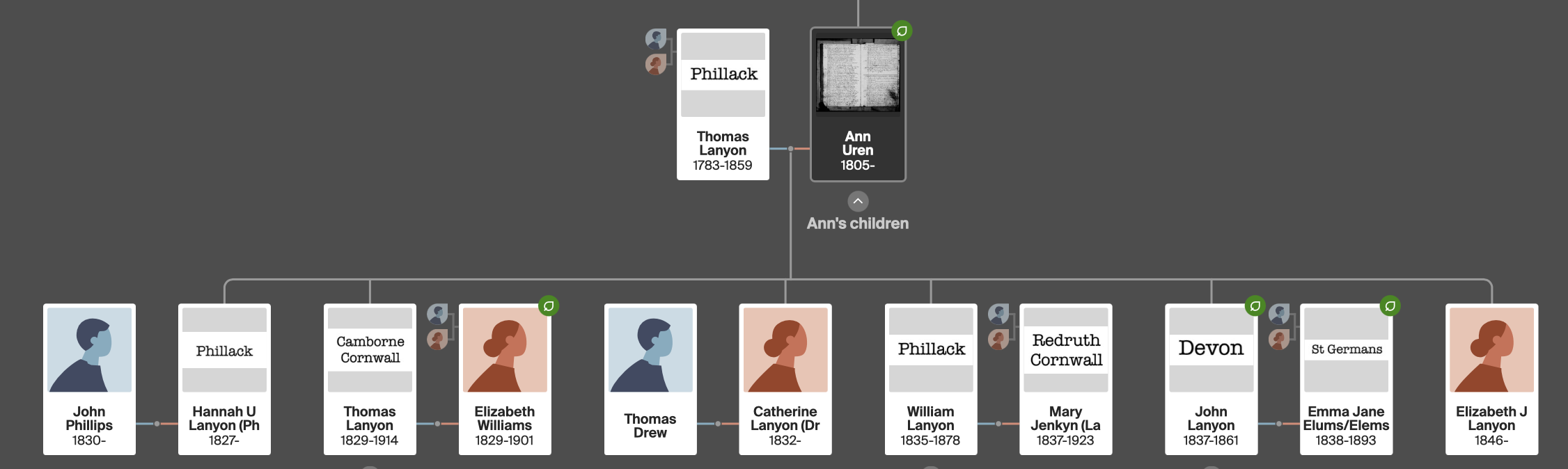
Thomas Lanyon 1783-1859
Thomas was baptised in Marazion in 1783 and married Ann Uren at Gwinear in 1826. Thomas was a shoemaker. He and Ann had six children:
Hannah Uren 1827- married John Philips at Phillack in 1850 one daughter traced
Thomas 1829-1914was a blacksmith and he married Elizabeth Williams in 1854. Four children.
Catherine 1832- she was a labourer and may be the Catherine Lanyon who married Thomas Drew in 1852, no further trace.
William 1835-1878 he was an engine driver and married Mary Jenkyn at Phillack in 1859, six children of which only two daughters survived to adulthood.
John 1837-1861 was a boilermaker and steam engineer, he married Emma Jane and had three children, we’ll follow his daughter Mary Ann Lanyon in a separate post ‘The Woman in the White Apron’.
Elizabeth J 1846- she’s on the 1851 census and then no further trace
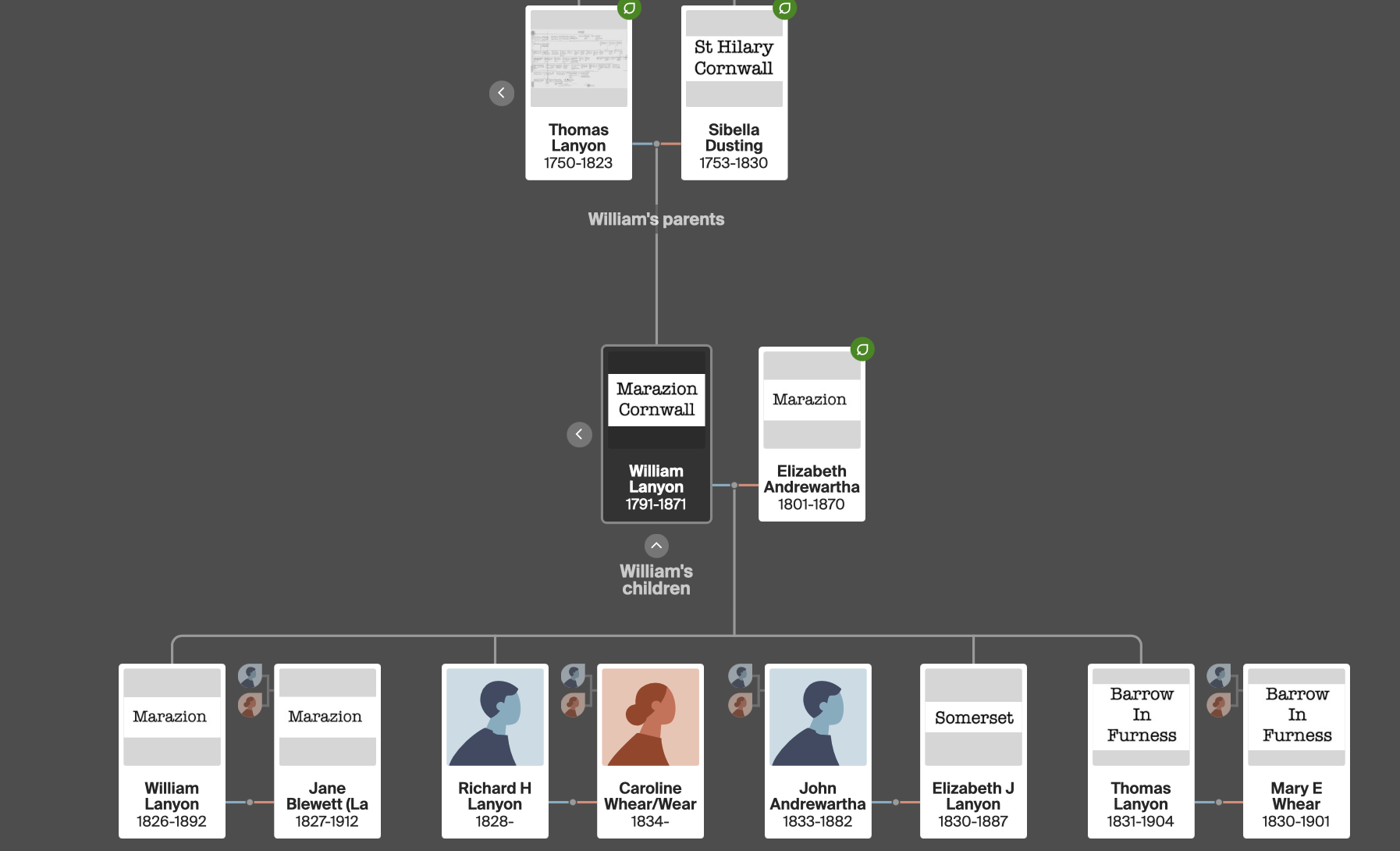
William Lanyon 1791-1871
William was a cordwainer/shoemaker like his brother Thomas. He married Elizabeth Andrewartha at St Hilary in 1825. They had four children:
William 1826-1892 he was a miner and married Jane Bleweth at St Hilary in 1850 – eight children
Richard Henry 1828- 1871 he was a cordwainer, no trace of a marriage or children
Elizabeth Jane 1830-1887 married John Andrewartha at Penzance in 1855 – six daughters
Thomas 1831-1904 he married Mary Whear in 1851. He was a miner and by 1881 he had moved his family to Barrow in Furness, twelve children
Apprentice domestic shoemaker in the 19th century. Image taken from The Band of Hope Review November 1861. Public domain, via Wikimedia Commons
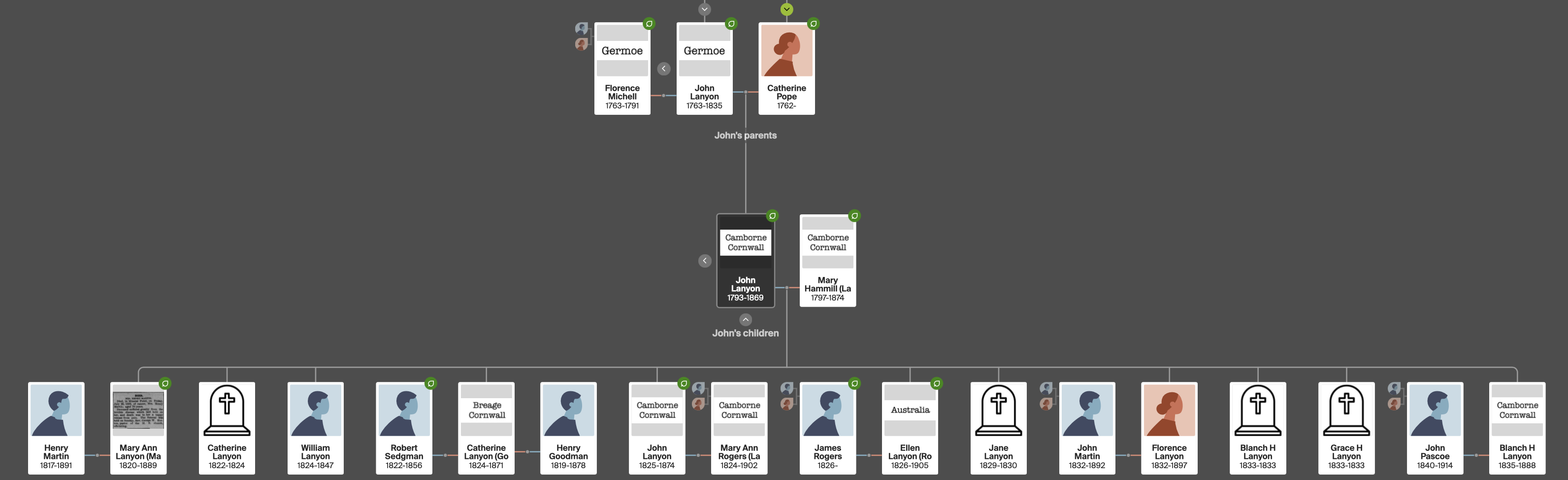
John Lanyon 1793-1869
John was baptised at Breage in 1793 and married Mary Hammill at Sithney in 1817. He was a tin miner. They had eleven children:
John & Mary’s tree
Mary Ann 1820-1889 married Henry Martin and four children, emigrated to Mineral Point Wisconsin
Catherine 1822-1824 died in infancy
Catherine 1824-1871 born in the Scilly Isles, married Robert Sedgman a mariner, at Porthleven in 1851, he died in 1856 and in 1858 she married Henry Goodman, a miner, and they had three daughters.
William 1824-1847 born at St Mary’s in the Scilly Isles and died at Bodmin Asylum age 22, he was suffering from TB and epilepsy
John 1825-1874 born at St Mary’s in the Scilly Isles he was a tin miner, he married Mary Rogers at Sithney in 1848. They had nine children
Ellen 1826-1905 baptised at Sithney and married James Rogers there in 1847, three children
Jane 1829-1830 died in infancy
Florence 1832-1897 married John Martin in 1850, four children and emigrated to Mineral Point Wisconsin
Blanch Hammill 1833-1833 died in infancy
Grace Hammill 1833-1833 died in infancy (it’s not clear if they are twins)
Blanch Hammill 1835-1888 married John Pascoe a miner at Camborne in 1861, five children
Thomas was baptised at Mawgan in Meneage in 1819. He was a farm labourer. His first marriage was to Mary Whilley and there were two children:
James 1841-1883
Mary Ann 1842-1908
Mary Whilley died in 1844 and was buried at Kea. He them married for a second time to Louisa Rawling Williams at St Allen in 1845. There was one child from this marriage:
John Henry 1849-1935
Thomas died of kidney disease in 1855 aged just 36. We’ll find out what happened to his widow and children in the post ‘Pauper’s Passport’.
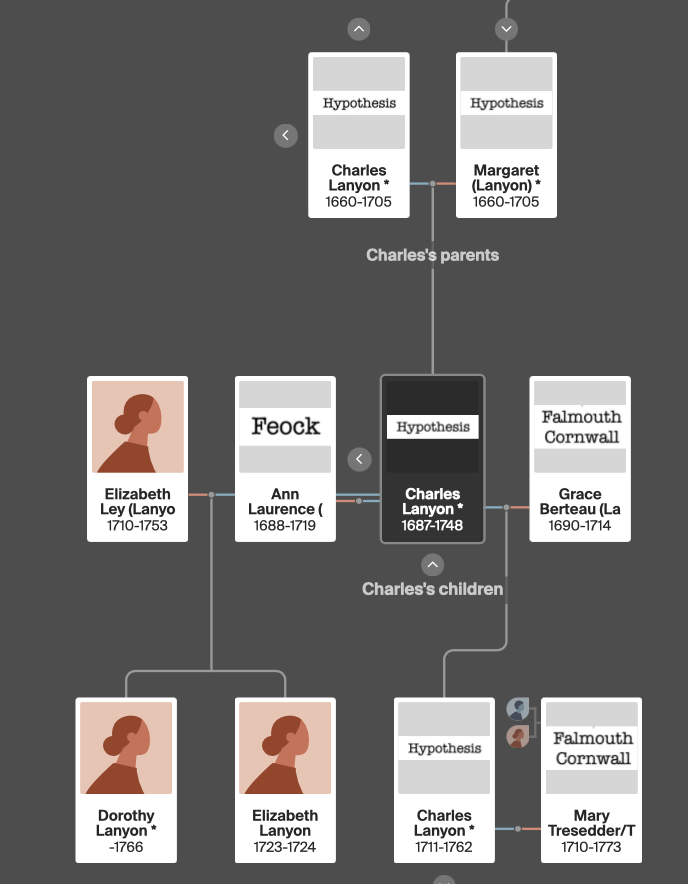
Charles Lanyon died at Falmouth in 1748 and is probably the Charles Lanyon baptised at St Hilary in 1687. His first marriage to Grace Berteau produced one son, Charles. This post is about him and his descendants.
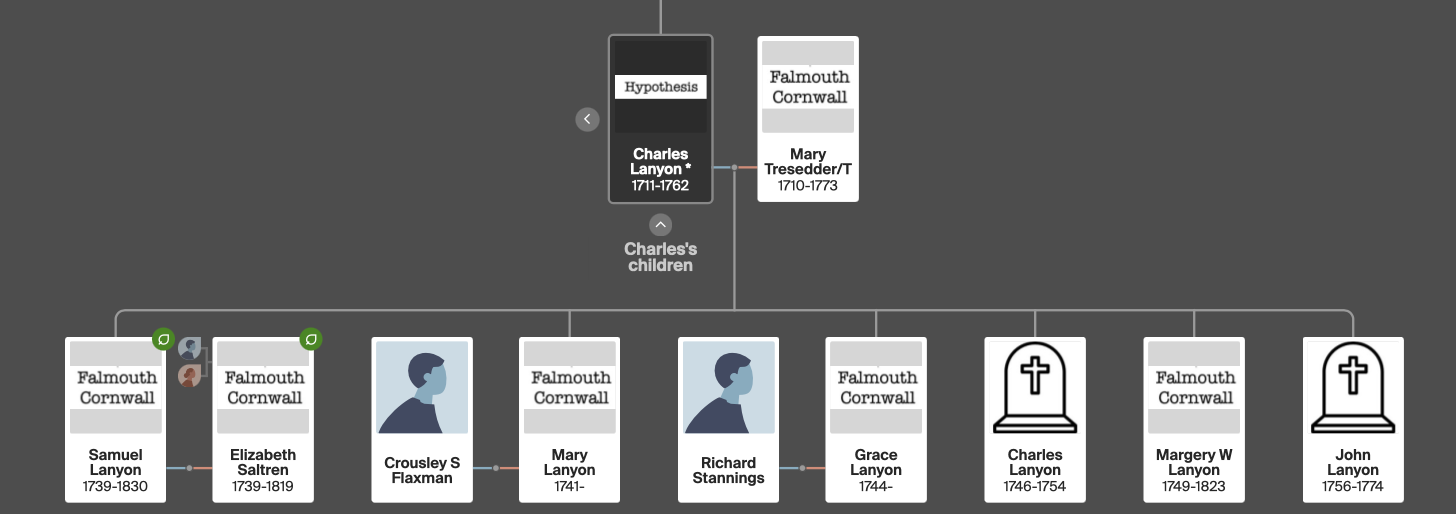
Charles was baptised at Falmouth in 1711 (Source – FHL Film 267525) and married Mary Tresedder at Mawnan in 1739. They had six children:
Charles & Mary’s tree
Samuel 1739-1830
Mary 1741- married Crousley Shovel Flaxman (what a great name!), a mariner, at Falmouth in 1761
Grace 1744- married Richard Stannings, a mariner, at Falmouth in 1773
Charles 1746-1754 died young
Margery Wills 1749-1823 spinster
John 1756-1774 drowned at Falmouth, age 18
Charles died at Falmouth in 1762 and his wife Mary Tresedder died in 1773.
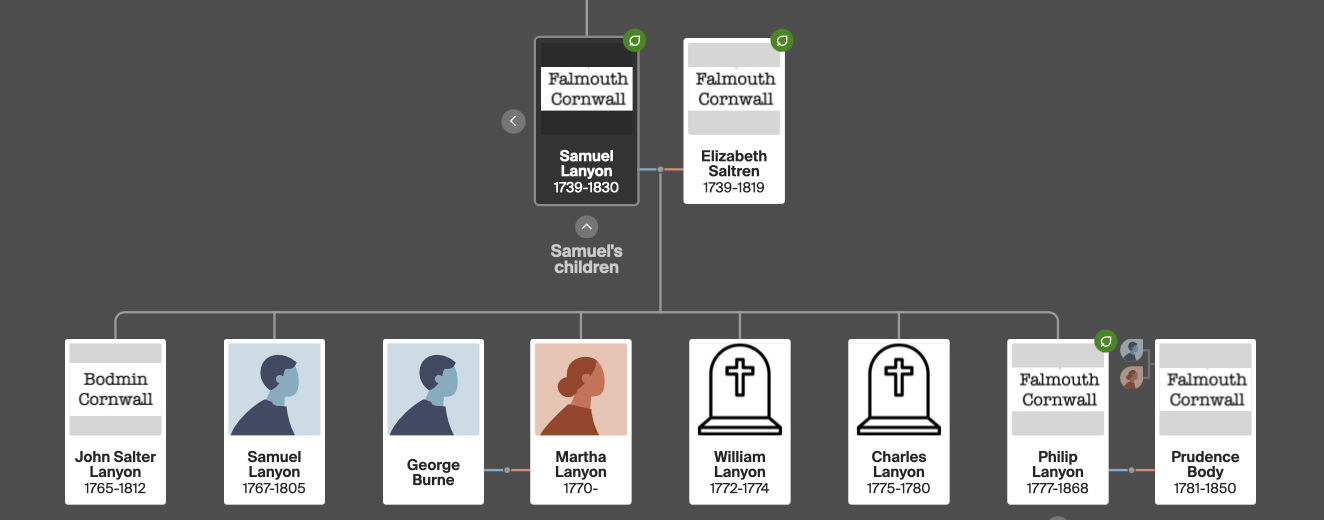
Samuel Lanyon 1739-1830
In 1755 Samuel was apprenticed to Richard Hosken of Falmouth, a carpenter, cost £13 10/- (Source – Register of Duties Paid for Apprentices Indentures). In 1764 he married Elizabeth Saltren (Sic) and they had six children:
Charles & Elizabeth’s tree
John Salter 1765-1812 he was a merchant and a bachelor. He died at Bodmin in 1812 and his father Samuel administered his estate.
Samuel 1767-1805 he worked for the East India Company as a seaman on the packet ‘Swallow’. He died in 1805 and administration of his estate was granted to his father Samuel. Samuel Junior was a bachelor.
East India Company Ships – Thomas Whitcombe, Public domain, via Wikimedia Commons
Martha 1770- married George Burne at Falmouth in 1806
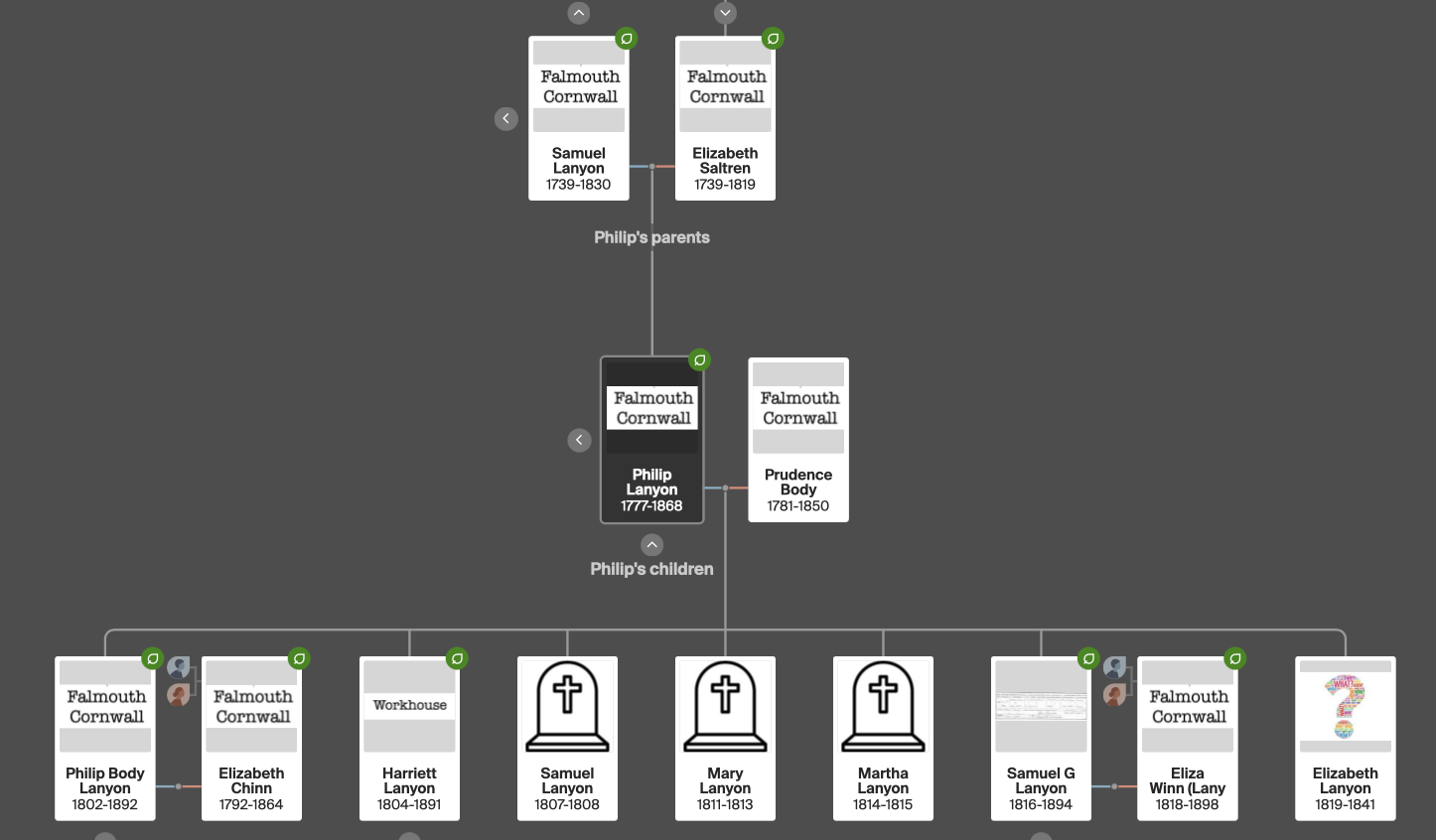
Philip was the only one of Samuel’s sons to have children. He was baptised at Falmouth in 1777 and became a carpenter like his father and in later life a farmer. In 1802 he married Prudence Body at Falmouth and they had seven children:
Philip & Prudence’s tree
Philip Body 1802-1892
Harriett 1804-1891 In 1826 Harriett had an illegitimate daughter, Eliza. Harriett never married and lived with her father until his death and then with her niece Eliza. She then worked as a farm labourer in her 70s! By 1891 she was in the workhouse and listed as a pauper. She died there in Nov 1891. Her daughter Eliza married Joseph Lawrence and they had six children
Samuel 1807-1808 died in infancy
Mary 1811-1813 died in infancy
Martha 1814-1815 died in infancy
Samuel George 1816-1894
Elizabeth 1819-aft.1841 she’s on the 1841 census as a dressmaker and no trace after that
Like his father Philip lived to the age of 90 and died in Falmouth in 1868. Philip left two sons who both had sons of their own to carry on the family name, Philip and Samuel.
Philip Body Lanyon 1802-1892
Philip was born at Germoe and baptised at Breage in 1802 he married Elizabeth Chinn (ten years his senior) at Falmouth in 1827 (his father was a witness). The census lists him variously as a farmer and carpenter. By 1871 the census notes that he is blind. They had two sons:
William Henry 1828-1871 he was a carpenter he died age 41, unmarried.
FALMOUTH.
INTERMENT OF A FORESTER.—On Sunday afternoon, the remains of the late Mr. W. H. Lanyon were interred in Falmouth cemetery. Deceased being a forester, about 150 members of that order formed in procession at their lodge-room, whence they repaired to the residence of the deceased to pay their last tribute of respect. About half-past three the funeral procession proceeded to the cemetery, the coffin being borne to the grave on the shoulders of the members. The burial service was impressively read by the Rev. J. Baly, rector, and that appointed by the Order by Mr. E. Gregg, Chief Ranger. A large concourse of spectators witnessed the proceedings.
William Henry LANYON of Swanpool Street, Parish of Falmouth, a carpenter aged 42, was buried at Falmouth Cemetery on 2 April 1871
Royal Cornwall Gazette 8 April 1871 Funeral of Mr. W.H. Lanyon
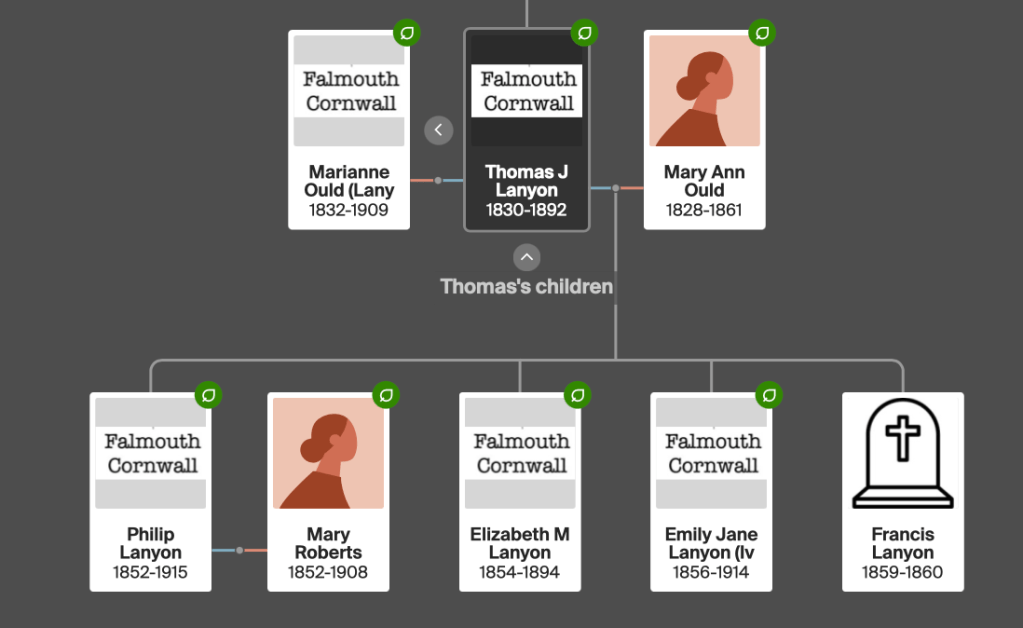
Thomas James 1830-1892 worked as an agricultural labourer he married Mary Ann Ould at Constantine in 1866, he’s listed as a widower but I can’t find an earlier marriage for him. On the 1851 census he is ‘unmarried’. On the 1861 census he is listed as married to Mary A from Mawnan who was born abt. 1827 and they have three children. On the 1871 census he’s married Mary A from Constantine who was born abt. 1831. Are they the same person and the dates of birth have been entered incorrectly?
A bit of research and head scratching revealed that Thomas had two wives both called Mary Ann Ould! What are the chances of that?
Wife number 1 married Thomas Q4 1851 at Falmouth. She was baptised at Mawnan in 1828 and called Marianne Ould, the daughter of Francis and Mary. She died at Mawnan 5 Jul 1861 aged just 33.
Wife number 2 married Thomas at Constantine in 1866. She was baptised at Constantine in 1832, the daughter of Emanuel and Jane. She died at Falmouth in 1909.
Presumably both women were cousins but I can’t find the connection.
There were four children of the first marriage:
Philip 1852-1915 he was a mariner in the Royal Navy, he married Mary Roberts but there were no children
Elizabeth Mary 1854-1894 a spinster
Emily Jane 1856-1914 she married Thomas Ivey in 1896 at Plymouth no children traced
Francis 1859-1860 died in infancy
Thomas James Lanyon died in 1892, his father Philip Body Lanyon outlived him. As Philip had no male great grandchildren this little branch of the tree died out.
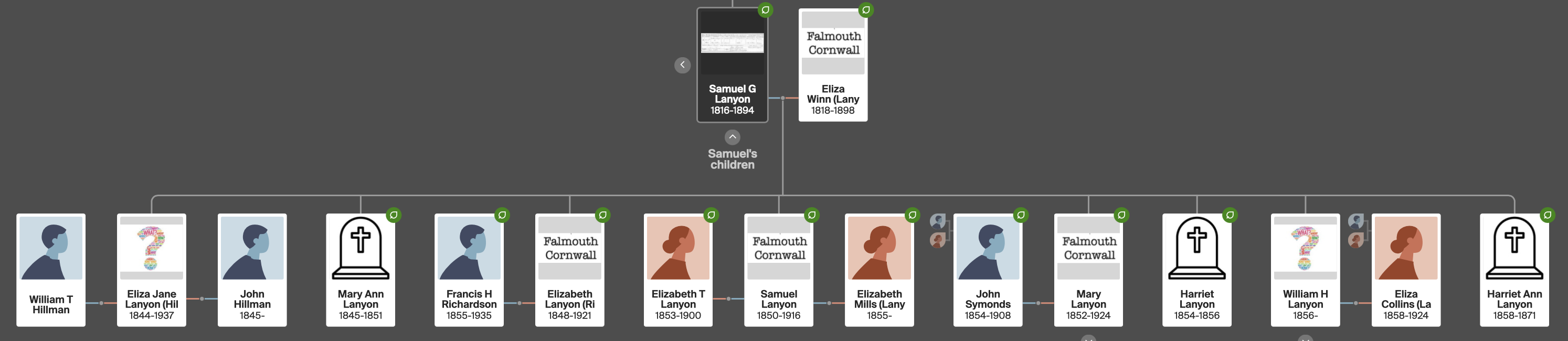
Samuel was the youngest son of Philip Lanyon and Prudence Body. He was baptised at Falmouth and married Eliza Winn at Mawnan in 1843. Samuel was a mason. He and Eliza had eight children:
Eliza Jane 1844- married William Thomas Hillman in 1864 however the census records him as being called John Hillman, a mason, several children
Mary Ann 1845-1851 died young
Elizabeth 1848-1921 married Francis Henry Richardson in 1876 – nine children
Samuel 1850-1916 he was a shepherd. He married Elizabeth Mills in Q3 1900 but appears to have been married to another Elizabeth (Toy) before that. She’s listed on the census but I can’t trace a marriage. No children of either marriage.
Mary 1852-1924 married John Symons – several children
Harriet 1854-1856 died in infancy
William H 1856- he was a farmer at Lower Cardew farm near Redruth. He married Eliza Collins at Stithians in 1875. They had fourteen children! In 1916 they were in Canada and many of the children lived in the United States.
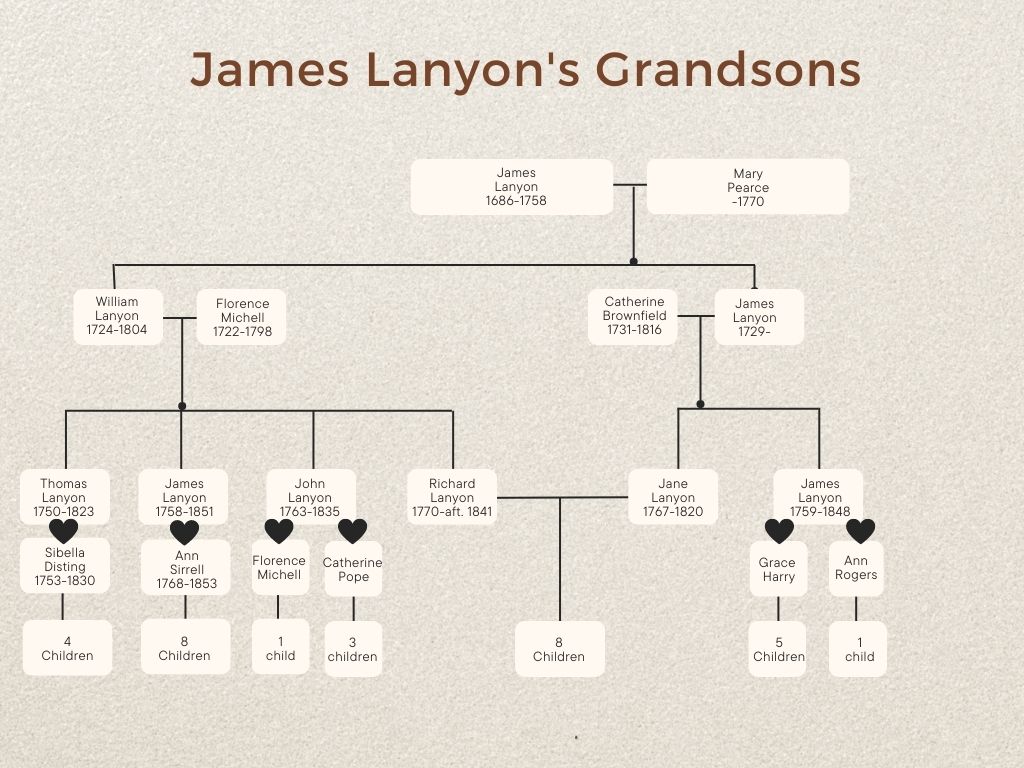
James and Mary had two sons and five grandsons to carry on the family name.
Thomas Lanyon 1750-1823
Thomas was baptised at Breage in 1750, he was a tinner at St Michael’s Mount and married Sibella Dusting/Disting at St Hilary in 1778. They had four children:
Catharine 1778-1779 died in infancy
Catharine 1781- in 1822 a Catherine Lanyon married Richard James at Breage could be this Catharine?
Thomas 1783-1859
William 1791-1871
Thomas senior was buried at St Hilary in 1823. Sibella was buried there in 1830.
Cornish Tin Mne – Internet Archive Book Images, No restrictions, via Wikimedia Commons
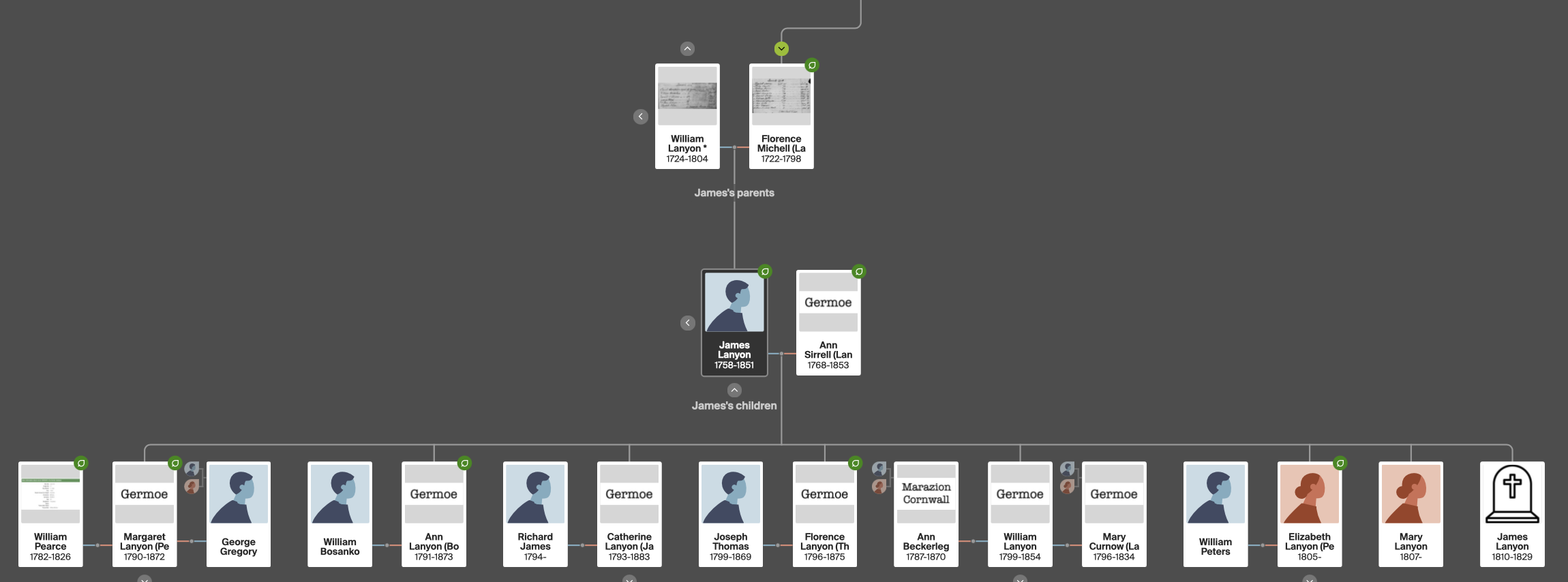
James Lanyon 1758-bef. 1851
James was baptised at Breage in 1758, he too was a tinner and he married Ann Sirrell at Breage in 1789 (William Lenine was a witness). They had eight children:
Margaret 1790-1872 baptised at Germoe in 1790 and two possible marriages may be hers – William Pearce 1809 at Germoe and George Gregory 1838 at Uny Lelant – two children from the marriage to George
Ann 1791-1873 she married William Bosanko at Germoe in 1834 no children
Catherine 1793-1883 in 1818 she gave birth to an illegitimate daughter at Sithney (Catherine Lanyon of Rosladen, Breage). In 1822 she married Richard James a miner at Breage – three daughters. Catherine died at Germoe aged 90.
Florence 1796-1875 she married Joseph Thomas at Germoe in 1821 – six children
William 1799-1854 was a tin miner, he married Mary Curnow at Germoe in 1822 and they had four children: William 1824 no further trace, Maria 1827-aft. 1901 married John Thomas – six children and two daughters who died in infancy. He then married Ann Beckerleg in 1834 and they had one daughter.
Elizabeth 1805- had an illegitimate son William baptised at Germoe in 1826 no further trace of him. Elizabeth then married William Peters at Germoe in 1829
Mary 1807- no further trace
James 1810-1829 he died age 19 at Germoe
There is no one traceable to continue James’ line. He died before 1851, his widow is listed on the 1851 census as living with her widowed daughter Ann Bosanko and is described as a pauper aged 83.
1851 Census for Germoe
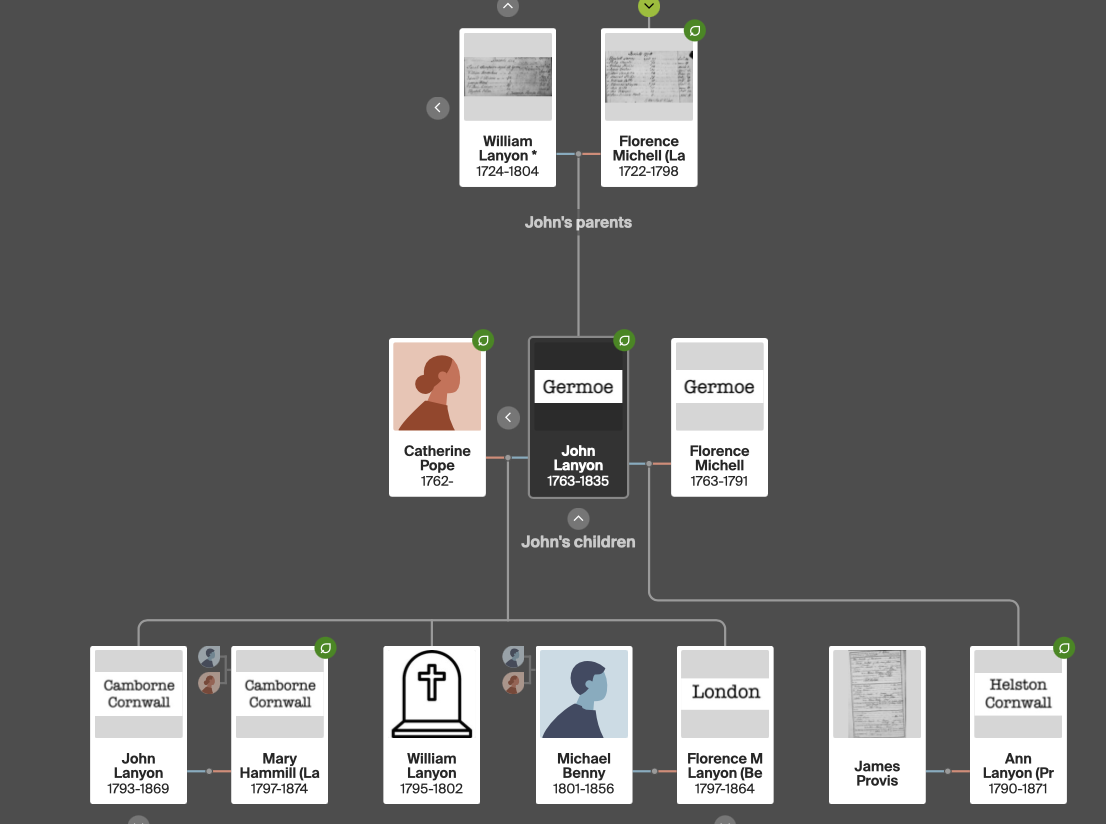
John Lanyon 1763-1835
John was baptised at Breage in 1763 and like his brothers he was a tinner. He married Florence Michell (a relative of his mother) in 1789 at Breage. Their only daughter Ann was baptised at Germoe in Sep 1790, her mother Florence was buried in Jan 1791 aged just 28. Ann married James Provis at St Hilary in 1815.
John married for a second time in Aug 1792 at Breage to Catherine Pope (Witnesses Richard Michell and Thomas Kitto). They had three children:
John 1793-1869
William 1795-1802 died young
Florence Michell 1797-1864 she married Michael Benny at Helston in 1818, they had six children and she died in London in 1864
John senior died at Germoe in 1835 age 77 which gives him a date of birth of 1758, he could have been baptised when he was age 5 or his family may have miscalculated his age when he died.
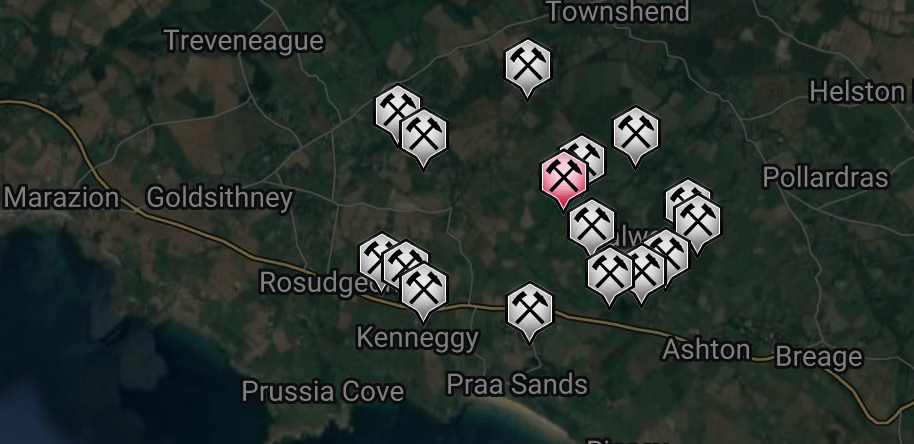
There were lots of mines in the Germoe/Breage/St Hilary area.
We don’t know which mines they worked in but this film will give you an idea of what it was like.
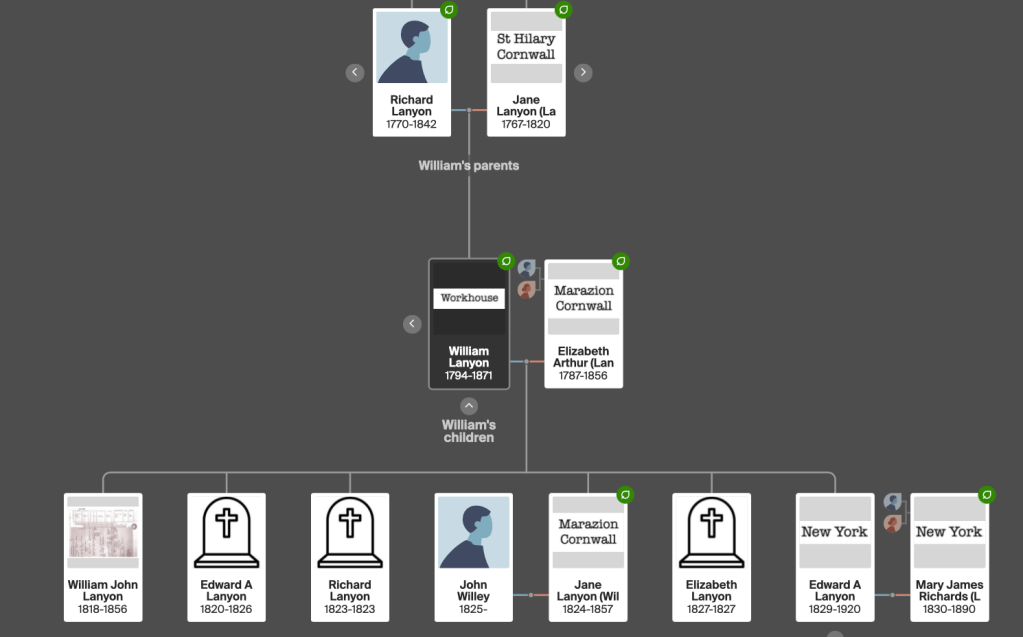
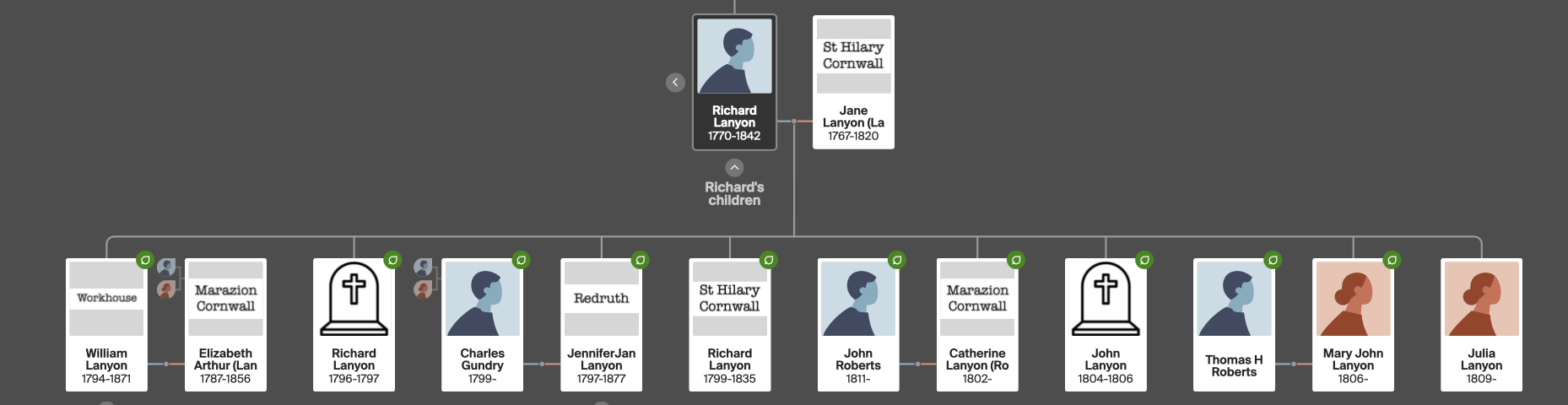
Richard Lanyon 1770-aft. 1841
Richard was baptised at Germoe in 1770, he was a blacksmith at Marazion. He married his cousin Jane Lanyon at St Hilary in 1794. They had eight children:
William 1794-1871
Richard 1796-1797 died in infancy
Jennifer Jane 1797-1877 married Charles Gundry, a farmer, three children
Richard 1799-1835 died age 35 at Marazion, unmarried
Catherine 1802- aft. 1881 married John Roberts, a miner, she was still alive in 1881 and according to the census her two daughters Eliza (tailoress) and Jane (dressmaker) were living with her and her grandson William, illegitimate son of one of the daughters.
John 1804-1806 died in infancy
Mary John 1806-she married Thomas Harris Roberts at St Hilary in 1841 no further trace
Julia 1809-1843 living with her father on the 1841 census and dead by 1843
Richard senior was still alive in 1841 and living with youngest daughter Julia but after that no trace of his death. He’s often confused with the Richard Lanyon who died at Lostwithiel in 1848.
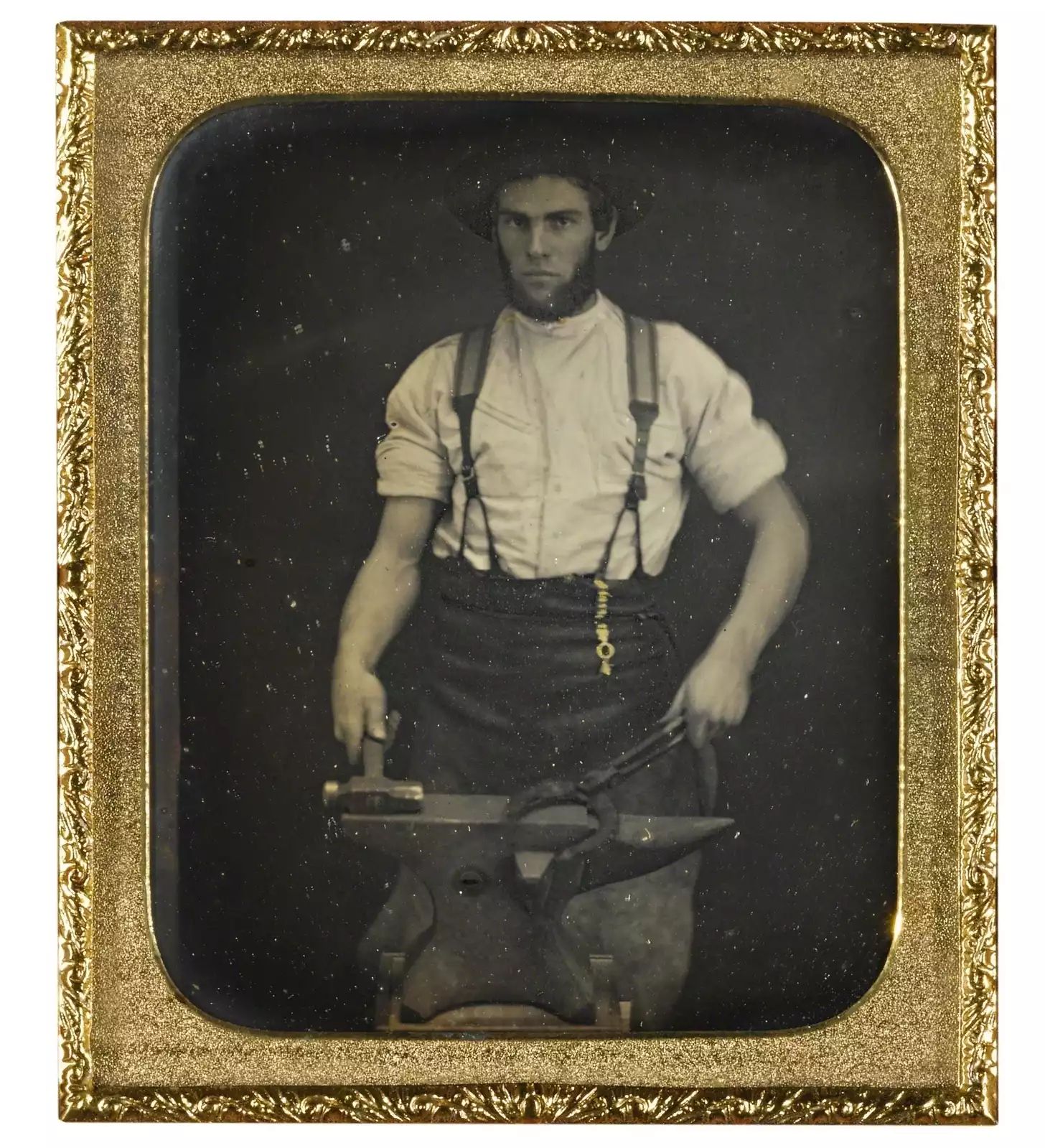
Victorian Blacksmith – Summer A. Smith, Public domain, via Wikimedia Commons
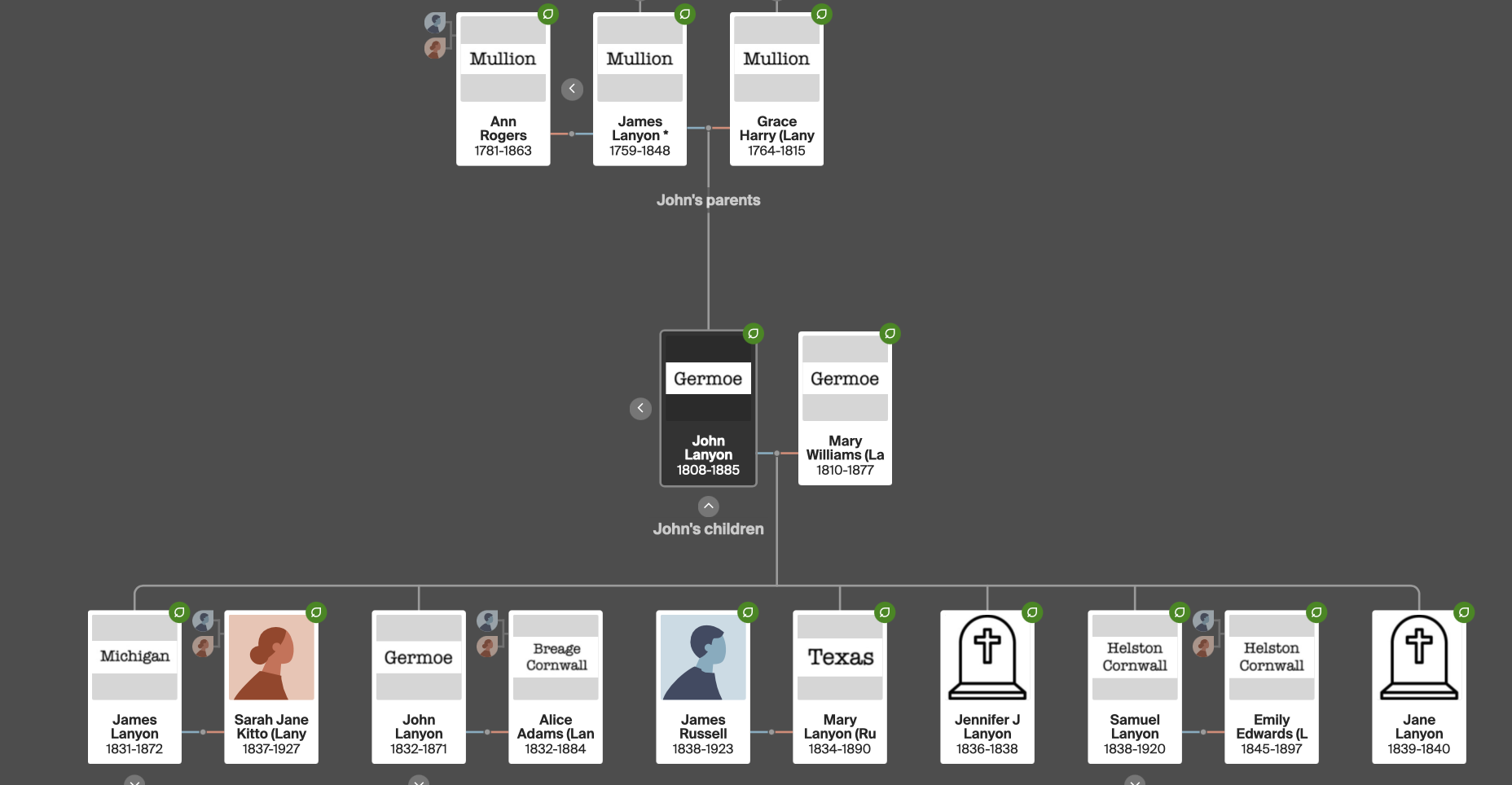
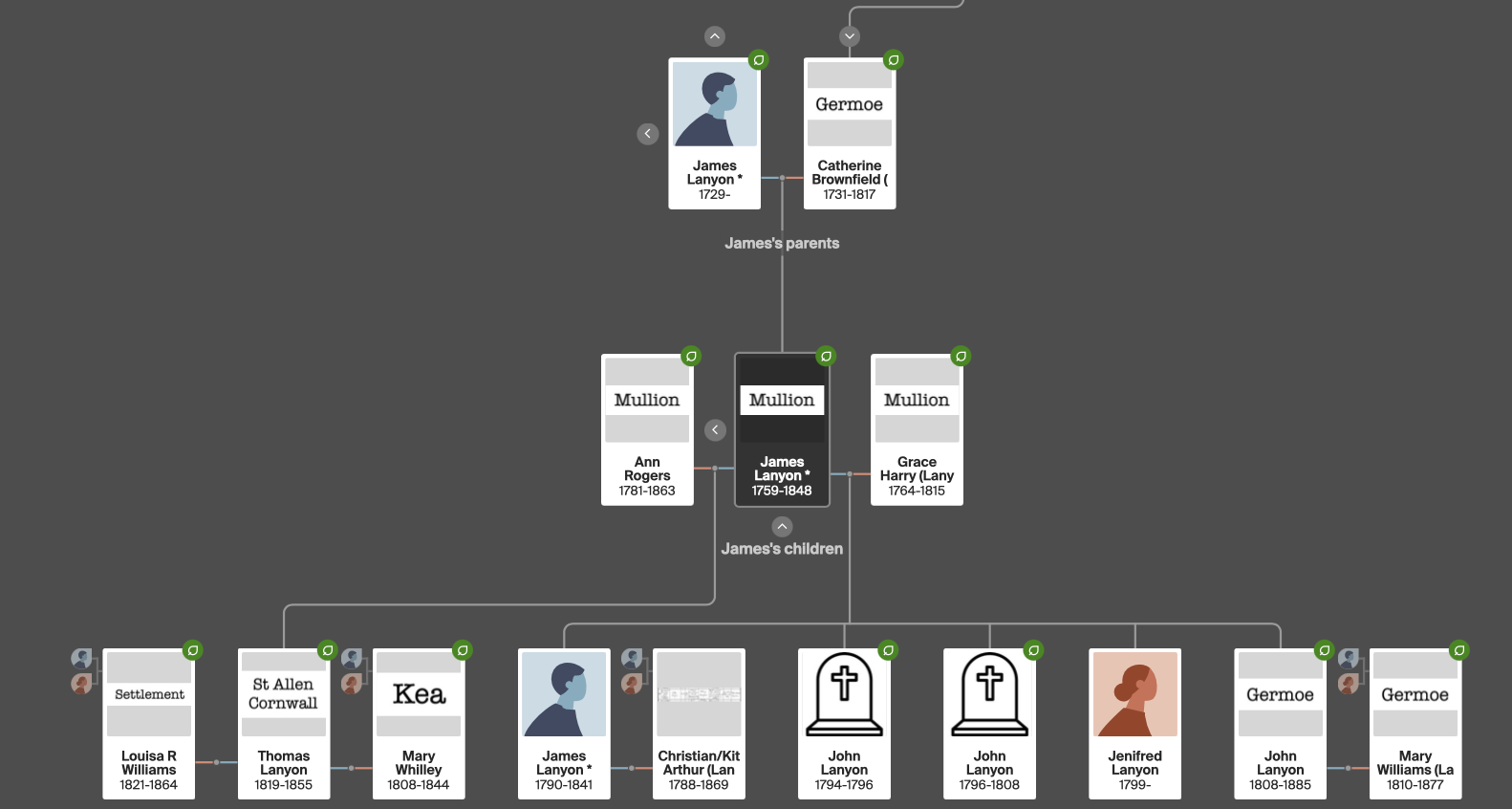
James Lanyon 1759-1848
James was the son of James and Catherine Brownfield. He was baptised at Breage in 1759 and married Grace Harry at Germoe in 1790. They had five children:
James 1790- he was a labourer and married Christian Arthur at Breage in 1812, one daughter Mary Anne baptised at Camborne in 1812. There is a Christian Lanyone on the 1841 census living at Helston but no sign of her husband. No further trace.
John 1794-bef. 1796 died in infancy
John 1796-bef. 1808 died in infancy
Jennifred 1799- no further trace
John 1808-1855
James’ wife Grace Harry died in 1815. In 1819 he married again in Mawgan in Meneage to Ann Rogers. They had one son:
Thomas 1819-1855
James died at Mullion in 1848 and Ann Rogers died in 1863 at Mullion.
Out of the five grandsons of James Lanyon and Mary Pearce there were only five great grandsons with children to follow.
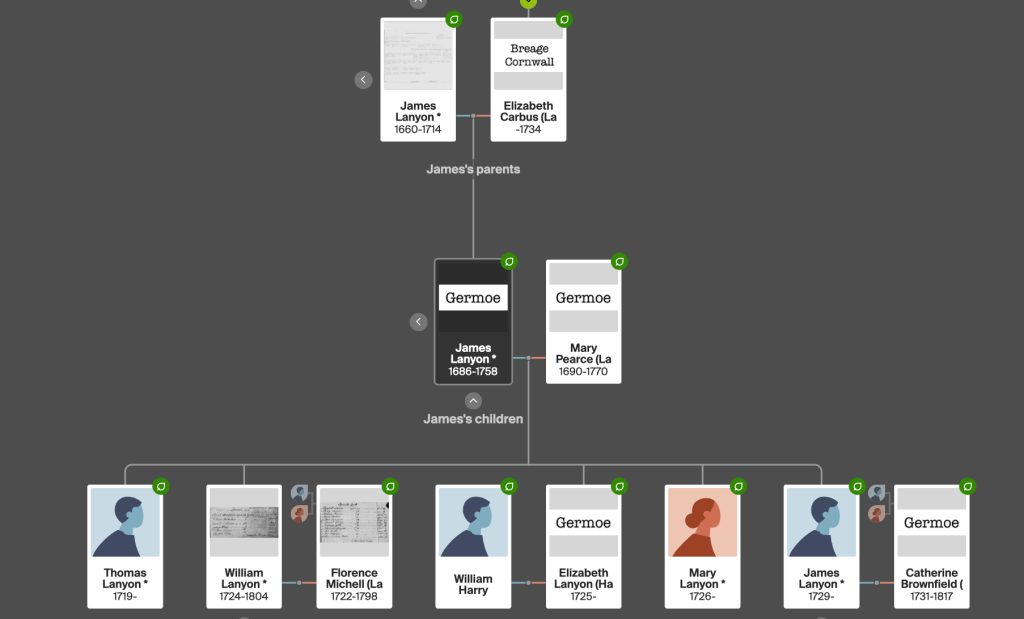
William and James were the sons of James Lanyon and Mary Pearce. James was baptised at Breage in 1686 and married Mary Pearce at Breage in 1712. They had two sons and two daughters, this post is about their sons.
William Lanyon 1724-1804
William was baptised some twelve years after his parents’ marriage, presumably there were other children who died in infancy or stillbirths and miscarriages to account for the large gap. He married Florence Michell at Germoe in 1749. They had eleven children:
William & Florence’s tree
Thomas 1750-1823
Florence 1752-1791
William 1753-1831 William’s first marriage was to Mary Gibbons at St Hilary in 1781 and they had a child, Mary baptised in 1803. She married James Pearce in 1823 and they had nine children. Mary was baptised in Feb 1803 and her father remarried in Jul 1803 so presumably her mother Mary Gibbons died in childbirth. William’s second wife was Honour King and they married at St Hilary (witnesses to the marriage Thomas Lanyon and Benjamin Rodda). Honour Lanyon died on 8 Mar 1807 at St Hilary age 44. On 11 Jul 1807 (he didn’t hang around!) William (widower) married Honour Edwards at Breage (Witnesses: Benjamin Rodda and William Edwards.) They had a daughter called Mary Anne baptised in 1809 and buried at St Hilary in 1813 age 4. So William had three wives, two called Honour and two daughters both called Mary! William was buried at St Hilary in 1831 and without any male heirs his line died out.
Mary 1755- she married James Rodda a widower at St Hilary in 1781. They had seven children including Benjamin who was a witness at his uncle William’s weddings.
James 1757-1758 died in infancy
James 1758-1851
Elizabeth 1760-1809 no trace of a marriage
Catherine 1762- she was baptised at Breage and married Richard Ellis, a carpenter at St Hilary in 1781 – five children
John 1763-1835
Margaret 1765-1855 she was baptised at Germoe in 1765. At Sithney in 1792 a Margaret Lanyon baptised an illegitimate child also called Margaret (not sure if it is this Margaret or not) in 1796 she married Nicholas Edwards, a tinner, at Breage – five children. Nicholas died in 1814 and in 1827 Margaret married John Symons, a widower, at Breage. She died at Godolphin Cross in 1855 aged 89, she was living with her son Nicholas.
Richard 1770-1848 married Jane Lanyon his cousin
With four sons having children of their own this branch of the family is thriving.
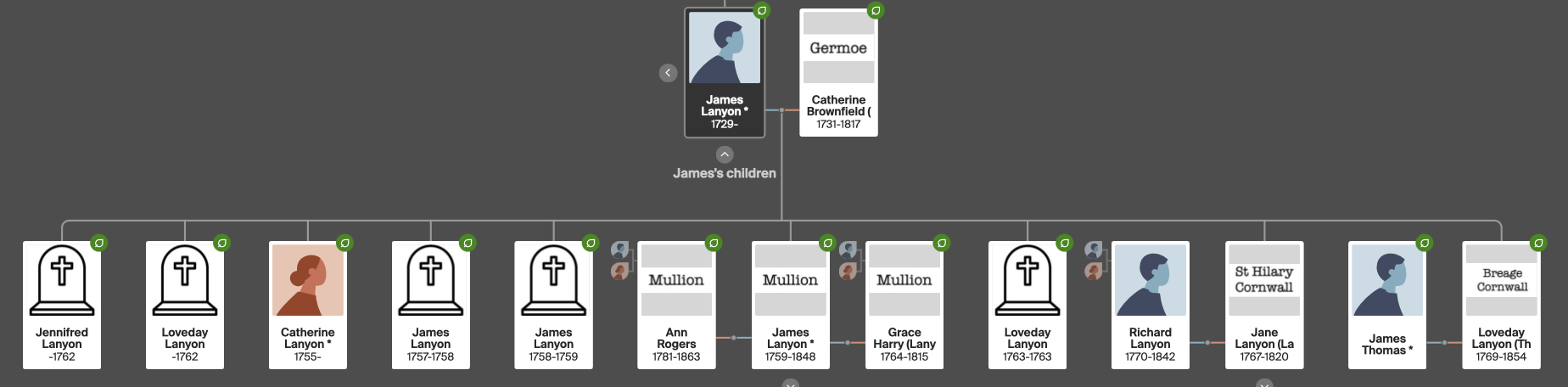
James Lanyon 1729-
James was William’s younger brother. He was baptised at Germoe in 1729 and married Catherine Brownfield there in 1755. They had nine children:
James & Catherine’s tree
Catherine 1755- no further trace
James 1757-bef.Aug 1758 died in infancy
James Aug 1758-bef. Dec 1759 died in infancy
James 1759-1848
Loveday – Apr. 1762 died in infancy
Jennifred – May. 1762 died in infancy
Loveday 1763-1763 died in infancy
Jane 1767-1820 married Richard Lanyon her cousin, the son of William Lanyon and Florence Michell
Loveday 1769-1854 married James Thomas at Germoe in 1801 – six children
Out of nine children only three survived to adulthood.
James senior died after 1769 (when his last child was born) but there is no trace of his burial, Catherine his wife was buried at Germoe in 1816/7 aged 88.
Saint Germochus or Germoe was an early 6th century saint active in Cornwall and Brittany. he was the patron saint of Germoe, he is said to have been a king and friend of St Breage. In the churchyard there is St Germoe’s chair. I wonder how many Lanyons sat in it?
Barnard had two sons (we think!) Charles and James. There were no baptisms recorded for either and Barnard didn’t leave a traceable will which may have confirmed his children’s names. However there was only one Lanyon family at St Hilary at that time so it is likely that Charles and James were his sons.
Charles’ Sons
We don’t know when Charles was born, died or when he married. The baptism register of St Hilary states that his wife was called Margaret. We don’t even have conclusive proof that he was Barnard’s son but he did name his sons David, Francis and Thomas. David after Barnard’s father and Francis and Thomas after Barnard’s older brothers.
Charles Lanyon’s tree
St Hilary parish register records that Charles Lanyon son of Charles was buried in 1683 and that probably places Charles’ birth in the 1660s. In 1687 there is a Charles Lalion baptised at St Hilary, father’s name not mentioned so he may be Charles’ son or James’ son or not a Lanyon at all.
Charles Lanyon 1687-
Initially I thought this Charles might have married Eleanor Nines at Perranuthoe in 1715 and couldn’t trace any children. Then I had a breakthrough. This Charles is likely the Charles Lanyon who married Grace Berteau at Falmouth in 1709. They had one son:
Charles 1711-1762
Grace was buried in 1714. It’s possible that Charles married Eleanor Nines in 1715 and that the Eleanor Lanyon buried at Mylor in 1733 is his wife however I have a more likely candidate for his second wife – Ann Laurence. Charles Lanyon of Falmouth married Ann Laurence at Philleigh in 1718. Ann died a year later at Feock.
It appears that Charles married for a third time and whilst there is no trace of this marriage when Charles died intestate the administration papers mention his widow and relict Elizabeth. There are baptisms and burials listed in Falmouth for two daughters:
Elizabeth -1723
Elizabeth 1723-1724
There is a possible third daughter, Dorothy. In 1766 there was a Mrs Dorothy Lanyon (Mrs does not necessarily denote a woman is married, it is used to denote a gentlewoman) buried at Constantine. Could this be an unrecorded daughter of Charles?
It’s a bit confusing we have four wives and only one Charles Lanyon to go round!
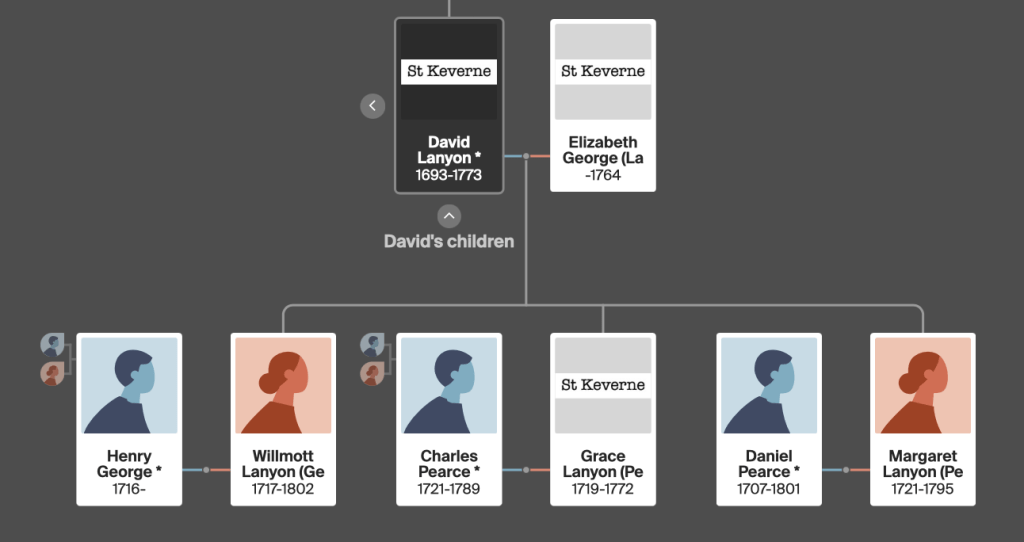
David was Charles’ younger brother, he was baptised at St Hilary in 1693 and he may be the David Lenine who married Elizabeth George at St Anthony in Meneage in 1716. The register describes them both as ‘of St Keverne’.
From this marriage there were three children traced:
Willmott 1717 married Henry George at St Keverne in 1738
Grace 1719 married Charles Pearce at St Keverne in 1745 – four children
Margaret 1721 married Daniel Pearce
David was buried at St Keverne in 1773.
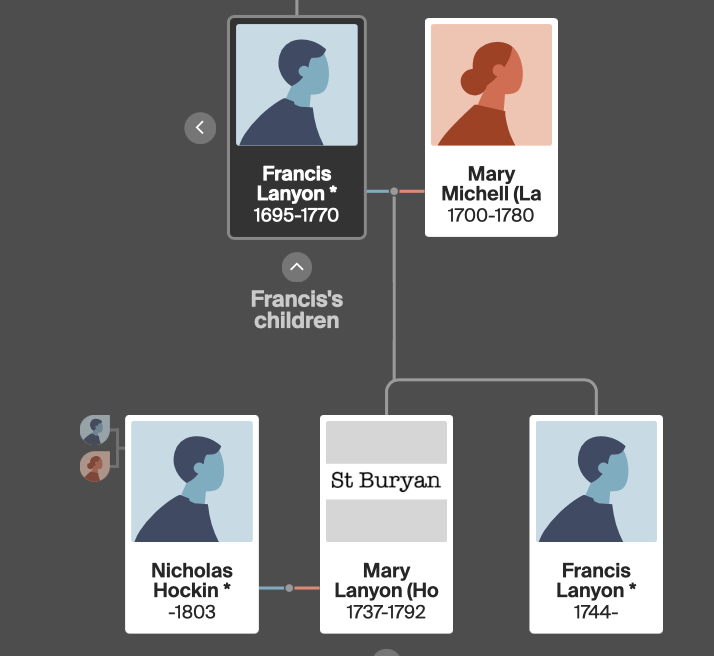
Francis Lanyon 1695-1770
Francis was baptised at St Hilary in 1695 and married Mary Michell there in 1735. Two children traced:
Mary 1737- baptised at St Just in Penwith in 1737 married Nicholas Hockin in 1765
Francis 1744- baptised at St Just in Penwith in 1744 and no further trace
Francis senior was buried at St Just in 1770 and Mary his wife in 1780
Thomas Lanyon 1697-1737
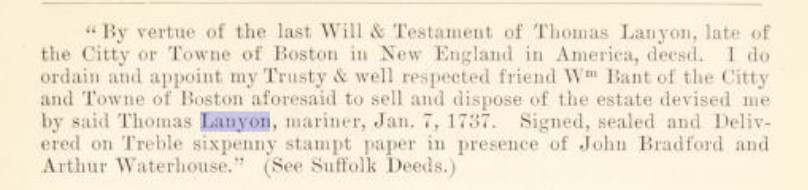
Thomas was baptised at St Hilary in 1697 and may be the Thomas Lanyon, mariner, of Boston, America who died on 7 Jan 1737. (Source ‘Brondson & Box Families Part 1’ by Lucius B Marsh.) Charles Lanyon merchant of Penzance was given power of attorney to sell his estate.
James’ Son
James & Elizabeth’s tree
We know very little about James, we don’t know when he was born or died, we can’t even be sure he was Barnard Lanyon’s son. We do however know that he married Elizabeth Carbus at St Hilary in 1685. There were only two children traced so perhaps James died young. I think Elizabeth was buried at Breage in 1734 but that is just guess work.
James 1686-1758
Margaret 1690-1693 (name is spelt Lannion in the register of baptisms at Germoe) died in infancy.
Others have Elizabeth Carbus being buried in 1689 at Liskeard but that wouldn’t be possible with her daughter being born in 1690.
The St Hilary branch of the family tree started with Barnard Lanyon.
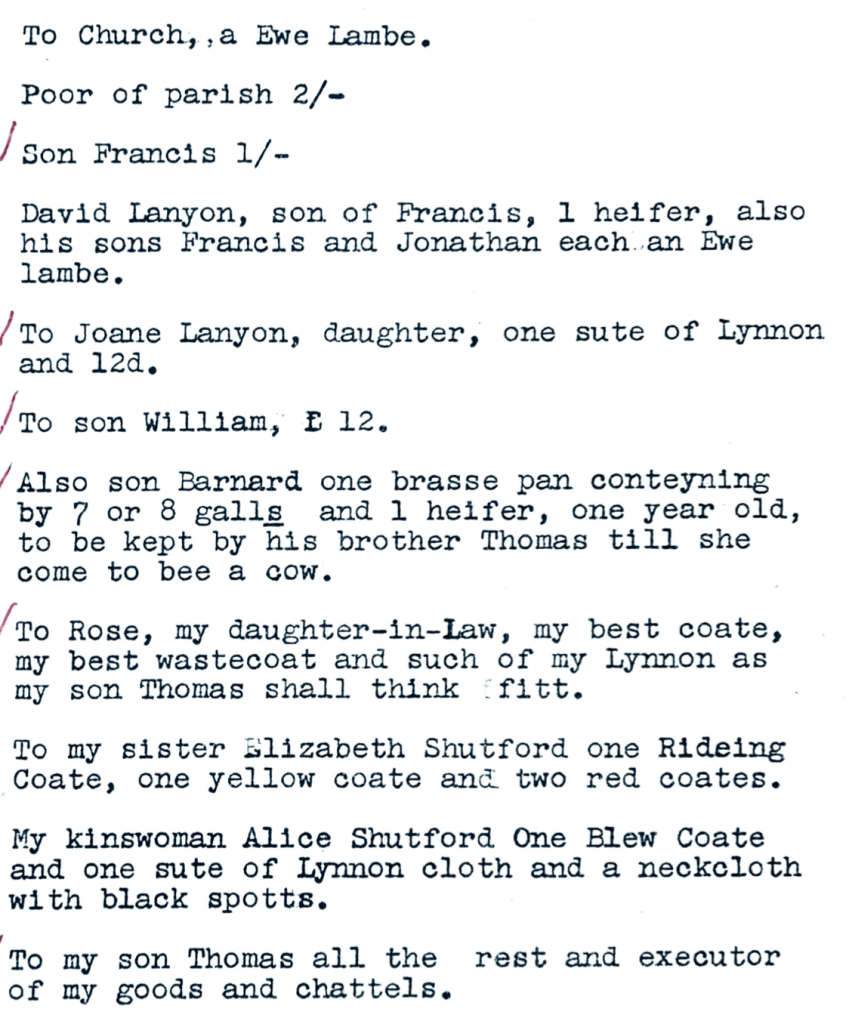
Barnard was the youngest son of David (Davy) and Joan, he was baptised on 10 Jun 1638 at Madron and was just three years old when his father died in 1641. When his mother died in 1655 she left him ‘a brass pann conteyning 7 or 8 galls and 1 heifer to be kept by Thomas till she becomes a cow’.
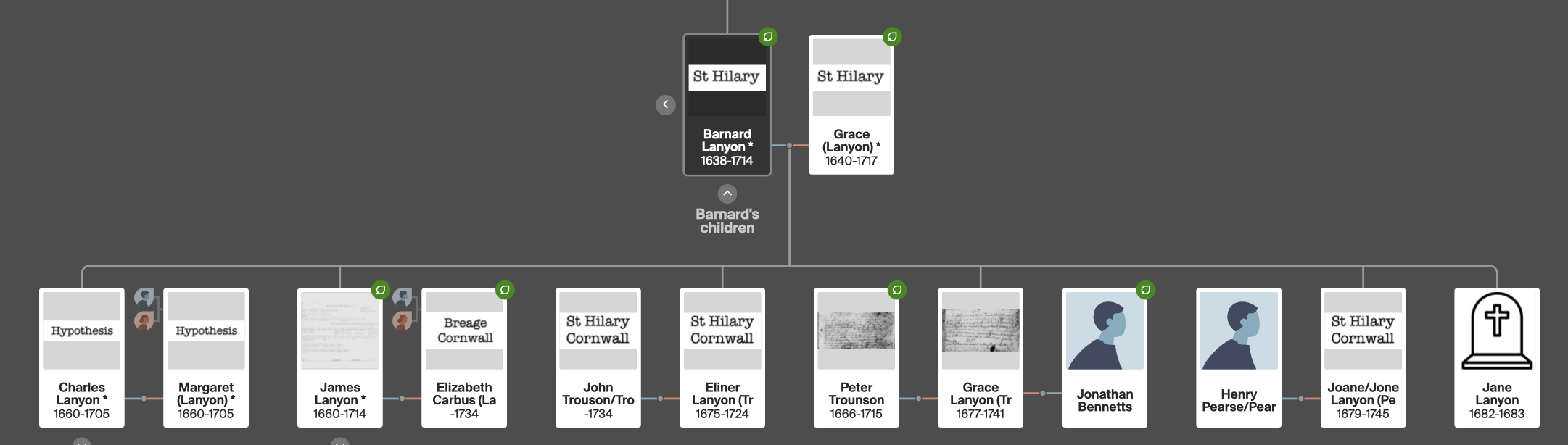
He married Grace, sadly we don’t know her surname or the date of marriage but in the 1660s and 1670s they were having children. The baptisms of some of the children are not recorded so there is a bit of guess work involved.
Charles abt. 1660-1705 married Margaret
James abt. 1660-1714 married Elizabeth Carbus
Eliner 1675-1724 married John Trouson
Grace 1677-1741 married Peter Trouson & Jonathan Bennetts
Joane 1679-1745 married Henry Pearce
Jane 1682-1683 died infancy
Charles Lanyon 1660s
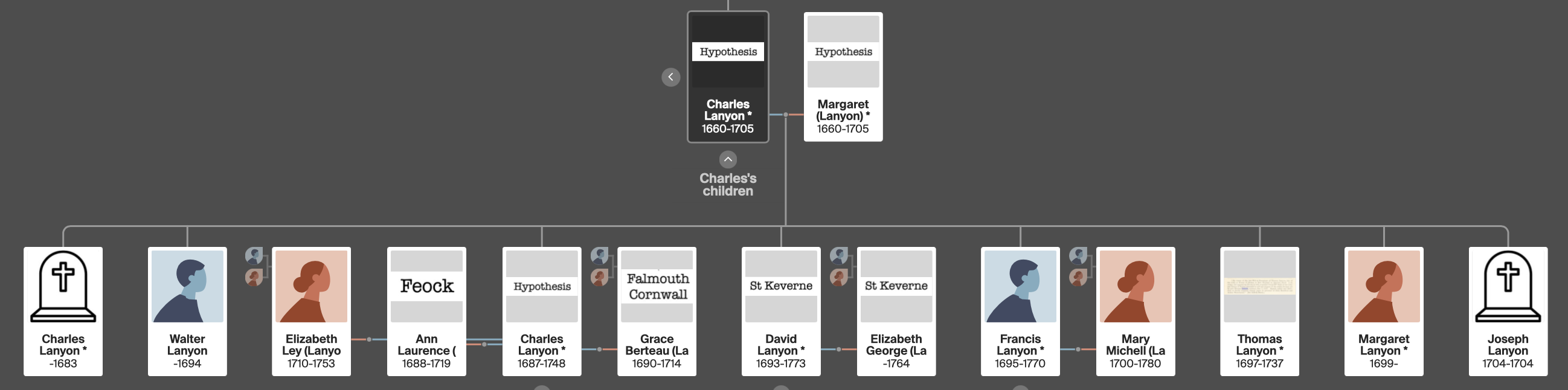
We don’t know when Charles was born or died or even when he married but from the records of the baptisms of some of his children his wife is named as Margaret. Their children:
Charles -1683 there is a burial of a Charles Lanyon son of Charles (from the date of the burial of this child it looks as if Charles the father was born early 1660s)
Charles 1687- There is a Charlis Lalion baptised on 2nd Feb 1687 at St Hilary no father is named, could this be a son of Charles or even a son of Barnard? Or a separate family altogether? (There is a Charles Lanyon who married Eleanor Nines at Perranuthoe in 1715 could that be this Charles as that marriage doesn’t appear to fit anywhere else?)
Walter -1694 died in infancy
David 1693-1773
Francis 1695-1770
Thomas 1697-1737
Margaret 1699- there is a Margaret Lenine who married a William John (Bond) at Ludgvan on 5 Jun 1725 who may be this Margaret
Joseph 1704-1704 died in infancy
James Lanyon 1660s
There is no record of James’ baptism or his burial but we do know he married Elizabeth Carbus at St Hilary on 20 Apr 1685. Two children traced:
James 1686-1758
Margaret 1690-1693 died in infancy
Eliner Lanyon 1675-aft. 1724
Eliner was baptised at St Buryan in 1675. She married John Trouson/Trownson at St Hilary in 1724. No children of this marriage. John was buried in 1734 but no trace of a burial for Eliner/Eleanor.
Grace Lanyon 1677-1741
Grace was baptised at St Buryan in 1677. She married Peter Trouson at Ludgvan in 1704. They had four children, at least three died as a children. Peter died in 1715 and Grace married Jonathan Bennetts at Madron in 1732. She was buried at Madron in 1741.
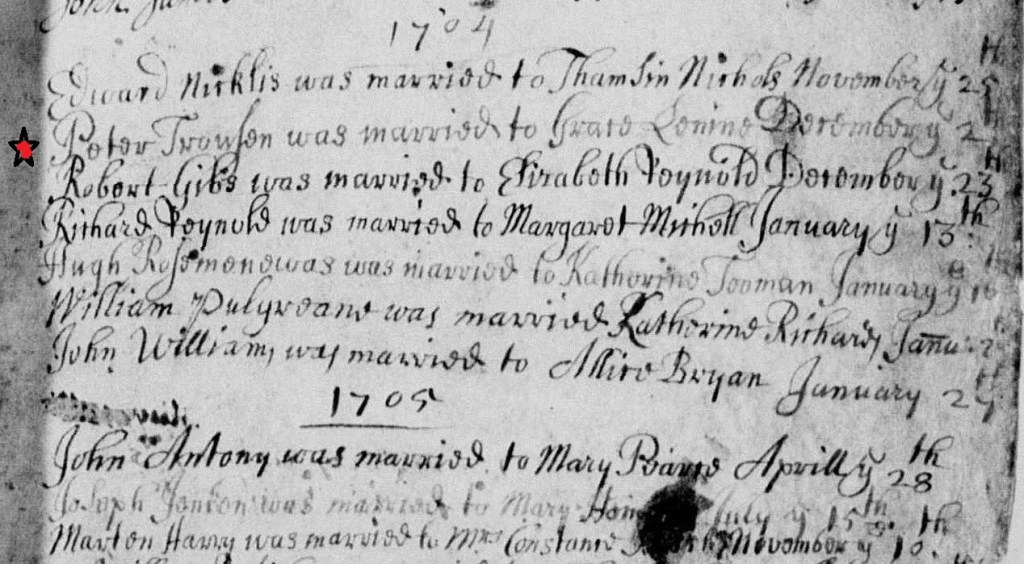
Marriage of Peter & Grace Ludgvan Parish Register.
Joane Lanyon 1679-1745
Joane was baptised at St Buryan in 1679 and named after her grandmother, Barnard’s mother. She married Henry Pearse at St Hilary in 1709 and had three children: John, Jane and Francis. Joane was buried at St Hilary in 1745.
Barnard was buried at Marazion in 1714 and Grace his wife, was buried at St Hilary in 1717. They didn’t leave a will which might have helped confirm their children’s names.
Paskis Lanion married Thomas Shetford at St Just in Penwith in 1625. Who was Paskis Lanion? If only the answer was straight forward!
A quick trawl through the Cornwall Online Parish Clerks database revealed no baptisms for a Paskis/Paksis/Pascha/Pasca/Paska/Paskes/Paskas Lanion/Lanyon.
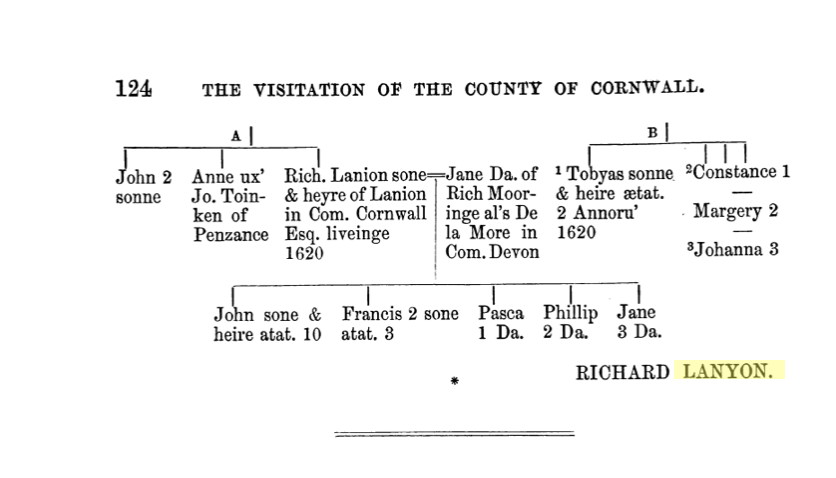
However the Heralds Visitation for Cornwall 1620 does have a suitable candidate:
Vivian’s Herald’s Visitation of Cornwall 1620
Richard Lanyon Esq submitted his tree showing that his wife was Jane Mooring alias De La More from Devon and their eldest daughter was called Pasca but was she old enough to get married in 1625?
Their eldest son was John aged 10 in 1620 so therefore born in 1610. Could Pasca be older than John? When did Richard marry Jane? The Royal Institution of Cornwall has a marriage settlement between Richard Lanyon and Jane his wife dated 1608 so presumably they married about 1608. The letter from Mrs Rose Tolman confirms that Jane’s mother was called Pascha Risdon so eldest daughter was named after her grandmother.
Francis 2nd son – deposition taken 1635 when he is aged 16 so born in about 1619
Elizabeth baptised 17 Nov 1622 St Merryn
The children with no baptisms recorded are:
Pasca eldest daughter born before 1613 when Philippa is baptised
Jane 3rd daughter born after 1613 and before 1622
Richard not listed on Herald’s Visitation so presumably born after 1620
Thomas not listed on Herald’s Visitation so presumably born after 1620
Margerie – from Richard Lanyon Esq’s will it is implied that Elizabeth and Margerie are the youngest daughters
The latest Pasca could have been born was 1613 and with John born in 1610 and two unbaptised babies born in 1611 and 1612 it looks likely that Pasca was probably born about 1608/9 which would make her about 16 years of age at the time that the marriage to Thomas Shetford took place. So she is a possible candidate.
Richard Lanyon Esq’s will of 1636 left all his daughters £30 or £40 apart from Pasca who received 5 shillings which implies that in 1636 she was already married and had received her ‘portion’. Sadly the will does not mention her married name.
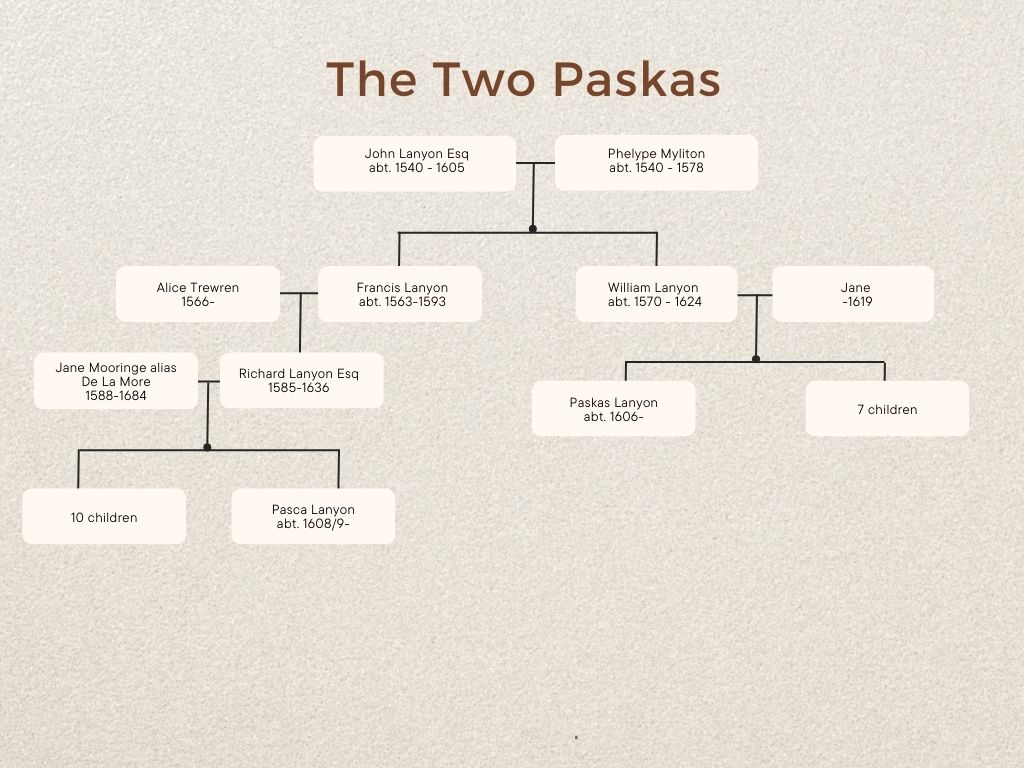
The only problem is that there is a second Paskas who is also a candidate.
Richard Lanyon Esq’s uncle William has a daughter also called Paskas.
William’s daughter’s baptism isn’t recorded but we know she existed from his will. Again we’ll have to list his other children and see where she could fit in:
Elizabeth baptised 31 Oct 1593 Sancreed
John baptised 8 Jun 1596 and buried 15 Sep 1601 at Sancreed
John born after Sep 1601
Jane baptised 24 Oct 1602 Sancreed
William baptised Dec 1603 Sancreed
Elyzabethe baptised 17 Jul 1607 Sancreed
Both daughters called Elizabeth survived and are mentioned in William’s will of 1624!
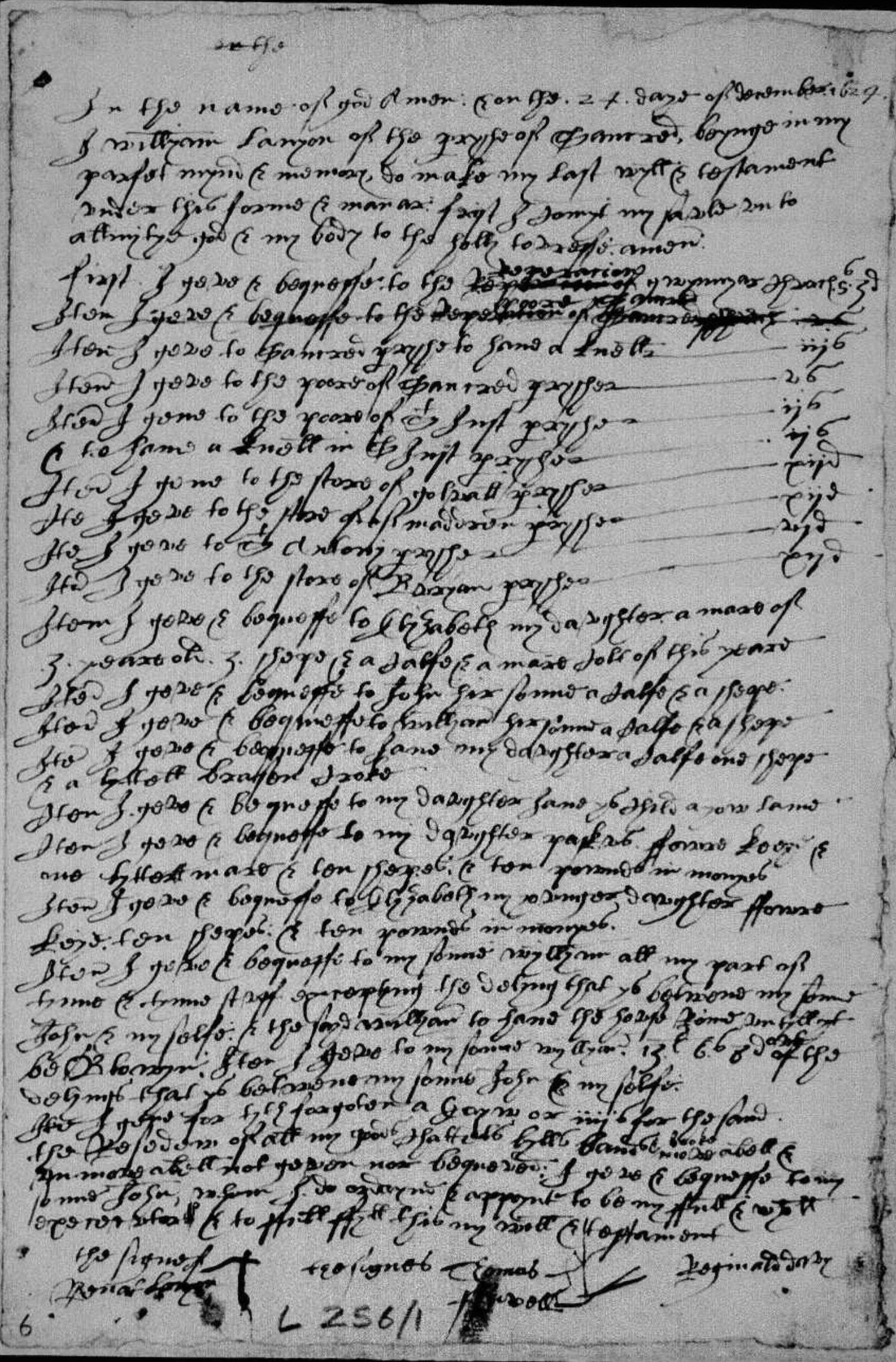
William’s Will of 1624 – Source CRO AP/L/256
Abstract:-
WILLIAM LANYON of Sancreed written: 24 Dec 1624 proved: 8 Feb 1624/5
poor of Sancreed – 3 sh. poor of St. Just – 5 sh. poor of Gulval – 12 d. poor of Maddern – 12 d. poor of Antony – 12 d. poor of Buryan – 12 d. daughter: ELIZABETH – mare, 3 sheep, calf, mare colt JOHN her son – calf & a sheep WILLIAM her son – calf & a sheep daughter: JANE – calf, 1 sheep, brazen crock daughter JANE’s child – a ewe lamb daughter: PASKAS – 4 kyne, mare, 10 sheep, 10 pounds youngest daughter: ELIZABETH – 4 kyne, 10 sheep, 10 pounds son: WILLIAM – all my part of tin and tin stuff, 13 pounds, 6 sh., 3 d. son: JOHN – all the rest & executor
The will implies that Paskas is younger than Jane and older than Elizabeth his youngest daughter which suggests that she was born between 1602 and 1607. So aged about 18-23 in 1625 when the marriage to Thomas Shetford took place.
It’s interesting that William leaves 5 shillings to the poor of St Just as that’s the town that Thomas Shetford comes from.
Who was Thomas Shetford?
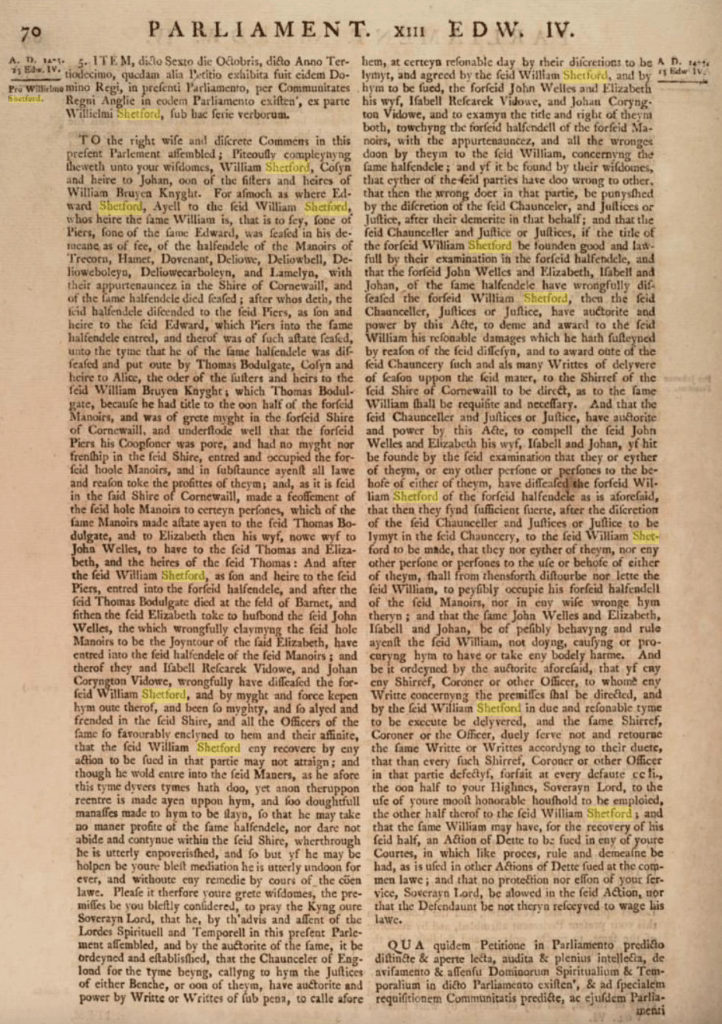
The Shetford/Shutford (and occasionally Shitford!) family originally came from Somerset. They were cheated out of a half share in six manors in Cornwall by Sir Thomas Bodulgate during the Wars of the Roses.
Source – History of Parliament Edward IV
We know very little about Thomas, the parish registers for St Just in Penwith start quite late but with the little we know we can create a tree that might be correct.
We know that Paskis Lanion married Thomas Shetford at St Just in Penwith in 1625 so he was probably born about 1600
There is a baptism for a Margarett Shetfod (Sic) daughter of Thomas on 14 Nov 1630 at St Just listed in the Exeter Bishop’s Transcripts
16 Oct 1647 marriage at St Just between Elizabeth Shetford (daughter of Thomas) and John Rawlyn (Source – OPC)
Baptism of Alse Shutford, daughter of Thomas 20 Dec 1633 St Just (Source- FHL film number 0226217, 0226218, 962681)
Burial of Paskes Shetford, widow 19 Dec 1681/2 St Just in Penwith (Source – OPC)
The will of Joan Lanyon (Shutford) 1655 (Source – NA PROB 11/257/72) Joan was the wife of David Lanyon of Madron and her will mentions her Shutford relatives
There is also a record at Kresen Kernow (The Cornish Record Office) which mentions Thomas and William Shilford.
Lease, tenement, Treloweth Wartha, Illogan
Parties:
1) Right Honourable John Lord Robartes, Baron of Truro.
Term: 99 years, or the natural lives of [?] Lanyon, John Lanyon his brother and William Shilford, son of Thomas Shilford.
Annual rent: 46 shillings 8 pence, one capon or 12 pence, a harvest day or 6 pence.
Heriot: Best beast or £3.
Reference number
CL/1/124
Date
3 Oct 1635
I think it should be William and Thomas Shitford/Shetford rather than Shilford. Could Thomas have a son called William and could these Lanyons be Paskas’ brothers?
The Paskas born in Sancreed had brothers called John and William. ‘William Lanyon Yeoman of St Just’ listed in the lease is definitely not the St Merryn family of Lanyons.
There is a marriage of a William Shetford and Mary Edward at St Just on 26 Nov 1653, they had two daughters: Rebecea (sic) bapt. 1655 and Ellizabeth (sic) bapt. 1657.
There is a legal dispute between John Lanyon and William Shutford in 1659, the year Thomas Shutford died. Source – NA C 10/48/84
Lanyon v Shutford.
Plaintiffs: John Lanyon. Defendants: William Shutford, James Pratt and Robert Baynard. Subject: property in Sancreed, Cornwall.
This is the hypothetical tree I’ve created from all those snippets of information.
We still haven’t conclusively answered the question which Paskis Lanion married Thomas Shutford in 1625 but I think the Paskas born to William Lanyon of Sancreed is the more likely candidate.
William Lanyon died in 1624 (his wife had died in 1619) and left Paskas £10 and some cattle. The following year she married Thomas from the neighbouring parish of St Just in Penwith.
Ultimately geography may be the best clue, the distance between St Just and Sancreed (near Penzance) is a lot smaller than the distance between St Just and St Merryn (near Padstow).
With thanks to Louise Quigley who first posed this question in 2014 and the Penwith Genealogy Group who produced some great answers and evidence.